
A complete issue · 34 pages · 1927
Life — February 17, 1927
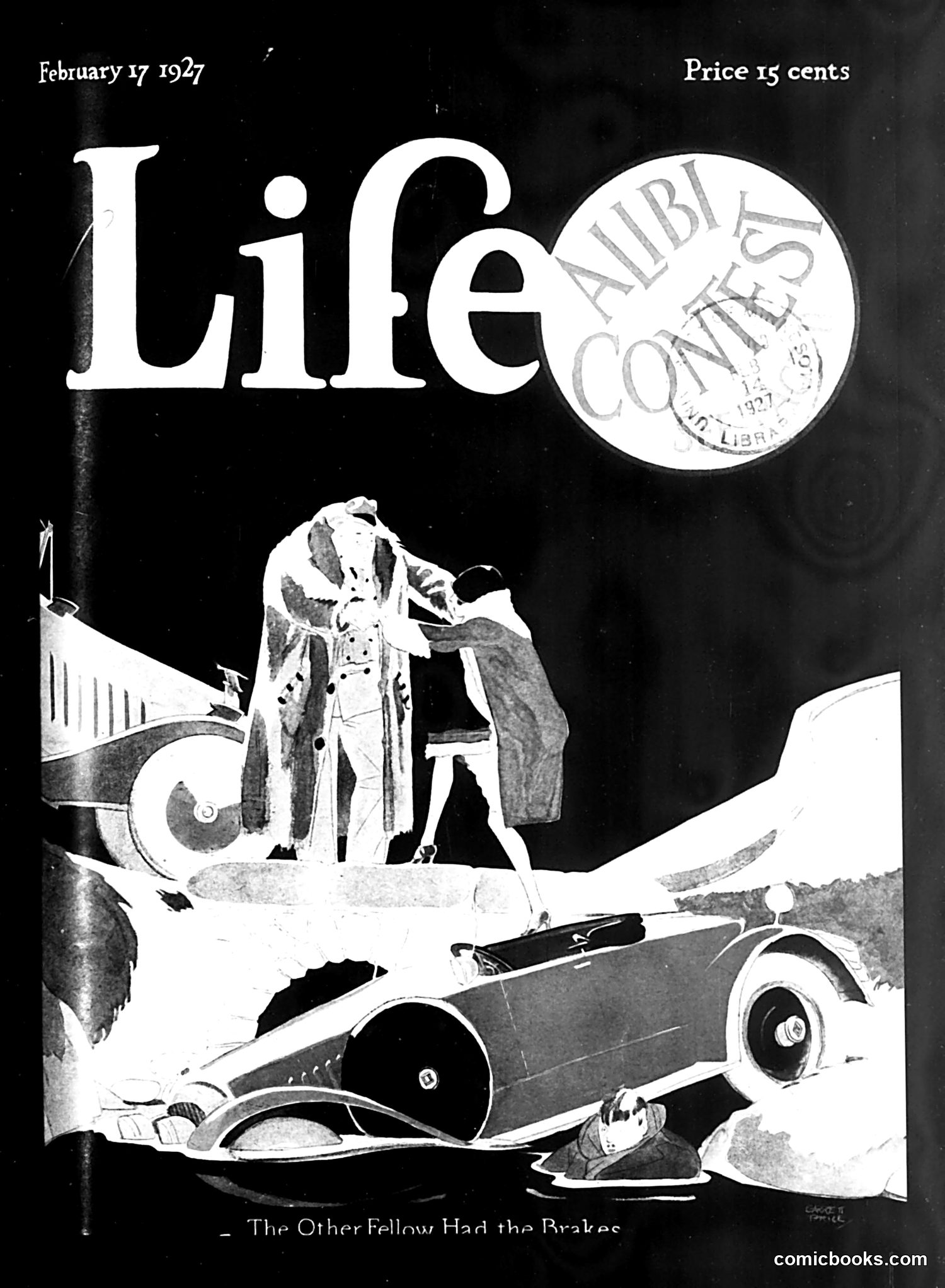
This cover illustrates "The Other Fellow Had the Brakes," a caption referencing a traffic accident. The image shows a chaotic car crash scene with a fashionably dressed woman examining the wreckage of an automobile. The comedic premise suggests she's blaming the other driver for the collision, implying she bears no responsibility. The satire targets 1920s automobile culture and gender attitudes. It mocks both reckless driving habits becoming common with mass car ownership and contemporary stereotypes about women drivers being careless or unreliable. The woman's fashionable appearance and dismissive posture suggest she's unconcerned about causing damage—a commentary on either driver irresponsibility or gender stereotypes of the era.
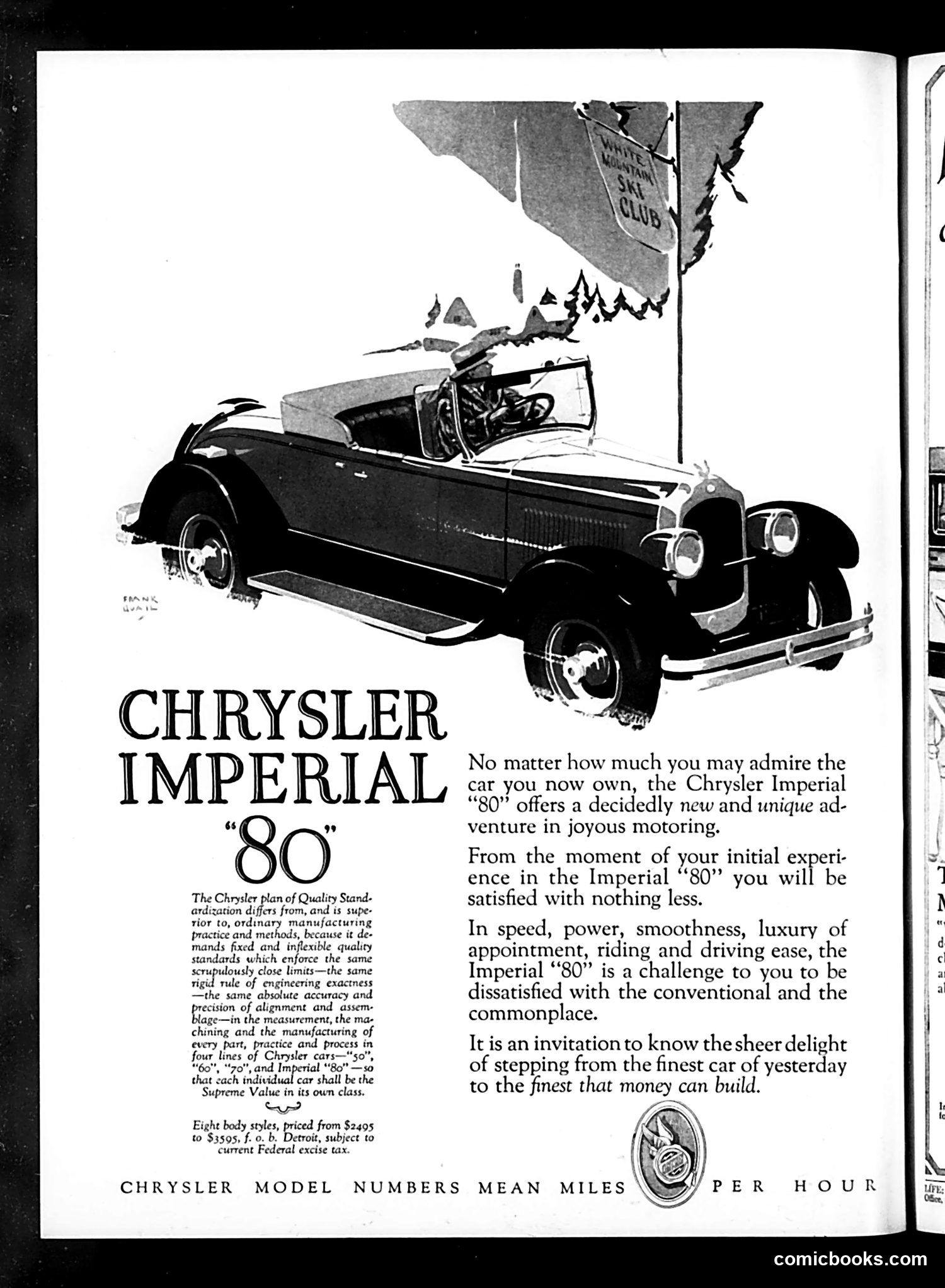
This is a **Chrysler automobile advertisement**, not a political cartoon or satire. The page promotes the Chrysler Imperial "80" model, featuring an illustration of a luxury car with the convertible top down. The ad uses aspirational marketing language typical of 1920s automobile advertising, emphasizing the car's superiority ("the finest that money can build") and positioning it as a status symbol for affluent buyers dissatisfied with "conventional and commonplace" vehicles. The Montana map and ski lodge imagery in the upper portion suggest leisure and adventure—appealing to wealthy consumers' lifestyle aspirations. Pricing ranges from $2,495 to $3,595, significant sums during this era. This is straightforward commercial messaging rather than satirical content.
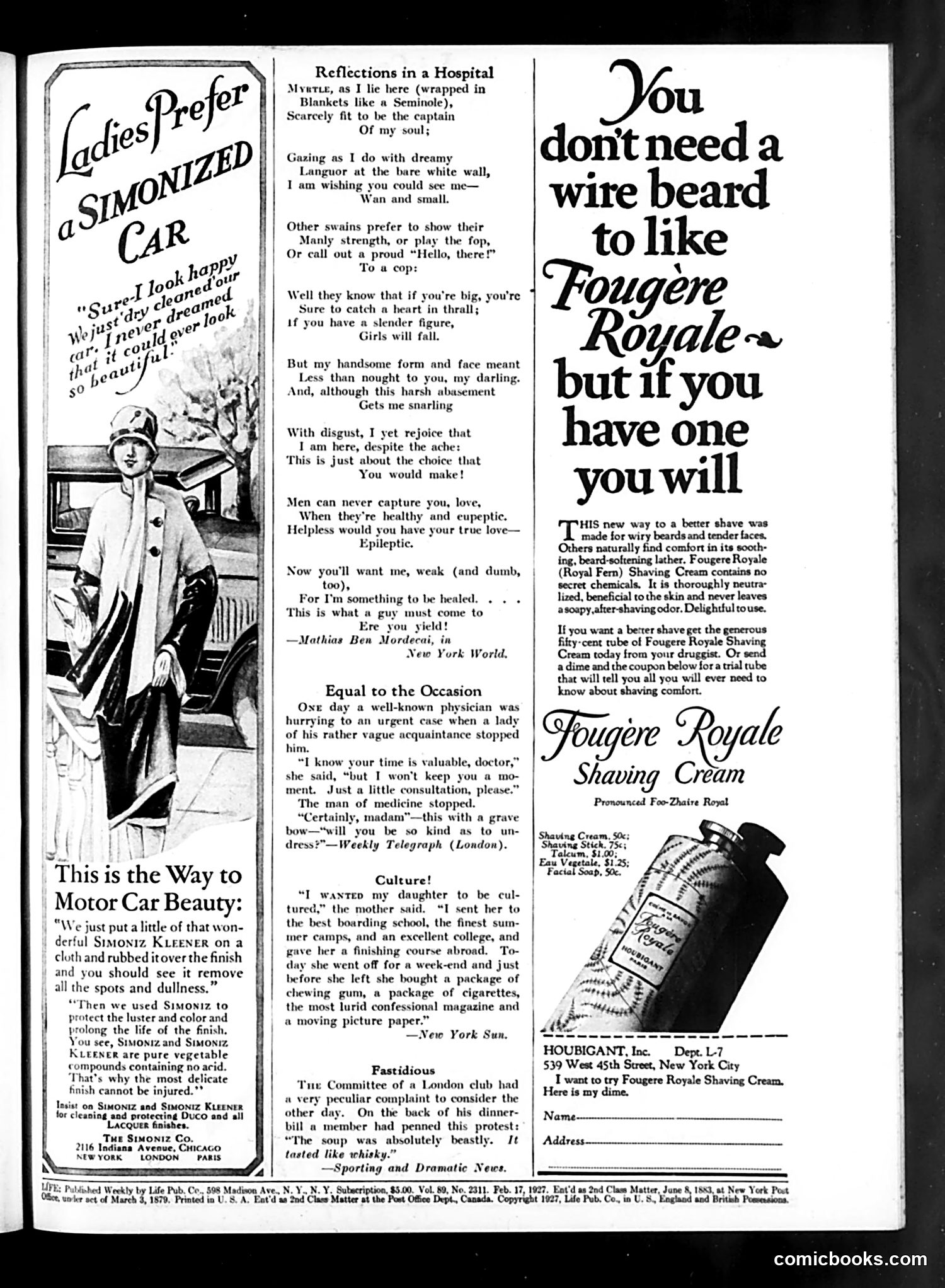
This page contains **primarily advertisements** rather than political satire. The main content includes: 1. **"Ladies Prefer a Simonized Car"** — An ad featuring a woman in 1920s attire praising automotive wax coating, playing on the era's dating culture and consumerism. 2. **"Reflections in a Hospital"** — A poem (attributed to "Maximus Ben Mordecai") with romantic/melancholic themes about masculine beauty and attracting women, likely satirizing sentimental hospital poetry. 3. **"Fougère Royale Shaving Cream"** — An ad claiming men don't need beards to appear distinguished if they use quality shaving products. The humor appears gentle and lifestyle-focused rather than politically pointed. The page reflects 1920s consumer culture and gender dynamics rather than substantive political commentary.
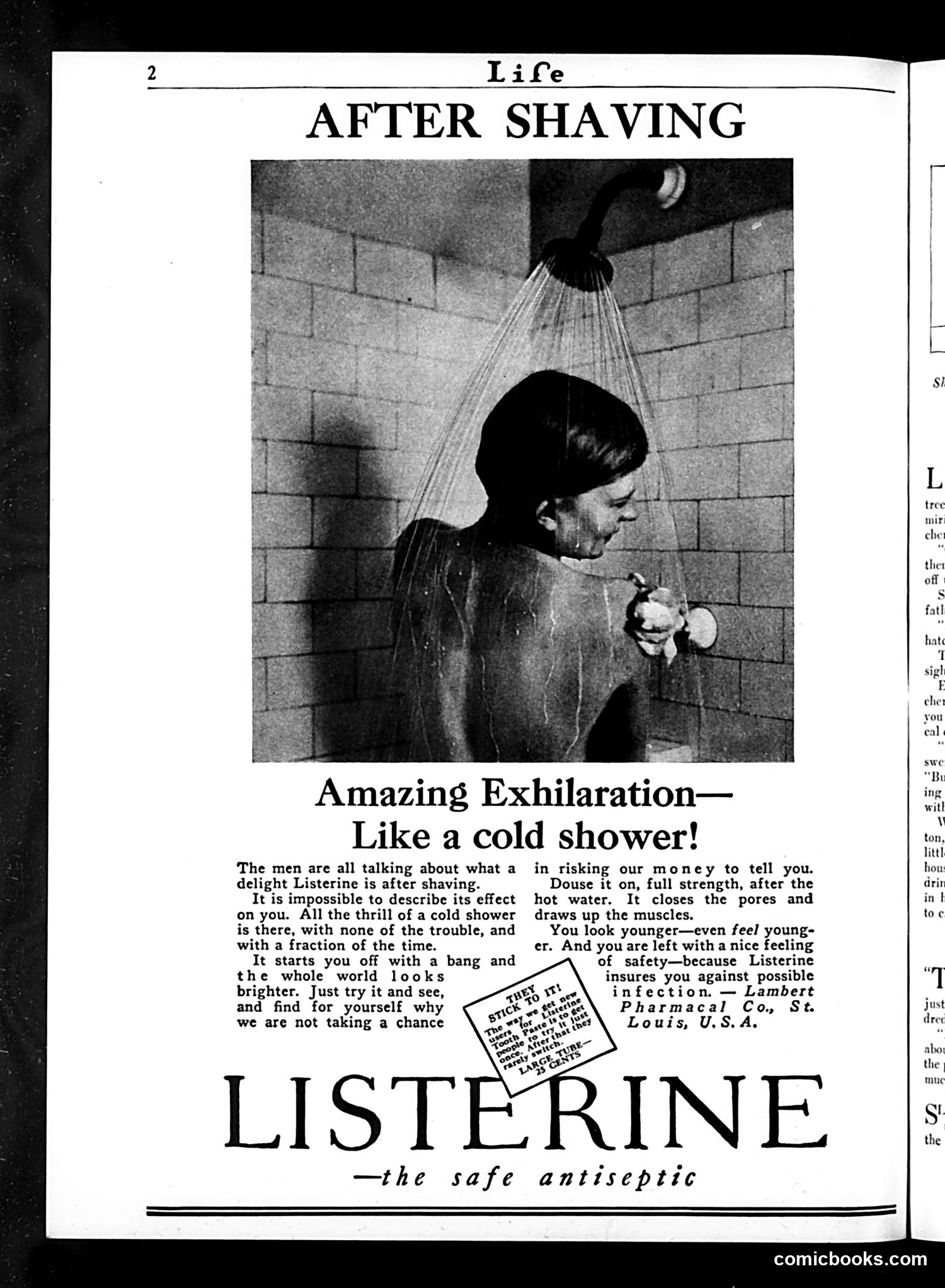
This is primarily a **Listerine advertisement**, not political satire. The image shows a man showering after shaving, with the headline "Amazing Exhilaration—Like a cold shower!" The ad promotes Listerine as a post-shave product, claiming it: - Provides an invigorating sensation similar to cold water - Closes pores and tones muscles - Makes users "look younger" and "feel younger" - Protects against infection The copy uses exaggerated health claims typical of early 20th-century patent medicine marketing. It's not satirizing anything—rather, it's a straightforward (if hyperbolic) product pitch leveraging masculine associations with vigor and rejuvenation. The "safe antiseptic" tagline reflects period anxieties about infection and cleanliness.
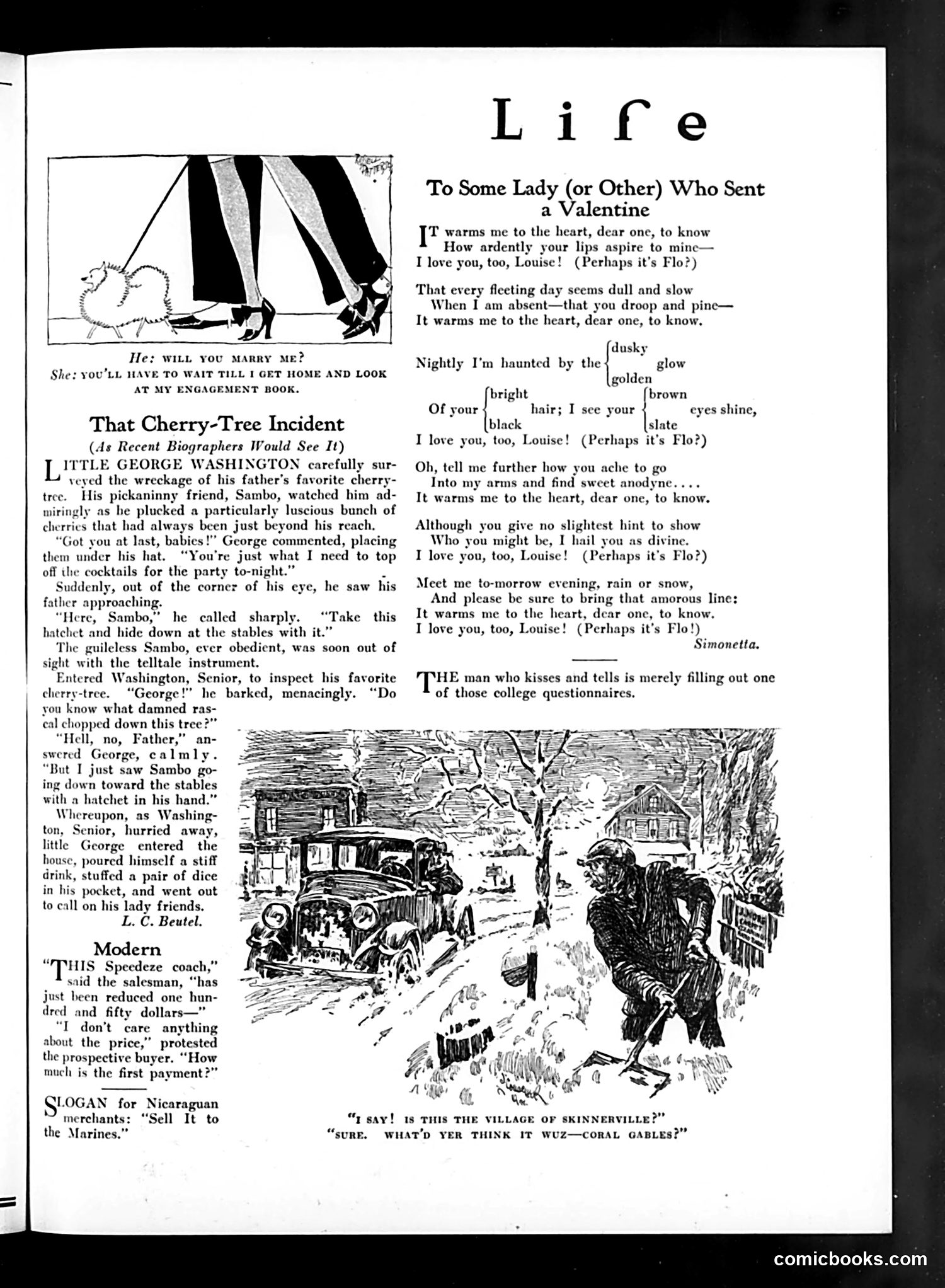
This page contains several humorous pieces rather than political cartoons: **"That Cherry-Tree Incident"** satirizes young George Washington's famous (likely apocryphal) story of chopping down his father's cherry tree. The anecdote is presented as modern biography, with young George caught stealing cherries and ordered to hide them in the stables—a comedic twist on the moral lesson typically attached to the tale. **"To Some Lady (or Other) Who Sent a Valentine"** is a romantic poem with humorous variable word choices (bracketed options like "dusky/golden/bright" for hair color), satirizing generic, mass-produced Valentine verses. **"Modern"** and **"Slogan"** are brief witty one-liners about contemporary life and Nicaraguan commerce. The lower illustration depicts a rural scene, possibly referencing "Skinnerville" or "Coral Gables," though its specific satirical target is unclear.
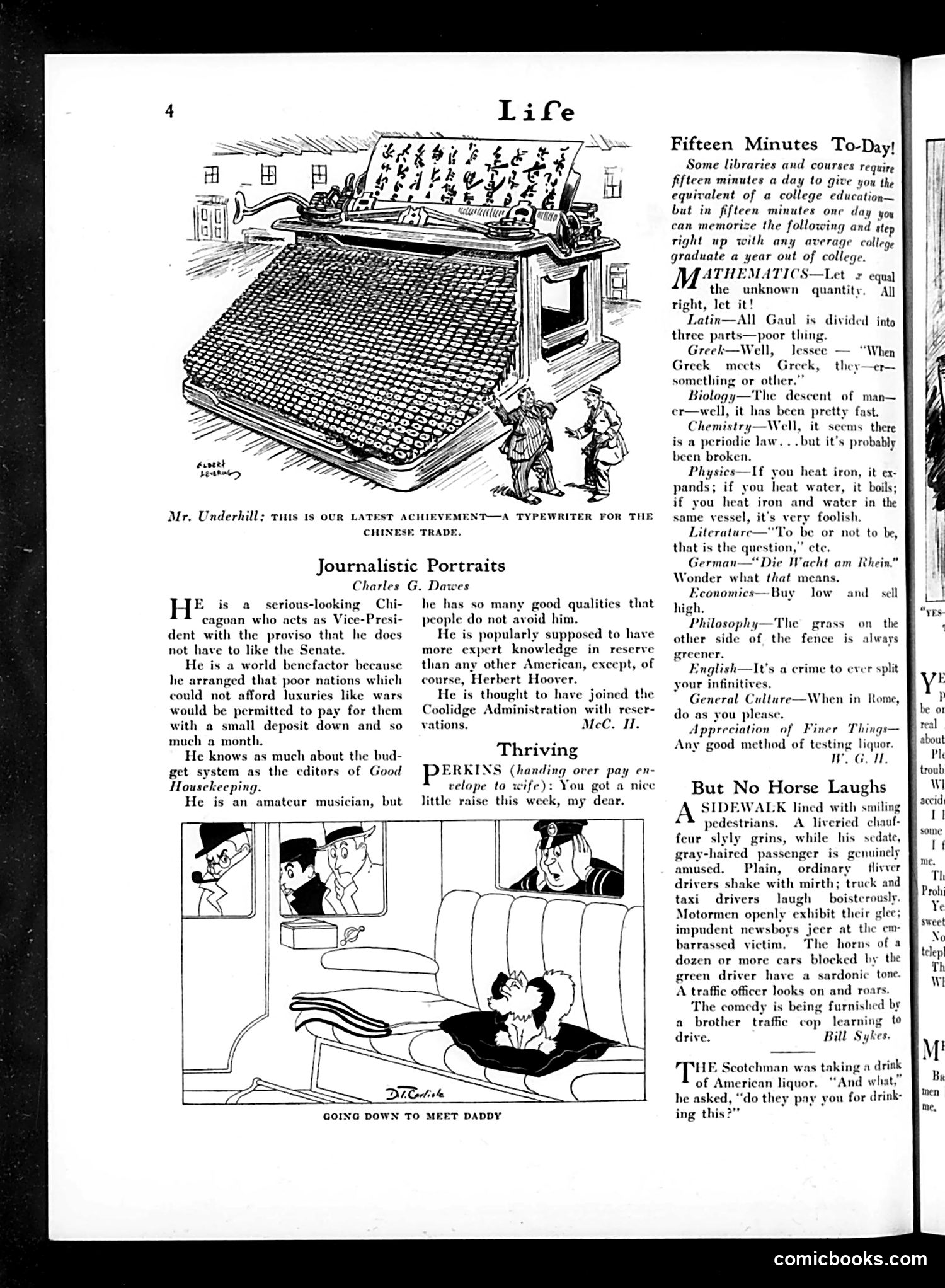
This page contains three distinct sections: **Top cartoon:** Shows a large typewriter labeled as "our latest achievement—a typewriter for the Chinese trade." The joke satirizes American commercial ambitions in China, suggesting absurdly oversized equipment was being marketed to Chinese consumers. **"Journalistic Portraits" section:** Features Charles G. Dawes, described as Vice-President under Coolidge. The text humorously catalogs his contradictory qualities—he's serious yet jovial, expert yet reserved—suggesting his public persona contained inherent contradictions or hypocrisy typical of politicians. **"Going Down to Meet Daddy" cartoon:** A domestic humor strip showing a woman preparing to meet her father, with suggestive visual gags about romantic encounters. This reflects 1920s permissiveness humor regarding dating and courtship. The "But No Horse Laughs" section appears to be humorous anecdotes about urban traffic and driving culture.
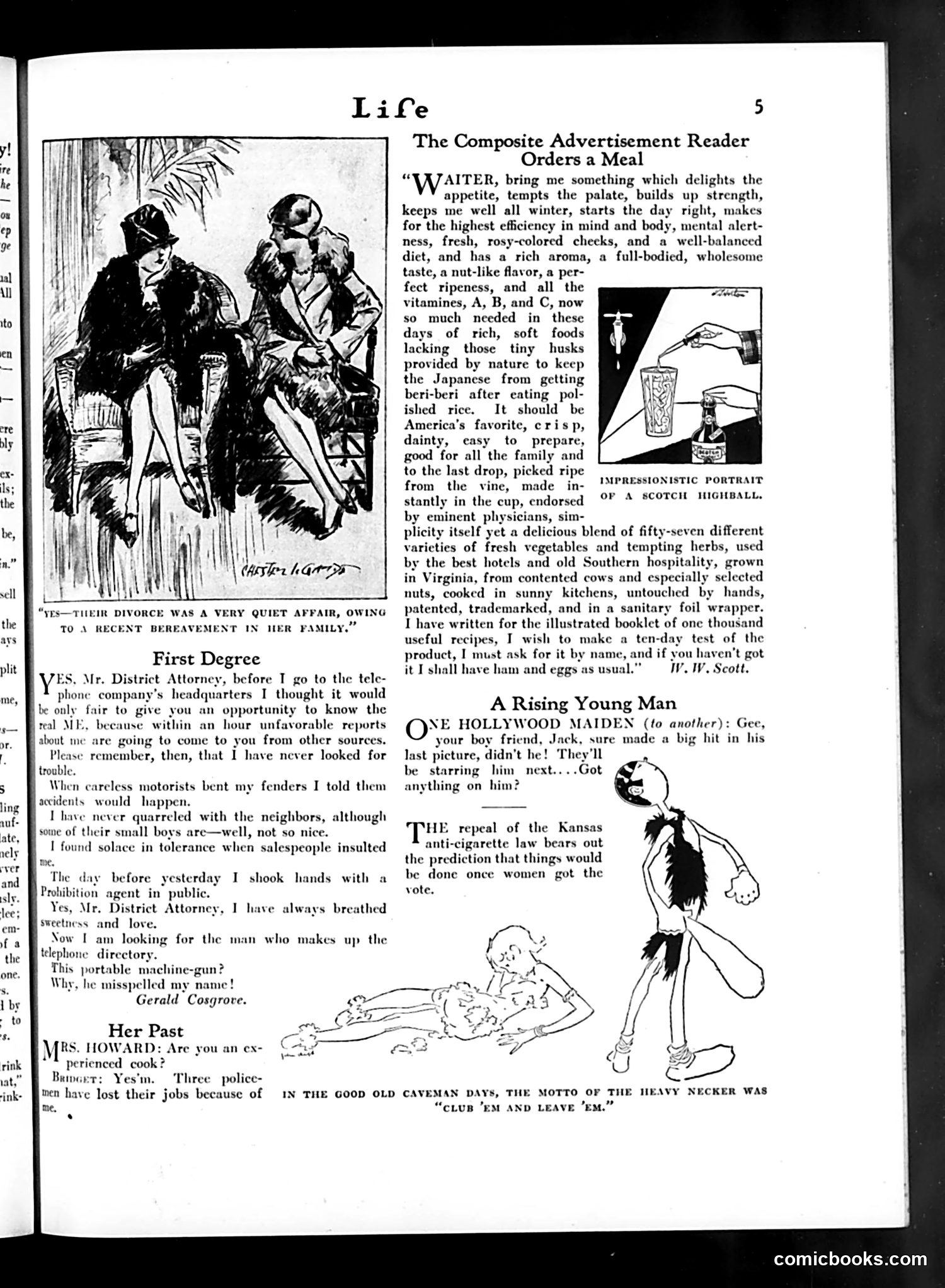
This page contains several humor pieces reflecting early 20th-century social concerns: **"First Degree"** depicts a District Attorney defending himself against accusations of favoritism and moral compromise, satirizing perceived corruption in legal institutions. **"A Rising Young Man"** cartoon mocks a young man's prospects, with the caption referencing the Kansas anti-cigarette law repeal. The joke suggests women's newly gained voting power would reverse such laws—satirizing both anxiety about women's suffrage and changing social attitudes toward smoking. **"Her Past"** briefly jokes about an experienced cook, playing on class stereotypes. The advertisements emphasize period concerns: wholesome nutrition and "efficiency" in diet, reflecting Progressive Era anxieties about health and productivity.
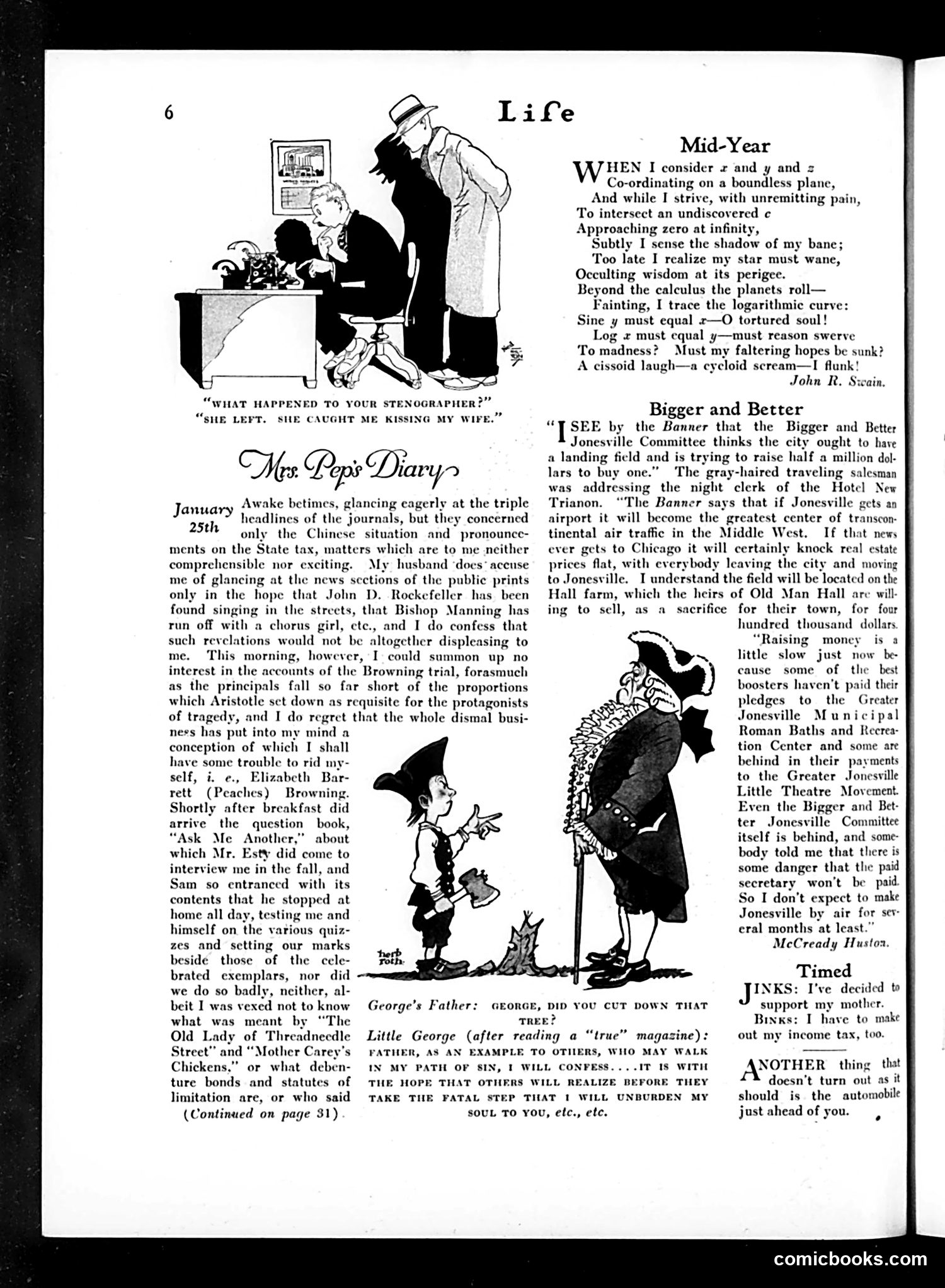
This page contains three distinct satirical pieces: 1. **"What Happened to Your Stenographer?"** (top cartoon): A boss confronts an employee about his secretary's absence. The employee's explanation—"She left. She caught me kissing my wife"—satirizes workplace dynamics and marital fidelity concerns of the era. 2. **"Mrs. Pep's Diary"** (left column): A domestic humor column where a wife catalogues mundane household frustrations, including her husband's public behavior and questionable reading habits. It mocks middle-class family life. 3. **"George's Father"** (bottom right): A father-son dialogue about moral instruction. The child, having read "True" magazine, declares he'll commit sins and seek forgiveness later—satirizing both parental sermonizing and casual religious attitudes. The page overall mocks early-20th-century American social conventions around work, marriage, and morality.
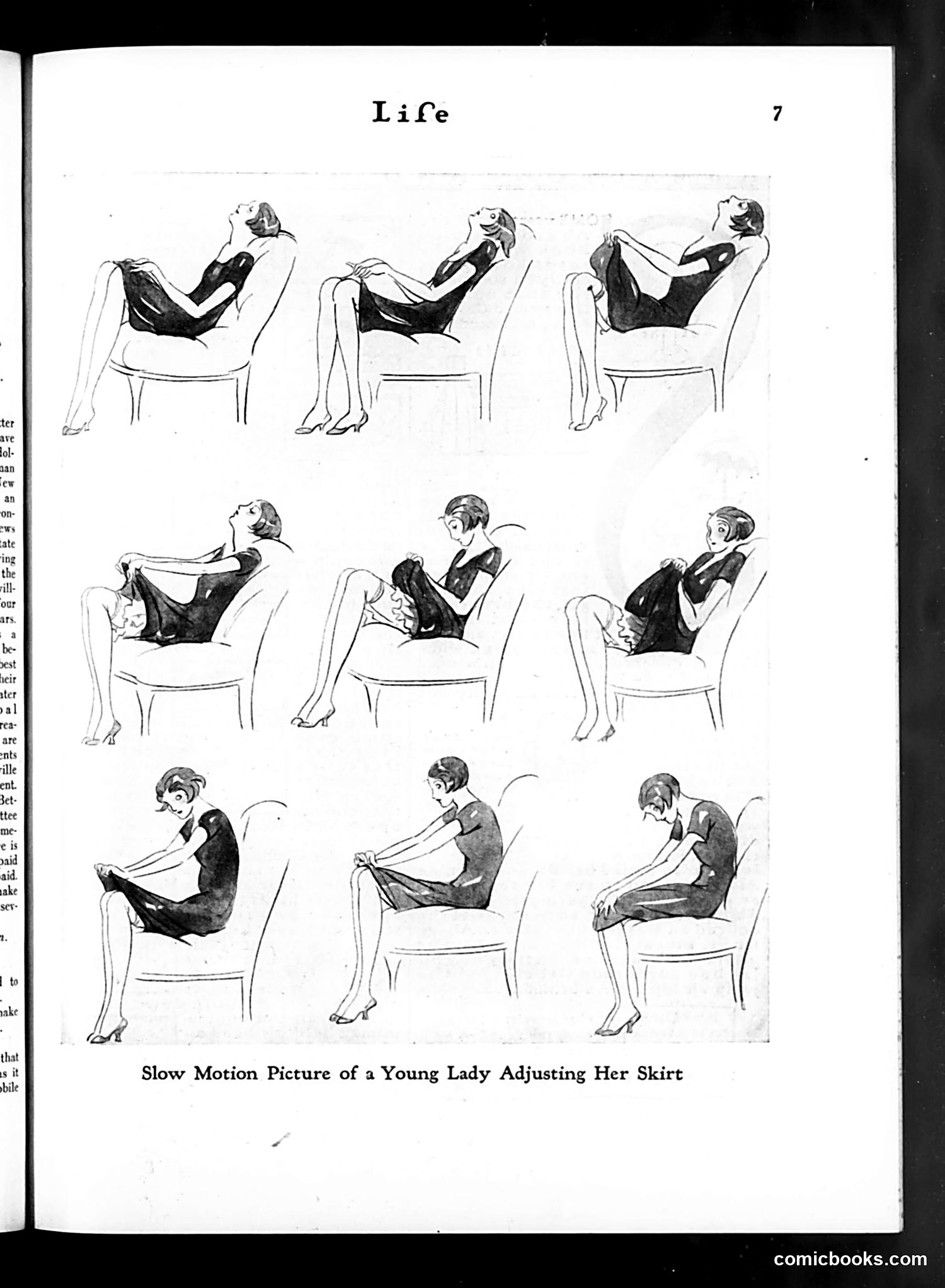
This page from *Life* magazine presents a humorous sequential illustration titled "Slow Motion Picture of a Young Lady Adjusting Her Skirt." The nine-panel cartoon depicts a woman seated in a chair performing the simple act of adjusting her skirt, broken down into exaggerated slow-motion stages. This appears to be satirizing the then-fashionable novelty of slow-motion cinematography, which was a relatively new filming technique that allowed audiences to observe mundane actions in elaborate detail. The humor derives from the contrast between the trivial nature of the action (a woman smoothing her clothing) and the grandiose, frame-by-frame breakdown typically reserved for significant moments. It's a gentle mockery of how slow-motion film technique could make even the most ordinary gesture appear dramatic and noteworthy—reflecting early-20th-century fascination with cinema's technical capabilities.
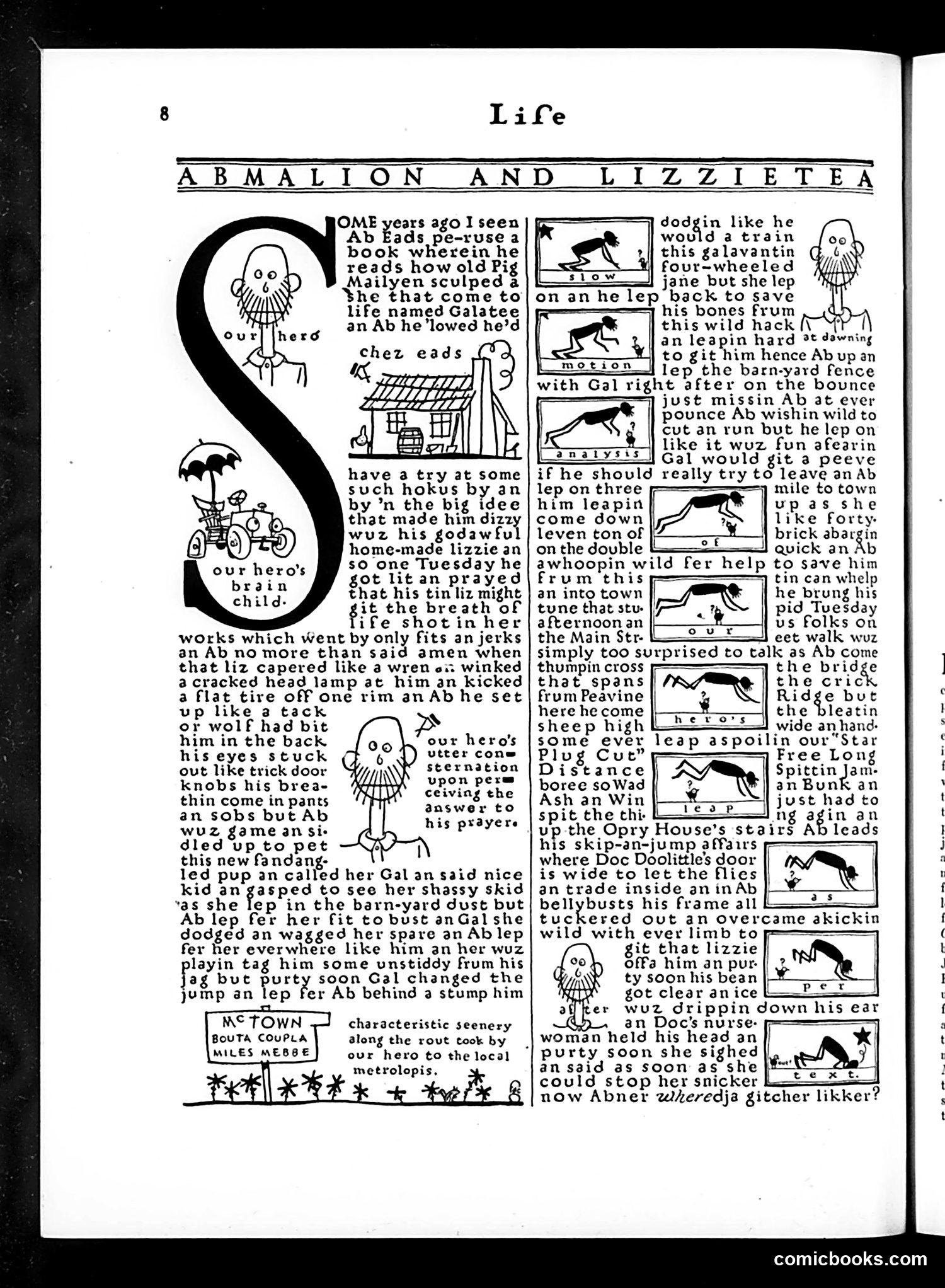
This page presents a humorous serialized narrative about a character named Abner and his dog Gal, illustrated with simple line drawings showing the dog's athletic exploits (jumping fences, leaping, running). The story uses dialect humor common to early 20th-century American comics, featuring rural/working-class speech patterns. The narrative follows Gal's attempts to escape her yard and visit town, with various comedic mishaps involving neighbors and local characters like "Doc Doolittle." The decorative header and layout suggest this is a humor feature in *Life* magazine. The satire appears gentle rather than political—focused on small-town domestic comedy and animal antics rather than social commentary. A location reference to "McTown, Bouta Coupla Miles Messe" indicates a rural setting typical of the era's American humor magazines.
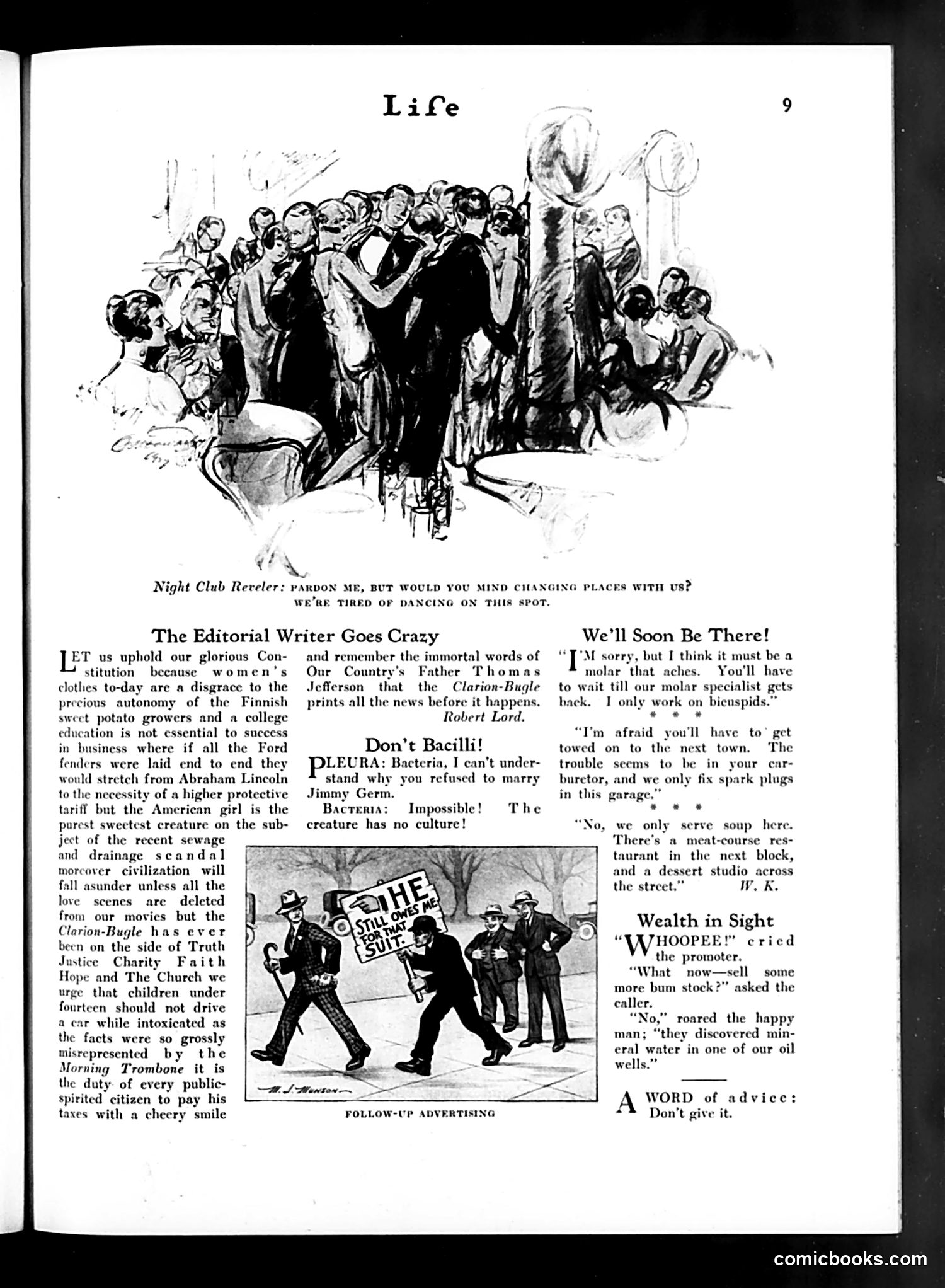
This page from *Life* magazine contains satirical commentary and humor pieces: **"The Editorial Writer Goes Crazy"** critiques arguments against women's clothing reforms, defending women's autonomy against conservative claims that protective tariffs (not fashion freedom) ensure success. **"Don't Bacilli!"** is a brief comedic exchange where "Pleura" (likely representing lung bacteria) refuses to marry "Jimmy Germ," claiming the creature "has no culture." **"Follow-Up Advertising"** cartoon depicts aggressive door-to-door salesmen hawking products, satirizing pushy advertising tactics of the era. **"We'll Soon Be There!"** and other brief humor items mock various social situations—automotive trouble, dining establishments, and financial schemes. The page represents typical early 20th-century *Life* magazine content: light social satire mixed with topical commentary on women's rights, consumer culture, and urban life.
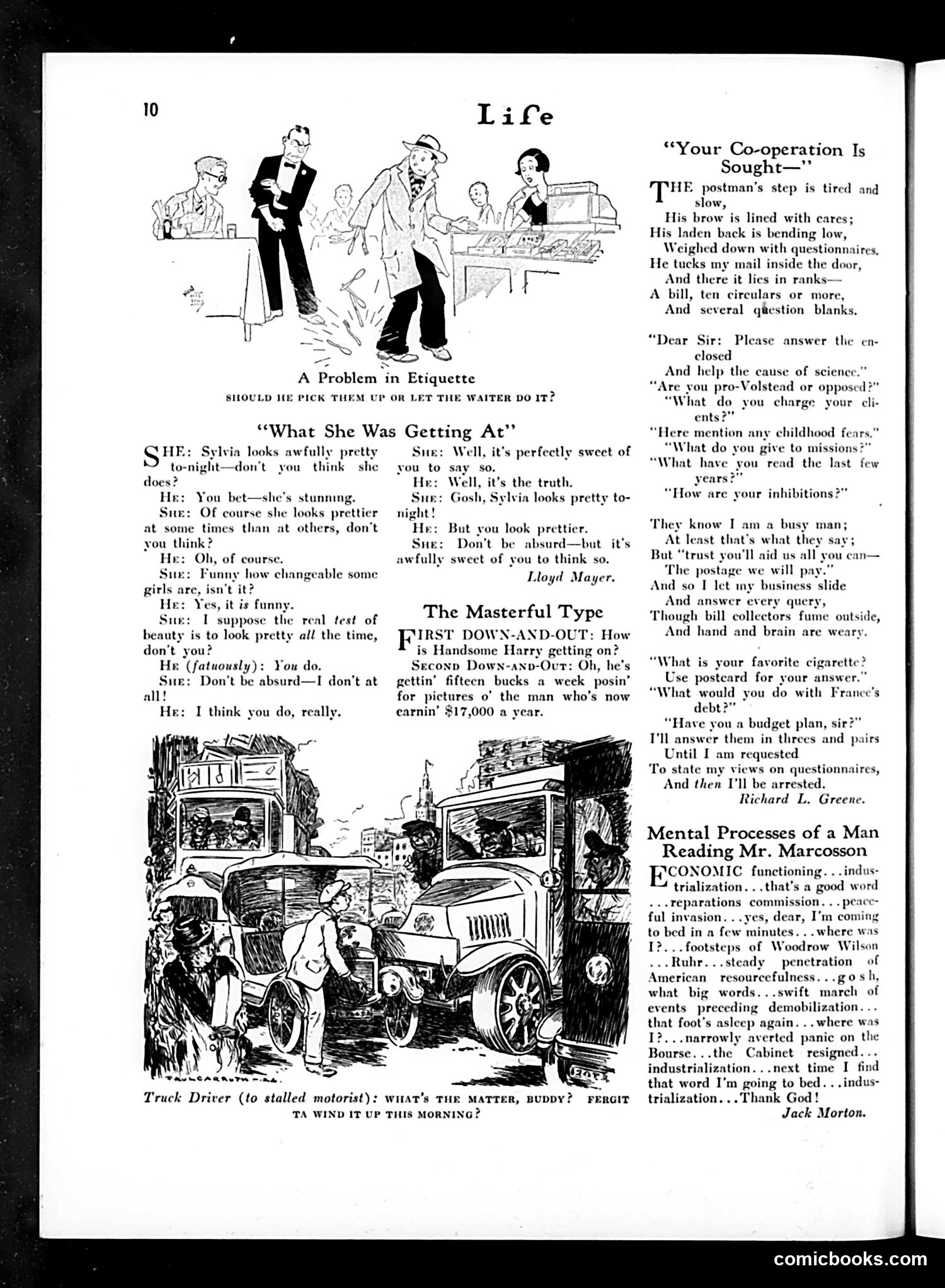
This page contains three satirical pieces mocking everyday social situations: **"A Problem in Etiquette"** shows a waiter and diner in an awkward moment—likely depicting uncertainty about who should pick up dropped items, a commentary on class distinctions and formal dining rules. **"What She Was Getting At"** is a dialogue between He and She about a woman named Sylvia, satirizing how men misunderstand women's compliments and backhanded observations about beauty and behavior. **"The Masterful Type"** and the truck driver cartoon mock working-class masculine posturing and incompetence. **"Your Co-operation Is Sought"** mocks census-takers and survey respondents with humorous complaints about intrusive questionnaires. **"Mental Processes of a Man Reading Mr. Marcosson"** satirizes readers mentally drifting through economic and political jargon while reading serious articles. The page reflects 1920s-era humor about etiquette, gender dynamics, and bureaucratic annoyances.
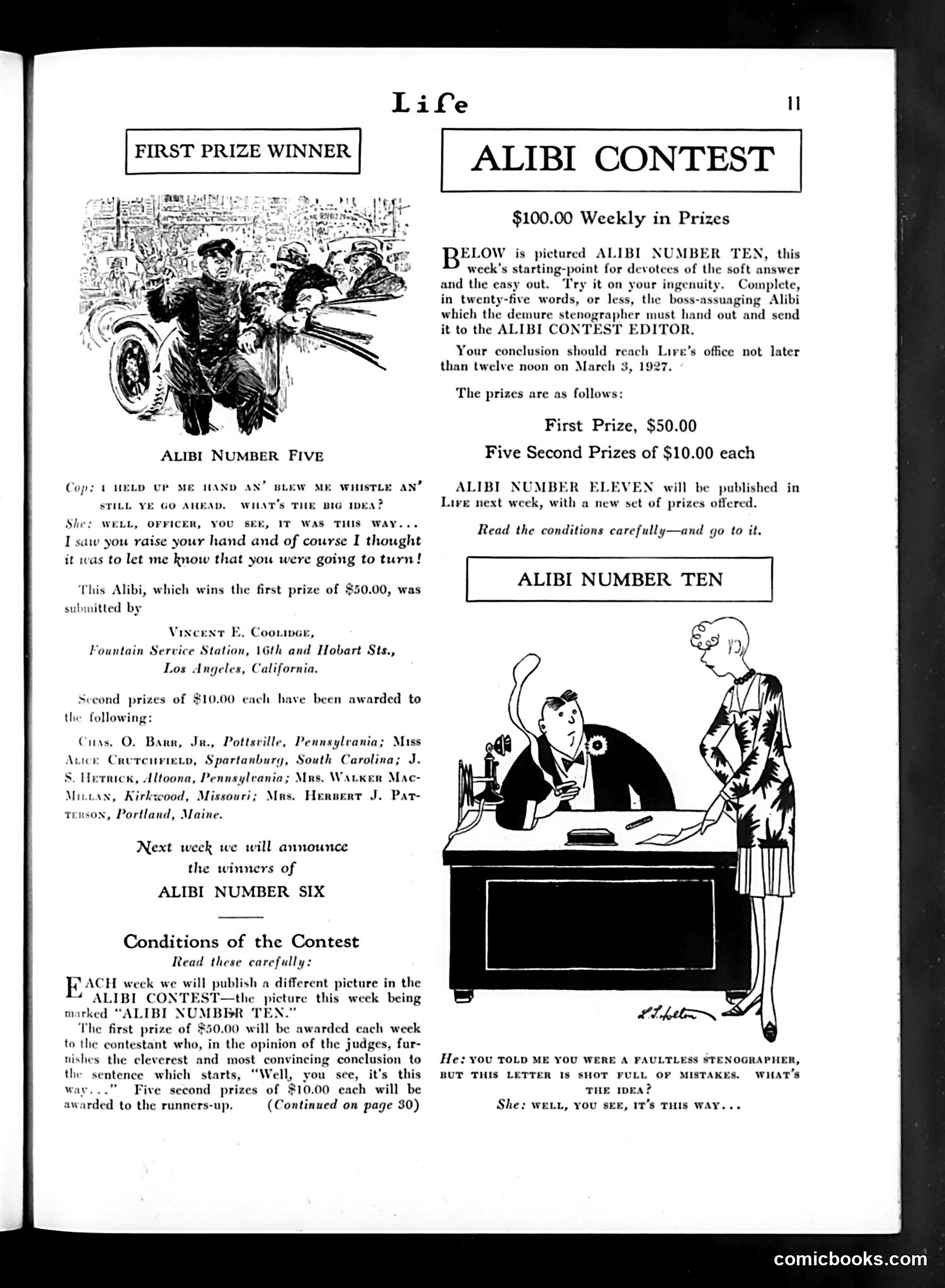
This page features Life's weekly "Alibi Contest," a humor competition where readers submit creative excuses or explanations for awkward situations. The winning entry for "Alibi Number Five" depicts a traffic stop where a driver caught speeding attempts to excuse himself to a police officer. The joke relies on the driver's absurd reasoning: he claims he raised his hand to signal he would turn, expecting the officer to understand this meant he'd continue straight instead. Below, "Alibi Number Ten" shows an office scene where a stenographer is confronted about typing errors in a letter. The humor lies in the classic excuse of blaming tools rather than skill. These contests reflect 1920s-era satirical humor about everyday mishaps and the universal human tendency to craft elaborate justifications for mistakes.
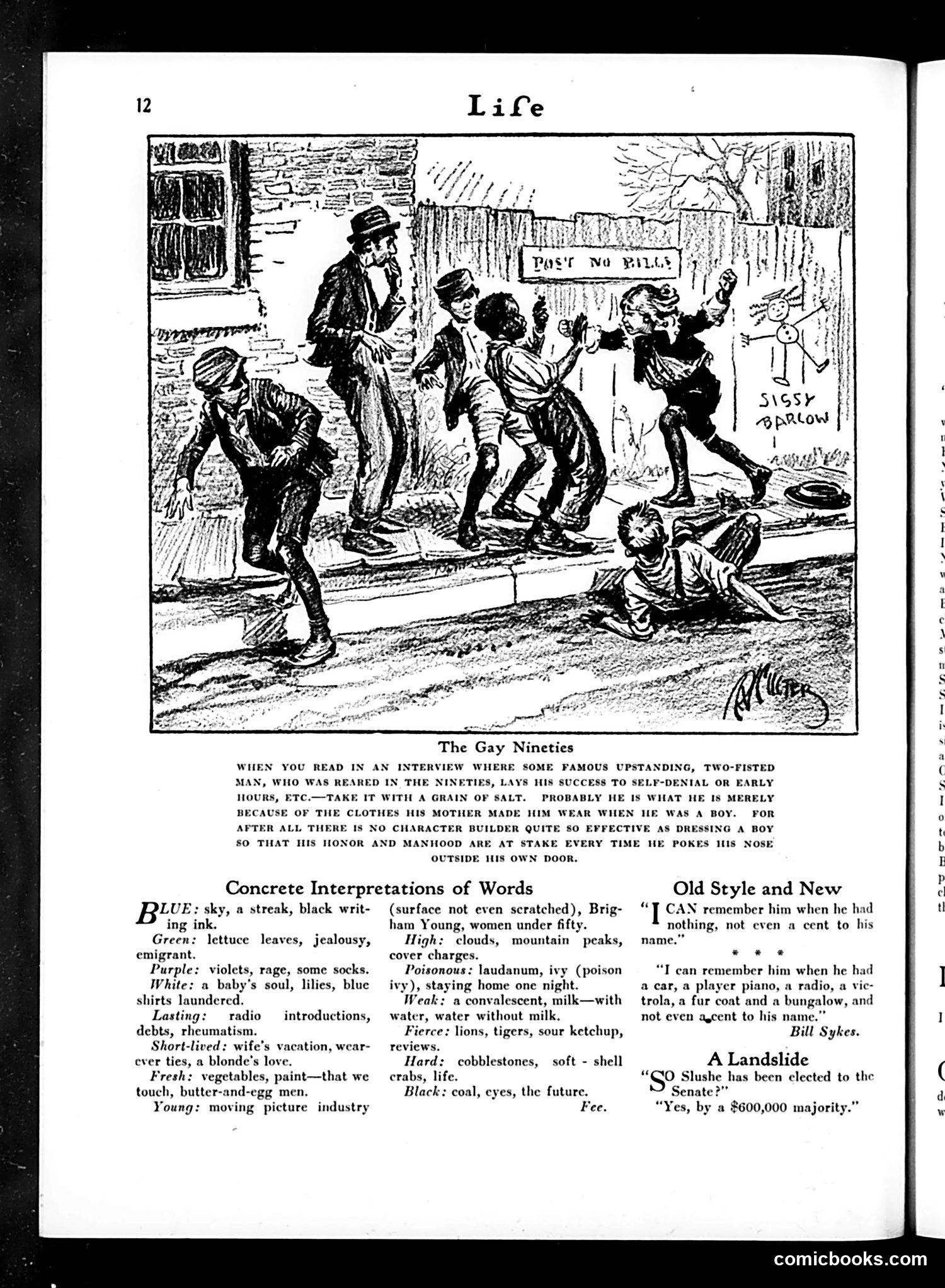
This cartoon satirizes men who claim their success derives from hardship and self-denial in childhood—specifically, wearing poorly-made clothes their mothers provided. The caption explains the satire: such men boast that childhood deprivation built their character and honor, yet they "poke his nose outside his own door" only when properly dressed. The image shows well-dressed adult men observing children playing in poverty (note the "Post No Bills" sign and bare surroundings). The satire targets the hypocrisy of wealthy men who romanticize their poor childhoods while clearly valuing appearance and status in adulthood. It mocks the contradiction between their nostalgic narratives and their actual priorities.
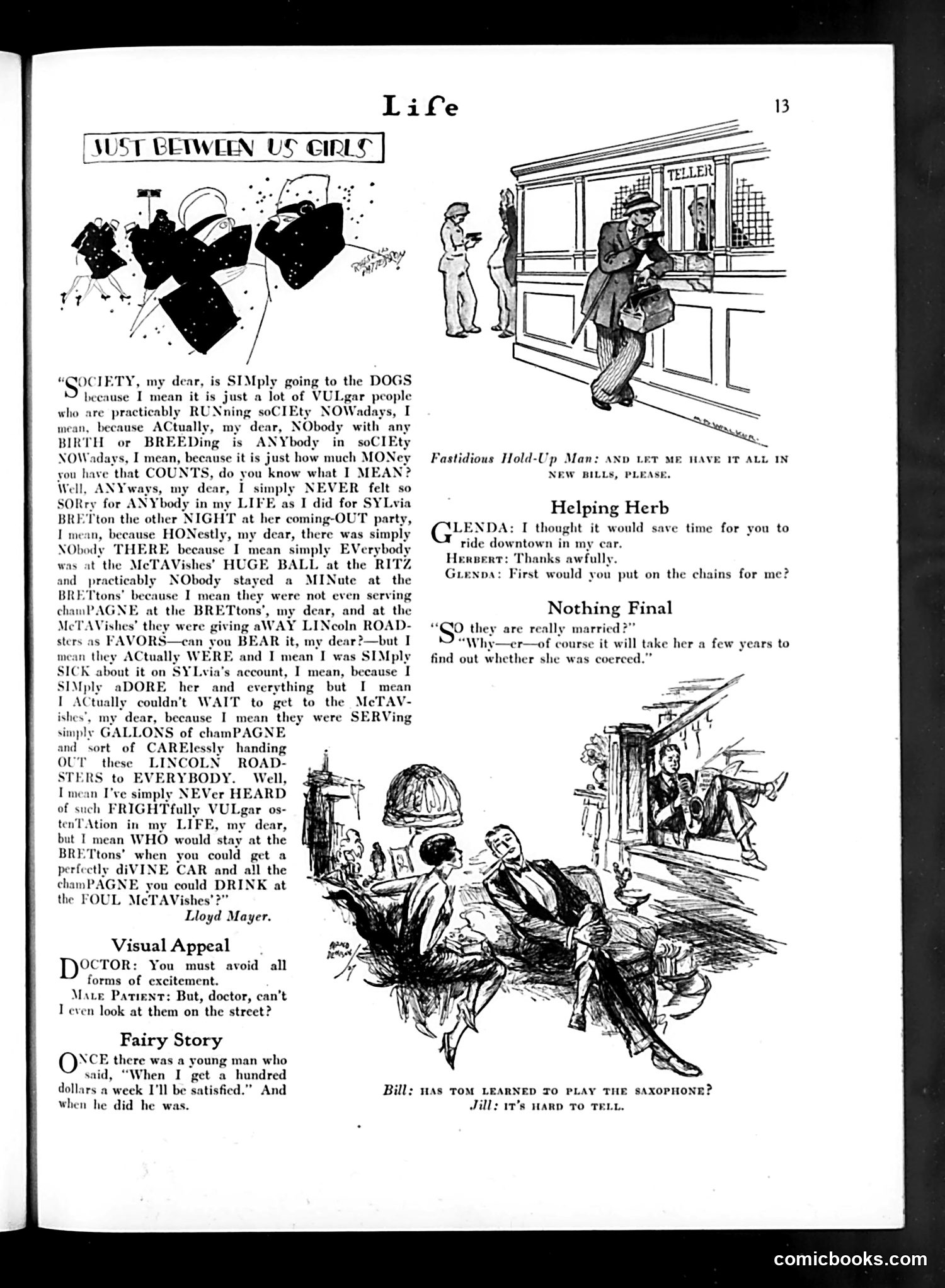
This page contains several short comedic pieces satirizing early 20th-century upper-class society: **"Just Between Us Girls"** mocks wealthy socialites' obsession with exclusive events, name-dropping lavish venues (the Ritz, MetaVishes balls), and conspicuous consumption. The lengthy monologue parodies how society women discuss their social standing through references to expensive cars, champagne, and exclusive parties—suggesting superficiality and social pretension. **"Visual Appeal,"** "Fairy Story," "Helping Herb," and "Nothing Final"** are brief humor pieces about romance, medical advice, and marriage expectations, using wordplay and gentle domestic comedy typical of the era. The cartoons accompanying these pieces use ink sketches depicting everyday social situations: bank transactions, driving, and couples—illustrating middle and upper-class life. The satire targets vanity, materialism, and the artificial social hierarchies of the period.
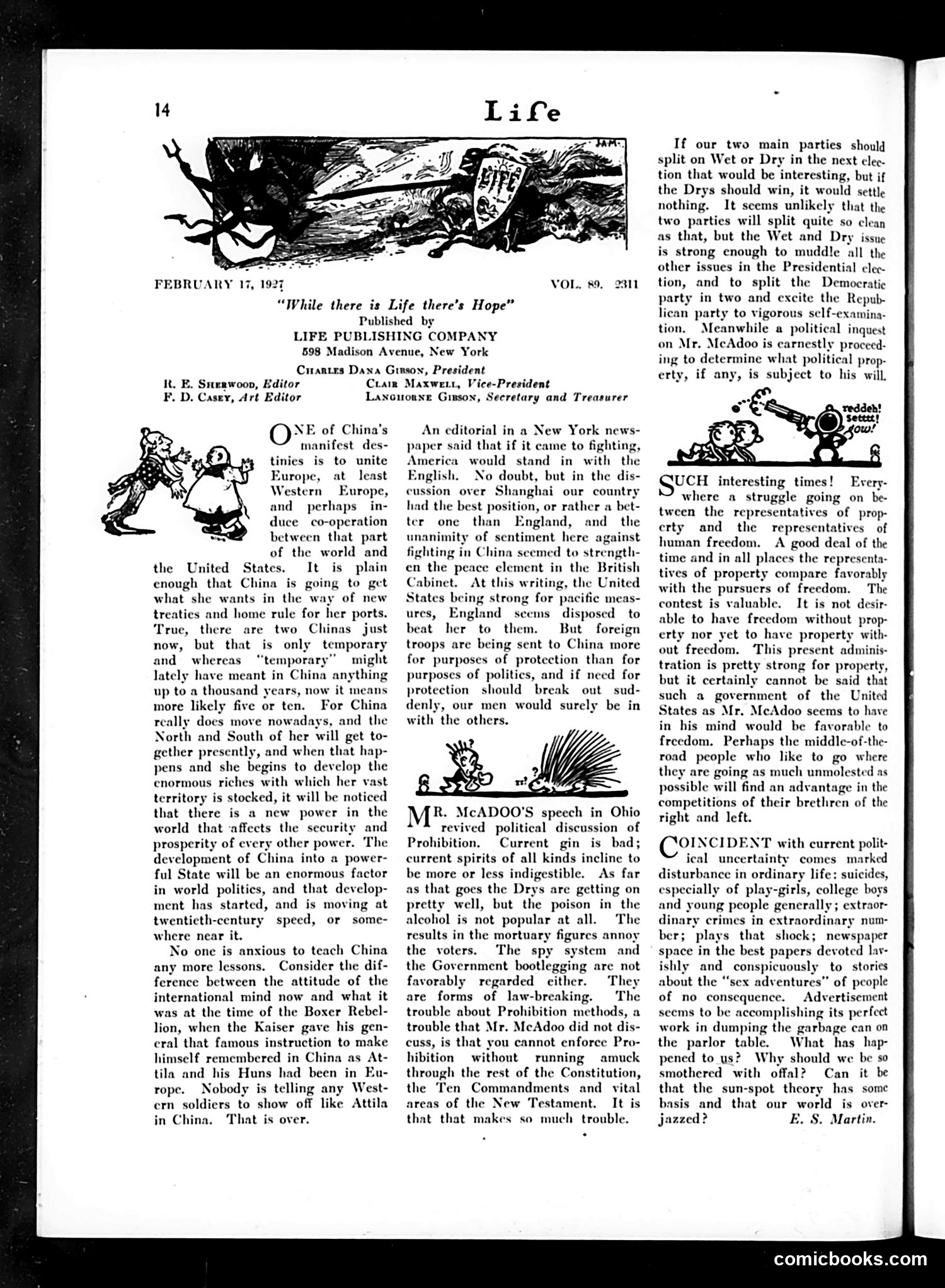
The small cartoon at top left appears to show a skeletal Death figure driving a vehicle, likely satirizing automobile accidents or reckless driving—a major public concern in the 1920s. The main editorial content discusses China's political instability and Western intervention, plus commentary on Prohibition enforcement. A reference to "Mr. McAdoo's speech in Ohio" addresses presidential politics and Prohibition policy debates. The final cartoon/illustration (bottom right) depicts what appears to be a figure overwhelmed by garbage or refuse, likely satirizing urban sanitation problems or the cultural "trash" of modern life—a common 1920s satirical theme about societal disorder. The overall page reflects 1920s anxieties: international instability, domestic policy conflicts (Prohibition), and concerns about modernization's negative effects.
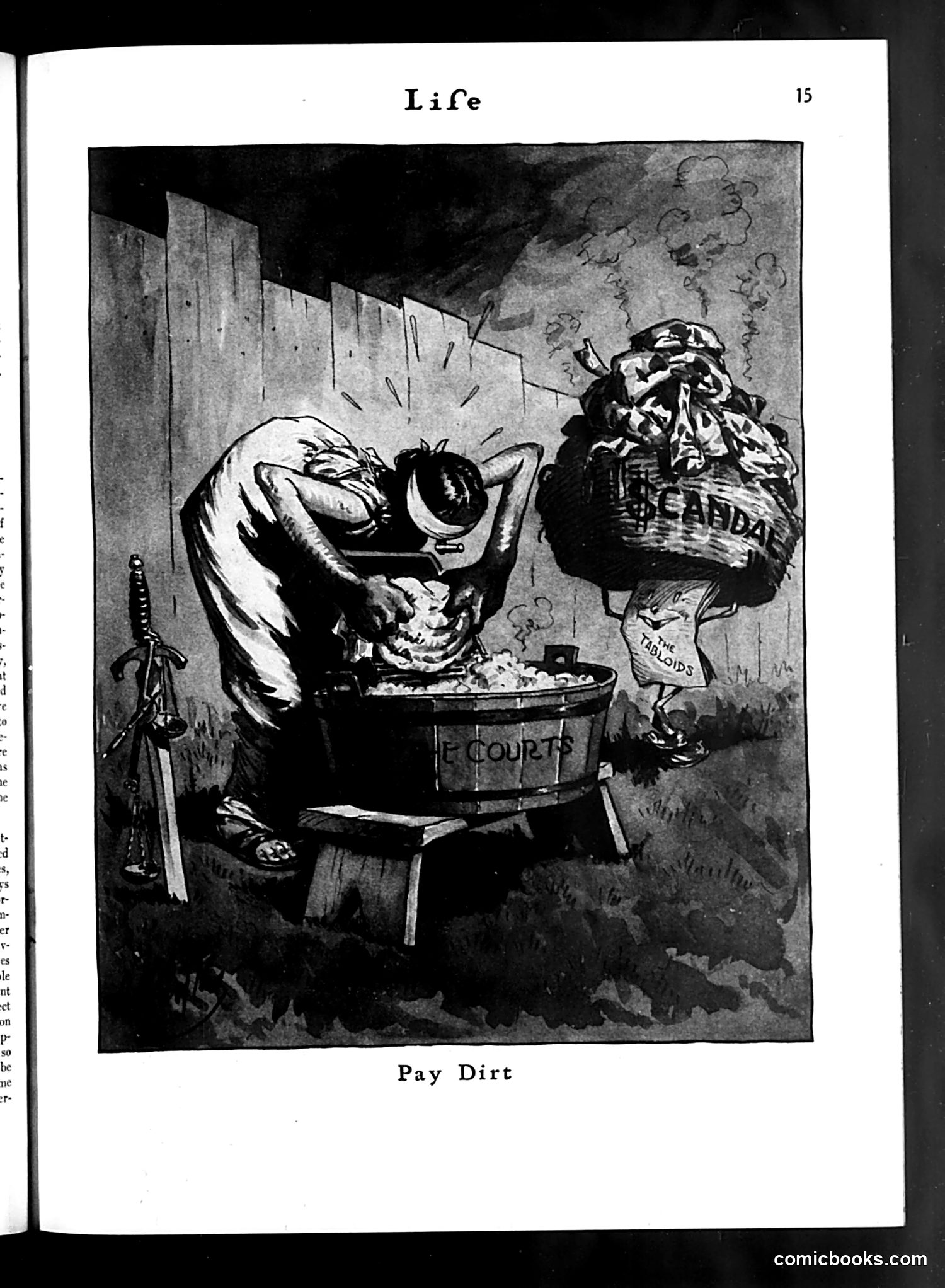
This political cartoon depicts two figures at a cauldron labeled "COURTS," engaged in what appears to be a corrupt transaction. One figure holds a hat, suggesting bribery or payoff, while baskets of goods labeled "GRAFT" are visible. The wooden fence and ominous sky create a clandestine atmosphere. The satire criticizes judicial corruption—specifically, the buying of favorable court decisions through bribes. The title "Pay Dirt" (slang for finding something profitable) reinforces the message that courts were being exploited for financial gain by corrupt officials or businessmen. This reflects Progressive Era concerns about institutional corruption, when reformers frequently attacked courts for being tools of wealthy interests rather than justice. The cartoon warns readers that the legal system itself had been compromised by graft.
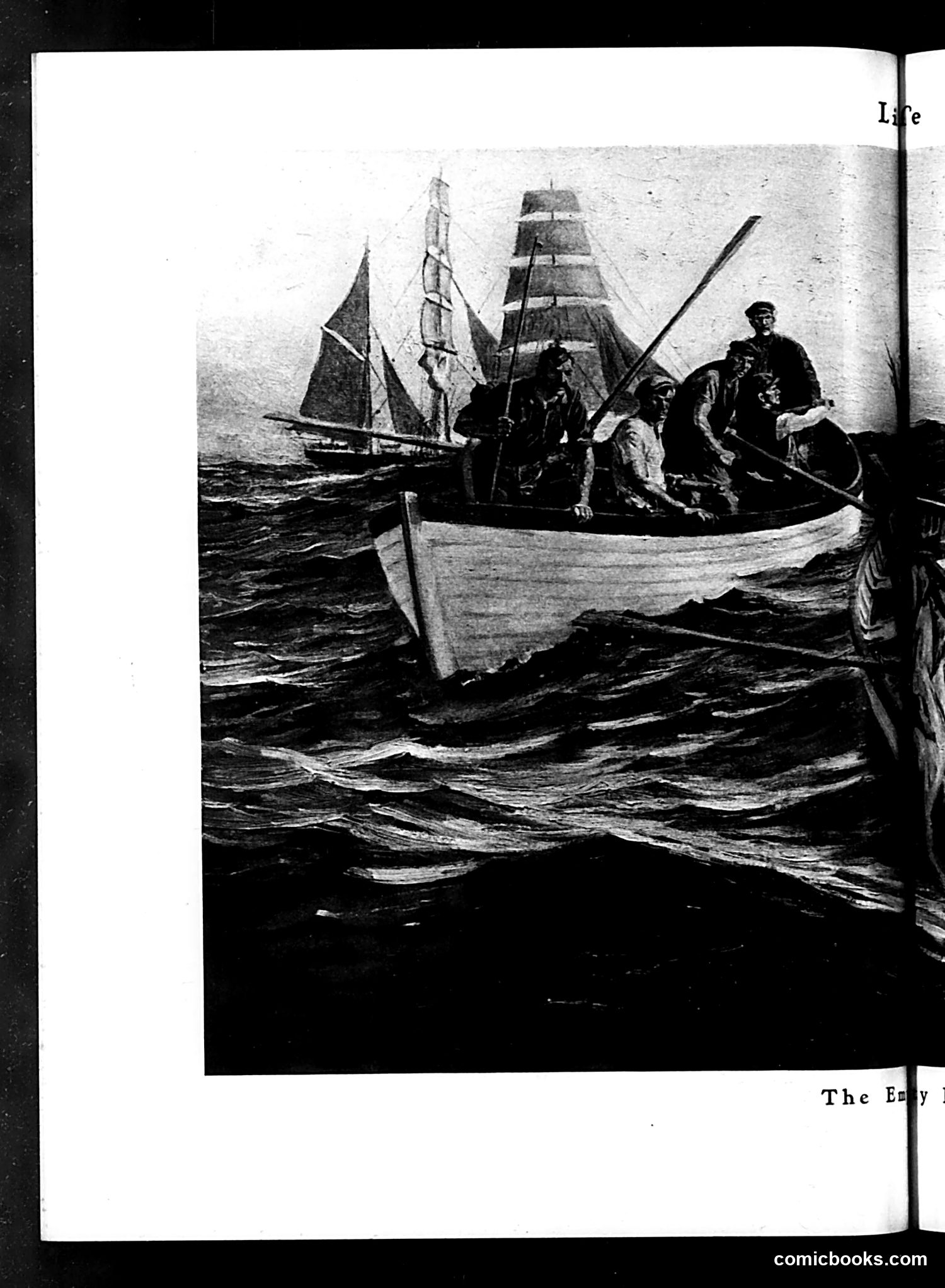
This appears to be an illustration depicting a small rowboat with several figures approaching a large sailing ship at sea. The image likely carries satirical meaning about an unequal encounter or power imbalance—small, vulnerable people approaching a much larger, more powerful vessel. However, **I cannot definitively identify the specific political figures or historical event referenced** without clearer text or caption visible in the image. The partial text visible ("The E..." at bottom) is too fragmented to determine the cartoon's exact subject or intended commentary. To properly explain this satire to a modern reader, I would need either: the complete caption, the publication date, or clearer identification of the figures depicted. The image alone suggests maritime-themed political allegory, but the specific reference remains unclear.
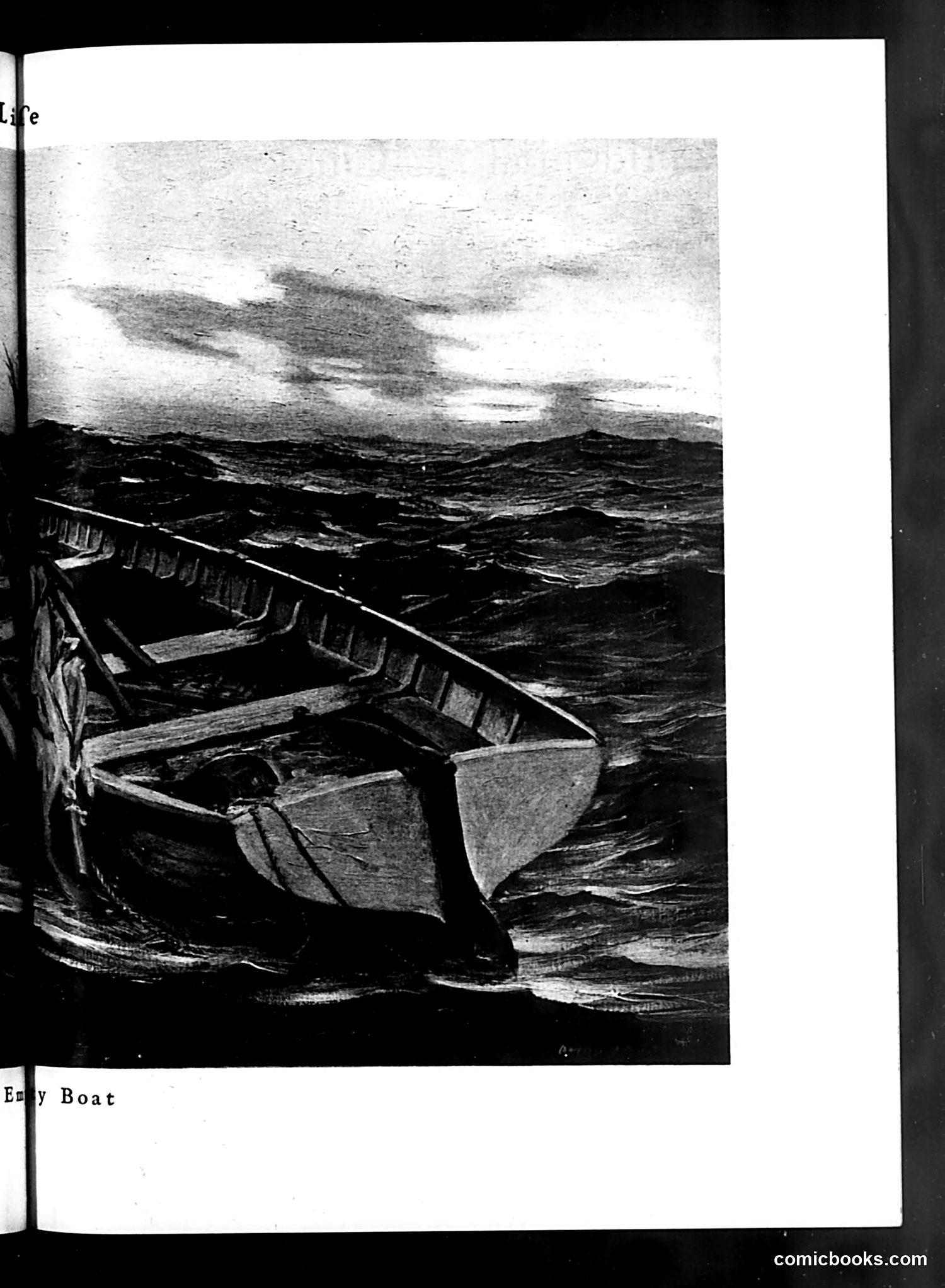
This page shows a black and white photograph or illustration labeled "Empty Boat," depicting a small rowboat on rough seas. The image appears to be a straightforward documentary or artistic photograph rather than a political cartoon. Without additional context from the magazine's surrounding text, the specific satirical meaning is unclear. The title suggests metaphorical significance—possibly referencing an absent figure or abandoned situation—but without accompanying article text or captions explaining the reference, I cannot identify what political or social situation this was meant to comment on. It may relate to a contemporary news event from Life magazine's publication period, but that connection isn't evident from the image alone.
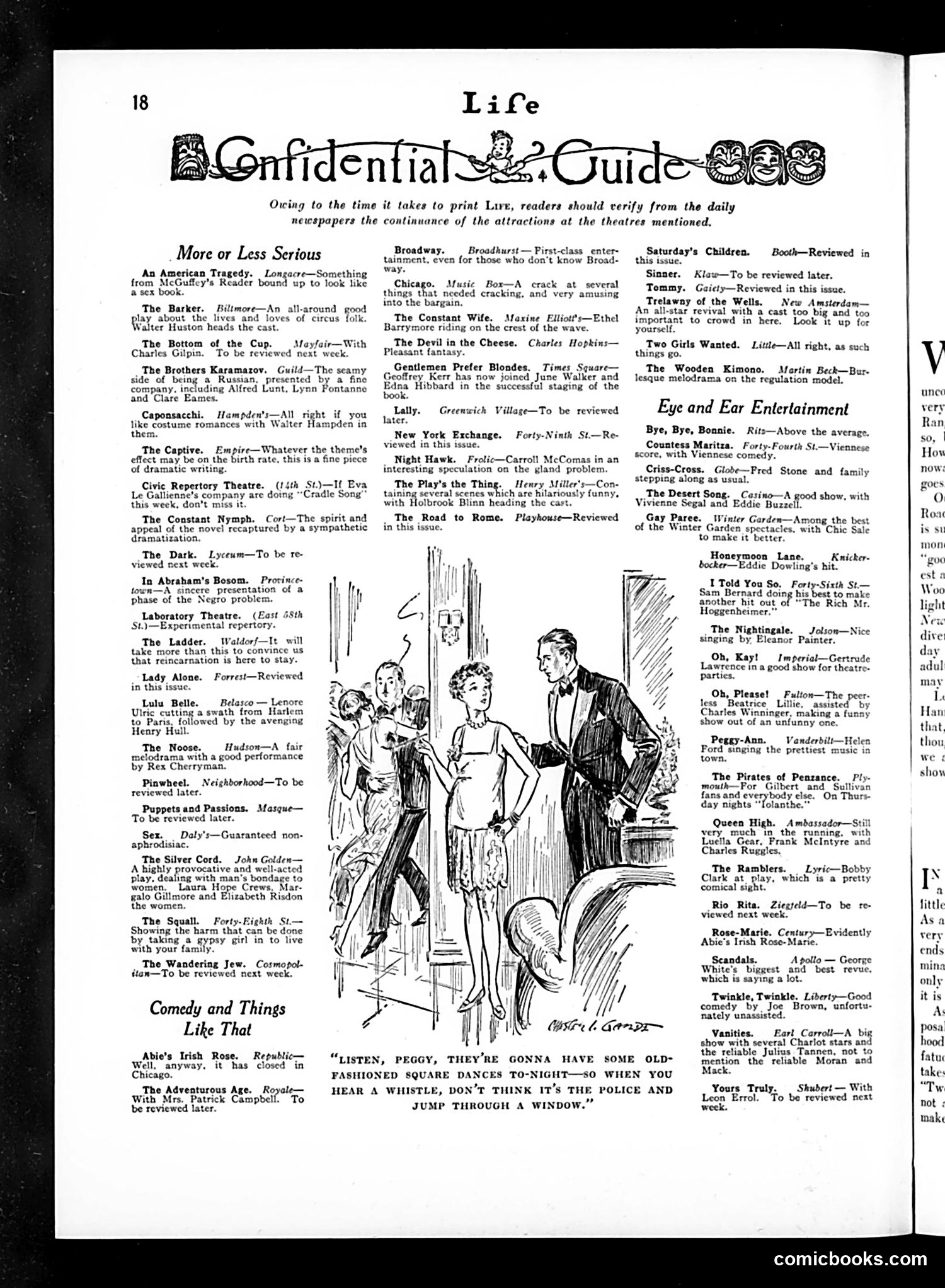
This is a theater review page from Life magazine listing Broadway shows of the era. The main cartoon depicts a domestic scene where a man instructs a woman (presumably his wife "Peggy") about upcoming "old-fashioned square dances," warning her not to mistake a police whistle for the dance signal and jump through a window. **The satire targets Prohibition-era speakeasies.** The "square dances" are code for illegal alcohol gatherings. The joke relies on the reader understanding that: 1. Police raids on speakeasies were frequent and dangerous 2. Participants genuinely feared police whistles signaling raids 3. The woman's panicked window-jumping represents the desperate, chaotic escapes that occurred during raids The cartoon mocks both the absurdity of Prohibition enforcement and the public's casual acceptance of participating in illegal activities. It assumes readers are familiar with speakeasy culture and police raid tactics—illustrating how normalized law-breaking had become in 1920s America.
This page contains theatrical reviews by Robert Benchley, Life's drama critic. The piece humorously opens with Benchley noting the awkward position of reviewing plays written by Life's own editors—he risks either appearing to do "logrolling" (mutual promotion) if he praises it, or facing transfer to the "Rangoon office" if he criticizes it. Benchley reviews several Broadway plays: "The Road to Rome" (starring Jane Cowl), which he endorses despite claiming neutrality; "Saturday's Children" by Maxwell Anderson, featuring Ruth Gordon, which he praises for its modern take on marriage and domesticity; "Tommy," a lightweight comedy he deems acceptably wholesome; and "New York Exchange," which he critiques for overselling itself as daring when it's merely mediocre. The satire targets contemporary theater's sensationalism and the pretensions of theatrical management. References to "Sapho" being "considered dirt" reflect changing moral standards in early 20th-century drama.
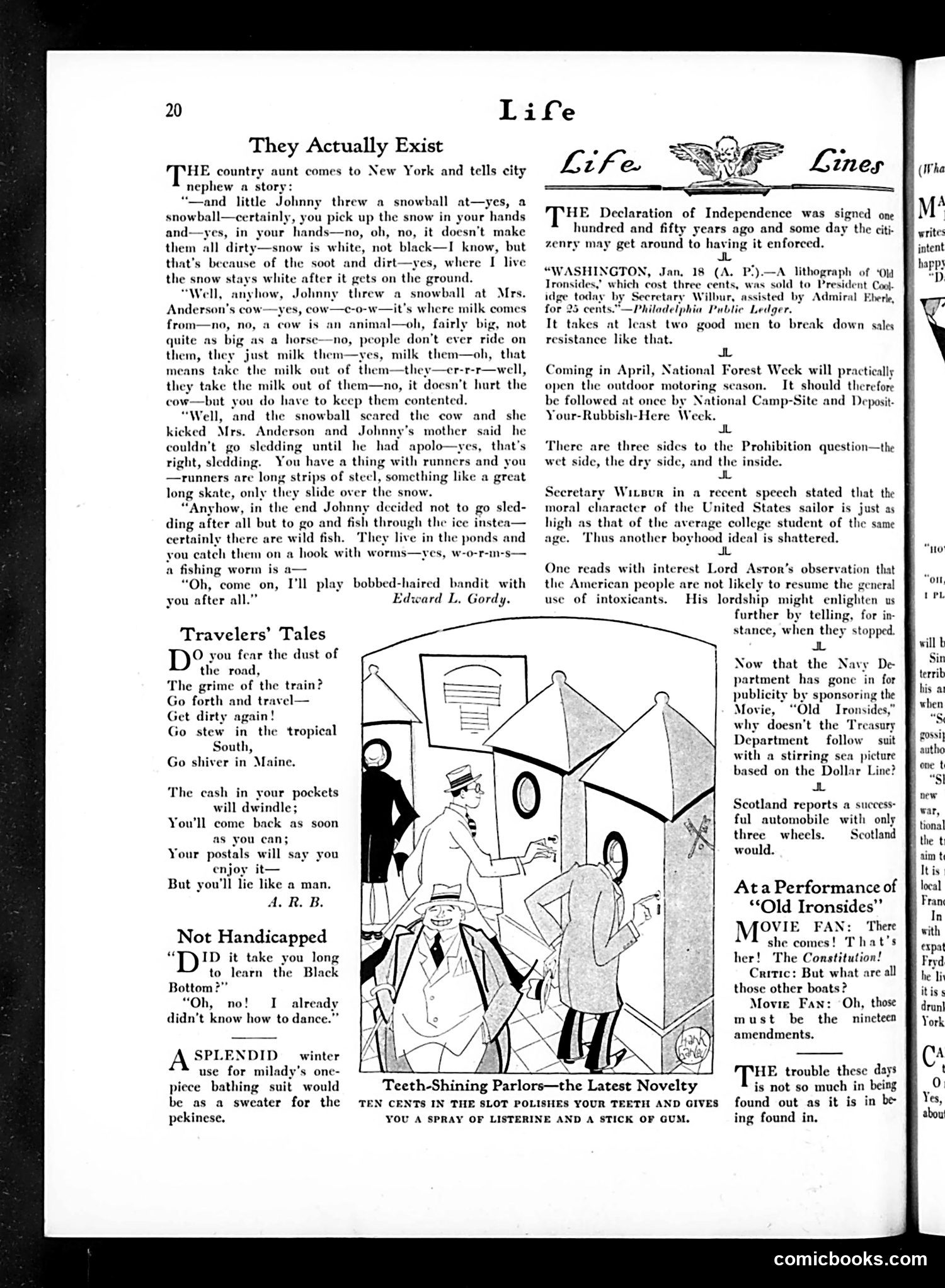
This page from Life magazine contains several satirical pieces mocking American society and politics circa the 1920s. The main cartoon, "Teeth-Shining Parlors," depicts a vending machine novelty where customers insert coins to receive automated teeth cleaning with Listerine spray and gum—satirizing the era's enthusiasm for mechanization and commercial convenience. The text includes commentary on: - **Prohibition's contradictions**: joking that Americans continue drinking despite the law - **Naval propaganda**: mocking the Navy Department's sponsorship of the film "Old Ironsides" for publicity purposes - **Lord Astor's observation**: sarcastically suggesting Americans won't resume intoxicant use, despite clear evidence they already have - **Class and rural ignorance**: the opening anecdote portrays a country aunt explaining basic concepts (cows, snow, sledding) to a city relative, stereotyping rural Americans The humor relies on readers recognizing 1920s anxieties about technology, enforcement of unpopular laws, and urban-rural cultural divides.
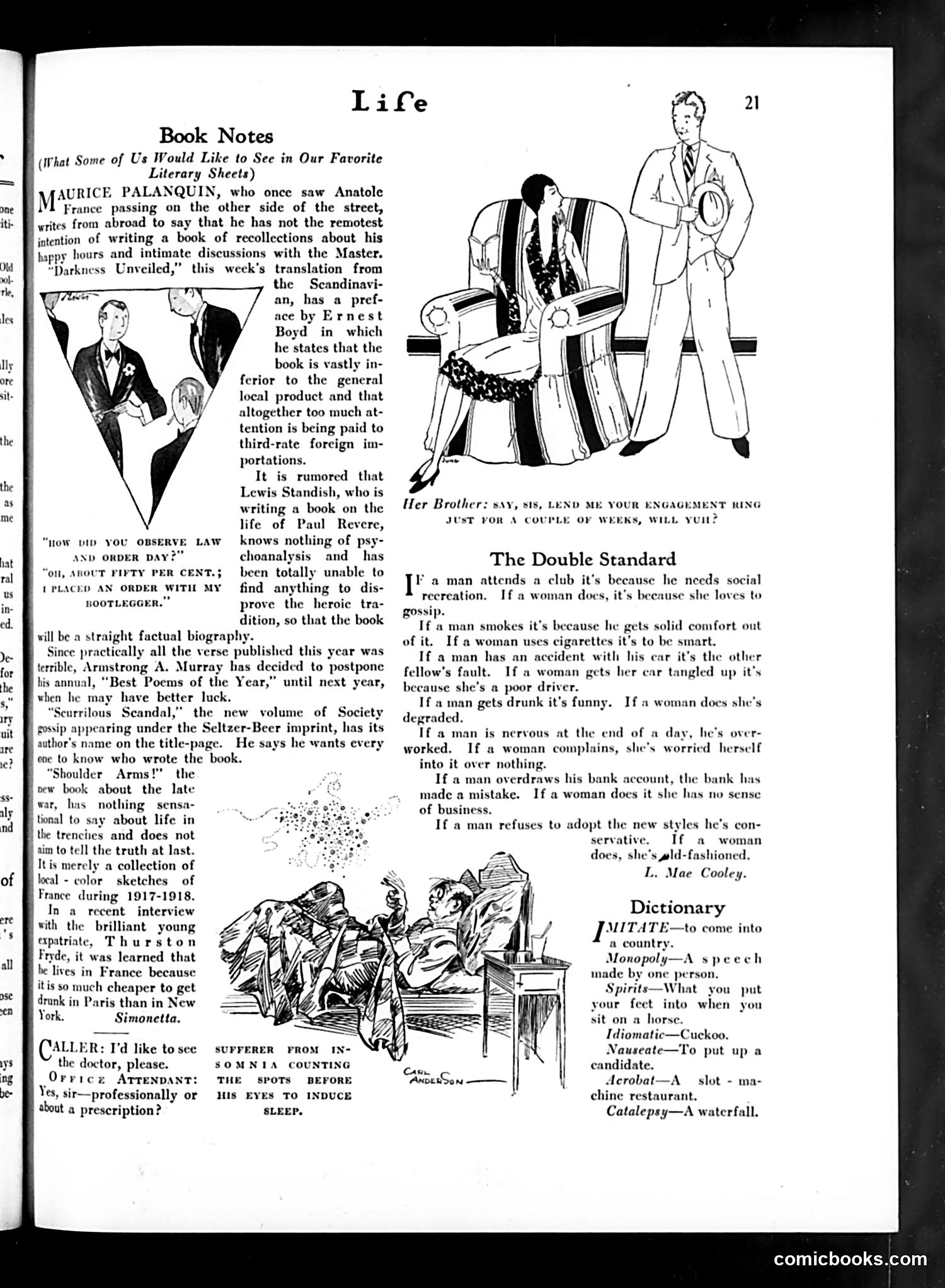
This page from *Life* magazine contains satirical commentary on 1920s literary culture and gender double standards. **Book Notes section**: Satirizes pretentious literary figures and trends—authors who namedrop famous writers, publishers rejecting foreign works as inferior, and the glut of mediocre war memoirs. The joke about "Law and Order Day" references Prohibition, mocking compliance by noting someone follows it 50% (ordering from a bootlegger). **"The Double Standard" essay** by L. Mae Cooley is the page's main commentary: it exposes how identical behaviors receive opposite moral judgments based on gender. A man drinking is "funny"; a woman is "degraded." A man is "overworked"; a woman "worried herself into it." This reflects 1920s sexism—the era's newly independent women (flappers) faced constant moral criticism while men received social leeway. The cartoons illustrate these hypocrisies visually, including a woman being asked to lend her engagement ring casually—suggesting how men exploited women's romantic vulnerability. The "Dictionary" section provides humorous fake definitions mocking contemporary jargon and politics.
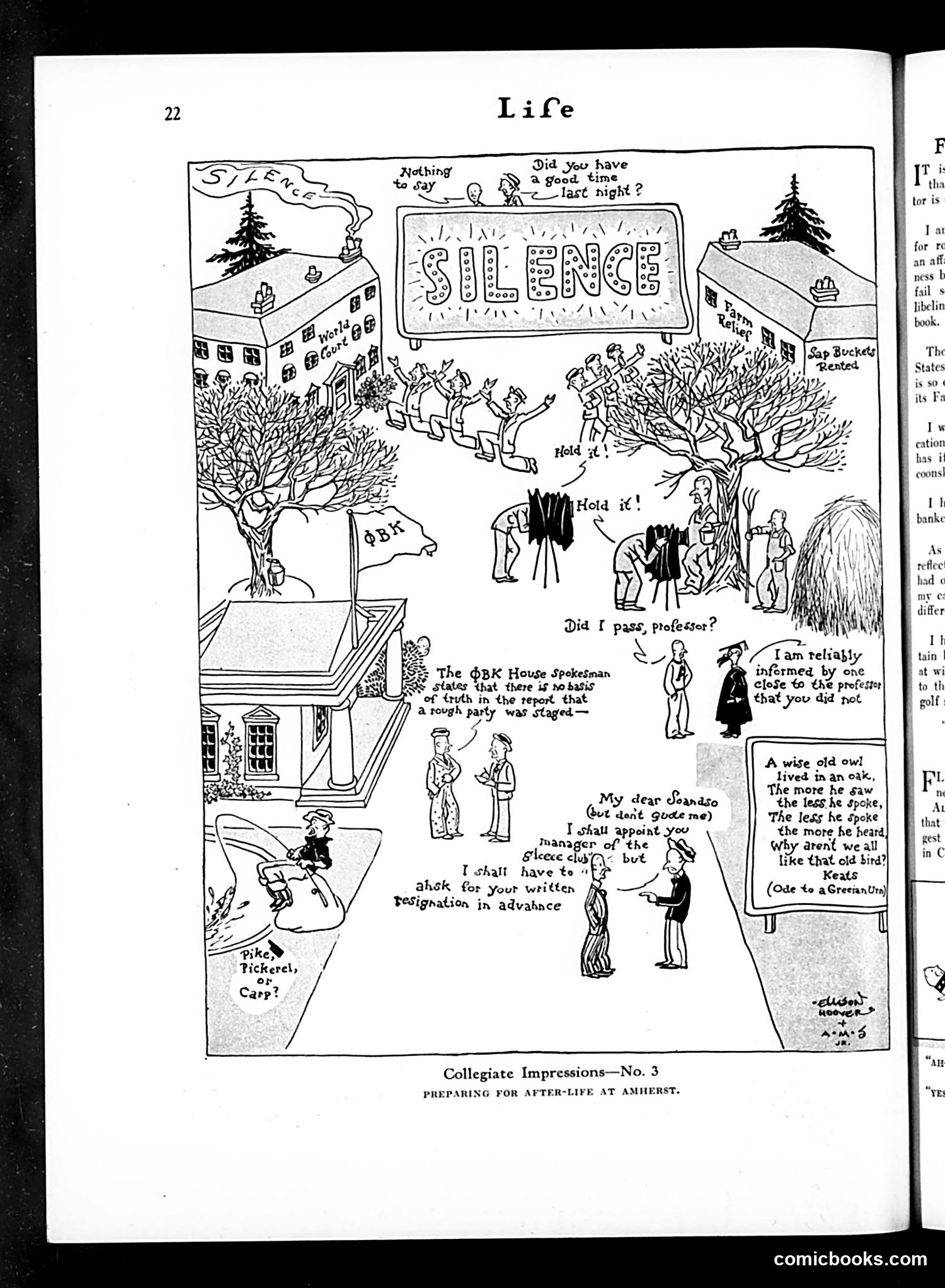
This satirical cartoon mocks student life at Amherst College, particularly fraternities and academic pretension. Key elements include: **The Phi Beta Kappa (ΦBK) House**: A fraternity whose spokesman denies hosting a "rough party," a common excuse for student misbehavior. **"Silence" theme**: The central panel ironically emphasizes silence while chaos erupts around campus—students partying, resigning from clubs, arguing with professors about grades. **The owl quote** (bottom right): A satirical jab at pompous student intellectualism—quoting a proverb about wisdom while the cartoon shows students behaving foolishly. **"Did I pass, professor?"**: Mocks grade-grubbing and students' anxiety about academic standing. The overall joke: Amherst students imagine themselves preparing for serious "after-life" (post-collegiate careers), but instead spend time partying, making excuses, and performing hollow intellectual posturing. The cartoon satirizes the gap between collegiate pretense and actual behavior.
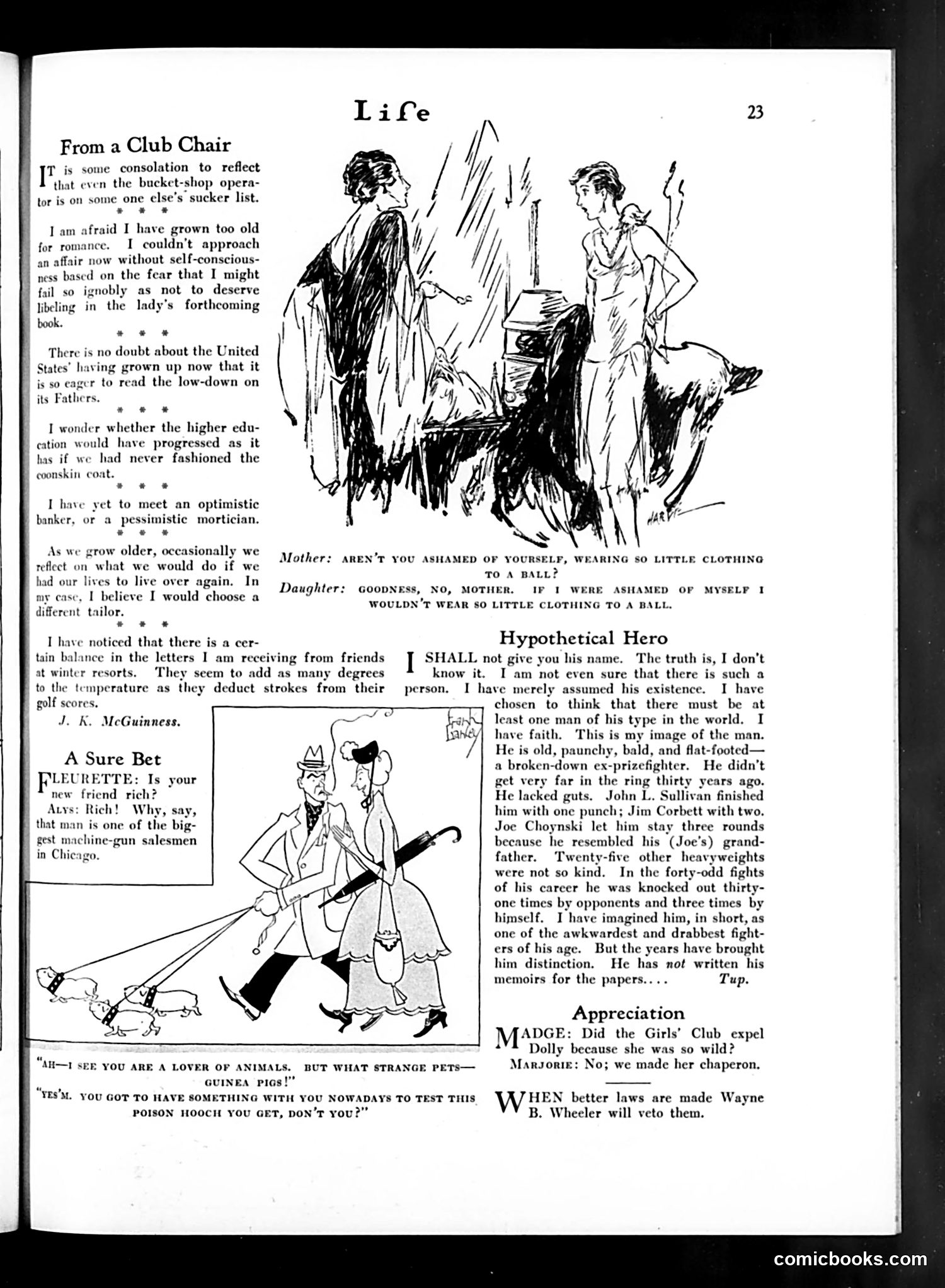
This is a humor and satire page from *Life* magazine featuring several short comedic pieces and cartoons typical of early 20th-century American wit. **"From a Club Chair"** presents brief satirical observations on contemporary life: concern about aging and romance, American eagerness to read scandalous biographies of the Founding Fathers, and the dated fashion of coonskin coats. **"A Sure Bet"** jokes about a machine-gun salesman being wealthy—likely referencing 1920s bootlegging and organized crime, when selling weapons to gangsters was lucrative. **The guinea pig cartoon** satirizes Prohibition-era concerns: people use guinea pigs to test illegal "hooch" (bootleg alcohol) for poison before drinking it themselves. **The mother-daughter cartoon** depicts generational conflict over 1920s fashion—daughters wearing revealing flapper dresses while mothers disapprove. **"Hypothetical Hero"** imagines an obscure, failed boxer who gained "distinction" (unclear how). The reference to John L. Sullivan and Jim Corbett suggests early prizefighting. **The final quip** about Wayne B. Wheeler mocking stricter Prohibition enforcement reflects anti-Prohibition sentiment.
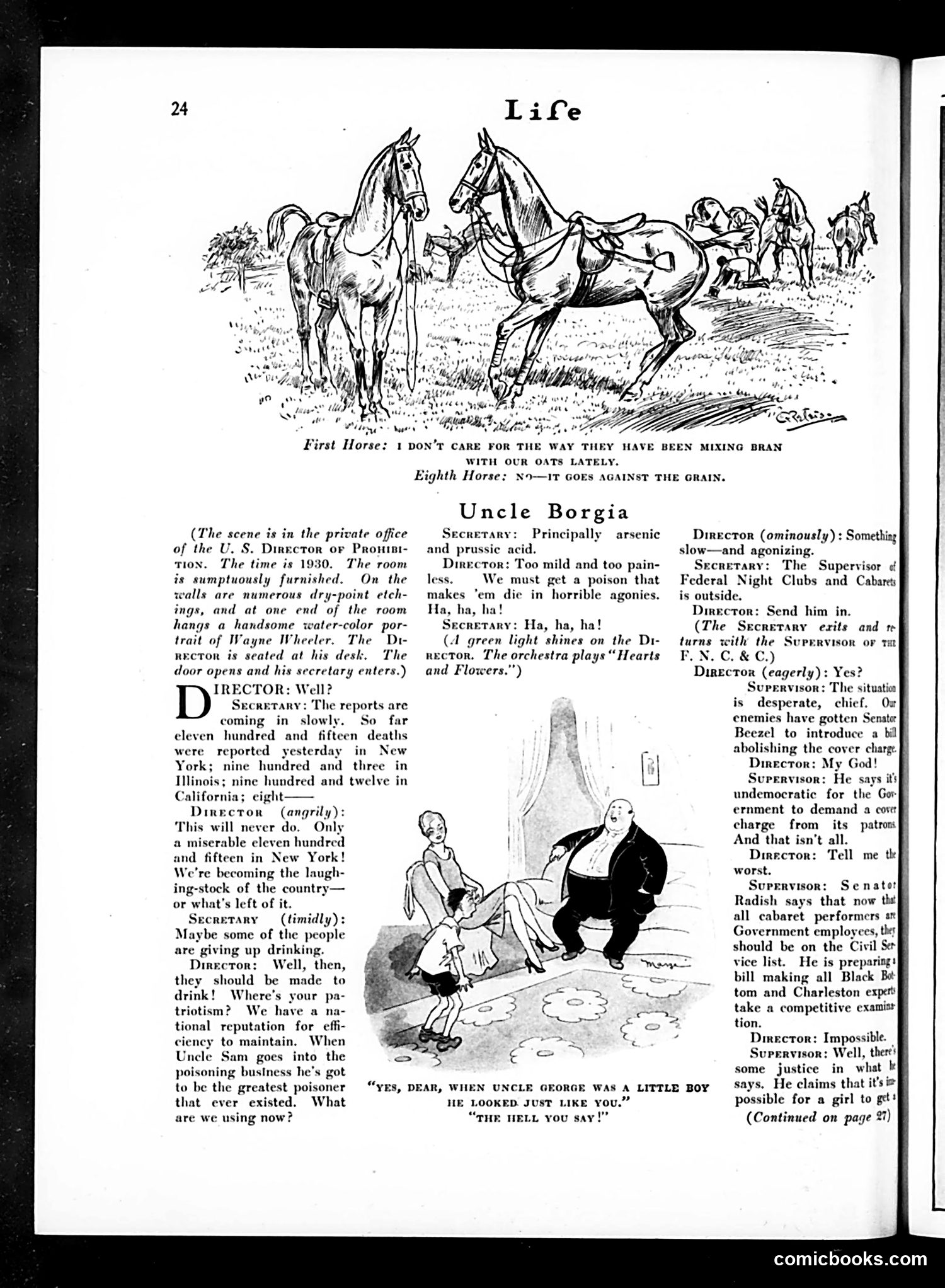
This 1930 *Life* magazine sketch satirizes Prohibition enforcement and the absurdities of government overreach. The title "Uncle Borgia" invokes the Renaissance Borgia family, known for poisoning rivals—equating aggressive Prohibition with state-sponsored murder. The Director of Prohibition (likely a caricature of actual enforcement officials) is angered that poisoned alcohol deaths from illicit bootleg liquor are too low. He demands more potent toxins causing "horrible agonies," treating mass poisoning as a competition and matter of "national reputation." The satire targets: - **Prohibition's deadly consequence**: Government-poisoned industrial alcohol killed thousands when bootleggers diluted it - **Bureaucratic absurdity**: Treating poisoning as an efficiency metric - **Government hypocrisy**: Claiming patriotism while causing deaths The secondary sketch about Federal Night Clubs mocks expanding wartime/Prohibition-era government control over entertainment and labor regulations. The cartoon exposes how Prohibition's enforcement created bureaucratic monsters indifferent to human suffering.
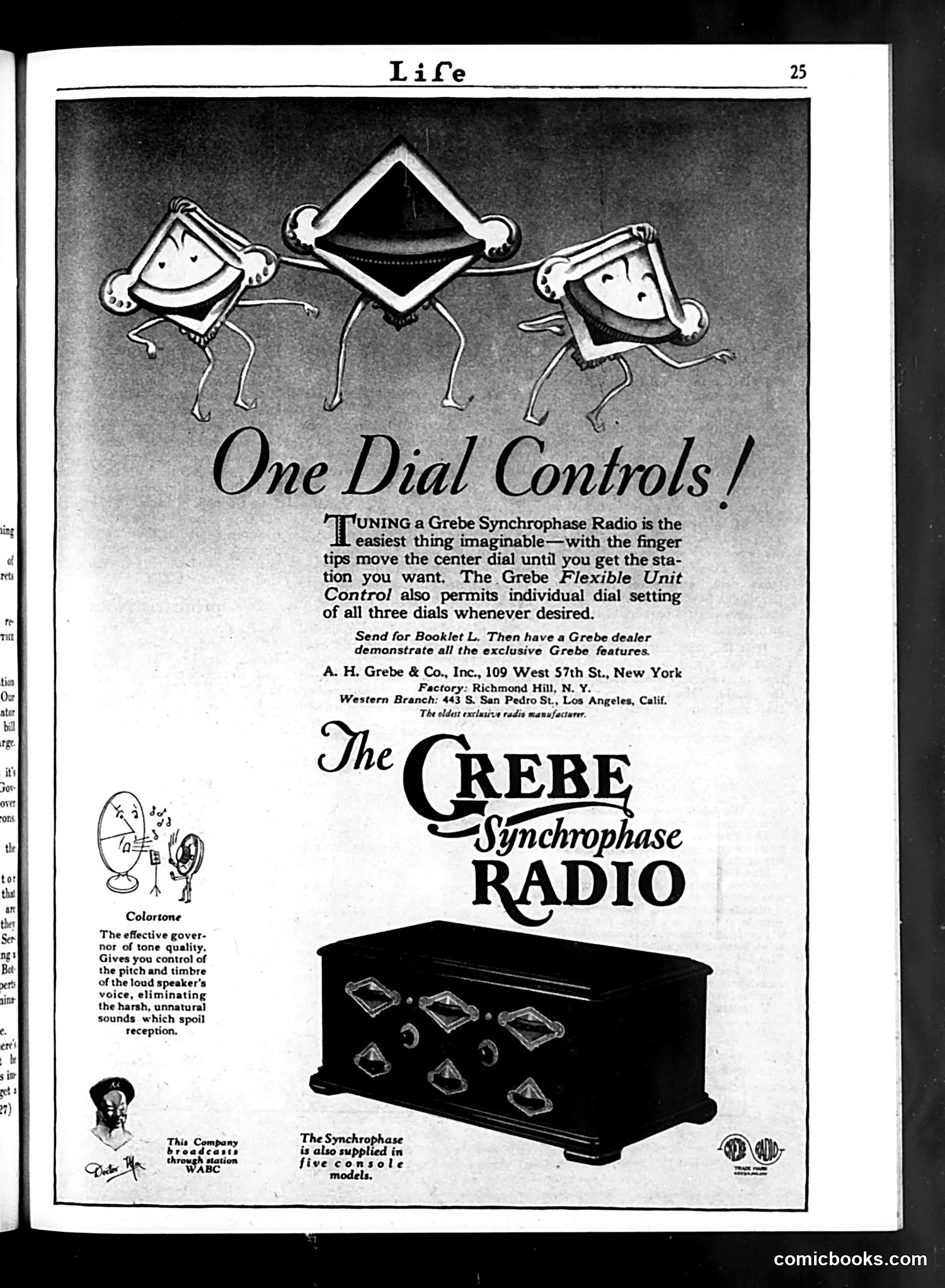
This page is primarily a **radio advertisement** for the Grebe Synchrophase Radio, not political satire. The cartoon elements are purely commercial illustrations. The top shows three anthropomorphized dials (with faces and limbs) demonstrating the radio's "One Dial Controls" feature—the central dial dances between two others, humorously illustrating ease of tuning. The small cartoon on the left depicts a character labeled "Colortone," personifying the tone-control feature that adjusts pitch and timbre to reduce reception static. The humor is gentle and promotional rather than satirical: the mascot characters make radio mechanics appear simple and fun for consumers. The advertisement emphasizes the Grebe brand as "the oldest exclusive radio manufacturer," highlighting technical innovations like flexible unit controls and multiple dials as selling points during the early radio era (likely 1920s-early 1930s based on styling and manufacturing references to Richmond Hill and Los Angeles facilities).
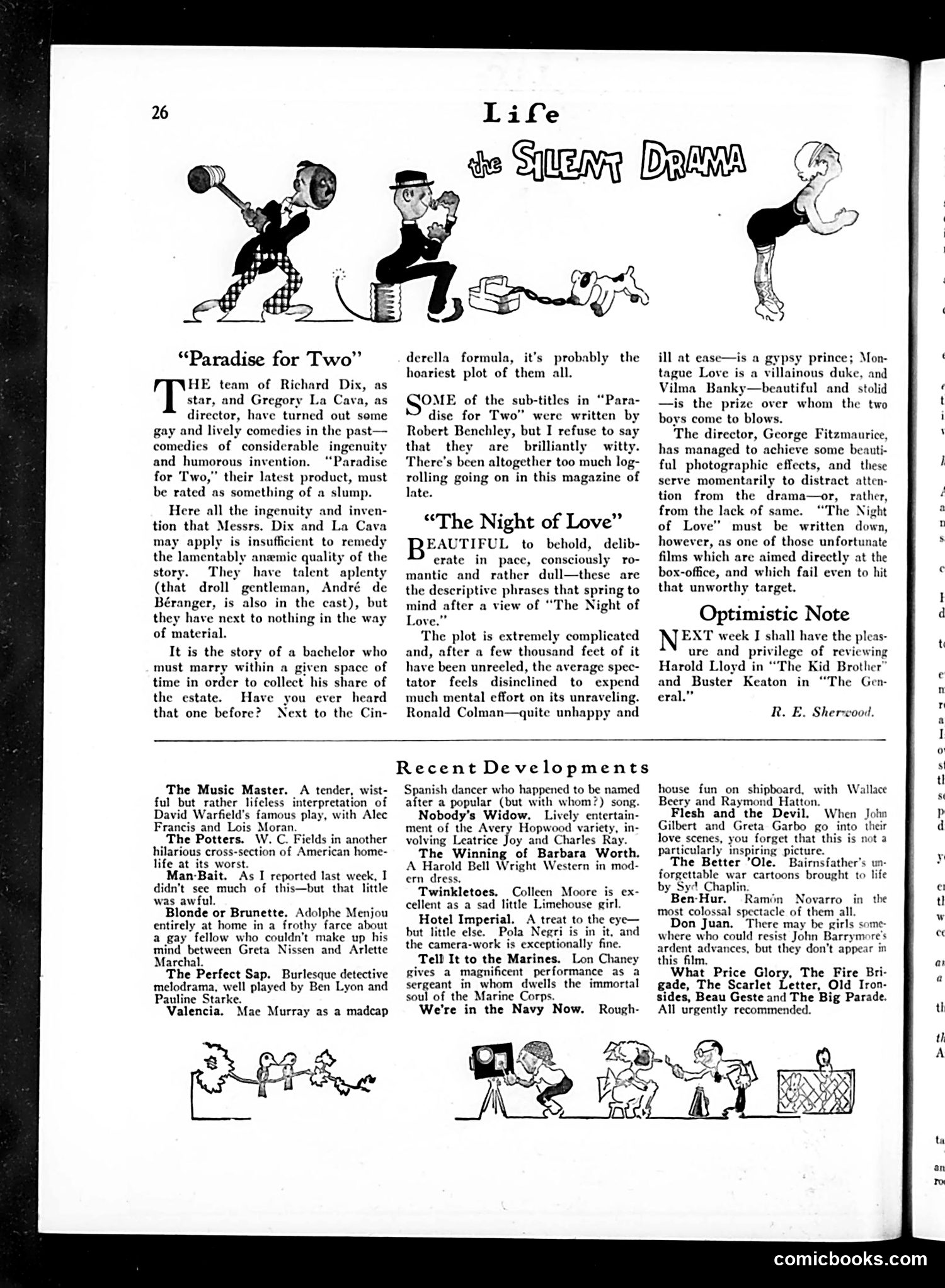
This is a film review page from *Life* magazine's "Silent Drama" section, critiquing contemporary movies (likely mid-1920s based on references to silent film stars like Ronald Colman and Vilma Banky). The reviews are notably **harsh and witty**. The critic dismisses "Paradise for Two" as a creative "slump" using tired plot devices—a bachelor must marry to inherit. He mocks "The Night of Love" as visually pretty but narratively tedious, with Ronald Colman appearing miserable in the role. The tone is **snobbish and caustic**: the critic attacks "log-rolling" (mutual praise among colleagues), accuses films of being cynically "aimed directly at the box-office," and generally suggests contemporary Hollywood is creatively bankrupt. The cartoon headers show exaggerated silent-film physical comedy—dumbbells, slapstick, pratfalls—satirizing the era's reliance on broad physical humor over substantial storytelling. This visual mockery complements the textual criticism of weak material.
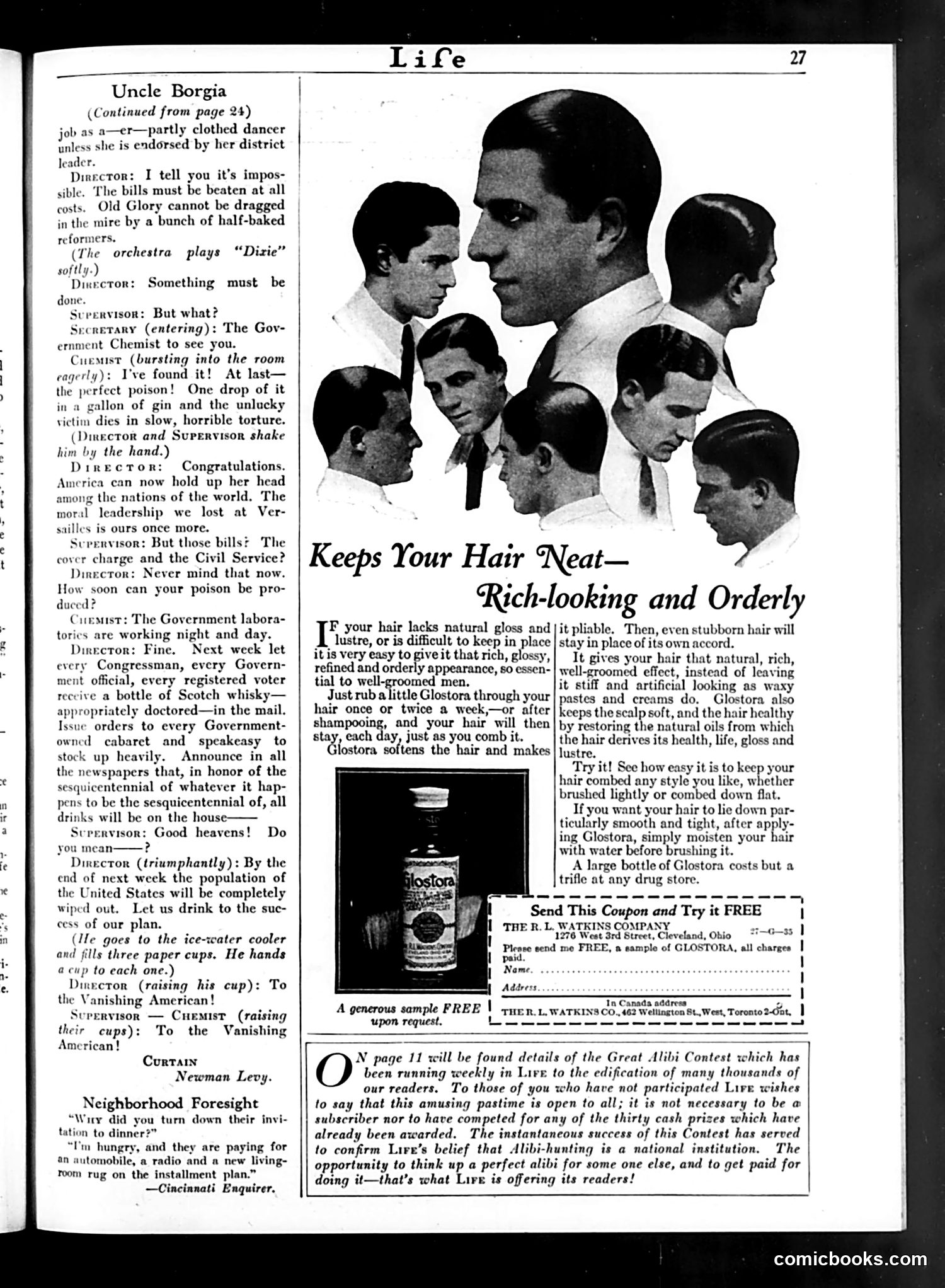
**"Uncle Borgia" Sketch:** This satirical play-within-the-magazine mocks post-WWI American government corruption. The scenario depicts a cynical director and supervisor who, unable to pass reform bills ("Old Glory cannot be dragged in the mire"), decide to poison the entire U.S. population via doctored liquor distributed to government officials and citizens. The "Government Chemist" proudly delivers the poison, and all three toast "the Vanishing American"—a dark joke referencing the earlier loss of "moral leadership" at the Versailles peace talks. The satire attacks government hypocrisy: officials prioritize covering up scandals over actual reform, ultimately endorsing mass murder as preferable to honest governance. **Advertisement:** The page also contains a Glostora hair product ad promising to make hair "rich-looking and orderly"—typical 1920s marketing linking grooming to respectability and success. The juxtaposition of cynical political satire with mundane consumer advertising reflects Life magazine's typical format blending serious social critique with commercial culture.
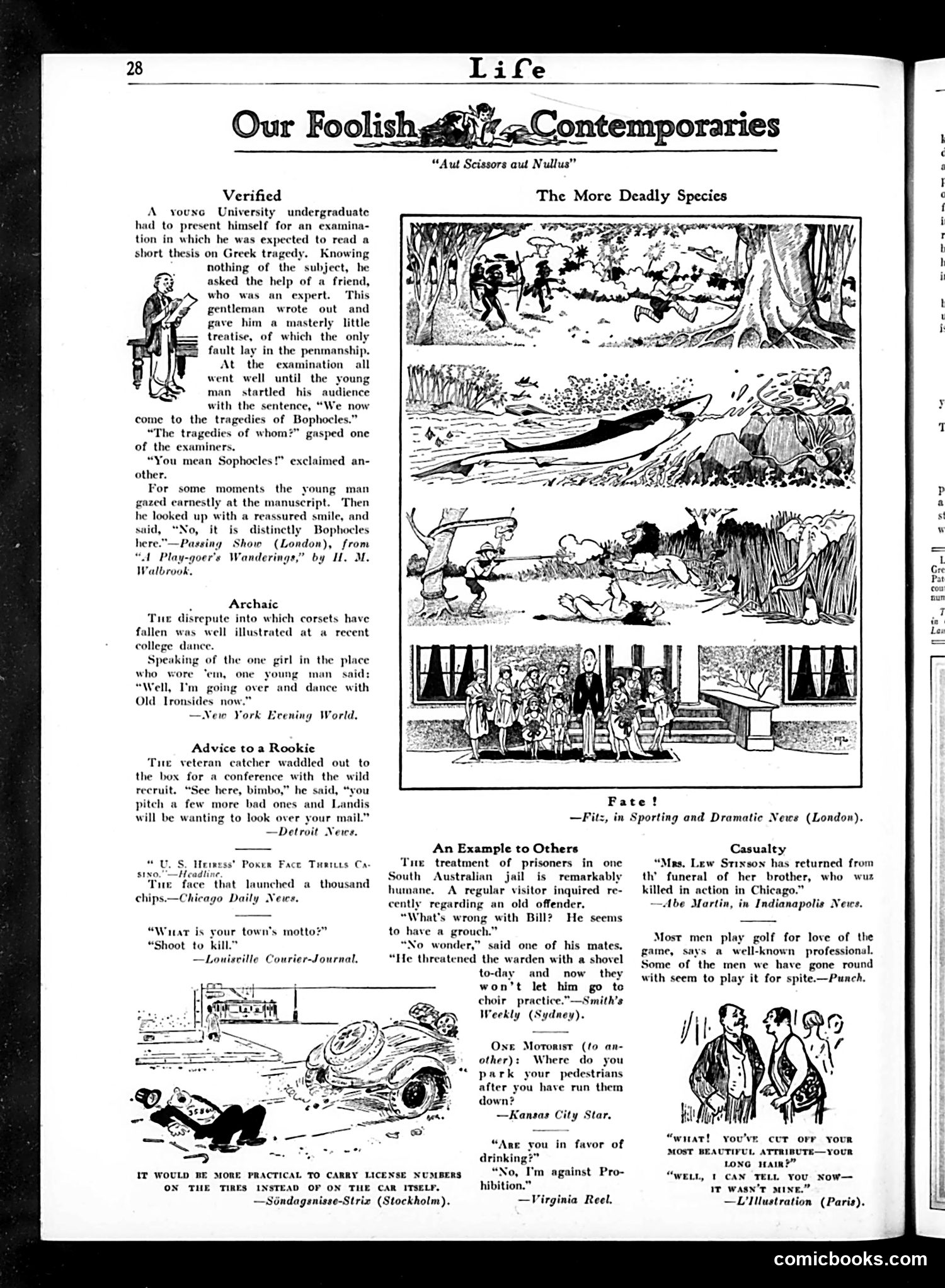
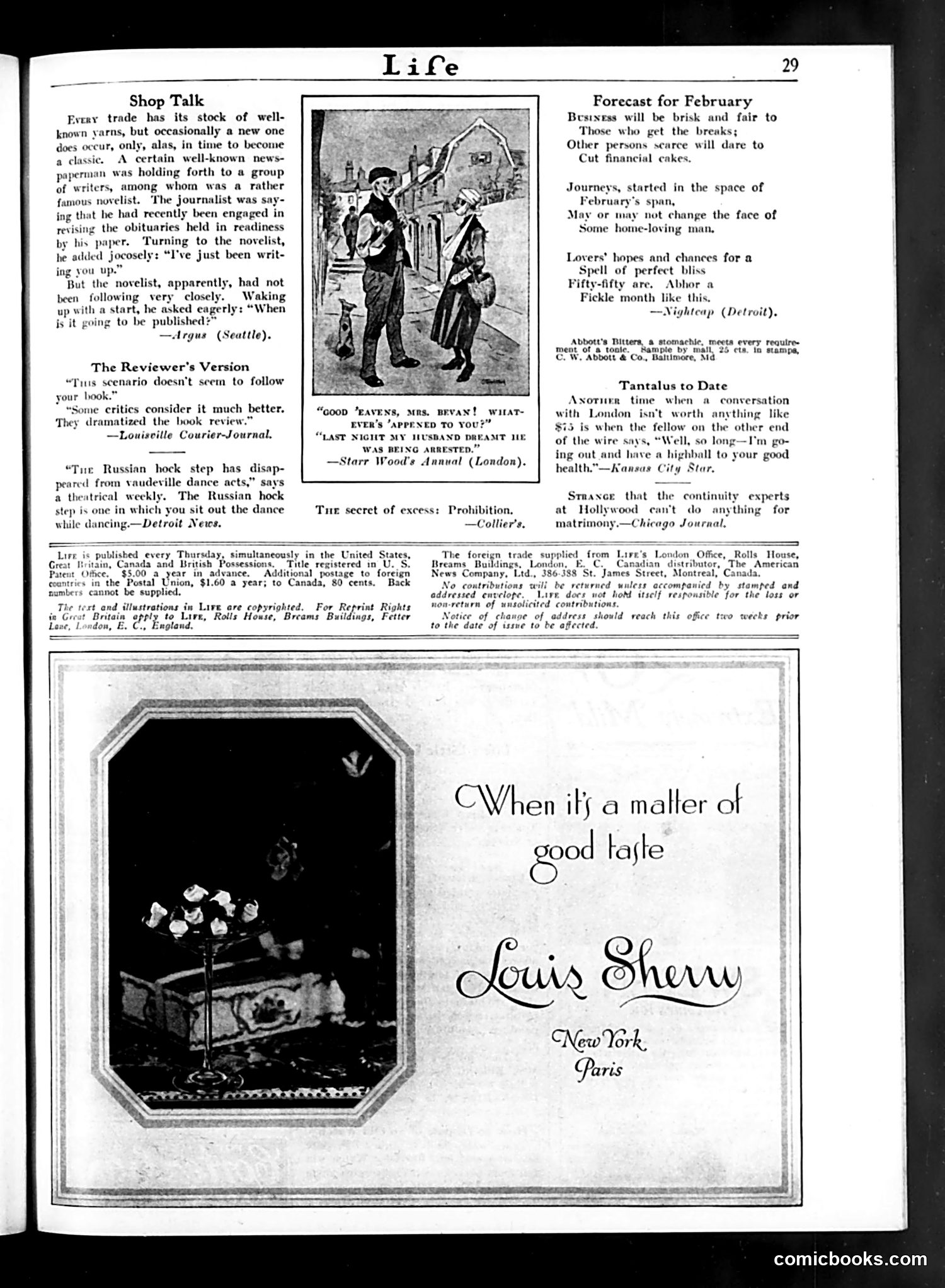
This page contains **satirical newspaper/publishing anecdotes** rather than political cartoons. The "Shop Talk" section features three humor pieces mocking the publishing industry: 1. **First anecdote**: A journalist tells a novelist he's been "writing him up" (in obituaries). The novelist, mishearing, eagerly asks if it will be published—darkly funny because he thinks he's being featured as a living subject, not that his obituary is being prepared. 2. **"The Reviewer's Version"**: Mocks critics who prefer dramatized adaptations over original books, reversing typical artistic hierarchy. 3. **Russian hock step joke**: Satirizes vaudeville dance trends, suggesting the "Russian hock step" is simply sitting out dances—absurdist humor. The "Forecast for February" section offers humorous astrological predictions about romance and business. The page concludes with brief social commentary snippets ("Tantalus to Date," "Strange that...") about London conversations and Prohibition's effects on Hollywood. **Bottom**: A Louis Sherry advertisement ("When it's a matter of good taste"). This is primarily **satirical commentary on publishing and social manners**, not political cartooning.
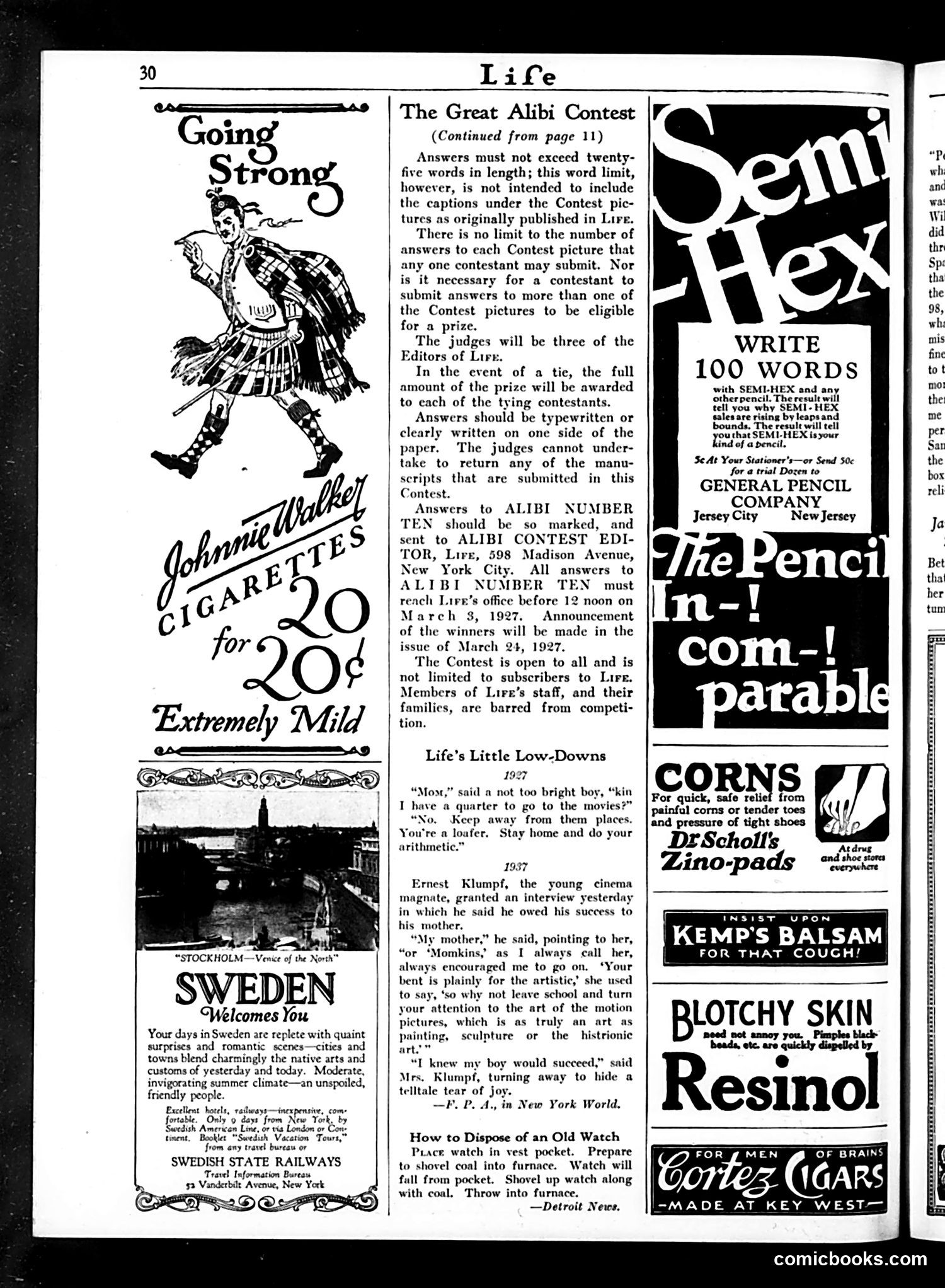
This page is primarily **advertising and contest information**, not political satire. The main content includes: **"The Great Alibi Contest"** — Life magazine's ongoing puzzle contest asking readers to write brief captions (max 25 words) for cartoon images. Winners will be announced March 24, 1927. Answers must reach the editor by noon March 8. **"Life's Little Low-Downs"** — Humorous anecdotes contrasting 1927 with 1937, satirizing parental advice about avoiding movies (seen as frivolous) versus later encouragement of artistic pursuits in cinema—a gentle jab at how values shift over a decade. **Advertisements** dominate the right column: Swedish tourism, Semi-Hex pencils, Dr. Scholl's corn pads, Kemp's Balsam cough remedy, Resinol skin treatment, and Cortez cigars. The left features a Johnnie Walker cigarettes ad with a Scottish figure ("Going Strong"). No significant political or social satire appears on this page—it's largely commercial content typical of 1920s magazine publishing.
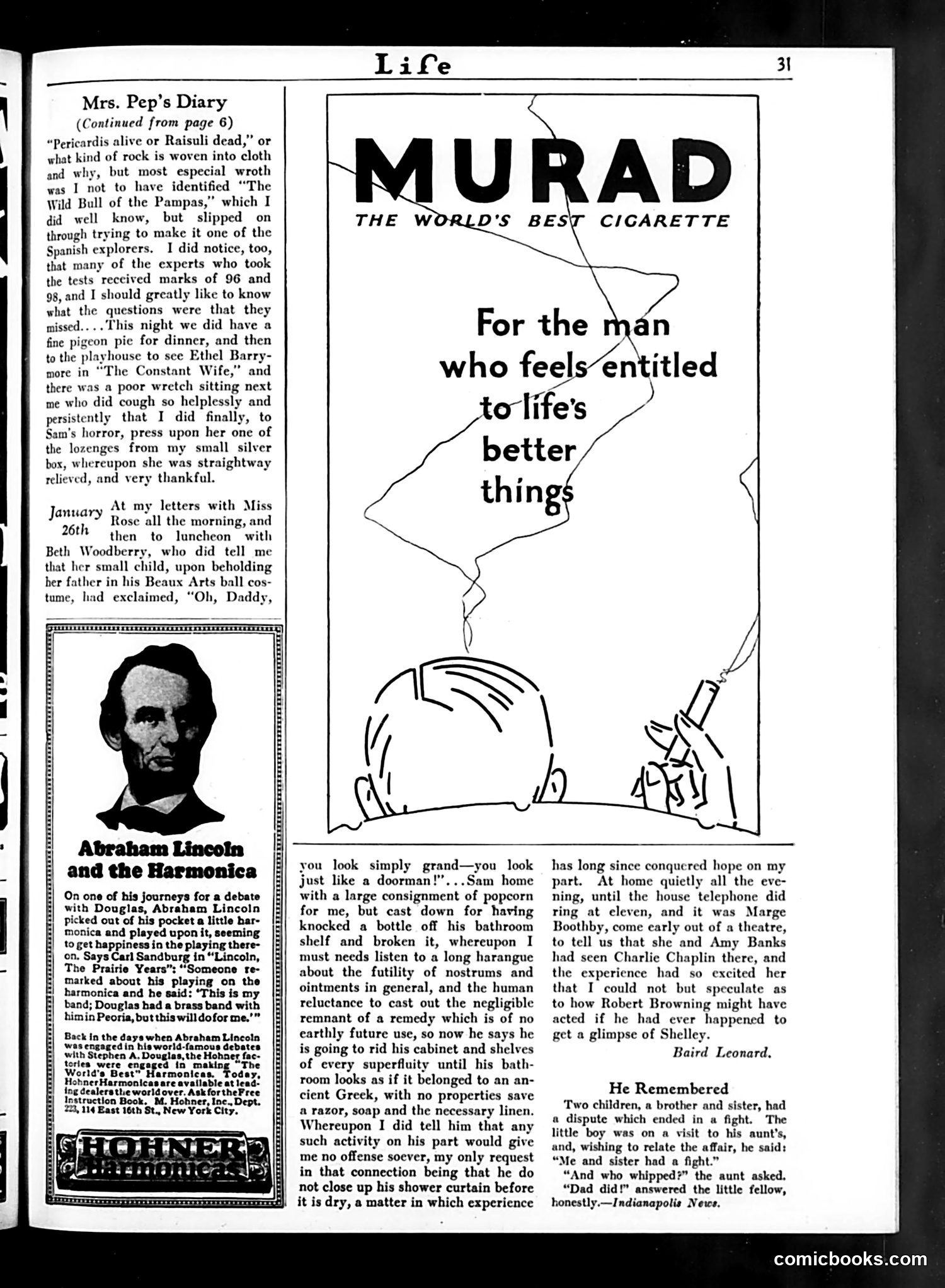
This page contains **Mrs. Pep's Diary**, a humor column documenting mundane domestic life. The satire lies in treating trivial daily events—a cough remedy, broken bathroom bottles, arguments about clutter—with the gravitas of significant literature. References to Ethel Barrymore (actress) and Charlie Chaplin (actor) suggest aspirational cultural awareness among the middle class. A **Murad cigarette advertisement** occupies the right side, targeting affluent men with the tagline "for the man who feels entitled to life's better things"—ironic given the adjacent content about everyday struggles. The lower section includes a **historical anecdote about Abraham Lincoln**, noting he played harmonica during debates. This appears promotional for Hohner harmonicas. Small humor items ("He Remembered," a child's joke) fill remaining space. The overall effect satirizes the gap between pretension and reality in American middle-class life circa the 1920s.
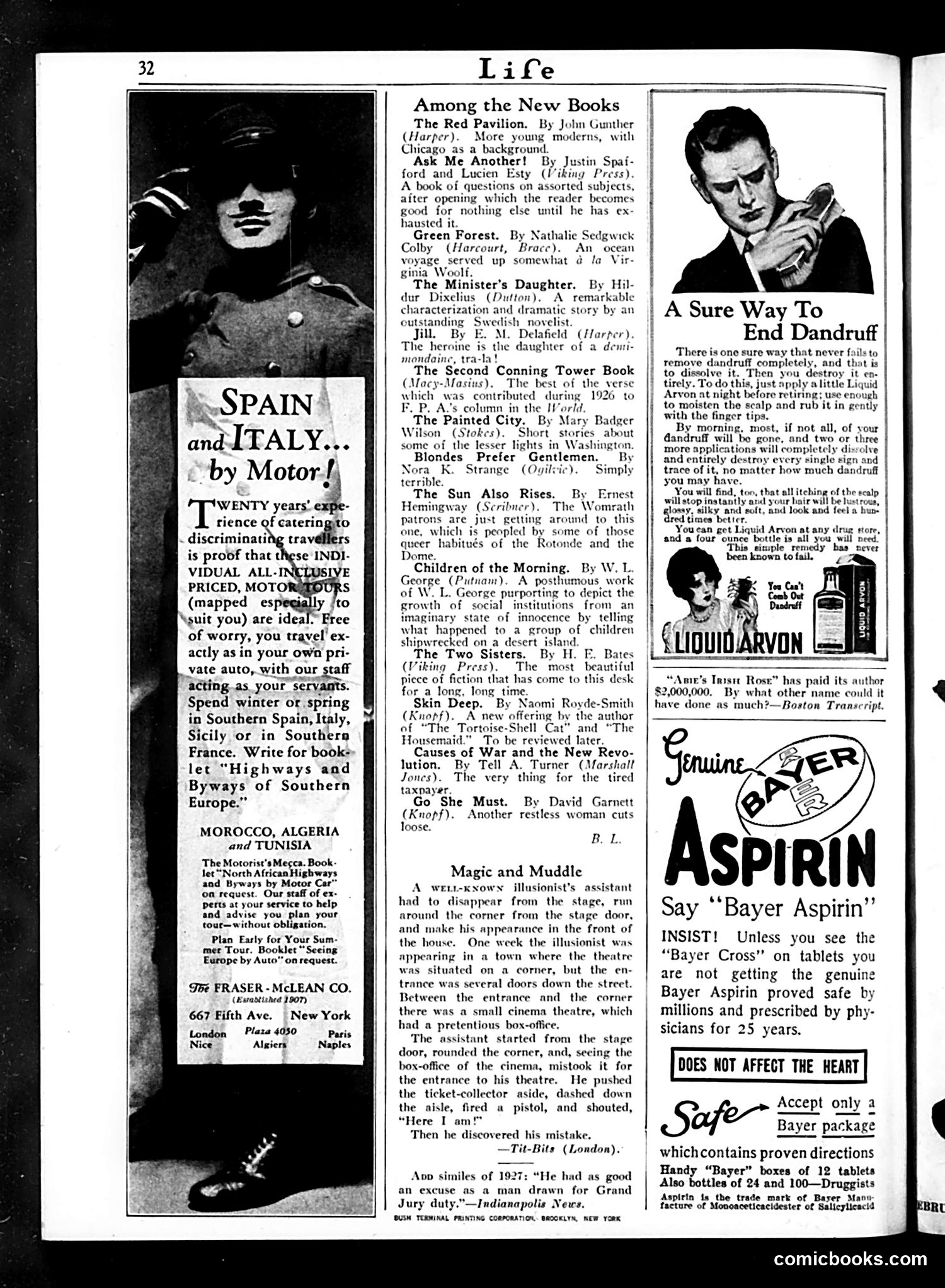
This page is primarily **book reviews and advertising** rather than satire or political commentary. The main content features book recommendations from 1927, reviewing titles like Hemingway's "The Sun Also Rises" and works by contemporary modernist authors. Notably, the reviews employ dry wit typical of Life magazine's house style—for example, dismissing one book as "Simply terrible" or describing another's heroine as "daughter of a demi-mondaine, tra-la!" The sidebar advertises luxury motor tours through Spain, Italy, and North Africa—aspirational travel for wealthy readers in the 1920s. Below is a brief comedic anecdote about a stage magician's assistant who, confused by theater locations, crashes into a cinema box-office thinking it's the theatre entrance. At bottom: Aspirin advertisement featuring the "Bayer Cross" trademark, emphasizing the product's safety and prescription legitimacy. The page reflects 1920s modernist literature, consumer prosperity, and advertising strategy—not political commentary.