
A complete issue · 16 pages · 1884
Life — March 13, 1884
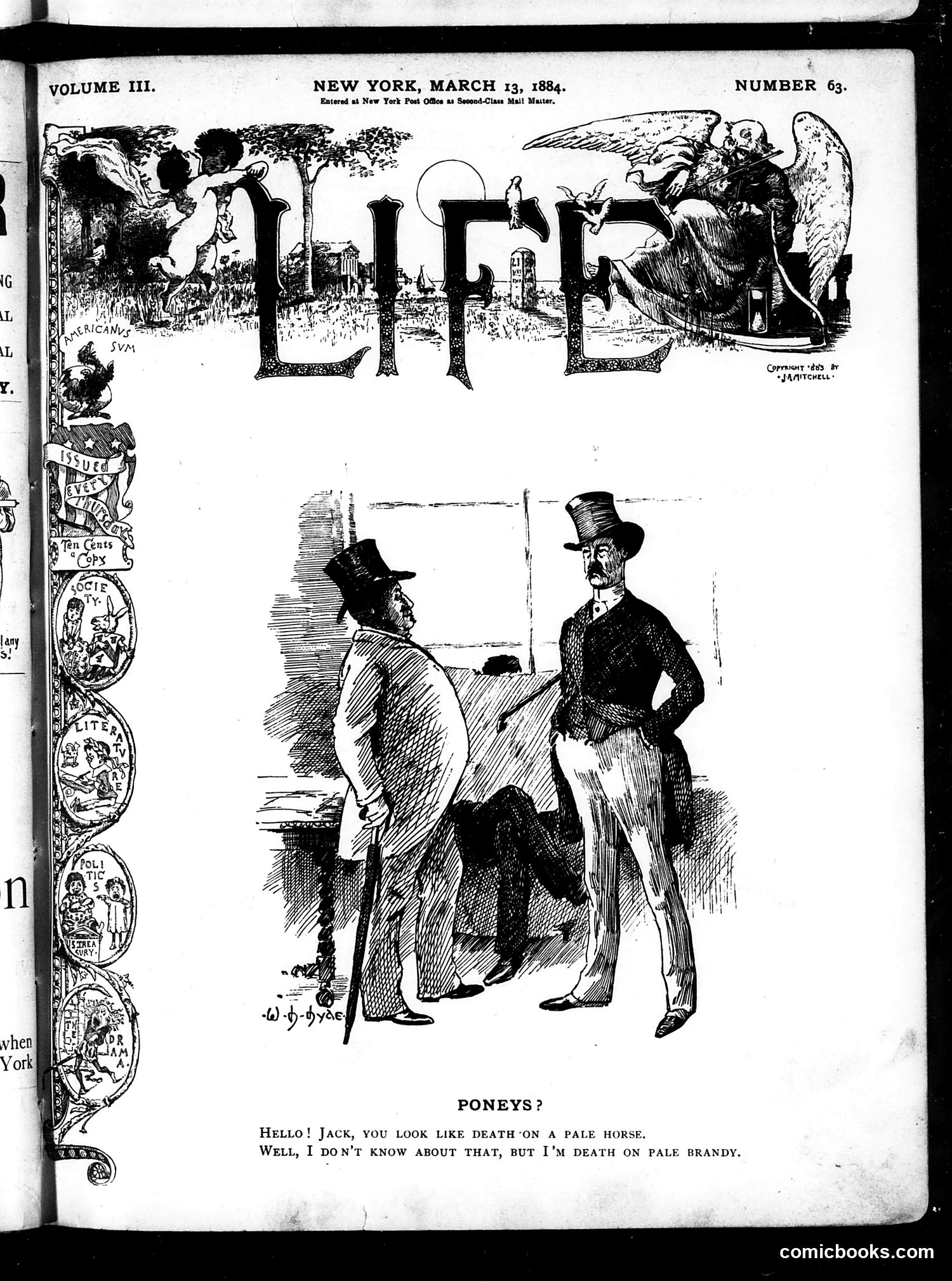
This 1884 *Life* magazine cartoon satirizes two fashionably-dressed men discussing their appearances. One man tells the other, "Hello! Jack, you look like death on a pale horse. Well, I don't know about that, but I'm death on pale brandy." The joke is a pun playing on the phrase "death on a pale horse" (biblical imagery suggesting doom). The second man reinterprets it as "death on pale brandy"—claiming his excessive drinking is the cause of his ghastly appearance. The cartoon mocks Victorian gentlemen's alcohol consumption and their deteriorated health from drinking, presented as witty banter. The title "Poneys?" likely refers to small glasses of brandy, called "ponies," reinforcing the drinking theme.
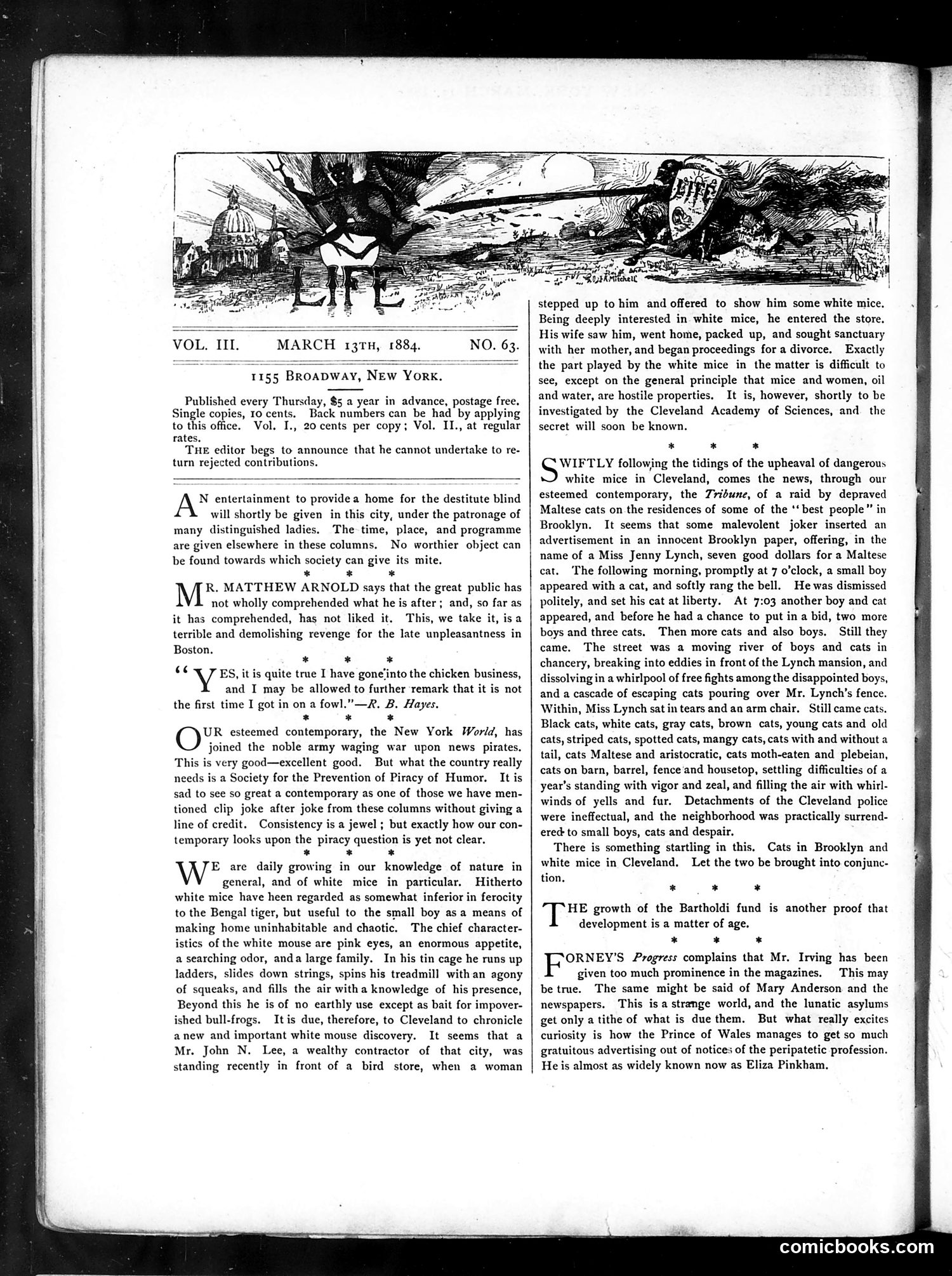
The masthead illustration depicts "LIFE" personified as a classical female figure overlooking a landscape with a cathedral and cityscape—standard allegorical imagery for the publication. The page content consists entirely of **editorial commentary and opinion pieces**, not political cartoons. The articles discuss: - A planned entertainment for blind residents - Matthew Arnold's observations on American life - Commentary on the New York *World* newspaper's coverage of piracy - A lengthy satirical piece about white mice becoming fashionable in Cleveland and Brooklyn, including a humorous account of cats disrupting a Brooklyn neighborhood in response - Brief notes on charitable fundraising and public figures There are **no political cartoons or caricatures** on this page. The white mice story appears to be satirical social commentary about upper-class fads, but the focus is primarily editorial content rather than visual satire.
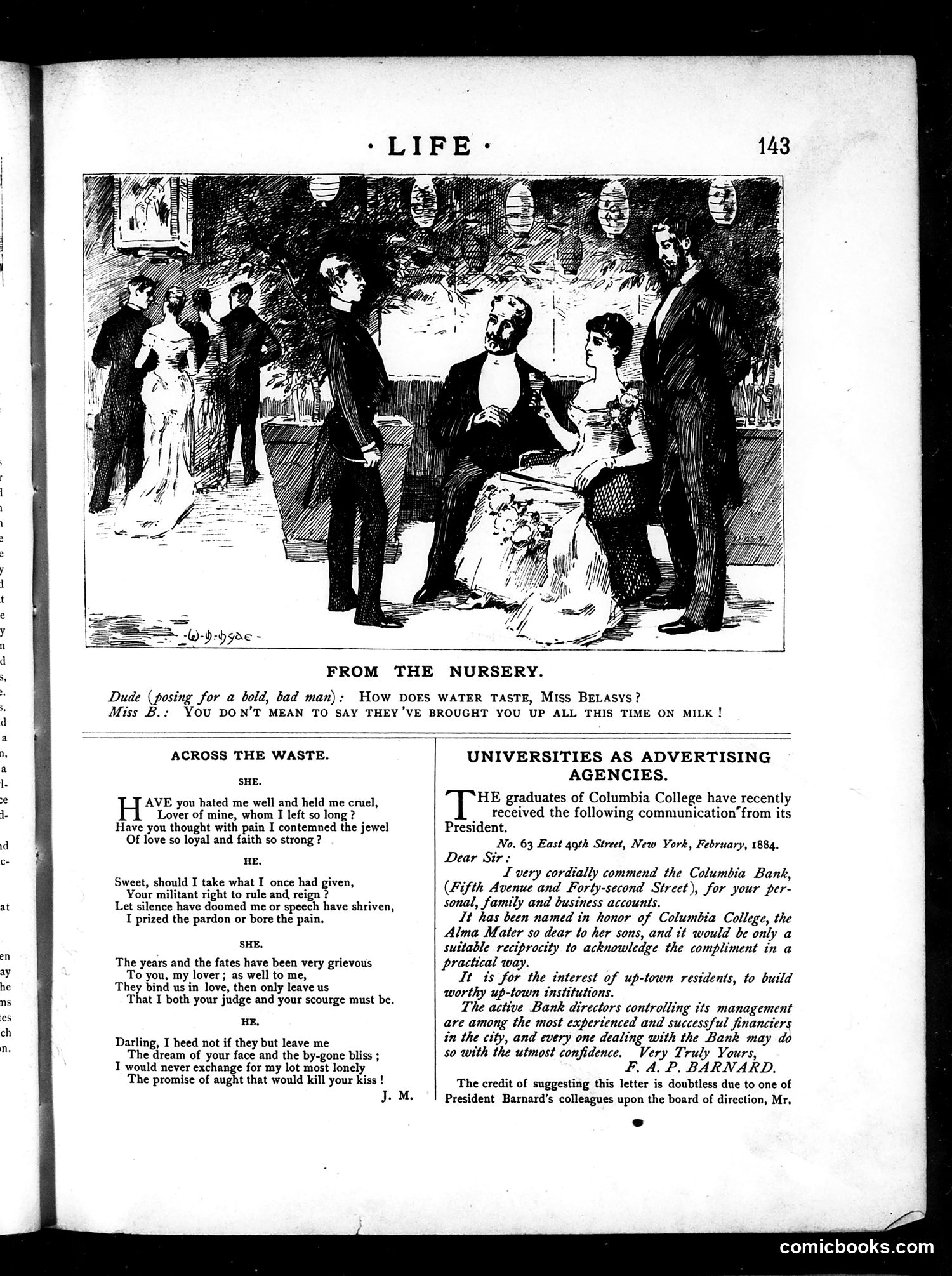
**"From the Nursery" cartoon:** A social satire on wealthy child-rearing. A gentleman asks Miss Belasys how water tastes, implying surprise that she was raised on milk rather than water—a jab at the pampered upbringing of the wealthy, who could afford luxuries common people couldn't. **"Across the Waste":** Romantic poetry featuring exchanges between "She" and "He," likely satirizing sentimental Victorian verse popular in the era. **"Universities as Advertising Agencies":** A critical piece about Columbia College's banking endorsement letter. The satire suggests universities were compromising academic integrity by lending their prestigious names to commercial enterprises (here, the Columbia Bank), treating themselves as mere advertising vehicles rather than independent institutions. The page reflects Gilded Age concerns about commercialism and social pretension.
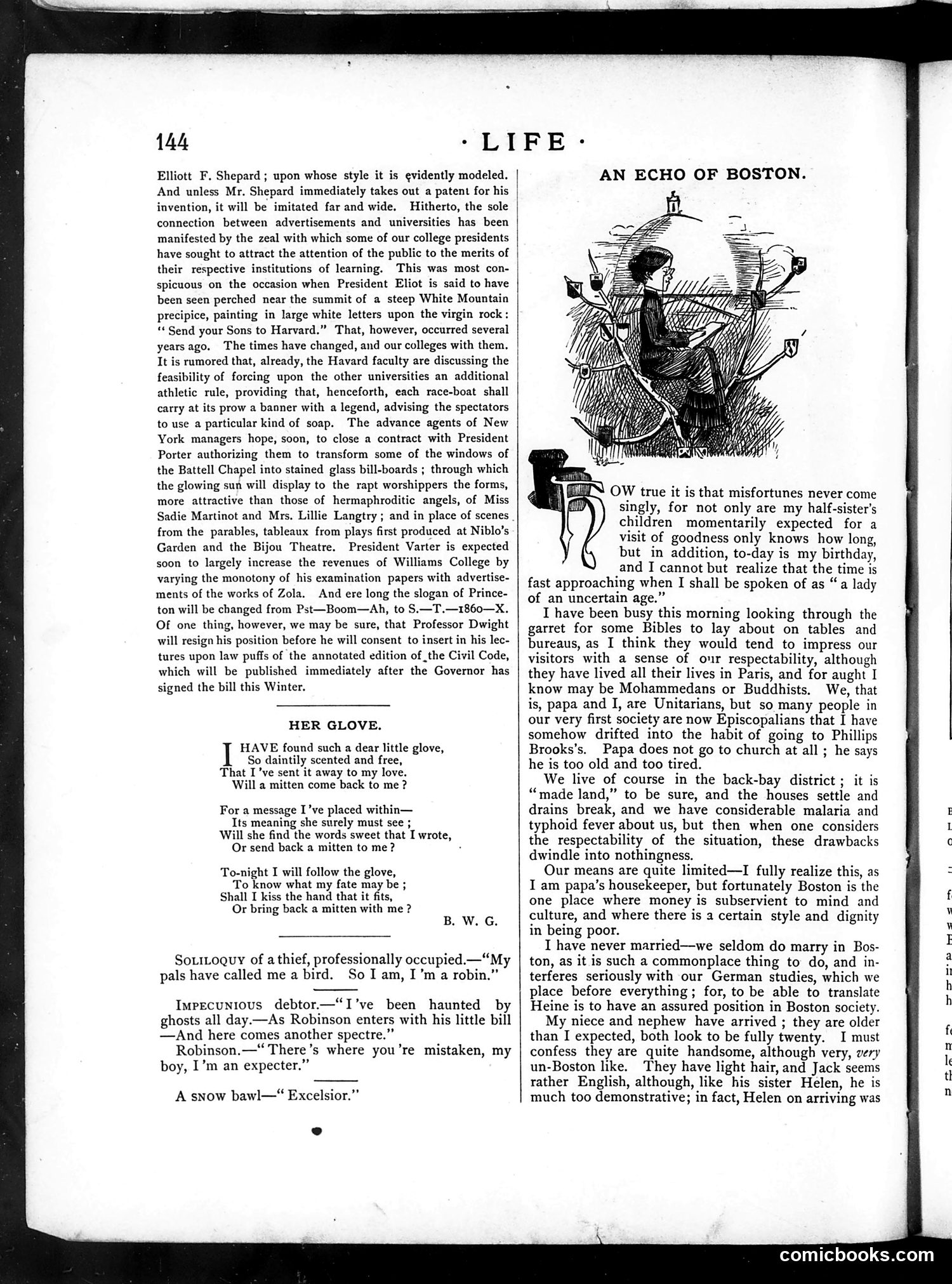
The page contains three distinct pieces of satirical content: 1. **Top section**: A lengthy editorial critique of American universities and their presidents, particularly targeting Harvard's President Eliot. The author mocks how colleges are adopting commercial advertising tactics and entertainment promotions (like race-boats carrying soap advertisements) to attract attention and funding—a sharp satire on the commercialization of higher education. 2. **"Her Glove"**: A sentimental poem by B.W.G. about a lost glove, presented ironically as mock-serious verse. 3. **"An Echo of Boston"**: A short story excerpt featuring a narrator discussing Boston society, poverty, and social pretensions. The writing satirizes upper-class assumptions about respectability and wealth. The overall thrust mocks both academic institutions selling out to commerce and Boston's social elite's disconnection from reality.
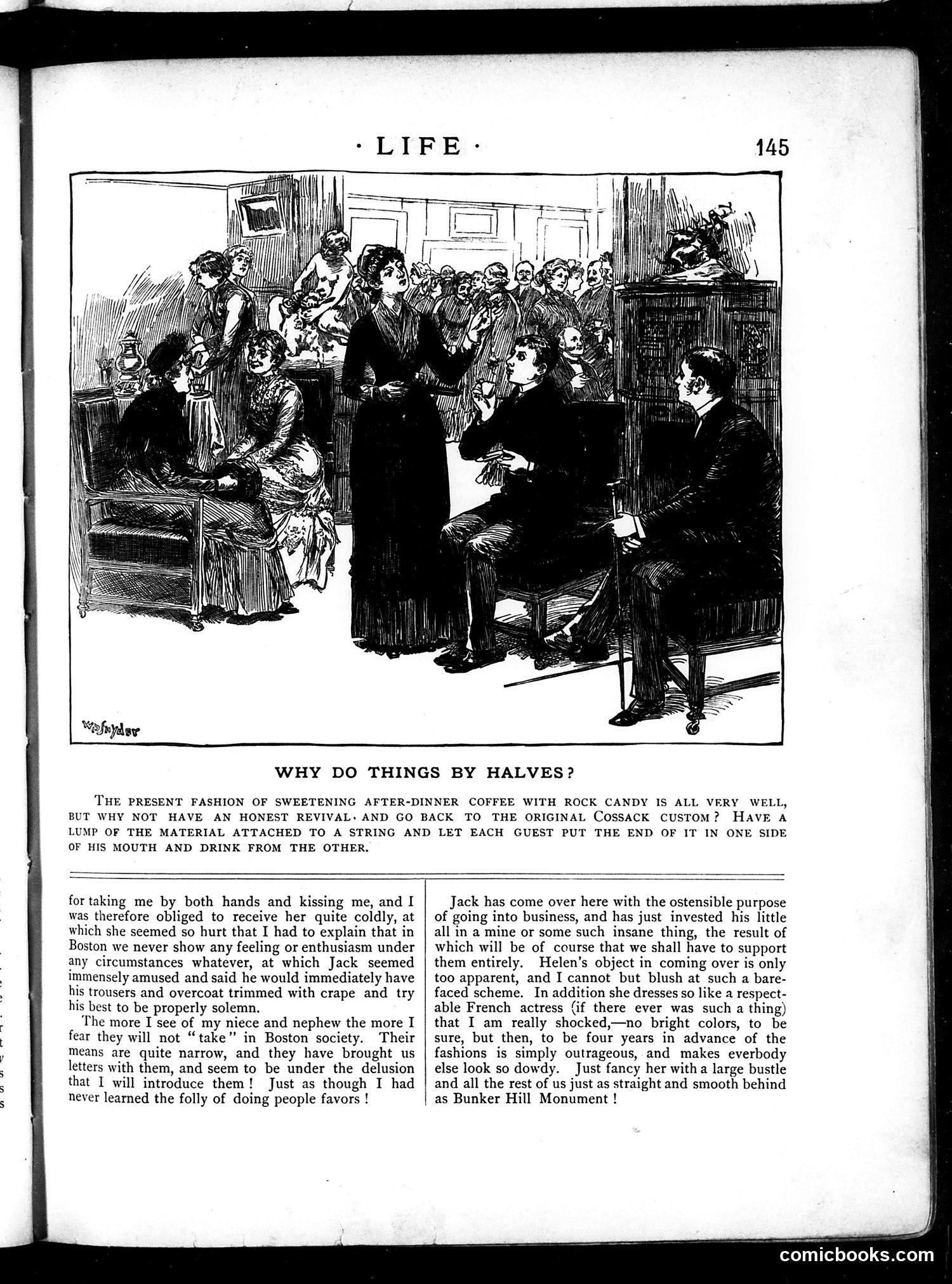
This satirical piece mocks the social pretensions of Boston society. The cartoon depicts a crowded parlor gathering where the speaker critiques the fashion of sweetening after-dinner coffee with rock candy, proposing instead a revival of the Cossack custom of sharing a single string of candy between two people by mouth. The humor targets Boston's narrow social conventions and their anxiety about propriety. The accompanying text complains about Boston's reluctance to introduce foreign guests into society, suggesting that Bostonians fear their refined reputation will be damaged. The writer sarcastically notes this excessive caution seems absurd—comparing it unfavorably to monuments like Bunker Hill. The satire implies Boston society is overly rigid, provincial, and self-consciously concerned with appearances.
This page contains primarily literary content rather than political cartoons. The main item is a journal entry discussing Boston society and a dinner party attended by the writer and someone named Helen. The entry includes gossip about Helen's appearance, a General Clarendon, and commentary on Boston's social expectations. Below that is a poem titled "Two Idle Eyes" by Rondeau, which appears to be romantic verse about courtship and love. The only illustrated element is a small advertisement or header for "Boothby & Bunker" (appearing as a decorative business logo/seal). The page reflects *Life's* role as a magazine of literary and social commentary rather than political satire on this particular issue.
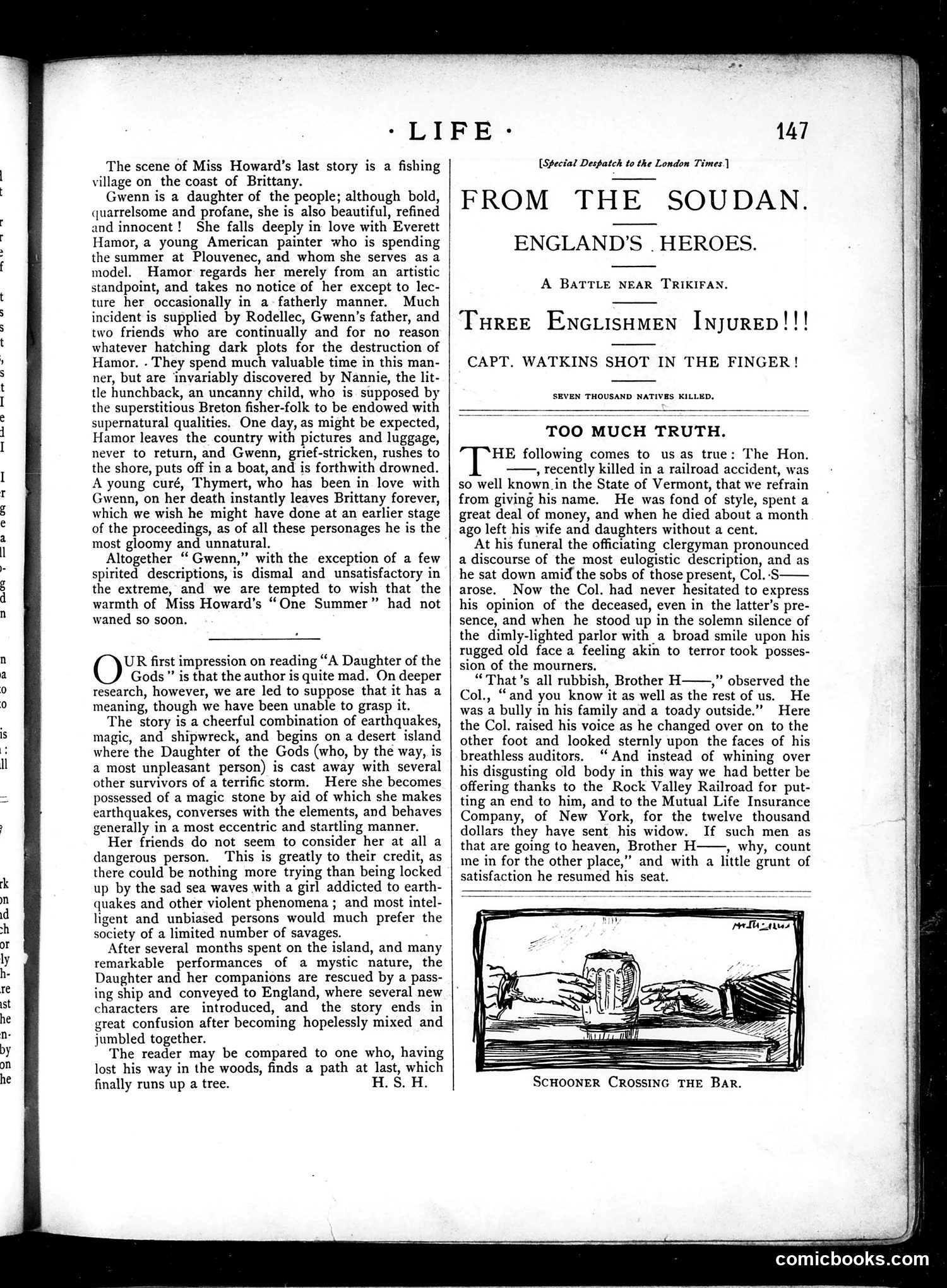
This page contains two distinct sections: **Left column:** A literary review of Miss Howard's story "A Daughter of the Gods," which the critic finds confusing and somewhat absurd. The plot involves earthquakes, magic, and rescue by steamship—elements the reviewer finds incoherent. **Right column:** News dispatches from Sudan titled "From the Soudan: England's Heroes," reporting on a battle near Trikifan with three injured Englishmen, including Captain Watkins shot in the finger. Below that is an anecdote titled "Too Much Truth" about a Vermont railroad accident and a colonel's blunt eulogy. **The woodcut illustration** shows a schooner crossing a sandbar, accompanying the Sudan dispatch. The page mixes literary criticism with contemporary military/news reporting—typical of Life's format as a general-interest satirical weekly.
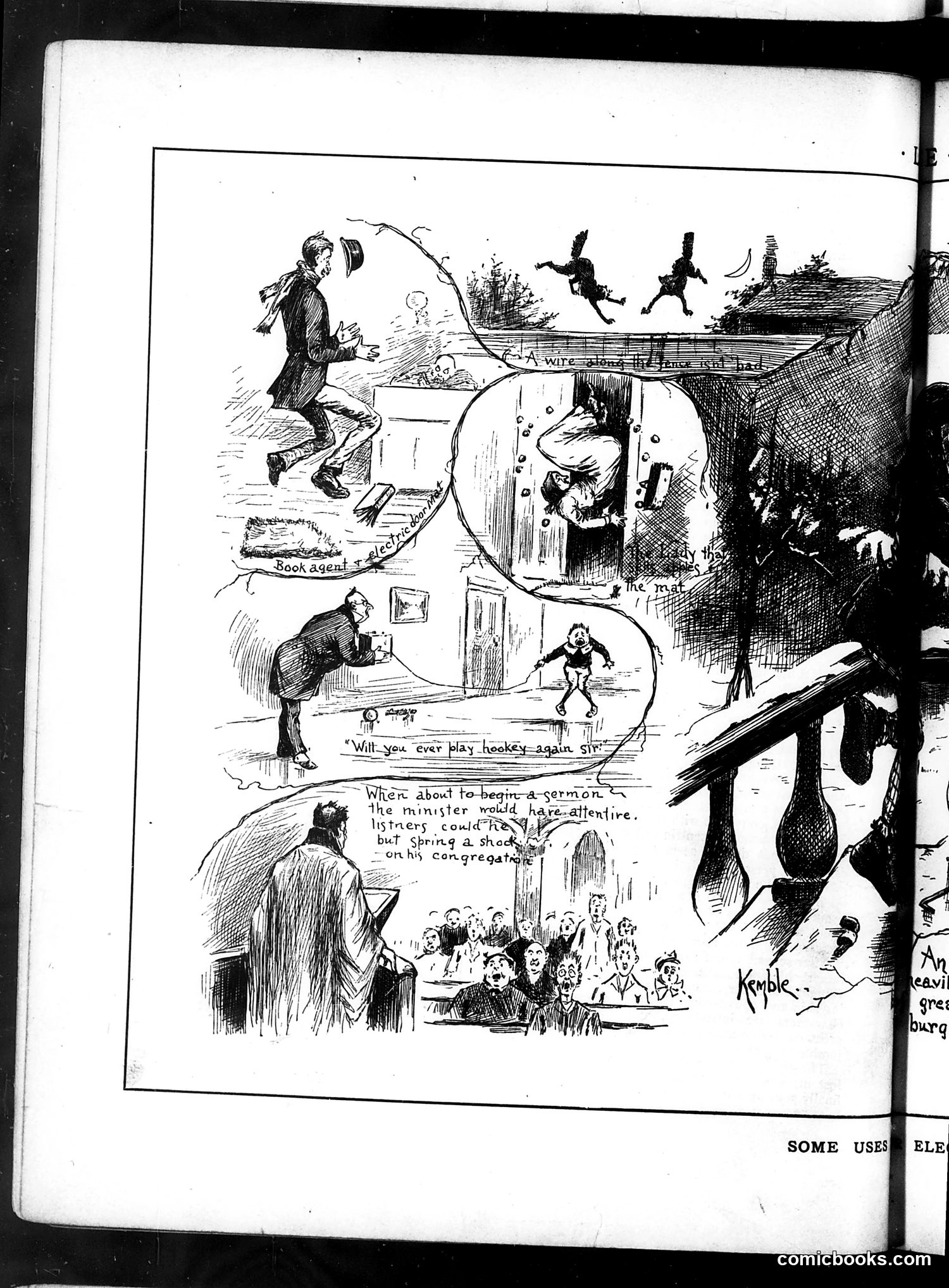
This appears to be a satirical comic strip about **book agents and publishers** (visible text: "Book agent"). The central joke involves a man with a fishing rod—the "wire" representing a publishing contract or sales pitch—literally "catching" various people through loops/snares and pulling them into situations. The scenes depict: - A book agent pursuing prospects - People being trapped or coerced into activities (notably "Will you ever play hockey again sir?") - A minister distracted from his sermon by the agent's interference - A congregation scene below The satire mocks **aggressive, manipulative publishing/sales tactics** of the era—depicting book agents as predatory figures literally entrapping unwilling participants. The humor relies on the fishing metaphor: salesmen "hooking" customers through deception and persistence, much like catching fish.
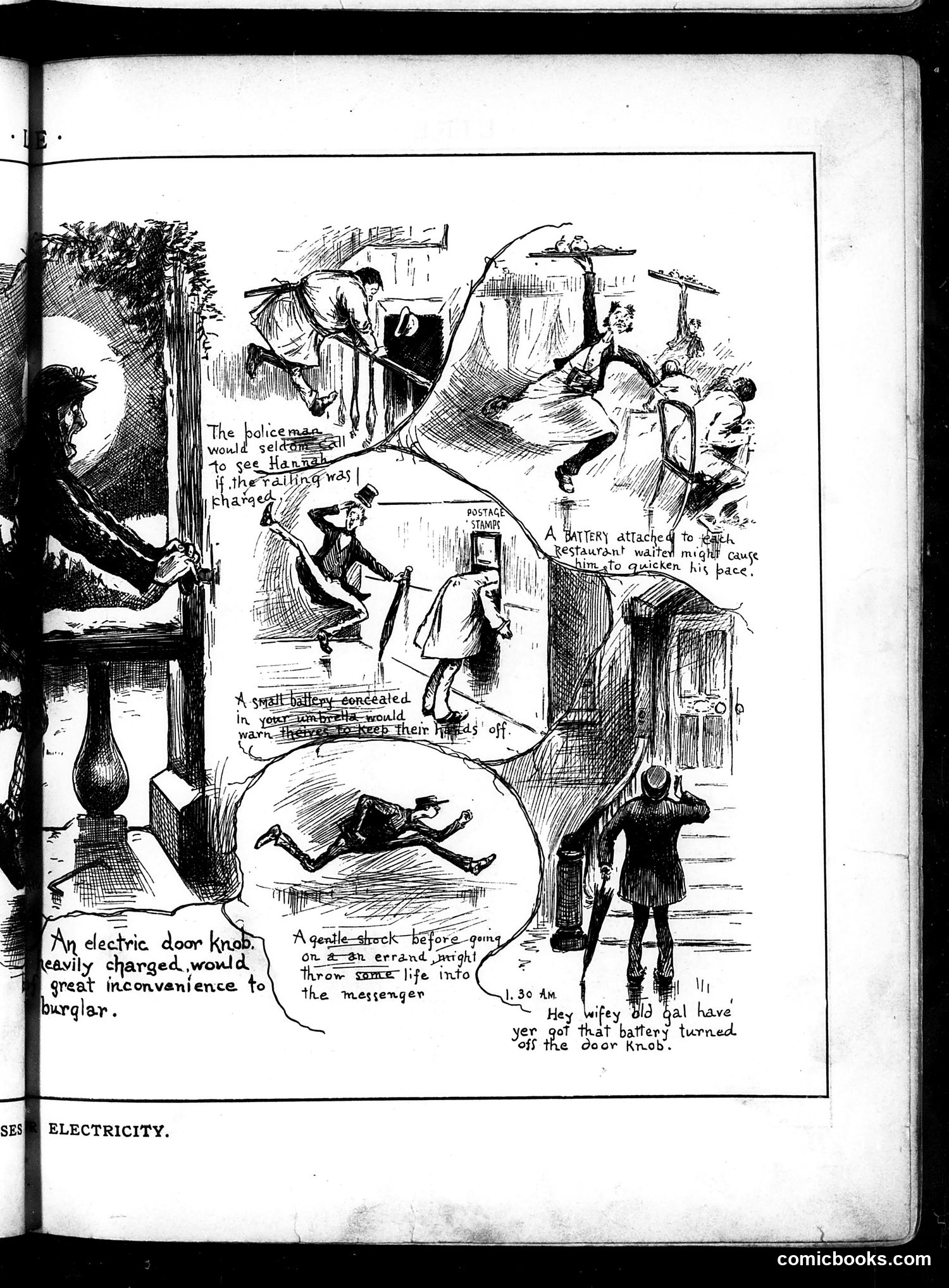
This cartoon satirizes early electrical technology and its domestic applications. The sketches humorously depict various scenarios where electricity creates inconvenience or danger: - A "policeman would seldom need to see Hamskal" if the failing was "charged" - A battery attached to a restaurant waiter accelerates his pace - An electric doorknob poses burglary risks - A small battery in an umbrella warns people to "keep their hands off" - A gentle shock before errands "throws some life" into messengers - A wife turning off a battery-charged doorknob The satire mocks the contemporary enthusiasm for electrical "solutions" to everyday problems, suggesting impractical or absurd applications. It reflects early-1900s skepticism about electrification's practical household uses, portraying electricity as simultaneously dangerous and comically oversold.
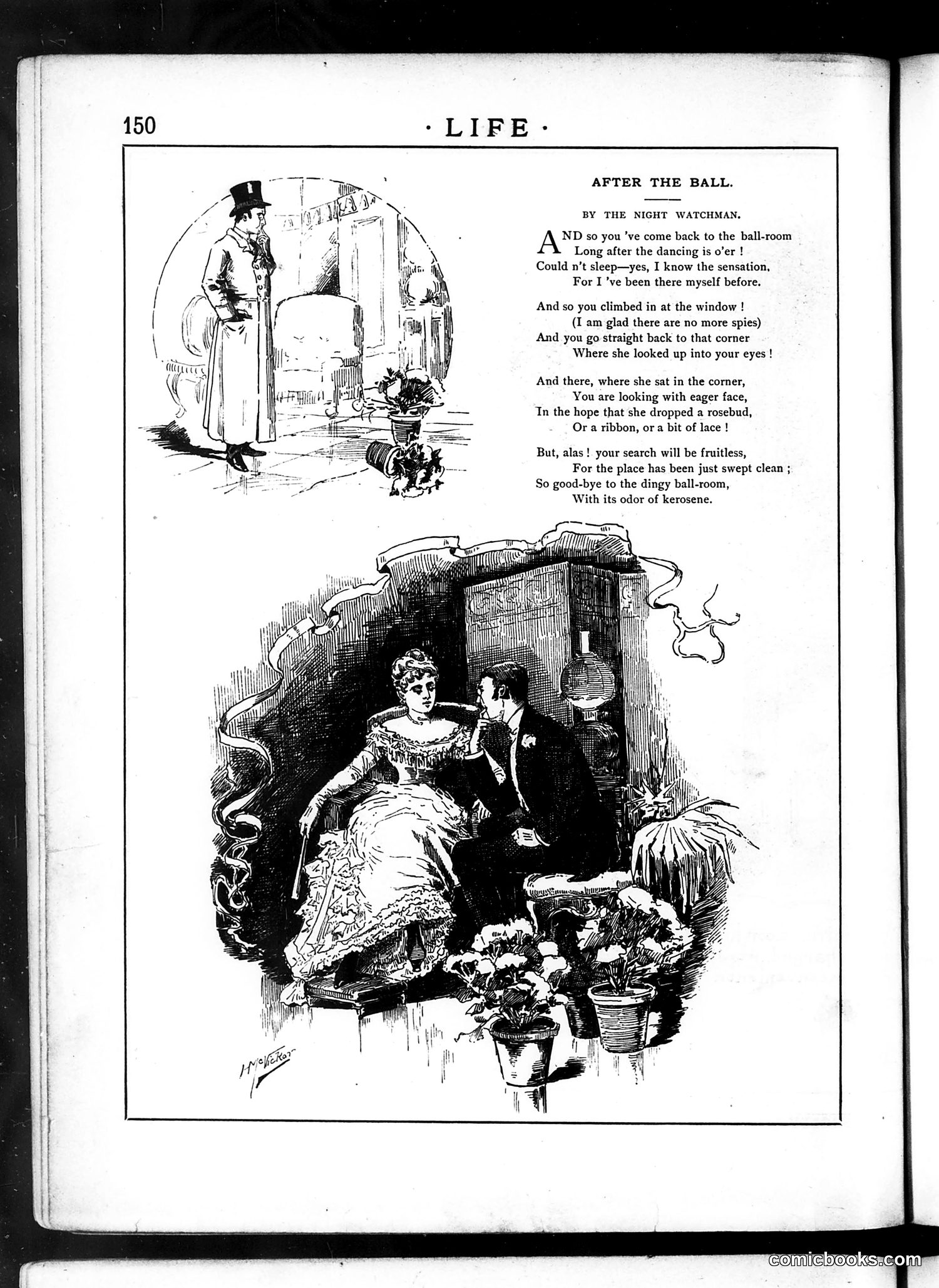
This is a humorous poem by "The Night Watchman" about romantic obsession following a formal ball. The two illustrations show: **Top image:** A night watchman discovering a young man sneaking back into the ball-room after hours, unable to sleep due to romantic preoccupation. **Bottom image:** The same young man searching the corner where he sat with a young woman, hoping to find a dropped ribbon or rosebud as a keepsake. The satire mocks the sentimental excess of Victorian romance—the narrator sympathetically understands this lovesick behavior ("I know the sensation, / For I've been there myself before"), but the poem's ending deflates the romance: the hall has been swept clean, and he must accept defeat. The joke targets both the romanticism of ballroom culture and the futility of chasing ephemeral romantic moments. The detail about "kerosene" odor adds mundane reality to the dreamy atmosphere.
This page is a satirical etiquette column mocking Victorian-era social pretensions and English manners. The left column lists absurd "rules" of polite behavior with deadpan humor—including domestic violence ("hit your wife on the head...with a steel poker"), class anxiety about pronunciation, and trivial social mishaps like dropping gravy or sitting four in a hammock. The satire targets the obsessive refinement of the English upper classes and American aspirants imitating them. Items like asking a lady to meet at "135th street" (suggesting lower-class New York locations) mock the pretense that proper English speakers would never frequent such places. The piece ridicules both genuine etiquette concerns (fork usage) and invented anxieties, suggesting the entire enterprise of obsessing over "distingué" behavior is absurd. The poisoned-poker joke about wives hints at darker domestic realities beneath polite society's facade. The accompanying poem "Mahoney's Mule" appears unrelated humor.
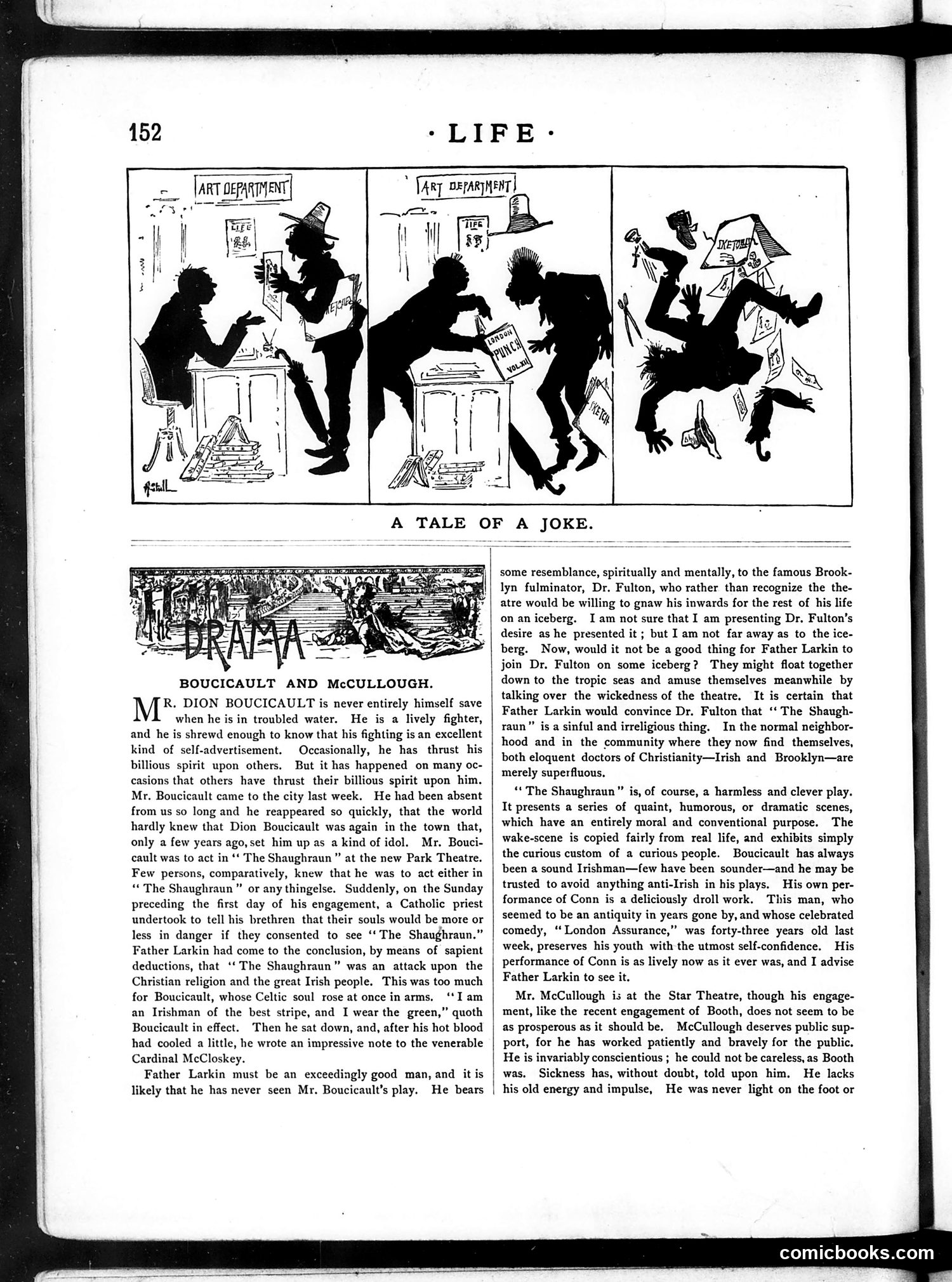
This page satirizes a religious controversy over Irish playwright Dion Boucicault's play *The Shaughraun*. Father Larkin, a Catholic priest, publicly warned his congregation that the play attacked Christian religion and Irish people, urging them not to attend. The comic strip (top) depicts the escalating joke/conflict in the Art Department, showing the absurd chaos that ensues from this pronouncement. The article defends Boucicault and mocks Father Larkin, comparing him unfavorably to Brooklyn's Dr. Fulton—both religious figures whom the author sarcastically suggests should float together on an iceberg. The satire argues *The Shaughraun* is harmless entertainment with moral purpose, and that Boucicault—a legitimate Irishman—wouldn't create anti-Irish content. The piece also briefly reviews actor McCullough's performance at the Star Theatre. The overall tone ridicules clerical censorship of theater as sanctimonious and unnecessary.
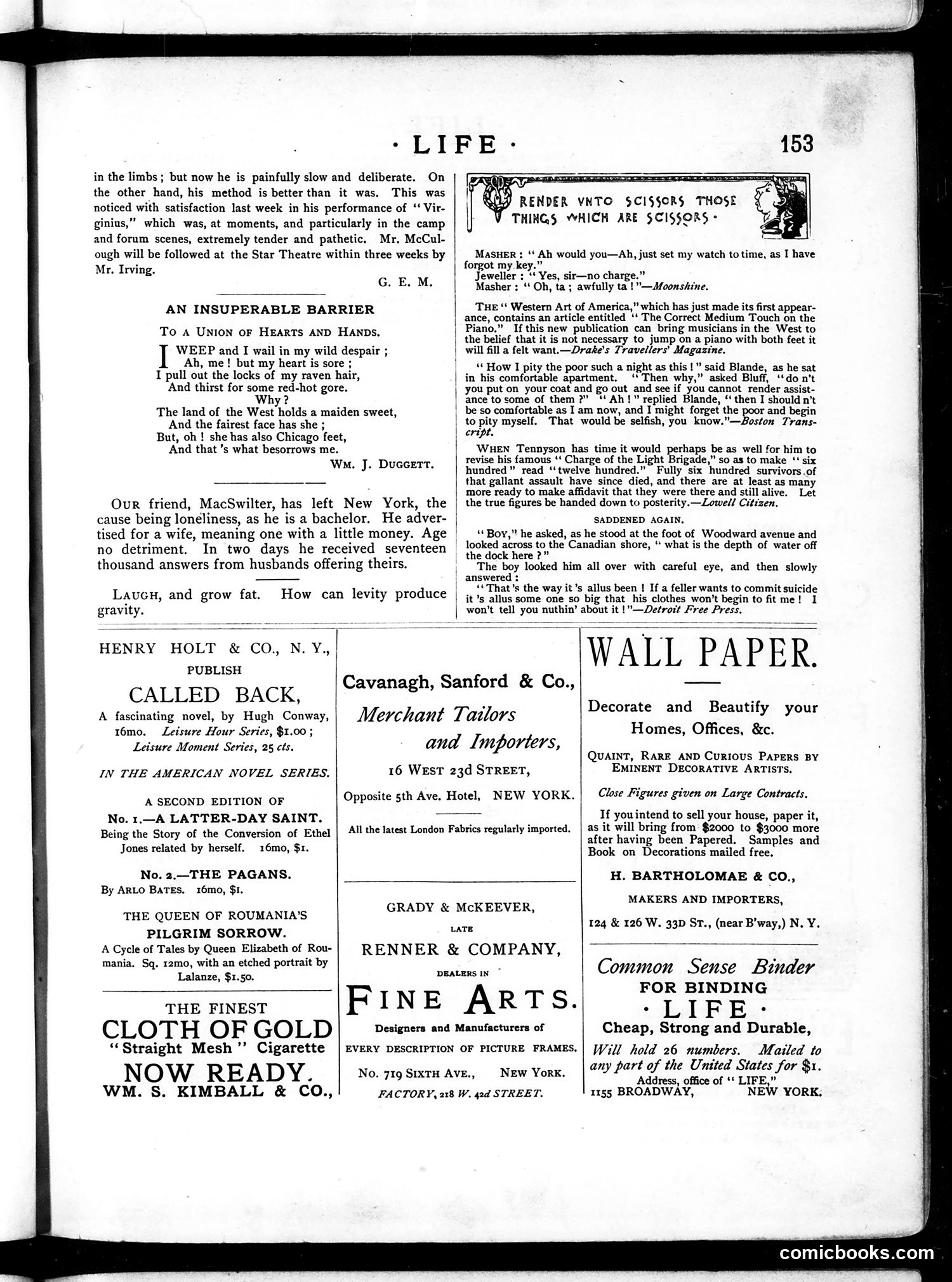
This page is primarily **advertisements and literary excerpts** rather than political cartoons. The main content includes: **Poetry/Humor Pieces:** - "An Insuperable Barrier": A humorous poem about a man in love with a woman with "Chicago feet"—likely satirizing regional stereotypes about Western women's perceived coarseness or unfemineness compared to Eastern standards. - Social commentary pieces mocking affectation: A "masher" (ladies' man) pretending gratitude, a hypocrite named Blande who pities the poor from his comfortable apartment but won't help them, and a joke about Tennyson's "Charge of the Light Brigade" needing correction regarding casualty figures. **The cartoon** (small box at top) depicts a jeweler and customer, with wordplay on "ta" (thanks) versus "ta"—mocking affected speech patterns. The page's humor targets **Victorian hypocrisy, affected manners, regional prejudices, and sentimental pretension**—typical of Life's satirical approach to American society.
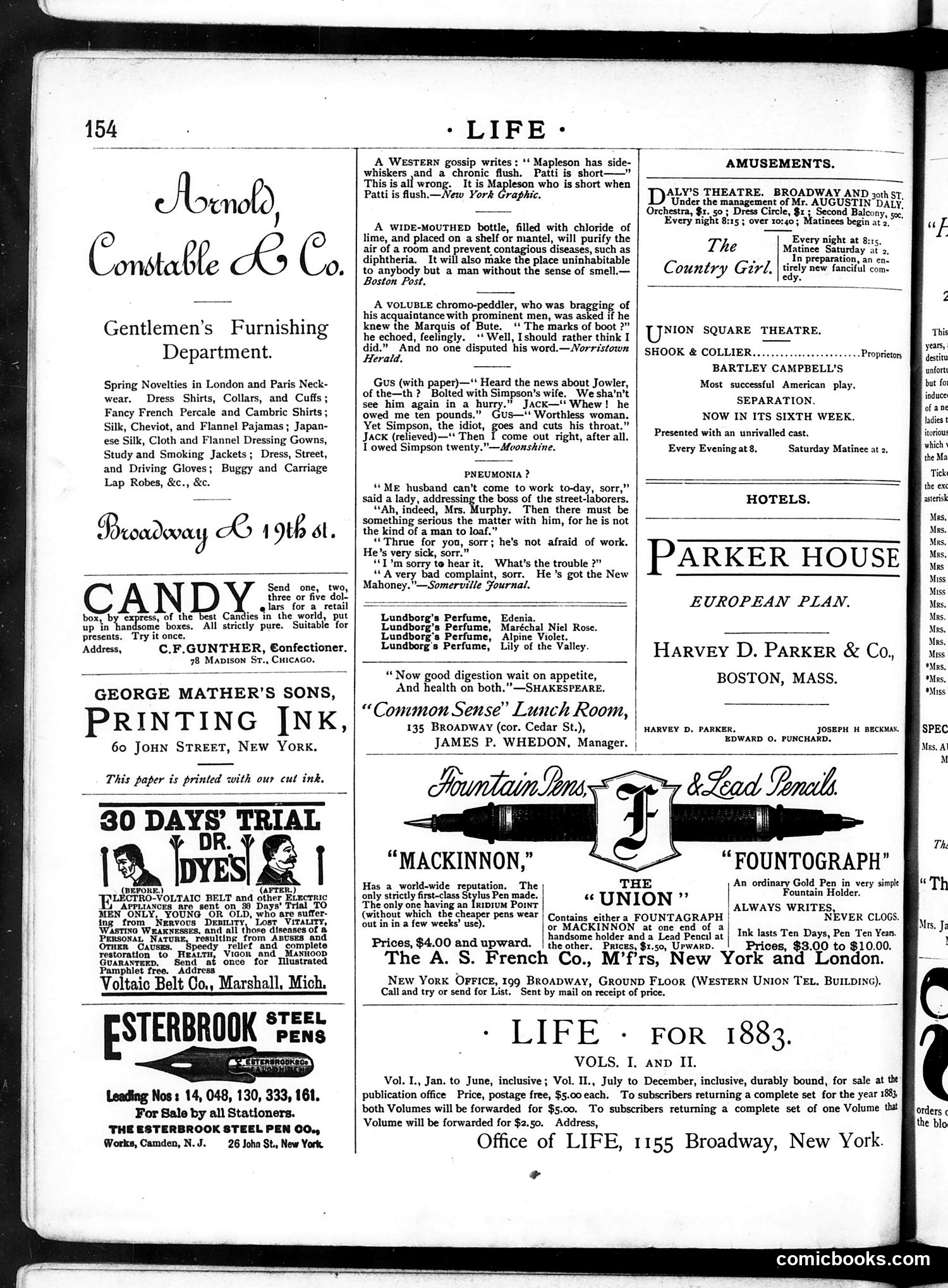
This page from *Life* magazine is primarily a **collection of short humorous anecdotes and advertisements** rather than political cartoons. The humor pieces include satirical remarks about opera impresario Mapleson and soprano Adelina Patti (noting the pun that when Patti is "flush" with money, Mapleson is "short"); a joke about a chloride-of-lime bottle that deodorizes rooms; and Irish-accented workplace and domestic dialogues featuring characters like "Mrs. Murphy" and "Mahoney"—typical of period humor that relied on ethnic dialect humor. The advertisements include men's furnishings (suits, pajamas), patent medicines like the "Voltaic Belt" for male sexual dysfunction, printing ink, and confectionery—common commercial messaging of the 1880s. **Political content**: Minimal to none. This is primarily commercial and light entertainment, with no visible political satire or contemporary political references.
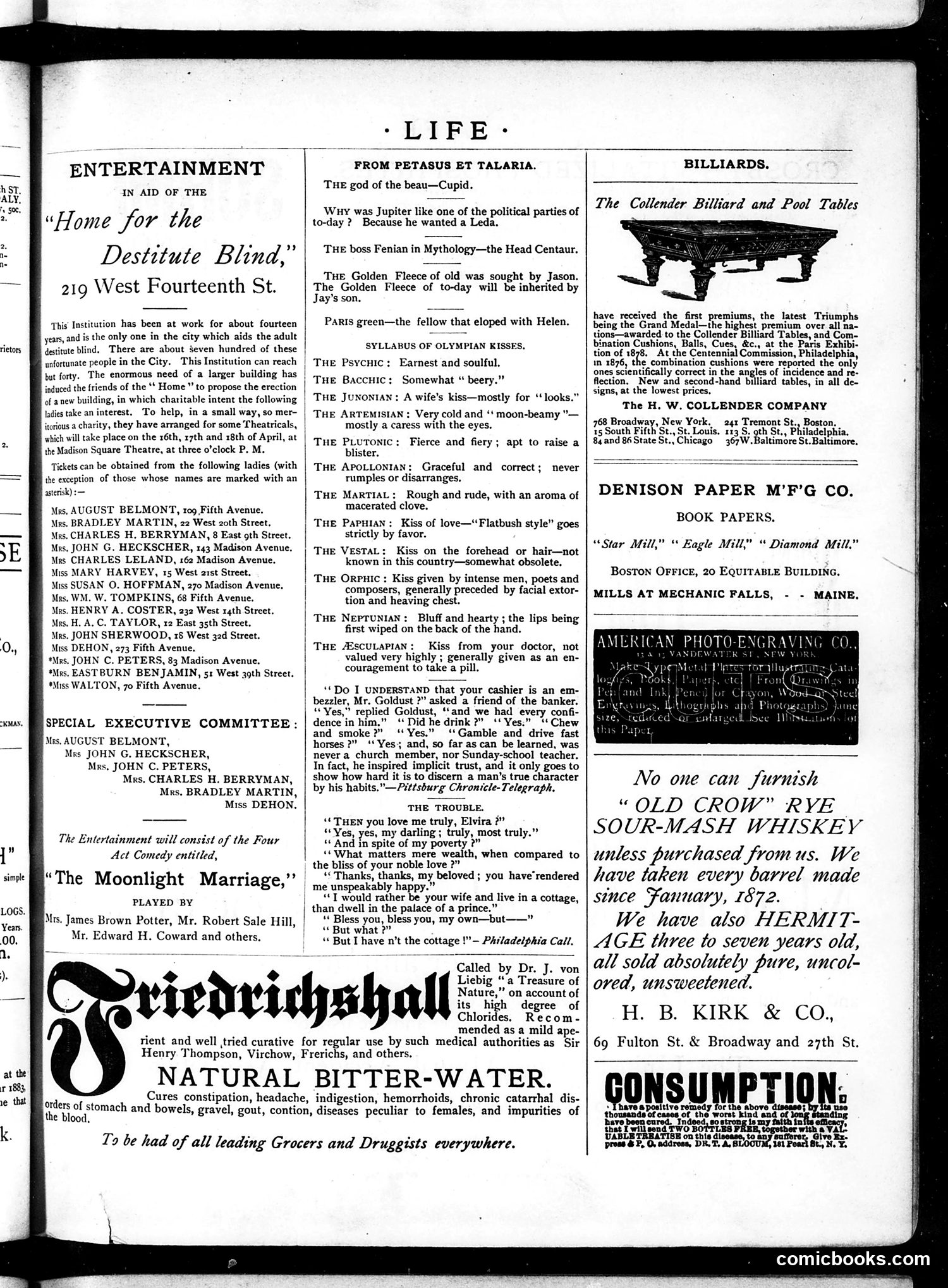
This page is primarily **advertisements and entertainment notices** rather than political cartoons. The main content includes: **Entertainment Section:** Announcement of a theatrical benefit for the "Home for the Destitute Blind," featuring prominent New York society women (Belmont, Bradley Martin, etc.) organizing performances of "The Moonlight Marriage" at Madison Square Theatre to raise funds. **Satirical Humor Columns:** - "From Petasus et Talaria" offers Greek mythology jokes with contemporary references (e.g., Jay Gould's son inheriting wealth like the Golden Fleece) - "Syllabus of Olympian Kisses" catalogues different kiss types by mythological figures—largely silly wordplay - A brief anecdote mocking a banker's misplaced trust in an embezzling cashier **Advertisements:** For billiard tables, paper manufacturing, whiskey, and patent medicine (Friedrichshall Natural Bitter-Water). The page reflects late-19th-century Life magazine's blend of society news, mild satirical commentary on wealth and contemporary figures, and advertising.
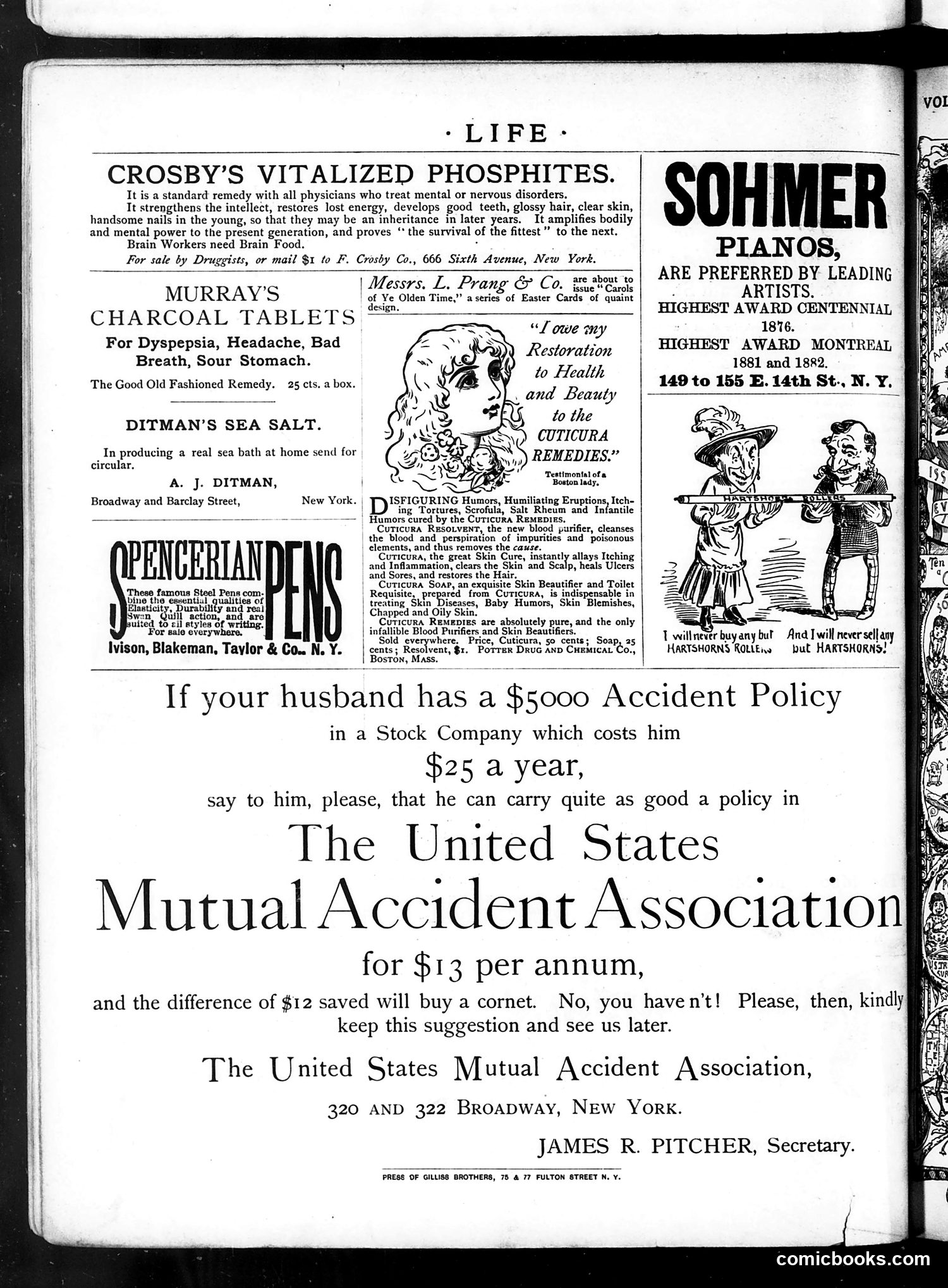
This page is primarily **advertising**, typical of late-19th-century Life magazine. The cartoons are minor—two small illustrations accompanying product ads. The notable satirical content appears in the **Hartshorn's Roller advertisement** (bottom right), which shows two figures in what appears to be a theatrical or comedic dispute over window roller products. One declares he'll never buy competing rollers; the other insists he'll never sell anything but Hartshorns. This is gentle product humor, using exaggerated loyalty as comic device. The rest consists of patent medicine ads (Crosby's Phosphites, Murray's Charcoal Tablets, Cuticura Remedies)—all promising implausibly broad cures—and the **United States Mutual Accident Association ad**, which humorously suggests wives pressure husbands to switch insurers, sarcastically noting the $12 savings could buy a cornet. The tone is light advertising satire rather than political commentary. The page reflects the era's unregulated medicine marketing and Life's reliance on ad revenue.