A complete issue · 53 pages · 1936
Judge — December 1936
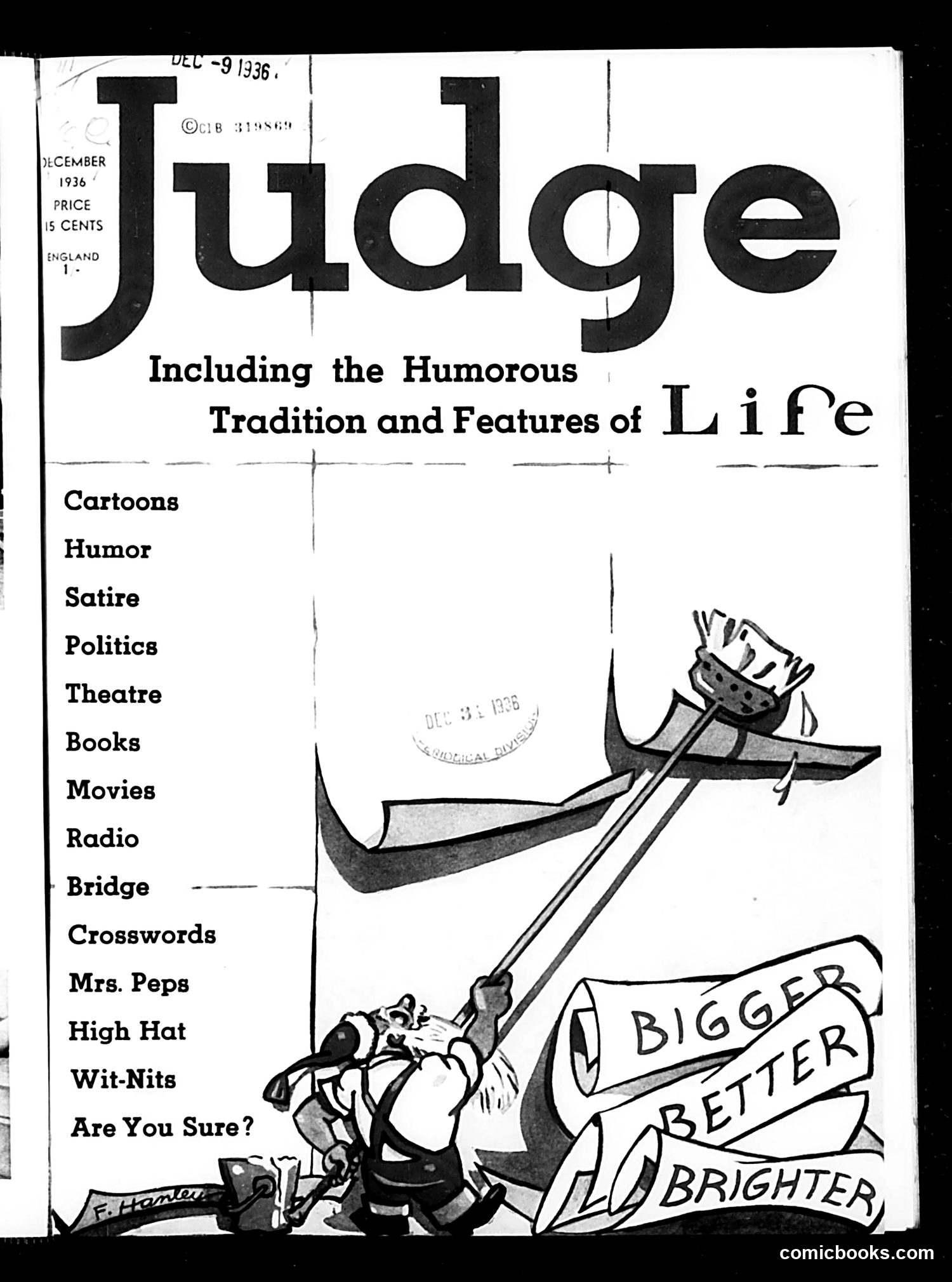
# Analysis of Judge Magazine Cover (December 1936) This cover features a caricatured figure operating a large lever labeled "Bigger Better Brighter," suggesting optimism about improving conditions—likely referencing the Depression era's gradual economic recovery under Roosevelt's New Deal policies. The cartoonist depicts the figure as a workman or common laborer, emphasizing that ordinary citizens were driving progress. The mechanical imagery conveys the industrial/technological advancement narrative popular in 1930s America. The left sidebar lists Judge's content categories—cartoons, humor, satire, politics, theater, etc.—typical of the magazine's satirical approach to American culture and current events. The specific political message remains unclear without additional context, but the "bigger, better, brighter" theme suggests cautious optimism about national recovery in late 1936.
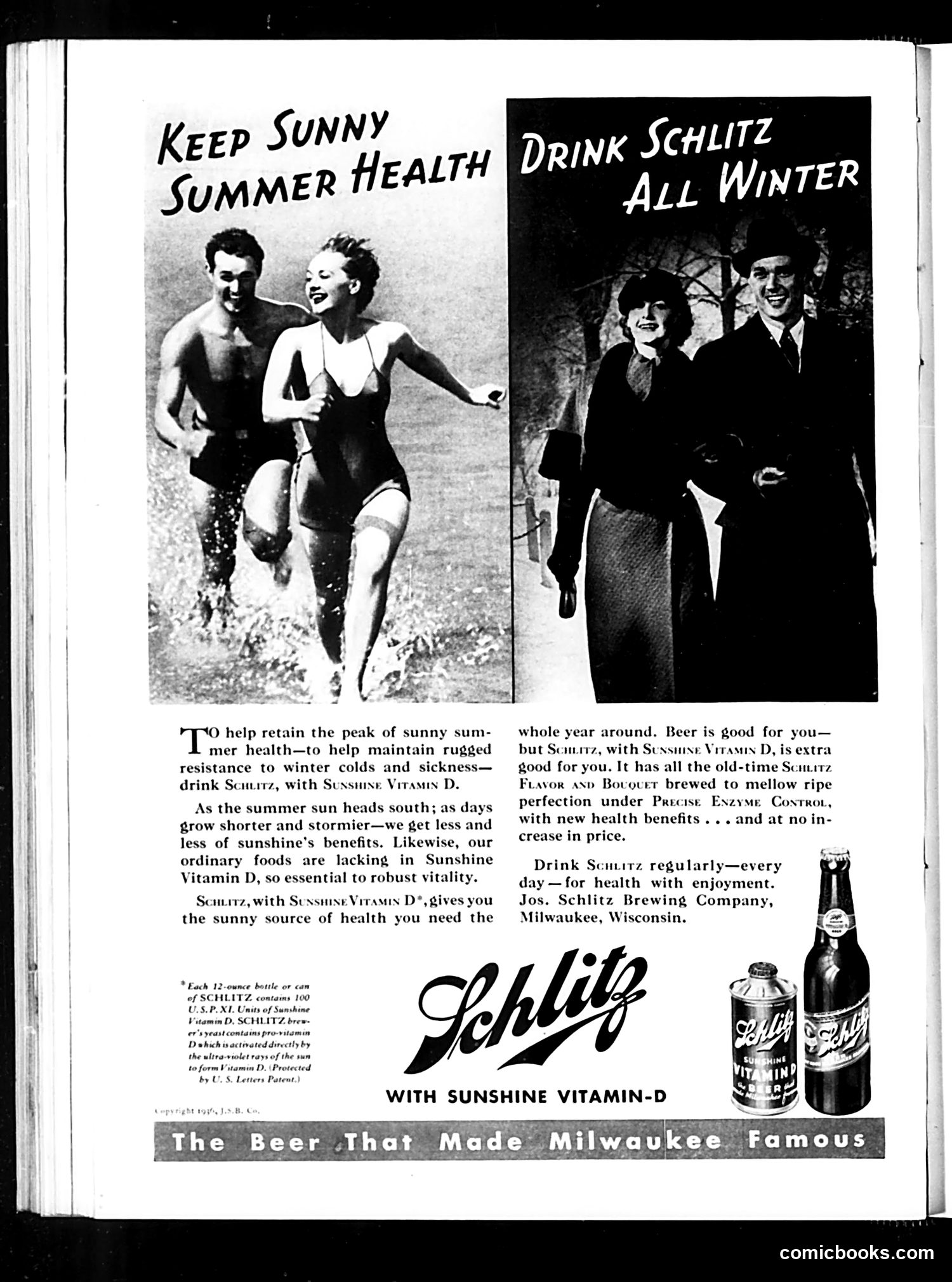
# Schlitz Beer Advertisement This is primarily a **beer advertisement**, not political satire. It's a vintage Schlitz brewery ad that uses health claims to market beer year-round. The ad contrasts summer and winter activities: swimmers enjoying "sunny summer health" versus couples in winter clothing drinking beer for "health with enjoyment." The central claim is that Schlitz beer contains "Sunshine Vitamin D," supposedly providing health benefits otherwise lacking in winter months when sun exposure decreases. This reflects **1940s advertising practices** where health benefits were routinely claimed for consumer products. The "Sunshine Vitamin D" branding was marketing strategy capitalizing on contemporary nutrition awareness. The tagline promises Schlitz as "The Beer That Made Milwaukee Famous," positioning it as a wholesome product for year-round consumption.
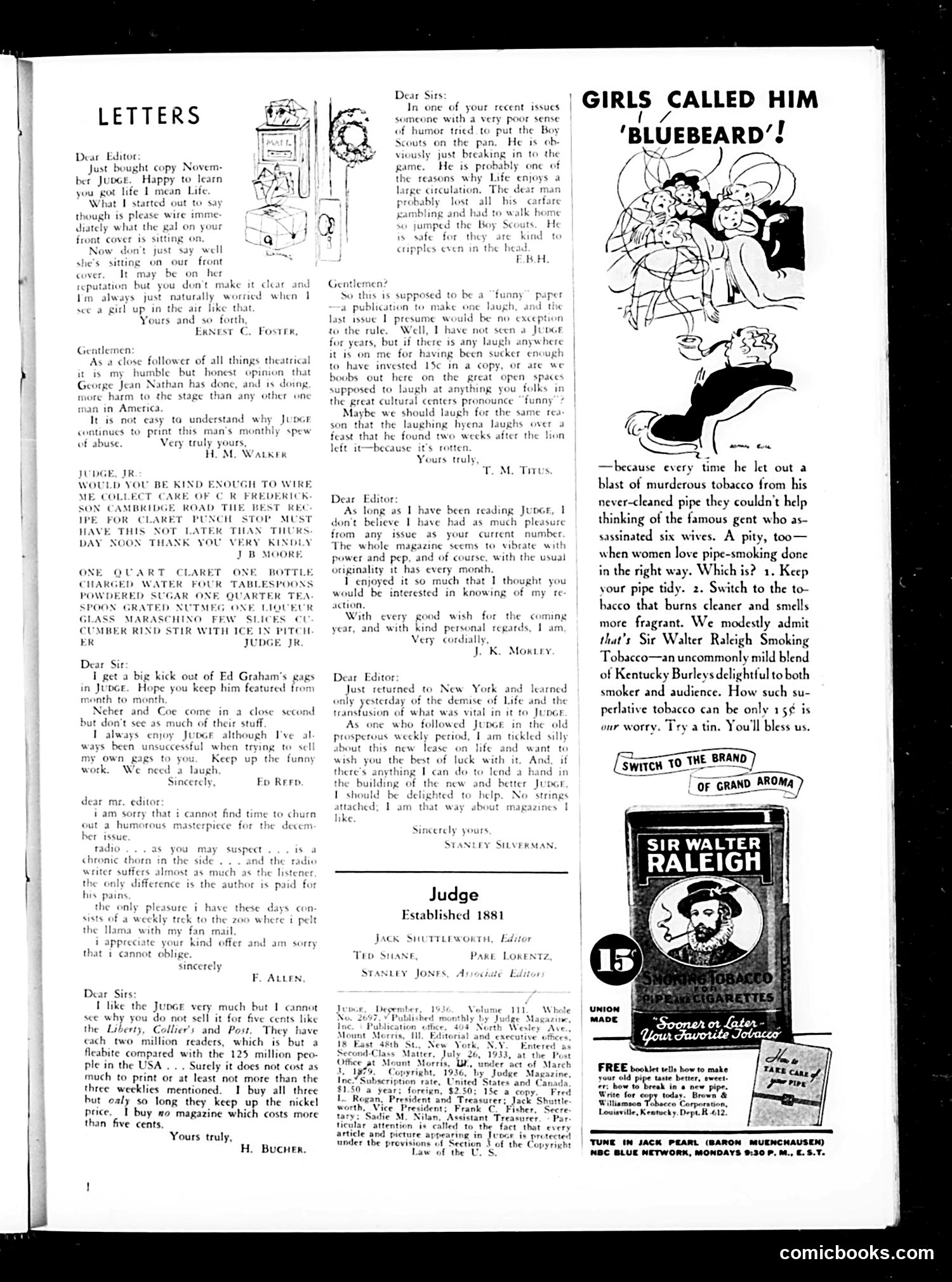
# Analysis of Judge Magazine Page This page is primarily a **letters section and advertisements** rather than political commentary. The main cartoon, titled "Girls Called Him 'Bluebeard'!", depicts a man with multiple women, referencing the Bluebeard legend of a serial killer/wife-killer. The cartoon appears to be satirizing infidelity or philandering rather than making specific political commentary. The letters discuss magazine quality, humor standards, and editorial matters. A **Sir Walter Raleigh tobacco advertisement** occupies the lower right, marketing cigarettes as a premium brand. The cartoon's humor relies on readers' familiarity with the Bluebeard folklore—a cautionary tale about a dangerous man. Without additional context about when this was published, the specific social critique remains unclear, though it likely comments on contemporary attitudes toward male behavior and relationships.
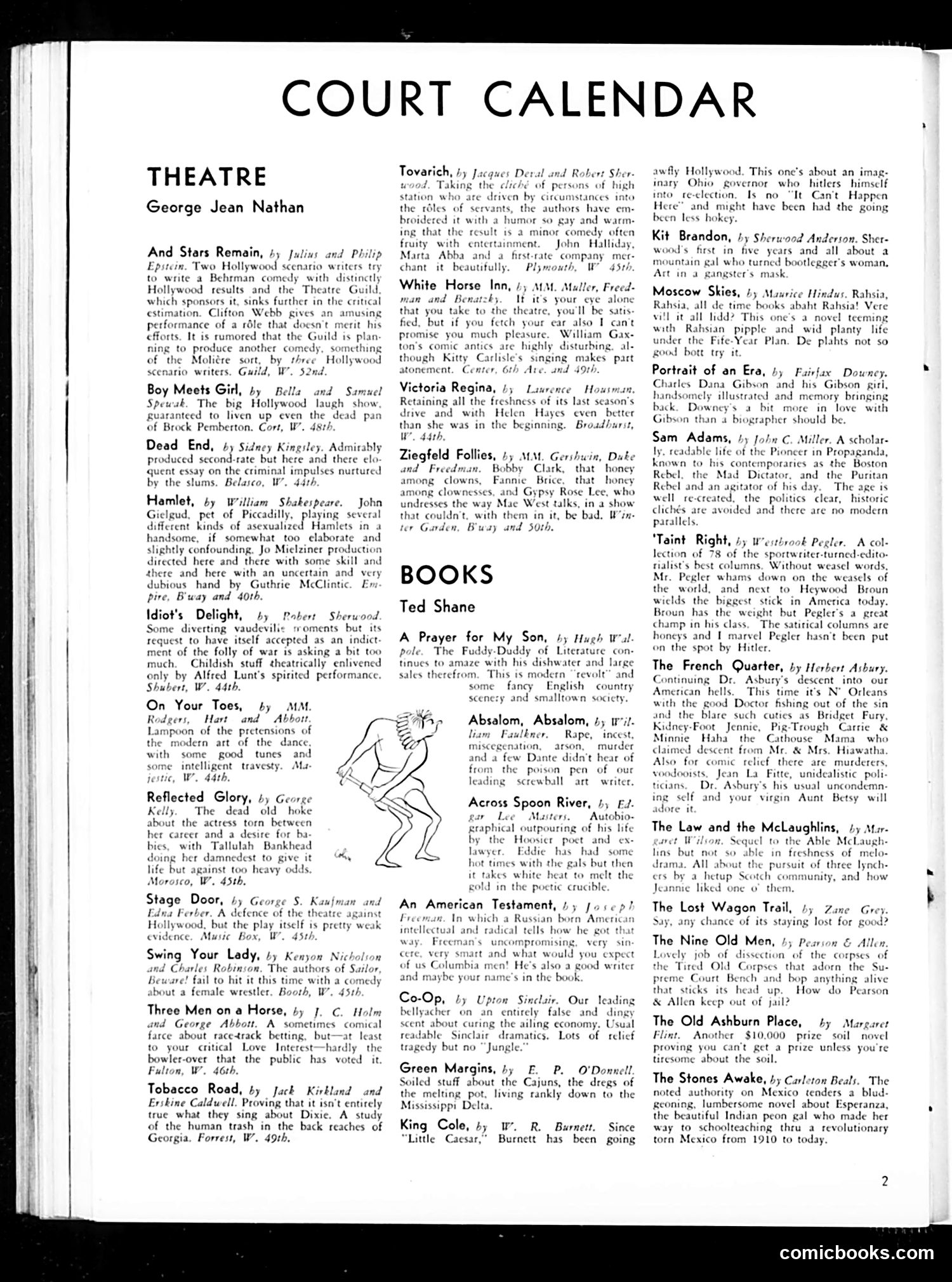
# Court Calendar Page from Judge Magazine This appears to be a book and theatre review section from Judge magazine, not primarily a political cartoon page. The content consists of brief critical reviews of Broadway productions (including "Tovarich," "White Horse Inn," "Idiot's Delight") and recent books (works by Ted Shane, Hugh Walpole, and others). There is one small illustration showing a stylized figure in an exaggerated pose, but it's decorative rather than satirical commentary. The page functions as entertainment criticism and cultural commentary typical of Judge's format—lighthearted, witty assessments of contemporary popular culture rather than political satire or caricature of specific public figures.
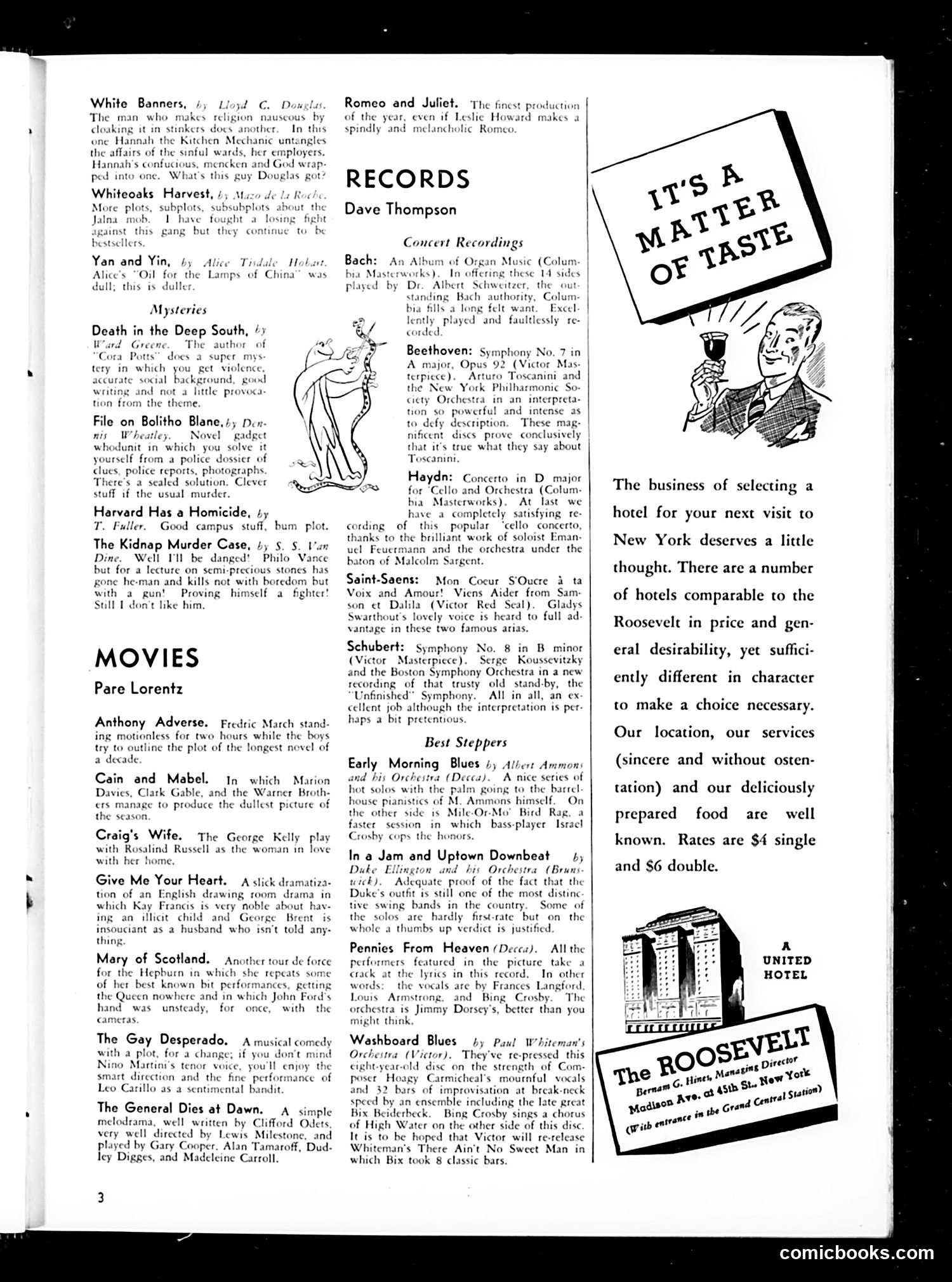
# Analysis This page is primarily **book and entertainment reviews** with one **advertisement** for The Roosevelt Hotel in New York. The only cartoon element is a small illustration accompanying the hotel ad showing a caricatured man holding up a wine glass with text "IT'S A MATTER OF TASTE." This is **not political satire** but rather a visual pun for a commercial advertisement—the "taste" reference plays on both wine-tasting and the hotel's quality/character. The bulk of the page reviews films (including titles like "Anthony Adverse" and "Mary of Scotland") and concert recordings of classical composers. The content reflects 1930s entertainment criticism in this satirical magazine, but this particular page contains no political commentary or social satire worth analyzing.
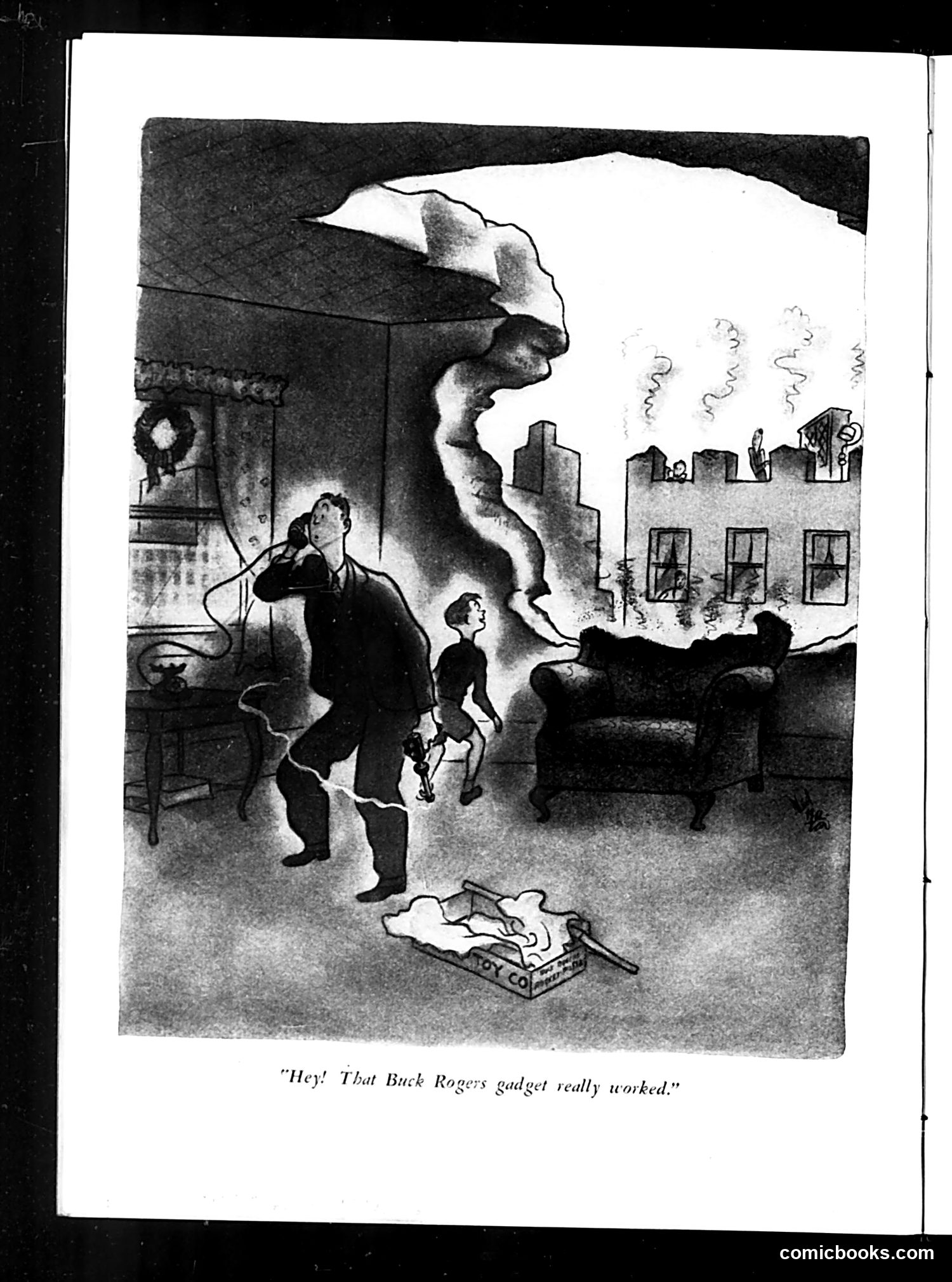
# Analysis This cartoon depicts a gadget that appears to have caused an explosion or disaster in an urban setting. Two men and a child observe the wreckage amid smoke and flames engulfing a building. The caption reads: "Hey! That Buck Rogers gadget really worked." The joke references **Buck Rogers**, likely referring to a contemporary inventor or product pitchman known for dubious or overly-hyped inventions. The satire mocks both the gadget itself (which spectacularly failed) and the false advertising or exaggerated claims surrounding it—the speaker's sarcastic comment suggests the "gadget" worked precisely as skeptics expected: by destroying things rather than fulfilling its promised purpose. This reflects Judge magazine's typical satirical approach to consumer culture and technological hype.
# Analysis of Judge Page 5 This page is primarily editorial text praising various political and public figures from the Roosevelt administration and related spheres. The small illustrations appear decorative rather than satirical. The text mentions President Roosevelt, Governor Eugene Talmadge of Georgia, Ambassador Randolph Hearst to Russia, and others. The overall tone is **complimentary rather than satirical**—Judge is endorsing their actions and policies. One passage discusses praise for Minneapolis police closing a disorderly house and commends American university systems, specifically St. Lawrence University. Another praises economic improvements, referencing 1937 as a promising business year. The page reads more like editorial commentary than typical Judge satire. The small cartoon figures appear merely illustrative, not the primary content. This represents Judge in a more straightforward advocacy mode rather than its typical humorous-critical function.
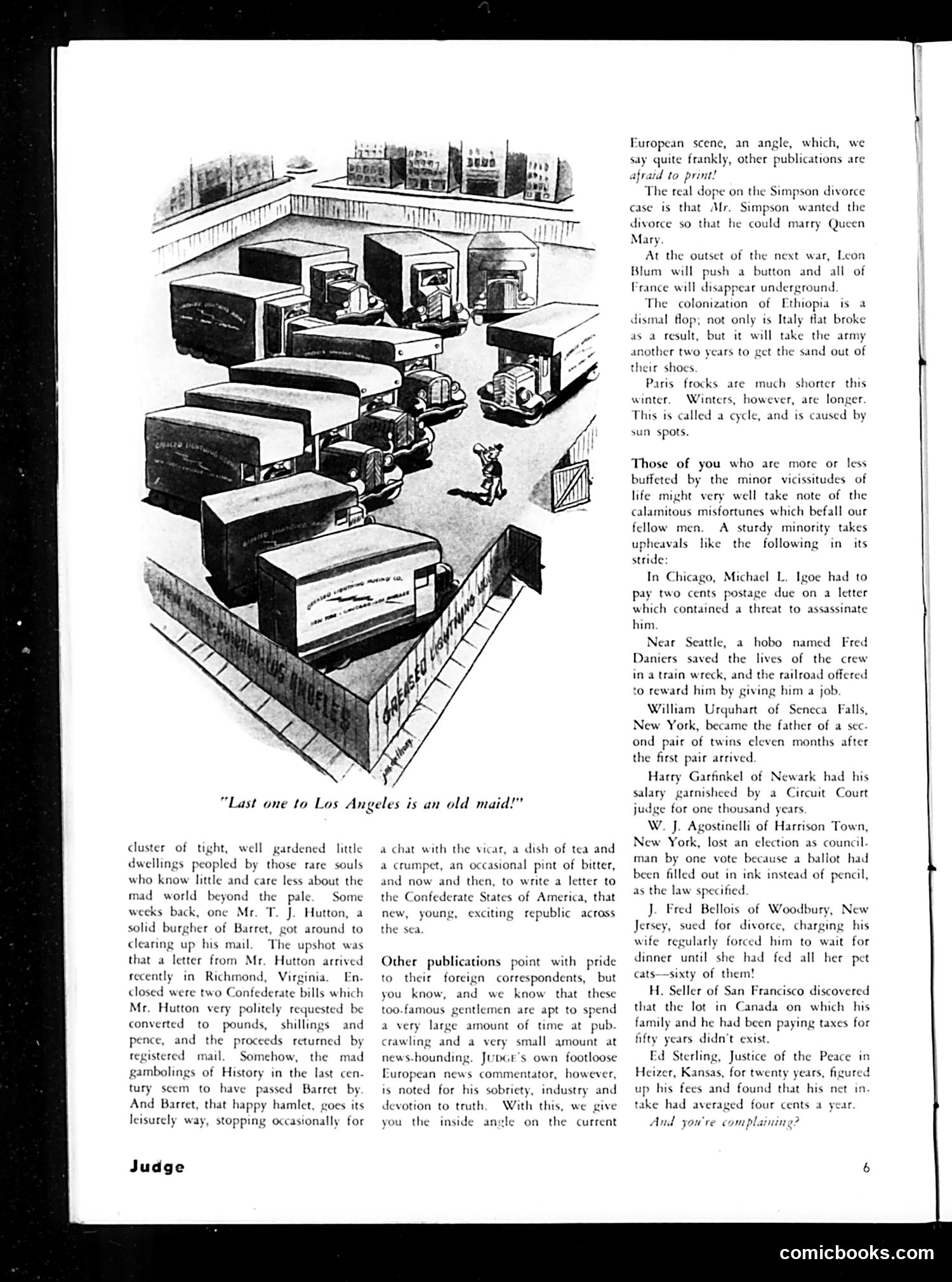
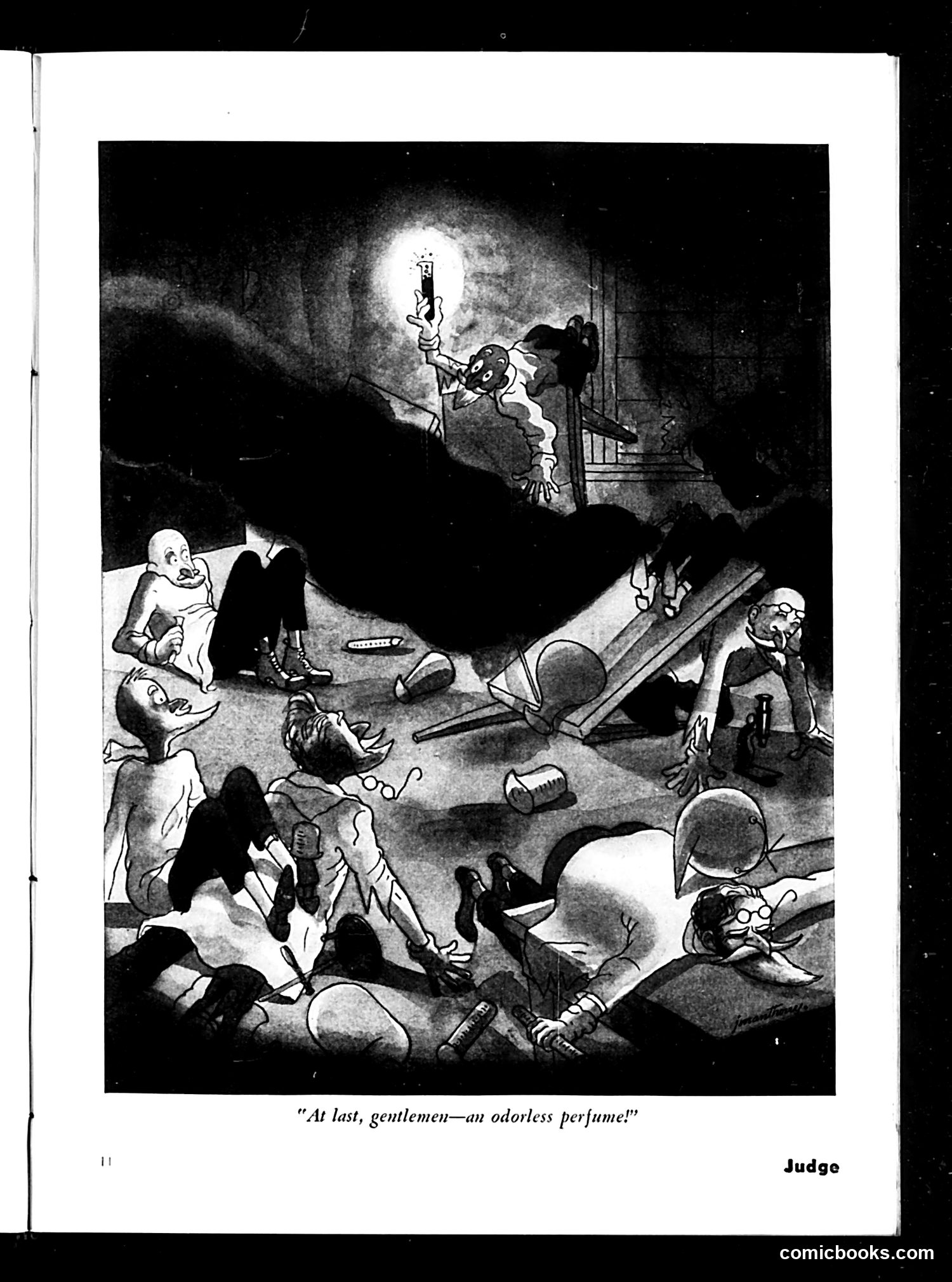
# Analysis of Judge Magazine Page The main cartoon depicts a congested underground parking structure beneath a European cityscape, captioned "Last one to Los Angeles is an old maid!" This satirizes 1920s-era American automobile culture and urban congestion—suggesting that rapid motorization was creating chaotic infrastructure problems even then. The right column contains humorous anecdotes about minor misfortunes befalling ordinary people (postal mix-ups, inheritance disputes, salary garnishments). These appear designed as lighthearted filler illustrating life's petty absurdities. The cartoon's subtext mocks both European cities overwhelmed by American-style auto proliferation and Americans' eager adoption of car culture regardless of practical consequences. The "old maid" reference suggests competitive, even frantic adoption of modern transportation among the American public.
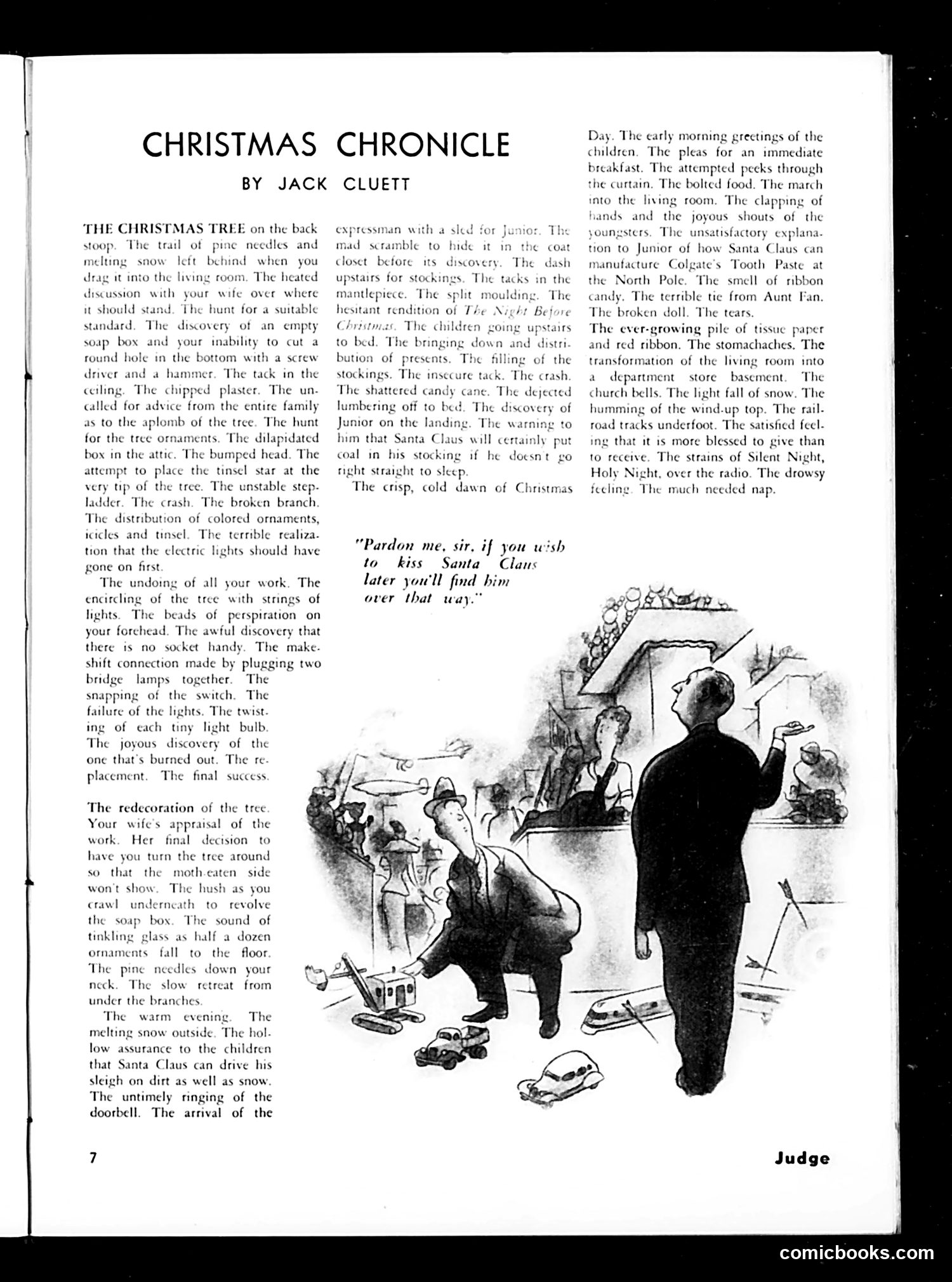
# "Christmas Chronicle" by Jack Cluett This is a humorous essay describing the chaotic reality of Christmas preparation and celebration, presented as a chronicle of mishaps. The accompanying illustration shows a father figure surrounded by toys and debris, with a child approaching him. The caption reads: "Pardon me, sir, if you wish to kiss Santa Claus later you'll find him over that way." The satire mocks the gap between Christmas ideals and domestic reality—the tree disasters, broken ornaments, failed decorations, and general disorder that characterize actual holiday preparation. The joke suggests that the father, exhausted and disheveled from managing these catastrophes, has become indistinguishable from the harried figure children expect Santa to be. It's a gentle critique of the stressful, behind-the-scenes labor required to create the "magic" of Christmas.
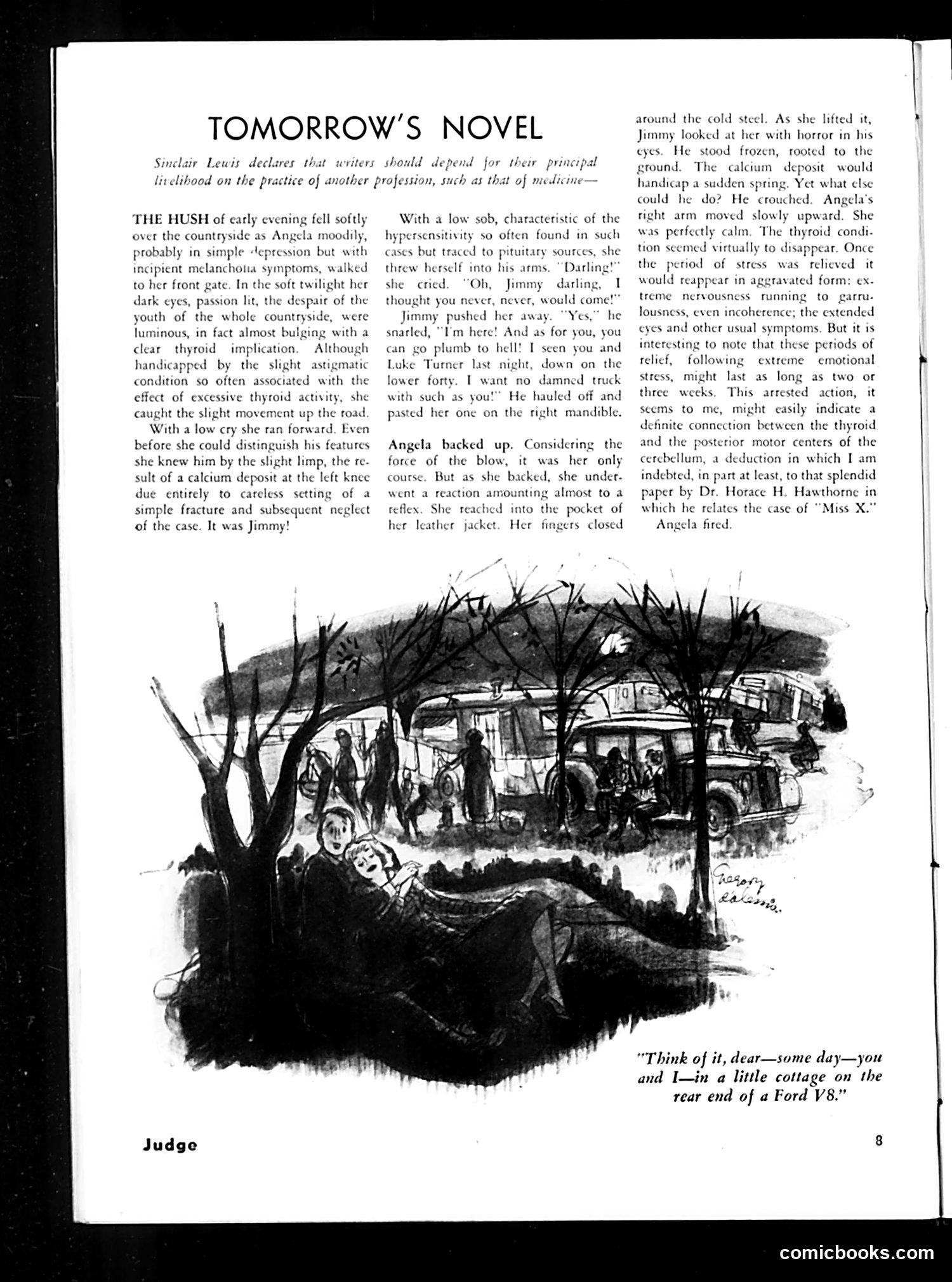
# Analysis: "Tomorrow's Novel" This is a satirical piece mocking the overwrought, pseudoscientific melodrama popular in pulp fiction and romance novels of the era. The cartoon illustrates a dramatic scene—a man and woman in a romantic/violent confrontation—while the text parodies how such stories obsessively explain every character action through pseudo-medical jargon. The satire works by having the narrative constantly interrupt the romance plot to discuss thyroid conditions, calcium deposits, pituitary sources, and neurological connections—turning a simple domestic drama into absurd medical pseudo-analysis. The joke is that contemporary popular fiction treated medical/psychological explanations as profound justifications for melodramatic behavior. The caption's clichéd romantic promise ("cottage...Ford V8") contrasts with the preceding violence, further mocking genre conventions. The piece ridicules both pulp fiction's dramatic excess and the era's tendency to pathologize normal human emotion through pseudo-science.
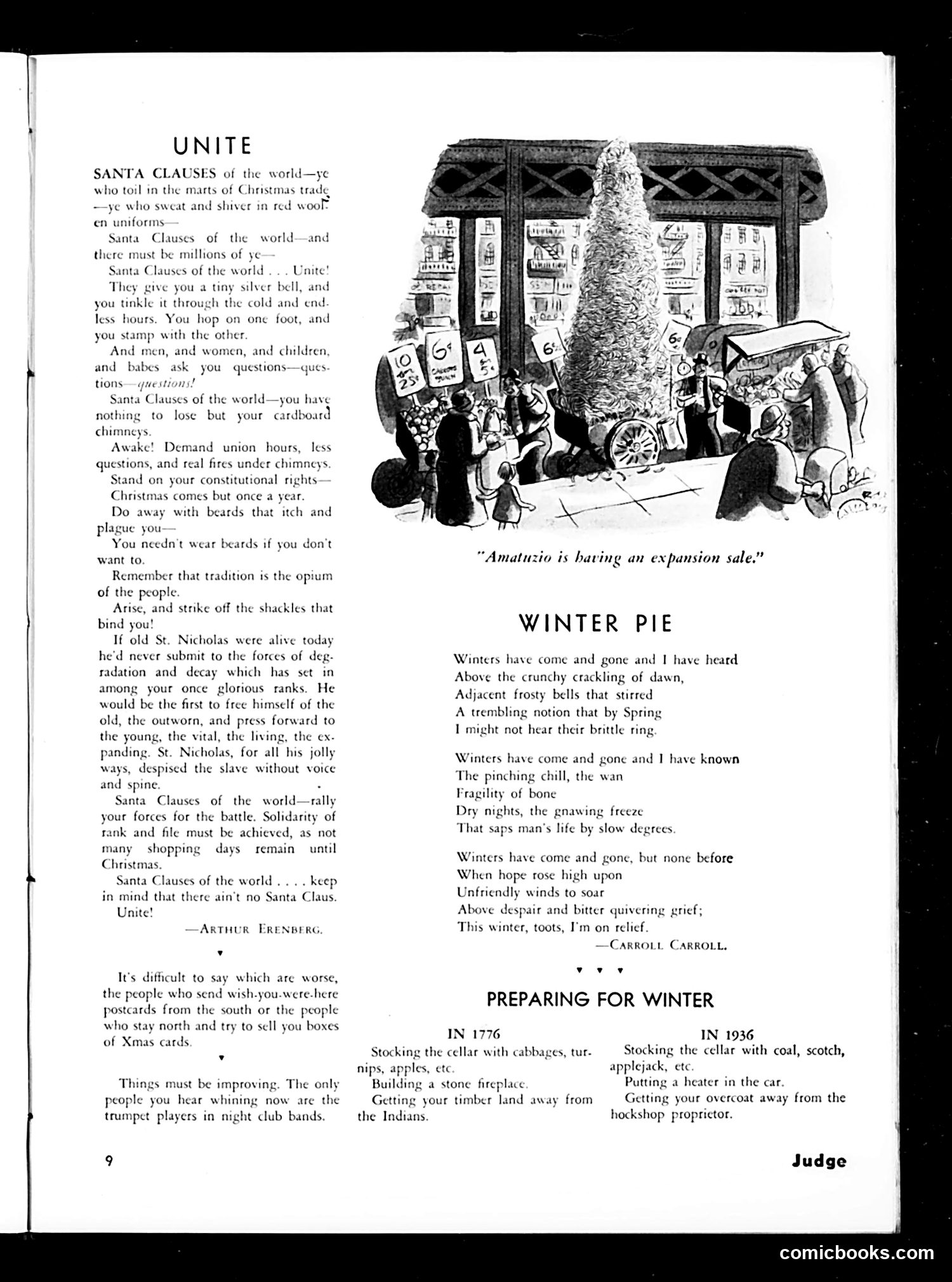
# Explanation for Modern Readers This page contains two satirical pieces reflecting 1930s concerns: **"Unite"** is a mock-revolutionary tract urging department-store Santas to unionize. It parodies communist/labor organizing rhetoric ("Santa Clauses of the world, Unite!") while describing their actual working conditions: wearing itchy beards, standing on one foot for hours, enduring endless child questions, and receiving only cardboard chimneys as props. The satire mocks both exploitative retail labor practices and overwrought union organizing language. The final line—"there ain't no Santa Claus"—is a cynical punchline about disillusionment. **"Winter Pie"** is a poem about hardship during winter, ending with "I'm on relief"—referencing Depression-era government assistance programs, treating poverty with dark humor. The accompanying cartoon shows a crowded department-store window display with a Christmas tree and Santa figures, illustrating the commercial Christmas machinery being satirized. The page critiques 1930s retail labor conditions and economic desperation through comedic exaggeration.
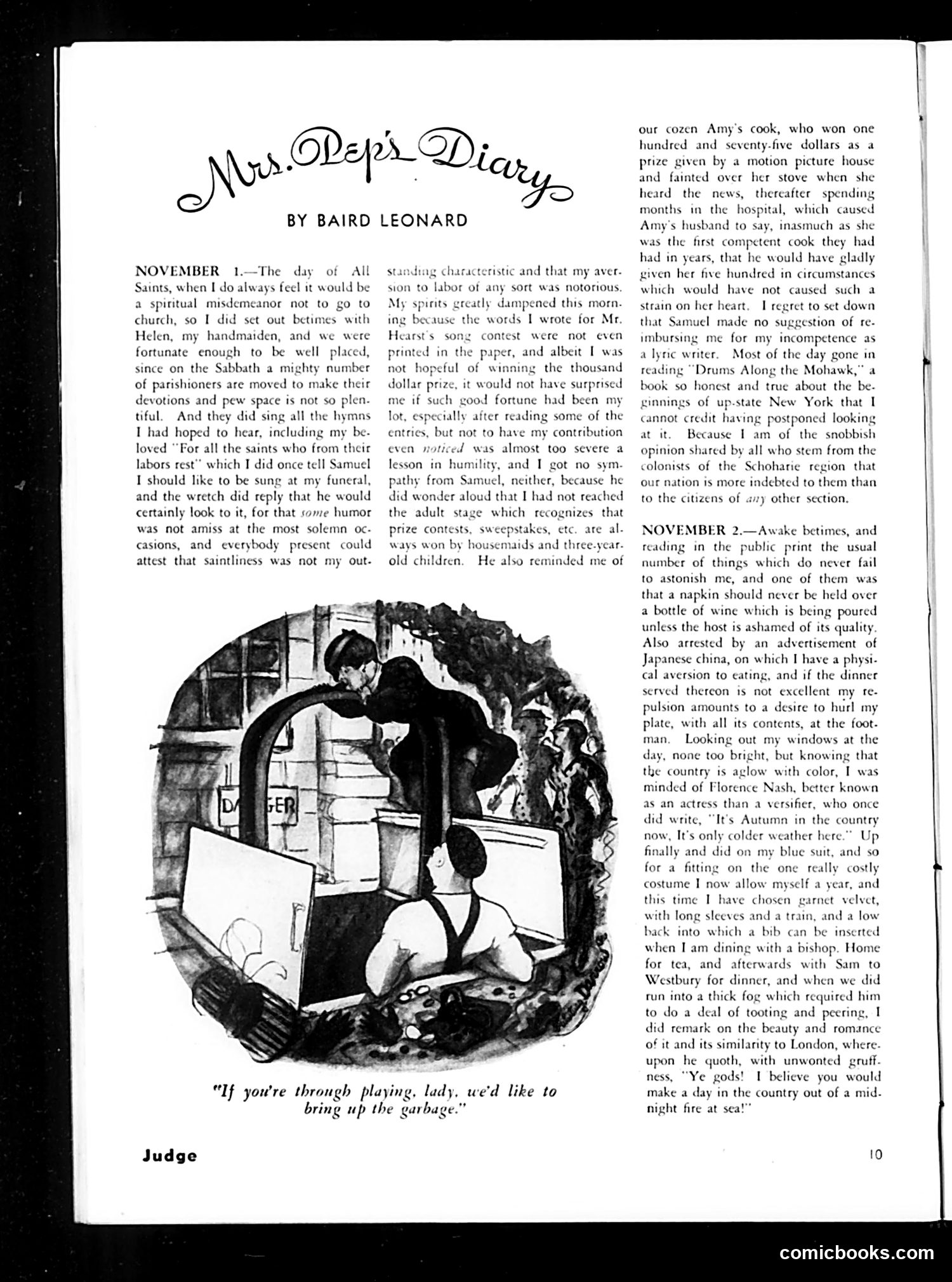
# Mrs. Pep's Diary: A Period Piece of Early 20th-Century Domestic Satire This is a diary entry by "Mrs. Pep" (a fictional society character), written by Baird Leonard for *Judge* magazine. The single cartoon shows a woman at a piano being interrupted by a servant requesting to remove garbage—a visual joke about domestic hierarchy and the gap between genteel pretension and reality. The text satirizes upper-middle-class affectations: Mrs. Pep's wounded pride over her unnoticed song-contest entry, her husband Samuel's deflating comments about sweepstakes winners (housemaids and children), her snobbish pride in colonial ancestry, and her particular dislikes (Japanese china). The humor targets the vanity and pretentiousness of leisure-class women who fancy themselves cultured while remaining fundamentally disconnected from actual accomplishment or humble reality—symbolized by the garbage interruption. The diary format allows gentle mockery of her self-absorbed musings about costumes, autumn colors, and social anxieties.