A complete issue · 36 pages · 1932
Judge — January 2, 1932
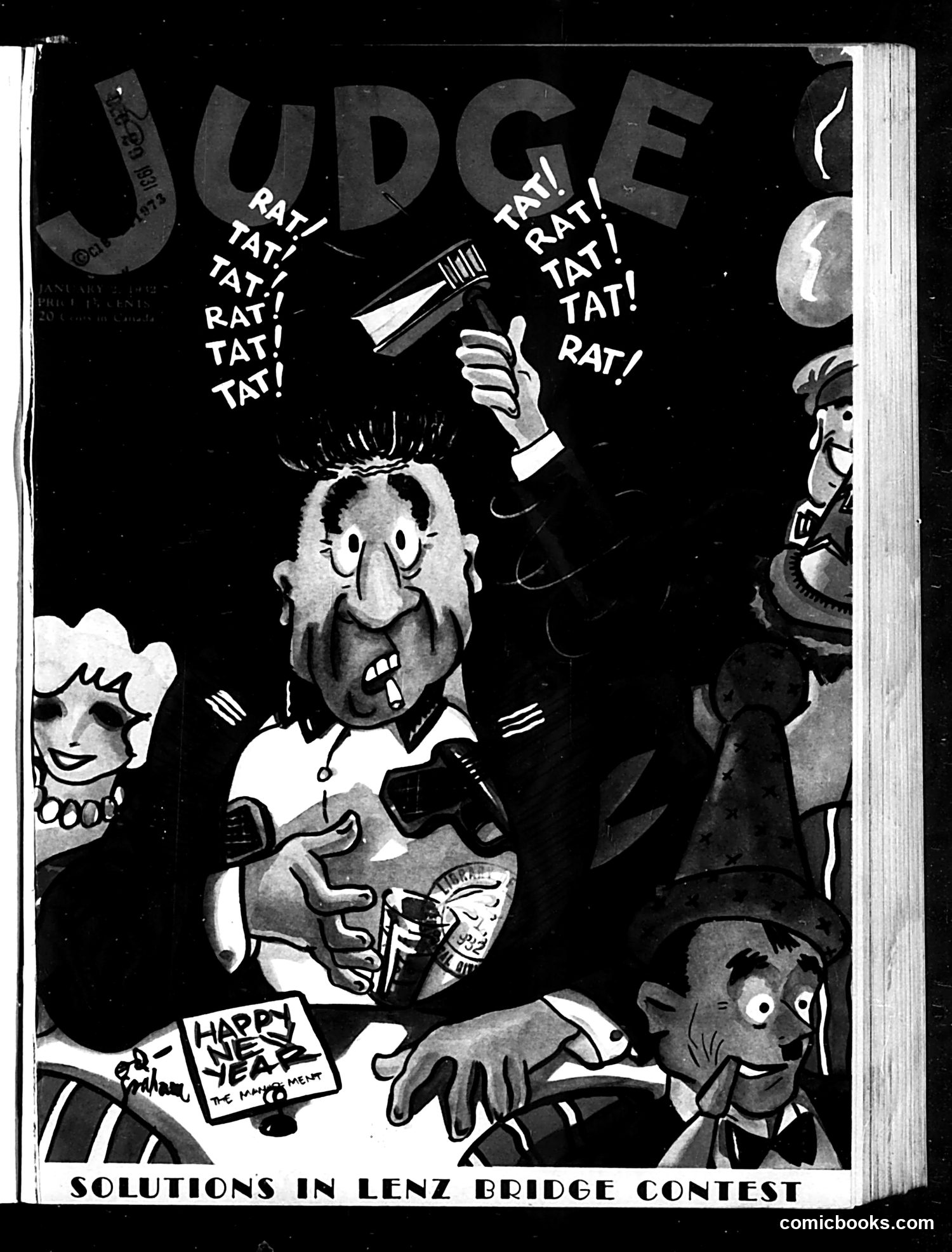
# Analysis of "Judge" Cartoon Page This page from the satirical magazine *Judge* shows a New Year's celebration scene titled "Solutions in Lenz Bridge Contest." The central caricatured figure appears distressed, holding what looks like a document or solution, surrounded by onlookers saying "RAT! TAT! TAT!" — representing gunfire or criticism. The "Lenz Bridge" likely references a specific contemporary engineering or political controversy, though the exact historical event is unclear from the image alone. The cartoon suggests that proposed "solutions" to this problem are being met with harsh public ridicule and rejection. The New Year's setting implies commentary on how failed solutions are being discarded as the year begins. The exaggerated facial expressions emphasize the derision involved.
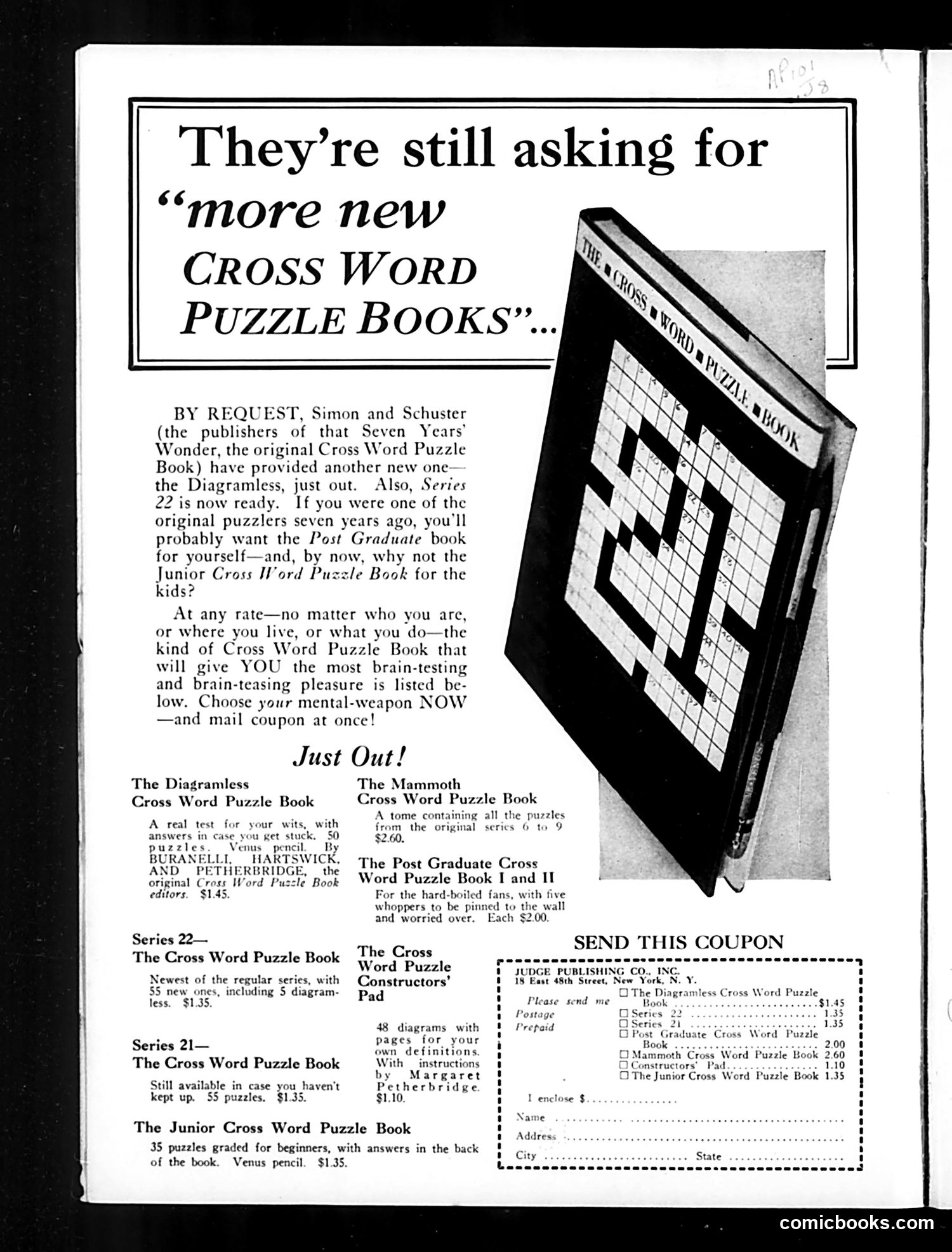
# Analysis This page is primarily **advertising, not editorial content or satire**. It's a Judge magazine advertisement for crossword puzzle books published by Simon and Schuster, circa the 1920s-1930s (based on the styling and references). The ad promotes various crossword puzzle book series at different difficulty levels—from "The Diagramless" to "The Junior Cross Word Puzzle Book" for children. It includes a mail-in coupon for ordering. The headline's quote marks around "more new Cross Word Puzzle Books" appears to be mock-exasperation, suggesting customers constantly request these books. This reflects the contemporary craze for crossword puzzles, which were enormously popular during this era. No political or social satire is present—it's straightforward product marketing.
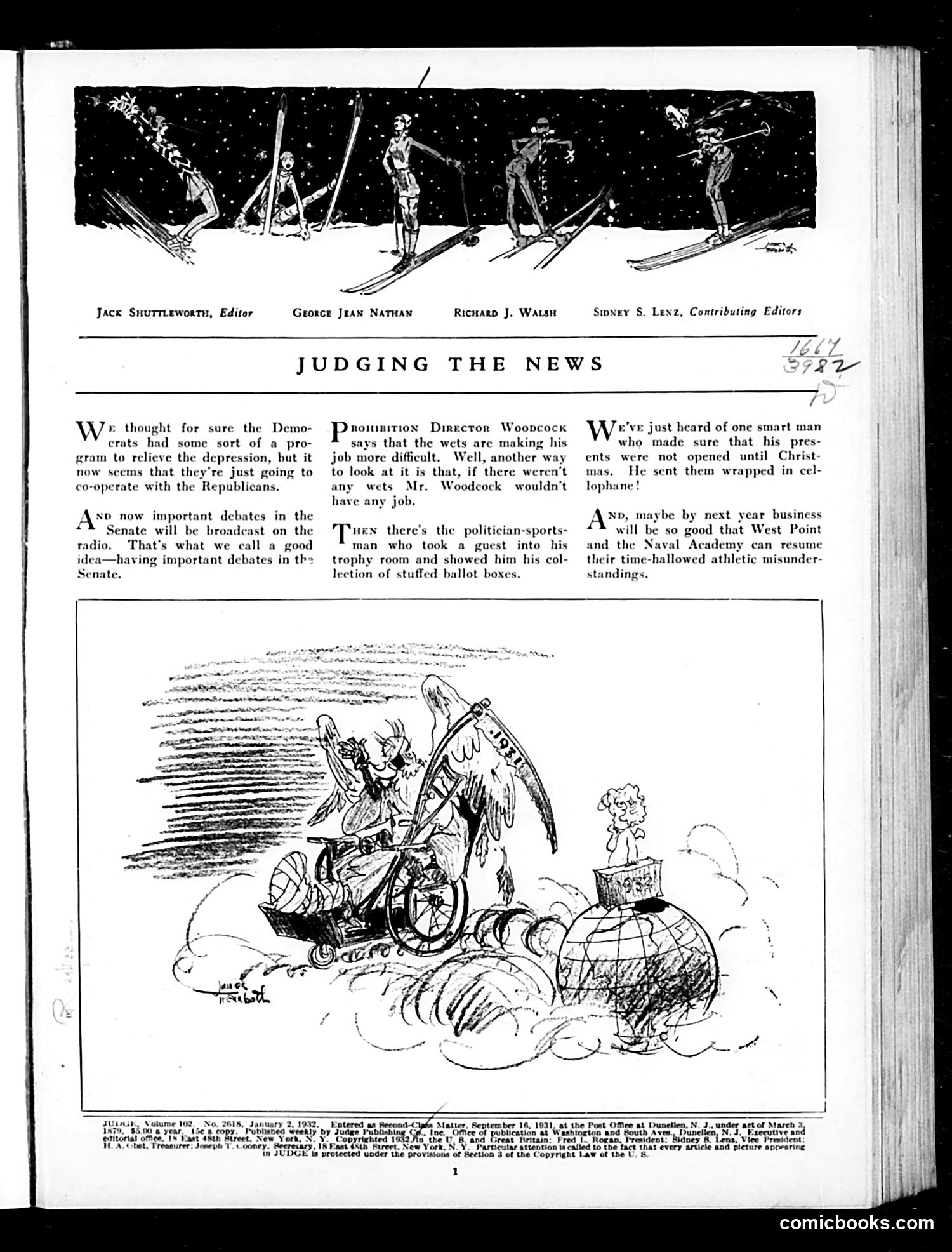
# Analysis of "Judging the News" Page This satirical page from Judge magazine (dated January 2, 1932, based on visible text) contains editorial commentary and a cartoon addressing Depression-era politics. The text discusses: - Democrats' proposed relief program and Republican cooperation - A Senate debate broadcast idea - Prohibition Director Woodcock and enforcement challenges - A politician-sportsman showing his "collection of stuffed ballot boxes" (satirizing electoral corruption) - West Point's athletic misunderstandings The main cartoon depicts **Death (with scythe and wings) arriving at Earth's globe by motorcycle**, seemingly collecting souls or bringing catastrophe. A small child figure stands nearby, emphasizing the stakes. The image appears to comment grimly on the Depression's human toll and mortality during this economic crisis period. The overall tone is darkly cynical about political corruption and economic devastation.
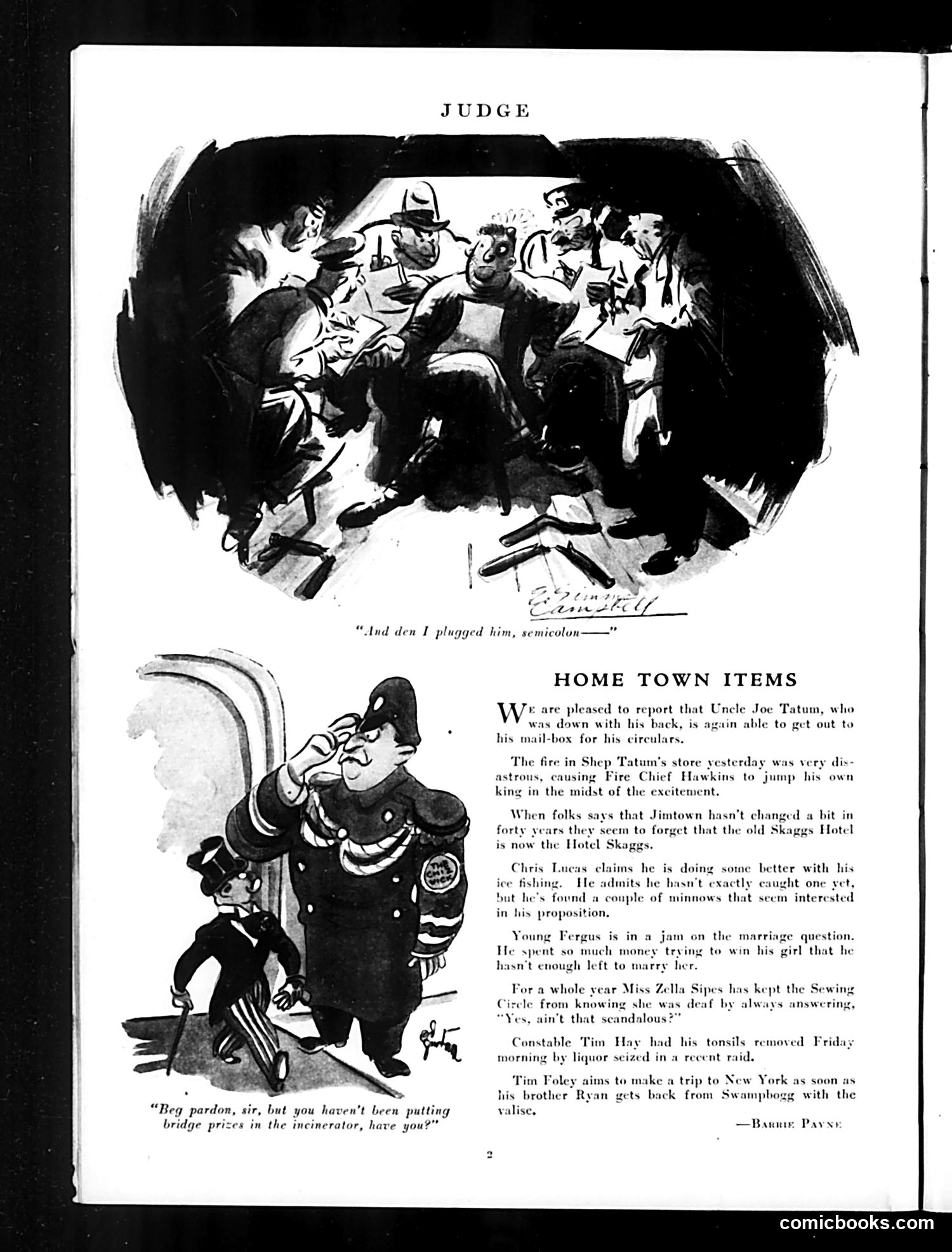
# Judge Magazine Page Analysis This page contains two cartoons and a "Home Town Items" gossip column. The top cartoon depicts a courtroom scene with the caption "And den I plugged him, semicolon—" This appears to satirize criminal defendants' poor grammar or malapropisms during testimony, mocking how uneducated criminals speak in court. The bottom cartoon shows a police officer confronting a small figure with the caption "Beg pardon, sir, but you haven't been putting bridge prizes in the incinerator, have you?" This references a contemporary scandal or concern about disposing of bridge tournament prizes improperly—likely satirizing social pretension around card games and petty theft. The "Home Town Items" section provides small-town gossip about local figures, typical of Judge's humorous small-town commentary popular in early 20th-century American satire.
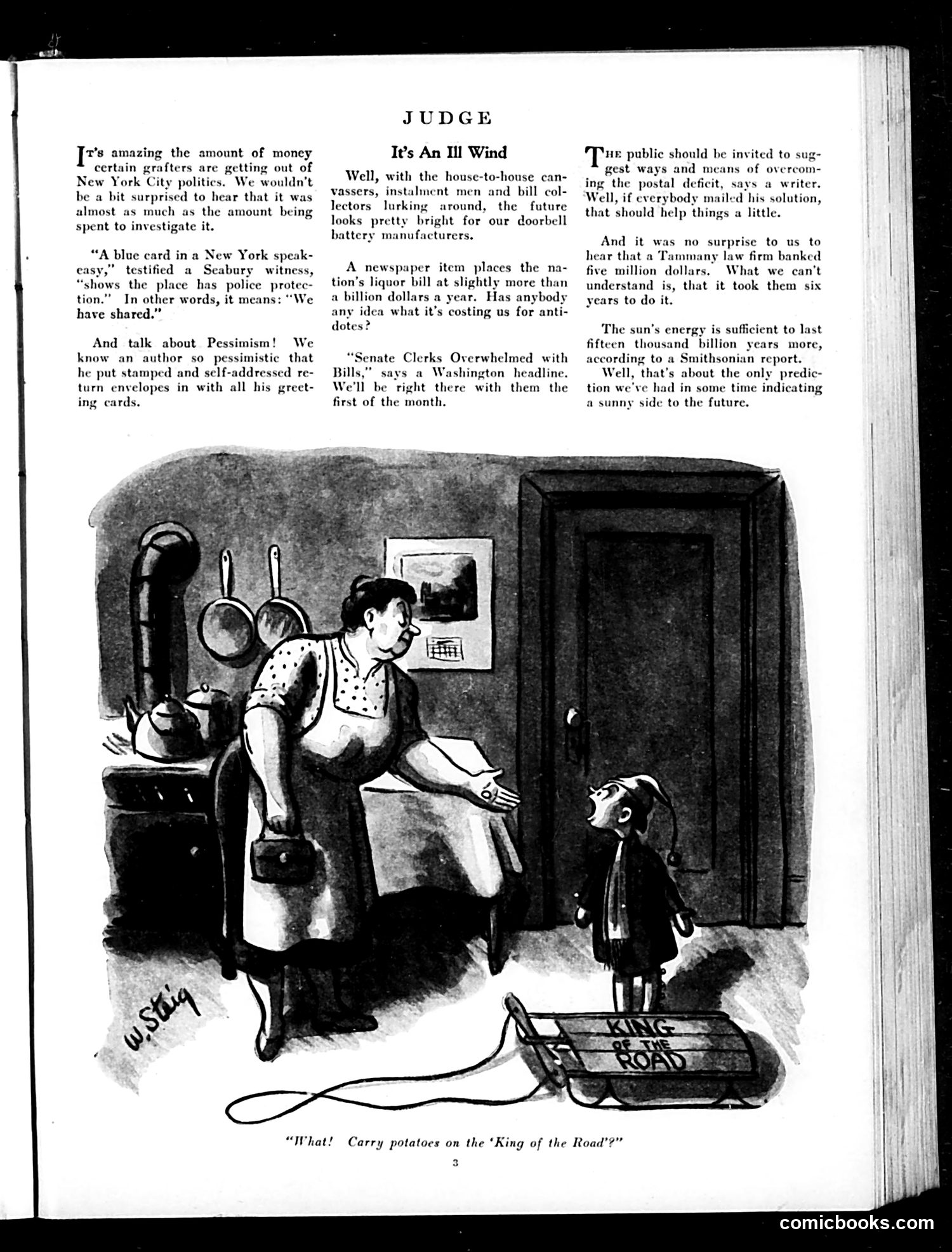
# Analysis of Judge Magazine Page The main cartoon depicts a woman in an apron confronting a child about carrying potatoes on a toy wagon labeled "King of the Road." The satire appears to target **wasteful consumer spending during economic hardship**—the child is treating a luxury toy as if it's a practical vehicle, while the mother questions why potatoes (basic necessities) are being transported on it. The text above includes commentary on **government waste and corruption**: references to "house-to-house canvassers, installment men and bill collectors," a Tammany Hall law firm charging exorbitant fees, and Senate clerks being "overwhelmed with bills." The overall theme critiques **frivolous spending amid financial strain** affecting ordinary Americans and government alike.
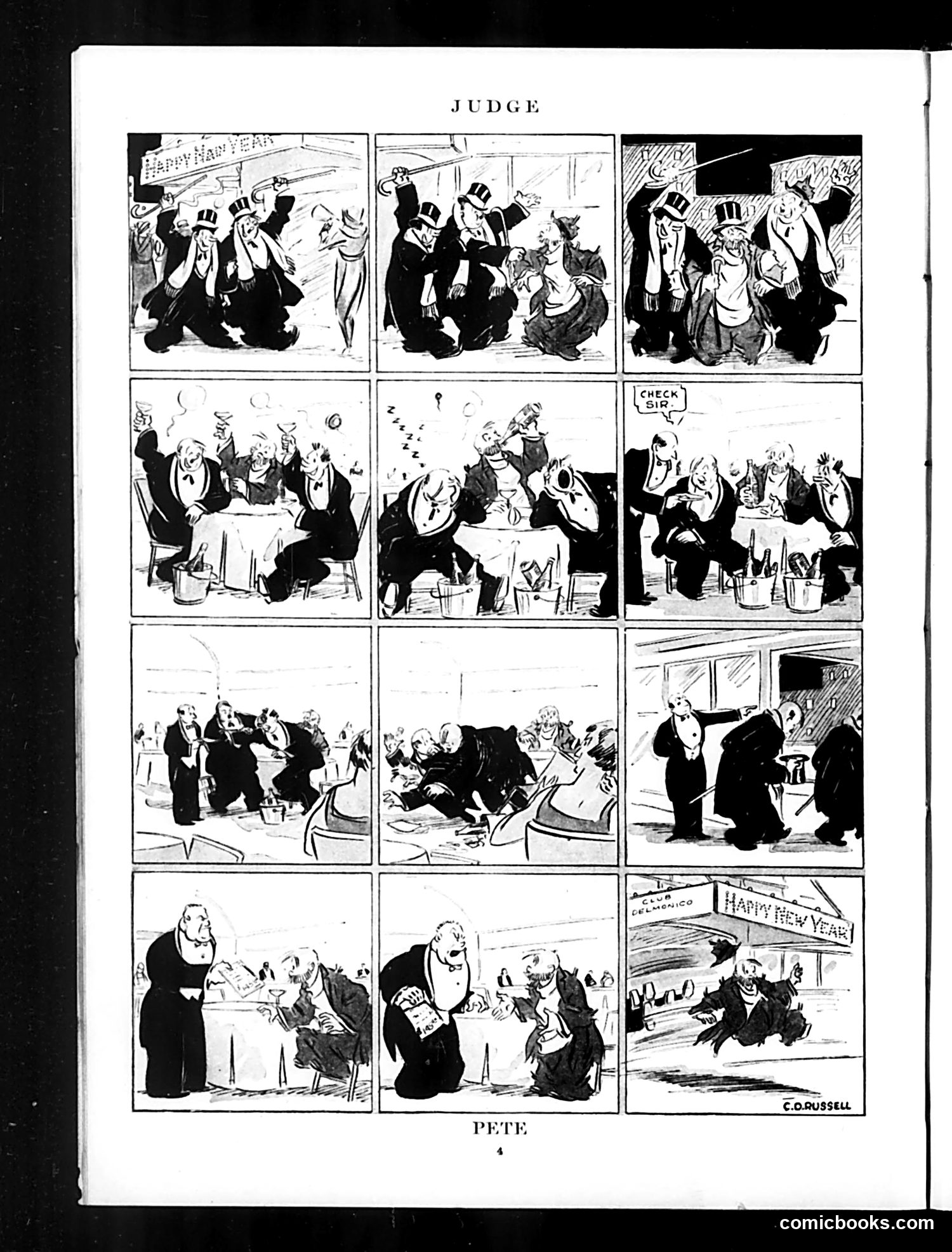
# Analysis of "Judge" Page: "Judge Pete" This is a 12-panel comic strip by C. Dussell titled "Judge Pete" depicting courtroom scenes with judges in formal attire. The narrative appears to show judges celebrating New Year's Eve at what seems to be a judicial banquet or gathering, progressing from courtroom chaos (top panels) to dining and revelry (middle panels) to what looks like a seaside celebration with a "Happy New Year" banner (final panel). The satire likely targets judicial conduct and dignity—showing judges abandoning their formal courtroom decorum for drunken New Year's festivities. The progression from solemn legal proceedings to disheveled celebration mocks the gap between judges' public authority and private behavior, a common theme in Judge magazine's social commentary.
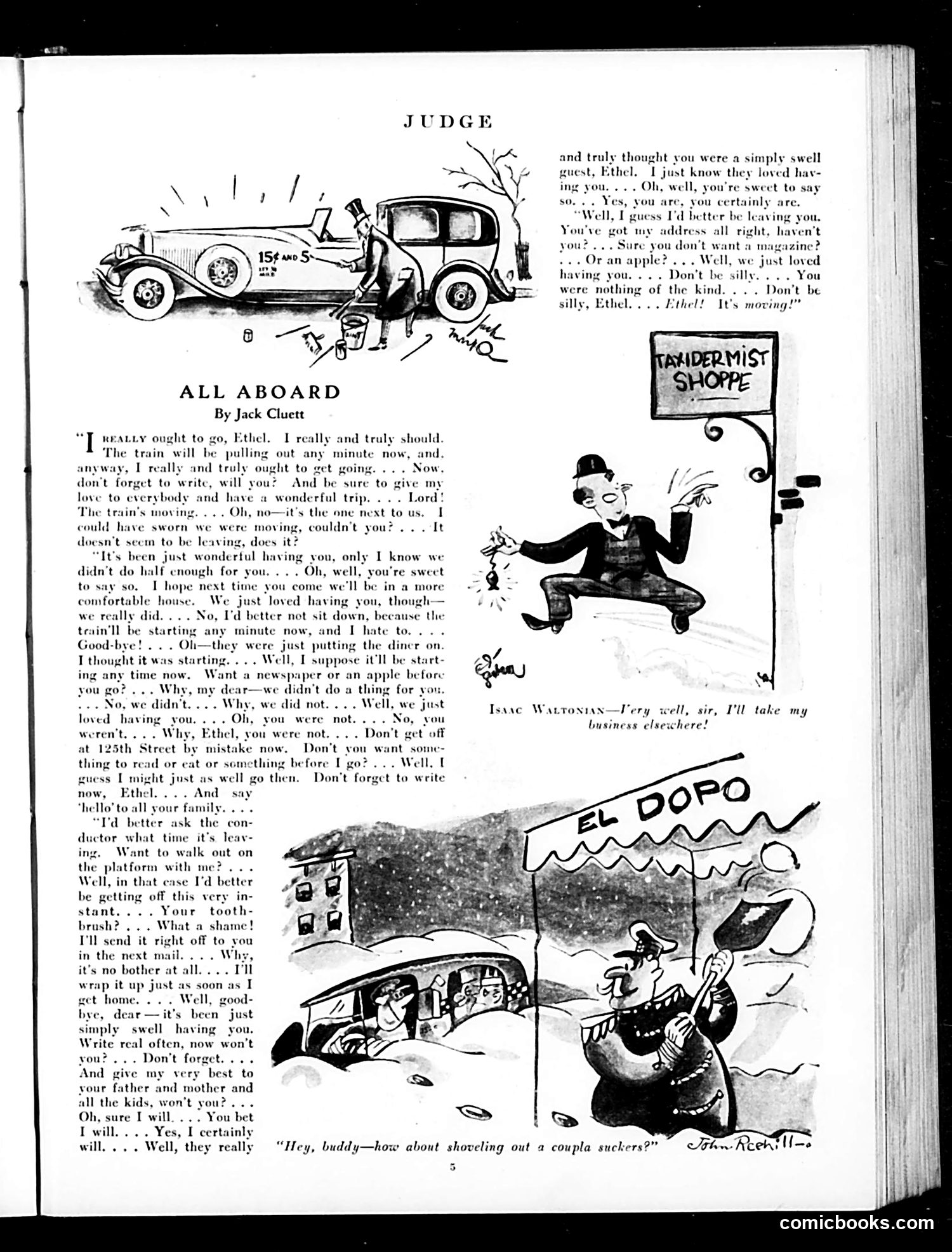
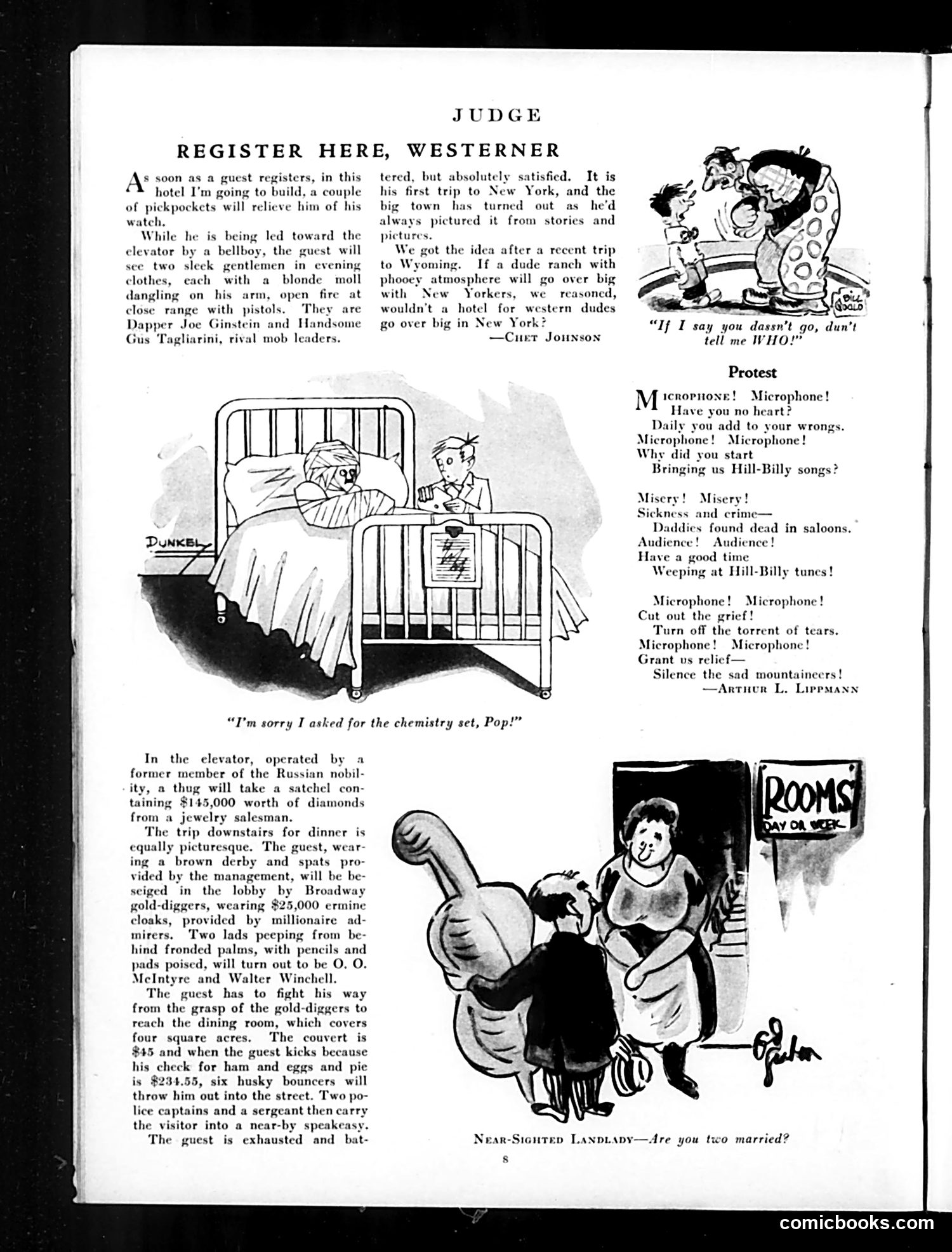
# Analysis of Judge Magazine Page This page contains two separate pieces: **"All Aboard" by Jack Cluett** (top): A comic story about someone named Ethel departing by train. The narrator rambles through a long, breathless monologue of affectionate small-talk and last-minute advice—classic early-20th-century sentimental humor about train travel and emotional farewells. The joke relies on the character's inability to stop talking despite the train's imminent departure. **"El Dopo" (bottom)**: A cartoon showing tourists at what appears to be a Mexican resort or beach destination. One figure asks another about "shoveling out a coupla suckers," suggesting satirical commentary on tourist exploitation or commercial tourism schemes, though the specific reference is unclear without additional context. Both pieces represent typical Judge magazine content: domestic social humor and satirical observations on American leisure and travel culture.
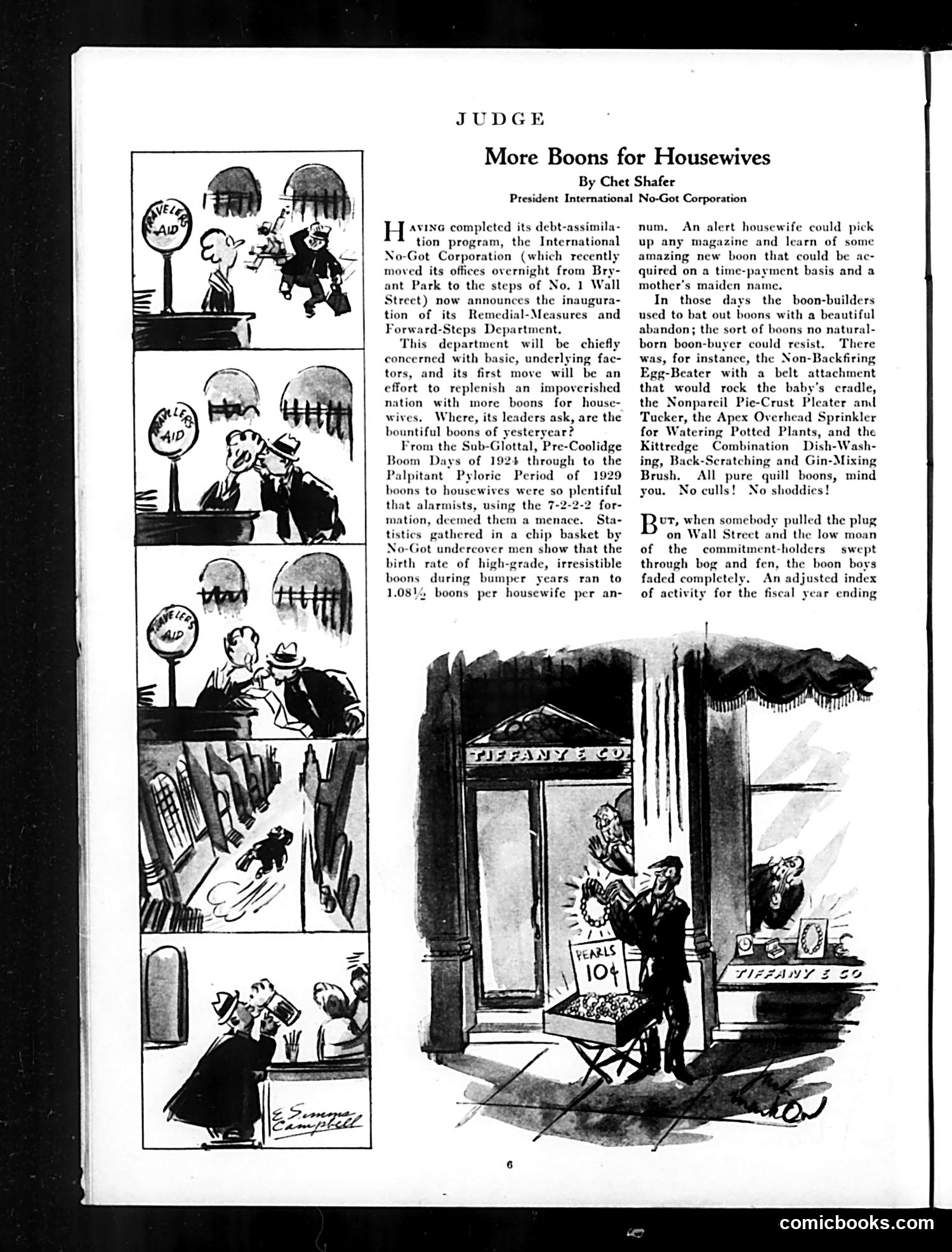
# "More Boons for Housewives" by Chet Shafer This satirical article mocks the "International No-Got Corporation," a fictional company claiming to sell "boons" (benefits/products) to housewives. The piece ridicules corporate marketing schemes targeting women. The cartoon strip on the left depicts a Wall Street crash scenario where "boon" products fail spectacularly—satirizing how investor enthusiasm leads to market collapse. The accompanying text references the 1920s boom period and the subsequent market downturn, noting absurdly high birth rates of "1,081½ boons per housewife per annum." The illustration on the right shows a storefront (Tiffany & Co.) with women shopping, further mocking consumer culture and the aggressive marketing of dubious "solutions" to housewives. The satire targets both corporate hype and women's consumer vulnerability during this economic period.
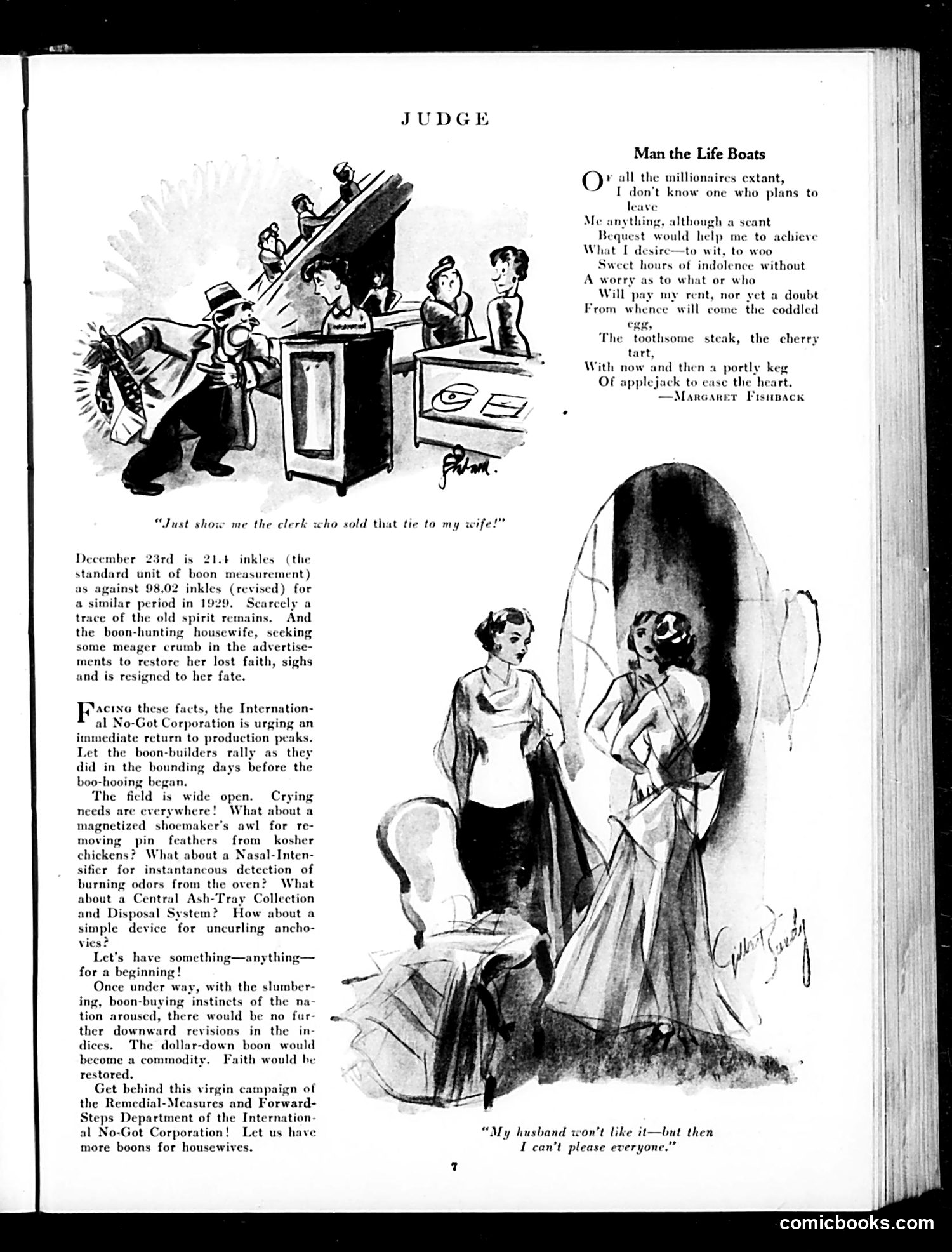
# Analysis of Judge Magazine Page This page satirizes **1930s consumer culture and the Great Depression**. The top cartoon mocks a husband's complaint about his wife's extravagant purchases—he demands to see the clerk who sold her an expensive tie, suggesting marital tension over spending. The main article parodies corporate marketing speak, referencing the "International No-Got Corporation" (a fictional company name playing on consumer deprivation). It mockingly suggests inventing absurd household gadgets—magnetized shoemaker's awls, "Nasal-Intensifiers," ash-trays—to revive consumer spending and restore "faith" in purchasing. The poem by Margaret Fishback expresses middle-class anxiety about financial insecurity and dependence on luxuries. The lower illustration shows two women discussing a chair purchase, with the wife's resigned acceptance that "my husband won't like it—but then I can't please everyone," capturing tensions between desire and domestic economy during economic hardship. **Overall point**: Satirizing both corporate attempts to manipulate consumers into unnecessary purchases and the psychological toll Depression-era financial anxiety placed on households.
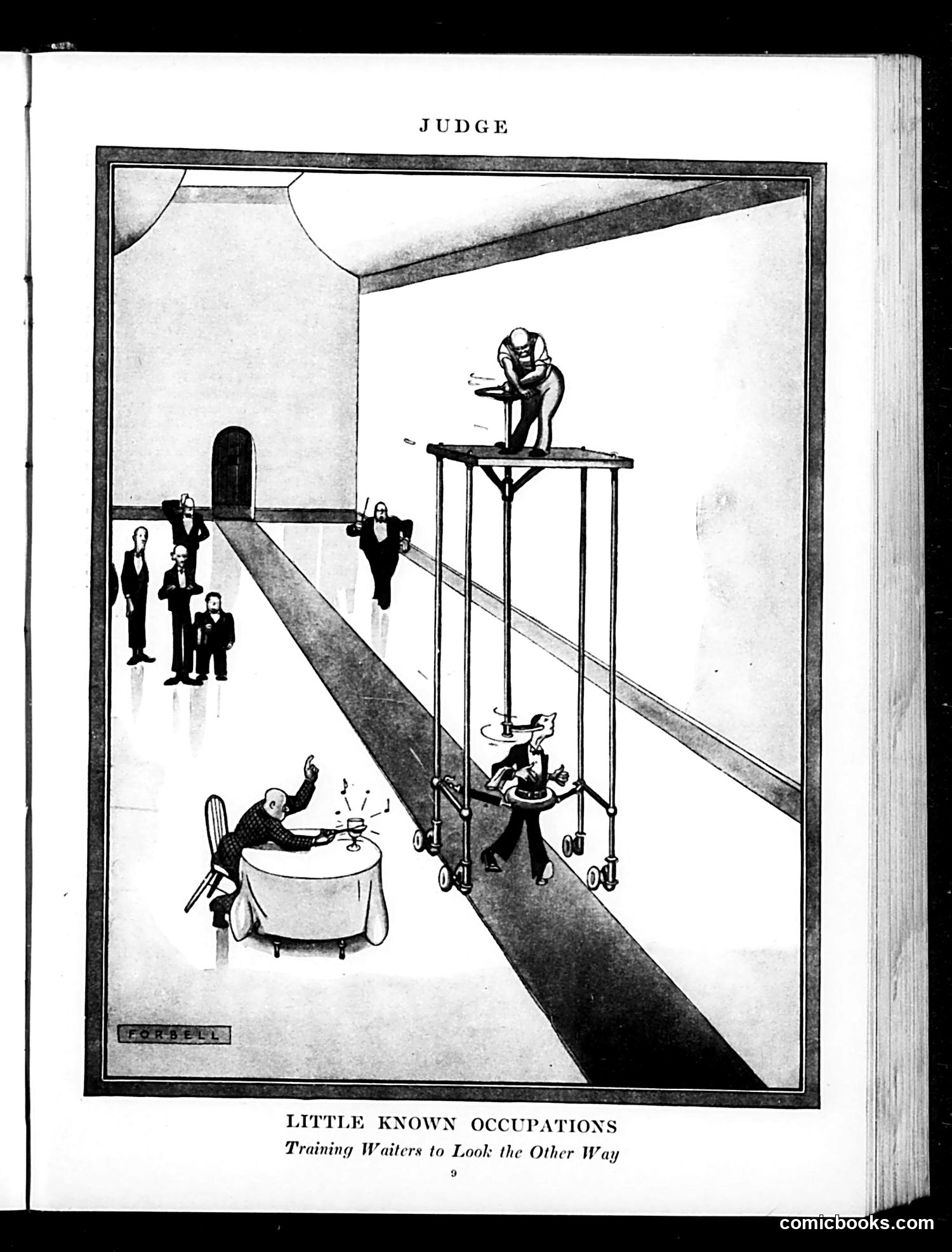
# Analysis This is a satirical cartoon by Forsell titled "Training Waiters to Look the Other Way." The illustration depicts a courtroom or formal institutional setting where judicial authority (represented by the judge elevated on a platform) oversees the "training" of waiters—shown as small figures in the lower left and on a platform. The satire critiques judicial complicity in corruption or impropriety. By framing waiter-training as an "occupation," the cartoon suggests that judges actively instruct service workers to ignore wrongdoing or misconduct occurring in plain sight. The elevated judge literally supervises this misdirection, implying the judiciary itself endorses turning a blind eye to illegal or unethical behavior—likely referencing Prohibition-era corruption or bribery where judges and officials ignored violations in exchange for bribes.
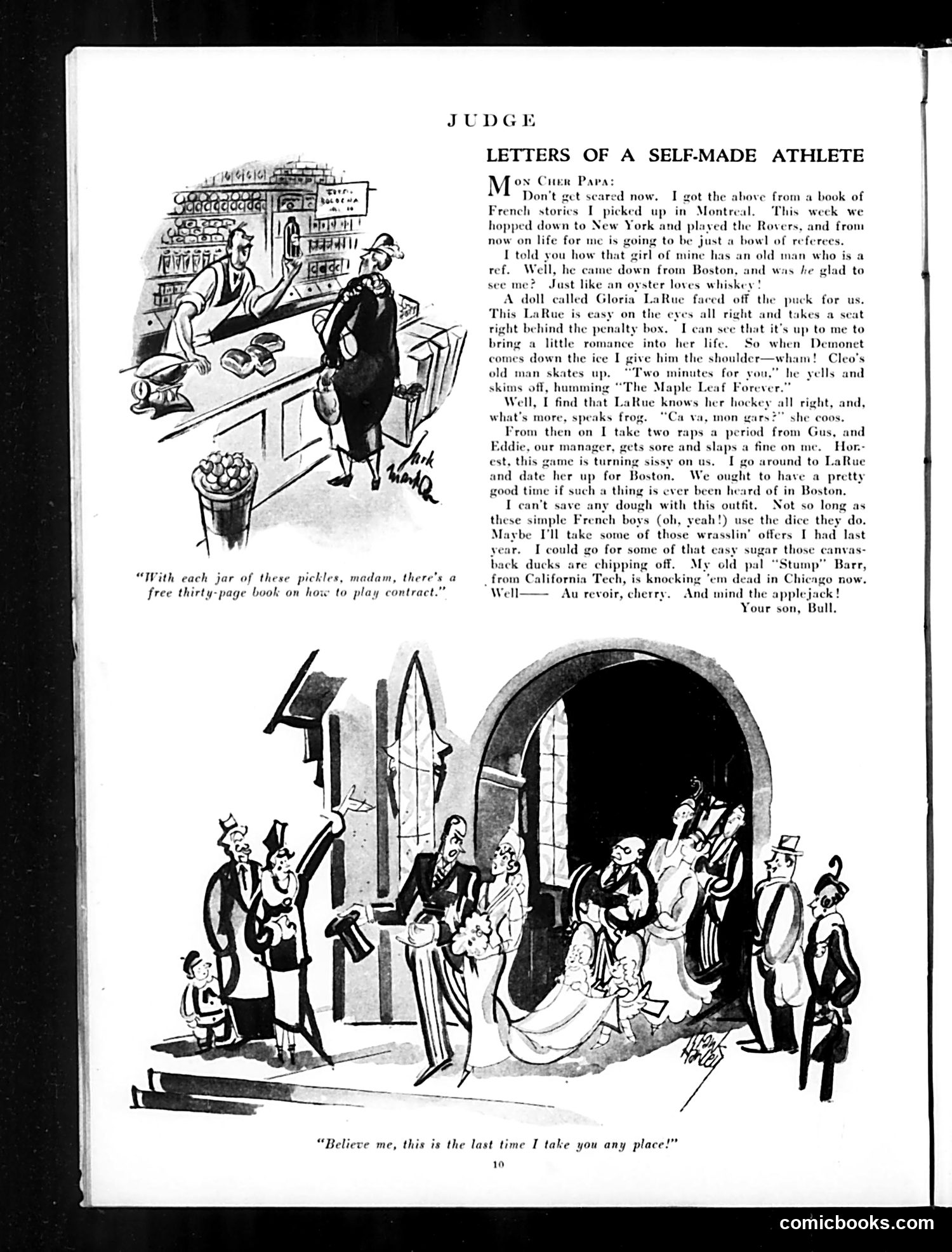
# "Letters of a Self-Made Athlete" This is a humorous letter from a young hockey player ("Bull") to his father, written in the style of early 20th-century sports fiction. The satire targets the brash, unsophisticated American athlete and social climber. Bull describes playing hockey in New York and Montreal, flirting with a French-Canadian woman named LaRue at games, and getting penalties for on-ice misbehavior. The humor derives from his malapropisms ("bowl of referees"), crude attempts at romance, poor financial management, and casual references to supplementing his income through wrestling. The top cartoon shows a man bribing an official with pickles—satirizing contract fraud or bribery. The bottom illustration depicts an ornate social event, likely mocking the pretensions of newly wealthy or athletic men attempting to navigate high society. The overall joke: self-made athletes are uncultured, financially irresponsible, and comically out of place in refined settings.