A complete issue · 36 pages · 1931
Judge — September 12, 1931
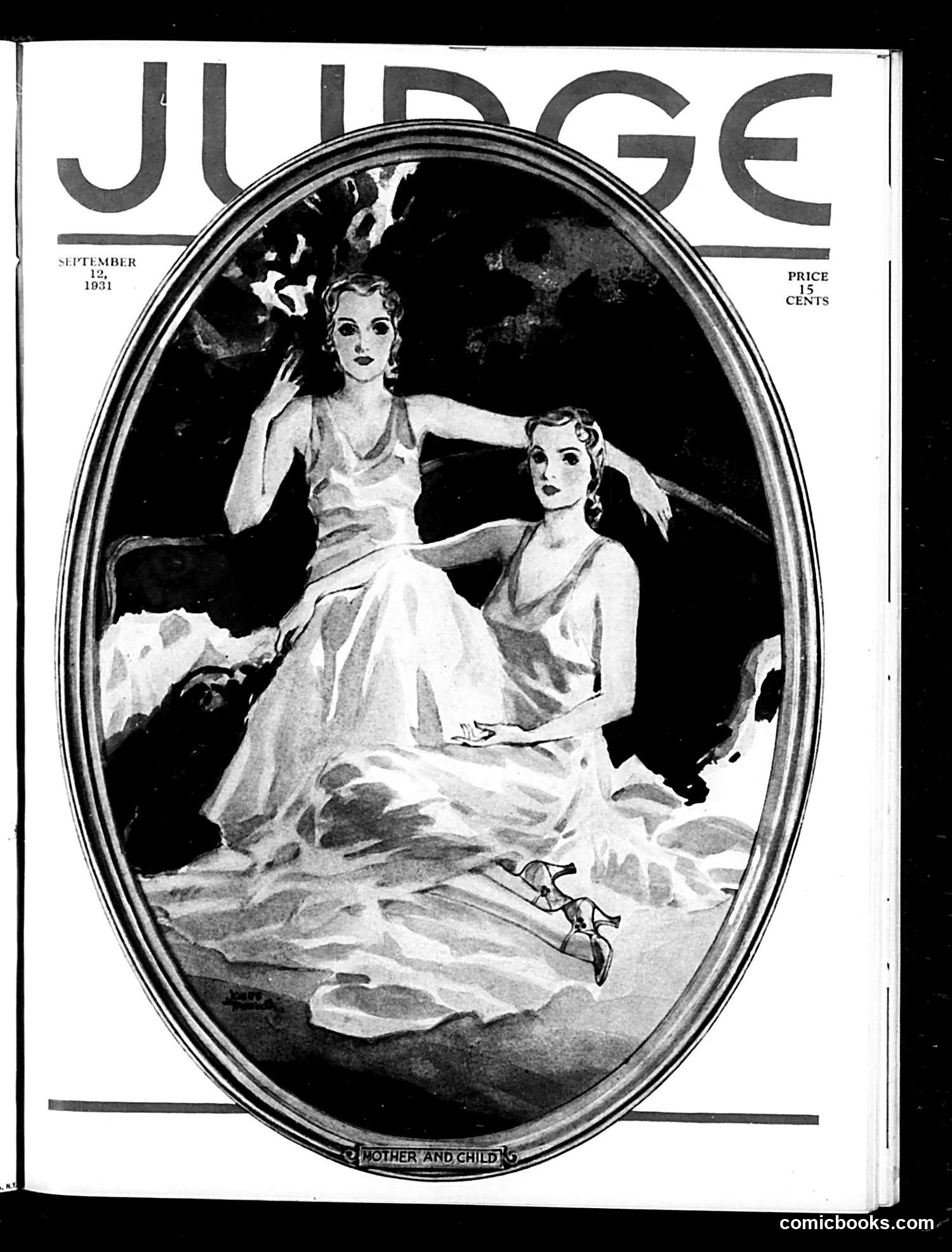
# Judge Magazine Cover Analysis This September 12, 1931 Judge cover features an illustration titled "Mother and Child" showing two elegantly dressed women in flowing gowns reclining together in an intimate pose against a dark background. The image appears to be primarily decorative rather than satirical—a sophisticated artistic rendering typical of Judge's high-end aesthetic covers from this era. The stylized Art Deco presentation and the classical "mother and child" theme suggest this is lifestyle/entertainment content rather than political commentary. Without additional OCR text from the page's interior or explicit captions identifying specific figures, the exact satirical intent remains unclear. The cover likely references contemporary society, fashion, or entertainment topics of 1931, but determining the specific reference would require additional textual evidence.

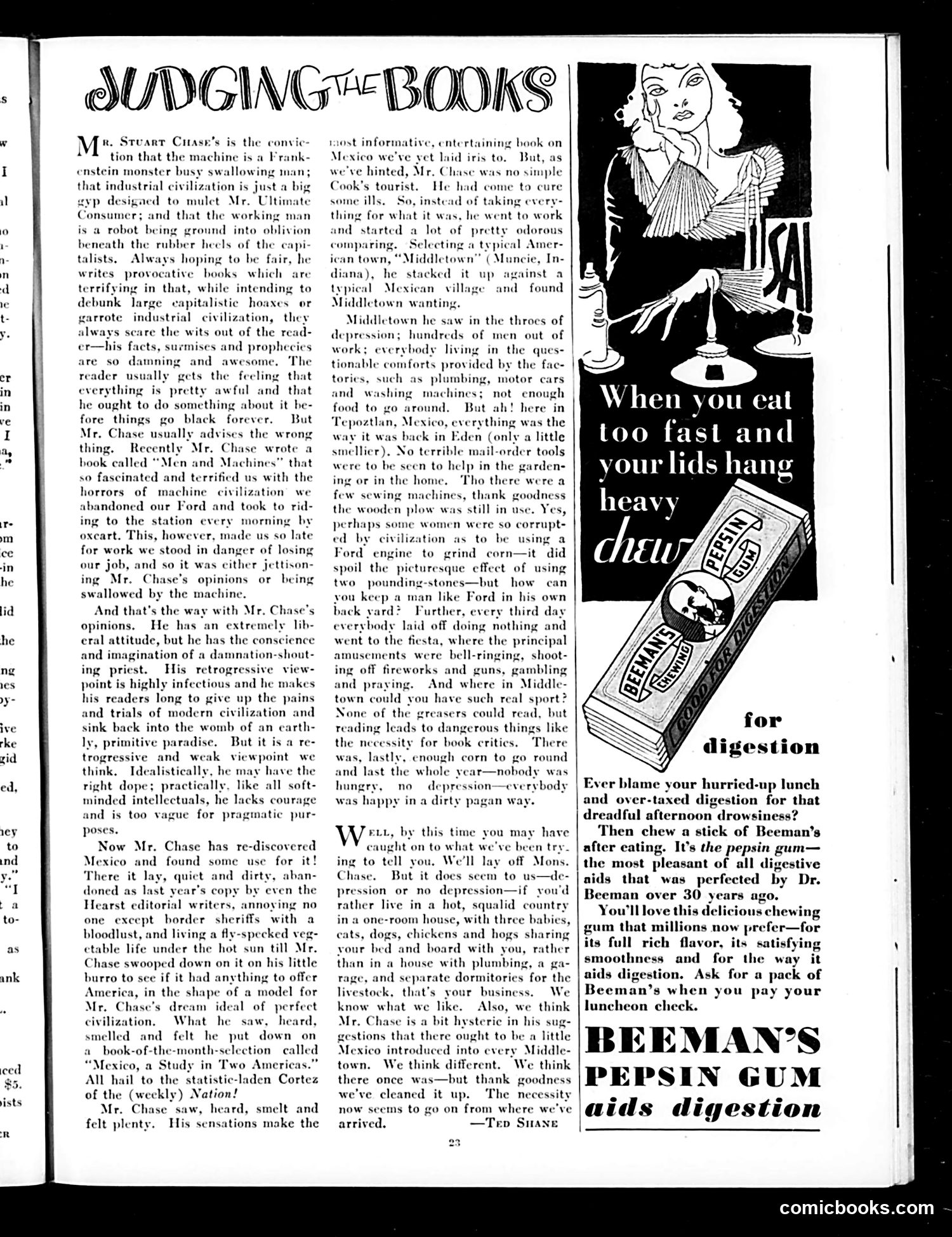
# Analysis This is **not a political cartoon or satire** — it's a straightforward **advertisement for Dentyne chewing gum**, appearing in Judge magazine. The page features a glamorous portrait of a smiling woman (likely a celebrity or model of the era, though unidentified here) demonstrating the product's appeal. The ad's messaging emphasizes that white teeth enhance one's social impression and romantic success — a common advertising strategy of the 1920s-30s era. The copy claims Dentyne gum whitens teeth and keeps gums firm through "extra healthful exercise." The product package is prominently displayed. This represents Judge's commercial content rather than editorial satire. Such advertisements were standard revenue sources for magazines of this period.
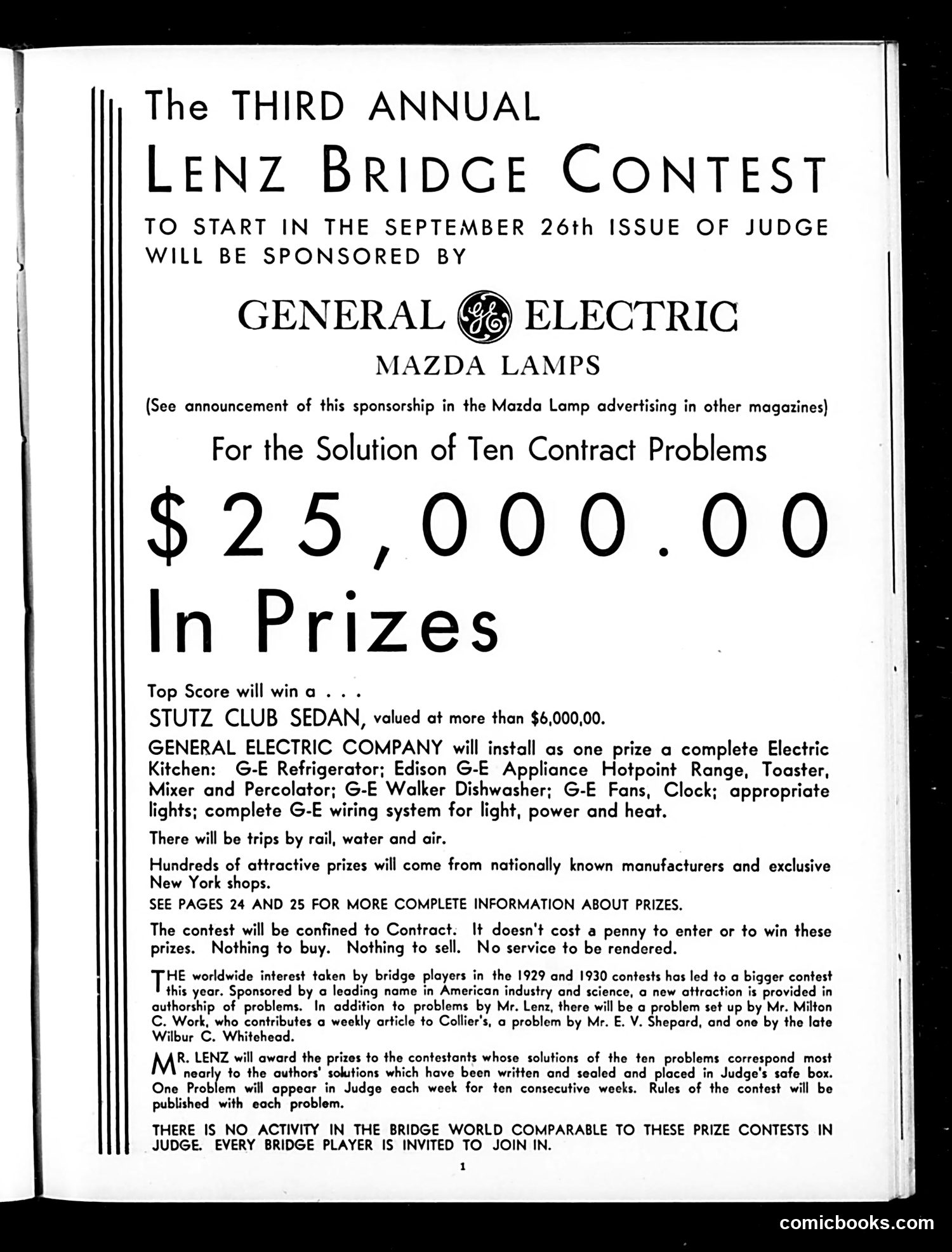
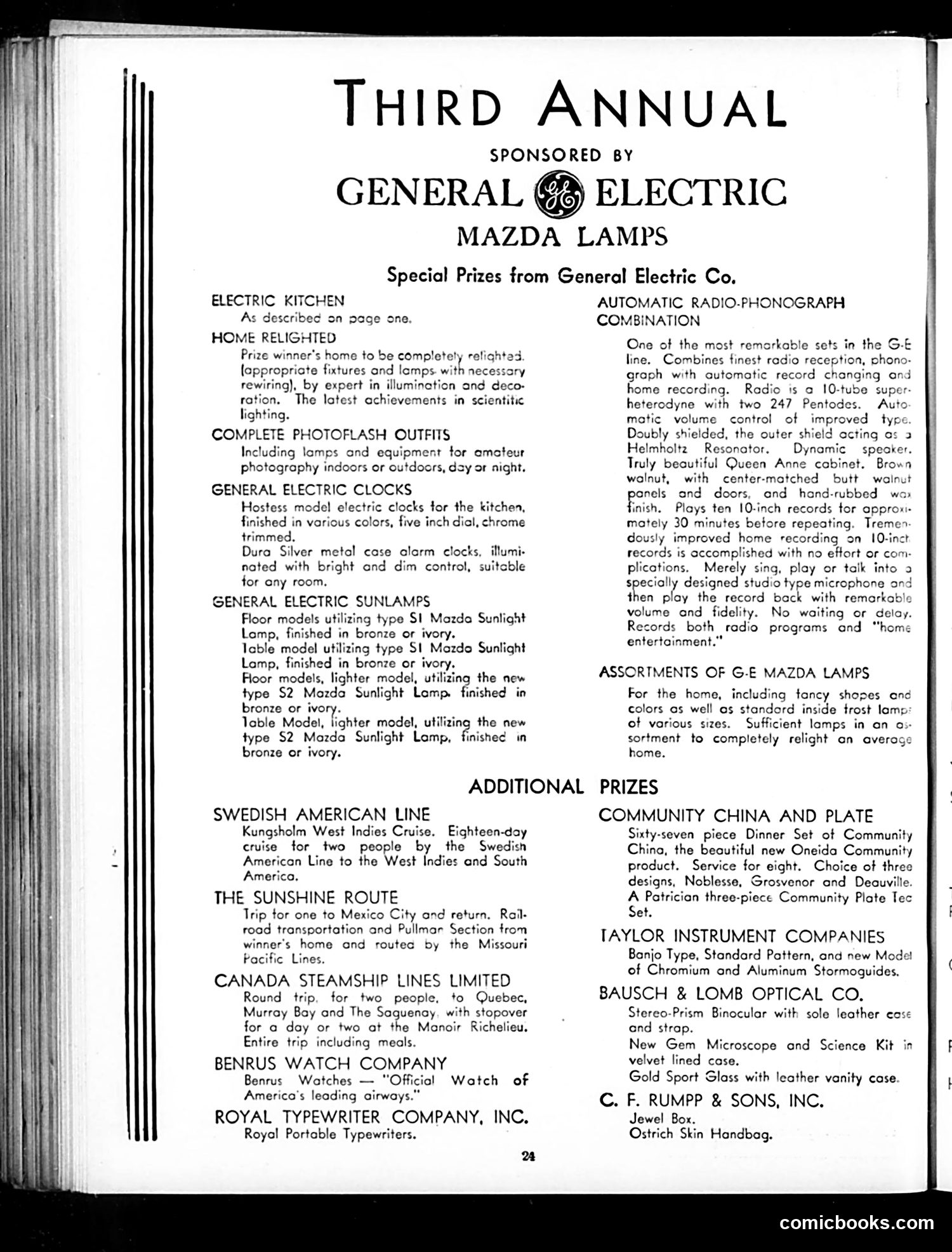
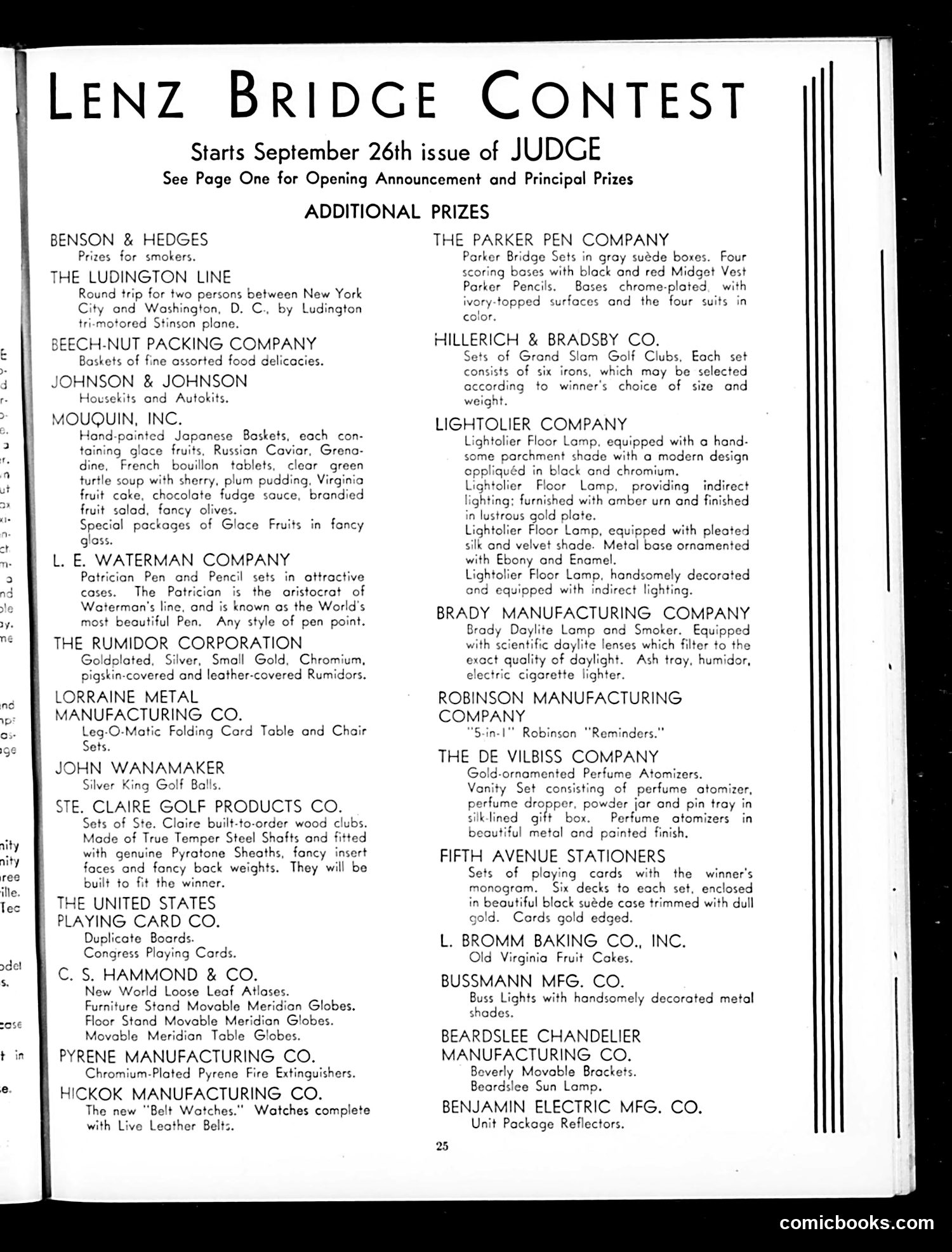
# Analysis This page is primarily **advertising, not editorial content or satire**. It announces the Third Annual Lenz Bridge Contest sponsored by General Electric (Mazda Lamps), offering $25,000 in prizes for solving ten contract bridge problems. The contest promises significant prizes including a Stutz Club Sedan (valued at $6,000+) for the top score, plus a complete General Electric kitchen installation with refrigerator, range, and appliances. Additional prizes from "nationally known manufacturers" are mentioned. The contest is open to all bridge players—"nothing to buy, nothing to sell, no service to be rendered." Problems will appear in Judge weekly for ten consecutive weeks. This represents **corporate sponsorship of editorial content**, using an intellectual game contest to promote both the magazine and General Electric products to readers.
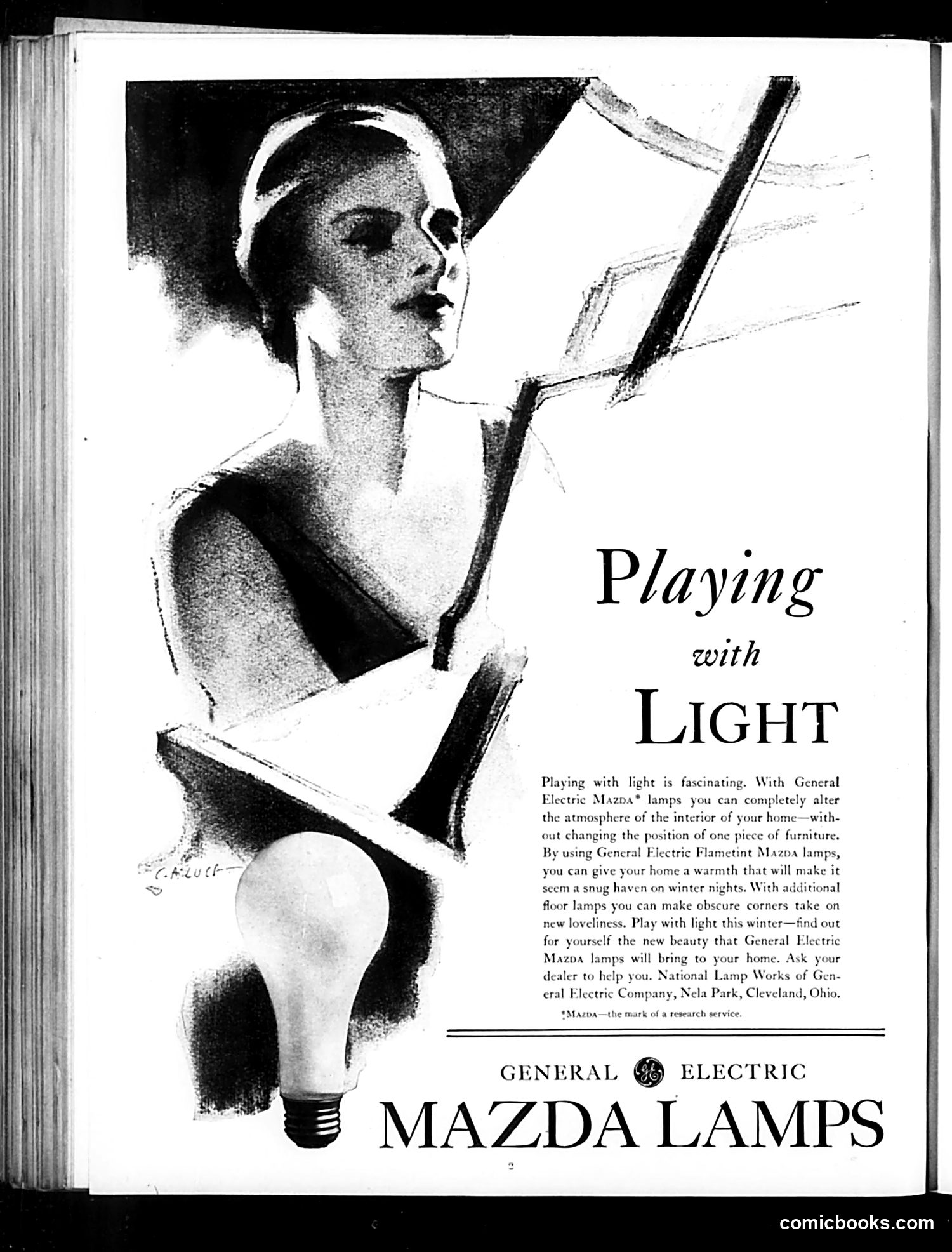
# Analysis This page is **not a political cartoon or satirical content**—it's a **General Electric advertisement** for Mazda lamps, circa early 20th century. The image shows a stylized woman in 1920s aesthetic (headband, sleek profile) artistically posed with illuminated light bulbs. The copy emphasizes how Mazda lamps can transform home interiors, creating warmth and ambiance through strategic lighting placement. The advertising appeal targets homeowners seeking modern domestic comfort and aesthetic sophistication. The artistic presentation and emphasis on "playing with light" suggests this is lifestyle marketing positioning electric lighting as both practical and elegantly decorative—a luxury amenity for homes during the early electrical age. There is no political satire present on this page.
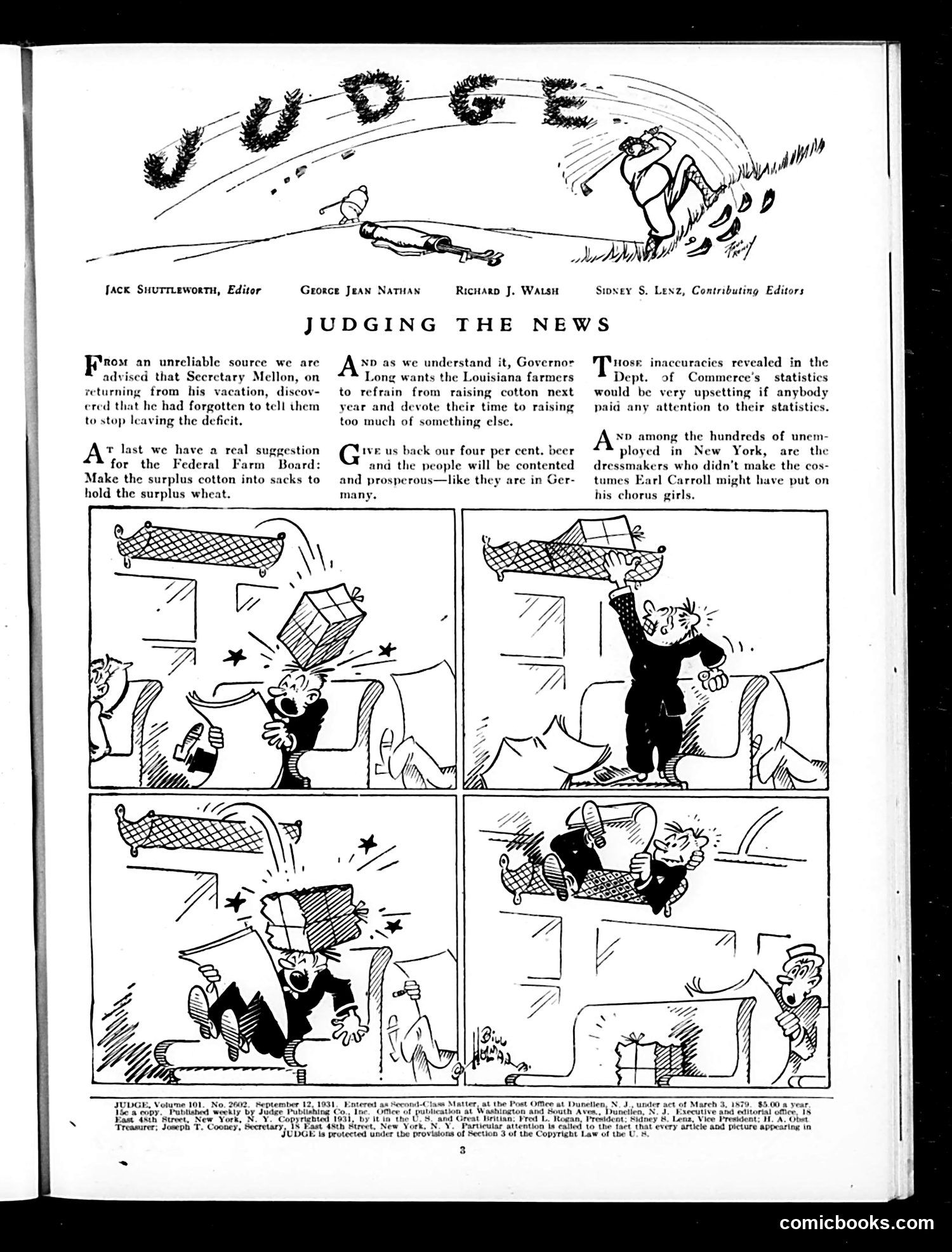
# Explanation of "Judging the News" (September 17, 1931) This editorial cartoon page satirizes three contemporary issues: 1. **Cotton surplus problem**: A suggestion to make surplus cotton into sacks to hold surplus wheat—mocking the federal government's inability to manage agricultural overproduction during the Great Depression. 2. **Beer legalization debate**: A jab at Governor Louis (likely referencing Louisiana politics) about restoring the 4% beer tax, satirizing ongoing debates over Prohibition repeal with a German prosperity comparison. 3. **Unemployment and fashion**: A quip about dressmakers among unemployed New Yorkers, referencing Earl Carroll's chorus girls—suggesting frivolous entertainment during economic hardship. The comic strip panels illustrate domestic chaos from falling objects, depicting the period's economic anxieties through physical comedy.
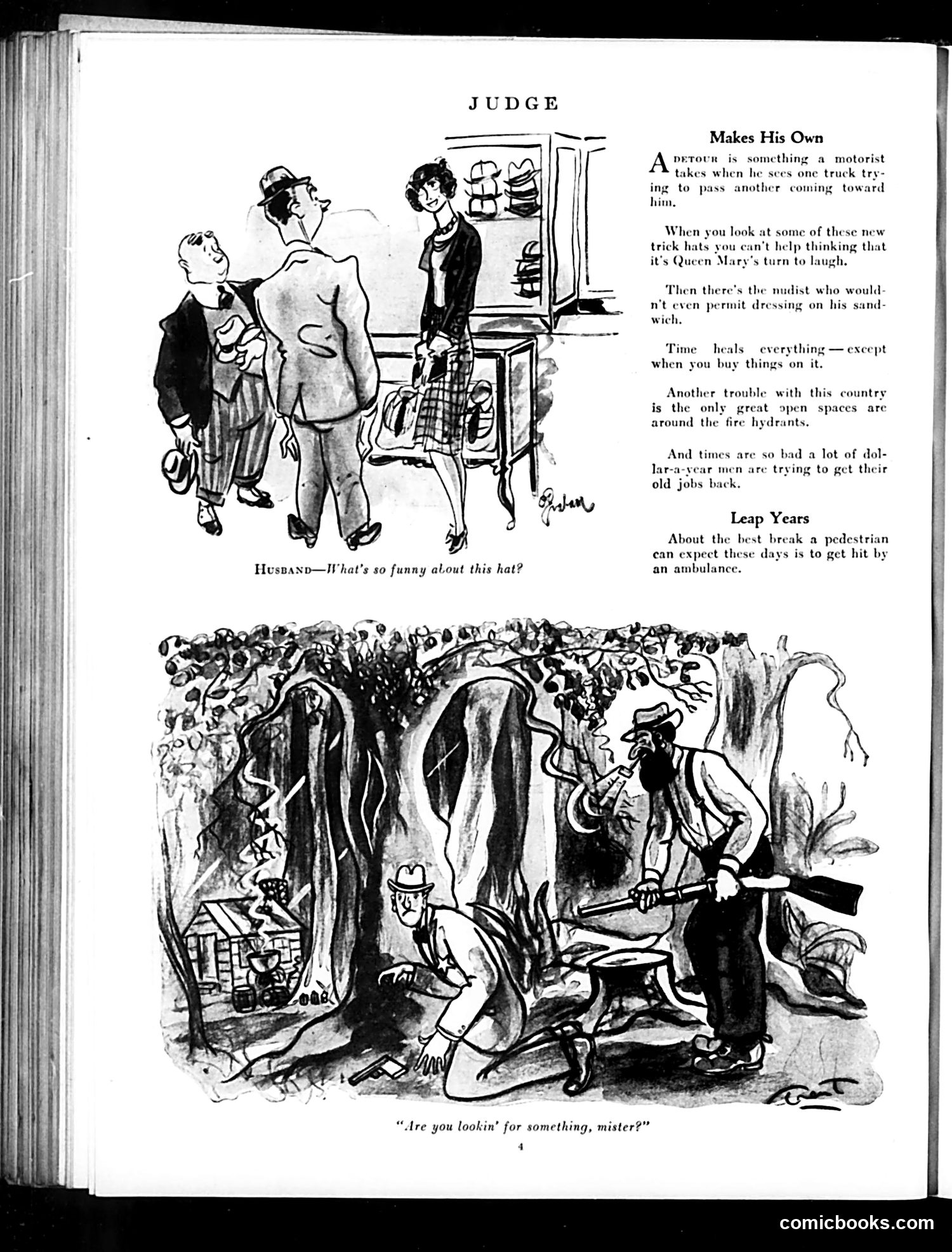
# Analysis of Judge Page **Top Cartoon:** A husband shows his wife a peculiar hat, asking "What's so funny about this hat?" The satire targets women's fashion absurdities of the era—Judge frequently mocked exaggerated or impractical women's styles. The wife's amused reaction suggests the hat's ridiculousness is self-evident. **Right Column:** Brief humorous observations on contemporary life: detour detours ("Queen Mary's turn to laugh"), a prudish person ("wouldn't even permit dressing on his sandwich"), financial hardship, traffic congestion near fire hydrants, and job scarcity. **"Leap Years" Section:** A dark joke about pedestrian safety, suggesting the best way to avoid being hit by vehicles is "to get hit by an ambulance" instead—satirizing reckless driving or traffic dangers. **Bottom Cartoon:** Miners in a cave; context unclear without additional information.
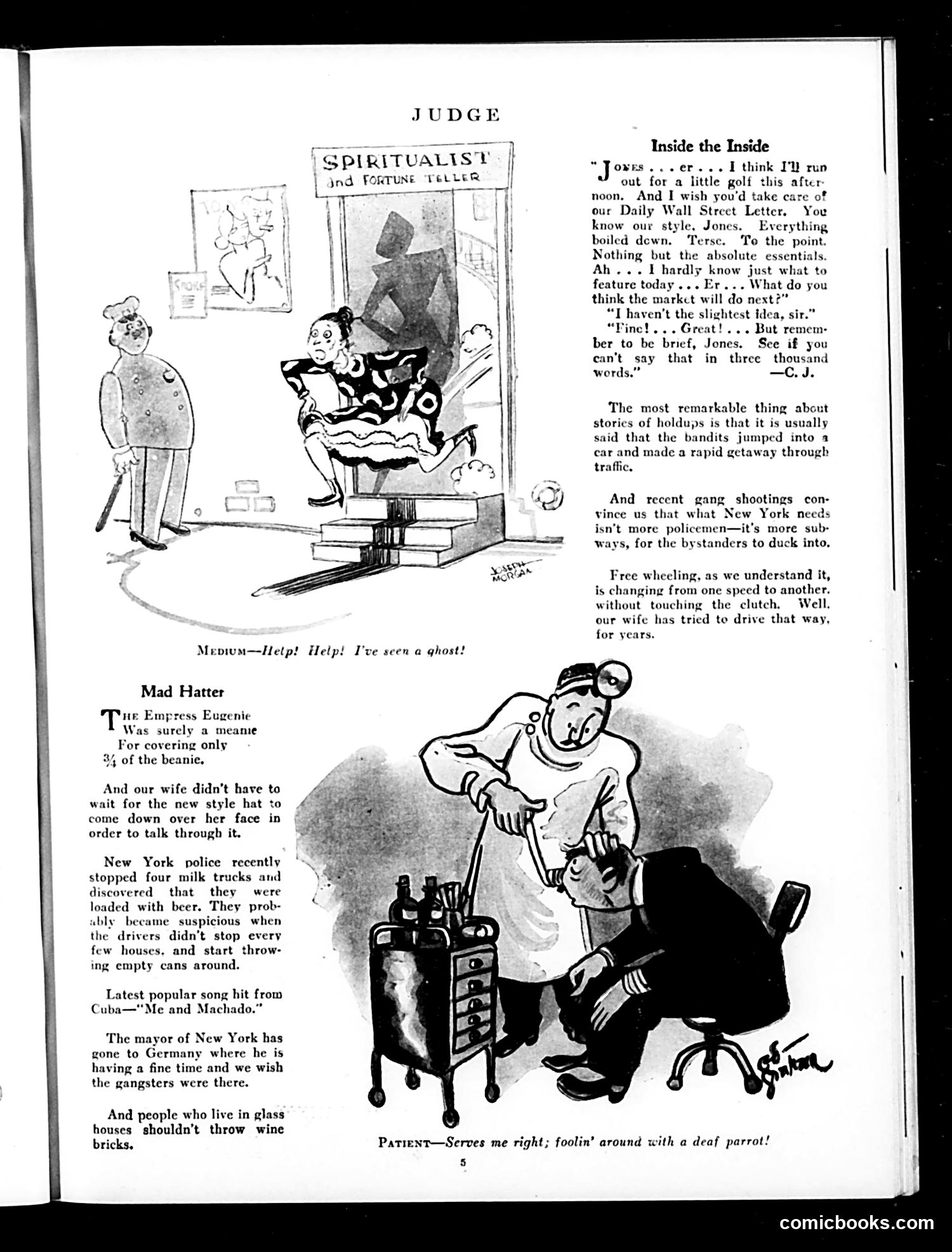
# Explanation for Modern Readers This Judge magazine page contains two satirical cartoons about contemporary urban life and social absurdities. The top cartoon mocks a "spiritualist and fortune teller" con artist, with a client seeking predictions. The joke plays on gullibility and the era's fascination with spiritualism. The bottom "Mad Hatter" section satirizes various New York City happenings: police discovering beer-loaded milk trucks, popular Cuban music ("Me and Machado"), the mayor's trip to Germany, and absurd social observations. The final cartoon shows a patient with a deaf parrot—the humor resting on the parrot's uselessness as a companion. These pieces exemplify Judge's approach: mocking contemporary follies, urban crime, commercial fraud, and the era's fads through illustrated gags and witty commentary targeting educated readers aware of current events and social pretensions.
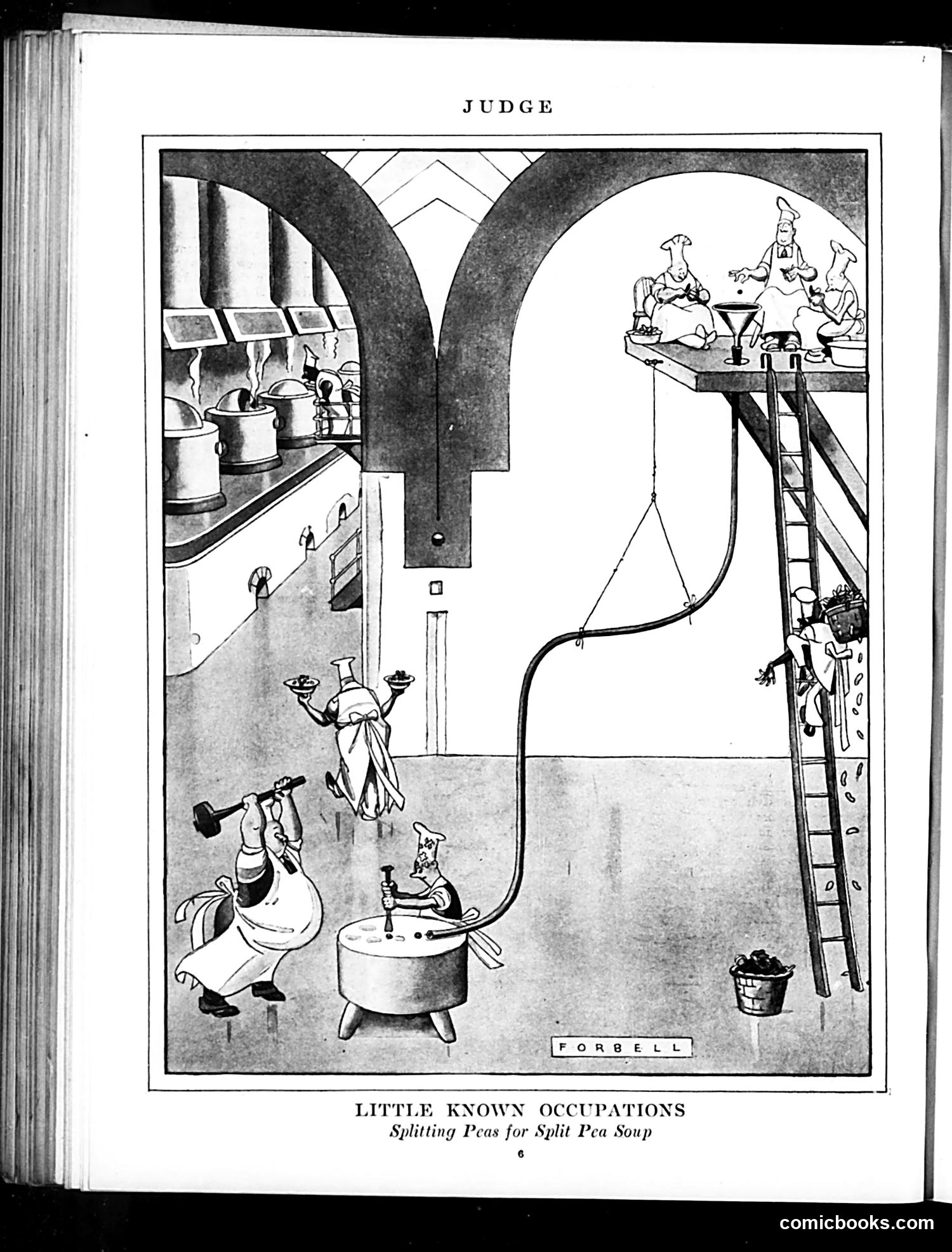
# "Splitting Peas for Split Pea Soup" This cartoon satirizes the judicial system as an absurdly complex bureaucracy. The title "Judge" and the architectural design suggest a courthouse or legal institution, yet the entire elaborate operation exists solely to produce split pea soup—a mundane, trivial product. The cartoon depicts multiple workers and judges at different levels of an ornate building, performing specialized tasks (cooking, supervising, climbing ladders) to accomplish something requiring far less ceremony. The satire mocks how institutions create unnecessary hierarchy, formality, and specialization for simple matters. Each "judge" or official appears self-important despite handling basic kitchen work. The joke critiques bureaucratic bloat and the legal system's tendency to overcomplicate straightforward tasks through excessive structure and pomposity.
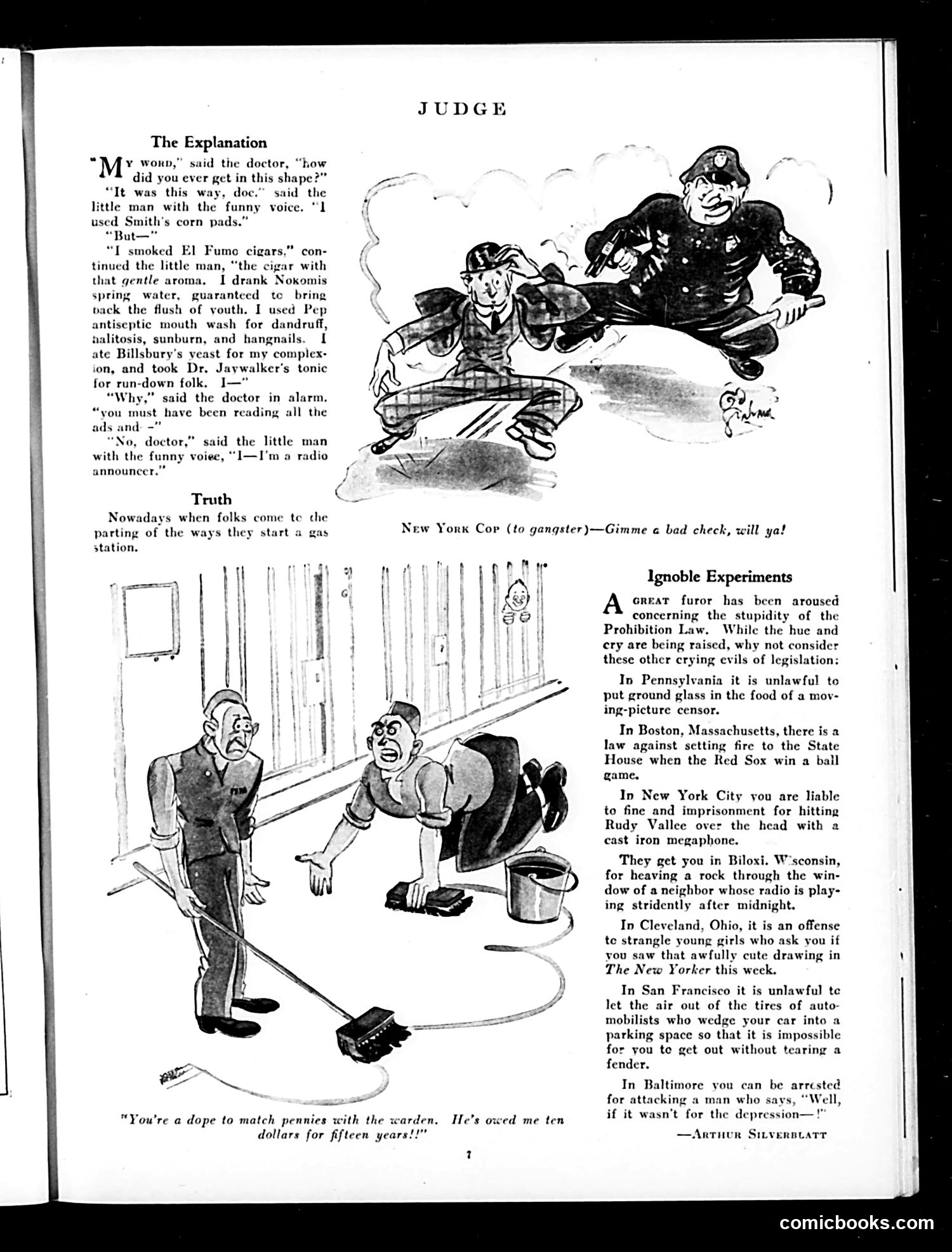
# Judge Magazine Page Analysis **"The Explanation"**: A radio announcer explains his deteriorated appearance by listing every product advertised on air—corn pads, cigars, spring water, mouthwash, yeast, tonics. The joke satirizes the absurdity of radio advertising's exaggerated health claims and suggests that listening to constant product pitches has literally worn him down. Radio was still relatively new in this era, making broadcast advertising a fresh target for satire. **"Ignoble Experiments"**: This section mocks Prohibition-era lawmakers by listing absurdly specific state laws—Pennsylvania forbidding ground glass in movie censors' food, Boston banning arson at the State House during Red Sox games, New York criminalizing hitting Rudy Vallee with a megaphone. The satire suggests legislators waste time on ridiculous laws while ignoring serious issues like Prohibition itself. These appear to be invented examples highlighting legislative overreach and absurdity.
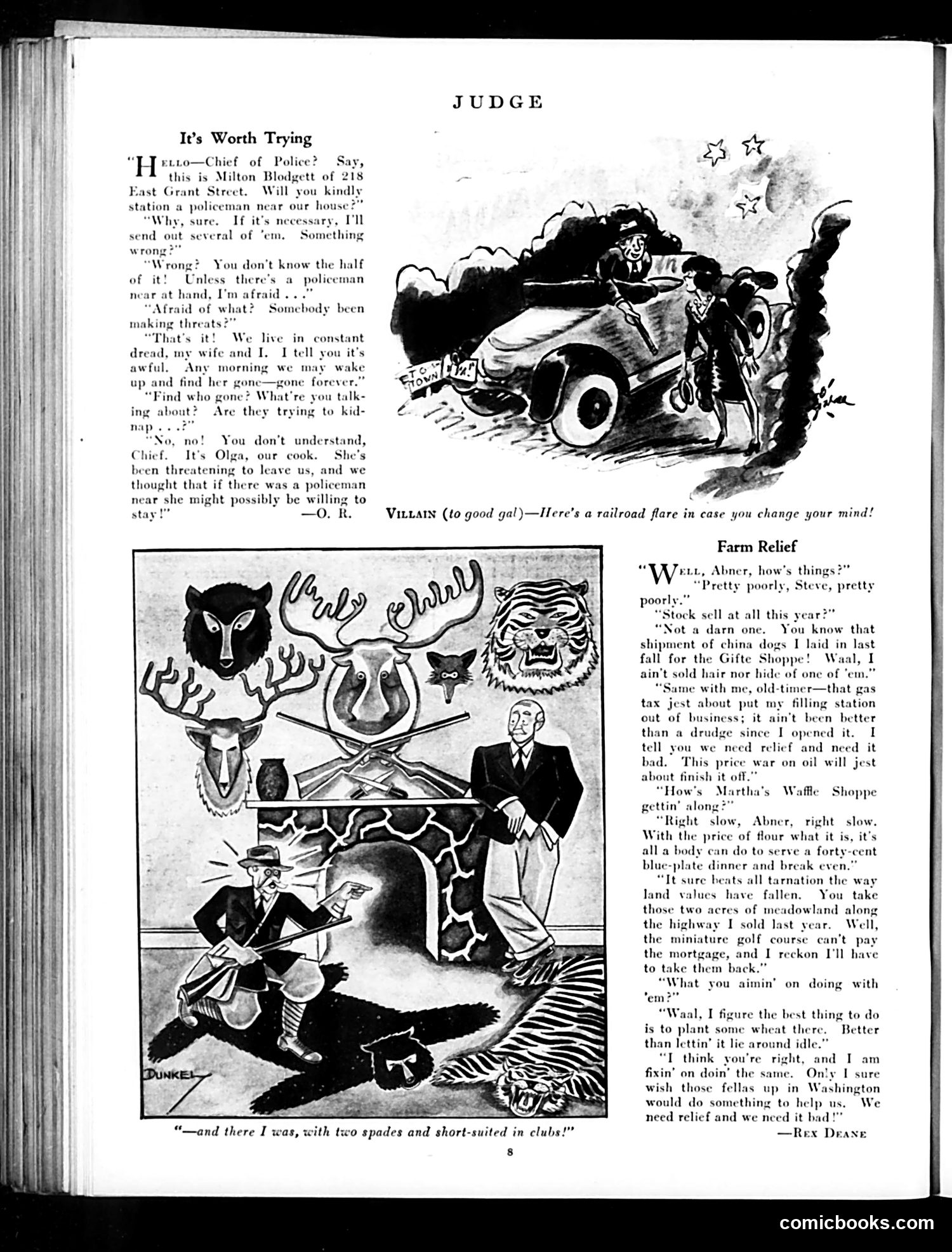
# Judge Magazine Page Analysis **"It's Worth Trying"**: A domestic humor piece where a man calls police requesting an officer station near his house to prevent his cook Olga from leaving. The joke plays on the servant labor crisis of the era—he's so desperate to keep household help that he hopes police presence might intimidate her into staying. The "railroad flare" caption suggests she'll flee anyway. **"Farm Relief"**: A conversation between struggling rural businessmen (Abner and Steve) depicting Depression-era economic collapse. They discuss unsold inventory (china dogs), failed small businesses (filling station, waffle shop), plummeting land values, and failed ventures (miniature golf course). Their solution—planting wheat—reflects farmers' hopes that agriculture might recover. The dialogue critiques government inaction, with characters appealing for federal "relief" programs. This likely references early 1930s New Deal debates, when agricultural aid was contested. Both pieces use vernacular humor to address economic hardship and labor shortages affecting ordinary Americans.
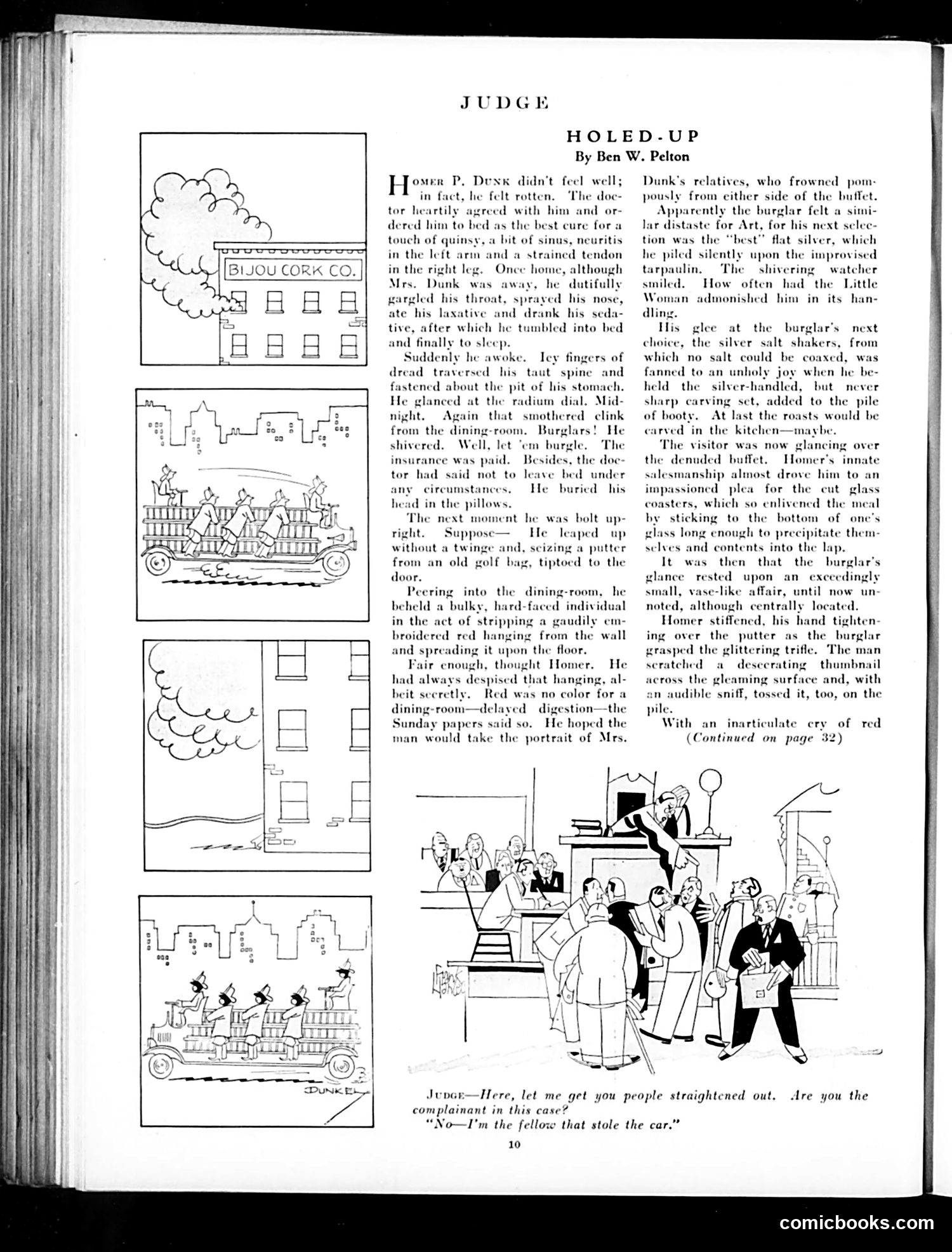
# "Holed-Up" by Ben W. Pelton — Judge Magazine This is a humorous short story illustrated with cartoons about Homer P. Dunk, a sickly man confined to bed with various ailments (quinsy, neuritis, sinusitis). When a burglar breaks in downstairs, Homer is torn between his doctor's orders to stay in bed and his desire to protect his home. The joke's irony: Homer is secretly *pleased* by the burglar's selections. The red hanging he "despised," the problematic family portraits, the defective silver and salt shakers, the carving set that won't cut—all items Homer's wife ("the Little Woman") has annoyed him with get stolen. Only when the burglar reaches for an apparently worthless small vase does Homer finally cry out in protest, suggesting it holds sentimental value his wife treasures. The accompanying courtroom cartoon (bottom) is a separate joke about mistaken identity: a judge asks who the complainant is, only to be told "I'm the fellow that stole the car"—a simple mix-up for comedic effect.