A complete issue · 36 pages · 1931
Judge — May 9, 1931
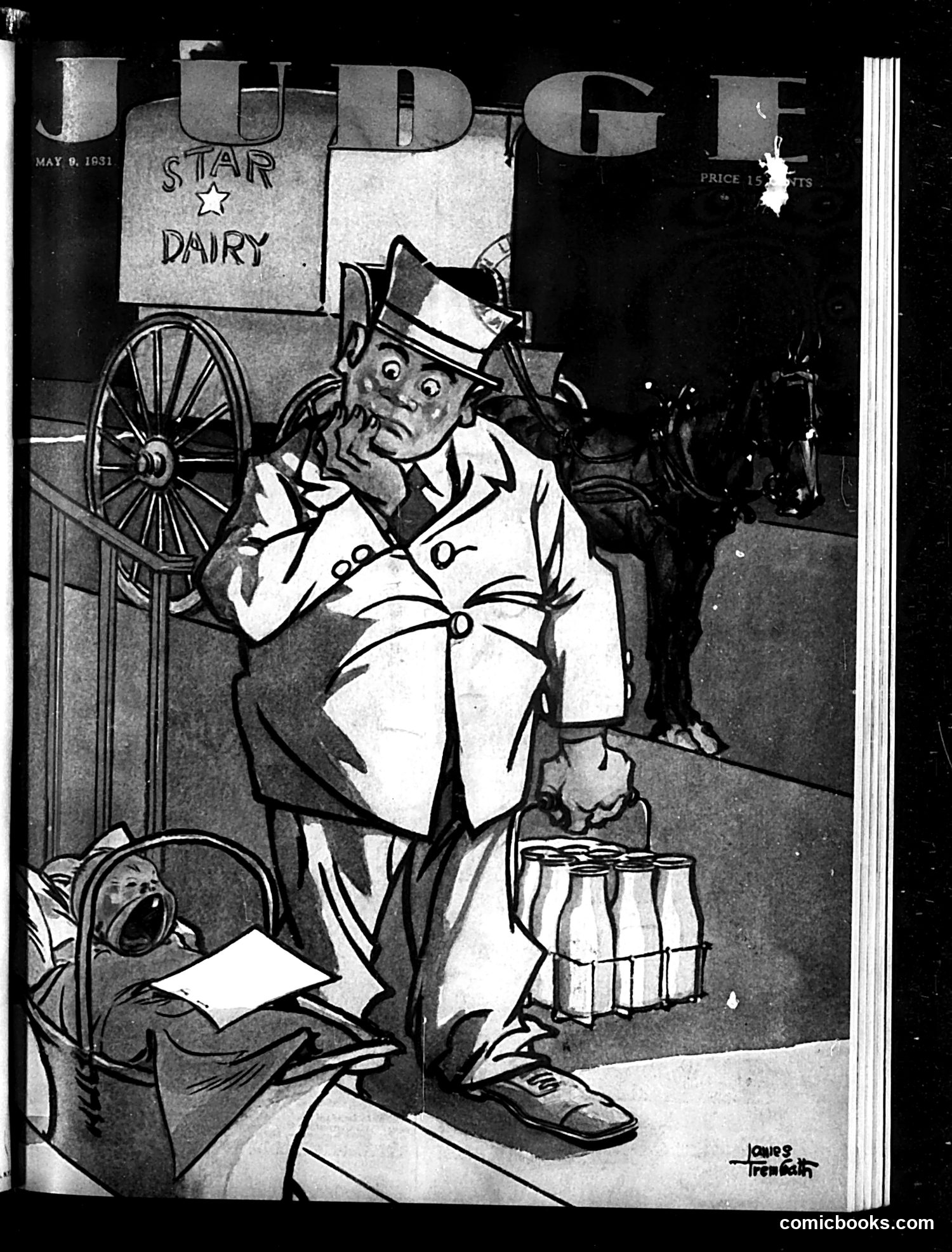
# Analysis of Judge Magazine Cover (May 9, 1931) This cover features a portly milkman or dairy deliveryman in exaggerated caricature, dressed in white coat and straw hat, standing before a "Star Dairy" wagon. He appears distressed or anxious, holding his head in concern while surrounded by milk bottles and dairy equipment. The satire likely references economic anxieties during the **Great Depression** (1931 context), possibly commenting on: - Dairy industry struggles or price fluctuations - Labor concerns for working-class tradesmen - Consumer buying power for basic goods like milk The exaggerated facial features and body type employ caricature typical of 1930s satirical illustration, though the specific economic or social complaint remains unclear without additional contextual text or advertisements on the page.
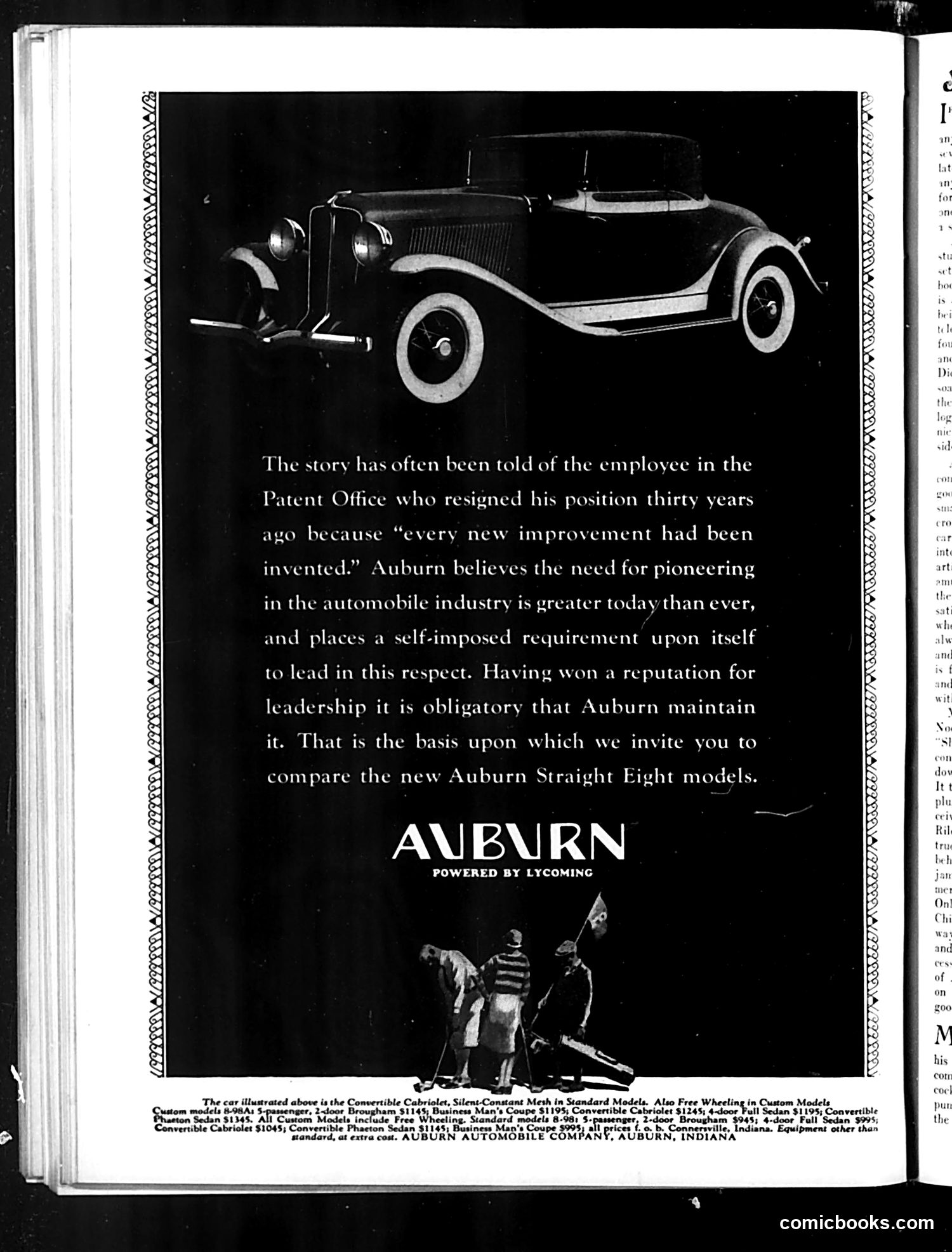
# Analysis This page is primarily an **advertisement for Auburn automobiles**, not political satire. The ad features a luxury roadster and appeals to consumers by invoking Auburn's reputation for innovation and leadership in the automobile industry. The text references a (possibly apocryphal) story about a Patent Office employee who resigned decades earlier because "every new improvement had been invented"—suggesting the automobile industry remains dynamic and competitive. Auburn positions itself as a pioneering leader that must maintain its innovative edge, inviting readers to compare Auburn's new "Straight Eight models" favorably to competitors. The small figures at the bottom appear decorative rather than satirical. This is fundamentally commercial marketing rather than editorial commentary.
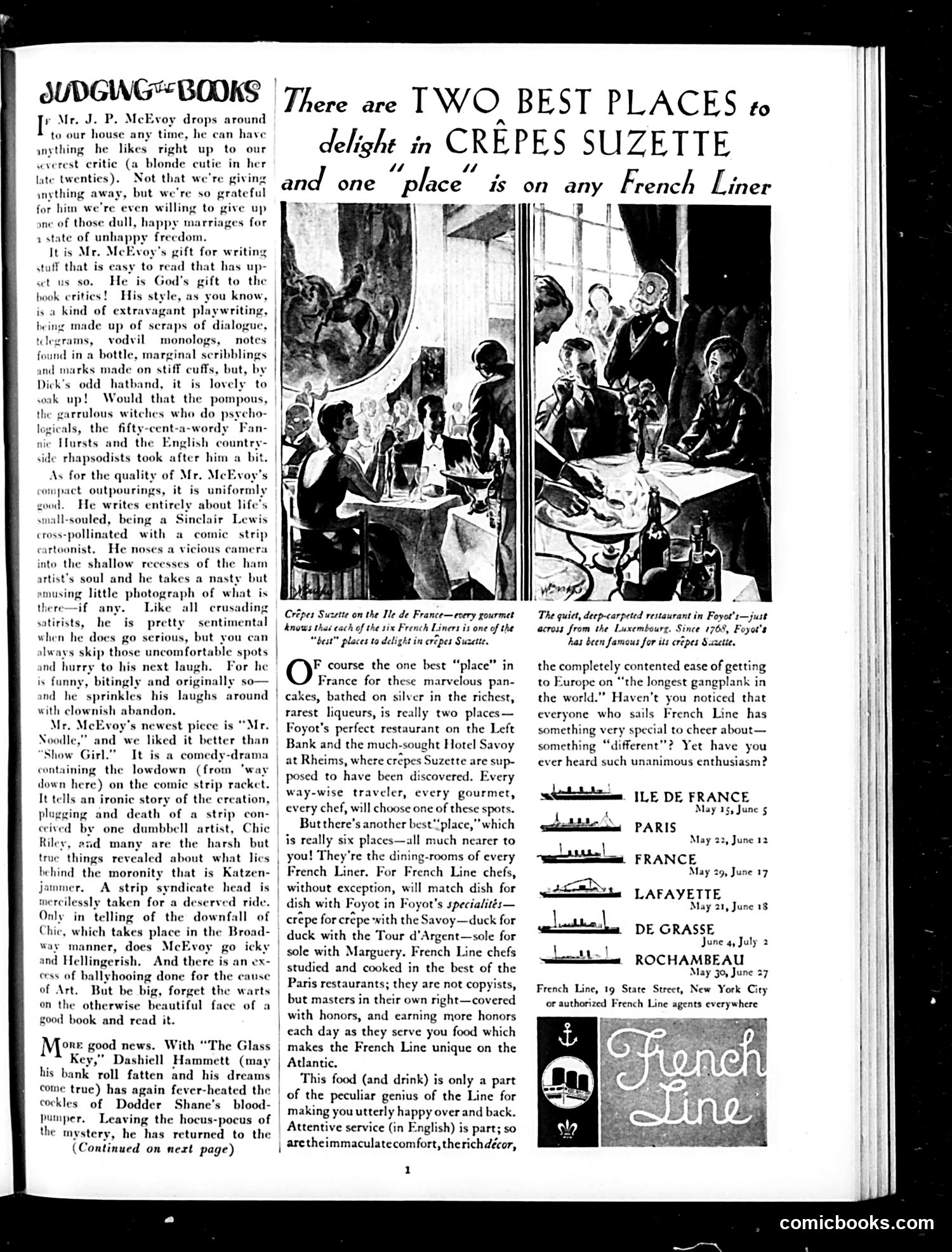
# Analysis This page is primarily **advertising**, not political satire. The main content promotes the French Line cruise ship company and specifically Crêpes Suzette, a French dessert. The two illustrations show dining scenes aboard French ocean liners—one depicting passengers enjoying the dish at a restaurant, the other showing a more formal dining room. The text argues that French Line ships offer superior dining experiences compared to competitors, highlighting the culinary expertise of French chefs and specific dishes like Crêpes Suzette, duck with orange sauce, and sole with Burgundy sauce. The accompanying section "Judging the Books" reviews J.P. McEvoy's writing style—it's unrelated satirical commentary on an author's work, not political content. This represents 1920s luxury travel marketing rather than social or political commentary.
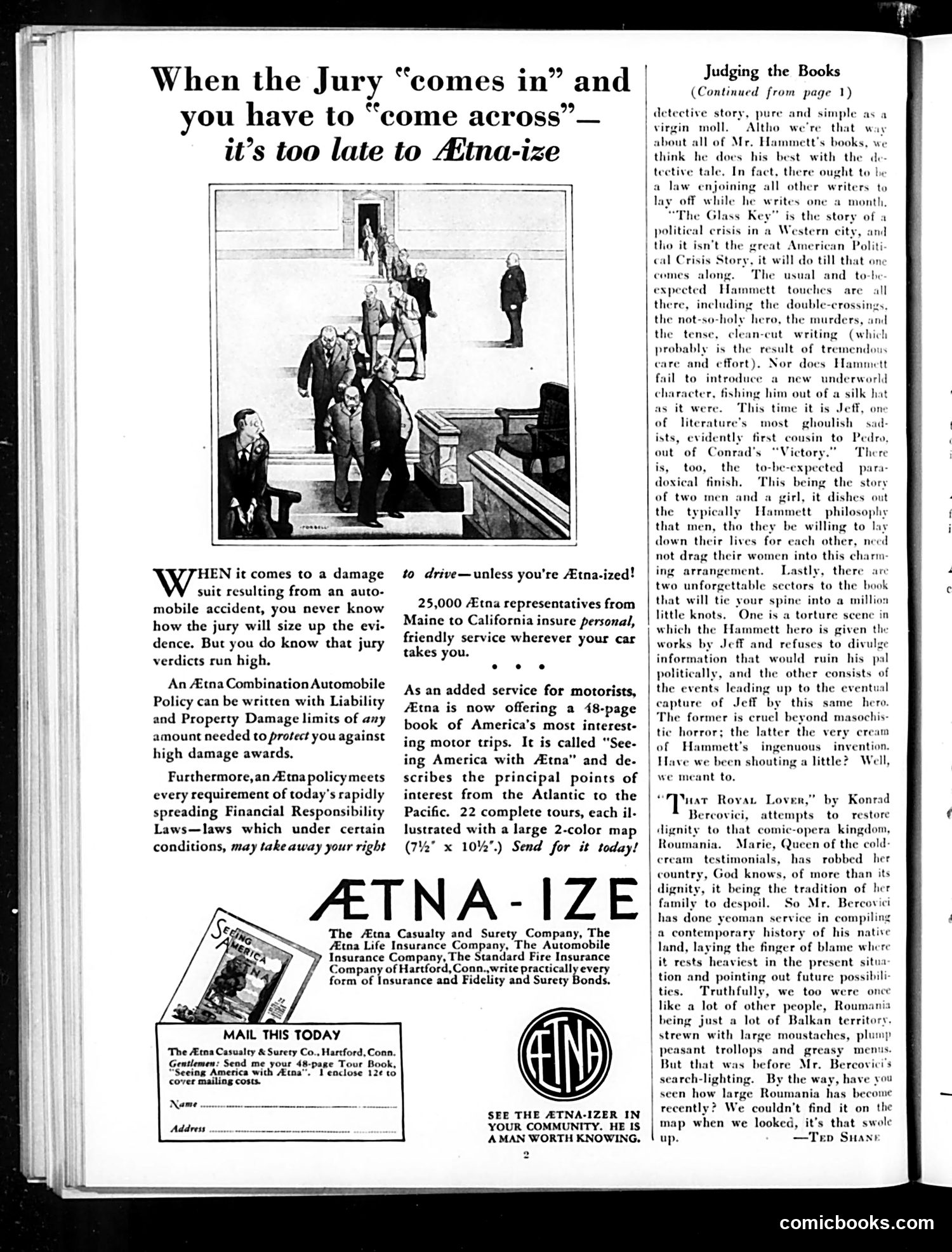
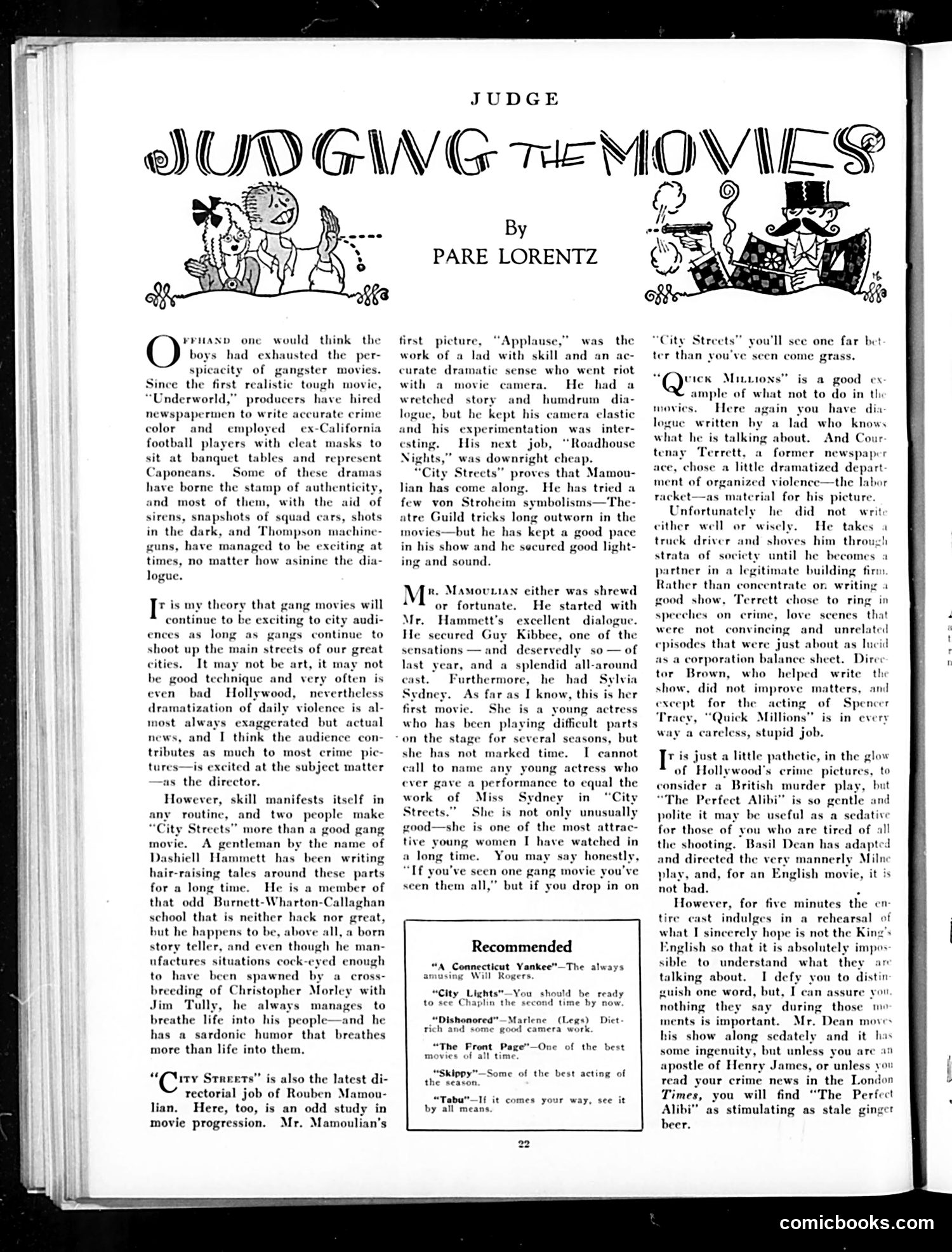
# Analysis This page is primarily **advertising for Ætna Insurance**, not political satire. The large illustration depicts a courtroom jury scene, used to promote Ætna's automobile liability coverage. The advertisement warns that if you're in a car accident, "it's too late to Ætna-ize"—meaning you should purchase their insurance beforehand. The right column contains a book review titled "Judging the Books," discussing detective fiction and works by an author named Hammett (likely Dashiell Hammett). The review mentions "The Glass Key" and other stories. There are no identifiable political figures or satirical commentary on this page. It's a straightforward insurance advertisement using a jury courtroom scenario as its sales hook, combined with unrelated literary criticism.
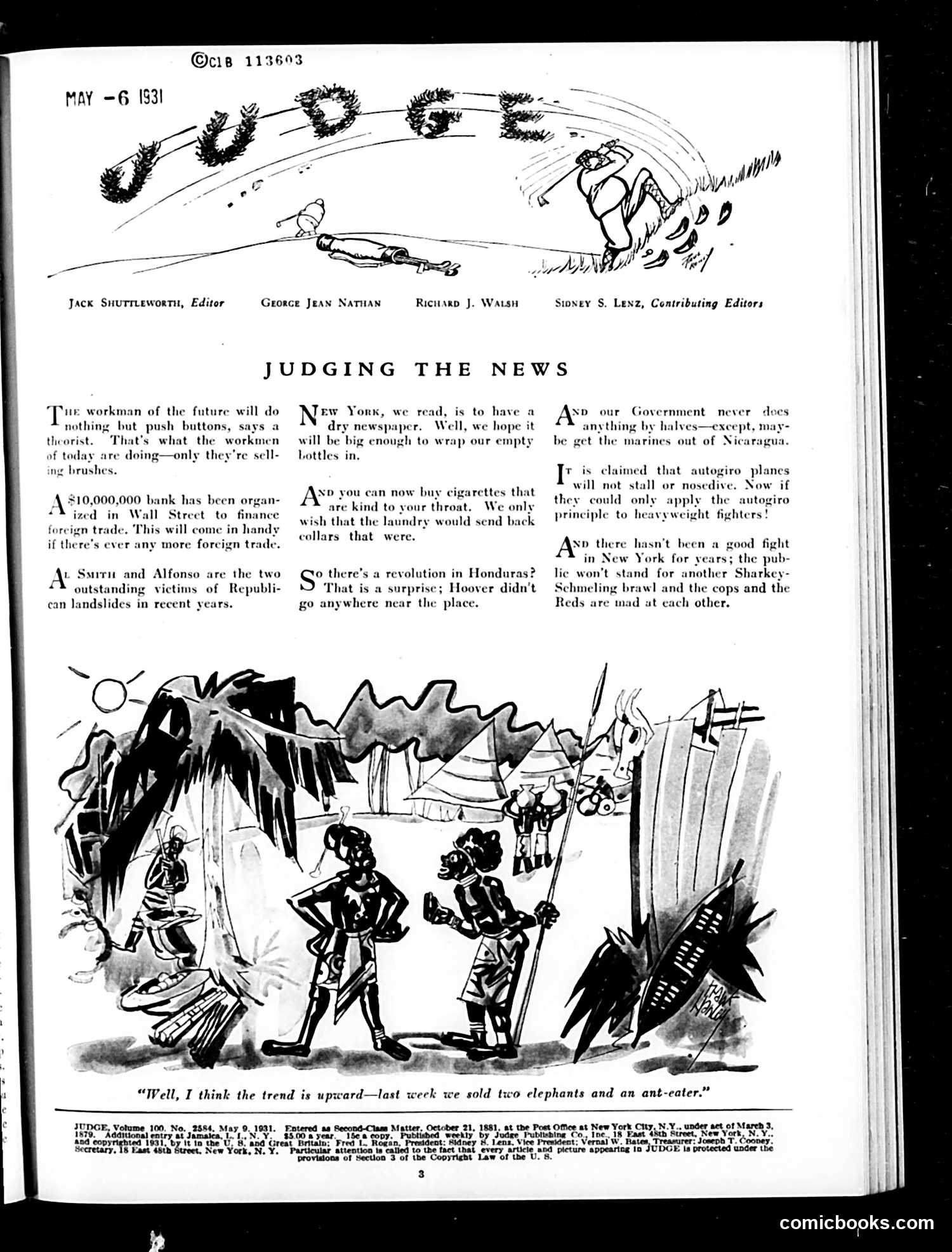
# "Judging the News" - May 6, 1931 This satirical column mocks contemporary news items through brief commentary and a cartoon. The editorial criticizes: 1. **Labor predictions** about future workers only "pushing buttons" 2. **Wall Street financing** foreign trade through a $10M bank 3. **Republican landslides** — mentioning Suri and Alfonso as "outstanding victims" 4. **Cigarette marketing** claims about throat-kindness 5. **Honduras revolution** — sarcastically questioning Hoover's involvement The large cartoon appears to depict a circus or carnival scene with military figures, likely satirizing political instability or conflict. The caption reads: "Well, I think the trend is upward—last week we sold two elephants and an ant-eater," suggesting commentary on political/economic chaos presented as entertainment or profit opportunity. The overall tone criticizes government, big business, and media sensationalism.
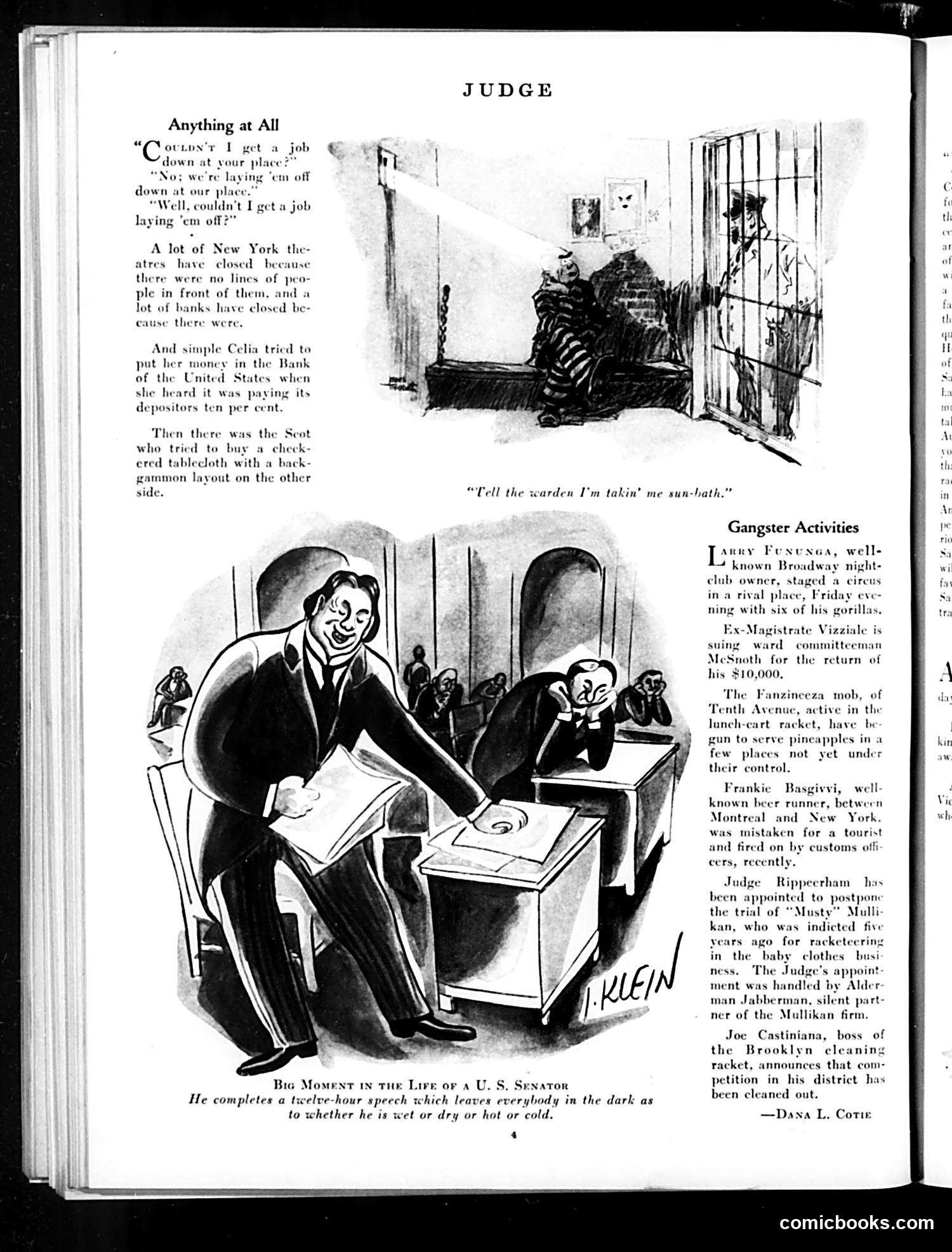
# Analysis **Top cartoon ("Anything at All"):** This satirizes Depression-era unemployment and bank failures. The dialogue shows someone unable to find work because businesses are laying off staff, and banks are closing due to lack of deposits. Celia's attempt to save money becomes impossible when the Bank of the United States fails—a reference to the actual 1930 bank collapse. The satire highlights how economic collapse affected ordinary citizens trying to manage finances. **Bottom cartoon ("Big Moment in the Life of a U.S. Senator"):** Shows a senator completing a twelve-hour speech while colleagues sleep or appear indifferent. The caption's irony—"leaves everybody in the dark as to whether he is wet or dry or hot or cold"—satirizes lengthy, meaningless Senate speeches that fail to clarify anything substantive, likely referencing Prohibition-era political debates.
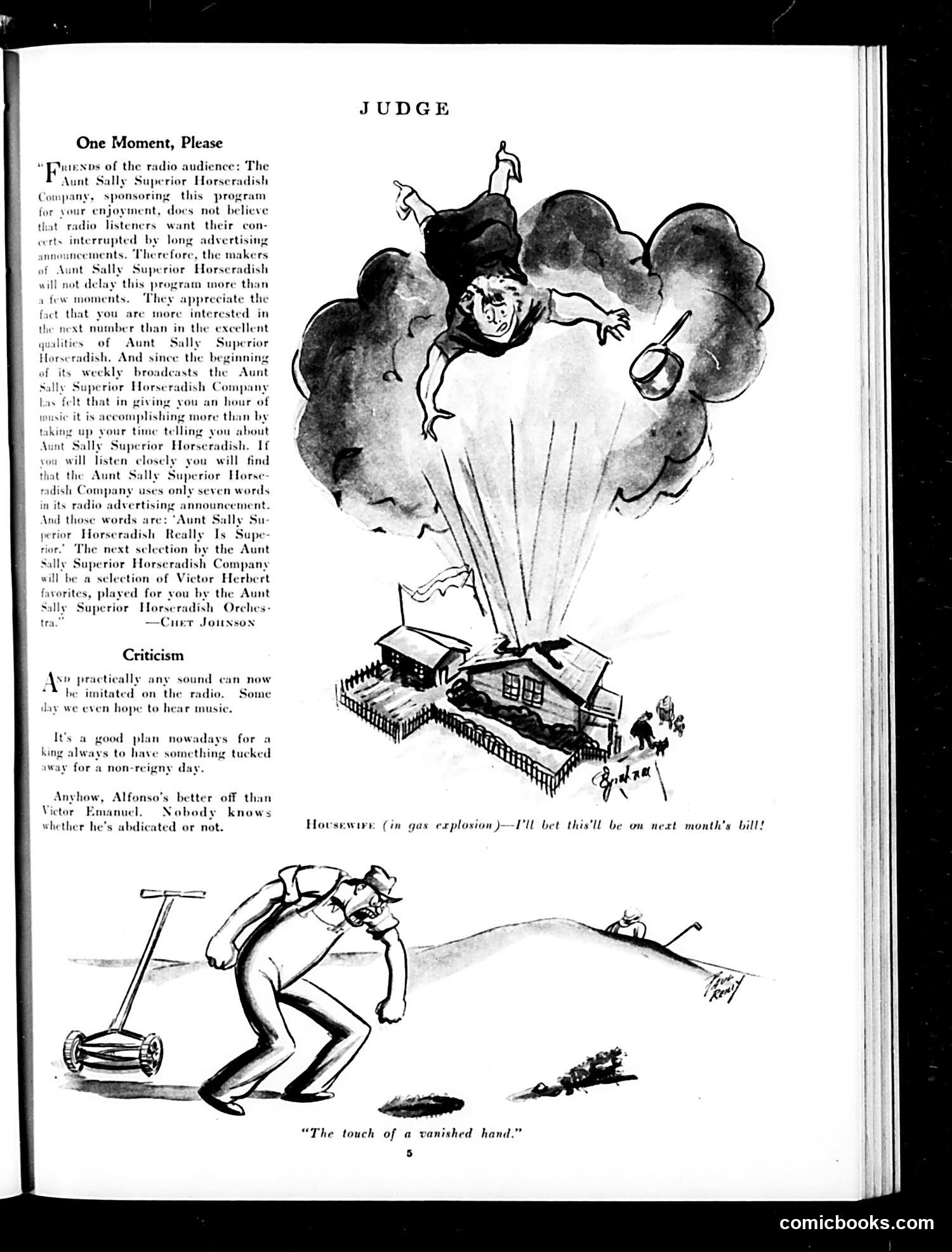
# Analysis This page from *Judge* magazine contains commentary and cartoons criticizing radio advertising. **"One Moment, Please"** defends radio listeners against intrusive ads, noting that the Aunt Sally Superior Horseradish Company limits its advertising to just seven words—a barely-concealed joke about how minimal this protection truly is. **"Criticism"** mocks radio's general degradation, suggesting that "practically any sound can now be insulted on the radio" and expressing hope that "some day we even hope to hear music." The top cartoon depicts a gas explosion from a radio broadcast, captioned "I'll bet this'll be on next month's bill!"—satirizing unexpected radio-related costs. The bottom cartoon shows a man examining his lawn for damage, titled "The touch of a vanished hand"—likely referencing radio's invasive presence even in private spaces.
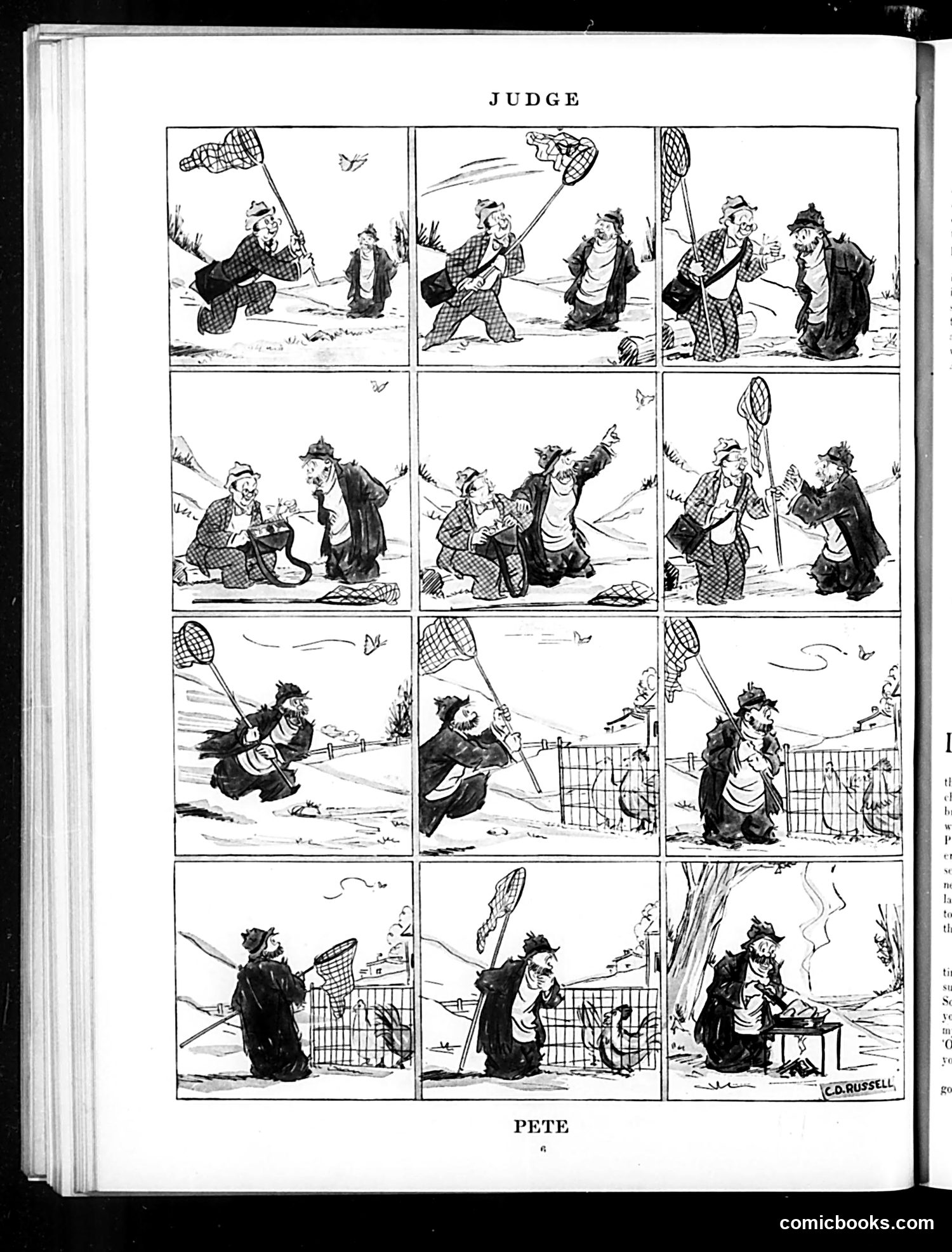
# Judge Magazine Comic Page Analysis This is a 12-panel sequential comic strip titled "Judge" and "Pete" (credited to C.B. Russell). It depicts a man in a checkered suit attempting to catch butterflies or insects with a net near a pond or wetland. The narrative shows him progressively frustrated: he chases, swings, misses repeatedly, falls into water, and eventually appears to give up—ending in what looks like resignation or exhaustion by a fire. Without additional context about the publication date or specific political references, this appears to be gentle satirical humor about futility and persistence rather than pointed political commentary. The humor derives from physical comedy and the absurdity of the man's determined but unsuccessful efforts. The identity of "Pete" remains unclear from the image alone.
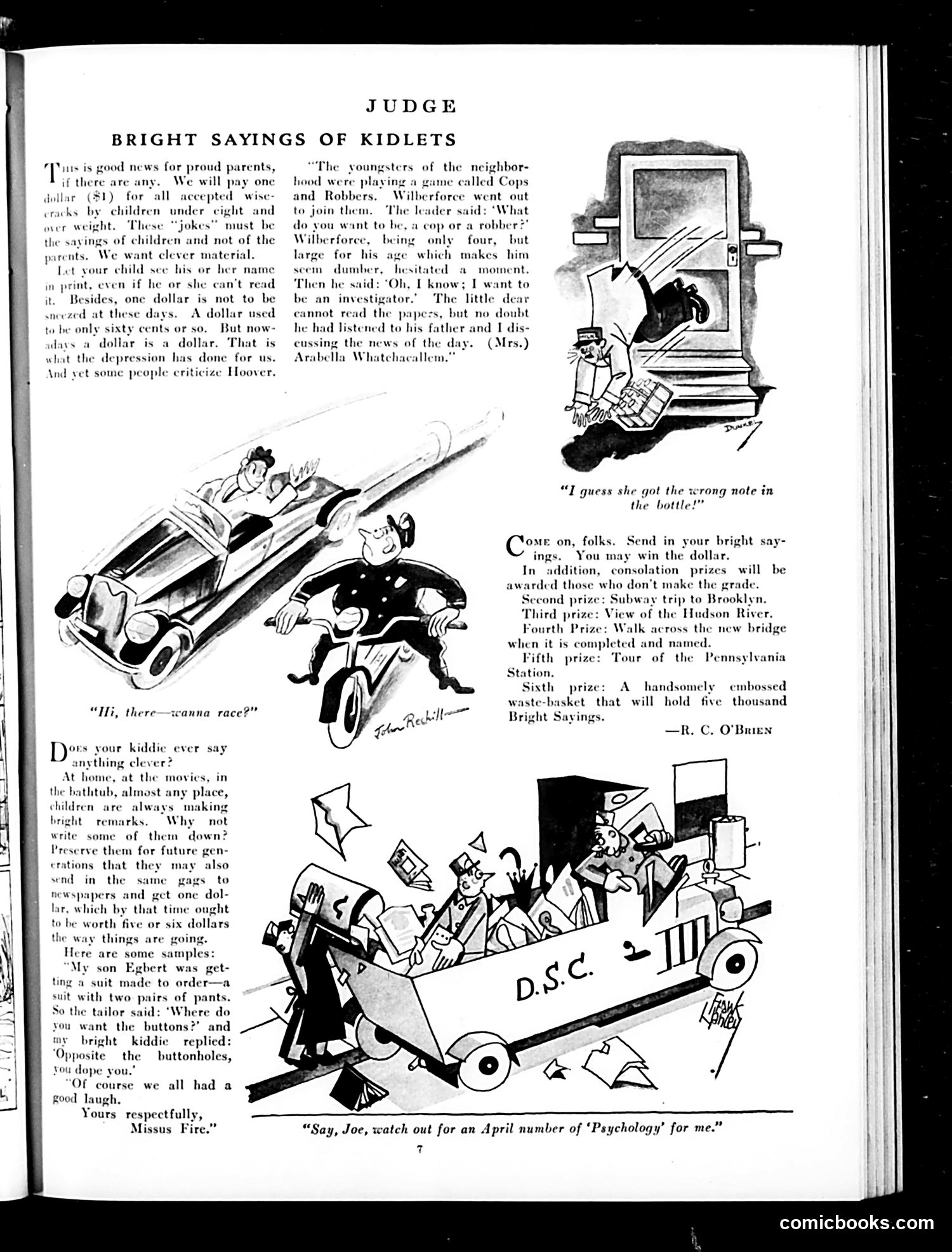
# "Bright Sayings of Kidlets" — Judge Magazine Analysis This page is a **humor column** soliciting witty remarks from children under eight years old, offering $1 payment per accepted submission—presented as generous during the Depression era. The satire operates on multiple levels: **The Setup:** Judge claims to celebrate children's unfiltered wisdom while clearly acknowledging parents actually write these submissions, undercutting the premise immediately. **The Jokes:** Three examples illustrate children's innocent logic ("I want to be an investigator" instead of cop or robber), malapropisms, and accidental insults ("Opposite the buttonholes, you dope you"). **The Social Context:** The column mocks Depression-era economics—a dollar was once worth sixty cents, now it's just a dollar; people criticize President Hoover despite economic hardship. The "consolation prizes" (subway trips, bridge walks, a waste-basket) satirize how little $1 actually represents. **The Cartoons:** Show children racing and a chaotic scene labeled "D.S.C." (unclear reference), reinforcing the theme of childish mischief and parental amusement. The overall tone is gentle mockery of middle-class sentimentality about children's "wisdom."
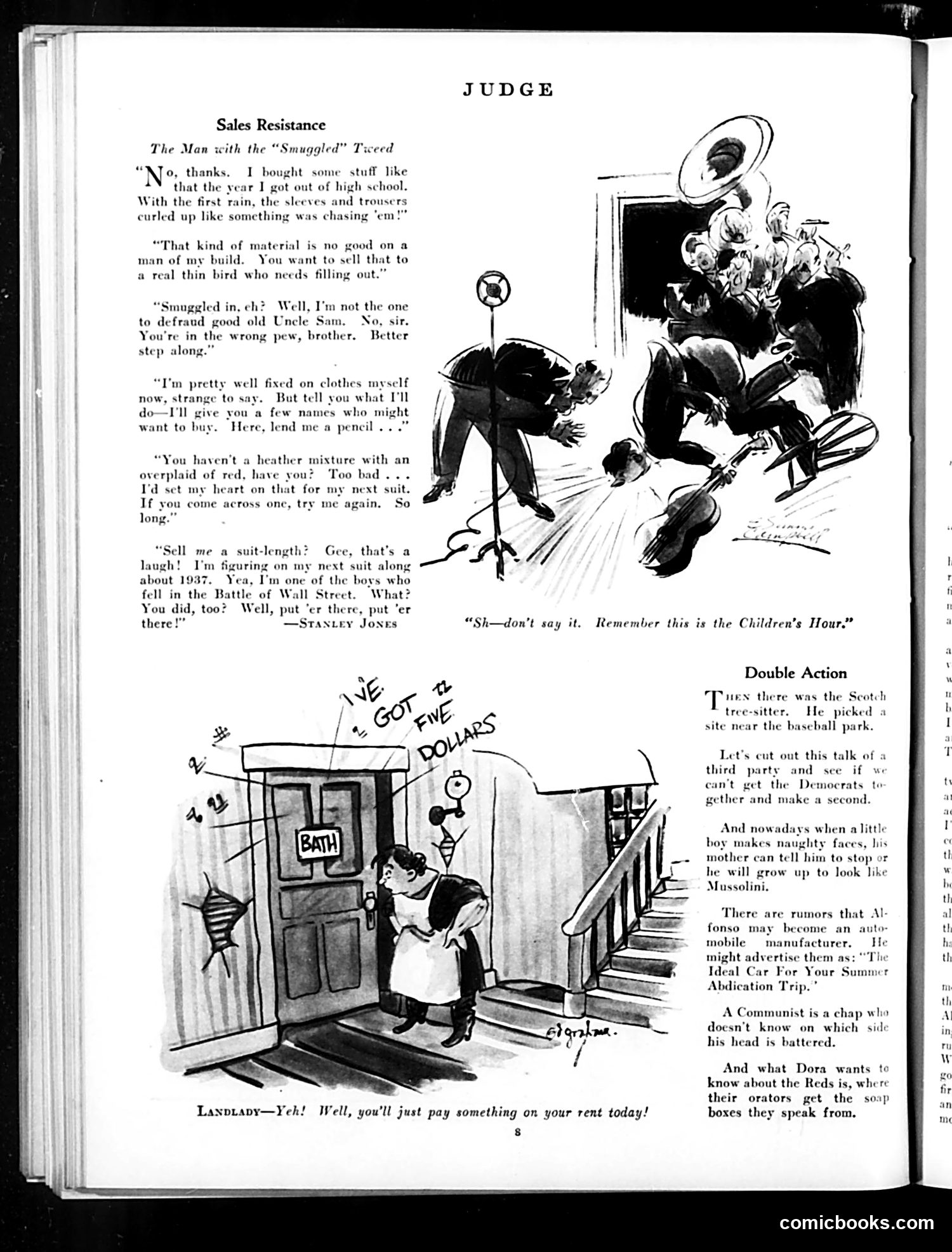
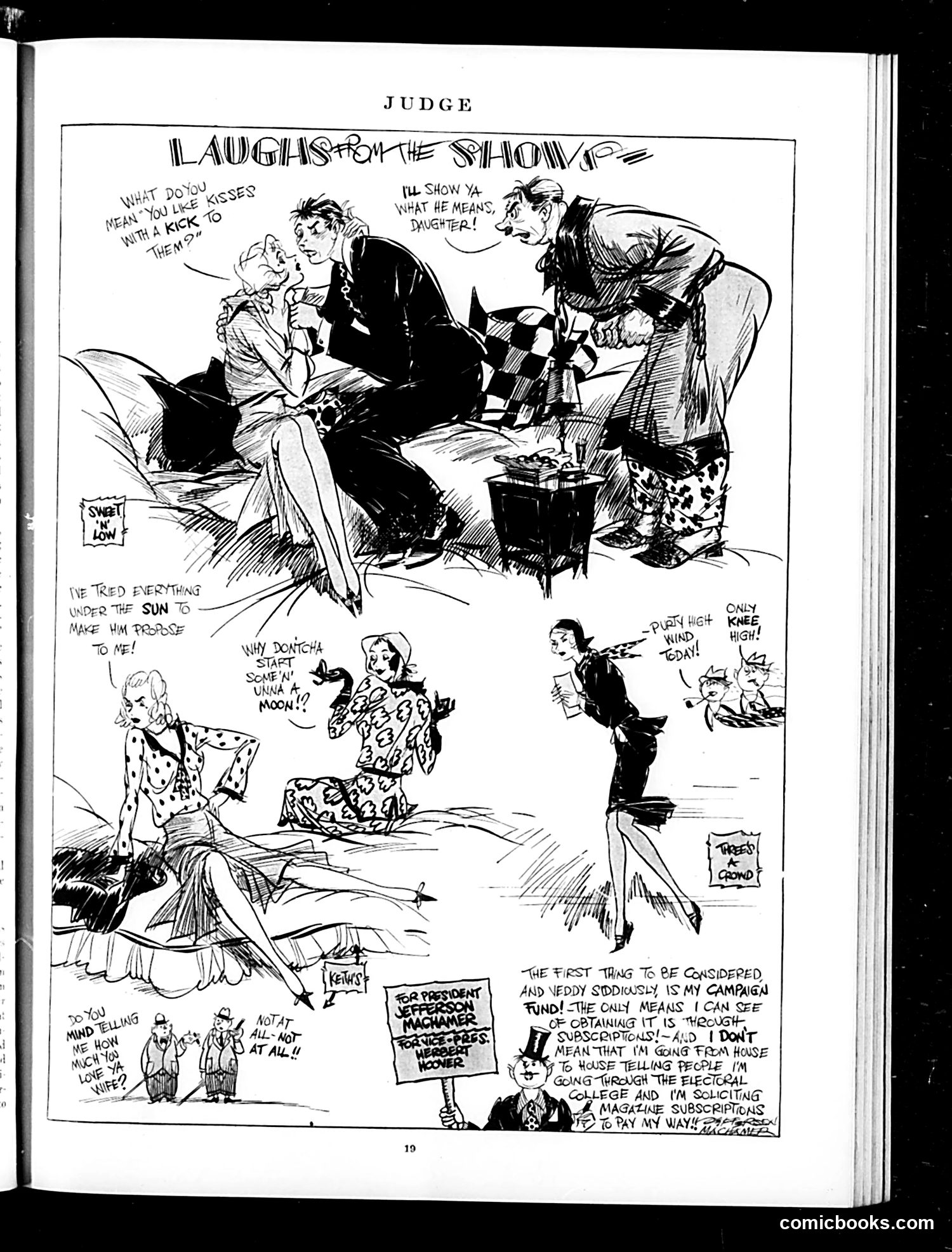
# Analysis of Judge Magazine Page This page contains three satirical pieces from Judge magazine (likely 1930s based on references). **"Sales Resistance"** depicts a clothing salesman's pitch failing repeatedly. The joke: a man refuses to buy "smuggled" fabric (likely contraband goods during Prohibition era), citing moral concerns about defrauding "Uncle Sam," yet immediately offers to refer customers. The irony is his selective ethics. He also mentions the "Battle of Wall Street"—a reference to the 1929 stock market crash, suggesting economic hardship. **"Double Action"** shows a landlady collecting rent while a tenant hides. The joke plays on desperation during economic depression. The right column contains brief satirical quips mocking contemporary figures and politics: Mussolini's appearance, rumors about Alfonso (possibly King Alfonso of Spain), and jabs at Communists and Democrats. These are topical commentary rather than developed cartoons. The overall tone reflects 1930s American anxiety: economic hardship, political instability, and suspicion of foreign ideologies.
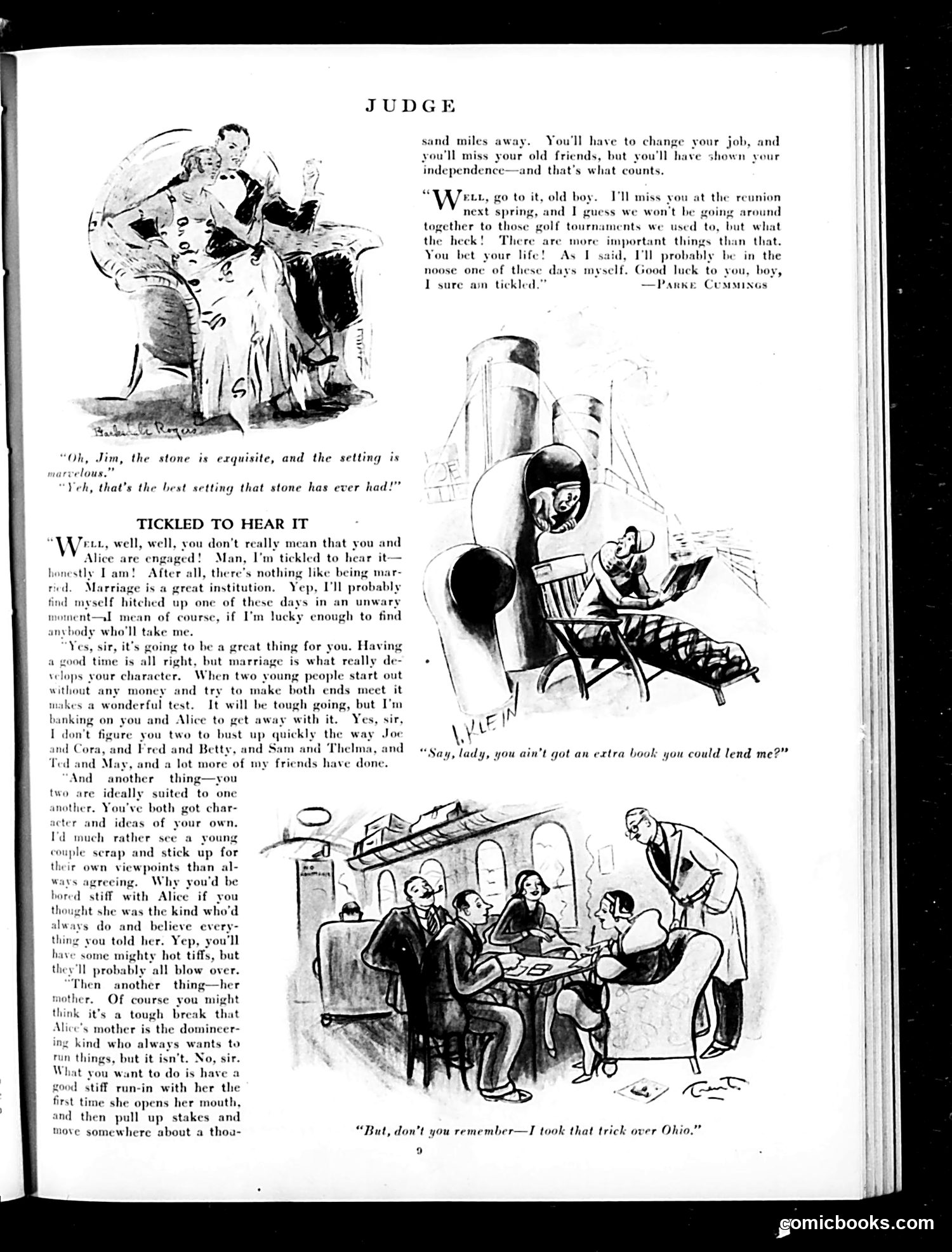
# Judge Magazine Page Analysis This page contains three separate cartoons satirizing courtship, marriage, and domestic life in early 20th-century America. **"Tickled to Hear It"** (main text): An older man offers unsolicited marriage advice to a younger engaged man named Jim. The humor lies in the speaker's contradictions—he warns that marriage means sacrificing independence and friends, yet encourages Jim to proceed. He boasts about his own failed marriages (mentioning multiple divorced friends) while insisting marriage "develops character." The advice to have a "stiff run-in" with his future mother-in-law to establish dominance reflects period attitudes about marriage power dynamics. The three illustrated cartoons mock marital situations: an engagement ring's setting, a newlywed couple's cramped living space, and a card game where someone claims credit for a trick "over Ohio"—likely a reference to a card-playing deception between spouses. The overall satire targets patronizing male advice-giving and the gap between romantic ideals and marital reality.
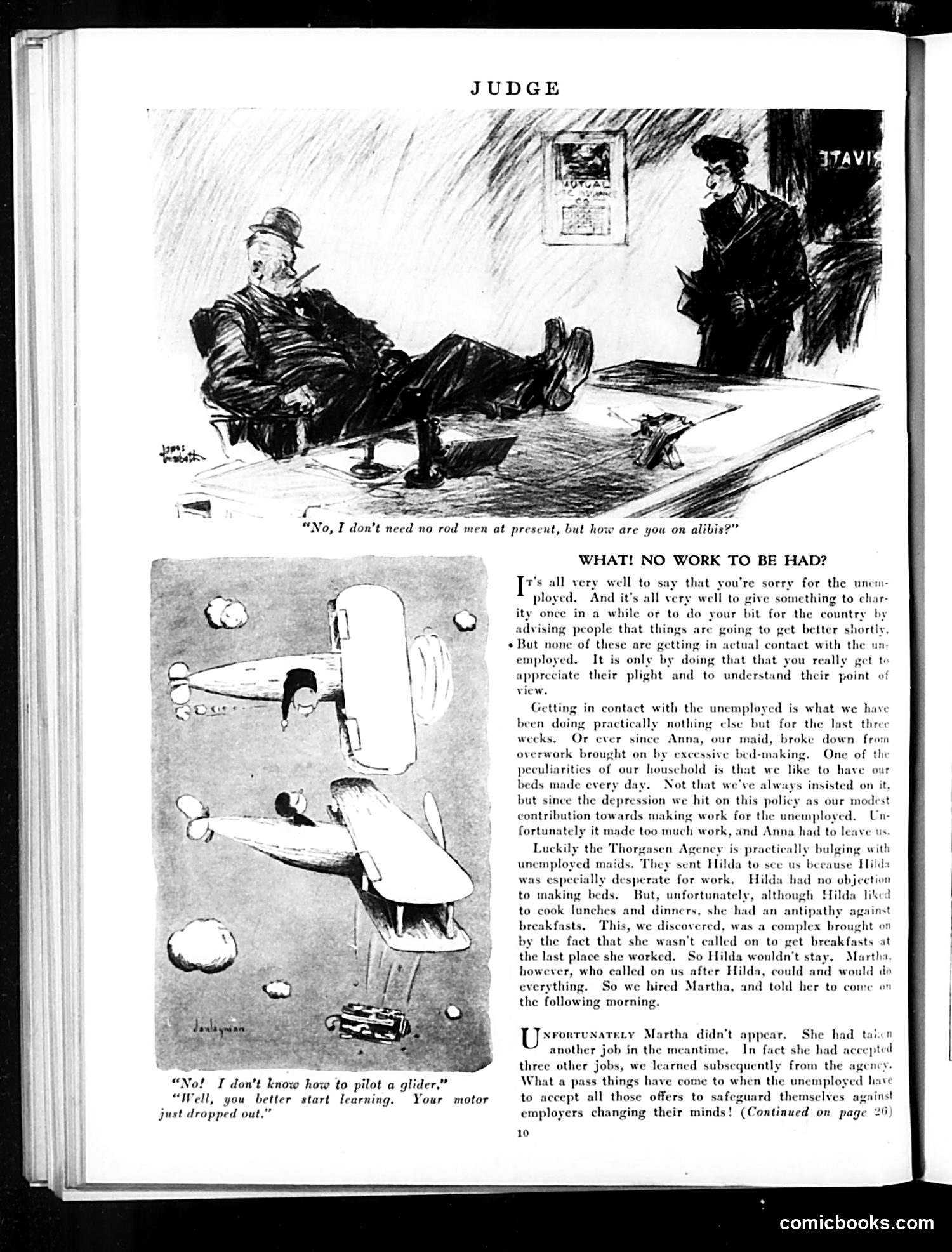
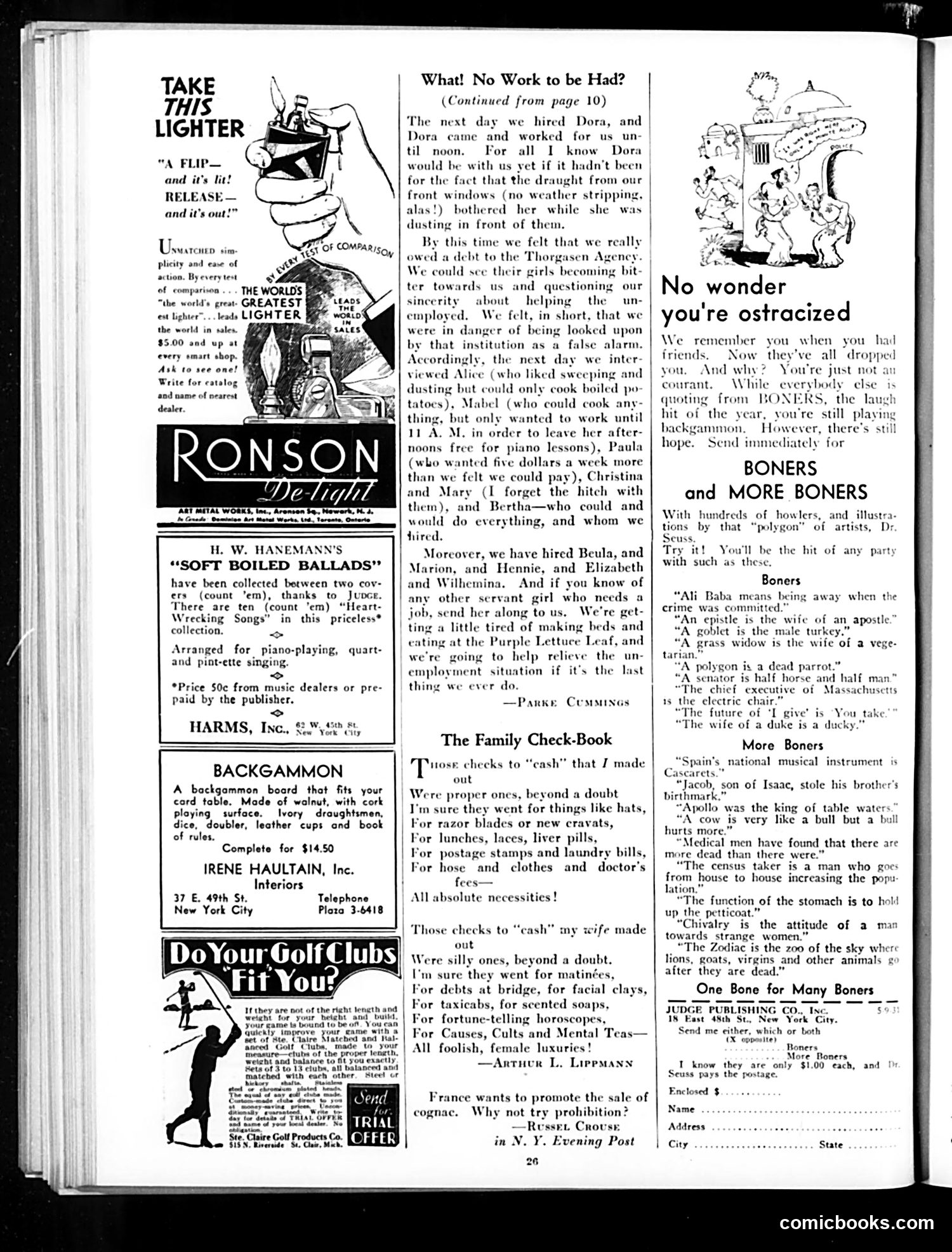
# Analysis for Modern Readers This Judge magazine page satirizes Depression-era employment desperation through two interconnected cartoons and accompanying article. **Top cartoon:** A man reclines while interviewing someone, asking if they need "rod men" but inquiring about their "alibis"—suggesting employers were hiring people willing to commit crimes or provide false testimony, not legitimate workers. **Bottom cartoon:** A flying instructor tells a student, "You better start learning. Your motor just dropped out"—visual metaphor for unemployment's chaos. **The article** describes the author's household hiring unemployed maids through an agency. Each prospect—Hilda, Martha—either quits due to psychological quirks or accepts multiple competing job offers simultaneously to secure income. The satire targets both the absurdity of Depression unemployment and the desperation forcing jobless people to accept any work offered, even contradictory positions. The point: unemployment has become so severe that the distinction between employed and unemployed has collapsed; even "employed" people maintain multiple precarious jobs simultaneously out of fear.