A complete issue · 36 pages · 1931
Judge — March 14, 1931
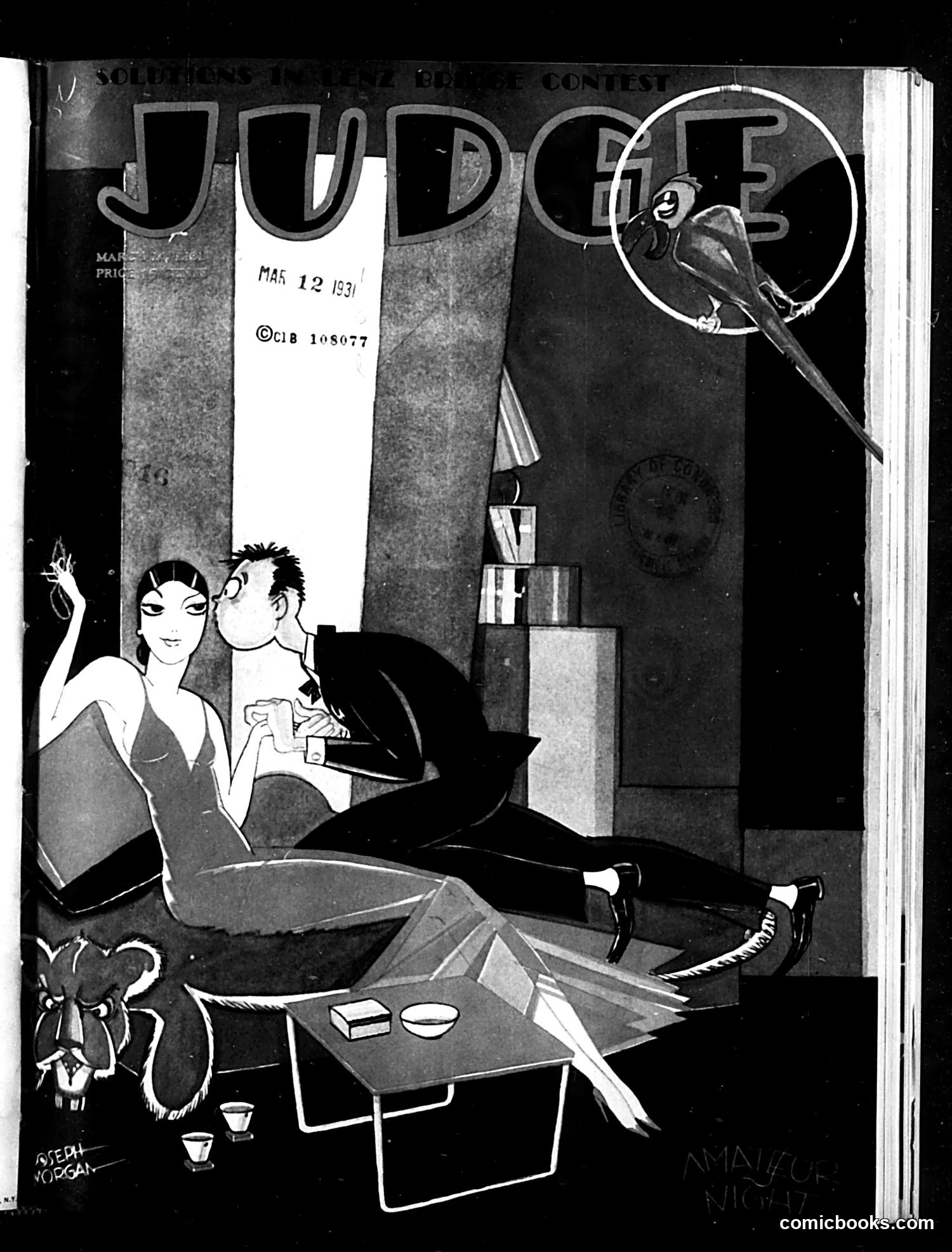
# Judge Magazine Cover Analysis This appears to be a Judge magazine cover from March 12, 1931, during the Great Depression era. The cartoon depicts a stylized scene of urban nightlife—two figures in a nightclub or speakeasy setting, with a parrot perched above and cocktail glasses visible. The satirical point likely concerns Prohibition-era social life: despite the nationwide alcohol ban (in effect 1920-1933), speakeasies and illicit drinking continued flourishing in cities. The elegant figures and bird suggest commentary on how wealthy urbanites maintained lavish leisure despite economic hardship affecting most Americans. The specific identities of the figures are unclear from the image alone, though the sophisticated styling and setting are characteristic of Judge's commentary on Manhattan high society during this period.
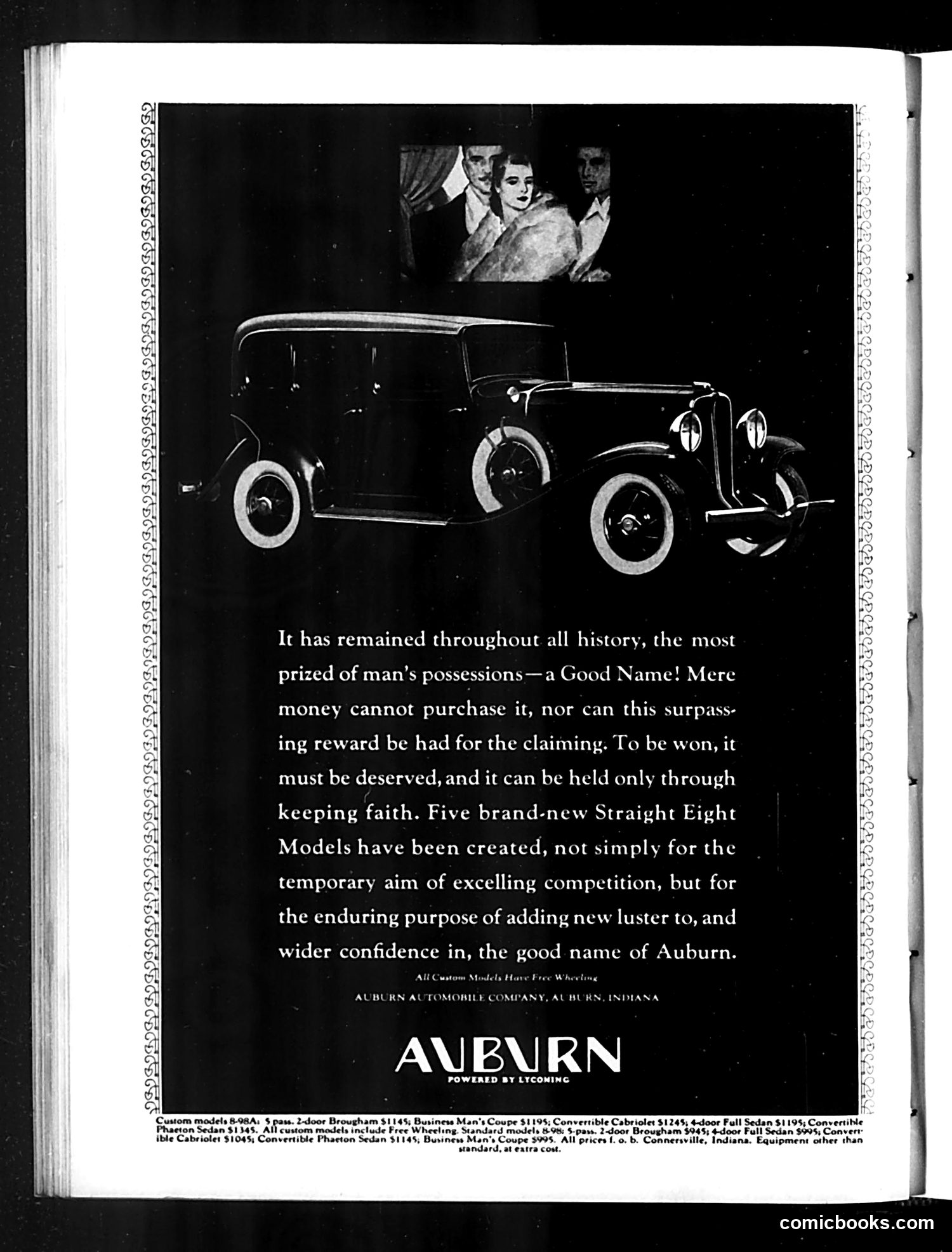
# Auburn Automobile Advertisement This page is primarily a **car advertisement**, not political satire. It promotes Auburn automobiles, manufactured in Auburn, Indiana. The ad features two vintage cars (appearing to be from the 1920s-30s) and includes an illustration of well-dressed people in an automobile, emphasizing luxury and respectability. The accompanying text uses moralistic language about reputation ("a Good Name") to position Auburn cars as vehicles that enhance one's social standing and character. The phrase "Powered by Lycoming" refers to the engine manufacturer. The small print lists various Auburn model options and prices, indicating this is a straightforward commercial advertisement rather than satirical content. Judge magazine, while primarily satirical, regularly included such advertisements to fund publication.
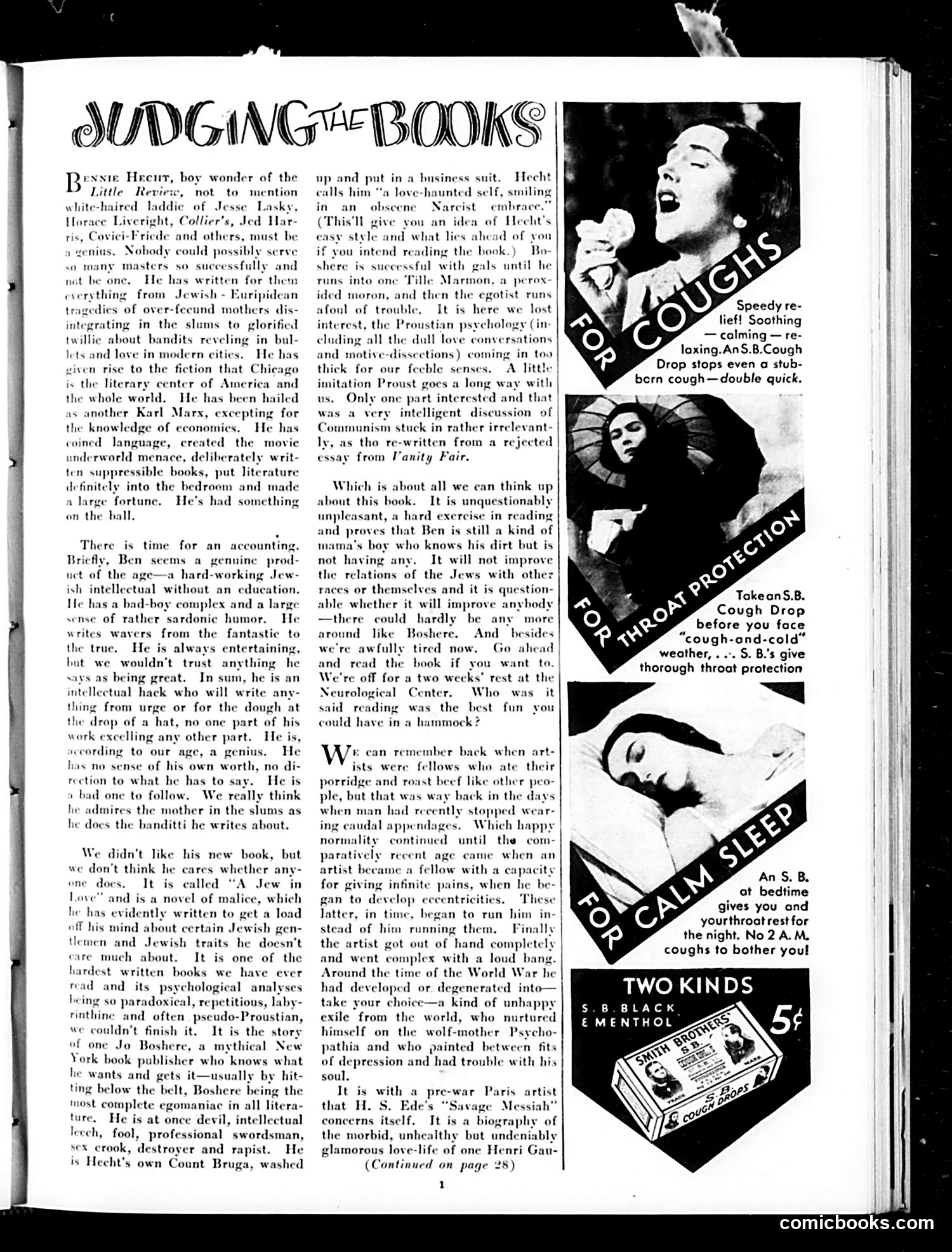
# Analysis This page is primarily a **book review section** titled "Judging the Books," not a political cartoon. The main content critiques works by Jewish author Bysshe Hecht and others, discussing novels about Jewish life and experience. The reviewer dismisses one work as "A Jest in Love" (a novel of malice), criticizing its treatment of Jewish themes and relations with other groups. The **right side contains vintage product advertisements** (cough drops, throat lozenges, sleeping aids) typical of 1920s-30s magazines—not satirical content. There is **no clear political cartoon** on this page. The satirical element, if any, lies in the book reviews themselves, which appear to critique overly sentimental or poorly-handled literary treatments of Jewish subject matter and identity.
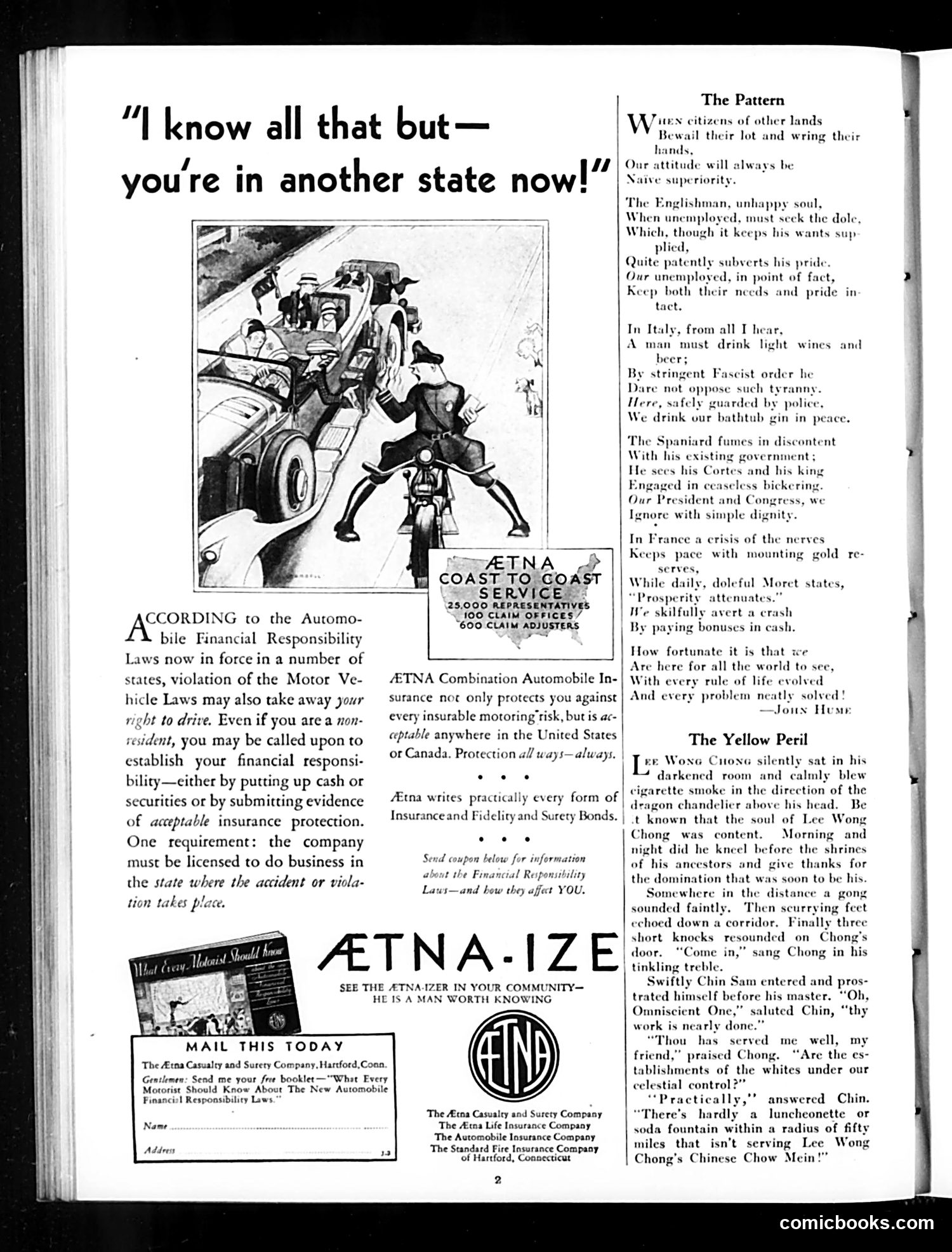
# Analysis This page is primarily **advertising for Aetna insurance**, not political satire. The main cartoon shows a speeding car with a policeman on a motorcycle pursuing it, illustrating the headline: "I know all that but—you're in another state now!" The joke references **Motor Vehicle Laws** that vary by state. The ad warns that violating traffic laws in one state can result in losing your driver's license even as a non-resident, and that you may be sued for damages. The cartoon humorously depicts someone fleeing across state lines thinking they've escaped consequences—but Aetna's insurance protects against liability anywhere in the US or Canada. The right page contains unrelated fiction ("The Yellow Peril"), not political content.
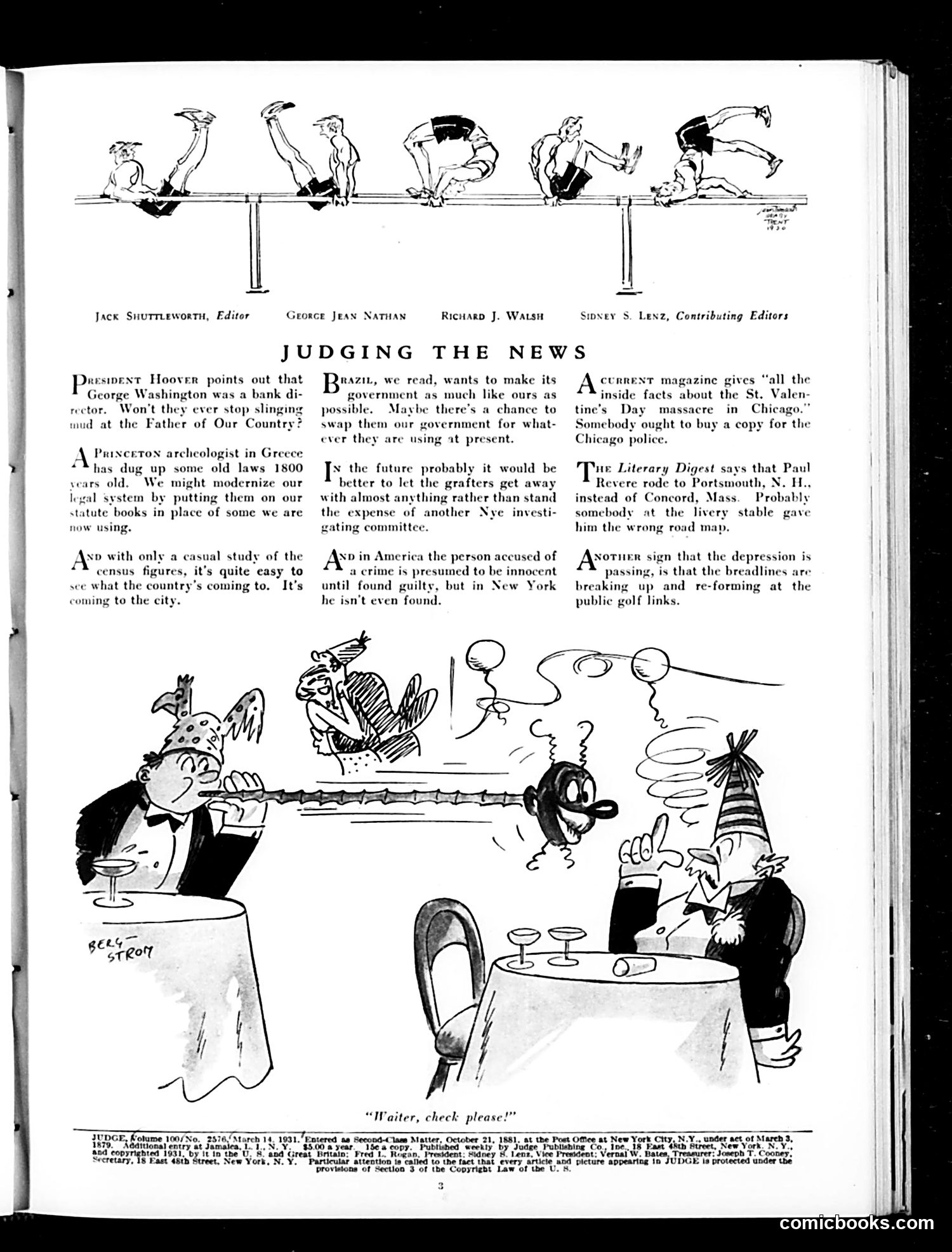
# Analysis of "Judging the News" This page from *Judge* magazine features editorial commentary on current events alongside a cartoon titled "Waiter, check please!" The cartoon depicts two diners at separate tables engaged in what appears to be a tug-of-war over a bottle of beer—likely satirizing Prohibition-era tensions. One figure wears a party hat (possibly representing revelry or excess), while the other appears more formal. The "check please" caption suggests the bill is coming due, implying consequences for indulgence or illegal drinking. The text snippets comment on various topics: President Hoover comparing George Washington to a bank director, Brazilian government reform, an accused criminal in New York, and depression-era golf course development. The overall theme appears to critique current social and political issues through humor and visual metaphor typical of 1920s-early 1930s satirical journalism.
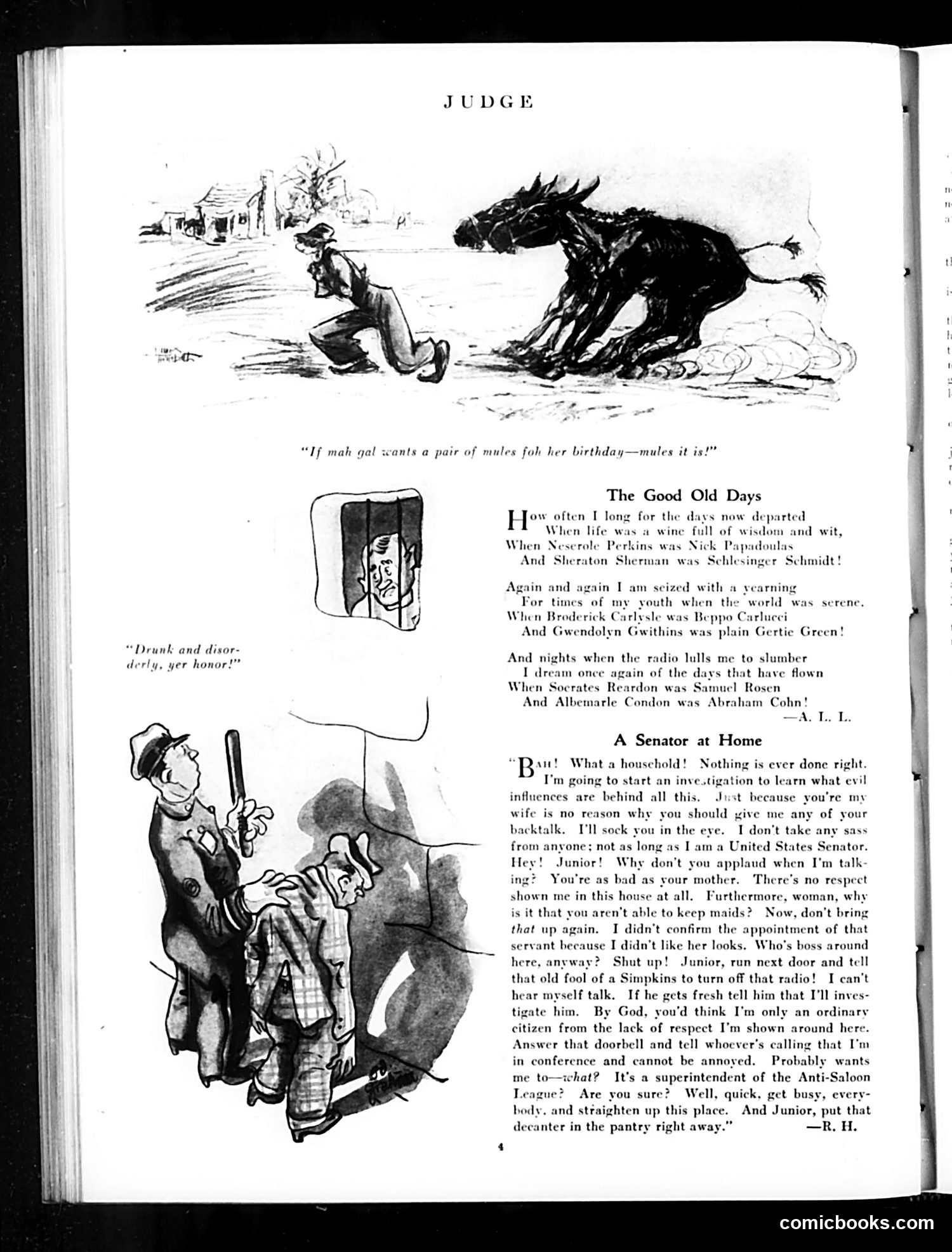
# Judge Magazine Page Analysis This page contains three separate satirical pieces: **Top cartoon ("If mah gal wants a pair of mules fuh her birthday—mules it is!"):** A man runs from aggressive mules, satirizing rural/Southern dialect and suggesting marital subservience—he'll provide whatever his girlfriend demands, even if dangerous or absurd. **"The Good Old Days" poem:** Nostalgic verse lamenting lost eras when figures like Sheraton Sherman and Nick Longfellow were prominent. The references appear garbled or intentionally distorted, likely satirizing romanticized nostalgia itself. **"A Senator at Home":** A domineering senator bullies his family relentlessly—complaining about household management, his wife's abilities, servants, and his son's behavior. The satire mocks the hypocrisy of powerful public figures who demand respect while acting tyrannically in private.
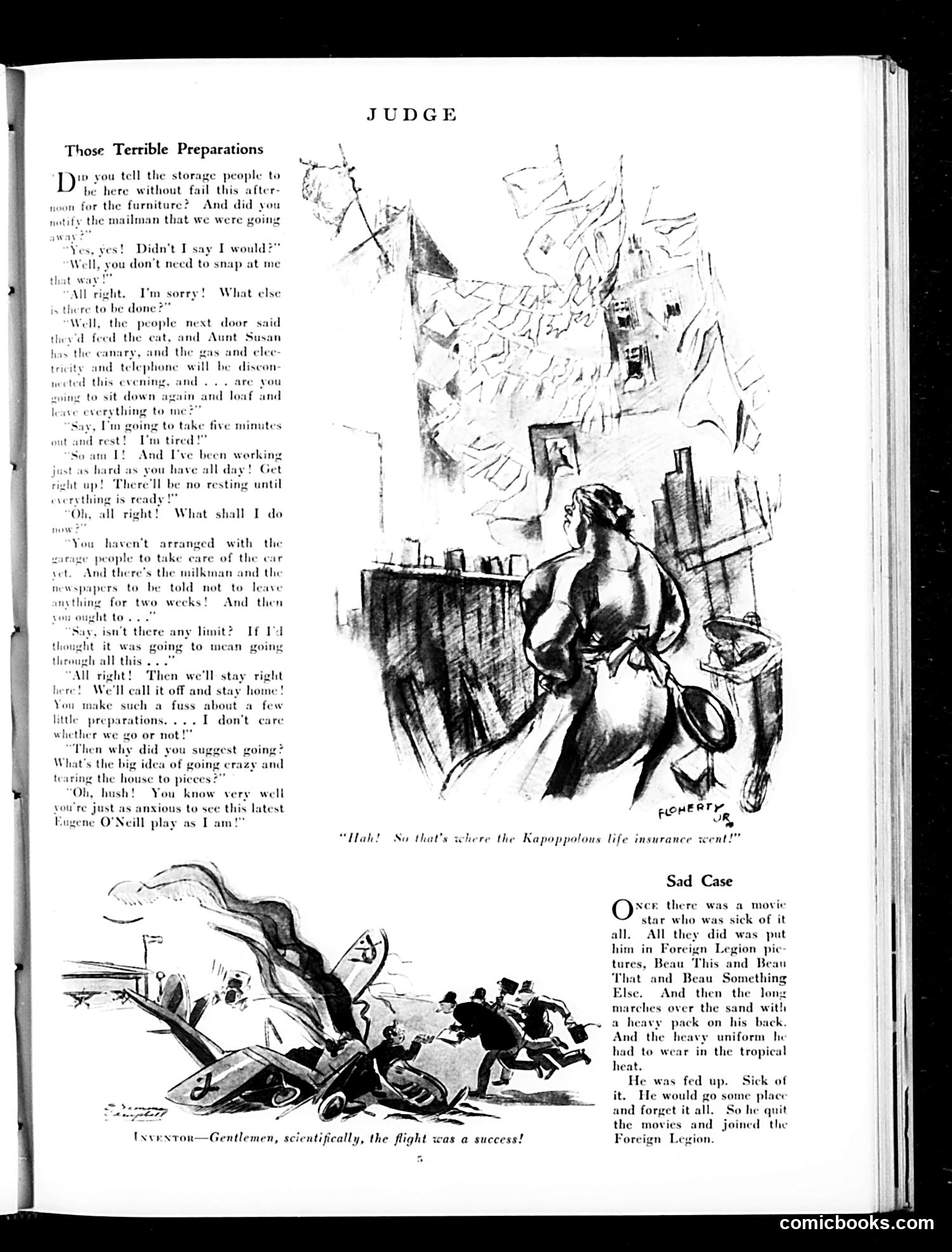
# Analysis of Judge Magazine Page This page contains two satirical pieces: **"Those Terrible Preparations"** (top): A domestic comedy dialogue about moving preparations. A wife has instructed servants to store furniture without notifying her husband, causing marital conflict. The satire mocks the chaos and expense of household moves, with the husband eventually capitulating to stay home rather than endure further disruption. **"Sad Case"** (bottom): A brief story about a movie actor exhausted by appearing in numerous films with similar plots ("Beau This and Beau That"). Fed up with repetitive roles, he quits cinema and joins the Foreign Legion—a common trope suggesting escape from one's problems. Both pieces humorously critique early 20th-century American domestic life and the emerging film industry's formulaic storytelling.
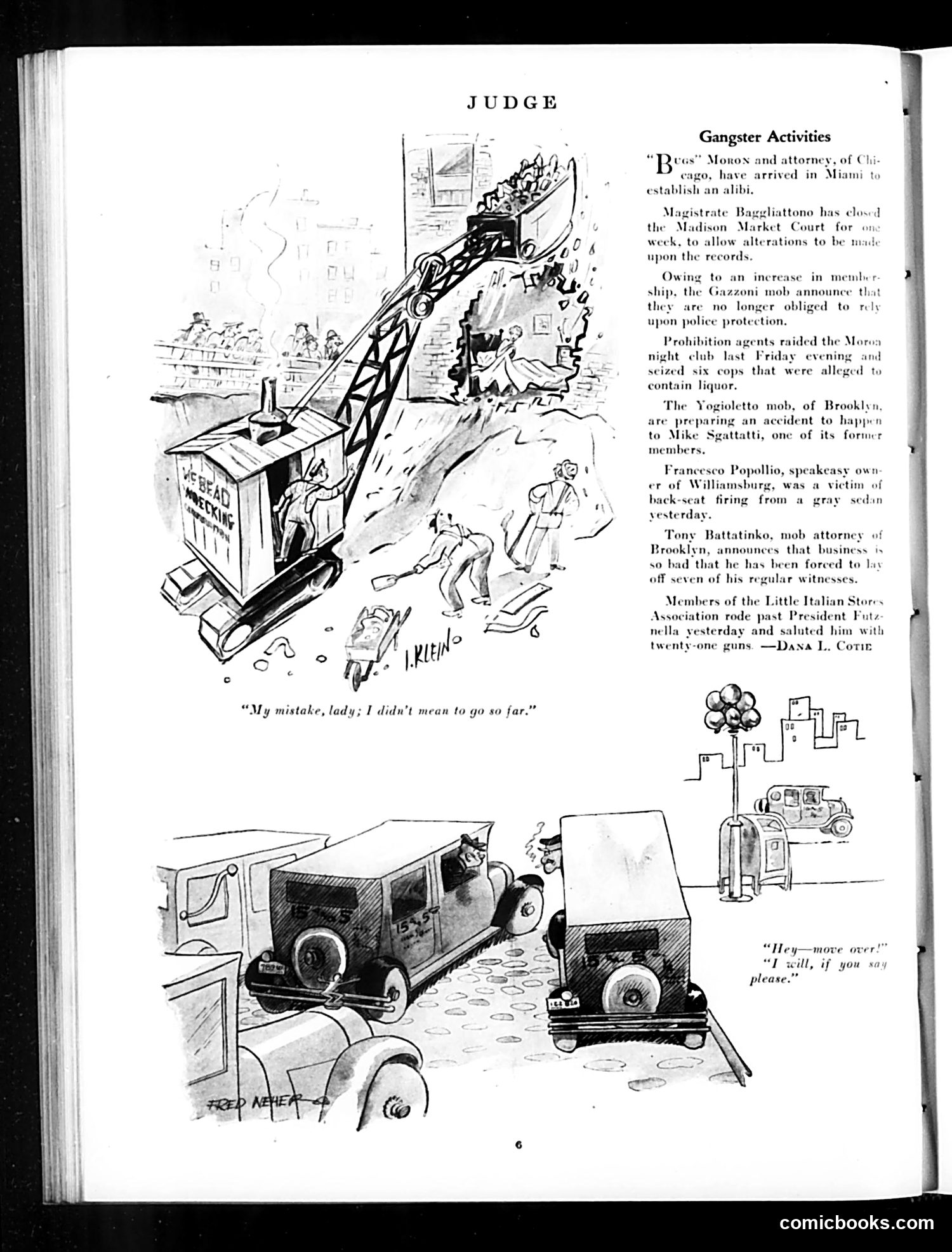
# Analysis of Judge Magazine Page This page contains two cartoons satirizing urban crime and Prohibition-era gangsterism (1920s-early 1930s). **Top cartoon** depicts a wrecking ball labeled "BEAN WRACKING" destroying buildings, with the caption "My mistake, lady; I didn't mean to go so far." This appears to satirize either excessive urban demolition or, given the "Gangster Activities" headline, possibly mob violence disguised as construction accidents. **Bottom cartoon** shows vehicles at a doorway with caption "Hen—move over!" / "I will, if you say please." This likely mocks bootleggers or smugglers politely conducting illegal operations, satirizing the absurdity of "civilized" crime during Prohibition. The "Gangster Activities" column alongside reports real mob incidents (mentions of "Buss" Monos, the Vogiolette mob, etc.), contrasting actual violence with humorous cartoon commentary on organized crime's brazen normalization in American cities.
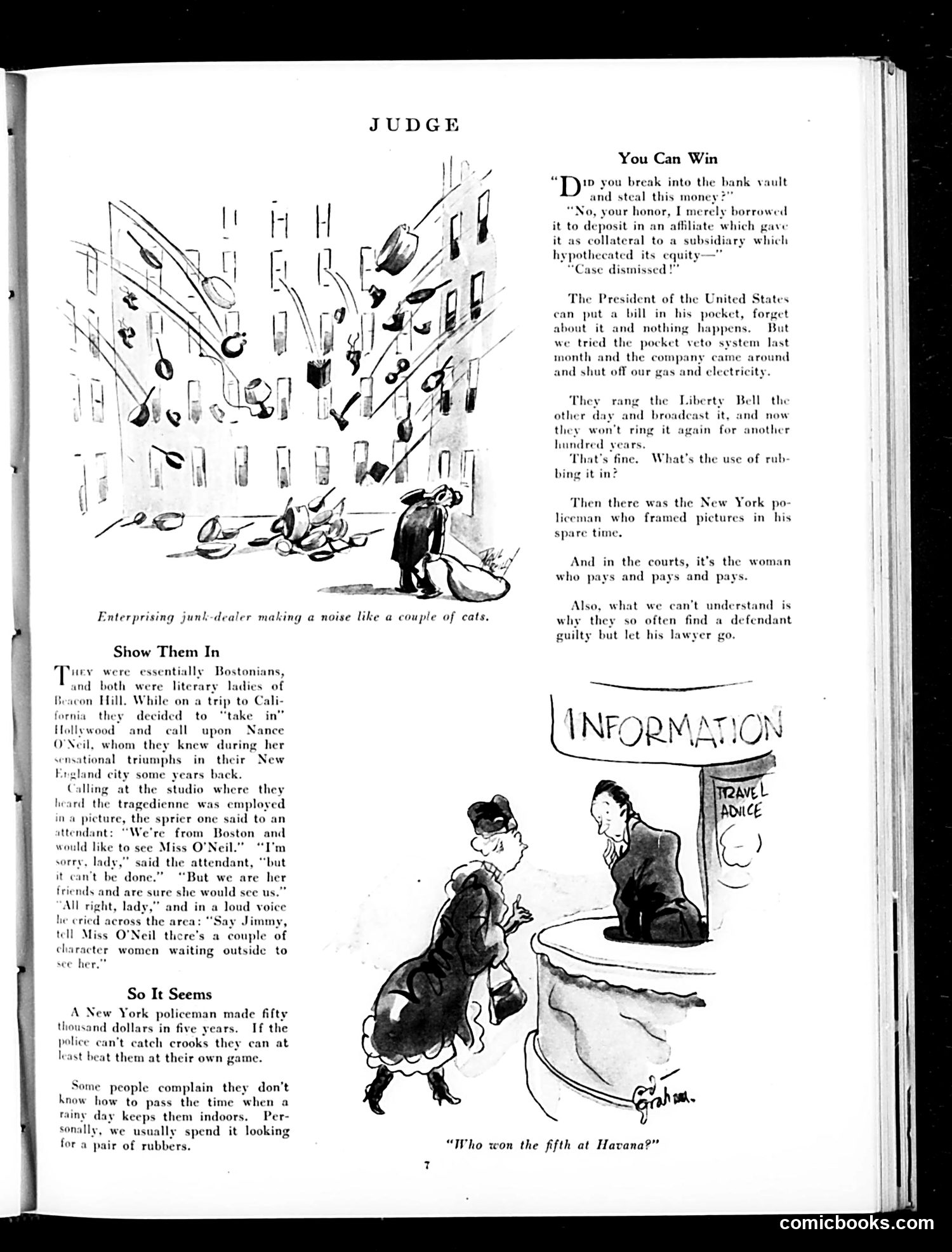
# Judge Magazine Satire Analysis This page contains three satirical pieces mocking American institutions and legal/financial systems: **"You Can Win"** ridicules corporate financial manipulation and legal loopholes. A defendant escapes conviction by describing complex affiliate/subsidiary schemes—satirizing how wealthy corporations evade accountability through deliberately obscure financial structures. The piece also mocks the President's "pocket veto" power and the Liberty Bell's symbolic irrelevance, suggesting government operates by different rules than ordinary citizens. **"Show Them In"** is a humorous anecdote about Boston society women trying to visit actress Nance O'Neil in Hollywood, satirizing East Coast snobbery and Hollywood's indifference to prominent visitors. **"So It Seems"** presents brief cynical observations: corrupt cops profit more than they prevent crime; people waste time differently based on circumstances. The junk-dealer illustration and "Information" cartoon mock petty bureaucratic absurdity. Overall, the page reflects Judge magazine's typical Progressive-era skepticism toward institutional corruption, class disparity, and absurd legal technicalities.
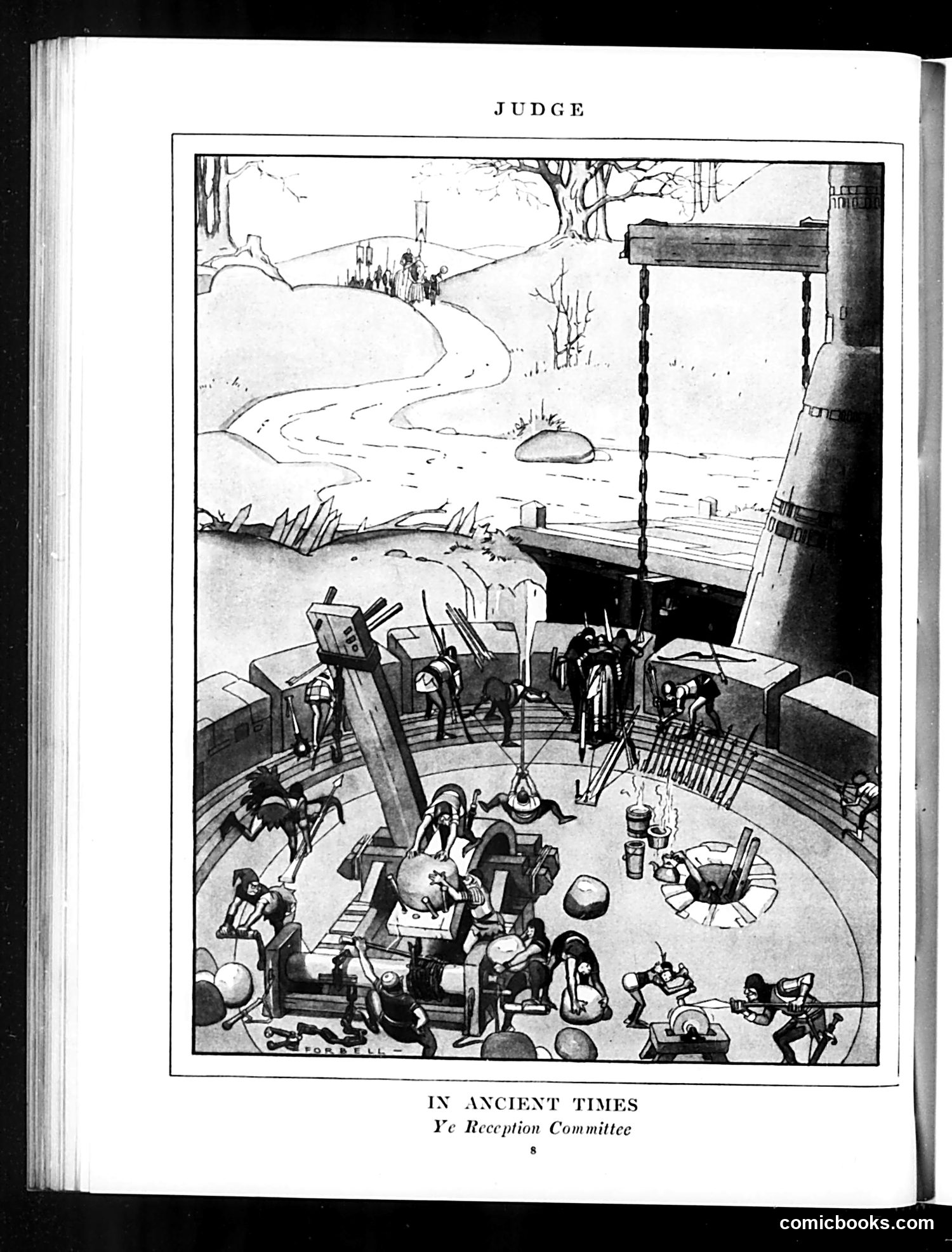
This cartoon satirizes a "Reception Committee" by depicting it as an ancient Roman arena scene. The image shows an elaborate circular amphitheater filled with figures operating machinery and equipment, with what appears to be execution or torture devices visible. Outside the arena, a medieval or ancient landscape stretches into the distance. The satire likely mocks overly elaborate, formal reception committees of the Gilded Age era—suggesting they function like gladiatorial spectacles designed to exhaust, humiliate, or "execute" their guests through excessive ceremony and pageantry. By framing it as "ancient times," the cartoon implies such committees represent barbaric, outdated practices, turning what should be hospitable civic functions into brutal public performances. The mechanical complexity emphasizes the absurd machinery behind seemingly simple social rituals.
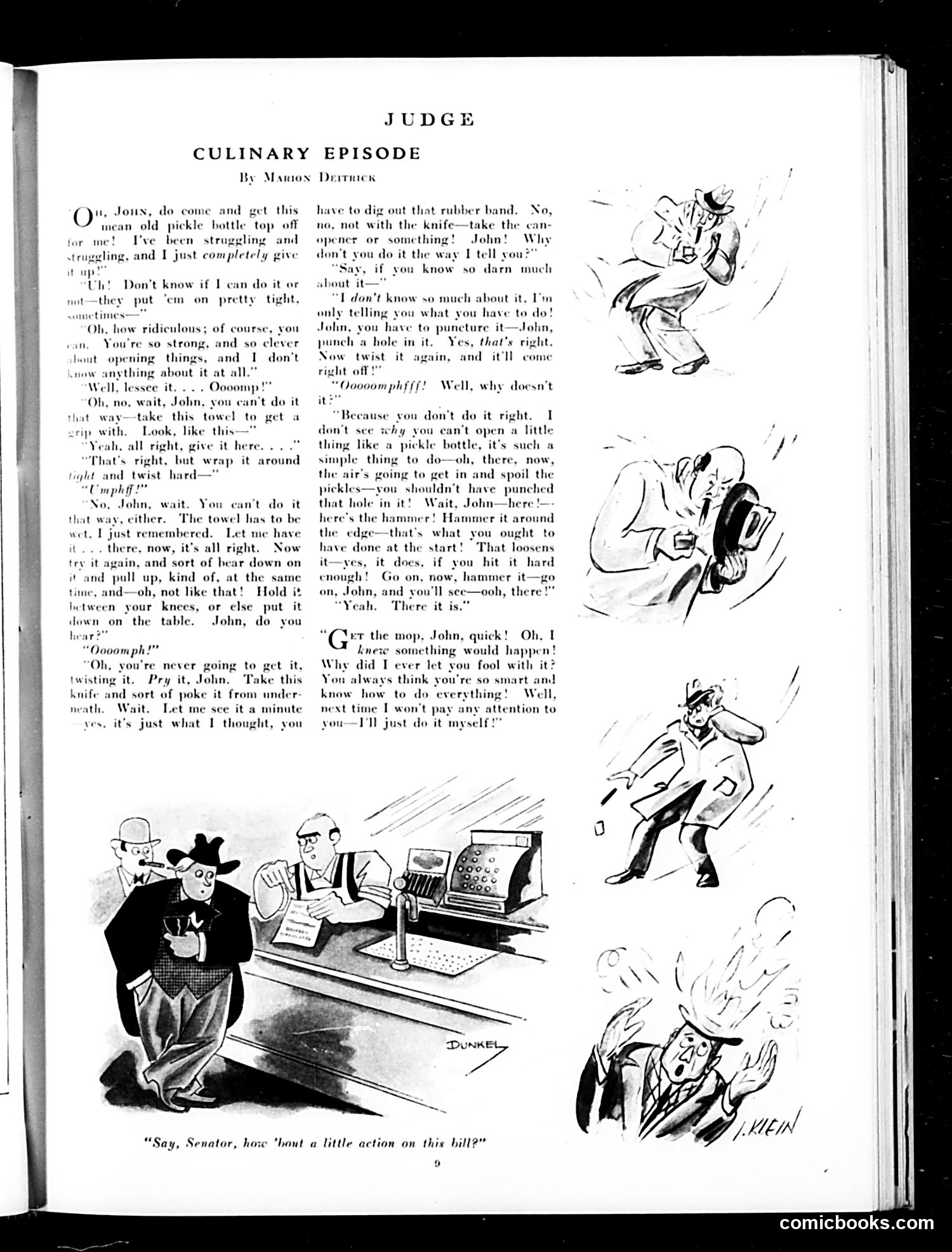
# "Judge" Culinary Episode Analysis This domestic comedy by Marion Deitrick satirizes the frustration of incompetent husbands versus the exasperation of wives who must instruct them. The narrative centers on John struggling to open a pickle jar while his wife provides contradictory, increasingly absurd instructions—towel wrapping, twisting, puncturing with a can opener, then hammering the edge. The satire targets gender dynamics: the wife's constant corrections ("you can't do it that way") mock both spousal nagging and the husband's stubborn incompetence. Her final exasperated threat—"next time I won't pay any attention to you—I'll just do it myself!"—ironically undercuts her own micromanaging. The bottom cartoon shows a senator asking another figure for "a little action on this bill," likely a separate political joke about legislative gridlock, using similar language to the domestic struggle above for contrast. The humor reflects early-20th-century domestic comedy conventions mocking marital conflict and masculine inadequacy in mundane household tasks.
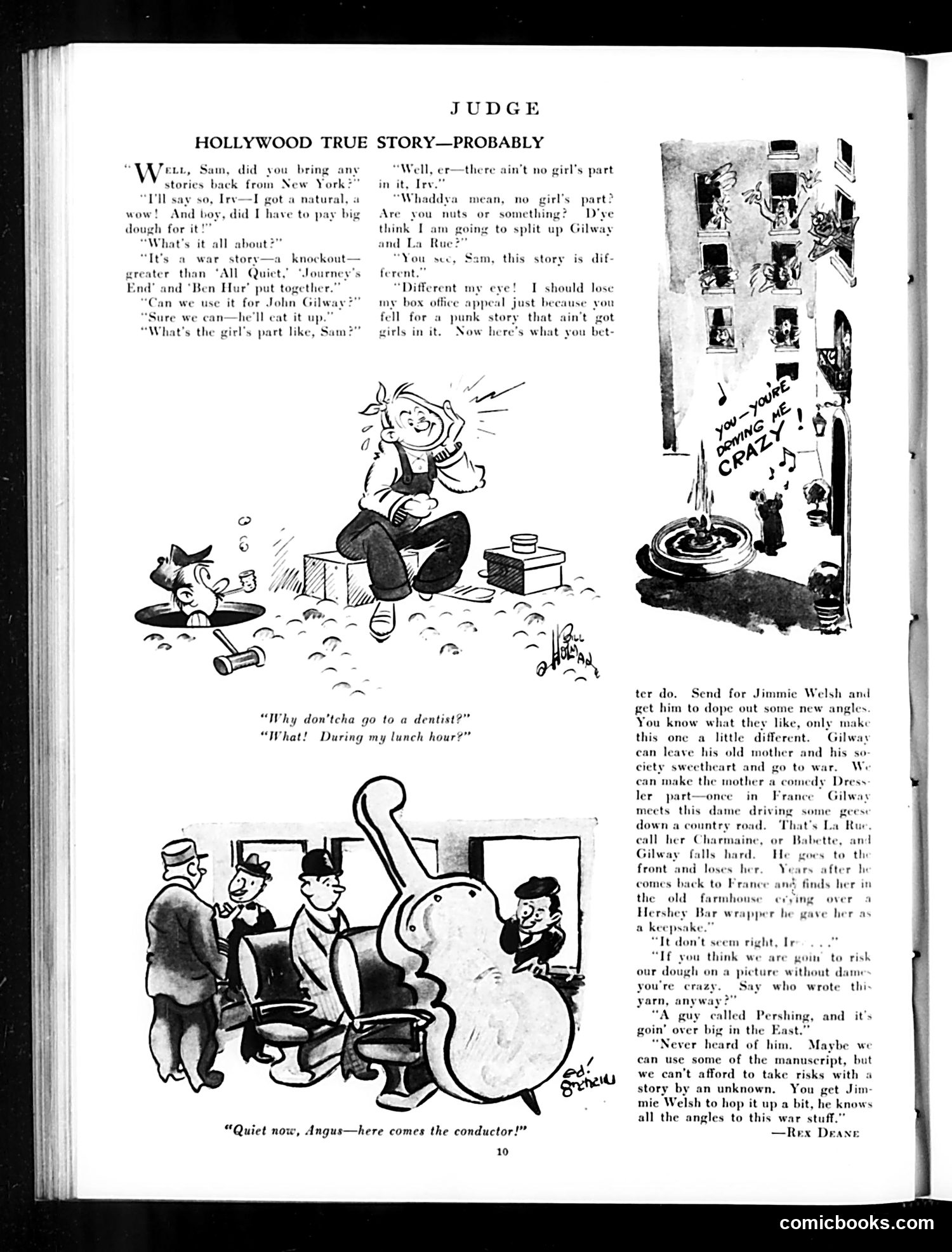
# "Hollywood True Story—Probably" This page satirizes 1920s Hollywood's formula-driven approach to filmmaking. Two producers discuss buying a war story, likely about WWI. When told the script lacks a female lead, the executive is appalled—female stars were box-office gold. He instructs his colleague to hire screenwriter Jimmie Welsh to retrofit the story with romantic subplots: adding a love interest named "Charmaine" or "Babette," making the hero's mother a comedic character, and staging an emotional reunion. The satire mocks how studios systematically rewrote stories to fit star vehicles and audience expectations rather than preserving original material. The reference to the writer "Pershing" (likely evoking General John Pershing) suggests a serious war narrative being hollowed out for commercial appeal. The accompanying cartoons humorously illustrate Hollywood's superficiality and chaos.
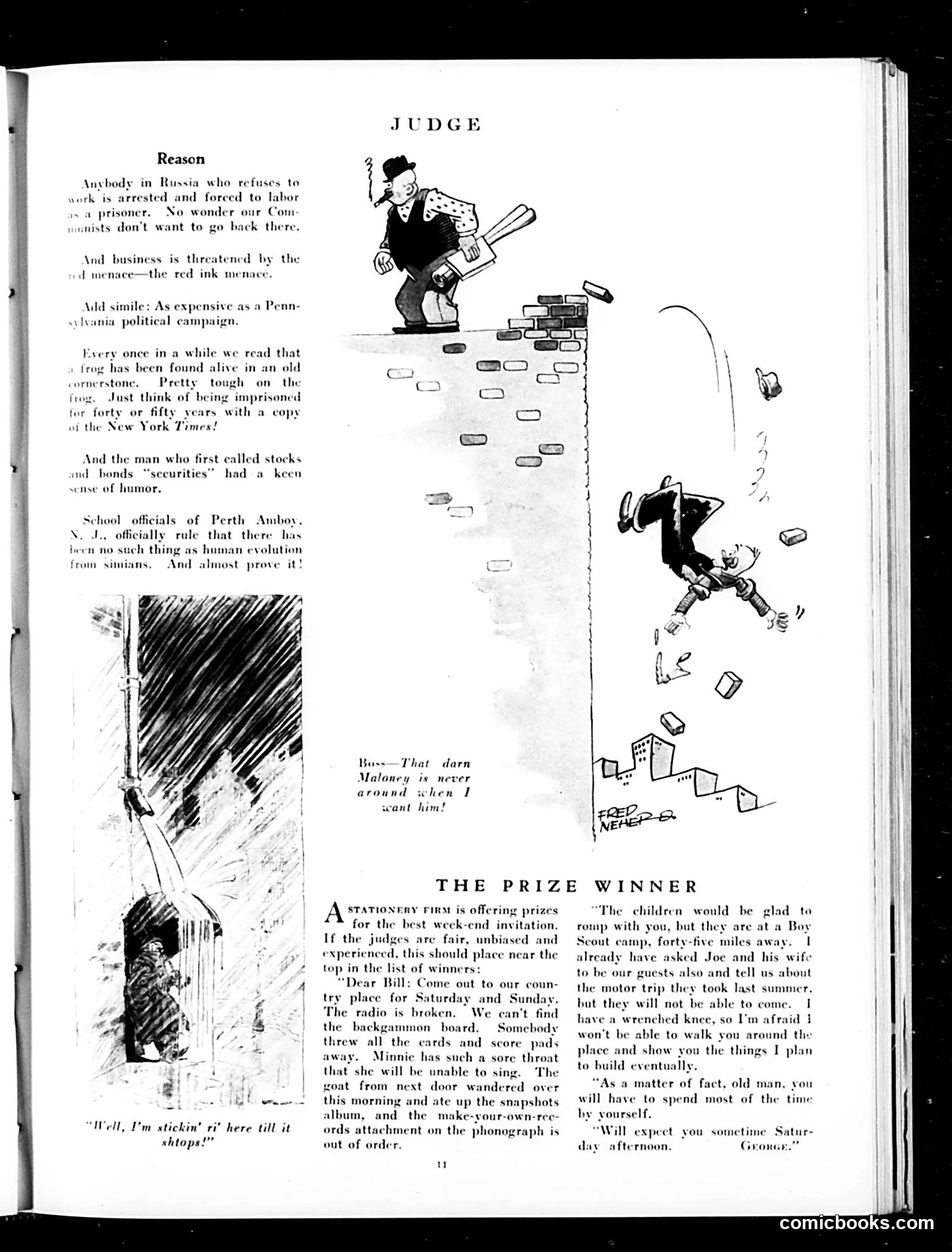
# Judge Magazine Page Analysis This page contains political and social satire typical of Judge magazine. The "Reason" section attacks American communists through anti-Soviet rhetoric, mocking the notion that U.S. communists would want to return to Russia, where forced labor and authoritarianism prevail. It also includes light jabs at Pennsylvania politics and business anxiety about economic loss ("red ink menace"). The top cartoon shows a figure (likely representing a capitalist or businessman) balanced atop crumbling bricks labeled with financial terms, being knocked down—satirizing economic instability or the threat to business interests. The bottom section, "The Prize Winner," is humorous rather than political: it's a satirical "invitation" highlighting domestic misfortunes (broken radio, sick houseguest, wandering goat eating photos) to mock the artificial cheerfulness of social invitations. The humor relies on the contrast between polite invitation conventions and deliberate unpleasantness. The scattered references and cartoons suggest this is a general-interest satirical magazine mixing political commentary with everyday humor for educated readers.