A complete issue · 36 pages · 1931
Judge — February 7, 1931
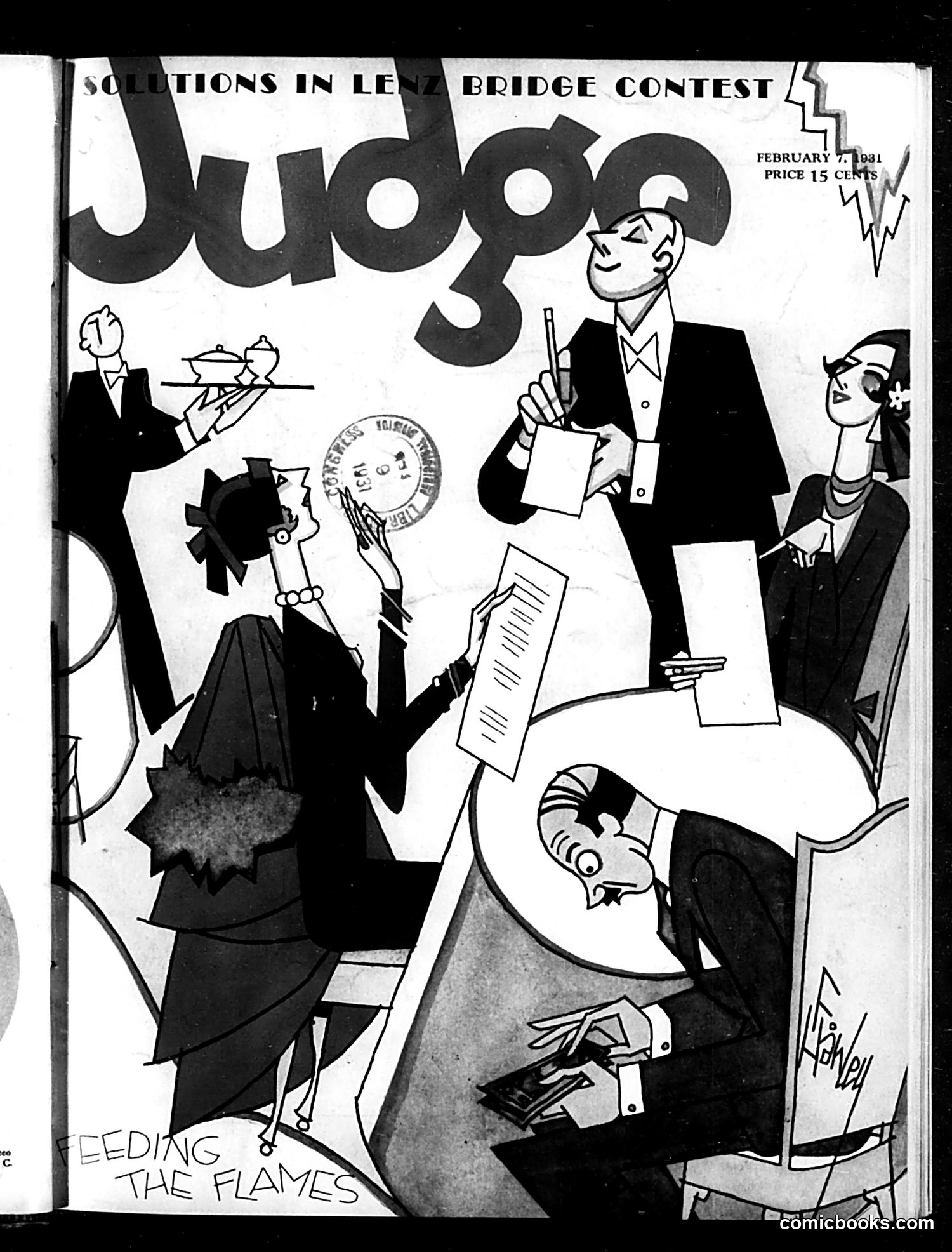
# Judge Magazine, February 7, 1931 This magazine cover advertises "Solutions in Lenz Bridge Contest"—likely referring to a bridge design competition or engineering challenge of that era. The illustration depicts a chaotic scene with elegantly dressed people in 1930s attire examining documents and blueprints, suggesting competitive submission or evaluation of proposals. The phrase "Feeding the Flames" at the bottom implies the contest is generating excitement or controversy. The figures appear to represent various parties—possibly judges, architects, or contestants—engaged in the competitive process. The satirical tone typical of *Judge* magazine suggests this mocks either the contest's organization, the proposals submitted, or public obsession with the competition. Without identifying specific individuals, the cartoon lampoons what appears to be a notable contemporary engineering or architectural competition drawing public attention in 1931.
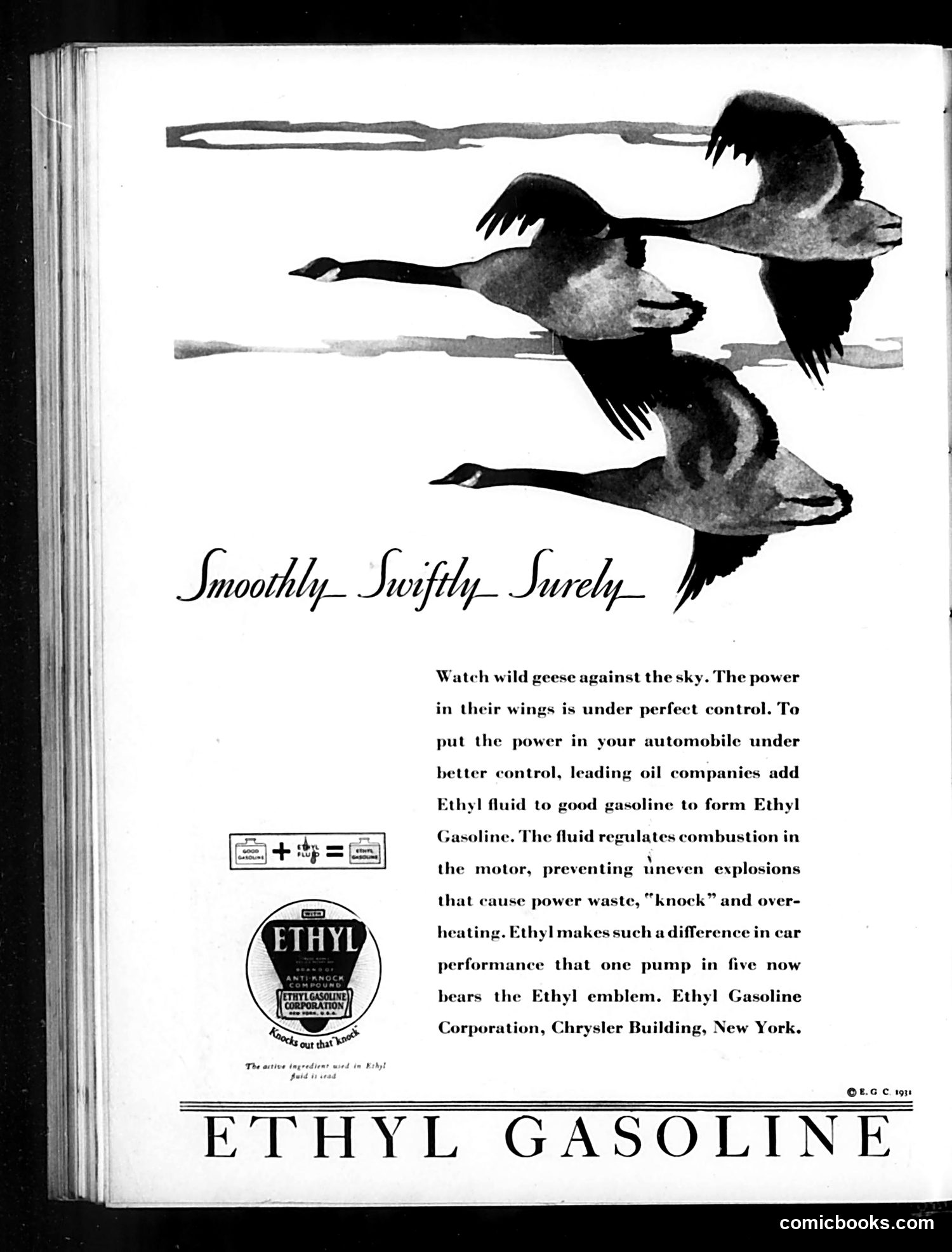
# Ethyl Gasoline Advertisement This page is primarily a **commercial advertisement**, not satire or political commentary. The image shows three wild geese in flight, labeled "Smoothly Swiftly Surely," used as a metaphor for controlled power and motion. The advertisement promotes **Ethyl Gasoline**, a fuel additive containing tetraethyl lead. The copy claims that adding "Ethyl fluid" to gasoline prevents engine "knock" and uneven combustion, thereby improving automobile performance and control—much like the geese's controlled flight. The Ethyl Gasoline Corporation, based in the Chrysler Building in New York, notes that "one pump in five now bears the Ethyl emblem," suggesting market dominance. This represents early-20th-century automotive marketing. The health dangers of leaded gasoline were unknown or undisclosed at this time.
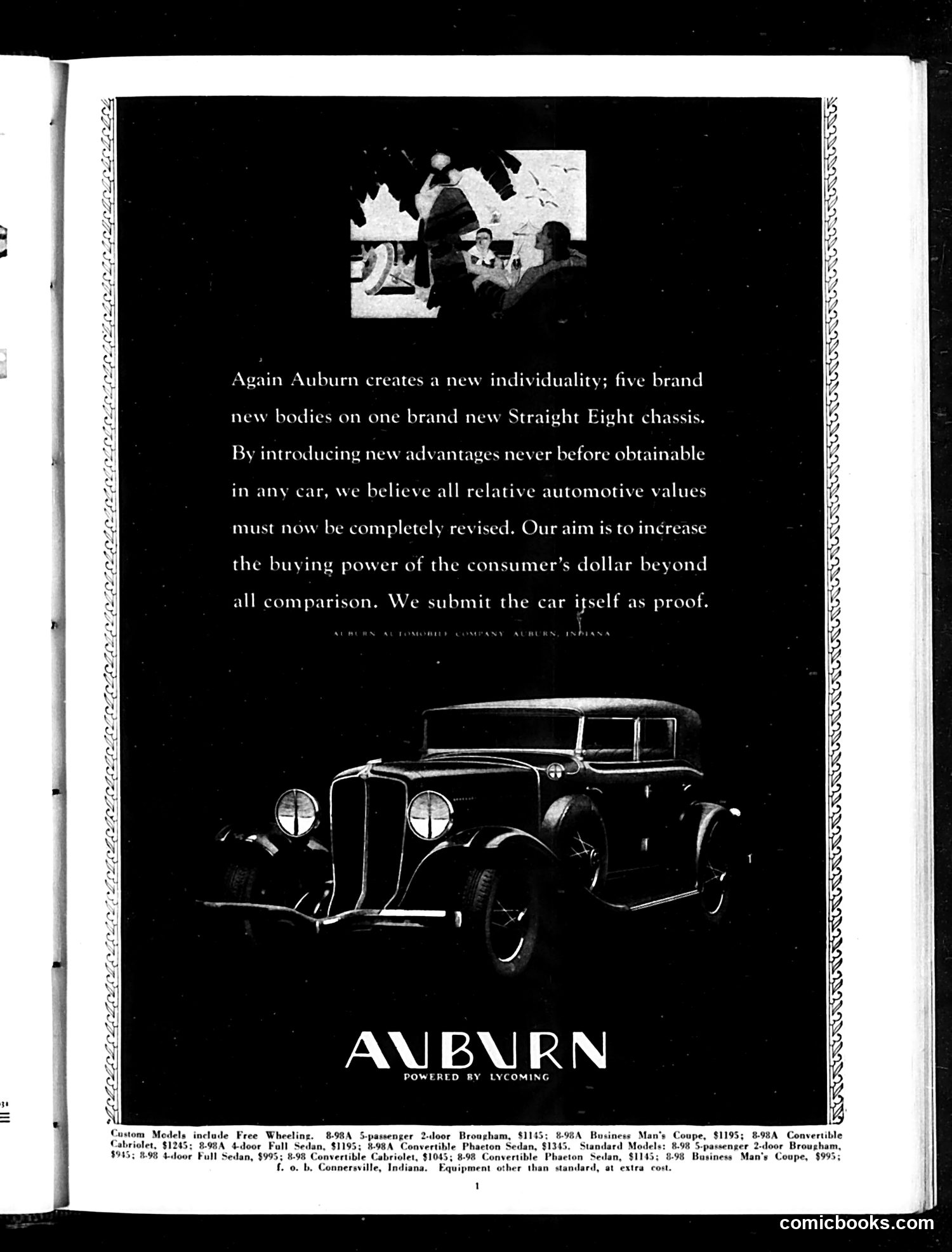
# Analysis This appears to be primarily **an Auburn automobile advertisement** rather than satirical content. The page features marketing copy praising Auburn's "Straight Eight chassis" and five new body styles, claiming they offer "advantages never before obtainable in any car." The small photograph at top shows what appears to be a **sales or promotional scene** with people examining or discussing a vehicle. The large illustration below depicts a stylized Auburn automobile from a low, dramatic angle. **No political cartoon or satire is evident here.** This is a straightforward 1920s-era car advertisement emphasizing value and innovation to consumers. The grandiose language ("increase the buying power of the consumer's dollar beyond all comparison") is typical period advertising rhetoric, not satirical commentary. The page includes detailed model specifications and pricing information at bottom.
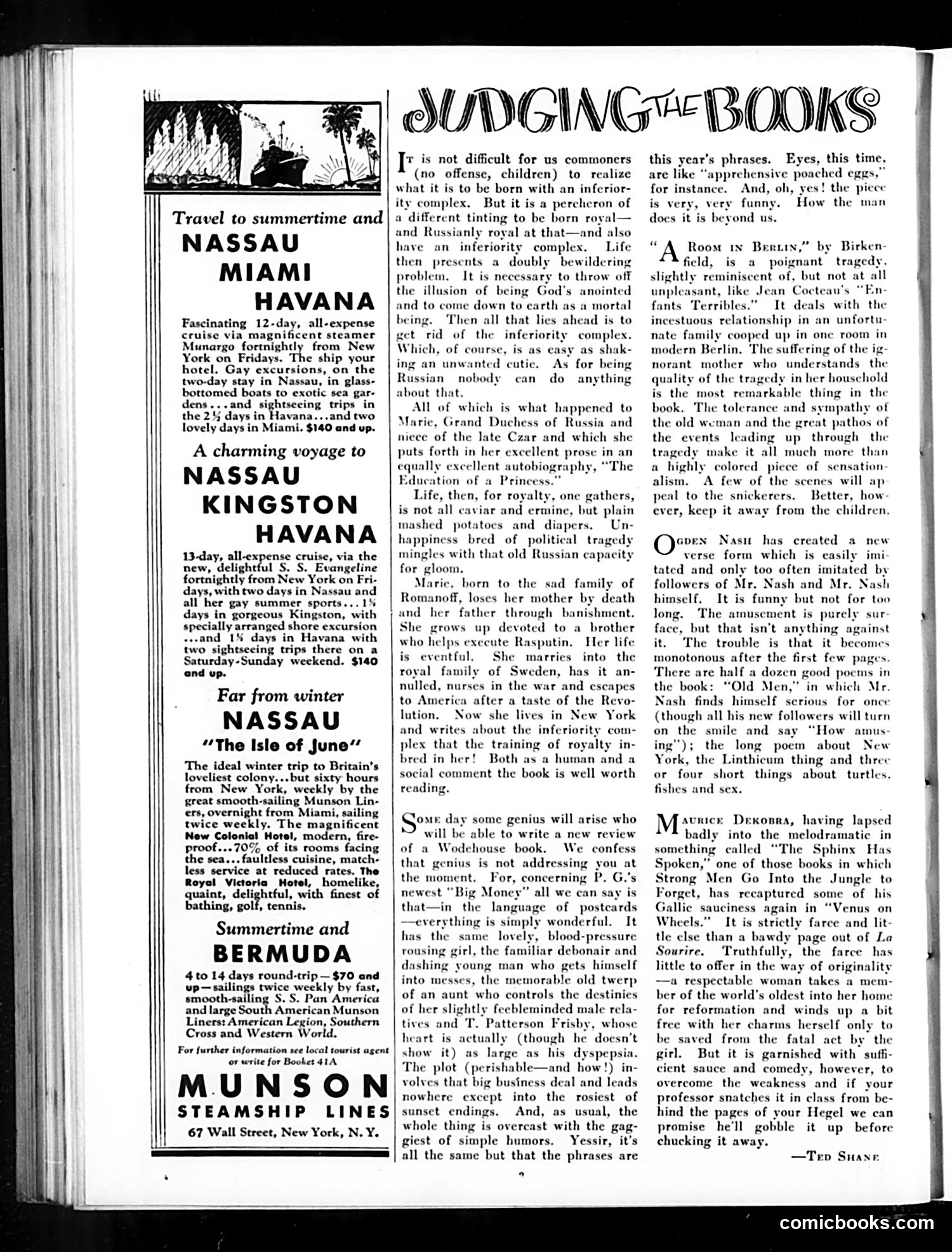
# Analysis of "Judging the Books" Page This page is primarily **book reviews and travel advertising** rather than political satire. The "Judging the Books" column reviews several novels, including works by P.G. Wodehouse and Odgen Nash. The reviews humorously critique plot devices and character types common to popular fiction of the era—such as Wodehouse's romantic entanglements and Nash's lighthearted verse about turtles and sex. The left side features travel advertisements for steamship lines to Nassau, Miami, Havana, Kingston, Bermuda, and other destinations—typical Judge magazine fare mixing editorial content with luxury tourism marketing. **No significant political cartoons or social satire appear on this page.** It represents Judge's format blending literary criticism, humor, and commercial advertisements.
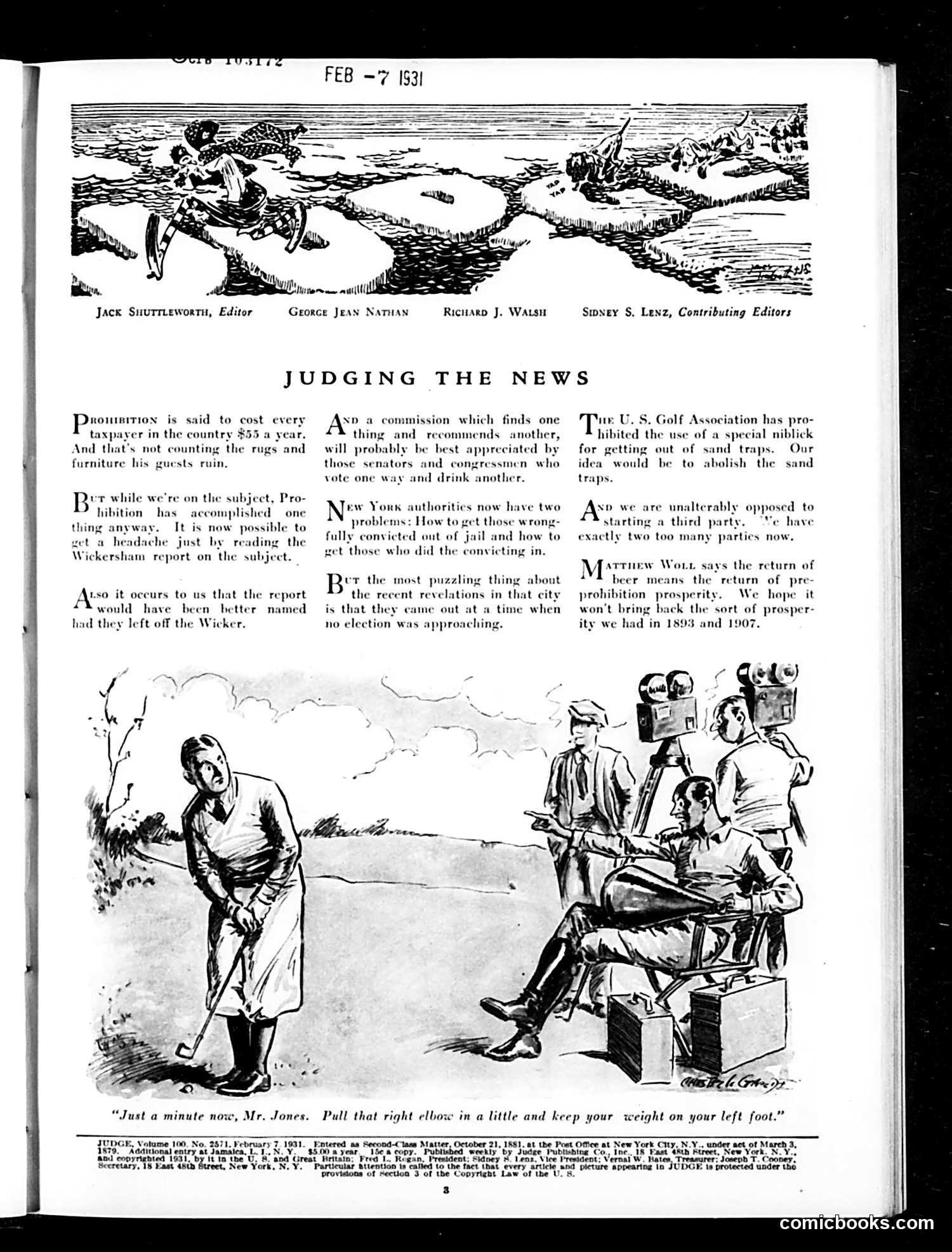
# Judging the News - February 7, 1931 The main cartoon depicts a golf instruction scene with a caption: "Just a minor tone, Mr. Jones. Pull that right elbow in a little and keep your weight on your left foot." The satire appears to reference **Prohibition and its enforcement failures**. The text discusses how Prohibition "has accomplished one thing anyway. It is now possible to get a headache just by reading the Wickersham report on the subject." The Wickersham Commission investigated Prohibition enforcement and revealed widespread corruption and ineffectiveness. The golf metaphor likely satirizes authorities' clumsy attempts to "correct" or enforce Prohibition policy—giving instructions that miss the point entirely, much like critics felt the government's approach was fundamentally flawed. The humor suggests official guidance on the matter was as misguided as poor golf coaching.
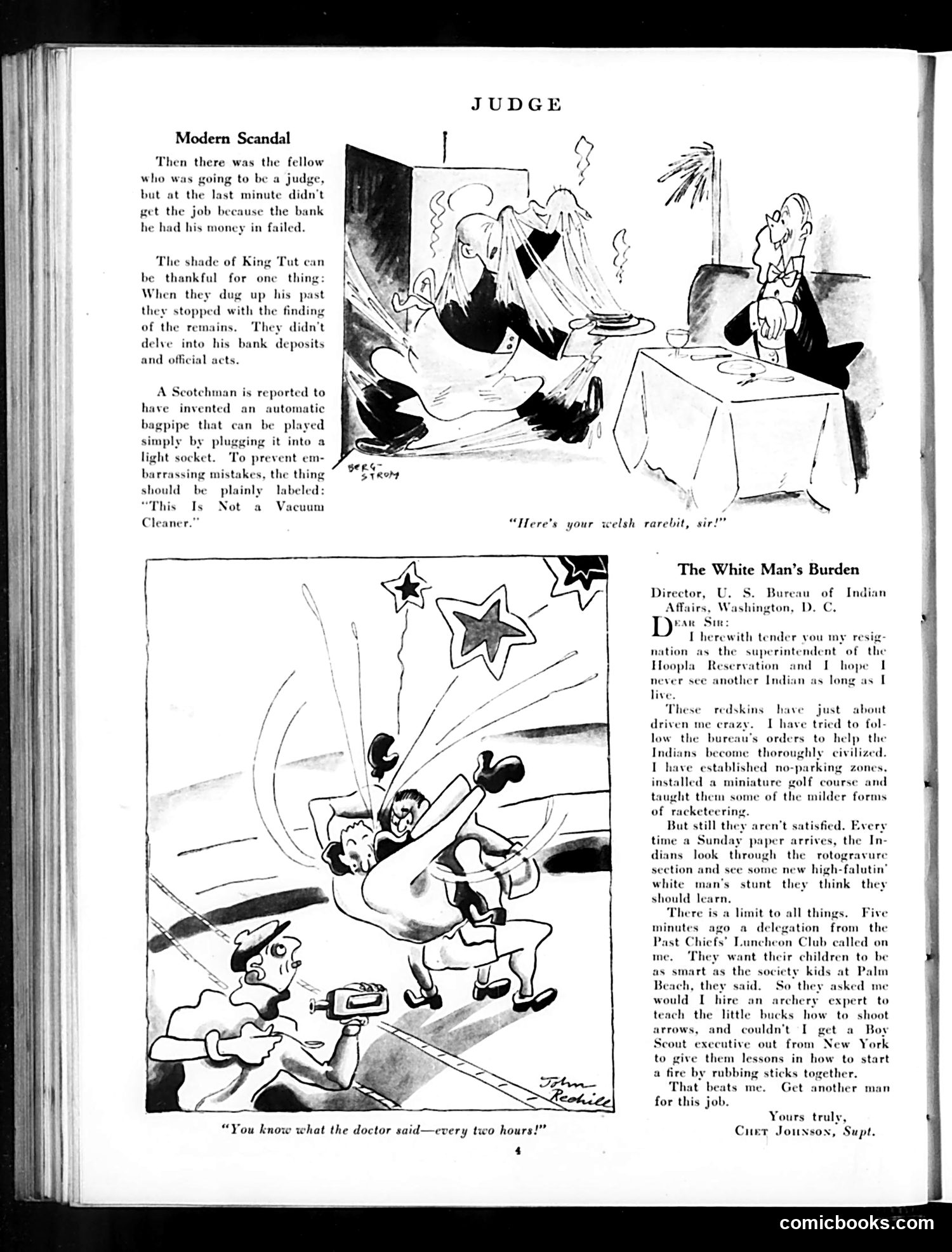
# Analysis of Judge Magazine Page **Top Cartoon ("Judge"):** A humorous "Modern Scandal" about a would-be judge whose bank deposits failed, preventing his appointment. The cartoon mocks judicial corruption by suggesting judges were expected to profit financially from their position. **Bottom Cartoon:** Depicts Native Americans (labeled "redskins") in a chaotic scene with explosions and stars. This accompanies "The White Man's Burden," a letter from Chet Johnson, superintendent of the Hoopla Reservation, complaining about Indigenous peoples' resistance to "civilization" efforts—including no-parking zones, mini golf courses, and archery lessons. The satire criticizes paternalistic colonial attitudes and forced assimilation policies targeting Native Americans, presenting the superintendent's frustrations as absurd and presumptuous.
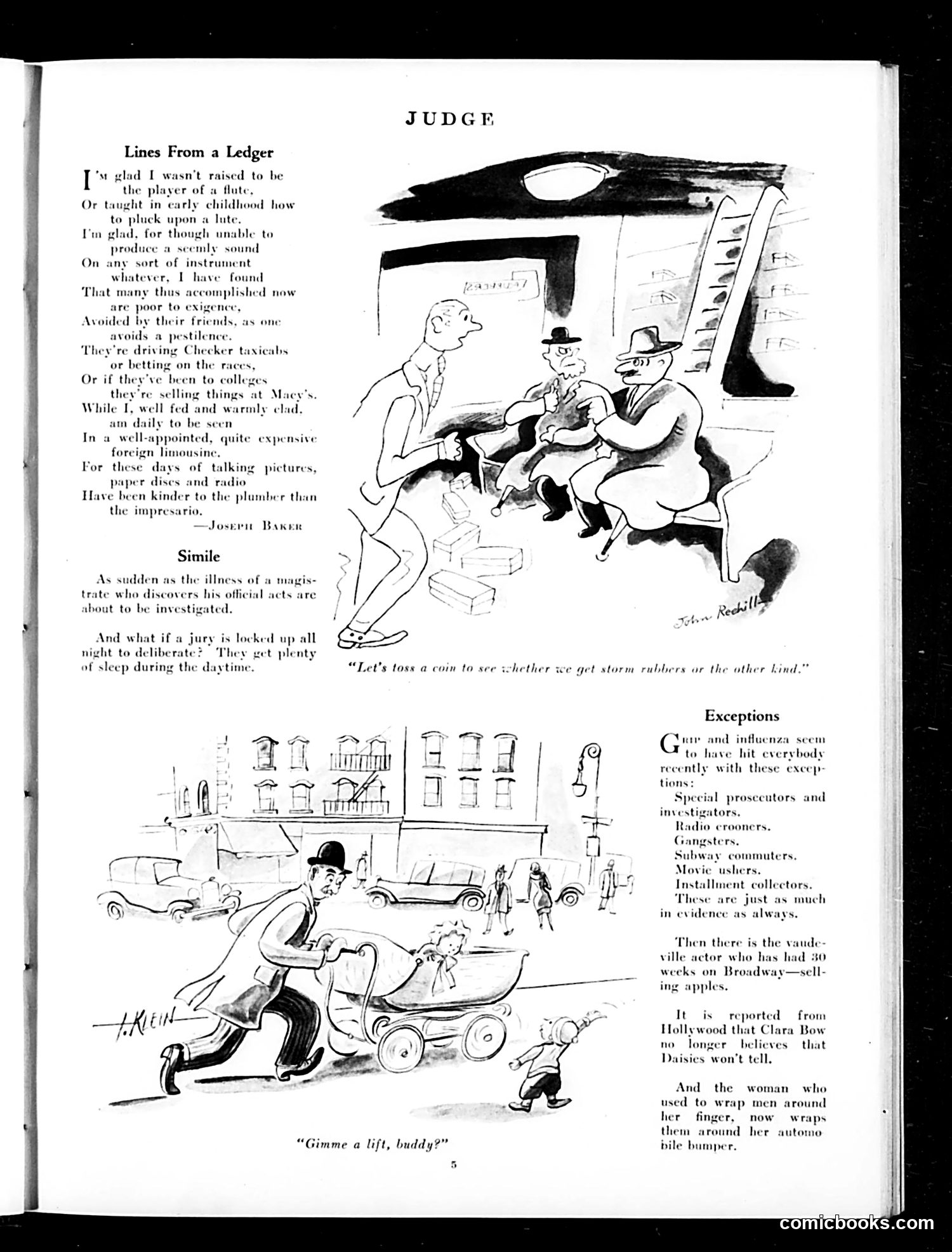
# Analysis of Judge Page This page contains satirical content about judges and legal matters. The top cartoon titled "Judge" depicts three men in hats apparently conducting a transaction—possibly involving bribery or corruption—with a ladder visible in the background. The caption "Let's toss a coin to see whether we get storm rubbers or the other kind" suggests cynicism about judicial decision-making as arbitrary or corrupt. The bottom cartoon "Gimme a lift, buddy?" shows a man pushing a baby carriage on a city street, satirizing the desperation of someone needing assistance—likely referencing economic hardship. The accompanying text sections "Lines From a Ledger," "Simile," and "Exceptions" offer sardonic commentary on contemporary life, judges, and urban society, typical of Judge magazine's satirical approach to American social observation.
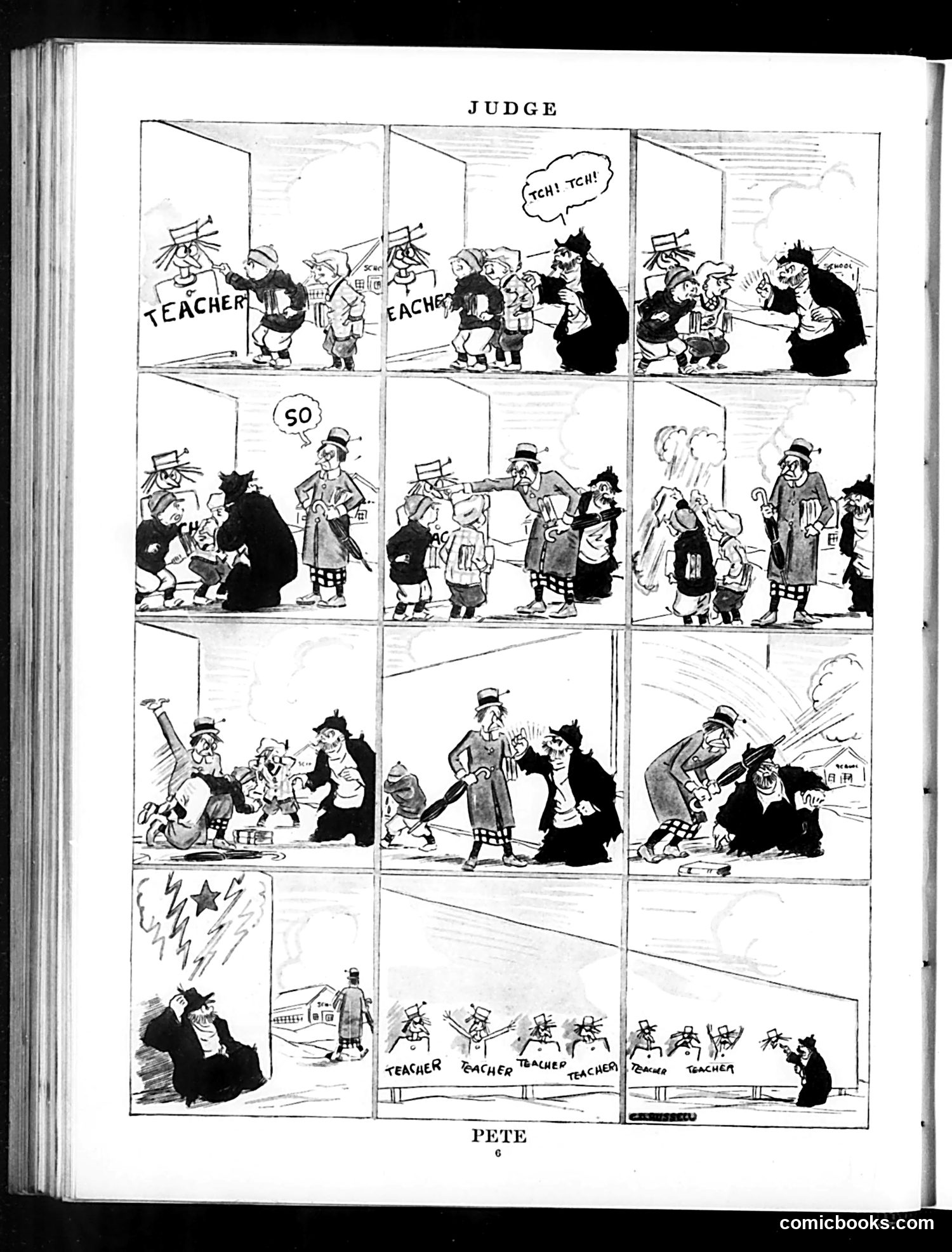
# "Judge" Page Analysis This comic strip titled "Judge" (credited to "Pete") satirizes the profession of teaching. The narrative follows a teacher character encountering increasingly absurd situations with judges and legal authority figures. The strip appears to mock how teachers were treated or judged by society—perhaps commenting on oversight, discipline, or public criticism of educators. The repeated appearance of stern judges and the escalating chaos suggest the cartoon critiques excessive scrutiny or unreasonable demands placed on teachers. The final panels show the teacher surrounded by multiple "teacher" figures, possibly satirizing how the profession was being evaluated or condemned collectively. Without additional historical context about this specific Judge magazine issue, the exact date and particular educational controversies being referenced remain unclear.
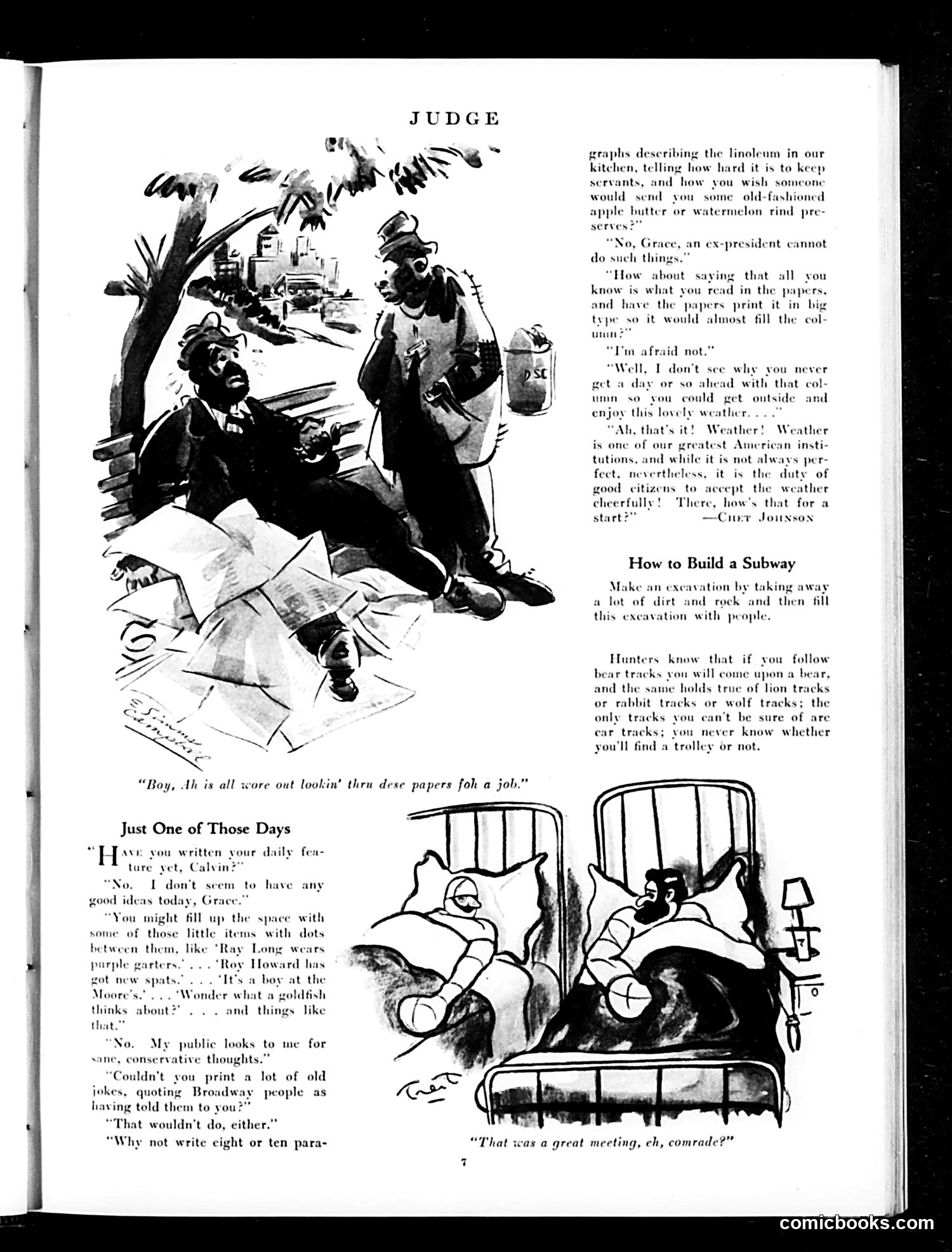
# Judge Magazine Page Analysis This page contains three humorous pieces satirizing early 20th-century American life: **"Just One of Those Days"** depicts a newspaper columnist (Calvin) struggling to fill his daily feature. The satire mocks both the columnist's creative bankruptcy and reader expectations—suggesting newspapers padded space with trivial gossip items, recycled jokes, and vapid content. The exchange suggests the public wanted "conservative thoughts" while editors wanted filler. **"How to Build a Subway"** is a brief joke mocking subway construction's crowding problem—the "solution" is absurdist: dig a hole, fill it with people. **The bear/lion/car tracks joke** plays on logical fallacy: hunters can reliably track animals by their prints, but streetcar tracks lead unpredictably to trolleys (or nothing), mocking the era's unreliable public transportation. The top cartoon shows a man at a desk with papers, likely the same columnist, satirizing journalism's tedious demands and deadlines.
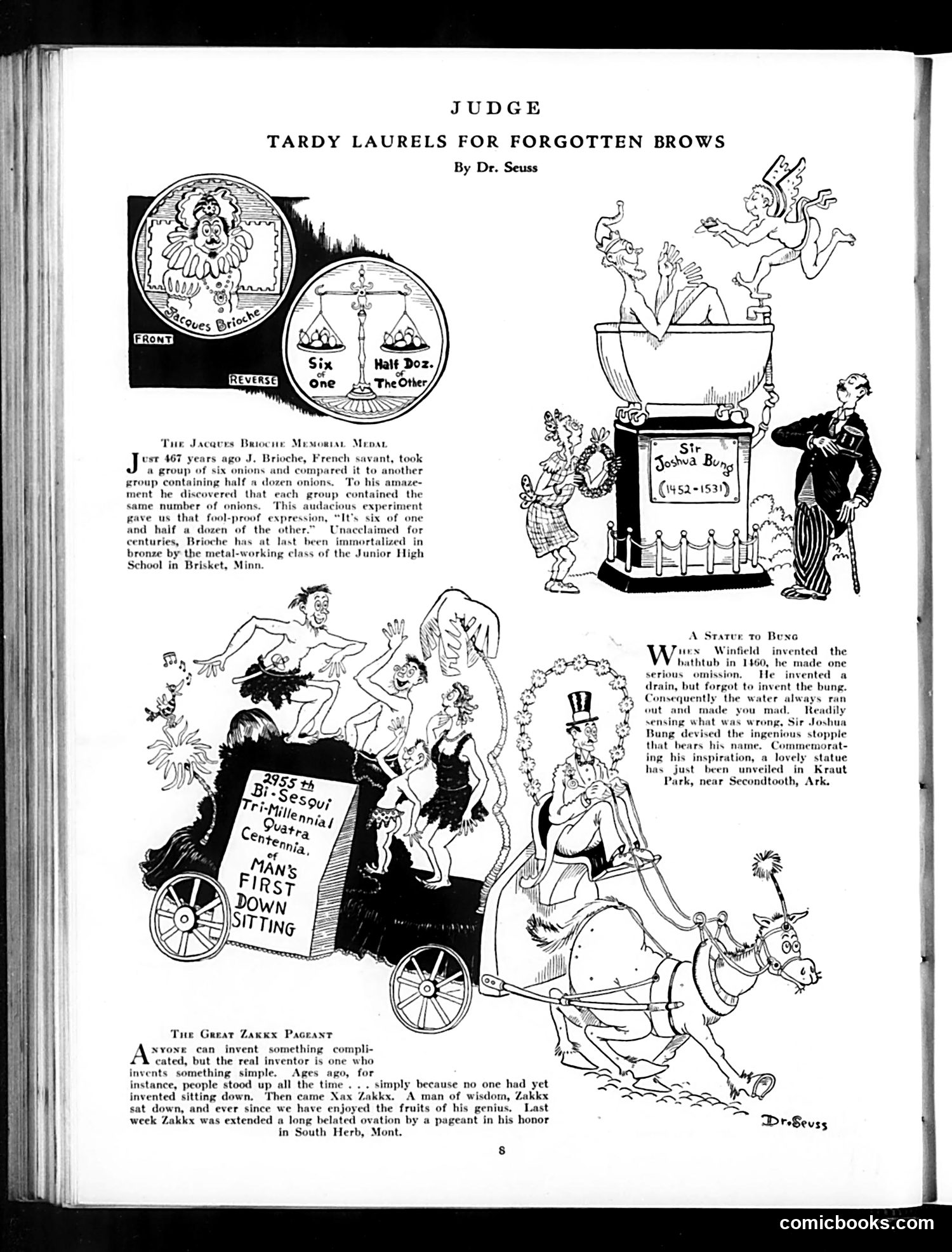
# Analysis This Dr. Seuss piece satirizes the human tendency to overlook or delay recognition of simple but transformative inventions. Three examples illustrate the theme: 1. **Jacques Brioche**: A French savant who discovered that equal groups of onions produce consistent results—a mundane observation that took centuries to be commemorated with a medal. 2. **Winfield's Bathtub**: The inventor created the bathtub drain but forgot the drain plug (bung), an embarrassing oversight now memorialized with a statue despite the obvious flaw. 3. **Nax Zakkx**: The "real inventor" who created sitting down—positioned as the ultimate simple invention, finally receiving recognition through a pageant. The satire mocks how society celebrates trivial or incomplete accomplishments with grand monuments and delayed honors, while ignoring that these "innovations" are either obvious or flawed. Seuss critiques both human forgetfulness and our impulse to mythologize the mundane through formal commemoration.
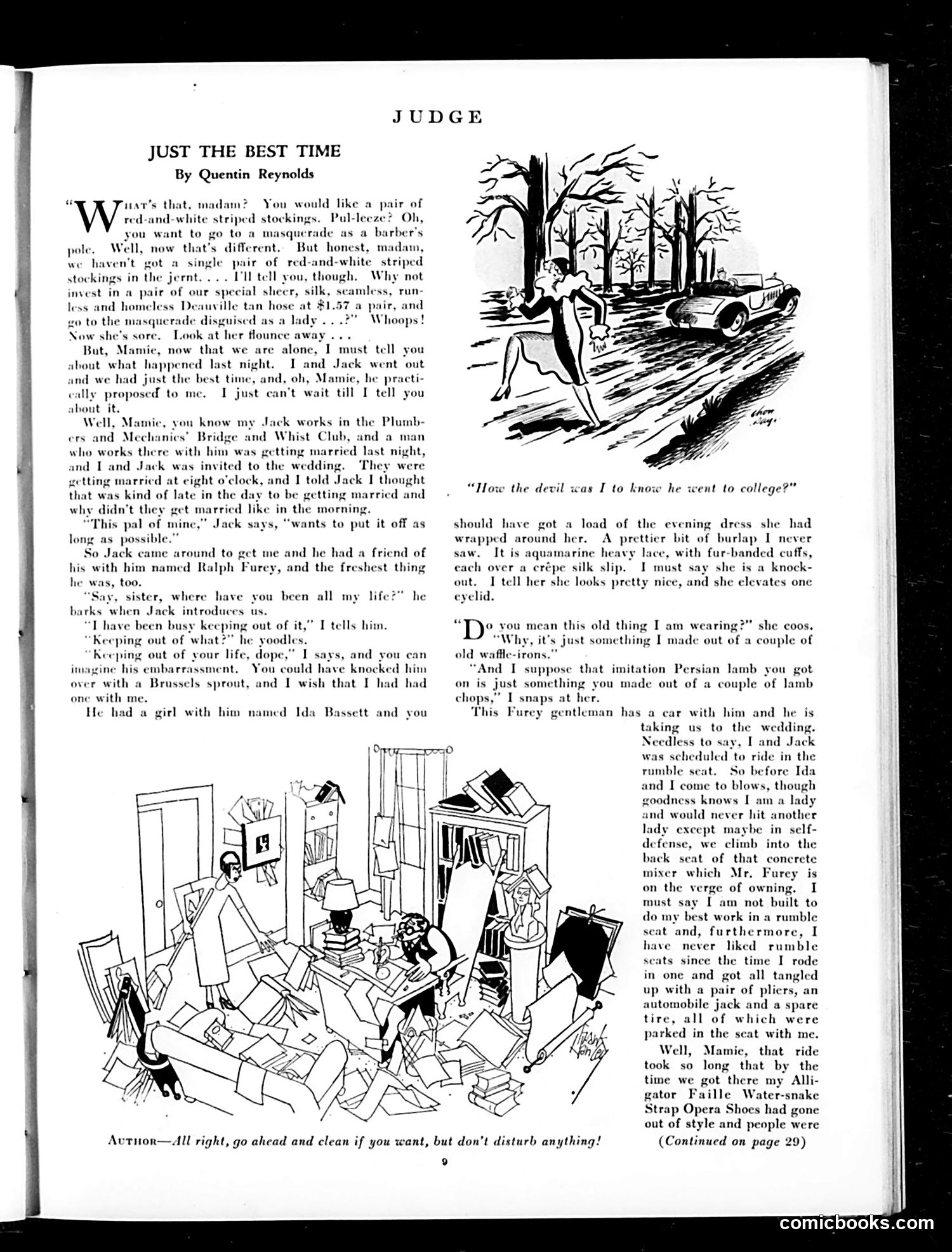
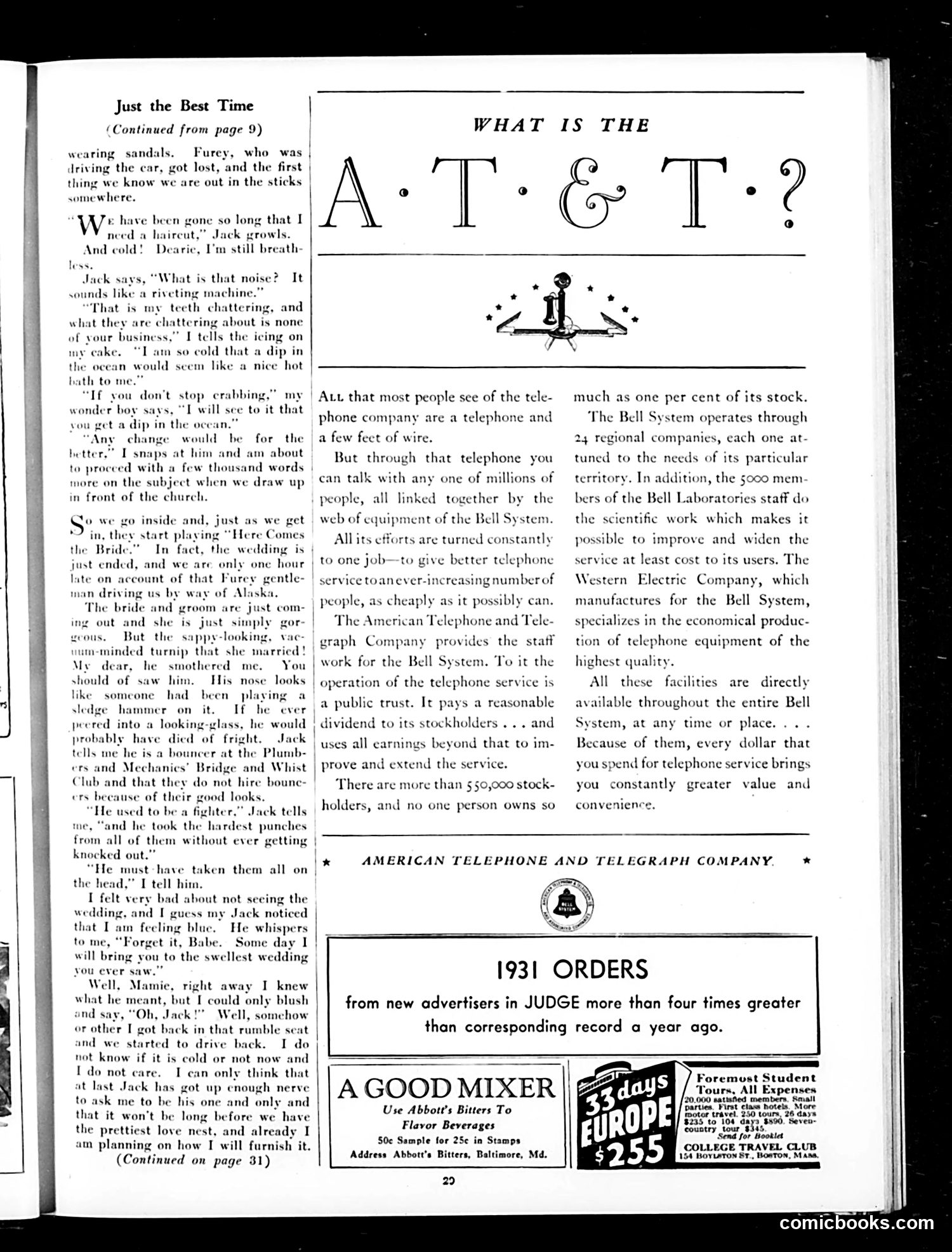
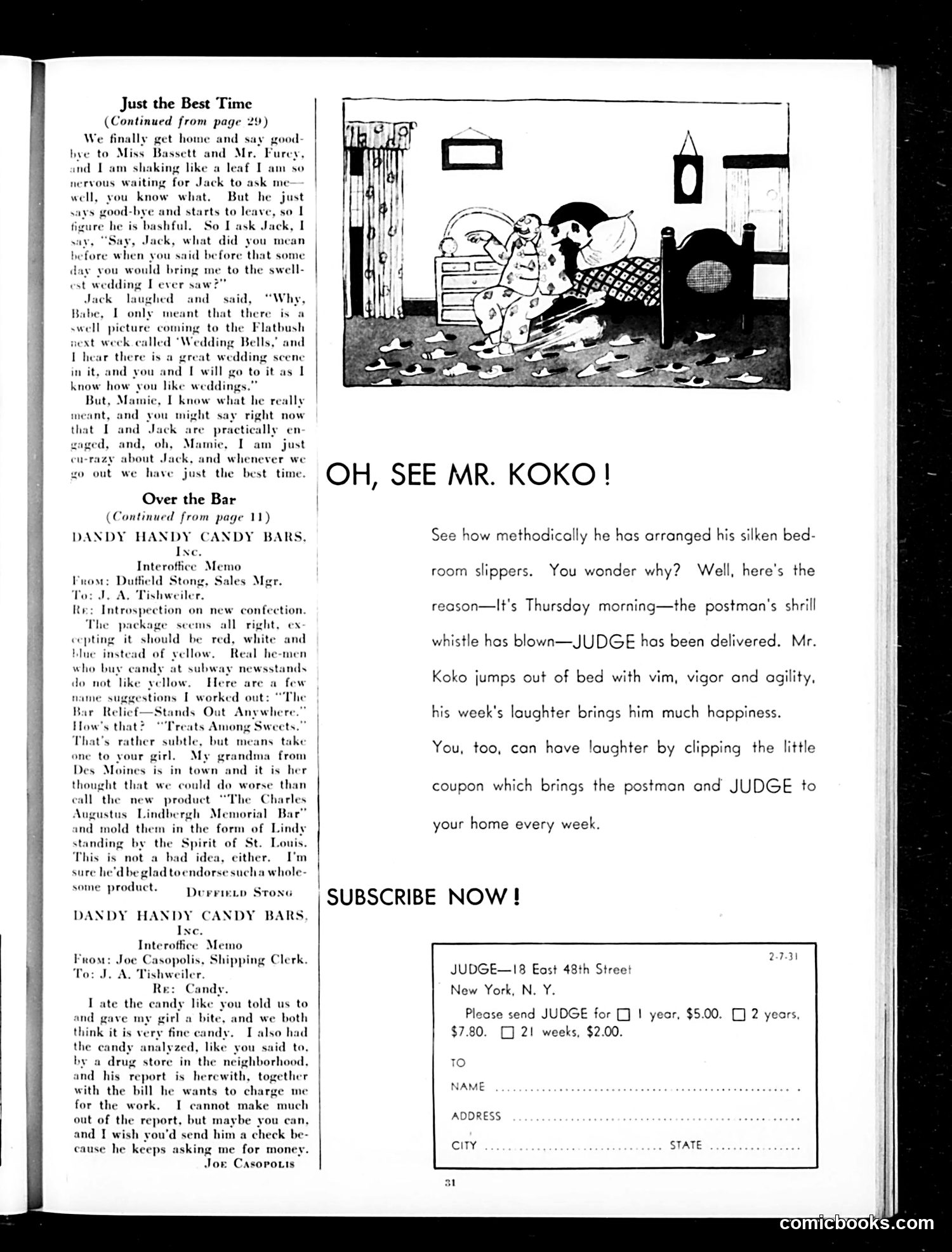
# "Just the Best Time" by Quentin Reynolds This is a humorous short story in Judge magazine, illustrated with period cartoons. The narrative follows a woman (presumably the narrator "Mamie") recounting a wedding night adventure to someone addressed as "madam." The story satirizes working-class social pretensions and awkward dating rituals of the era. Key elements include: a pushy suitor named Ralph Furey who uses tired pickup lines ("where have you been all my life?"), his friend Ida Bassett wearing a cheap, poorly-made evening dress she pretends is fashionable, and an uncomfortable rumble-seat ride in Furey's car to the wedding. The humor derives from the narrator's quick comebacks and sarcasm toward the characters' social climbing and false sophistication. The final illustration shows a cluttered room, while a sidebar cartoon references college attendance as a source of embarrassment. The overall point mocks lower-middle-class aspirations and romantic mishaps.
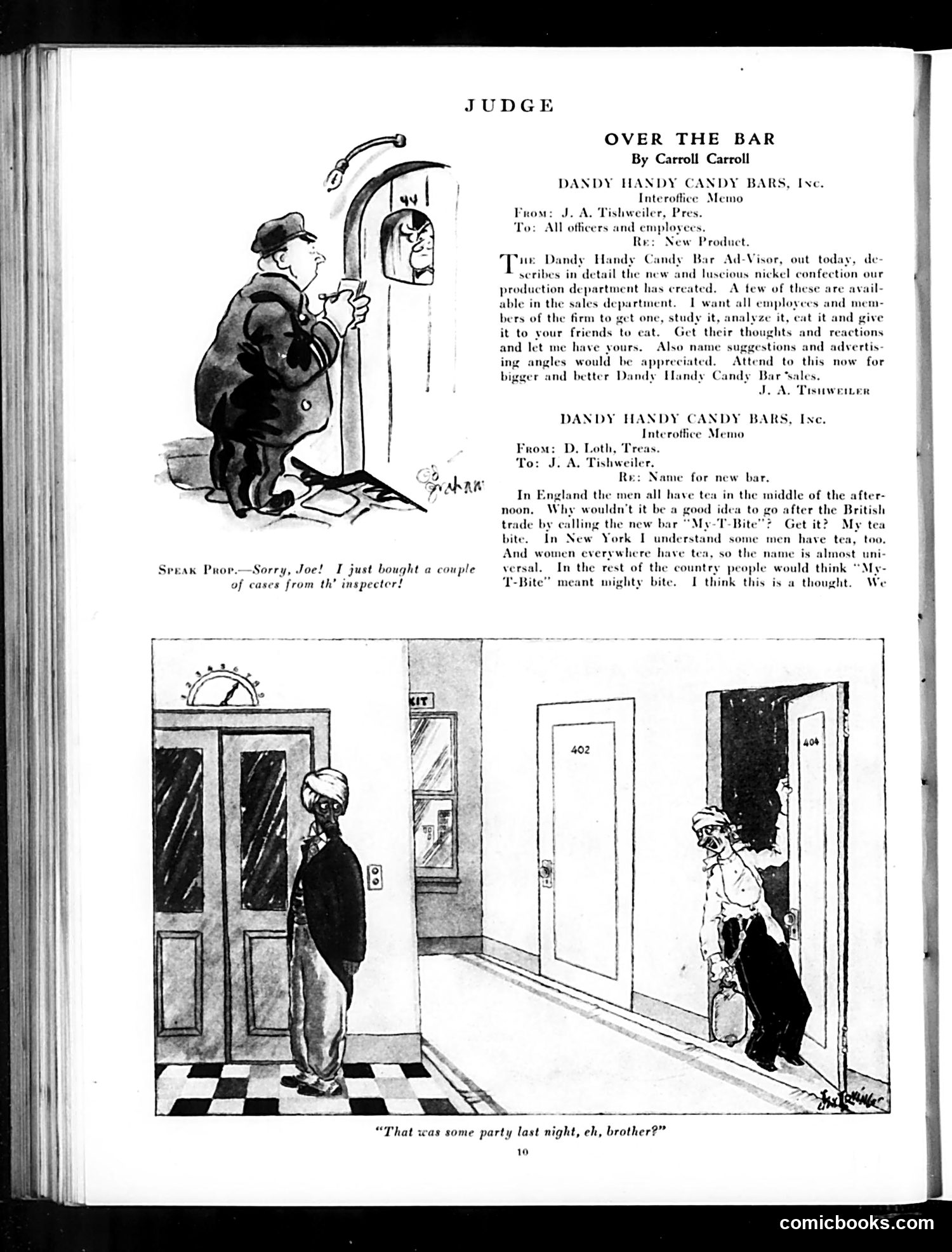
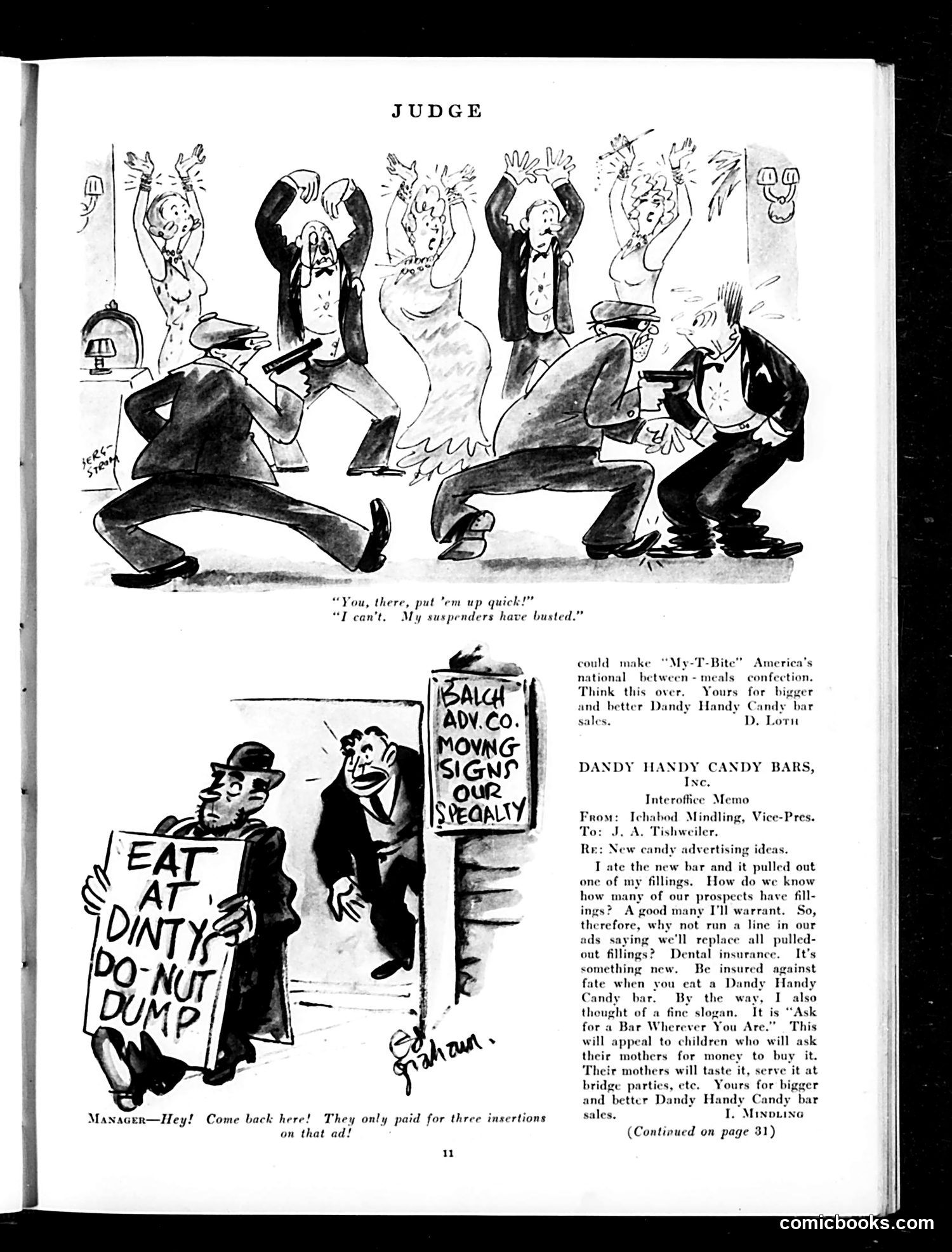
# Explanation for Modern Readers This page contains two satirical pieces about a candy company's new product. **Top cartoon**: A man at a speakeasy or office window says he bought "a couple of cases from th' inspector"—a joke about Prohibition-era corruption. Inspectors supposedly enforced alcohol bans but actually facilitated illegal sales, making them complicit in bootlegging. **Below**: Two interoffice memos debate naming a new candy bar. One executive proposes "My-T-Bite," referencing the British afternoon tea tradition ("tea bite"). The humor lies in the obliviousness: American consumers unfamiliar with British customs would interpret "My-T-Bite" as "mighty bite" instead—an accidental but apt description for candy. **Bottom cartoon**: Two men in a hallway; one asks another about "some party last night"—likely implying illegal drinking, consistent with the Prohibition-era context of the page's humor. The satire targets corporate miscommunication and the absurdities of Prohibition enforcement.