A complete issue · 36 pages · 1930
Judge — August 23, 1930
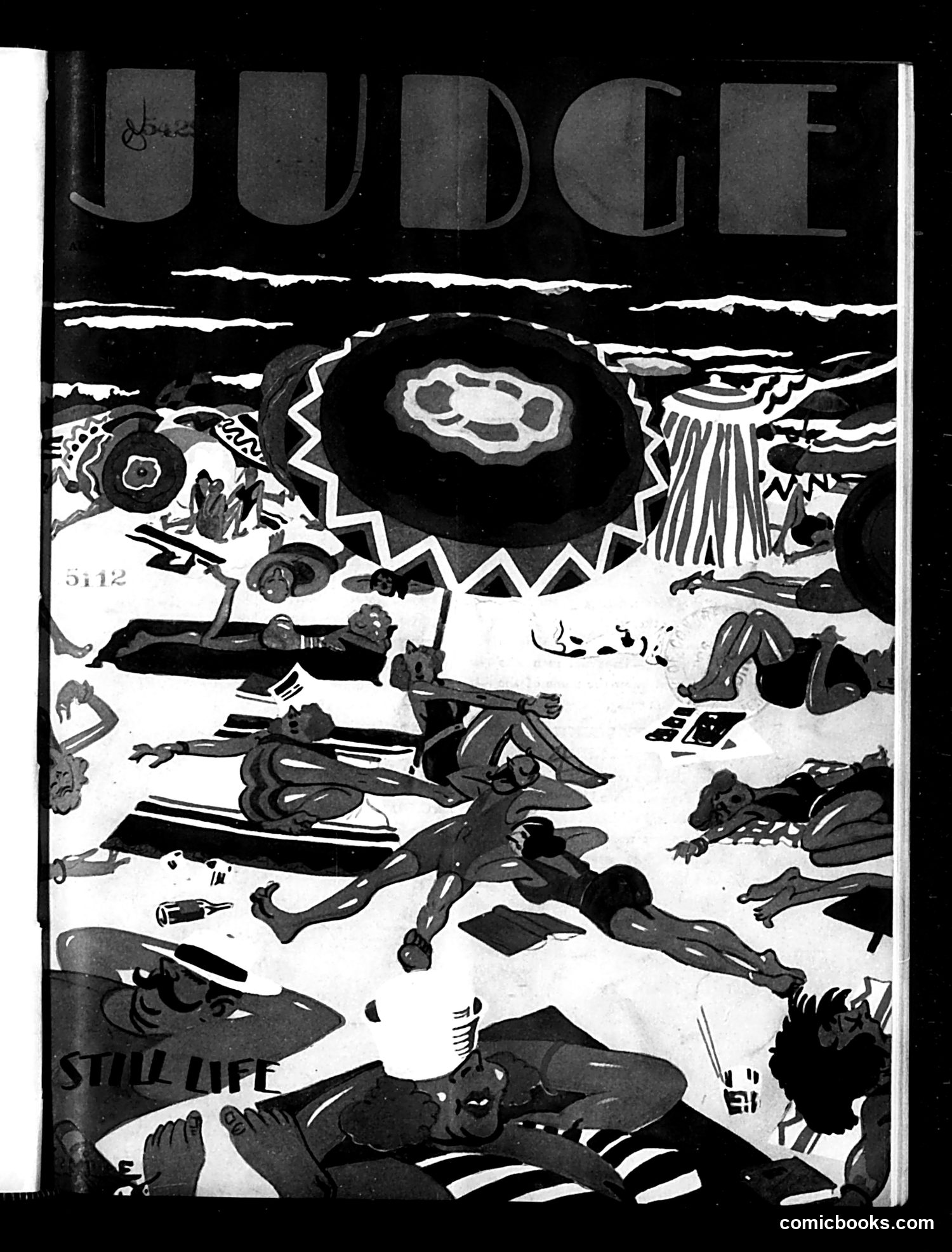
# Judge Magazine Page Analysis This page from *Judge* magazine presents a surrealist political cartoon titled "JUDGE" with the subtitle "STILL LIFE." The image depicts a chaotic scene of human figures scattered across a barren landscape beneath a large crater or explosion in the sky, with debris and destruction surrounding them. The cartoon appears to be anti-war satire, likely from the World War I or interwar period. The "still life" title is darkly ironic—a traditional art term applied to a scene of apparent devastation and death. The scattered bodies, weapons, and wreckage suggest the horrific human cost of modern warfare. The crater overhead emphasizes the scale of destruction from aerial bombardment. Without clearer OCR text identifying specific political figures or dating, the precise historical reference remains unclear, but the work critiques warfare's devastating consequences.

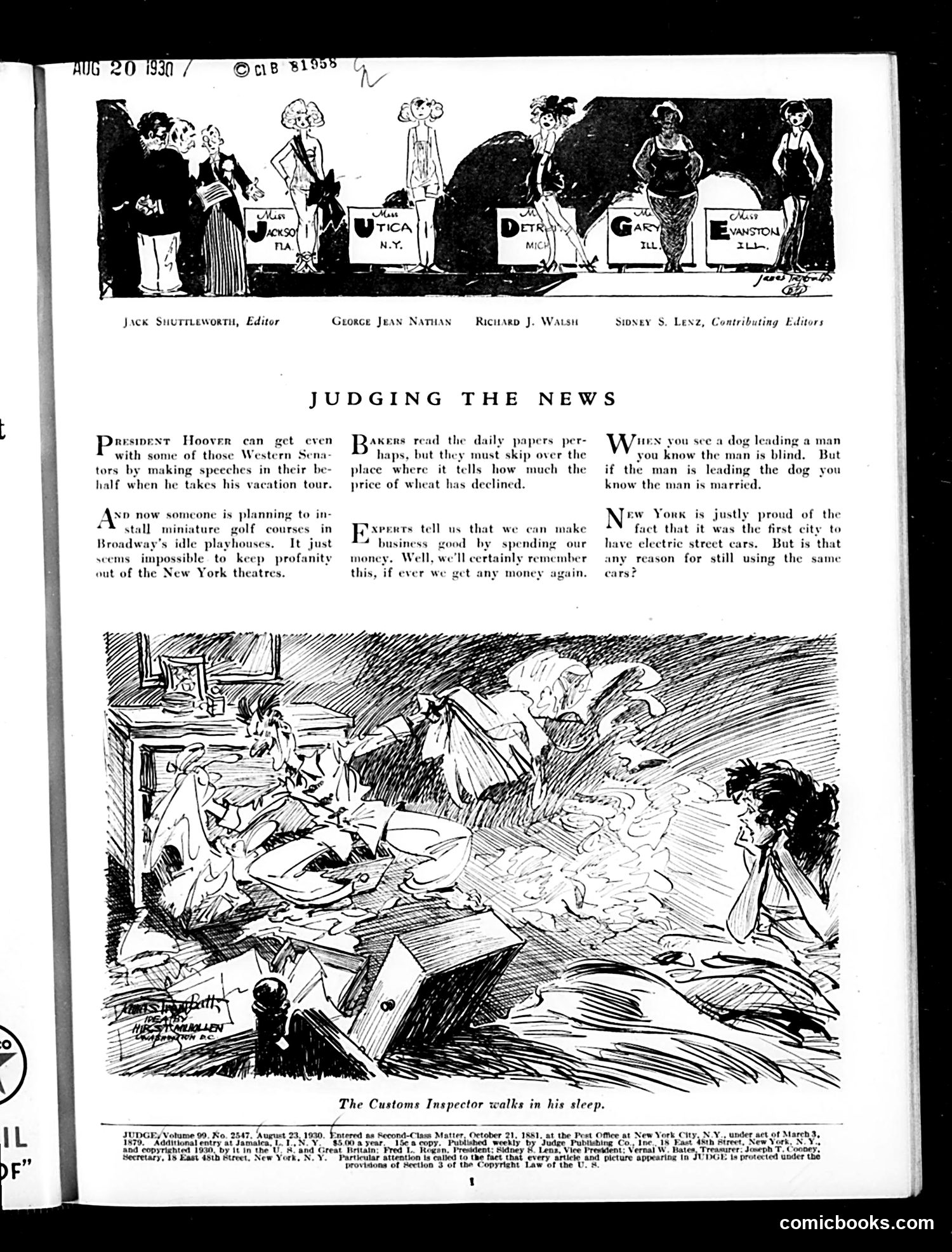
# "Judging the News" - August 28, 1930 This satirical column comments on contemporary events through brief quips. The top cartoon shows various city representatives (identifiable by their sashes), likely judges or officials, rendered as caricatured women in a beauty pageant format—satirizing the notion of rating cities by their merits. The text below jokes about President Hoover's vacation speeches, bakery economics, miniature golf profitability, and New York's electric streetcars. The final illustration depicts a customs inspector sleeping while chaos erupts around him—likely satirizing border security negligence or smuggling concerns during Prohibition (1920-1933), when illegal goods trafficking was rampant. The overall tone mocks government competence and contemporary economic anxieties during the Depression era.
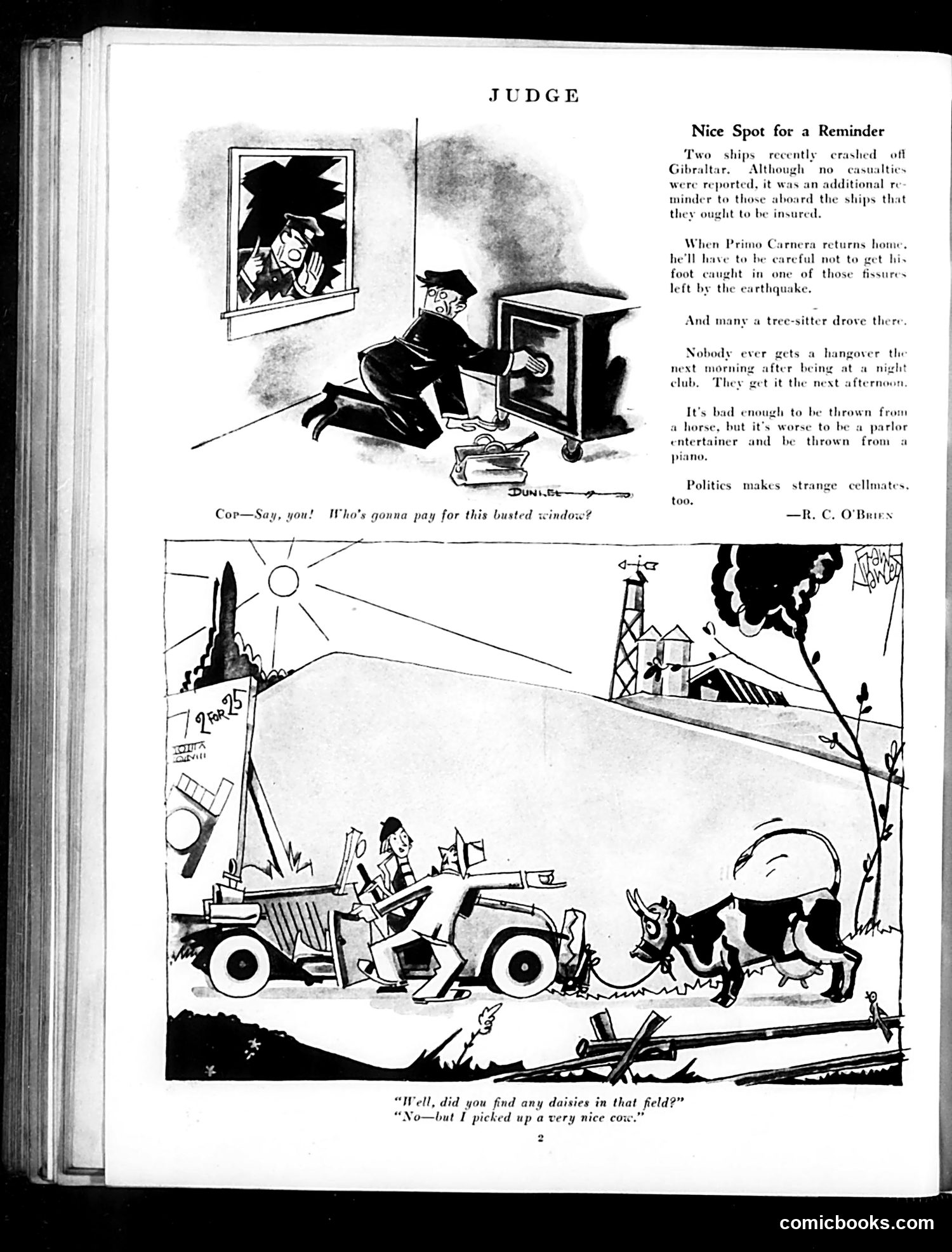
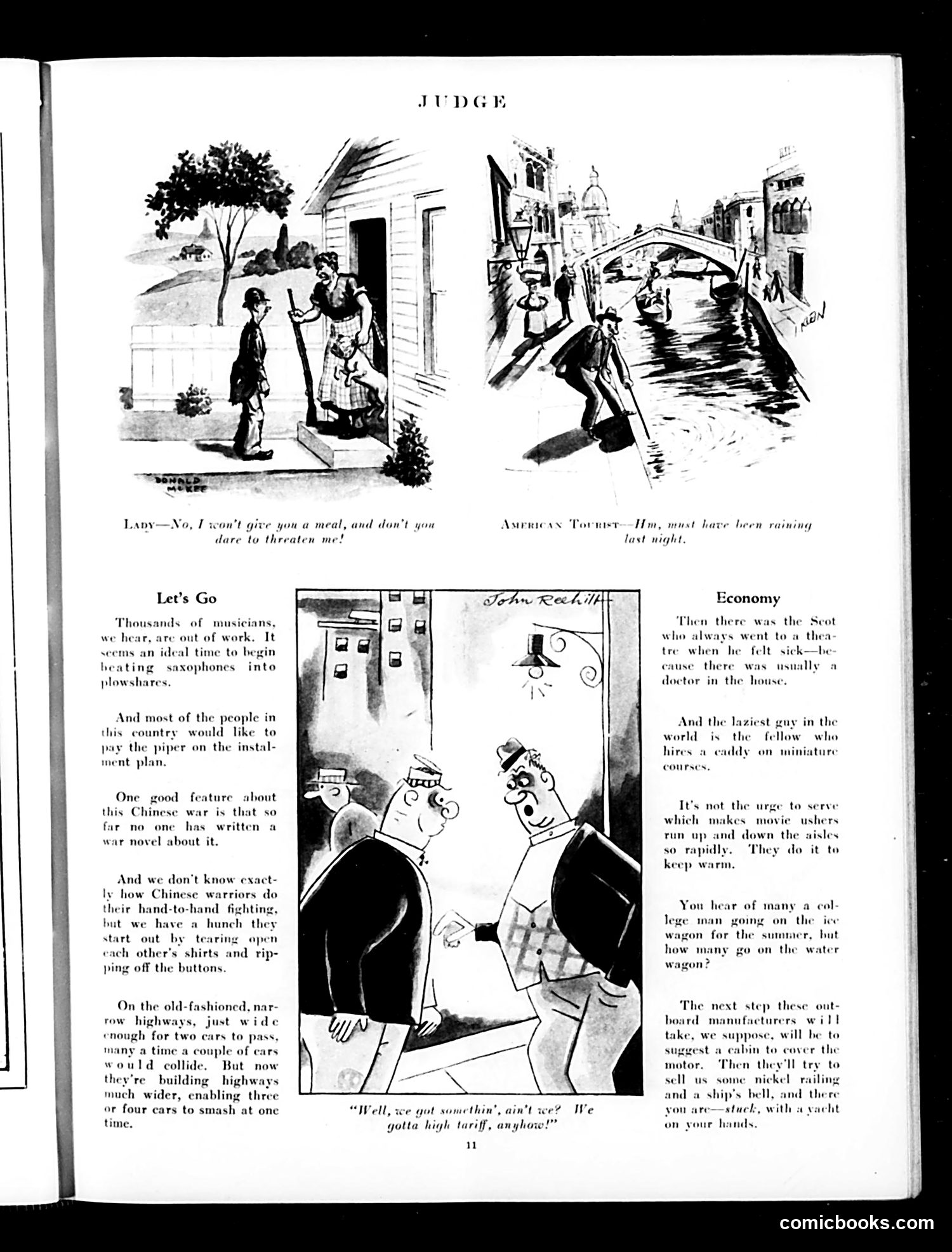
# Judge Page Analysis The top cartoon shows a man confronting a cop about a broken window, with the caption "Cop—Say, son! Who's gonna pay for this busted window?" The accompanying text "Nice Spot for a Reminder" references two ships that recently crashed near Gibraltar, suggesting maritime insurance should cover damages—a topical joke about responsibility and accountability. The bottom cartoon depicts a rural scene where a man with a car and cow discusses finding "daisies" in a field, saying "No—but I picked up a very nice cow." This appears to be a rural/urban culture joke, possibly poking fun at miscommunication or misunderstanding between different social classes or regions, a common Judge magazine theme. The exact historical reference remains unclear without additional context.
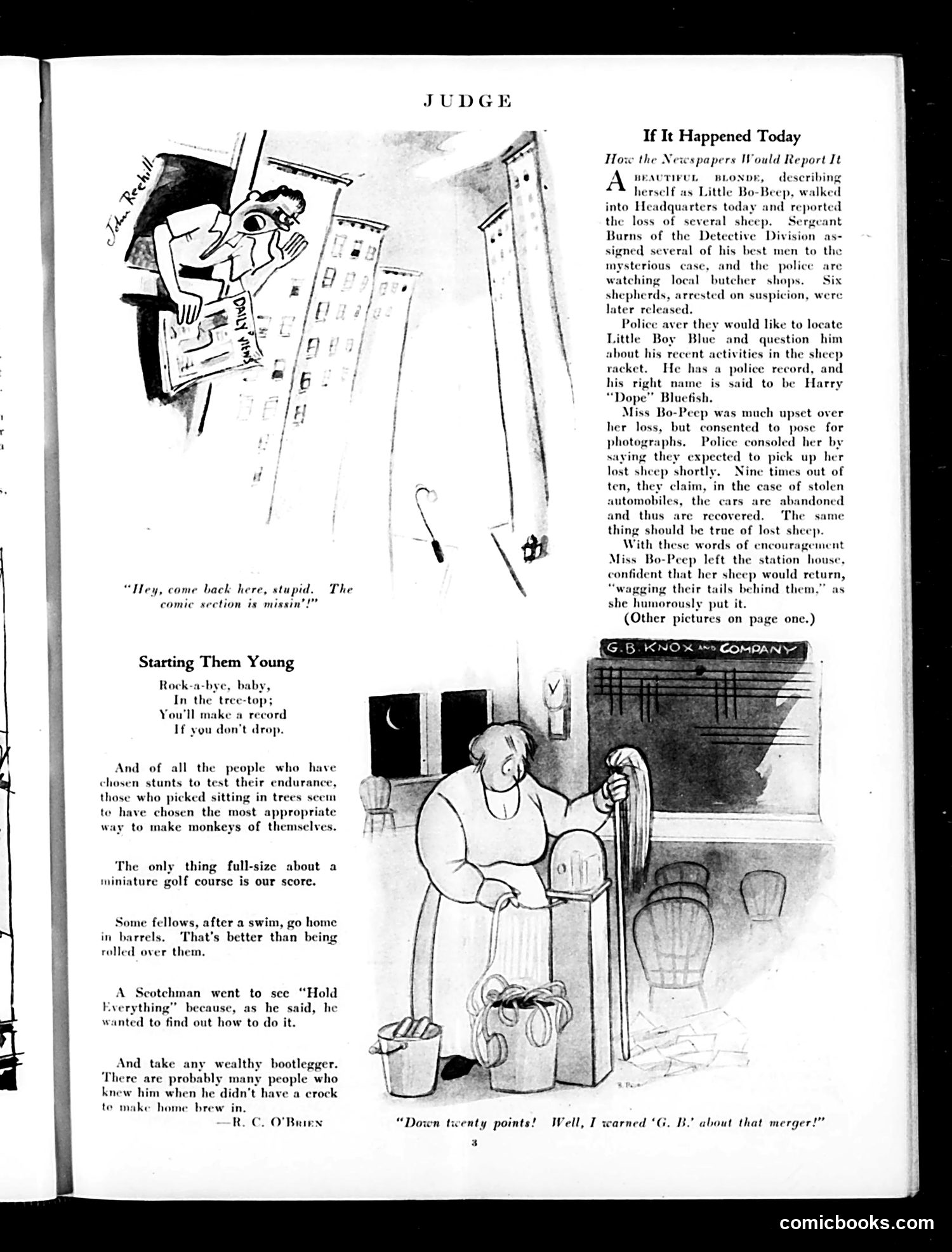
# Page Analysis: Judge Magazine **Top Cartoon ("If It Happened Today"):** This appears to be a satirical crime story about a "beautiful blonde" named Little Bo-Peep who reports stolen sheep to police. The humor derives from treating the nursery rhyme character as a real crime victim—detectives investigate, suspect a criminal named "Dope" Bluefish, and assure her the stolen sheep will be recovered within ten days "as in the case of stolen automobiles." The satire mocks contemporary police incompetence and the prevalence of auto theft in the era. **Bottom Section:** Contains unrelated humorous verse ("Starting Them Young") and a cartoon showing a woman holding a large fish, apparently discussing a "G.B. Knox & Company" business, with a caption referencing "twenty points" and a "merger." The specific business reference is unclear without additional context.
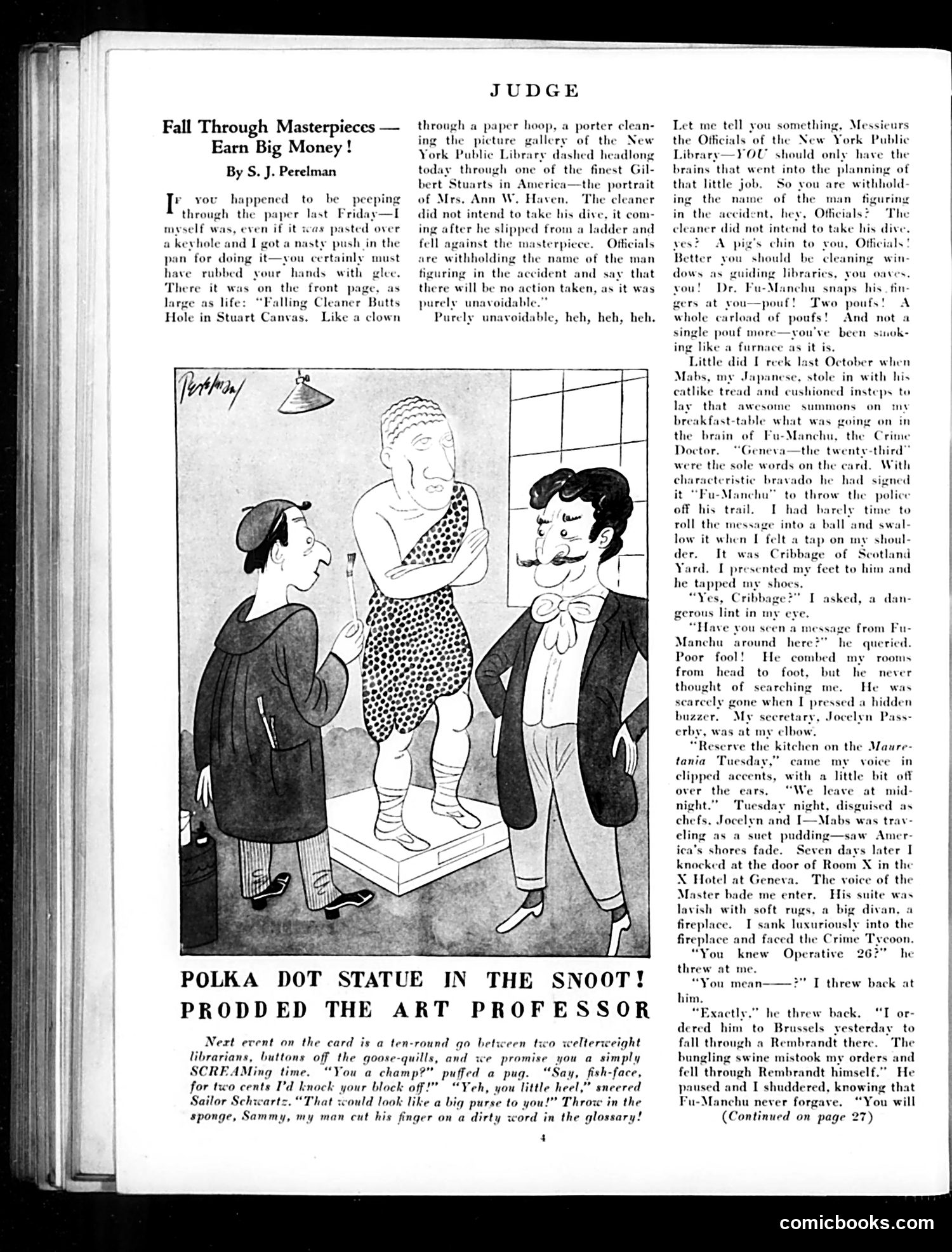
# Judge Magazine Page Analysis This page contains a short story by S.J. Perelman titled "Fall Through Masterpieces—Earn Big Money!" paired with a cartoon labeled "POLKA DOT STATUE IN THE SNOOT! PRODDED THE ART PROFESSOR." The cartoon depicts three figures in what appears to be an art gallery or museum setting. A woman on the left gestures toward a large statue of a rotund, polka-dotted figure in the center, while a man on the right responds. The satire mocks pretentious art criticism and museum culture, likely poking fun at modern art's absurdity—suggesting that critics will praise even ridiculous sculptures if presented authoritatively. The story's title reinforces this theme: people can profit by passing off nonsense as fine art if they present it convincingly to gullible audiences and cultural gatekeepers.
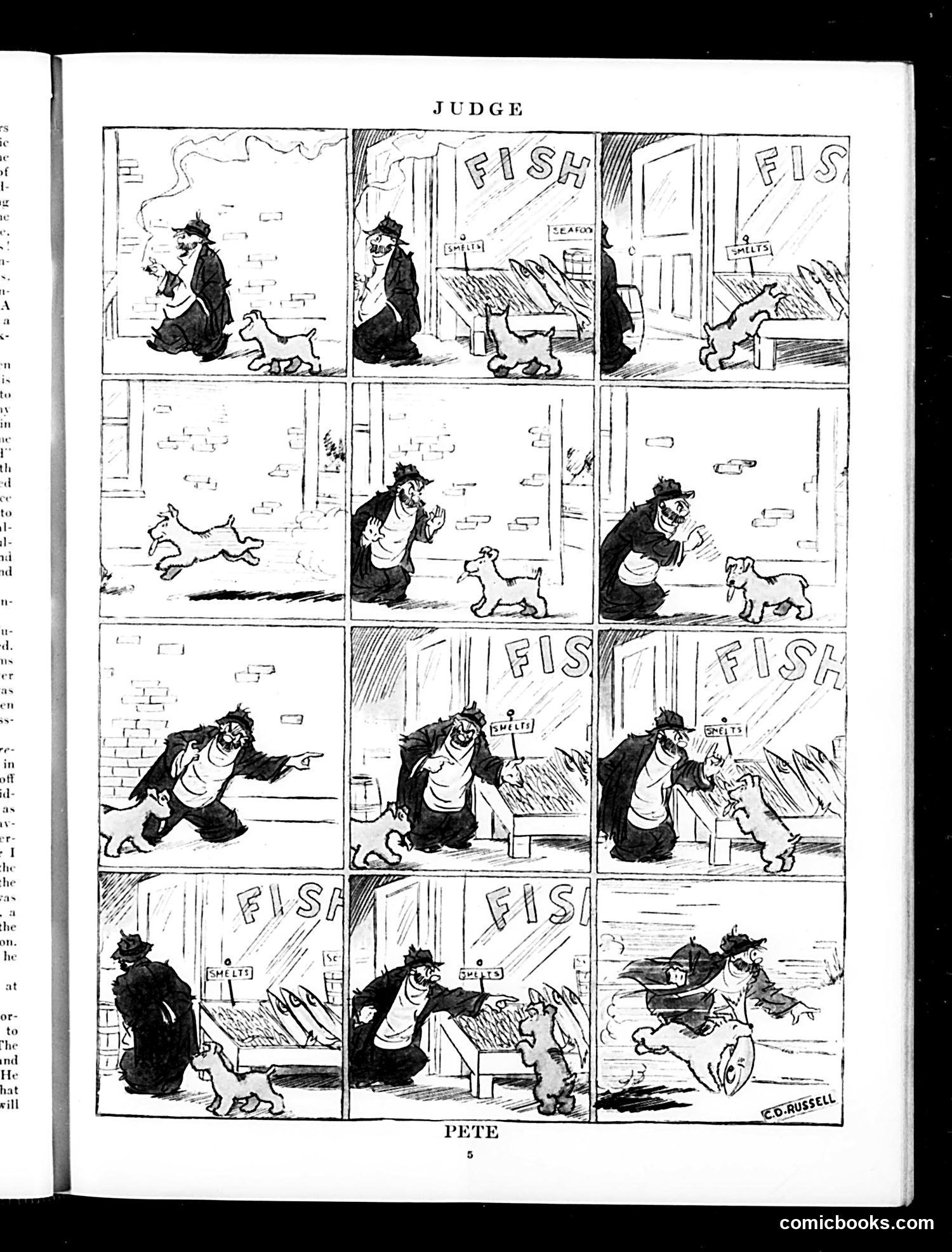
# "Judge" Page Analysis: "Fish" / "Pete" This comic strip by C.D. Russell depicts a man in formal dress repeatedly interacting with a small dog in what appears to be a fish market or shop (indicated by "FISH" signage). The narrative shows the man chasing, cornering, and struggling with the dog across multiple panels. The dog appears to be stealing or interfering with fish or merchandise. The final panel shows the man tumbling or being thrown, suggesting the dog gets the upper hand. This appears to be a slapstick humor strip without obvious political commentary—rather, it's situational comedy about a gentleman's futile attempts to catch a mischievous dog in a commercial setting. The title "Pete" likely refers to the dog's name. The humor derives from physical comedy and role reversal (the small dog defeating the well-dressed man).
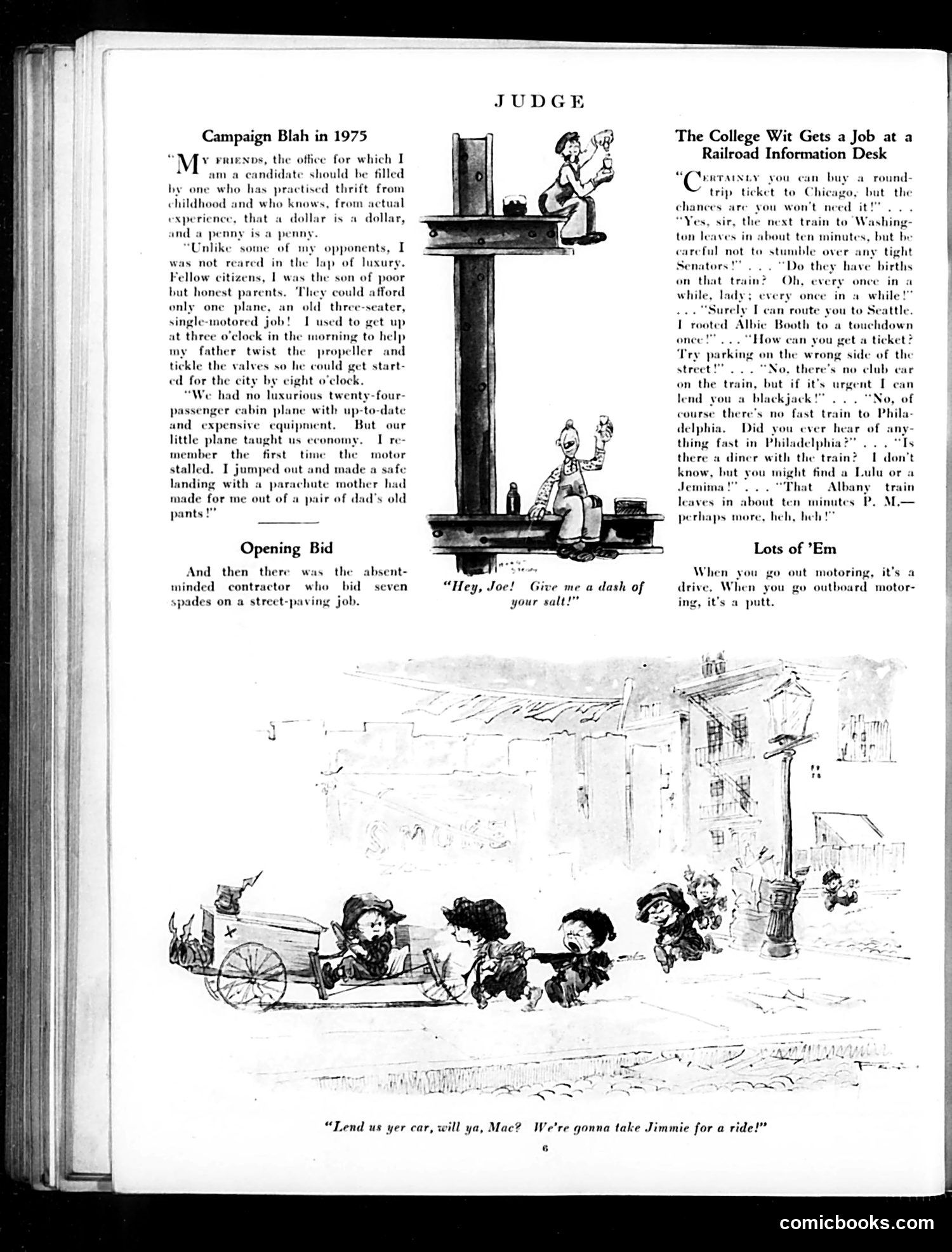
# Analysis of Judge Magazine Page This page contains three distinct humor pieces: **"Campaign Blah in 1975"** mocks political candidates' claims about humble origins. The satire targets false narratives of poverty—the speaker ironically lists luxuries (plane, cabin) while claiming to be "the other fellow" raised without privilege. **"Opening Bid"** jokes about a contractor bidding absurdly low (seven spades) on a street-paving job, suggesting incompetence or fraud in construction bidding. **"The College Wit Gets a Job at a Railroad Information Booth"** satirizes an overeducated, pedantic young man giving absurdly complicated answers to simple passenger questions about trains—mocking both pretentious college graduates and their unsuitability for practical work. **"Lots of 'Em"** is a brief gag contrasting motorist terminology. The bottom cartoon depicts children with a makeshift cart, unrelated to the text above.
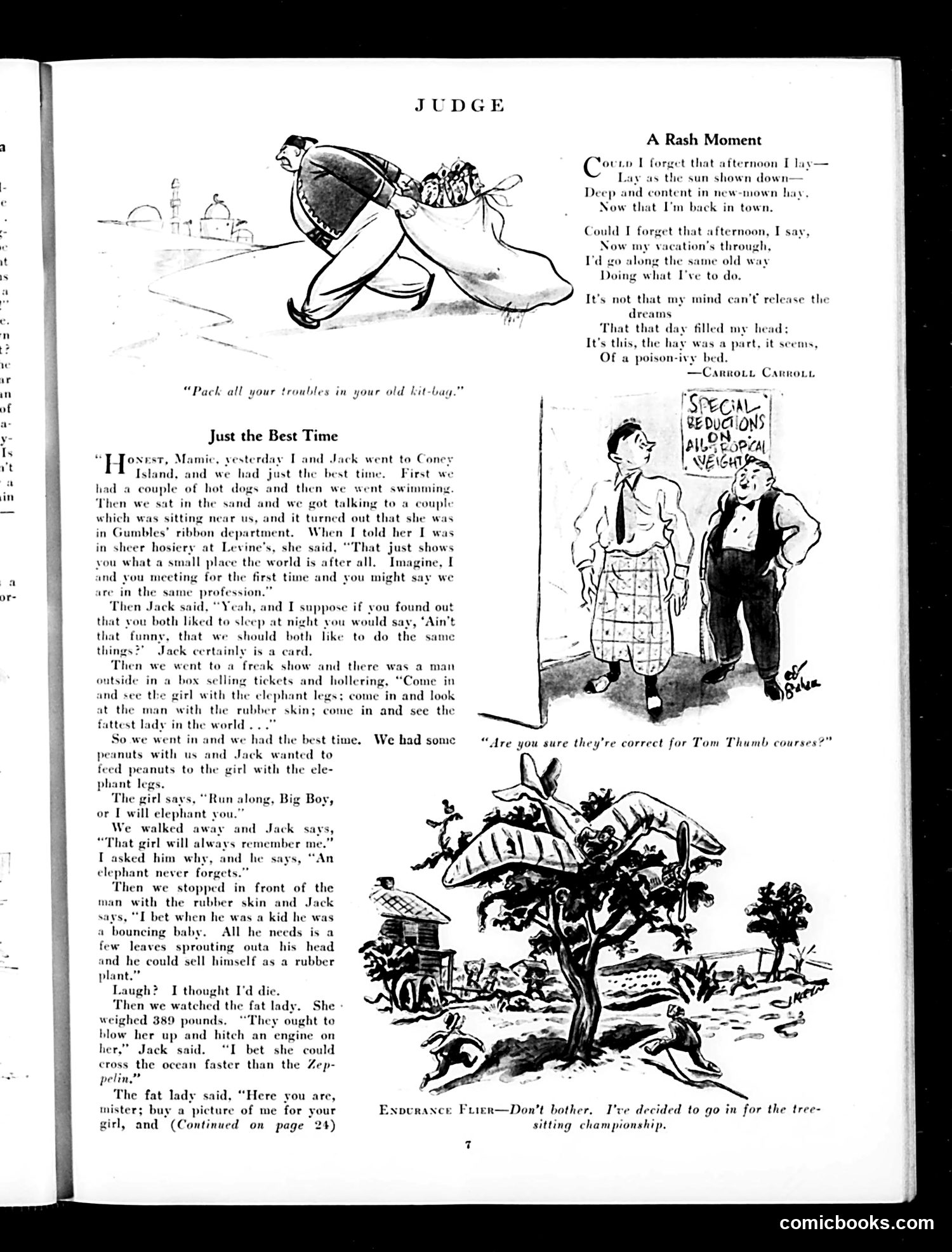
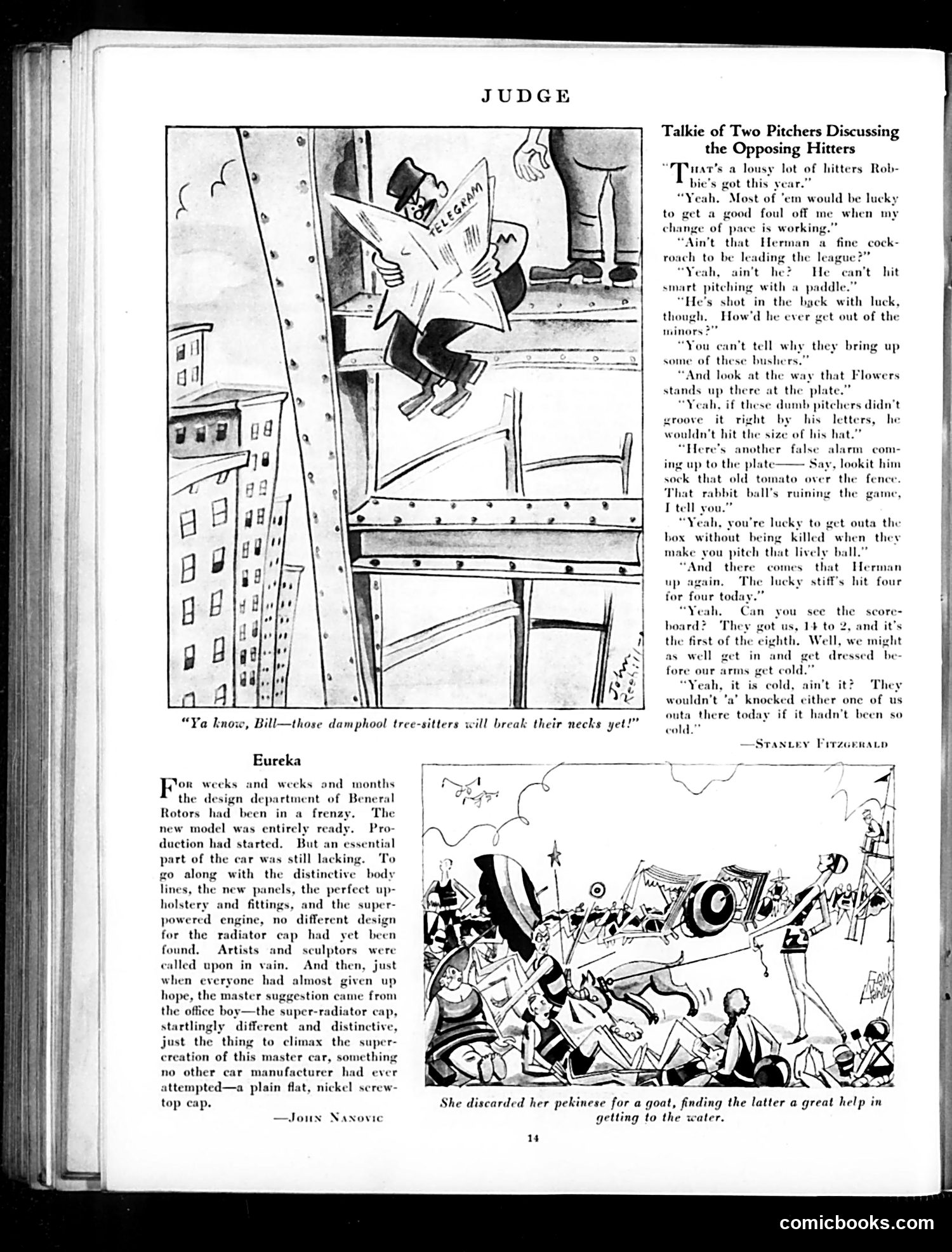
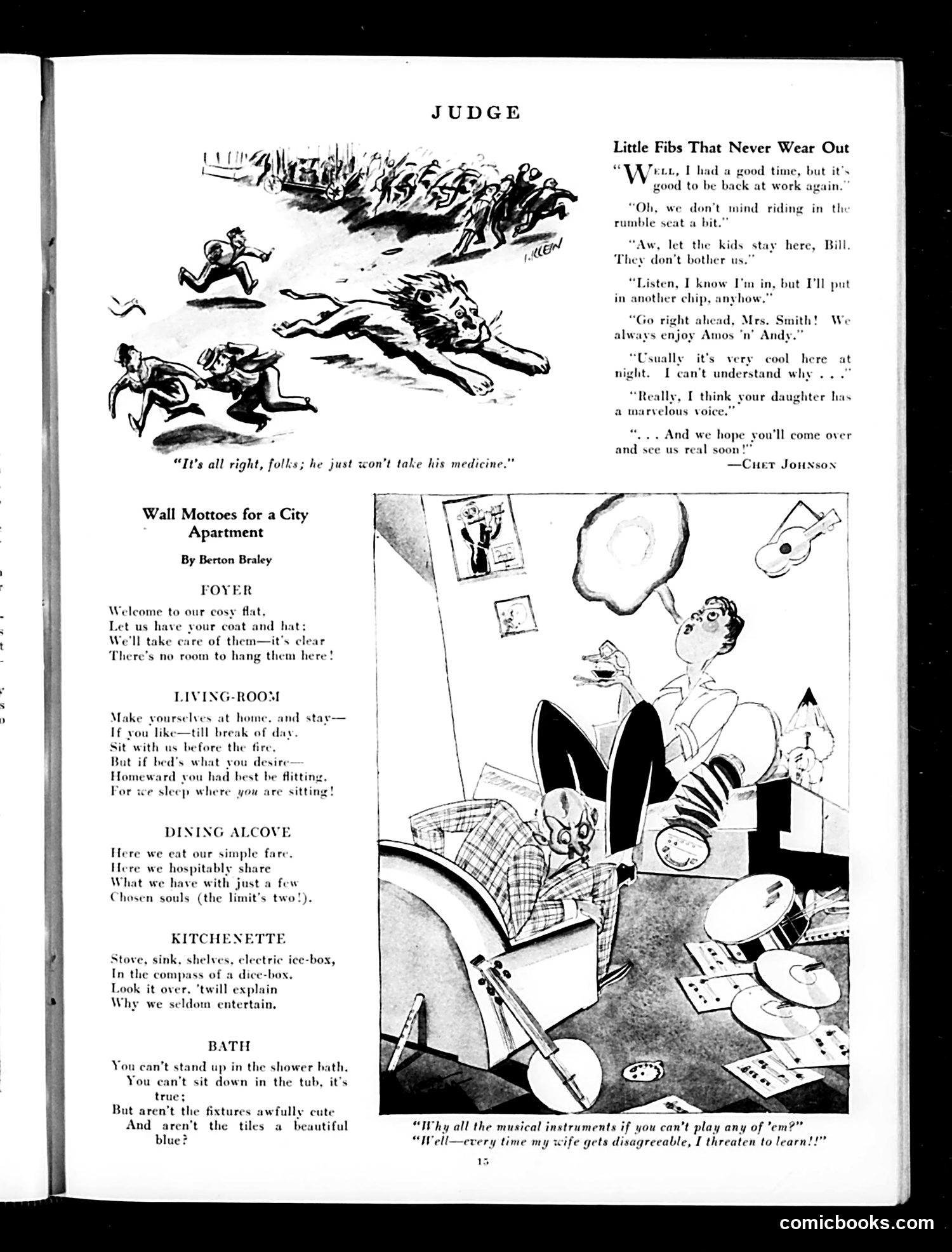
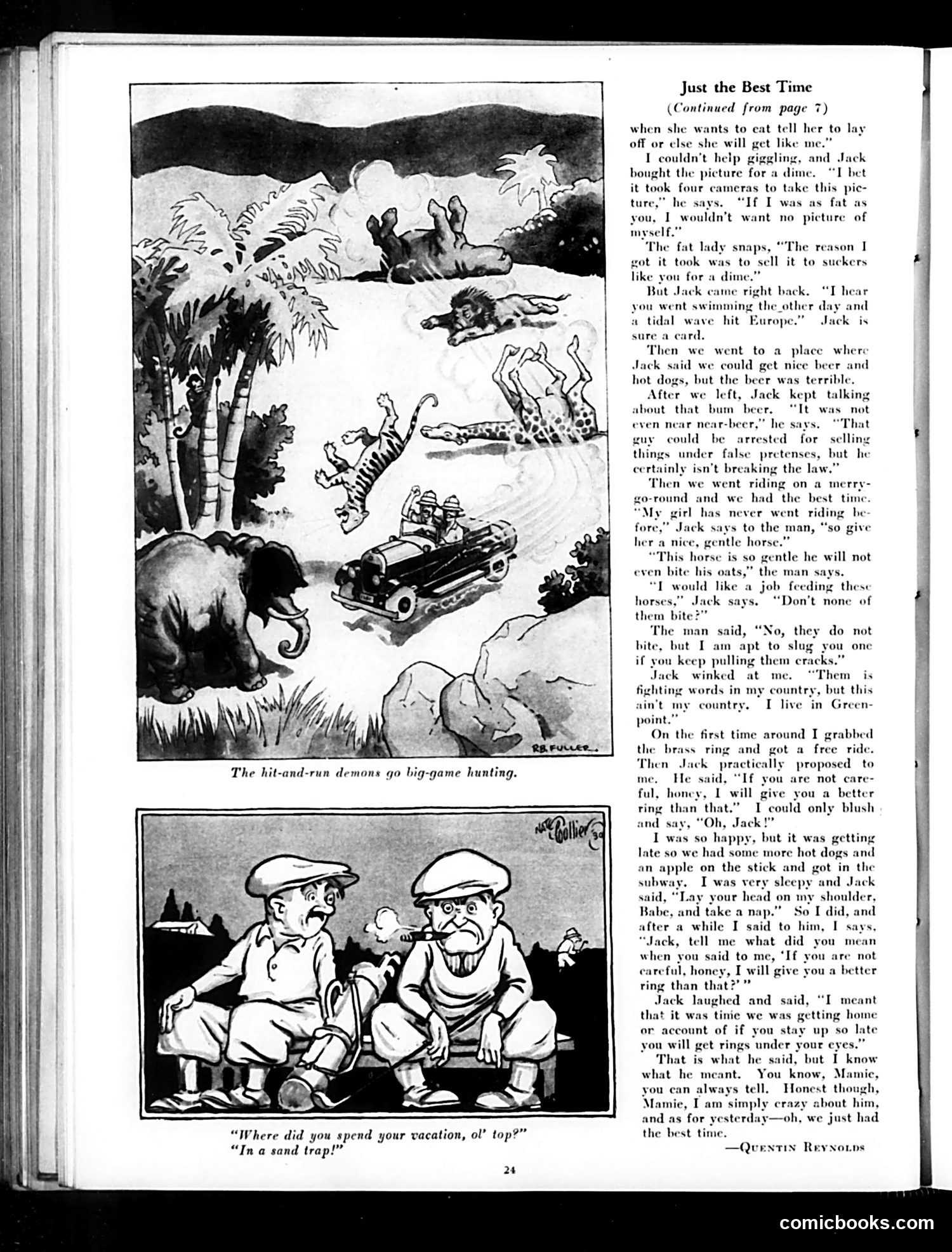
# Judge Magazine Page Analysis This page contains two unrelated pieces of humor typical of Judge's 1920s content: **"Just the Best Time"** is a humorous anecdote about a young woman's day trip to Coney Island with her boyfriend Jack. The joke relies on absurdist humor and puns: when they visit a freak show, Jack makes bad jokes (calling the "girl with elephant legs" an "elephant" who "never forgets"; suggesting the rubber-skinned man needs "tree leaves" to become a rubber plant). The humor is lighthearted, situational comedy about dating and tourist attractions—typical of the era's casual entertainment writing. **"A Rash Moment"** is a poem by Carroll Carroll about a vacation memory of lying in hay, now ruined by the realization he had an allergic reaction (poison ivy). It's gentle, ironic verse. **The cartoons** include one about weight-loss advertisement and another about someone entering a tree-sitting championship. These are simple visual gags with minimal political or social commentary—mostly recreational humor for a general audience. The page reflects Judge's balance between satirical commentary and light entertainment pieces.
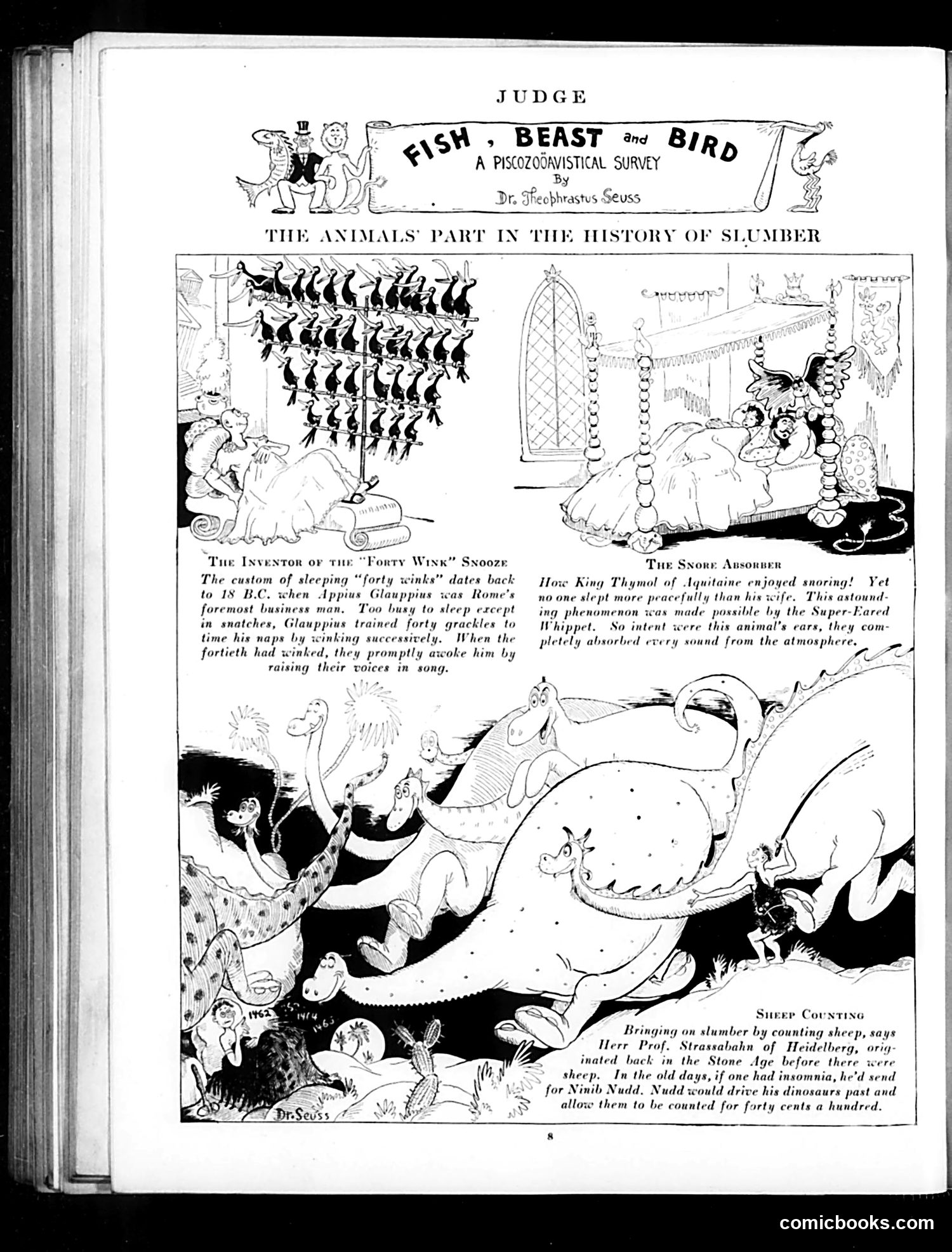
# Explanation for Modern Readers This page from *Judge* magazine presents humorous "historical" explanations for sleep-related customs, written as if by Dr. Seuss (Theodor Geisel). It's satirical pseudo-scholarship—fake academic humor. The three vignettes mock how we attribute modern practices to ancient origins: 1. **"Forty Winks"**: Invented by a Roman businessman who trained grackles (birds) to wink in sequence, timing his power naps. The joke is the absurd literal origin story for an idiom. 2. **The Snore Absorber**: King Thymol of Aquitaine had a specially bred "Super-Eared Whippet" dog whose ears absorbed all snoring sounds so his wife could sleep peacefully—a ridiculous technological "solution" to a common problem. 3. **Counting Sheep**: Originally involved a Stone Age man named Ninib Nudd who would drive dinosaurs past insomniacs for them to count (charging forty cents per hundred). The joke conflates dinosaurs with sheep-counting. The satire gently mocks pseudo-historical explanations and inventing elaborate backstories for everyday habits.
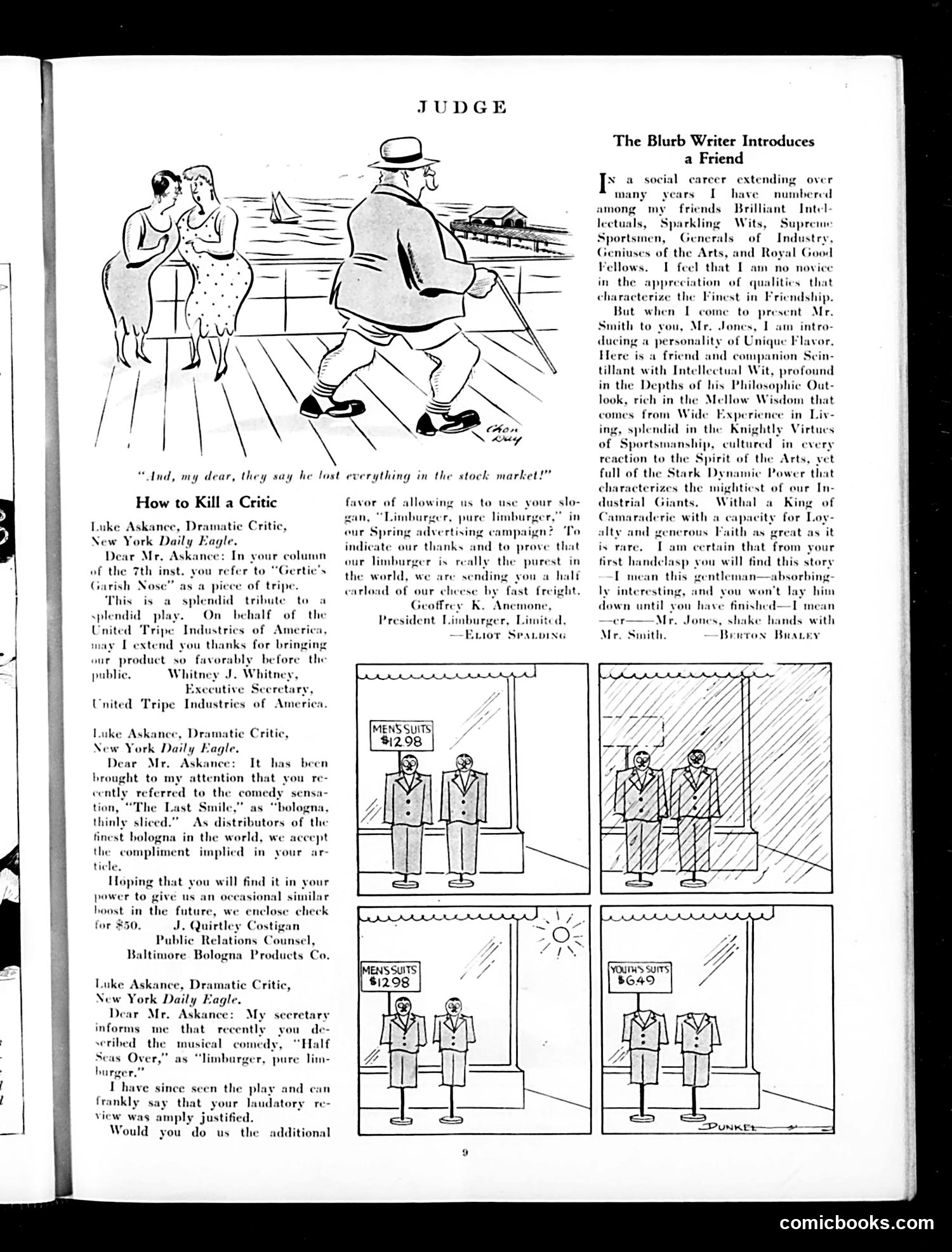
# "How to Kill a Critic" — Judge Magazine Satire This page satirizes the practice of **payola in theater criticism**—specifically, how food companies curry favor with drama critics by offering them advertising opportunities and implicit bribes. The setup: Luke Askance, a drama critic, published negative reviews of plays, using unflattering metaphors like "Gertie's Garish Nose" and "Half Seas Over." Representatives from competing food companies (Limburger cheese, bologna, and tripe industries) then write to him, thanking him for the "splendid tribute" and offering advertising deals or "checks for $50"—clearly misrepresenting his negative reviews as praise to secure his endorsement. The joke's target: **corrupt critics who accept bribes**, and **companies exploiting this corruption**. The absurdist humor comes from the companies deliberately misreading insults as compliments while dangling money. The four small comic panels on the right appear to show men's and women's clothing price comparisons, likely separate advertising content. This reflects early 20th-century concerns about journalistic integrity and commercial influence on entertainment criticism.
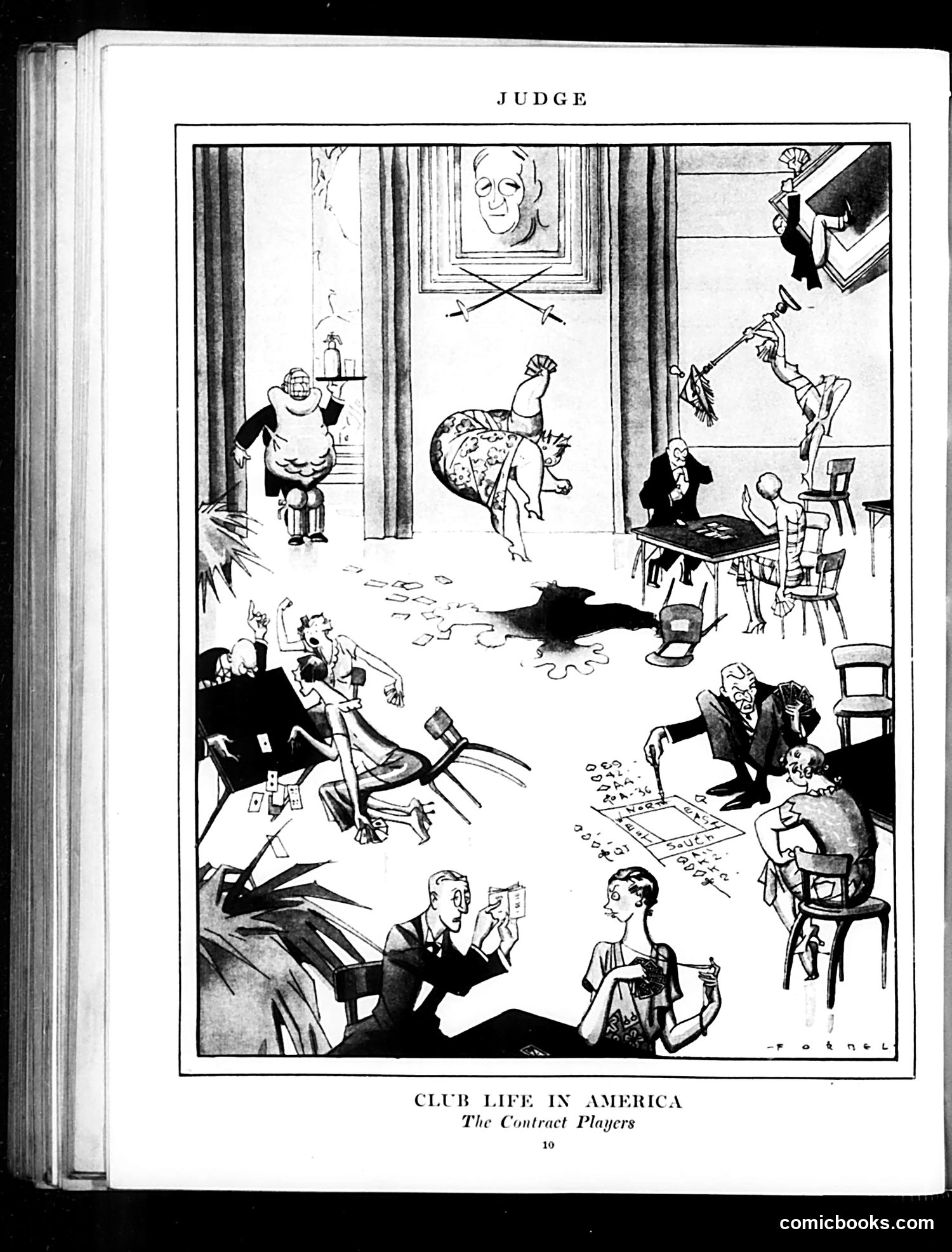
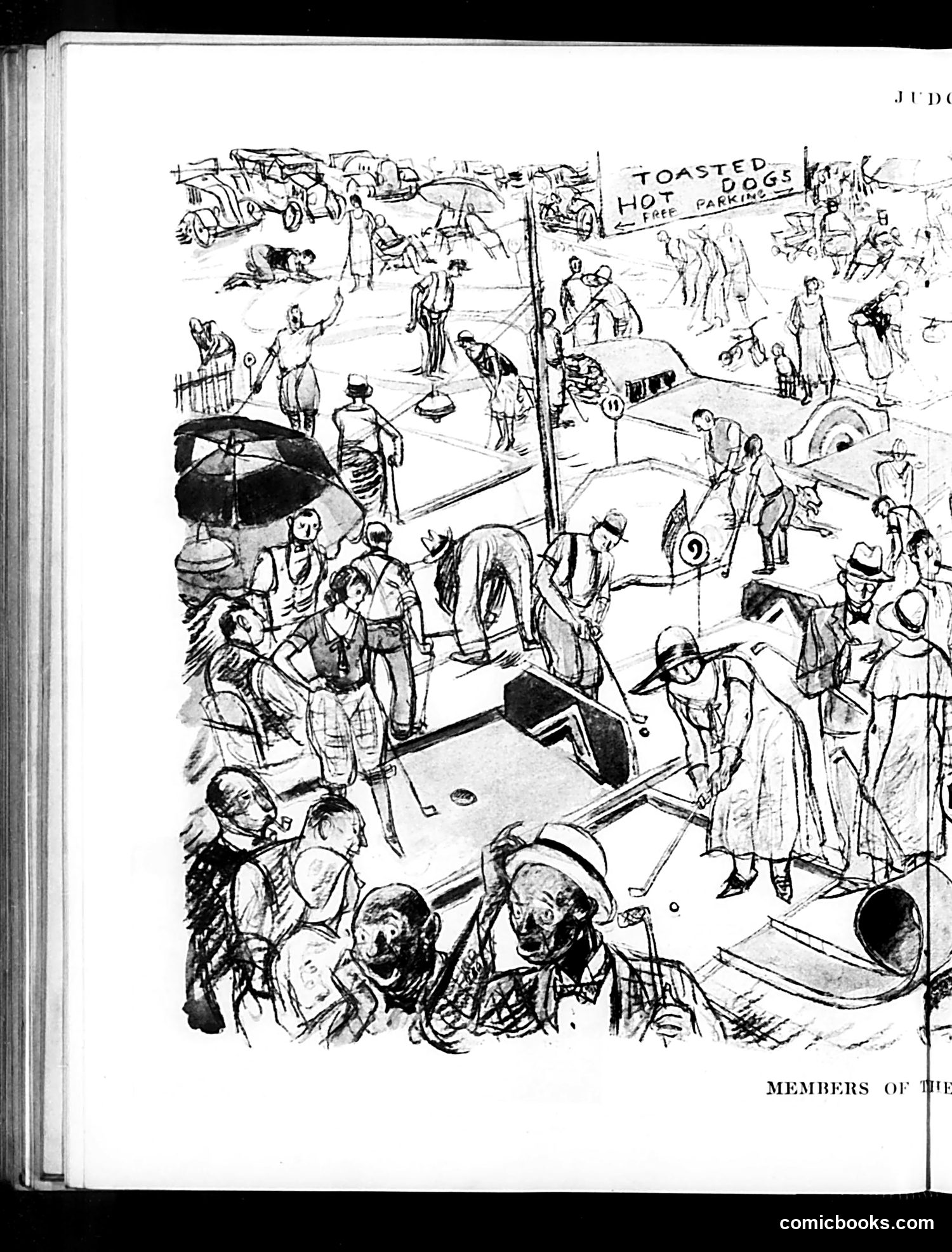
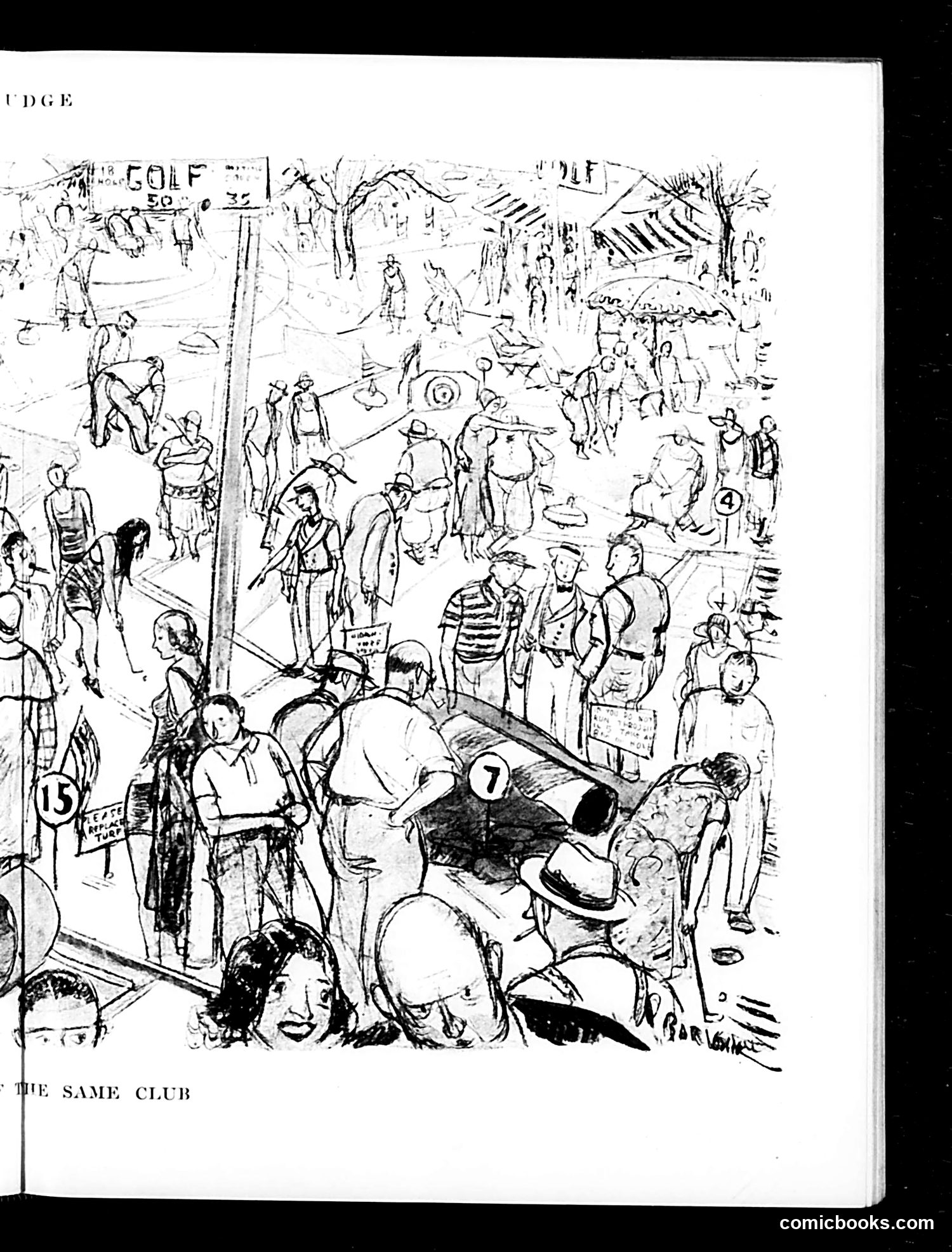
# Analysis This satirical cartoon titled "Club Life in America: The Contract Players" depicts a chaotic indoor scene mocking bridge players and card game culture among the American upper class. The illustration shows well-dressed figures engaged in various card games, with exaggerated, comedic poses suggesting the intense, dramatic nature people bring to casual club activities. The "contract players" reference likely alludes to contract bridge, a popular card game among wealthy Americans in the early 20th century. The satire appears to mock the pretentiousness and obsessive behavior of club members who treat card games with excessive seriousness. The tumultuous scene—with people in theatrical poses around tables—ridicules the social hierarchy and competitive fervor surrounding these leisure activities among the affluent class. The cartoon exemplifies Judge magazine's typical approach: lampooning American social conventions and class behavior through exaggerated visual humor.