A complete issue · 36 pages · 1930
Judge — June 14, 1930
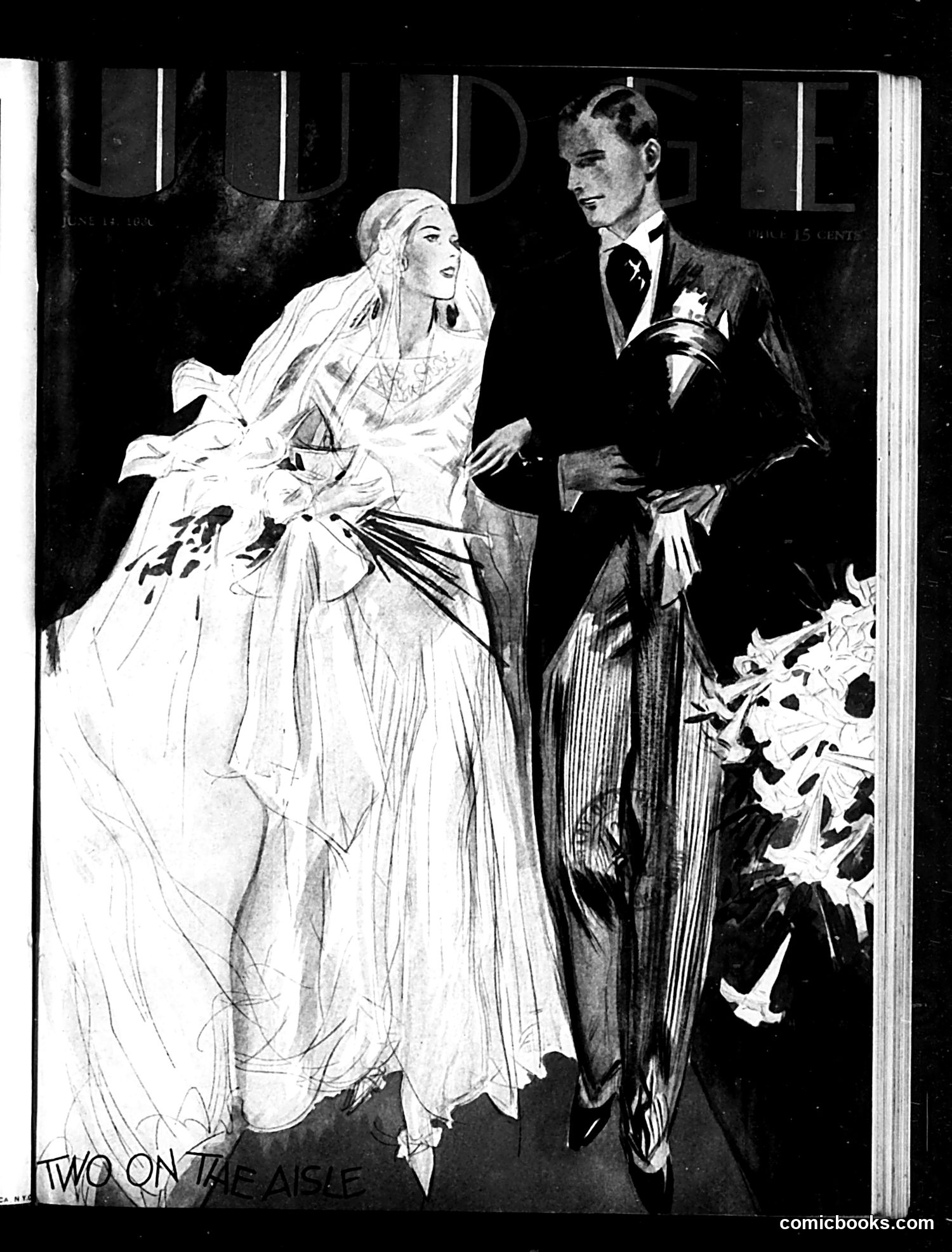
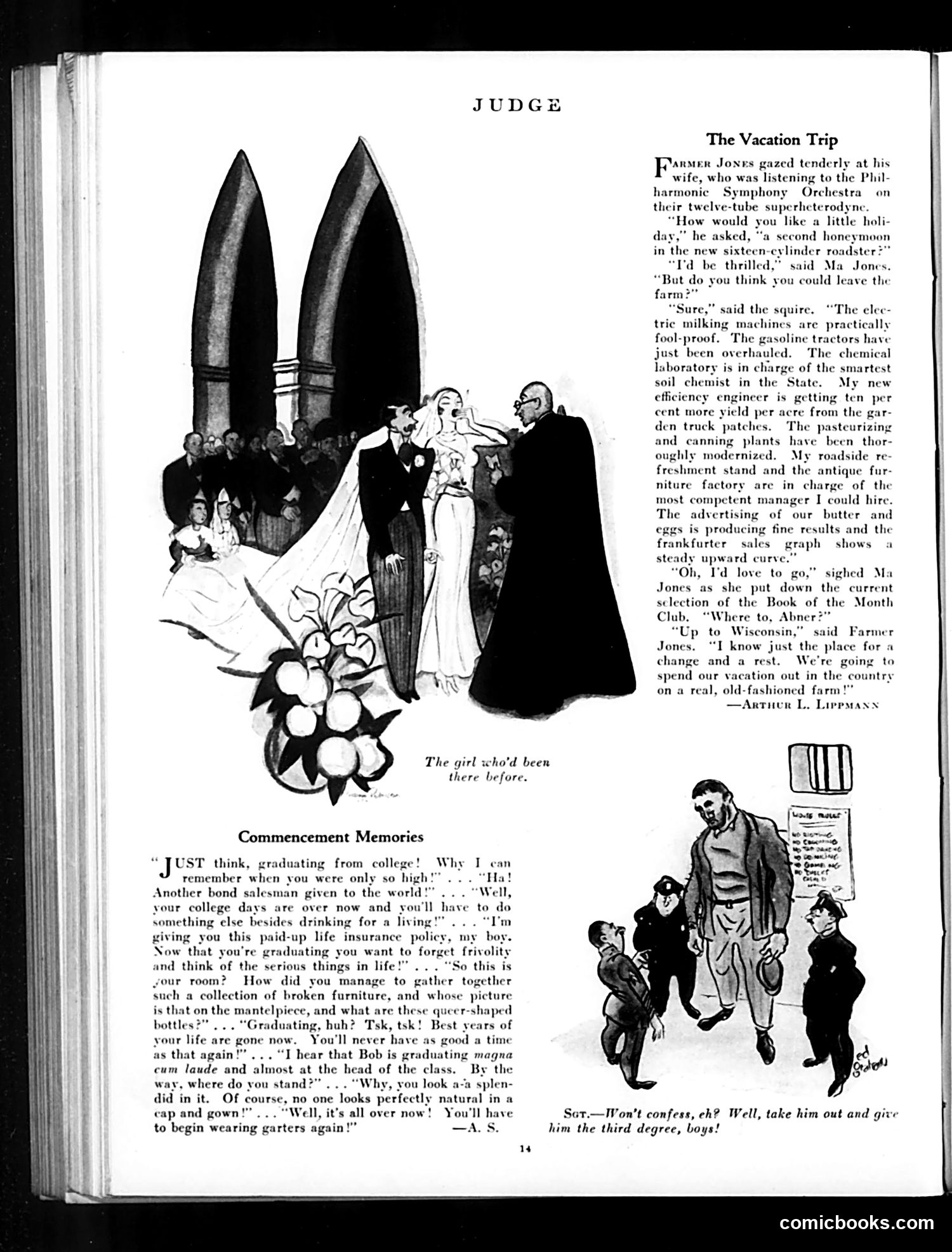
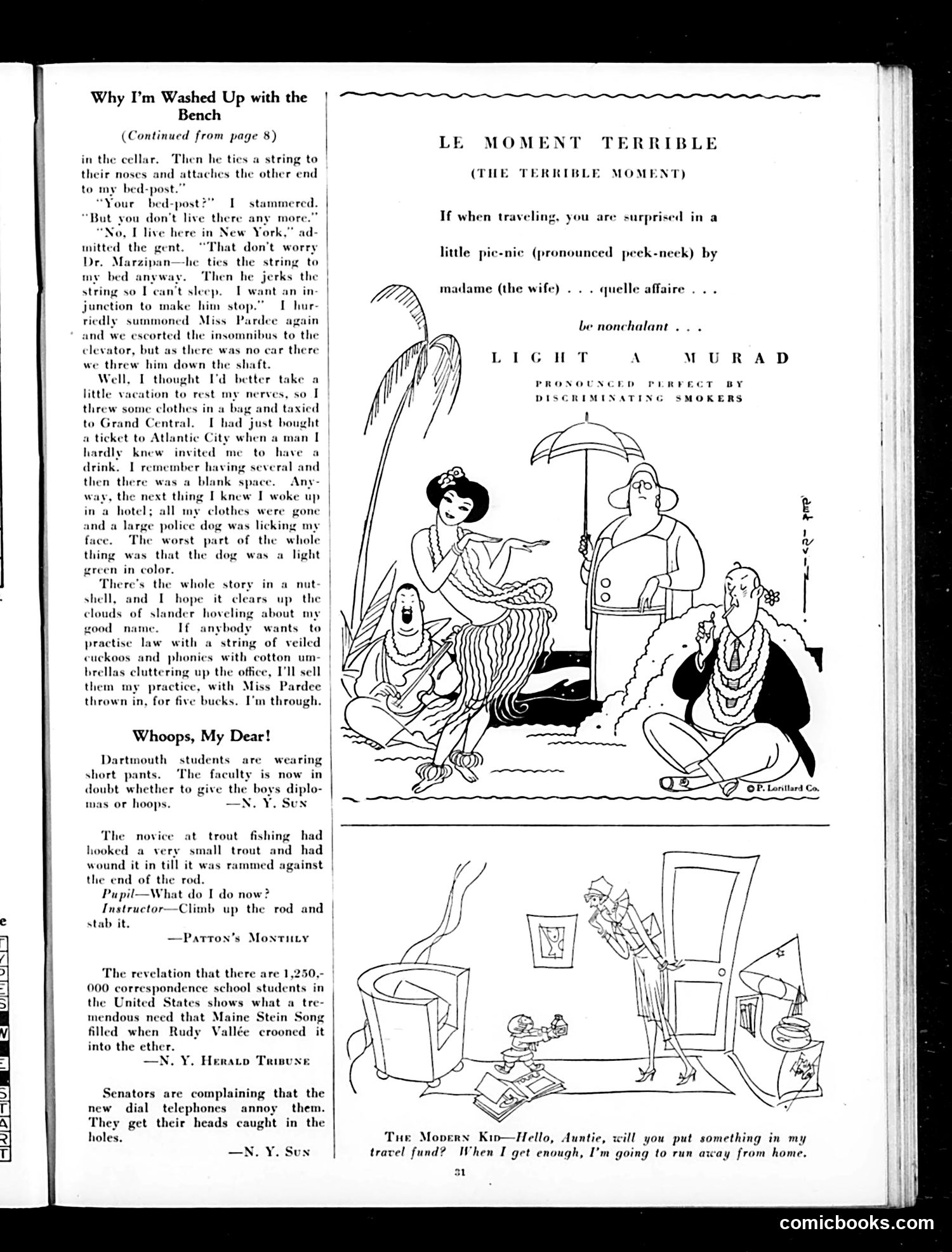
# "Two on the Aisle" This Judge magazine illustration depicts a couple in formal wedding attire at what appears to be a theater or entertainment venue (suggested by "aisle" reference and the "Judge" masthead visible). The woman wears an elaborate white wedding dress with veil and carries flowers; the man is in formal daytime dress with boutonniere. The title "Two on the Aisle" likely satirizes the social spectacle of high-society weddings, playing on the double meaning of "aisle"—both theatrical seating and the wedding ceremony setting. The artwork style suggests early 20th century. Without additional context or clearer OCR text, the specific satirical target remains unclear, though it appears to mock elaborate wedding pageantry or perhaps commentary on theatrical society marriages of that era.
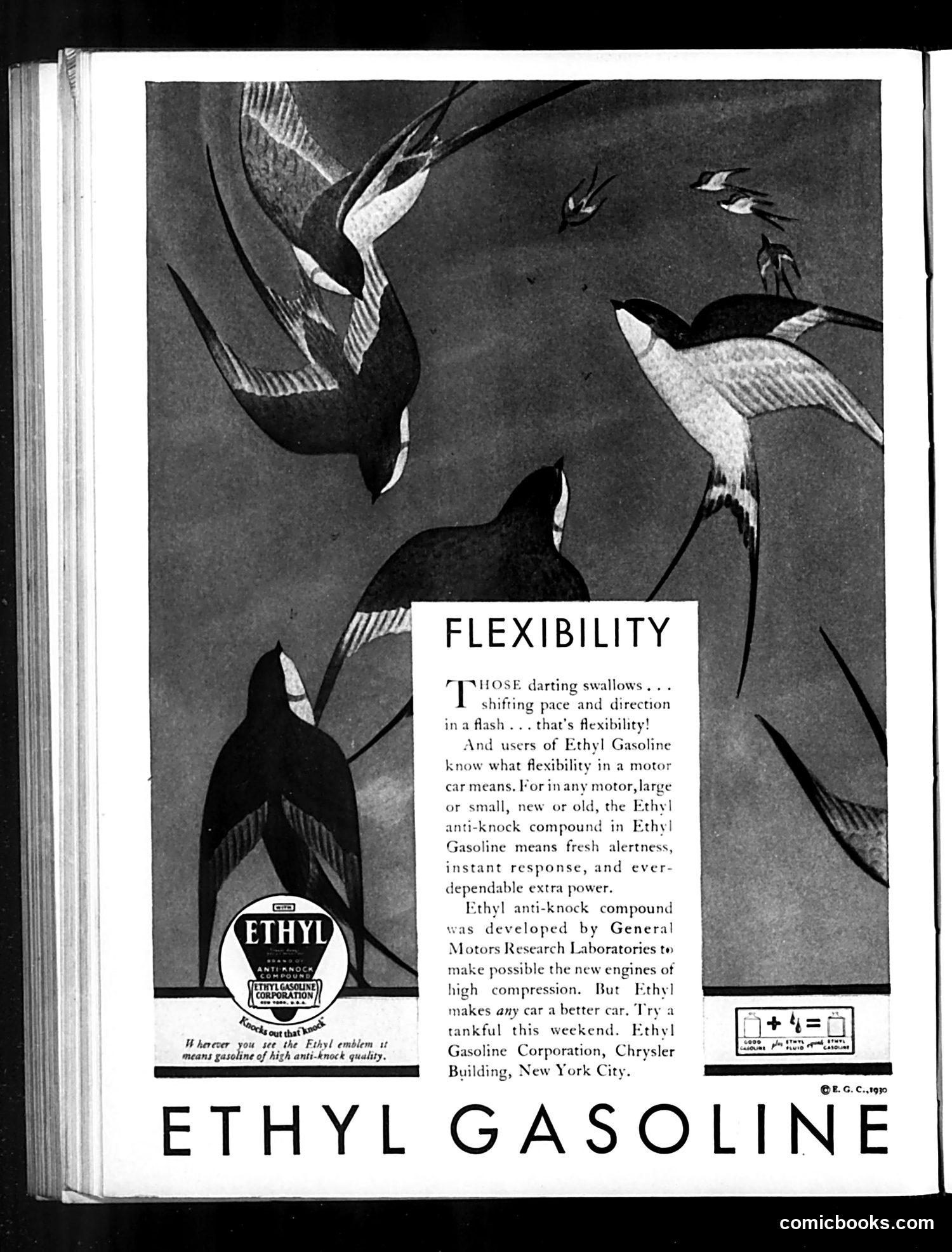
# Analysis This page is primarily **advertising, not satire or editorial content**. It features an Ethyl Gasoline Corporation advertisement from the 1920s-1930s era. The imagery shows stylized black swallows in flight, used metaphorically to illustrate "flexibility"—the ad's central concept. The swallows' agility parallels the claimed benefits of Ethyl gasoline's anti-knock compound, developed by General Motors Research Laboratories. The text emphasizes that Ethyl fuel provides "fresh alertness, instant response, and ever-dependable extra power" for any motor vehicle. This was genuine marketing for a real fuel additive (tetraethyl lead, later recognized as hazardous). The ad represents period advertising strategy: using artistic imagery and scientific claims to promote a competitive commercial product to middle-class motorists.
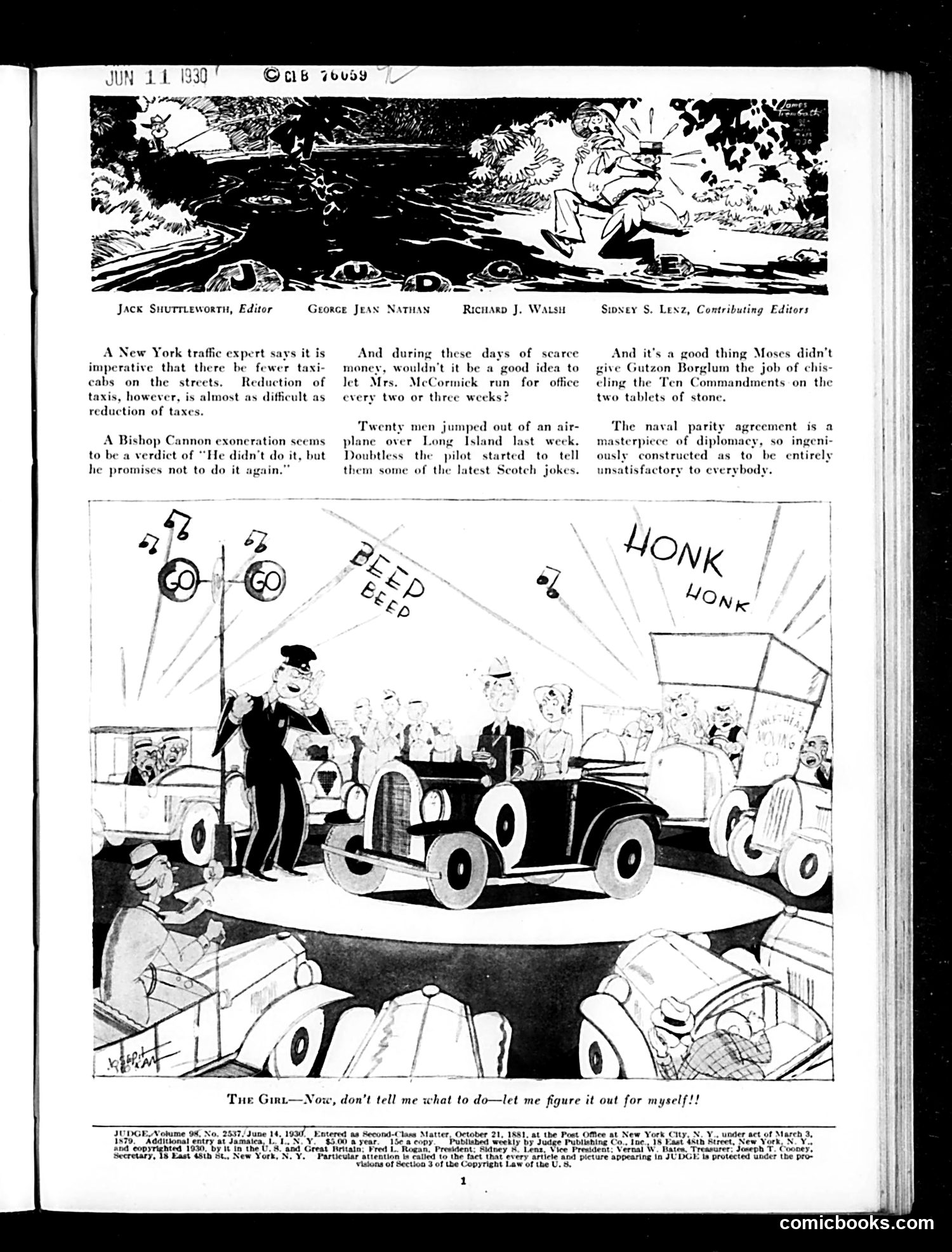
# Analysis of Judge Magazine Page (June 11, 1930) The main cartoon depicts a chaotic traffic jam with multiple automobiles honking ("HONK HONK"). A traffic policeman stands elevated, appearing overwhelmed and gesturing helplessly at the gridlock below. The caption reads: "The Girl—Now, don't tell me what to do—let me figure it out for myself!!" This is satire about 1920s-30s automobile congestion in American cities and gender dynamics. The "girl" likely refers to a young woman driver attempting to navigate traffic independently, while the overwhelmed officer represents authorities losing control of urban streets. The joke satirizes both: 1. **Traffic problems**: Rapid car proliferation creating chaos 2. **Gender roles**: A woman resisting instruction, humorously depicted as worsening the gridlock The cartoon reflects contemporary anxiety about automobiles, urban management, and changing gender independence.
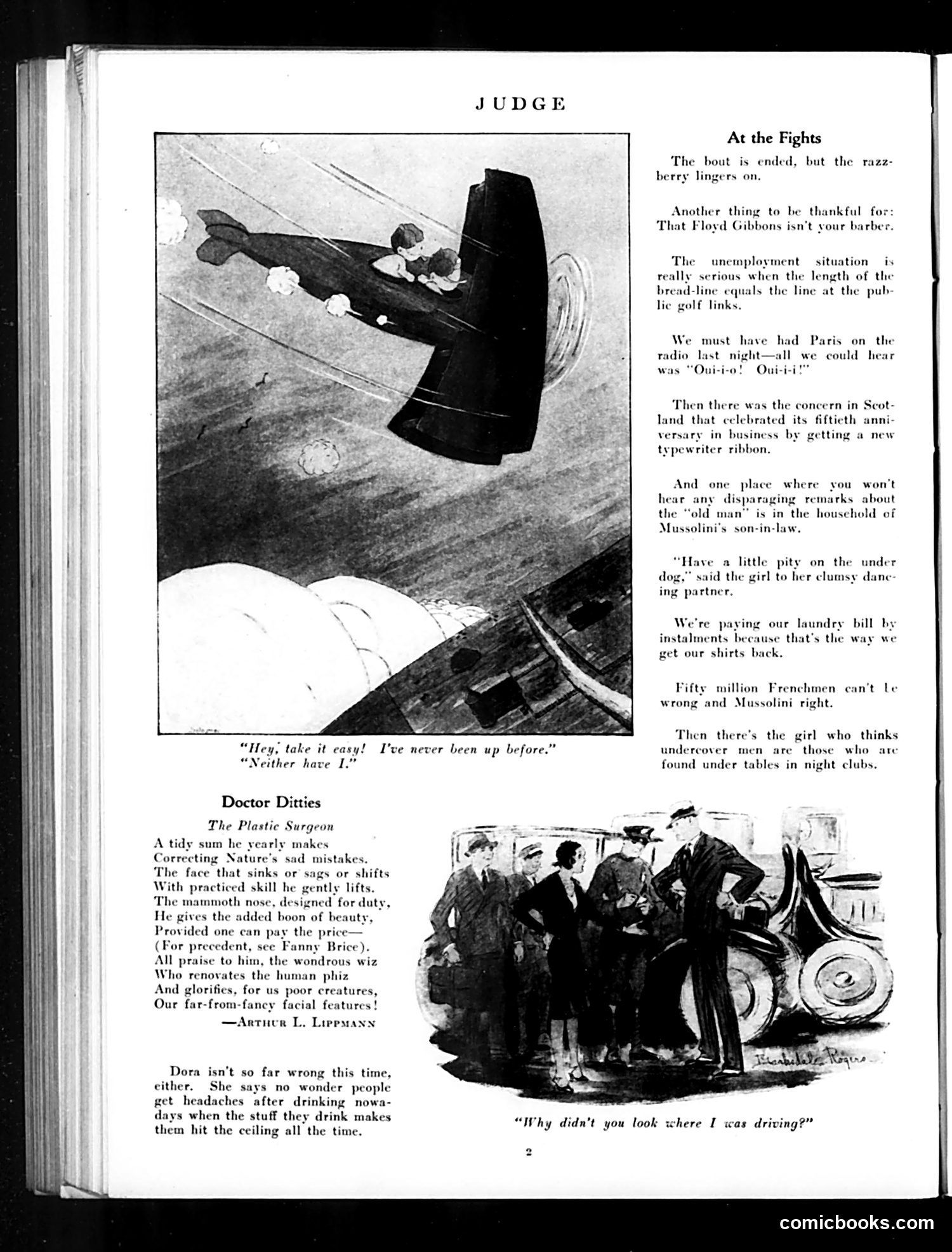
# Analysis of Judge Page **"At the Fights"** (top cartoon): A man in formal wear flies through the air after being knocked out of a boxing ring. The caption jokes that while "the bout is ended, but the razzberry lingers on"—satirizing boxing spectators' rowdy behavior and lack of decorum. **"Doctor Ditties: The Plastic Surgeon"** (bottom section): A poem by Arthur L. Lippmann mocks cosmetic surgery, particularly surgeons who reshape faces and noses for wealthy clients. It critiques both the vanity of patients seeking "beauty" and the doctors profiting from insecurity. The right column contains various satirical social observations about unemployment, Paris radio broadcasts, and undercover detectives. The humor targets 1920s-era excesses: violent entertainment culture, cosmetic surgery trends, and contemporary social anxieties.
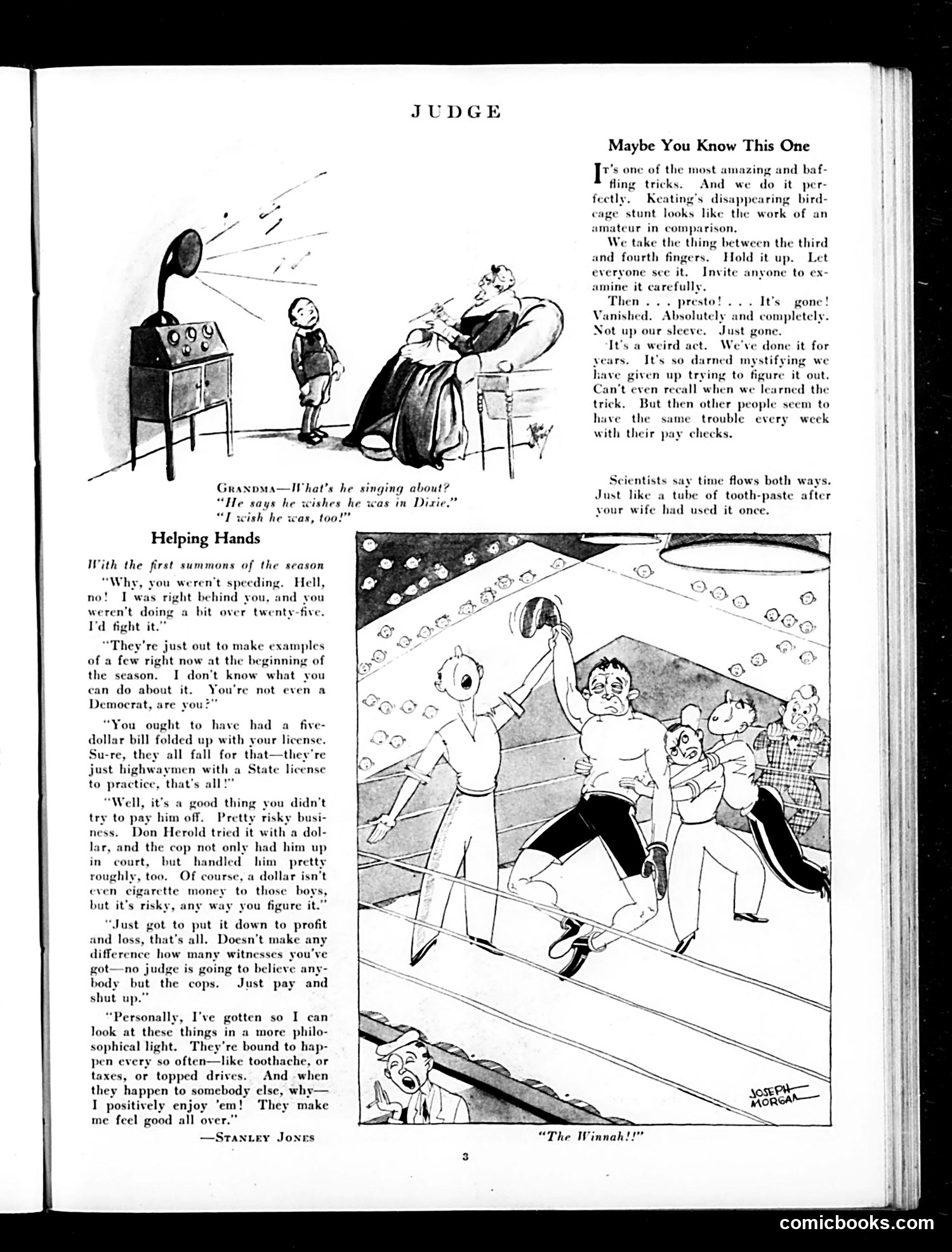
# Analysis of Judge Magazine Page This page contains two separate humor pieces: **"Maybe You Know This One"** (top): A magic trick demonstration where a magician makes an object disappear from between a child's fingers. The joke plays on the absurdity of a commonplace magic trick—the text suggests even regular people routinely perform it, comparing it sarcastically to other everyday frustrations like figuring out tax deductions. **"Helping Hands"** (bottom): A cartoon about summons for speeding tickets. The dialogue satirizes how traffic violations are used to generate revenue, with the joke that judges and police don't care about the driver's actual guilt—it's purely profit-driven. The beach scene shows people enjoying themselves while being ticketed, emphasizing the arbitrary nature of enforcement. Both pieces mock bureaucratic absurdity and institutional indifference through exaggeration.
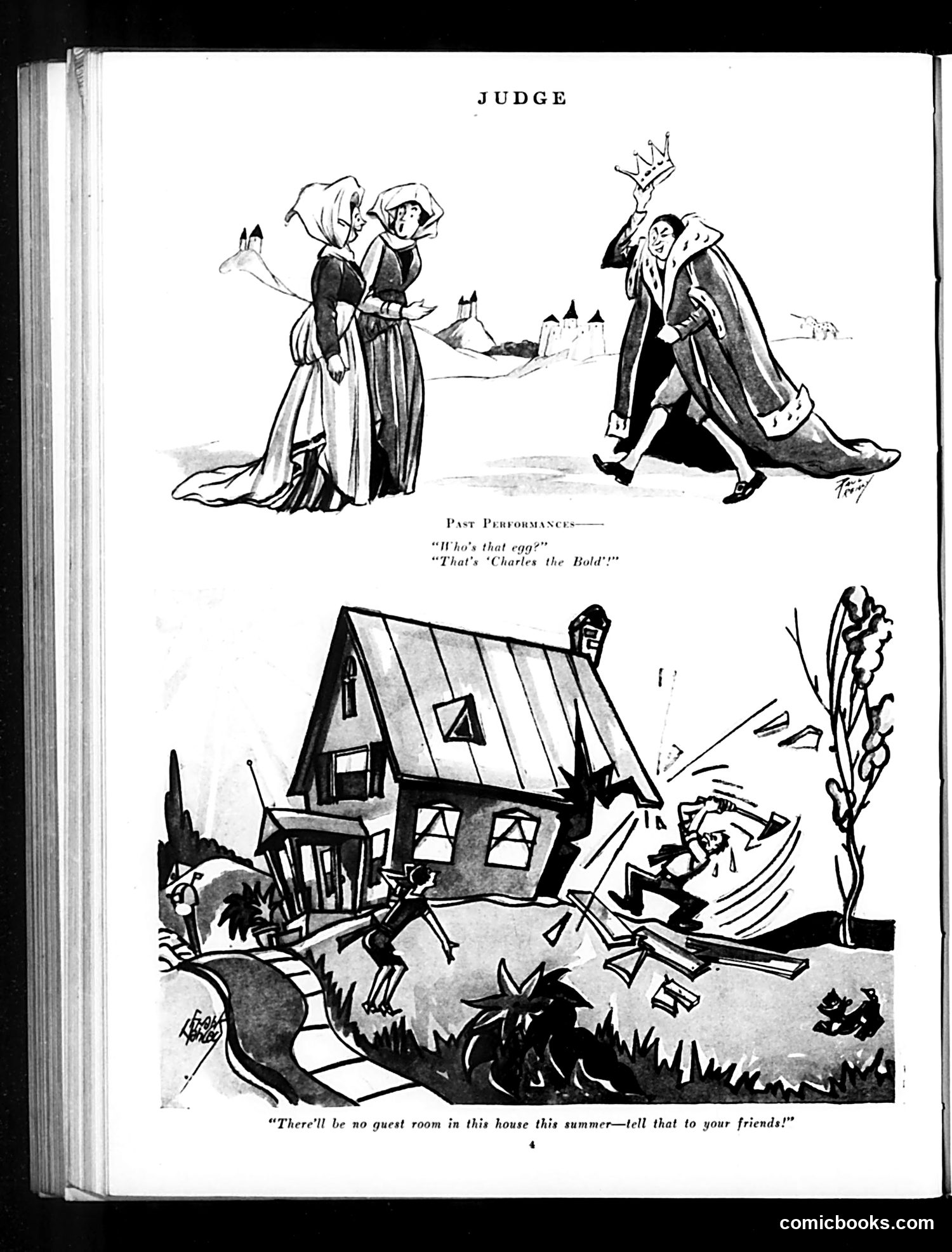
# Judge Magazine Cartoon Analysis This page contains two satirical cartoons from Judge magazine: **Top cartoon:** Titled "Past Performances," it shows a regal figure (likely representing royalty or nobility, given the crown and ermine-trimmed robes) approaching two women. The caption references "Charles the Bold," a historical figure, suggesting commentary on aristocratic pretension or past glories. The joke appears to mock someone's exaggerated self-importance based on historical associations. **Bottom cartoon:** Shows chaotic destruction at a house with figures fleeing and debris scattering. The caption warns guests won't be accommodated "this summer," using property damage as a visual metaphor—likely satirizing either domestic chaos, prohibition-era violence, or social upheaval of the era. Both cartoons use exaggeration and visual humor typical of Judge's satirical style, though without publication date context, specific historical references remain unclear.
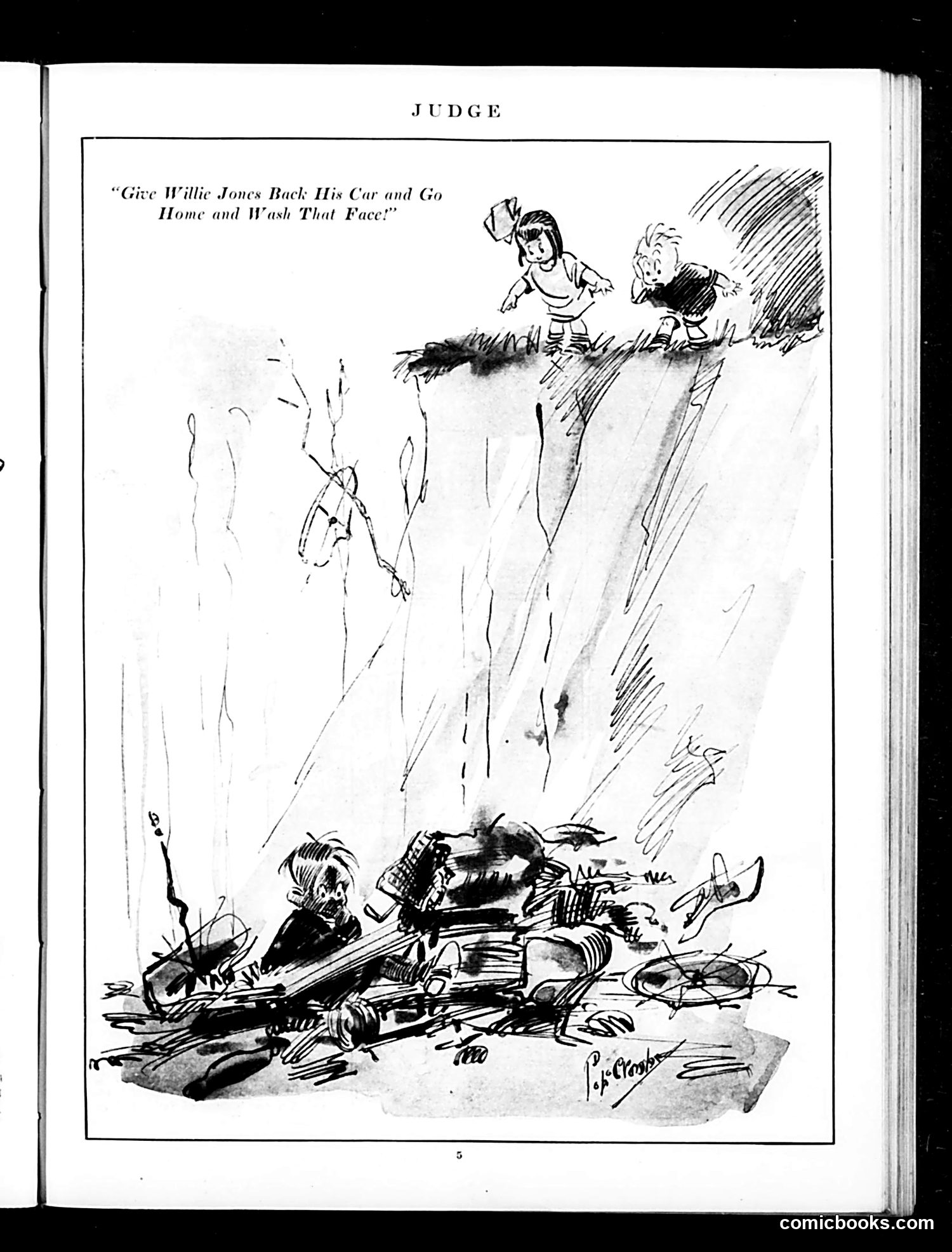
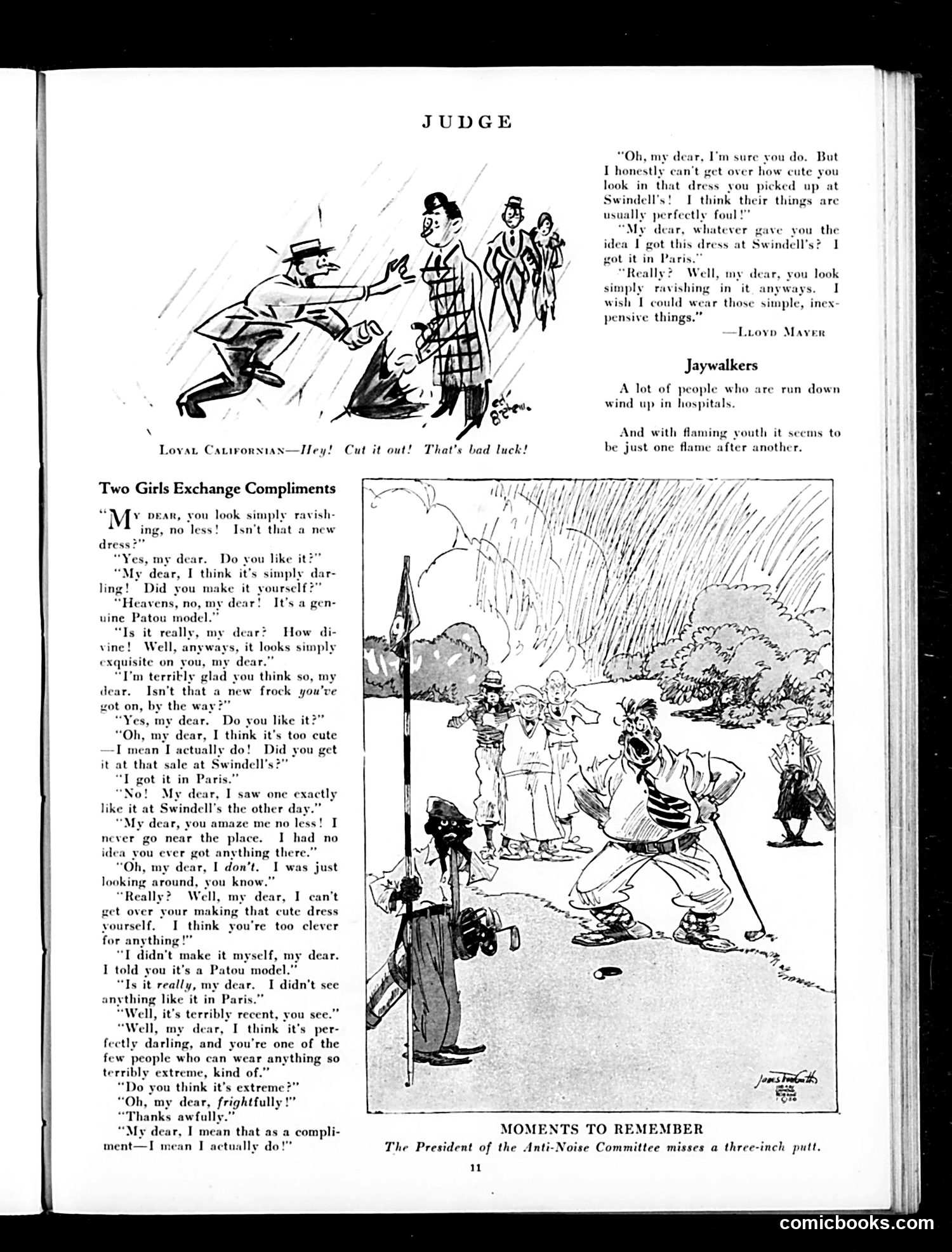
# Analysis of Judge Magazine Cartoon This cartoon satirizes a car accident involving Willie Jones. The caption "Give Willie Jones Back His Car and Go Home and Wash That Face!" suggests Jones was responsible for vehicular damage or destruction. The sketch shows a wrecked automobile at the bottom with debris scattered around, while two children stand safely above on higher ground, looking down at the destruction. The satire appears to mock Jones's negligent or reckless driving, implying he should return to basics (washing his face, going home) rather than operating a vehicle. The exaggerated depiction of the car's destruction and the children's vantage point emphasize the dangerous consequences of poor driving habits. Without additional historical context, the specific identity of "Willie Jones" and the incident referenced remains unclear.
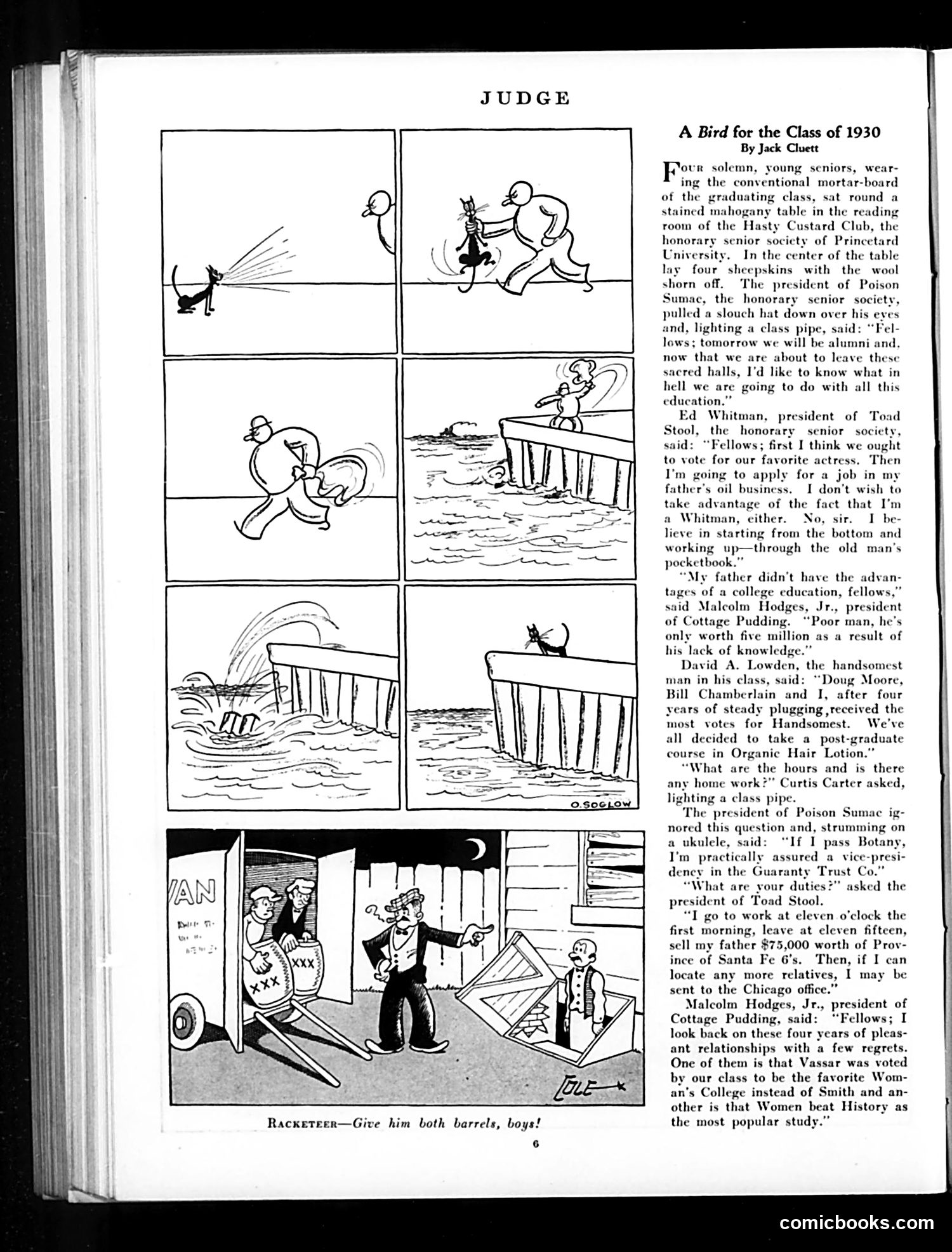
# "A Bird for the Class of 1930" This satirical piece mocks Princeton University's graduating class of 1930 through a fictional club meeting. Senior society members discuss their post-graduation prospects with self-important pomposity. The humor targets their entitled assumptions: one plans to leverage his father's oil business; another claims he'll get a vice presidency through family connections; a third admits his father's wealth comes from questionable sources. The accompanying cartoon shows young men literally "racketeering"—dumping barrels marked "XXX" (bootleg alcohol), a direct reference to Prohibition-era illegal activity. The satire suggests that despite their elite education, these graduates will rely on family money and criminal enterprises rather than actual merit or legitimate work.
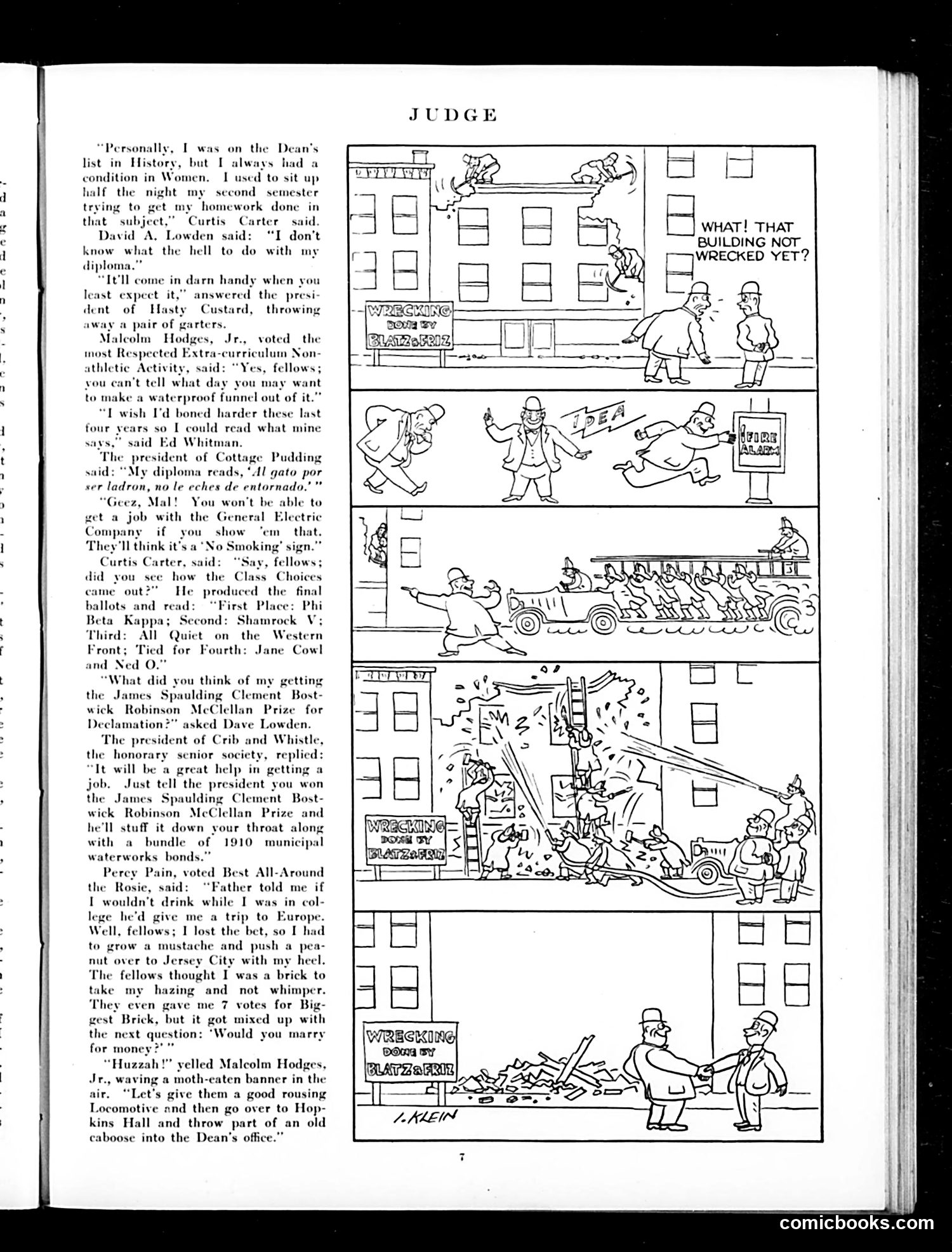
# Judge Magazine Page Analysis This page satirizes college life and student superlatives/awards through fictional quotes from graduating seniors. The comic strips illustrate their boastful claims with slapstick humor. **Key elements:** - **Curtis Carter, David Lowden, Malcolm Hodges Jr.**, and others are fictional college characters discussing their academic achievements and pranks - References to actual college honors (Phi Beta Kappa, various named prizes) are mocked as students brag about dubious accomplishments - The satire targets college pretension: students claiming academic distinctions while admitting to poor study habits, hazing participation, and destructive behavior - The comics show physical comedy—building wrecking, car crashes, explosions—depicting the chaos these "accomplished" students actually cause - Final panel jokes about giving the Dean a "good rousing" by throwing a caboose into his office **Social context:** This mocks the disconnect between collegiate self-importance and actual responsibility, a recurring theme in early 20th-century American humor about privileged young men.
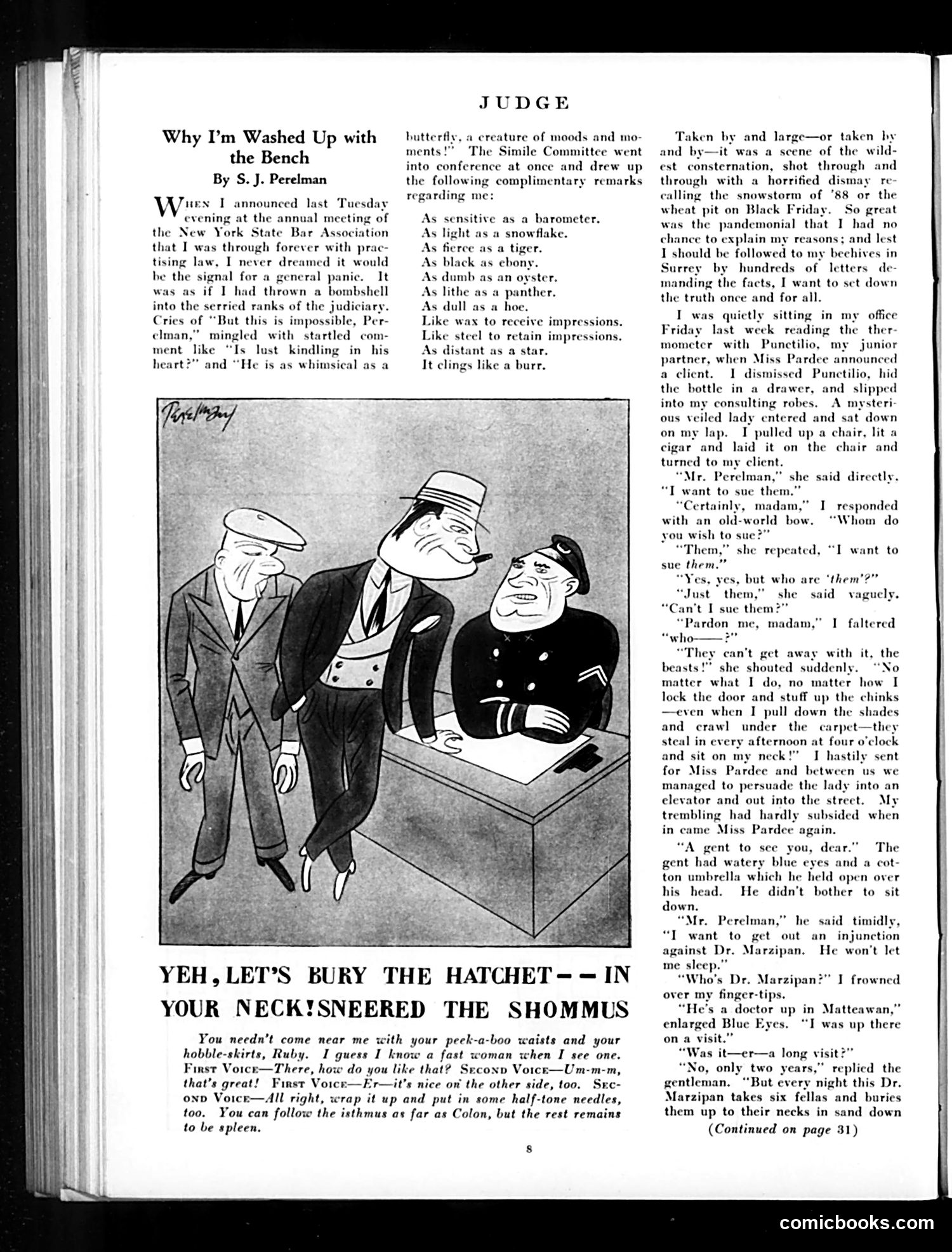
# Analysis: "Why I'm Washed Up with the Bench" by S.J. Perelman This is a **humorous essay with accompanying cartoon** satirizing the legal profession and absurd clients. **The cartoon** depicts three men in suits confronting each other aggressively, with the caption mocking reconciliation: "Bury the hatchet—in your neck!" The crude threat exemplifies the piece's comedic tone. **The essay's premise**: Perelman, a lawyer, announces he's quitting law practice. Rather than the Bar Association's expected dismay, he presents absurdist "compliments" about his sensitivity (comparing him to barometers, snowflakes, etc.)—mocking hollow professional praise. **The satire**: The accompanying client stories ridicule legal practice itself. Two unhinged clients arrive: a veiled woman suing mysterious "them" (who apparently steal into her home daily at 4 PM), and a man seeking an injunction against Dr. Marzipan, who buries people up to their necks in sand. **The point**: Perelman satirizes both the pretentiousness of the legal establishment and the genuinely bizarre disputes lawyers must handle. The absurd clients justify his exasperation with the profession.
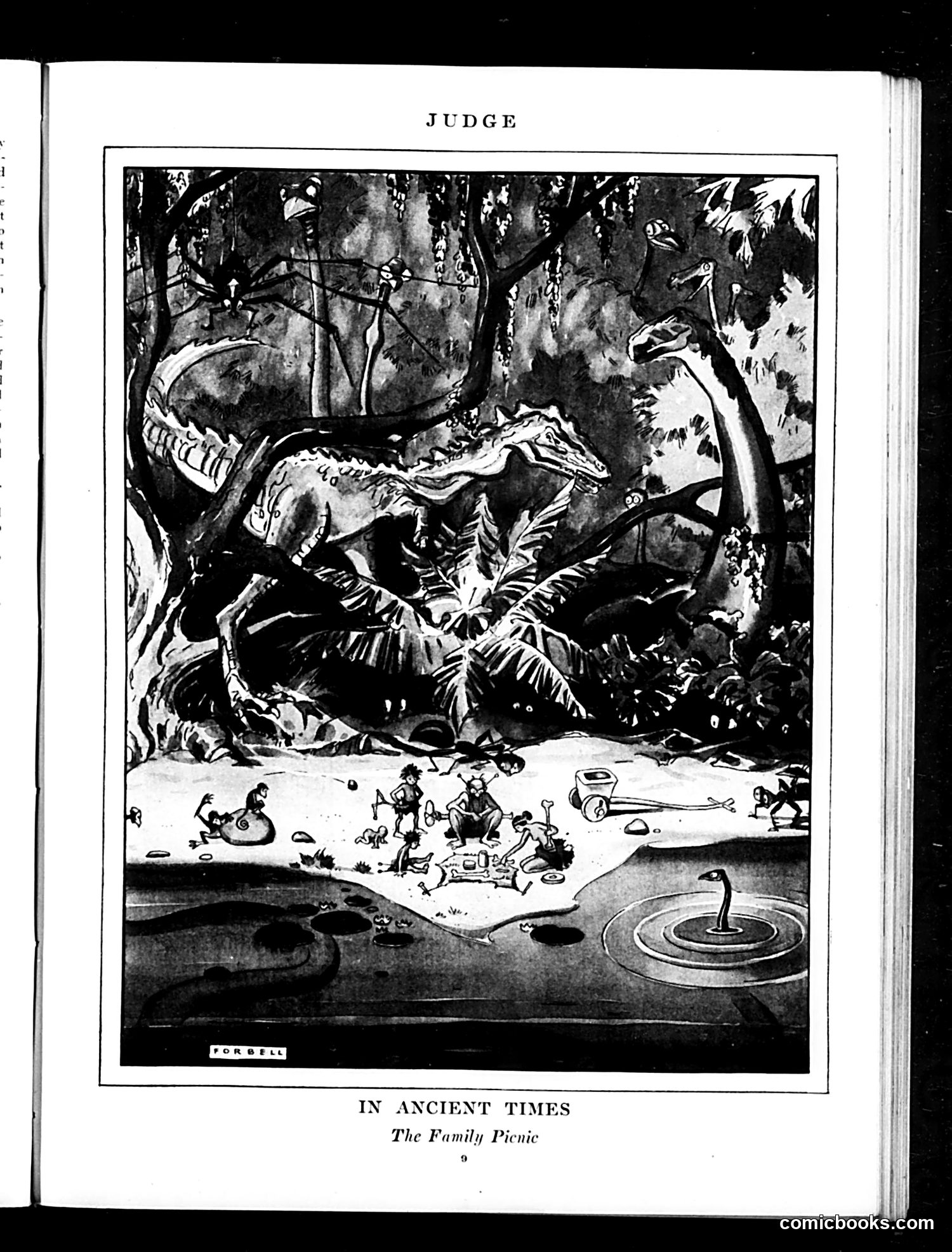
# "In Ancient Times: The Family Picnic" This is a whimsical cartoon depicting prehistoric humans enjoying a leisure activity. The image shows a family-sized group of early humans gathered in a clearing beneath towering, gnarled trees, with one figure swimming or wading in water (lower right). The humans appear to be relaxing and playing—some with toys or objects scattered about. The satire likely works through anachronism: presenting "ancient" people engaged in modern recreational behavior (picnicking, play). This gentle humor may mock either contemporary leisure culture by suggesting even primitive humans sought comfort, or it may be simply absurdist comedy showing timeless human nature. The artist is credited as "FORBEL" (signature visible).
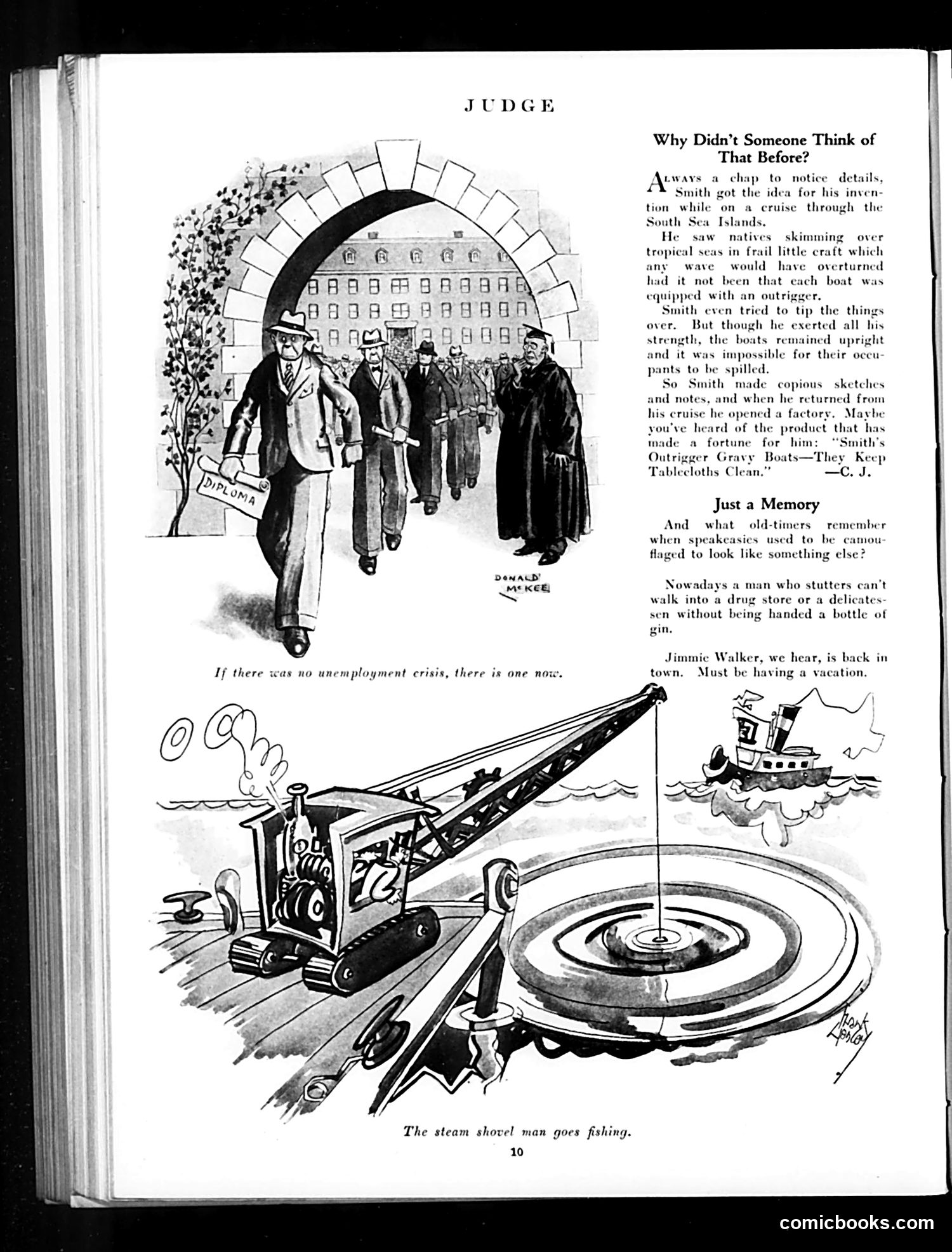
# Analysis of Judge Page This satirical page contains three distinct pieces of humor: **Top cartoon** ("Why Didn't Someone Think of That Before?"): A businessman named Smith invents outrigger gravy boats after observing Pacific Islander canoes. The joke satirizes the obviousness of the invention—the solution was always visible, yet no one commercialized it before. **"Just a Memory"**: A nostalgic quip about Prohibition-era speakeasies that disguised themselves as legitimate businesses. The satire suggests that in the post-Prohibition era, alcohol is now so openly available that even entering ordinary stores results in being offered gin. The reference to "Jimmie Walker" (likely NYC Mayor Jimmy Walker, known for his playboy lifestyle) on "vacation" is unclear without additional context. **Bottom cartoon** ("The steam shovel man goes fishing"): Shows an industrial steam shovel being repurposed as a fishing crane—absurdist humor about adapting heavy machinery for leisure purposes during unemployment, likely referencing the Great Depression era. The overall theme mixes gentle social observation with Depression-era anxiety.