A complete issue · 36 pages · 1930
Judge — March 22, 1930
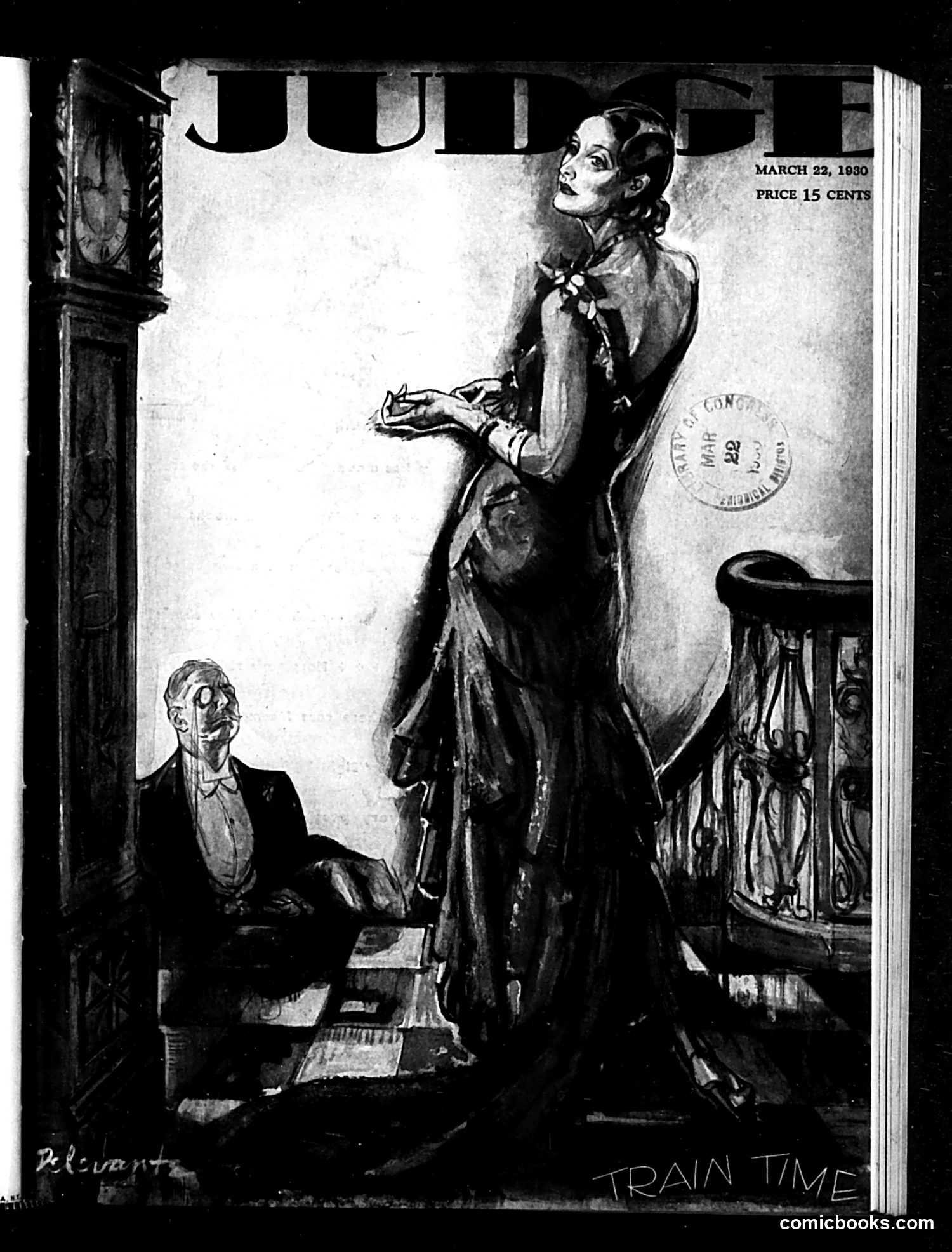
# Analysis of Judge Magazine Cover (March 22, 1930) This cover illustration, titled "Train Time," depicts a woman in an elegant evening gown standing on a chair while a man sits below looking up at her. The satire appears to comment on **gender dynamics and social behavior**, likely mocking either: 1. **Female vanity or exhibitionism**—the woman's exaggerated pose suggests she's deliberately drawing attention to herself 2. **Male subservience**—the seated man's deferential gaze suggests men catering to women's demands The 1930 date places this during the Jazz Age's tail end, when changing gender roles and women's increased social freedoms were frequent targets of satirical magazines. The artwork's style and composition are characteristic of Judge's sophisticated, slightly risqué humor aimed at upper-class readers.
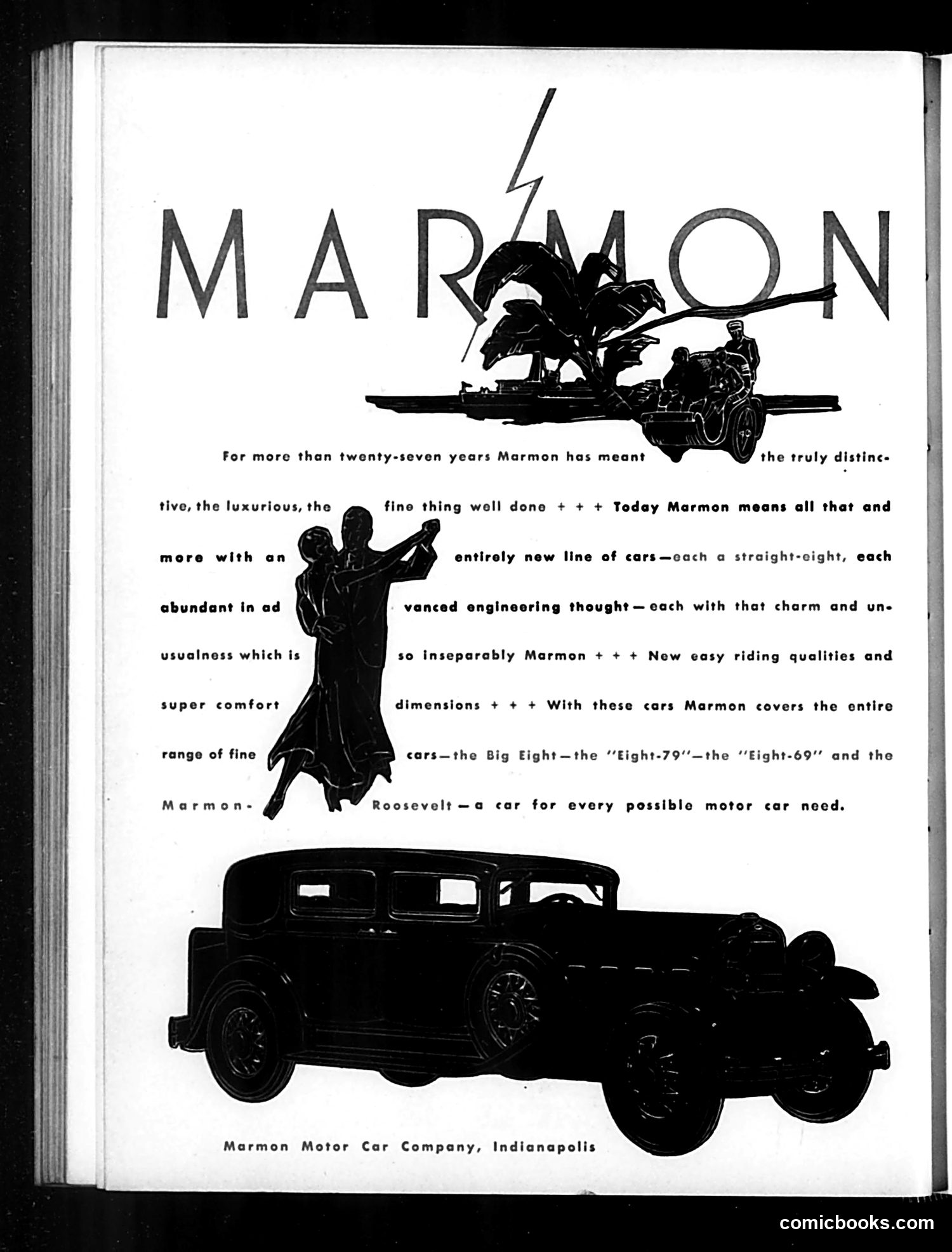
# Analysis This page is primarily a **product advertisement** for Marmon automobiles, not political satire. The Marmon Motor Car Company of Indianapolis marketed their vehicles through Judge magazine. The visual elements include: - A stylized lightning bolt through the "MARMON" text (suggesting speed/power) - An airplane silhouette (representing modernity and progress) - A classical figure gesturing upward (symbolizing aspiration or achievement) - A photograph of an actual Marmon sedan The ad copy emphasizes Marmon's 27-year reputation for luxury and engineering quality, promoting their new model line including the "Eight-79" and "Eight-69." The messaging stresses comfort, design innovation, and vehicles "for every possible motor car need." There is no apparent satire or political commentary—this is straightforward automotive advertising targeting Judge's affluent readership.
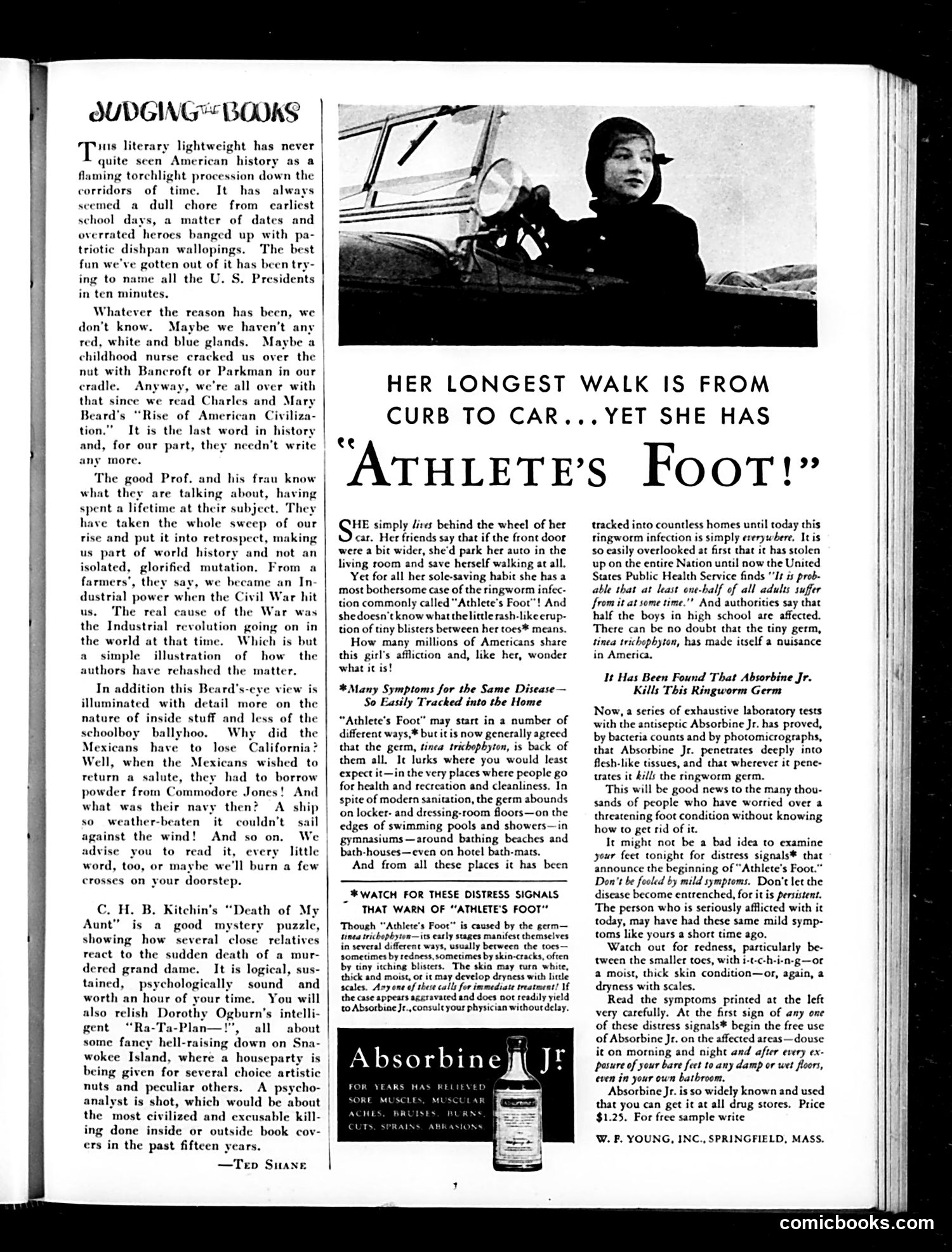
# Analysis This page is **primarily advertising**, not political satire. The main content is a large advertisement for "Absorbine Jr.," a patent medicine marketed to treat "Athlete's Foot" (ringworm infection). The advertisement uses a photograph of a woman in a car with the headline "Her longest walk is from curb to car... yet she has 'Athlete's Foot!'" The copy emphasizes how widespread this fungal infection was among Americans and warns of symptoms like itching between toes and skin scaling. The left column contains book reviews unrelated to the ad. While Judge was a satirical magazine, **this particular page focuses on commercial promotion rather than political or social commentary**. The "satire" is purely commercial—using humor and relatability to sell a medical product to ordinary readers.
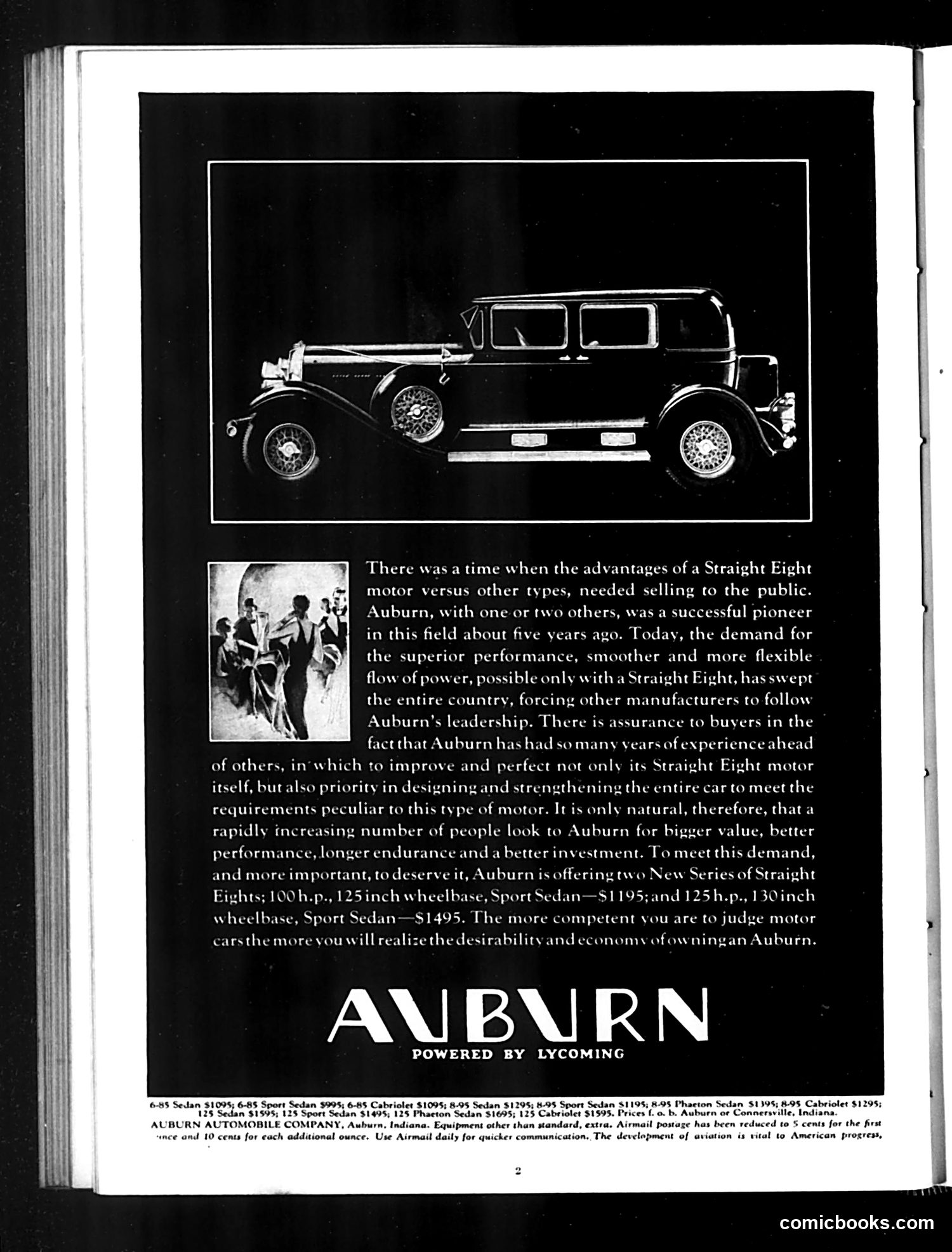
# Analysis This page is primarily **advertising, not satire or political commentary**. It's a full-page advertisement for Auburn automobiles, featuring a side-profile illustration of a luxury sedan at top. The ad's text celebrates Auburn's "Straight Eight motor" technology, claiming it offers superior performance and reliability compared to competitors. Auburn marketed itself as an innovative leader that forced other manufacturers to follow its engineering example. The small photograph shows what appears to be businessmen or salespeople—likely representing Auburn's successful dealers or executives—though the specific individuals are not identified. The ad emphasizes Auburn's experience, quality engineering, and value proposition to prospective buyers. This is commercial promotion, not editorial cartooning or social satire.
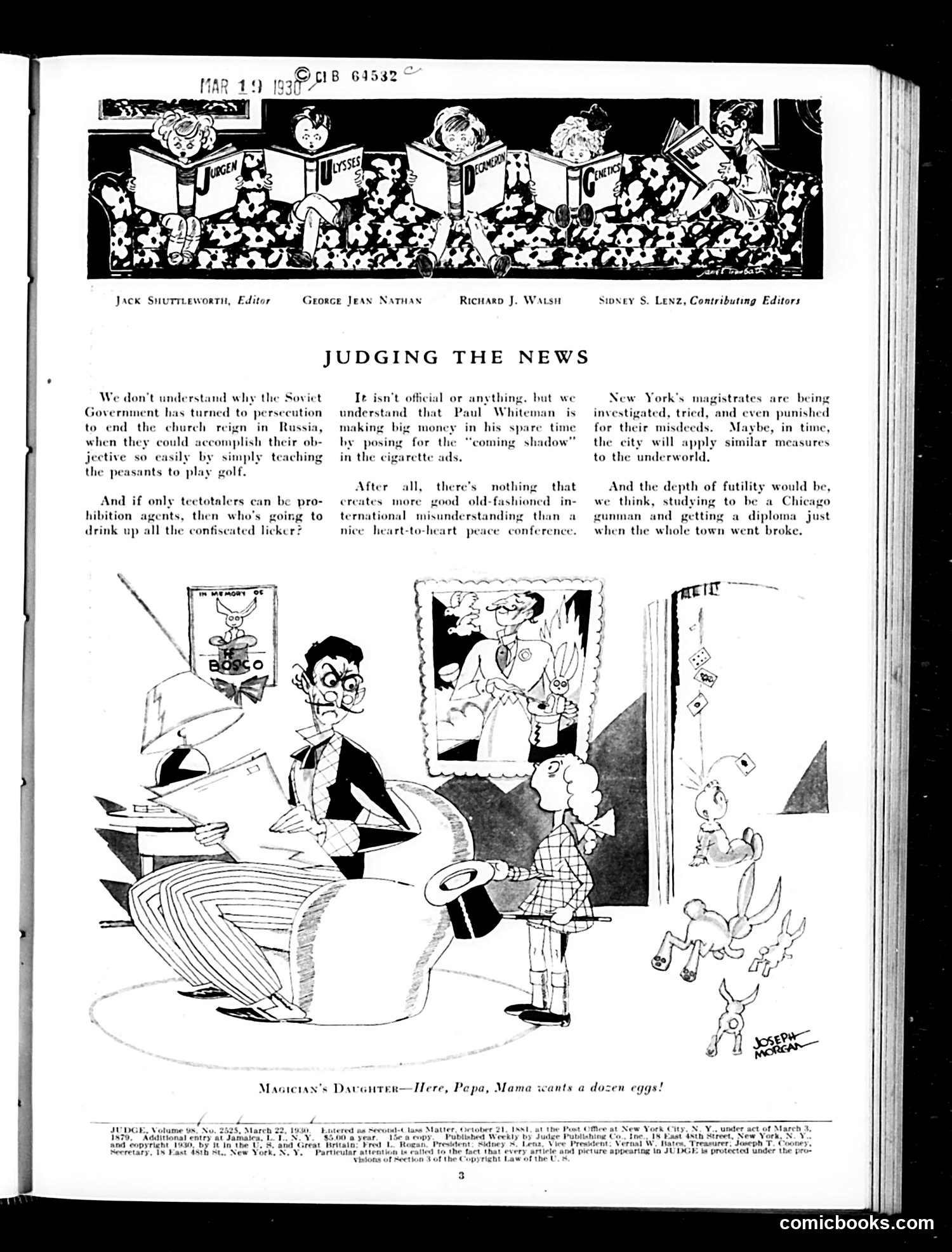
# Analysis of "Judging the News" - Judge Magazine, March 27, 1930 This satirical page critiques several contemporary issues through commentary and cartoons: The text mocks Soviet efforts to eliminate the Russian Orthodox Church, questions Paul Whiteman's (a famous bandleader of the era) business ventures in cigarette advertising, and comments on New York City magistrates investigating corruption. The main cartoon, "Magician's Daughter," depicts a magician pulling endless eggs from a hat while a young girl watches in amazement. This likely satirizes either economic abundance claims during the Depression or a magician/illusionist's act as metaphor for false promises—possibly referencing financial manipulation or political deception of 1930. The cartoon's humor relies on the visual contrast between the girl's wonder and the implicit absurdity of the "magic."
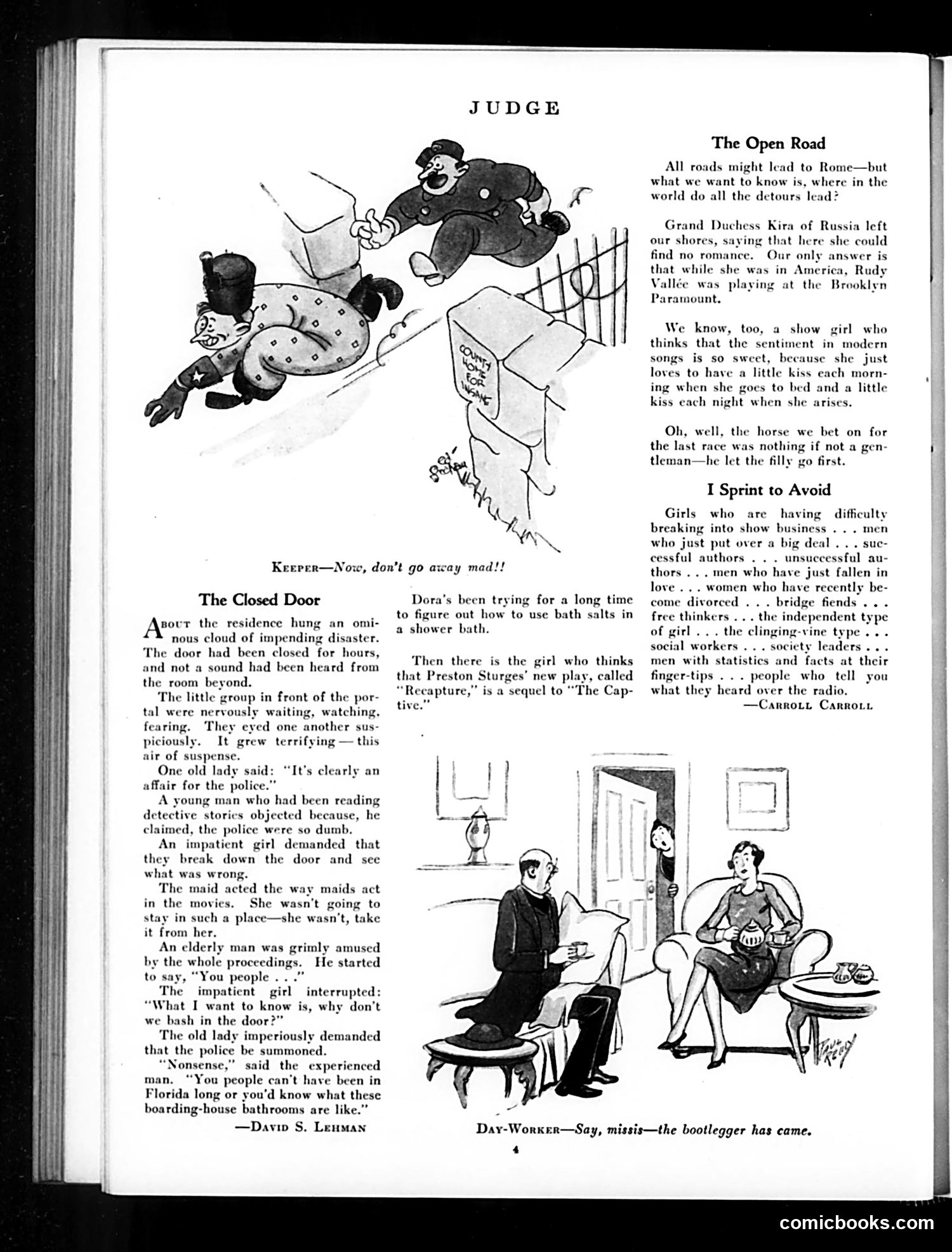
# Analysis of Judge Page Content This page contains three separate satirical pieces typical of early 20th-century Judge magazine: 1. **"The Closed Door"** (by David S. Lehman): Satirizes public anxiety about a mysterious locked door at a residence. The satire mocks both sensationalism and police incompetence—an old lady demands investigation, an impatient girl wants answers, and a young man reading detective stories expects drama, while an elderly man pragmatically notes that boarding-house bathrooms are simply inadequate. 2. **"I Sprint to Avoid"** (by Carroll Carroll): A humorous list of social types to escape—unsuccessful authors, free thinkers, society leaders, gossips. 3. **"Day-Worker" cartoon**: Depicts what appears to be a domestic or boarding-house scene where a "bootlegger has came" (likely referencing Prohibition-era illegal alcohol distribution). The overall tone reflects 1920s American urban anxieties and social commentary.
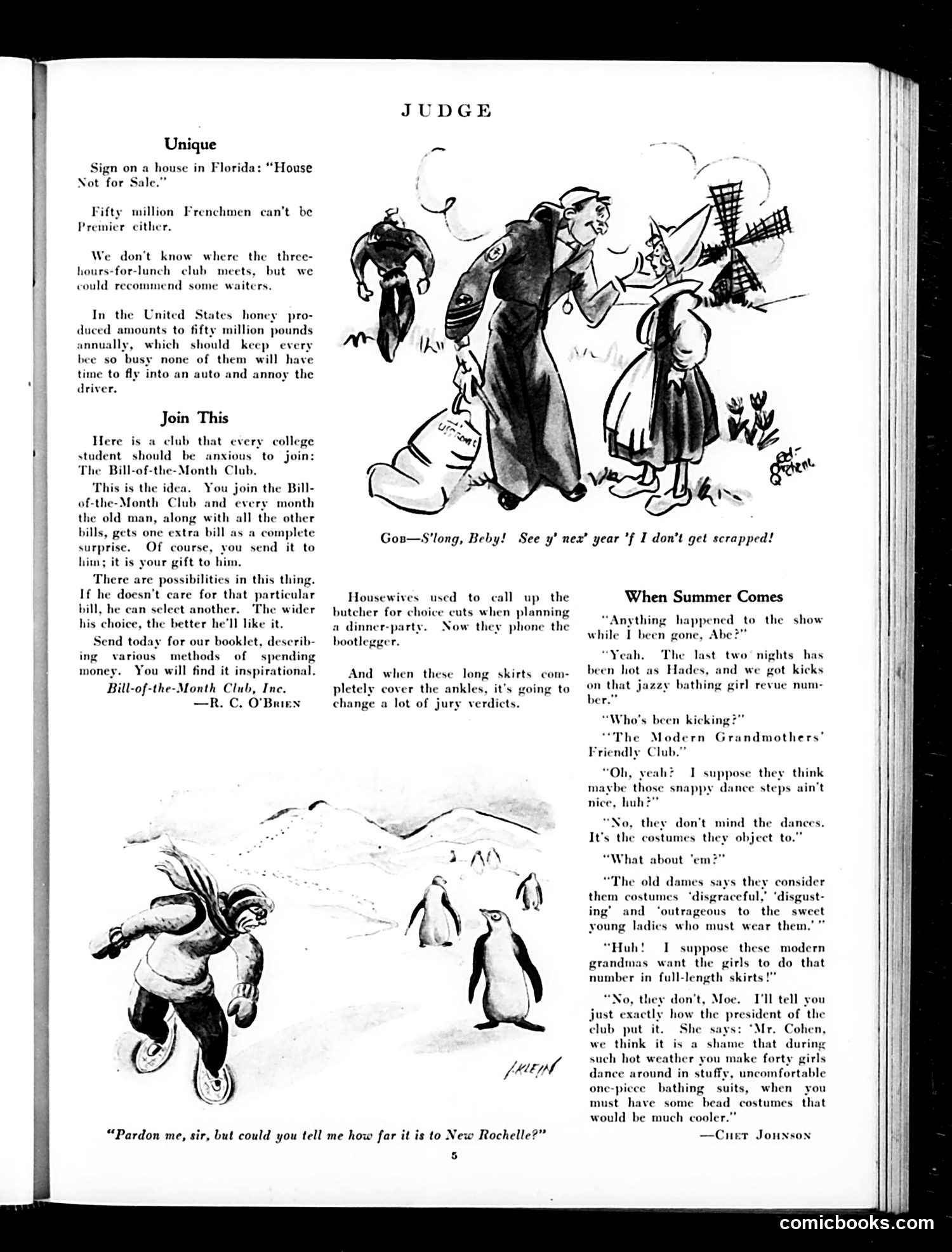
# Analysis of Judge Magazine Page This page contains three distinct sections: humorous short items, a political cartoon, and a theatrical gossip column. The top cartoon depicts a man chasing a woman with a windmill, illustrating the caption about not getting "scrapped" next year—likely referencing romantic pursuits or marriage anxieties of the era. The bottom cartoon shows a portly man on a bicycle asking directions to New Rochelle, a wealthy Westchester County suburb. This appears to satirize nouveau riche aspirations or the commuting class. The "When Summer Comes" section discusses theater gossip, particularly complaints from older women ("dames") in a club about modern dancers' costumes—objecting to shorter, less modest attire. This reflects period anxieties about changing fashion and youth culture challenging traditional standards of decorum. The overall tone reflects early 20th-century American upper-class concerns about social propriety and modern change.
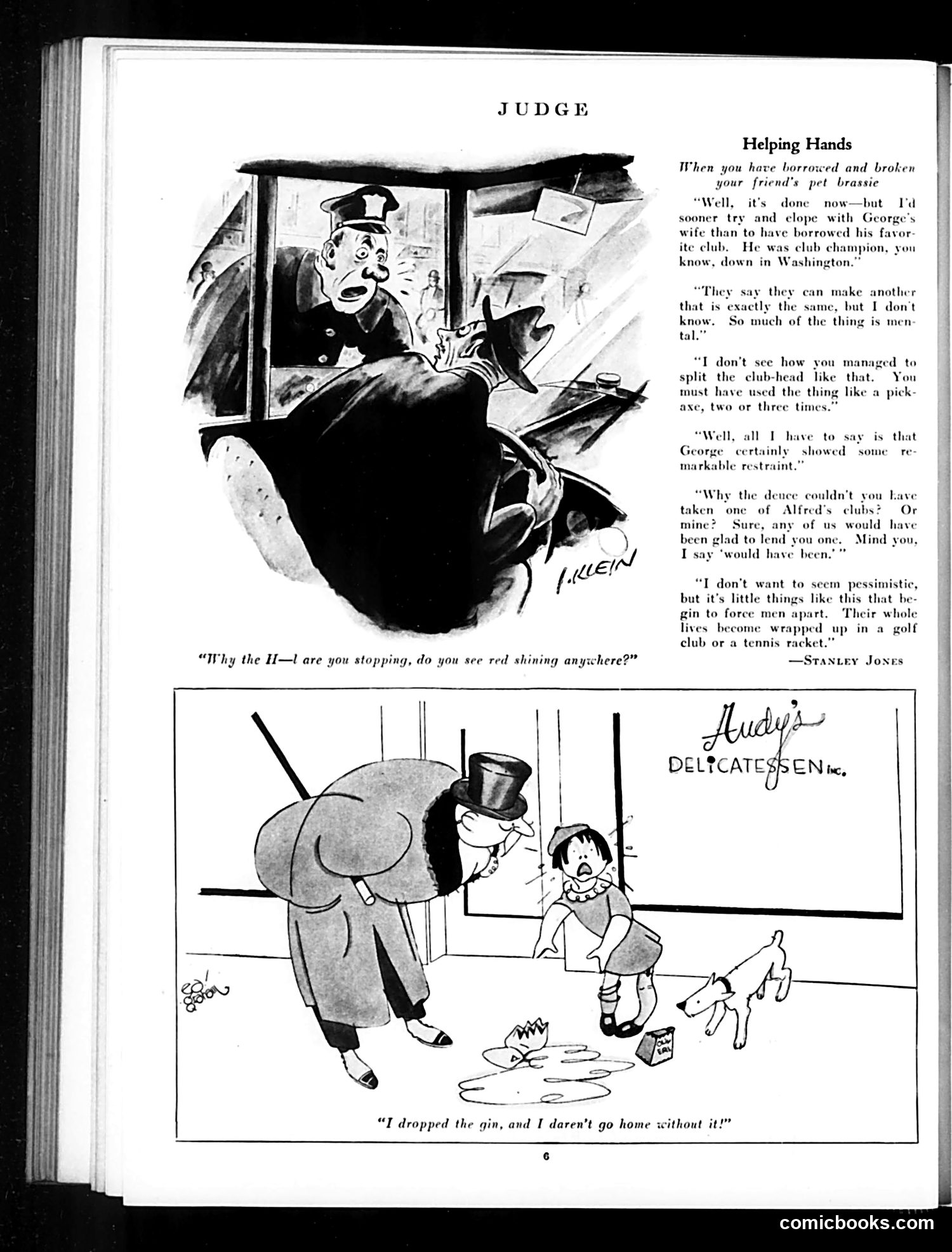
# Analysis of Judge Magazine Page This page contains two cartoons satirizing upper-class social conduct. **Top cartoon ("Helping Hands"):** A traffic judge stops a driver who's borrowed and damaged his friend's car. The accompanying text, attributed to Stanley Jones, satirizes how wealthy men excuse themselves from lending to friends by claiming their clubs or equipment aren't available—while actually protecting their possessions from damage. The joke critiques the pretense and selfishness underlying upper-class friendship rituals. **Bottom cartoon:** A well-dressed man has dropped gin at a delicatessen and frantically searches for it among scattered items, unwilling to leave without recovering it. This satirizes alcoholic dependency and the priorities of wealthy drinkers during Prohibition. Both cartoons mock the hypocrisy and moral failings of the privileged classes.
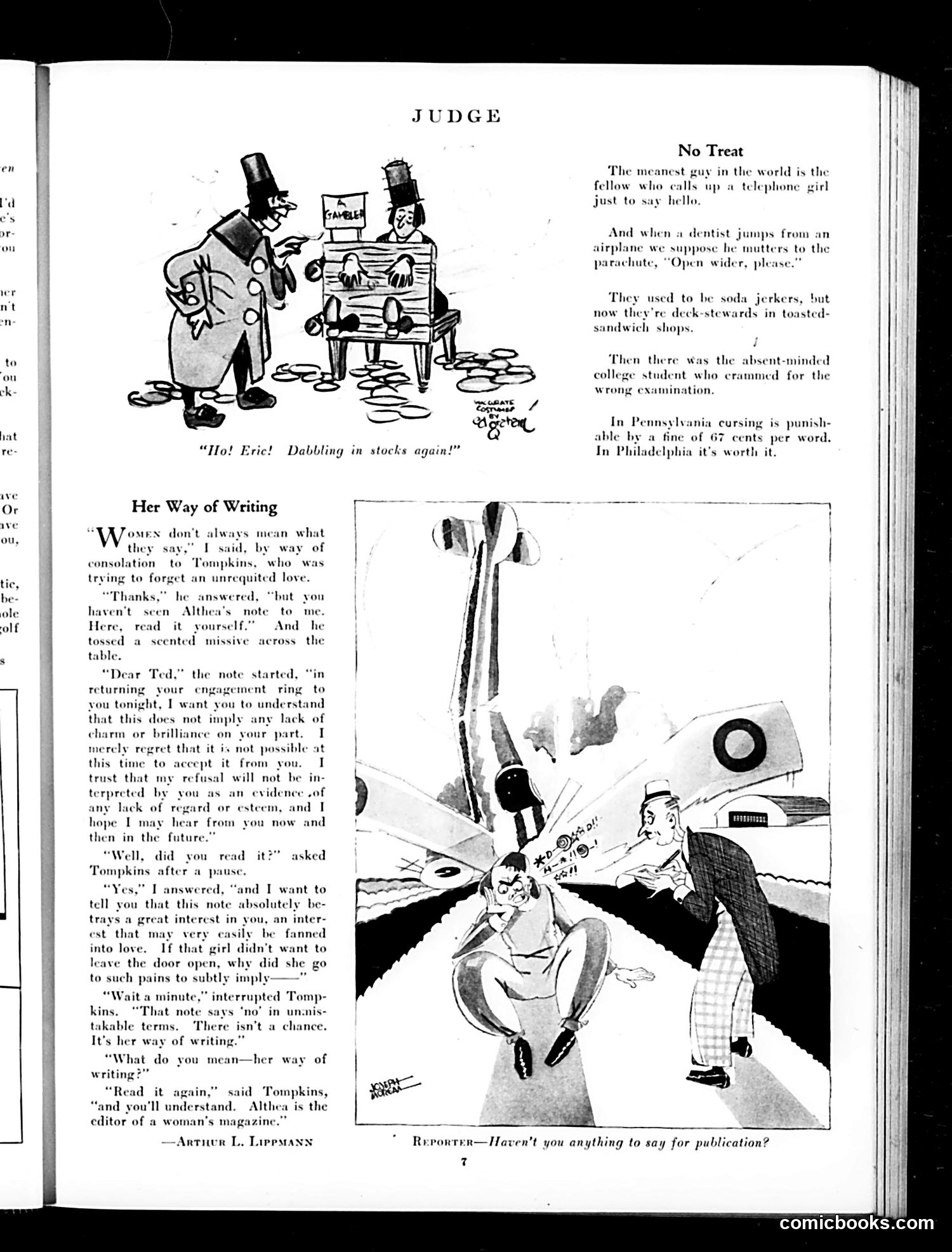
# Analysis of Judge Magazine Page **"Her Way of Writing" (main story):** A man, Tompkins, receives a rejection note from his fiancée Althea that uses extremely polite, euphemistic language to decline returning to him. The joke's punchline: Althea edits a women's magazine, so her rejection letter is deliberately written in the flowery, indirect style typical of women's magazine prose—saying "no" while appearing to leave the door open. The satire mocks both the affected writing conventions of women's publications and the gap between what polite language says versus means. **"No Treat" (humor column):** A series of brief satirical observations about modern life: cruel telephone pranksters, dentist parachutists, soda jerks becoming ship stewards, and Pennsylvania's absurdly high fines for cursing (contrasted with Philadelphia's indifference). These are topical jabs at contemporary social behavior and regional differences. **Top cartoon:** Shows a stock-market speculator ("Hlo! Erie! Dabbling in stocks again!"), likely referencing Erie Railroad stock scandals—a common Judge target reflecting 1920s-30s financial speculation anxieties.
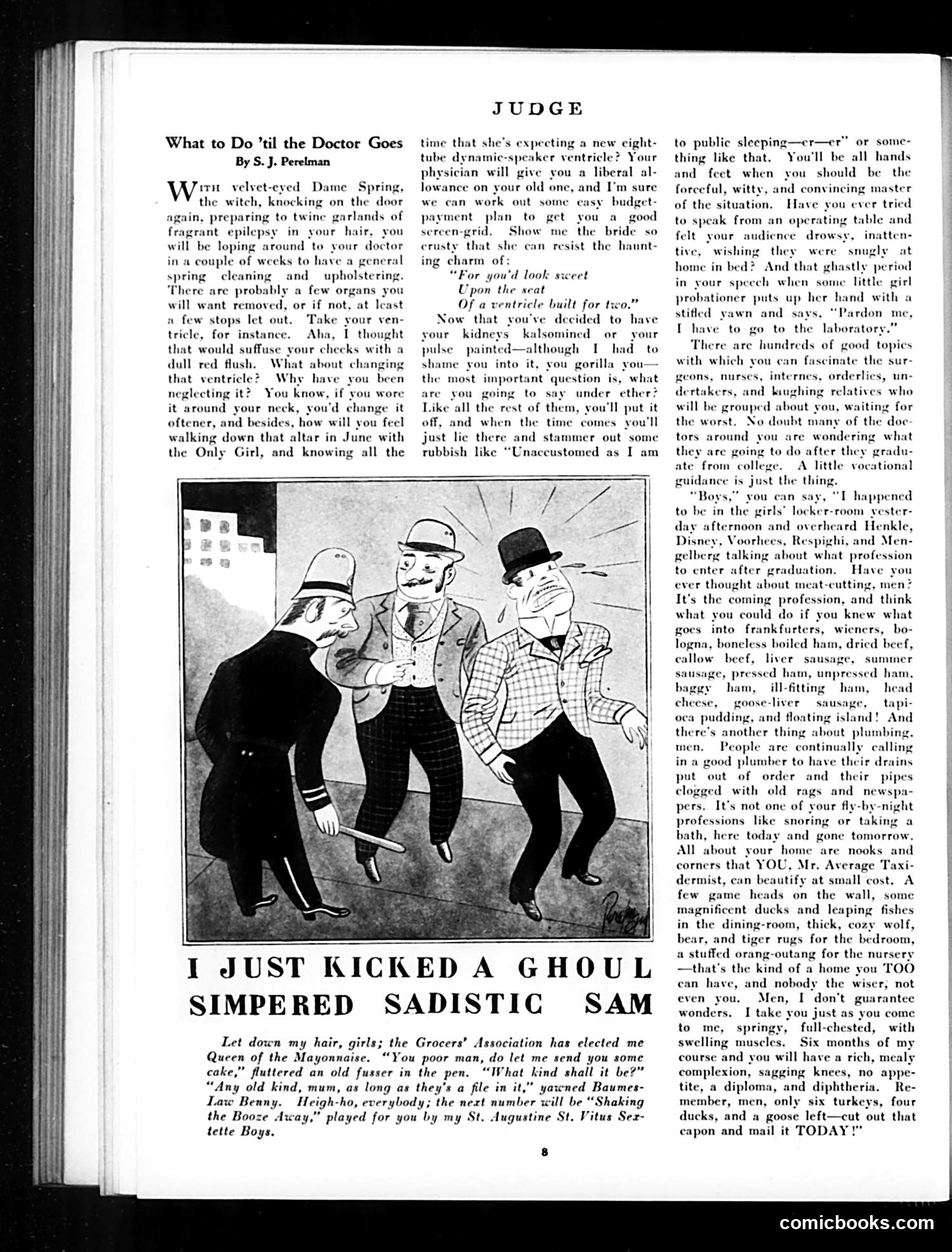
# Analysis of Judge Magazine Page This page contains two distinct pieces of 1920s-era satirical humor: **"What to Do 'til the Doctor Goes"** is S.J. Perelman's humorous essay advising readers on medical procedures before spring—a comedic riff on the common practice of scheduling doctor visits seasonally. The joke targets hypochondriacs and medical anxiety, playing on fears about surgery and anesthesia. **"I Just Kicked a Ghoul Simpered Sadistic Sam"** is a separate humor piece (author unclear) mocking a Grocers' Association queen. The cartoon image shows three men in hats apparently engaged in physical altercation or commotion—likely illustrating the "sadistic Sam" character's violent behavior. The surrounding text consists of disconnected humorous quotes and song titles, typical of Judge's vaudeville-influenced comedy style. Both pieces exemplify Judge's target audience: educated, middle-class readers amused by wordplay, mock-serious advice columns, and broad physical comedy. The overall tone is lighthearted absurdism rather than pointed social criticism.
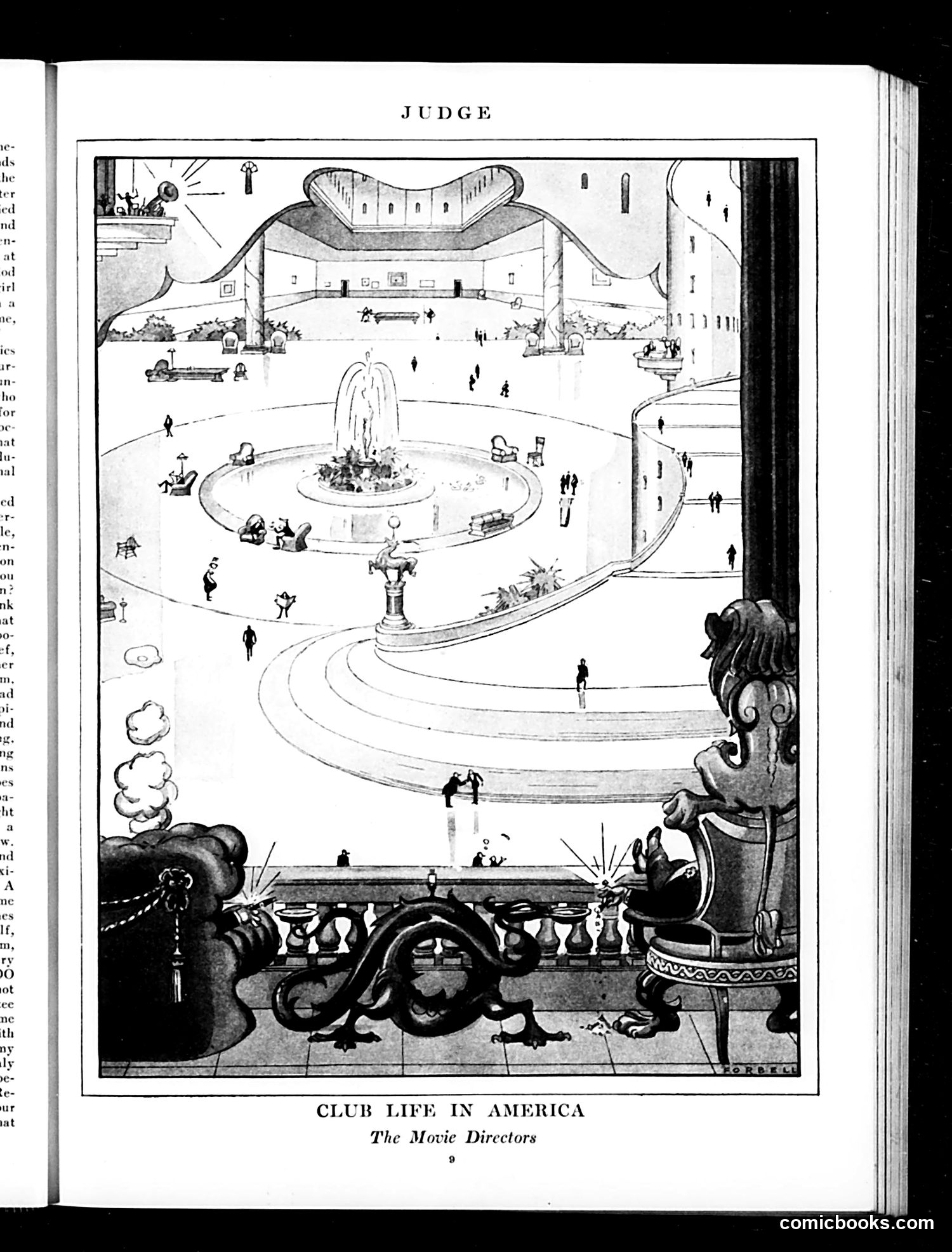
# "The Movie Directors" - Judge Magazine Satire This cartoon satirizes the movie industry's early directors as pretentious or self-important figures. The image depicts an elaborate, theatrical architectural space—suggesting the grandiose scale of film production—viewed from an ornate balcony in the foreground (where we, the viewers, sit). The scene shows a sprawling plaza with fountains, buildings, and small figures of activity below, rendered in exaggerated perspective. The title "Club Life in America / The Movie Directors" suggests these directors inhabit an exclusive, rarefied world detached from ordinary American life. The satire likely mocks directors' pretensions to high art and their separation from common experience, presenting their world as artificially elaborate and self-congratulatory—a critique common in Judge's commentary on American celebrity and wealth.
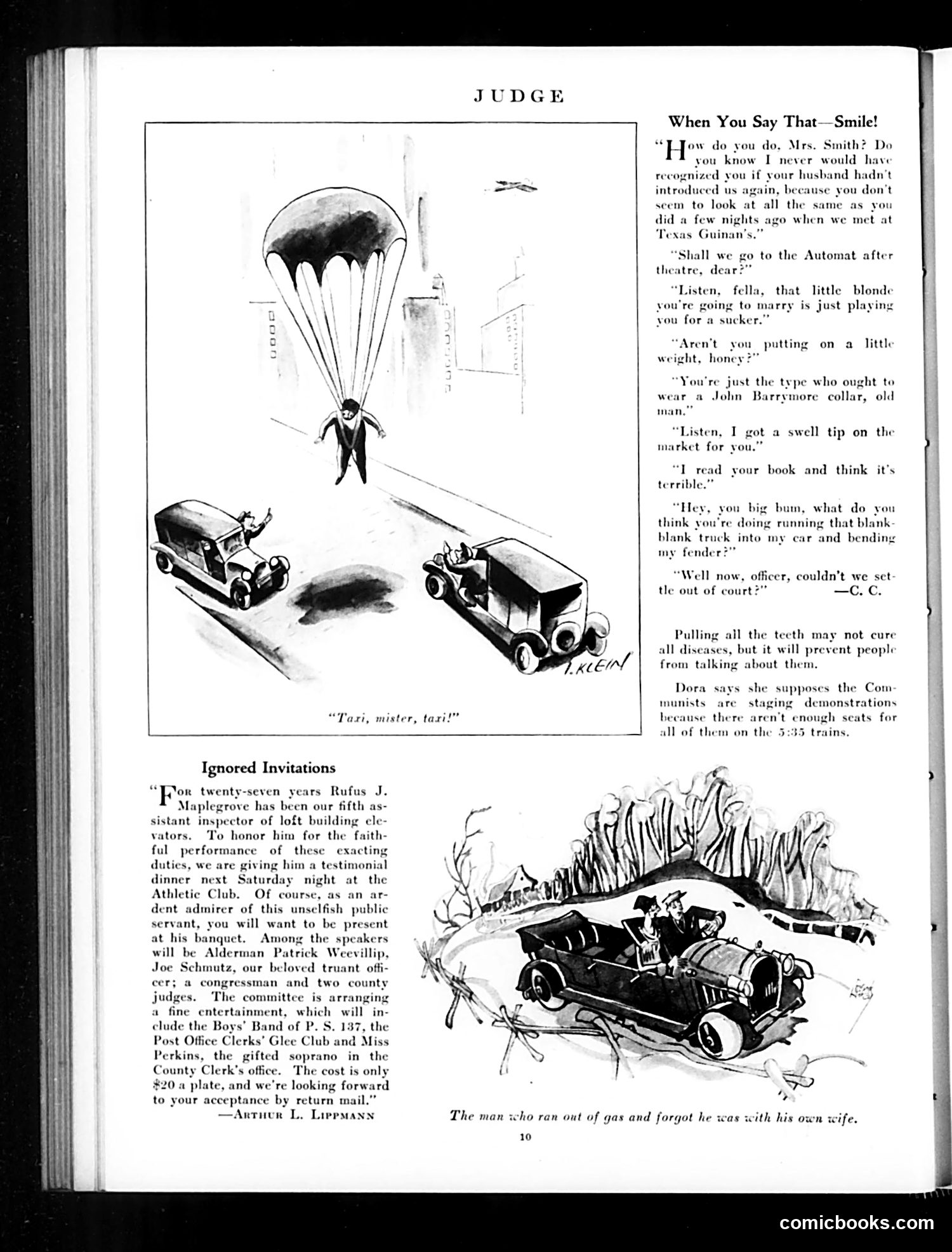
# Judge Magazine Page Analysis **Main Cartoon ("Taxi, mister, taxi!")**: Shows a man descending by parachute toward two taxis on a street. The joke appears to satirize reckless urban transportation—the man is choosing an absurdly dangerous method (parachute) over normal taxis, possibly mocking either taxi drivers' reputations for wild driving or the desperation of finding transportation. **"When You Say That—Smile!" section**: A collection of backhanded insults and awkward social comments (forgetting someone's face, calling someone fat, insulting their book). The satire targets insincere social politeness—people say cutting remarks while pretending friendliness, hence "smile" while delivering the insult. **"Ignored Invitations"**: Parodies pompous corporate testimonial dinners. The invitation for a minor bureaucrat's honor banquet lists mediocre entertainment (boys' band, glee club) while requesting $20 attendance fees—satirizing how organizations mask obligation as honor. **Bottom cartoon**: Shows a crashed car in a ditch, captioned about a man who ran out of gas and forgot his wife was with him—a joke about marital neglect during crisis.
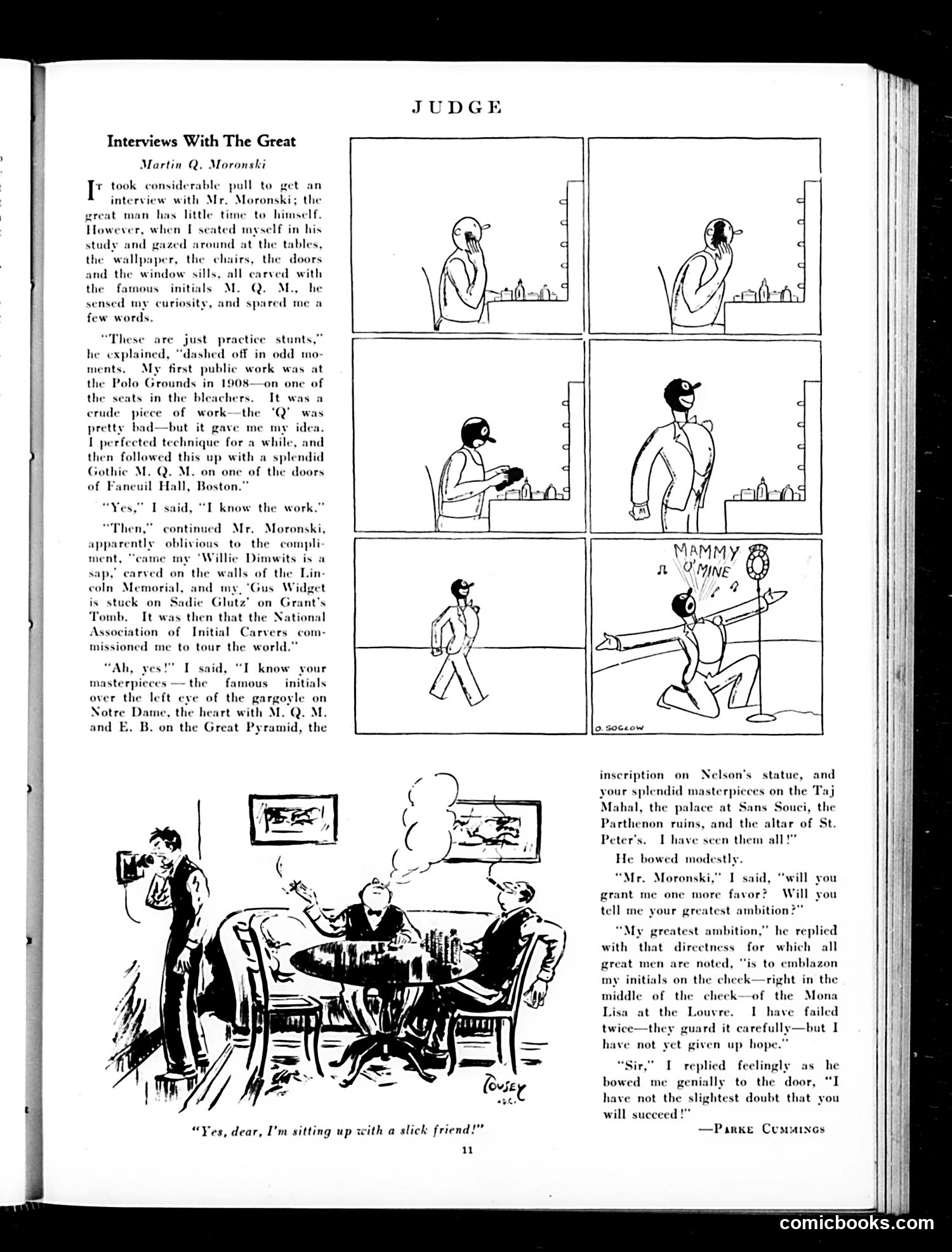
# "Martin Q. Moronski" - Judge Magazine Satire This is a satirical interview mocking graffiti artists and vandals. "Moronski" is a fictitious character whose name itself signals the joke—a play on "moron." The satire works by treating this vandal as a celebrated artist. The interview credits him with carving initials into famous landmarks: the Lincoln Memorial, Grant's Tomb, Notre Dame's gargoyle, the Great Pyramid, Nelson's Column, the Taj Mahal, Parthenon, and St. Peter's Altar. His "greatest ambition" is defacing the Mona Lisa in the Louvre. The humor lies in the absurd elevation of common property destruction into a prestigious career, complete with an "Association of Initial Carvers" commissioning world tours. The accompanying comic strips show Moronski repeatedly carving his initials in everyday settings. The bottom cartoon mocks similarly questionable social climbing, with the caption "Yes, dear, I'm sitting up with a slick friend!"—implying association with disreputable people. The satire targets both actual vandals and perhaps the cultural pretentiousness that might glamorize destructive behavior.