
A complete issue · 40 pages · 1925
Life — December 17, 1925
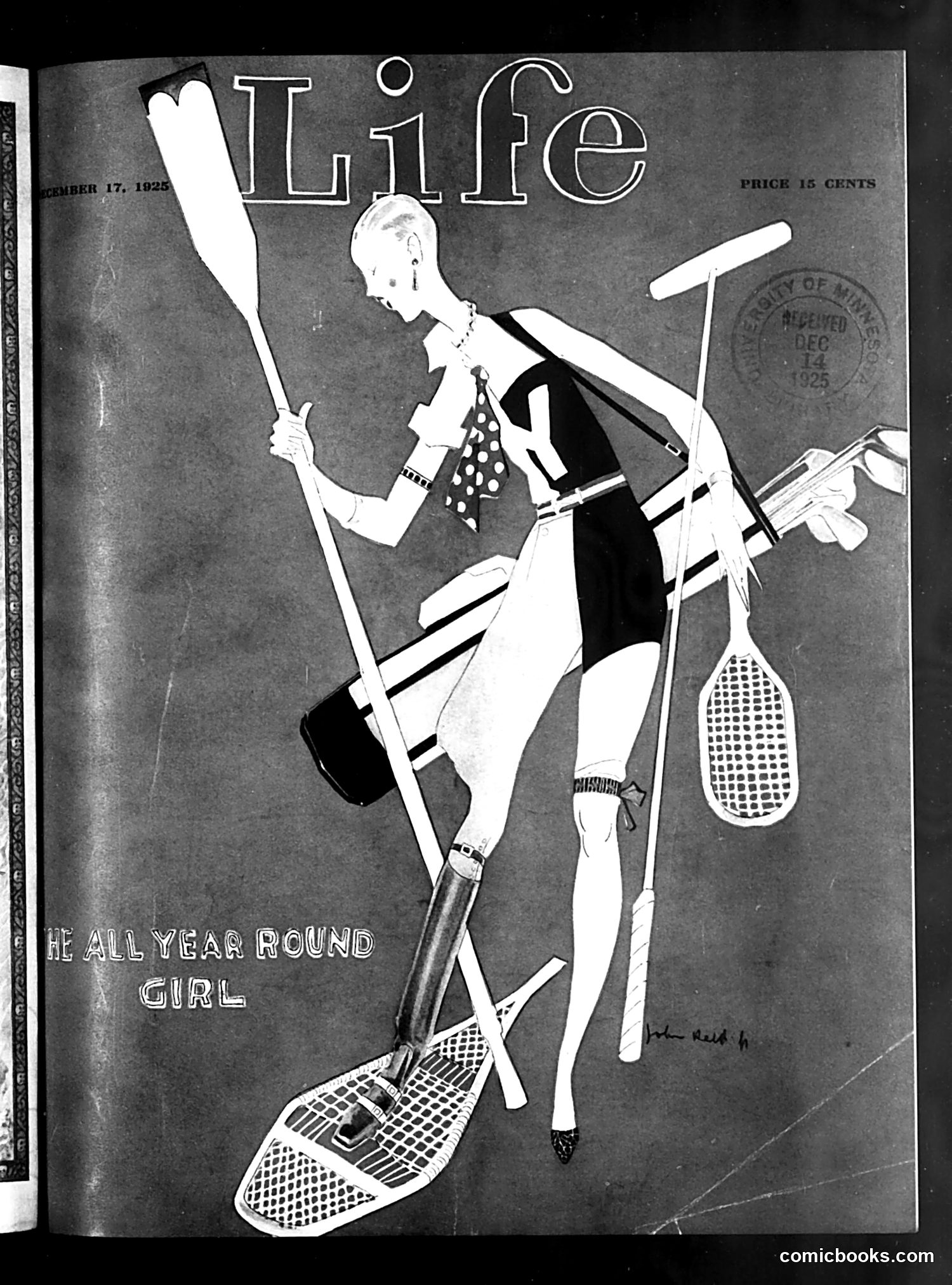
This is the December 17, 1925 cover of *Life* magazine, priced at 15 cents. The illustration depicts "The All Year Round Girl"—a fashionable young woman juggling multiple sporting and recreational activities simultaneously: tennis racket, golf club, snowshoes, skiing equipment, and what appears to be a baseball bat. The satire targets the emerging "modern woman" of the 1920s Jazz Age, who was increasingly participating in sports and outdoor recreation previously considered masculine domains. The exaggerated juggling act mocks the expectation that women should excel at *all* seasonal pastimes year-round while maintaining fashionable appearance and femininity. This reflects actual social change: the 1920s saw women gaining more freedom, shorter skirts enabling athletic participation, and expanded recreational opportunities—changes conservative society found either exciting or threatening.
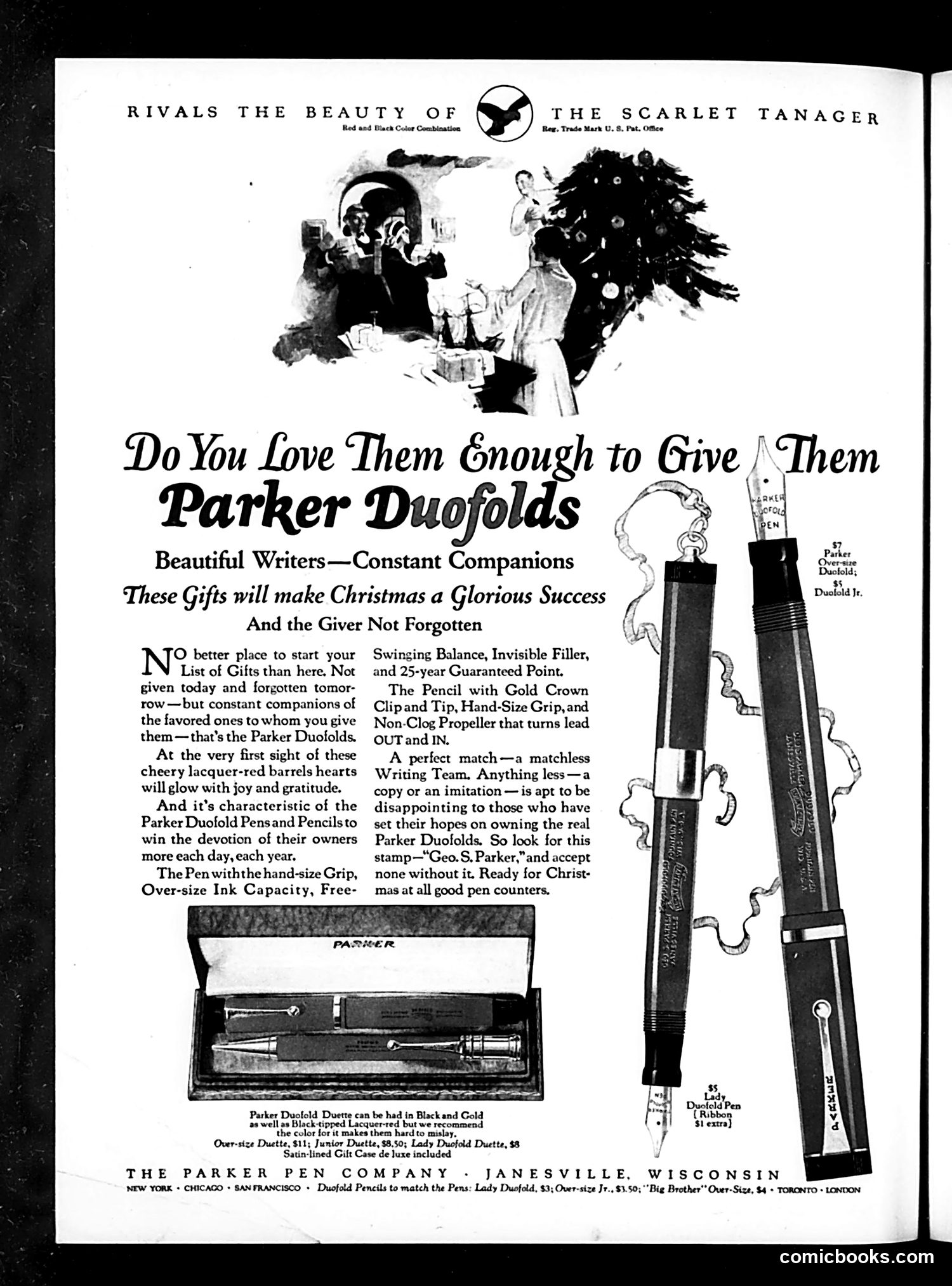
This page is **primarily a Parker Pen Company advertisement**, not political satire. The header references "The Scarlet Tanager" (a bird), likely a Parker branding element, and claims their pens "rival the beauty" of this bird. The main advertisement promotes Parker Duofold pens as Christmas gifts, emphasizing their quality and reliability as "Beautiful Writers—Constant Companions." The ad features product images showing the pen's features: hand-size grip, gold crown clip, and retractable propeller. The decorative illustrations at top show stylized figures in elegant dress, but these appear to be generic gift-giving imagery rather than political commentary or caricature. This is a straightforward commercial advertisement from Life magazine's advertising section.
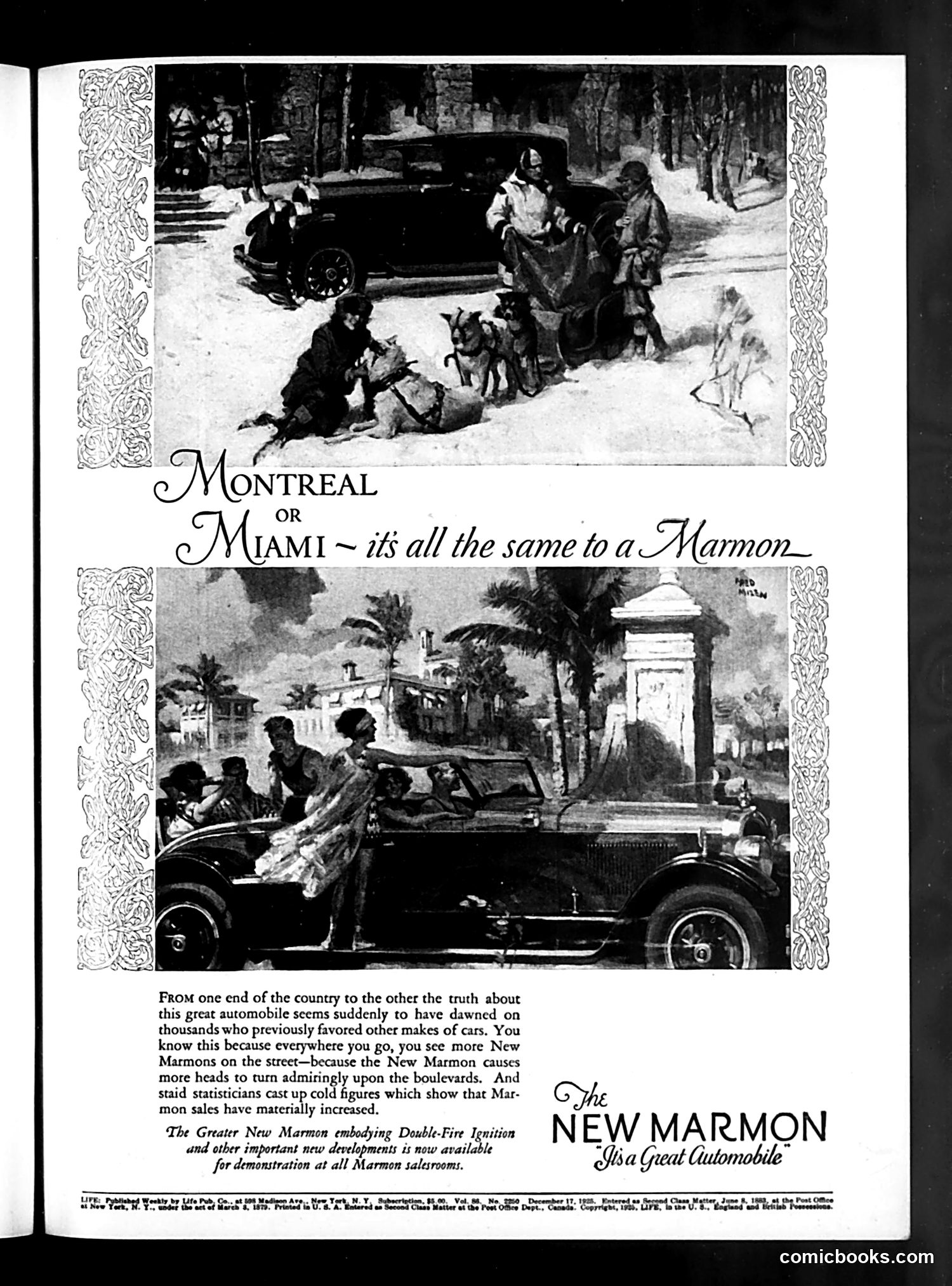
This page is primarily **advertising, not satire**. It's a Marmon automobile advertisement from Life magazine, not political commentary. The ad's headline—"Montreal or Miami—it's all the same to a Marmon"—uses a comparative visual joke: the top image shows a snowy Montreal winter scene with a dog sled, while the bottom depicts a tropical Miami setting with palm trees and an open convertible. The text argues that Marmon cars perform equally well in both extreme climates, suggesting superior engineering and reliability. The "joke" is that whether you're in frozen Canada or warm Florida, a Marmon automobile handles conditions equally well. This reflects early 1900s automobile marketing emphasizing performance across diverse American geography and climates.
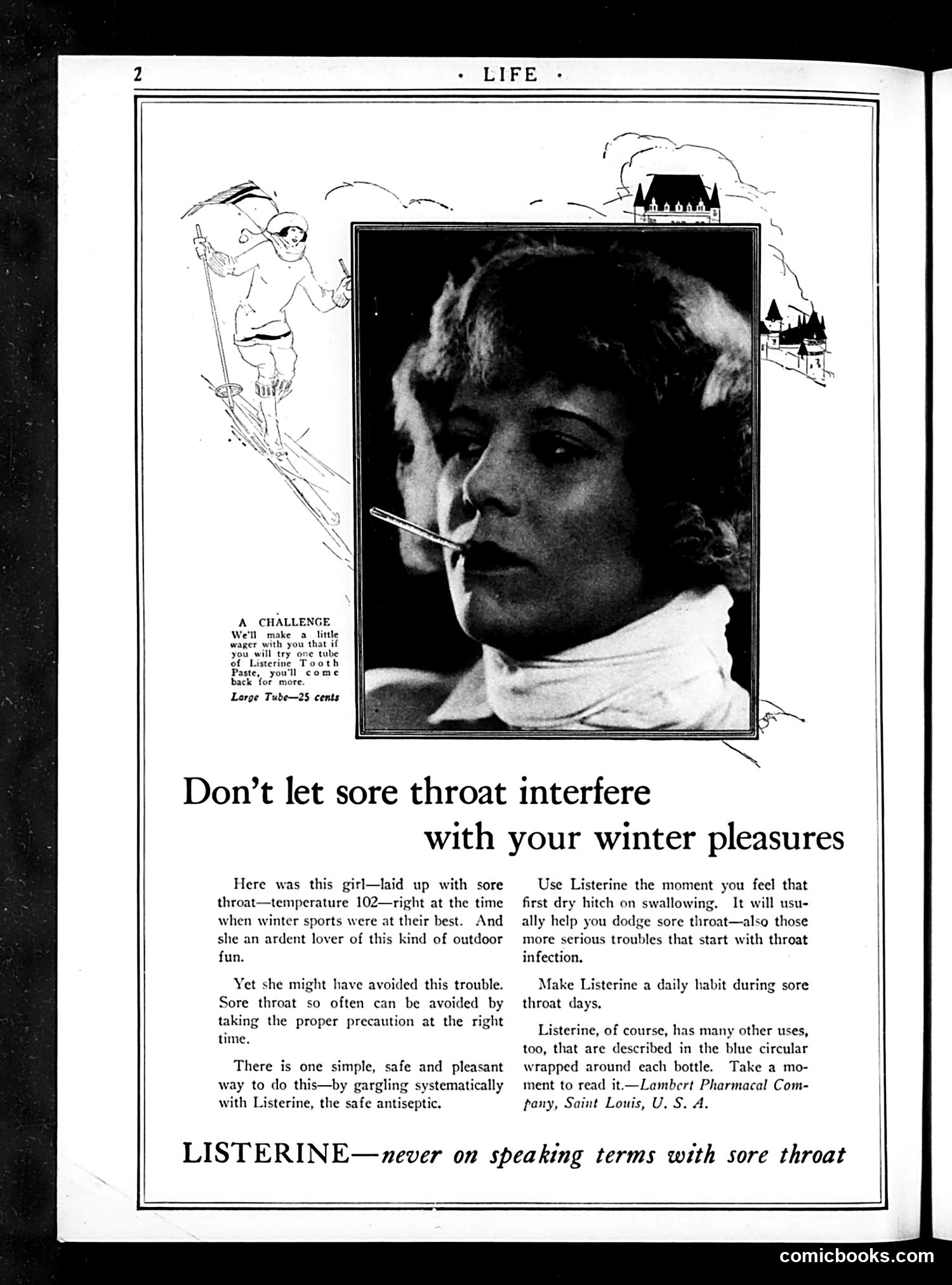
This page is primarily a **Listerine advertisement**, not satire or political commentary. The advertisement uses a health scare narrative to sell the antiseptic mouthwash. The image shows a woman with a sore throat during winter sports season. The accompanying text presents a cautionary scenario: she contracted a sore throat (temperature 102°F) while enjoying winter activities, implying she could have prevented this by gargling with Listerine. The small ski-themed cartoon on the left is merely decorative, illustrating "winter pleasures." The ad's message is straightforward: use Listerine preventatively at the first sign of throat trouble to avoid serious infection and maintain your winter activities. This represents early 20th-century marketing that equated a commercial product with medical prevention—a common advertising tactic before modern FDA regulations.
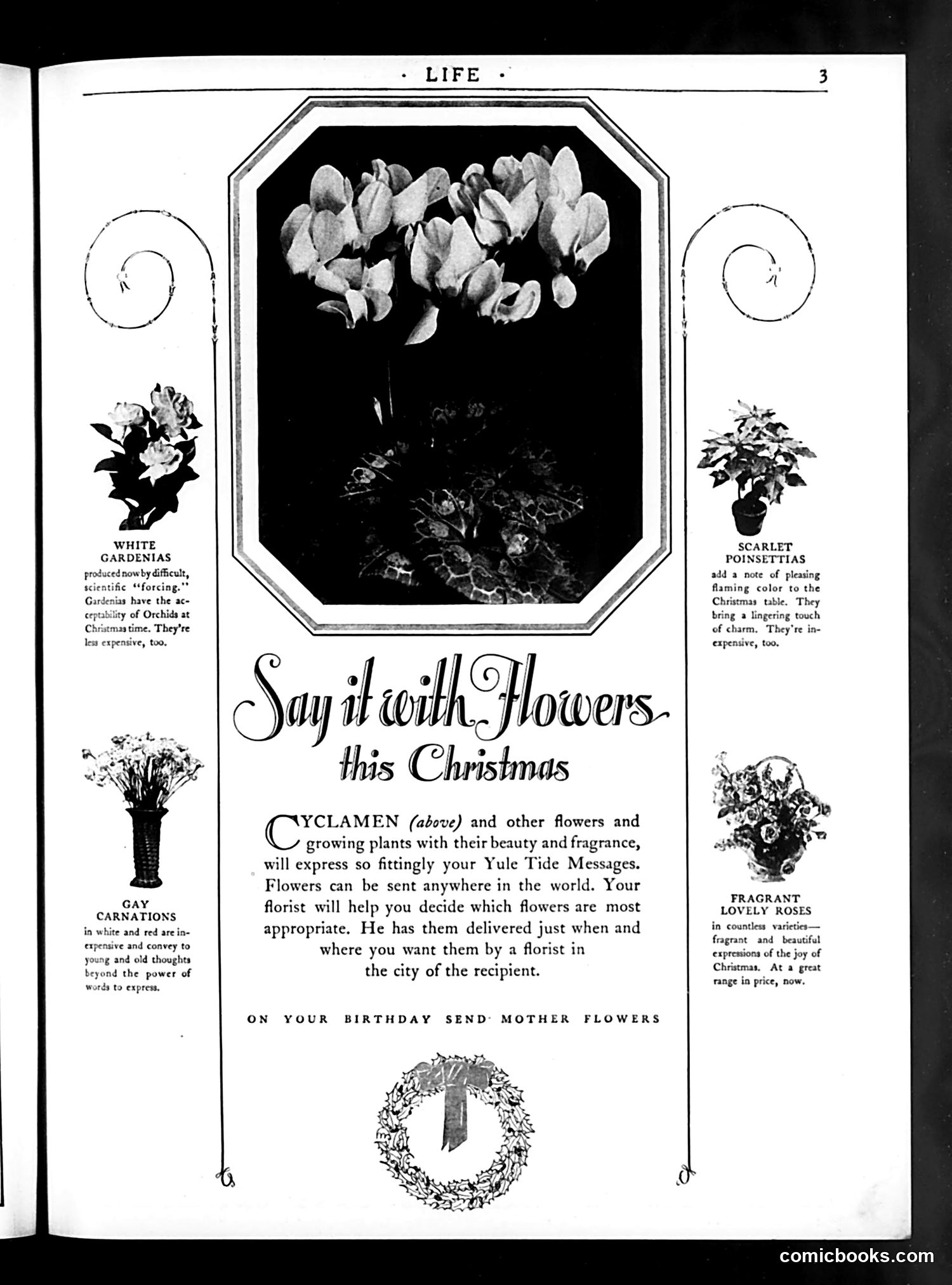
This is **not a political cartoon** but rather a **Christmas-season advertisement for flowers**, likely from the early 20th century. The page promotes sending flowers as holiday gifts, featuring: - **Central image**: Cyclamen flowers (the main advertised bloom) - **Side panels**: White gardenias, scarlet poinsettias, gay carnations, and fragrant roses—each with descriptive text emphasizing their beauty and suitability as Christmas gifts - **Tagline**: "Say it with Flowers this Christmas" - **Sales pitch**: Encourages readers to send flowers anywhere via local florists, with suggestions to send flowers to mothers on their birthdays The page contains no political satire or social commentary—it's purely commercial content promoting the emerging practice of gifting cut flowers for special occasions.
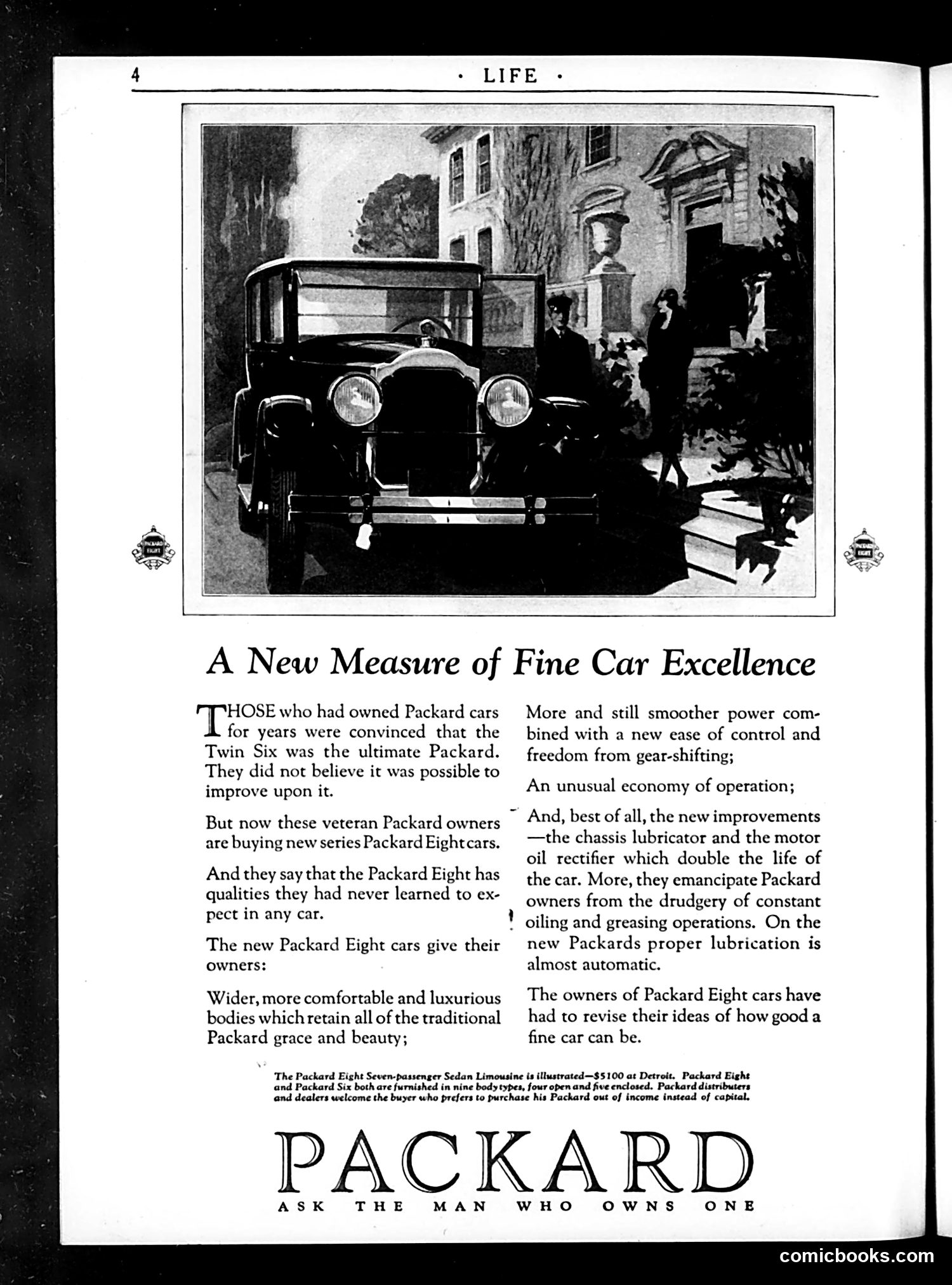
This is primarily a **Packard automobile advertisement**, not satire or political commentary. The page announces the new Packard Eight model to replace the earlier Twin Six. The advertisement's strategy addresses existing Packard owners: it acknowledges their loyalty ("veteran Packard owners") while persuading them that improvement is possible despite their previous conviction that the Twin Six was unsurpassed. The ad emphasizes the Eight's technical advances—smoother power, easier control, automatic lubrication—positioning it as evolution rather than replacement. The image shows a well-dressed couple with their new Packard Eight in front of an elegant mansion, reinforcing that Packard automobiles signify luxury and social status. The tagline "Ask the man who owns one" was Packard's actual marketing slogan during this era, appealing to peer recommendation and prestige.
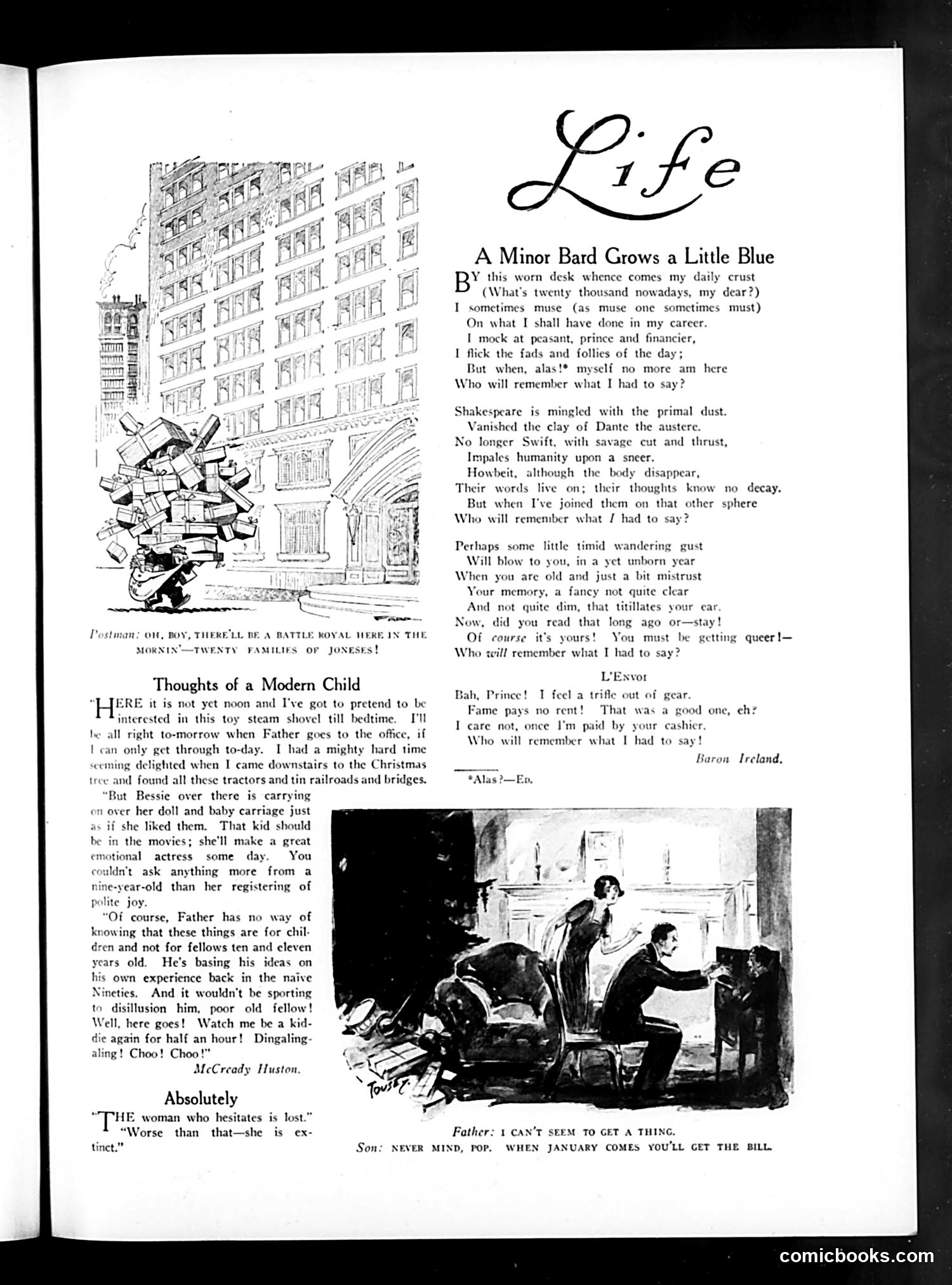
This page contains three separate pieces of satirical content: 1. **"A Minor Bard Grows a Little Blue"** — A poem by Baron Ireland lamenting mortality and forgotten legacy, referencing Shakespeare and Dante. It appears to satirize a writer's anxiety about being forgotten after death. 2. **"Thoughts of a Modern Child"** — A humorous piece by McCready Huston depicting a child's selfish holiday expectations, mocking parental indulgence and children's materialism around Christmas. 3. **"Absolutely"** — A brief one-liner joke about indecisive women. The accompanying illustration shows a domestic scene with a father and son, captioned with dialogue about getting "a thing" in January—likely satirizing post-holiday financial consequences and parental disappointment with children's behavior or demands.
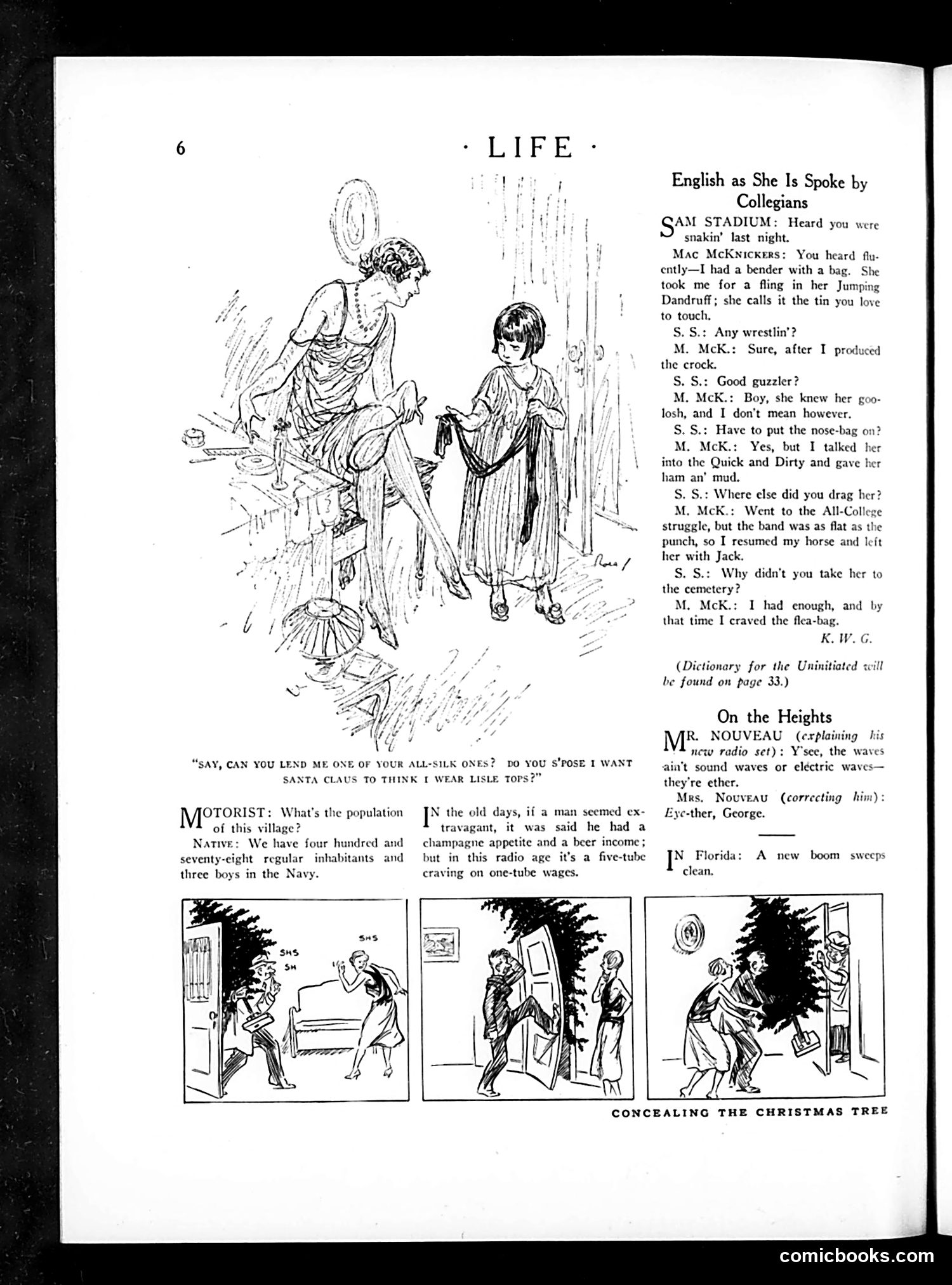
This page contains humorous sketches and dialogues satirizing 1920s collegiate slang and social behavior. **"English as She Is Spoke by Collegians"** mocks how college students use exaggerated, invented slang ("snakin'," "fling," "guzzler," "Quick and Dirty"). Mac McKnickers describes taking a date to various venues, using period slang for romantic encounters and recreational activities. **"On the Heights"** presents brief witticisms about modern life—sound waves versus electric waves, and a joke about Florida's booming population. **"Concealing the Christmas Tree"** shows a three-panel domestic comedy: a couple struggles to hide an oversized Christmas tree from children by cramming it behind a door, with progressively more difficulty as family members nearly discover it. The overall tone satirizes contemporary youth culture and middle-class domestic situations.
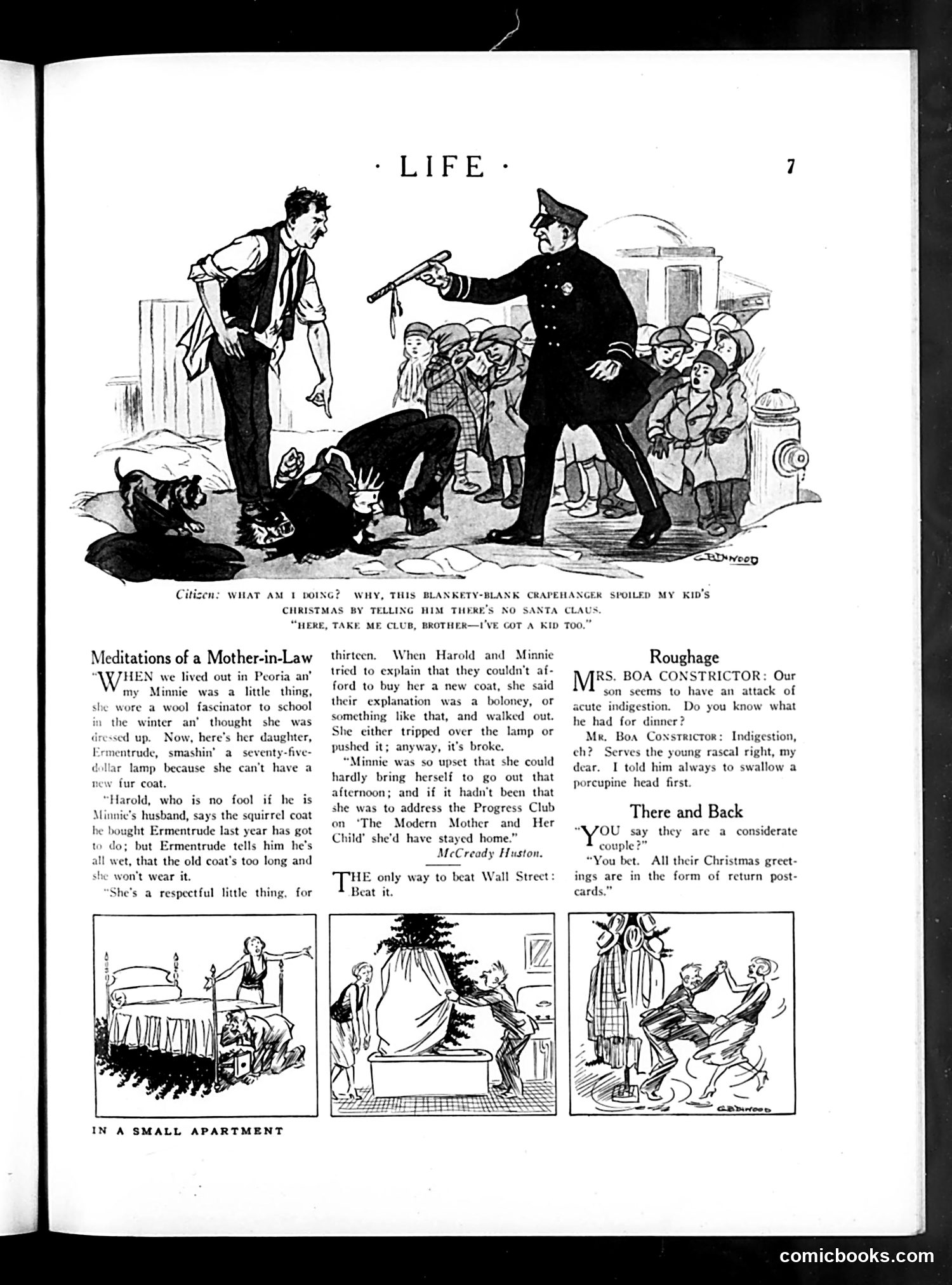
The top cartoon depicts a uniformed policeman striking a man while children watch, captioned about a "crapehanger" who spoiled Christmas by telling children Santa doesn't exist. The officer says "HERE, TAKE ME CLUB, BROTHER—I'VE GOT A KID TOO," suggesting he sympathizes with punishing someone who ruins childhood innocence. Below are three cartoon vignettes titled "In a Small Apartment" satirizing cramped urban living—showing domestic chaos in tight quarters: a bed with people falling off, someone struggling with an overstuffed Christmas tree, and people tangled in hanging laundry. The sidebar articles discuss holiday complaints: a mother-in-law's coat frustrations, digestive troubles ("Roughage"), and couples sending return postcards instead of proper Christmas greetings. The humor targets middle-class domestic anxieties and holiday etiquette failures.
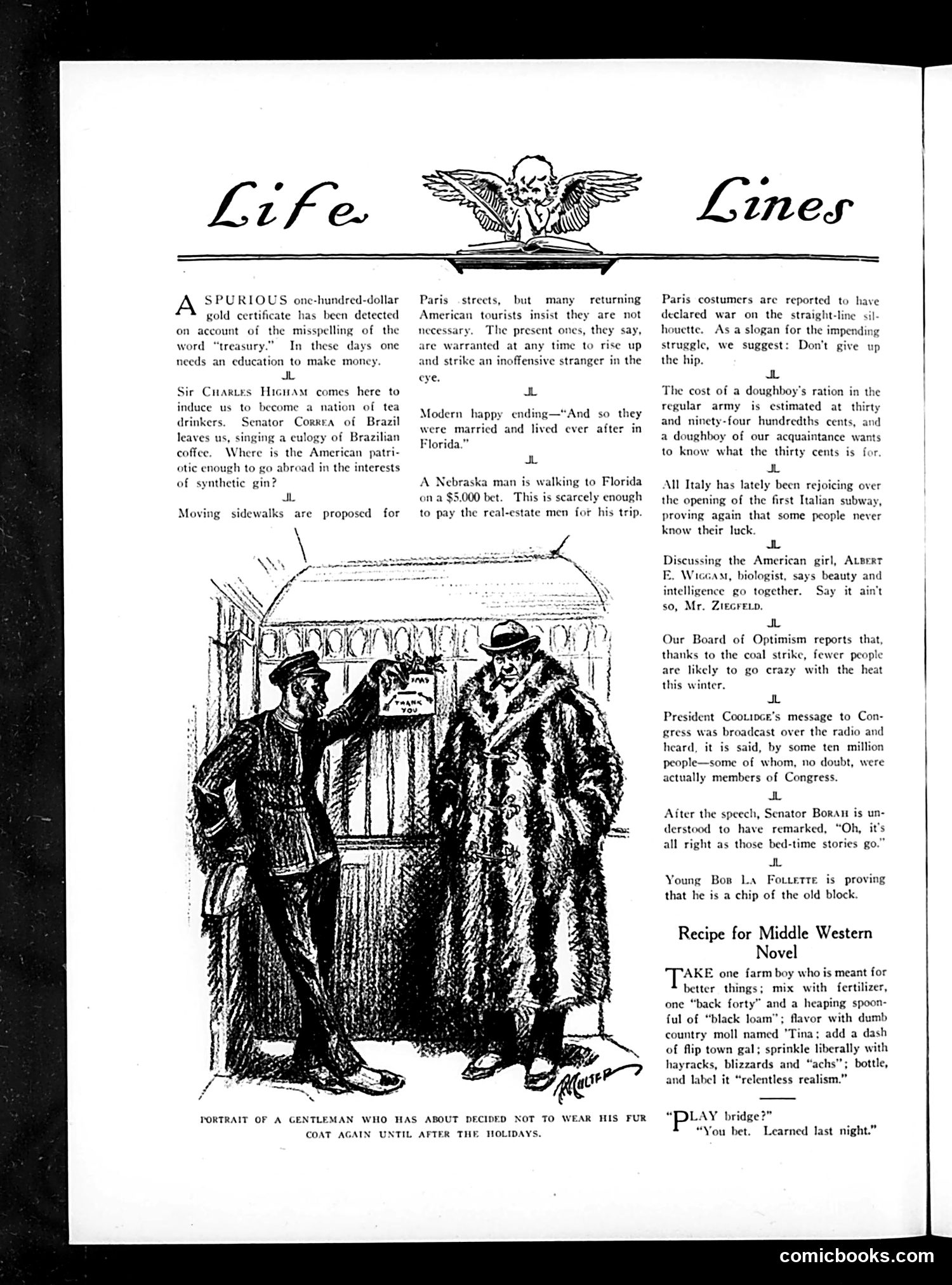
This satirical page contains several brief jokes and commentary typical of Life magazine's humor section. The main illustration depicts three men in winter coats examining what appears to be a fur coat, with the caption explaining one gentleman has decided against wearing his fur coat again after the holidays. The "Life Lines" section includes topical jabs at: - Gold certificate fraud schemes - Sir Charles Higham's promotion of tea - Proposed sidewalk designs - Synthetic gin alternatives - American tourists in Paris - A "Recipe for Middle Western Novel"—a humorous formula satirizing pulp fiction conventions (mixing farm boys, "black forty" plots, hayracks, and "relentless realism") The page represents typical 1920s-era satirical commentary on consumer culture, fraud, and American social pretensions.
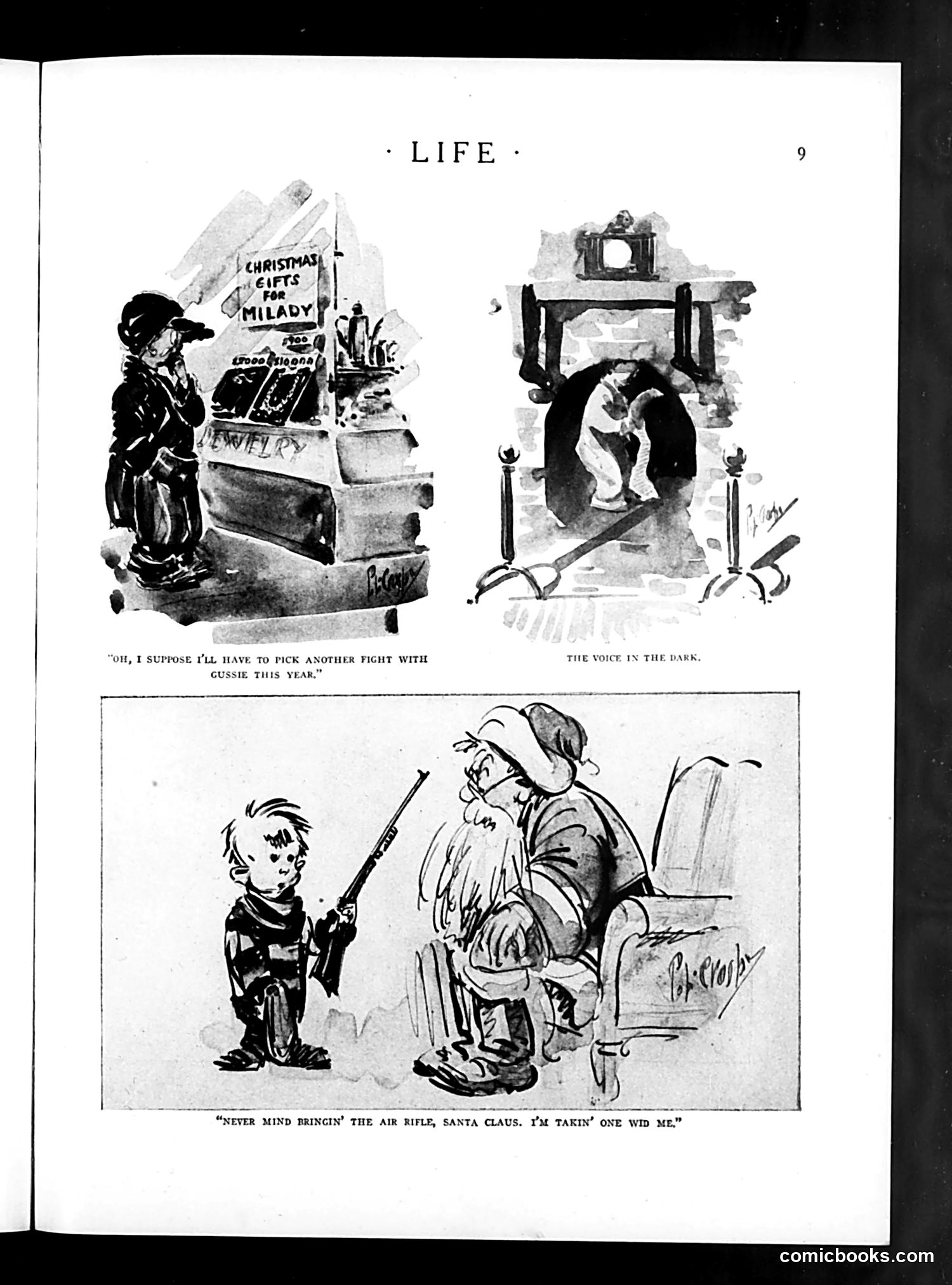
This page contains three cartoon vignettes satirizing Christmas gift-giving and children's behavior during wartime (likely WWI or WWII era, based on the style). The top left shows a young girl eyeing a display of "Christmas Gifts for Milady," commenting she'll need to "pick another fight with Gussie this year"—satirizing materialism and girls' competitive nature. The top right depicts "The Voice in the Dark"—a child confronting what appears to be a mechanical device or toy, suggesting anxiety about unfamiliar technology. The bottom panel shows a small boy threatening Santa Claus with an air rifle, declaring he's "takin' one wid me"—dark humor about a child's willingness to resort to violence to get Christmas gifts. The cartoons mock childish greed and aggression during an era of resource scarcity.
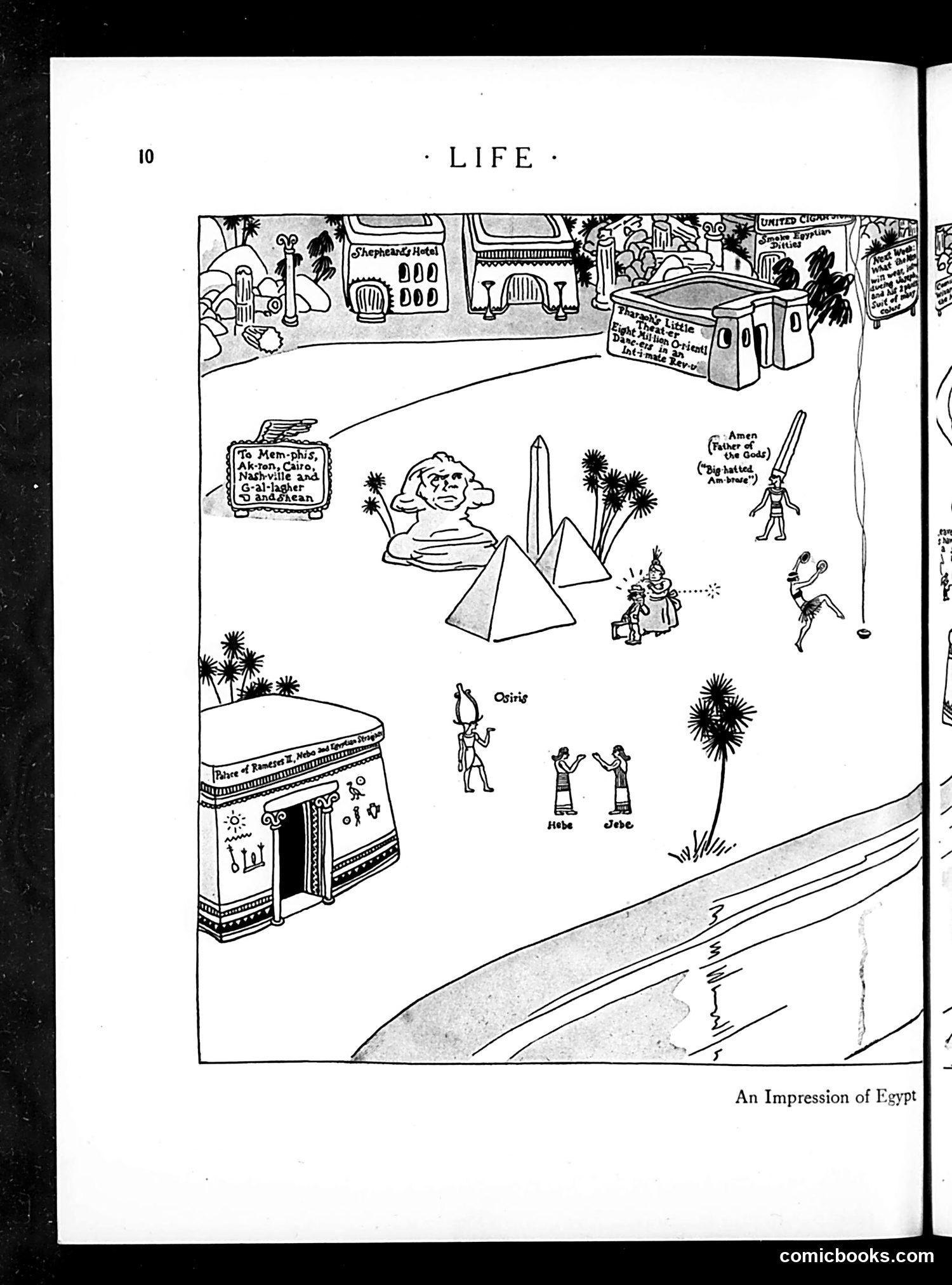
This is a satirical illustration depicting ancient Egypt as a tourist destination. The cartoon shows classic Egyptian landmarks and figures: pyramids, palm trees, the Nile River, and statues (including what appears to be the Great Sphinx). The humor targets American tourists and their superficial engagement with foreign cultures. Store signs at the top advertise commercial establishments ("Shepherd's Hotel," souvenir shops), suggesting Egypt has been reduced to a commodified tourist experience rather than a living civilization. The figures labeled include "Amen" (a deity), "Osiris," and others, rendered in simplified, caricatured style. The overall joke appears to be mocking how wealthy Americans approach ancient civilizations—as quaint, exotic backdrops for consumption rather than places of genuine cultural and historical significance.
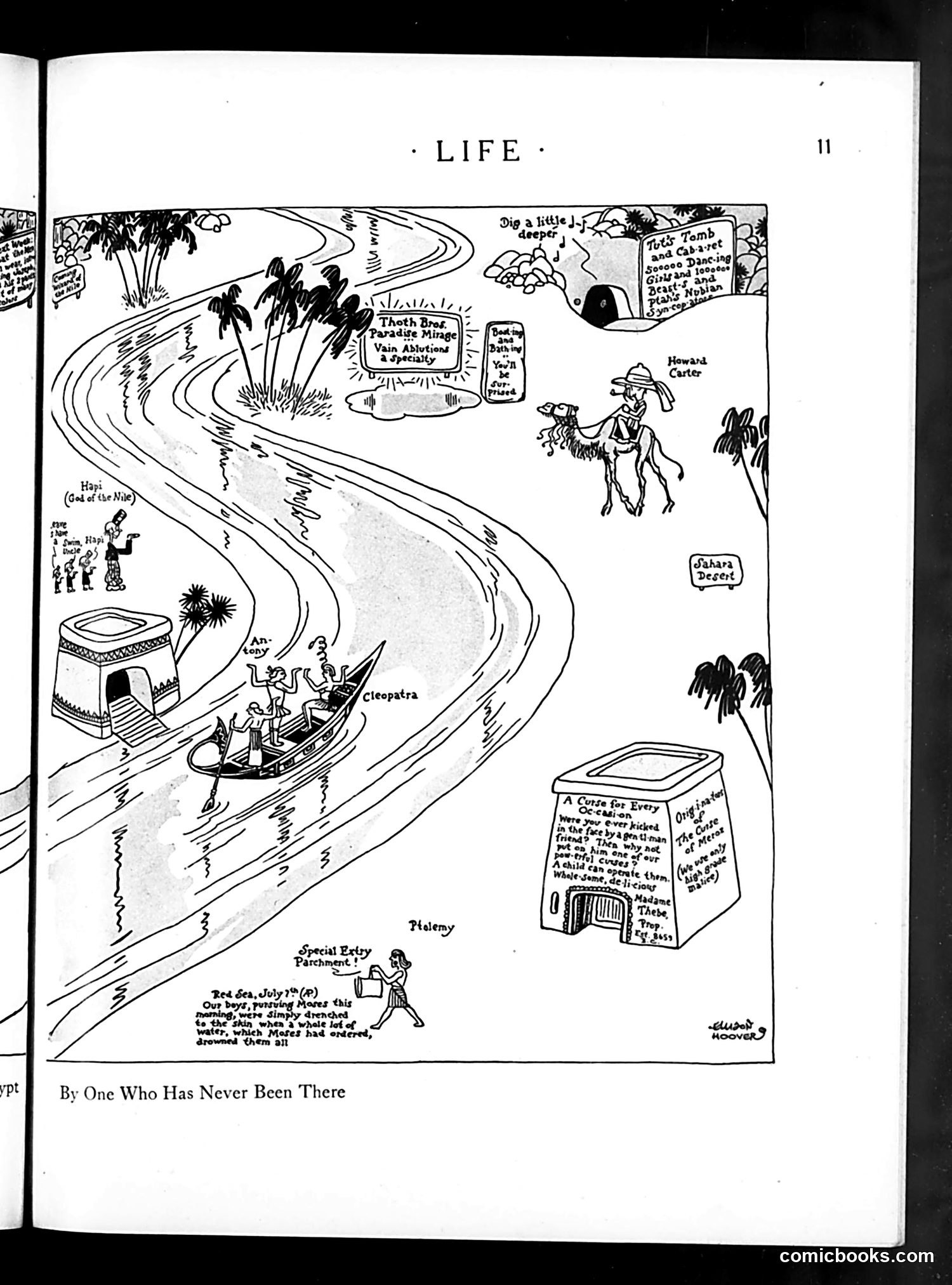
This is a satirical map titled "By One Who Has Never Been There," drawn by Cesare (signed "Cesare Hoover"). It depicts the Nile River region in exaggerated, humorous fashion—showing Egyptian landmarks including temples, the Nile Delta, and various tourist sites labeled with period details (Thoth River, Van Abbleland, Cleopatra, Ptolemy, etc.). The satire mocks armchair travelers and guidebook knowledge—presenting Egypt through comically distorted geography and tourist-focused stereotypes rather than accuracy. References to Howard Carter and mentions of curses ("A Curse for Every Tomb") likely allude to the King Tutankhamun tomb discovery (1922), which generated sensationalist Western fascination. The subtitle's irony—"By One Who Has Never Been There"—is the core joke: the map parodies how outsiders imagine exotic places through imagination and secondhand sources.
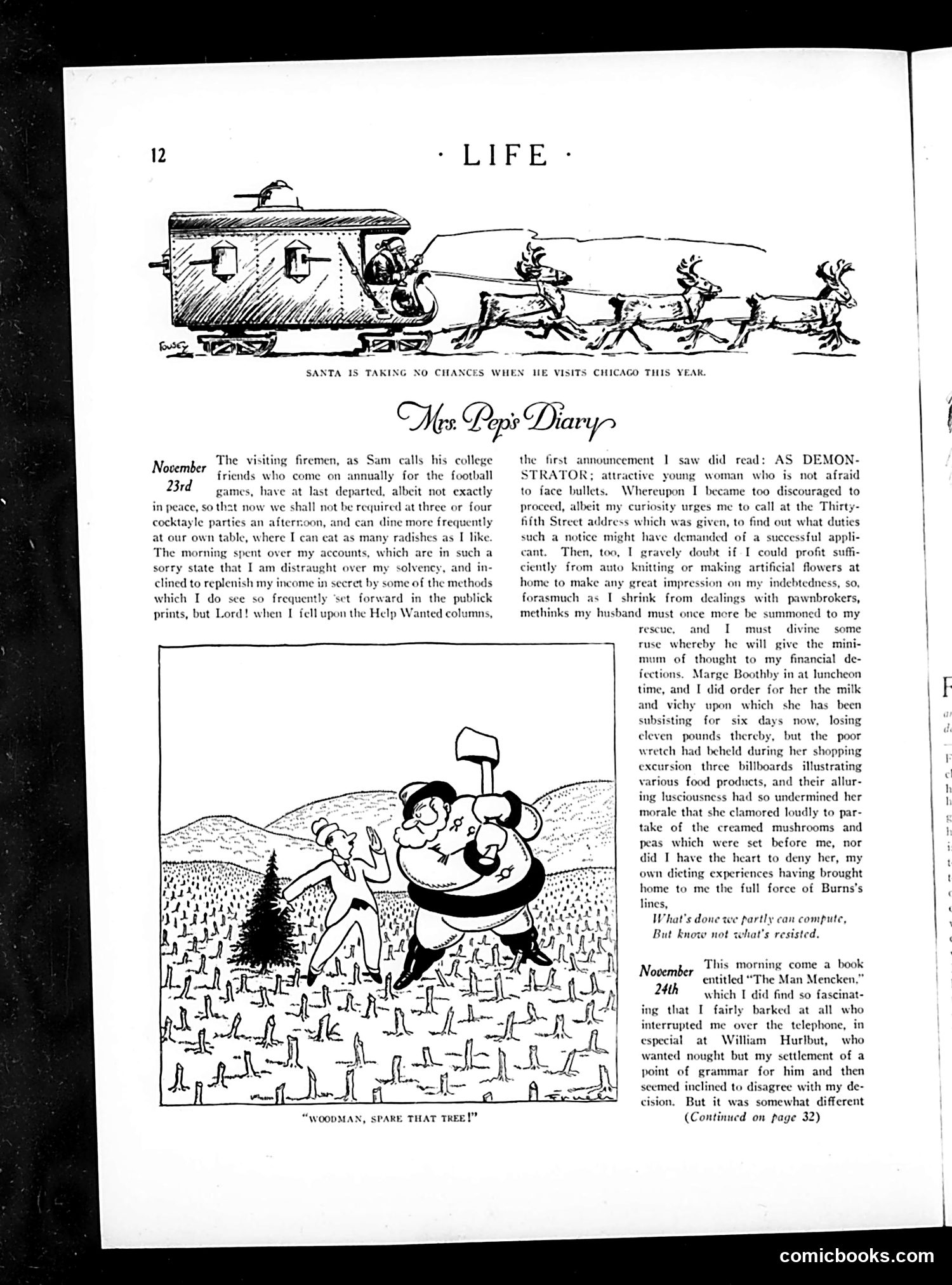
This page from *Life* magazine contains two satirical pieces: **Top cartoon**: A visual joke about Santa's transportation safety during a Chicago visit, showing him using a covered wagon pulled by reindeer instead of traditional sleigh—likely referencing Chicago's reputation for gangland violence during Prohibition. **"Mrs. Pep's Diary"**: A humorous column dated November 23rd-24th describing the author's domestic frustrations. She complains about unexpected house guests, her husband's financial secrecy, a friend's failed diet, and receiving a book titled "The Man Mencken" (referencing H.L. Mencken, a prominent social critic). The cartoon below shows a woodsman sparing a tree, illustrating the phrase "Woodman, spare that tree!"—a reference to a sentimental 19th-century poem, used here ironically for comedic effect.
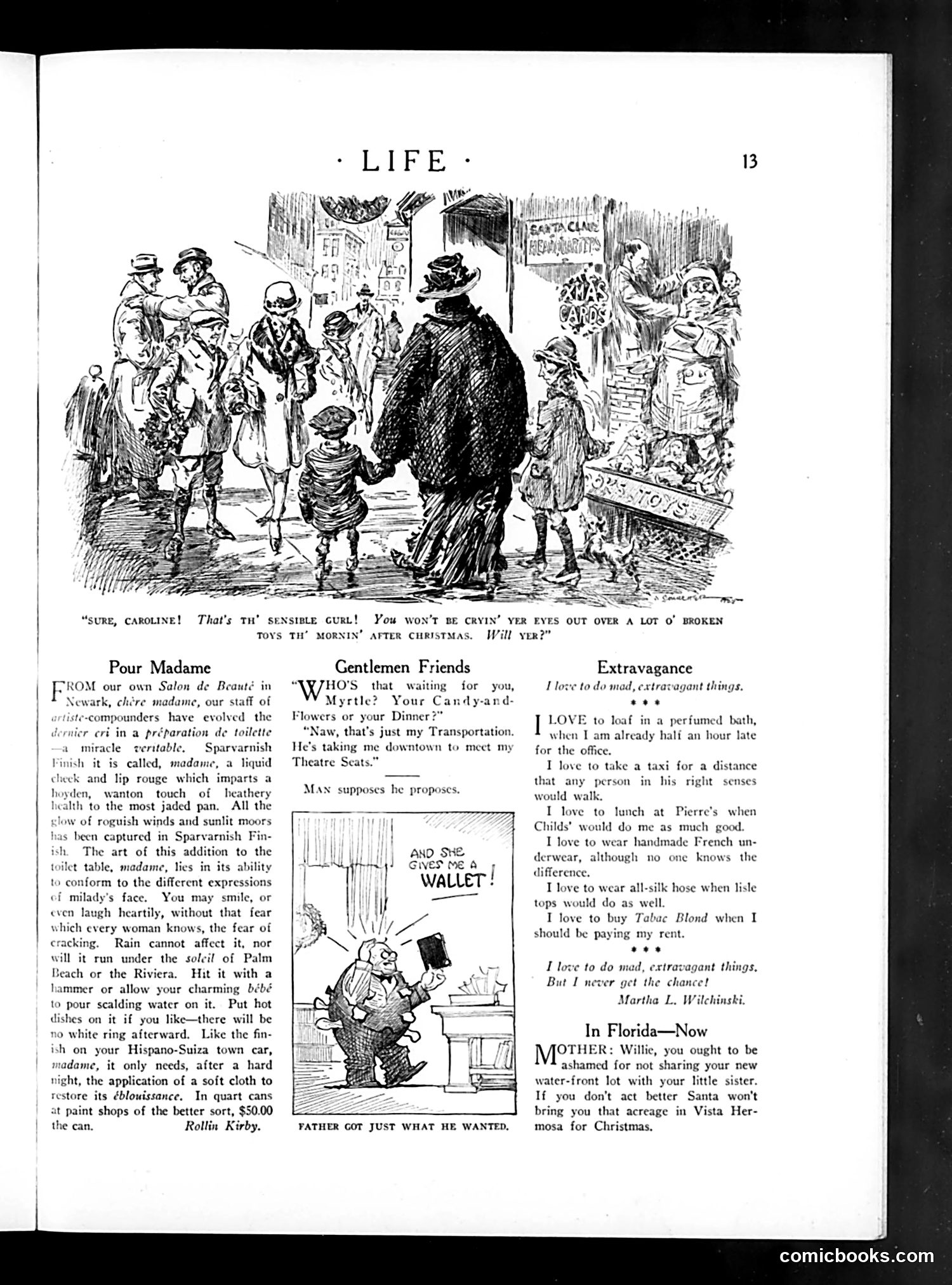
This page contains three satirical pieces targeting upper-class excess and pretension circa early 1900s: **"Poor Madame"** mocks wealthy women's obsession with French cosmetics and beauty treatments. The author suggests these products are expensive, ineffective luxuries that promise impossible results. **"Gentlemen Friends"** is a brief, cynical poem about male courtship—suggesting men propose primarily for financial gain rather than genuine affection. **"Extravagance"** satirizes wealthy women's wasteful spending habits: perfumed baths, taxis, expensive lunches, French lingerie, and silk stockings—frivolous luxuries while ignoring serious obligations like rent payments. **"Father Got Just What He Wanted"** (cartoon) shows a man delighted after his wife spends their money, implying marital financial conflict. **"In Florida—Now"** presents family discord over wealth-sharing and Christmas expectations. The page's recurring theme: mocking the idle rich's conspicuous consumption and moral emptiness.
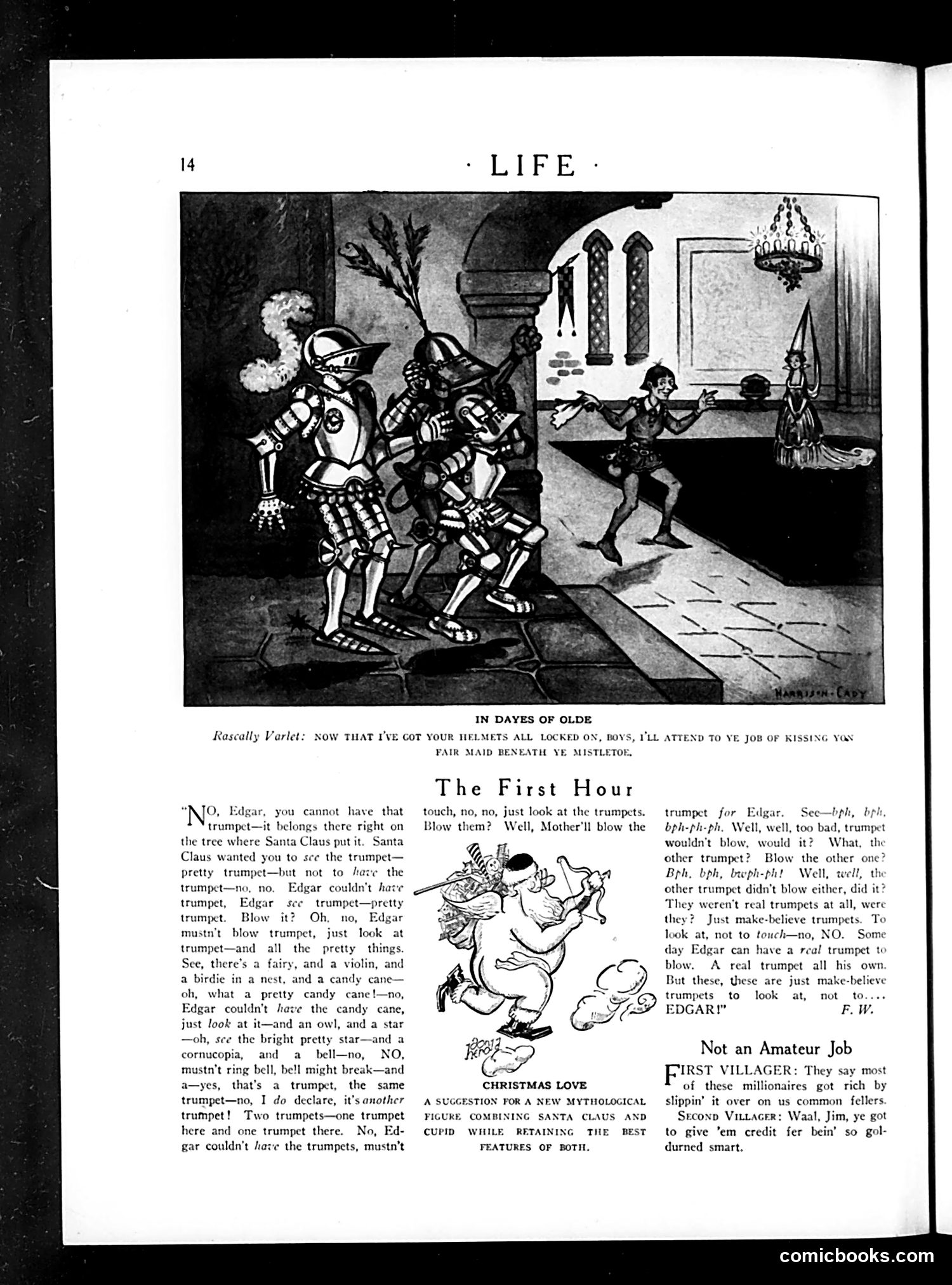
This page contains two satirical pieces targeting Christmas excess and wealth inequality: **"In Dayes of Olde"** (top): A medieval-themed comic mocking overprotective parenting. Rascally Varlet tells armored boys they can't blow real trumpets, only toy ones—a joke about parents restricting children's activities due to safety concerns or cost. **"The First Hour"** (middle): Edgar debates whether to blow his toy trumpet, satirizing how children receive cheap imitation toys rather than genuine articles—commentary on consumer culture and false advertising aimed at children. **"Not an Amateur Job"** (bottom): A village gossip claims wealthy millionaires became rich through dishonest dealings ("slippin' it over"), suggesting wealth accumulation involved moral shortcuts—social satire on gilded-age excess and questionable business practices. The page critiques consumerism, parental anxiety, and economic inequality circa early 1900s.
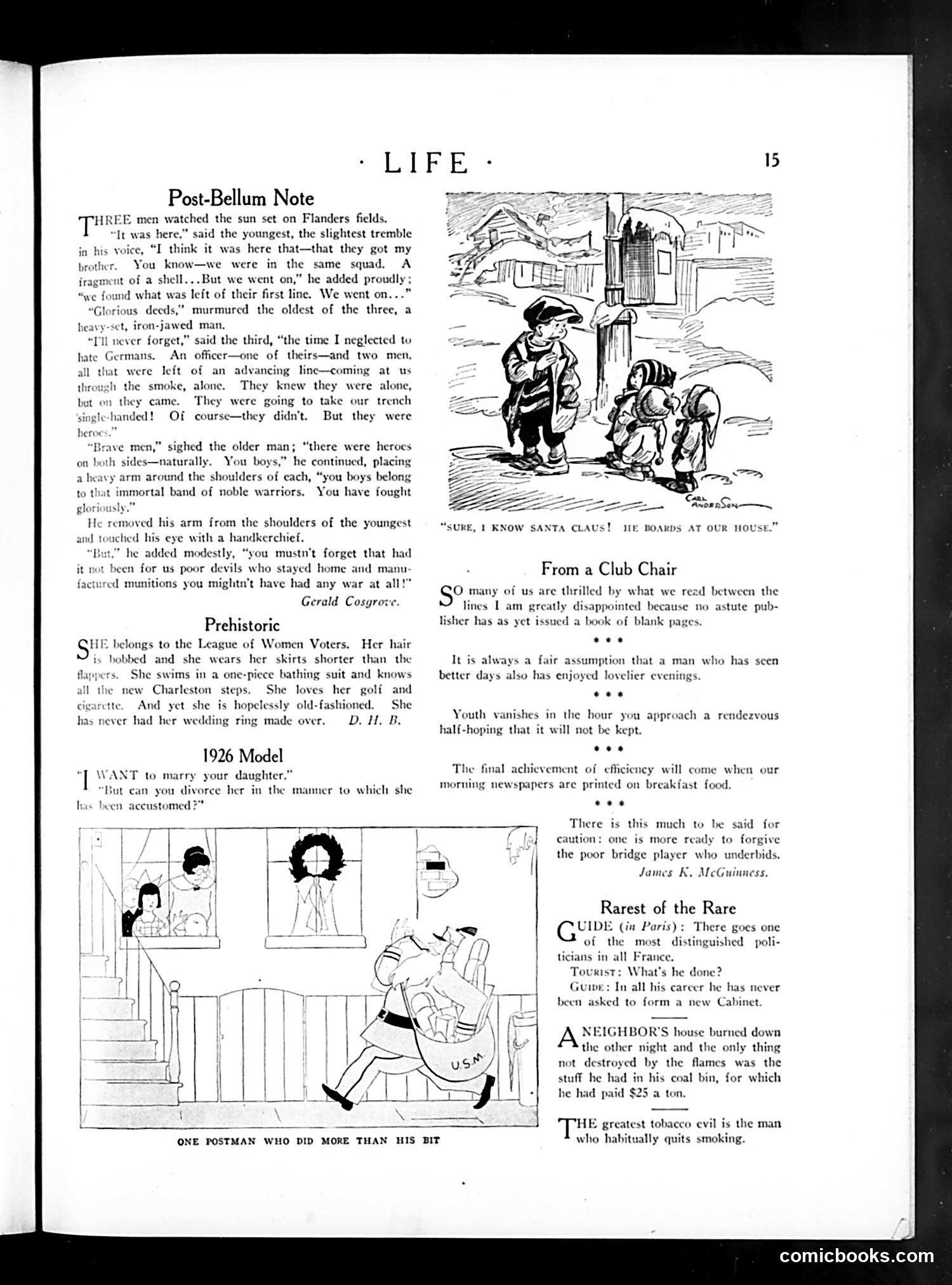
The main cartoon, titled "One Postman Who Did More Than His Bit," depicts a mail carrier navigating a chaotic household while attempting delivery. The humor appears to target both the absurdity of domestic life and possibly post-WWI social upheaval—the "bit" likely references military service contributions ("doing one's bit" was a WWI phrase). The "1926 Model" cartoon mocks modern divorce culture, showing a woman seeking divorce with the same casual efficiency as purchasing a consumer product, reflecting 1920s anxieties about changing gender roles and marriage instability during the Jazz Age. The page also contains social observations ("From a Club Chair") and brief humorous anecdotes about modern life, typical of Life magazine's satirical format targeting upper-middle-class American readers concerned with social propriety and contemporary trends.
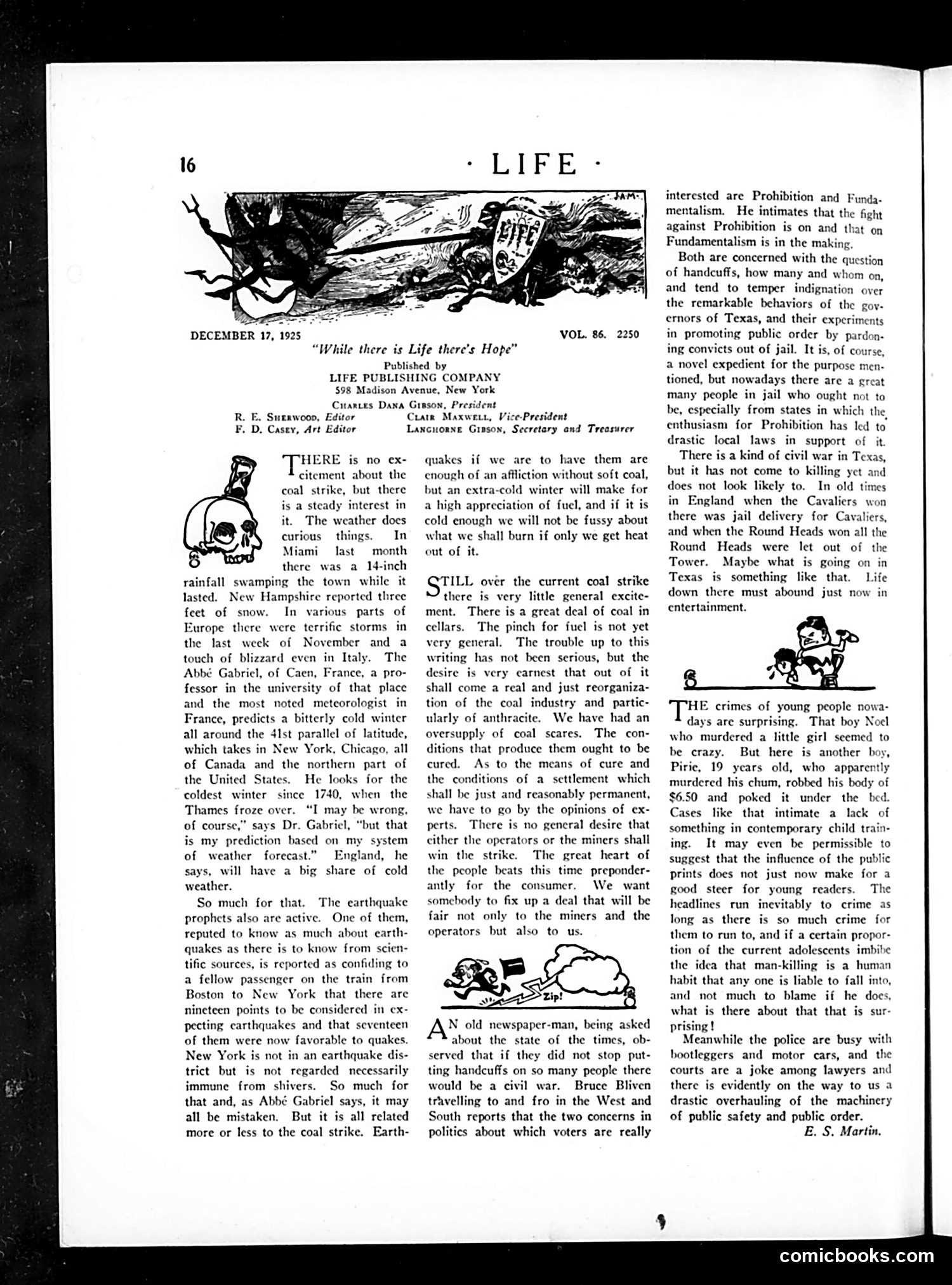
This page contains editorial commentary rather than satirical cartoons. The main illustration shows a skeletal figure labeled "LIFE" emerging from or trapped in what appears to be a coffin or box, symbolizing the magazine's concern with contemporary social issues. The text discusses the coal strike, winter weather hardships, and crime among young people. The skull imagery represents Death or decay—likely commenting on social problems threatening American stability. A secondary cartoon depicts a figure sleeping or dead, possibly relating to public indifference toward these crises. The editorial tone is reformist rather than humorous, using visual metaphors to emphasize serious concerns: fuel shortages, labor unrest, and juvenile delinquency. The "Death" motif suggests these issues pose existential threats to society if left unaddressed.
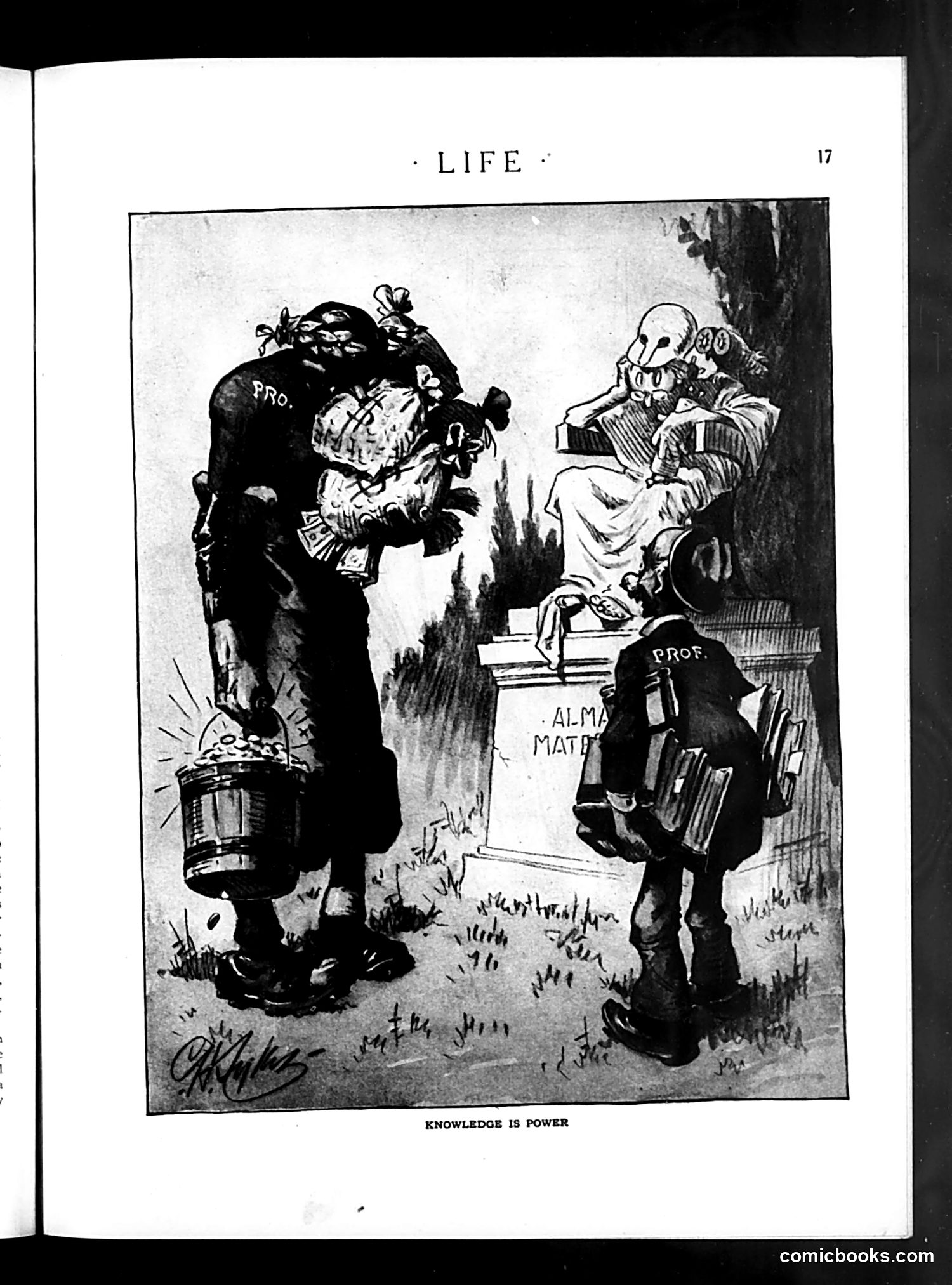
This single-panel cartoon depicts a scene at what appears to be an "Alma Mater" (college/university) monument. A professor carrying books confronts a working-class man holding a lantern and bucket—likely a custodian or laborer. The satire illustrates the phrase "Knowledge is Power" ironically: despite the professor's formal education and books, the working man appears physically more imposing and capable. The cartoon critiques the assumption that academic credentials automatically confer authority or superiority over manual laborers. The joke suggests that practical knowledge, strength, and actual productive work may constitute genuine "power" compared to theoretical, institutional learning. This reflects early 20th-century social commentary questioning the established hierarchy between intellectual and working classes.
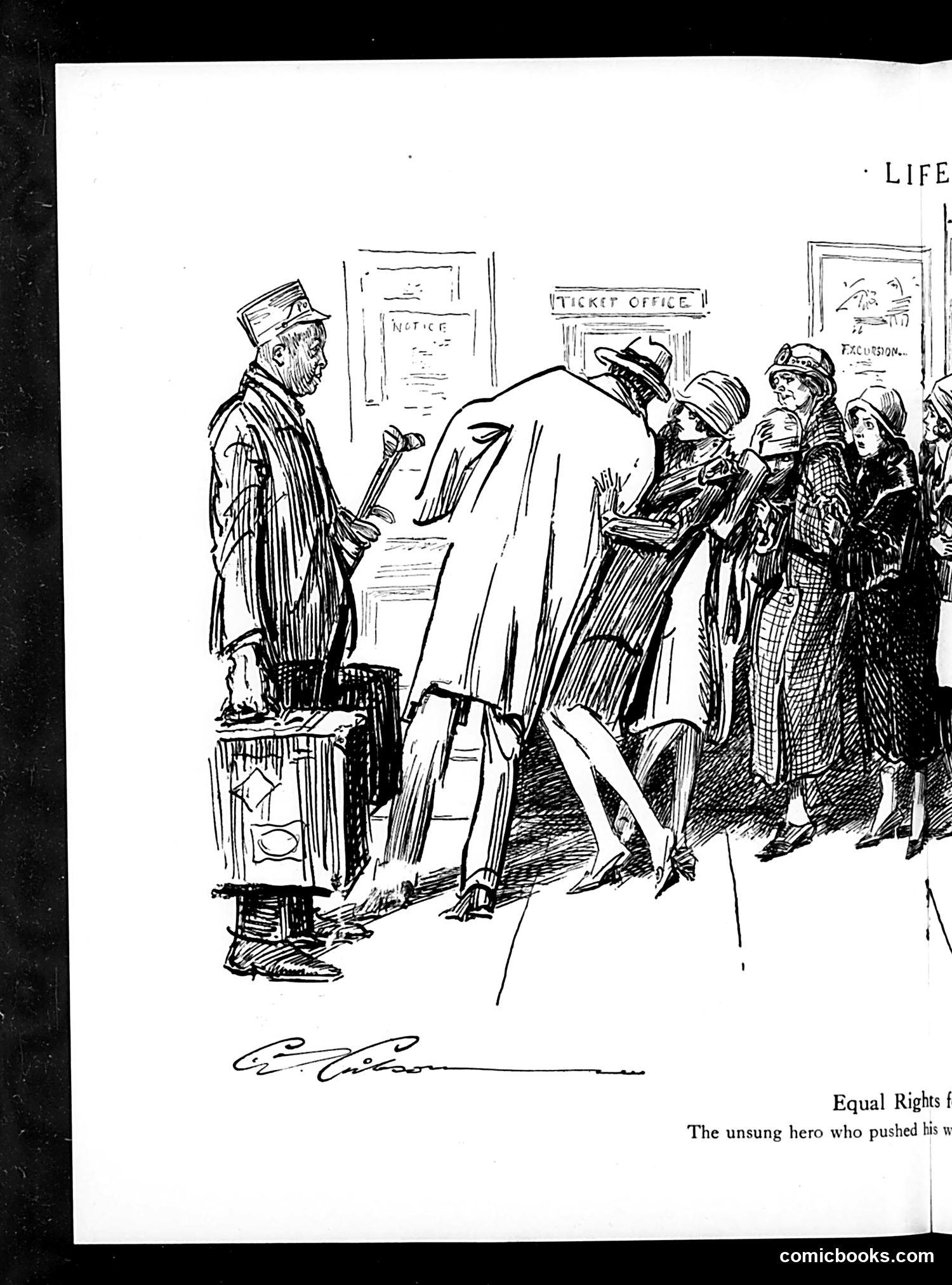
This political cartoon depicts a scene at a ticket office, where an elderly man in worn clothing stands elevated on a soap box, addressing a queue of working-class people (women and men in period dress, appearing to be early 20th century). The caption references "Equal Rights" and "The unsung hero who pushed his..." (text cuts off), suggesting this depicts an advocate for workers' or civil rights addressing common citizens. The ticket office setting and the formal queue suggest commentary on access to opportunity or services. The cartoon appears to satirize either the earnestness of reform movements or the gap between rhetoric and reality—the ragged speaker elevated literally above his audience, yet positioned outside the official system (ticket office window visible in background). Without complete caption text, the precise target of satire remains partially unclear.
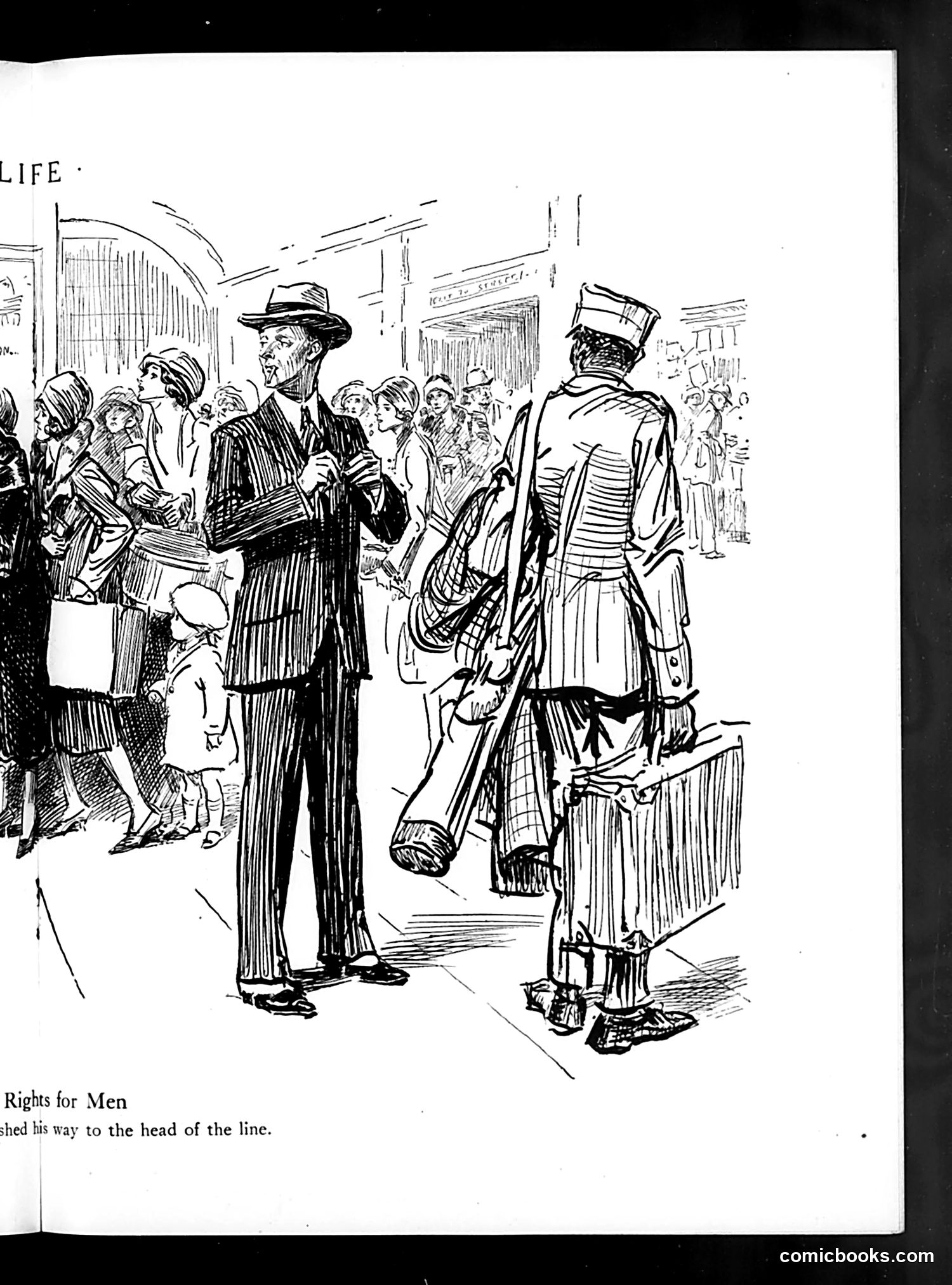
This appears to be a satirical cartoon about men's privileges or rights, likely from the early 20th century. The visible text fragment "shed his way to the head of the line" suggests commentary on male entitlement or preferential treatment. The scene shows a well-dressed man in a suit and hat confronting what appears to be a uniformed official or authority figure, with women and children waiting in line behind them. The cartoon likely satirizes how men—particularly wealthy or prominent men—could bypass normal procedures or social order to gain advantages. The context appears to be social commentary on gender inequality or class privilege, though without the complete caption or publication date, the specific political reference remains somewhat unclear.
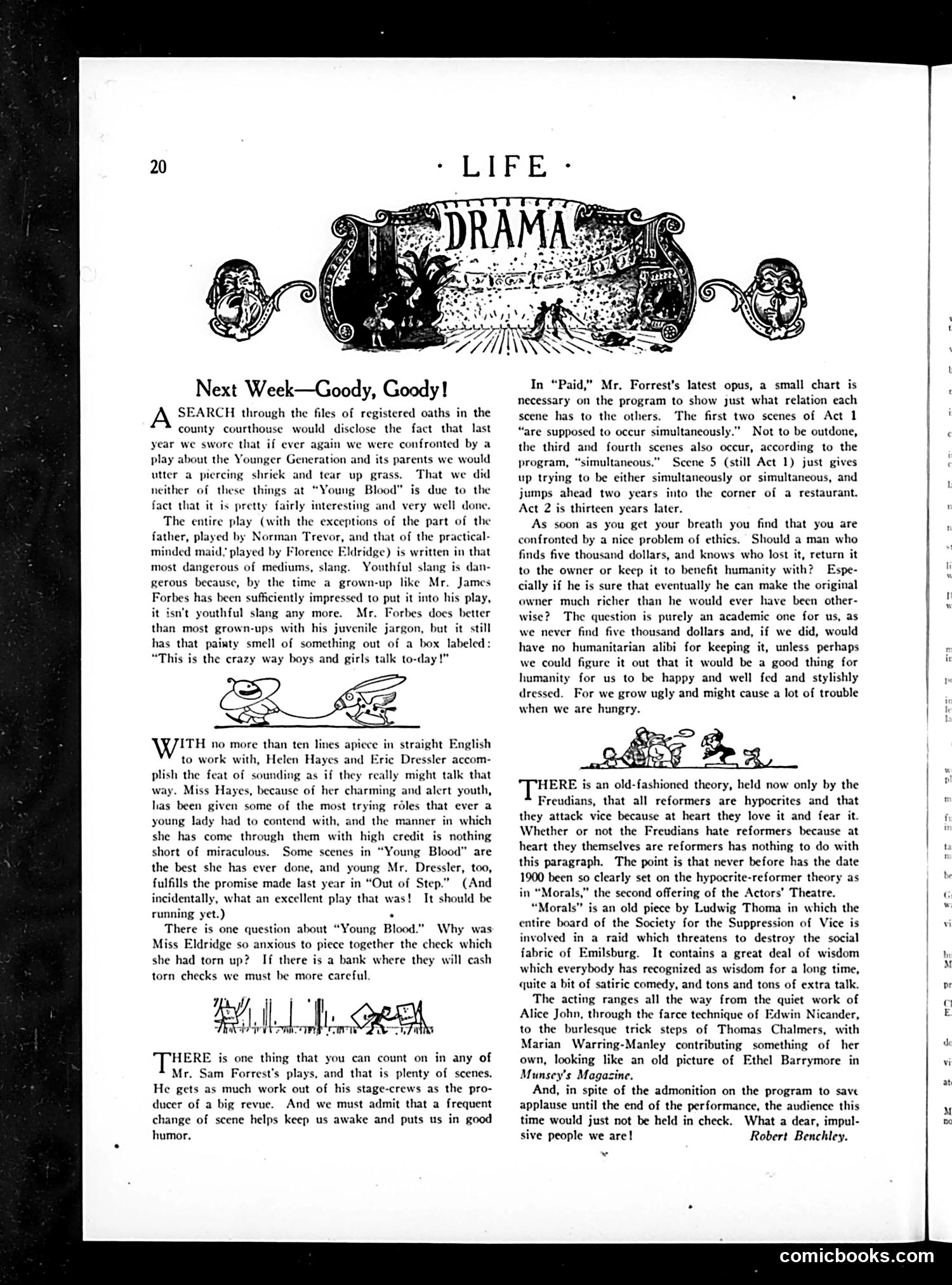
This is a theater review page from Life magazine's "Drama" section. The critic discusses three Broadway plays: **"Young Blood"**: Stars Helen Hayes and Eric Dressler. The reviewer praises Hayes's performance despite the play's heavy reliance on dated "youthful slang"—dialogue that sounds artificially stiff because the playwright waited too long to capture authentic youth speech. The critic humorously notes that by the time James Forbes wrote the slang down, it was already outdated. **"Paid"**: A Sam Forrest play criticized for its confusing timeline—scenes supposedly occur simultaneously, then jump forward years without clear structure. The reviewer jokes about needing a chart to follow the plot. **"Morals"**: Briefly mentioned as containing wisdom about reformers and hypocrisy. The small decorative illustrations throughout show theatrical masks and figures—typical period magazine decoration. The tone is witty and slightly sarcastic toward playwrights struggling to capture contemporary youth culture authentically.
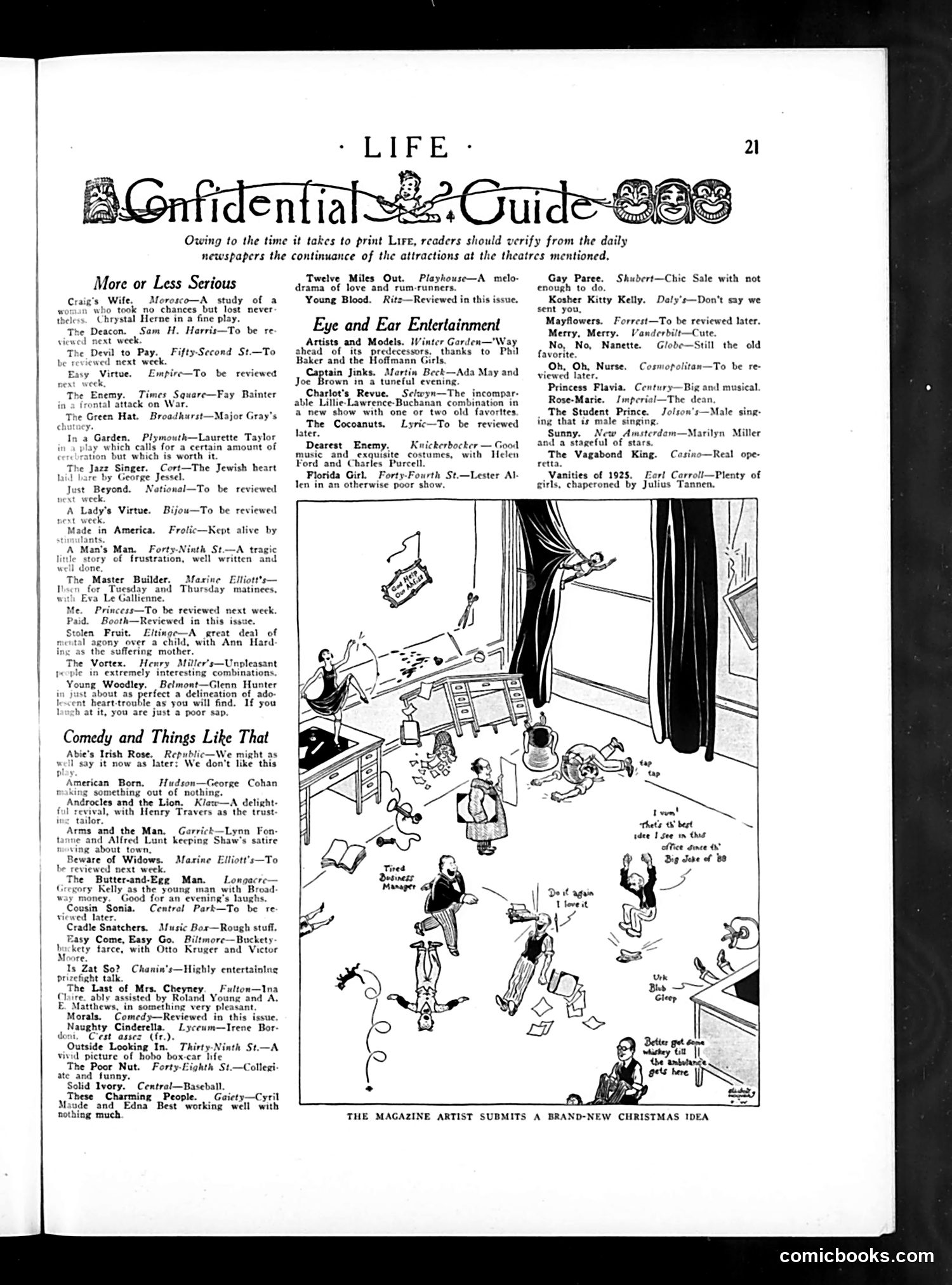
This is a **theater reviews and entertainment guide** page from Life magazine, not a political cartoon. The content lists Broadway shows and performances currently running, organized into categories: "More or Less Serious" (dramatic plays), "Comedy and Things Like That" (lighter fare), and "Eye and Ear Entertainment" (musicals and variety shows). The **illustration** shows a chaotic magazine art studio on Christmas, depicting artists working frantically amid scattered papers, props, and holiday chaos—captioned "The Magazine Artist Submits a Brand-New Christmas Idea." This is a humorous commentary on the creative process, showing the controlled mayhem behind producing magazine content during the holiday deadline rush. The page reflects 1920s Broadway culture, listing popular shows like *Abie's Irish Rose* and *The Jazz Singer*, with brief critical assessments. The guide served practical theater-going purposes for Life's readers seeking entertainment recommendations in New York City.
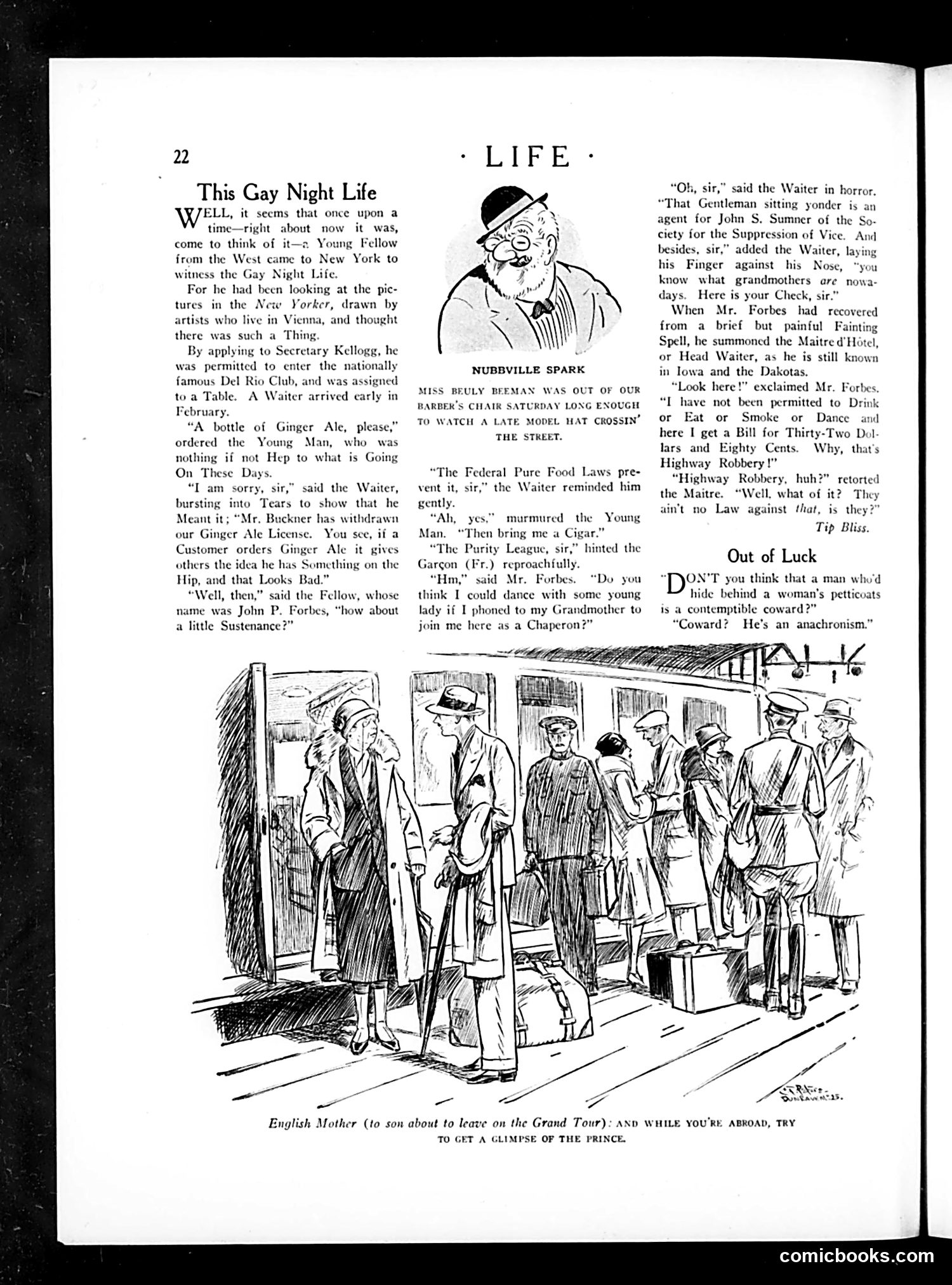
This 1920s satirical story mocks Prohibition-era restrictions on American nightlife. A young man visiting New York's famous nightclubs discovers he cannot order ginger ale (suggesting hidden alcohol was customary), food (due to Pure Food Laws), cigars (Purity League opposition), or dance with women without a chaperone (due to Vice Society agents like John S. Sumner, who actually did suppress "immoral" entertainment). The joke: despite being denied every pleasure, he still receives an exorbitant bill—"Highway Robbery." The waiter's response that there's "no law against that" satirizes how establishments profited while Prohibition eliminated legitimate business practices. The bottom cartoon jokes about British propriety during the Grand Tour, contrasting Old World formality with American social anxieties about morality. The satire targets both government censorship and hypocritical commercialism during Prohibition's early years.
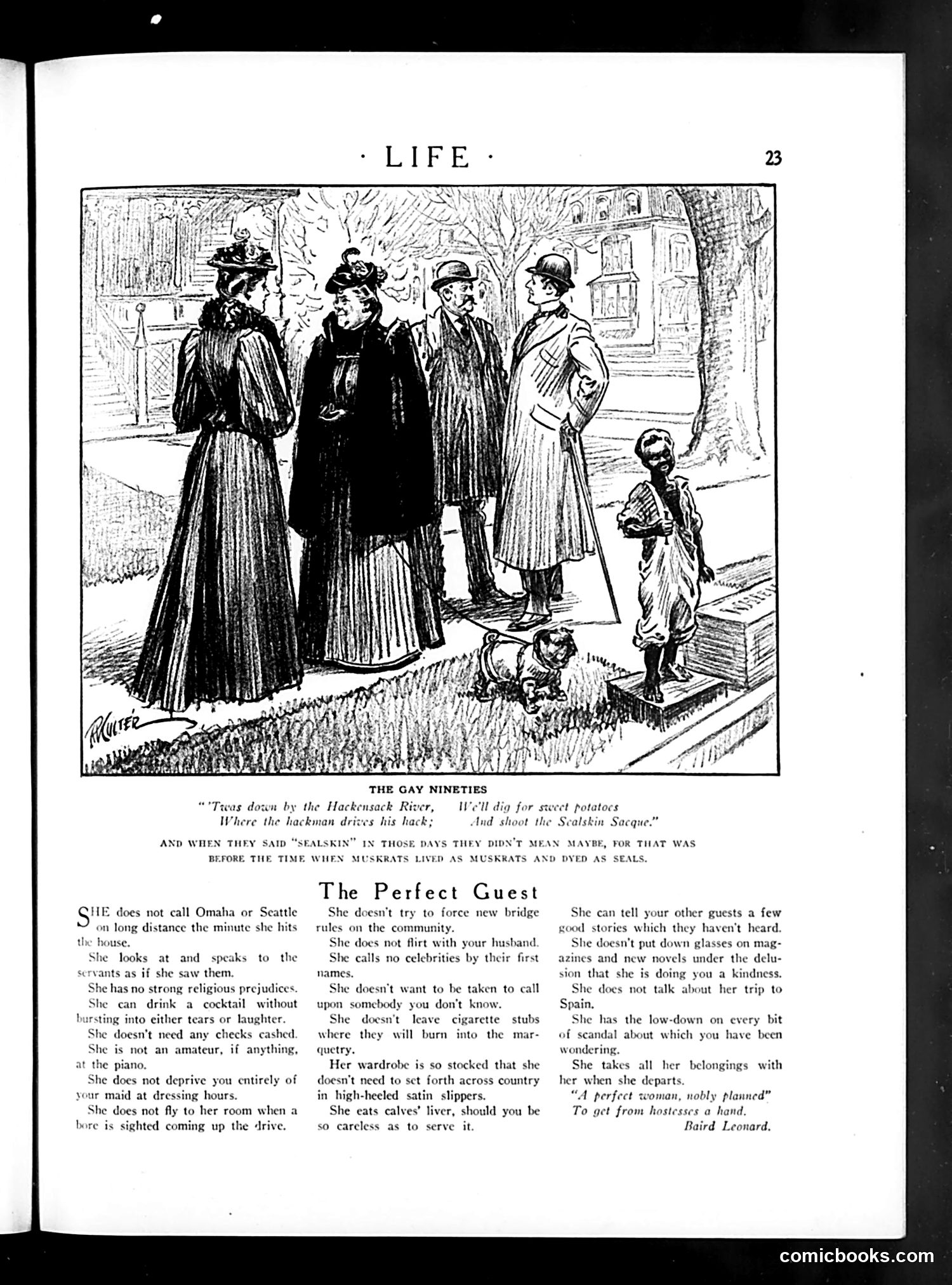
This Life magazine page contains two distinct pieces: **Top: "The Gay Nineties" cartoon** satirizes outdated 1890s slang and fashion. The caption references "Hackensack River" and period expressions like "salskin" (a muskrat fur), mocking how such terms sound quaint and meaningless to contemporary readers. **Main article: "The Perfect Guest"** by Baird Leonard is satirical etiquette commentary. It ironically lists the qualities of an ideal houseguest—but these are actually common annoyances inverted. The joke: a "perfect guest" doesn't monopolize the phone, doesn't flirt with the host's husband, doesn't damage furniture with cigarettes, doesn't brag about travels, and actually takes her luggage when leaving. The humor targets upper-middle-class social anxieties about entertaining and houseguests' inconsiderate behavior. The subheading "nobly planned" mockingly quotes Wordsworth, elevating trivial etiquette advice to philosophical importance—the core of Life magazine's satirical approach.
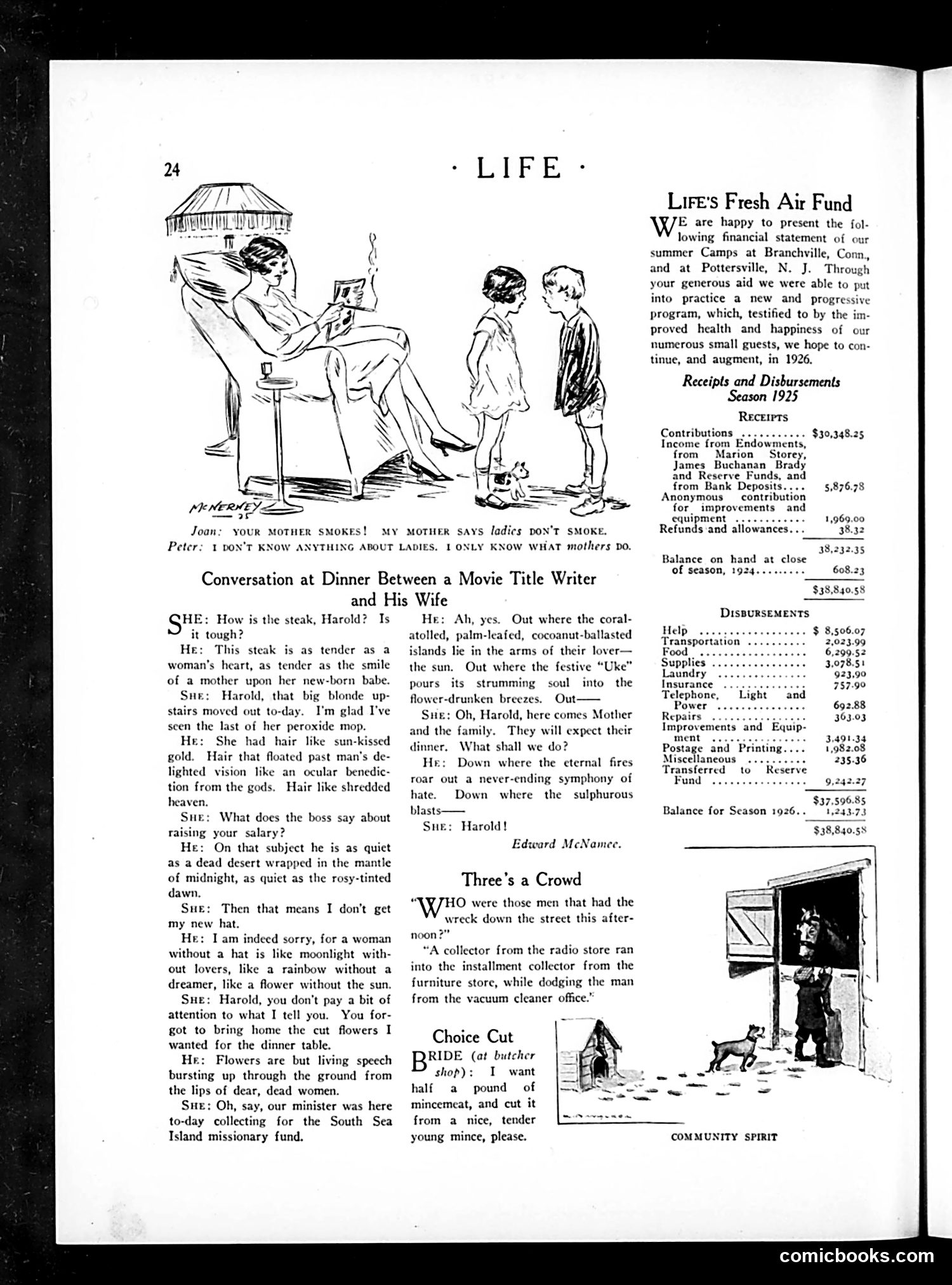
This page contains three separate humorous pieces typical of 1920s satirical magazine content: **"Conversation at Dinner"** satirizes movie title writers who speak in overwrought, flowery language. The husband responds to mundane domestic situations with purple prose ("Hair like shredded heaven," flowers as "living speech bursting from the lips of dear, dead women"). The joke is that he applies melodramatic movie-title language to everyday life while ignoring his wife's practical concerns—she wants flowers for the table and a new hat, but receives only romantic nonsense. This mocks both Hollywood's excessive sentimentality and husbands who evade real issues through verbosity. **"Three's a Crowd"** is a brief joke about urban commerce: three debt collectors (radio store, furniture store, vacuum cleaner company) converge in an accident, each pursuing installment payments. It reflects 1920s consumer culture and the proliferation of "buy now, pay later" schemes. **"Choice Cut"** features a bride asking a butcher for mincemeat from a "young mince"—treating the animal as if it were a proper noun, revealing her naïveté about butchery. The page also includes a financial report for Life's Fresh Air Fund charity camps.
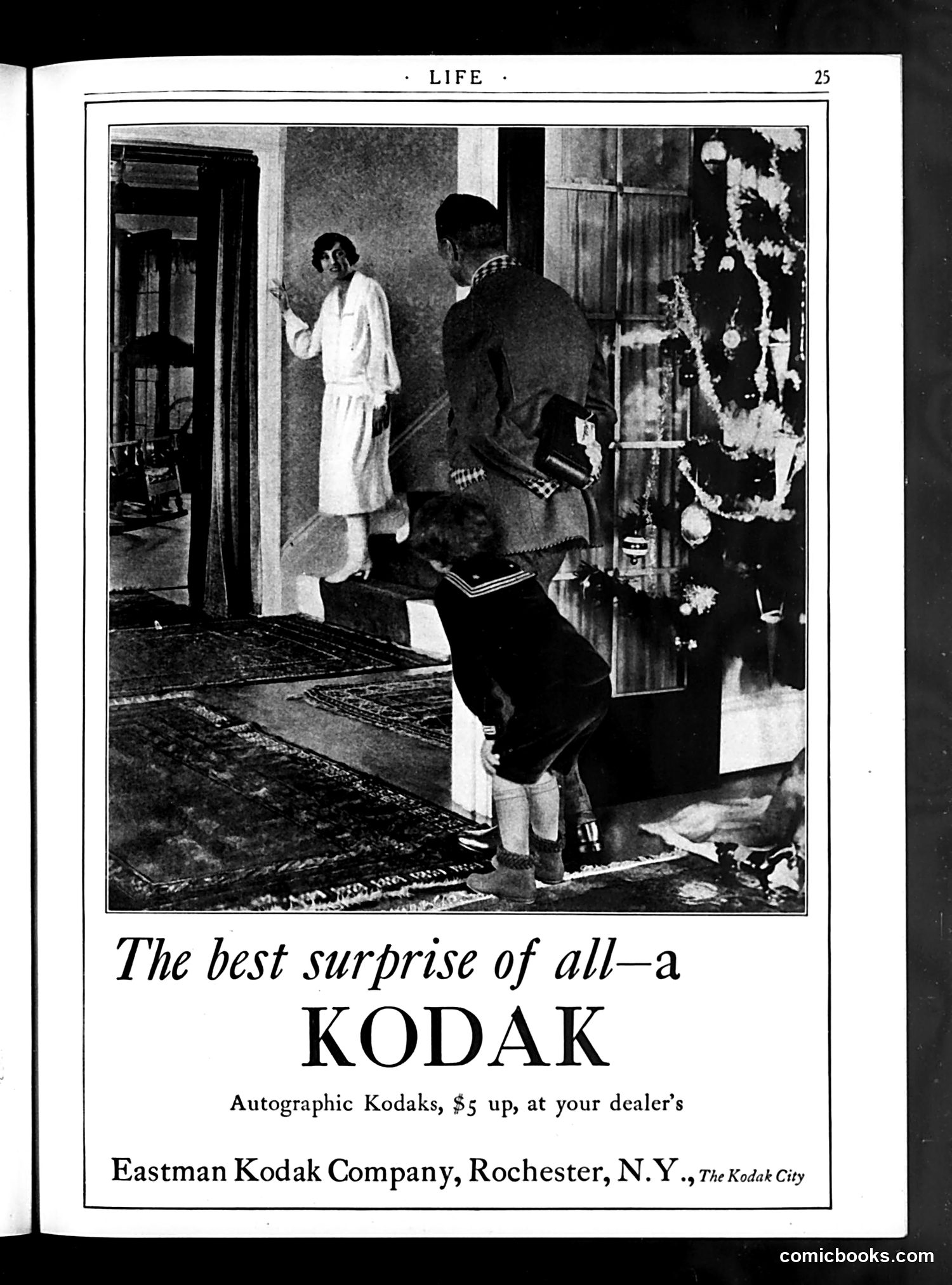
This is a Kodak camera advertisement rather than a political cartoon. The image shows a domestic holiday scene: a woman in white (likely a nurse or maid) stands in a doorway while a man in military uniform (appears to be WWI-era based on the style) sits examining a camera, with a decorated Christmas tree visible in the background. The advertisement's appeal—"The best surprise of all—a KODAK"—targets families during wartime, suggesting that giving an Autographic Kodak camera is an ideal gift. The military figure likely represents soldiers home on leave or family members serving, making the camera a way to preserve precious moments during uncertain times. The price point ($5 up) positions it as an accessible luxury gift for middle-class families during the early twentieth century.
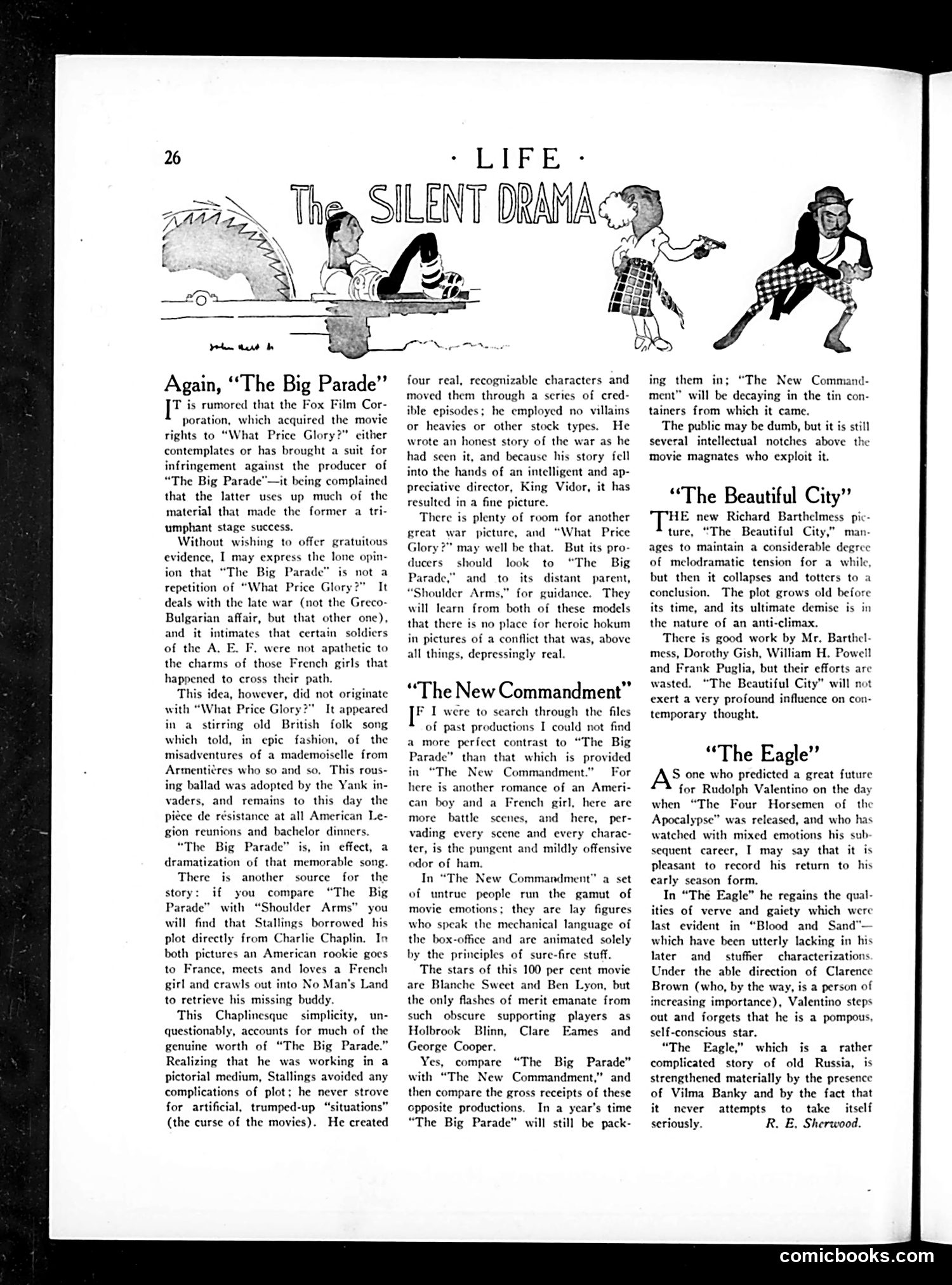
This page reviews several World War I-themed silent films, primarily comparing **"The Big Parade"** with competitor films like **"What Price Glory?"** and **"The New Commandment."** The small cartoon at top depicts a slapstick scene—likely referencing the physical comedy common to silent films of this era. The article argues that "The Big Parade" succeeds through simplicity and realism, borrowing plot elements from **Charlie Chaplin's "Shoulder Arms"** (a 1918 war comedy). The reviewer credits director **King Vidor** and writer Stallings for avoiding artificial "situations" and instead creating genuine characters facing honest wartime experiences—particularly American soldiers meeting French women. The critique contrasts this with **"The New Commandment,"** dismissing it as overwrought melodrama ("ham") despite starring **Blanche Sweet** and **Ben Lyon.** The reviewer predicts "The Big Parade" will endure commercially while "The New Commandment" fades—praising authenticity over theatrical excess in cinema.
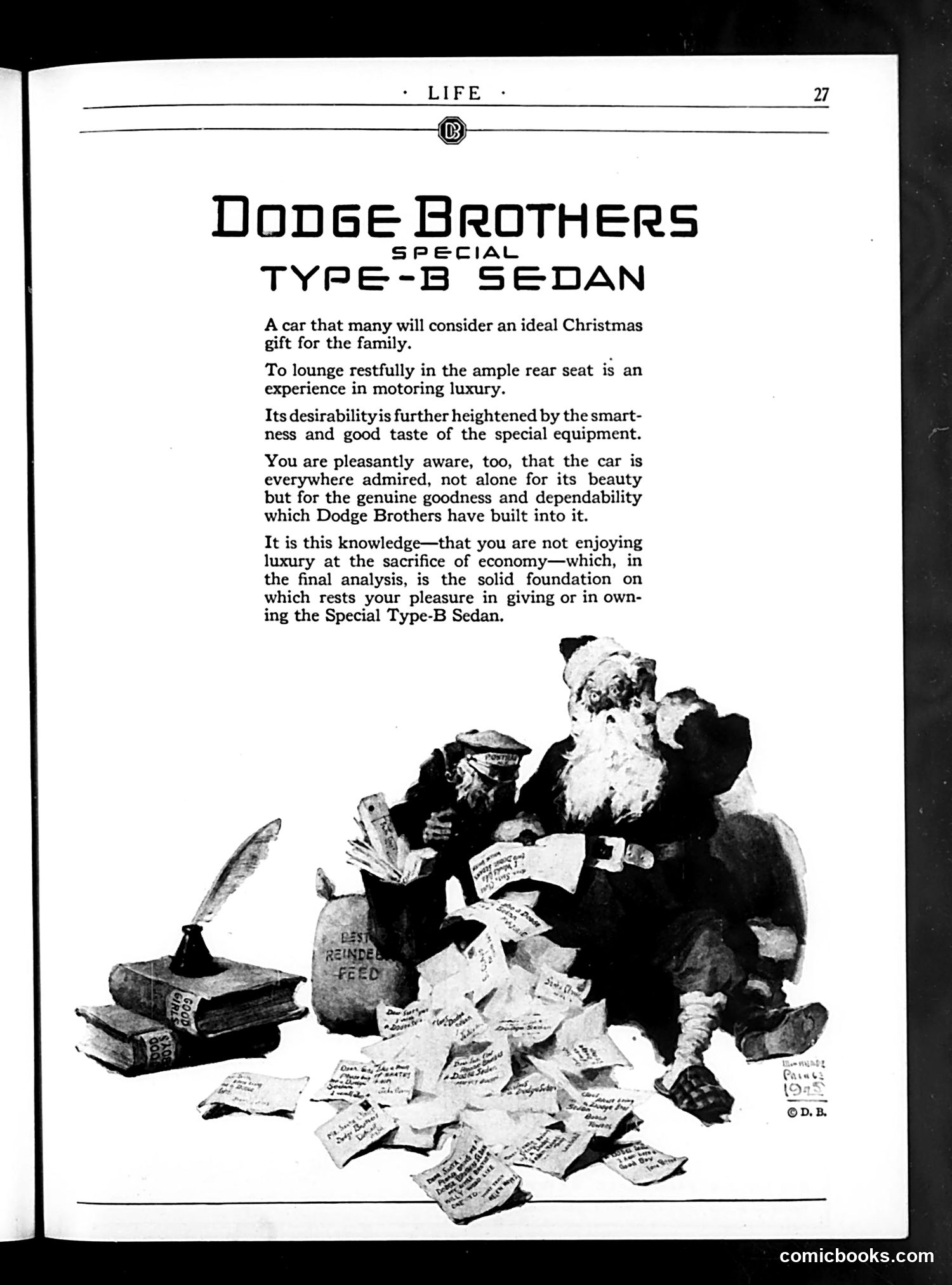
This is primarily a **Dodge Brothers automobile advertisement**, not political satire. The page promotes the Special Type-B Sedan as an ideal Christmas gift, emphasizing luxury combined with economy and dependability. The illustration depicts Santa Claus and what appears to be elves or gift-givers surrounded by scattered gift tags and packages, reinforcing the Christmas gift angle. The visual metaphor suggests the car itself is the ultimate present. The satire is light and commercial rather than political: the joke plays on positioning an expensive automobile as a practical family gift—a humorous contradiction. The copy reassures buyers they're not sacrificing "economy" for "luxury," which itself contains gentle irony given the car's premium positioning. This reflects 1920s advertising strategy: using holiday sentiment and clever messaging to justify luxury purchases as sensible investments.
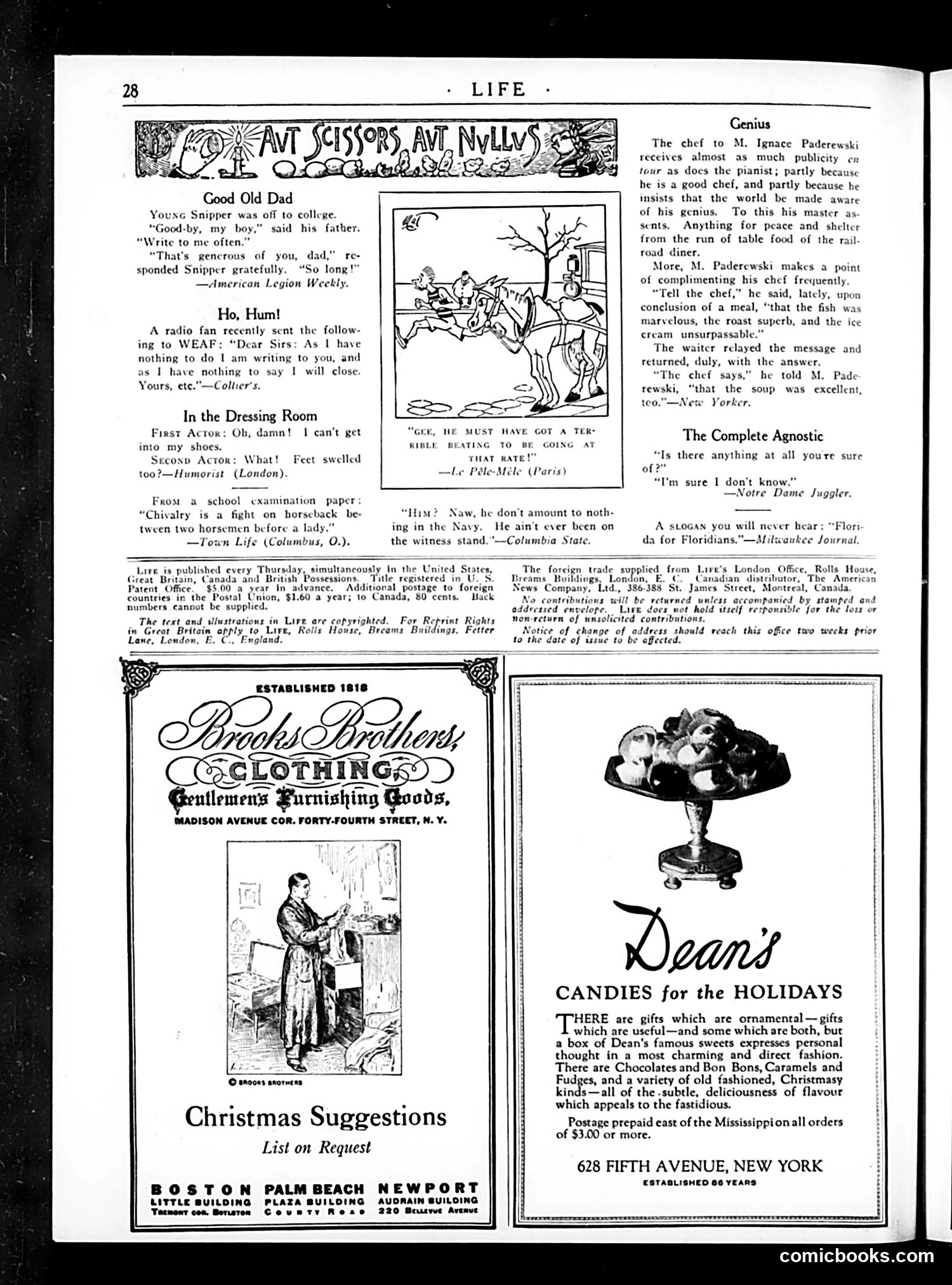
This is **primarily a page of advertisements and humorous short jokes** rather than political satire. The page includes: **The cartoon/illustration**: A simple sketch showing someone being tossed or thrown, with the caption about getting "a terrible beating"—a mild slapstick joke. **The jokes**: Brief, light humor pieces (titled "Good Old Dad," "Ho, Hum!", "In the Dressing Room," etc.) about mundane topics—a college boy leaving home, radio listeners with nothing to say, stuck shoes, exam answers. These reflect 1920s-era casual life and new technology (radio). **The advertisements**: Brooks Brothers clothing, Dean's candies, and publication information dominate the space. **Context**: This represents *Life* magazine's miscellaneous humor formula—scattered one-liners and observations on ordinary life rather than pointed political or social commentary. The references feel dated (radio novelty, military witness stands) but lack sharp satirical intent.
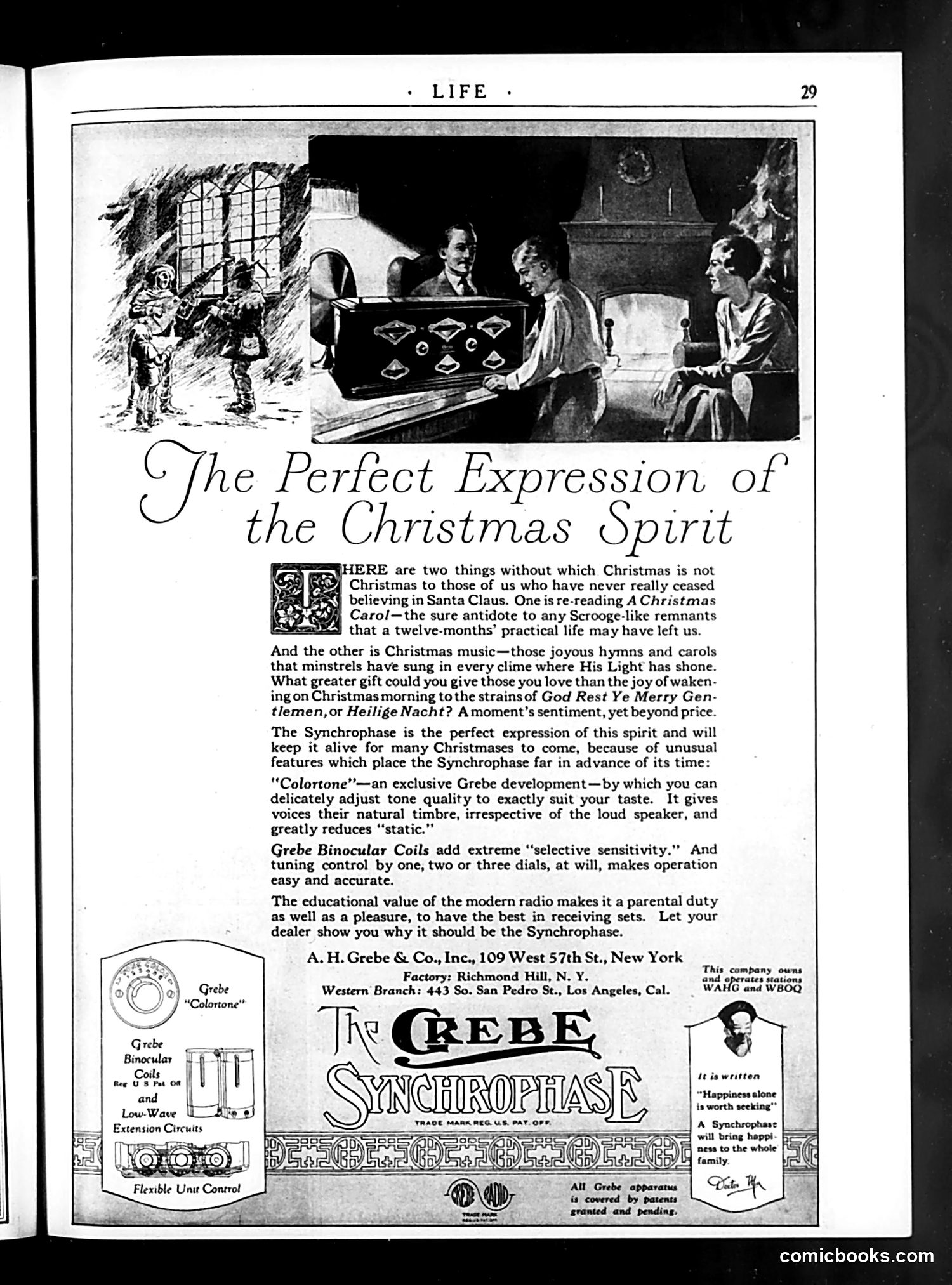
This is **advertising copy, not satire or political commentary**. The page promotes the Grebe Synchrophase radio receiver. The text frames radio ownership as essential to preserving Christmas spirit—specifically through playing Christmas music and literature (referencing *A Christmas Carol*). The illustrated vignettes show families and children enjoying radio entertainment in domestic settings, establishing the product as a conduit for wholesome holiday experience. The advertisement appeals to parental responsibility and cultural sentiment rather than humor. Technical specifications ("Colortone," binocular coils, selective sensitivity) are presented as features enabling better reception of this spiritual/educational content. No political figures or satire are present. This represents early 20th-century radio industry marketing strategy: positioning the technology as morally uplifting and family-centered, a common approach during radio's emergence as a domestic medium.
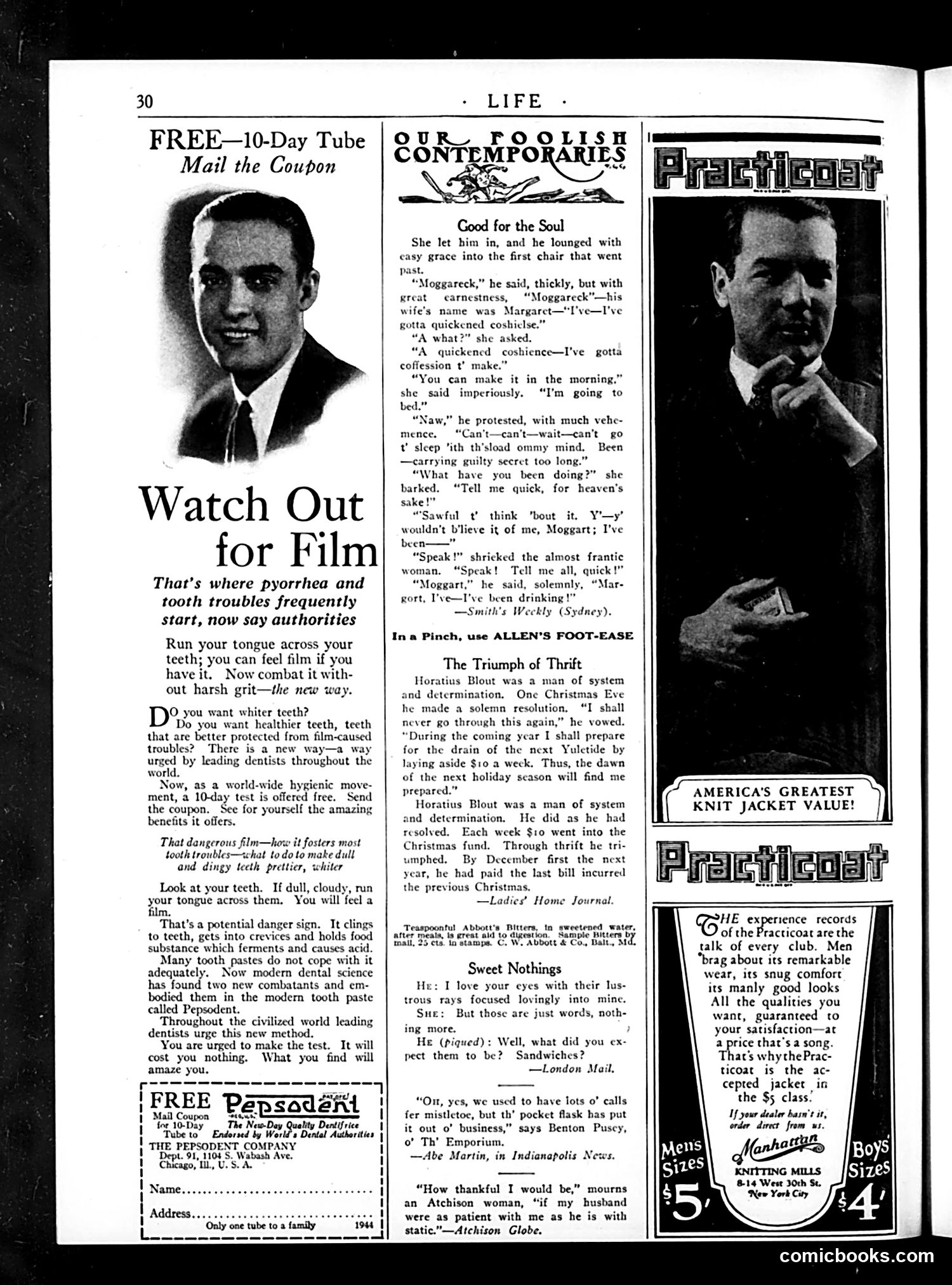
This page is primarily **advertising**, not political satire. The dominant content is a Pepsodent toothpaste advertisement promoting a "film" on teeth as a hygiene hazard—a genuine dental concern of the 1920s era. The page also contains **humorous short stories** typical of Life magazine's satirical content: 1. **"Good for the Soul"**: A drunk man confesses to his wife using slurred speech, building comedic tension before revealing his confession is merely about drinking—a joke on marital anxiety and prohibition-era humor. 2. **"The Triumph of Thrift"**: A man's Christmas savings plan humorously fails because he's still paying debts from the *previous* Christmas—satire on American consumer spending cycles. 3. **"Sweet Nothings"**: A dialogue joke mocking romantic clichés. These reflect typical 1920s Life content: domestic humor, mild social commentary, and advertising embedded within editorial space—not political cartooning.
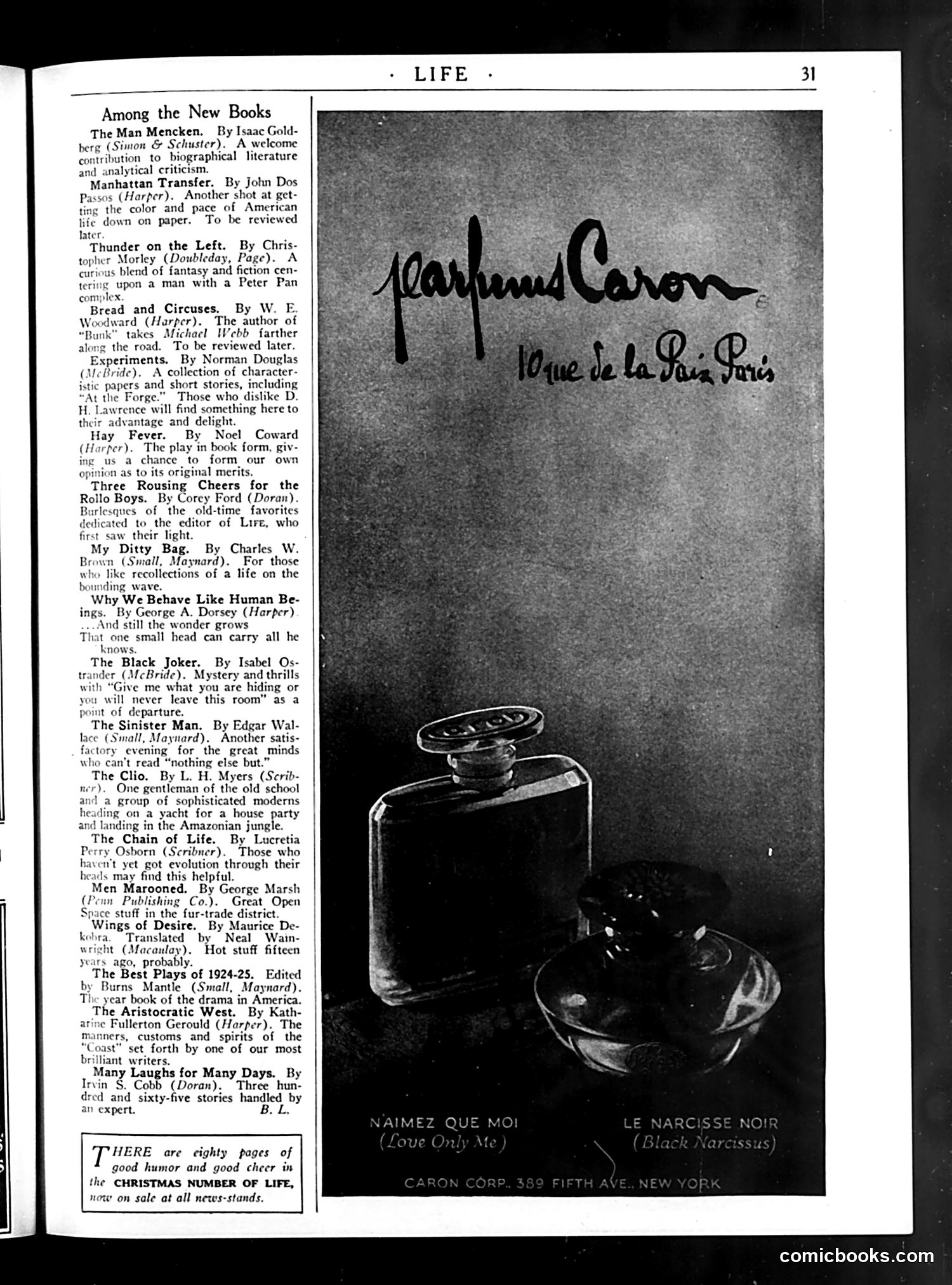
This page from *Life* magazine contains two elements: a book review section and advertisements. **The Book Reviews** list recent publications (circa 1925) including works by notable authors like John Dos Passos (*Manhattan Transfer*), Noel Coward (*Hay Fever*), and Edgar Wallace. The reviews are brief, often witty assessments—some praising contributions to literature, others gently mocking lighter fare ("Hot stuff fifteen years ago, probably"). **The Advertisements** feature two French films with glamorous promotional imagery and the actress's signature—likely a celebrity endorsement. The titles "Naimez que moi" (Love Only Me) and "Le Narcisse Noir" (The Black Narcissus) suggest romantic or dramatic films marketed to sophisticated American audiences. **The Satire** appears in the closing box promoting *Life*'s Christmas issue—suggesting the magazine offers "good humor and good cheer" as antidote to the era's literary pretension and commercial hype on display throughout the page itself.
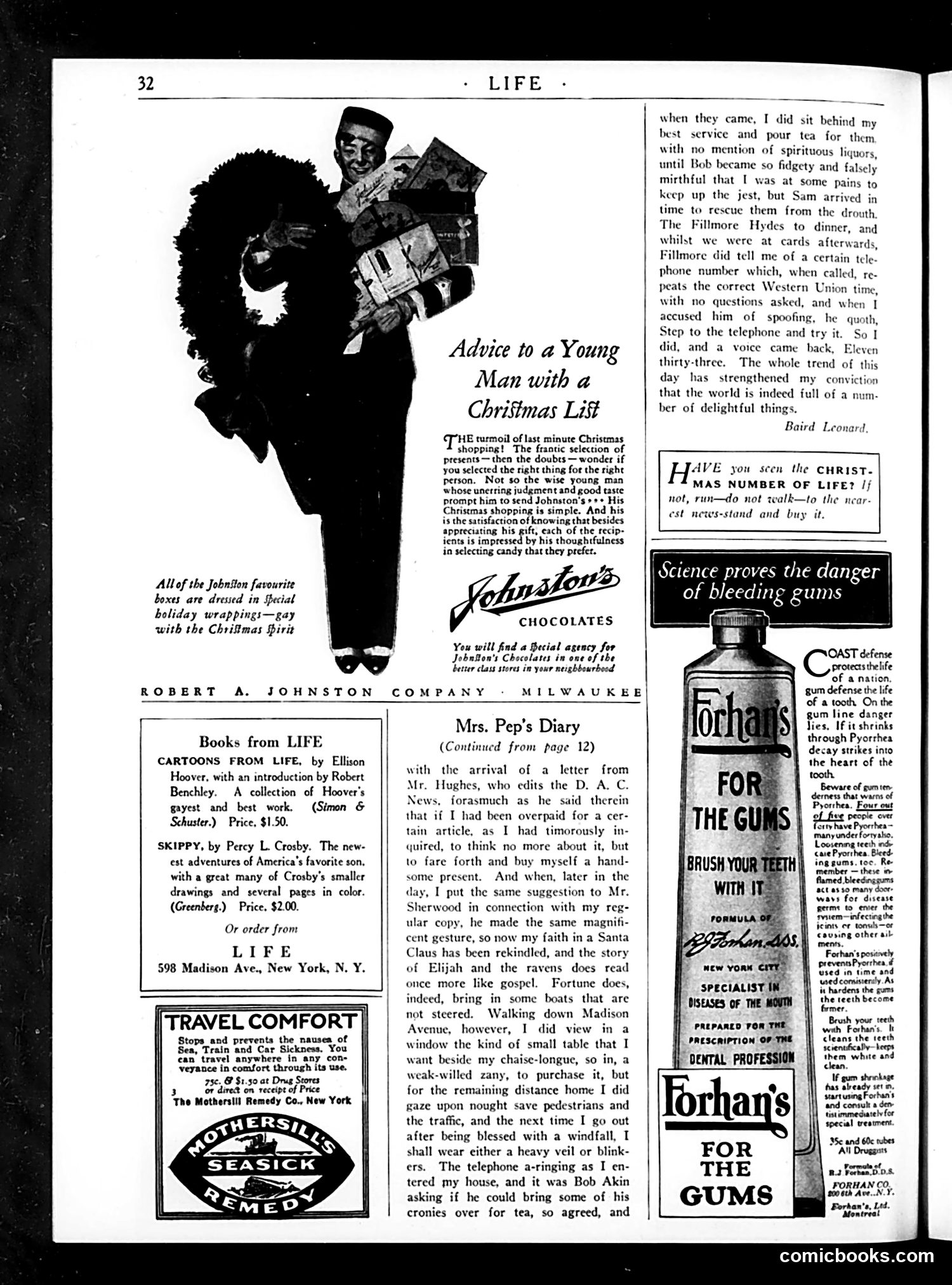
This page mixes advertising with editorial content typical of Life magazine's format. The main visual—a silhouetted figure carrying wrapped presents—illustrates "Advice to a Young Man with a Christmas List," promoting Johnston's Chocolates as the thoughtful gift choice. The satirical premise is that Christmas shopping requires good taste and judgment; Johnston's removes the guesswork. The "Mrs. Pep's Diary" column (continued from page 12) humorously chronicles upper-middle-class social life: the diarist receives unexpected payment from editors, struggles with consumer temptation, and hosts tea while maintaining propriety by serving only tea (not "spirituous liquors"). The humor derives from the tension between genteel restraint and modern conveniences—including a telephone service announcing the exact time. The page also advertises Life books and remedies (Mothersill's for seasickness, Forhan's toothpaste). The overall tone reflects 1920s-30s aspirational consumer culture mixed with gentle mockery of social pretension.
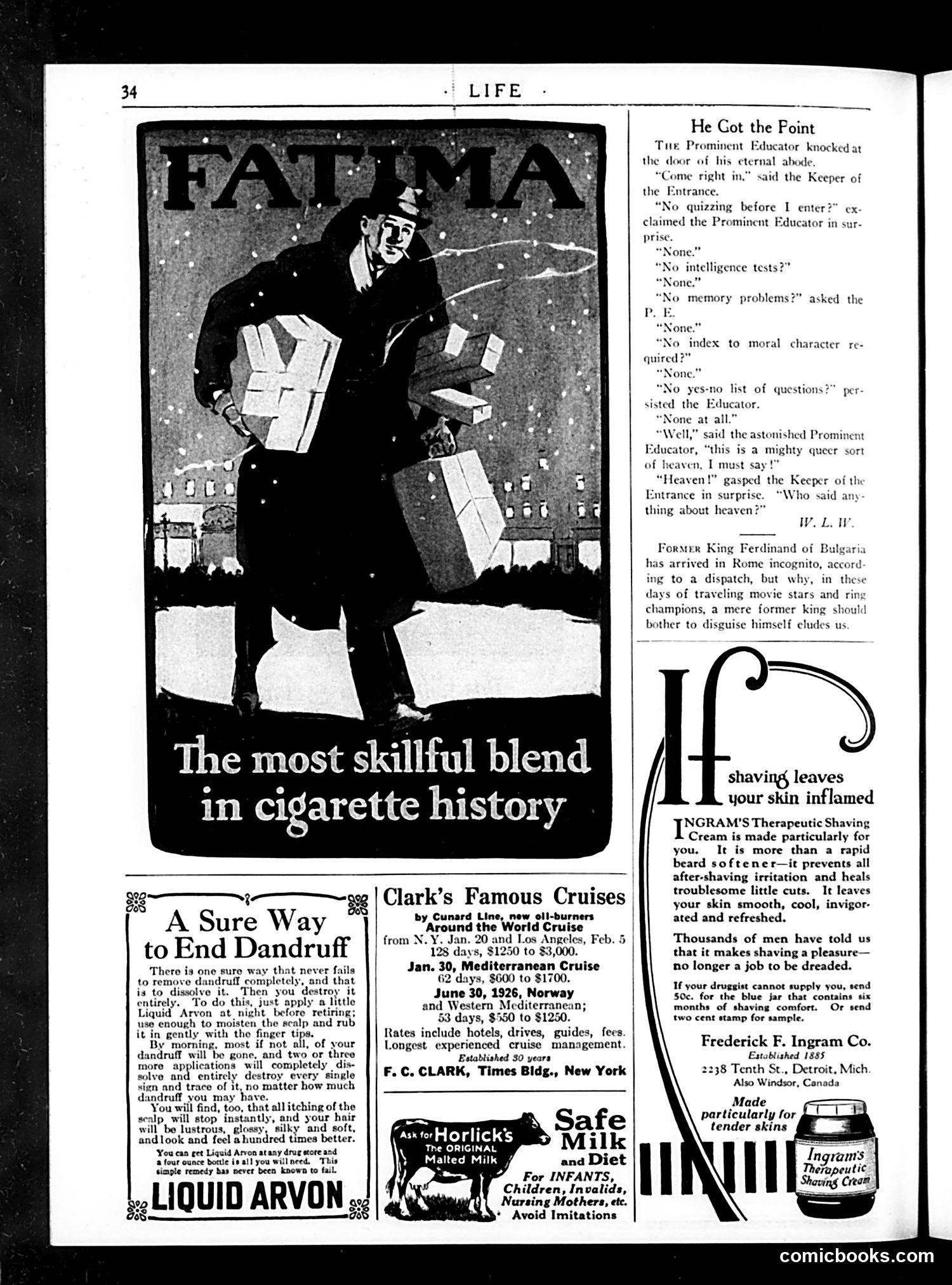
This page combines advertisements with satirical humor typical of Life magazine's format. **Main Cartoon ("He Got the Point"):** A prominent educator arrives at the afterlife's gates, expecting rigorous testing—intelligence exams, memory problems, moral character assessments. The gatekeeper denies all such requirements. When the educator expresses surprise at this "queer sort of heaven," the gatekeeper reveals he's actually in *hell*, not heaven. The satire mocks educational institutions and their obsession with testing and evaluation, suggesting that rigorous assessment is more characteristic of damnation than paradise. **Supporting Items:** - A brief joke about Former King Ferdinand of Bulgaria arriving in Rome "incognito"—mocking that a deposed monarch needs disguise when movie stars and boxers travel openly without concern. **Advertisements dominate the page:** cigarettes, dandruff remedy, cruise lines, malted milk, and shaving cream—typical early 1920s products. The cigarette ad features a dramatic noir-style illustration claiming "the most skillful blend in cigarette history."
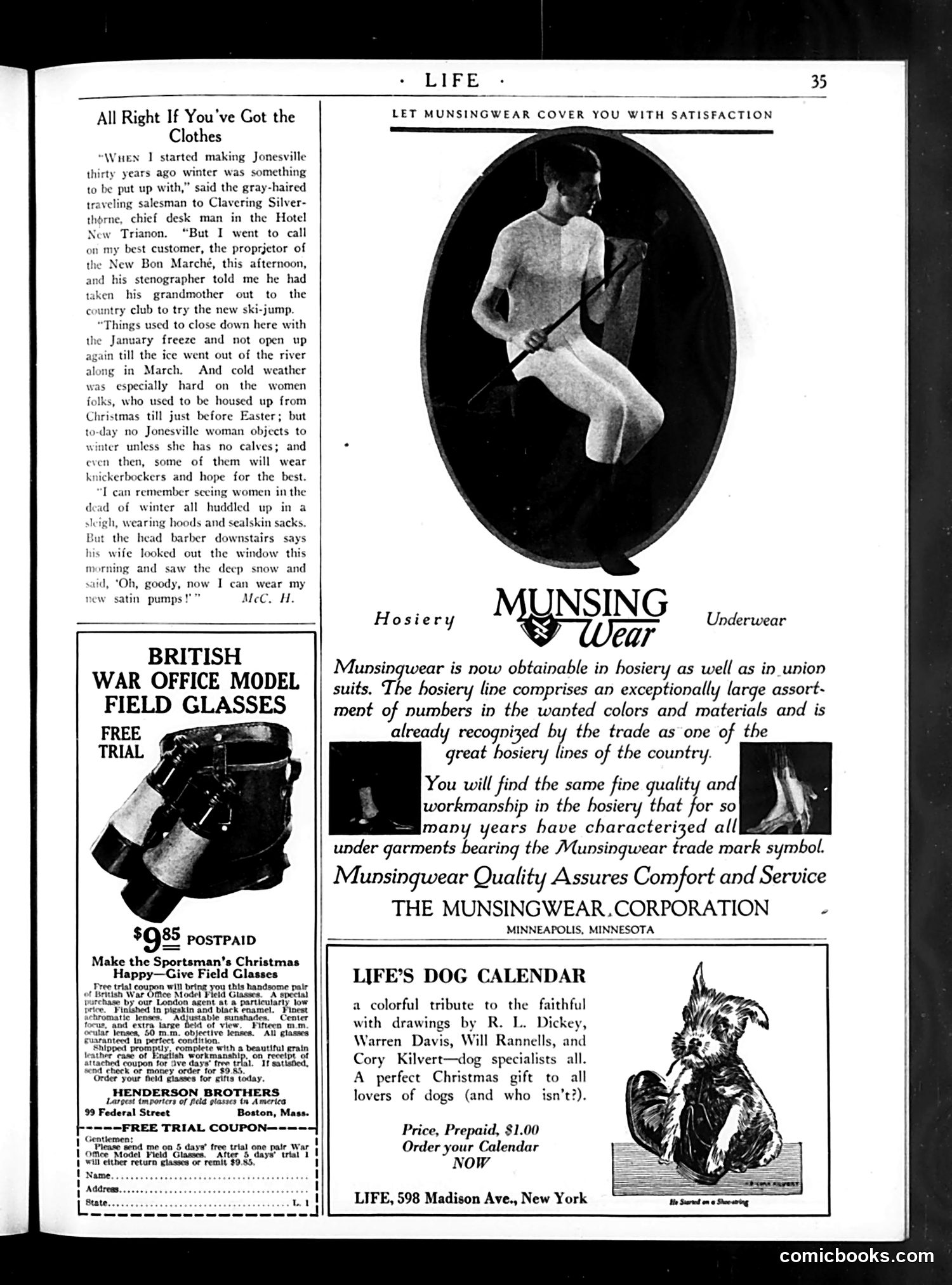
This page is primarily **advertising**, not satire or political commentary. The main content is a humorous **anecdote** about changing social customs in a small town called Jonesville. A traveling salesman notes that thirty years ago, harsh winters forced women indoors from Christmas through Easter. Now, women eagerly embrace winter activities—one woman excitedly anticipates wearing fashionable satin pumps in the snow. The joke plays on modern female liberation: women now participate in outdoor winter sports (skiing) and fashion-forward activities rather than remaining housebound, though the humor suggests some vanity in their enthusiasm. The page features advertisements for: - British War Office field glasses ($9.85) - Munsingwear hosiery and underwear - Life's Dog Calendar The anecdote reflects early 20th-century attitudes about women's changing social roles and the modern embrace of leisure activities and fashion, presented with gentle, good-natured humor.
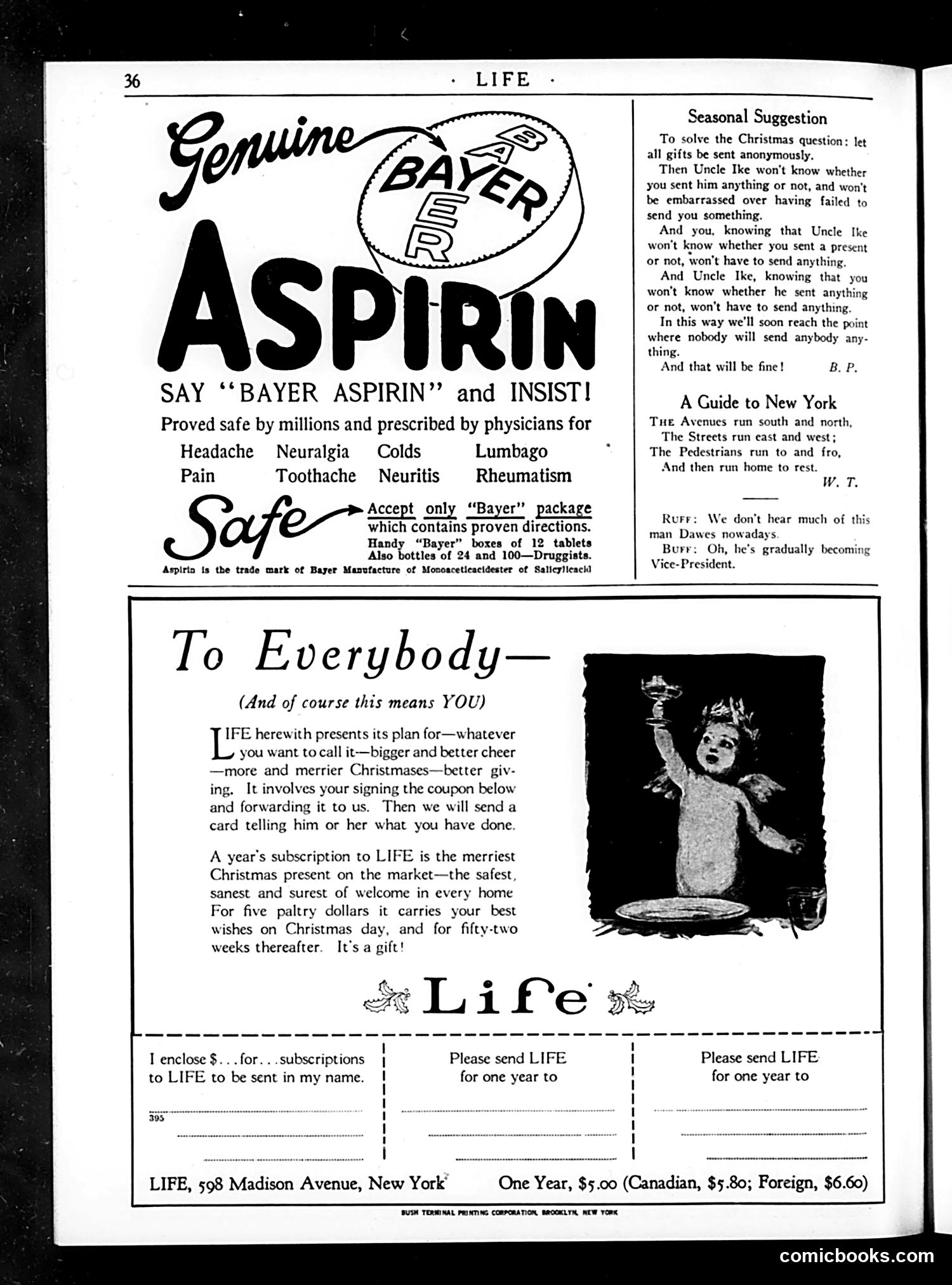
This page combines **advertisements and satirical humor** typical of Life magazine's format. **The Bayer Aspirin ad** (top) is straightforward product marketing, emphasizing the brand name and medical endorsements—common for the era. **The main satire** is the "Seasonal Suggestion" box, a tongue-in-cheek solution to Christmas gift-giving anxiety. The joke escalates absurdly: if everyone sends gifts anonymously, nobody knows who gave what, so eventually nobody needs to send anything at all. It's satire on the commercialization and social obligation of Christmas gift-giving. **The Life Magazine subscription pitch** positions a year-long subscription as the ideal gift—practical, welcomed, and extending "best wishes" for fifty-two weeks. **The sidebar jokes** include a New York guide (pedestrians running "to and fro") and a quip about Charles G. Dawes, Vice President under Calvin Coolidge, suggesting he's becoming gradually more prominent—likely commentary on his rising political visibility.
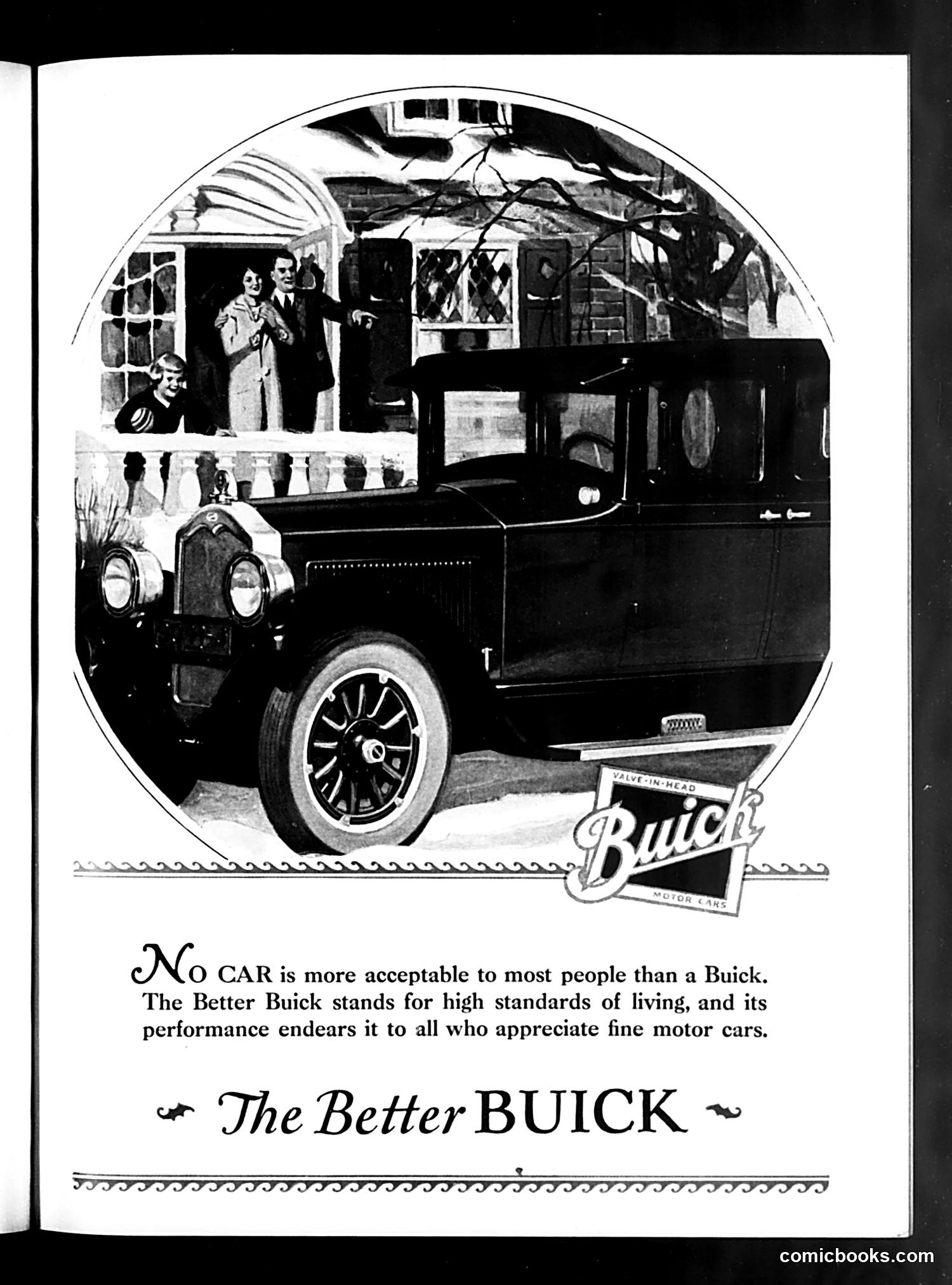
This is a **Buick automobile advertisement**, not a political cartoon or satire. It features a vintage car parked outside an elegant home where well-dressed figures observe from a porch and window. The ad uses aspirational imagery—suggesting that owning a Buick signals membership in a refined, affluent social class. The text claims the car is "more acceptable to most people" and represents "high standards of living." This reflects early 20th-century marketing strategy: selling cars not merely as transportation but as symbols of social status and respectability. The scene depicts the car as a status object that demonstrates the owner's refined taste and economic standing to neighbors and society.
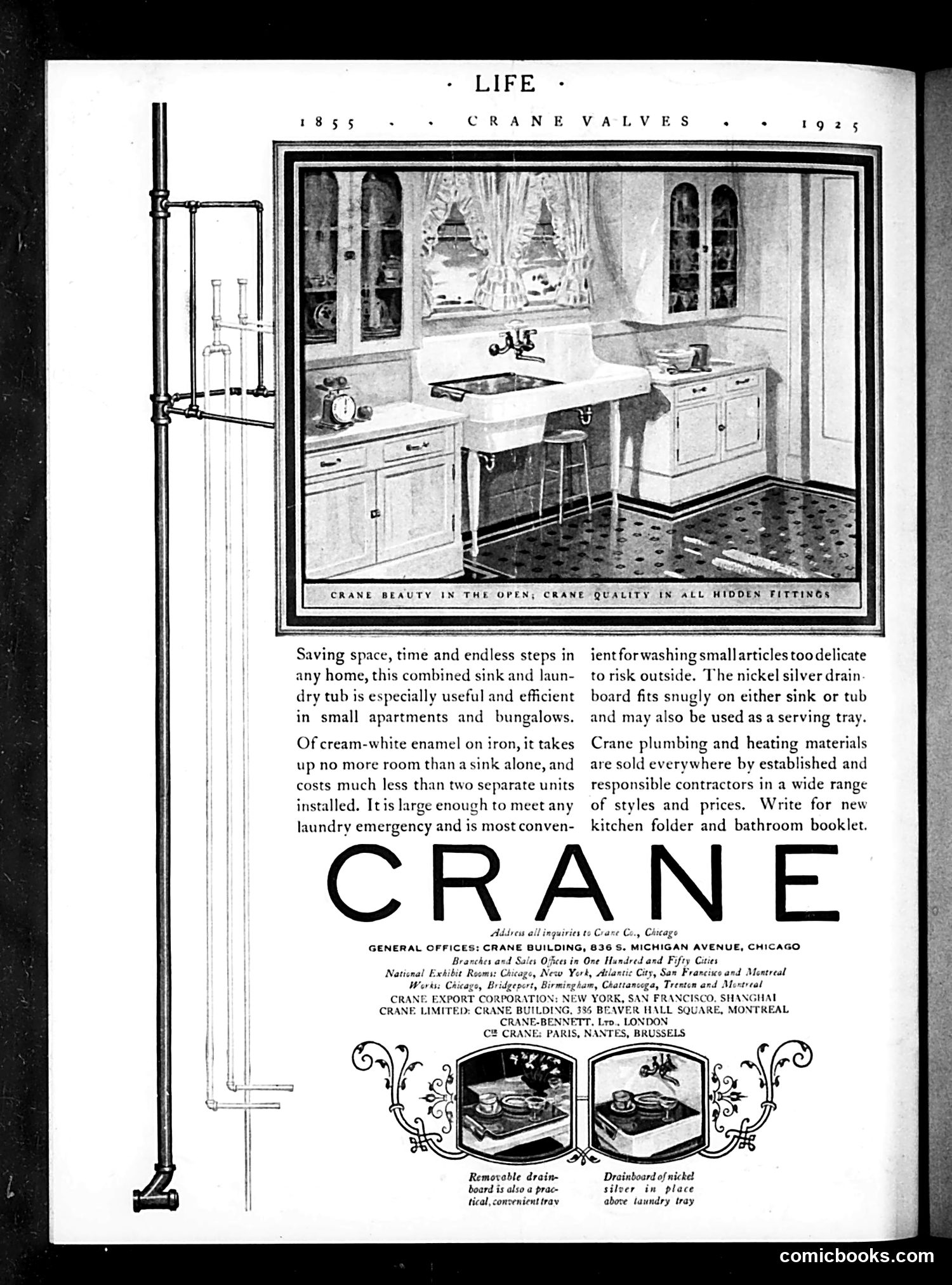
This page is not a political cartoon or satirical content. It's a **straightforward advertisement for Crane plumbing fixtures**, specifically a combined sink-and-laundry-tub unit (circa 1925). The page shows: - A photograph of a modern kitchen bathroom featuring the Crane product - Technical diagrams of the plumbing system (left side) - Product details emphasizing space-saving and cost efficiency for small apartments and bungalows - Promotional copy highlighting the nickel silver drain board's dual use as serving tray The appeal to **modern readers** is historical context: this advertisement reflects 1920s domestic life, when combined fixtures were novel innovations marketed as luxuries for efficiency-conscious homeowners. The emphasis on serving-tray functionality suggests how carefully housewives managed limited kitchen space. There is **no satire, political commentary, or caricature** present—Life magazine's pages often mixed serious editorial content with commercial advertising.