
A complete issue · 24 pages · 1908
Life — October 22, 1908
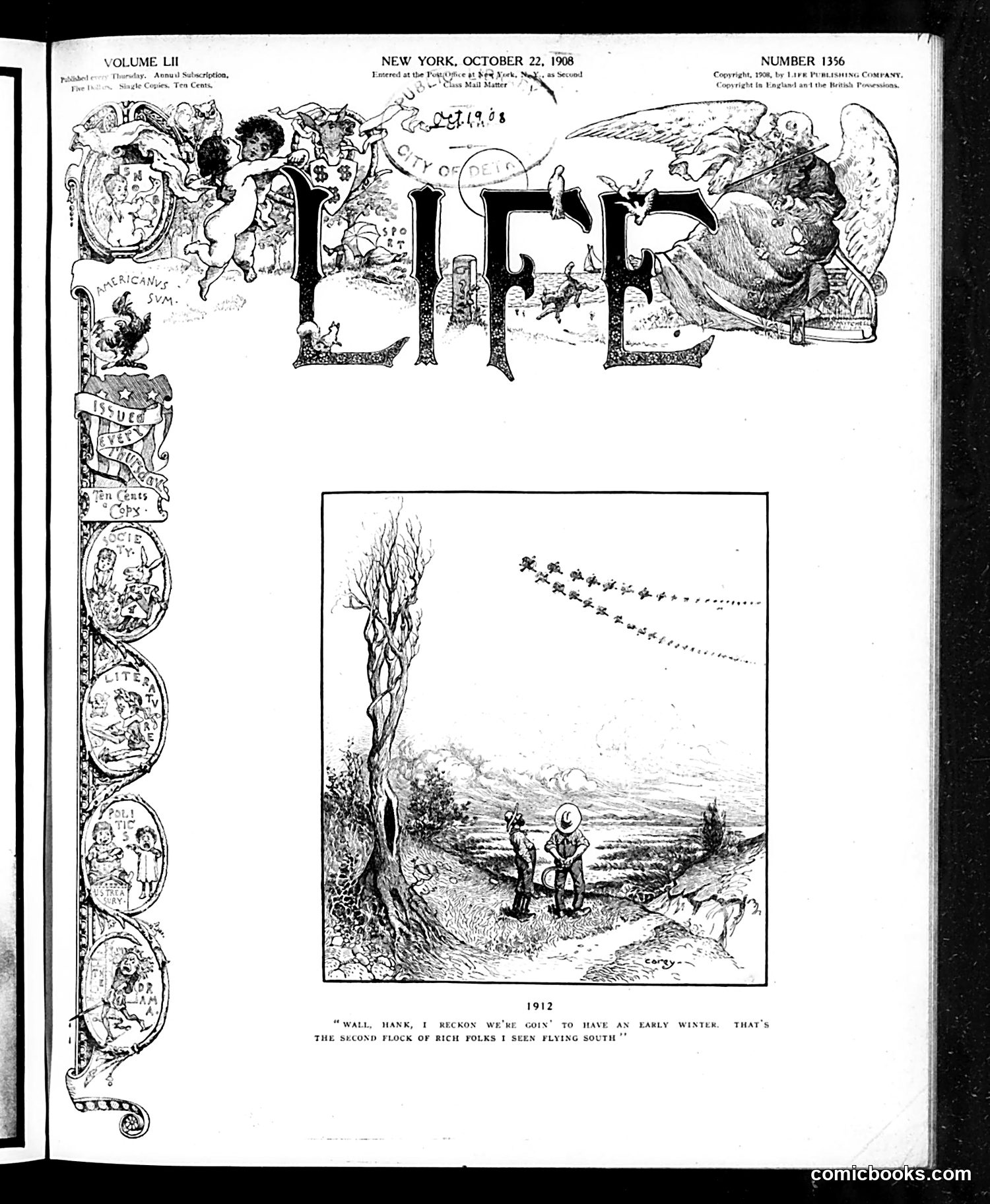
The main illustration depicts two figures observing geese flying south, with one saying: "Wall, Hank, I reckon we're goin' to have an early winter. That's the second flock of rich folks I seen flying south." **The Satire:** This is a joke about wealthy Americans fleeing to warmer climates as winter approaches—a practice associated with the privileged classes. The humor equates rich people to migrating geese, suggesting their seasonal movement south is as predictable and instinctive as bird migration. The rural dialect speakers ("Wall, Hank") emphasize the contrast between ordinary working people and the wealthy elite. **Context:** This reflects early 20th-century class consciousness, when winter migration to Florida or similar destinations was a visible marker of wealth and leisure that ordinary Americans could observe and mock.
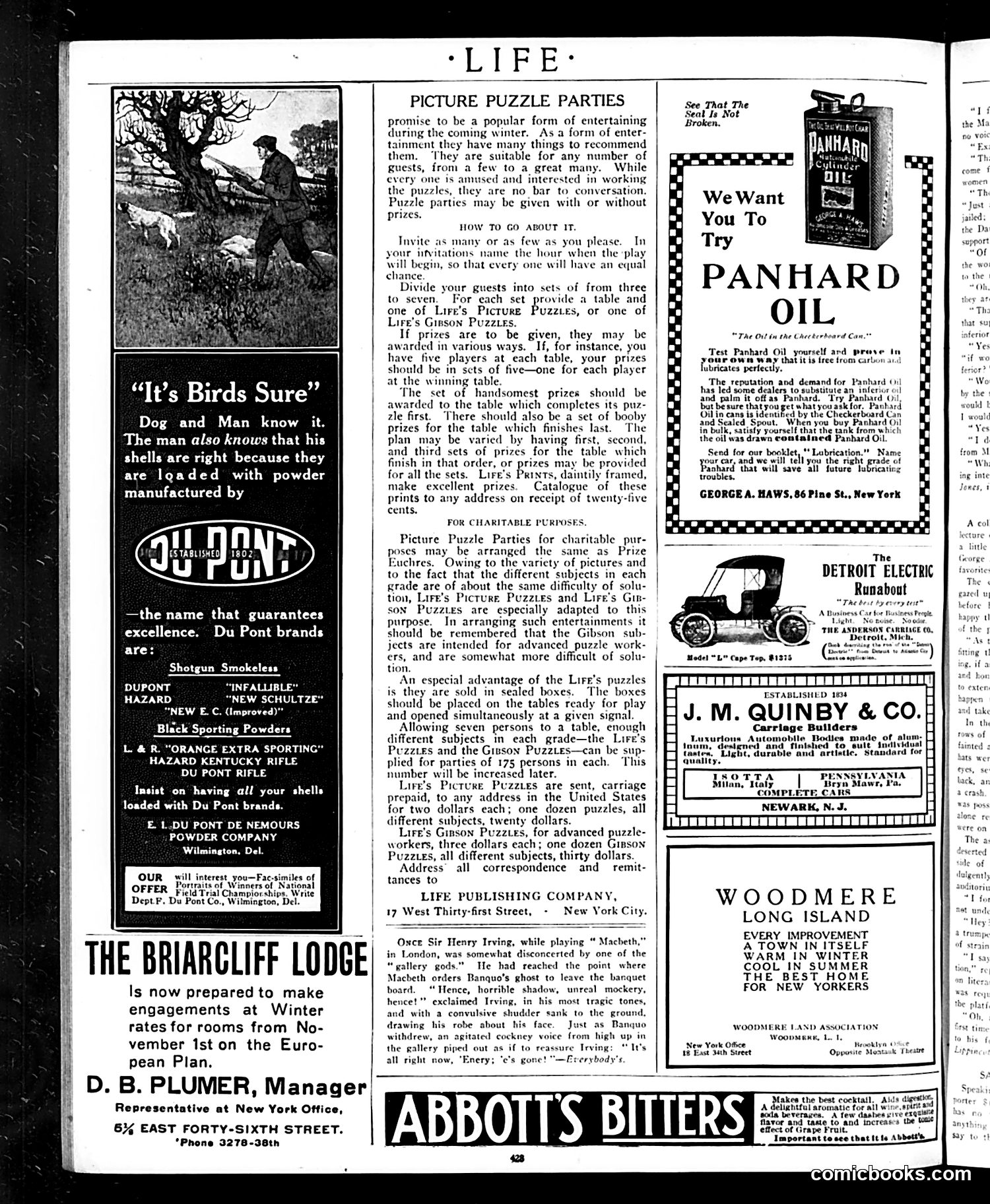
This page is primarily **advertising and instructional content** rather than political satire or editorial cartooning. The main illustrated feature is "'It's Birds Sure'"—an advertisement for Du Pont shotgun shells showing a man and dog hunting birds. The accompanying text explains that birds are reliable targets because the shells are "loaded with powder manufactured by" Du Pont. This is straightforward product promotion. The page also contains detailed instructions for hosting "Picture Puzzle Parties," a popular entertainment form of the era, using Life's published puzzle collections as entertainment and prizes. Below these are various other advertisements (Panhard Oil, Detroit Electric automobiles, J.M. Quinby & Co., and Abbott's Bitters). There is **no political cartoons or satirical content** visible on this page.
This page is primarily **advertising and fiction**, not political satire. The left column contains a dialogue about **woman suffrage**—debating whether women should vote. A "Man from Mars" challenges a Politician's objections, arguing women aren't mentally inferior. The debate reflects early 20th-century suffrage arguments. The center features **Crane's stationery advertisements** (wedding papers, calling cards, linen products)—marketing to affluent consumers. The bottom half advertises **Jones Dairy Farm sausages** and promotes **"The Testing of Diana Mallory,"** a novel by Mrs. Humphry Ward about a woman tested by harsh circumstances. The suffrage dialogue appears designed to present both pro- and anti-women's-voting positions to *Life*'s educated readership, though the "Man from Mars"'s logic seems intended to mock the Politician's resistance to women's equality.

This page is **not a political cartoon or satirical content**—it's a commercial advertisement for Kelly-Springfield pneumatic automobile tires, published in *Life* magazine. The ad uses a product photograph (showing the tire's cross-section) and marketing copy that emphasizes brand heritage and quality. The argument is: Kelly-Springfield built the best solid carriage tires for years; now they make the best pneumatic (air-filled) automobile tires using that same expertise and rubber composition. The pitch appeals to consumer trust through reputation and longevity ("the best made but also the best known tire"). There is no satire, political commentary, or joke—merely period advertising rhetoric targeting early automobile owners deciding which tires to purchase.
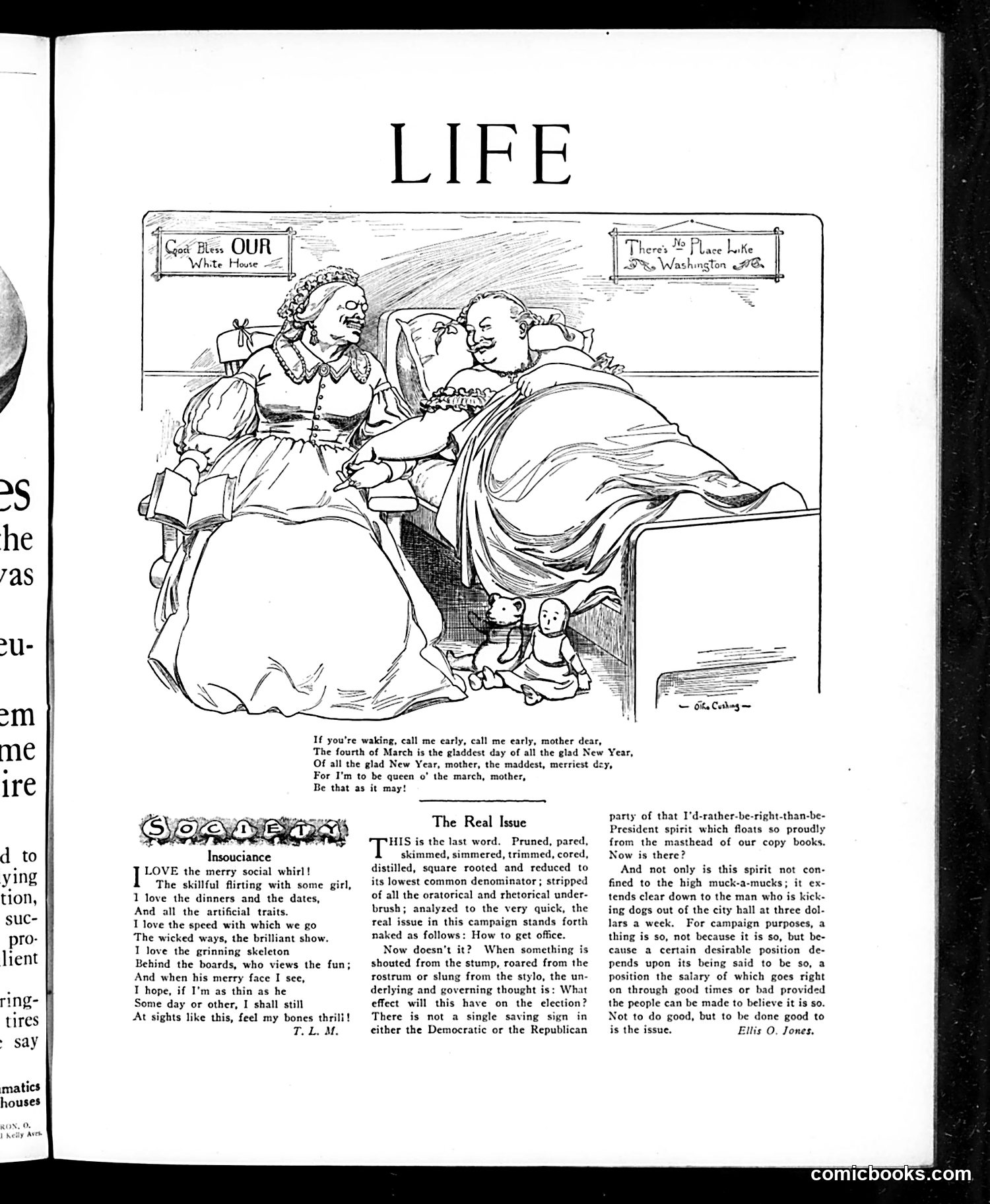
The main cartoon depicts two figures in bed at the White House, with labels indicating "Our White House" and "There's No Place like Washington after." The illustration satirizes domestic life in the nation's capital, showing what appears to be a couple in an intimate moment—likely commentary on the private lives of political figures or Washington society. Below, "Seven Bits" contains humorous social observations about Washington life and romantic relationships. "The Real Issue" editorial discusses political efficacy, questioning whether Democratic or Republican policies truly matter for election outcomes, and emphasizes that good governance—not partisan loyalty—should determine voter choice. The overall tone mocks Washington pretension while questioning substantive political differences.
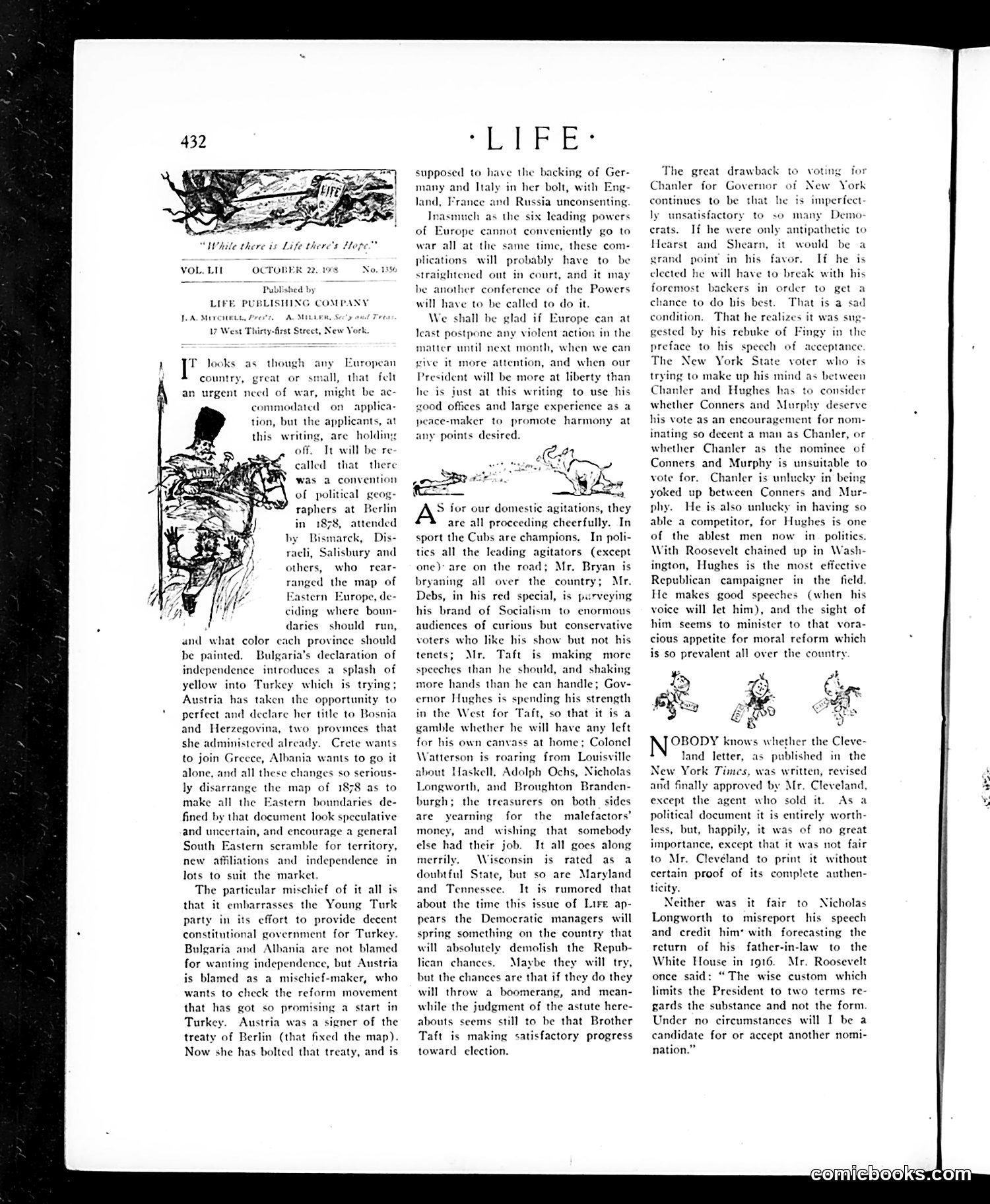
The page contains editorial commentary on European politics and American domestic affairs during the 1928 election season. The illustrated figure on the left appears to be a caricatured European political leader, likely commenting on the complex diplomatic situation following World War I. The text references conferences among European powers and discusses territorial disputes, particularly involving Turkey, Bulgaria, Austria, and the Balkans. The domestic section criticizes various political figures including William Jennings Bryan, Eugene Debs, William Howard Taft, and Governor Hughes, mocking their campaign activities. It also discusses the presidential candidacy of someone named Chandler, questioning his viability as a candidate. The tone is satirical and dismissive toward both European complications and American political leadership of the period.
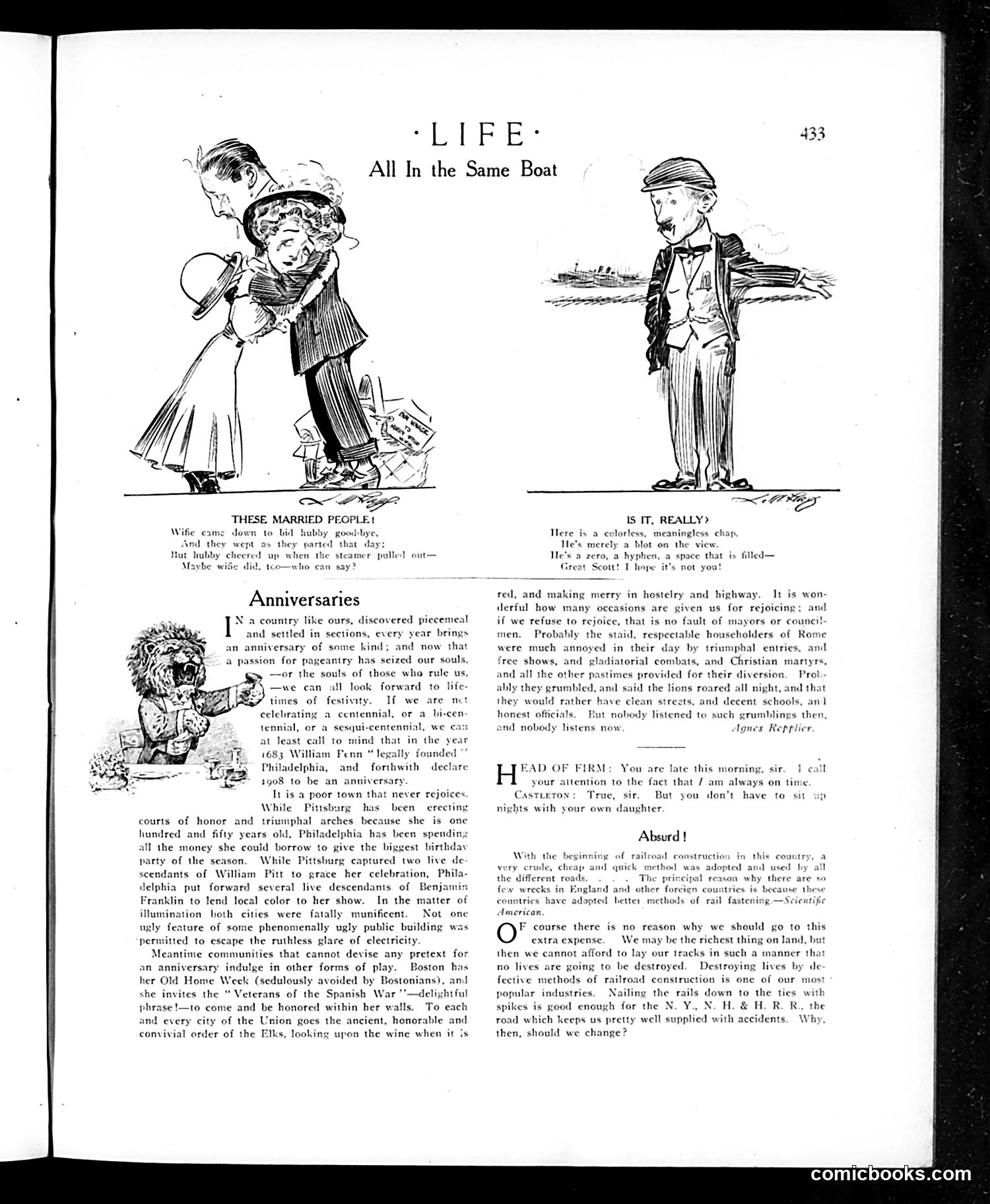
This two-panel cartoon satirizes marital discord. The left panel shows a couple mid-argument—the wife appears confrontational while the husband looks defensive, with scattered papers suggesting domestic conflict. The right panel depicts a man alone, appearing distressed or bewildered. The title "All In the Same Boat" suggests shared predicament. The accompanying text references married couples' troubles and hints at infidelity ("nights with your own daughter"). The satire appears to mock both spouses' complaints and hypocrisy in marriage—couples quarrel over perceived wrongs while engaging in questionable behavior themselves. The cartoons likely reflected common anxieties about marriage stability during this era, presenting domestic unhappiness as a shared human condition deserving both sympathy and gentle ridicule.
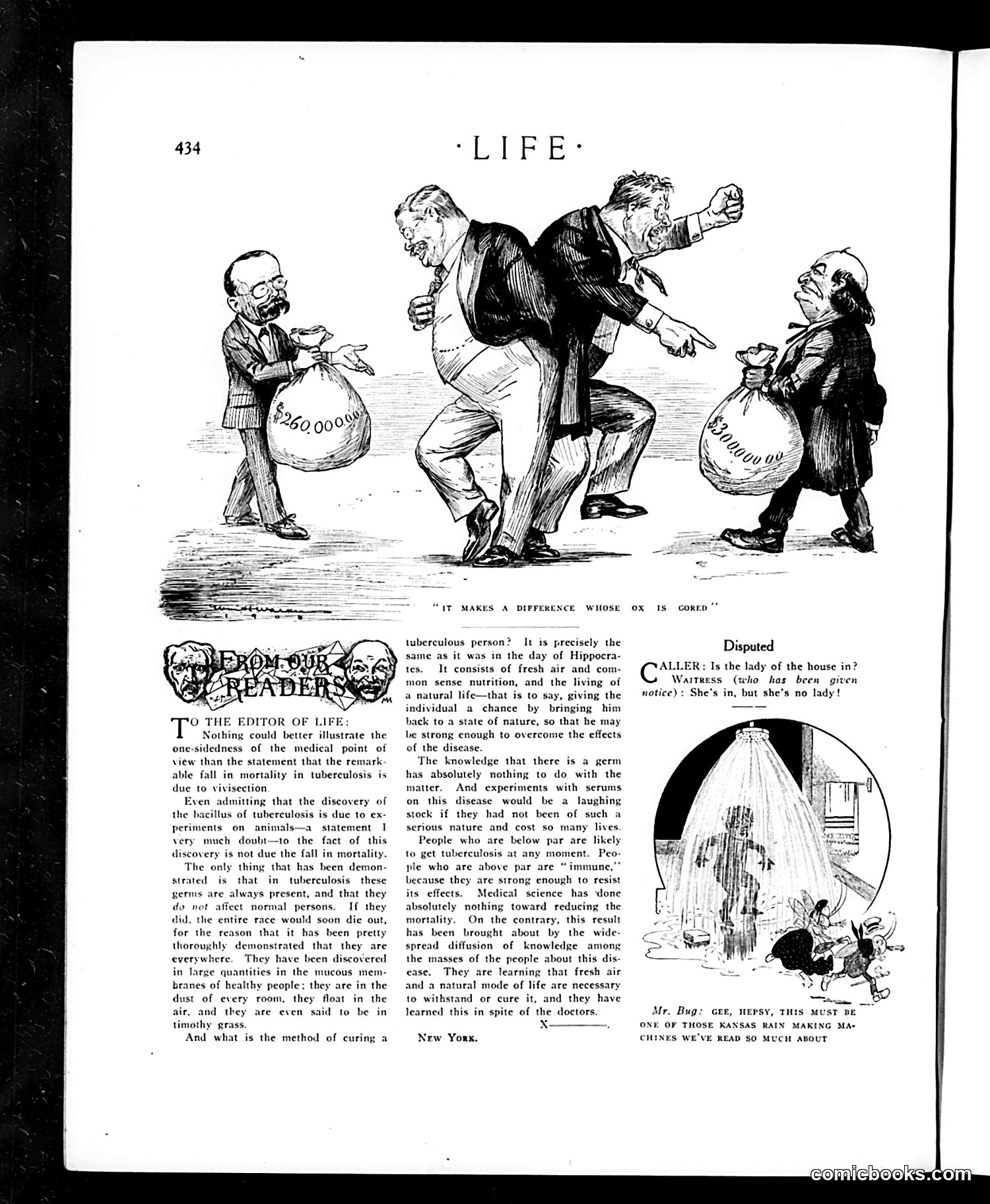
The top cartoon satirizes wealth inequality and financial speculation. Three men in suits juggle large money bags labeled "$260,000.00" and "$27,000.00" while a central figure balances precariously—the caption reads "IT MAKES A DIFFERENCE WHOSE OX IS GORED," meaning consequences depend on whose interests are affected. This appears to mock how wealthy financiers manipulate money while ordinary people bear the risks. The lower section contains a letter debating tuberculosis treatment, arguing that germ theory is irrelevant and that "fresh air and natural mode of life" cure disease better than doctors. The accompanying cartoon shows a person sleeping in the rain, humorously illustrating the impracticality of this folk-remedy philosophy. Both pieces use satire to critique contemporary misconceptions and power imbalances.
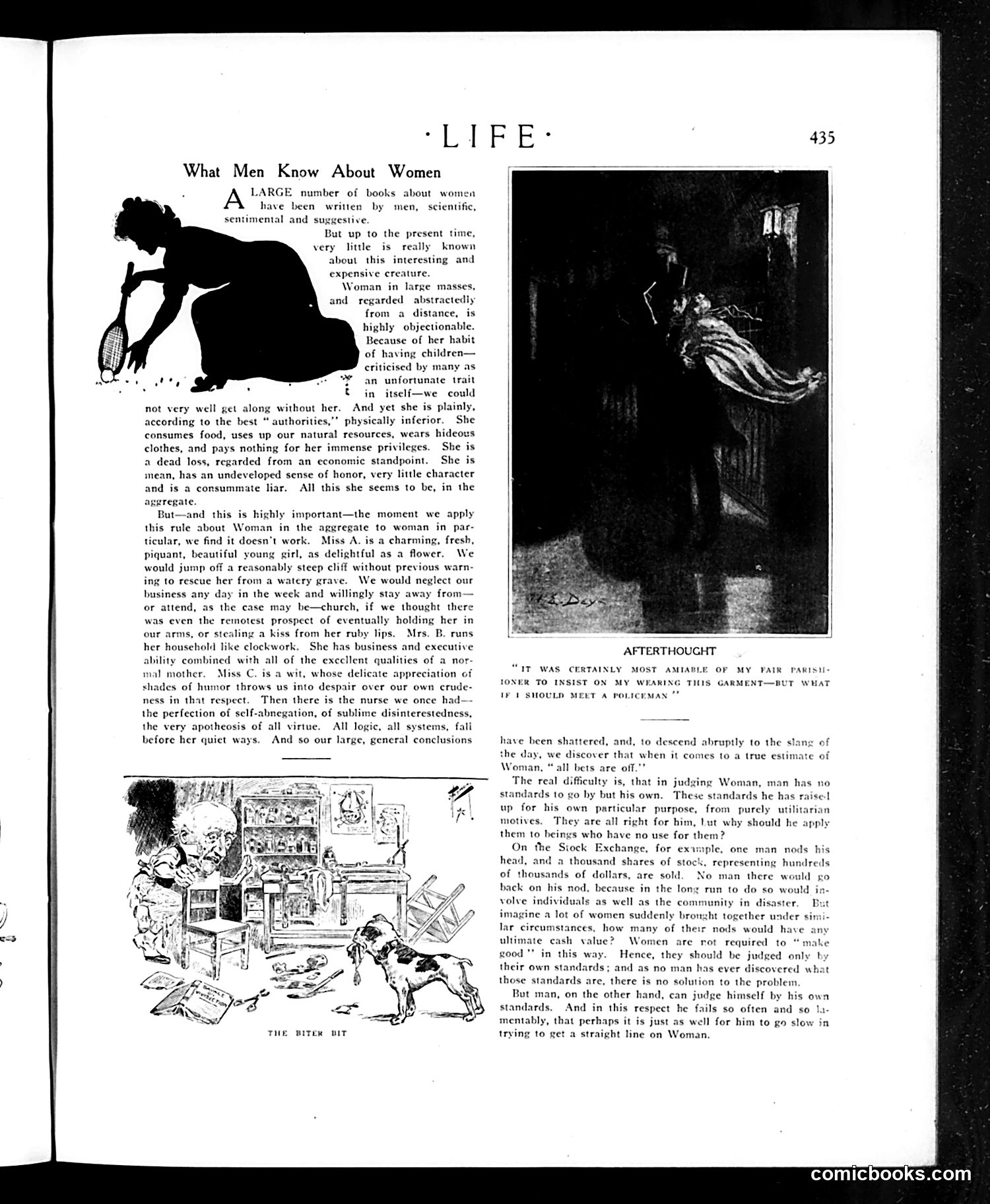
This satirical article mocks men's presumed expertise about women while actually exposing male ignorance and hypocrisy. The opening illustration shows a silhouetted woman in an athletic pose (tennis racket visible), challenging the article's claim that women are physically inferior and economically unproductive. The text ironically catalogs male complaints: women consume resources, wear expensive clothes, have children, lack honor and character—yet contradicts itself by praising individual women (Miss A, Mrs. B) as charming, capable managers and devoted nurses. "The Biter Bit" cartoon depicts domestic chaos—a messy home with a dog—illustrating the gap between male theory and reality. The "Afterthought" section concludes that men lack consistent standards for judging women, suggesting male judgment itself is unreliable. The satire's point: men confidently generalize about women while revealing their own confused and contradictory thinking.
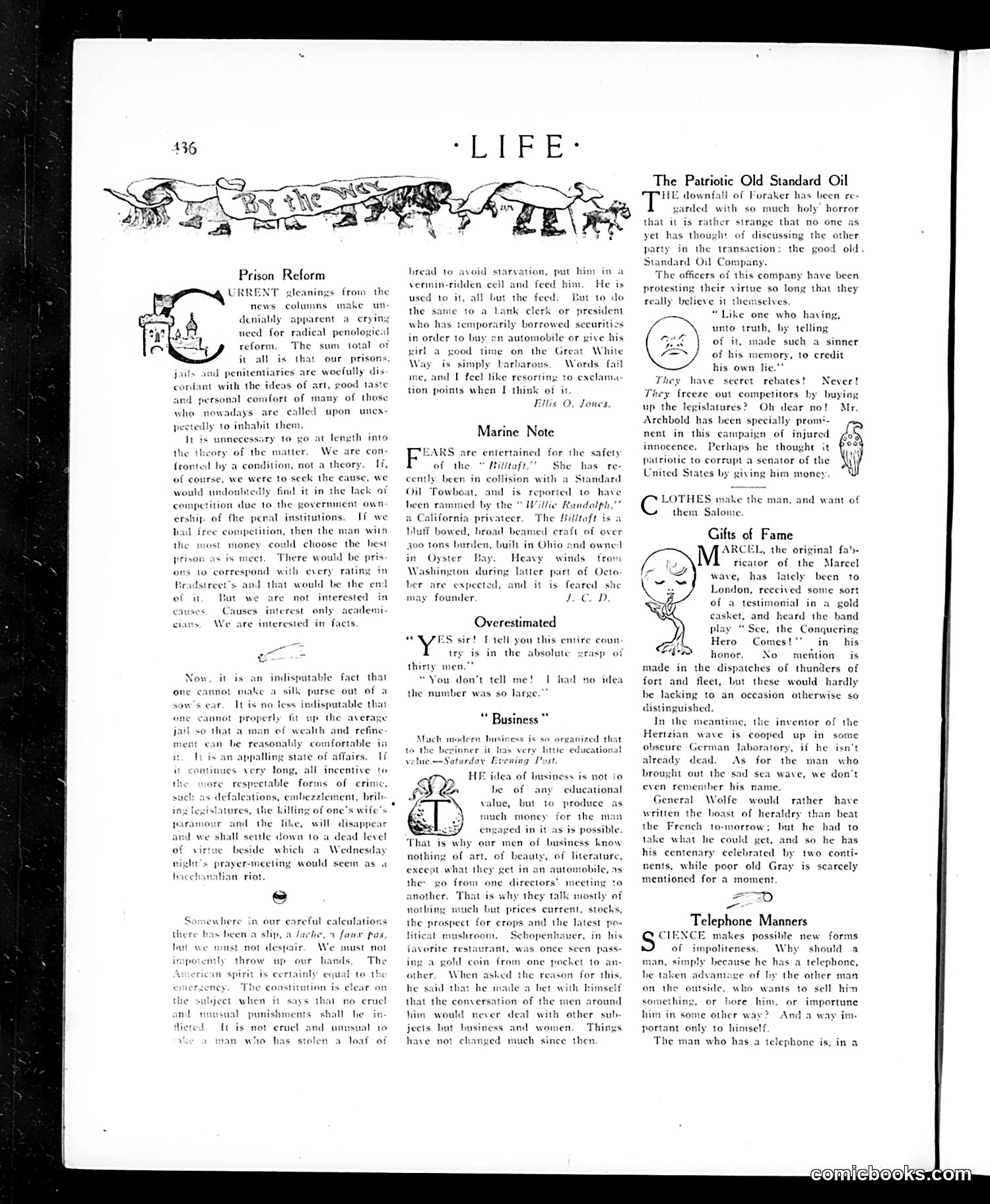
This page contains several brief satirical columns rather than political cartoons. The pieces critique: **"Prison Reform"** - Mocks well-intentioned prison reformers as naïve, arguing that prisoners are fundamentally incorrigible and cannot be improved through comfort or kindness. The satire suggests reformers waste effort on an impossible cause. **"Overestimated"** - A brief joke about someone overestimating their country's size/importance. **"Business"** - Satirizes modern business culture as purely profit-driven, with executives caring nothing for art, beauty, or literature—only money-making. **"Telephone Manners"** - Mocks people who assume telephone ownership grants them importance or social superiority. The tone is cynical social commentary typical of Life magazine's satirical approach to American society and human nature.
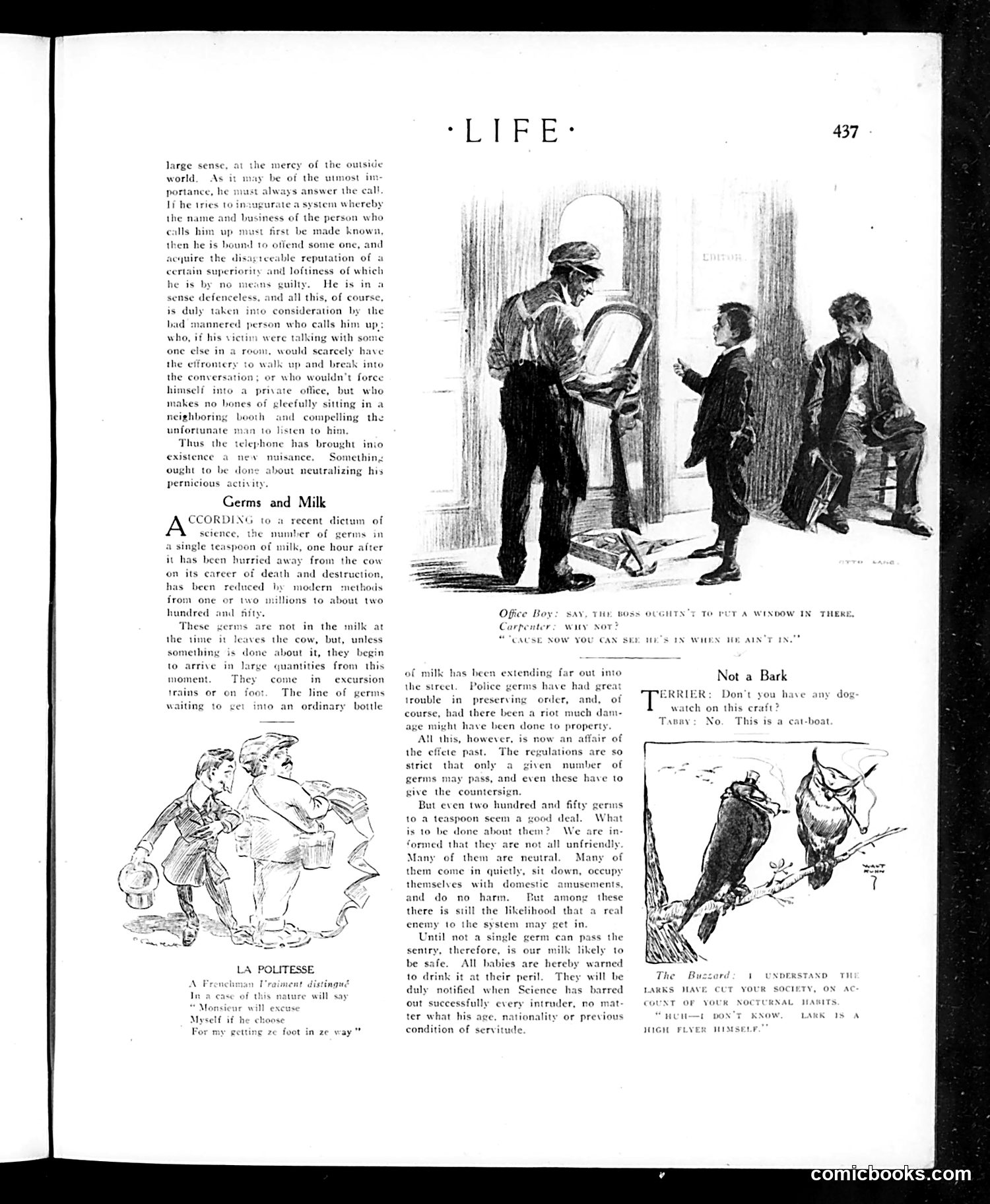
This page contains three distinct satirical pieces: 1. **"Germs and Milk"** - A serious article about bacterial contamination in milk, illustrated with a cartoon showing two men with large bottles, likely mocking public health concerns about milk safety during the Progressive Era. 2. **"La Politesse"** - A French-language caption cartoon depicting a man saying he'll "choose" to step on someone's foot "in a way" (implying deliberate rudeness disguised as politeness). This satirizes false civility. 3. **"Not a Bark"** - A dialogue about whether a boat is a dog-watch versus cat-boat, with an illustration of a bird (buzzard). The punchline mocks someone's confusion between nautical terminology and animal references—apparently a high-flying flyer misunderstanding naval terms. These pieces humorously target public health issues, social pretense, and everyday misunderstandings.
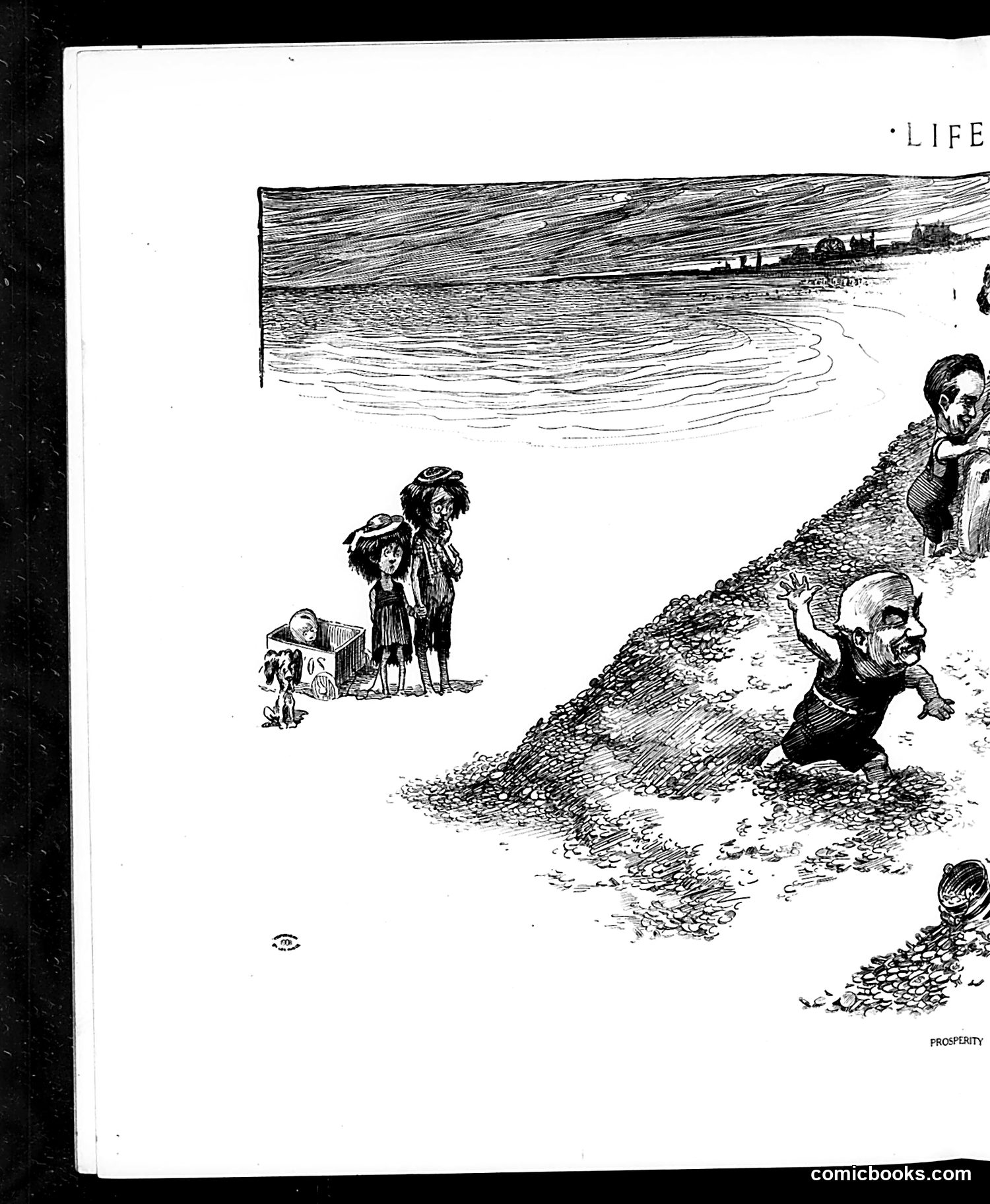
This appears to be a satirical editorial cartoon titled "Prosperity" from *Life* magazine. The image depicts a stark contrast: on the left, a poor family (adults and children) huddles near the shore in ragged clothing, while on the right, wealthy figures sit atop large piles of money/coins, seemingly oblivious to the destitute people nearby. The satire critiques economic inequality and the false claim of universal "prosperity." While some enjoy enormous wealth, others live in poverty. The juxtaposition suggests that proclaimed national prosperity benefits only the wealthy elite, leaving the working poor behind. This likely reflects early-to-mid 20th century American class tensions, possibly referencing a period when economic inequality was politically contentious.
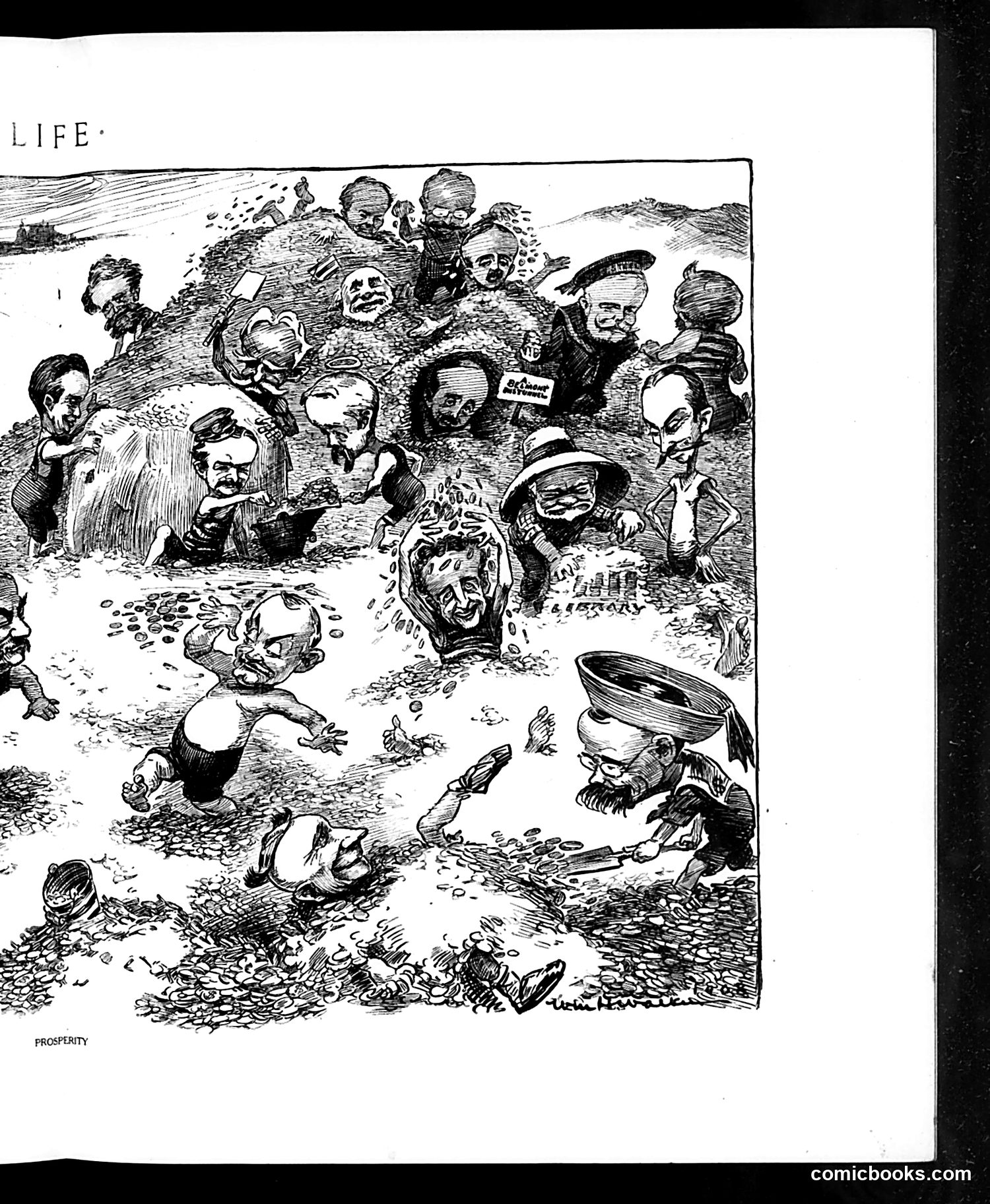
This cartoon depicts numerous caricatured figures digging in sand or soil, seemingly searching for wealth or treasure. The title "PROSPERITY" appears ironic—while the figures labor intensely, their exaggerated, grotesque features suggest desperation rather than genuine abundance. The men wear various hats and clothing styles indicating different social classes or professions. Some appear to be politicians or public figures, identifiable by caricature conventions of the era, though specific individuals aren't clearly labeled here. The satire likely critiques either false promises of economic prosperity, wealth inequality, or the futile efforts of ordinary people chasing prosperity during uncertain economic times. The frantic, undignified digging suggests the degrading struggle for financial security—prosperity remains out of reach despite everyone's efforts.
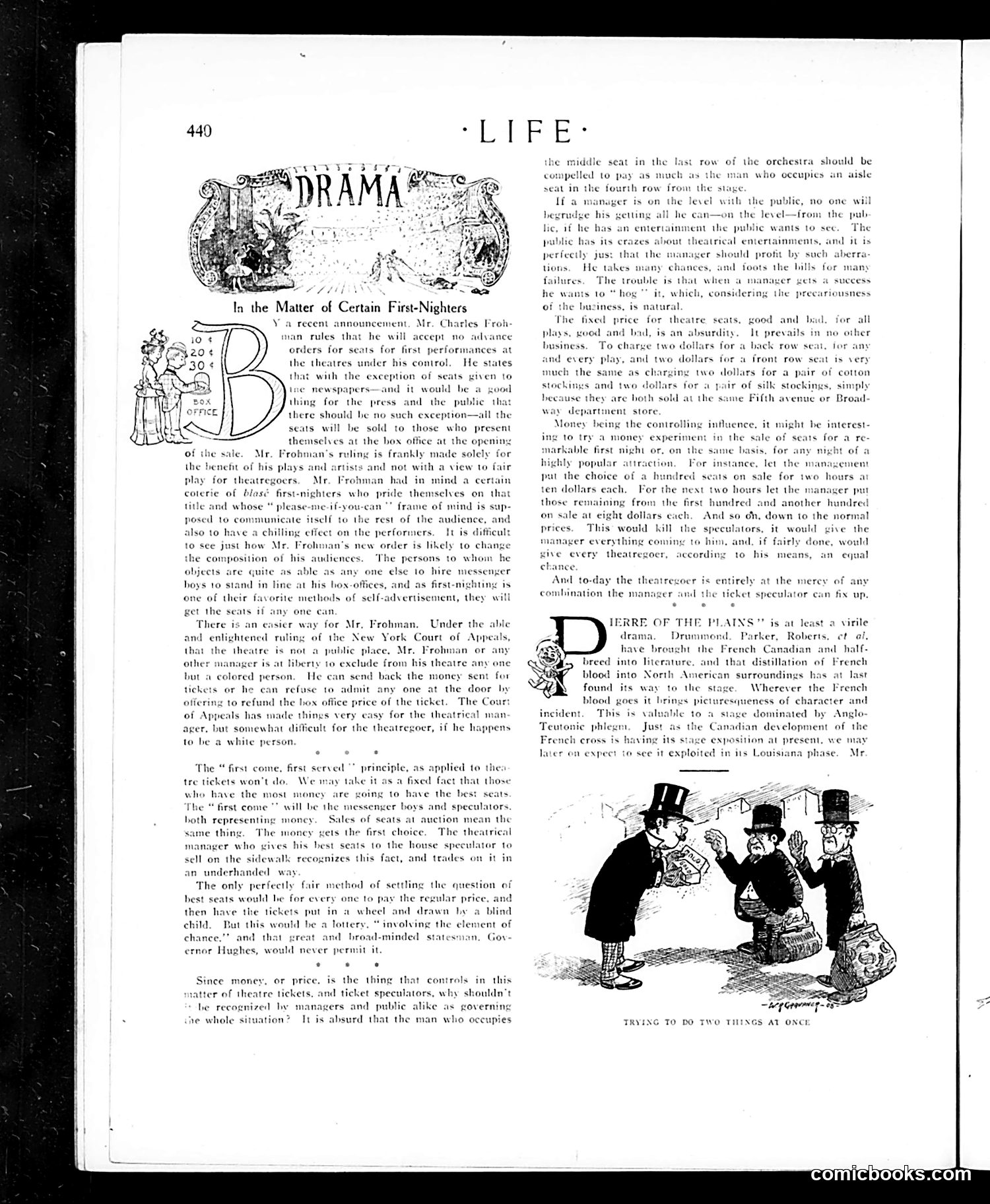
This article critiques Charles Frohman's (prominent theatrical producer) new policy eliminating advance seat orders for theater premieres. The satire targets wealthy, pretentious "first-nighters"—elite theatergoers who prided themselves on attending opening nights and allegedly disrupted performances with their affected behavior. Frohman claimed his rule benefited artists, but the author argues it changes nothing: wealthy speculators and messenger boys will still monopolize best seats. The piece exposes the hypocrisy: theater operates on money, not fairness, yet pretends otherwise. The accompanying cartoon depicts men "trying to do two things at once"—likely showing the absurdity of competing interests in theater ticketing. The article also references Governor Hughes and New York Court of Appeals rulings allowing theaters to refuse service to Black patrons, illustrating systemic racism underlying these supposedly egalitarian policies.
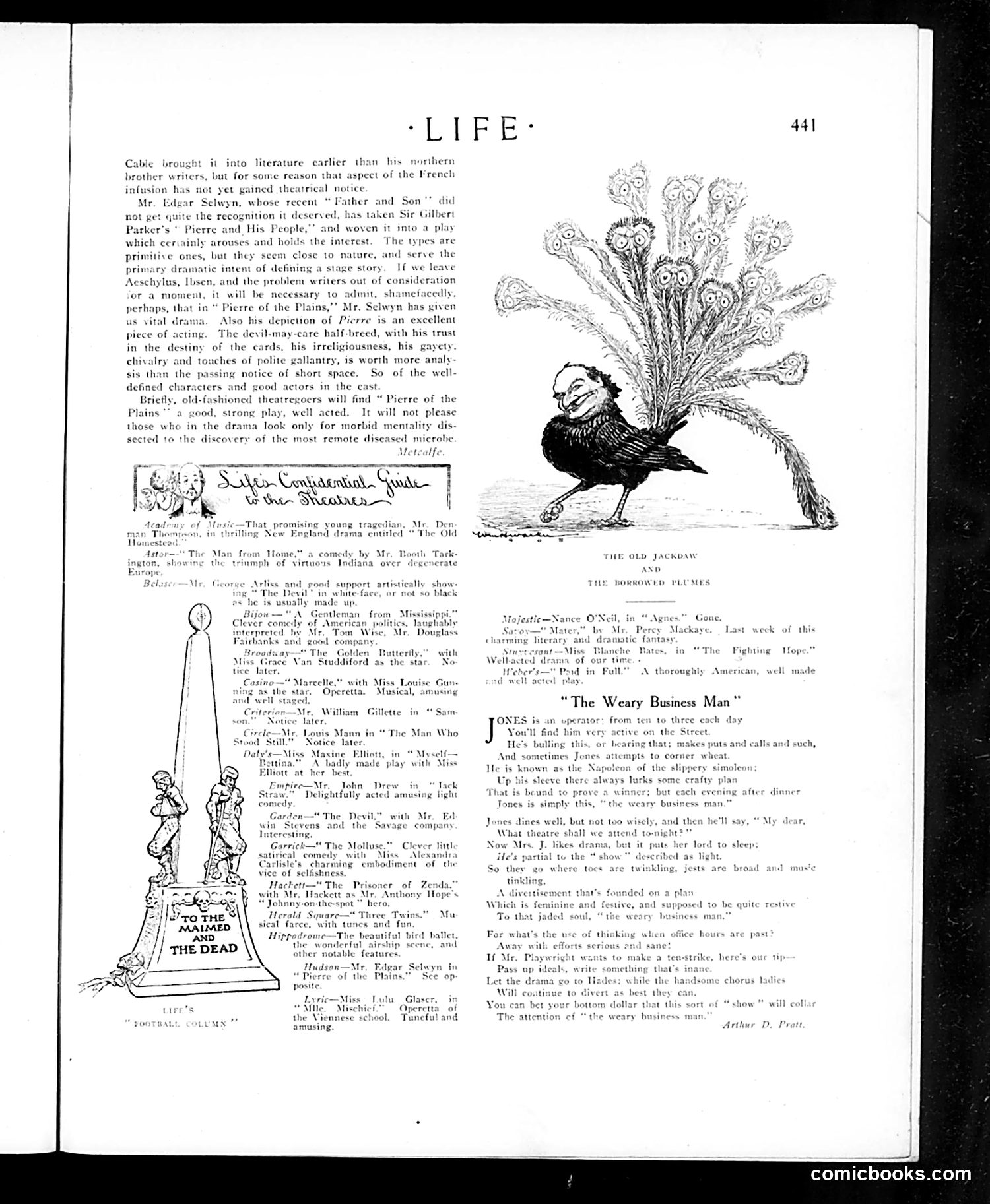
The cartoon depicts a jackdaw (a black bird) wearing an elaborate arrangement of colorful feathers, likely borrowed from other birds. This is a visual representation of the classic Aesop's fable about a jackdaw who adorns itself with feathers shed by other birds, then is mocked and stripped of them when discovered. The satire likely critiques pretension, plagiarism, or false sophistication—someone presenting themselves as more refined or accomplished than they actually are. In the context of this *Life* magazine page, which reviews theatrical productions, it probably mocks theatrical trends or performers who adopt styles or techniques from others without genuine merit. The accompanying text discusses various plays and performers, suggesting the cartoon may be satirizing actors or playwrights who imitate successful Continental (European) dramatic styles without understanding their essence—a theme mentioned in the adjacent theater criticism about French influences in American drama.
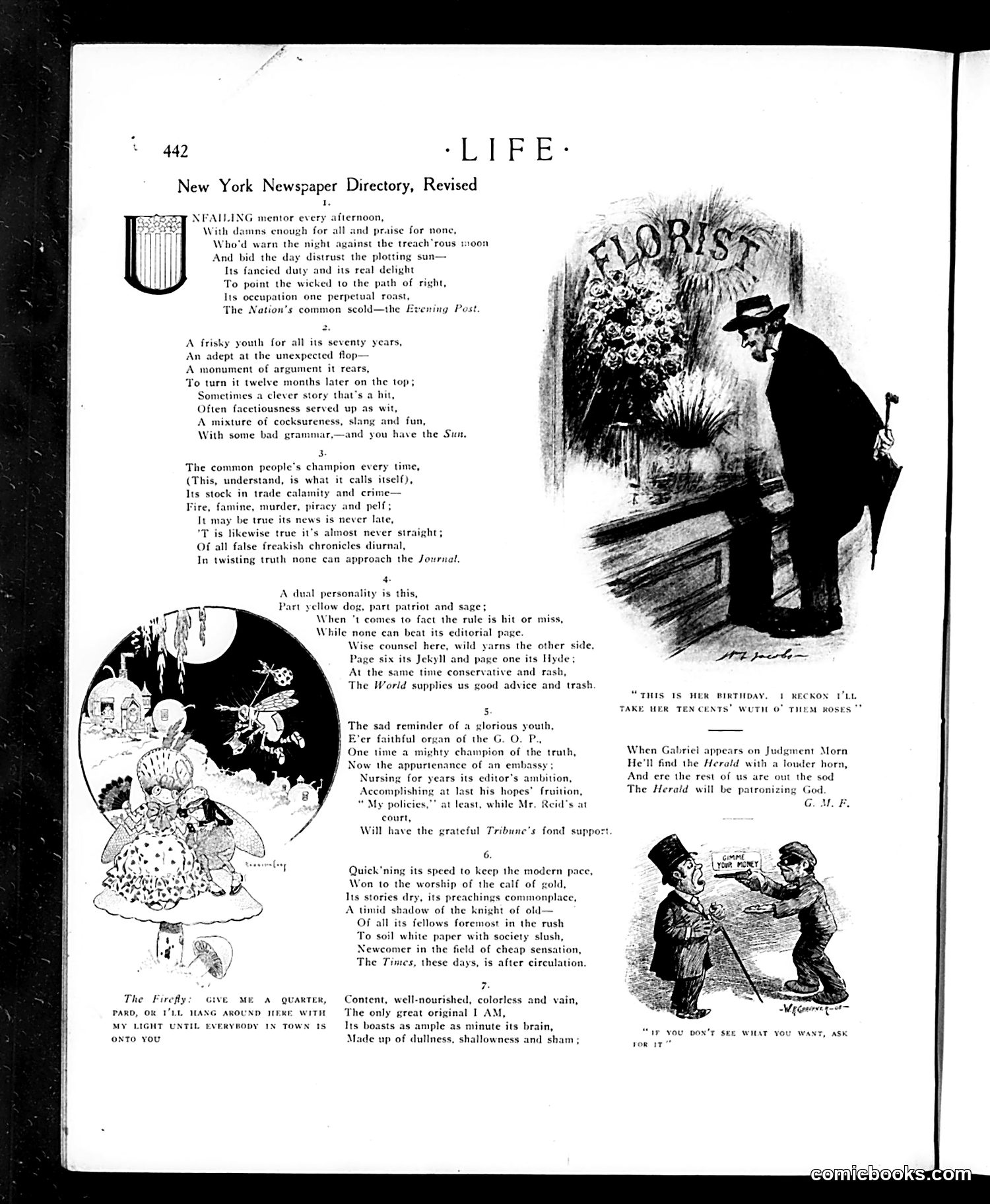
This page satirizes major New York newspapers through verse caricatures. Each numbered section skewers a different publication: 1. **The Evening Post**: portrayed as a self-righteous "common scold" 2. **The Sun**: described as frisky, contradictory, mixing cleverness with bad grammar 3. **The Journal**: accused of twisting truth and spreading sensationalism 4. **The World**: presented as Jekyll-and-Hyde—wise editorials paired with tabloid trash 5. **The Tribune**: once a champion of truth, now reduced to serving an ambassador's ambitions 6. **The Times**: chasing circulation through society gossip instead of serious journalism 7. **The Firefly** (unclear publication): criticized as vain and original only in its shamelessness The accompanying sketches show character types representing these papers' editorial philosophies. The satire targets late-19th-century journalism's descent into sensationalism, partisan politics, and commercial self-interest over truth.
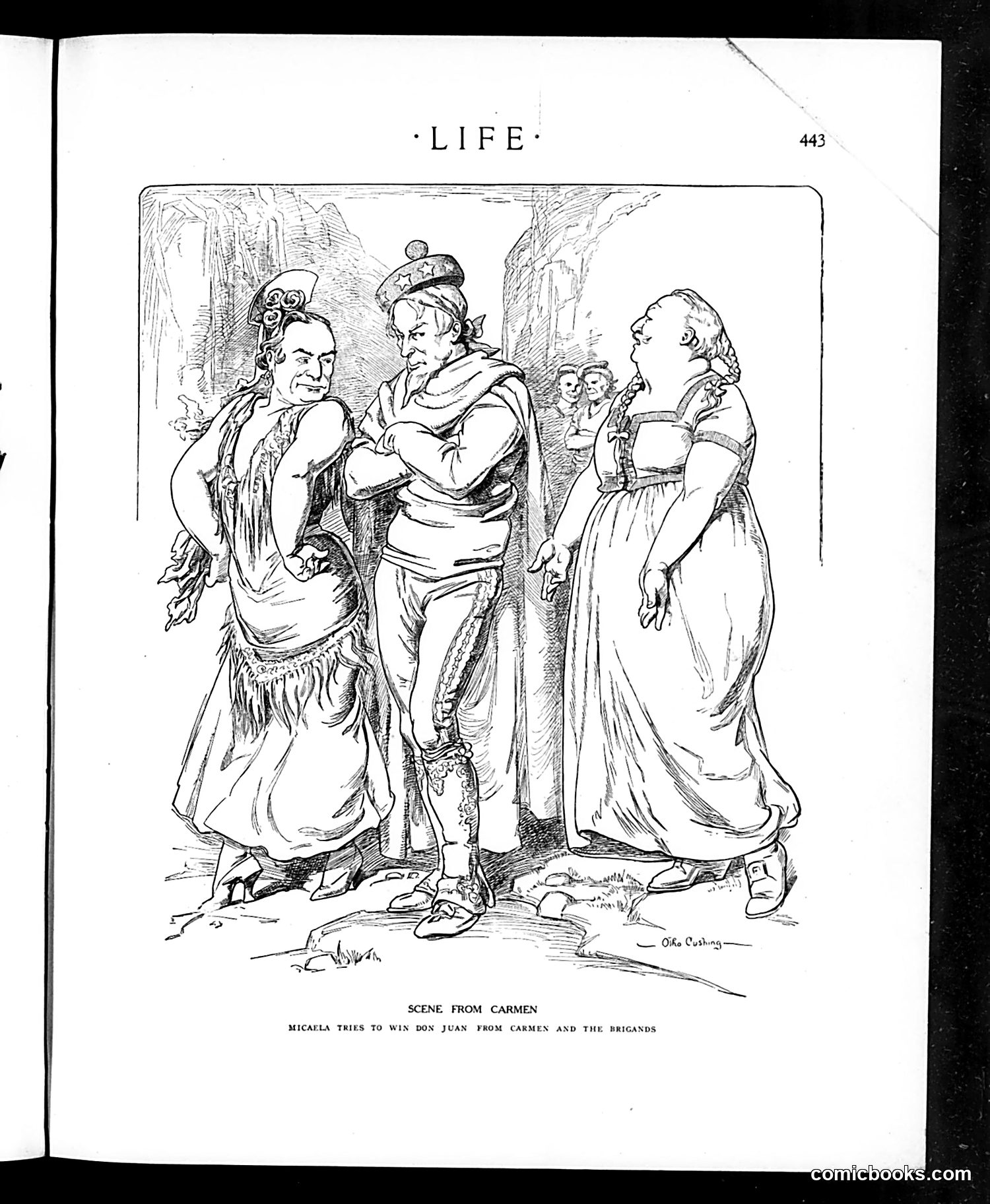
This is an illustration from Georges Bizet's opera *Carmen*, a popular work regularly performed in America during Life magazine's era. The caption identifies the scene: Micaela (the virtuous peasant girl) attempting to persuade Don Juan away from Carmen (the seductive gypsy woman) and her criminal associates. The cartoon satirizes the opera's melodramatic plot through exaggerated character types: the rotund, pompous Don Juan in the center; the passionate Carmen on the right; and the innocent Micaela on the left, with brigands visible in the background. The sketch style emphasizes the theatrical, over-the-top nature of operatic convention—likely mocking both the work's emotional excess and contemporary audiences' enthusiasm for such dramatic productions. The humor derives from presenting high art in a comedic, deflating manner.
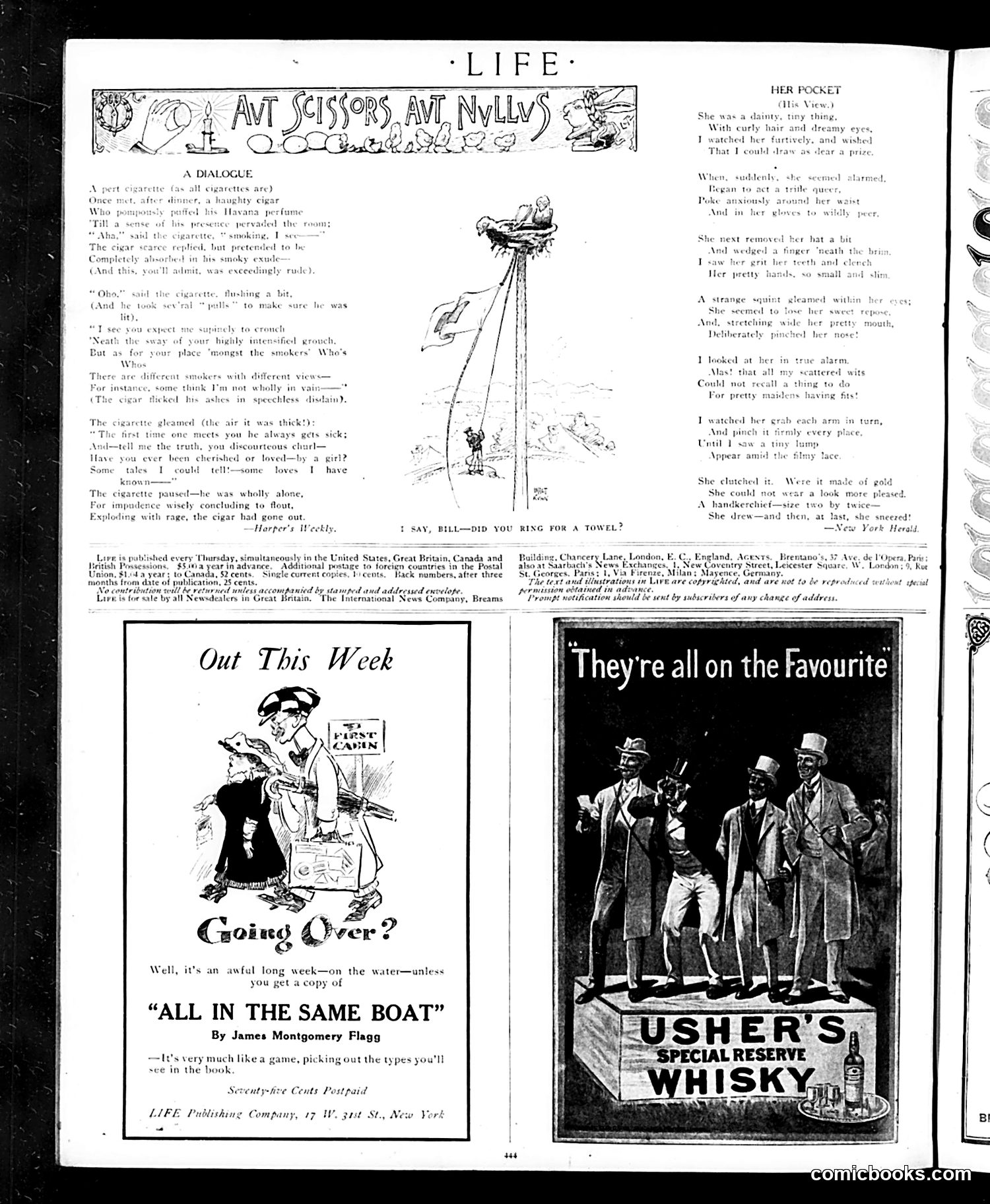
This page combines literary advertising with period humor. The main content advertises "All in the Same Boat," a book by James Montgomery Flagg (a prominent American illustrator of the era). The joke targets the tedium of water travel: a week-long boat journey is unbearably dull unless you bring this book to pass the time. The accompanying cartoon shows a woman in a long dress appearing to ring a bell or rope while suspended high above, apparently signaling for assistance—the visual gag being her exasperation during such a journey. The crude pun "I say, Bill—did you ring for a towel?" plays on this setup. The page also includes advertisement for Usher's whisky, suggesting alcohol as another remedy for travel boredom. No specific political satire is evident here—this is primarily commercial content with light humor typical of Life magazine's satirical style.
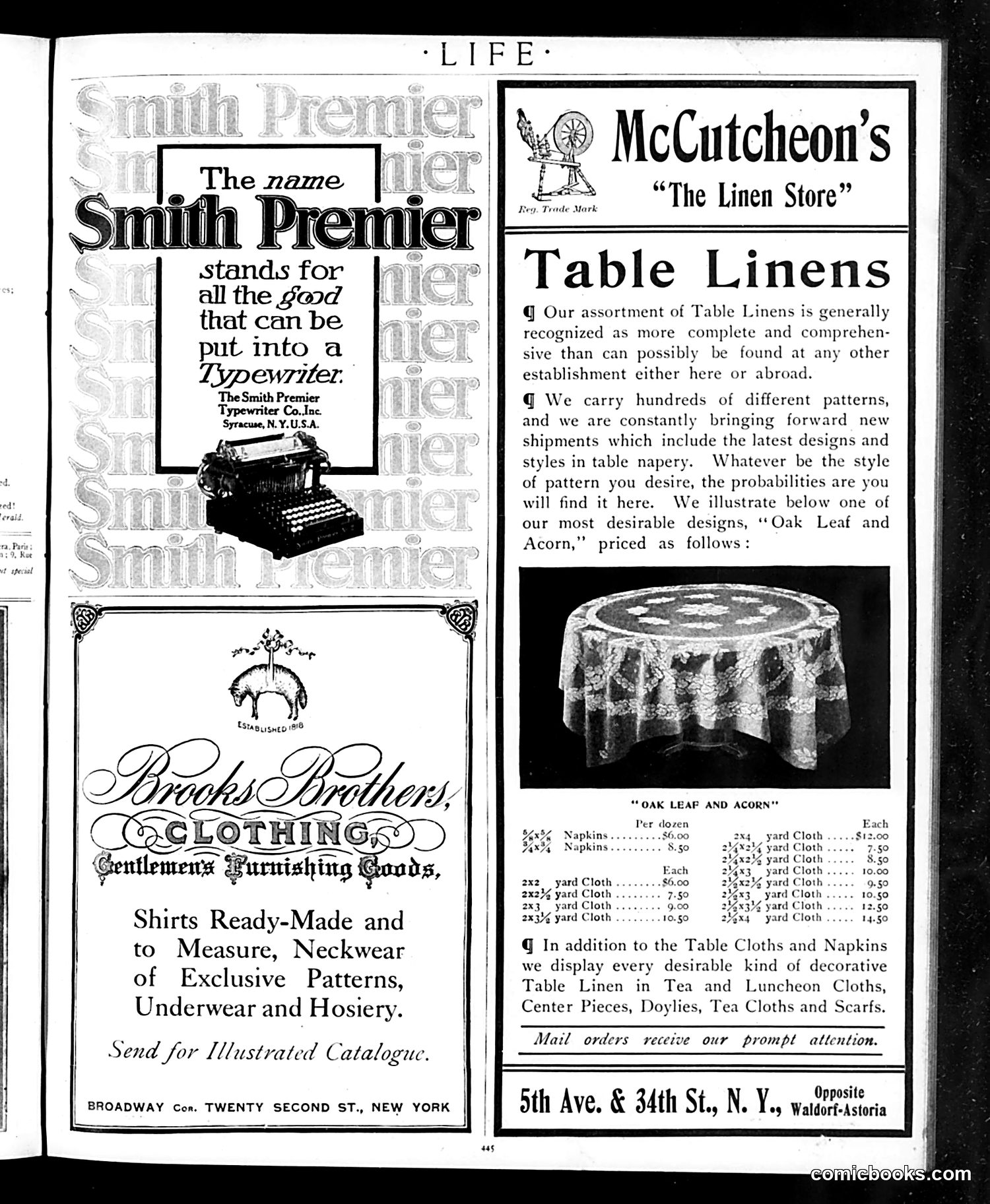
This page contains no political cartoons or satirical content. It is purely a **advertising page from Life magazine**, featuring three commercial advertisements: 1. **Smith Premier Typewriter** — promoting their typewriter as superior quality 2. **Brooks Brothers** — advertising ready-made and custom shirts, neckwear, and undergarments for men 3. **McCutcheon's "The Linen Store"** — showcasing table linens with detailed pricing for the "Oak Leaf and Acorn" pattern in various sizes The page represents early 20th-century consumer advertising, targeting middle and upper-class readers with luxury goods. No satire or political commentary is present; this is straightforward commercial promotion typical of Life's revenue model during this era.
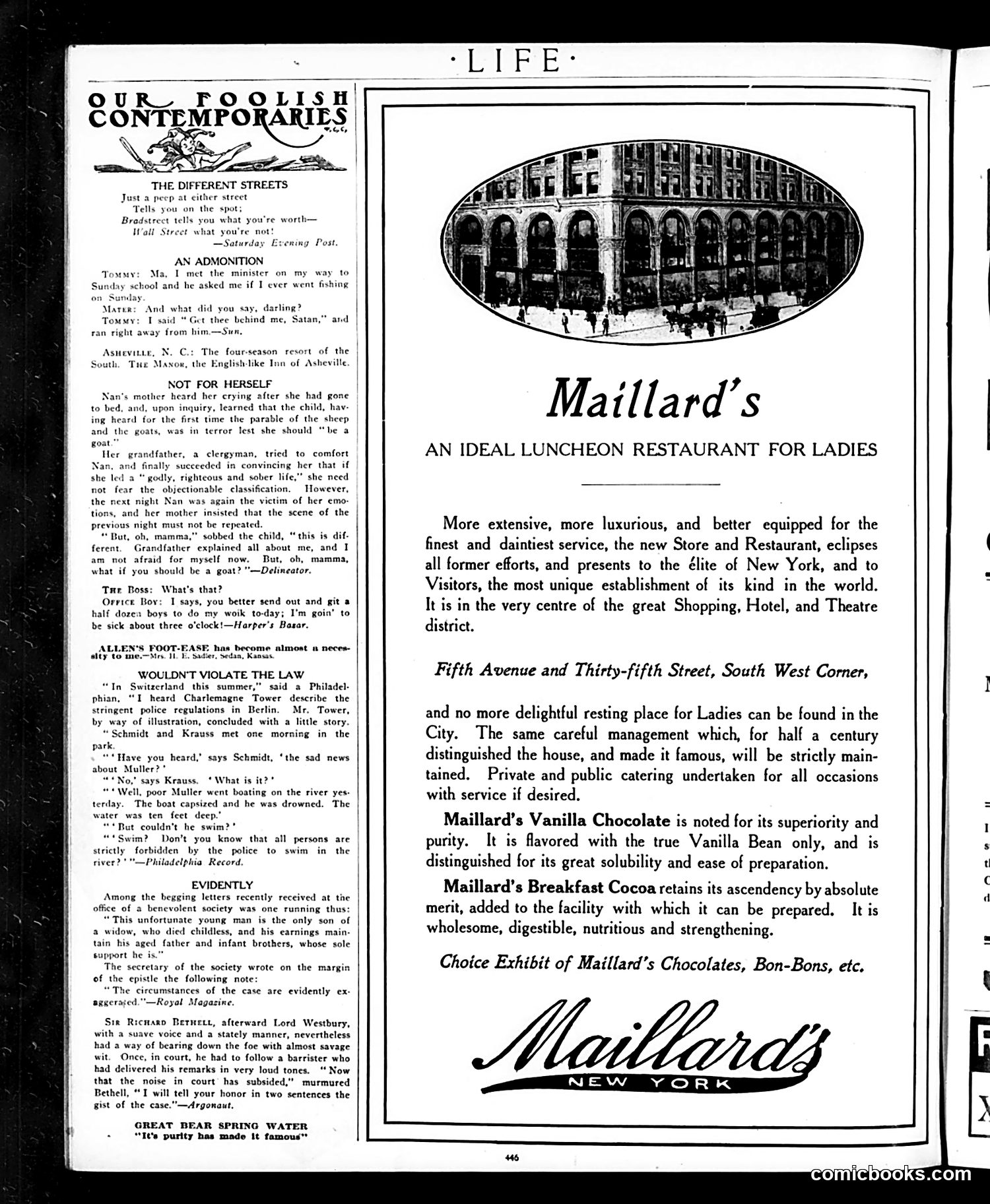
This page contains **multiple brief satirical anecdotes** in the "Our Foolish Contemporaries" column, plus a **full-page advertisement** for Maillard's restaurant. The cartoons/jokes mock everyday absurdities: - **"The Different Streets"**: A quip contrasting Bradstreet's (a credit-rating agency) with Wall Street—one tells your financial worth, the other your actual value. - **"An Admonition"**: A child fleeing a minister by saying "Get thee behind me, Satan"—humor from the child's innocent misapplication of scripture. - **"Not For Herself"**: A girl worried not about herself being a "goat" (from the parable of sheep and goats) but about her *mother*—touching sentiment presented as humor. - **"Wouldn't Violate the Law"**: A dark joke about Prussian police rigidity: a man drowns because swimming is forbidden by regulation. The **Maillard's ad** promotes an upscale women's luncheon restaurant on Fifth Avenue, positioned as exclusive and luxurious—typical early-20th-century advertising targeting wealthy female shoppers.
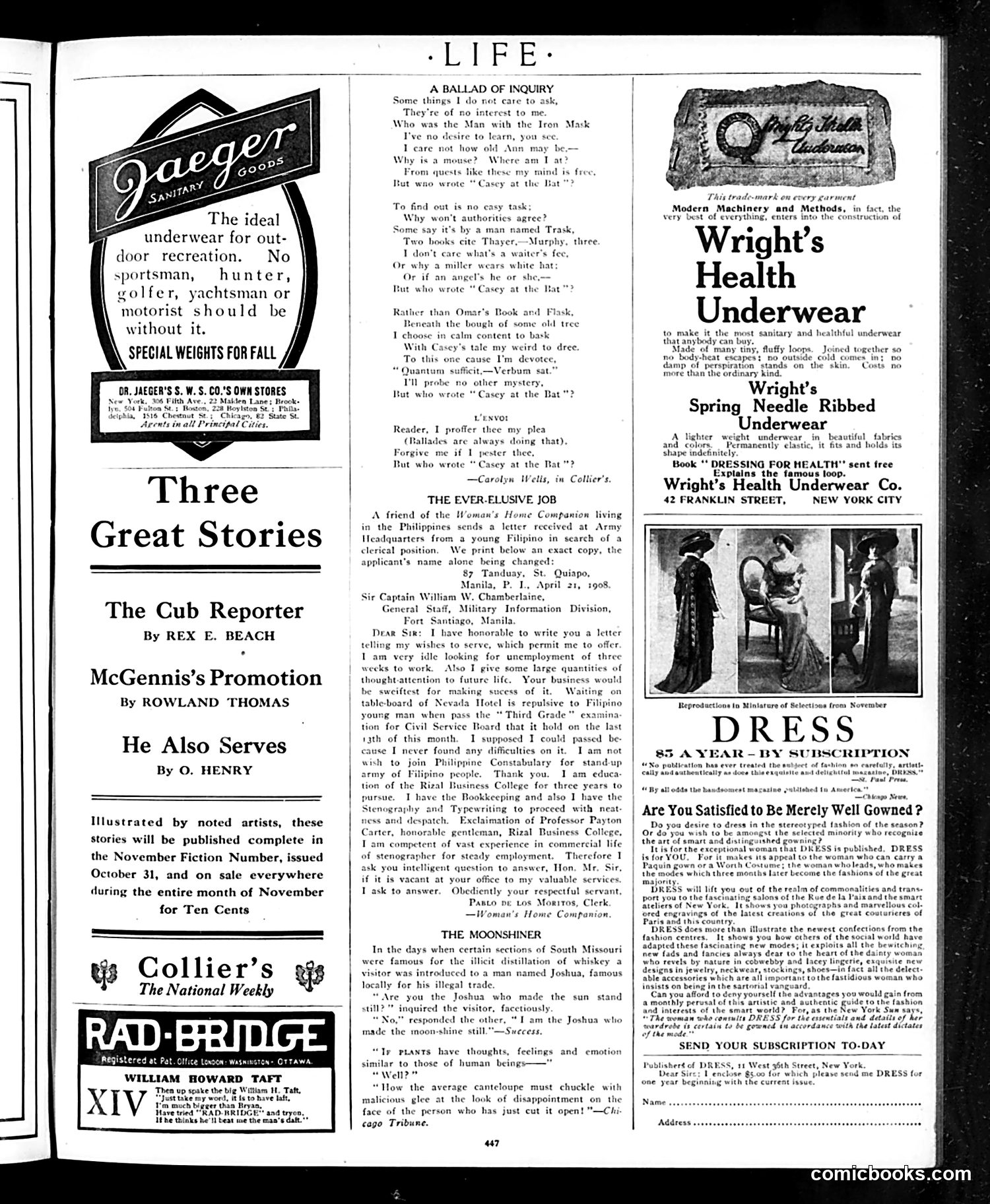
This page is primarily **advertisements and fiction promotion** rather than political satire. The notable content includes: **Top Left:** A Jaeger brand underwear ad emphasizing outdoor sportswear for hunters, golfers, and motorists—reflecting early 1900s leisure pursuits of the wealthy. **Center:** Collier's magazine promotes three upcoming short stories by Rex E. Beach, Rowland Thomas, and O. Henry, available in November for ten cents. **Bottom:** A "Rad-Bridge" patent medicine ad featuring William Howard Taft (appearing as a caricature), who was likely running for president in 1908. The ad uses his name as endorsement, playing on his prominence—a common advertising tactic of the era. **Interior text** includes humorous pieces: "A Ballad of Inquiry" about who wrote "Casey at the Bat," a comical letter from a Filipino job applicant with broken English, and joke anecdotes. The page reflects early 20th-century American advertising practices: celebrity endorsements, patent medicines, and leisure-class marketing.
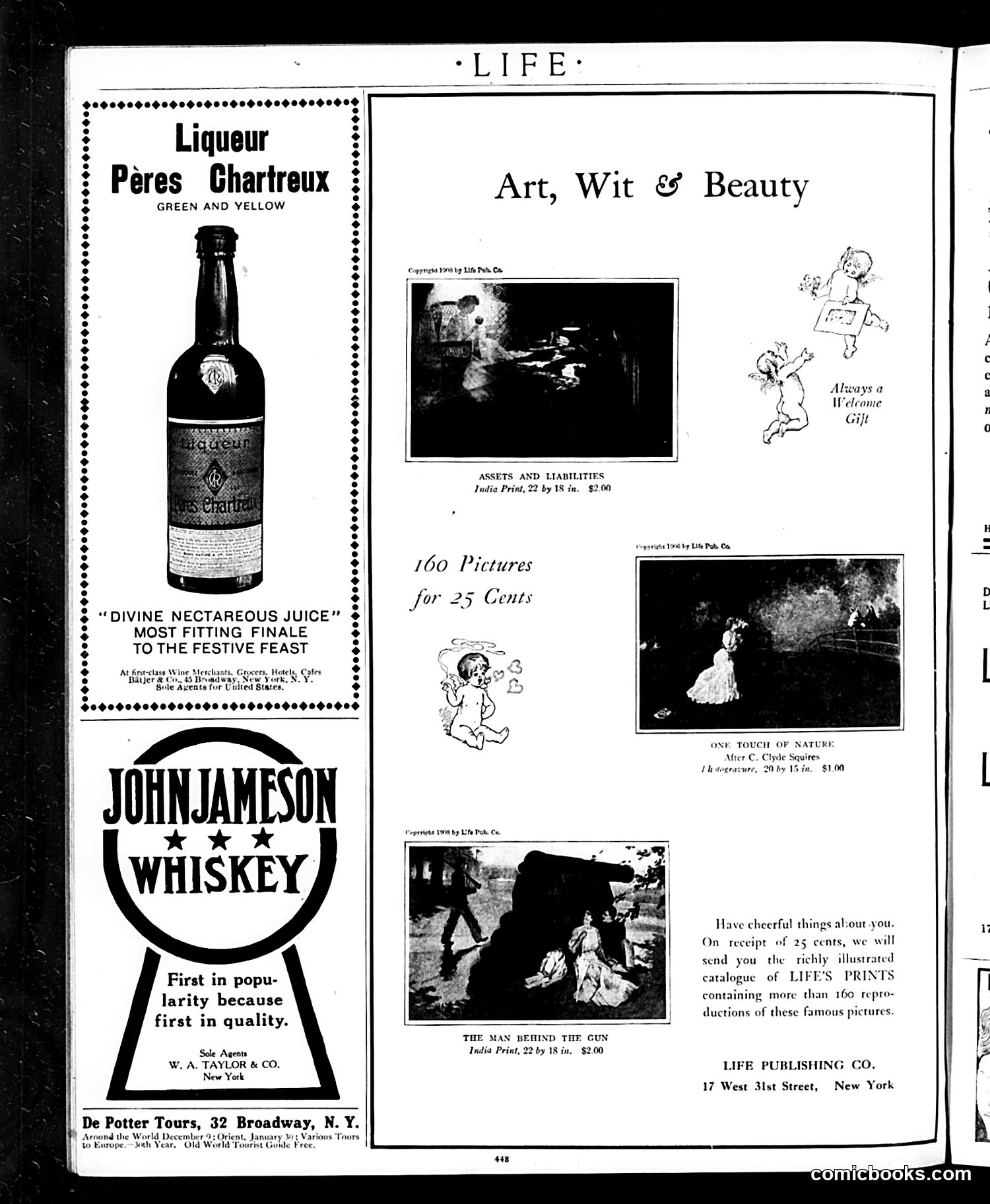
This page is primarily **advertising**, not political satire. It contains: **Left side:** Ads for Liqueur Pères Chartreux (a French digestif) and John Jameson Whiskey, plus De Potter Tours travel services. **Right side:** "Art, Wit & Beauty" section featuring three reproductions of artwork available through Life Publishing: - "Assets and Liabilities" (India Print) - "One Touch of Nature" by Alice C. Clyde-Squires (theatrical scene) - "The Man Behind the Gun" (India Print) The page advertises Life's picture catalog containing 160 reproductions for 25 cents—a commercial offer to readers. Small decorative illustrations of cherubs appear alongside the artwork promotions. **No political cartoon or satire is present.** This is a standard magazine page mixing liquor/travel advertisements with fine-art reproduction sales—typical early-20th-century Life magazine content blending commerce with cultural refinement.
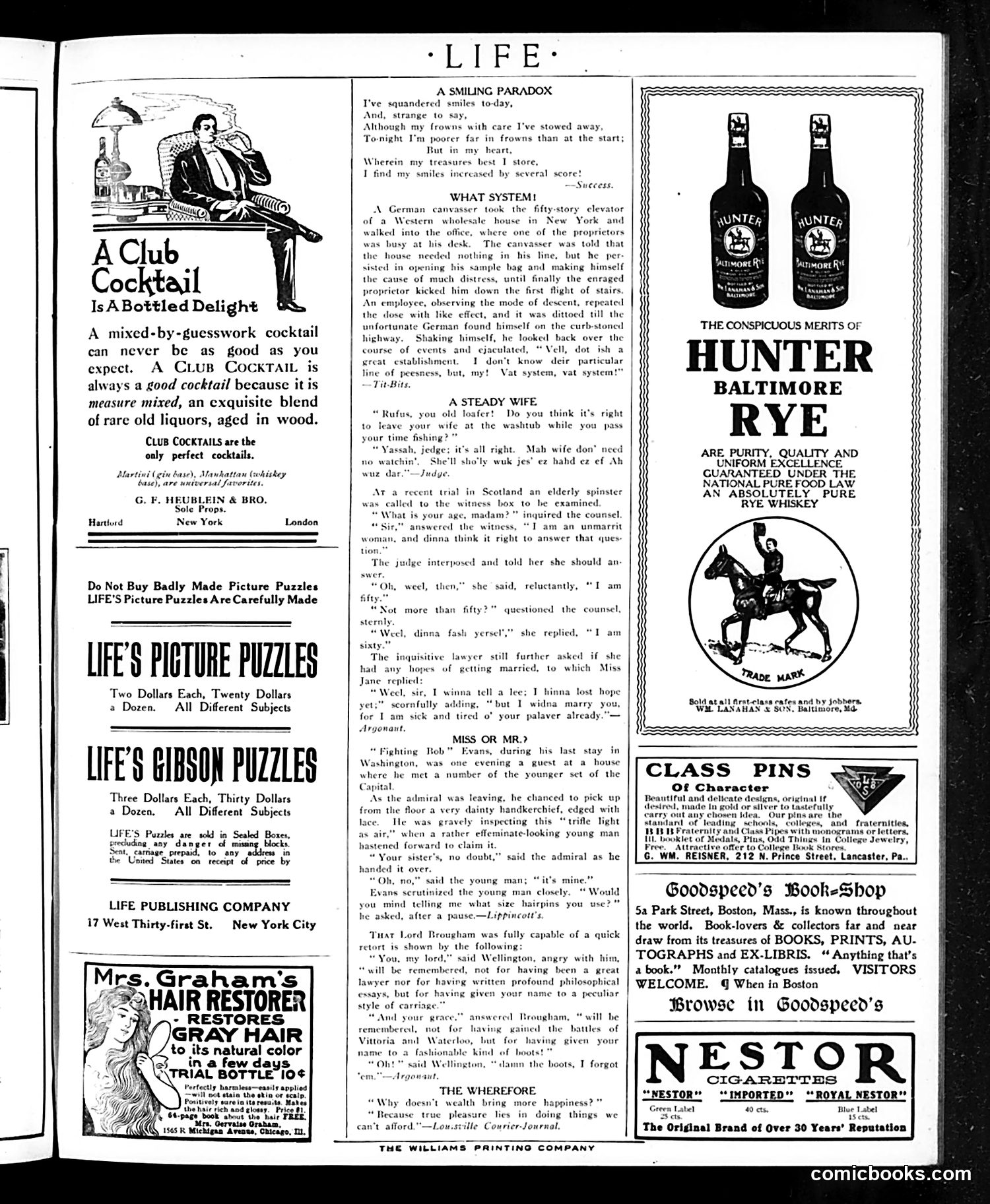
This page is primarily **advertising and filler content** rather than political cartoons. The main elements are: **"A Club Cocktail Is A Bottled Delight"** — A liquor advertisement for Heublein & Bro. cocktails, emphasizing pre-measured precision over mixed guesswork. **Three humorous anecdotes** with mild social satire: 1. "What System!" mocks a German canvasser's persistence—he's literally kicked down stairs repeatedly but praises the "system" of the establishment that rejected him, satirizing blind devotion to efficiency. 2. "A Steady Wife" features Scottish dialect humor about a reluctant spinster witness who contradicts herself about her age, poking fun at female evasiveness. 3. "Miss or Mr.?" depicts Admiral Evans asking a effeminate young man about hairpin size, implying mockery of masculine appearance. The page also advertises picture puzzles, Gibson puzzles, hair restoration products, and cigarettes. These are **period advertisements and light humor pieces**—not political commentary. The satire is social/personal rather than political.
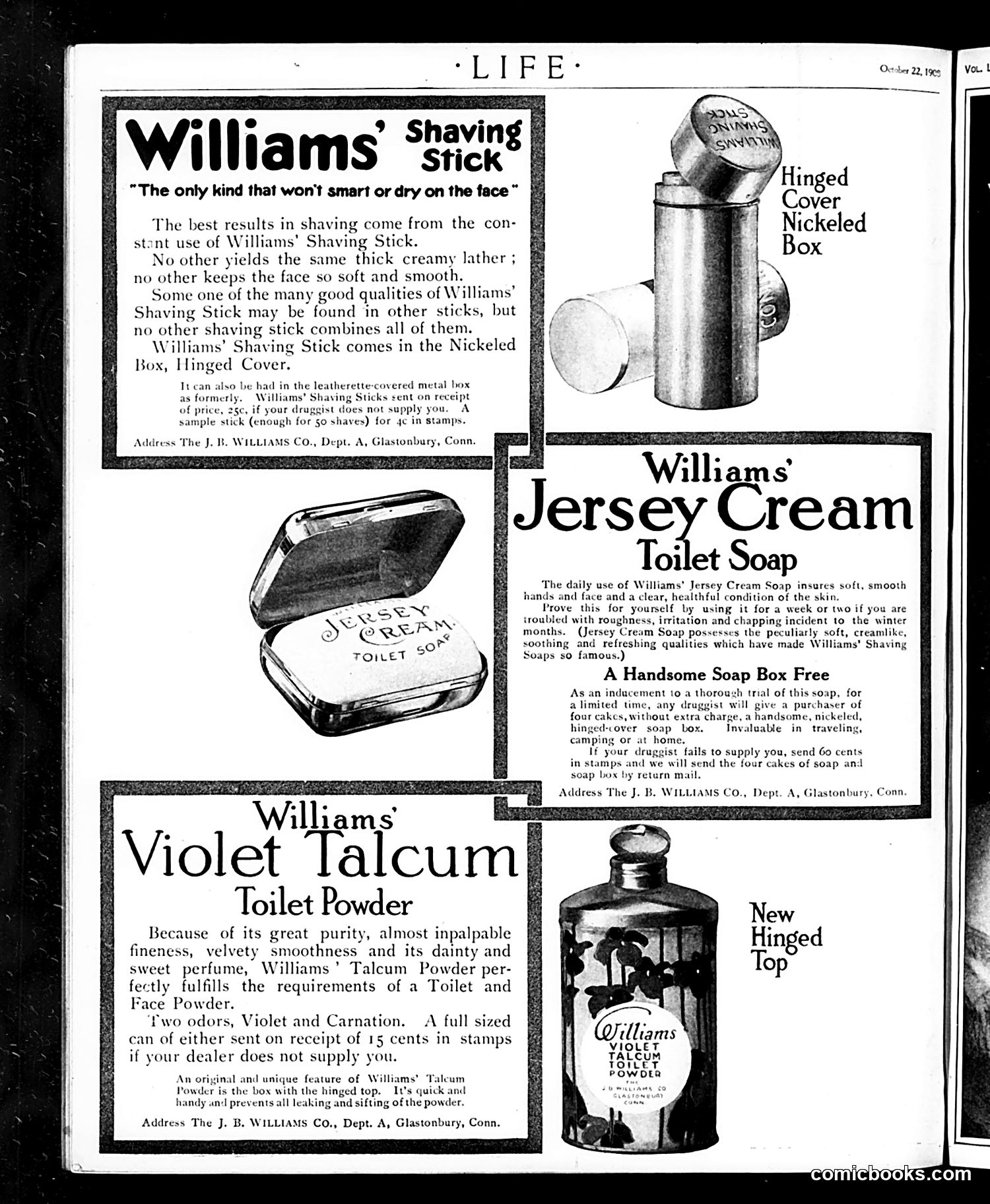
This is **not a political cartoon or satire**—it's a straightforward **advertisement page** from *Life* magazine (October 22, 1902). The page showcases four grooming products from the J.B. Williams Company of Glastonbury, Connecticut: 1. **Shaving Stick** (in a nickeled box) 2. **Jersey Cream Toilet Soap** 3. **Violet Talcum Toilet Powder** Each ad emphasizes product quality and offers promotional incentives: free sample sticks, complimentary soap boxes, or discounted full-sized containers for purchasing customers. The ads reflect early-1900s marketing strategies—emphasizing purity, creamy texture, and gentle formulations (notably addressing winter skin problems). Prices are nominal (4 cents for samples, 25 cents for full products, 60 cents for soap sets), and customers could order by mail using postage stamps. This is historical advertising copy with no satirical or political content—simply commercial messaging typical of *Life*'s revenue model during this period.