
Life, 1908-10-22 · page 15 of 24
Life — October 22, 1908 — page 15: what you’re looking at
What you’re looking at
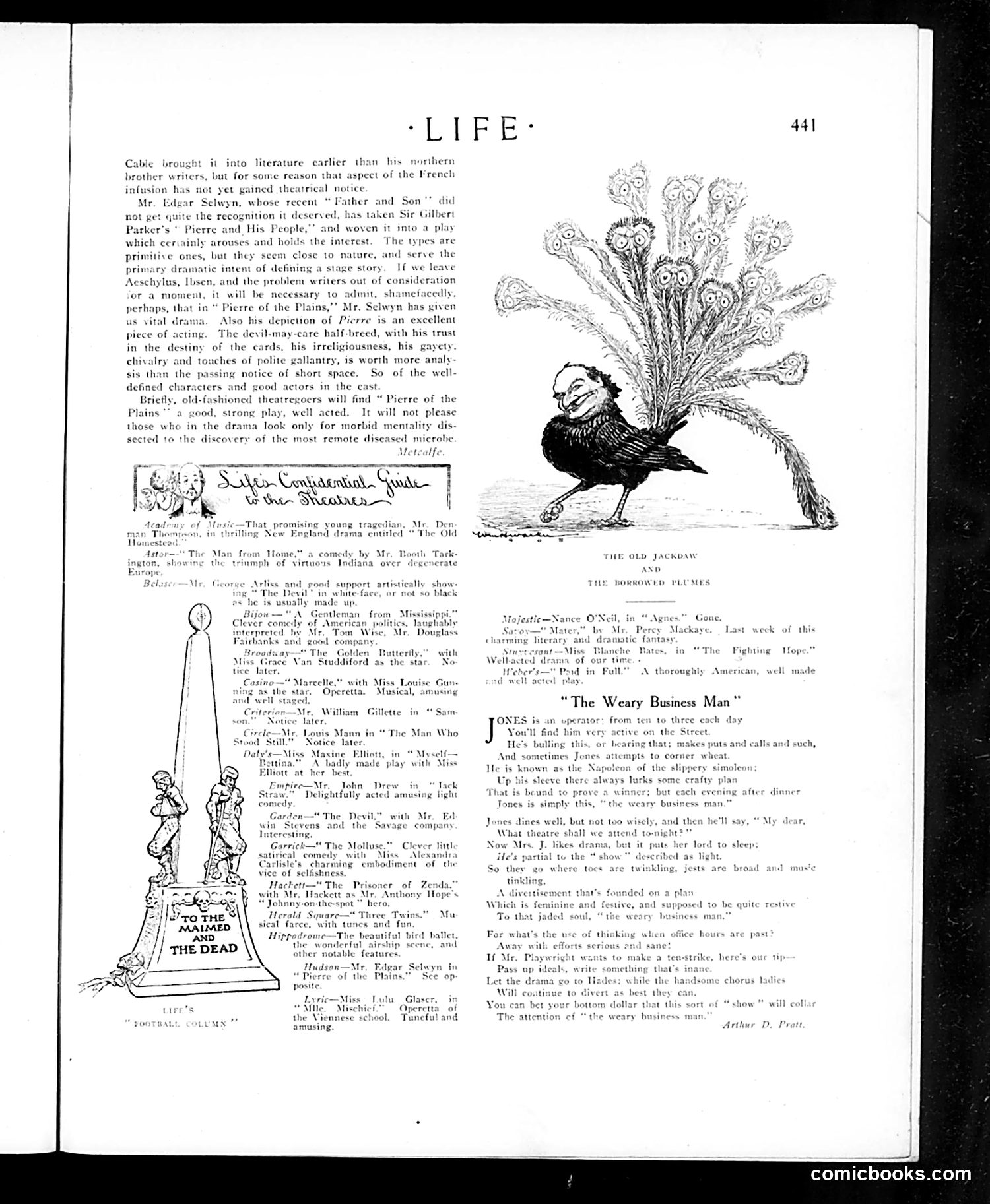
The cartoon depicts a jackdaw (a black bird) wearing an elaborate arrangement of colorful feathers, likely borrowed from other birds. This is a visual representation of the classic Aesop's fable about a jackdaw who adorns itself with feathers shed by other birds, then is mocked and stripped of them when discovered. The satire likely critiques pretension, plagiarism, or false sophistication—someone presenting themselves as more refined or accomplished than they actually are. In the context of this *Life* magazine page, which reviews theatrical productions, it probably mocks theatrical trends or performers who adopt styles or techniques from others without genuine merit. The accompanying text discusses various plays and performers, suggesting the cartoon may be satirizing actors or playwrights who imitate successful Continental (European) dramatic styles without understanding their essence—a theme mentioned in the adjacent theater criticism about French influences in American drama.
📄 Transcribed text from this page (OCR, searchable)
Machine-transcribed from the original scan — historical spelling and the odd misread are preserved.
Cable brought it into literature earlier than ' brother writers, but for some reason that aspect of the Frenel infusion has not yet gained theatrical notice Mr. Ee not get quite the recogn Parker's which ceriainly arouses and hi e interest. The types are r Selwyn, whose recent “Father and Son’? did taken Sir Gilbert dd woven it into a play tion it deserved, I Pierre and His Peopl primitive ones, but they seem close to nature, and serve the primary dramatic intent of defining a stage story. If we leave Aeschylus, Ibsen, and the problem writers out of consideration of a moment, it will be necessary to admit, shamefacedly. Pierre of the Plains,’’ perhaps, that in Mr. Selwyn has given us vital drama, Also his depiction of Pierre is an excellent piece of acting. The devil-may-care half-breed, with his trust in the destiny of the cards, his irreligiousness, his gayety gallantry, of short space. So of the well- chivalry and touches of polite worth more analy- sis than the passing notic ned characters and good actors in the cast Briefly, old-fashioned th ocrs will find “ Pierre of Plains "* a good, strong play, well acted. those who sected to the discovery ¢ It will not please look only for morbid ments the most remote diseased Mete Sere rman enemy Soho Gort Sussnad We bue~ 'S -That_promi the dram th T h of Virtuous Indiana over dege Arliss an 1 suppe es he is usually made up. Bijou —" A Gentleman from Miss Clever comedy of American politics, Ia Mri Tom Wise, Mr The Golden Butter Studdiford as the sta ater. Cosino—" Marcelle," with Miss Louise Gun ing as the star. Operetta. Musical, amusi V well staged. z Mr. William Gillette in ice later. Mr. Lovis Mann in “T 1 Still.” Notice later Daty's—Miss Maxine Elliott, in“ Myself Retina.” ‘A badly made’ play with Miss elliott at her best ¢ Man Who _Empiro—Me. John Drew in“ Tack Straw.” Delightfully acted amusing light Garden—" The Devil? with Mr. Ea win Stevens and the Savage company Interesting Garrick Motluse."" Clever littl ical with Miss .Mexands arlisle’s charming embodiment of th vice of selfishness. Hackett—"'The Prisoner of Zend. with Mr, Hackett as Mr Anthony Hop * Johnny-or * hero, Herald Square—* Three Twins.” Mu sical farce, with tunes and fun. Hippodrome—The beautiful bird ballet, Hudson—Mr. Selwyn in “Pierre of the Plains.” See op Lyric—Miss Lulu Glase “Mille. Mischief” Operetta of the Viennese + Tuneful and using. ME OLD JACKDAW AND BORROWED PLUEES Agnes.” Gone Mackaye. Last week of th Stuxccsont—Miss Tlanche Tt jn . Weilacted drama of our time ‘s—" Pod in Full.” .\ thoroughly American, The Weary Business Man“ to three each day ve on the Street Fighting Hop well mai is known as the Napoteon of the slippery simoleo: his sleeve there always lurks some crafty pla ply this, “the weary business man.” but not too wisely, and then he'll say,“ My dear, What th all we attend to-night? Mrs. J. likes dram tit puts her lord to sh Ute the “show " described as lig » where tocs are twinkling, j ain stive, and supposed t ne use of thinking \ eto divert our bottom The attention cf “the weary business + comicbooks.com