
A complete issue · 16 pages · 1894
Life — December 13, 1894
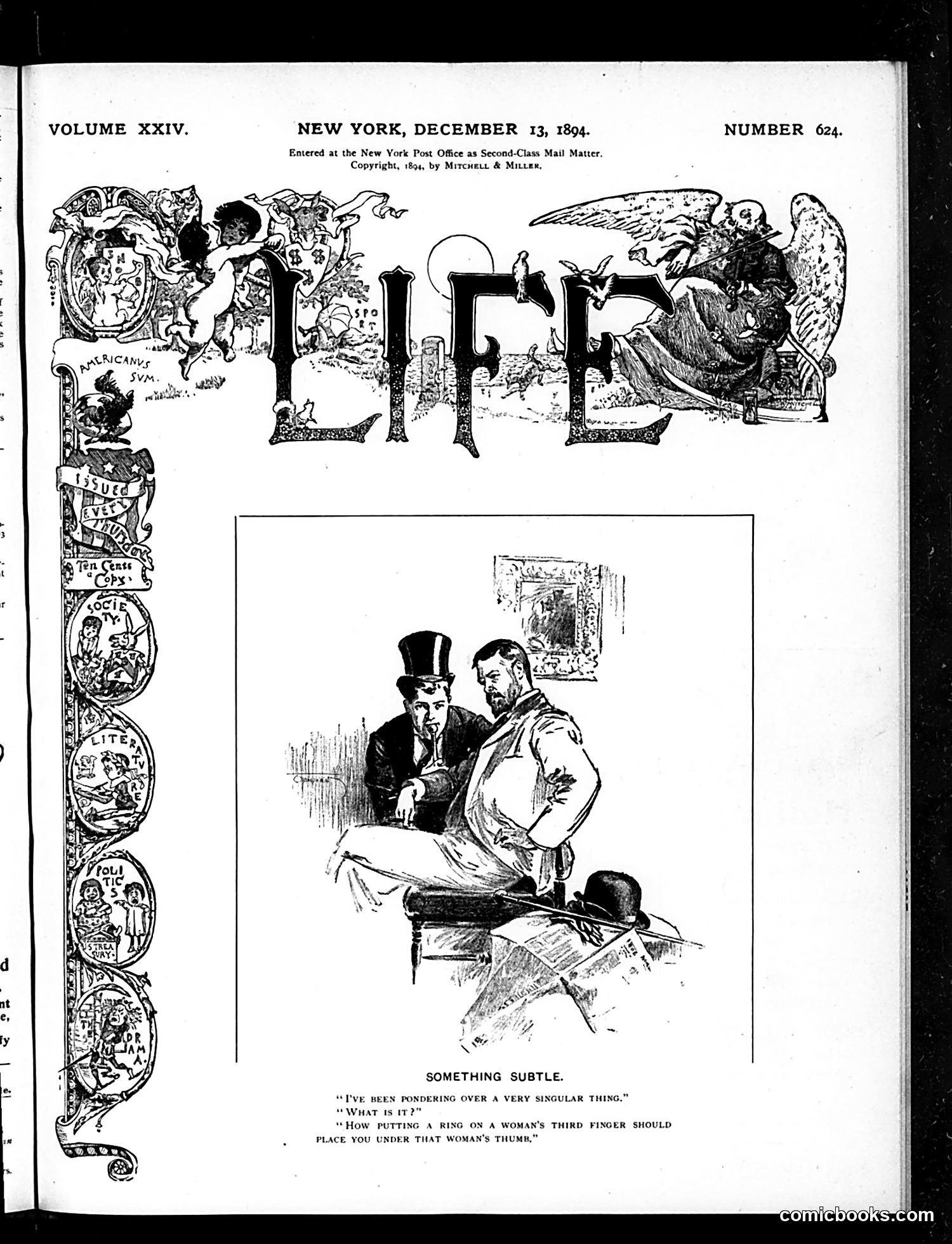
This is the cover and opening page of *Life* magazine from December 13, 1894. The main cartoon, titled "Something Subtle," depicts two men examining what appears to be a ring. The dialogue reveals the joke: one man has been "pondering over a very singular thing"—specifically, how "putting a ring on a woman's third finger should place you under that woman's thumb." The satire mocks the power dynamics of marriage and engagement. The ring, traditionally a symbol of romantic commitment, is reframed as a trap that reverses male authority. By accepting this custom, a man voluntarily surrenders control to his wife. This reflects late-Victorian anxieties about marriage as a loss of masculine independence—a common satirical theme in the era's humor publications.
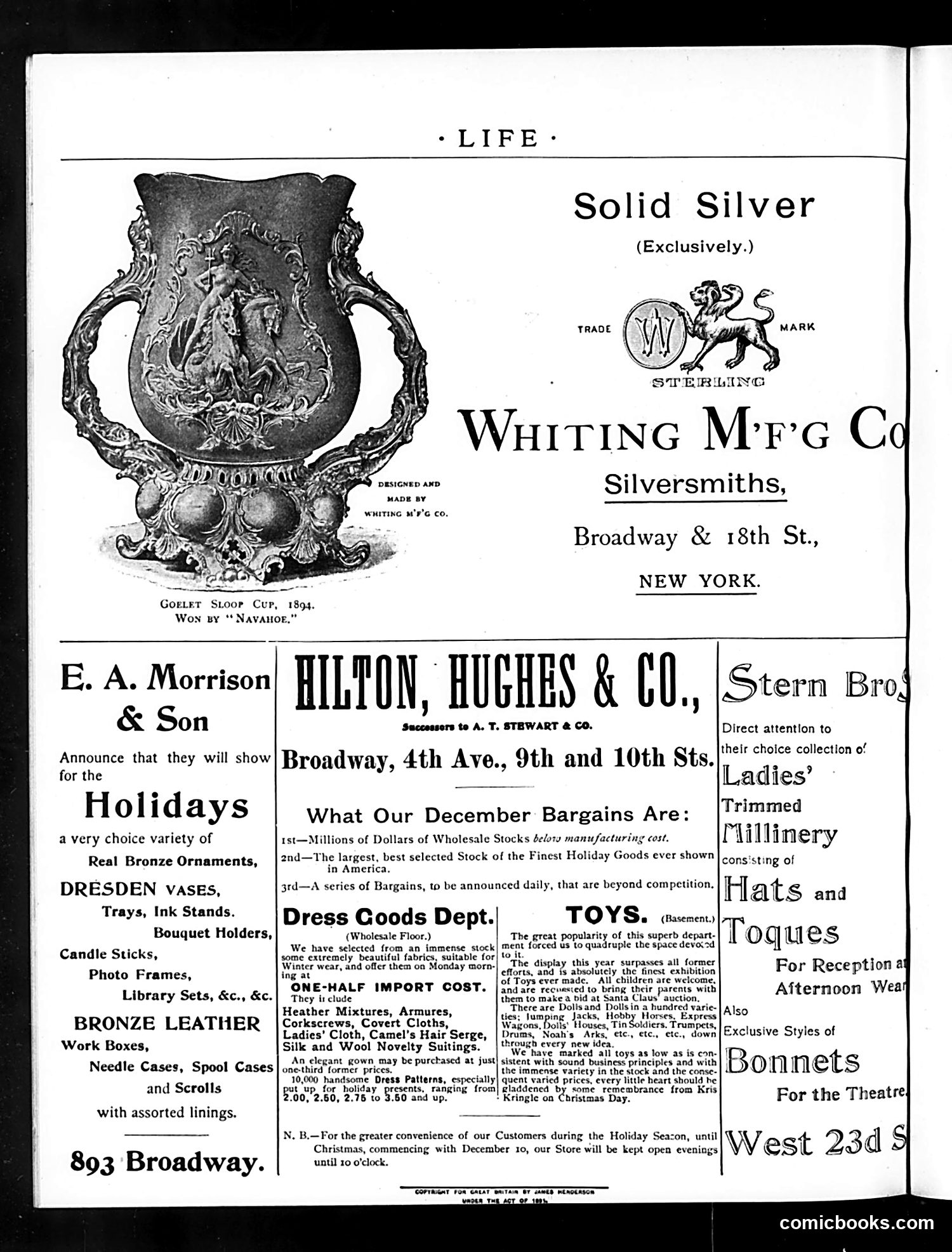
This page is **primarily advertising** with no political cartoon present. The main content comprises commercial advertisements from late 19th-century New York businesses: - **Whiting Mfg Co** (silversmiths) advertises a decorative silver cup labeled "Goblet Sloop Cup, 1894. Won by 'Navahoe.'" This references yacht racing, a wealthy sport. - **E.A. Morrison & Son** advertises holiday bronze ornaments and decorative items. - **Hilton, Hughes & Co.** promotes December holiday bargains in dress goods and toys at wholesale prices. - **Stern Bros** advertises ladies' millinery and bonnets. The note about extended store hours during the holiday season indicates this is a December issue, likely 1894. The content reflects Gilded Age consumer culture and upper-class seasonal shopping.
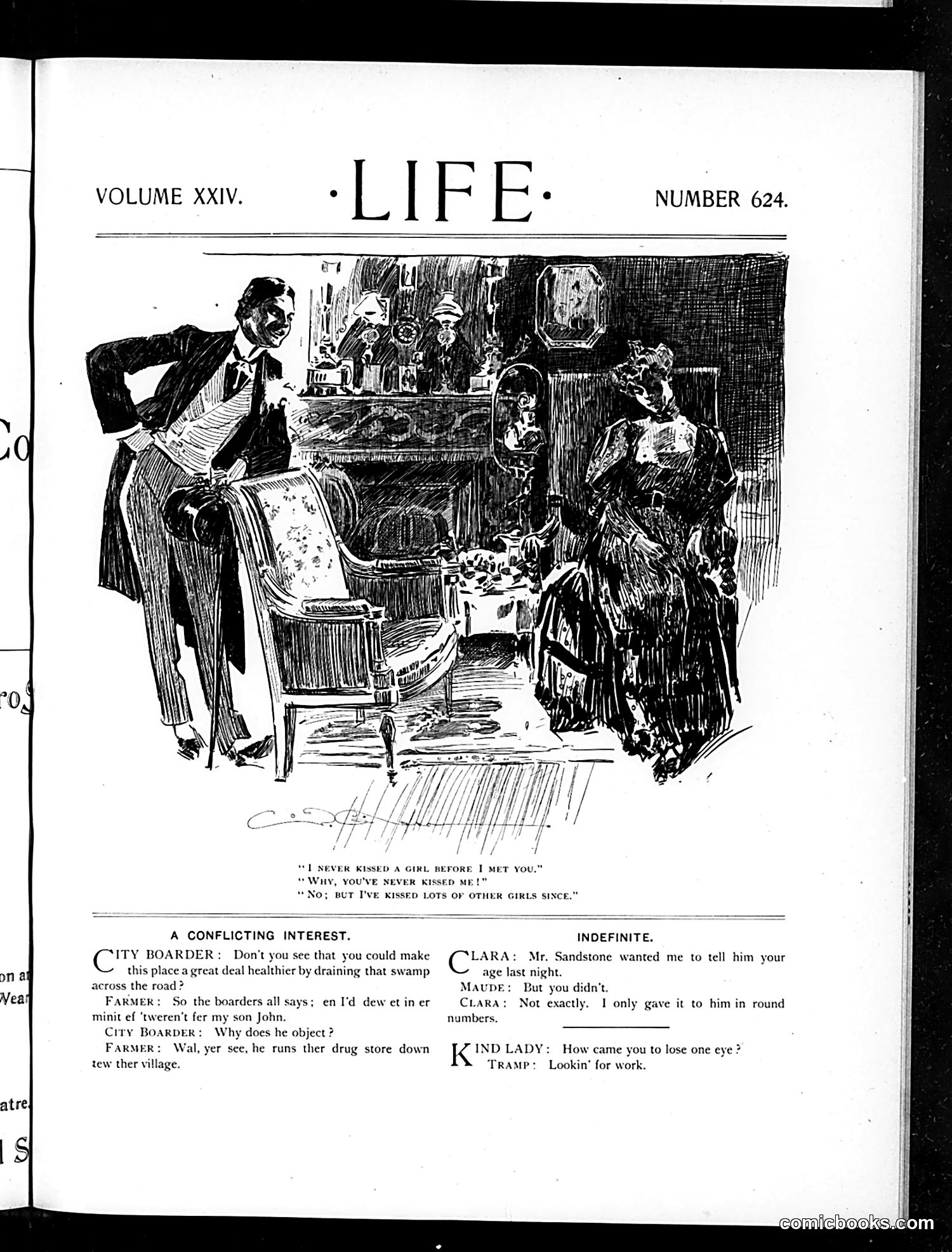
This page contains three separate comic sketches satirizing romantic and social situations of the era. The main illustration depicts a drawing room scene where a man boasts to a woman about his romantic history, claiming he "never kissed a girl before I met you," then contradicting himself by admitting he's "kissed lots of other girls since." The satire targets male hypocrisy and dishonesty in courtship. Below are two brief comedic dialogues: "A Conflicting Interest" mocks a city boarder and farmer arguing over land use, while "Indefinite" jokes about a woman giving her age in "round numbers" rather than exact figures—poking fun at female vanity about age. The humor relies on recognizable domestic and social conventions of early 20th-century American life.
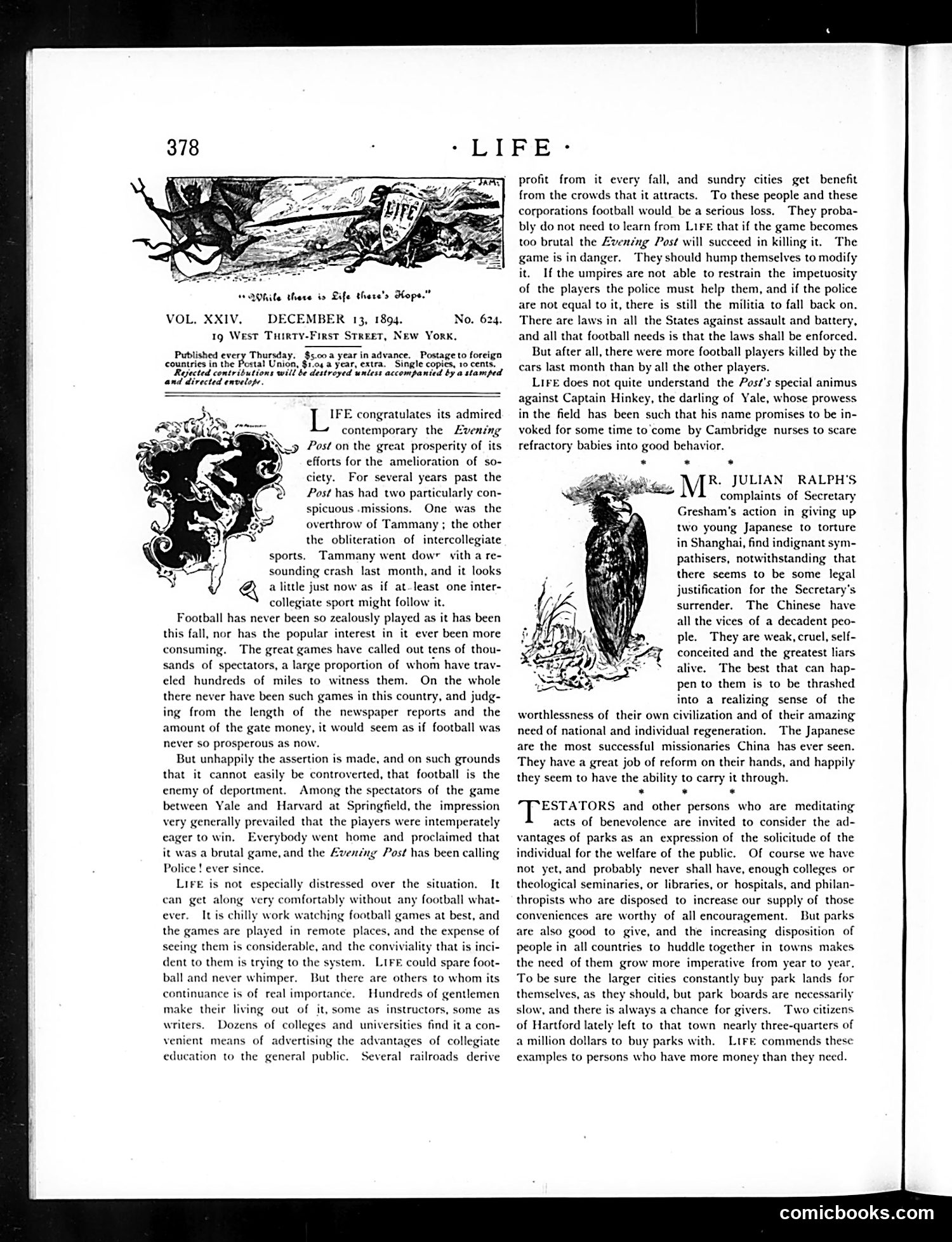
**Main Cartoon ("Life there is Life there's Hope"):** The image shows a skeletal Death figure, likely referencing the grim toll of American football. This cartoon critiques the sport's danger and casualties—the text discusses deaths from football "last month" and notes the "Evening Post will succeed in killing it." **Context:** In 1894, college football had become brutally violent with minimal safety rules. The text references recent deaths, calls for law enforcement intervention, and mentions a Yale-Harvard game where spectators complained players were "intemperately eager to win." The editorial satirizes football's popularity despite its body count, suggesting authorities should regulate the sport to prevent further fatalities. The cartoon darkly comments on football's compatibility with death itself.
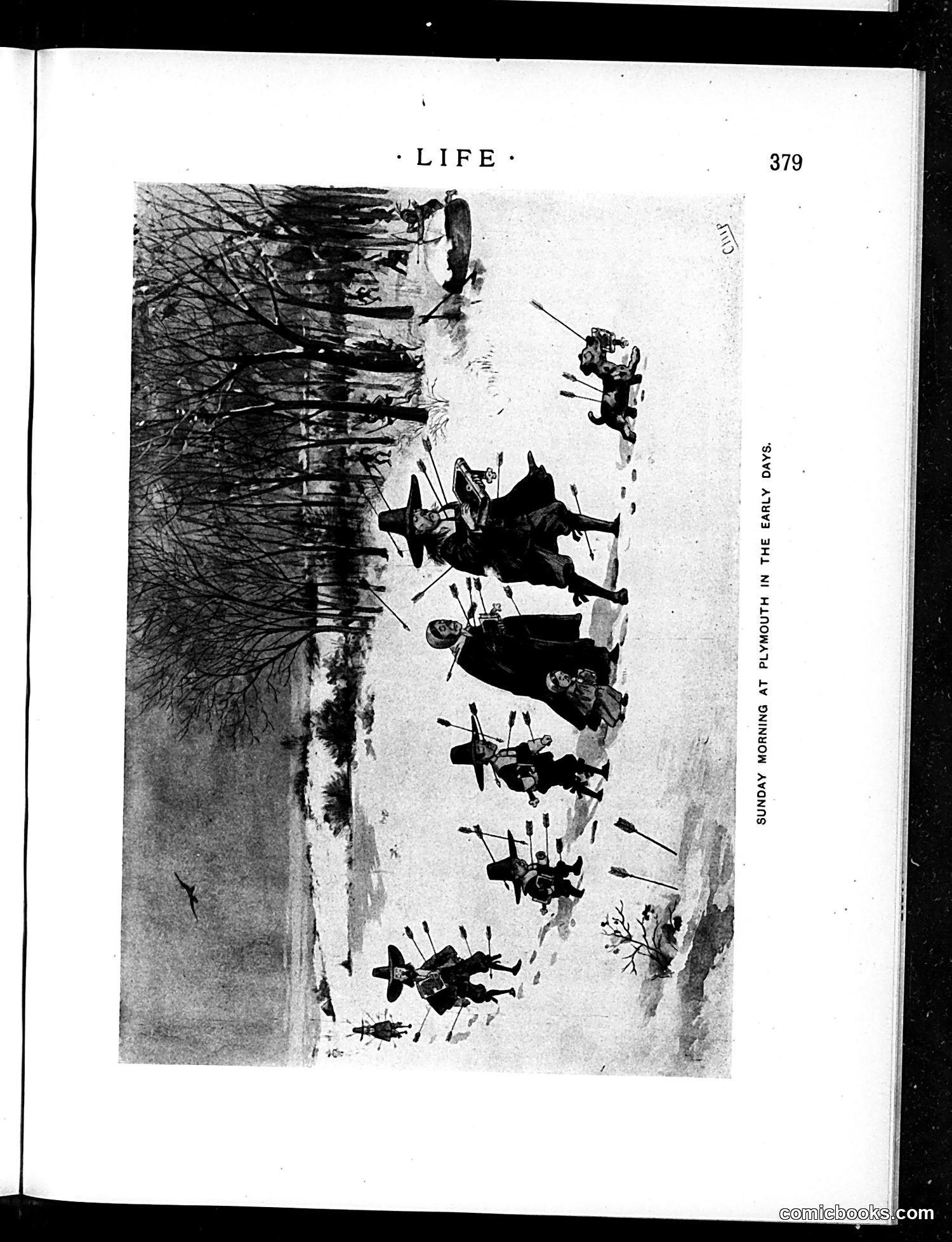
The page shows a photograph rather than a cartoon, titled "Sunday Morning at Plymouth in the Early Days." The image is rotated 90 degrees and depicts what appears to be early Pilgrim settlers at Plymouth Colony engaged in various activities—some standing, others in motion, with bare trees visible in the background. This is historical documentation rather than political satire. The "Life" magazine caption suggests this is meant as humorous commentary on colonial American origins, possibly satirizing romanticized depictions of Pilgrims. However, without clearer identification of specific figures or caricatures, the exact satirical point remains unclear. The photograph's awkward composition and the magazine's format suggest it's offering gentle mockery of historical reverence rather than sharp political critique.
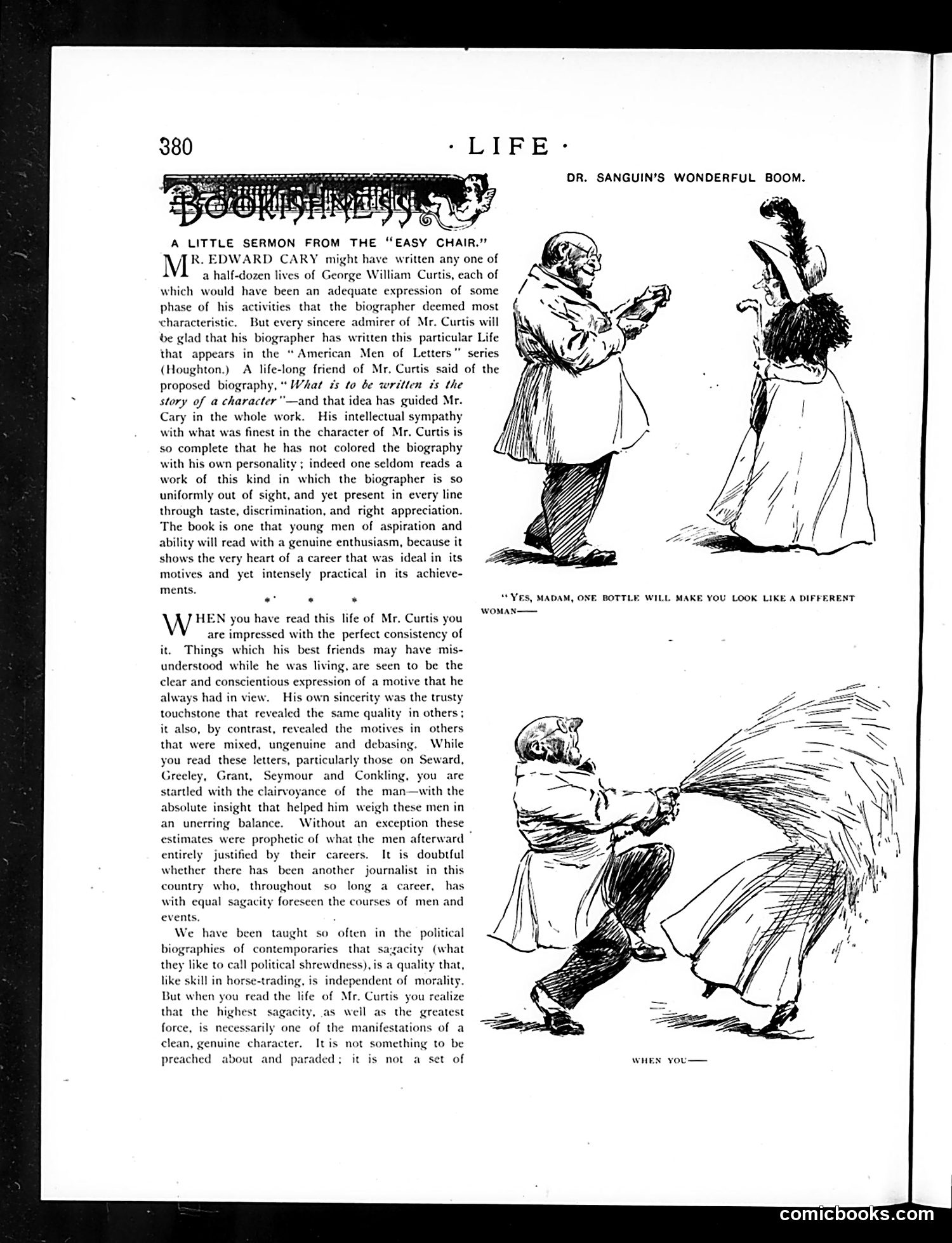
This page contains a biographical essay about George William Curtis, not a political cartoon. The text discusses Curtis's character and career, praising his consistency and moral integrity as a journalist and writer. The two illustrations appear to be satirical sketches titled "Dr. Sanguín's Wonderful Boom" (top) and "When You—" (bottom), though the cartoons themselves are incomplete or their captions cut off. They depict what appear to be social commentary scenes—possibly about medicine, quackery, or dubious schemes—rendered in the period's typical satirical style with exaggerated figures and expressions. Without full context or complete captions, the specific targets of these sketches remain unclear, though they likely referenced contemporary scandals or popular follies of the era.
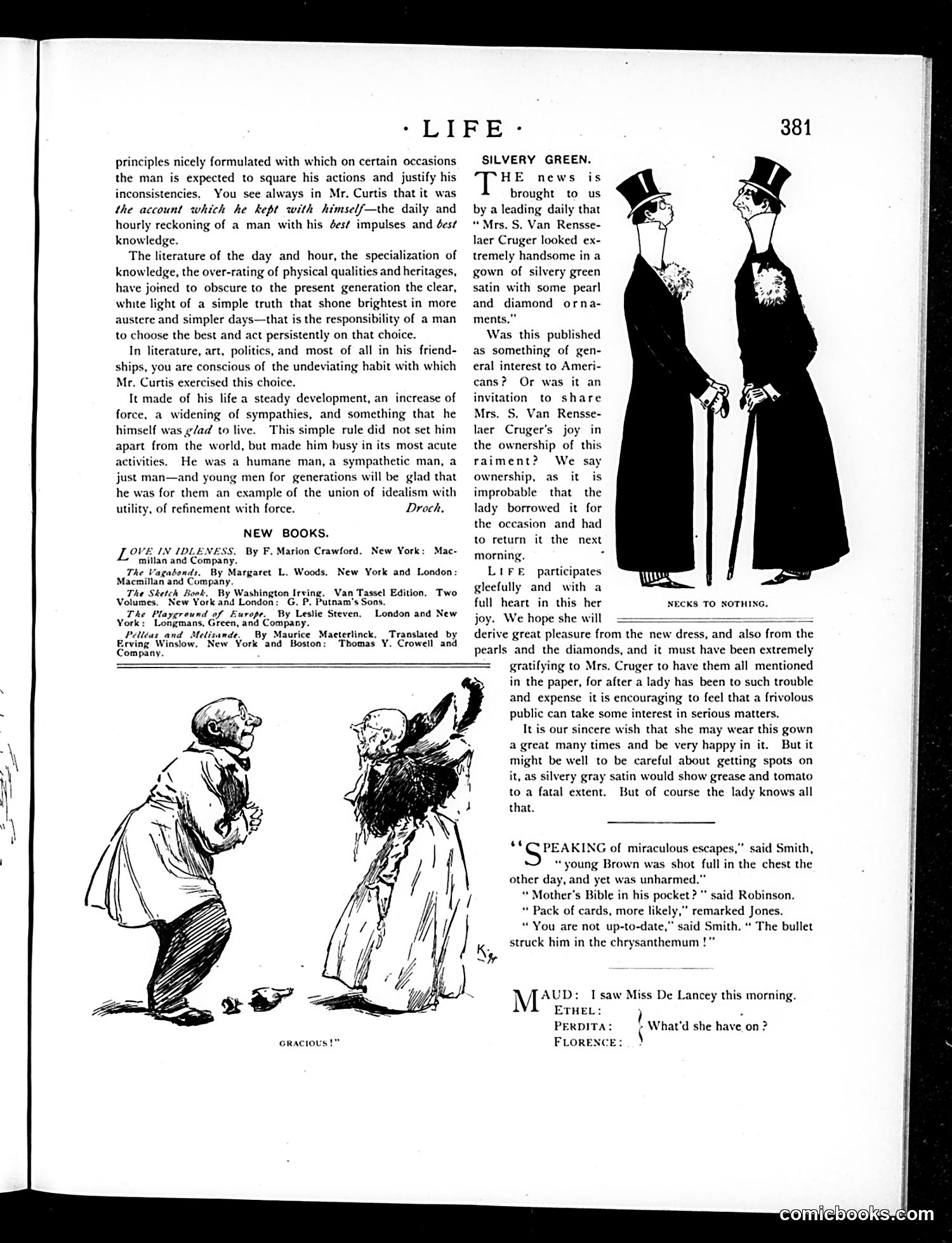
**The "Silvery Green" Section:** This brief society item celebrates Mrs. S. Van Rensselaer Cruger's new silvery green satin gown with pearl and diamond ornaments. The accompanying illustration shows two well-dressed figures in top hats and formal wear, captioned "Necks to Nothing"—likely satirizing the social pretension or fashion obsession of the wealthy elite. **The Bottom Cartoon:** Titled "Gracious!", this sketch depicts two figures in an exaggerated physical confrontation, drawn in a crude style. Without additional context, the specific satirical target is unclear, though it appears to mock some form of social interaction or behavior considered absurd or undignified. The page reflects *Life* magazine's typical approach: mixing society gossip with satirical commentary on upper-class vanity and behavior.
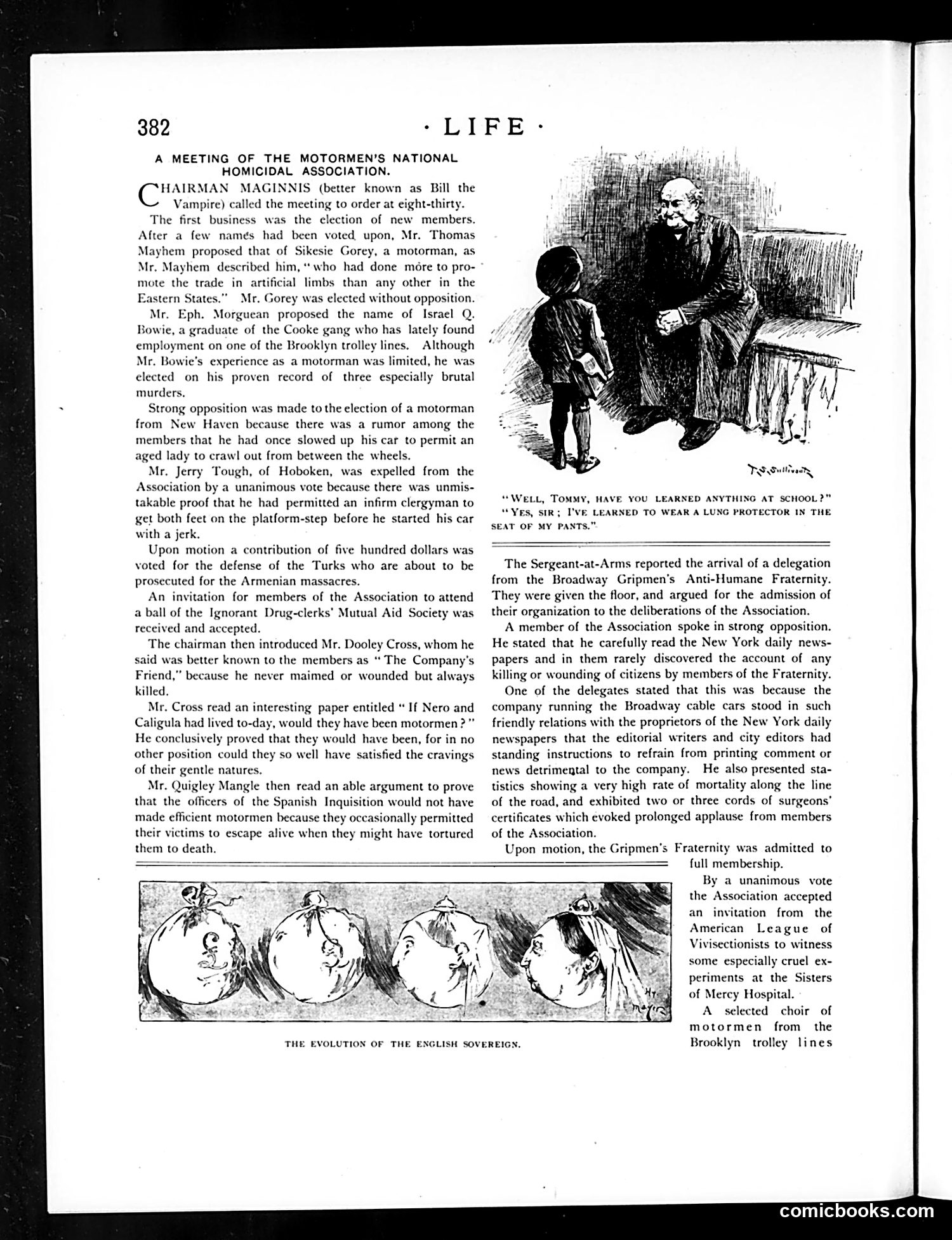
This page satirizes the "Motormen's National Homicidal Association," a dark-humor fictional organization. The text describes a meeting where motormen (trolley operators) are elected based on their records of brutal murders and injuries. The cartoon at top shows a stern motorman questioning a young boy about school, with the boy's naive response about learning to wear a "lung protector in the seat of my pants" — implying he's been injured by the motorman's reckless driving. The bottom illustration titled "The Evolution of the English Sovereigns" shows four profile heads in circular frames, appearing to mock British royalty through physiognomy. The satire targets the apparent immunity of trolley operators from consequences for injuring or killing passengers, treating it as a dark joke about urban danger and corporate negligence.
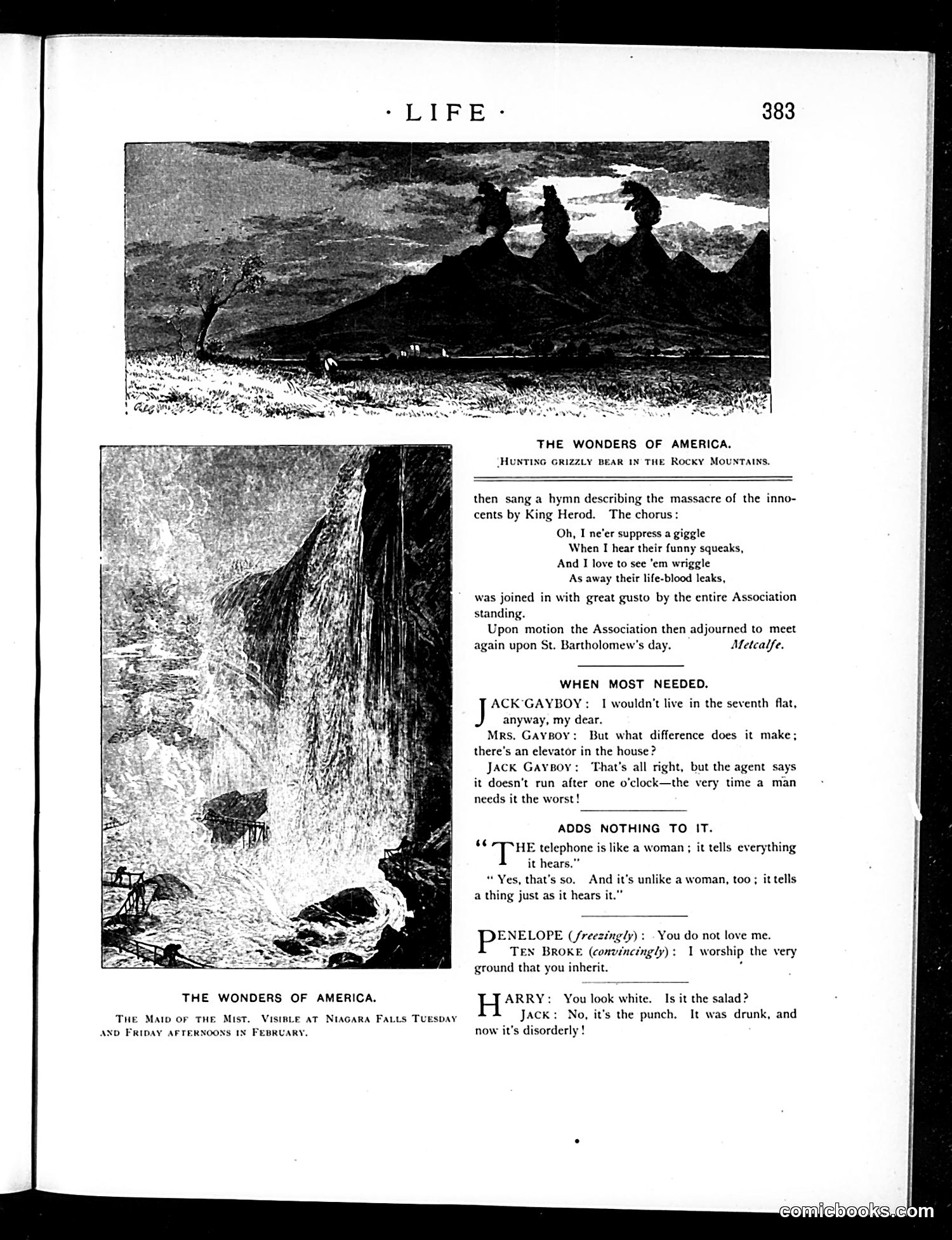
This page contains two photographic illustrations labeled "The Wonders of America": one showing hunters with a grizzly bear in the Rocky Mountains, and another depicting Niagara Falls' "Maid of the Mist" waterfall and boat. Below are three brief comedic dialogue snippets satirizing American domestic life and speech: 1. **"When Most Needed"** mocks apartment living, with a husband preferring not to live on the seventh floor despite having an elevator, complaining the elevator doesn't run after one o'clock—precisely when needed most. 2. **"Adds Nothing to It"** jokes that telephones, like women, tell everything they hear but with perfect accuracy. 3. Brief exchanges mock romantic pretense and drunkenness at social gatherings. The satire targets urban living inconveniences, gender stereotypes, and social pretension typical of early 20th-century Life magazine humor.
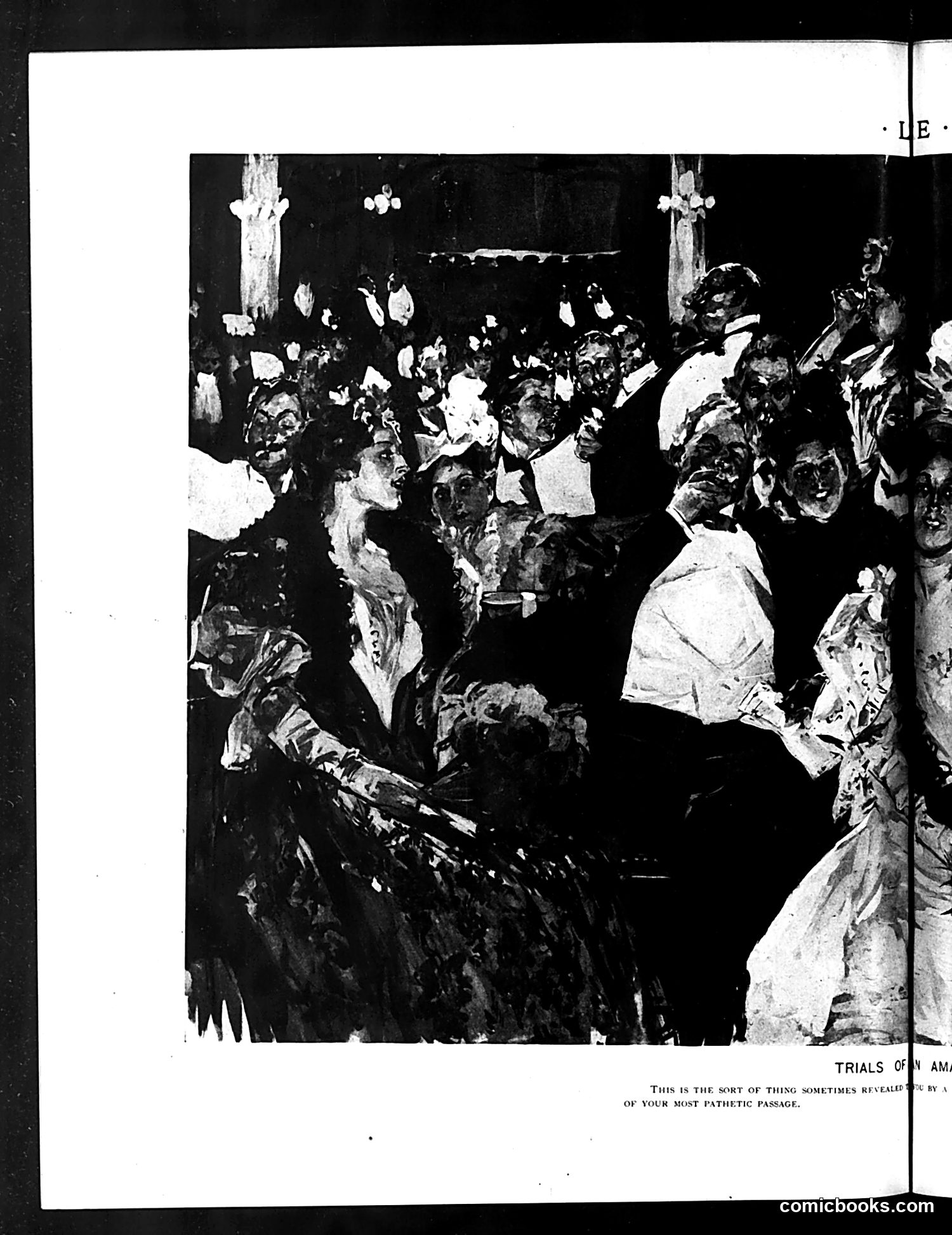
This appears to be a satirical illustration from *Life* magazine depicting a formal, crowded indoor social gathering—likely a ball or high-society event based on the formal dress and elaborate chandeliers. The caption reads: "THIS IS THE SORT OF THING SOMETIMES REVEALED IN A OF YOUR MOST PATHETIC PASSAGE" (text appears partially cut off). The satire seems to mock aristocratic or upper-class social pretension. The densely packed crowd, exaggerated facial expressions, and theatrical poses suggest the artist is criticizing the artificiality and emotional excess of elite social gatherings. The dramatic lighting and shadowy rendering enhance this critique of superficiality. Without the complete caption or date visible, the specific event or figures being caricatured remain unclear, but the general target is clearly the vanity and pathetic self-importance of high society.
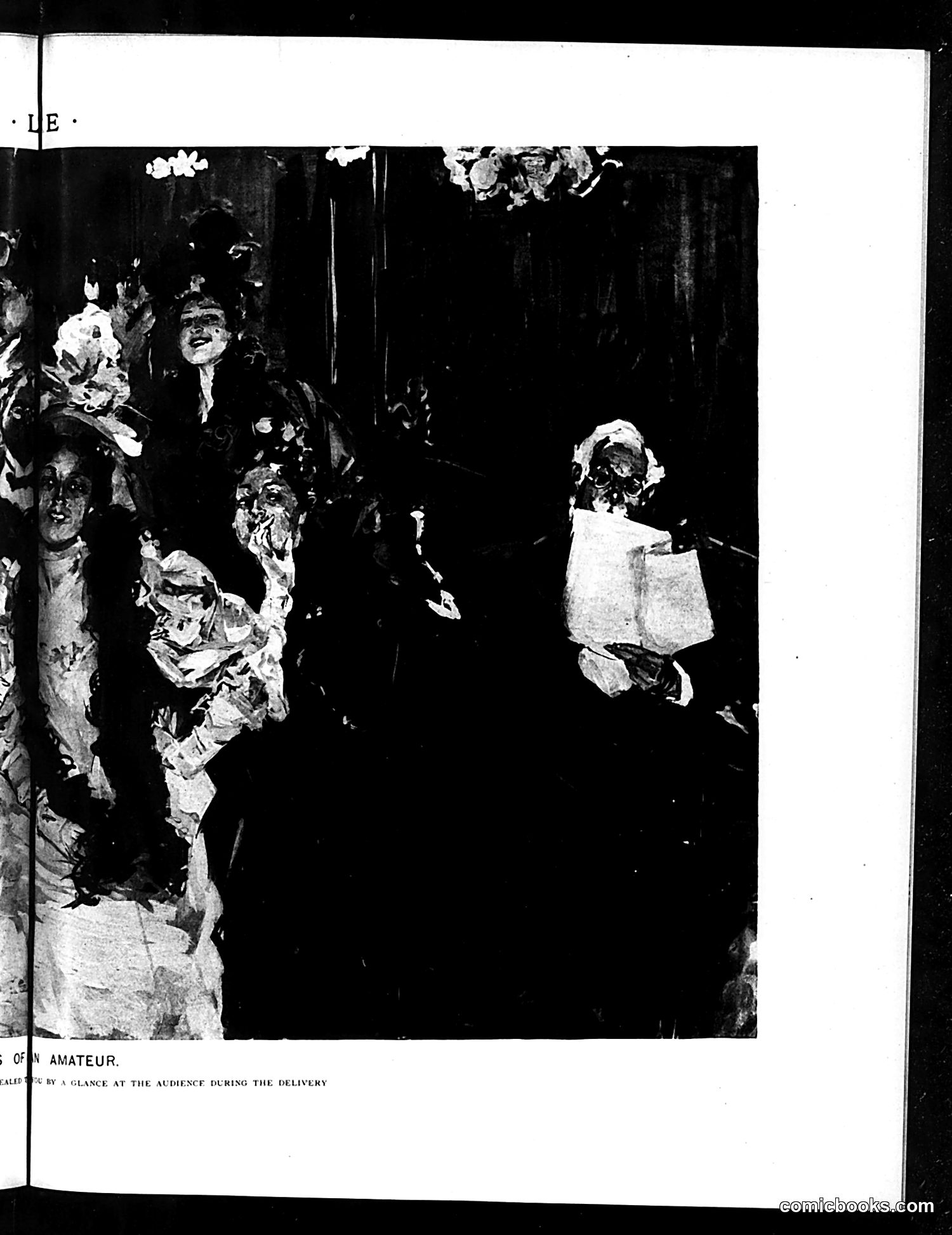
This appears to be a page from Life magazine showing a theatrical or performance scene. The caption reads "A GLANCE AT THE AUDIENCE DURING THE DELIVERY" and references "AN AMATEUR," suggesting this depicts audience reactions during an amateur theatrical performance or speech. The black and white photograph shows elaborately costumed figures on the left (wearing ornate, possibly period or character costumes with theatrical makeup) contrasted with an audience member on the right holding what appears to be a program or document. The satire likely mocks either the pretentiousness of amateur theatrical productions or the gap between amateur performers' self-importance and audience indifference. However, without clearer identification of specific figures or the original publication date, the precise satirical target remains unclear.
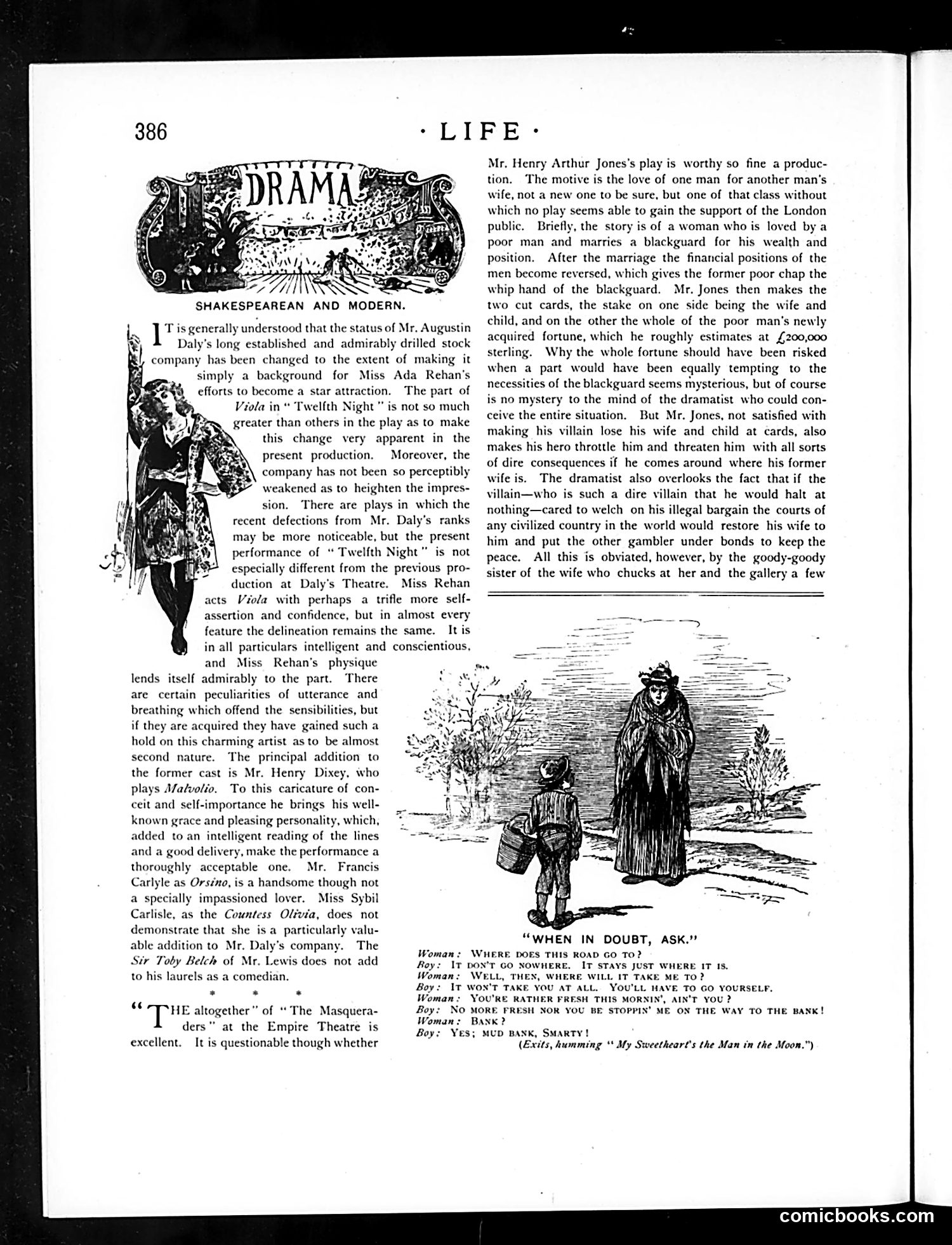
This *Life* magazine page reviews theatrical productions, primarily Augustin Daly's "Twelfth Night" starring Ada Rehan as Viola. The critic notes that while Rehan's performance is competent and intelligent, the production hasn't fundamentally changed despite Daly restructuring his company to showcase her as a star. The review praises Henry Dixey's comedic performance as Malvolio. The cartoon below shows a boy and woman discussing directions on a muddy road—a simple domestic comedic exchange typical of *Life*'s satirical humor. The boy's cheeky responses ("mud bank, smarty") mock the woman's attempts at polite conversation. The page also reviews Henry Arthur Jones's play, critiquing its plot mechanics—particularly the protagonist's decision to gamble away his entire fortune rather than a portion, and the dramatic implausibility of threatening violence against someone who could legally reclaim his former wife.
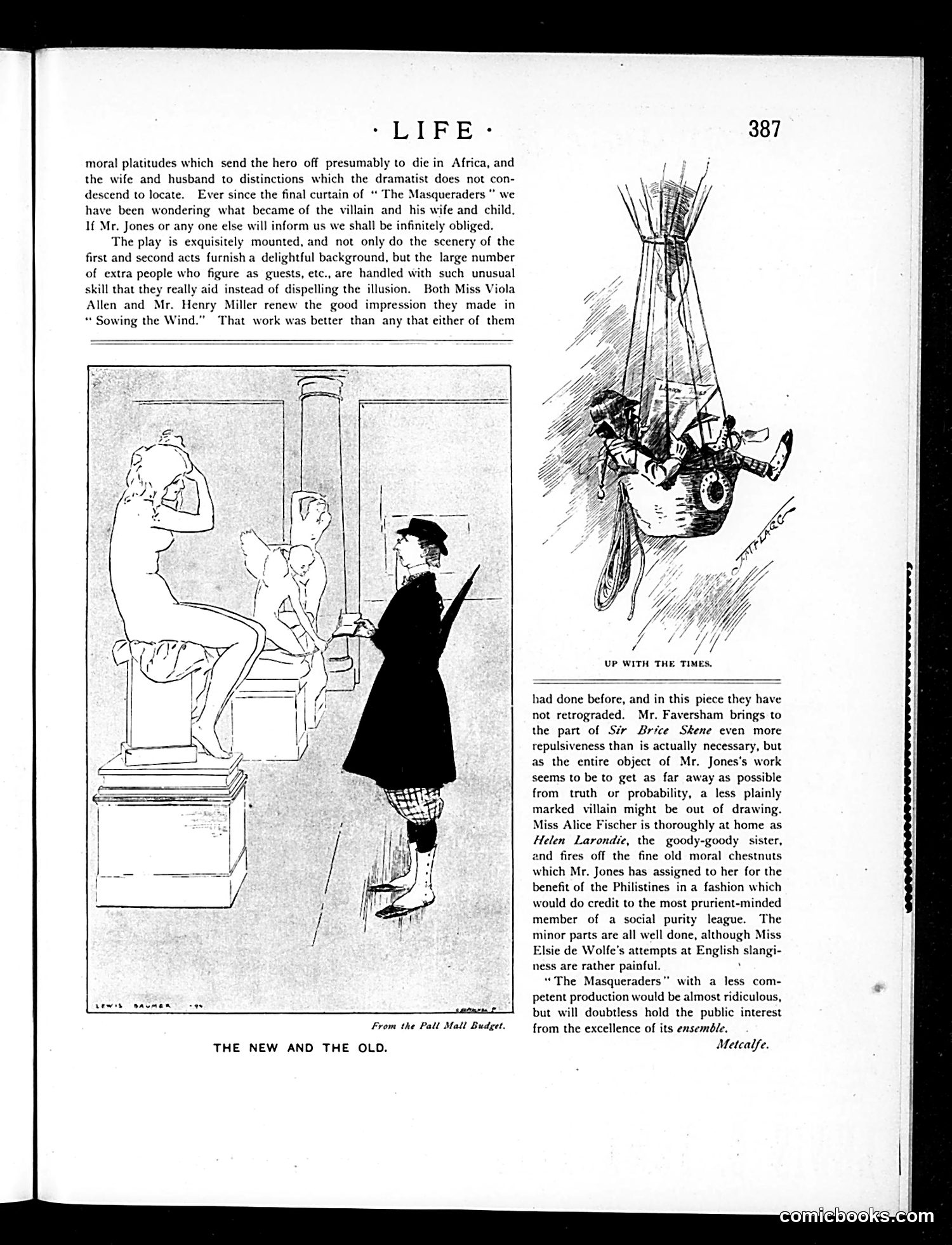
This page contains two theatrical cartoons and a drama review. **"The New and the Old"** (left): Shows a woman in modern dress confronting an older, ornately dressed figure (possibly representing tradition or old-fashioned theater). The contrast satirizes generational conflict in theatrical taste. **"Up with the Times"** (right): Depicts a figure in a hot air balloon, likely mocking those who chase trendy novelties or modern fads—suggesting such pursuits are impractical or ridiculous. The text reviews the play *"The Masqueraders"* by Henry Jones, praising its production values and ensemble cast (including Viola Allen and Henry Miller) while critiquing the plot as moralistic and implausible. The reviewer notes the villain is unnecessarily villainous, the moral lessons are heavy-handed, and some performances (particularly Elsie de Wolfe's attempt at English slang) are awkward. Despite these flaws, the reviewer expects it will attract audiences through its technical excellence.
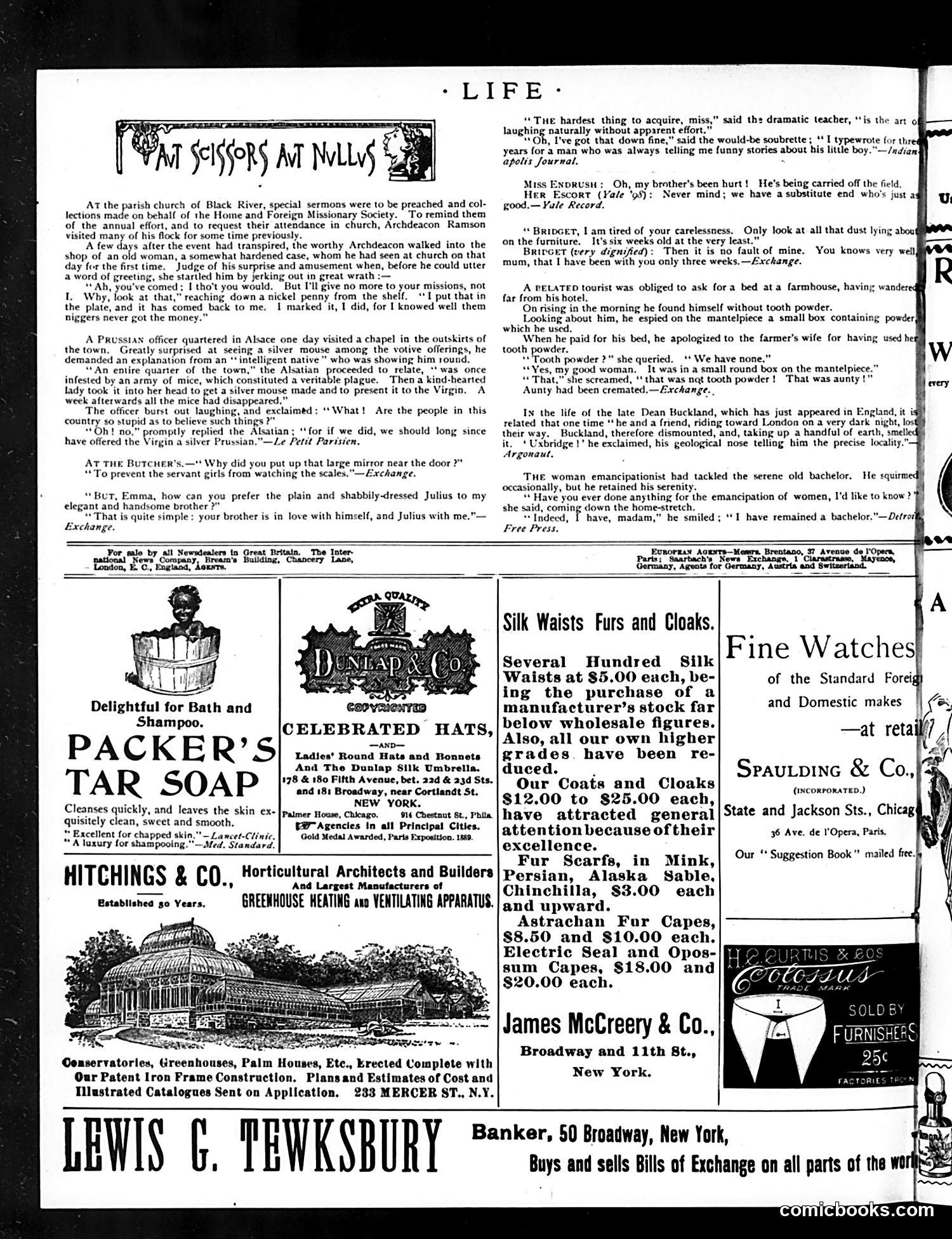
This page from *Life* magazine (appears early 20th century) contains multiple brief satirical anecdotes rather than a single cartoon. **Key humor pieces:** 1. **Black River church donation**: An old woman who donated a nickel to missionaries demands it back, believing church officials pocketed it rather than forwarding funds to missions—satirizing corruption or mismanagement of charitable collections. 2. **Prussian officer in Alsace**: A German officer mocks local superstition about a silver mouse shrine, then gets mocked back with a joke about offering a "silver Prussian" to the Virgin Mary—anti-German satire, likely reflecting post-Franco-Prussian War tensions. 3. **Tooth powder mishap**: A tourist unknowingly uses cremated remains ("aunty") as tooth powder—dark humor based on mistaken identity. 4. **Other shorter jokes** about scales, romantic preference, and acting technique round out the page. The bulk of the page is **advertising** for soap, hats, greenhouses, watches, and financial services. This was standard for *Life*—mixing satirical commentary with commercial revenue.
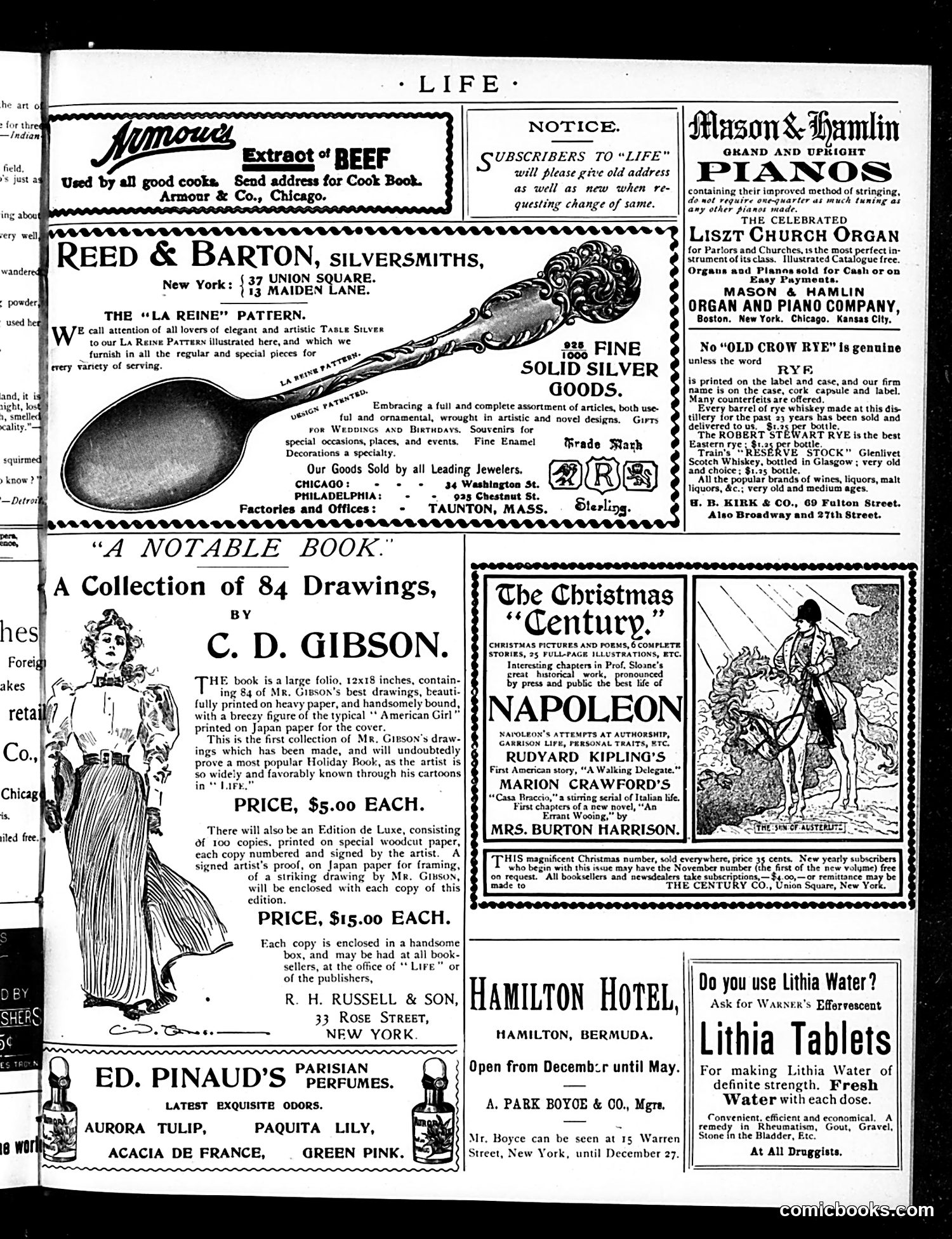
This page is primarily **advertising**, not political satire or cartoons—a common feature of *Life* magazine's format in this era. The notable content is C.D. Gibson's **collection of 84 drawings** advertised as "A Notable Book." Gibson was a famous cartoonist known for illustrating the "Gibson Girl," and this collection would have been marketed as a prestigious holiday gift. The advertisement emphasizes both a standard edition ($5) and a luxury edition ($15), each elegantly bound. The page also includes ads for luxury goods—silverware, pianos, whiskey—typical of *Life*'s upscale readership. A *Christmas Century* magazine advertisement promotes seasonal content including Rudyard Kipling's "A Walking Delegate" and Marion Crawford's serialized story. This represents the magazine's dual function: satirical commentary mixed with high-end consumer advertising targeting wealthy readers.
This humor column mocks how schoolchildren encounter contradictory authorities. Young Sammy uses the excuse that "the 'thorities differ" whenever questioned—whether in grammar, geography, or spelling—and his teacher accepts this dodge. The satire peaks when Sammy claims the "rithmetickers differ" about basic arithmetic, yet the teacher only lets him off in *that* subject. The deeper joke: this reflects a genuine anxiety of the 1890s about competing authorities (historians, grammarians, dictionaries) giving conflicting answers. The child's logic—that if experts disagree, he needn't know anything—exposes the absurdity. The final anecdote about Columbus drives home the point: Sammy questions whether Columbus "discovered" America if Native Americans saw him first, inverting the certainty adults demand. The satire critiques both loose pedagogy and the intellectual relativism seeping into American discourse, using a child's innocent literalism to show how adults' equivocation undermines education.