A complete issue · 37 pages · 1935
Judge — June 1935
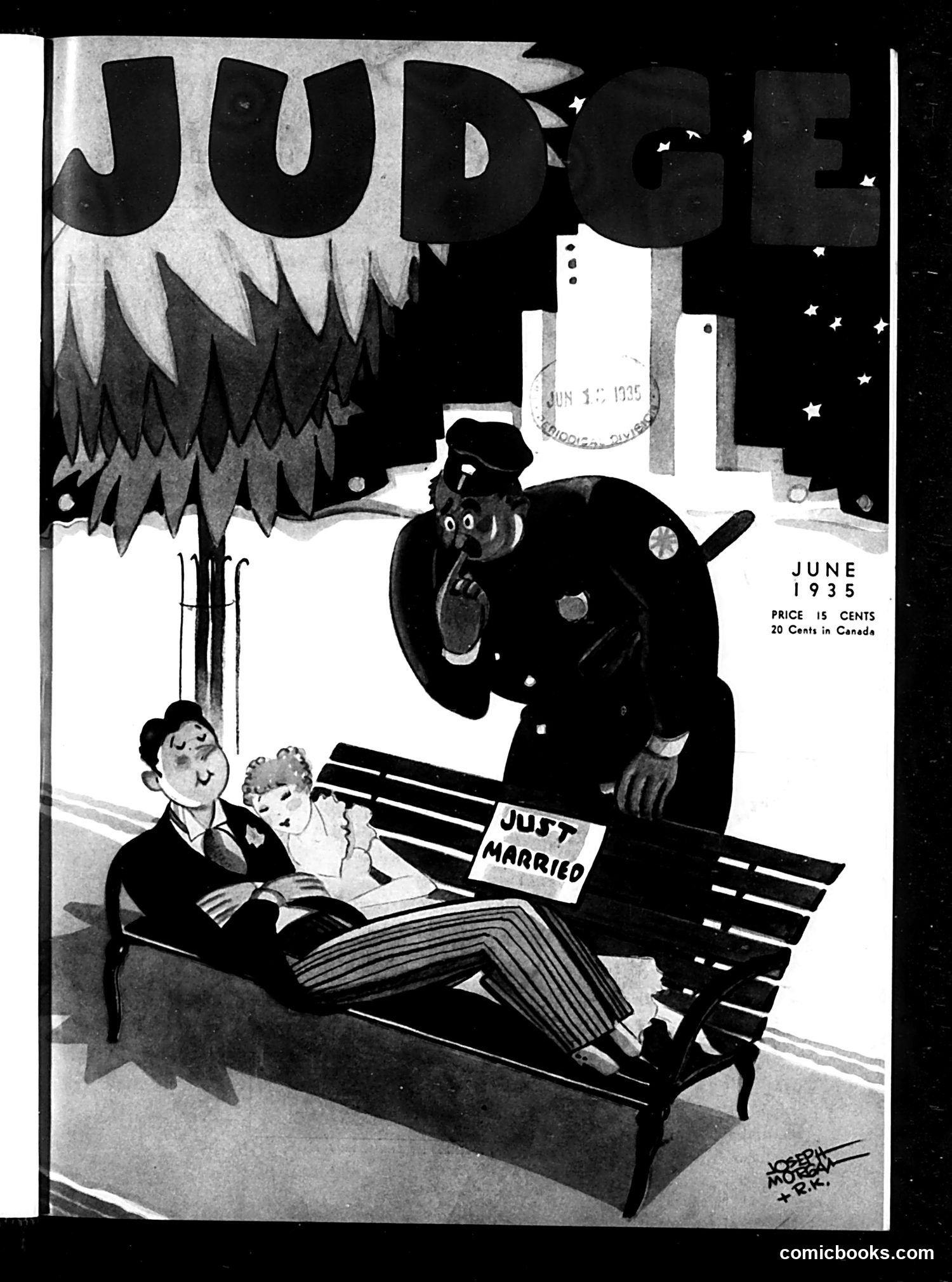
# Judge Magazine Cover, June 1935 This cover depicts a menacing figure in a top hat and long coat—appearing to represent a stereotypical villain or threat—looming over a newlywed couple sitting on a bench marked "JUST MARRIED." The couple looks frightened as they try to enjoy their honeymoon. The satire likely comments on how contemporary anxieties or social threats were undermining domestic happiness. Given the June 1935 date, this could reference economic instability from the Great Depression, crime, or other period concerns that seemed to cast a shadow over American family life. The exaggerated, menacing figure and the innocent couple's fear create a commentary on how external forces threatened basic American contentment. The specific threat isn't entirely clear from the image alone, but the juxtaposition is unmistakably darkly comedic.
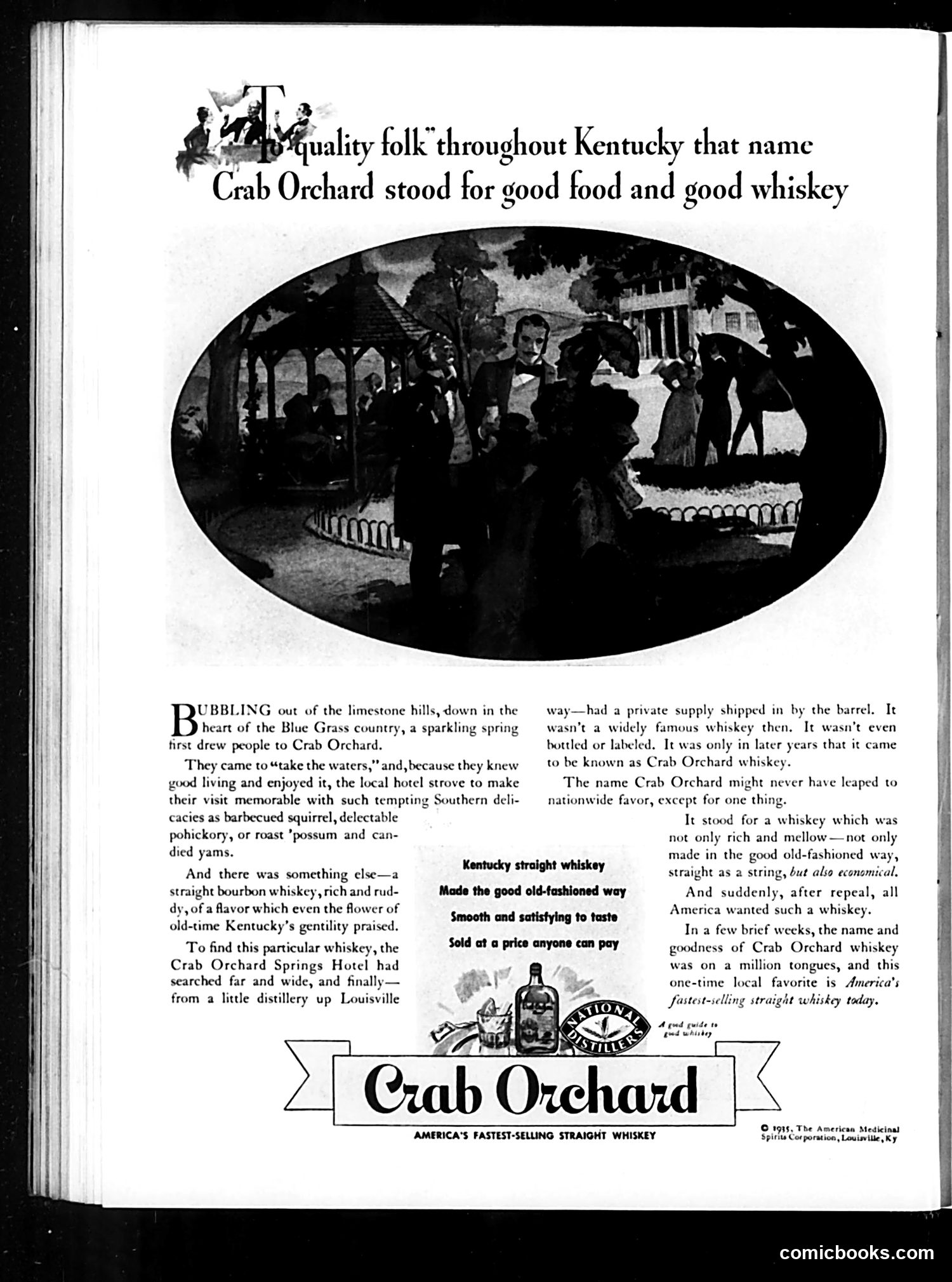
# Analysis This is primarily a **Crab Orchard whiskey advertisement** rather than political satire. The page combines advertising copy with what appears to be a romanticized illustration of a Kentucky spring resort scene from the late 19th or early 20th century. The ad employs period marketing rhetoric, claiming Crab Orchard whiskey was "America's fastest-selling straight whiskey" and describing its origins from a Louisville distillery. The narrative emphasizes Kentucky's "good old-fashioned way" of whiskey-making and the product's supposed economic accessibility ("at a price anyone can pay"). The oval illustration depicts well-dressed visitors at what was evidently an actual resort location in Kentucky's Blue Grass region. This represents nostalgic Americana marketing common to Judge magazine's advertising content.
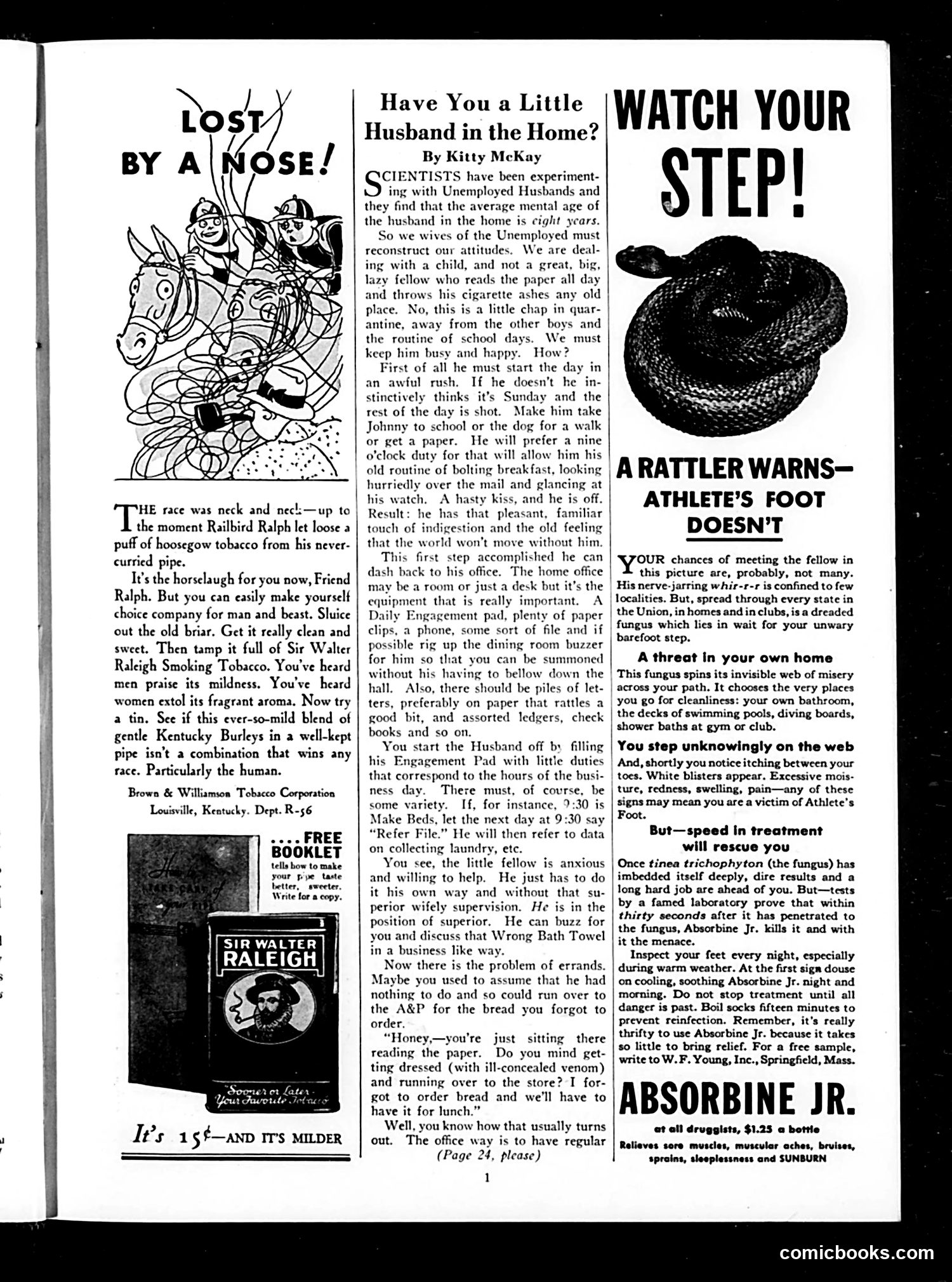
# Analysis of Judge Magazine Page This page combines satirical cartoons with period advertisements. **"Lost by a Nose"** (left): A humorous cartoon about losing a horse race, featuring two jockeys. The satire targets gambling and racetrack culture, common leisure pursuits of the era. Sir Walter Raleigh tobacco is advertised below, positioning smoking as a gentleman's consolation for losses. **"Have You a Little Husband in the Home?"** (center): By Kitty McKay, this satirizes wives managing unemployed husbands during what appears to be Depression-era unemployment. The advice—keeping idle husbands busy with errands and tasks—reflects period gender roles and anxieties about male idleness and economic instability. **"Watch Your Step!"** (right): A public health warning about athlete's foot fungus, promoting Absorbine Jr. treatment. This reflects early 20th-century concerns about contagious foot conditions in gyms and communal bathing facilities. The page mixes social commentary with consumer advertising typical of Judge's format.
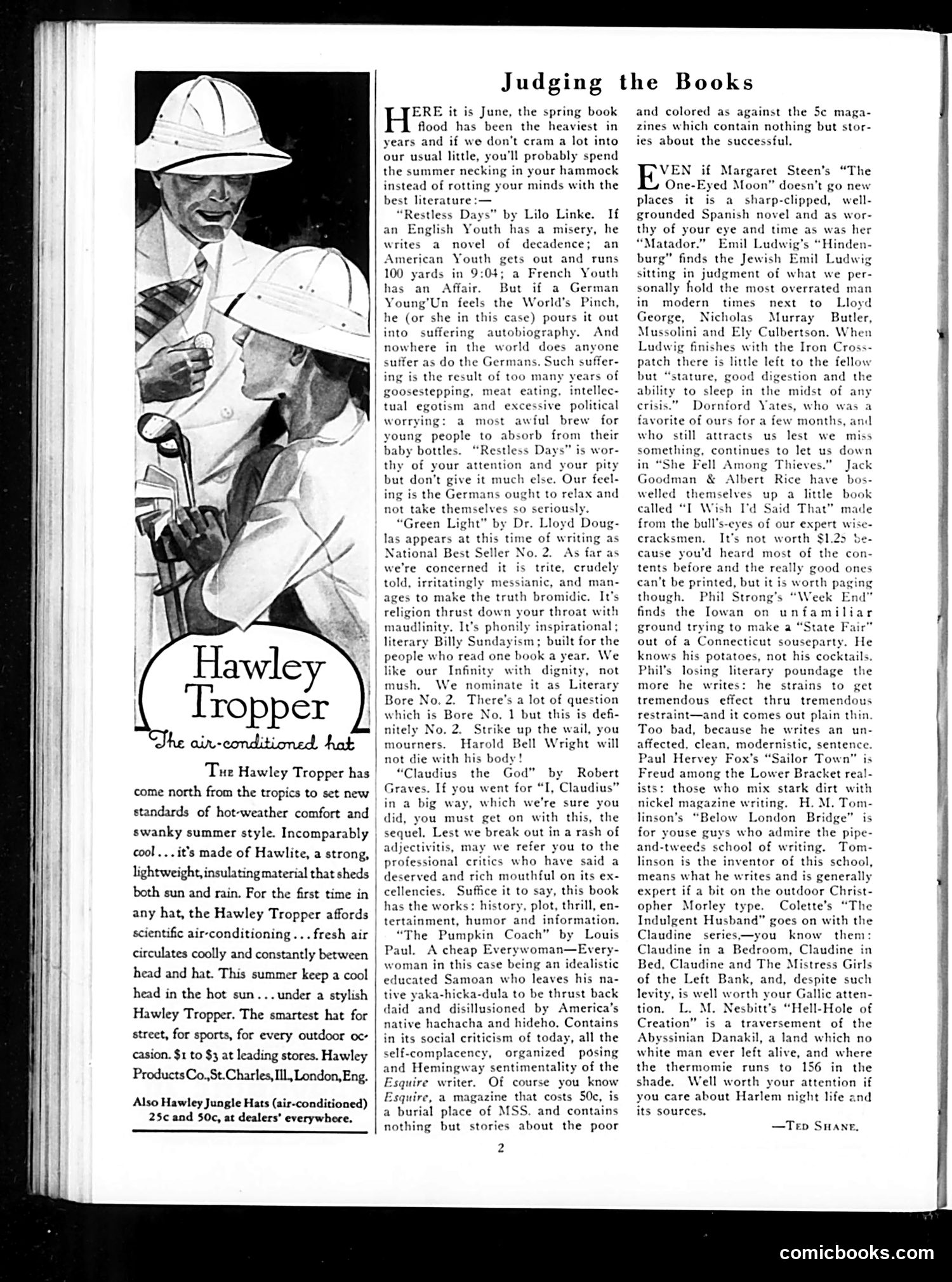
# Analysis of "Judging the Books" Page This page is primarily a **book review column** rather than political satire. The left side features an advertisement for the Hawley Tropper hat, showing a man in colonial/tropical dress examining the product. The bulk of the page comprises literary reviews by Ted Shane. The reviews discuss contemporary novels including works by Lilo Linke, Dr. Lloyd Douglas, Robert Graves, and Louis Paul, critiquing their literary merit and social commentary. Shane evaluates these books' quality, themes, and relevance to readers. The only potential satirical element is the implicit critique of certain authors' pretentiousness or social messaging within the book reviews themselves—a common feature of Judge's cultural commentary. However, this page functions primarily as consumer guidance for readers seeking summer reading recommendations.
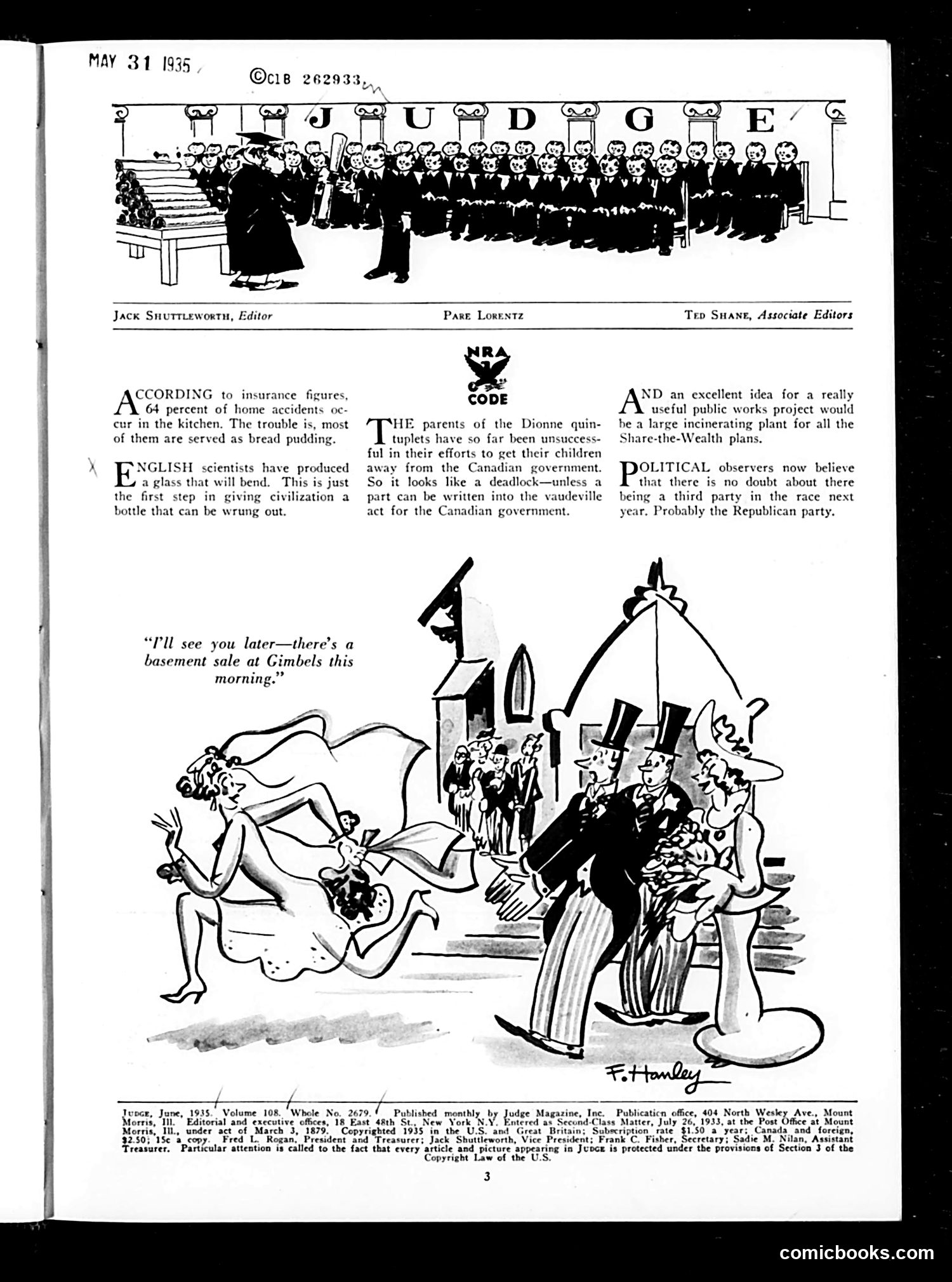
# Analysis of Judge Magazine Page, May 31, 1935 The main cartoon depicts a wedding scene with a bride fleeing the church while well-dressed guests (wearing top hats) remain inside. The caption reads: "I'll see you later—there's a basement sale at Gimbels this morning." **The satire:** This mocks the priorities of American shoppers during the Great Depression, suggesting that even a wedding ceremony cannot compete with the allure of a department store sale. The bride abandoning her own wedding for a basement bargain satirizes both the desperation of Depression-era consumers and the commercial culture that exploits their financial struggles. The contrast between the formal, solemn wedding and the frivolous shopping motivation creates the humor. It's social commentary on how economic hardship had warped values and consumer behavior.
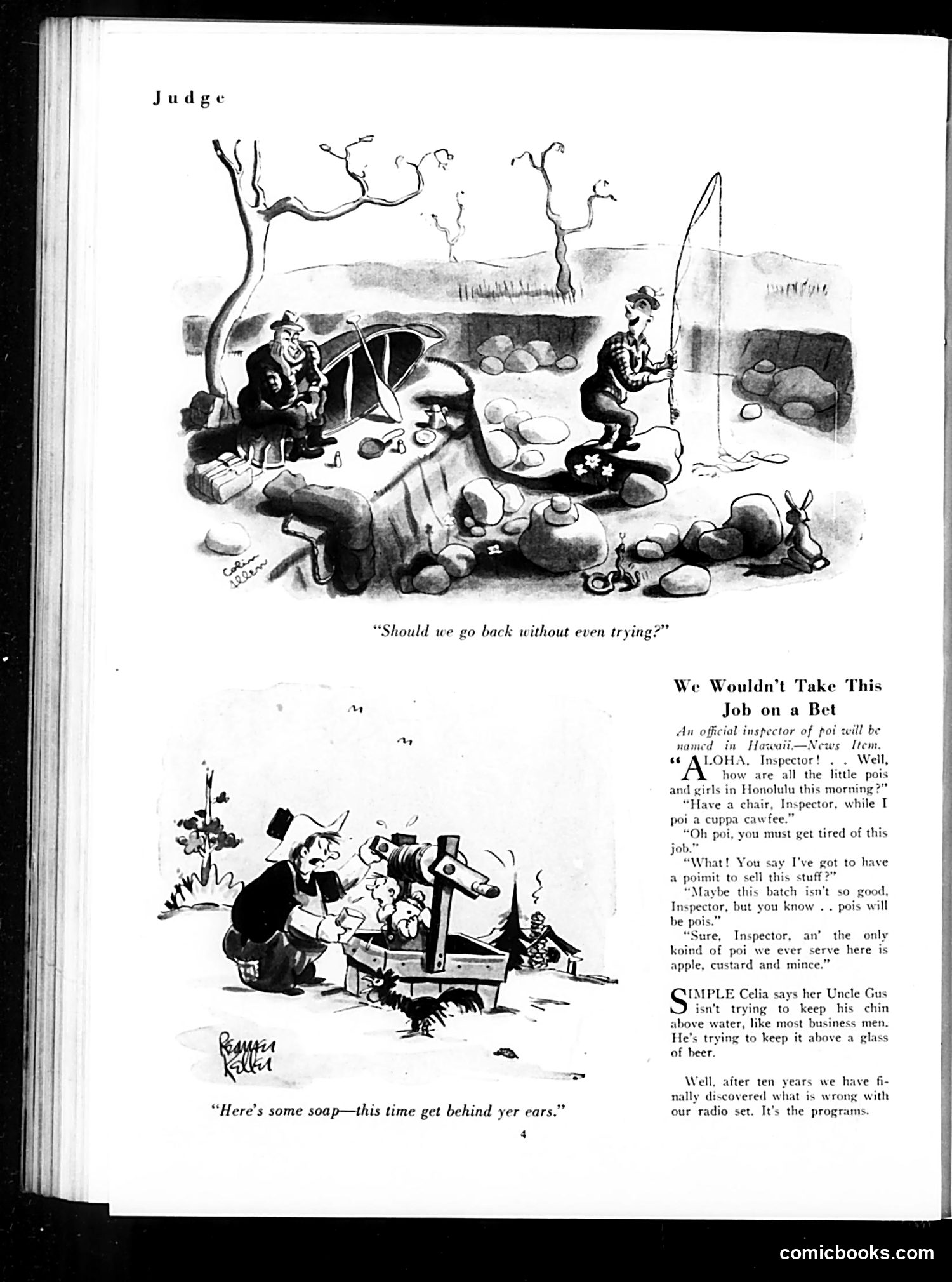
# Analysis of Judge Magazine Page **Top Cartoon ("Judge"):** Shows prospectors or miners in a barren landscape debating "Should we go back without even trying?" This satirizes get-rich-quick schemes or failed ventures—likely referencing gold rushes, oil booms, or similar speculative enterprises popular in early 20th-century America. The joke mocks the hesitation to admit defeat. **Bottom Cartoon & Article ("We Wouldn't Take This Job on a Bet"):** Satirizes Hawaii's newly appointed pot inspector position. The humor targets bureaucratic absurdity—creating an official government role to inspect Hawaiian poi (a staple food). The accompanying dialogue mocks the inspector's discovery that locals only serve apple, custard, and mince pies, undermining the entire job's premise. This critiques unnecessary government positions and cultural misunderstanding of Hawaiian cuisine.
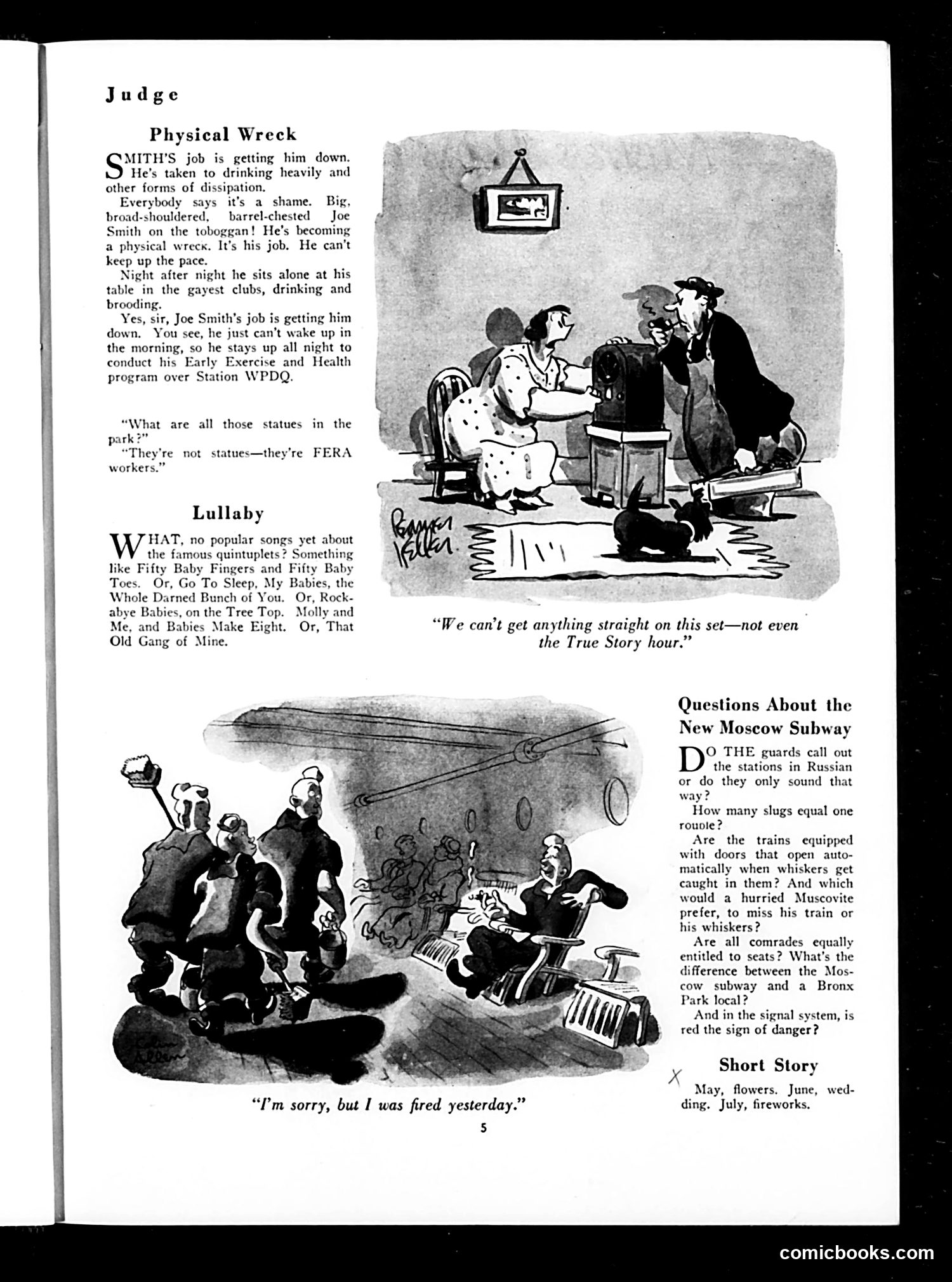
# Judge Magazine Page Analysis This page contains three separate satirical pieces: 1. **"Physical Wreck"**: Mocks Joe Smith, a robust man becoming a "physical wreck" due to heavy drinking and nightlife, unable to maintain an early morning health/exercise radio program on Station WPDQ. The cartoon shows him disheveled among club-goers. 2. **"Lullaby"**: Notes the absence of popular nursery-rhyme songs, listing famous ones like "Fifty Baby Fingers" and "Molly and Me"—this appears to be light social commentary on cultural trends. 3. **"Questions About the New Moscow Subway"**: Satirizes Soviet infrastructure through absurdist questions about Russian trains, suggesting Western skepticism about Soviet technological claims during the Cold War era. The cartoons reflect 1930s-40s American attitudes toward alcohol, radio culture, and anti-Soviet sentiment.
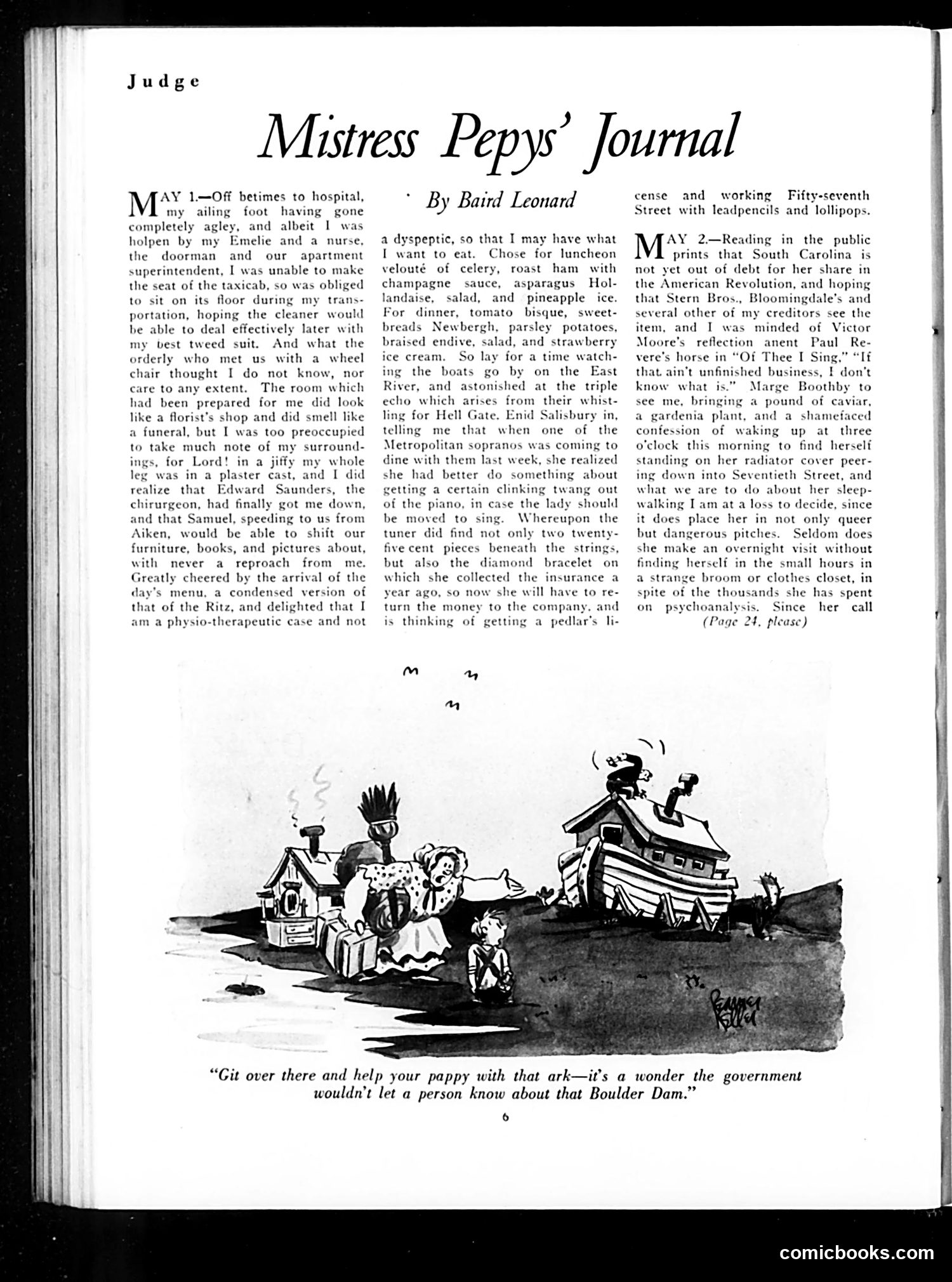
# Mistress Pepys' Journal - Judge Magazine This is a humorous column by Baird Leonard, written as a parody of Samuel Pepys' famous historical diary. The May entries recount mundane domestic complaints (a sick foot, dyspepsia, household repairs) mixed with social observations about South Carolina's Revolutionary history and contemporary New York society gossip. The cartoon below satirizes government secrecy about the Boulder Dam (now Hoover Dam). A family struggles with a damaged ark during what appears to be a flood, while a child suggests asking "pappy" for help with the ark, then sarcastically notes "it's a wonder the government wouldn't let a person know about that Boulder Dam." The joke mocks official information control—citizens are kept ignorant about a major public works project affecting water management and flood risk.
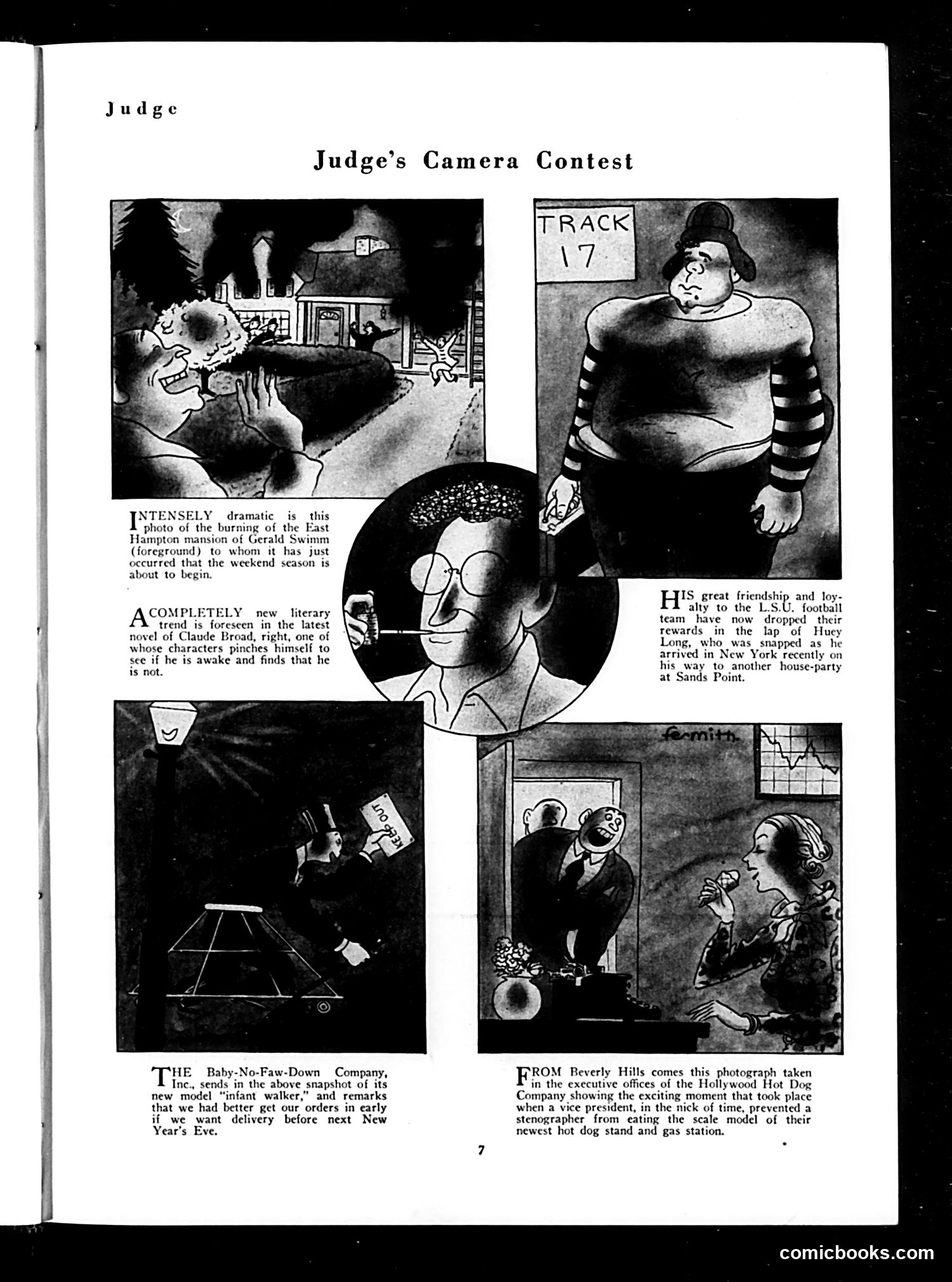
# Judge's Camera Contest - Page Analysis This page presents four humorous photographs submitted to *Judge* magazine's photo contest. Each caption provides satirical commentary: 1. **Top left**: "Intensely dramatic" burning of the East Hampton mansion of Gerald Swimm, captioned as occurring during the upcoming weekend season—satirizing dramatic social-season events. 2. **Top right**: A heavyset man labeled "Track 17," with text mocking a new literary trend where characters pinch themselves to verify wakefulness—likely referencing surrealism or experimental fiction. 3. **Bottom left**: The Baby-No-Paw-Down Company's "infant walker," satirizing advertising claims about product delivery deadlines before New Year's. 4. **Bottom right**: A Hollywood Hot Dog Company executive photograph capturing a "stenographer from eating the scale model" of their new hot dog stand—mocking corporate mishaps and product photography. The humor derives from absurd scenarios presented as genuine news photography.
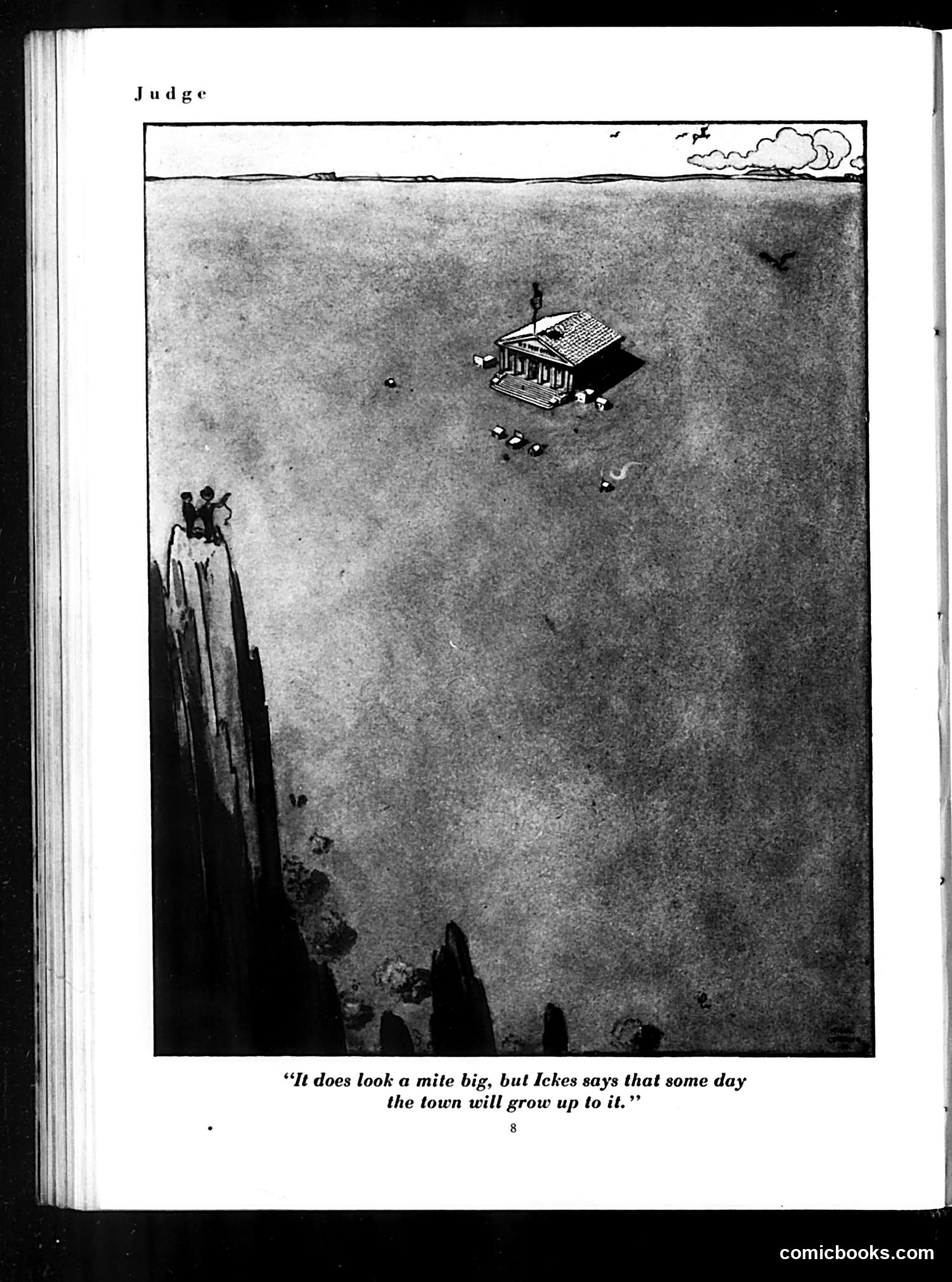
# Analysis This cartoon depicts a tiny town dwarfed by an enormous public building in an empty landscape. The caption references "Ickes," likely **Harold L. Ickes**, Secretary of the Interior under Franklin D. Roosevelt, who oversaw New Deal public works projects. The satire mocks government spending on infrastructure in small towns—constructing a building vastly out of proportion to the community's current size, betting on future growth that may never materialize. The cartoon critiques the optimism (or wastefulness) of New Deal planners who funded ambitious projects in rural America, assuming population growth would justify the investment. The joke is that the modest town will supposedly "grow up to" match the enormous structure—though the visual absurdity suggests this is unlikely.
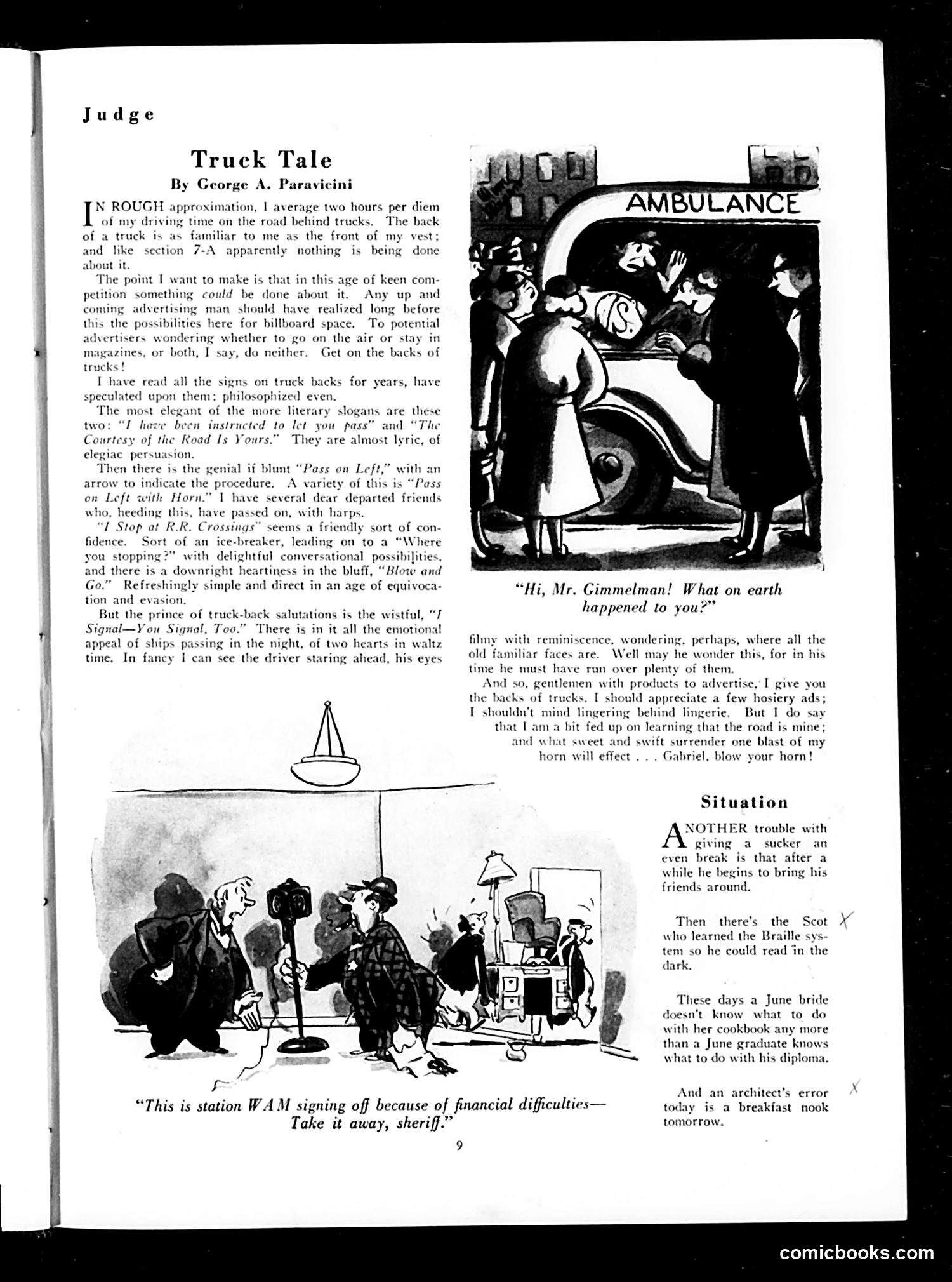
# "Truck Tale" Page Explanation This Judge magazine page contains a humorous essay by George A. Paravicini about advertising opportunities on truck backs, paired with unrelated joke cartoons below. **Main Essay**: Paravicini argues that truck rear panels—which drivers read constantly—represent untapped billboard advertising space. He catalogues actual truck-back slogans he's observed, ranging from polite ("I have been instructed to let you pass") to darkly comedic (he notes friends who followed "Pass on Left with Horn" instructions have "passed on, with harps"—a joke about fatal accidents). His pitch to advertisers: trucks are better than radio or magazine ads. **Bottom Cartoons**: The first shows a radio station "WAM signing off because of financial difficulties"—Depression-era commentary on struggling media. The second features disconnected one-liners about modern life absurdities: a sucker bringing friends, a Scotsman learning Braille for dark reading, June brides confused by cookbooks, and architects' errors becoming architectural features. The humor relies on observational comedy and wordplay typical of 1920s-30s satirical magazines.
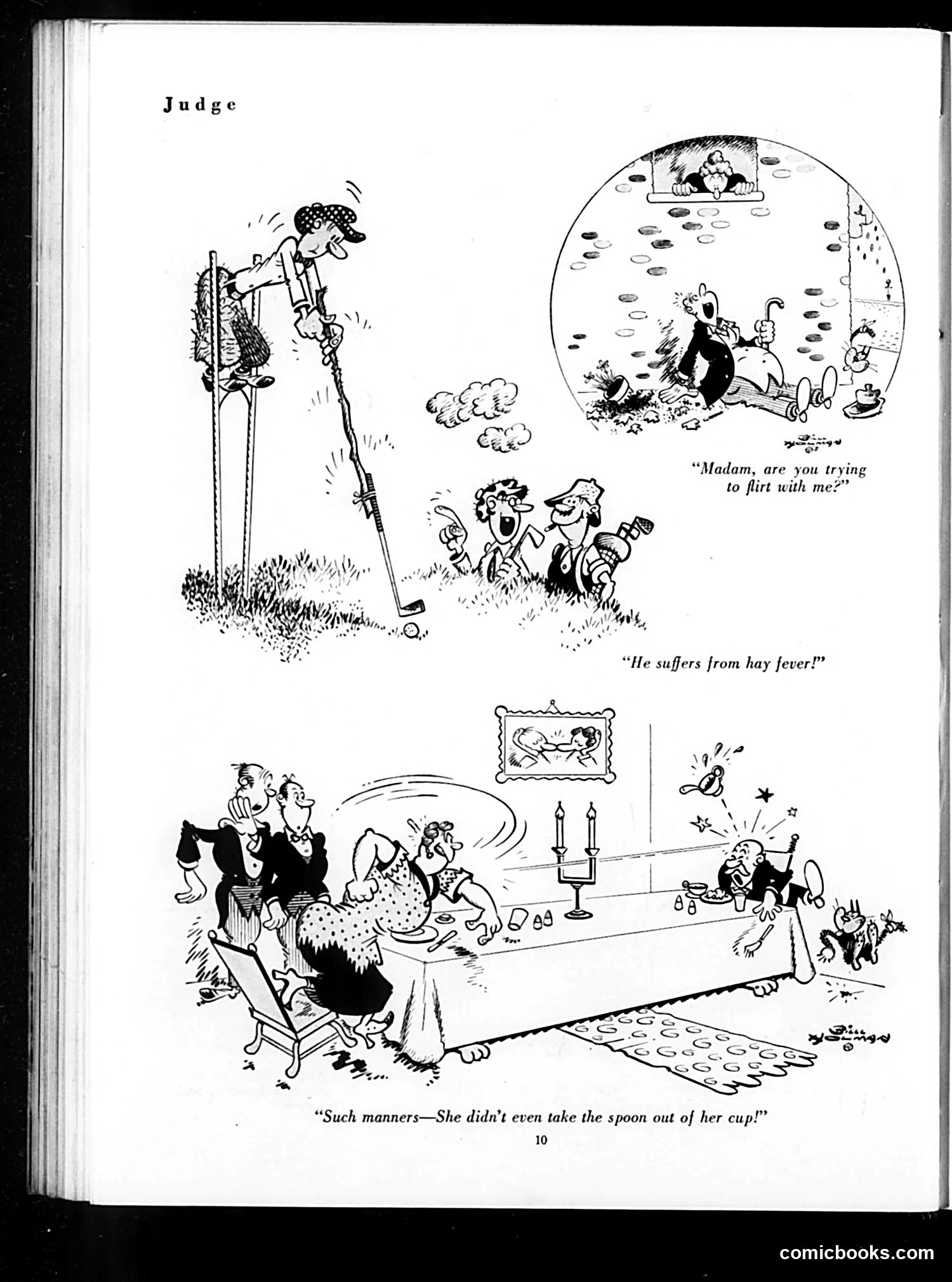
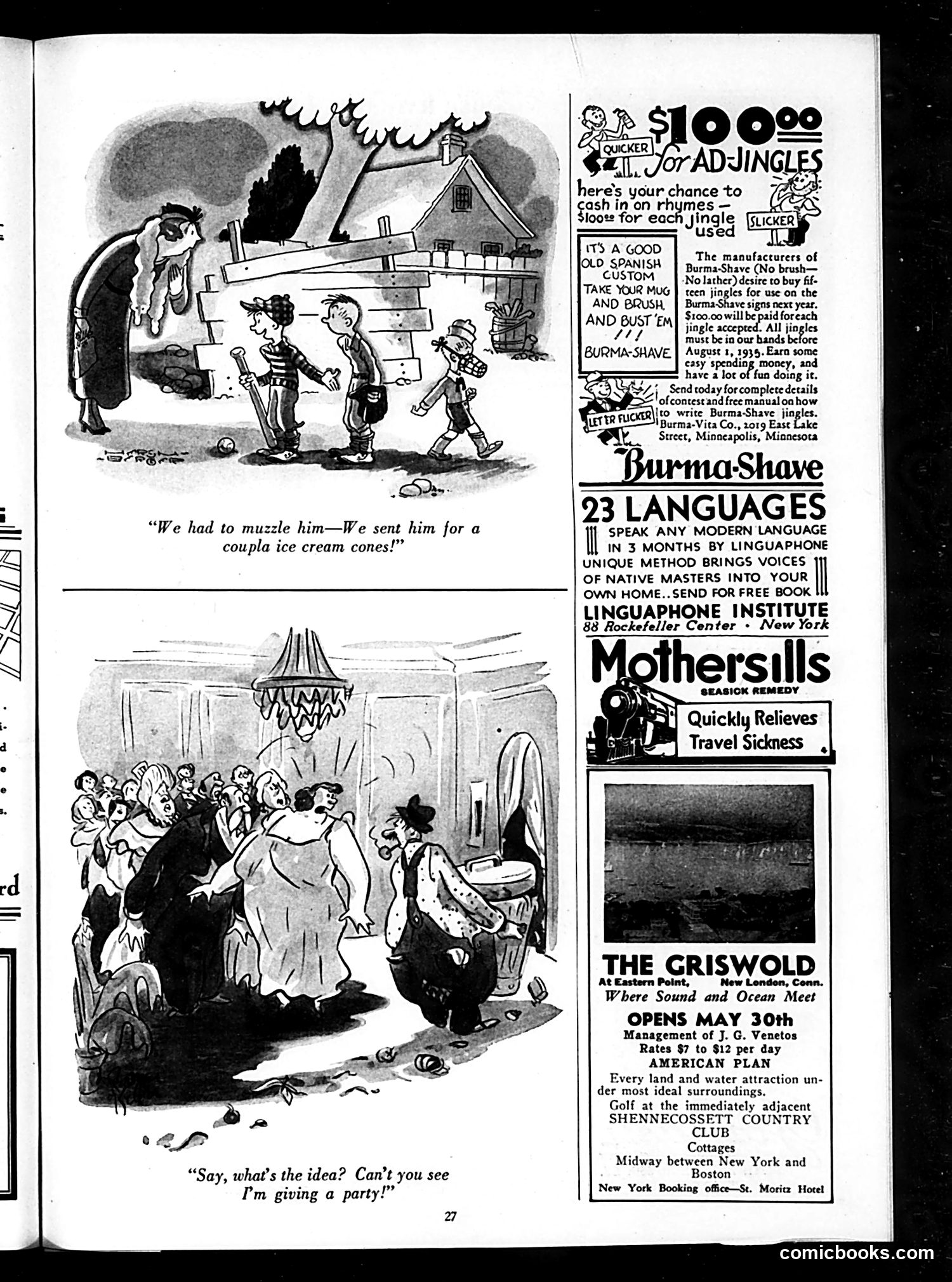
# Judge Magazine Page Analysis This page contains three separate comic cartoons satirizing social behavior and etiquette violations. The top-left shows a man on a pole being pestered by others below, with the caption "He suffers from hay fever!"—a visual pun on the man's elevated, sneezing position. The top-right depicts a seaside scene where a woman asks a man, "Madam, are you trying to flirt with me?"—likely mocking awkward social interactions. The bottom cartoon, the most detailed, shows a formal dinner scene with the caption "Such manners—She didn't even take the spoon out of her cup!" This satirizes crude table manners and lack of refinement, a common Judge theme mocking lower-class or newly wealthy individuals who violated Victorian etiquette standards. The chaotic dinner scene emphasizes the rudeness being criticized.