A complete issue · 36 pages · 1933
Judge — September 1933
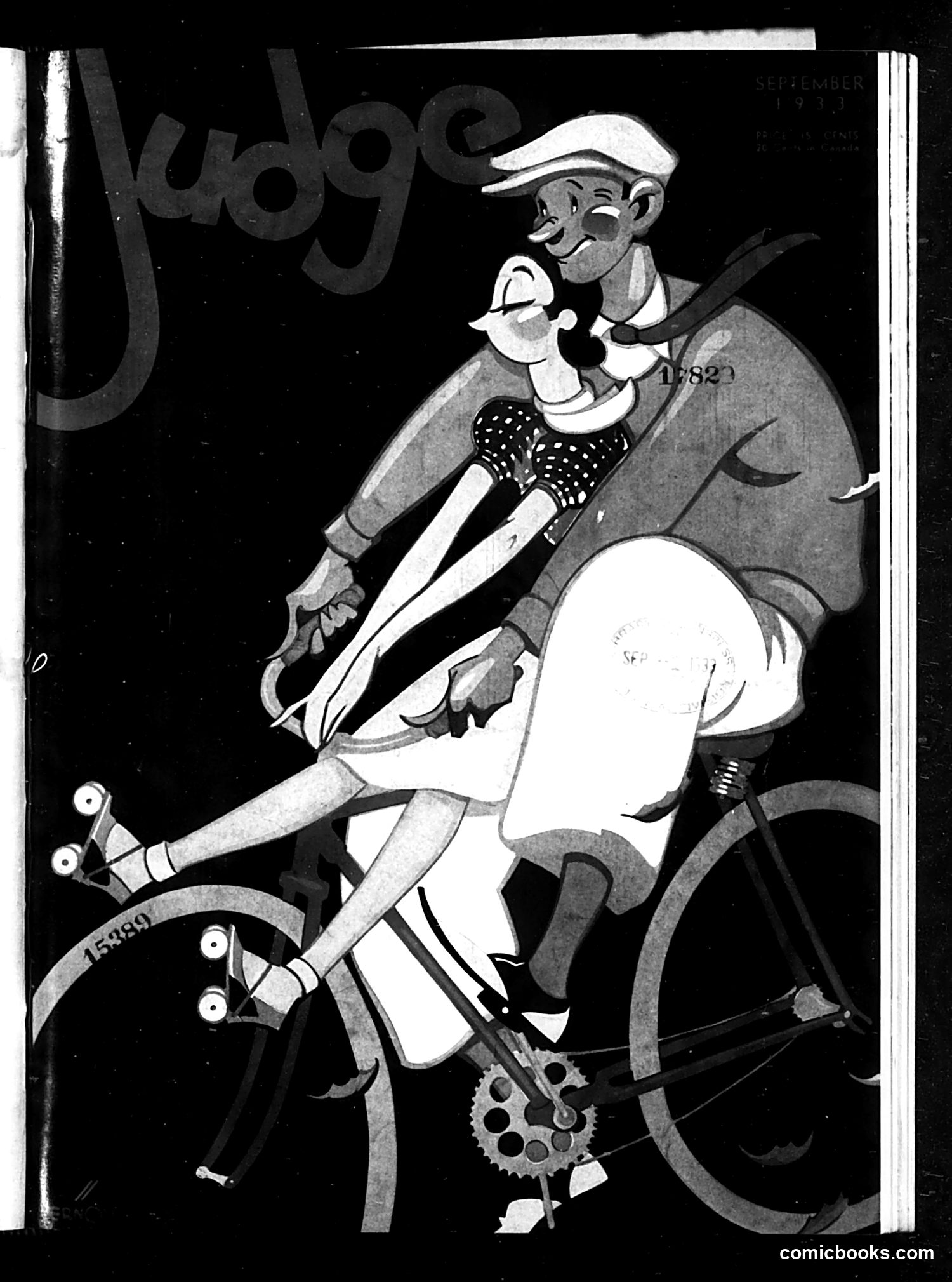
# Analysis This appears to be a *Judge* magazine cover from September 1922 (based on the visible date marker). The illustration depicts a man in a cap and suit seated on a bicycle with an exaggerated, cartoonish woman on his lap. The styling suggests early 1920s satire about changing gender roles and modern dating customs. The woman's elongated legs, bobbed-hair styling, and prominent positioning likely satirize the "flapper" phenomenon—the newly liberated young women of the Jazz Age who challenged Victorian social norms through fashion, behavior, and independence. The bicycle scene appears to mock the awkwardness or impropriety of modern courtship practices compared to traditional social conventions. The overall tone suggests conservative social commentary critiquing 1920s youth culture and shifting morality.
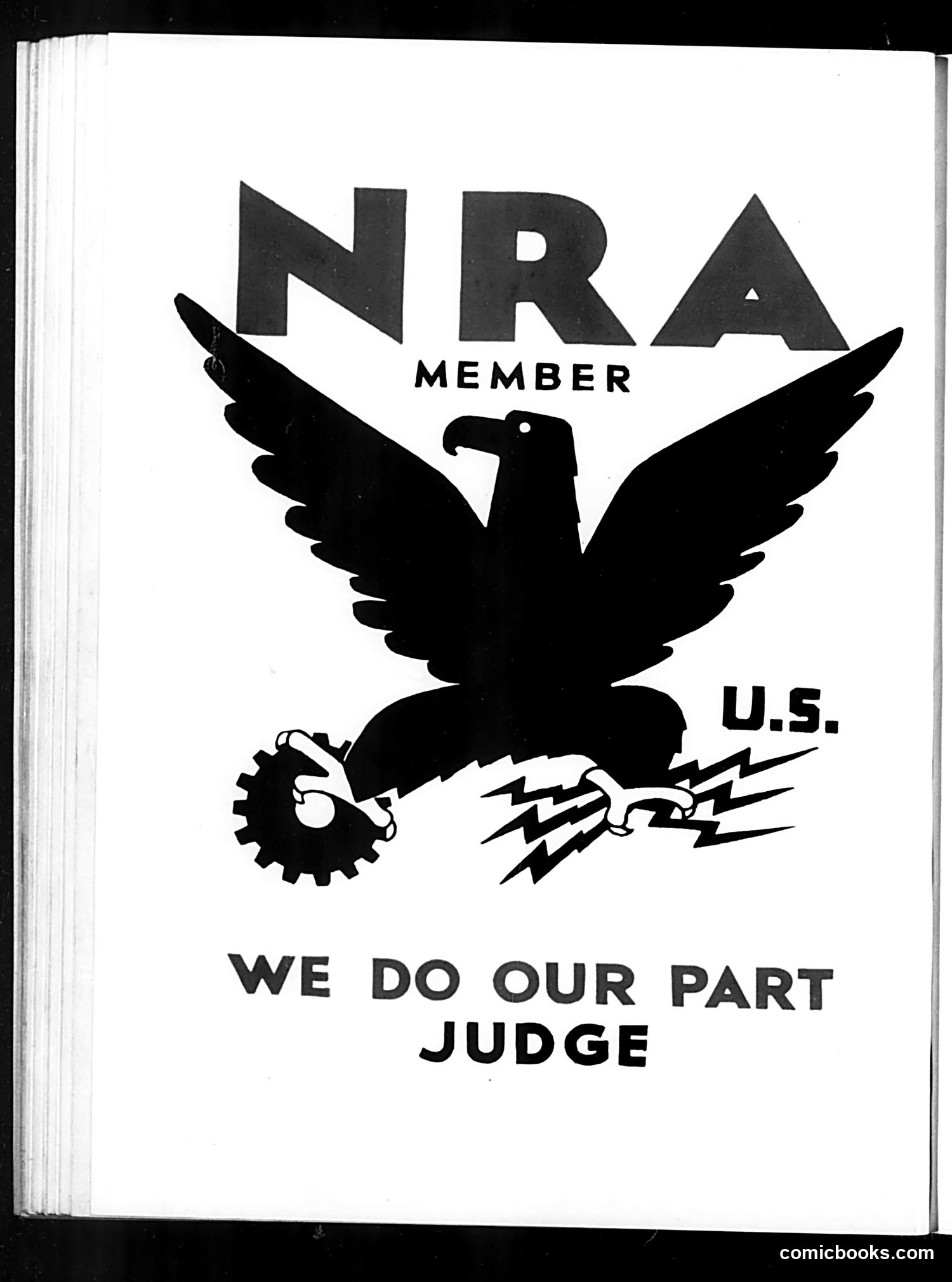
# NRA Member Propaganda This is a membership badge or advertisement for the **National Rifle Association (NRA)**, featuring their iconic eagle emblem holding a gear (representing industry/manufacturing) and lightning bolts (representing power). The text "WE DO OUR PART JUDGE" appears to reference the **NRA's Blue Eagle campaign** from the early 1930s New Deal era, when the NRA (then the National Recovery Administration) promoted compliance with industrial codes. However, this appears to be a satirical repurposing by *Judge* magazine—a publication known for political humor. The ambiguity between the two "NRA" organizations and the somewhat absurd juxtaposition suggests satire of either corporate self-regulation, government agency overreach, or possibly the firearms organization's claims of public service. The specific satirical target remains unclear without additional context.
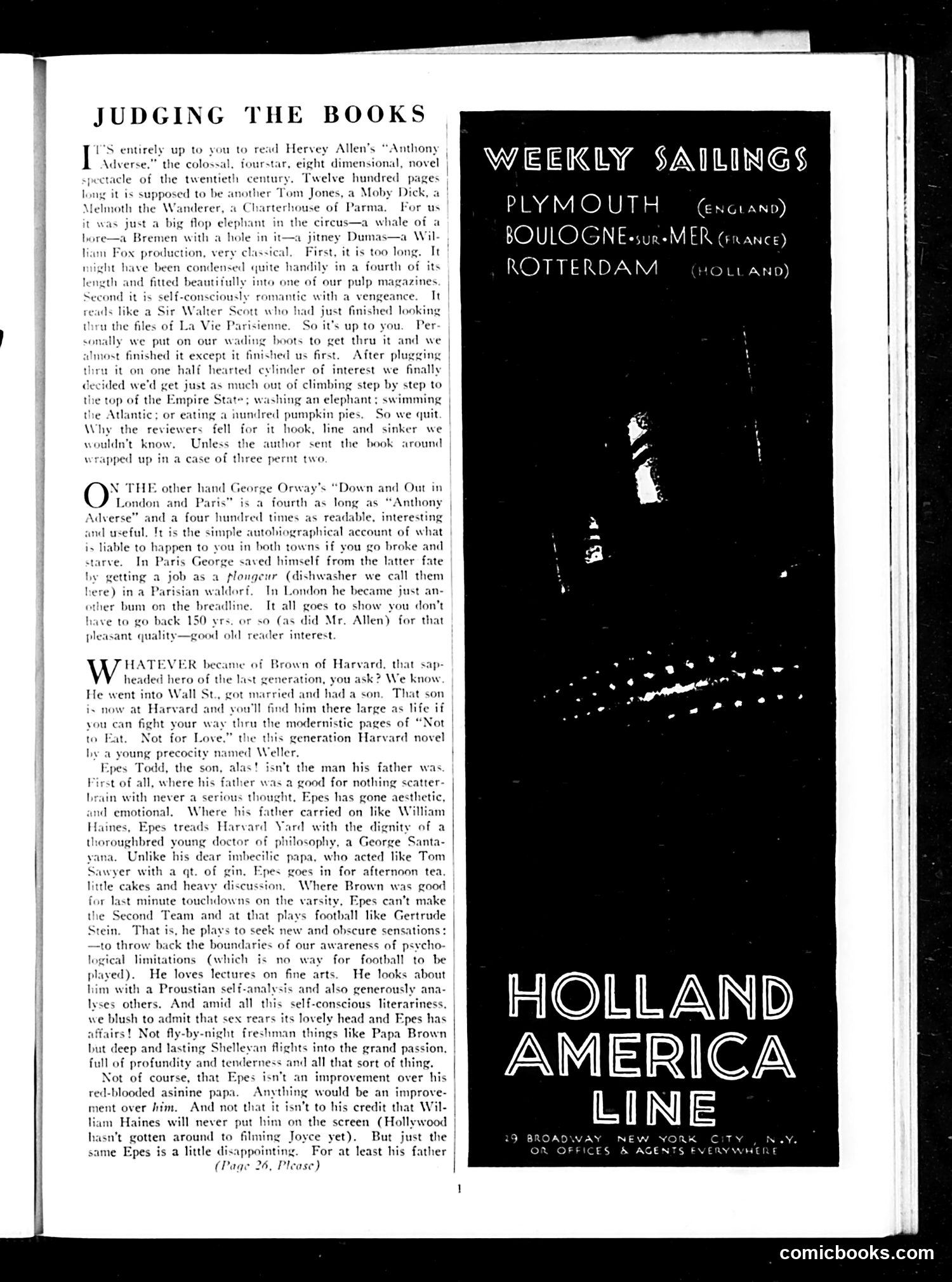
# Analysis This page combines book reviews with maritime advertising. The left column critiques three novels: Hervey Allen's "Anthony Adverse" (criticized as too long and overly romantic), George Orway's "Down and Out in London and Paris" (praised as readable autobiography), and a Harvard novel by Weller featuring protagonist Epes Todd (satirized as an affected, aesthete character embodying 1920s intellectual pretension—contrasted unfavorably with his father's practical values). The right side displays two advertisements: "Weekly Sailings" announcing passenger routes to European ports, and the "Holland America Line" shipping company logo, targeting affluent travelers. The Epes Todd satire appears to mock contemporary Harvard students as emotionally indulgent, overly introspective pseudo-intellectuals interested in obscure sensations rather than practical achievement—a common Judge theme criticizing generational cultural shifts.
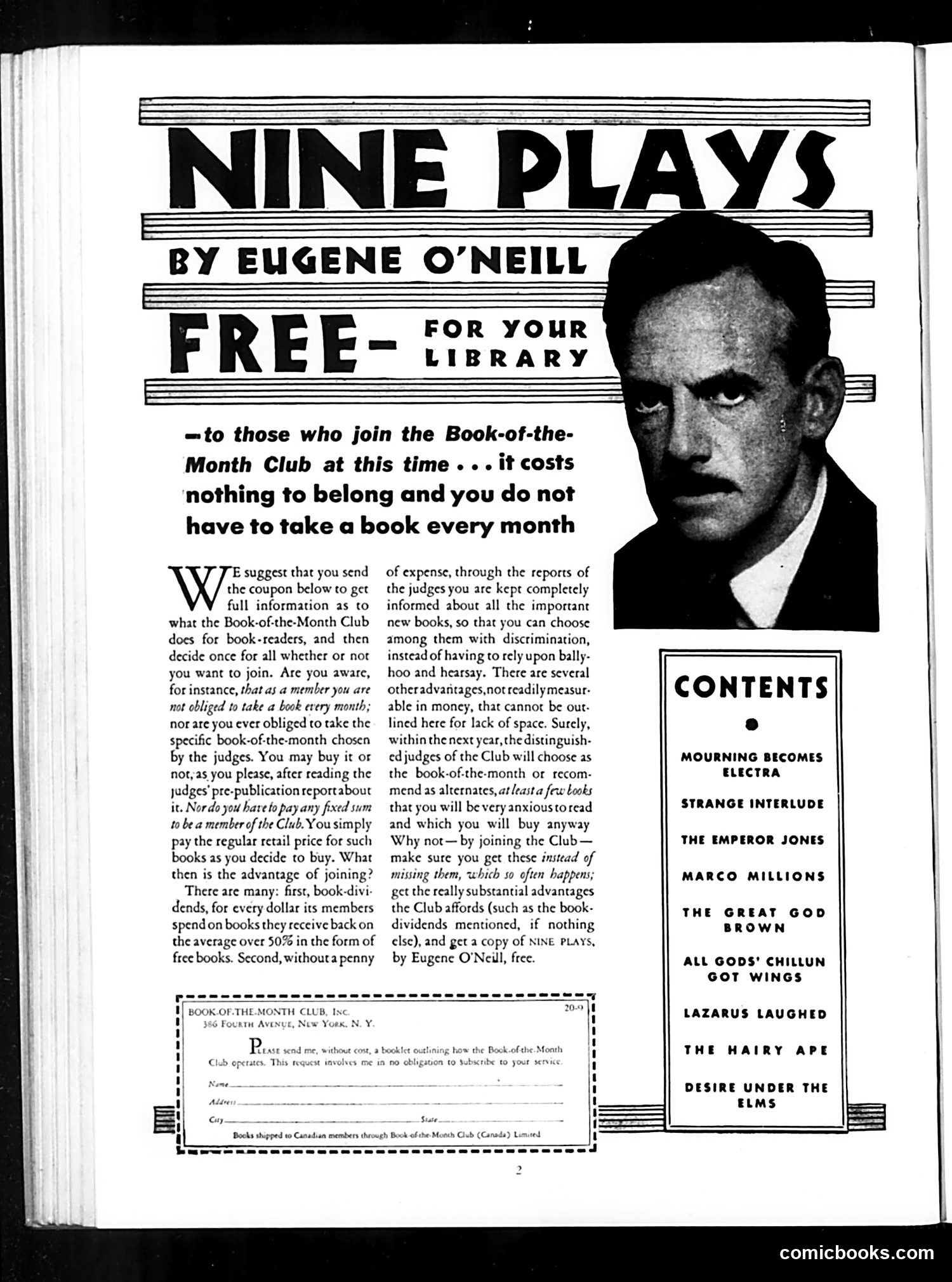
# Analysis This page is primarily **advertising content**, not satirical commentary. It promotes a Book-of-the-Month Club membership, offering nine plays by Eugene O'Neill free to new members. The photograph shows a **man's portrait** (likely O'Neill himself, given the context), presented as an endorsement. The advertisement emphasizes membership benefits: members receive dividends on book purchases and can obtain the O'Neill plays collection at no additional cost. The "Contents" box lists the nine plays included: *Mourning Becomes Electra*, *Strange Interlude*, *The Emperor Jones*, and others—all genuine O'Neill works. The coupon at bottom allows readers to request membership information. This is straightforward promotional material rather than satire or political commentary, typical of magazine advertising from this era.
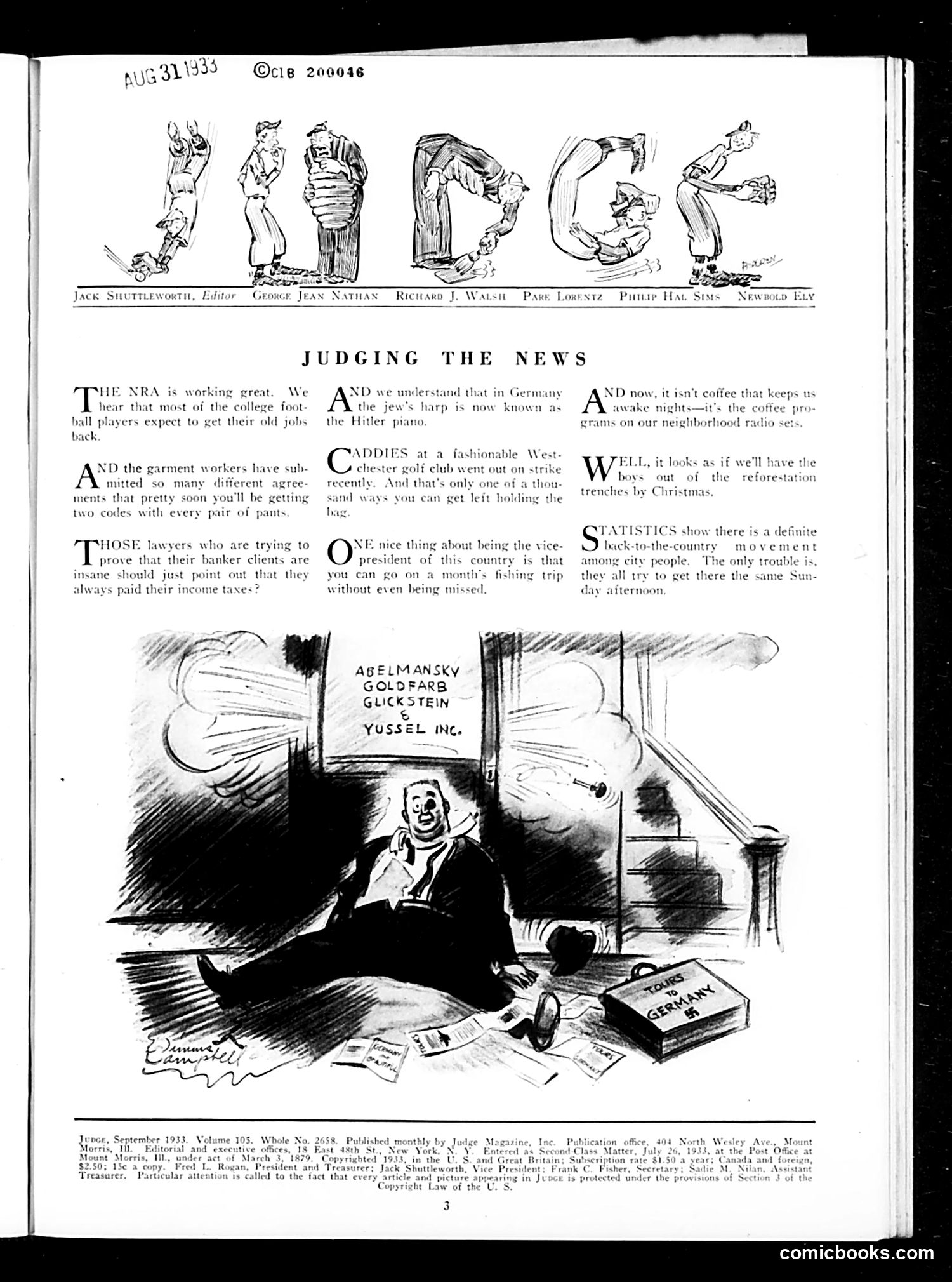
# "Judging the News" - September 1933 This page satirizes contemporary 1933 issues through brief commentary and a main cartoon. The NRA (National Recovery Administration) is praised as "working great," while German news about "the littler piano" likely references Hitler's rise to power. The garment workers' labor disputes and banker tax evasion are mocked. The dominant cartoon depicts a clown holding a sign reading "AGELMANSKY GOLDFARB GLICKSTEIN & YUSSEL INC." surrounded by toys labeled "TOYS OF GERMANY." The figure appears to represent Jewish businesses, likely satirizing Nazi persecution or antisemitic stereotypes—though the exact intent (condemning or reflecting prejudices of the era) remains ambiguous from the image alone. The cartoon critiques either Nazi actions or contemporary American attitudes toward Jewish immigrants.
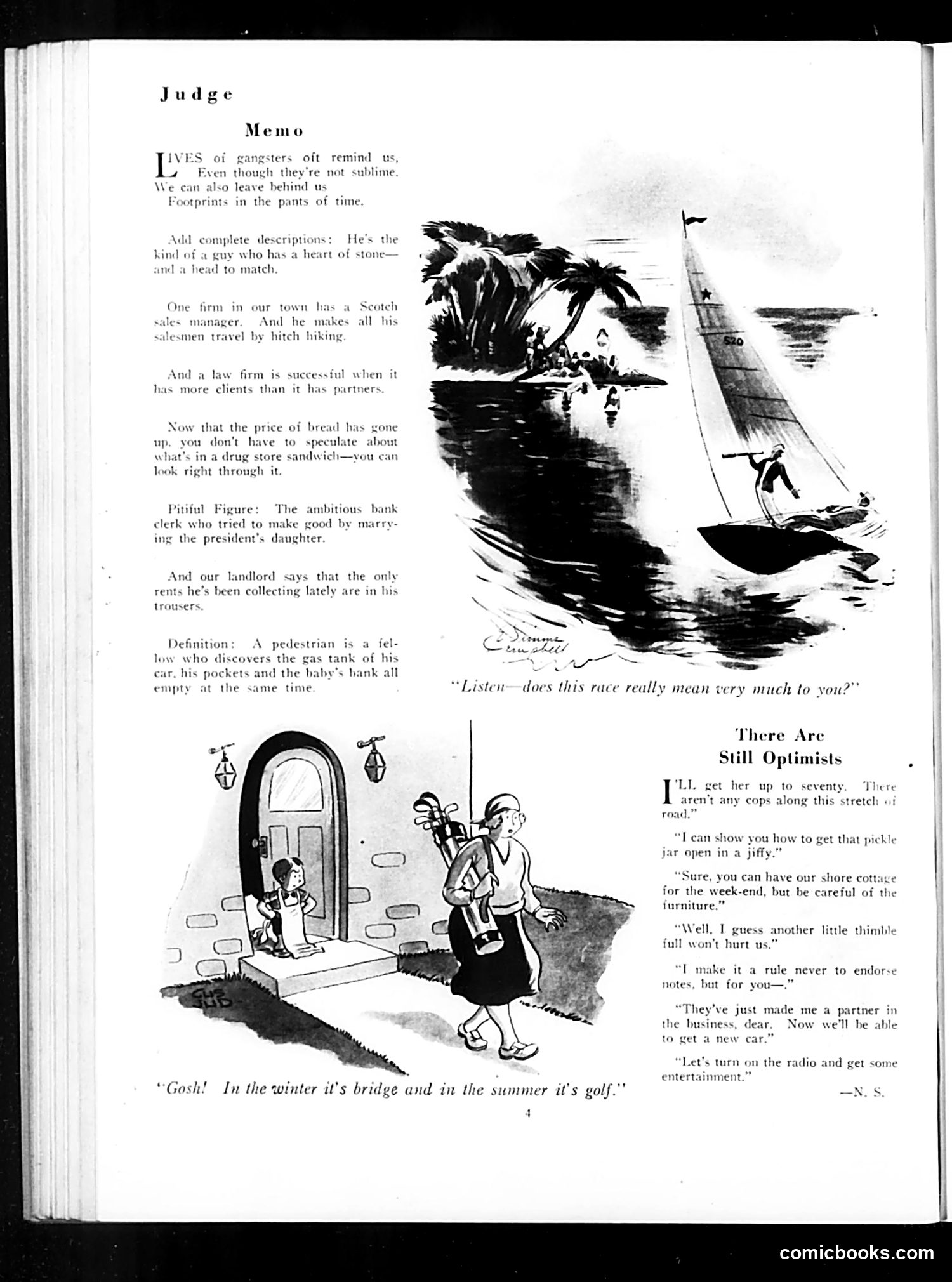
# Analysis This page from *Judge* magazine contains two distinct sections: **"Judge Memo"** (top left): A humorous column offering satirical "definitions" and observations about American life—including commentary on gangsters, business practices, and economic conditions. The jokes reference bread prices and financial anxiety, suggesting this is from an economically stressed period. **"There Are Still Optimists"** (right): A dialogue-based humor piece showcasing naive optimism amid hardship. Couples exchange cheerful platitudes about getting a cottage, avoiding endorsements, and getting a new car—clearly satirizing people's ability to maintain hope despite obvious financial constraints. **Illustrations**: Include a sailboat scene and a domestic interior, both supporting the humorous tone. The cartoons mock middle-class aspirations and economic realities of their era. The overall theme critiques American optimism and commercial culture during apparent economic difficulty.
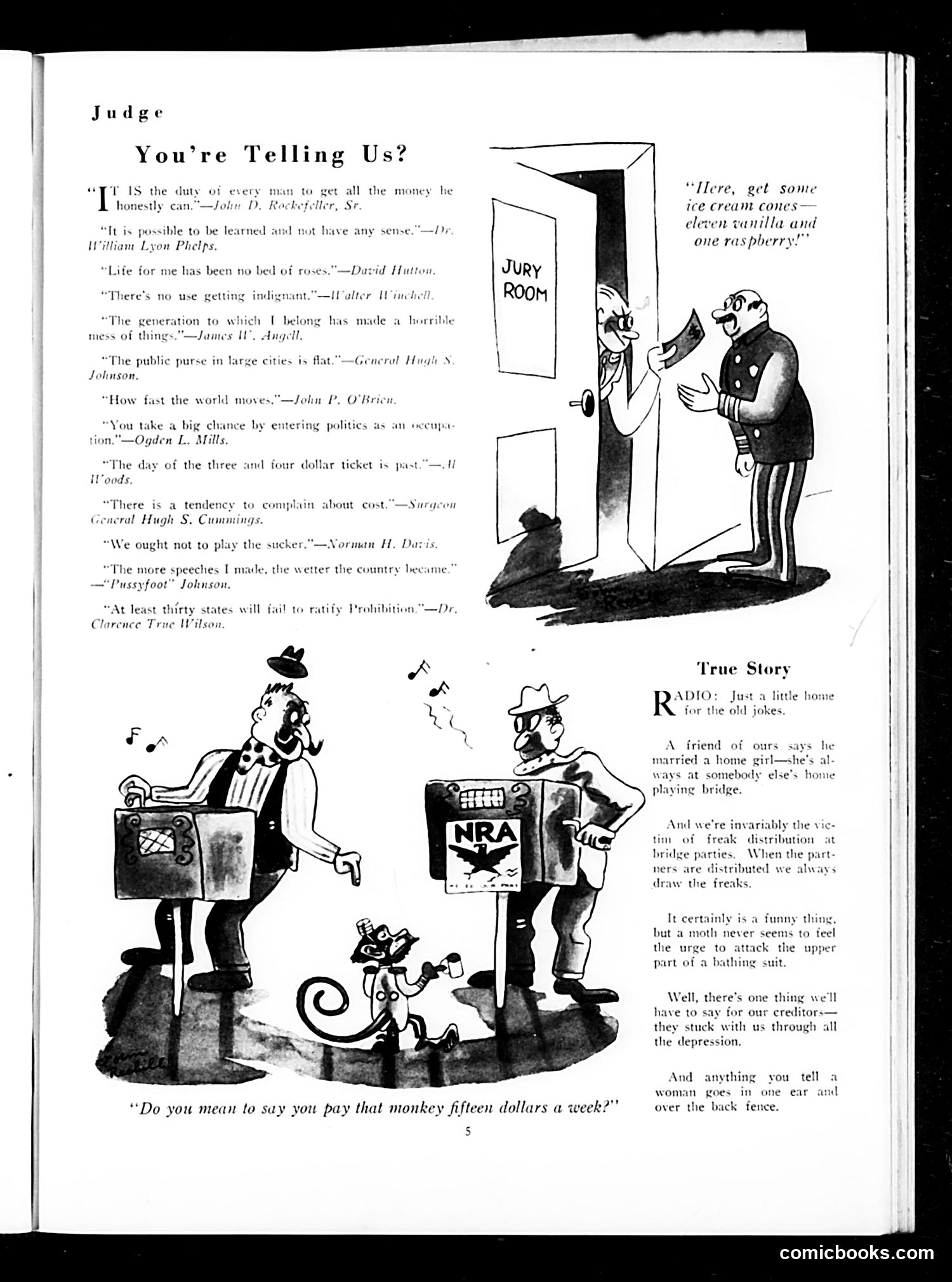
# Analysis of Judge Page 5 **Top Cartoon ("You're Telling Us?"):** A judge emerging from the jury room offers ice cream cones to what appears to be a juror, satirizing judicial corruption or improper influence on verdicts. The caption suggests bribery or jury tampering—a commentary on courtroom integrity. **Bottom Cartoon ("Do you mean to say you pay that monkey fifteen dollars a week?"):** Features a man with a radio set and another with an "NRA" (National Recovery Administration) sign, with a small monkey figure. This references 1930s New Deal politics, likely mocking the NRA's regulations and economic policies as absurd—comparing them to paying a monkey. The satire criticizes government intervention in business during the Depression era.
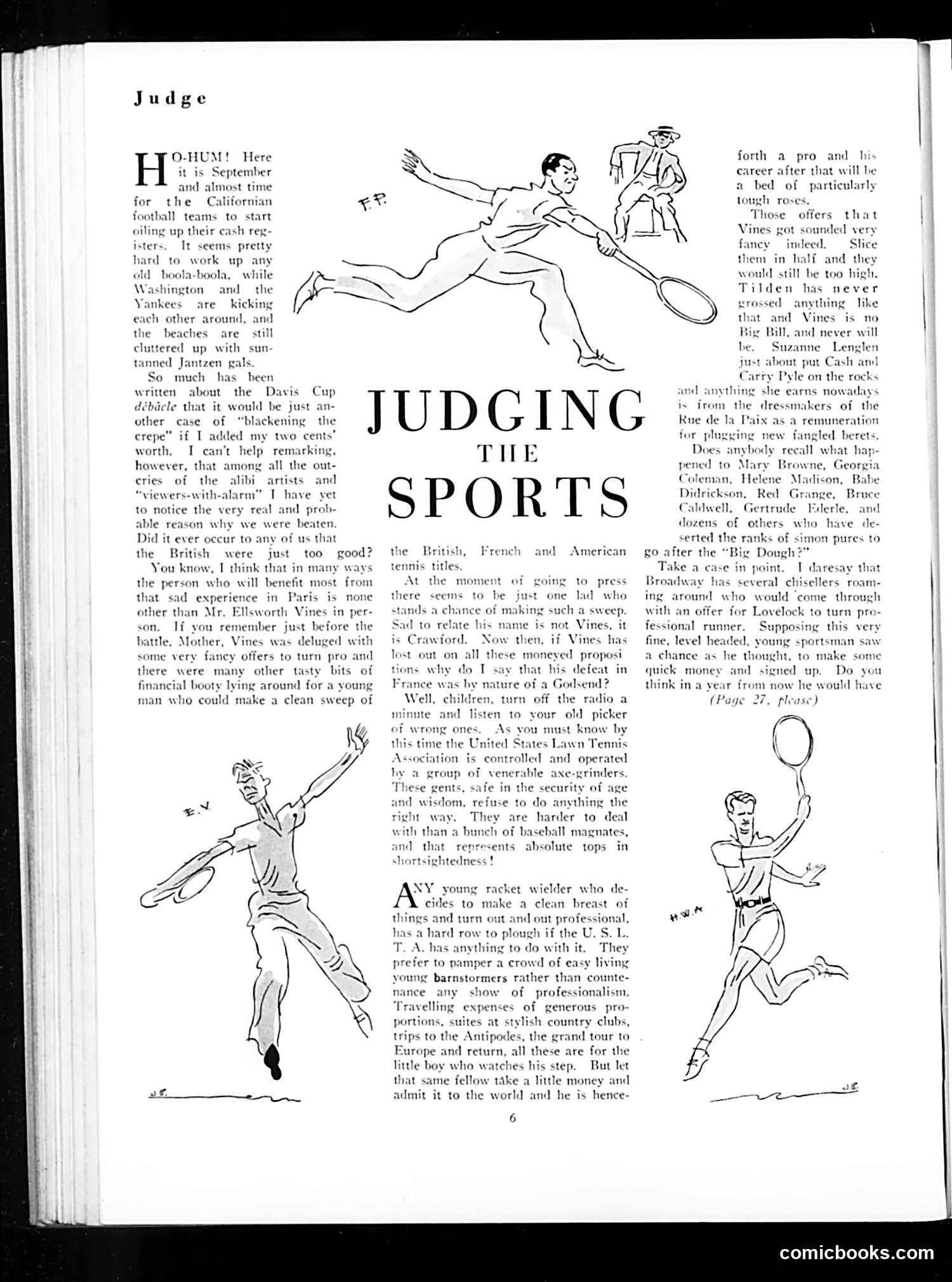
# "Judging the Sports" - Judge Magazine Sports Commentary This is a satirical sports column criticizing tennis judging and professionalism. The article attacks the U.S. Lawn Tennis Association's control of tennis, claiming its judges are inflexible ("harder to deal with than a bunch of baseball magnates"). The author mocks players—apparently including someone named Vines—who pursue money through professional tennis rather than maintaining amateur standing. The piece ridicules the sport's governing body for rewarding "young barnstormers" with lavish expenses while penalizing those seeking legitimate professional careers. The accompanying line drawings show tennis players in dynamic poses, illustrating the athletic subject matter. The satire targets institutional gatekeeping in amateur sports and the hypocrisy of allowing certain commercialization while condemning professionalism.
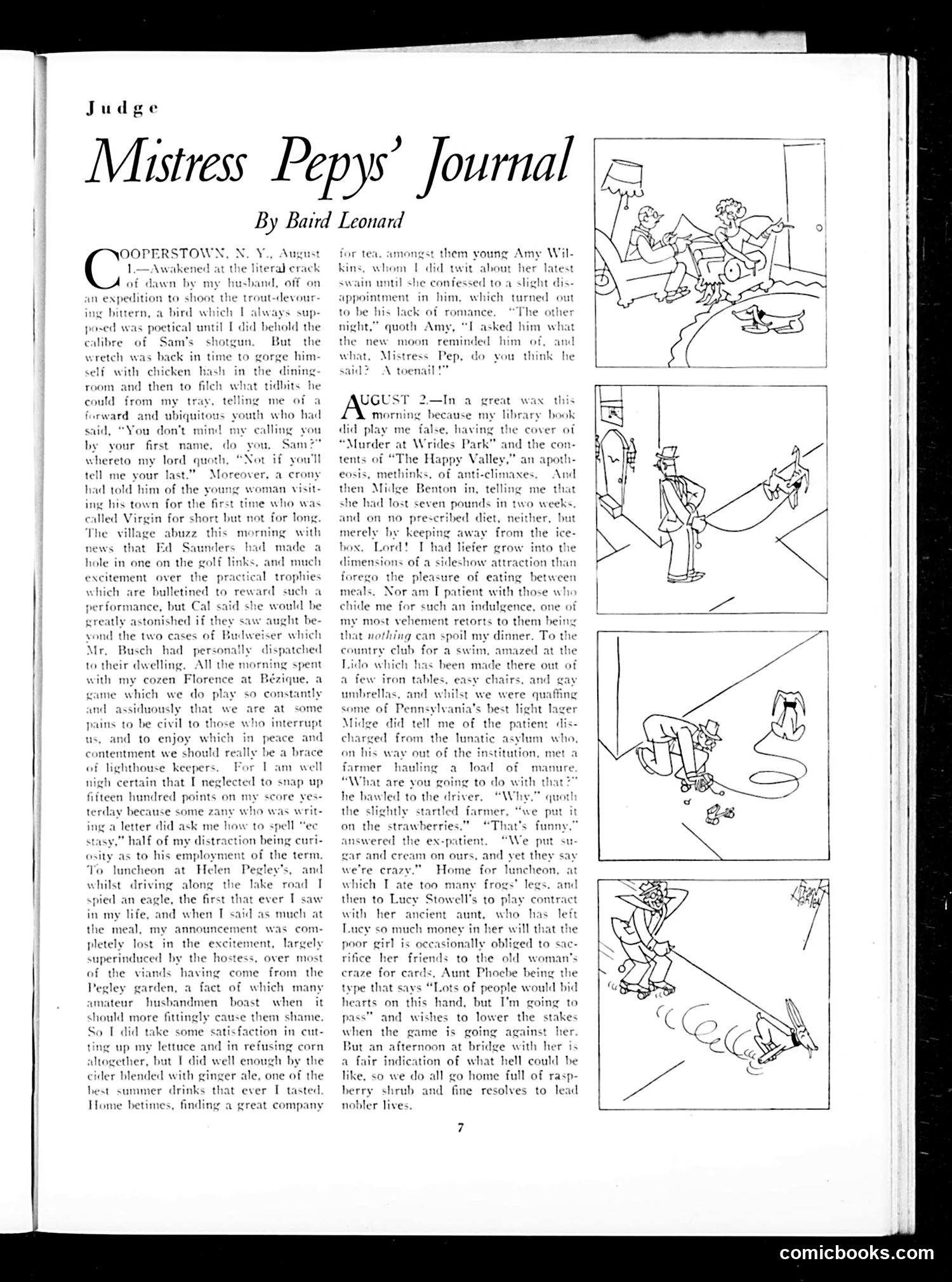
# Mistress Pepys' Journal: A Social Satire Column This is a humorous diary column by Baird Leonard, modeled on Samuel Pepys's famous 17th-century diary. The narrator—a wealthy, gossipy society woman—chronicles her summer activities in Cooperstown, New York, with satirical observations about upper-class leisure and pretension. The accompanying cartoons illustrate her social encounters: ladies lounging, playing bridge, swimming, golfing, and engaging in idle pursuits. The satire targets the boredom and self-absorption of the leisure class—the narrator frets over minor social slights (not being called by her first name, losing bridge points), while self-importantly noting her sightings of an eagle and encounters with notable people like "Aunt Phoebe." A key joke involves a mental patient's innocent misunderstanding about strawberries, contrasting common-sense practicality with upper-class absurdity. The column gently mocks society women's preoccupations with food, gossip, card games, and social one-upmanship.
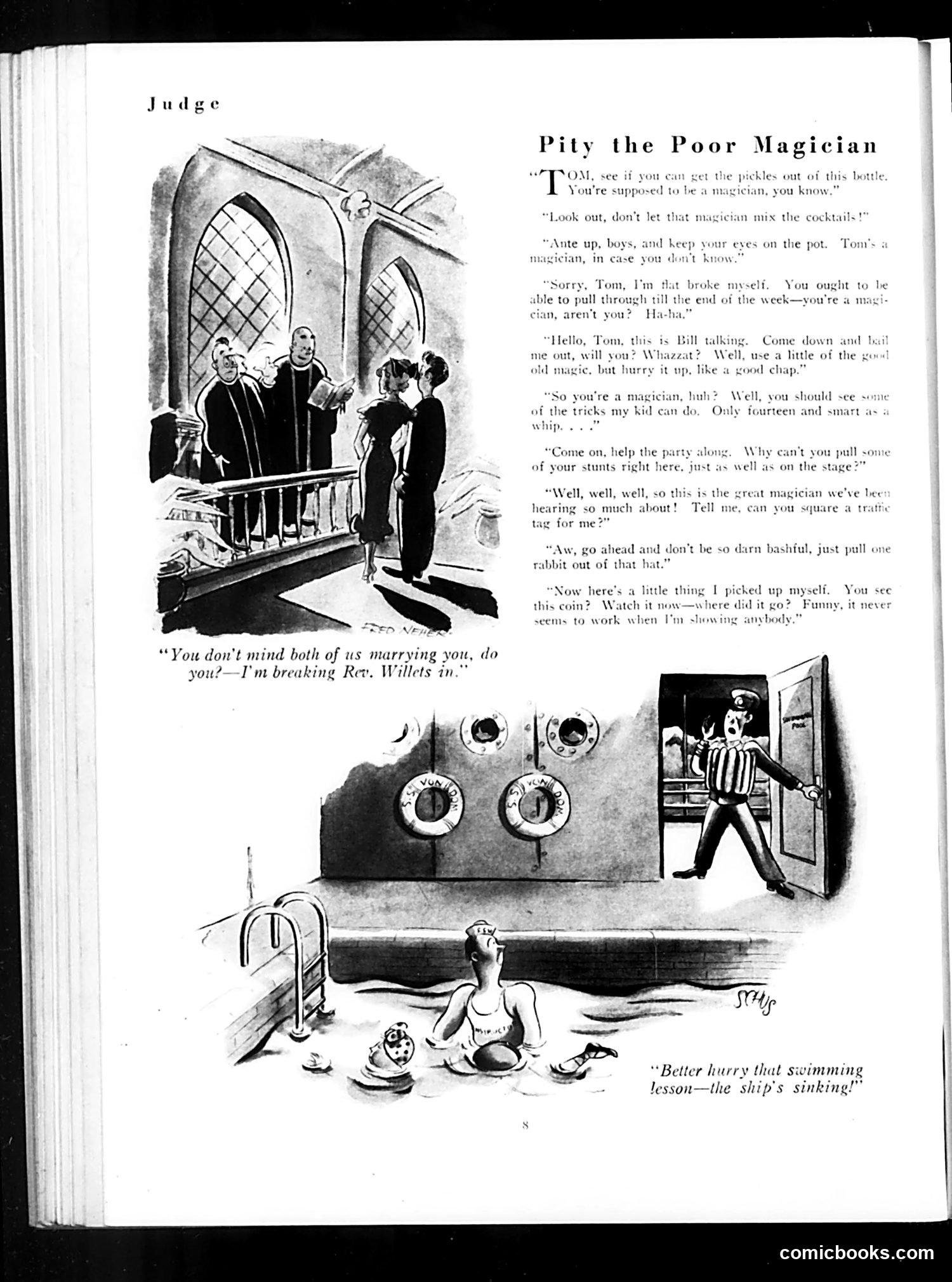
# "Pity the Poor Magician" - Judge Magazine This is a humorous piece satirizing the social burden placed on amateur magicians. The title character, Tom, is apparently known as a magician (possibly a stage performer or hobbyist), and the cartoon shows how relentlessly people exploit this reputation, constantly demanding he perform tricks at inappropriate moments. The four scenes depict escalating requests: someone asks him to retrieve pickles from a bottle, guests demand he perform at a party, a friend calls asking him to pull off a magic trick to resolve a problem, and a child insists on seeing tricks. The final panel shows a drowning person requesting he perform a swimming "lesson" while a ship sinks—the ultimate absurdist demand. The satire targets the social expectation that anyone with a specialized skill or reputation must constantly demonstrate it for others' entertainment, regardless of context or appropriateness. It's a relatable critique of being typecast by one's talents.
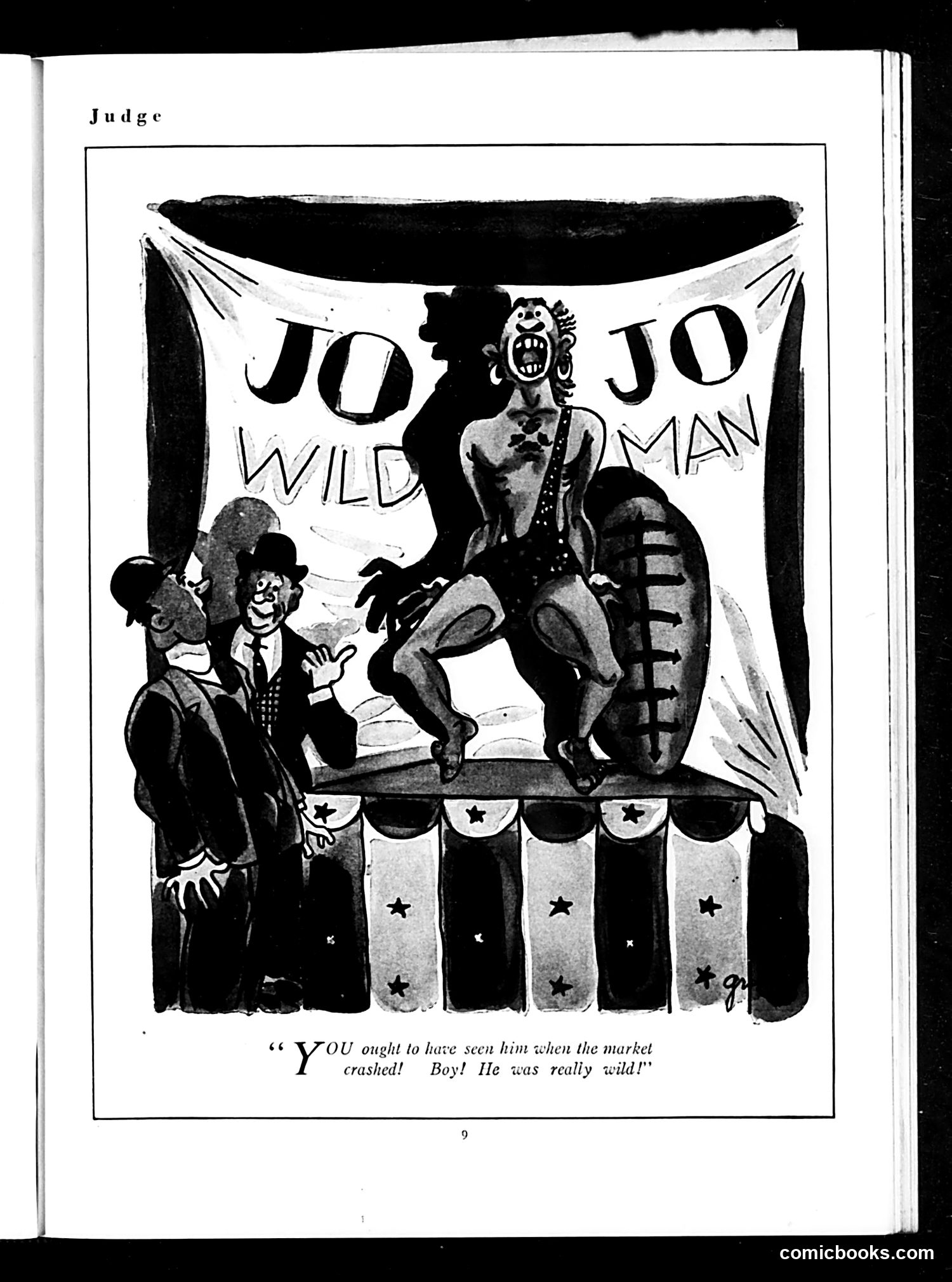
# "Jo Jo, Wild Man" - Judge Magazine Cartoon This satirical cartoon depicts a circus-style attraction featuring "Jo Jo the Wild Man," likely referencing a real sideshow performer. Two well-dressed gentlemen in suits and hats observe the spectacle, with one exclaiming about witnessing "him when the market crashed" — he was "really wild!" The joke targets the 1929 stock market crash and its chaotic aftermath. The cartoon satirizes how ordinary businessmen became uncontrolled and frenzied during financial panic, comparing their wild behavior to that of a circus curiosity or "wild man." The implied message: respectable, civilized men became as unhinged as carnival attractions when facing financial disaster. This reflects Judge's satirical commentary on Wall Street's vulnerability and the loss of composure among the wealthy during economic crisis.
# "The Theatre of George Jean Nathan: A Sample Premiere" This is a theatrical satire by Judge magazine's drama critic George Jean Nathan, mocking the chaos of a Broadway opening night. The piece humorously documents the audience's arrival and behavior before curtain, using timestamps to chronicle escalating disruptions. The satire targets typical theatergoers: latecomers blocking aisles with walking sticks, audience members using pocket flashlights to read programs (blinding others), drunk patrons making loud comments, and people constantly leaving/returning to seats. The dialogue features "Inspector Flaherty" investigating a murder mystery onstage while the real chaos unfolds in the audience. Nathan's point: Broadway audiences are so poorly behaved and disruptive that the theatrical performance itself becomes secondary to the genuine "entertainment" of watching fellow patrons misbehave. The humor lies in the contrast between the serious murder-mystery plot onstage and the farcical audience conduct disrupting it—suggesting early 20th-century theater audiences lacked basic courtesy.