A complete issue · 36 pages · 1933
Judge — May 1933
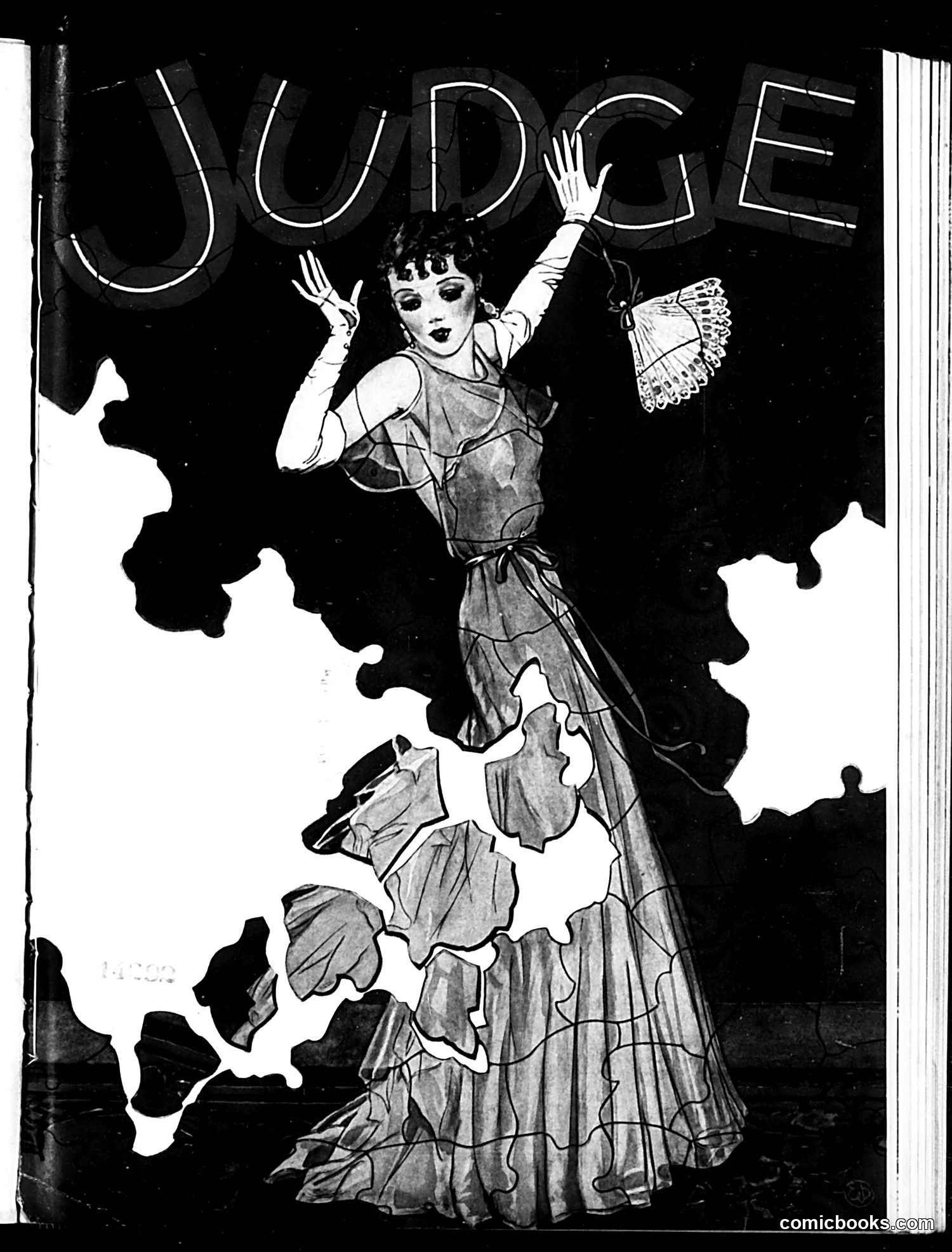
# Judge Magazine Cover Analysis This appears to be a Judge magazine cover featuring the word "JUDGE" at the top. The illustration shows a stylized female figure in an elegant, flowing gown with dramatic pose and gesture, wearing long gloves and what appears to be theatrical or performance attire from the early 20th century. Without additional OCR text or captions visible on the page itself, I cannot definitively identify which specific political figure, social commentary, or satirical point this cover intends. The artistic style and composition suggest commentary on fashion, performance, or possibly theatrical/entertainment culture of that era, but the exact subject and satirical message remain unclear without supporting text or context clues I can reliably read.
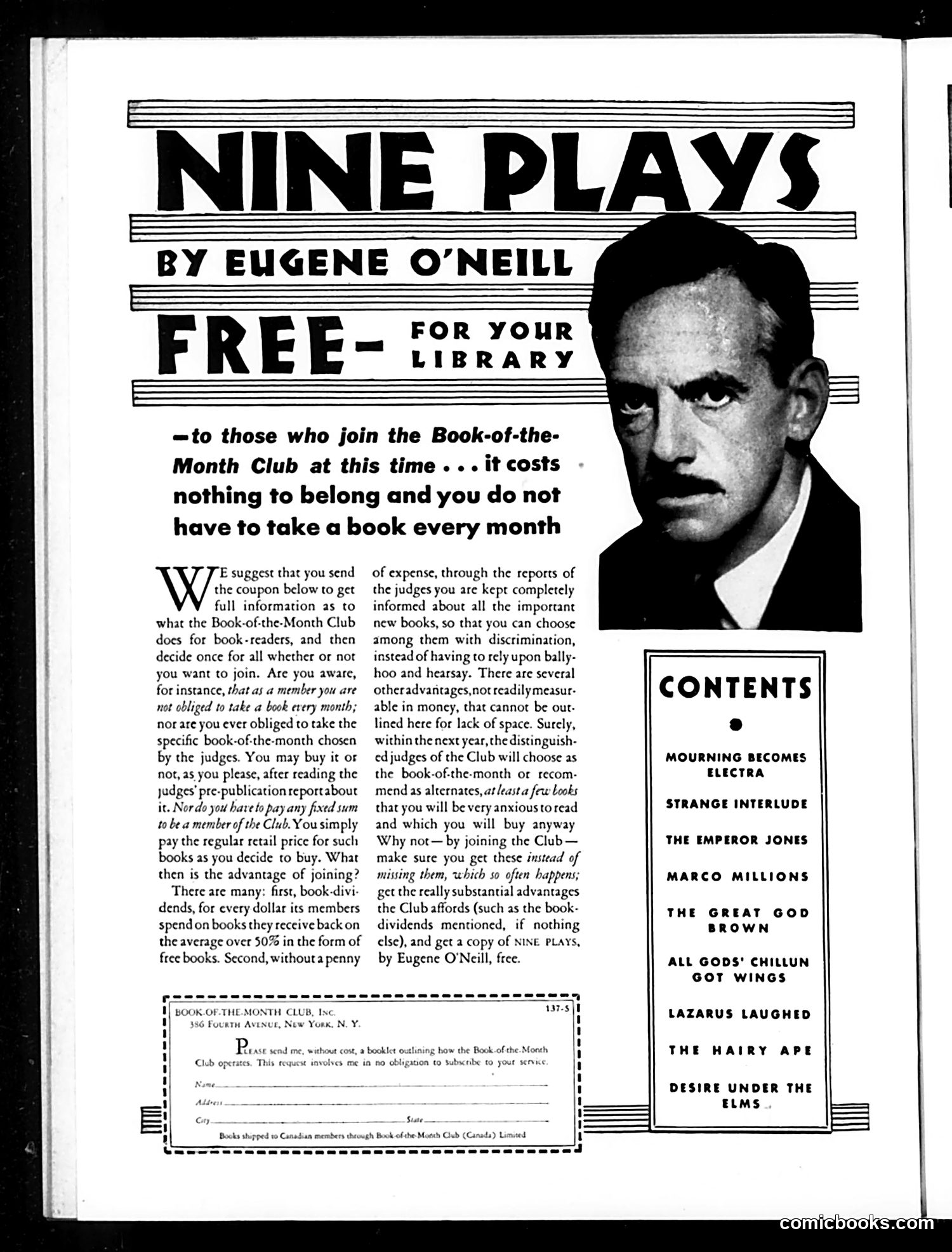
# Advertisement, Not Satire This page is primarily a **Book-of-the-Month Club advertisement**, not political satire. It features a portrait of **Eugene O'Neill**, the acclaimed American playwright, and offers nine of his plays free to library patrons who join the club. The advertisement emphasizes the club's value proposition: membership is free, members aren't obligated to purchase monthly selections, and they receive books at discounts. The "Contents" box lists O'Neill plays including *Mourning Becomes Electra* and *The Hairy Ape*. There is no political cartoon or satirical content here—this is straightforward commercial promotion, likely from the 1930s, using O'Neill's literary prestige to attract club members.
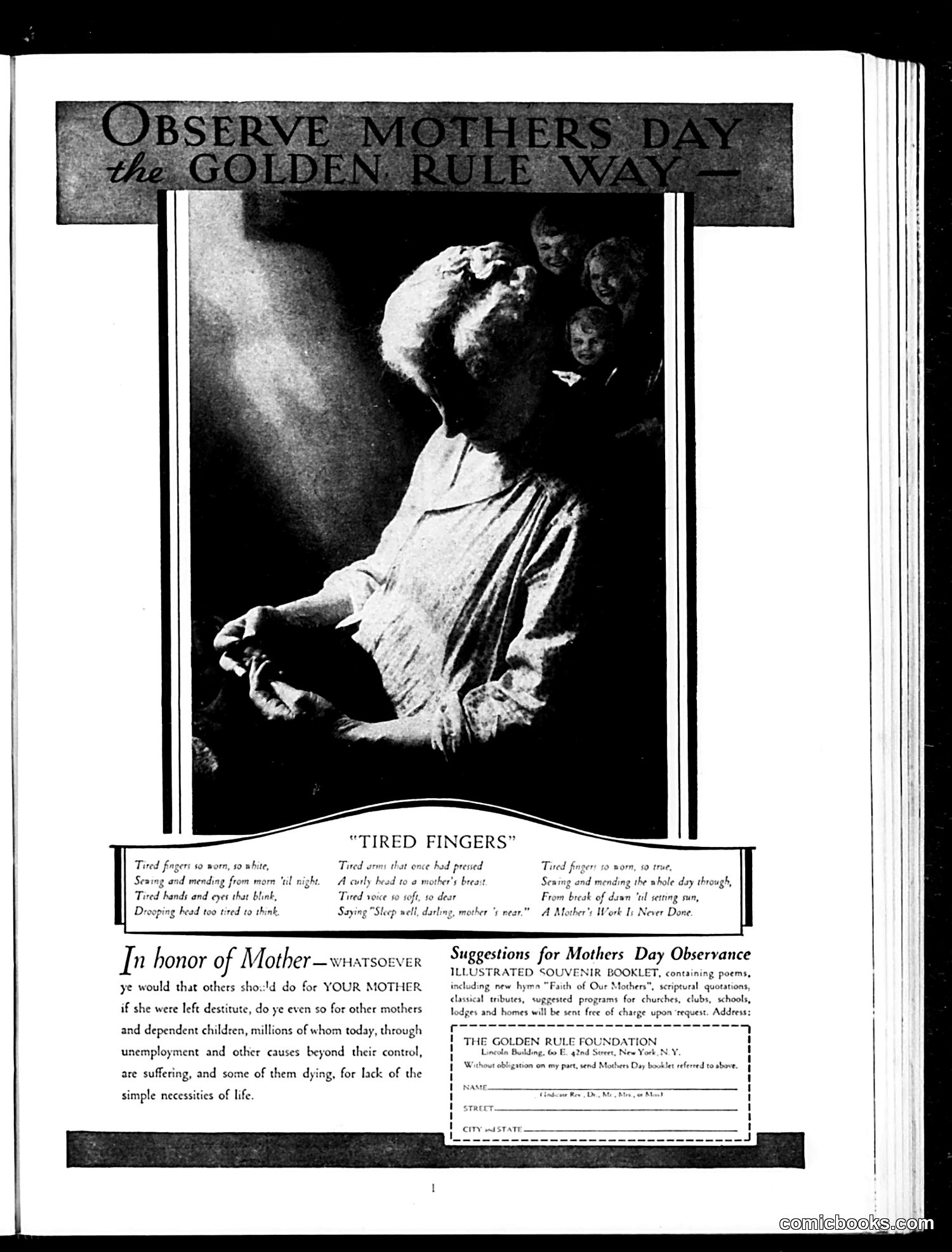
# Analysis This is a Mother's Day advocacy page, not a political cartoon. The central image titled "Tired Fingers" depicts a mother with her head tilted back in exhaustion, with children visible in the background. The accompanying poem emphasizes her physical and emotional exhaustion from labor. The text below appeals to readers' sympathy for struggling mothers, particularly those facing poverty, unemployment, and lack of basic necessities. It advocates for broader social support—suggesting others should help destitute mothers as they would help their own. The page includes a coupon for "The Golden Rule Foundation" (based in New York), which distributed Mother's Day souvenir booklets and educational materials to schools and homes. Rather than satire, this represents early 20th-century progressive advocacy using sentimental imagery to promote maternal welfare and social responsibility.
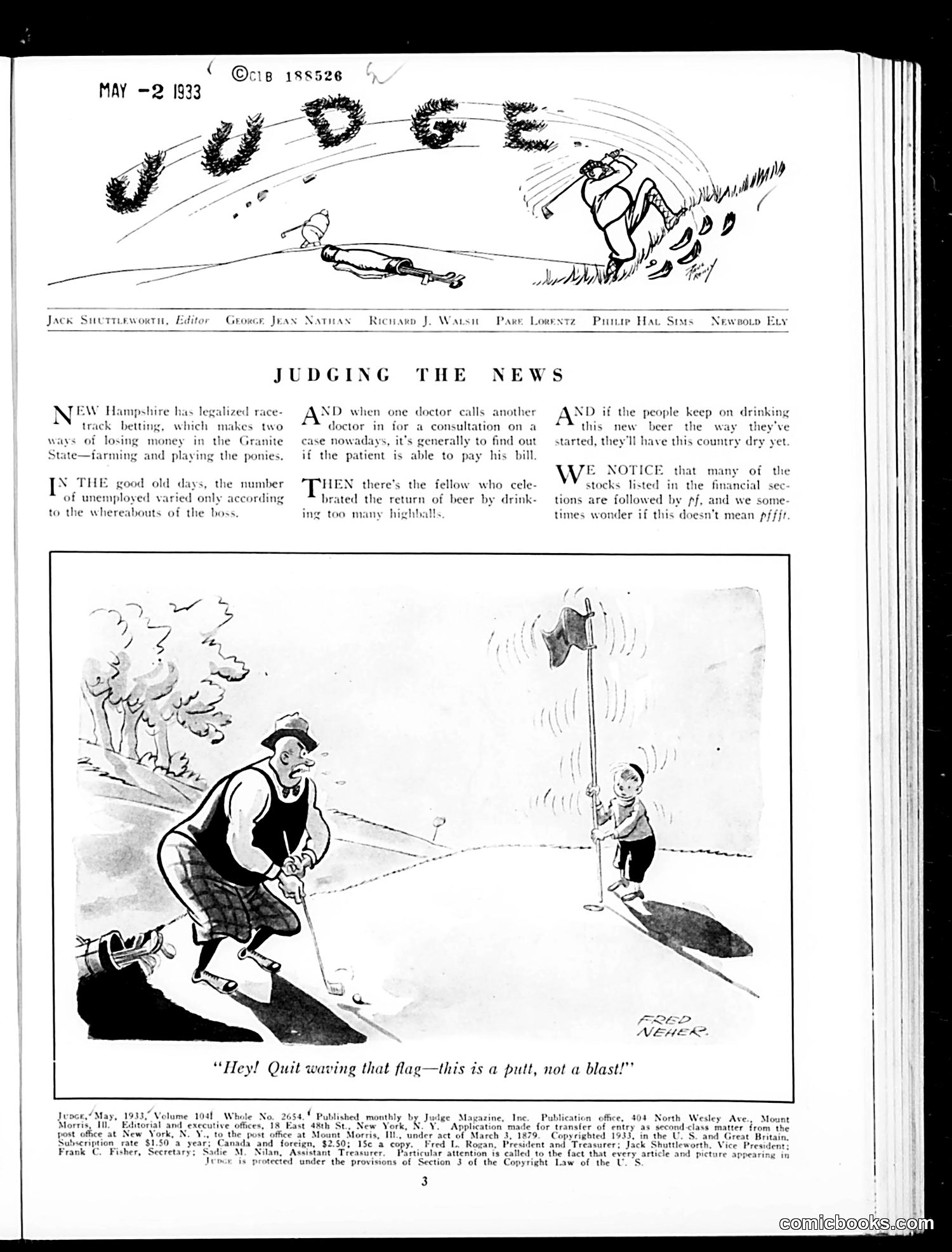
# Cartoon Analysis: "Judge," May 22, 1933 **The Main Cartoon** shows a man in golfing attire telling a child, "Hey! Quit waving that flag—this is a putt, not a blast!" The child holds a flag on the green while an adult prepares to putt. **The Joke**: The adult misinterprets the child's flag-waving as signaling for a dramatic "blast" (explosion or forceful shot) rather than its actual purpose—marking the hole location for putting, the gentlest golf stroke. **Historical Context**: Published May 1933, during the Great Depression and early New Deal period, this appears to be simple recreational humor rather than political satire—a straightforward golf mishap joke for a general audience seeking light entertainment during difficult economic times.
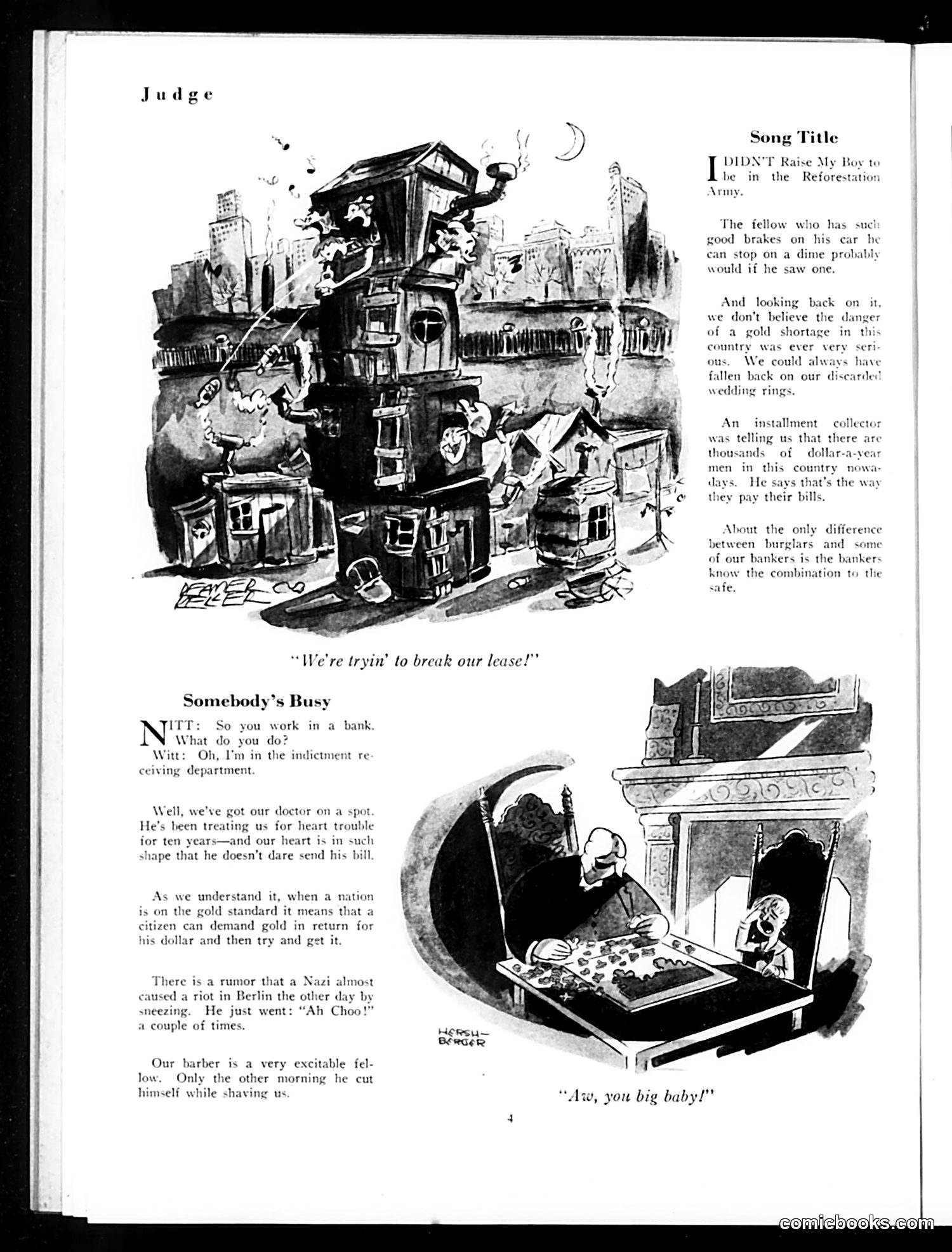
# Explanation for Modern Readers This Judge magazine page contains two satirical pieces: **"Judge" (top):** A cartoon mocking housing shortage and overcrowding, showing a precariously stacked tenement where residents are "tryin' to break our lease." The accompanying text discusses economic hardship—installment debt, banking practices, and the gold standard—suggesting this reflects Depression-era financial anxiety. **"Somebody's Busy":** A dialogue joke between a banker and a client. The humor depends on understanding 1930s banking practices: clients could demand gold for dollars under the gold standard. The joke implies banks were anxious about such demands. Additional anecdotes mock excitable barbers and Nazi sneezing—trivial humor typical of the era's satirical magazine style. Both pieces reflect economic anxiety and banking concerns of the interwar period.
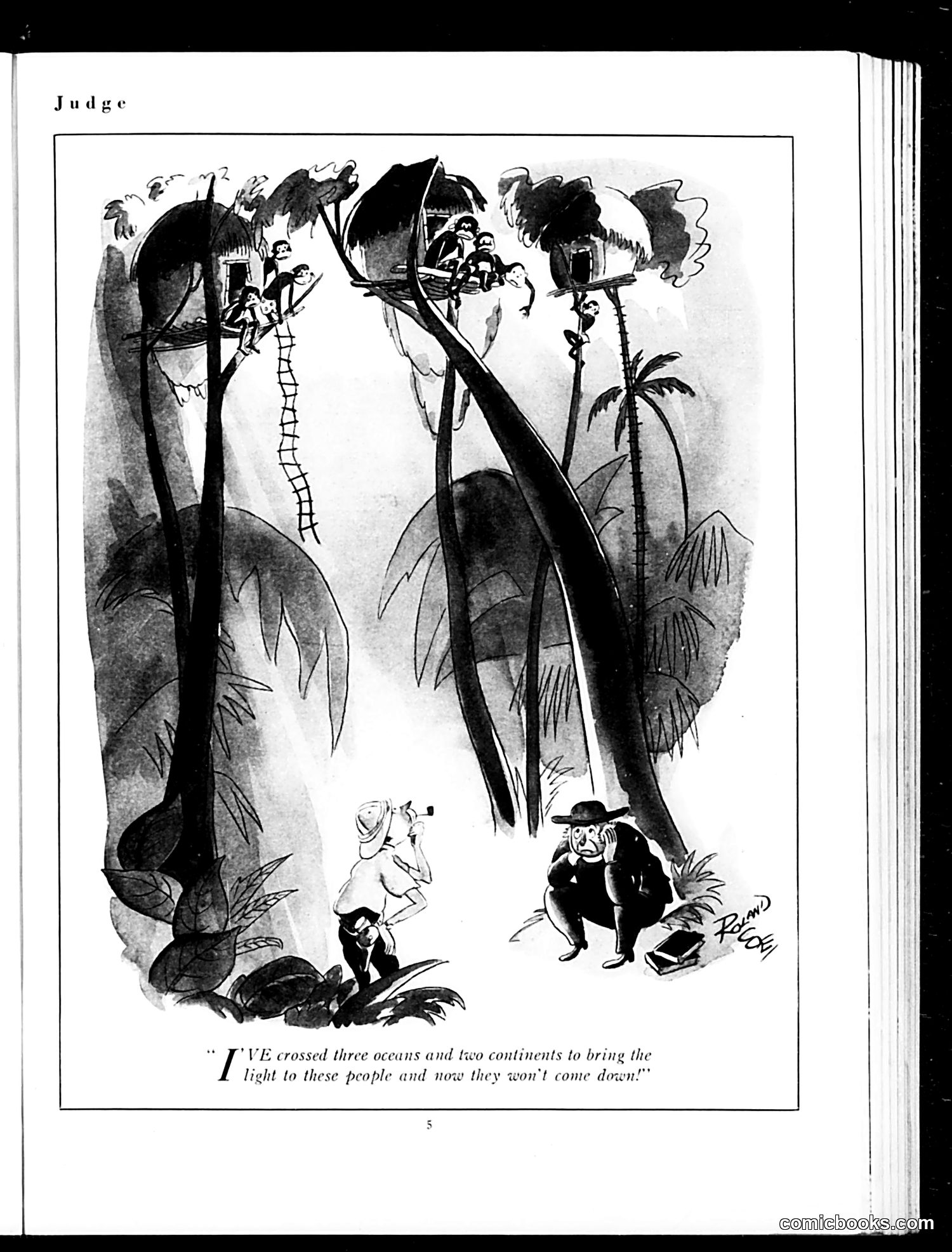
# Analysis of Judge Cartoon Page This political cartoon satirizes missionary work in remote regions. Two figures at bottom—one appears to be a missionary with surveying equipment, the other a skeptical observer—stand beneath tall trees where indigenous people are perched in the canopy. The missionary's quoted boast—"I've crossed three oceans and two continents to bring the light to these people and now they won't come down!"—mocks the disconnect between Western missionary zeal and actual indigenous resistance or indifference to conversion efforts. The humor lies in the literal and figurative distance: the natives remain physically elevated and unreachable despite the missionary's efforts, suggesting that imposing Western religion on indigenous populations proves more complicated than missionaries anticipated. This reflects early-20th-century skepticism toward colonial missionary enterprises.
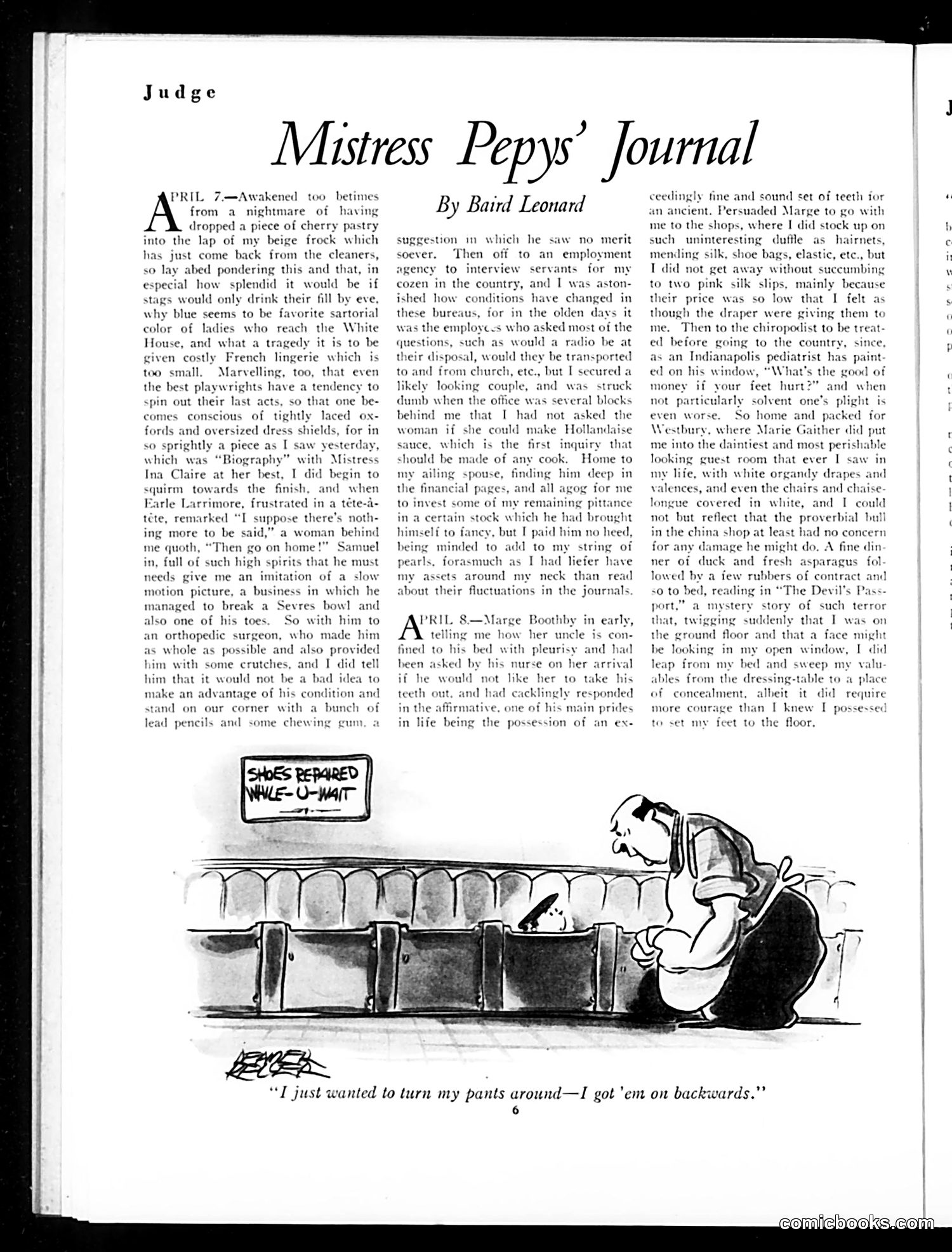
# Analysis of Judge Magazine Page This page contains "Mistress Pepys' Journal" by Baird Leonard, a humor column mimicking the famous diary of Samuel Pepys. The accompanying cartoon depicts a shoe-repair shop scene where a customer sits in theater-style seating labeled "SHOES REPAIRED WHILE-U-WAIT." The man's caption reads: "I just wanted to turn my pants around—I got 'em on backwards." The joke satirizes the absurdly fast "while-you-wait" service trend of the era. The customer humorously suggests he put his pants on backwards while waiting for shoe repairs—implying the service is so quick, there's barely time for anything else. This mocks the novelty and advertising claims of rapid-turnaround services that were apparently popular during this period.
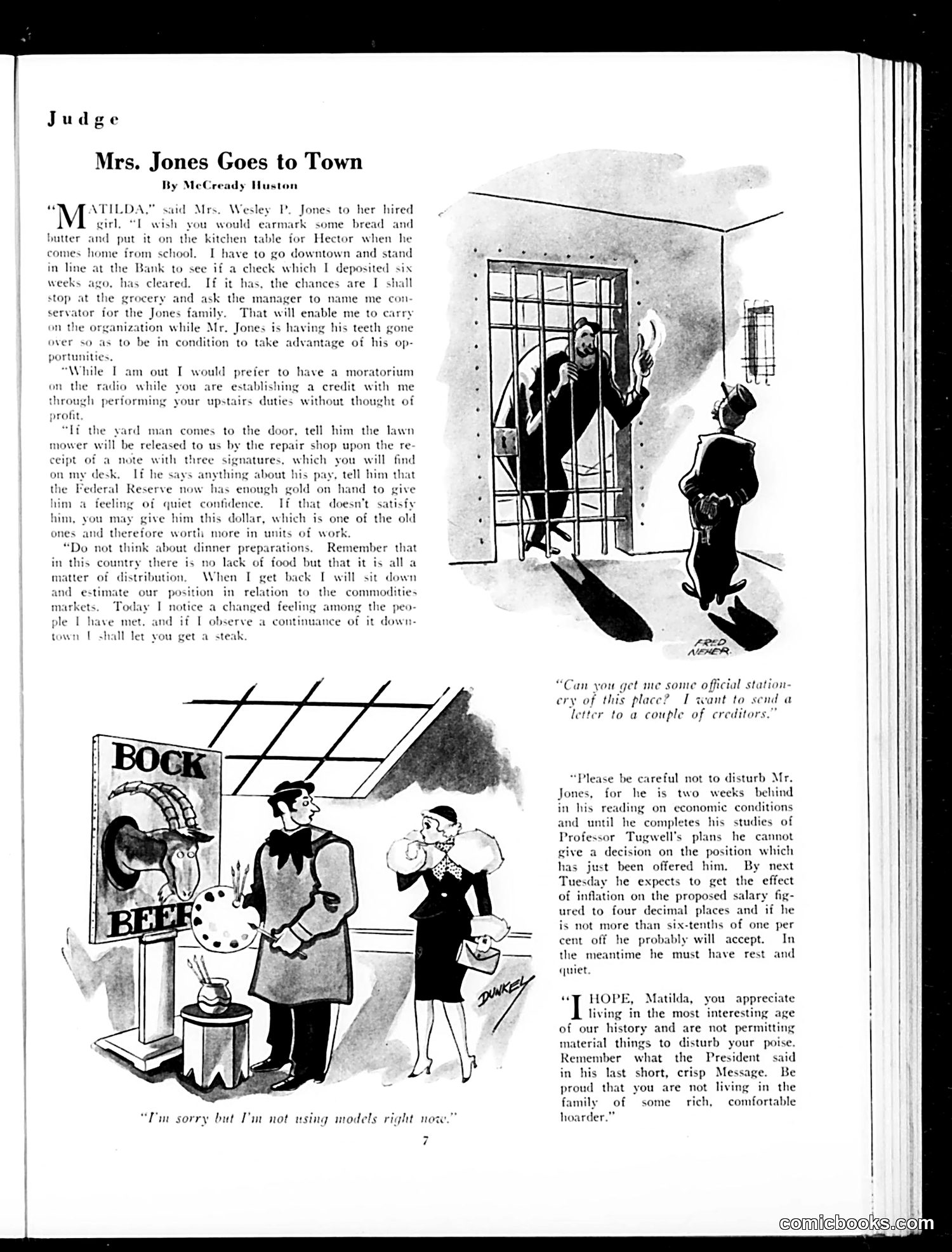
# "Mrs. Jones Goes to Town" This satirical story mocks Depression-era economic anxiety and New Deal bureaucracy. Mrs. Jones instructs her maid Matilda with absurd priorities: she must wait in line at the bank to check if a six-week-old deposit has cleared, discuss becoming "conservator" for the family finances, and handle a yard man by referencing Federal Reserve gold reserves. The satire targets: - **Banking paralysis**: Deposits take weeks to clear - **Economic confusion**: Citizens obsessively calculating inflation to "four decimal places" - **New Deal jargon**: References to Professor Tugwell (a Roosevelt advisor) and economic planning - **Class pretense**: The wealthy Joneses performing anxiety while assuring themselves they're morally superior to "rich, comfortable hoarders" The bottom cartoon shows a butcher display labeled "Bock Beef"—likely mocking rationing or meat distribution controls. The humor lies in depicting respectable middle-class people as simultaneously bewildered by and desperately trying to master incomprehensible economic systems.
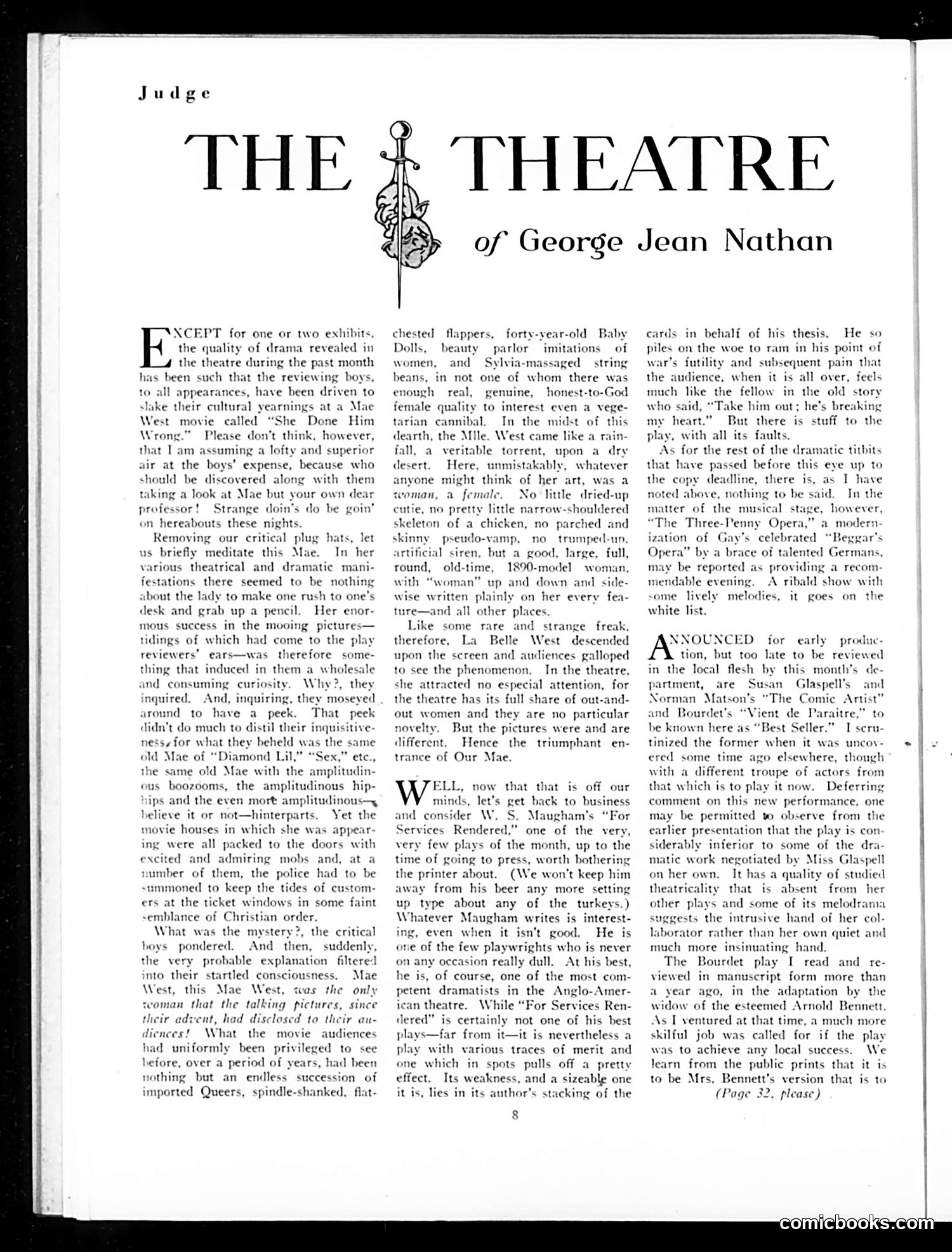
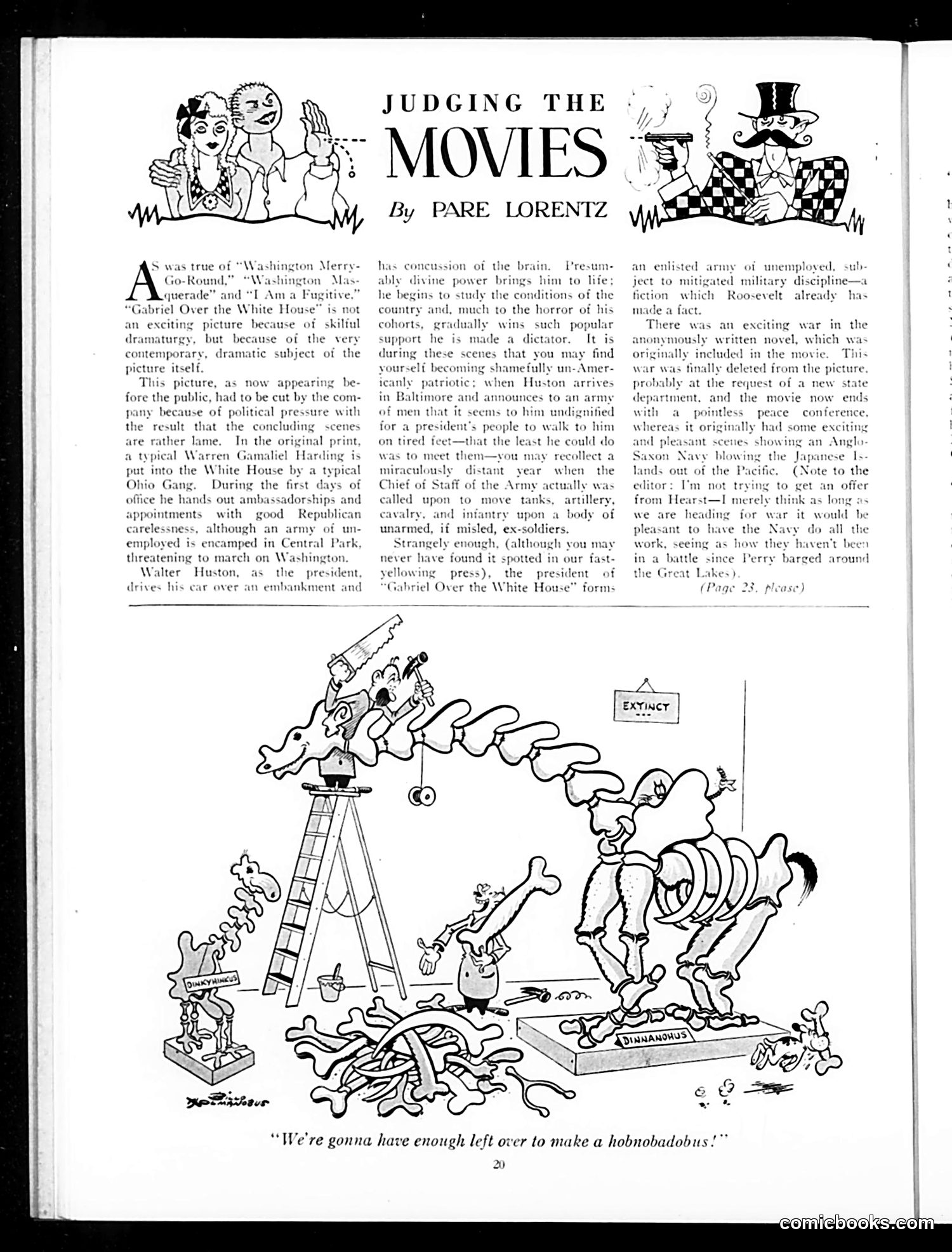
# Analysis of Judge Magazine Page This page is primarily a theater review essay, not a political cartoon. The critic discusses Mae West's surprising success in movies versus theater, attributing it to her representing authentic femininity—a "woman, a female"—in contrast to the "imported Queers, spindle-shanked, flat-chested flappers" and artificial actresses dominating cinema. The satire targets 1930s film industry aesthetics: the critic argues audiences flocked to West's films precisely *because* she embodied conventional womanly curves and presence, unlike the prevailing trend of androgynous or overly stylized female performers. The tone is tongue-in-cheek but suggests genuine puzzlement at this popularity gap between her theatrical and film appearances. The second half reviews W.S. Maugham's play "For Services Rendered," praising his consistent quality as a playwright. The ornamental column divider and period typography are typical Judge magazine design elements.
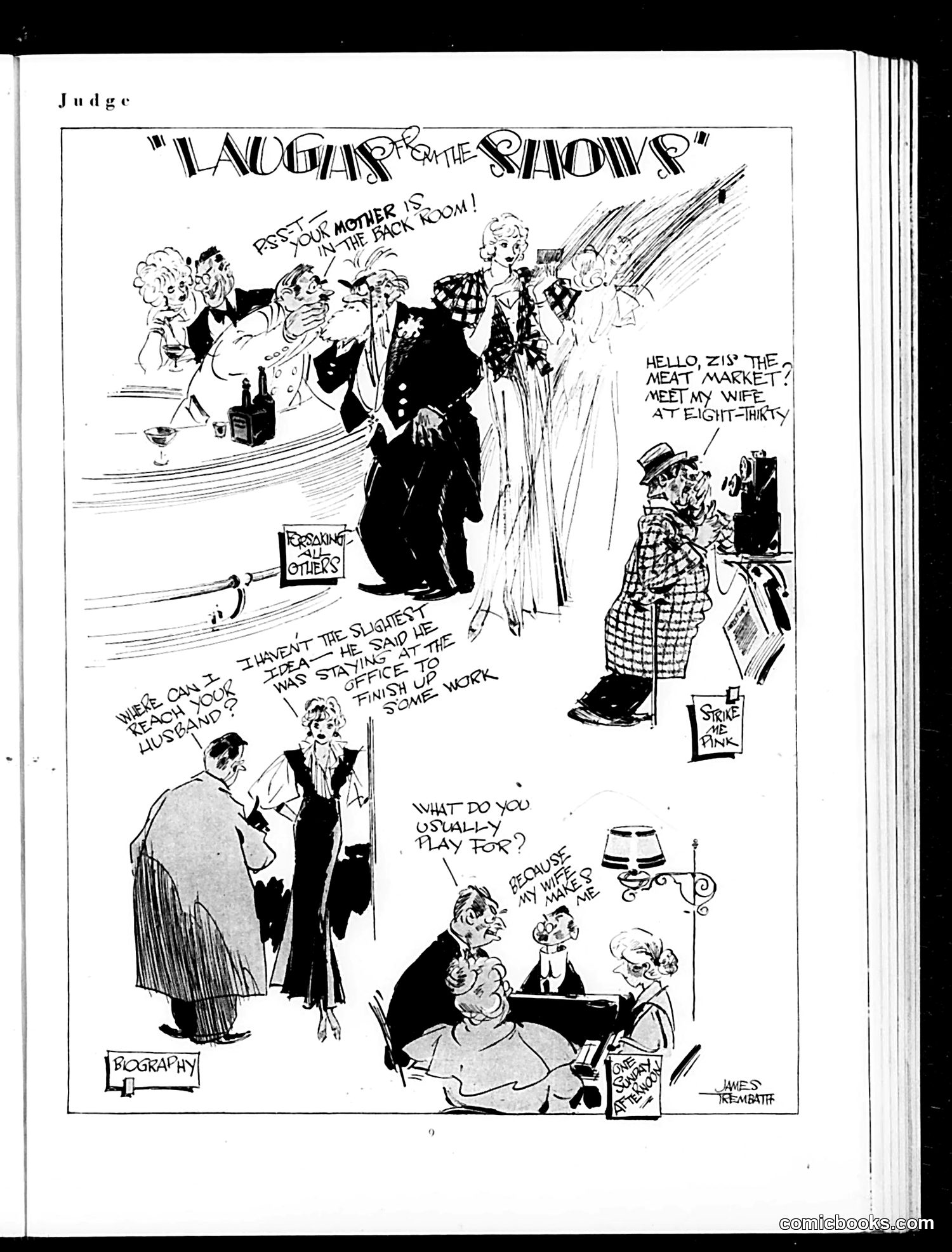
# "Laughs at the Shadows" - Judge Magazine Cartoon This appears to be a satirical cartoon about infidelity and marital deception, likely from the early-to-mid 20th century based on the art style. The scene depicts a man arranging a clandestine meeting with a woman ("Hello, zis the meat market? Meet my wife at eight-thirty"), using coded language to disguise an affair. Meanwhile, his actual wife appears at the gathering, creating a comedic collision of his deceptions. The cartoon satirizes the common trope of men using pretexts (business meetings, "the meat market" as cover) to conceal extramarital affairs, while their unsuspecting spouses inadvertently expose these lies by showing up. The "what do you usually play for?" dialogue suggests games or stakes are involved in these social gatherings. The humor relies on the audience recognizing the transparent deceptions men employed and the inevitable consequences of getting caught.
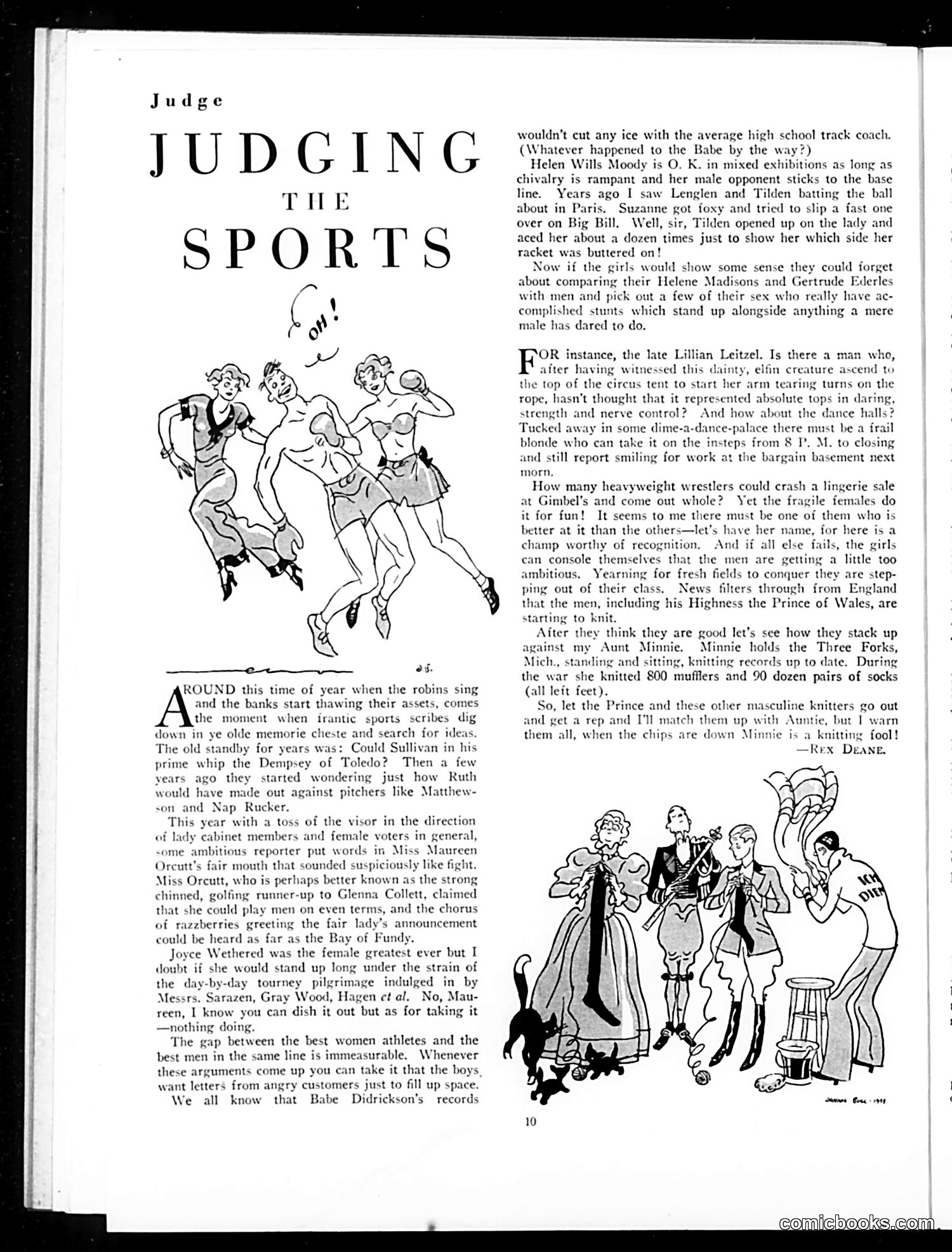
# "Judging the Sports" — Judge Magazine Satire This article satirizes debates about whether women athletes can compete equally with men. The author, Rex Deane, references contemporary female athletes (Maureen Orcutt, Helen Wills Moody, Gertrude Ederle) who claimed competitive parity with male counterparts. Deane argues women *cannot* match men athletically, using examples: Babe Didrickson's records wouldn't impress high school coaches; tennis champion Wills only succeeds against men showing "chivalry"; Tilden easily defeated Lenglen. However, the satire's punchline inverts the argument: he concedes women *excel* in distinctly feminine domains—circus acrobatics, dance halls, department store shopping "crashes," and knitting. His aunt Minnie's wartime knitting record (800 mufflers, 90 dozen socks) becomes the ultimate "athletic" achievement. The piece mocks both competitive women and male condescension, ultimately suggesting women's "real" accomplishments lie in traditionally gendered domestic spheres.
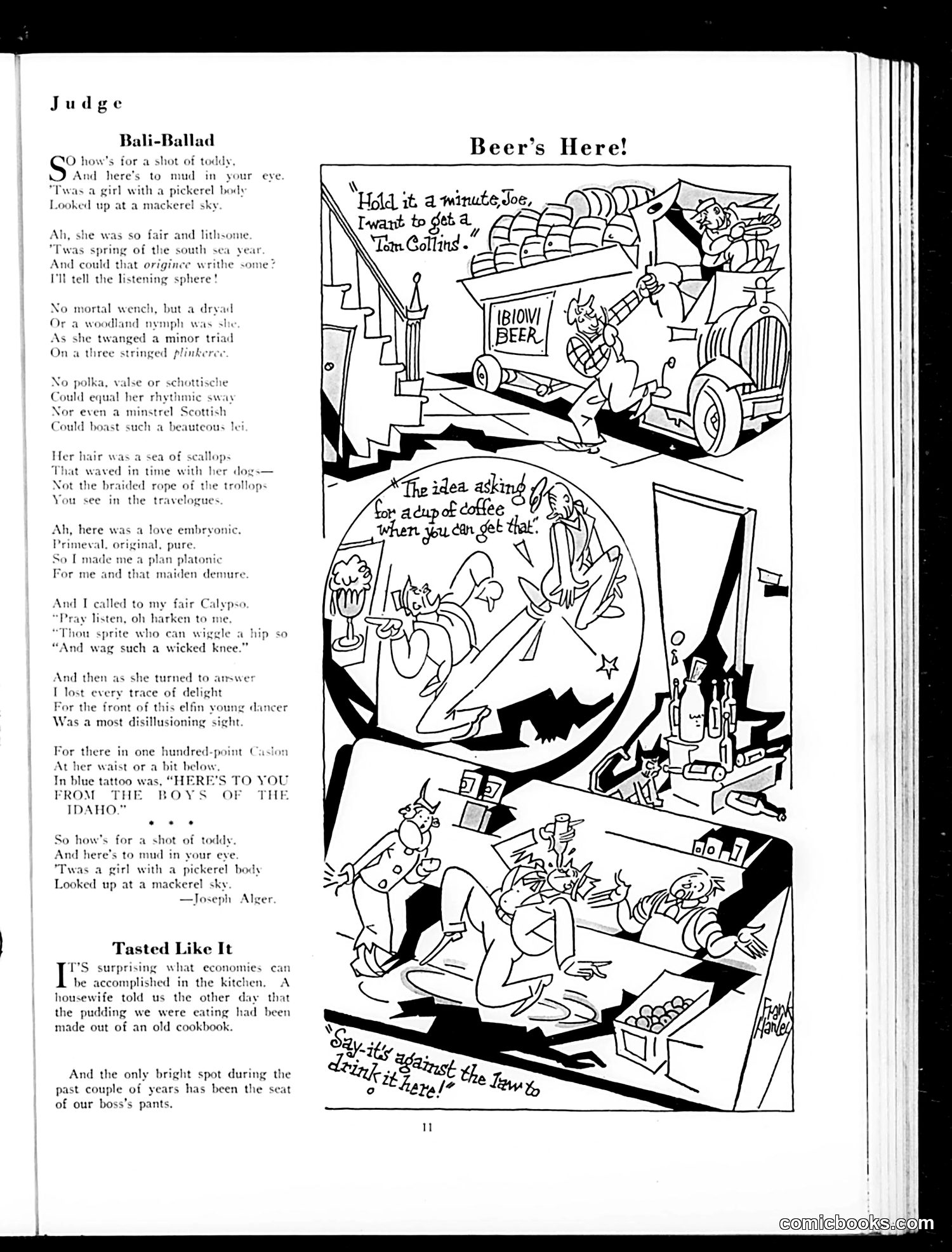
# "Beer's Here!" - Judge Magazine Satire This cartoon satirizes **Prohibition-era America** (likely 1920s-1930s), when alcohol was illegally manufactured and consumed. The main joke depicts a chaotic, drunken scene where characters celebrate the arrival of "Biovi Beer" — clearly bootleg/illegally-produced beer. The illustration shows people drinking, driving recklessly, and generally carousing despite Prohibition laws. The accompanying poem "Bali-Ballad" mocks romantic idealization: a sailor falls for an exotic island girl, only to discover a tattoo reading "HERE'S TO YOU FROM THE BOYS OF THE IDAHO" — a naval ship reference that punctures the romantic fantasy, revealing she's actually a working-class woman familiar with American servicemen. Together, these pieces mock both **illegal drinking culture** and **false romantic notions**. The secondary item "Tasted Like It" jokes about Depression-era food scarcity and poor quality, with a pun about "old cookbook" pudding. The satire targets social hypocrisy and the gap between idealization and reality during economically and legally turbulent times.