A complete issue · 37 pages · 1932
Judge — June 25, 1932
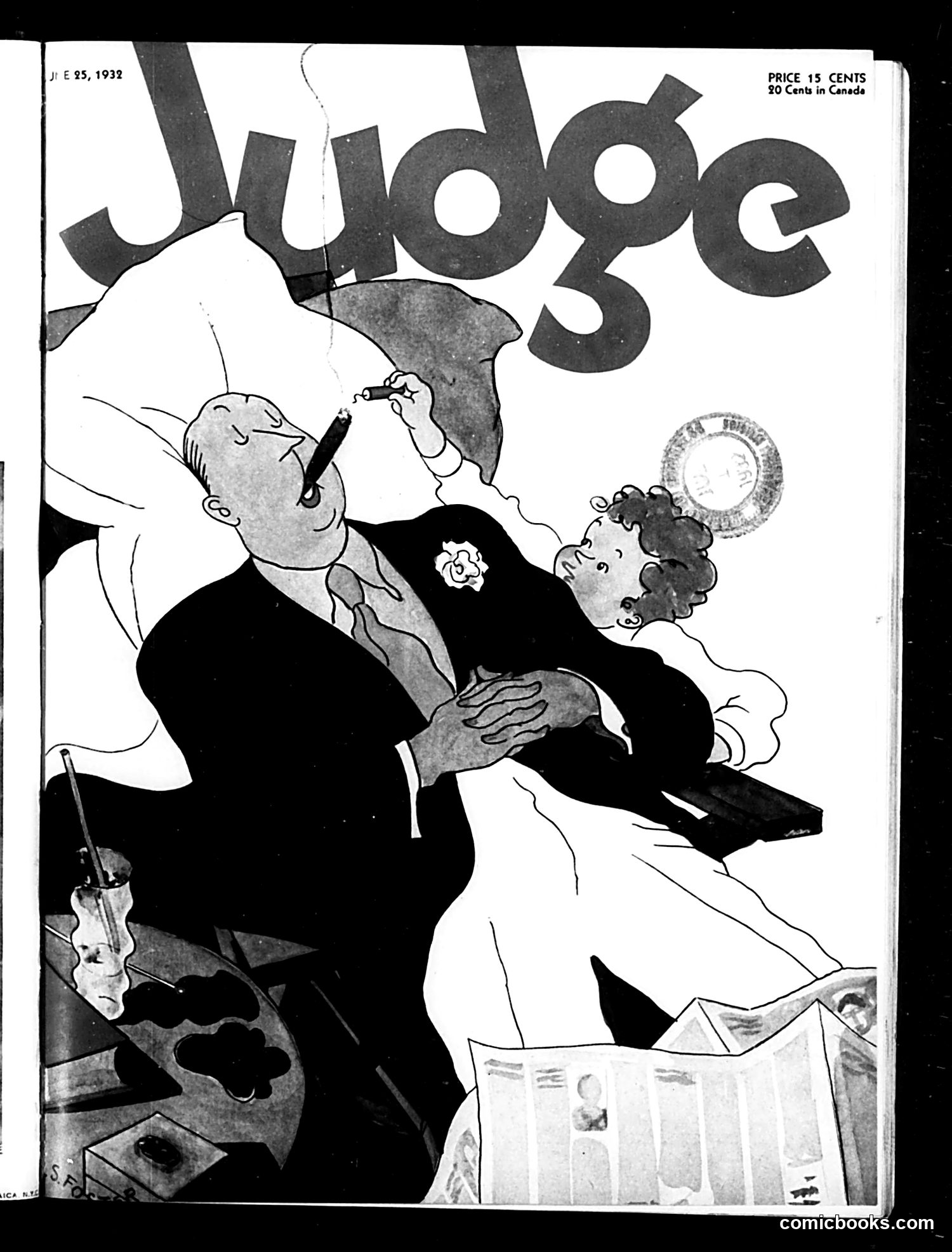
# Judge Magazine, June 25, 1932 This cartoon satirizes the economic desperation of the Great Depression era. The central figure appears to be a wealthy or middle-class man in formal attire, depicted with exaggerated features typical of 1930s caricature. He's shown in a compromising or vulnerable position with a woman, suggesting infidelity or moral compromise—a common satirical trope for depicting hypocrisy among the privileged classes. The large "Judge" masthead dominates the composition. The presence of a newspaper and drink suggest idle leisure during a period of widespread unemployment and hardship. The satire likely critiques the moral bankruptcy and self-indulgence of affluent Americans while ordinary citizens suffered economically—a pointed commentary on class disparities during the Depression.
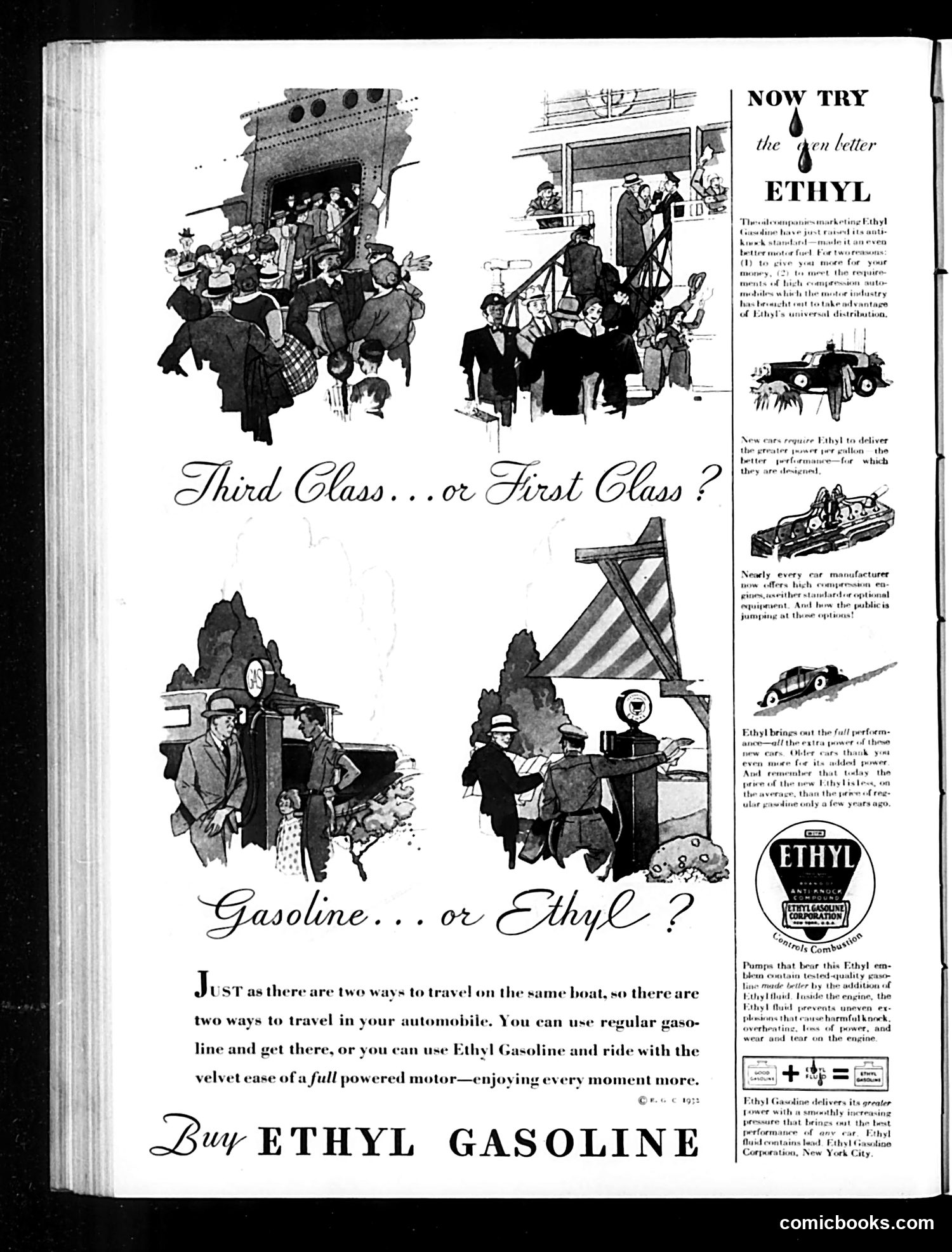
# Ethyl Gasoline Advertisement (Judge Magazine) This is primarily a **commercial advertisement** rather than political satire, promoting Ethyl Gasoline as a premium fuel additive. The page uses a travel metaphor—comparing passenger classes on ships (top illustrations) to fuel choices for automobiles (bottom illustrations). The argument: just as travelers choose between third-class and first-class passage, drivers can choose between regular gasoline and Ethyl Gasoline for superior engine performance. The ad emphasizes Ethyl's benefits: smoother acceleration, greater power output, and reduced engine wear. The right sidebar features testimonials claiming Ethyl delivers better performance and reliability than standard gasoline. This appears to be from the 1920s, when tetraethyl lead additives were being marketed as modern automotive improvements—before their serious health hazards became widely known.
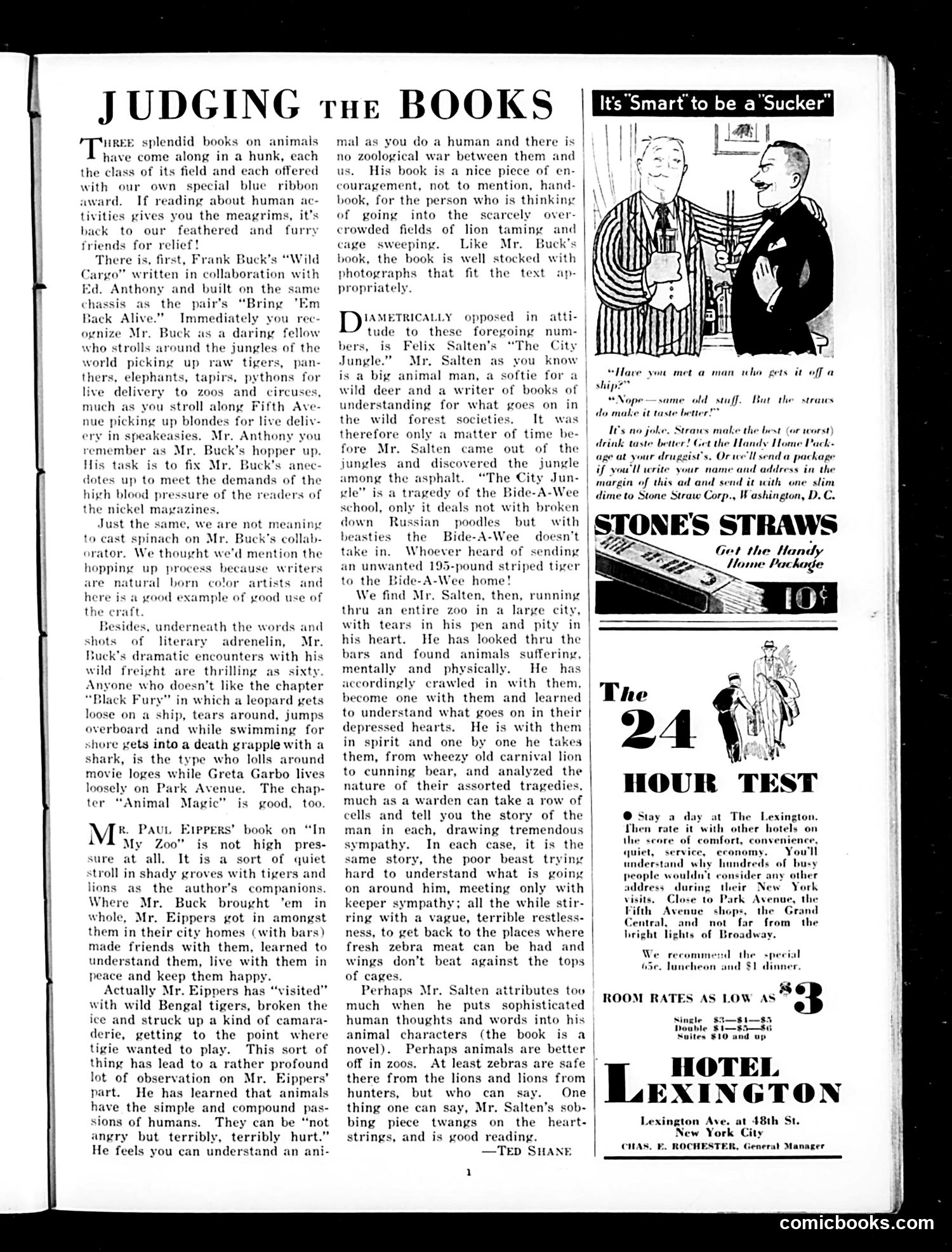
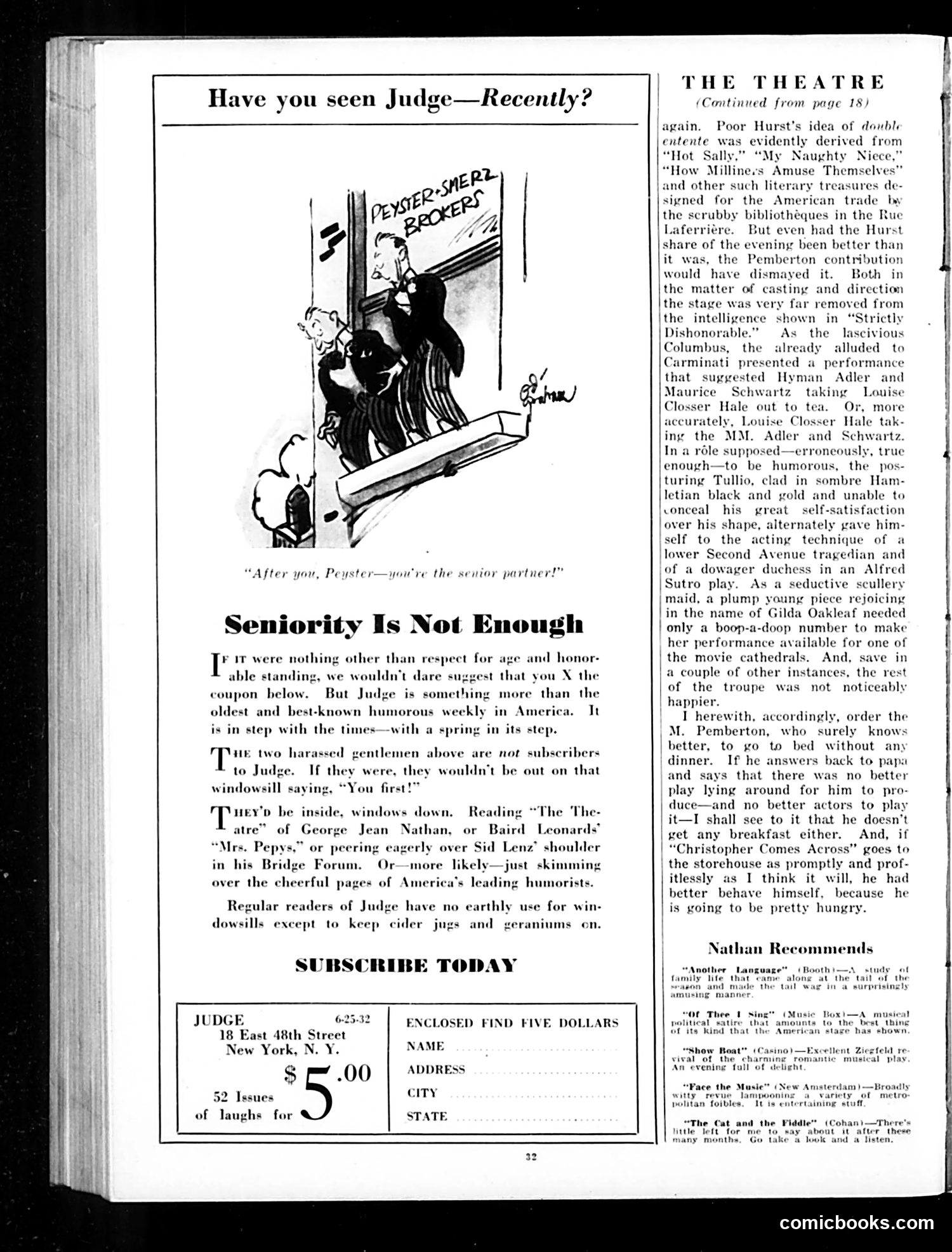
# Analysis This page is primarily a book review column ("Judging the Books") with minimal satirical content. The main cartoon, titled "It's 'Smart' to be a 'Sucker,'" depicts two men discussing a book—one appears to be a salesman or promoter pitching to a skeptical customer. The caption jokes that "straws" make the best "or worst" drink accessory, suggesting the cartoon satirizes how marketing gimmicks ("straws") convince consumers to buy inferior products. The review itself discusses animal-themed books by Frank Buck, Felix Salten, and Paul Eippers. The cartoon's broader point appears to mock consumer gullibility—being a "sucker" for clever advertising rather than quality content. The page is otherwise dominated by advertisements for Stone's Straws, a 24-hour hotel test, and Hotel Lexington, indicating this is primarily a commercial publication page.
# Analysis This page contains **no cartoon or satirical artwork** — it's an editorial announcement from Judge Magazine, Inc. explaining their summer publication schedule. The text explains that Judge is transitioning to a **two-issue summer schedule** (one in July, one in August) before resuming weekly publication in September. The editors justify this as a practical business decision: advertising revenue drops significantly in summer, so concentrating content into two substantial issues rather than weekly ones makes financial sense. They frame it as pragmatism over tradition, noting the "new publishers of Judge are not much on tradition." This is a straightforward management announcement, not satire. It reflects real Depression-era economic pressures on magazine publishing.
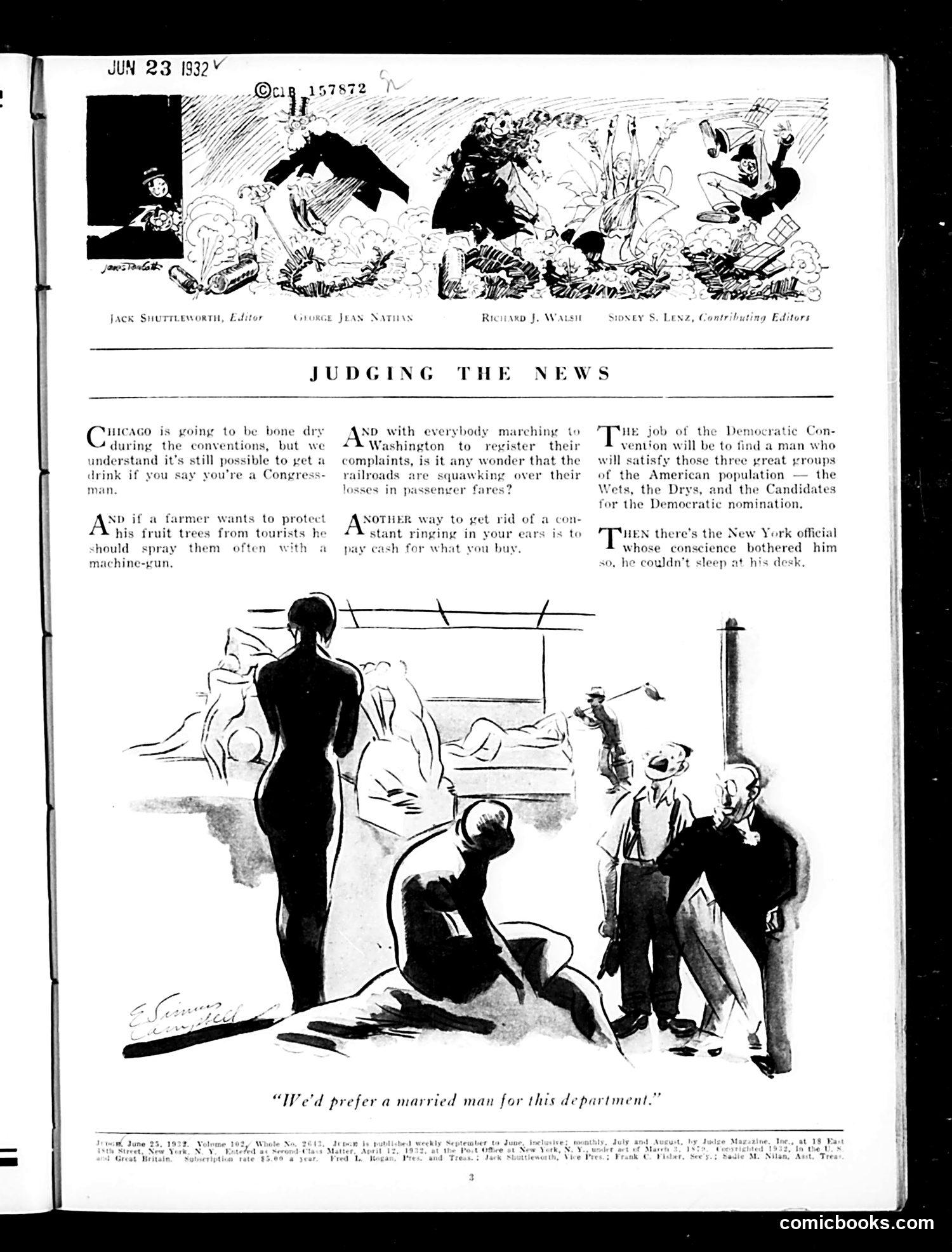
# "Judging the News" — June 23, 1932 This satirical page from Judge magazine comments on 1932 political events. The main cartoon depicts a nude female figure (likely representing "Lady Justice" or the government itself) at what appears to be a casting call or audition, with men in suits beside her. The caption reads: "We'd prefer a married man for this department." The satire likely mocks political patronage and nepotism—the practice of hiring based on personal connections rather than merit. In Depression-era 1932, such cronyism was a recurring target of criticism. The brief text snippets above criticize the upcoming political conventions, railroad losses, and Democratic Party candidate selection—reflecting broader 1932 election-year skepticism about political competence and institutional corruption during the economic crisis.
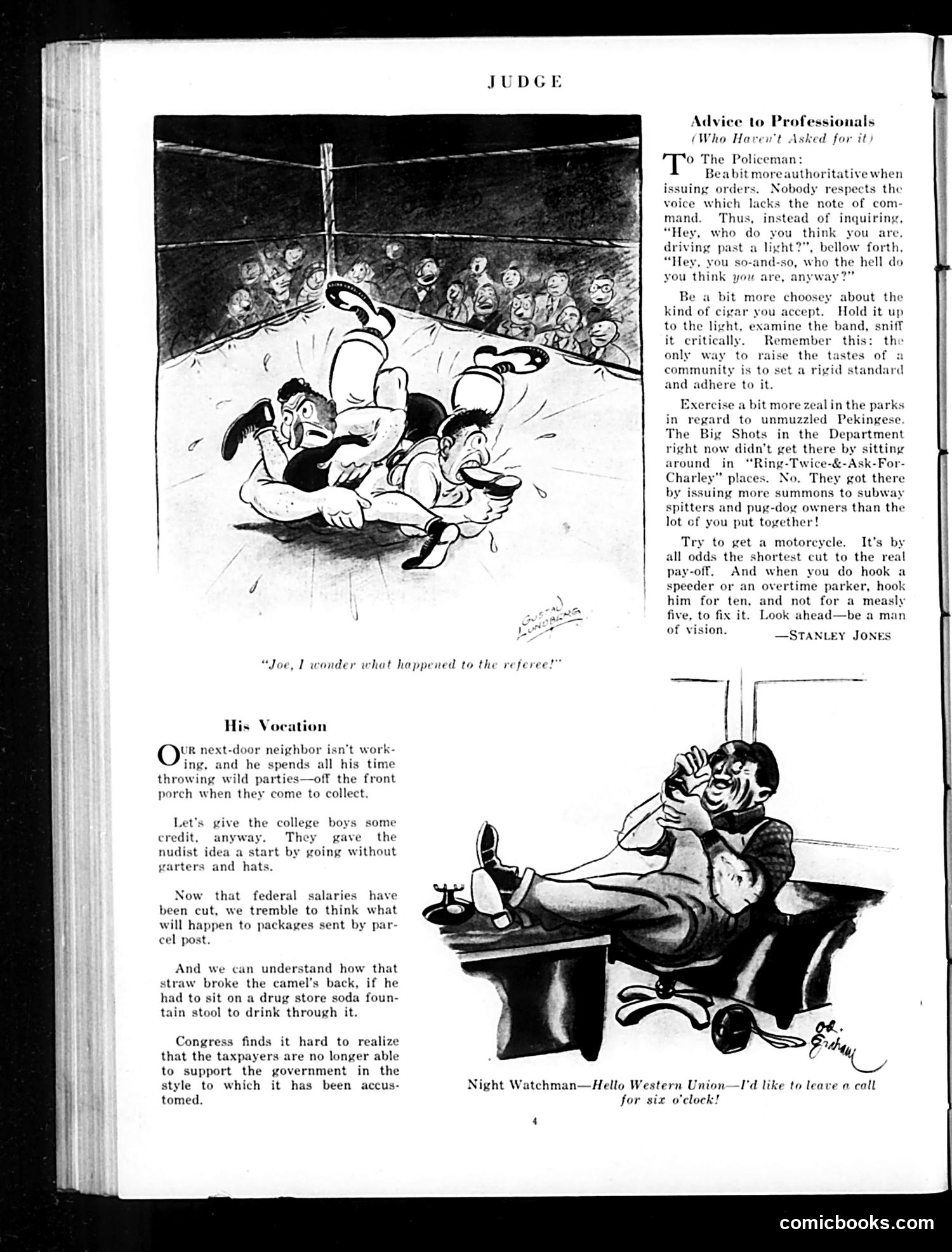
# Page Analysis: Judge Magazine Satire This page contains two distinct satirical pieces: **"Joe, I wonder what happened to the referee?"** (top cartoon): Depicts a chaotic boxing match with multiple figures brawling. The joke appears to target either corrupt boxing officiating or general lawlessness in the sport—the referee has disappeared amid mayhem. **"His Vocation" (bottom section)**: Mocks a neighbor who throws "wild parties" and avoids work. The text sarcastically credits "college boys" for starting nude trends. It satirizes federal salary cuts and congressional inability to understand taxpayer hardship—using absurd examples (packages via parcel post, drinking from drug store stools) to highlight government disconnection from ordinary people's struggles. **"Night Watchman" (bottom cartoon)**: Shows a night watchman at Western Union wanting to leave at 6 o'clock, likely referencing wage/hour disputes during economic hardship.
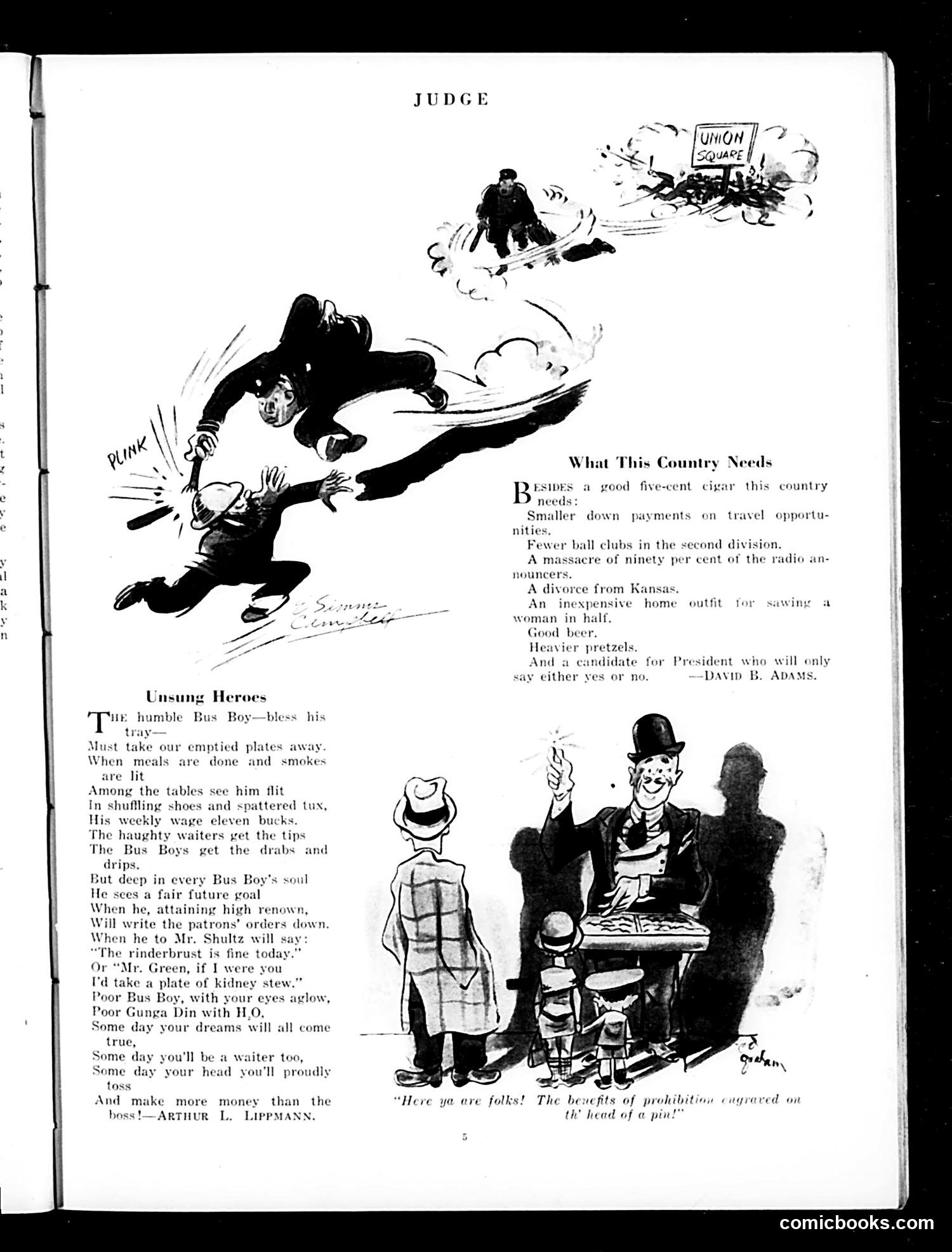
# Judge Magazine Page Analysis This page contains two satirical pieces: **Top cartoon**: A judge figure navigates turbulent waters toward "Union Square" while chaos erupts below. This appears to reference judicial handling of labor unrest or socialist activity in Union Square (a known gathering place for radical movements in NYC). **"Unsung Heroes" poem**: Celebrates bus boys as humble workers deserving respect despite low wages (eleven dollars weekly). The poem is sentimental rather than satirical, praising their aspirations and dignity. **"What This Country Needs"**: A humorous list by David B. Adams suggesting frivolous desires (cheaper cigars, fewer ball clubs, radio annoyances eliminated) alongside a serious request for a president who gives clear yes/no answers—likely commentary on political evasiveness of the era. The overall tone mixes social observation with gentle humor about American life and work.
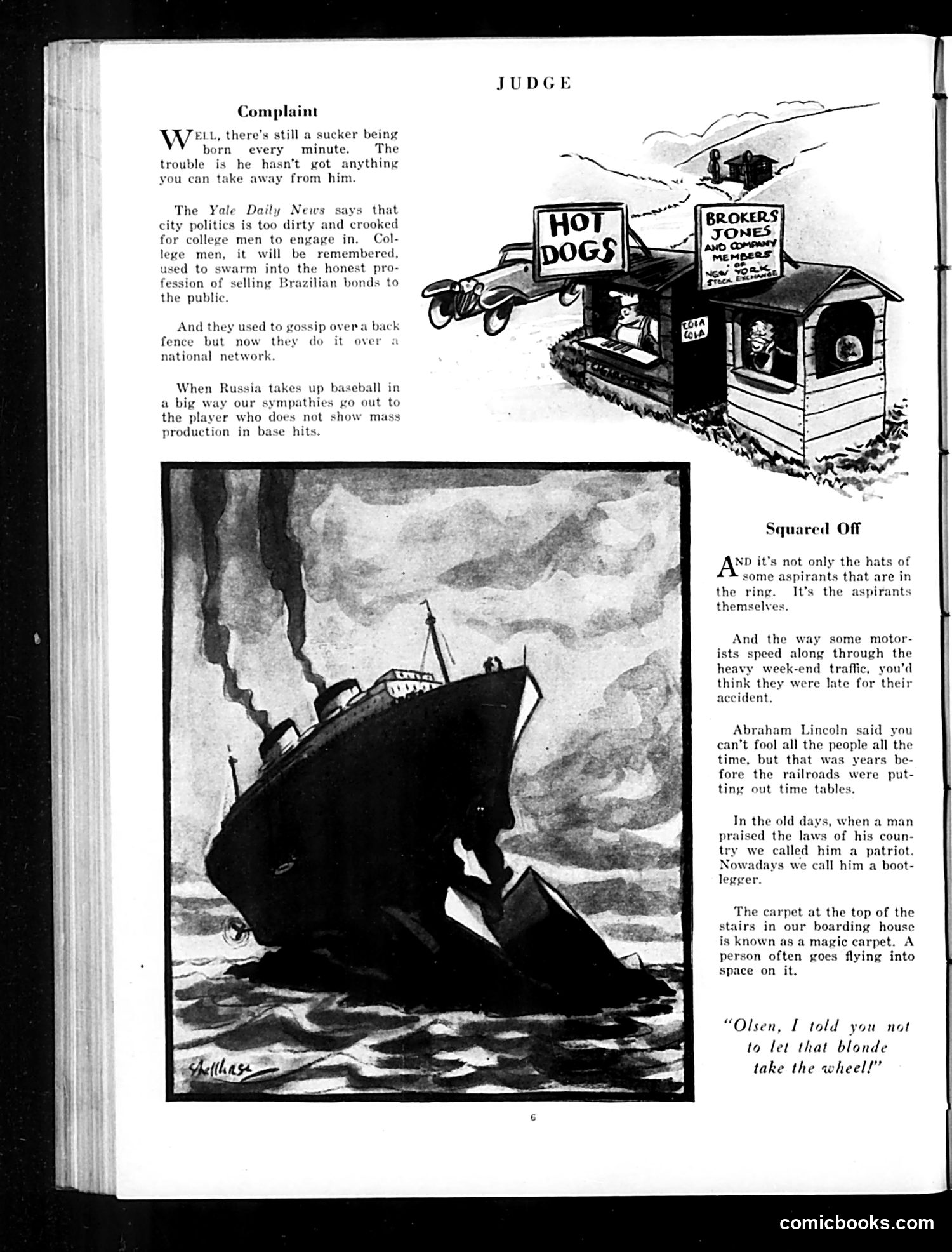
# Analysis of Judge Magazine Page This page contains commentary and cartoons satirizing American society and politics. The "Complaint" section mocks widespread corruption, referencing the Yale Daily News's claim that city politics is too corrupt for college men to engage with honestly—comparing it to historical Brazilian bond schemes. The main cartoon depicts a sinking ship captioned "Olsen, I told you not to let that blonde take the wheel!"—a visual joke playing on the stereotype that women are poor drivers, a common satirical trope of the era. The "Squared Off" section offers social commentary on various behaviors: reckless motorists, politicians as "bootleggers" (likely referencing Prohibition-era corruption), and domestic observations about boarding houses. The illustration of a hot dog/brokers stand parodies commercialism and get-rich-quick schemes.
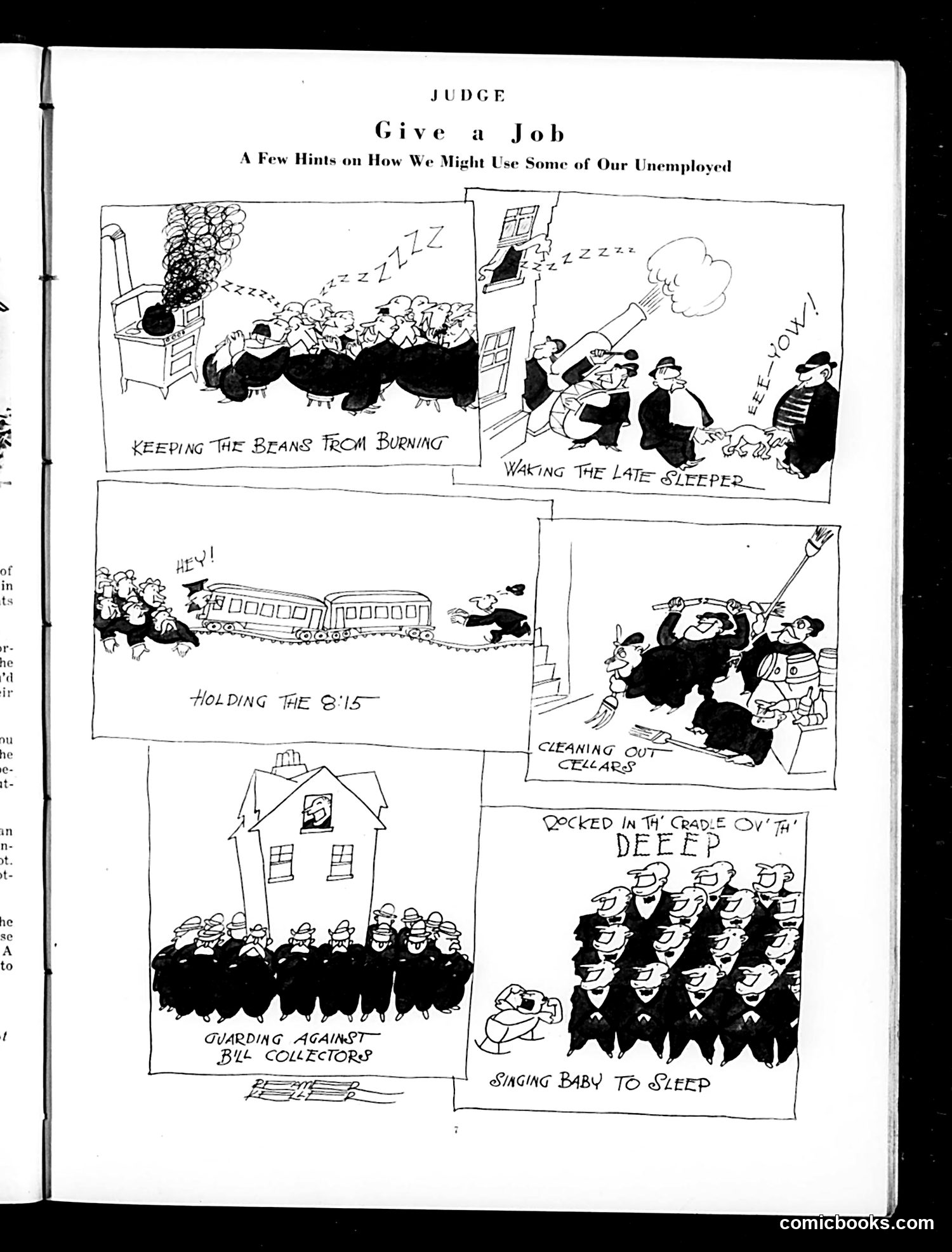
# Judge Magazine: "Give a Job" This satirical cartoon proposes absurd employment solutions for the unemployed during an economic crisis (likely the Great Depression era). Each panel mocks both unemployment and potential "solutions": - **"Keeping the Beans from Burning"**: Unemployed people work as stove monitors - **"Waking the Late Sleeper"**: Men use cannons to rouse oversleepers - **"Holding the 8:15"**: Workers literally hold a train in place - **"Cleaning Out Cellars"**: Menial basement work - **"Guarding Against Bill Collectors"**: Standing watch at homes - **"Singing Baby to Sleep"**: Men hired as lullaby singers The satire critiques both the severity of joblessness and the government's apparent inability to create meaningful employment. The increasingly ridiculous "jobs" highlight how desperate the situation had become—any work, no matter how pointless, was being considered. The cartoon sarcastically suggests that even absurd make-work was preferable to no employment at all.
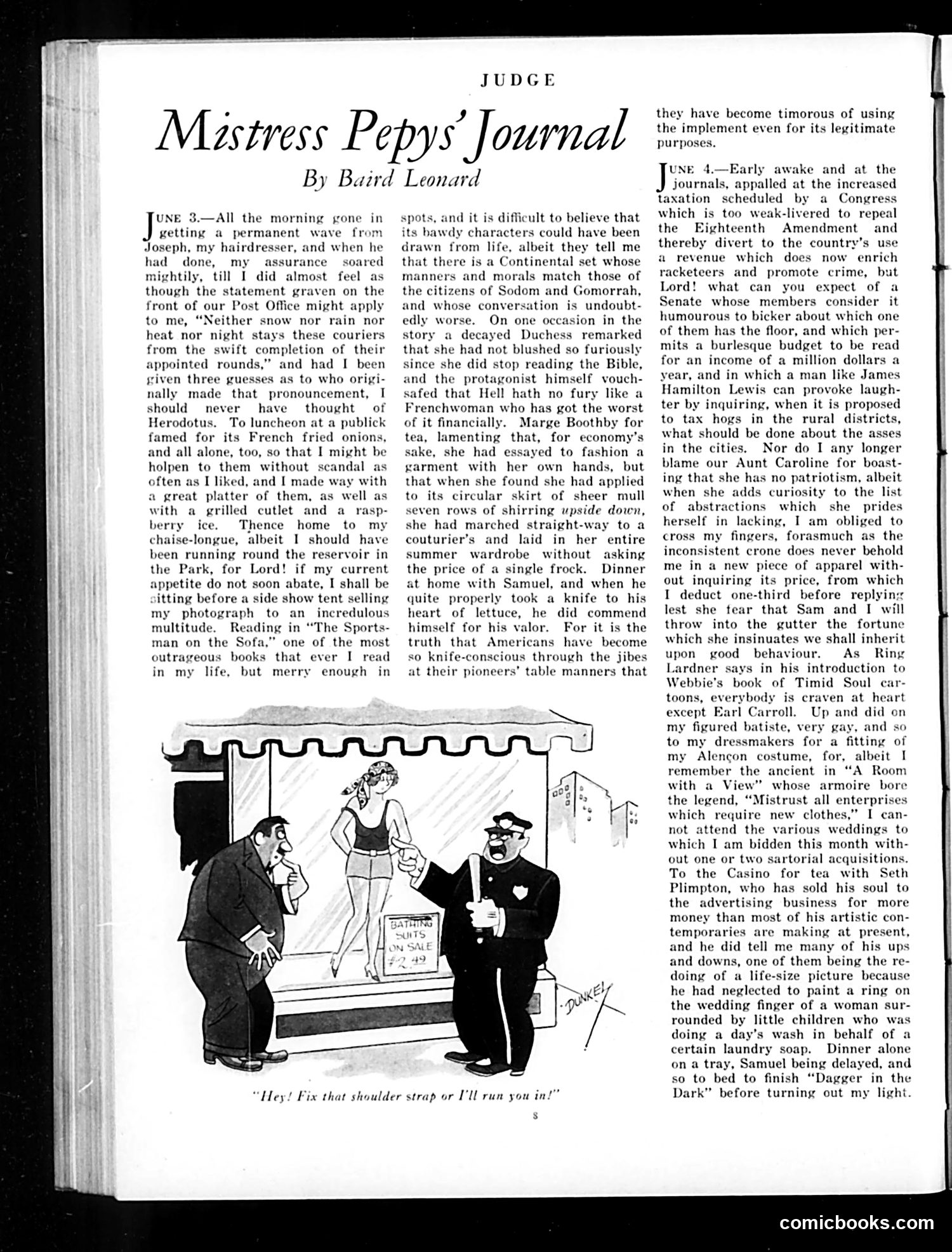
# "Mistress Pepys' Journal" - Judge Magazine Satire This is a comedic column mimicking Samuel Pepys' famous 17th-century diary, updated to modern (1920s-30s) times. The narrator—a society woman—records trivial domestic observations in mock-grandiose language. The single cartoon depicts two men in formal attire confronting a woman in a shop window display, with one saying, "Hey! Fix that shoulder strap or I'll run you in!" This likely satirizes either: fashion policing/overzealousness about clothing regulations, or Prohibition-era vice enforcement absurdities (the "run you in" threat). The written diary mocks various contemporary targets: Congress's weakness on repealing Prohibition, Senate antics (referencing Senator James Hamilton Lewis's jokes about taxing rural hogs), Americans' self-consciousness about table manners, and women's vanity about clothing and appearance. The satire is gentle social commentary—poking fun at upper-class pretension, gender dynamics, and political incompetence rather than advocating serious reform.
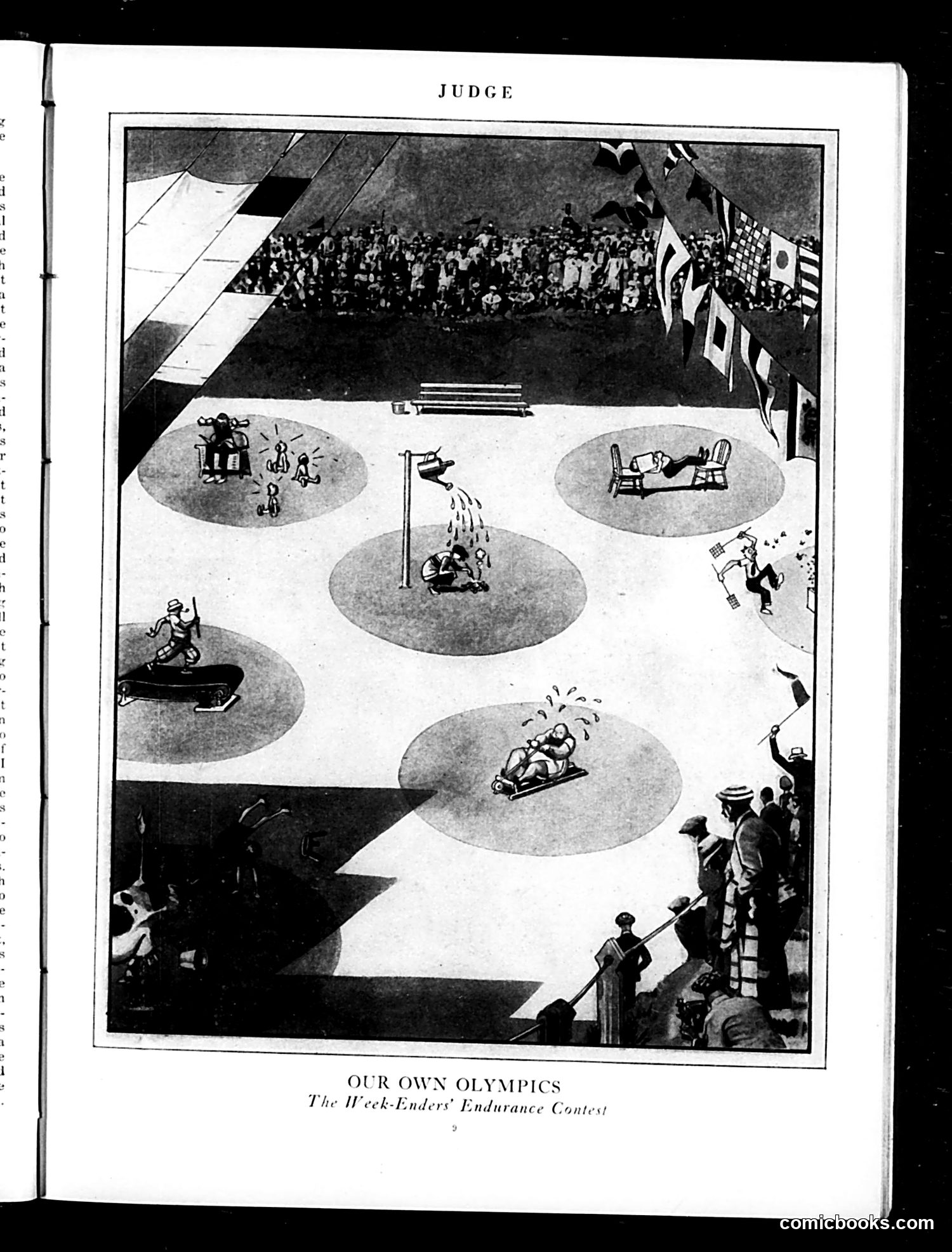
# Analysis This satirical illustration depicts "Our Own Olympics: The Week-Enders' Endurance Contest," a parody of athletic competition featuring absurd, everyday activities rather than traditional sports. The scene shows various figures engaged in humorous stunts within circular spotlit areas—including someone on what appears to be a trampoline, people on chairs, and other comedic poses—all surrounded by spectators in a large venue. The satire targets "week-enders" (likely wealthy leisure-class individuals who engaged in recreational activities on weekends) by mocking their trivial pursuits as though they were serious Olympic competitions. Rather than genuine athletic achievement, these activities appear silly and undignified, suggesting Judge magazine's criticism of upper-class frivolity and the gap between genuine sport and idle entertainment. The cartoon satirizes both the Olympic spectacle itself and the vanity of those who treated casual amusements as worthy of public attention.
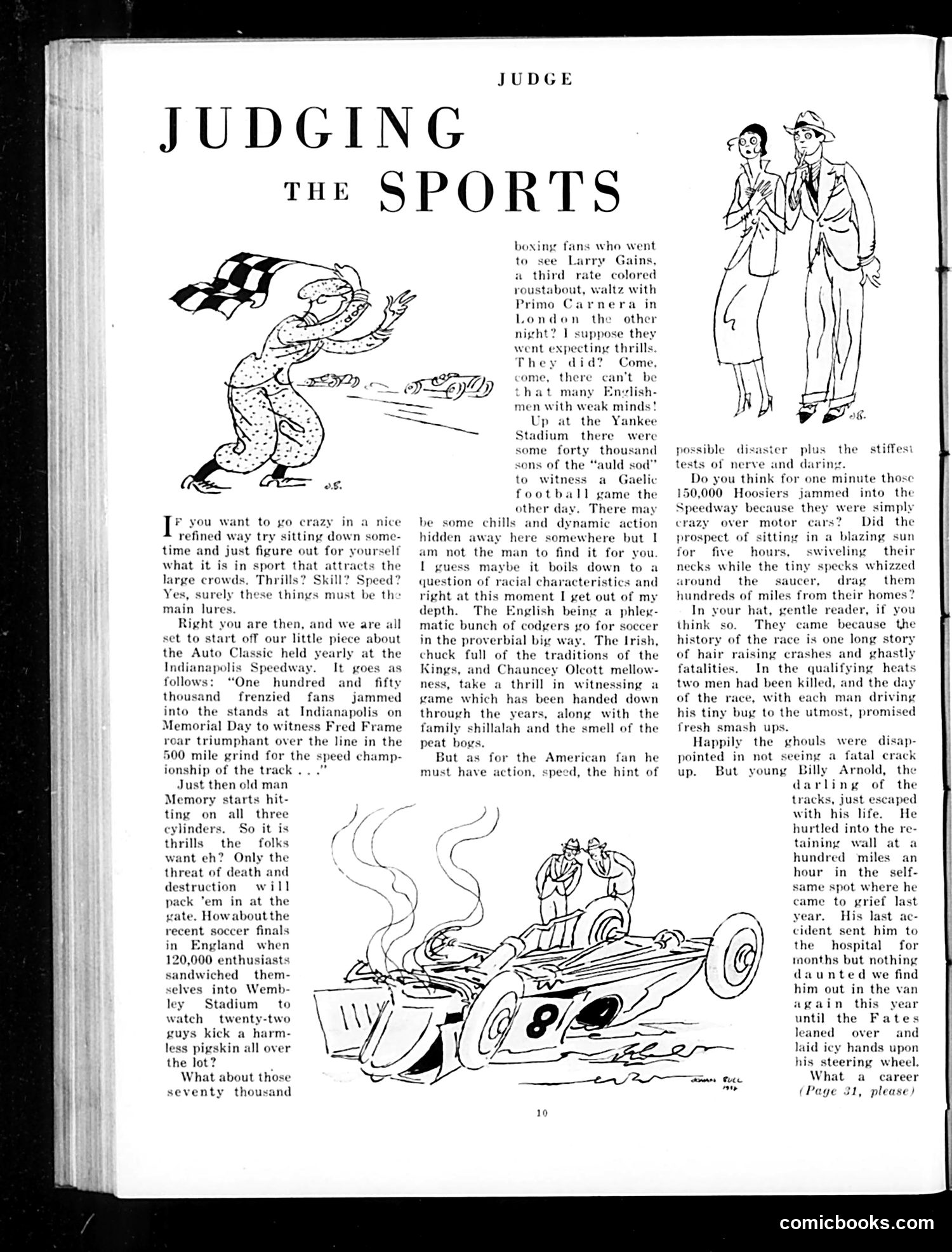
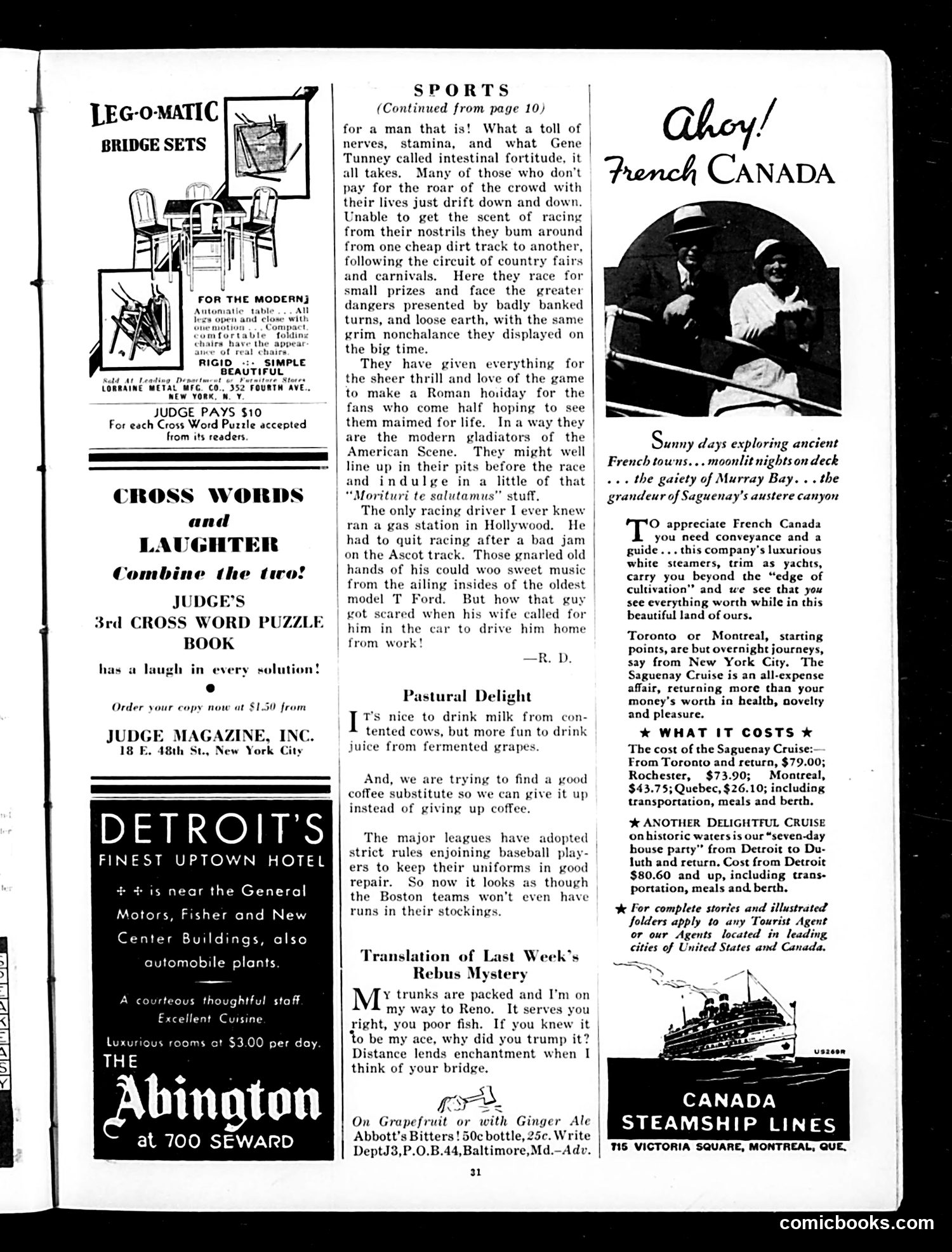
# Judging the Sports This satirical piece critiques what draws crowds to sporting events, arguing that spectators are attracted to danger and potential disaster rather than athletic skill. The author contrasts different nationalities' sports interests: English soccer fans, Irish Gaelic football enthusiasts, and boxing crowds are dismissed as having different "racial characteristics." The main target is American spectators at the Indianapolis 500, whom the author suggests attend specifically for the thrill of potential crashes and fatalities. He cites actual deaths during qualifying heats and a near-fatal crash by driver Billy Arnold, implying American audiences are morbid "ghouls" seeking thrills from danger rather than appreciating athletic excellence. The cartoons—showing a racecar crash and spectators—visually reinforce this critique of American sports culture's fascination with speed, danger, and potential tragedy.