A complete issue · 36 pages · 1932
Judge — January 23, 1932
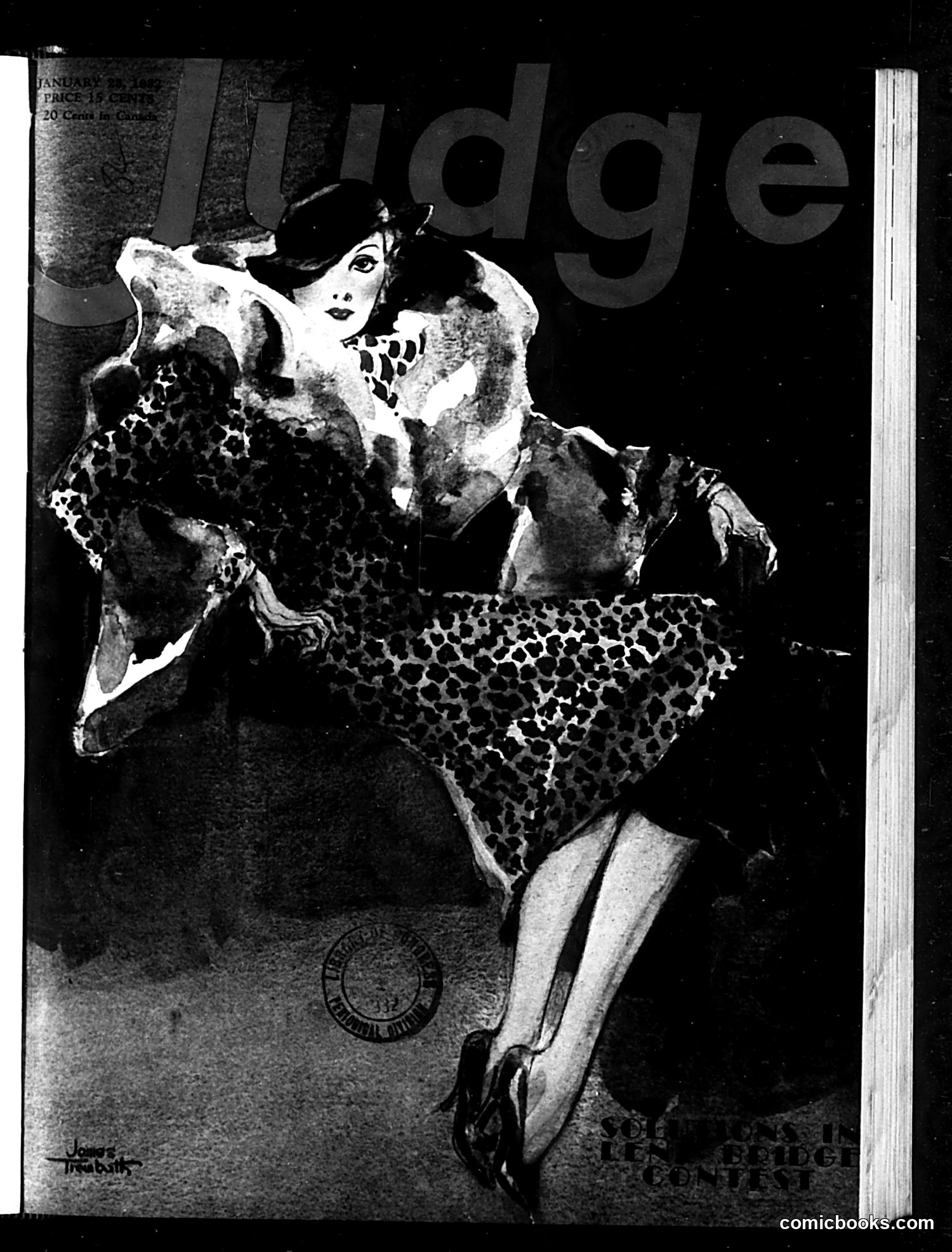
I can see this is a cover from **Judge magazine** (dated January 1926, priced at 20 cents). The image shows a woman in fashionable 1920s attire—a cloche hat, patterned dress with animal print, and heeled shoes—striking a dramatic pose. However, the OCR text provided is incomplete and illegible, making it difficult to identify the specific satirical subject or political/social reference. The styling and composition suggest this relates to 1920s social commentary, possibly about women's fashion, changing gender roles, or contemporary social figures of that era. Without readable text identifying the subject, I cannot reliably explain the cartoon's specific point or intended satire to a modern reader. The artistic signature appears present but is not clearly legible in this reproduction.
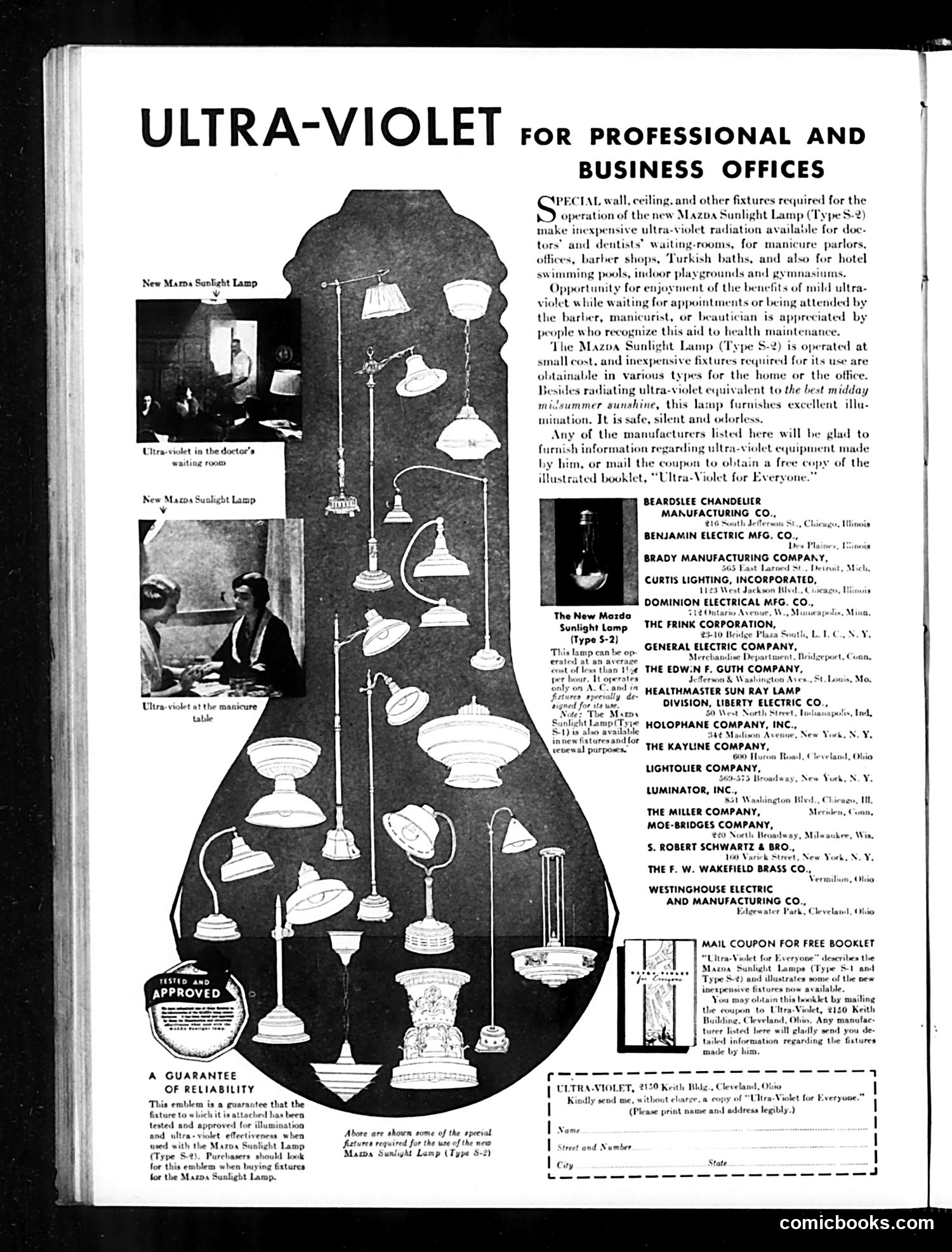
# Content Analysis This page is **primarily a product advertisement**, not satirical content. It promotes the Mazda Sunlight Lamp (Type S-2), an ultraviolet lighting fixture for professional offices, medical waiting rooms, barbershops, and beauty salons. The "cartoon" element is minimal—the central image is a silhouette showing various lamp fixture styles available, surrounded by small photographs demonstrating real-world applications (a doctor's waiting room, a manicure table). The advertisement emphasizes the lamp's safety, silence, and effectiveness for "mild ultra-violet" therapeutic purposes. It includes a guarantee seal and lists multiple manufacturers distributing the product. This represents early 20th-century commercial advertising in *Judge* magazine rather than political satire. UV lamps were then considered beneficial health innovations.
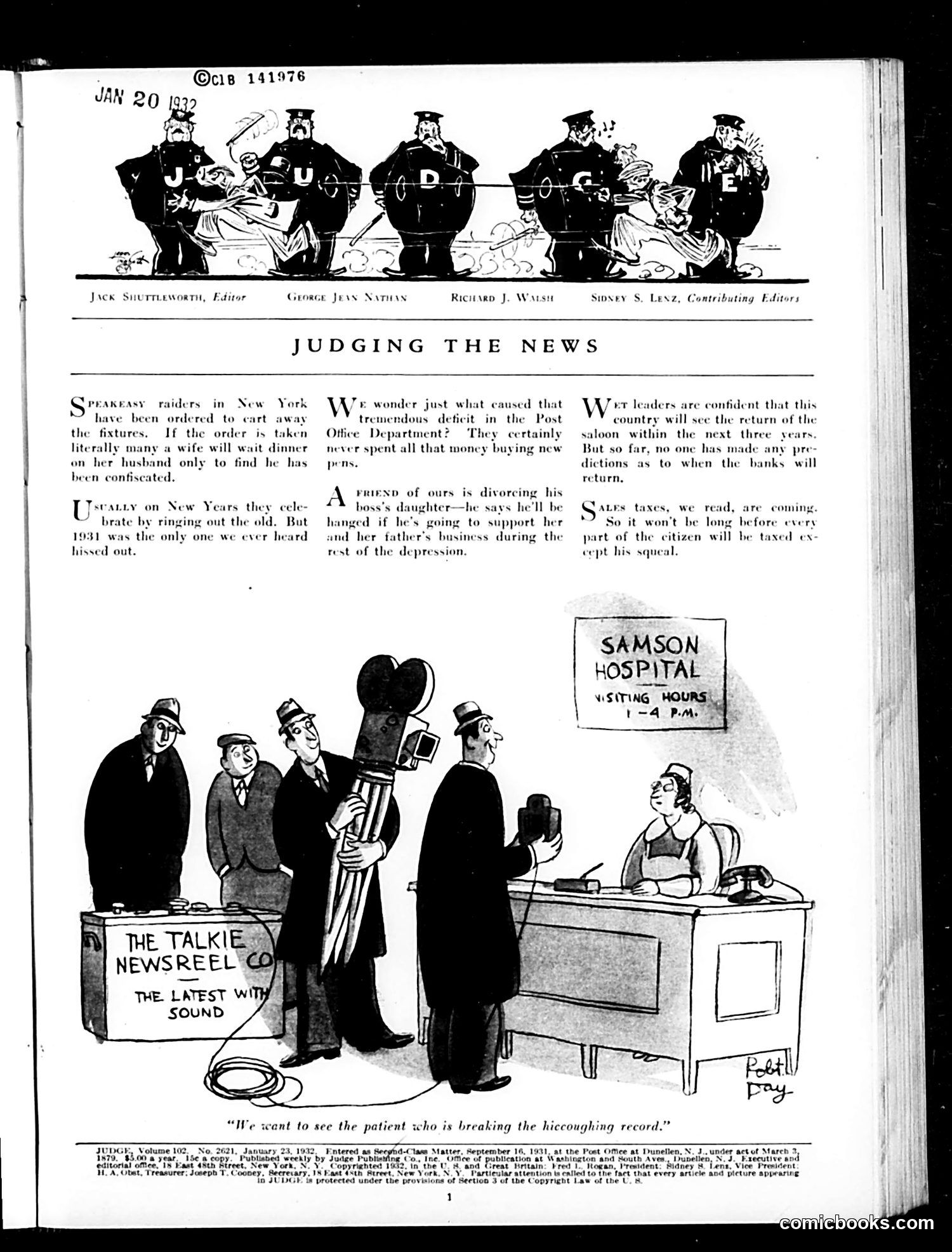
# "Judging the News" - January 20, 1932 The main cartoon satirizes newsreel companies' sensationalism during the Great Depression. A film crew from "The Talkie Newsreel Co." attempts to film a patient at Samson Hospital, seeking someone with a "hiccoughing record" to break—prioritizing entertainment value over genuine news. The accompanying editorial column (top) comments on economic hardships: speakeasy raids in New York, Post Office deficits, divorce during depression, New Year's celebrations being muted due to hard times, and anticipated sales taxes. The cartoon mocks how 1930s newsreels exploited human suffering and oddities for entertainment rather than informing the public about serious economic conditions. It critiques the trivial priorities of commercial media during genuine national crisis.
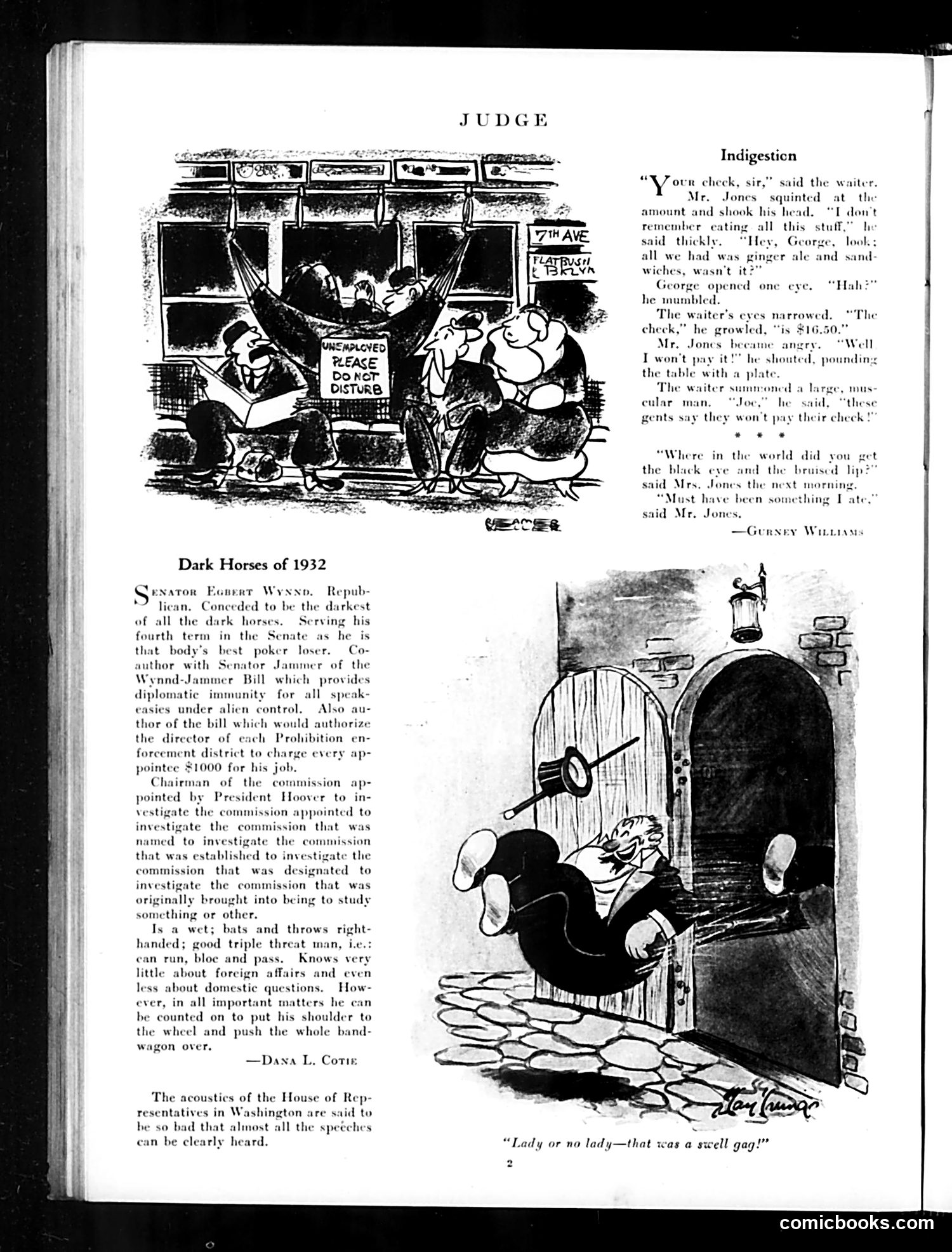
# Page Analysis **"Indigestion" cartoon (top):** A waiter presents an inflated bill ($16.50) to an angry diner (Mr. Jones) at a restaurant. Jones claims he only ate "ginger ale and sandwiches" yet received an enormous charge. His wife sarcastically asks what caused his "black eye and bruised lip"—implying he got into a fight over the bill. The joke satirizes restaurant overcharging practices, a common consumer complaint during the Depression era. **"Dark Horses of 1932" (text section):** Political commentary on Senator Egbert Wynnd (Republican), described as a poker player and legislative manipulator. The passage critiques his character and political maneuvering. **Bottom cartoon:** A figure bursts through a door exclaiming "Lady or no lady—that was a swell gag!" The context remains unclear from the visible image alone.
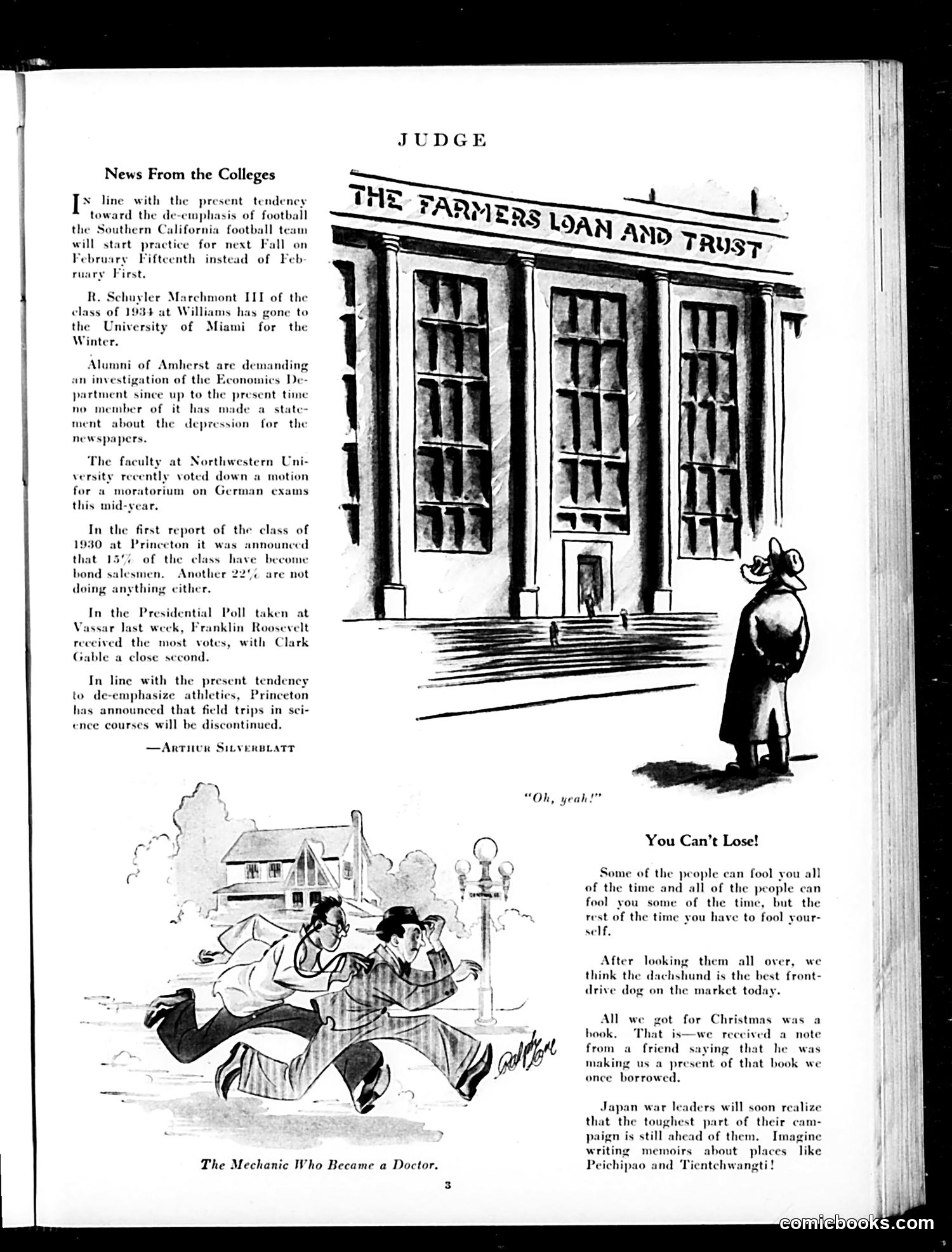
# Analysis of Judge Magazine Page **Top Cartoon:** A man stands before "The Farmers Loan and Trust" building, saying "Oh, yeah!" This appears to be commentary on farmers' financial struggles, likely during the Depression era when agricultural debt was a major issue. The figure's skeptical response suggests doubt about the institution's ability or willingness to help. **Bottom Cartoon:** "The Mechanic Who Became a Doctor" depicts three men in physical comedy—apparently the story being that someone transitioned from manual labor to medical practice. The cartoon likely satirizes either educational mobility or questions the legitimacy of such career changes. **"You Can't Lose!"** section contains cynical observations about trust and Christmas gift-giving, reflecting Depression-era skepticism about financial institutions and consumer culture.
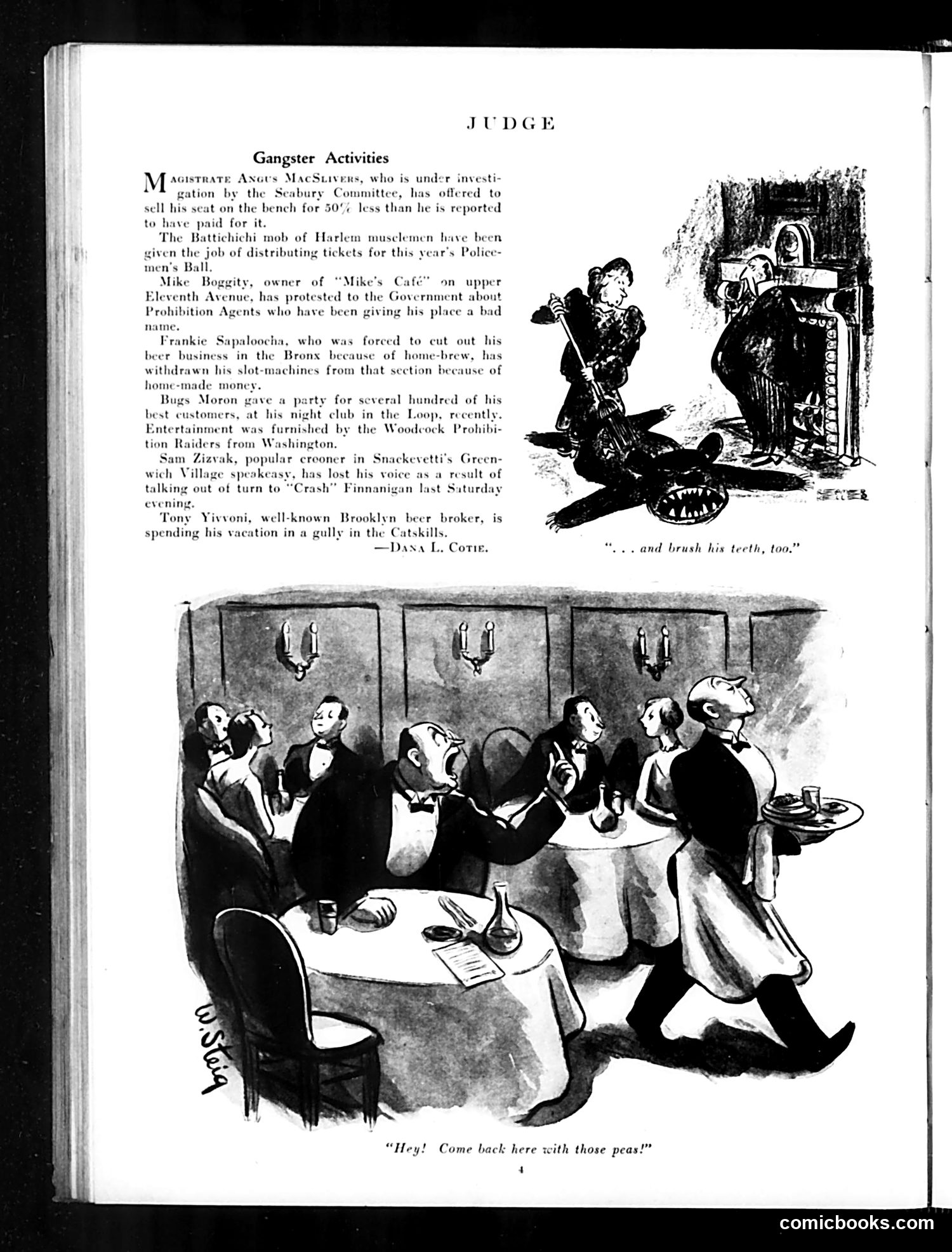
# "Gangster Activities" - Judge Magazine Satire This page satirizes Prohibition-era corruption and organized crime through brief vignettes of notable figures allegedly connected to illegal activities: **Top cartoon:** A gangster threatens someone with a gun, captioned "and brush his teeth, too" — implying violence extends to enforcing petty obedience. **Text items** mock specific individuals: Magistrate MacSlivers allegedly accepting bribes; Harlem musclemen distributing police ball tickets; Mike Boggity (café owner) protesting government Prohibition agents; Frankie Sapaloocha removing slot machines; "Bugs" Moron hosting speakeasies; and Tony Vivvoni, a beer broker, vacationing openly. The satire targets how organized crime infiltrated legitimate businesses and corrupted officials during Prohibition, presenting lawbreaking as casual and systemic rather than dramatic.
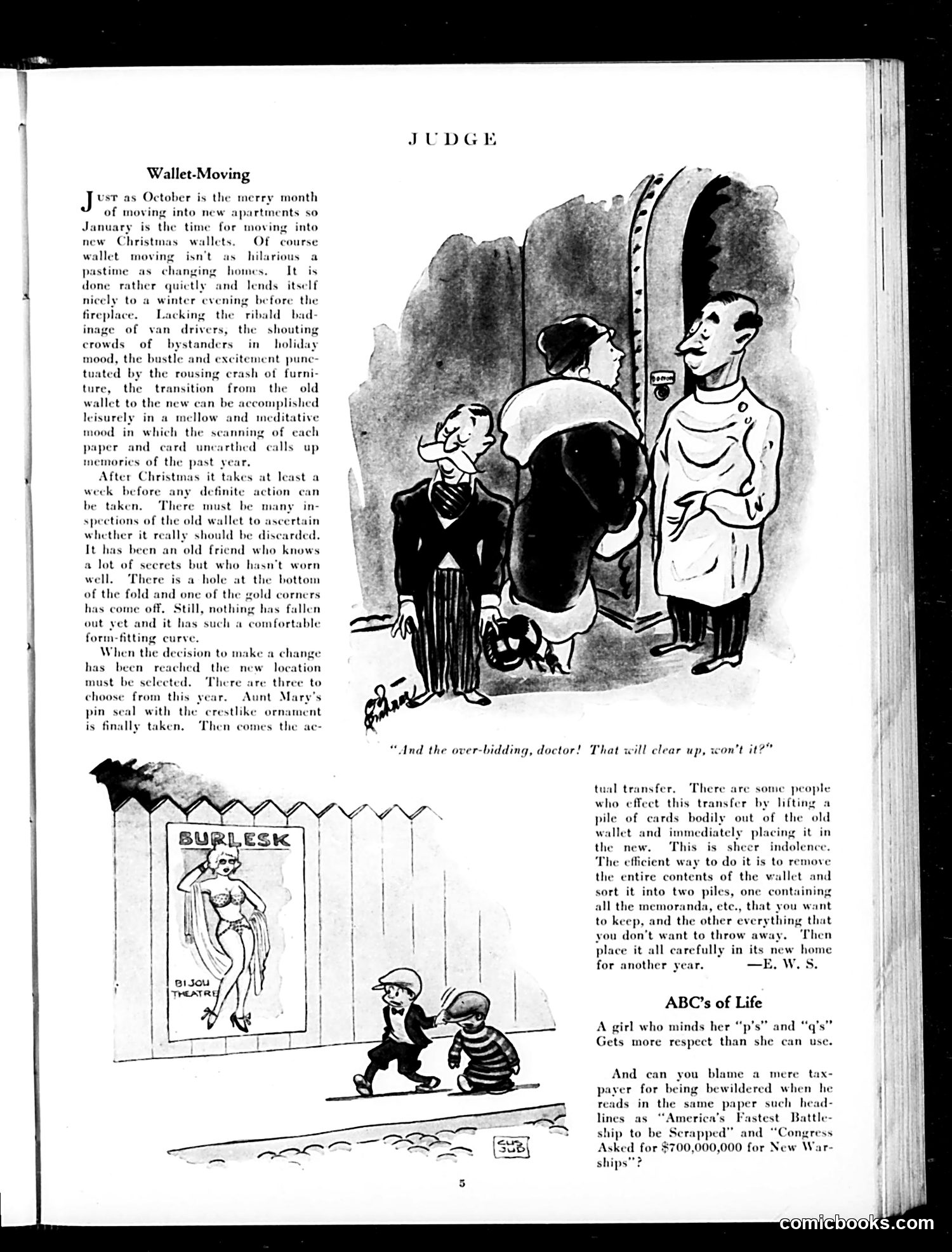
# Analysis of Judge Page **Main Article: "Wallet-Moving"** This satirizes the January tradition of transferring contents between old and new wallets after Christmas gifts. The piece humorously describes the practical hassle—inspecting old wallets for worn-out cards and papers, then carefully reorganizing everything in a new one. It's gentle domestic humor about a universal male experience. **Top Cartoon** Shows a doctor visiting a patient's home. The caption reads: "And the over-bidding, doctor! That will clear up, won't it?" This likely references post-WWI inflation or economic speculation, suggesting a domestic concern that a physician might remedy—though the specific context remains unclear. **Bottom Cartoon** Two figures peer at a burlesque theater marquee, depicting typical street-level entertainment of the era.
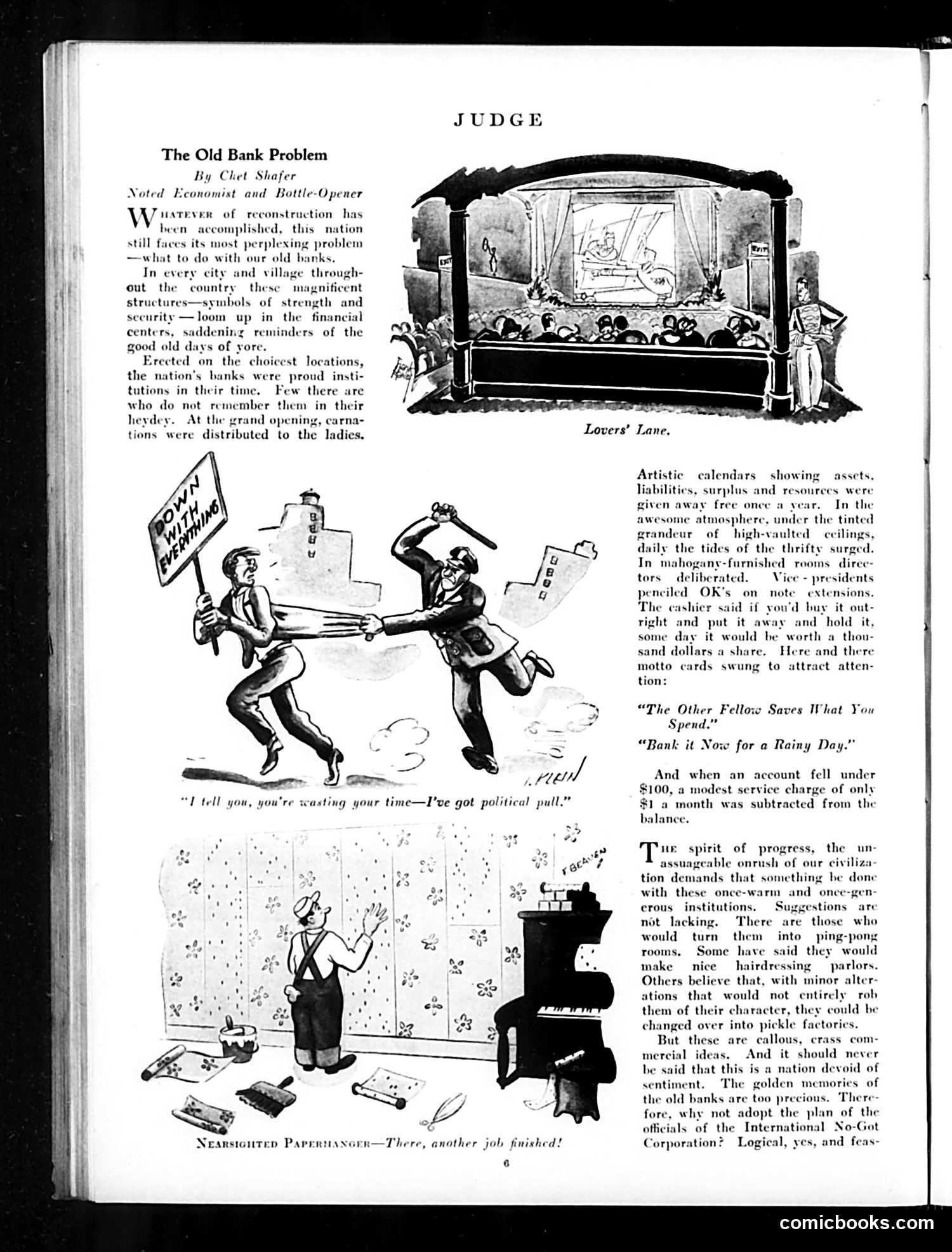
# "The Old Bank Problem" - Judge Magazine Satire This article by Chet Shafer critiques the preservation of historic American bank buildings. The cartoons mock sentimentality about old banks as outdated institutions needing modernization. The first cartoon shows two men fighting over a document labeled "Political Pull," illustrating how banks used political connections rather than merit. The second depicts a "Nearsighted Paperhanger" (likely referring to someone carelessly redecorating), suggesting banks should be converted to other uses—pinup rooms, hairdressing parlors, or pickle factories. The satire argues that while these old banks held historical prestige, they're now economically useless. The article proposes adopting the "International No Got Corporation" plan to repurpose these buildings for modern commercial needs rather than preserve them as monuments to an outdated financial era.
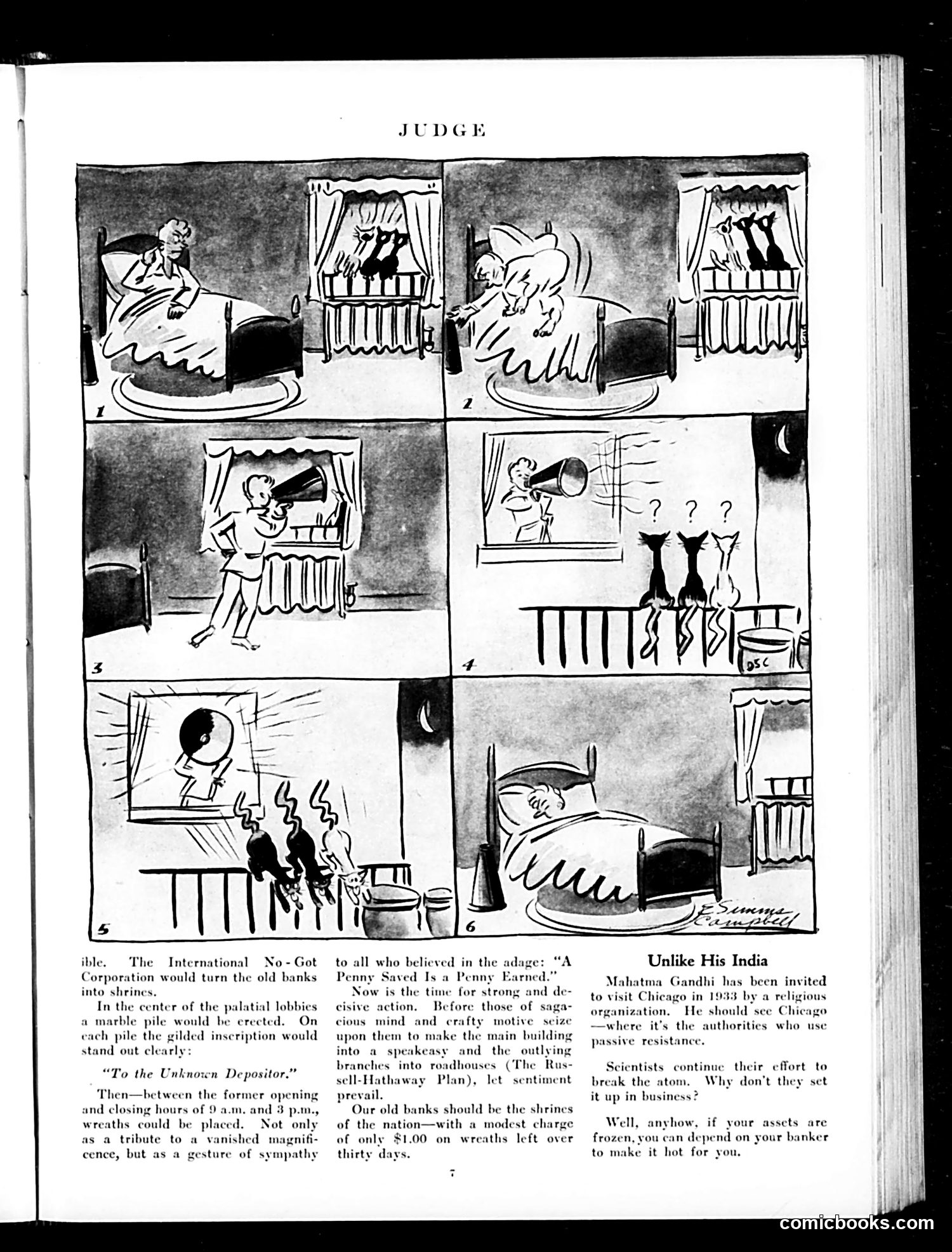
# "Judge" Magazine Satire Analysis This comic strip satirizes **bank failures during the Great Depression**. The narrative mocks the idea of converting closed banks into monuments "To the Unknown Depositor"—a bitter joke about ordinary Americans losing their savings. The accompanying text references the **"International No-Got Corporation"** (a pun on "no got"—slang for having nothing), proposing banks become shrines with wreaths honoring lost deposits. The satire critiques how banks might be repurposed as speakeasies or roadhouses instead of honoring depositors. The sidebar about **Mahatma Gandhi's visit to Chicago** draws a cynical comparison: Gandhi practices passive resistance against authorities in India, but Chicago authorities would use aggressive methods against him—a jab at American hypocrisy regarding freedom and justice. The final quip about frozen assets and bankers making things "hot for you" continues the Depression-era complaint that banks could still collect debts even when customers had lost everything.
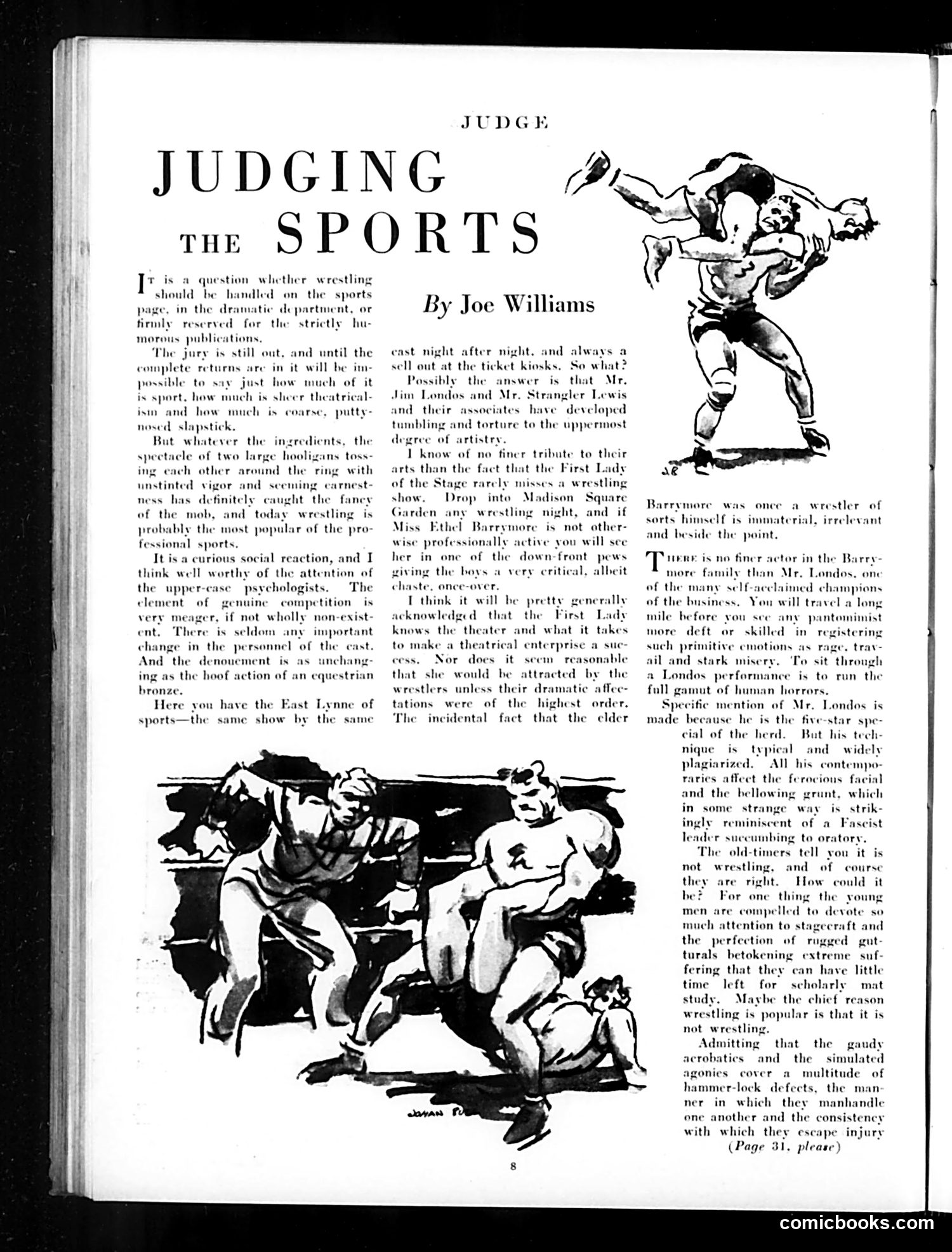
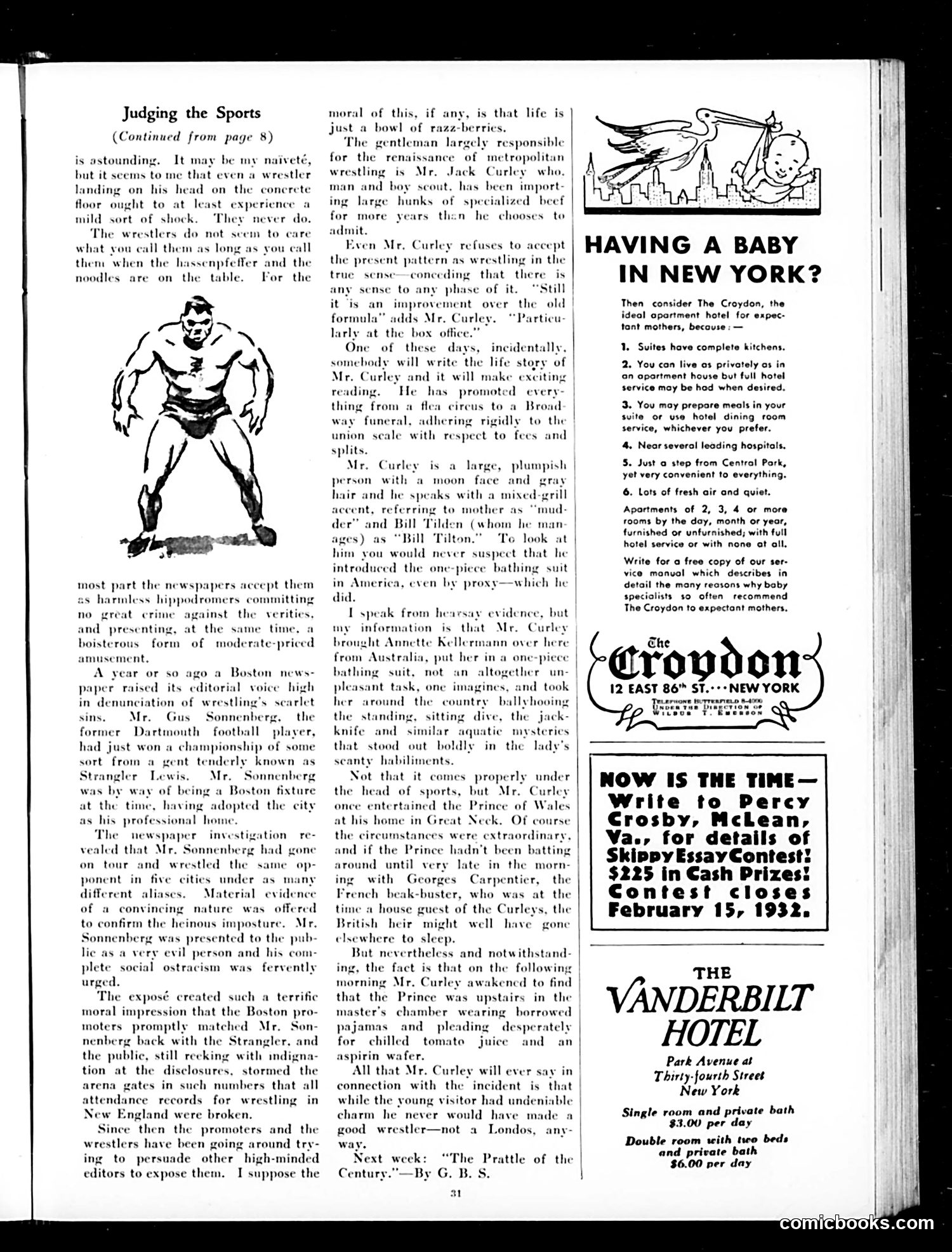
# "Judging the Sports" by Joe Williams This article defends professional wrestling as entertainment while acknowledging it's theatrical spectacle rather than genuine sport. Williams argues the "jury is still out" on whether wrestling belongs in sports or dramatic coverage, given its staged nature—comparing it to the melodrama "East Lynne." The satire targets both wrestling promoters and high society. Williams notes that despite wrestling's obvious artificiality (predetermined outcomes, consistent cast, rehearsed drama), it sells out nightly. He adds pointed commentary by mentioning that even *Ethel Barrymore* (the acclaimed actress and member of the famous theatrical family) attends wrestling matches, suggesting that respectable society recognizes wrestling's theatrical merit—or that they're fooled by it. The piece mocks Jim Londos and "Strangler" Lewis as masters of stagecraft who perform primitive emotions expertly. Williams's final jab: young men waste scholarly time perfecting wrestling's "rug naturals" and acrobatics rather than studying—yet wrestling remains popular *because* it's not wrestling.
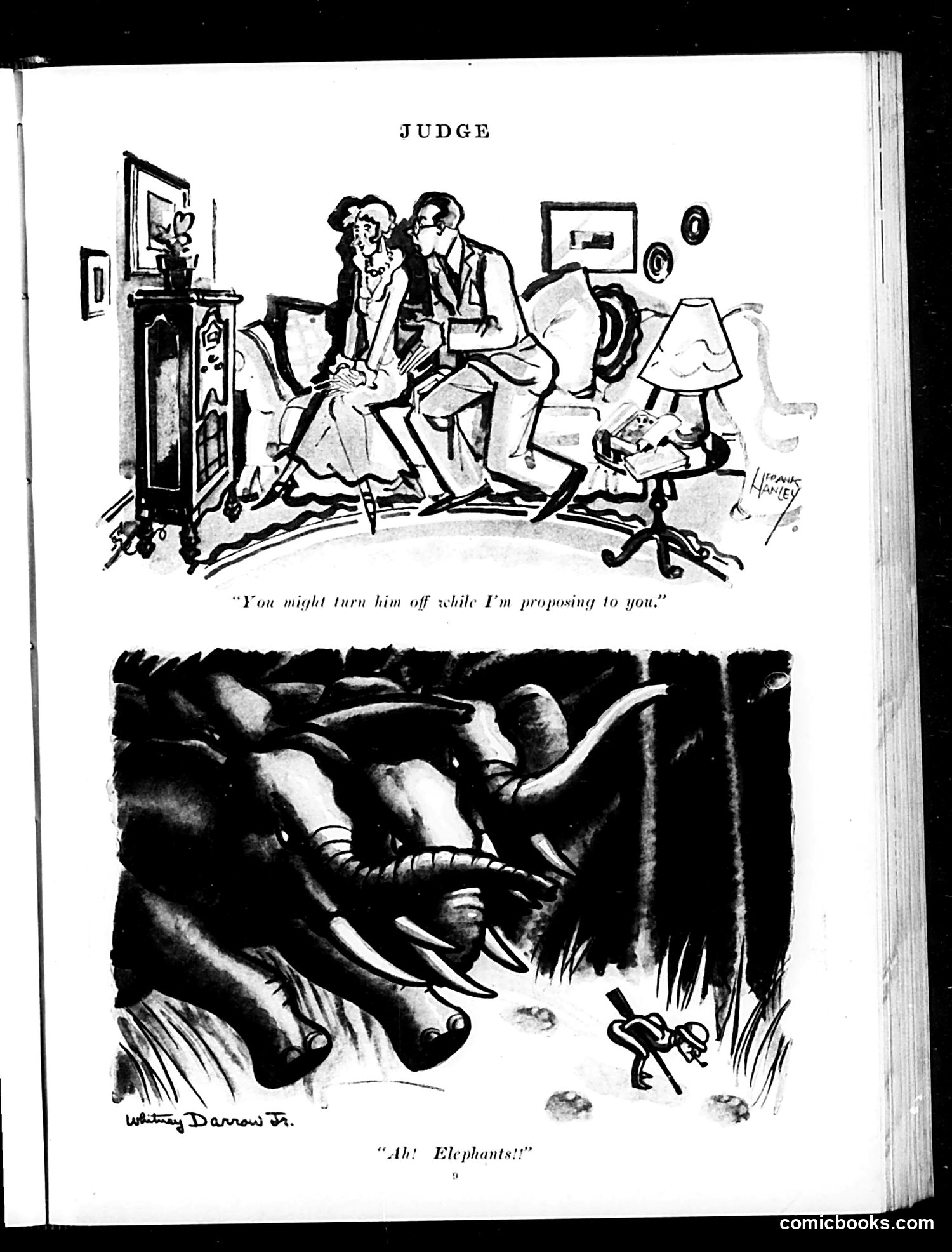
# Two Judge Cartoons on "Judge" **Top cartoon:** A man proposes to a woman while seated on a sofa, with two other figures present and a child nearby. The caption reads, "You might turn him off while I'm proposing to you"—suggesting the man wants to disable the radio (visible on the left) during his romantic moment. This satirizes how radio has become an intrusive domestic presence, interrupting intimate moments. **Bottom cartoon:** Shows an elephant's legs and large feet in what appears to be a circus or performance setting, with tiny human figures nearby. The caption "Ah! Elephants!!" appears to joke about scale or perspective—likely mocking someone's surprised reaction to seeing elephants, or satirizing the spectacle of circus entertainment and human fascination with exotic animals.
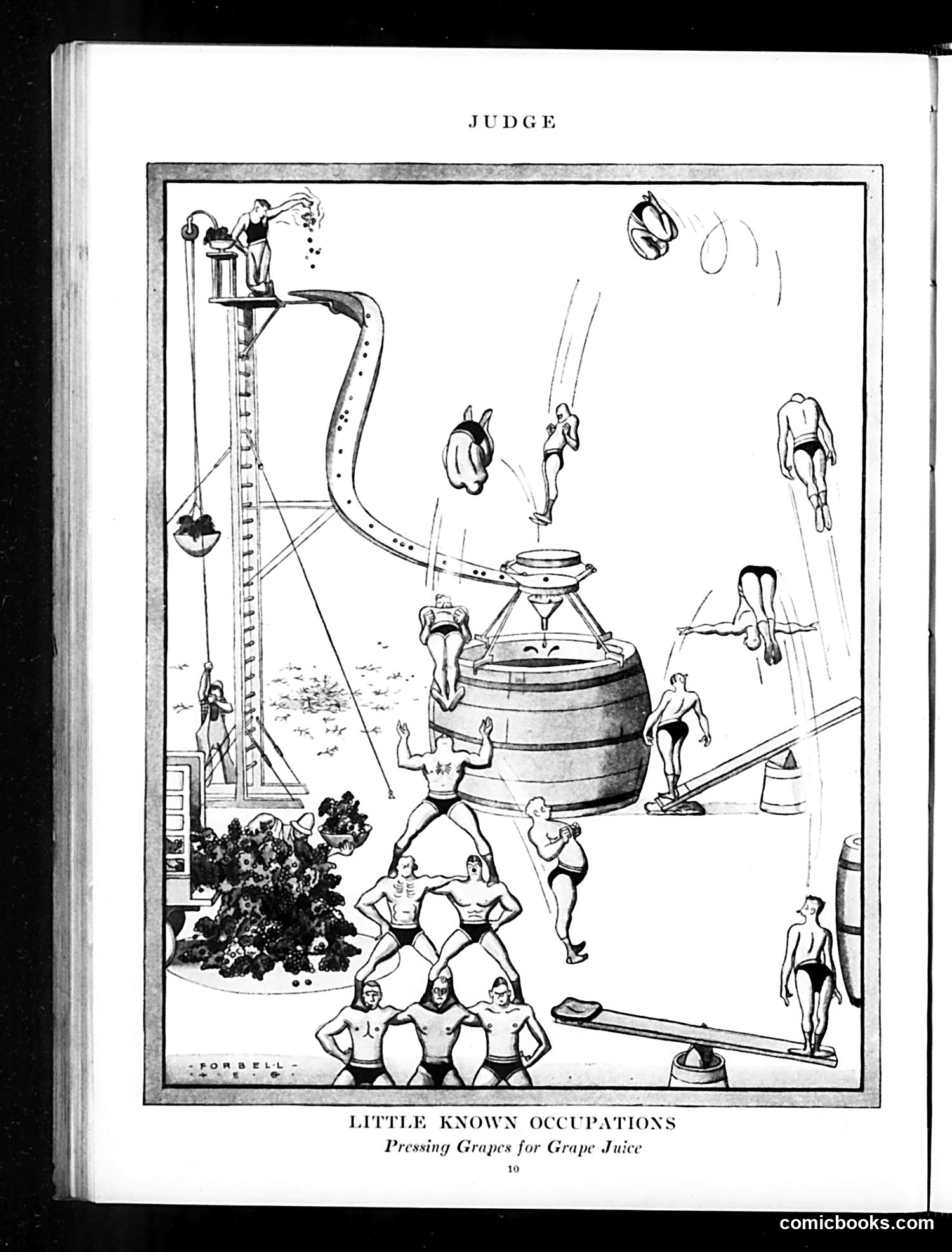
# Judge Magazine Cartoon Analysis This is a satirical cartoon titled "Little Known Occupations: Pressing Grapes for Grape Juice." The illustration depicts numerous acrobats, gymnasts, and performers engaged in various physical feats around a large wine press or barrel apparatus—all supposedly to extract grape juice. The satire likely mocks either the labor-intensive production methods of grape juice manufacturing, or possibly references Prohibition-era substitutes. The absurdly complex human machinery required suggests commentary on either inefficient industrial processes or the ironic lengths people went to produce "grape juice" (which was sometimes a legal workaround during Prohibition to produce wine). The cartoon's humor derives from presenting an obviously ridiculous and impractical method as a legitimate occupation, typical of Judge magazine's deadpan satirical style.