
Judge, 1932-01-23 · page 8 of 36
Judge — January 23, 1932 — page 8: what you’re looking at
What you’re looking at
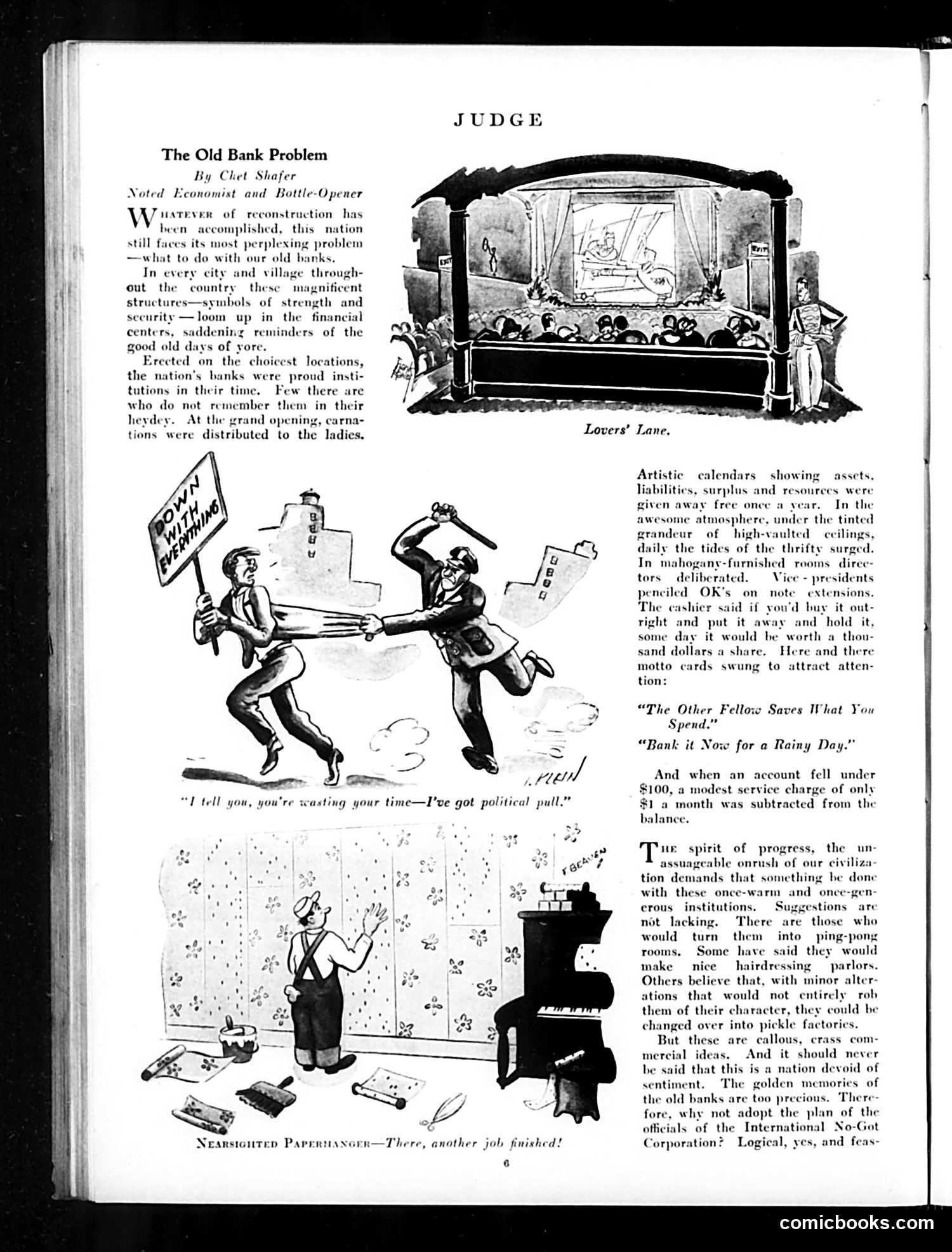
# "The Old Bank Problem" - Judge Magazine Satire This article by Chet Shafer critiques the preservation of historic American bank buildings. The cartoons mock sentimentality about old banks as outdated institutions needing modernization. The first cartoon shows two men fighting over a document labeled "Political Pull," illustrating how banks used political connections rather than merit. The second depicts a "Nearsighted Paperhanger" (likely referring to someone carelessly redecorating), suggesting banks should be converted to other uses—pinup rooms, hairdressing parlors, or pickle factories. The satire argues that while these old banks held historical prestige, they're now economically useless. The article proposes adopting the "International No Got Corporation" plan to repurpose these buildings for modern commercial needs rather than preserve them as monuments to an outdated financial era.
📄 Transcribed text from this page (OCR, searchable)
Machine-transcribed from the original scan — historical spelling and the odd misread are preserved.
JUDGE The Old Bank Problem By Chet Shafer Noted Economist and Bottle-Opener \ Juatever of reconstruction has heen accomplished, this nation still faces its most perplexing problem —what to do with our old banks. In every city and village through- out the country these magnificent structures—symbols of strength and security —loom up in the financial centers, saddening reminders of the good old days of yore. Erected on the choicest locations, the nation’s banks were proud insti- tutions in their time. Few there are who do not remember them in their heydey. At the grand opening, carna- tions were distributed to the ladies. calendars showing assets, and resources were year. In the awesome atmosph er the tinted ndeur of —high-vaulted jaily the tides of the thrifty surged. In mahe -furnished rooms diree- uted. Vice - presidents penciled OK’s on note extensions. The cashier said if you'd buy it out- right and put it away and hold it, some day it would worth a thou- sand dollars a share. Here and there motto cards swung to attract atten- tion: “The Other Fellow Saves What You Spend.” “Bank it Now for a Rainy Day.” And when an account fell under $100, a modest service charge of only $1 a month was subtracted from the balance. 1 oe e irit of progress, the un- ore f > onrush of our civiliza- something be donc Ces with these once-warm and once-gen- i crous institutions. Suggestions are not lacking. There are those who would turn them into ping-pong rooms. Some have said they would make nice hairdressing parlors. Others believe that, with minor alter- ations that would not entirely rob them of their character, they could be changed over into pickle factories. But these are callous, crass com- And it should never id of nt. The golden memories of old banks « ccious. There- fore, why not lan of the officials of t 4 1 No-Got Neansiontep Parentiancen—There, another job finished! Corporation? Logical, yes, and - 6 comicbooks.com