A complete issue · 36 pages · 1931
Judge — October 10, 1931
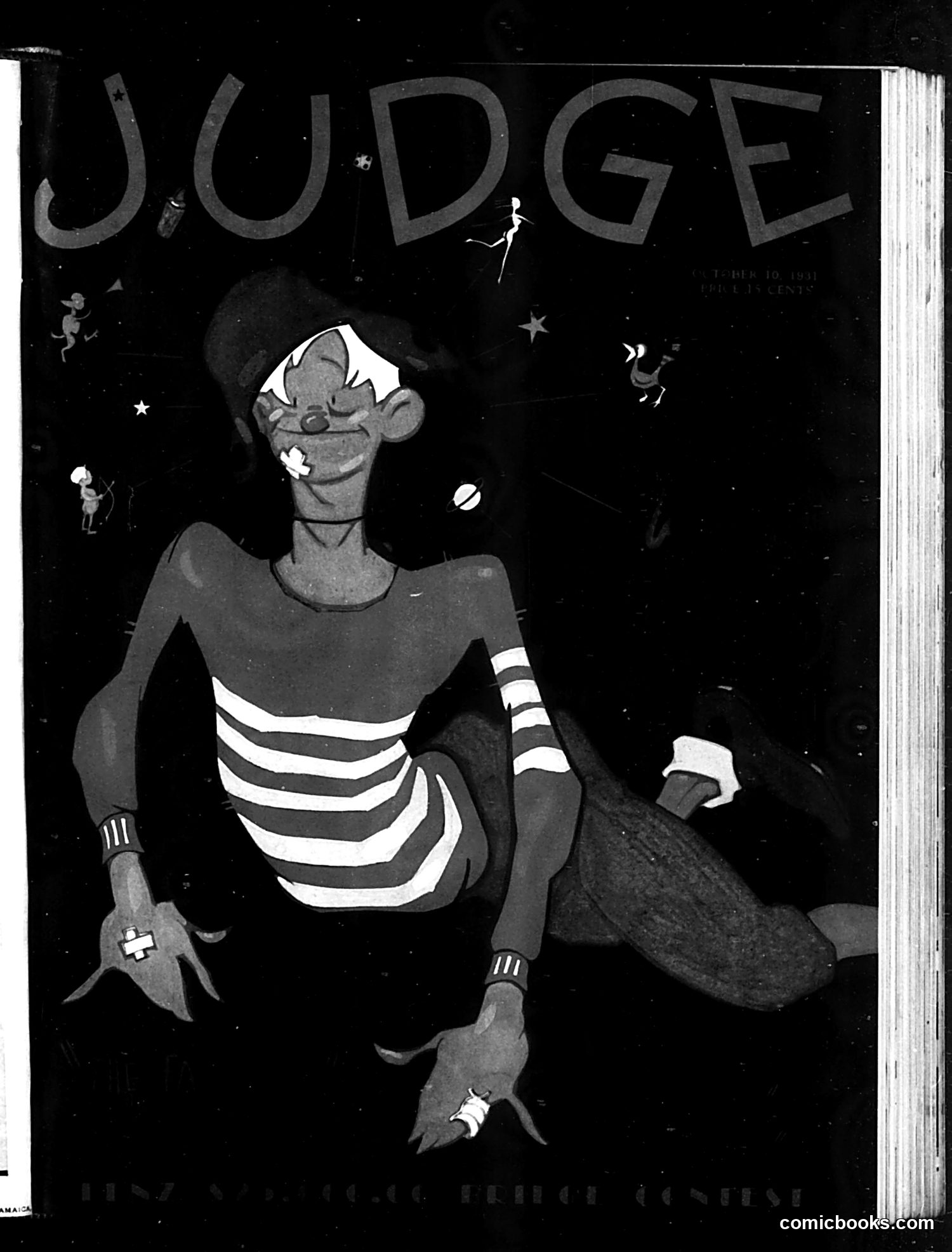
# Analysis of Judge Magazine Page This appears to be a cover illustration from Judge magazine featuring a stylized caricature of a Black woman in a striped bathing suit, surrounded by small figures floating in a starry space. The large title "JUDGE" dominates the top. The exaggerated facial features and caricatural style reflect the racist visual conventions common in early-to-mid 20th century American satirical publications. Without clearer text or date information visible, I cannot definitively identify the specific political or social reference intended by this illustration. The surrounding small figures and space theme suggest this may be satirizing contemporary entertainment, fashion, or cultural trends, but the exact subject and satirical point remain unclear from the image alone. The degrading visual treatment reflects the problematic racial attitudes prevalent in that era of American media.
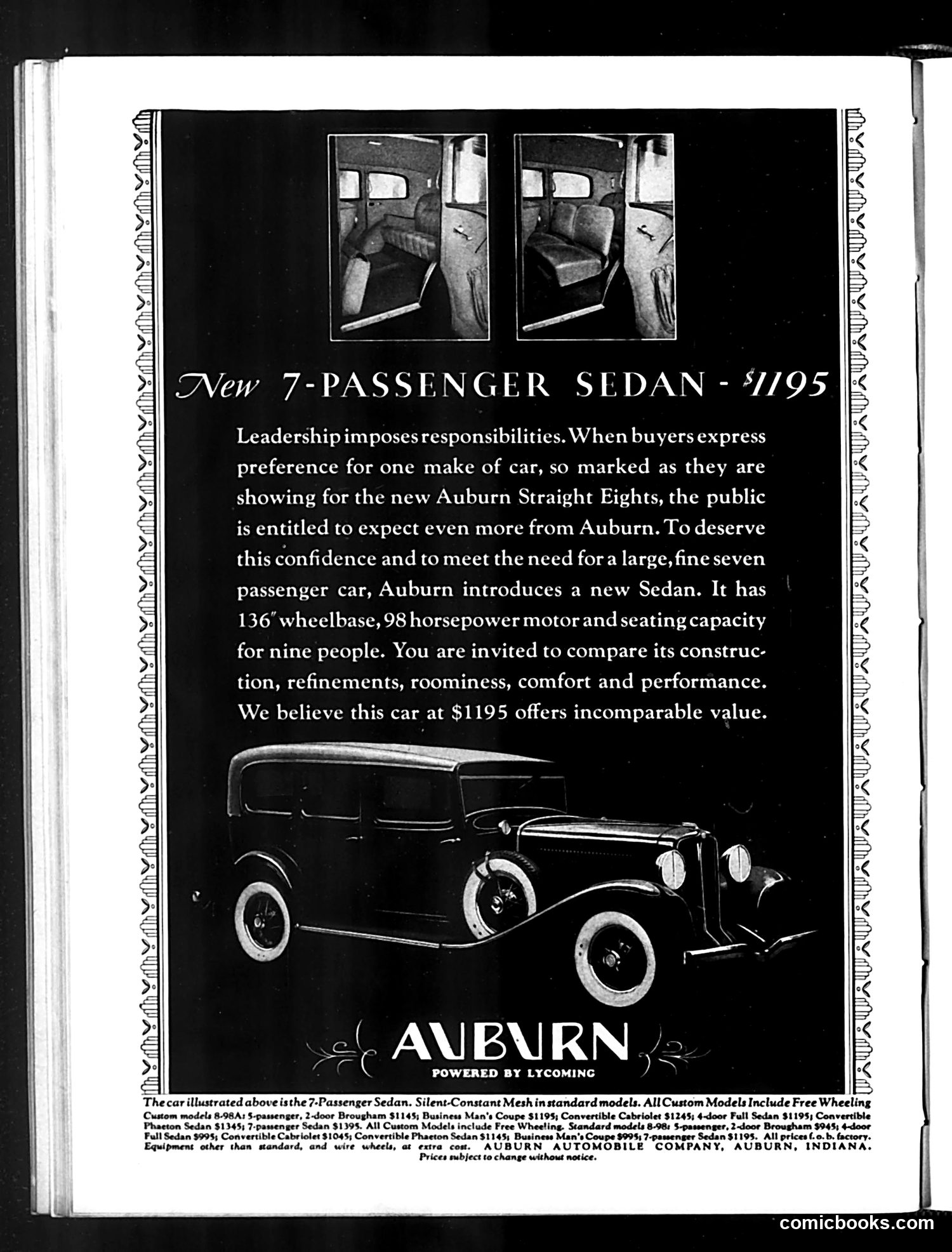
# Analysis This page is **not a political cartoon or satire**—it's a straightforward automobile advertisement for the Auburn 7-Passenger Sedan, priced at $1,195. The ad emphasizes Auburn's market leadership, arguing that buyers' preference for Auburn vehicles justifies introducing this larger sedan model. It highlights specifications (136-inch wheelbase, 98 horsepower, seating for nine) and appeals to buyers to compare its construction and value against competitors. Two interior photographs show the sedan's spacious cabin. The lower illustration depicts the car itself in profile. The small text at bottom lists various Auburn models and pricing. This represents standard magazine advertising from the automobile industry, not editorial satire or political commentary.
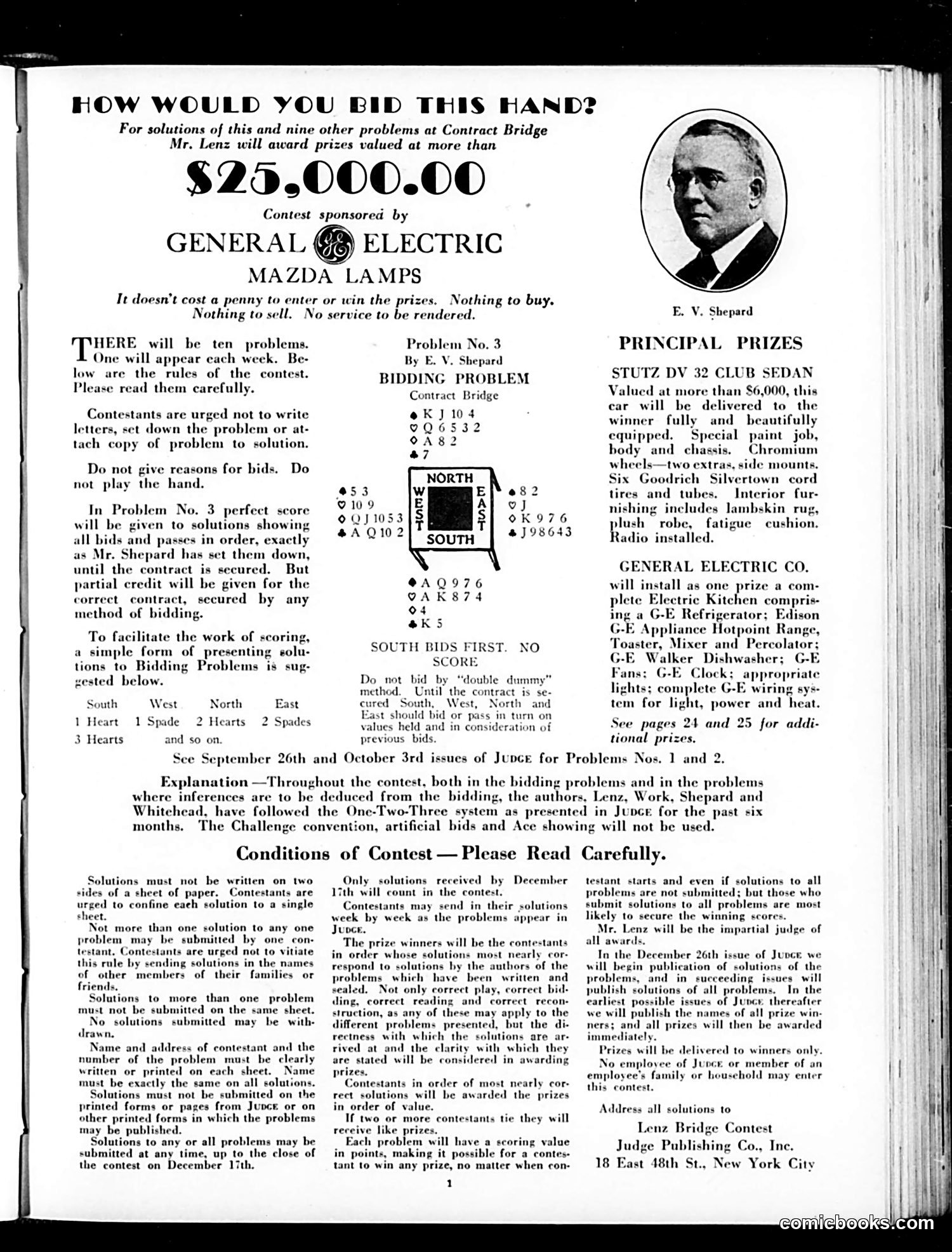
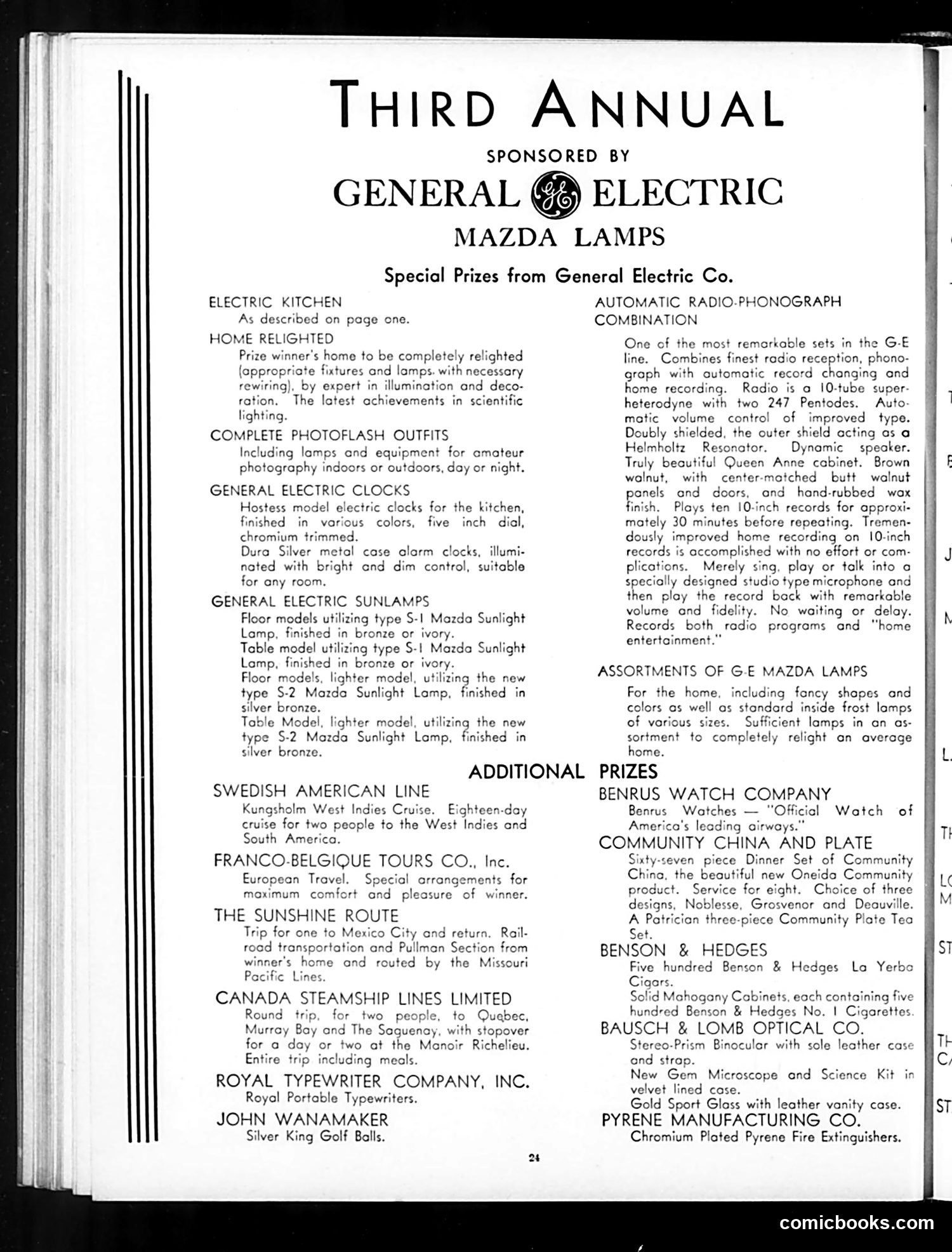
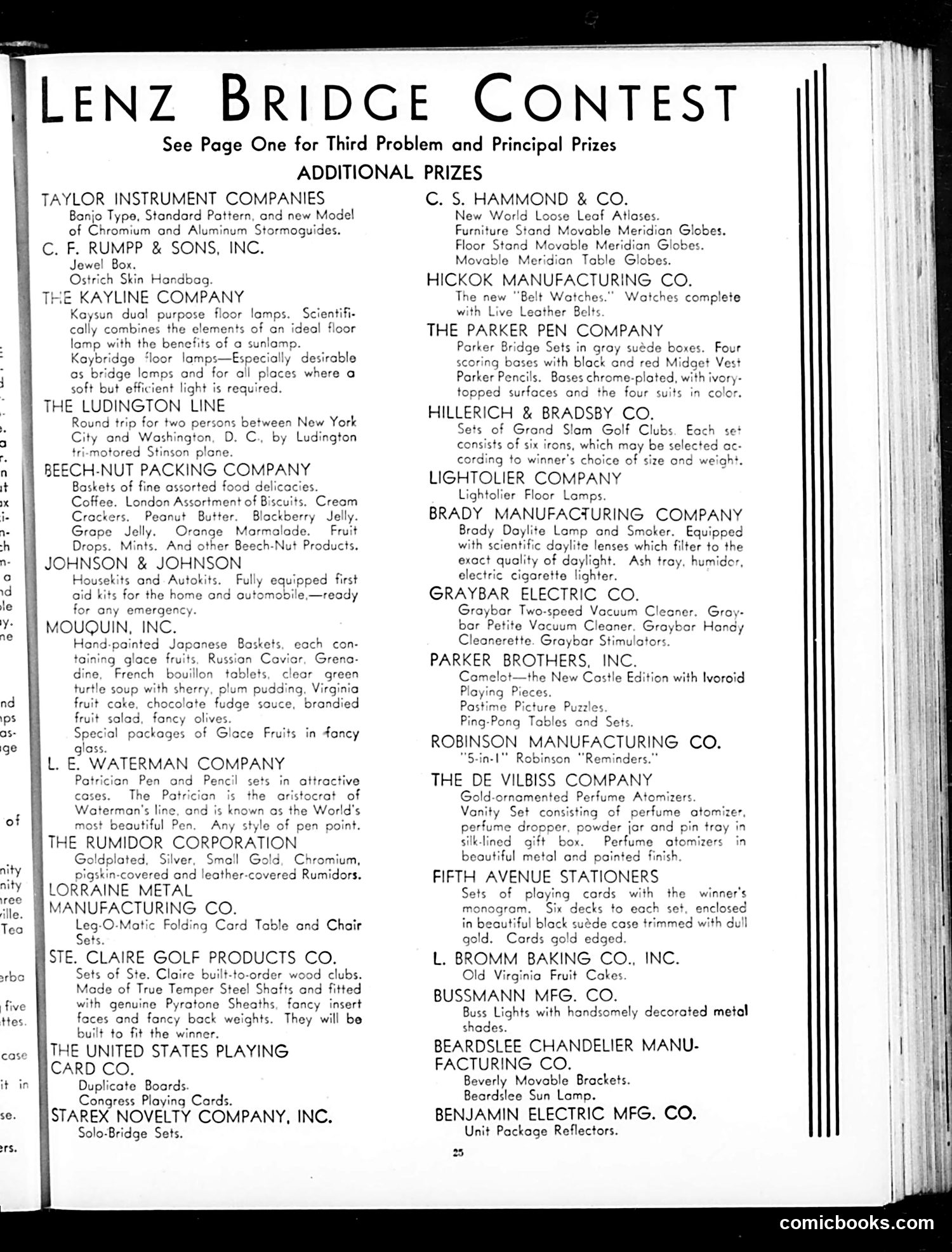
# Analysis This page is **primarily advertising**, not satire or political commentary. It features a bridge-bidding contest sponsored by General Electric and Mazda Lamps, offering $25,000 in prizes. The portrait shows E. V. Shepard, who appears to be associated with the contest (likely the judge or organizer). The "How Would You Bid This Hand?" headline presents Contract Bridge problems for readers to solve—a popular pastime in 1930s America. The contest rules and conditions occupy most of the page's text. The only substantive content is the bridge puzzle itself and advertisement for General Electric products (refrigerator, appliances, etc.) as prizes. There is no political satire or social commentary visible. This represents Judge magazine's commercial content rather than its typical satirical function.
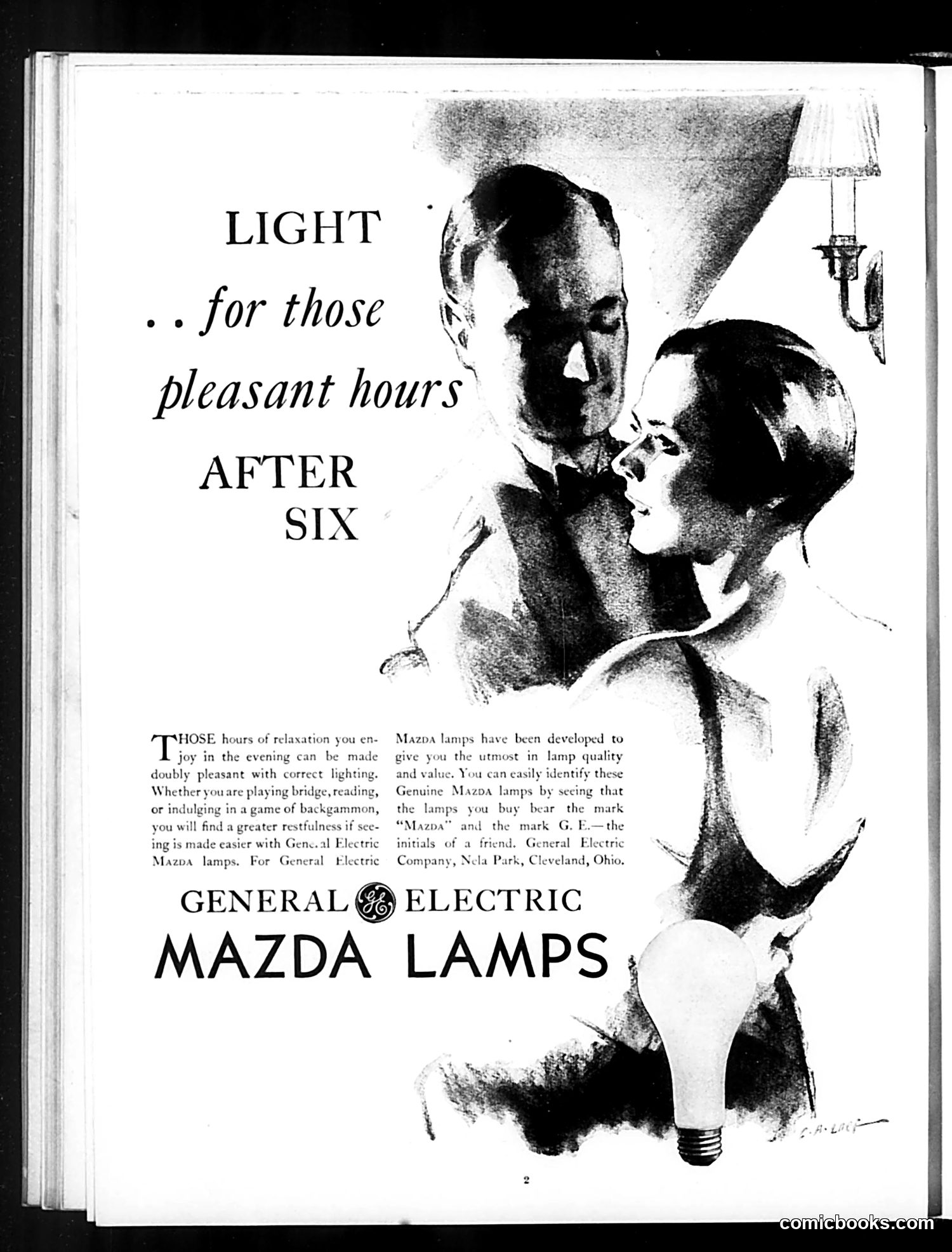
# Analysis This is primarily a **product advertisement**, not satirical content. General Electric's Mazda lamp division is marketing their lightbulbs to evening leisure activities—bridge, reading, backgammon. The imagery shows an intimate couple in soft lighting, emphasizing how proper illumination enhances relaxation and romance "after six" (evening hours). The advertisement appeals to middle-class domestic comfort and leisure. The text promises that Mazda lamps provide superior "lamp quality and value," identifiable by the "Mazda" mark and G.E. initials. General Electric manufactured these lamps at their Nela Park facility in Cleveland, Ohio. This represents typical early-twentieth-century consumer advertising targeting home improvement and domestic contentment—not political satire.
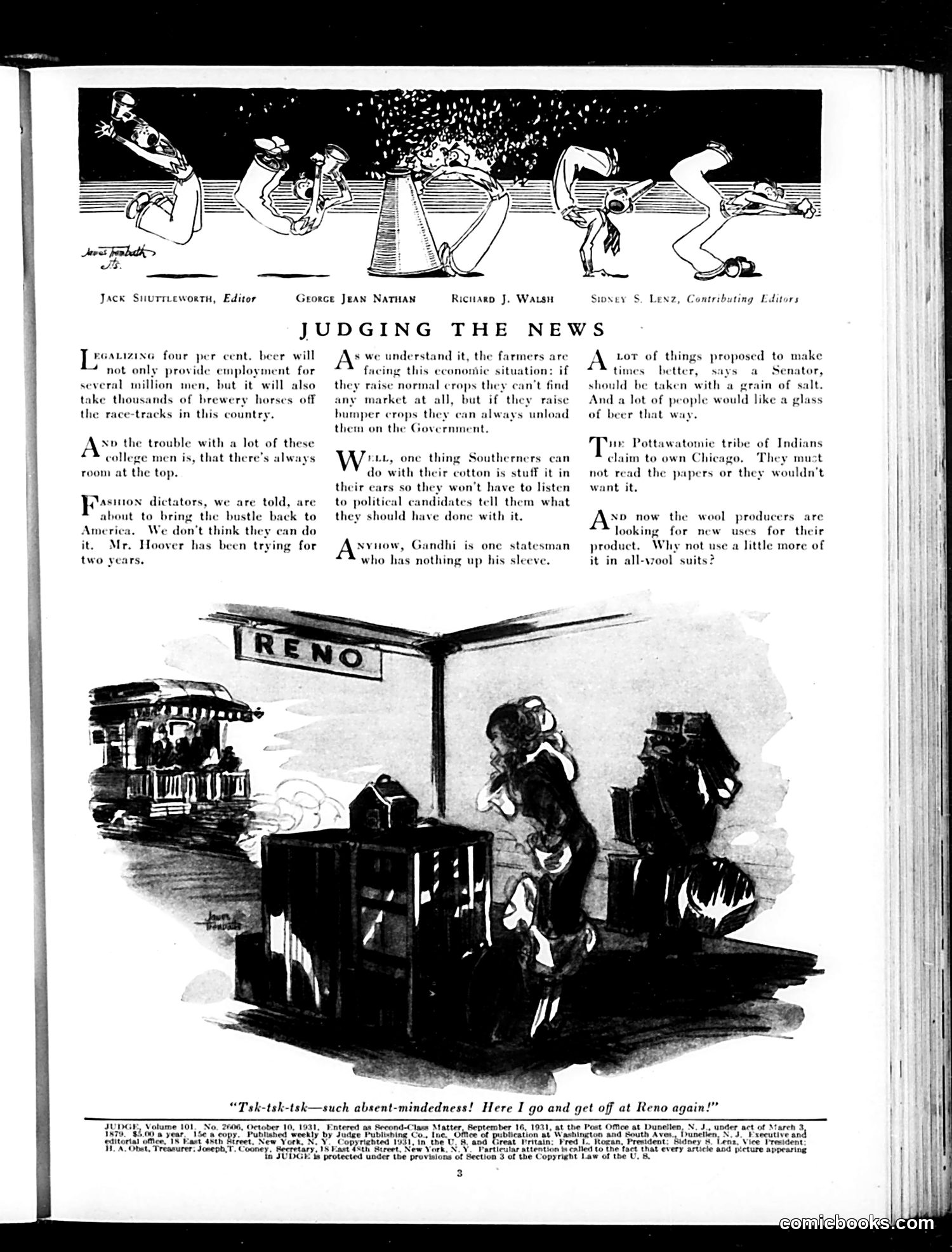
# "Judging the News" - October 10, 1931 This page contains editorial commentary on current events rather than a political cartoon. The main illustrated cartoon shows a train station scene at Reno, Nevada, with the caption "Tsk-tsk-tsk—such absent-mindedness! Here I go and get off at Reno again!" **The reference**: Reno was famous as a divorce destination where people obtained quick divorces during this era. The joke satirizes how casually someone keeps ending up there—implying repeated divorces or that it's become such a common destination people almost absent-mindedly get off there. The text sections mock various targets: beer legalization providing employment, farmers' economic hardship, college graduates lacking ambition, fashion trends, political candidates, Gandhi, and woolens industry competition. Typical satirical commentary on Depression-era politics and social issues.
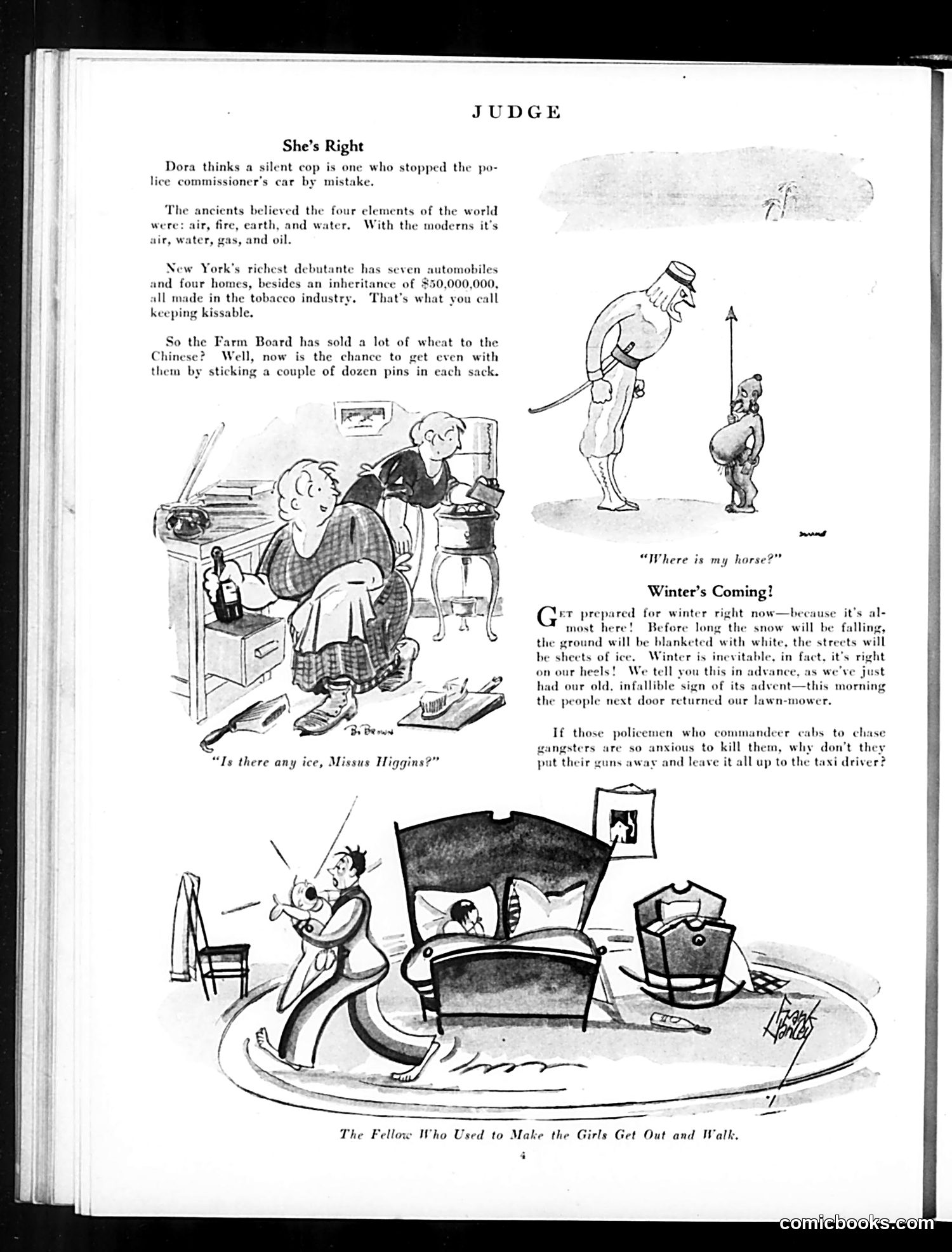
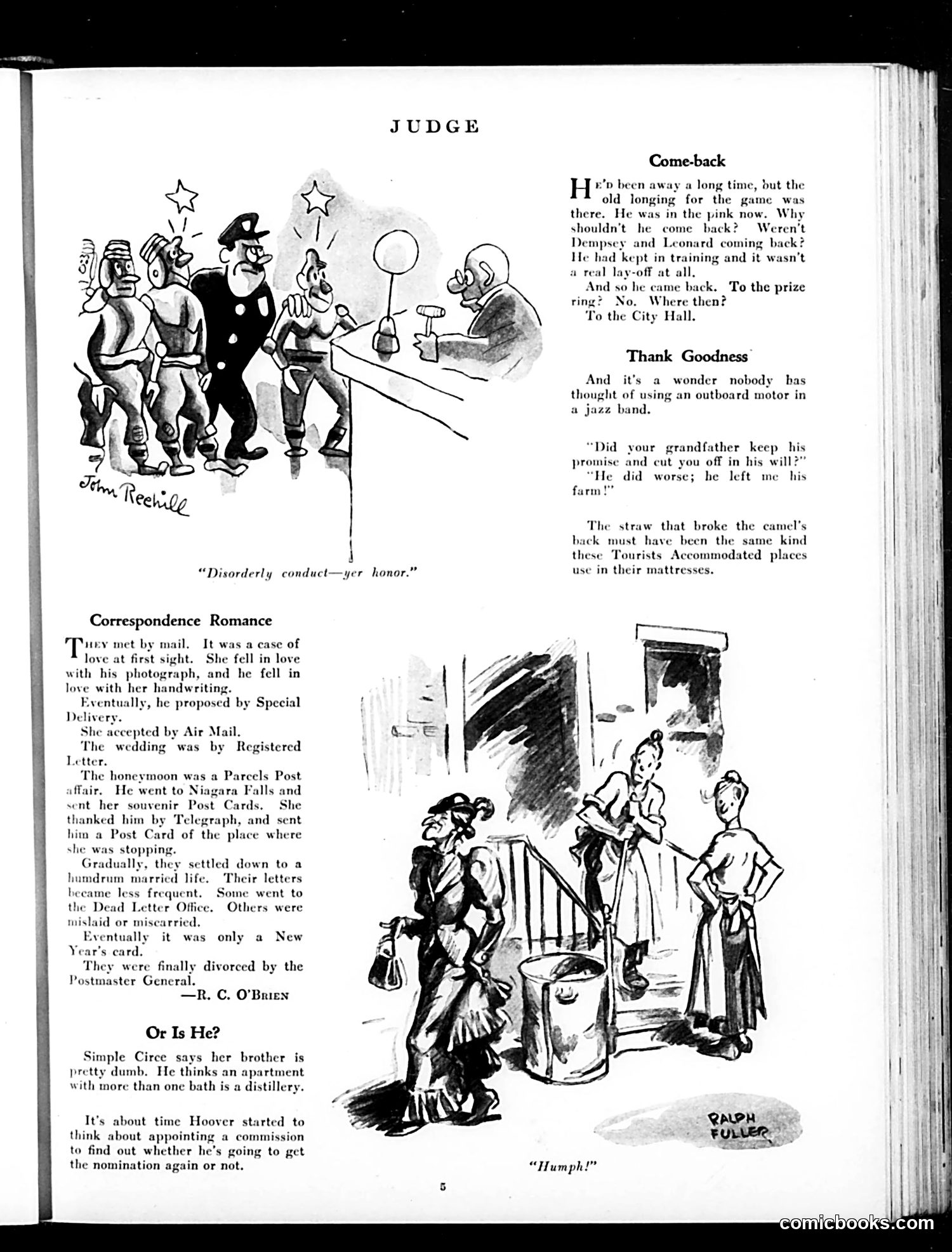
# Page Analysis: Judge Magazine Satirical Content This page contains three unrelated humorous pieces typical of Judge magazine's format: 1. **"Disorderly conduct—yer honor"** (top): A courtroom cartoon by John Reakill showing what appears to be a jazz band being prosecuted, satirizing concerns about jazz music and "disorderly conduct" — reflecting 1920s moral panic about jazz as crude and socially dangerous. 2. **"Correspondence Romance"** (middle): A text piece by R.C. O'Brien mocking mail-order courtship and marriages conducted entirely through postal service, playing on the absurdity of romance conducted via letters and postcards rather than in person. 3. **"Or Is He?"** (bottom): A brief piece questioning whether someone's apartment setup indicates he's foolish, likely satirizing Prohibition-era assumptions about hidden distilleries. The cartoons reflect 1920s-era social anxieties: jazz, mail romance, and Prohibition enforcement.
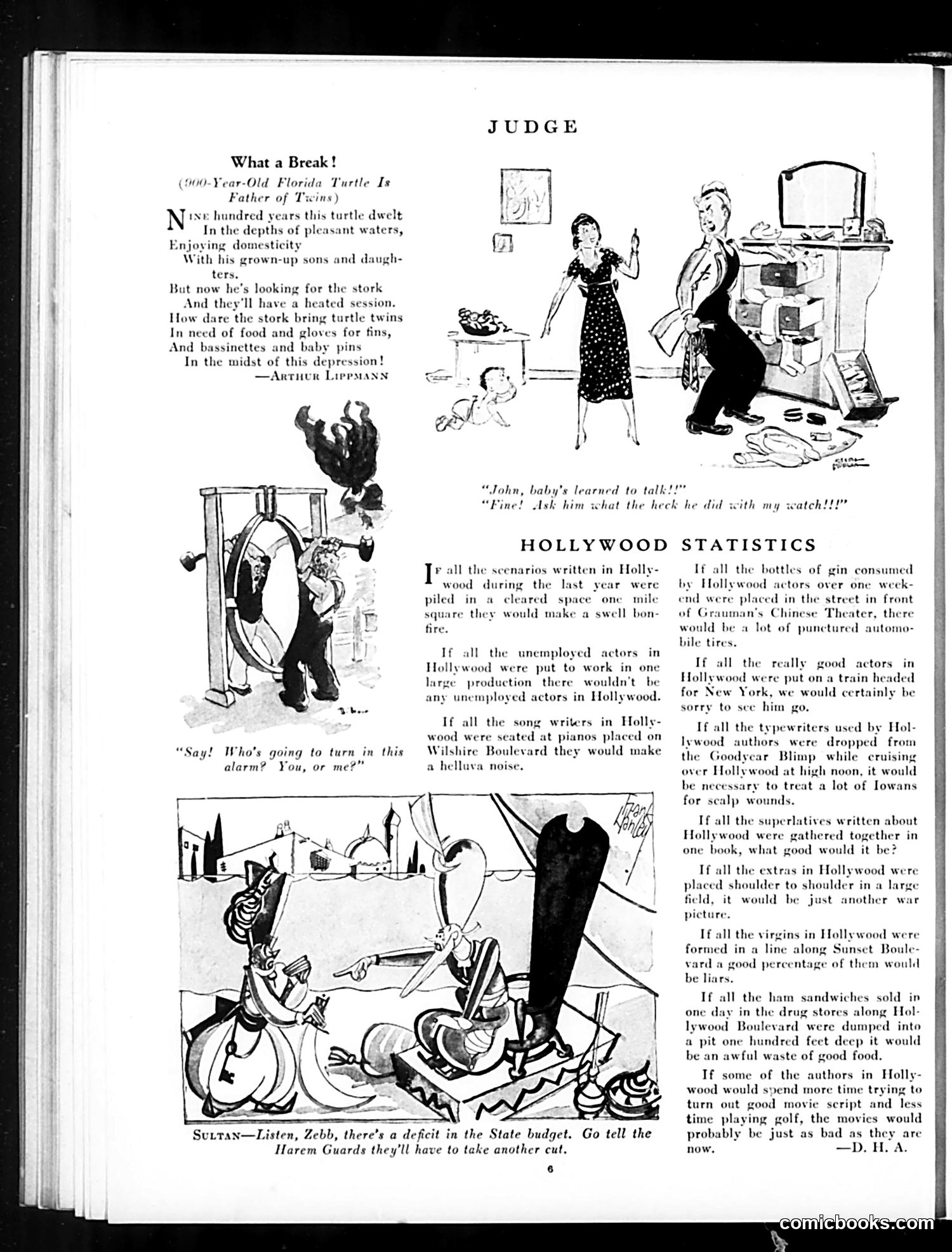
# Judge Magazine Page Analysis This page contains three satirical pieces from Judge magazine (likely 1930s based on style): 1. **"What a Break!"** — A poem by Arthur Lippmann mocking a 900-year-old Florida turtle expecting twins during the Depression. The joke: even animals shouldn't reproduce when resources are scarce and unemployment is high. 2. **Top cartoon** — A domestic scene where a baby learned to say an expletive, with the mother blaming the father's "scotch" (whiskey). The satire targets Prohibition-era drinking and masculine irresponsibility. 3. **"Hollywood Statistics"** — A humorous list of hypothetical scenarios about Hollywood excess (gin consumption, unemployed actors, typewriters, superlatives, extras, virgins, and ham sandwiches). It satirizes Hollywood's wastefulness and overproduction during economic hardship. The cartoons collectively mock Depression-era social problems through exaggeration and absurdist logic.
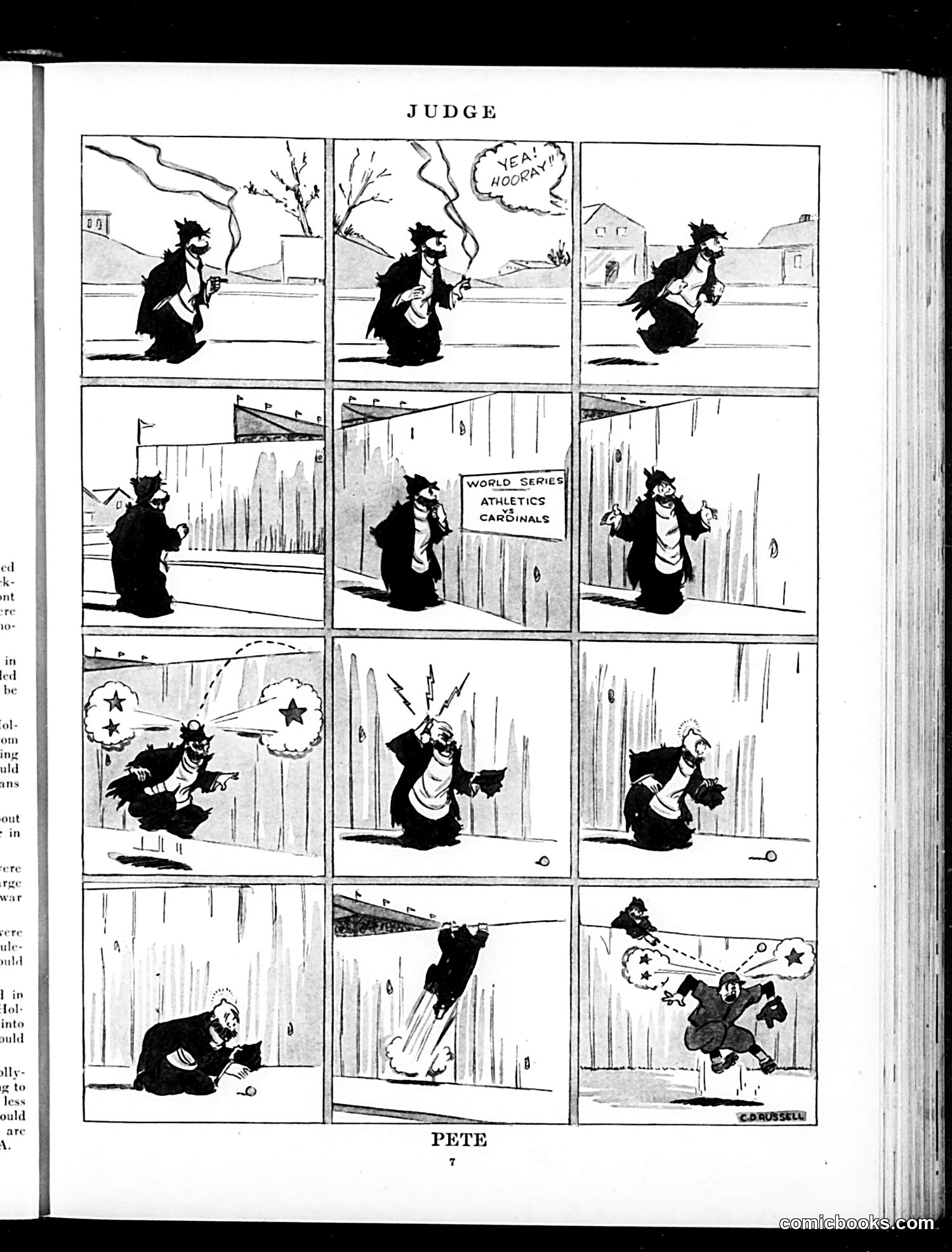
# "Judge" Comic: "Judge" and "Pete" This two-panel comic strip satirizes the 1919 World Series between the Athletics and Cardinals (visible on a sign in the middle panel). The top strip titled "JUDGE" shows a character enthusiastically celebrating ("Yeah! Hooray!") while running and jumping. The bottom strip "PETE" depicts the same or similar character experiencing increasingly chaotic consequences—being knocked around, falling, and ending with explosive results. The satire appears to mock overzealous sports fans whose exuberant celebrations at a World Series game lead to physical mishaps and embarrassment. It's a humorous commentary on fan behavior during major sporting events, showing how enthusiasm can spiral into comic disaster.
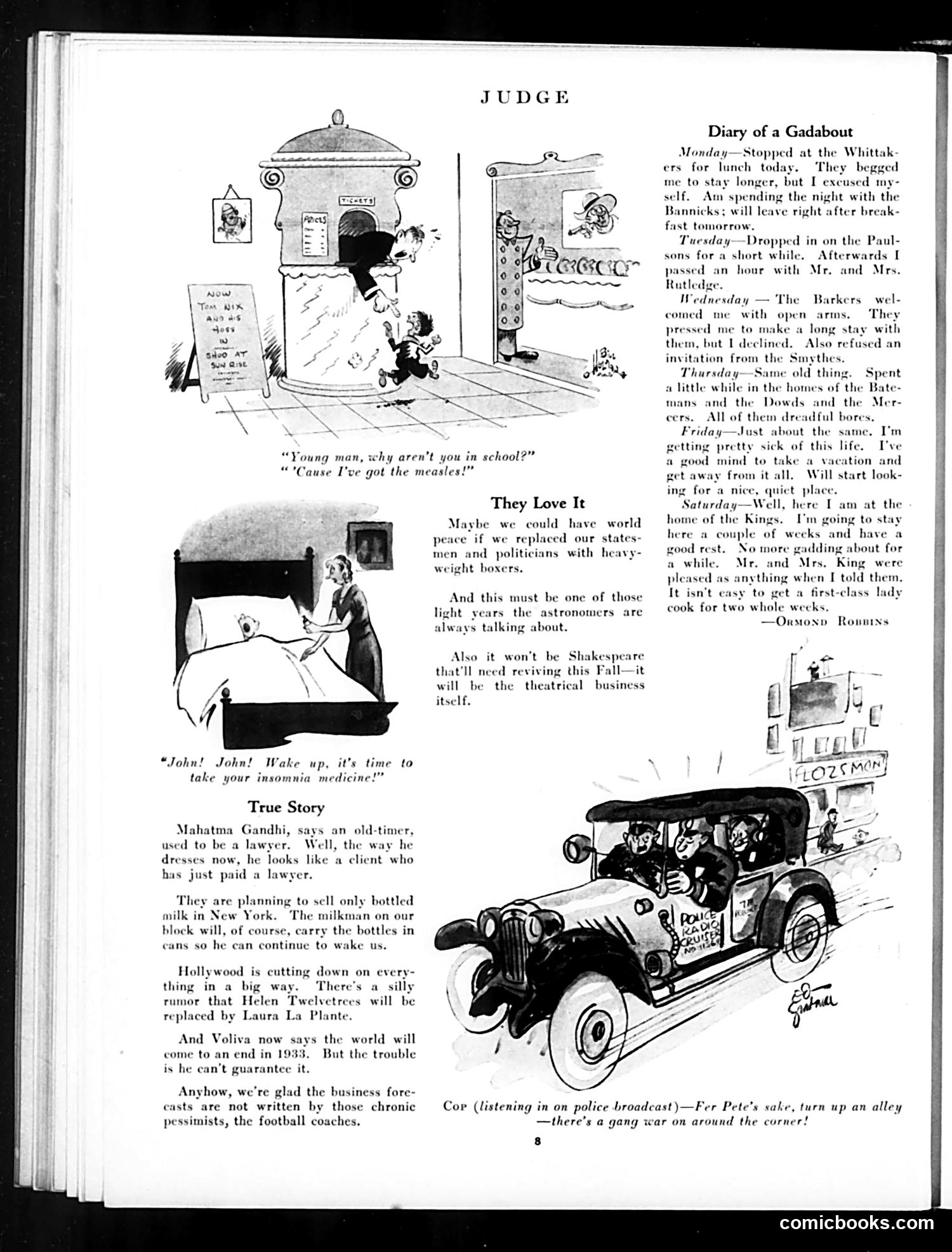
# Judge Magazine Page Analysis This page contains multiple satirical pieces targeting 1920s American society: **"Diary of a Gadabout"** mocks the idle wealthy who spend their time visiting acquaintances out of social obligation rather than genuine interest, finding everyone "dreadful bores." **"They Love It"** offers two brief social commentaries: one suggesting replacing politicians with boxers for world peace, and another joking about the vast distances astronomers discuss. **"True Story"** includes three unrelated quips: one about Gandhi's appearance after paying lawyers (mocking legal fees), one about milkmen's noise-making despite bottled milk delivery, and Hollywood gossip about actress replacements. **The cartoon at bottom** depicts a police officer on a broadcast warning of gang violence, reflecting 1920s concerns about organized crime and urban danger—likely Prohibition-era gang activity. The overall tone reflects Judge's satirical stance on contemporary politics, social pretension, entertainment industry absurdities, and urban crime concerns of the era.
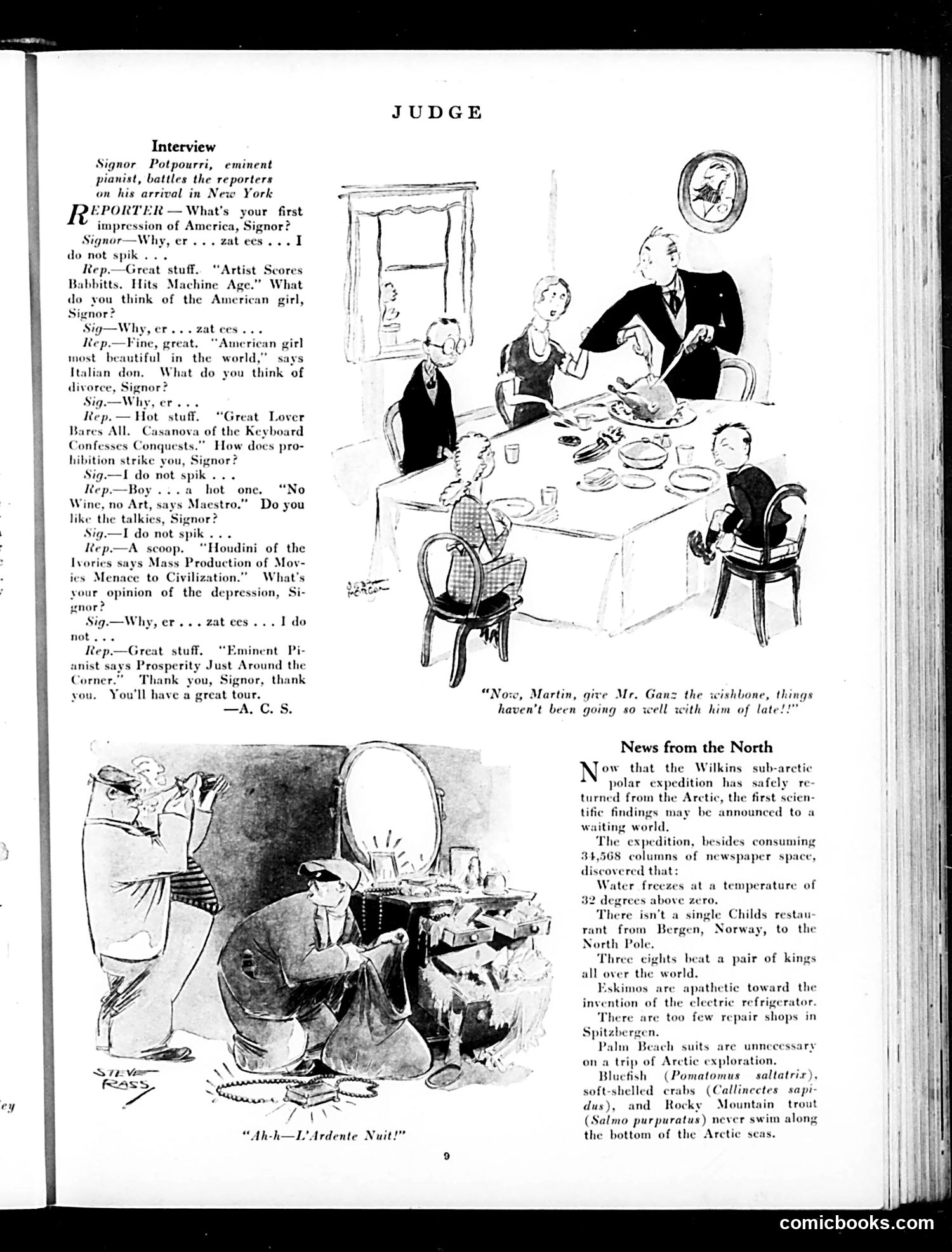
# Judge Magazine Page Analysis **Top Cartoon - "Interview":** This satirizes sensationalist journalism. A reporter interviews Signor Potpourri (an Italian pianist arriving in New York), but the pianist speaks minimal English ("zat ees," "do not spik"). The reporter manufactures inflammatory headlines anyway—twisting bland answers into scandal stories about "Artist Scores Babbitts," "Great Lover Bares All," and claims about the depression. The joke: journalists fabricate sensational narratives regardless of what subjects actually say. The byline "—A.C.S." credits the cartoonist. **Bottom Cartoon - "Ah-h—L'Ardente Nuit!":** Depicts what appears to be a theatrical or operatic scene with exaggerated figures, likely mocking overwrought European dramatic performance. **"News from the North":** A humorous commentary on the Wilkins Arctic expedition's media coverage. It satirizes newspapers devoting enormous space (34,568 columns) to expedition "findings" that are absurdly obvious or irrelevant—water freezes, no restaurants exist in the Arctic, poker hand rankings don't change, etc. The satire targets both the expedition's self-importance and media's hunger for exotic adventure stories.
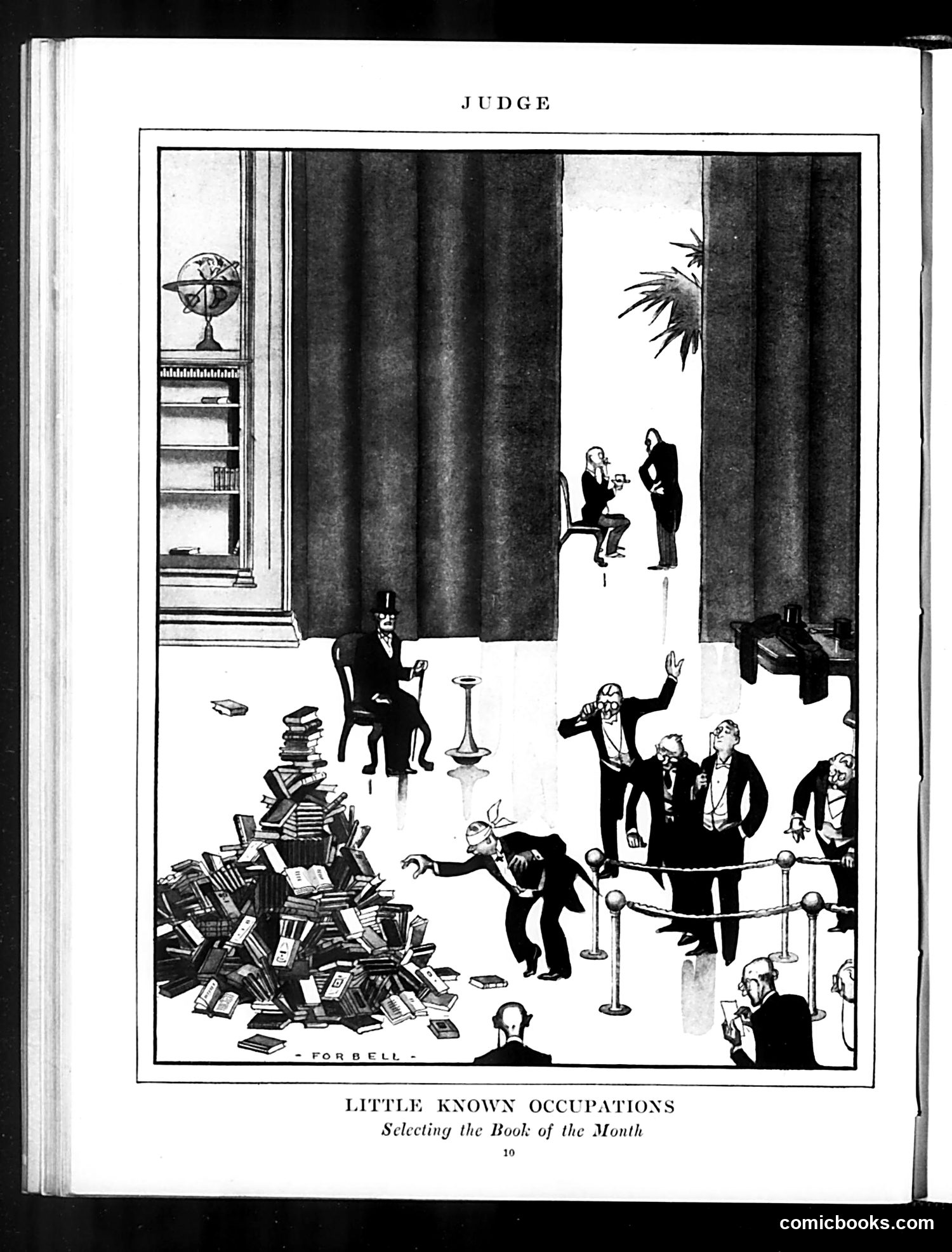
# Analysis This is a satirical cartoon titled "Little Known Occupations: Selecting the Book of the Month," credited to Forbell. It depicts a judge's chambers where a large pile of books has accumulated on the floor. Well-dressed men in suits—appearing to be members of a book selection committee or judges—stand around examining and debating the volumes, some gesturing animatedly. The satire mocks the process of selecting a "Book of the Month," suggesting it's a chaotic, overwhelming endeavor where supposedly serious literary judges are comically swamped by the sheer volume of submissions. The cartoon implies the selection process is less about genuine literary merit and more about bureaucratic struggle and pretentious posturing among the evaluators.