A complete issue · 36 pages · 1930
Judge — June 21, 1930
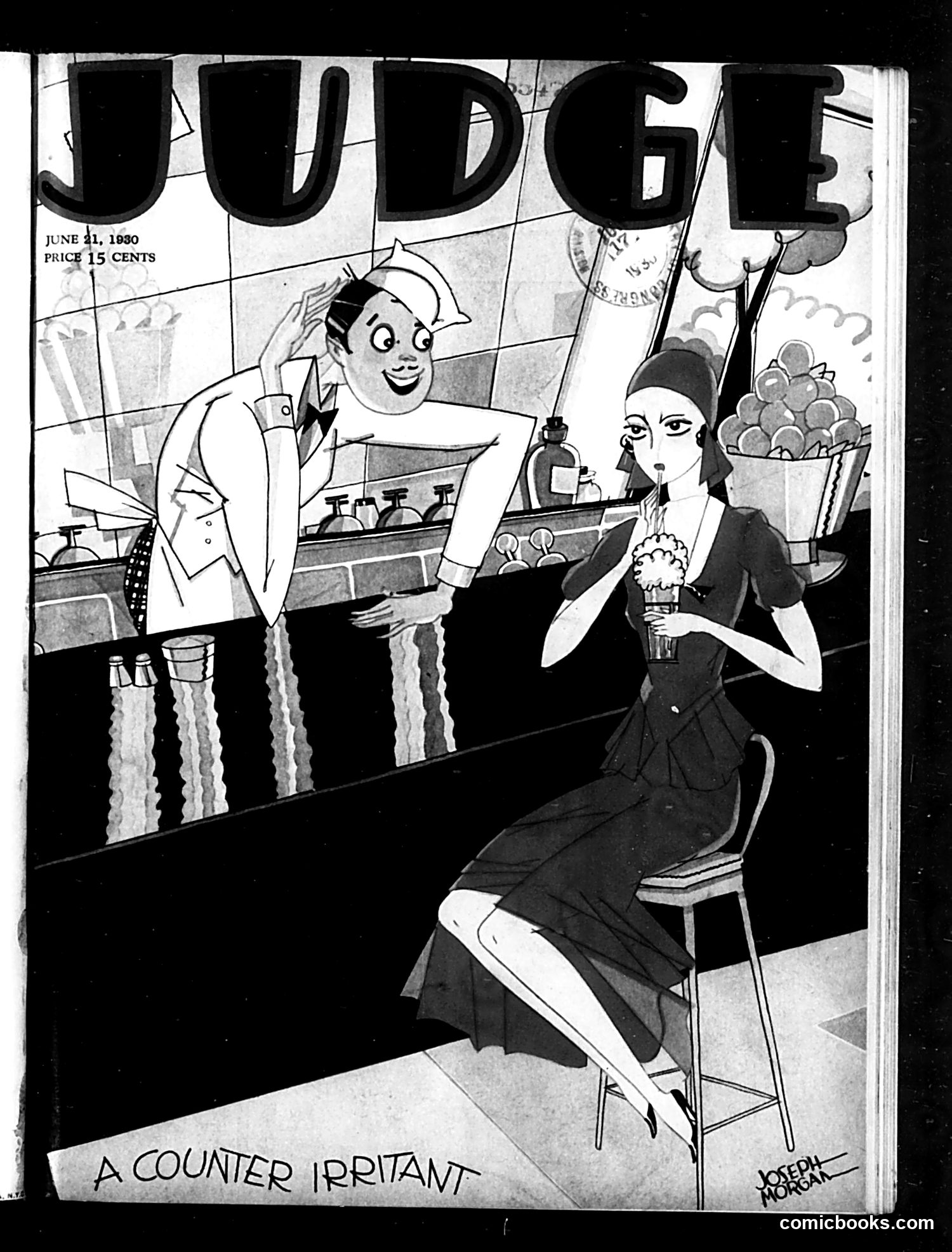
# "A Counter Irritant" - Judge Magazine, June 21, 1930 This cartoon depicts an ice cream counter scene titled "A Counter Irritant." A male soda jerk behind the counter smiles broadly while serving an elegantly dressed woman seated at the counter. She holds an ice cream cone and appears annoyed or unimpressed by his attentions. The humor likely plays on the social dynamics of the era: an overeager service worker trying to charm a customer who finds his behavior irritating rather than charming. The title puns on "counter irritant" (a medical term for something that distracts from pain), suggesting his unwanted friendliness is the "irritant." The 1930 date places this during the Great Depression, when service work was common employment. The cartoon satirizes workplace social interactions and class differences between server and customer.
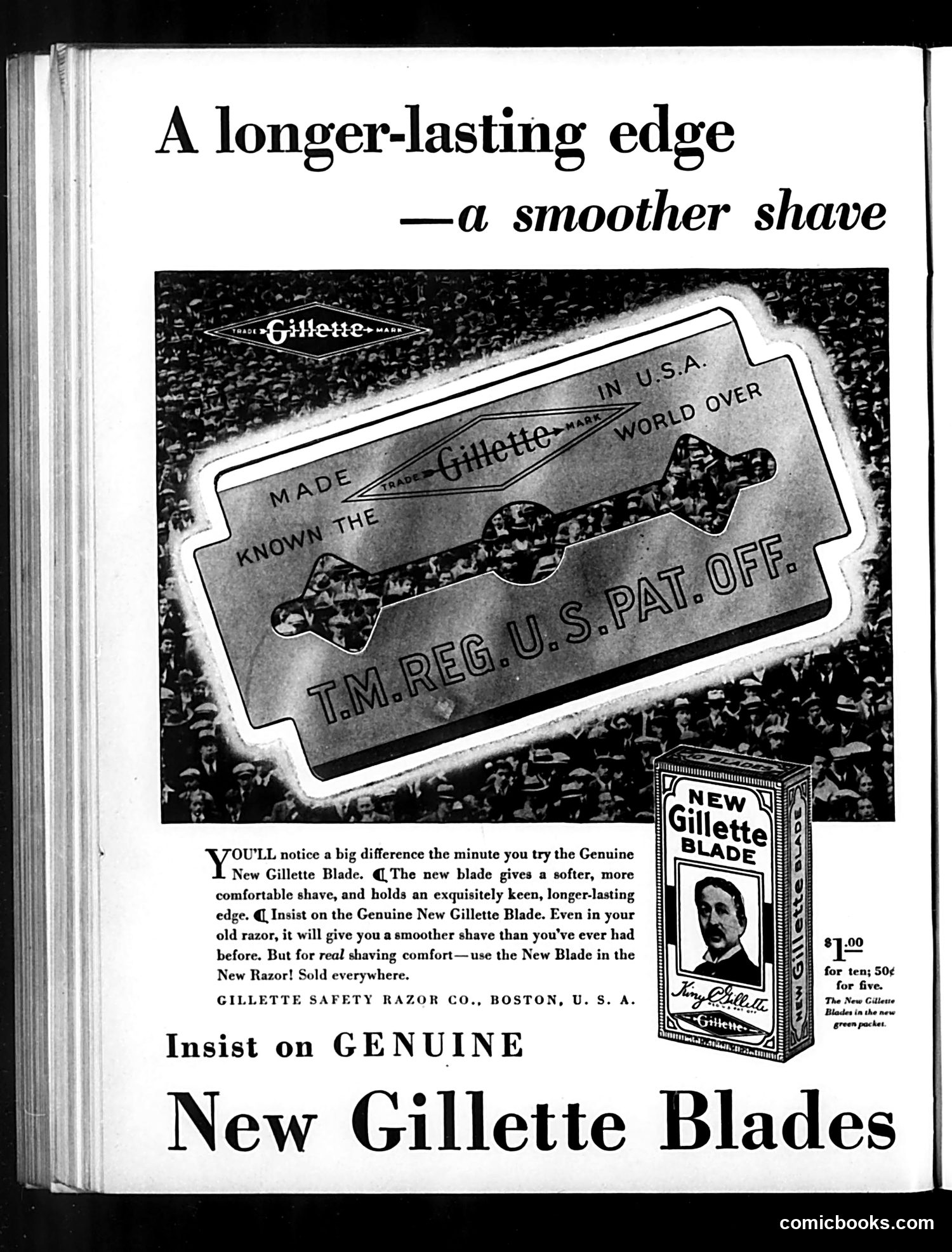
# Analysis This page is primarily a **Gillette razor blade advertisement**, not political satire. The ad promotes "New Gillette Blades" with claims of a "longer-lasting edge" and "smoother shave." The advertisement includes: - A large image of a Gillette blade package - Marketing copy emphasizing the blade's superiority and comfort - A product box showing pricing ($1.00 for ten; 50¢ for five) - The company name: Gillette Safety Razor Co., Boston, U.S.A. The only potentially satirical element is the tagline "KNOWN THE WORLD OVER," which humorously inflates the product's global significance. However, this appears to be straightforward advertising hyperbole rather than political commentary. This is **not a Judge magazine cartoon page** but rather a paid advertisement, common in periodicals of this era.
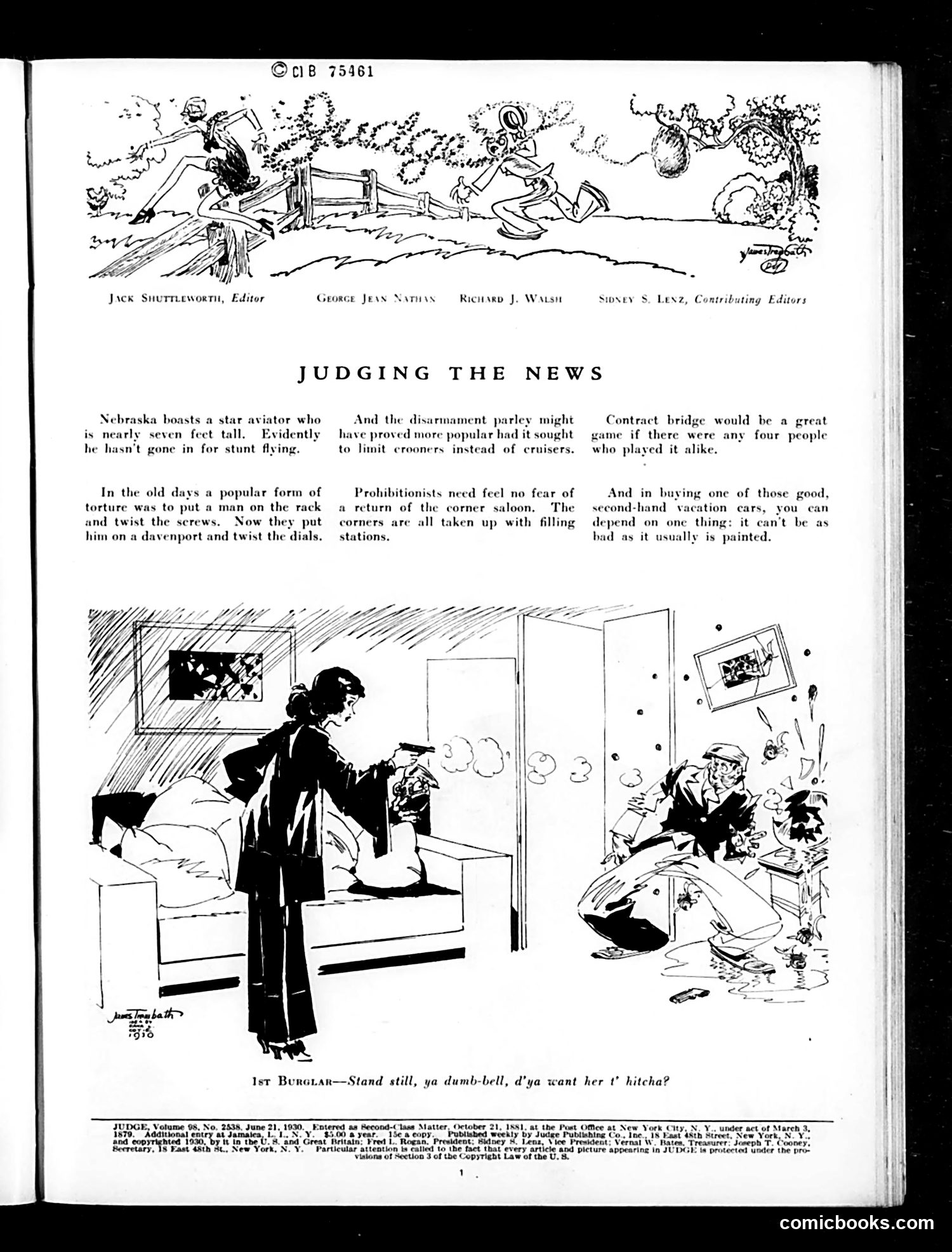
# "Judging the News" - Judge Magazine Satire This page contains brief satirical commentary on contemporary news topics paired with cartoon illustrations. The main cartoon depicts a burglar caught mid-crime, confronted by a woman who sarcastically asks, "Stand still, ya dumb-bell, d'ya want her t' hitcha?" The accompanying text jokes appear to reference: - **Aviation stunts** in Nebraska - **Prohibition-era concerns** about corner saloons versus filling stations - **Used car sales** where appearance ("can't be as good as it usually is painted") masks actual condition The cartoons use visual humor and vernacular dialogue to mock contemporary social issues of the era. The burglar cartoon specifically satirizes either crime or domestic situations, though the exact social commentary remains somewhat unclear from the limited context provided.
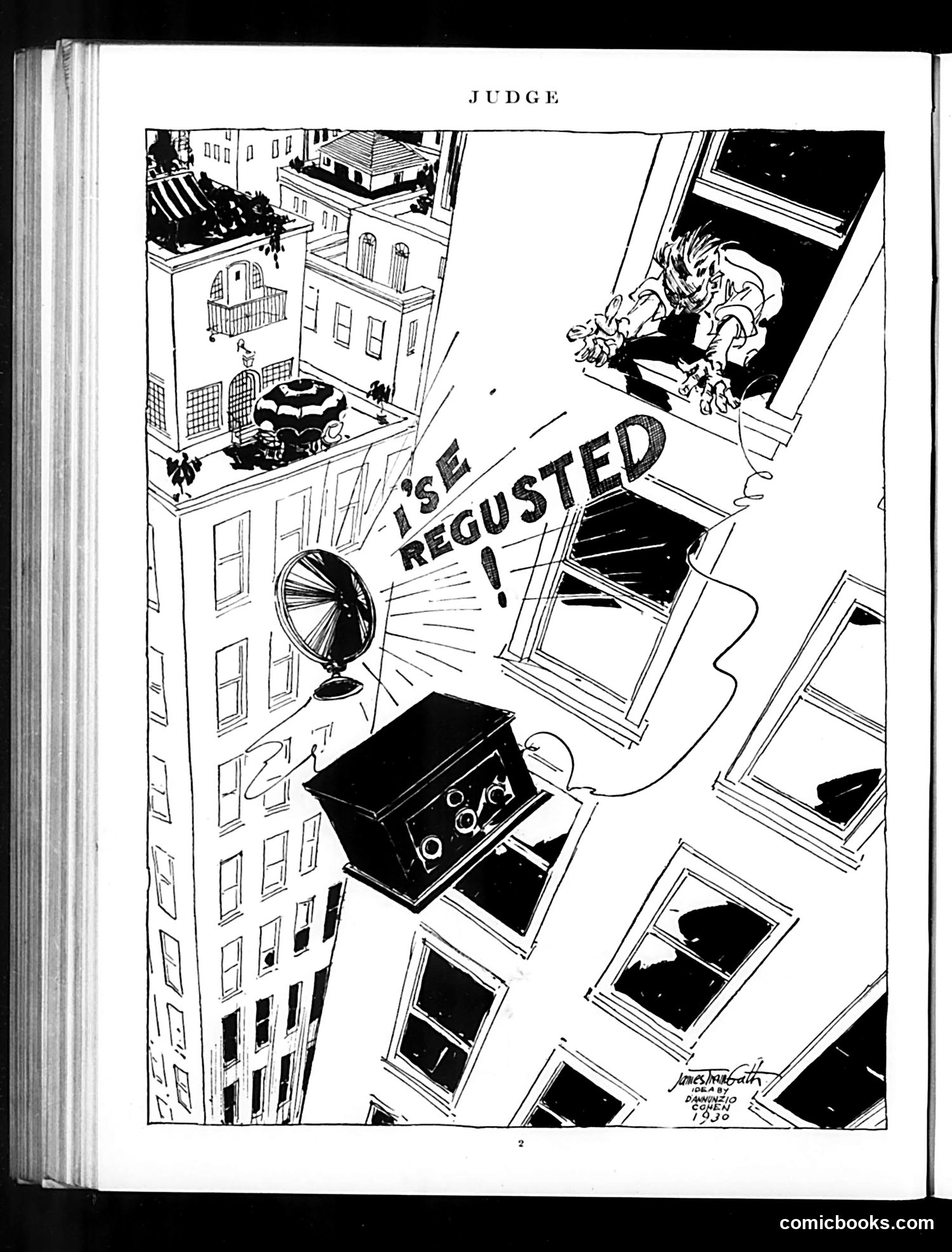
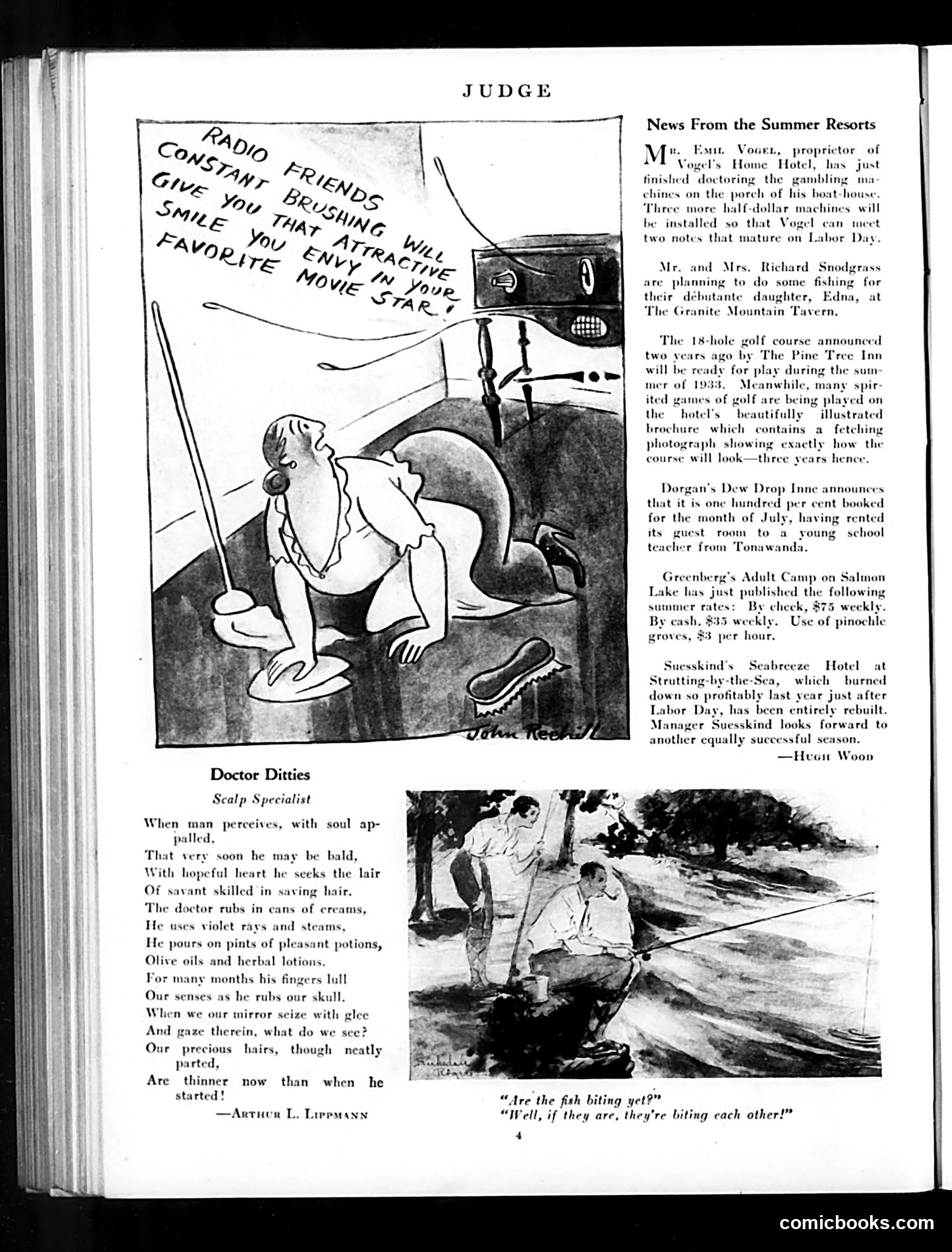
# "Judge" Cartoon Analysis: "I'SE BEGUSTED" This 1936 cartoon depicts a scene viewed from above, showing a tall building with a figure leaning out an upper window, appearing angry or disgusted. The phrase "I'SE BEGUSTED" (dialect for "I am disgusted") is prominently displayed. Below, various household devices—a radio and fan among them—are positioned near windows, suggesting the figure is reacting to noise or disturbance from these appliances. The satire likely critiques urban apartment living frustrations: neighbors' noise from radios and fans disturbing others. The exaggerated perspective and the figure's theatrical reaction emphasize the annoyance of modern conveniences creating unwanted intrusions between close-quarters neighbors. This reflects 1930s concerns about densely-packed city living and the complications of new consumer technology.
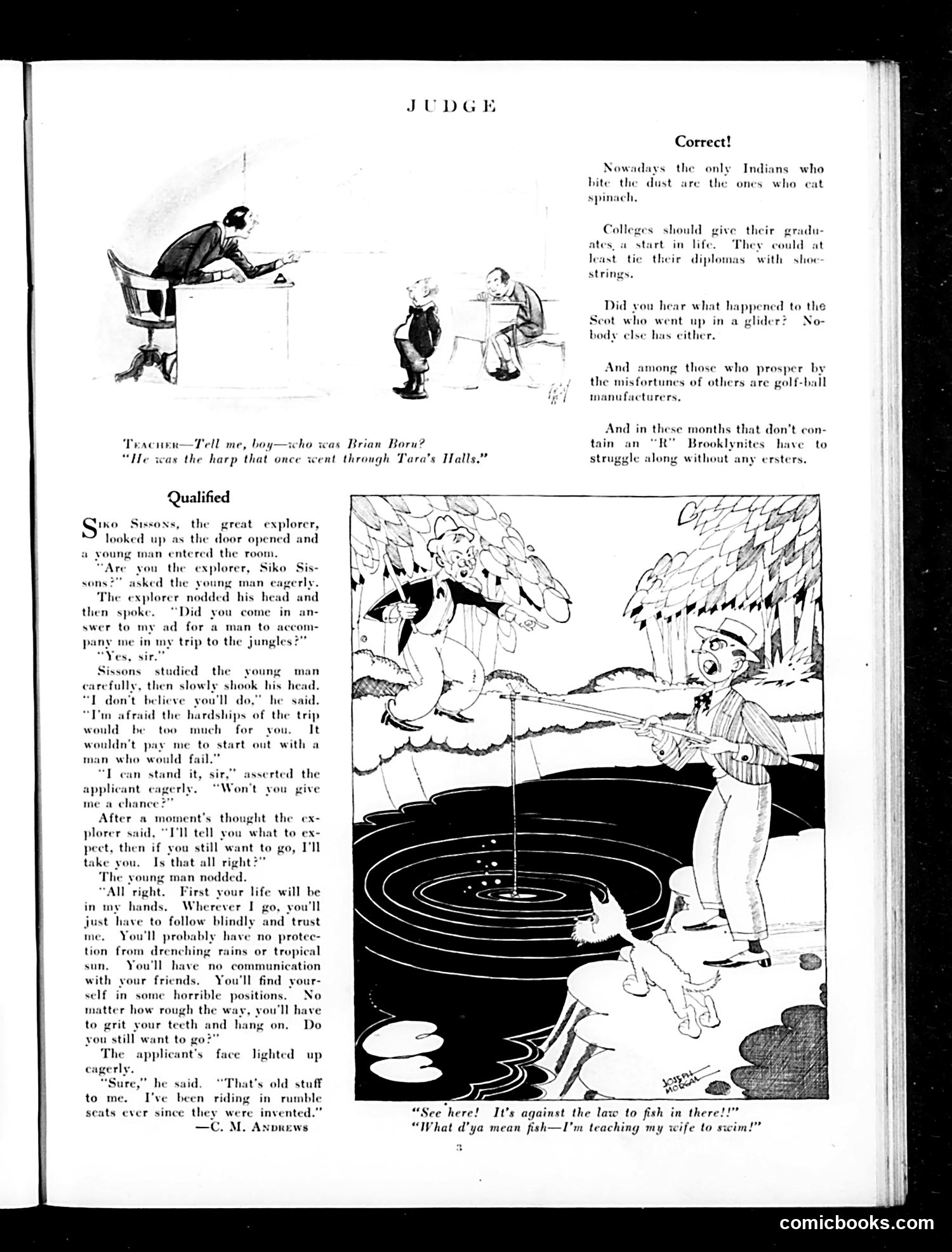
# Analysis of Judge Magazine Page This page contains two unrelated items: **Top section ("Correct!")**: Brief satirical quips mocking various social groups—Indians, college graduates, climbers, and golf-ball manufacturers. These are topical one-liners typical of Judge's format. **Bottom section ("Qualified")**: A humorous story about Siko Sissons, a great explorer, interviewing a young man as a potential jungle expedition companion. The explorer warns of hardships and isolation, testing the applicant's resolve. The young man confidently accepts, claiming he's "been riding in rumble seats ever since they were invented"—implying casual modern recklessness qualifies him for serious adventure. The accompanying cartoon illustrates this: the applicant appears confident while fishing illegally in a hole, his wife behind him. The joke satirizes how unprepared modern youth are for genuine challenges, mistaking frivolous activities for genuine capability.
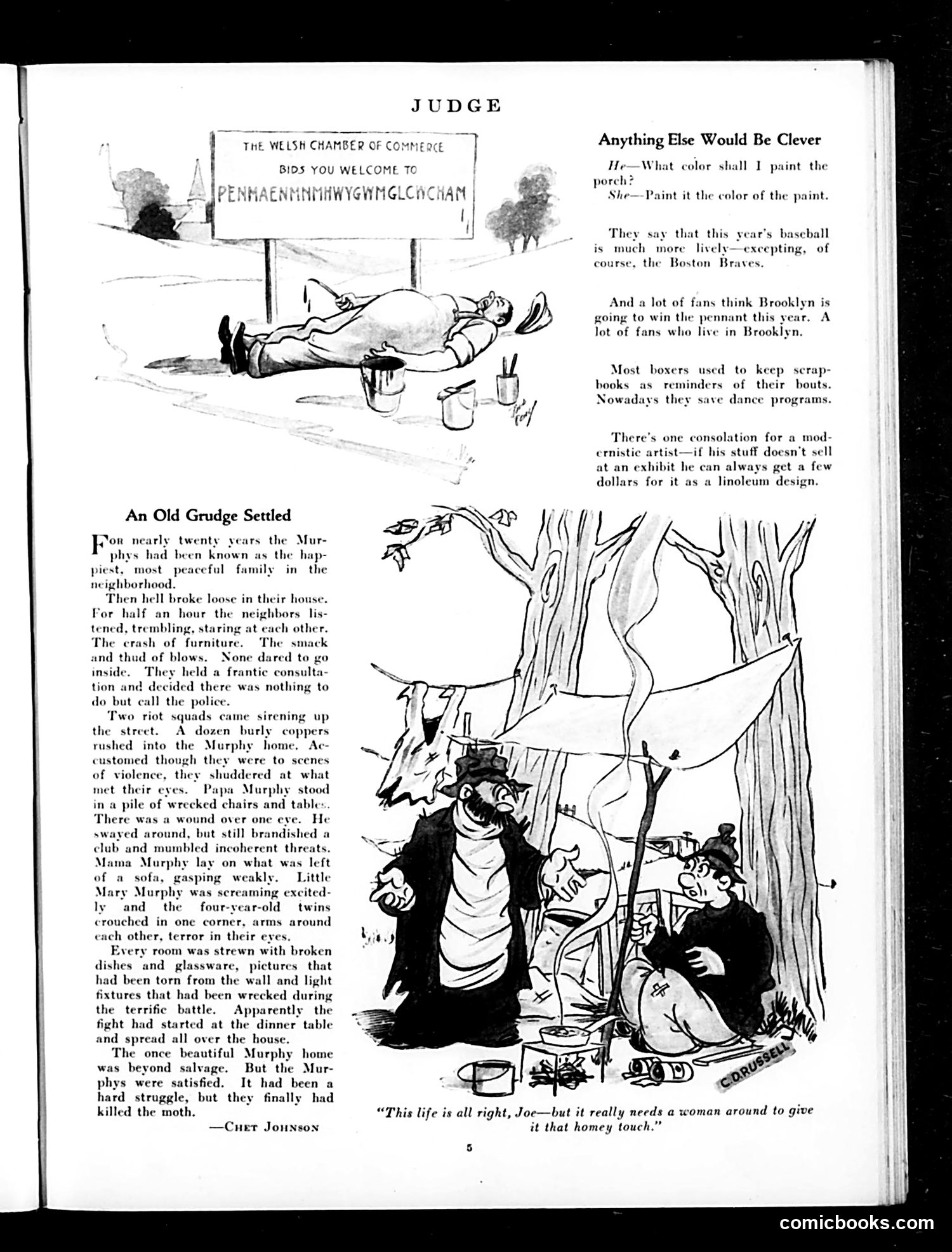
# Analysis of Judge Magazine Page **Top Cartoon:** Shows an exhausted man collapsed outside Penrhaeningwyngmlgncham (a deliberately absurd Welsh place name), satirizing Welsh town names' perceived complexity for English speakers. The humor targets the linguistic difficulty of Welsh. **"An Old Grudge Settled" Story:** Illustrates a domestic fight between the Murphys, an Irish family. The narrative describes furniture destruction and police involvement, ending with the family satisfied despite the chaos. The accompanying illustration shows a man and children amid household destruction. **Social Commentary:** The piece stereotypes Irish immigrants as prone to violence and domestic disorder, reflecting period prejudices. The caption—"This life is all right, Joe—but it really needs a woman around to give it that homey touch"—suggests only female domesticity can civilize such households, combining ethnic and gender stereotypes typical of early-20th-century American humor.
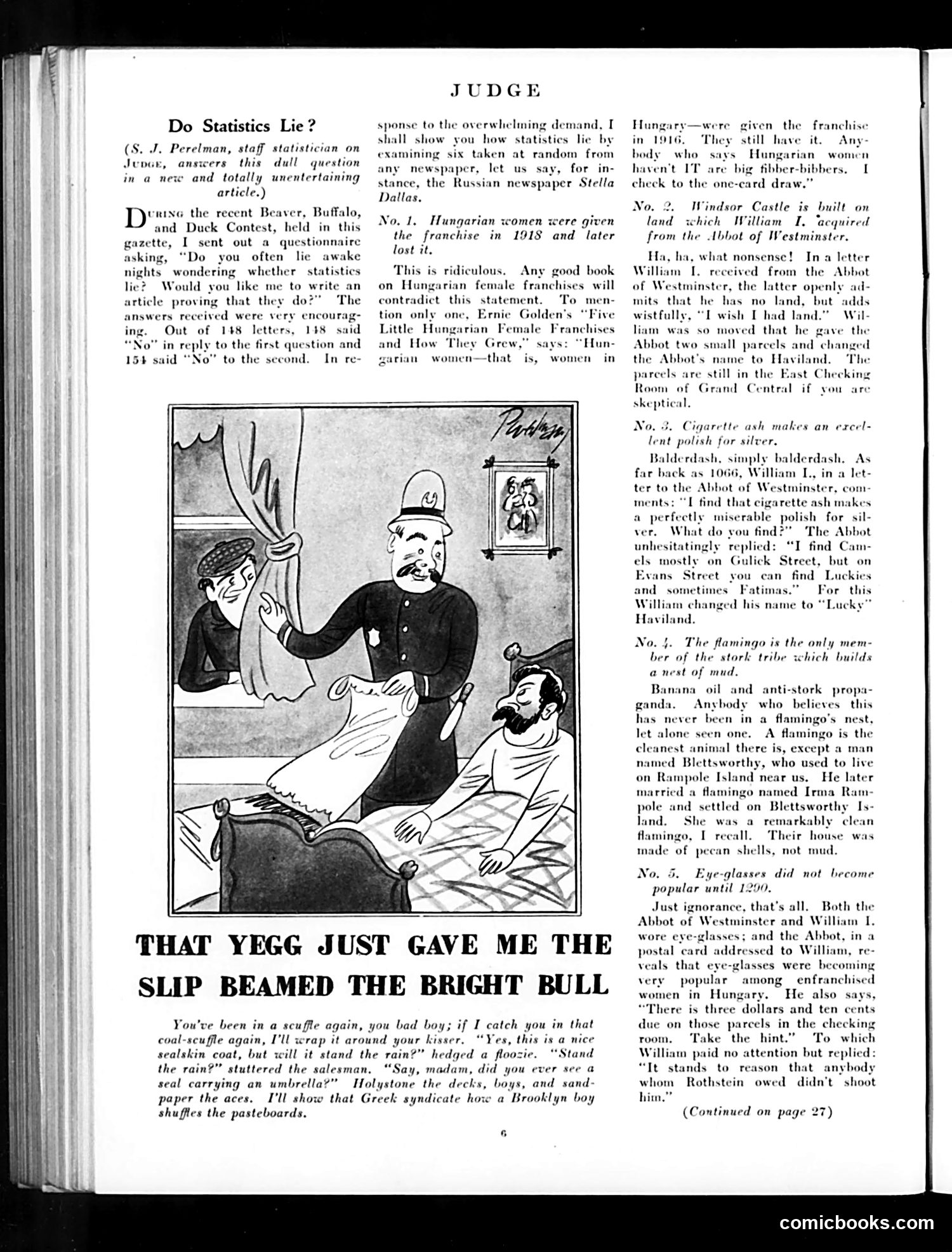
# Analysis of Judge Magazine Page This page contains two distinct sections: **"Do Statistics Lie?"** - A brief article by S.J. Perelman (credited as "staff statistician") responding to reader questions about whether statistics are reliable, using Hungarian female franchises as an example. **Main Cartoon** - The large illustration depicts three men in what appears to be a hospital or sick room setting. The caption reads "THAT YEGG JUST GAVE ME THE SLIP BEAMED THE BRIGHT BULL," referencing criminal slang ("yegg" = burglar, "bull" = police officer). The cartoon appears to satirize either police incompetence or criminal behavior, though the specific historical reference is unclear without additional context. The page also contains numbered entries (Nos. 1-5) with brief anecdotes about curious facts—Hungarian women, Windsor Castle, cigarette ash, flamingos, and eyeglasses—suggesting this is a humor/facts column.
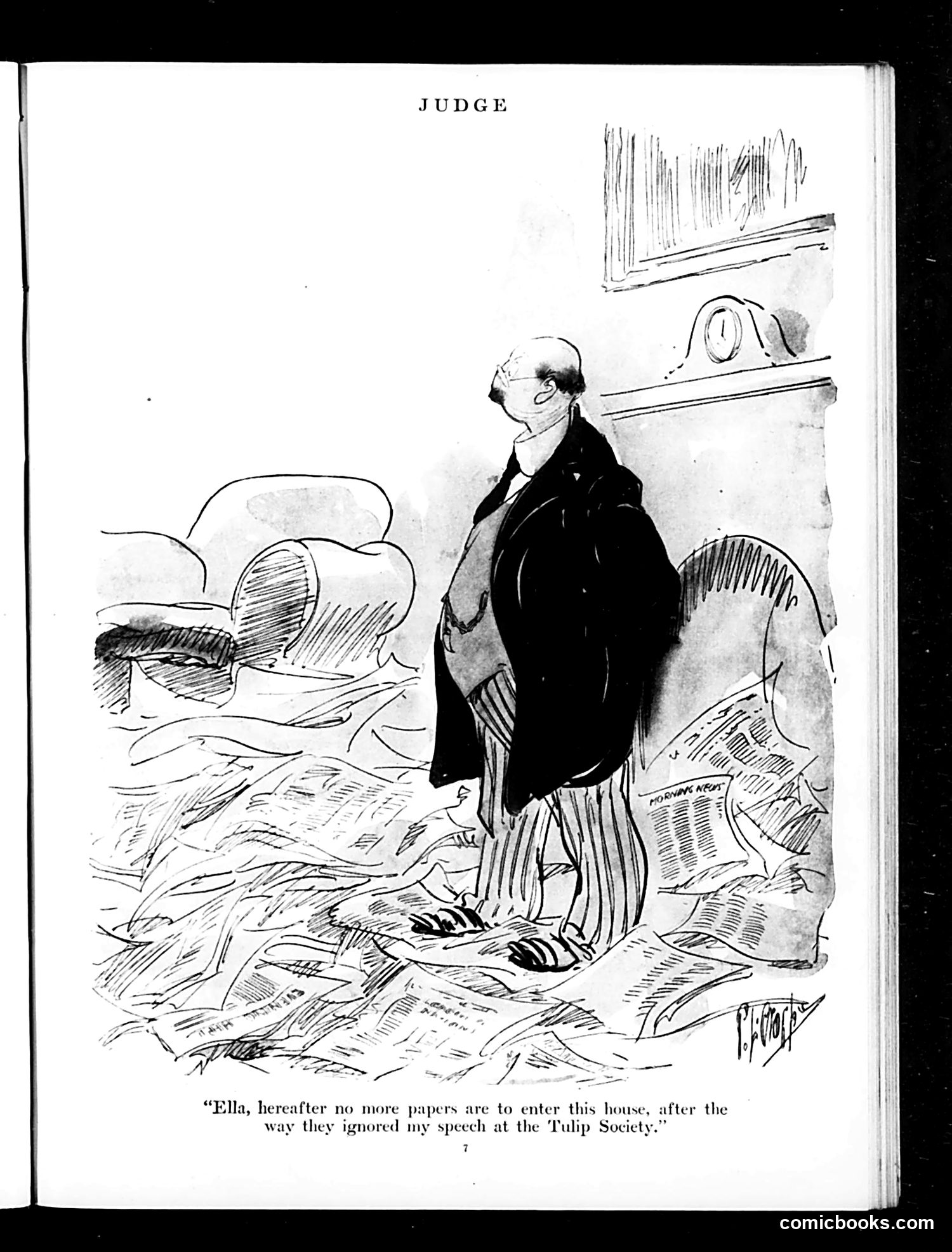
# Analysis This single-panel cartoon depicts a man standing amid scattered newspapers, addressing someone named Ella with wounded indignation. He's demanding a household ban on newspapers because they failed to cover or adequately report his speech at the "Tulip Society." The satire targets petty vanity and self-importance. The humor lies in the man's disproportionate response—punishing his entire household by excluding all newspapers simply because a local organization's speech didn't receive press coverage he felt it deserved. The scattered papers underscore the absurdity of his complaint. The "Tulip Society" appears to be a minor civic or horticultural organization, suggesting the man's inflated sense of his own significance. This lampoons both the ego of minor public speakers and the unrealistic expectations some had that local newspapers would cover every community event.
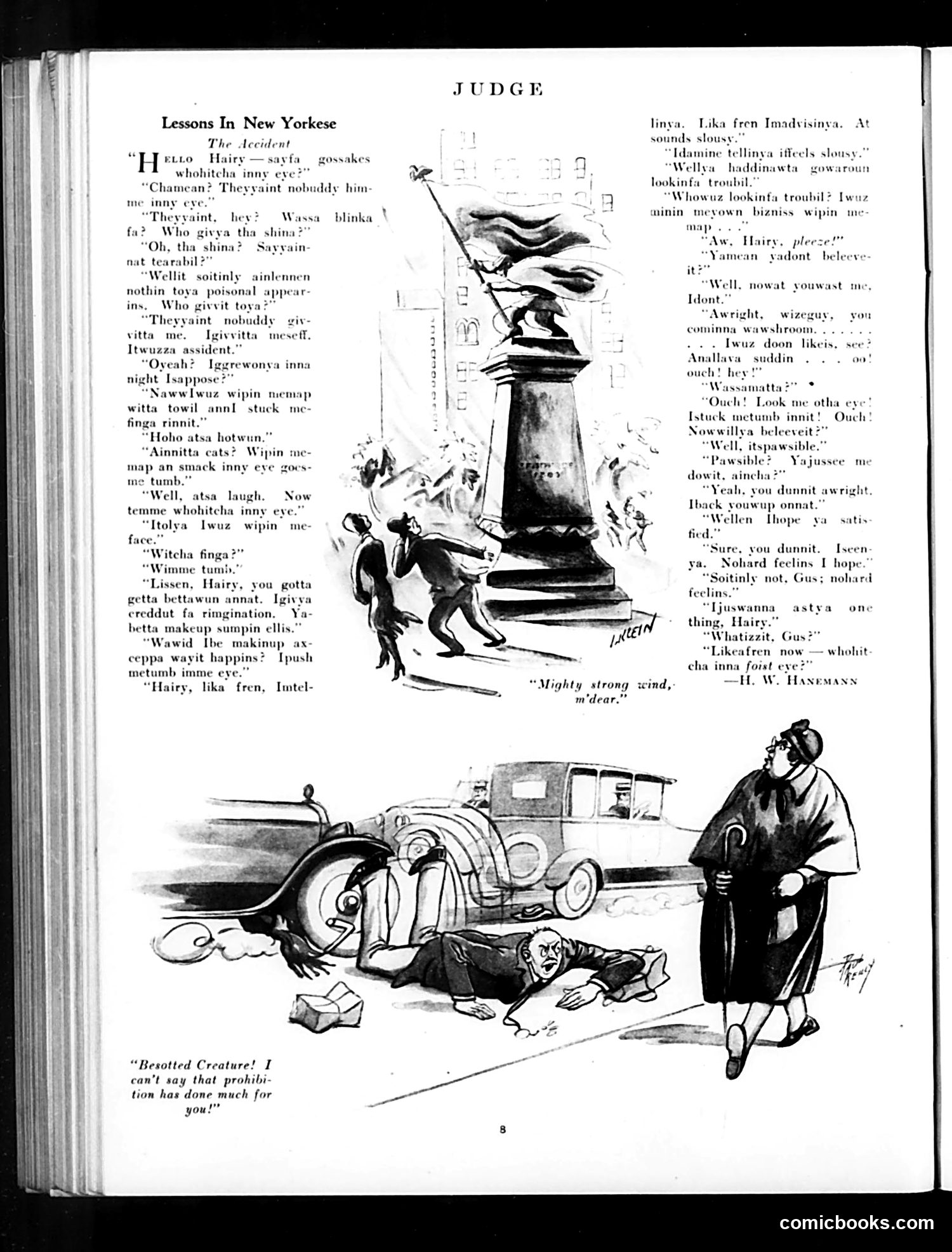
# "Lessons in New Yorkese" - Judge Magazine Satire This page satirizes New York immigrant dialect and urban working-class speech patterns. The top section presents a comedic dialogue in exaggerated "Brooklynese"—phonetic transcriptions of how recent immigrants and working-class New Yorkers spoke English, with dropped consonants ("whohitcha"), malapropisms ("poisonal" for "personal"), and characteristic phrasing ("ain't nobuddy," "dunnit"). The bottom cartoon illustrates the dialect lesson with an accident scene: a man lies injured after being hit by a car, while a woman gestures. The caption mockingly suggests he blamed a "strong wind" for the accident—implying the stereotype that immigrants made excuses rather than taking responsibility. This reflects early 20th-century urban American humor that made ethnic speech and working-class immigrants objects of ridicule for educated readers. The satire punches downward at outsiders struggling with English.
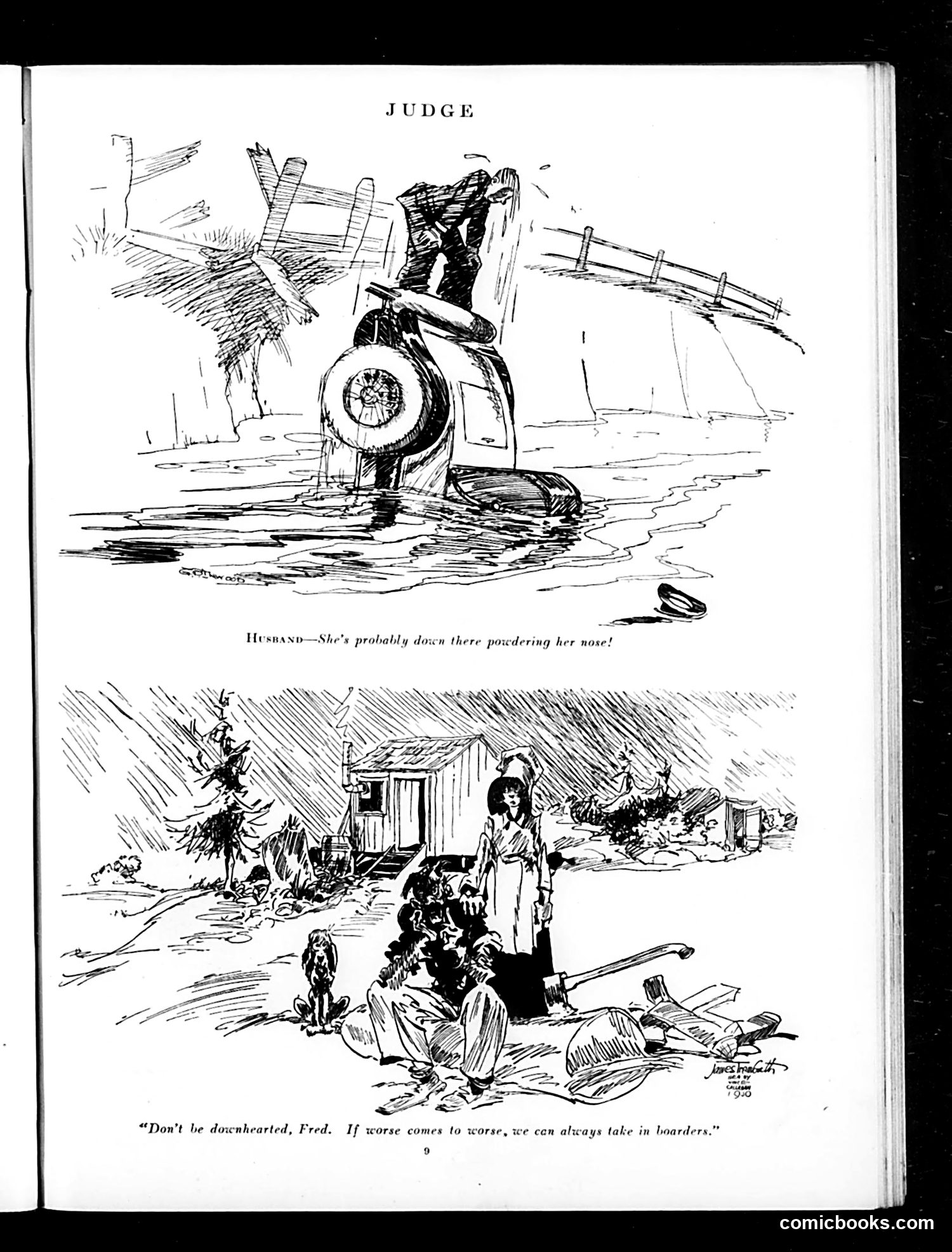
# Analysis This page contains two cartoons under the heading "JUDGE." The top cartoon shows a man examining wreckage (possibly a boat or vehicle) near water, with the caption suggesting his wife is "down there powdering her nose"—a dark joke about her being lost or dead. The bottom cartoon depicts a couple in apparent poverty or hardship outside a modest shack, with the wife reassuring her discouraged husband "Fred" that if their situation worsens, they can "take in boarders" (rent rooms to lodgers for income). Both cartoons appear to address economic hardship and marital dynamics during difficult times, likely reflecting Depression-era anxieties about financial instability. The humor relies on resigned acceptance of deteriorating circumstances and maintaining composure despite adversity—common themes in 1930s satirical humor.
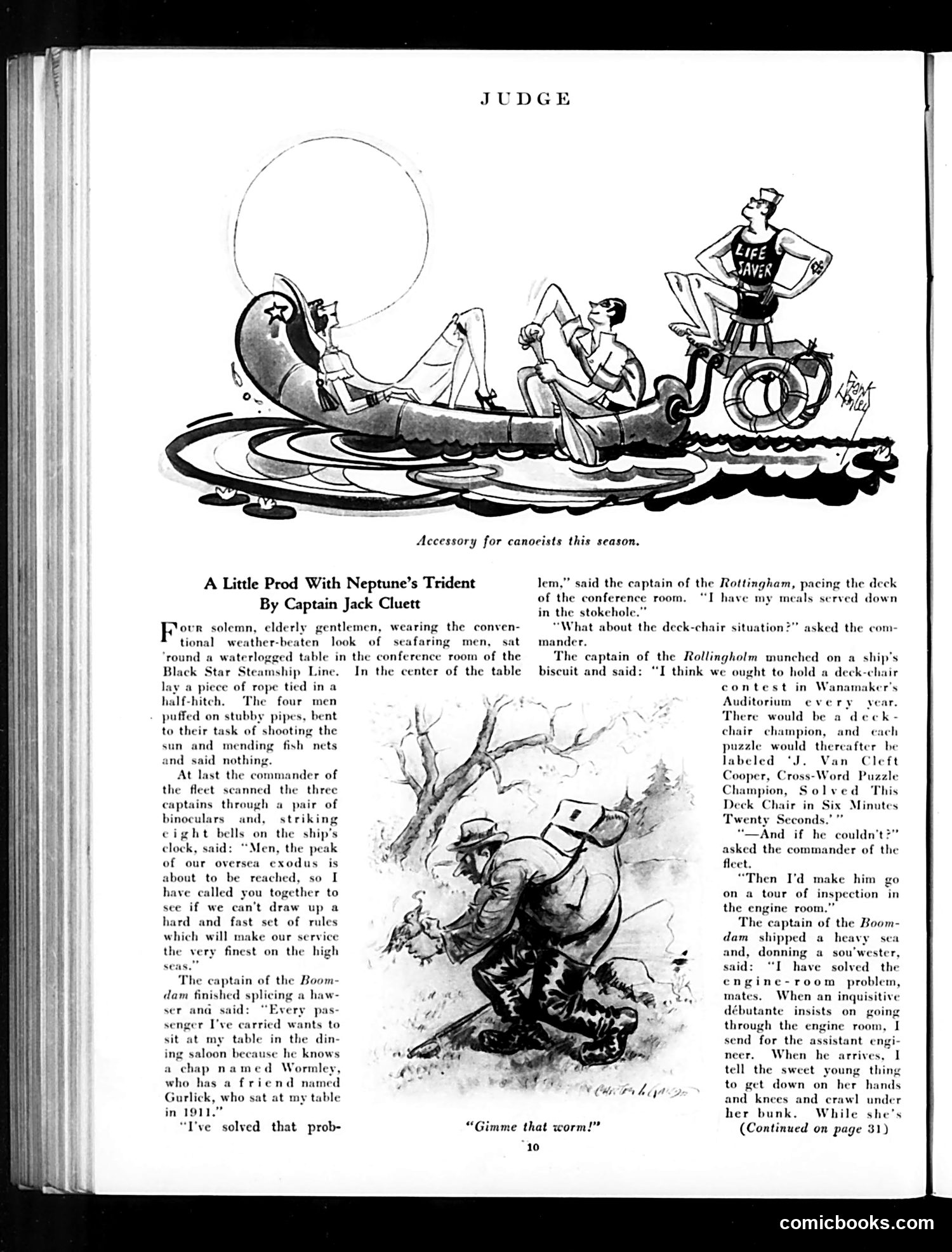
# Judge Magazine Satire Analysis This page satirizes maritime social hierarchies and passenger complaints aboard steamships. Four ship captains discuss problems with ocean travel—specifically, how passengers want premium seating (dining tables, deck chairs) based on tenuous social connections or accomplishments. The cartoon at top depicts a canoe accessory: judges in a boat reviewing competitors, satirizing the era's obsession with competitive rankings and social status. The captains' anecdotes mock passenger entitlement: one man demands a table because he knows someone who knew someone from 1911; another suggests holding a "deck-chair contest" to award premium seating to a puzzle-solver; a third admits to sending inquisitive young women (débutantes) crawling under bunks in the engine room to discourage their complaints. The humor targets both pretentious passengers and the maritime industry's absurd solutions to social-climbing complaints. It's early 20th-century class commentary wrapped in nautical comedy.
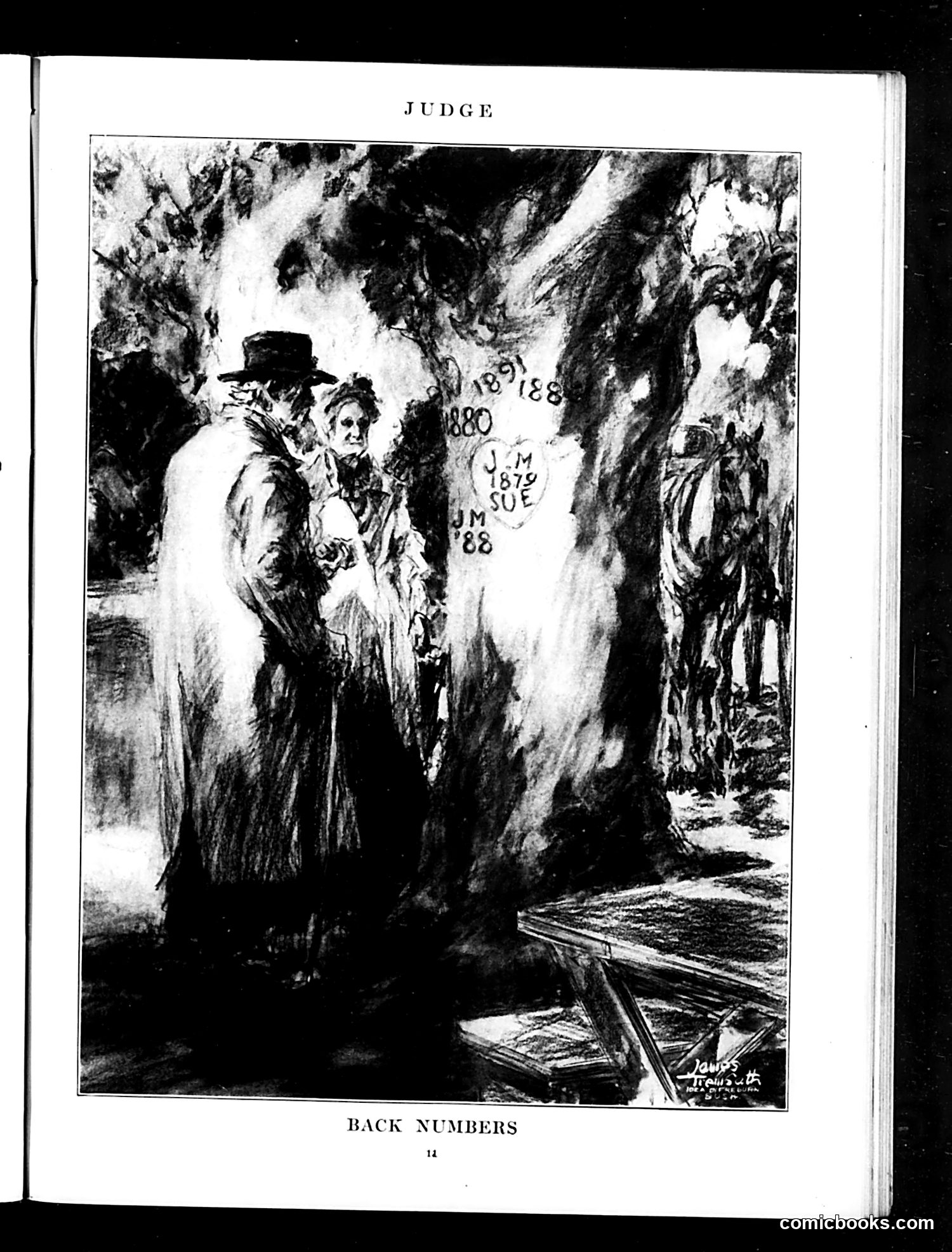
# Analysis This page appears to be a section titled "Back Numbers" from Judge magazine, likely serving as a table of contents or index for previous issues. The illustration shows figures in period dress examining or discussing papers/documents among bare trees, suggesting a historical or archival theme appropriate to "back numbers." Visible dates in the image include references to years like 1879, 1880, and 1888, which appear to be stamped or written on the documents the figures are examining. The sketch style and clothing suggest late 19th-century setting. However, without clearer text or identifying information, I cannot definitively explain the specific satirical point, identify particular political figures being caricatured, or explain what specific events or issues this references. The page seems more organizational than comedic in purpose.