
Judge, 1930-06-21 · page 28 of 36
Judge — June 21, 1930 — page 28: what you’re looking at
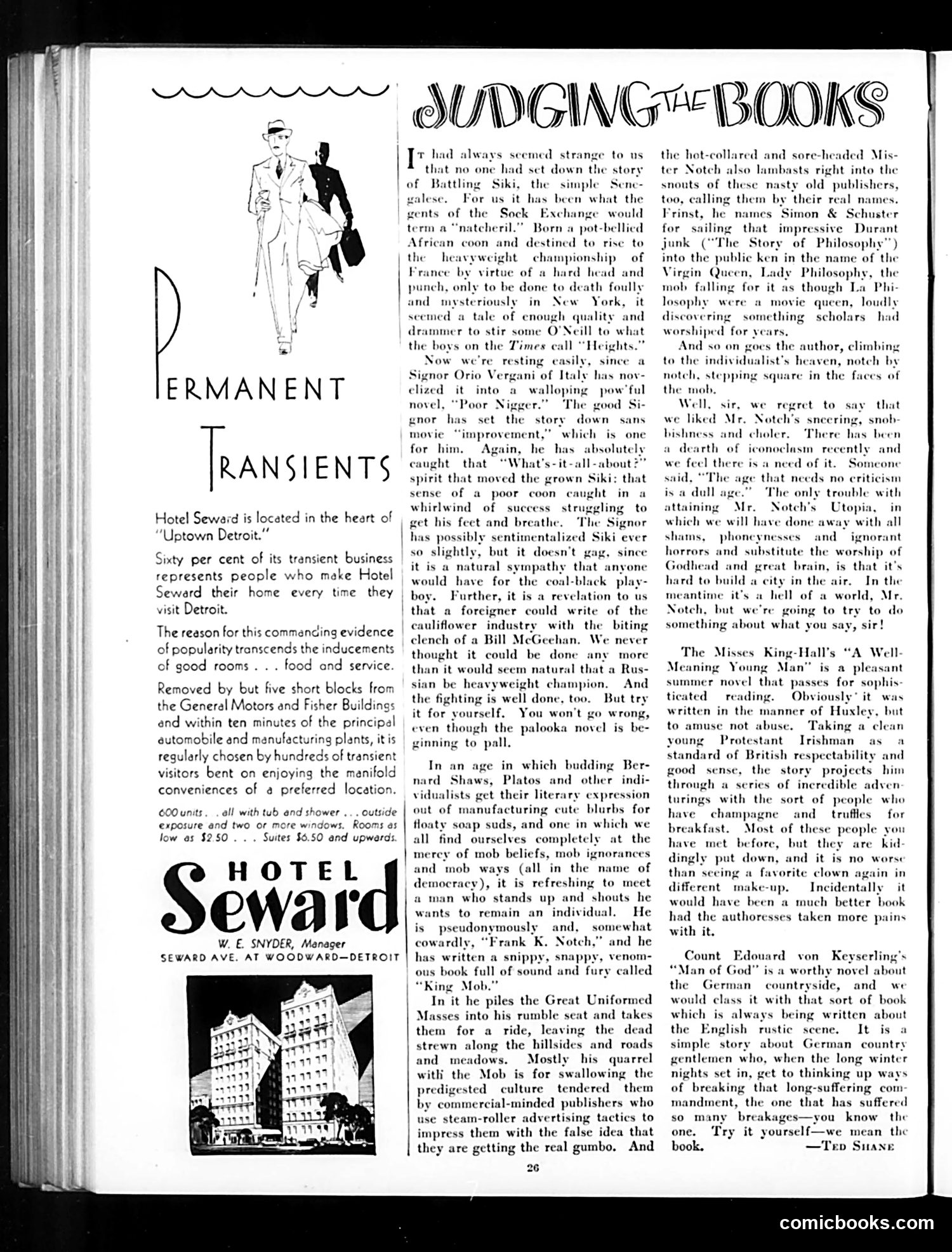
A restored page from Judge, 1930-06-21. Page through the whole issue in the reader above.
📄 Transcribed text from this page (OCR, searchable)
Machine-transcribed from the original scan — historical spelling and the odd misread are preserved.
ERMANENT |RANsiENTS Hotel Seward is loceted in the heart of ‘Uptown Detroit.”” Sixty per cent of its transient business represents people who make Hotel Seward their home every time they visit Detroit. The reason for this commending evidence of popularity transcends the inducements of good rooms . . . food and service. Removed by but five short blocks from the General Motors and Fisher Buildings end within ten minutes of the principal automobile and manufacturing plants, it is regularly chosen by hundreds of transient visitors bent on enjoying the manifold conveniences of a preferred location. COO units. . all with tub and shower ... outside exposure and two or more windows, Rooms as low as $250... Suites $6.50 and upwards. HOTEL Sewar W. E SNYDER, Manager SEWARD AVE. AT WOODWARD—DETROIT I" had always seemed strange to us that no one had set down the story of Battling Siki, the simple Sene- For us it has been what the gents of the Sock Exchange would term a “natcheril.”” Born a pot-bellied African coon and destined to rise to the heavyweight championship — of France by virtue of a hard head and punch, only to be done to death foully and mysteriously in] New York, it seemed a tale of enough quality and drammer to stir some O'Neill to what the boys on the Times call “Heights.” Now we're resting easily, since a Signor Orio Vergani of Italy has nov- clized it into a walloping pow'ful novel, “Poor Nigger.” ‘The good gnc the story down sans movie “improvement,” which is one for him. Again, he has absolutel caught that “What's-it-all-about spirit that moved the grown Siki: that sense of a poor coon caught in a whirlwind of success struggling to get his feet and breathe. The Signor has possibly sentitentalized ever tly, but it doesn’t gag, sine it is a natural sympathy that anyon would have for the coal-black play- Further, it is a revelation to us a foreigner could write of the liflower industry with the biting clench of a Bill McGeehan, We never thought it could be done more than it would seem natural that a Rus- sian be heavyweight champion. And the fighting is well done But try it for yourself. You won't go wrong, even though the palooka novel is be- ginning to pall. ese. has set too. In an age in which budding Ber- nard Shaws, Platos and other indi- vidualists get their literary expression out of manufacturing cute blurbs for floaty soap suds, and one in which we all find ourselves completely at the mercy of mob beliefs, mob ignorances and mob ways (all in the name of democracy), it is refreshing to meet a man who stands up and shouts he nts to remain an individual. He is pseudon and, somewhat cowardly, “ ‘otch,”” and he has written a snippy, snappy, venom- ous book full of sound and fury called | “King Mob.” In it he piles the Great Uniformed Masses into his rumble s id them for a ride, leaving the des strewn along the hillsides and roads and meadows. Mostly his quarrel with’ the Mob is for swallowing the predigested culture tendered them by commercial-minded publishers who use steam-roller advertising tactics to impress them with the false idea that they are getting the real gumbo. And 26 the hot-collare nd sore-headed Mis- ter Notch also lambasts right into the snouts of these nasty old publishers, too, calling them by their real names. Frinst, he names Simon & Schuster for sailing that impressive Durant junk (“The Story of Philosophy”) into the public ken in the name of the Virgin Queen, Lady Philosophy, the mob falling for it as though La Phi- losophy wer © queen, loudly discovering scholars had worshiped for , And so on goes the author, climbing to the individualist’s heaven, notch by notch, stepping square in the faces of the mob, Well, sir, we regret to we liked Mr. Noteh’s sneeri bishness and choler, There a dearth of iconoclasm recently and we feel there is a need of it. that snob- say has been Someone said, “The age that needs no criticism is a dull age.” The only trouble with Mr. Notch’s Utopia, in which we will have dor shams, attainin: phoneynesses and — ignor. and substitute the worship of Godhead and great brain, is that it’s hard to build a city in the air. In the meantime it’s a hell of a world, Mr. Notch, but we're going to try to do something about what you say, sir! horrors The Misses King-Hall’s “A Well- Meaning Young Man summer novel tha ticated reading. Obviously’ it) was written in the manner of Huxley, but to amuse not abuse. Taking a clean young Protestant) Irishman asa andard of British respectability and good sense, the story projects him through a series of incredible adven turings with the sort of people who have champagne and truffles fi breakfast. Most of these people have met before, but they are kid dingly put down, and it is no worse than sceing a favorite clown again in different make-up. Incidentally _ it would have been a much better book had the authoresses taken more pains with it. is a pleasant passes for sophis Count Edouard von Keyserling’s “Man of God” is a worthy novel about the German countryside, and we would class it with that sort of book which is always being written about the English rustic scene. It is a simple story about German country gentlemen who, when the long winter nights set in, get to thinking up ways of breaking that long-suffering com mandment, the one that has suffered so many breakages—you know the one. Try it yourself—we mean thc book, —Tep Suane comicbooks.com