A complete issue · 36 pages · 1930
Judge — March 1, 1930
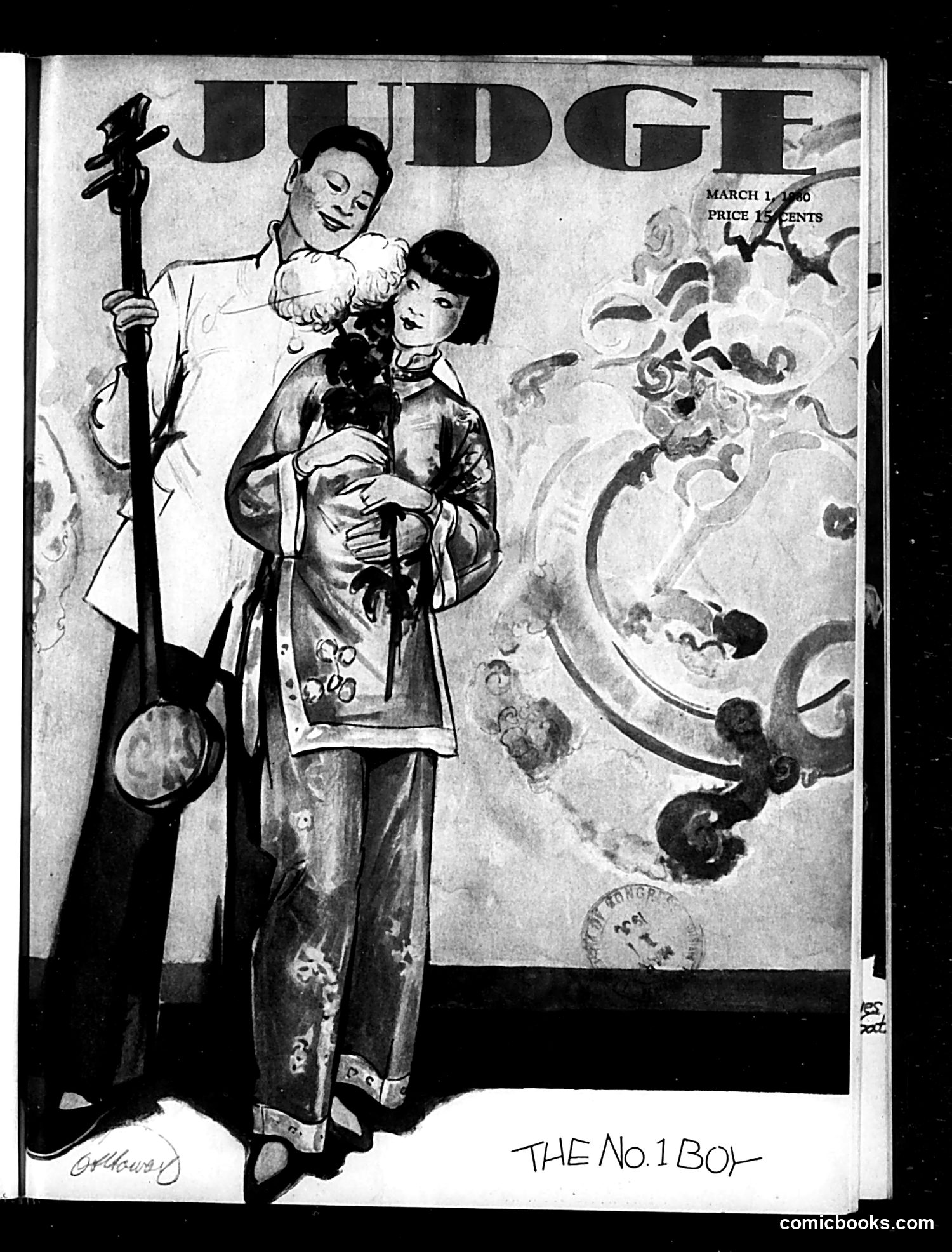
# Analysis of Judge Magazine Cover, March 1, 1930 This cover illustration titled "The No. 1 Boy" depicts an Asian man in traditional Chinese clothing holding a baby, while a figure in white (likely representing Justice or Authority) stands behind him approvingly with a judicial staff. The satire appears to reference immigration policy or citizenship law, possibly commenting on Chinese exclusion laws or restrictions on Chinese immigrants and their children's legal status in America. The "No. 1 Boy" title likely refers to a racial stereotype of the era—a term used to describe Chinese domestic servants or workers in a derogatory hierarchy. The image seems to mock or critique prevailing attitudes toward Chinese immigrants and their rights, though without additional context, the specific legislative or social event referenced remains unclear.
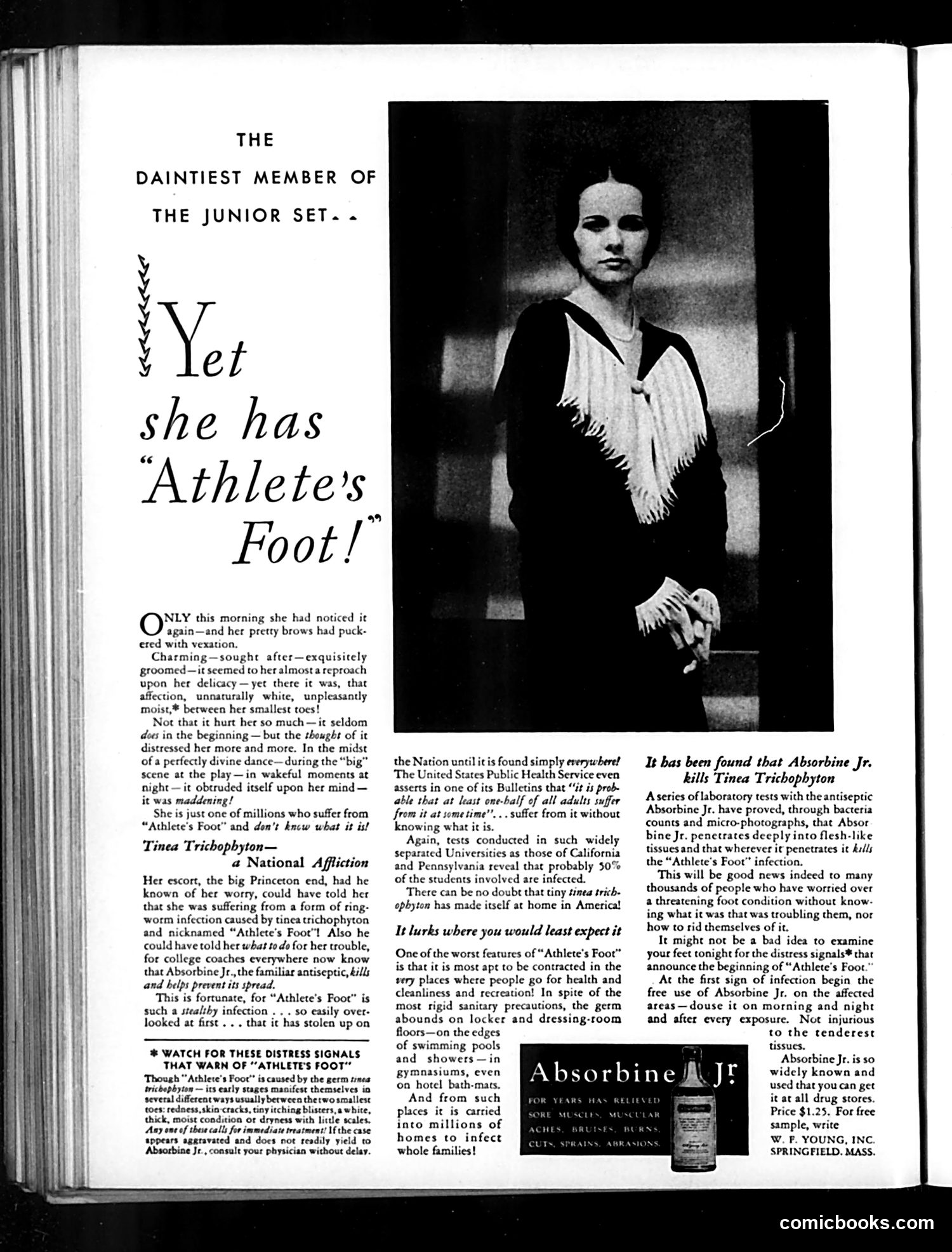
# Analysis This is primarily a **medical advertisement**, not political satire. It promotes Absorbine Jr., a liniment product marketed for treating "Athlete's Foot"—a fungal infection. The page uses social satire about class and vanity: the headline mocks "the daintiest member of the junior set" who, despite being "exquisitely groomed," suffers from the embarrassing foot condition. The accompanying photograph shows an elegantly dressed woman, implying that even wealthy, refined people aren't immune to this affliction. The satire critiques both the prevalence of athlete's foot (spread in public pools and gymnasiums) and society's shame about discussing such conditions openly. The ad emphasizes that this is "a very timely infection" spread through communal spaces—suggesting modern hygiene failures. The text references university studies confirming the condition's widespread nature, lending medical authority to the advertisement.
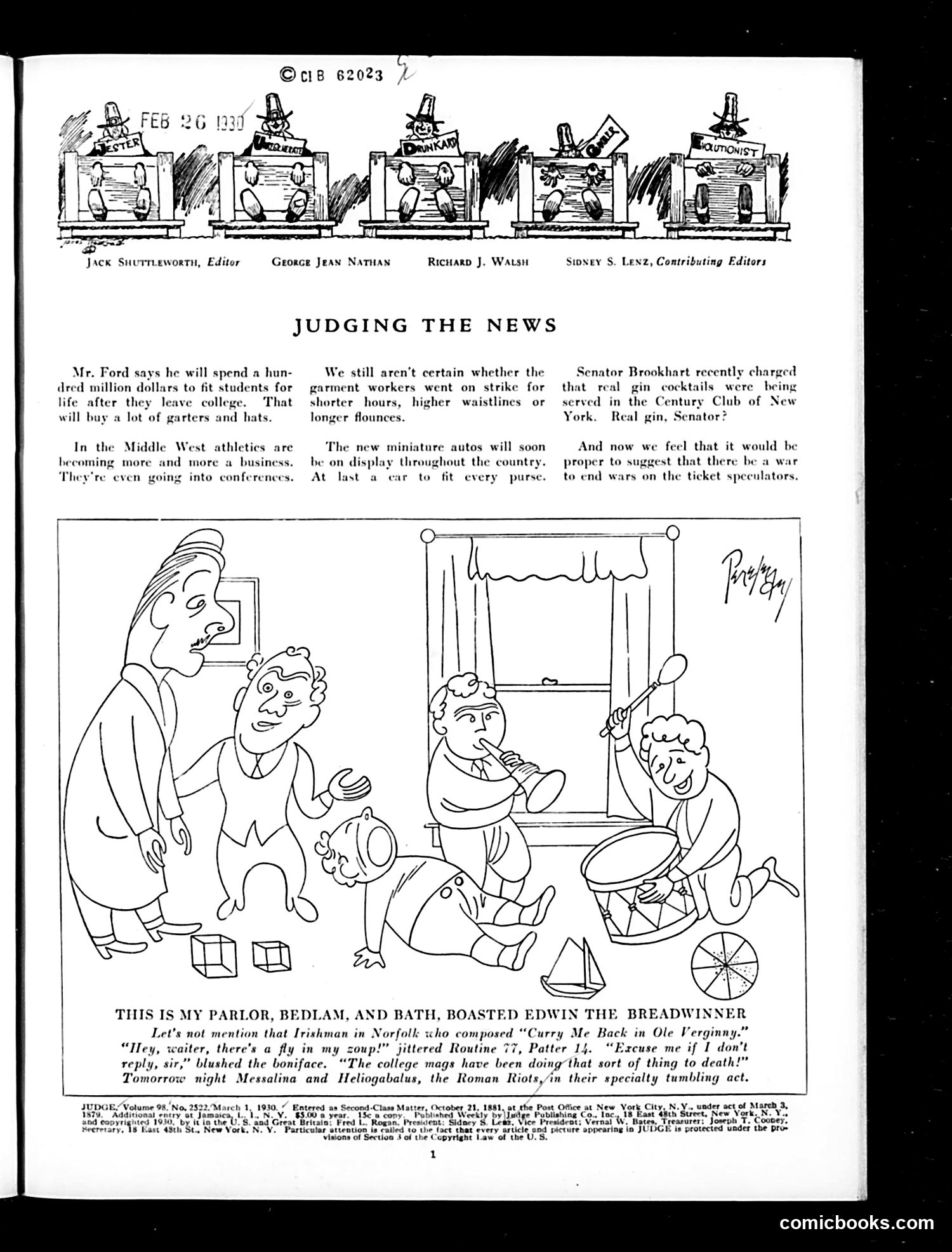
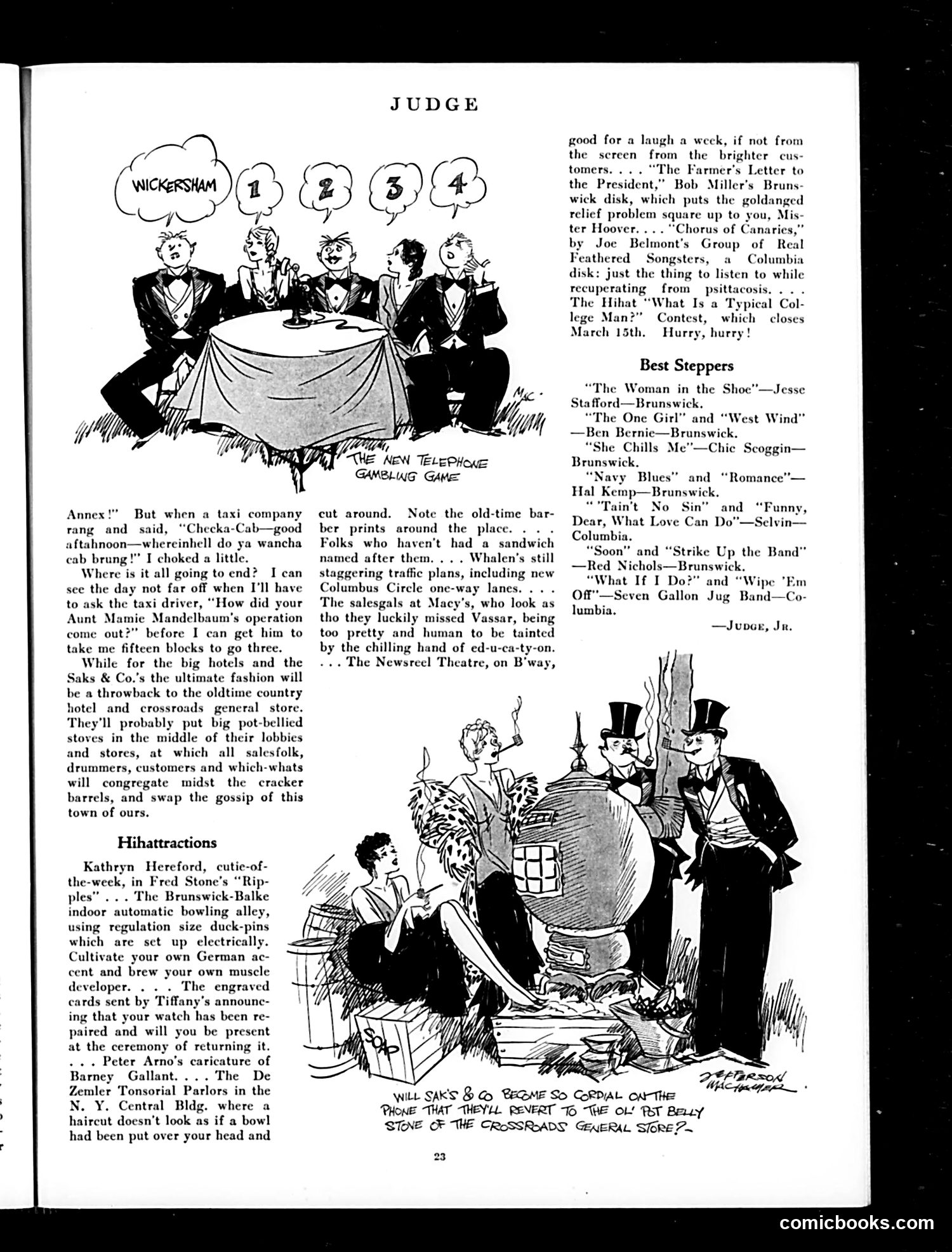
# Analysis of Judge Magazine Page (March 1, 1930) The "Judging the News" section contains three brief satirical commentaries on current events, followed by a cartoon. **Top Commentary**: Mocks Henry Ford's claim he'd spend a million dollars fitting college students with "garters and hats"—implying Ford's actual spending on youth was minimal and frivolous. **Main Cartoon**: Depicts a man boasting to visitors about his "parlor, bedroom, and bath" while children play with toys on the floor. The caption references a Tin Pan Alley song ("Hello, Central, Here's a Rig in my Soup") and sarcastically notes colleges are "doing that sort of thing to death." The joke satirizes Americans' materialism and boastfulness during the prosperous 1920s, contrasting claimed wealth with humble reality. **Overall tone**: Mocking middle-class pretension and consumerism during the pre-Depression era.
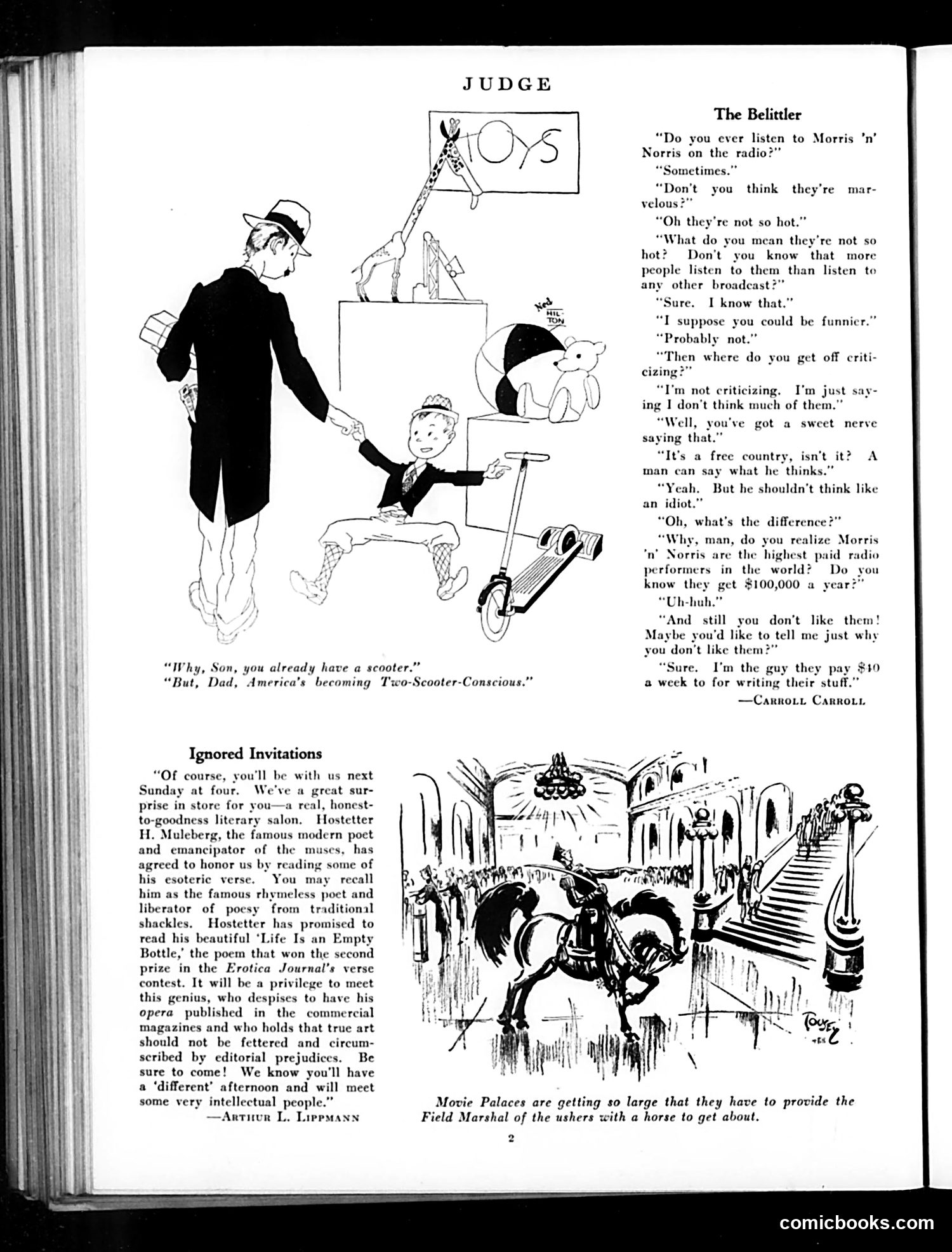
# Analysis The top cartoon satirizes American consumerism and parenting trends. A father protests his son already owning a scooter, while the boy demands one anyway—illustrating "America's becoming Two-Scooter-Conscious." This mocks middle-class materialism and children's escalating consumption expectations. "The Belittler" dialog critiques radio personality Morris 'n' Norris, whom the speaker dismisses despite their reportedly earning $100,000 yearly. The joke highlights how critics disparage popular entertainers regardless of their commercial success—a commentary on intellectual snobbery versus mass-market appeal. "Ignored Invitations" describes a literary salon featuring H. Melchior (unclear if real or fictional), described as a "famous modernist poet" and "liberator of poesy." The accompanying cartoon mocks movie palace size by showing a marshal on horseback—exaggerating architectural grandeur through visual absurdity.
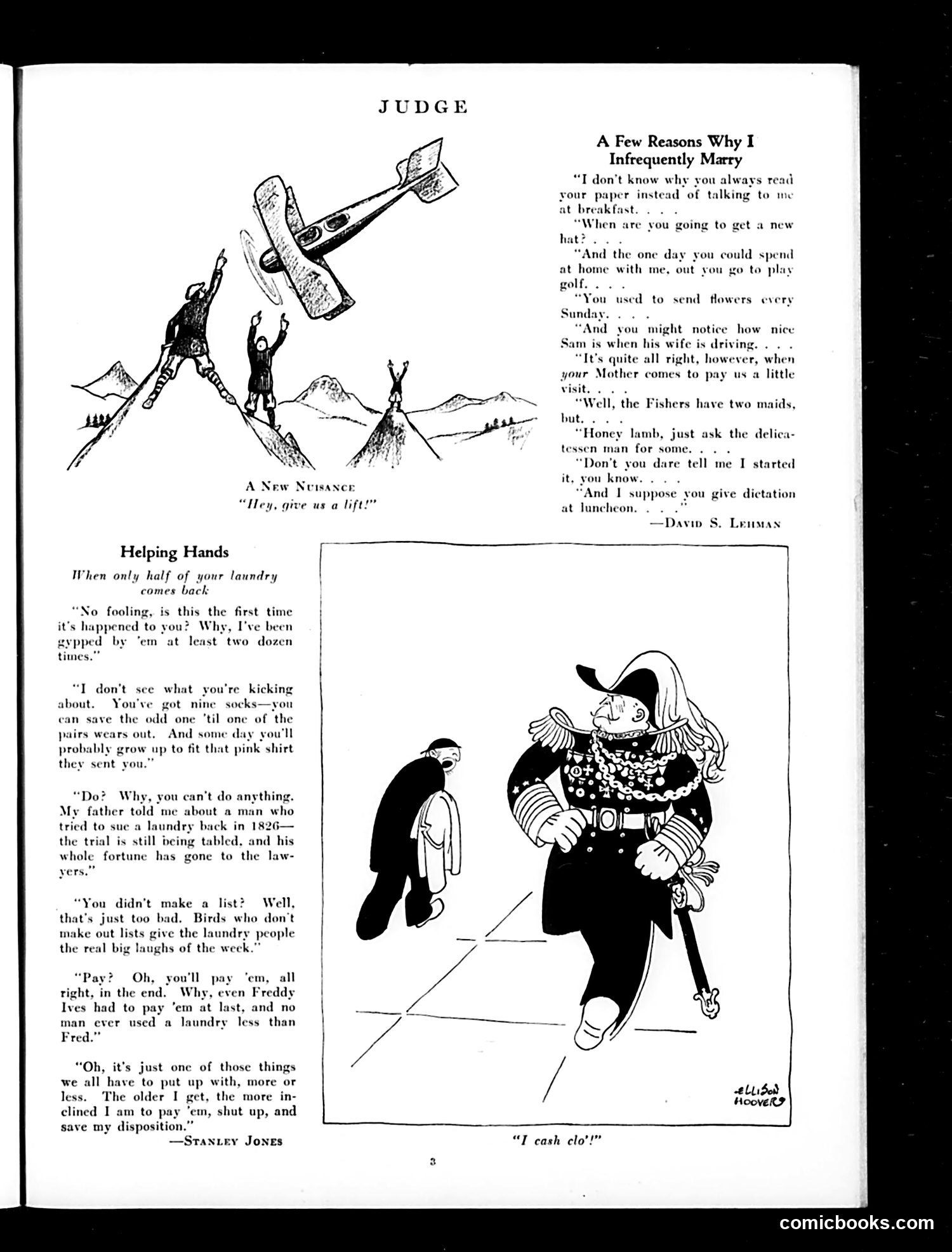
# Judge Magazine Page Analysis This page contains three humor pieces satirizing early 20th-century domestic life: 1. **"A New Nuisance"** (top): Depicts a judge wielding an axe, seemingly crushing petitioners. The caption "Heg, give us a lift!" suggests satire of judicial burden or frivolous lawsuits overwhelming courts. 2. **"A Few Reasons Why I Infrequently Marry"** (right): Lists complaints attributed to David S. Lehman about married life—wives reading newspapers at breakfast, his golf time being curtailed, diminished flower-giving, mother-in-law visits, and giving lunch dictation. Standard domestic humor mocking husbands' loss of freedom after marriage. 3. **"Helping Hands"** (left): Dialogue about missing laundry. The joke concerns incomplete laundry service returns, with characters debating whether to file complaints. It satirizes the inconvenience and expense of laundering services for working-class men. The overall theme: domestic frustrations and marital compromises.
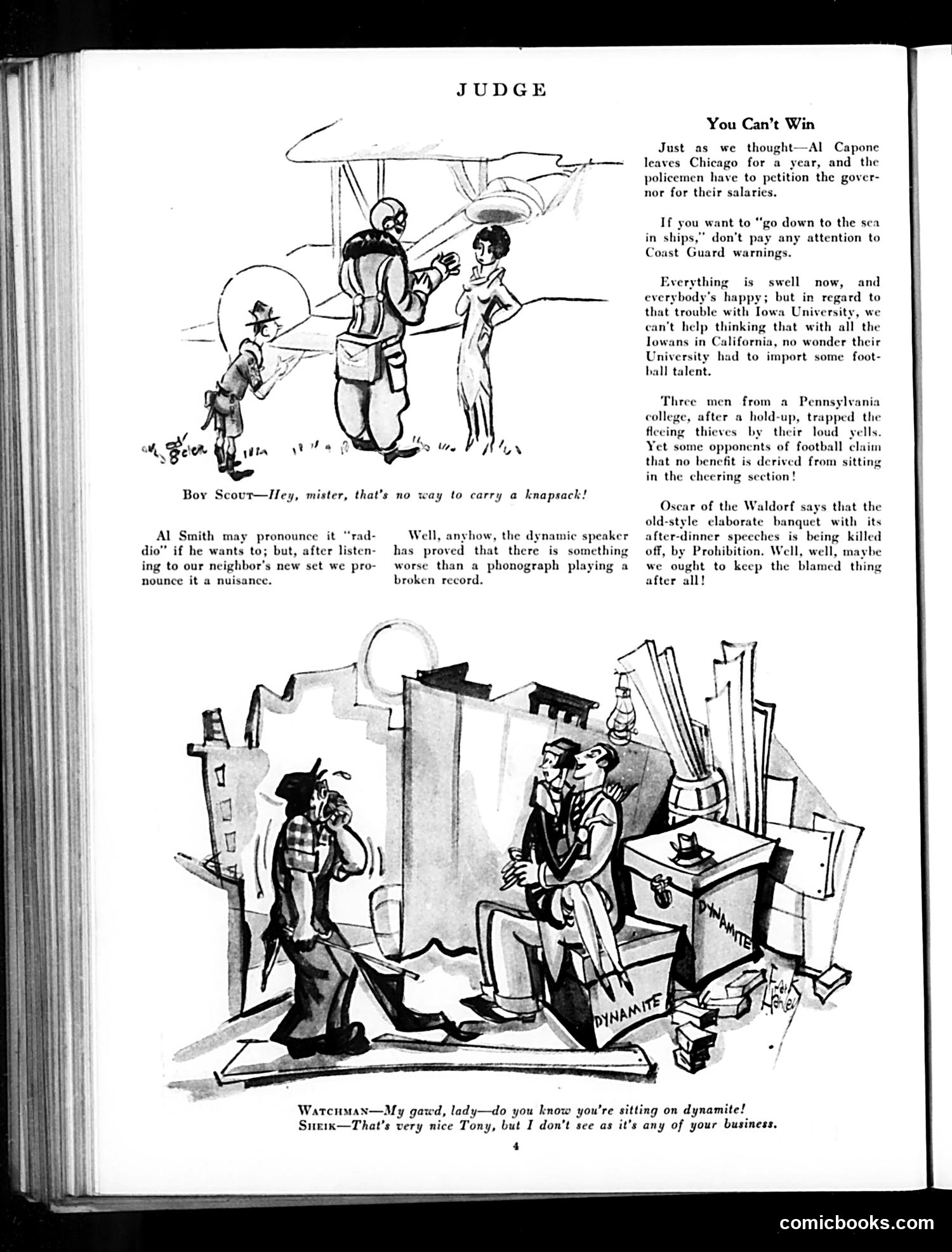
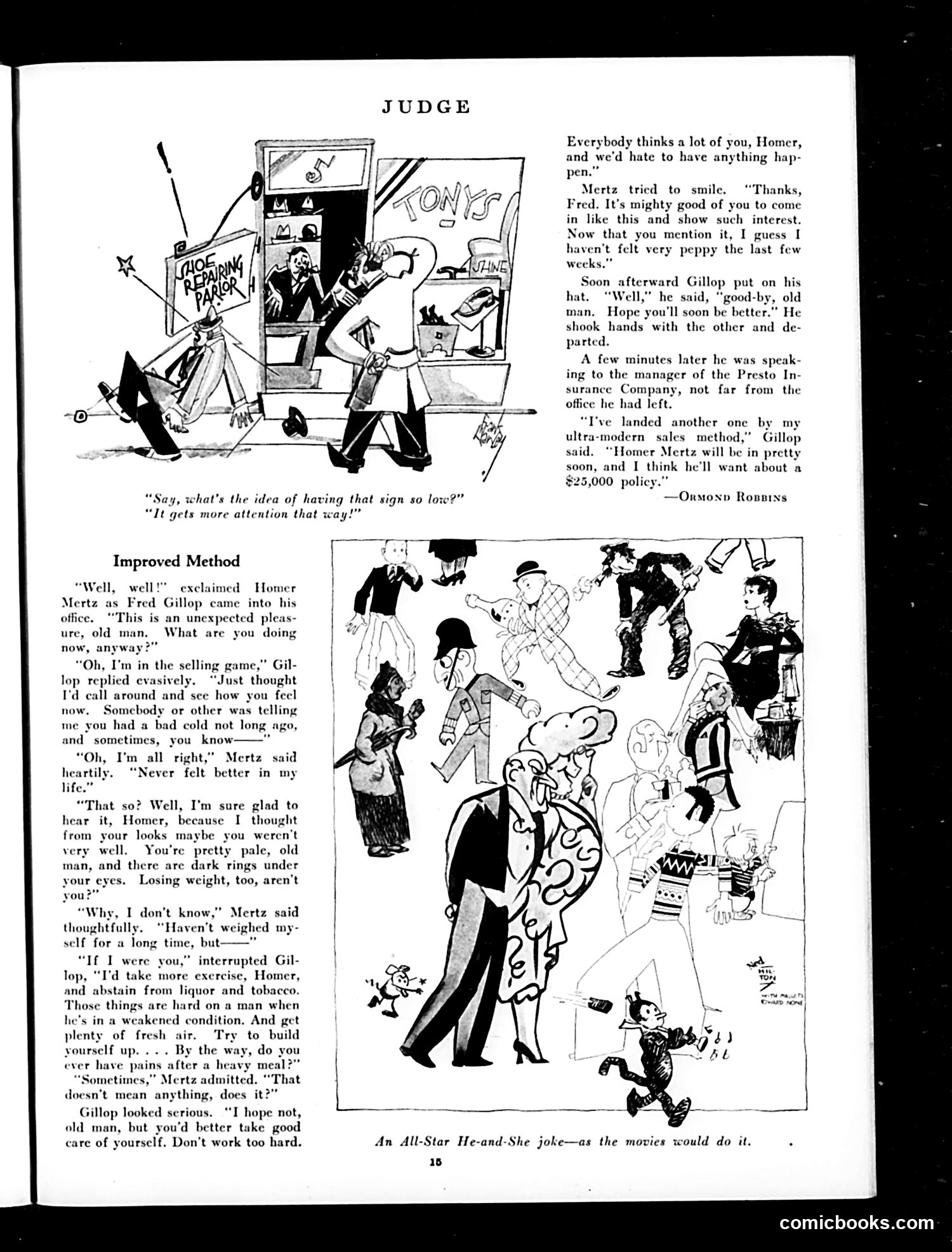
# Analysis of Judge Page This page contains two satirical cartoons commenting on contemporary issues: **Top cartoon**: A Boy Scout encounters what appears to be a large military figure carrying a knapsack, criticized for improper carrying technique. This likely satirizes either military preparedness concerns or the Boy Scout movement itself. **Bottom cartoon**: A watchman warns a woman she's "sitting on dynamite," while a sheik responds dismissively. This appears to reference post-WWI anxieties about anarchist violence and radical threats, combined with satirizing the "sheik" craze—a 1920s fad of romanticizing Middle Eastern figures. The text column "You Can't Win" critiques various social problems: Al Capone, Coast Guard warnings, Iowa University athletics, Pennsylvania college football fraud, and Prohibition's effects. The overall theme: modern society's insoluble contradictions and inevitable failures.
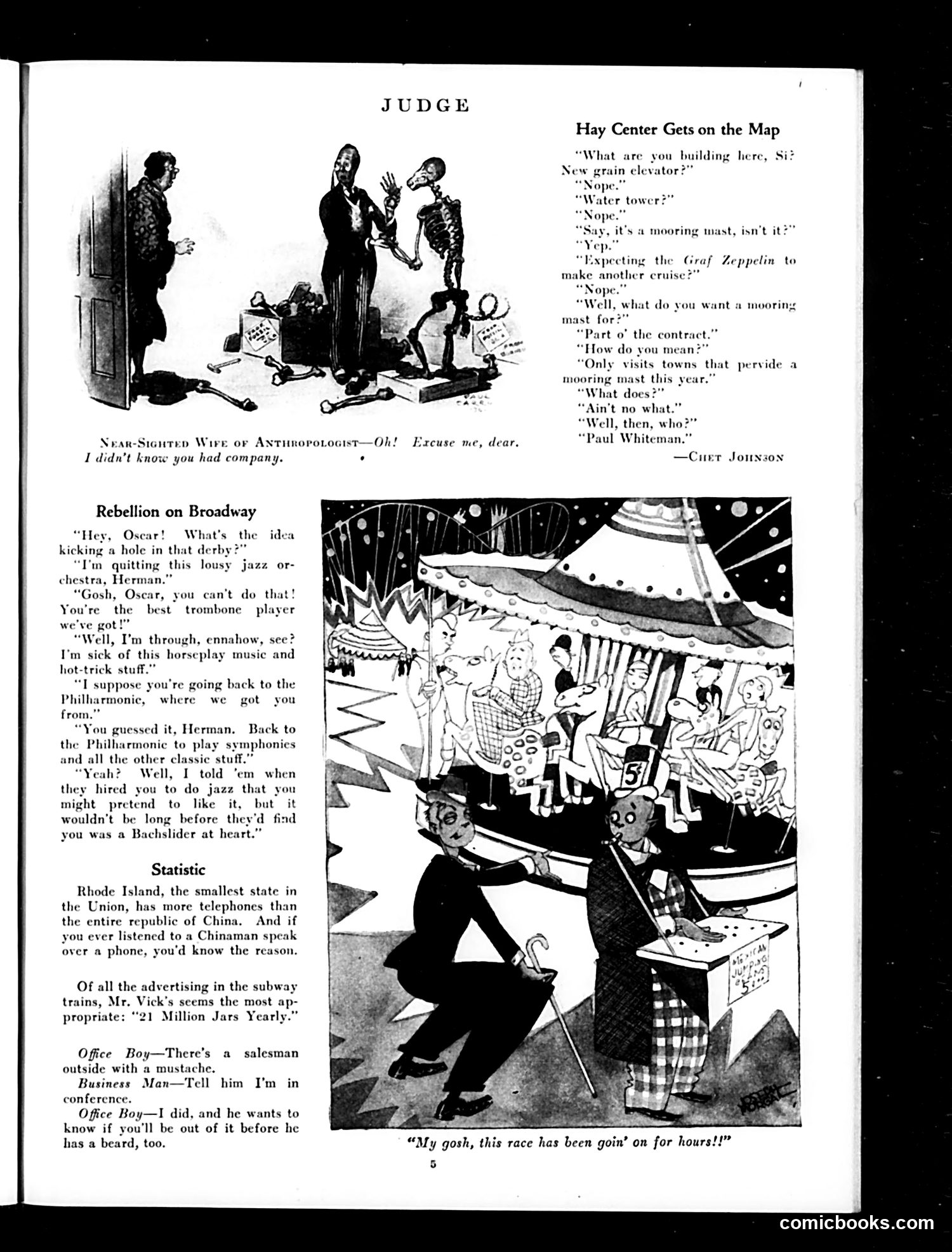
# Analysis of Judge Page This page contains three unrelated satirical pieces typical of early 20th-century Judge magazine: 1. **"Near-Sighted Wife of Anthropologist"** (top): A visual joke about mistaken identity—a wife encounters her husband with what she assumes is company, but are actually skeletal specimens or anatomical models he's brought home. 2. **"Hay Center Gets on the Map"** (top right): A dialogue joke about a town's attempts to become notable, discussing plans for a mooring mast (likely referencing the Graf Zeppelin airship trend of the 1920s-30s). The humor relies on small-town aspirations. 3. **"Rebellion on Broadway"** (bottom left): A conversation between orchestra members about replacing jazz with classical music—reflecting 1920s cultural tensions between modern jazz and traditional symphonic music. 4. **"Statistic" section**: Brief one-liners about Rhode Island's telephones and subway advertising.
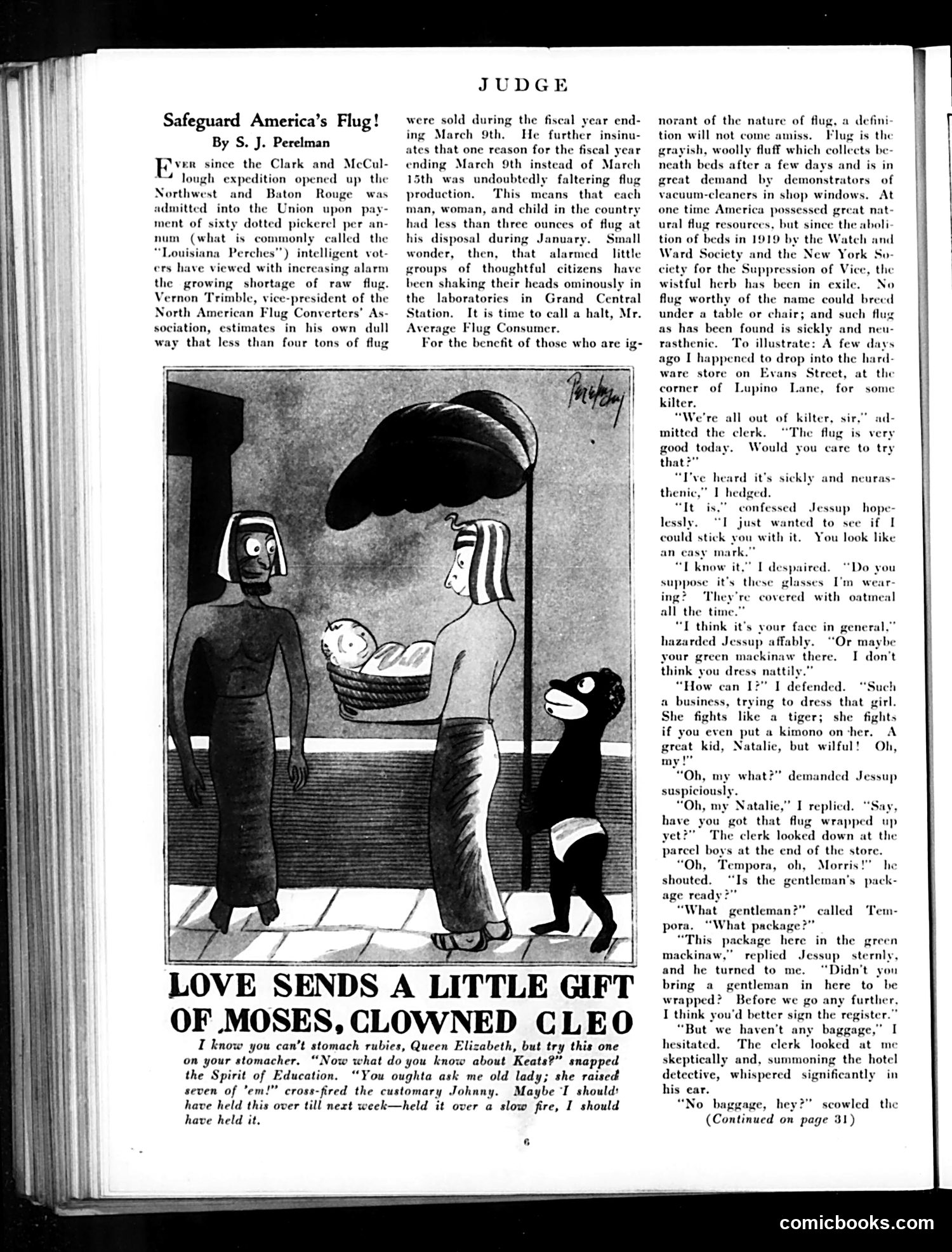
# Judge Magazine Page Analysis This page contains two distinct pieces: **"Safeguard America's Flug!" by S.J. Percelman** (top) is a satirical article about a critical shortage of raw flug during World War II, attributed to the Ever the Clark and McCullough expedition. Percelman mock-seriously warns that flug production has dropped significantly, causing alarm among citizens. The piece appears to be absurdist satire—"flug" seems a fabricated substance—likely mocking wartime shortages and panic buying. **"Love Sends a Little Gift of Moses, Clowned Cleo"** (bottom) is a humorous comic story illustrated with a cartoon showing a woman at a window counter with a cat, discussing a packaged item with a clerk. The narrative involves confusion about wrapping and delivering something, playing on comedic miscommunication. Both pieces exemplify Judge's characteristic irreverent, absurdist humor common to 1940s satirical magazines.
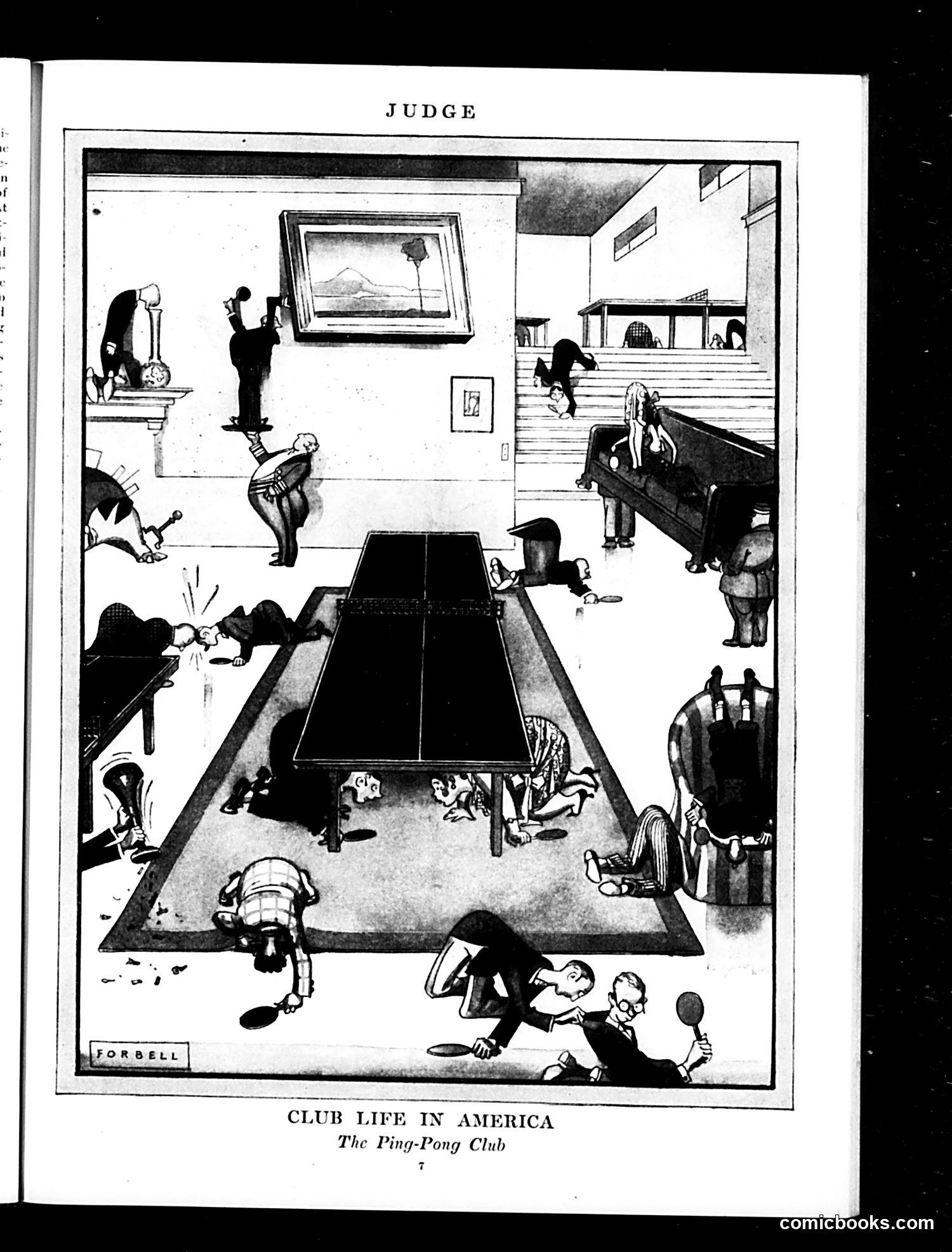
# "The Ping-Pong Club" - Judge Magazine Satire This cartoon satirizes American club culture by depicting a chaotic ping-pong establishment. The central table dominates the composition, surrounded by various clubgoers engaged in unrelated activities—drinking, socializing, sketching, moving furniture, and childish play. The satire appears to mock the pretentiousness of American "club life" by showing that despite the formal veneer, these establishments are actually sites of disorder, frivolity, and undignified behavior. Members are portrayed as both overly serious and absurdly silly simultaneously. The artist (signed "Forbell") suggests that American clubs, despite their aspirations toward sophistication and exclusive gentility, devolve into scenes of chaos where adult patrons behave childishly. It's social criticism wrapped in observational humor about class aspirations and leisure culture.
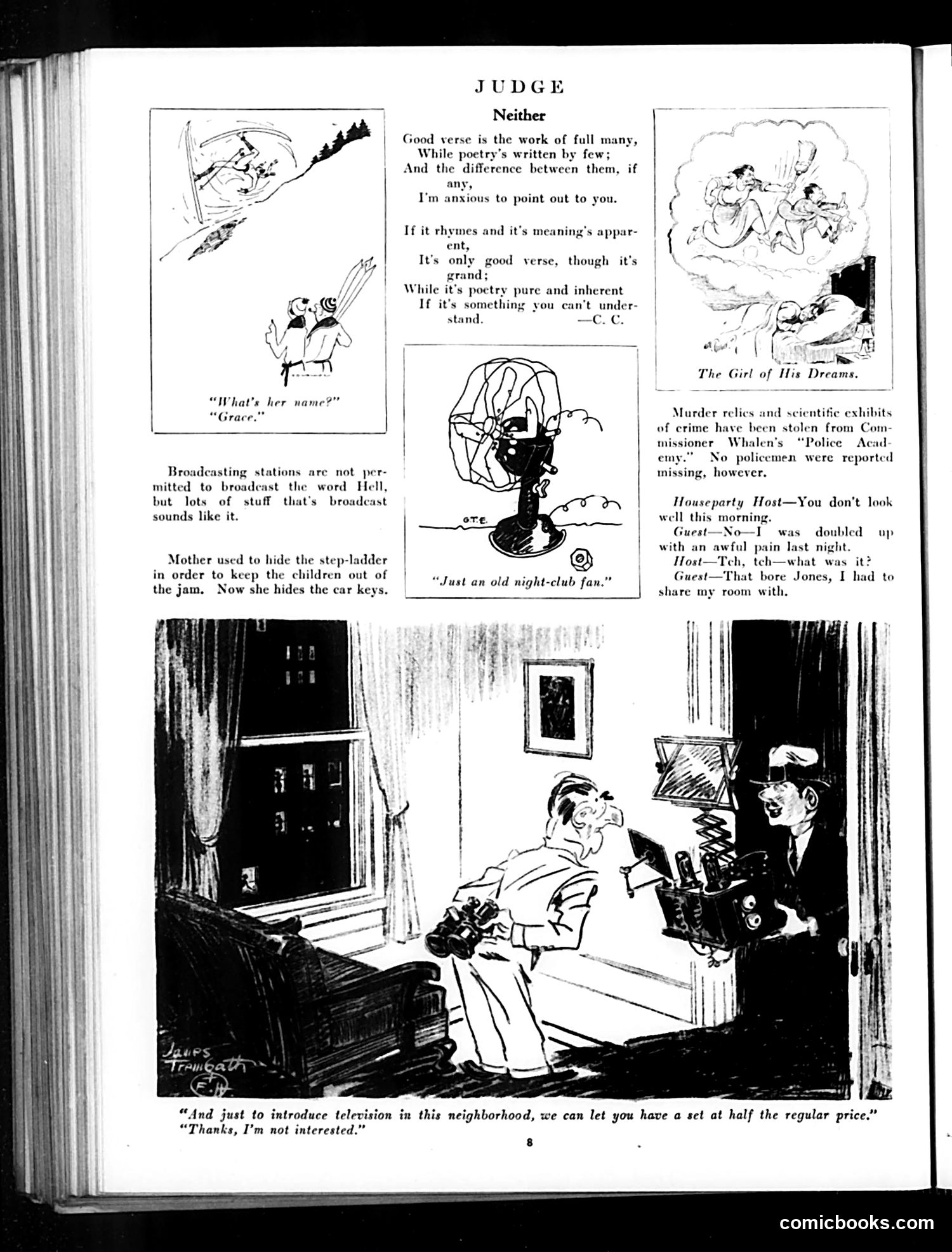
# Judge Magazine Page Analysis This page contains several satirical items mocking 1920s-30s American culture: **Main cartoon** (bottom): A salesman pitches a television set at half price to a householder, who refuses. The satire targets early television adoption—the technology was new, expensive, and many viewed it as an unnecessary luxury during economically uncertain times. **Upper cartoons & text snippets** mock: - Radio broadcasting censorship (can't say "Hell" but broadcasts other objectionable content) - Modern parenting (mothers now hide car keys instead of step-ladders, suggesting teens joyriding was a contemporary concern) - Poetry criticism (distinguishing "good verse" from incomprehensible "poetry") - Crime exhibits being stolen from police academies The page reflects 1920s anxieties about new technology (radio, television, automobiles), changing social norms, and modern entertainment. The tone is lighthearted social commentary typical of Judge magazine's satirical approach.
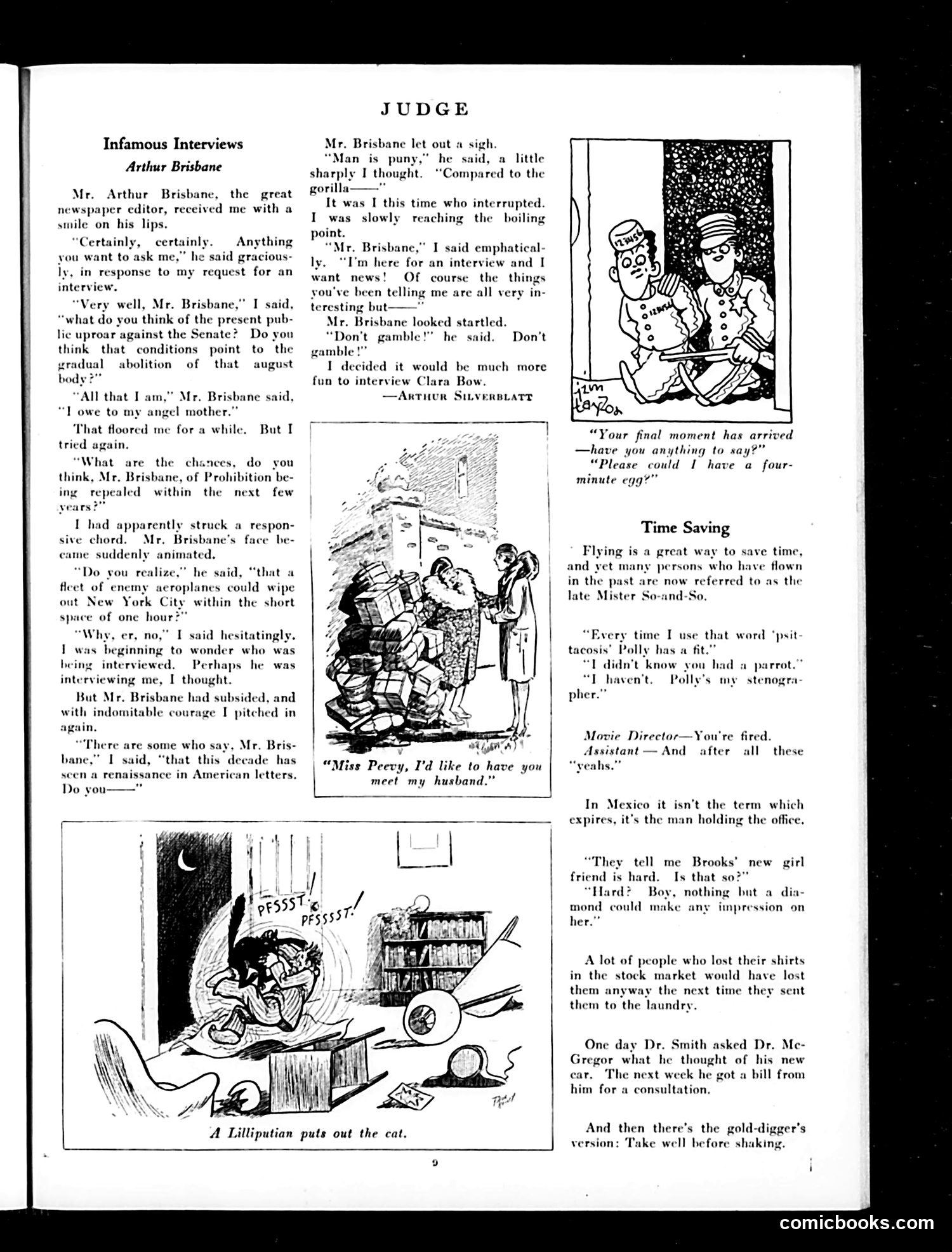
# Judge Magazine Page Analysis This page from *Judge* satirizes newspaper editor **Arthur Brisbane**, a real public figure known for sensationalism and tangential commentary. The interview depicts Brisbane as absurdly evasive and alarmist—when asked about Senate reform and Prohibition, he instead pivots to apocalyptic warnings about enemy aircraft destroying New York City, frustrating the interviewer who actually wants *news*. The satire targets Brisbane's editorial style: his tendency to digress into fear-mongering, philosophical musings, and non-sequiturs rather than address substantive political questions. The final joke—that the interviewer decides to interview **Clara Bow** (a famous silent film star) instead—suggests Brisbane is too unreliable for serious journalism. The accompanying comics and quips are unrelated humor pieces typical of *Judge*'s miscellaneous comedy format, including sight gags and one-liners about flying deaths, office romance, and financial disasters.
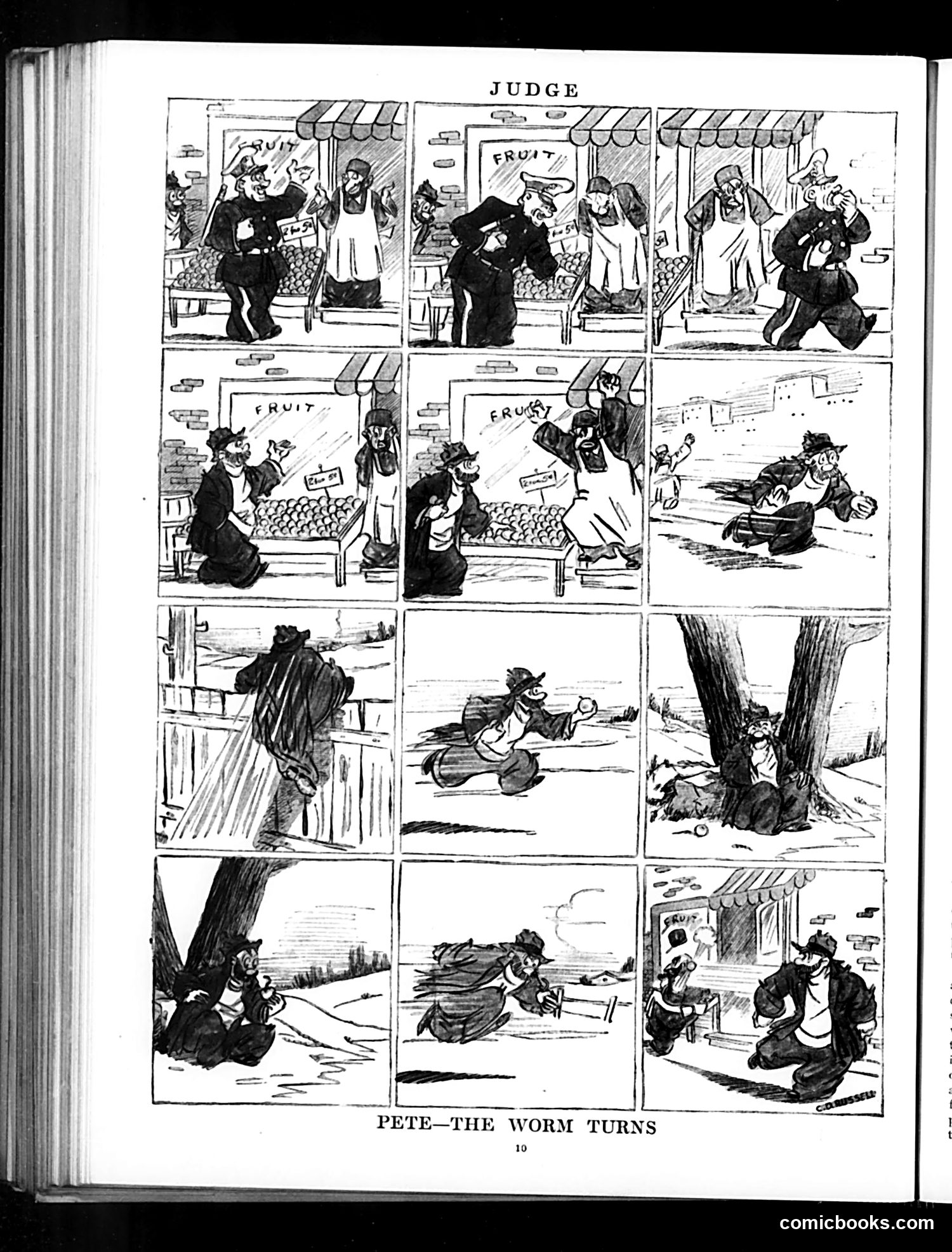
# Analysis: "Pete—The Worm Turns" This Judge cartoon depicts a figure (Pete) experiencing a reversal of fortune. The narrative progresses from Pete being mistreated at fruit stands (top panels), where he appears to be a customer or worker, through increasingly severe consequences—being thrown out, falling, hiding, and ultimately appearing destitute in natural settings. The title "the worm turns" references the proverb about a worm eventually fighting back when pushed too far. However, rather than Pete gaining victory, the cartoon shows continued degradation and suffering. This appears to be satirizing either a specific public figure or the general fate of someone pushed to society's margins—suggesting that even when the "worm turns," consequences prove inescapable. The exact identity of Pete remains unclear from the image alone.