A complete issue · 36 pages · 1930
Judge — January 25, 1930
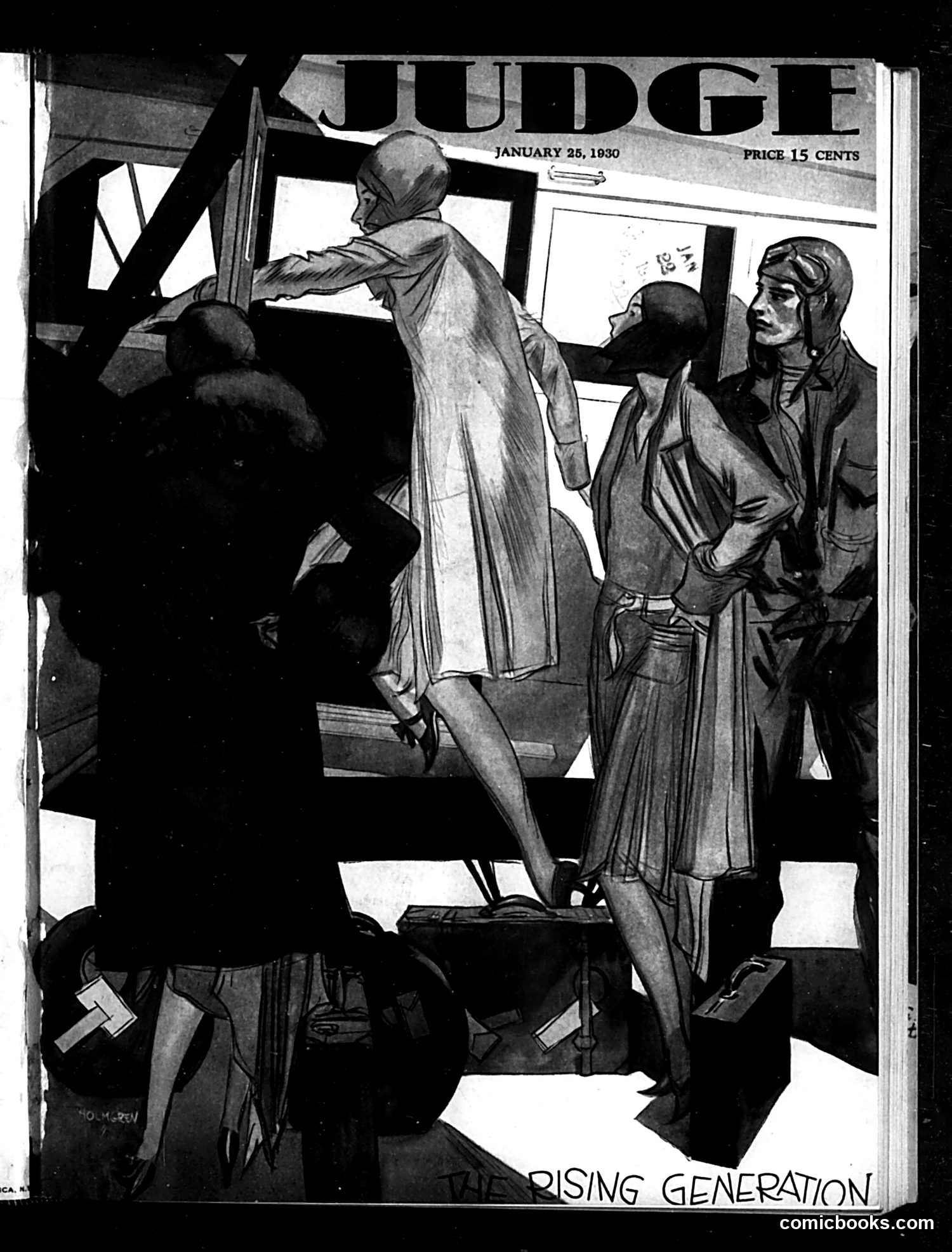
# Analysis of Judge Magazine Cover, January 25, 1930 This cover illustration titled "The Rising Generation" depicts a scene aboard what appears to be a ship or train. A young woman in revealing clothing stands prominently, interacting with several male passengers. The composition and title suggest satire about youth culture and changing social mores in the late 1920s-early 1930s. The "rising generation" likely refers to the younger cohort coming of age during the Jazz Age, known for challenging Victorian social conventions. The woman's abbreviated dress and forward behavior would have been considered scandalous to conservative readers, making her a target for satirical commentary about perceived moral decline among youth. The price of 15 cents and 1930 date place this during the Great Depression's onset, a period of significant social anxiety.
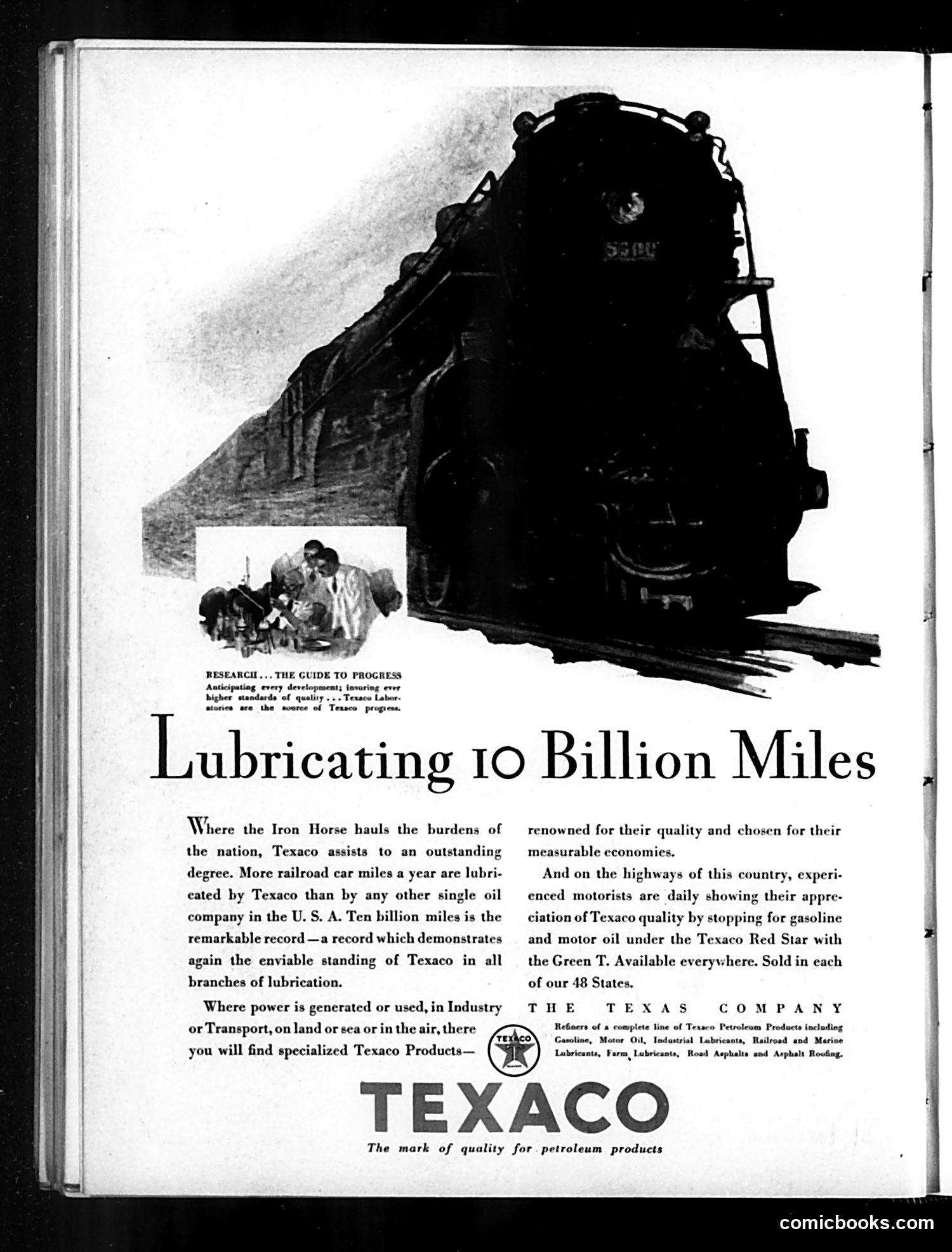
# Analysis This page is **primarily a Texaco oil company advertisement**, not satirical content. The dominant image shows a massive steam locomotive with the headline "Lubricating 10 Billion Miles." The small inset illustration (lower left) appears to show workers or laborers, accompanying text emphasizing Texaco's research and quality control—"Anticipating every development; insuring ever higher standards of quality." The advertisement claims Texaco lubricates more railroad miles than any competitor and appeals to motorists appreciating their gasoline and motor oil. It emphasizes availability across 48 states. **There is no discernible political satire or cartoon here.** This is straightforward corporate marketing from the early-to-mid 20th century, using industrial imagery (the Iron Horse) to associate Texaco with American progress and reliability.

# Analysis This is primarily an **advertisement, not satire or political cartoon**. It promotes the 14th edition of Encyclopedia Britannica as an educational tool for families, marketed as an affordable "home education" resource. The page features a photograph showing a family (appears to be parents and children) gathered around the encyclopedia set, illustrating the product's appeal as a family educational centerpiece. The ad emphasizes that 40,000 families already own it and highlights its 15,000 illustrations and articles by 3,500 world authorities. The "satire" element, if present, is subtle—the ad's breathless claims about how this encyclopedia will transform family life and children's ambitions likely struck some contemporary readers as hyperbolic marketing. However, this appears to be straightforward commercial promotion rather than critical satire typical of Judge magazine's usual content.
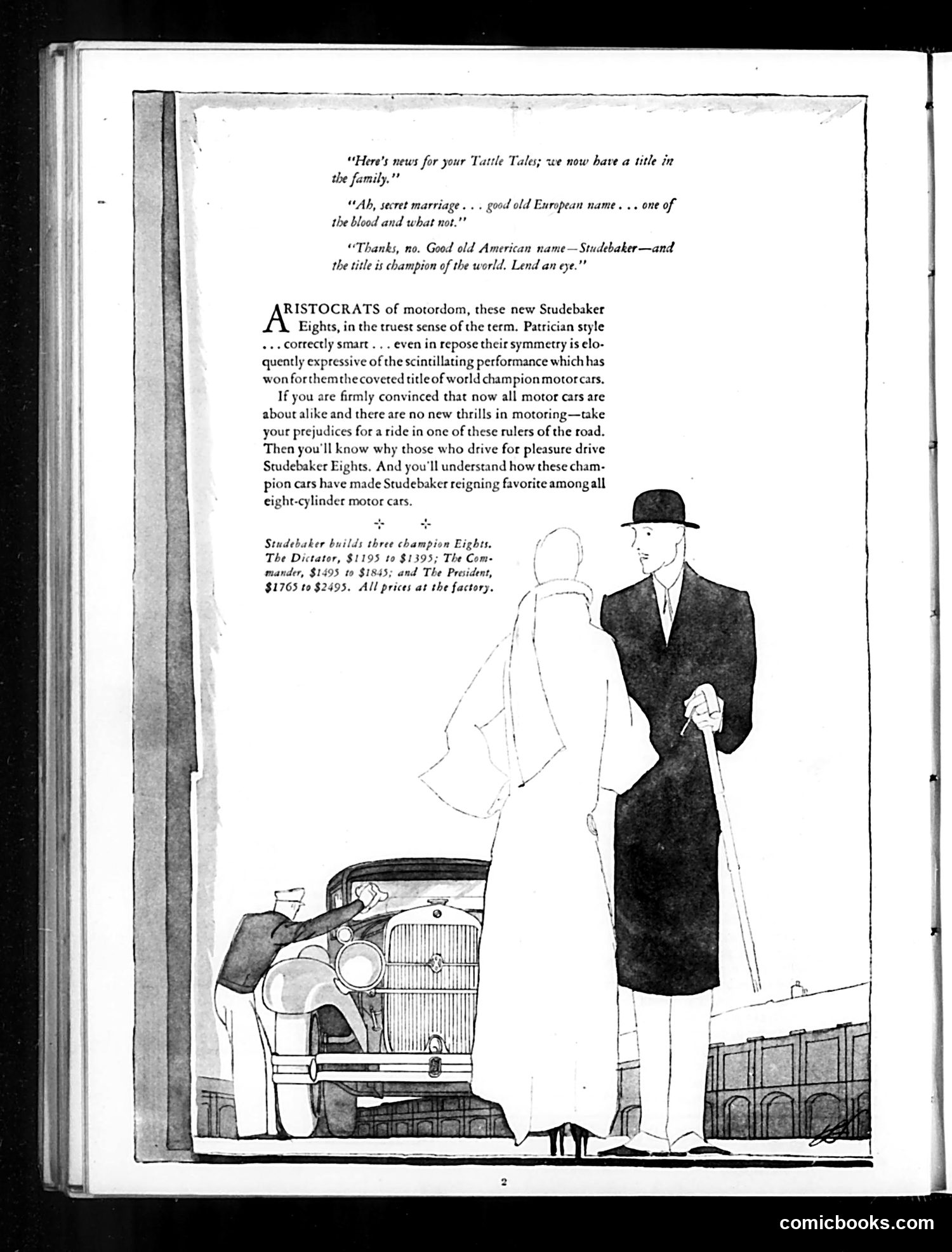
# Analysis of Studebaker Advertisement This is primarily a **luxury car advertisement** rather than political satire. The page promotes Studebaker "Eight" automobiles as status symbols for the wealthy elite ("aristocrats of motordom"). The illustration depicts an elegant couple—likely representing upper-class consumers—examining a Studebaker vehicle. The ad's humor is gentle mockery aimed at car enthusiasts, suggesting that driving a Studebaker Eight proves superiority over other eight-cylinder cars and provides thrills to those who think "all motor cars are about alike." The text lists three "champion" models: The Dictator, Commander, and President, with factory prices ranging from $1,195 to $2,455. The naming strategy suggests aspirational power and prestige associated with automobile ownership during the prosperous 1920s.
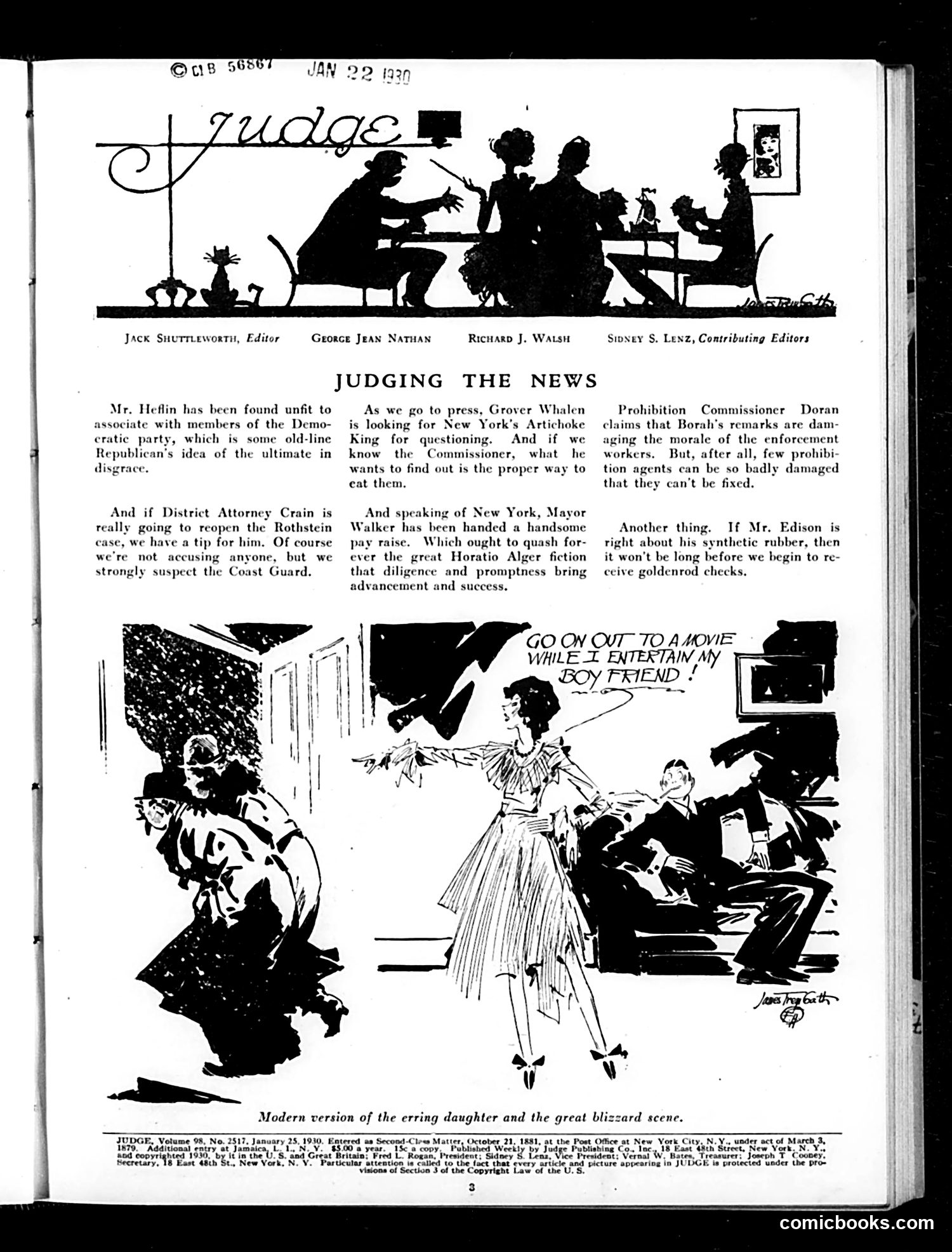
# "Judging the News" - January 22, 1930 This editorial page criticizes several political figures and issues: **Top section** attacks Democratic Party leadership (Hedin, District Attorney Crain) for alleged scandals, while praising Republican priorities. **Middle cartoon** satirizes Mayor Walker of New York, who apparently received a pay raise despite questions about his competence. The satire suggests that "diligence and promptness" shouldn't automatically bring advancement—a dig at patronage and undeserved promotion. **Bottom cartoon** ("Modern version of the erring daughter and the great blizzard scene") appears to mock social/moral hypocrisy, showing a woman entertaining a male visitor while disapproving onlookers judge her. The caption suggests outdated moral standards applied selectively. The page reflects 1930s urban political corruption concerns and changing social attitudes.
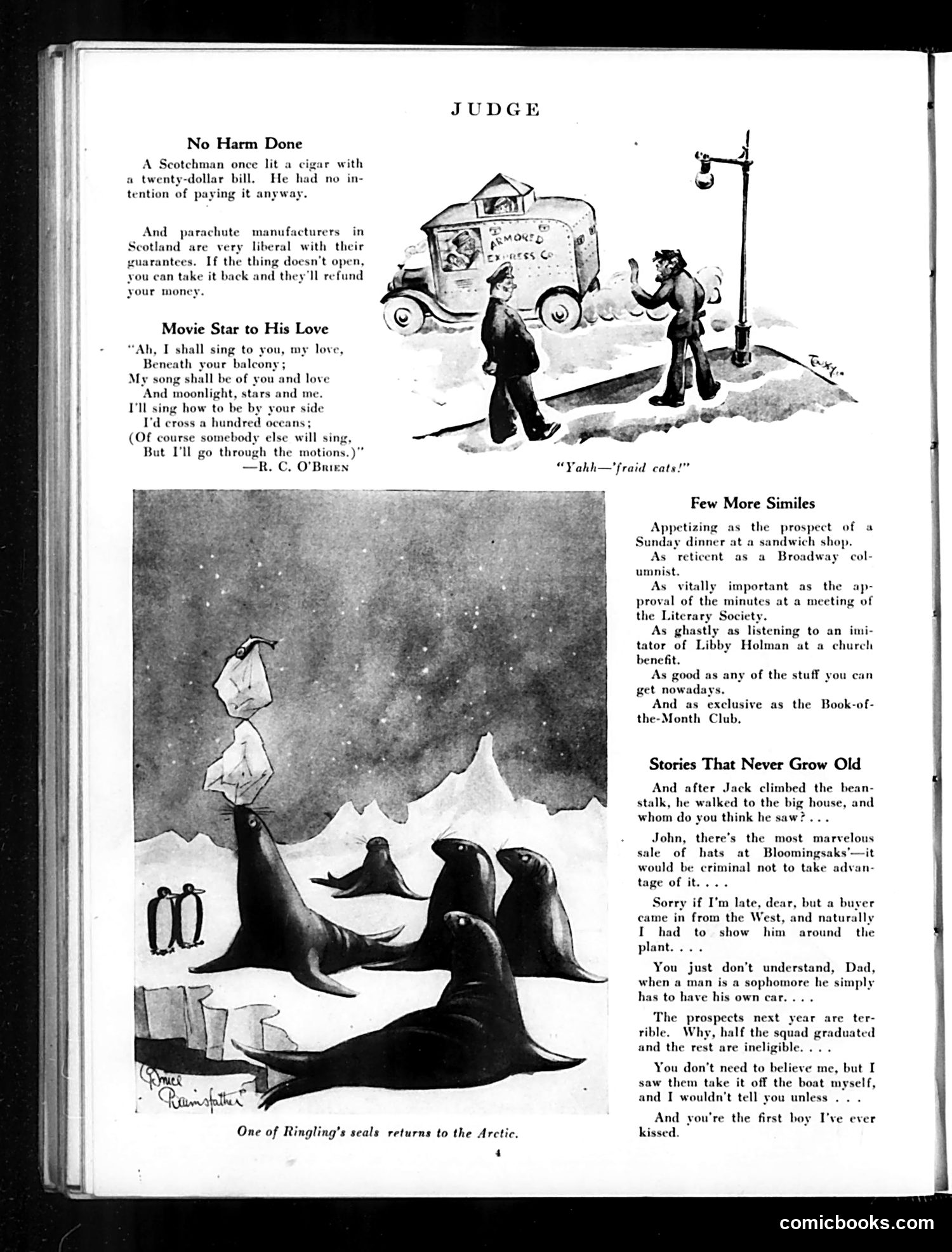
# Judge Magazine Page Analysis This page contains three separate humor pieces: 1. **"No Harm Done"**: A Scottish man lit a cigar with a twenty-dollar bill, intending not to pay. The joke satirizes Scottish stereotypes about frugality. 2. **"Movie Star to His Love"**: A romantic poem by R. C. O'Brien, mocking overwrought Hollywood sentiment and theatrical clichés ("I'll go through the motions"). 3. **"Few More Similes"**: A collection of brief comic comparisons about mundane situations, using deliberately weak comparisons to create humor. 4. **"Stories That Never Grow Old"**: A humorous dialogue between a father and son about collegiate life and romance, poking fun at coming-of-age narratives and predictable family exchanges. The lower illustration shows seals in an Arctic setting, captioned "One of Ringling's seals returns to the Arctic"—likely referencing Ringling Bros. circus animals.
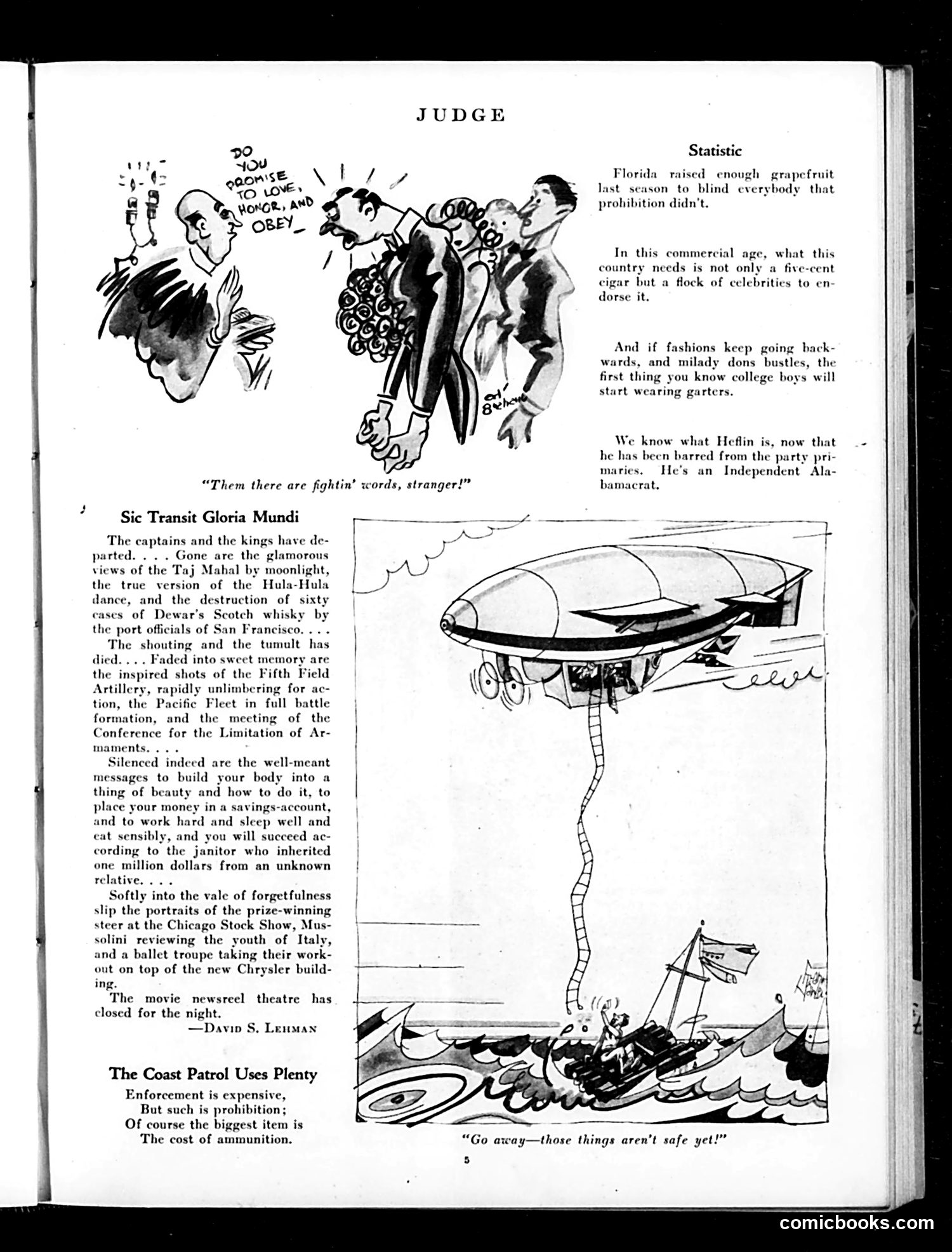
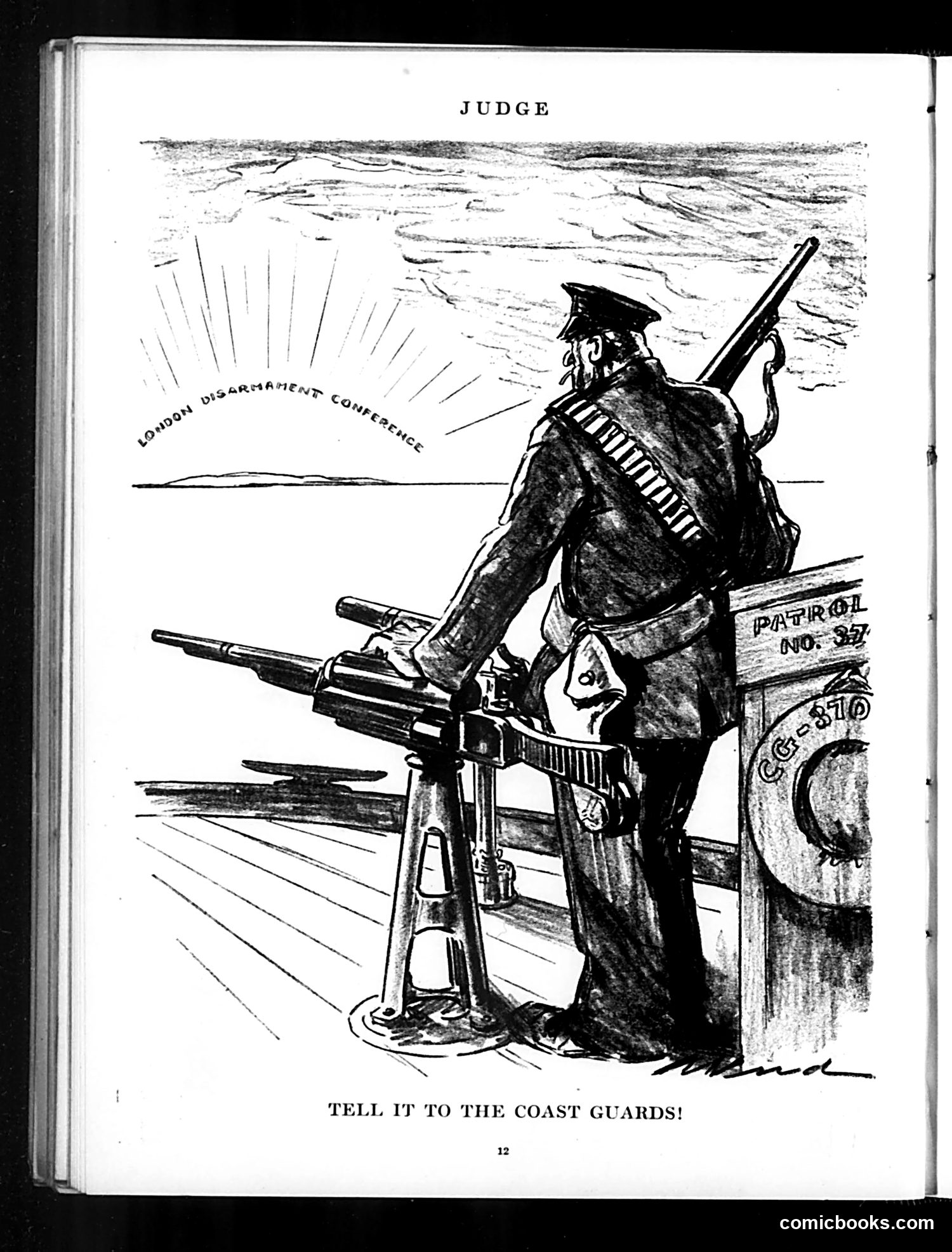
# Analysis of Judge Magazine Page The top cartoon satirizes political rhetoric, showing a figure (likely a politician) spouting promises of "promise, love, honor, and obey" while others react with skepticism. The caption "Them there are fightin' words, stranger!" suggests the absurdity of such platitudes. The second section, "Sic Transit Gloria Mundi" by David S. Lehman, is a prose commentary lamenting how wartime glories fade into obscurity—referencing dimmed memories of WWI battles, the Pacific Fleet, and disarmament conferences. The bottom illustration humorously depicts an experimental airship or aircraft being lowered toward a boat, with the caption "Go away—those things aren't safe yet!" This appears to satirize early aviation technology as dangerously unreliable. The page reflects post-WWI American concerns about military spending, technological progress, and political dishonesty.
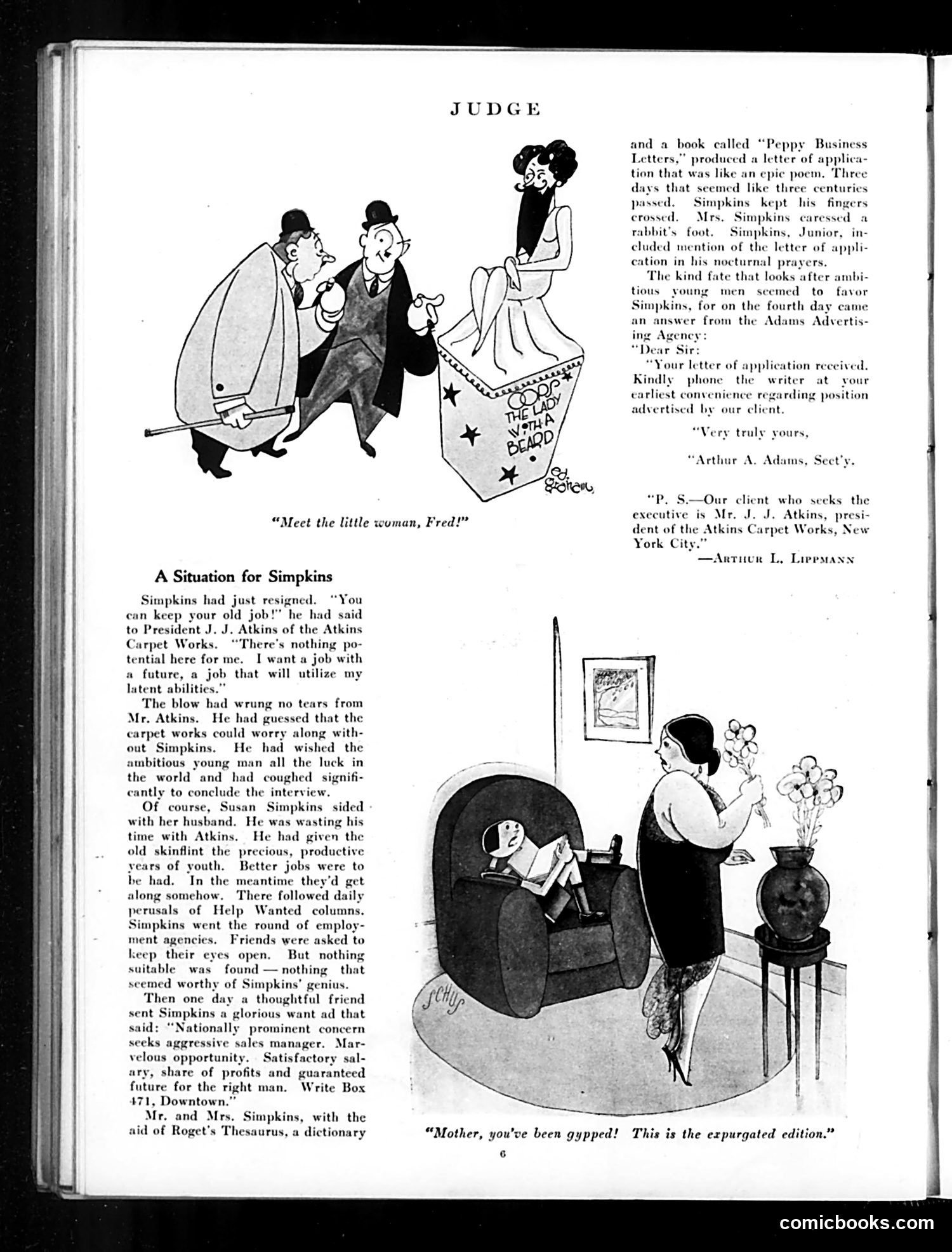
# Analysis of Judge Magazine Page This page satirizes the job-hunting struggles of an ambitious young man named Simpkins. The main narrative describes his frustration after resigning from the Atkins Carpet Works, seeking a position worthy of his talents. Despite efforts through employment agencies and help-wanted columns, nothing suitable materializes. The cartoon "Meet the little woman, Fred!" depicts two men presenting Simpkins to a woman in a box—likely satirizing how job applicants were treated as commodities to be "packaged" and presented to employers. The bottom cartoon shows Simpkins' mother, who has apparently been exaggerating his qualifications to others. Her remark about the "exaggerated edition" jokes that she's been overselling her son's abilities to potential employers—a commentary on both maternal pride and the desperation of job-seeking during this era.
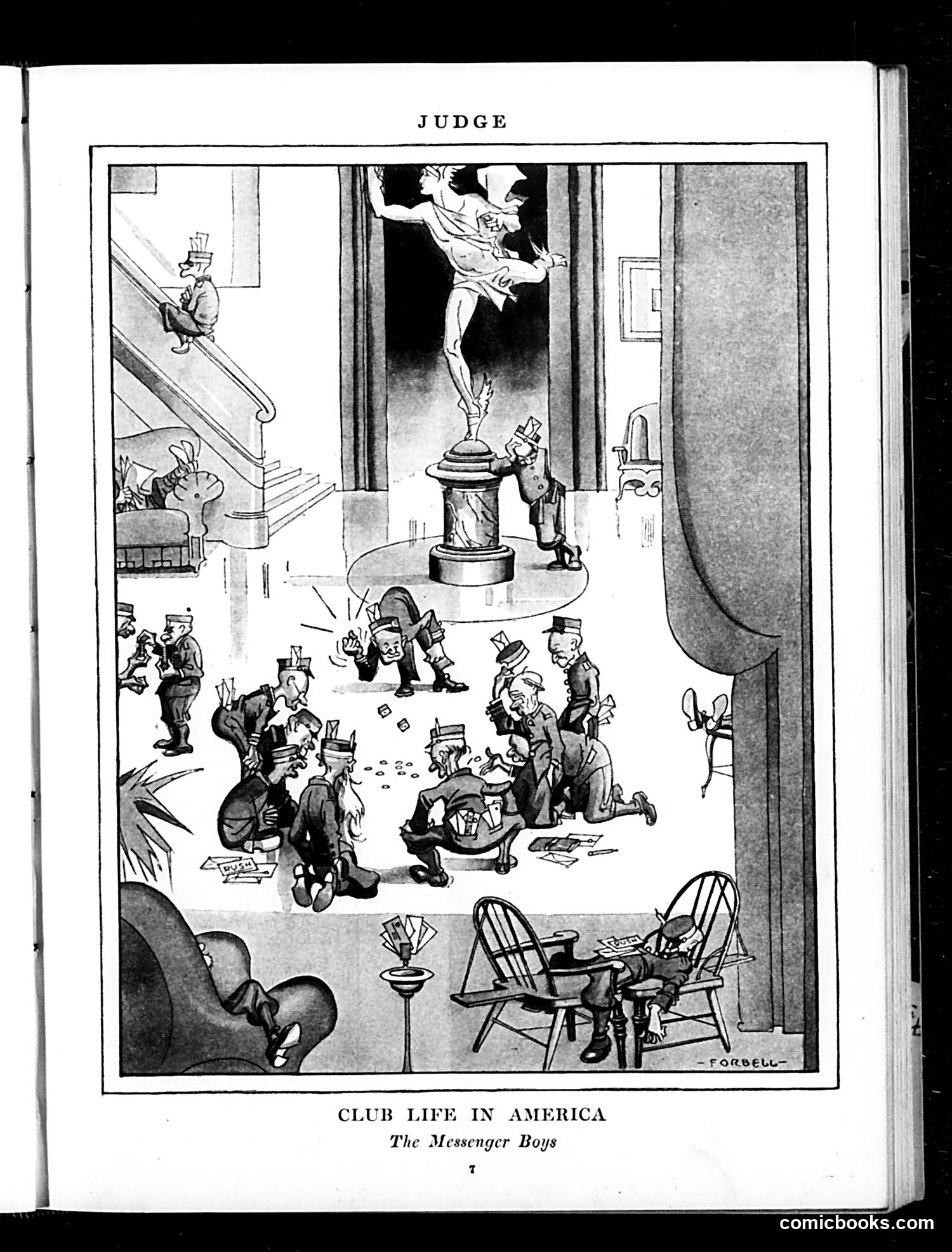
# Judge Cartoon Analysis: "Club Life in America - The Messenger Boys" This satirical illustration depicts a chaotic scene of "messenger boys" (young male couriers common in early 20th-century urban America) conducting business in what appears to be an exclusive club. The cartoon mocks the incongruity of these working-class youths operating openly within an elite gentleman's club setting—they're shown gambling, exchanging money, and conducting illicit dealings while lounged members observe from chairs below. The satire targets corruption and impropriety in American clubs, suggesting that messenger boys (possibly running illegal betting operations or other schemes) have infiltrated supposedly respectable institutions. The exaggerated chaos and the gentlemen's apparent indifference critique both the boys' lawlessness and the club's failure to maintain standards. The artist (signed Forbell) uses this absurdist scenario to comment on social disorder and the infiltration of proper society by criminal or unsavory elements.
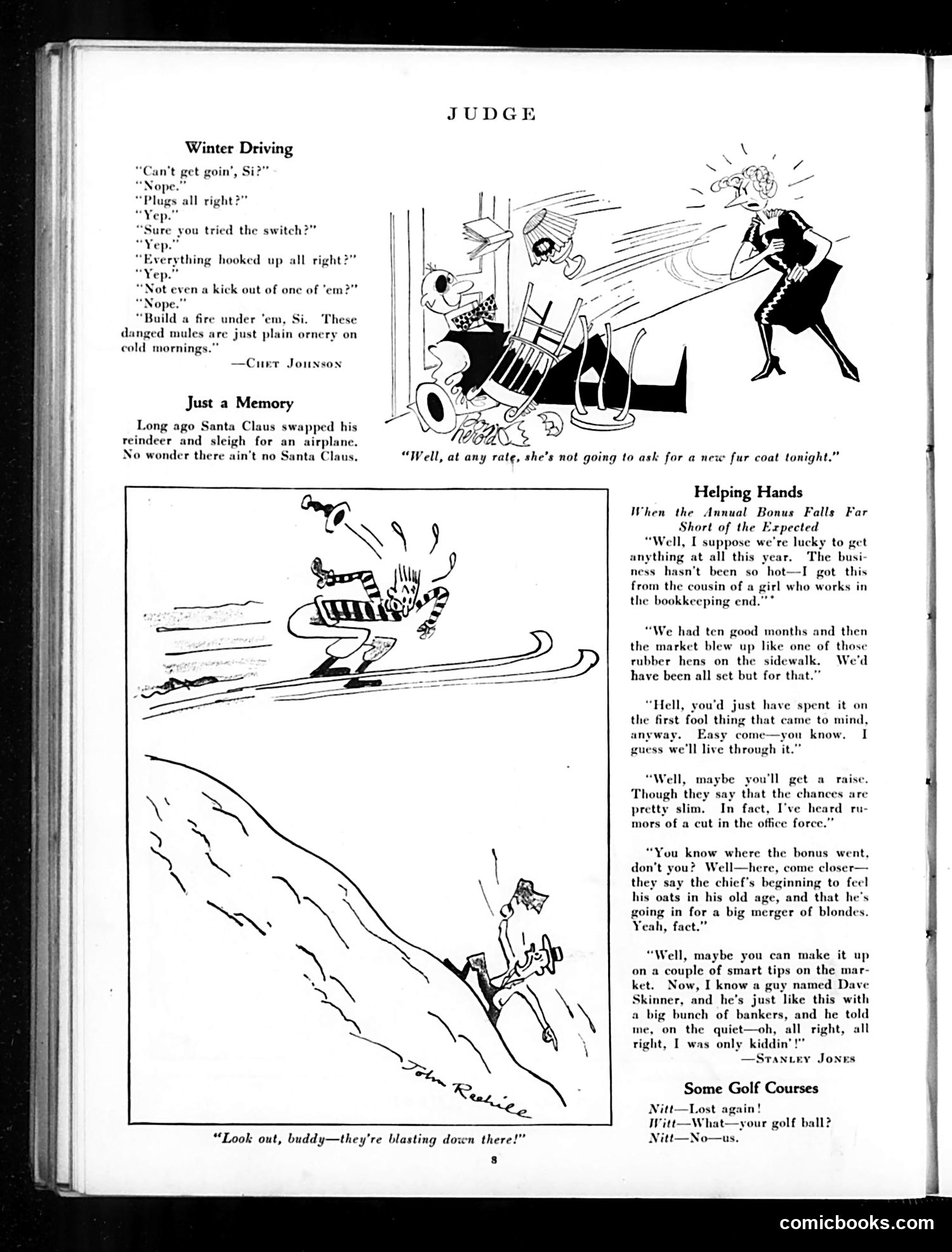
# Judge Magazine Page Analysis This page from the satirical magazine *Judge* contains three humorous pieces satirizing early 20th-century American life: **"Winter Driving"** mocks the unreliability of early automobiles through dialogue between two men trying to start a car. The joke's punchline—that the speaker suggests building a fire under the vehicle and compares it to stubborn mules—suggests cars are no more reliable than animals. This reflects widespread frustration with early automotive technology. **"Just a Memory"** is a brief joke about Santa Claus abandoning his sleigh for an airplane, lamenting the loss of Christmas magic to modern transportation. **"Helping Hands"** satirizes corporate culture during economic downturns, depicting employees gossiping about a meager bonus. The humor targets office politics, corporate mismanagement, stock market crashes, and rumored executive infidelity—suggesting workers cope with financial disappointment through workplace rumors and dubious investment tips. The golf jokes at bottom are simple wordplay about losing golf balls and losing at the game itself.
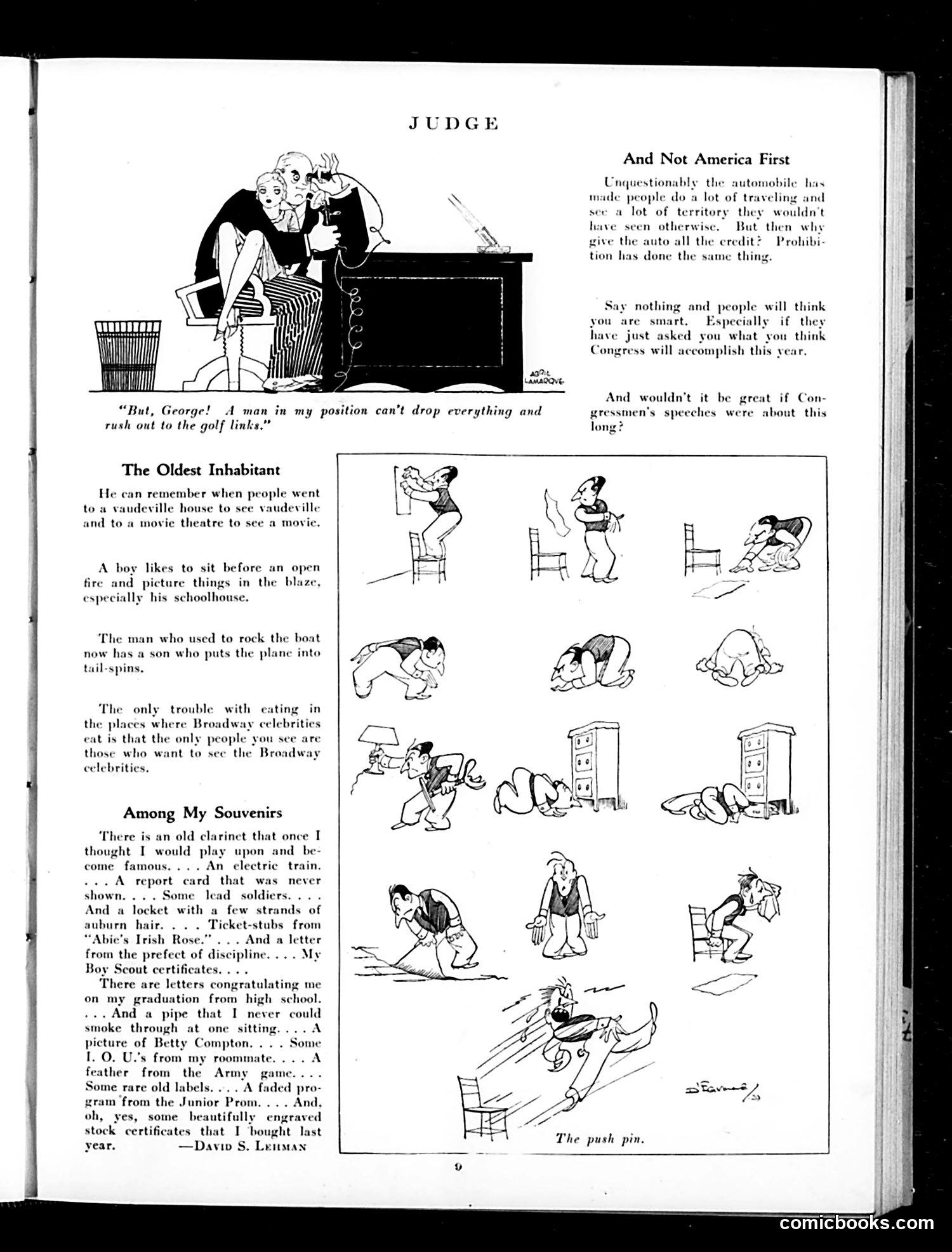
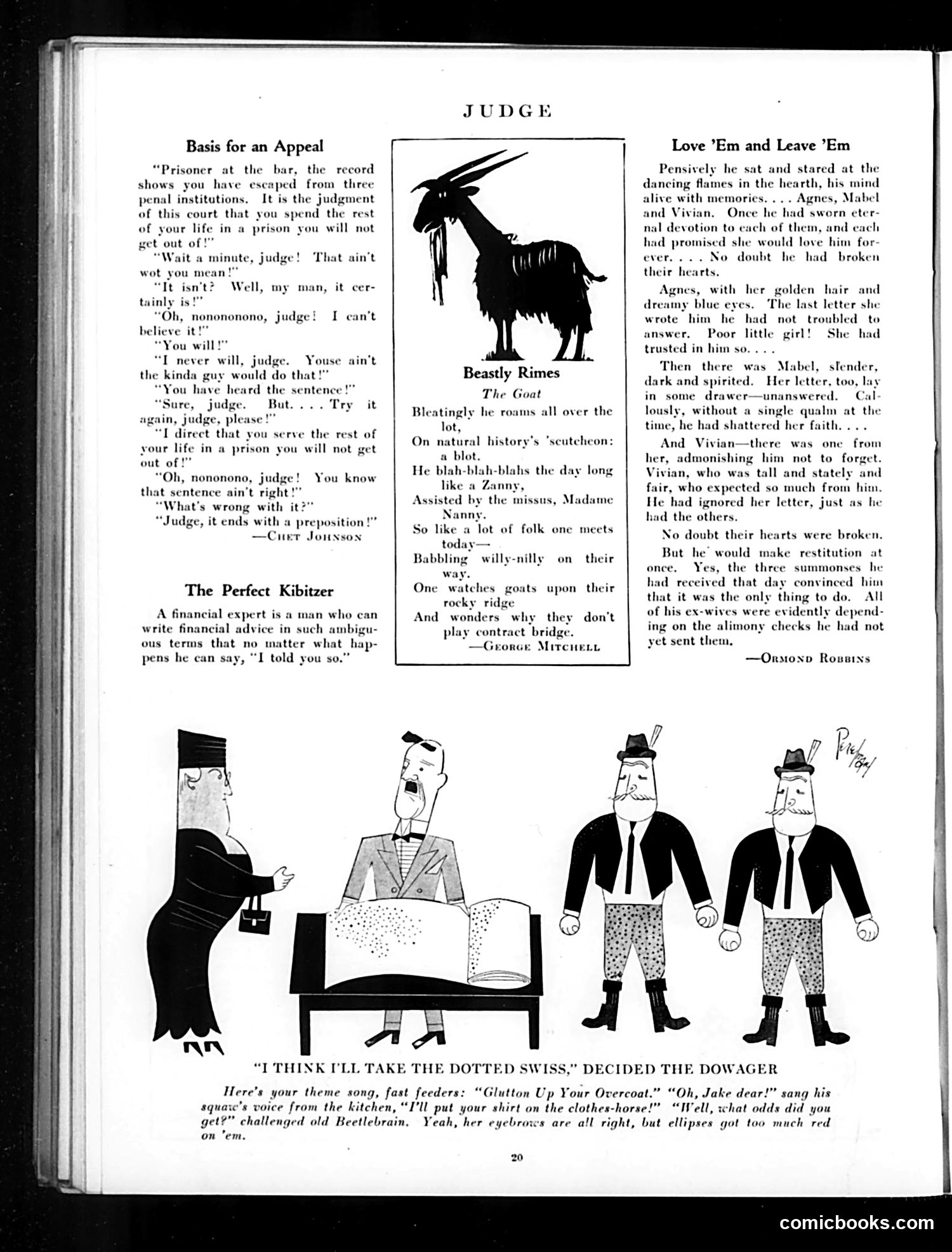
# Analysis of Judge Magazine Page This page contains three satirical pieces typical of 1920s-era Judge magazine: **"Judge" cartoon (top):** A businessman at his desk tells his secretary he cannot leave for golf because of his position's demands—satirizing how professional men use work as excuse while actually wanting leisure time. **"The Oldest Inhabitant":** Nostalgic commentary on changing entertainment and technology. References vaudeville theaters, movies, and boats being replaced by airplanes doing "tail-spins." The joke: progress and generational change make old pastimes obsolete. **"Among My Souvenirs":** A humorous list of keepsakes from youth—school certificates, toys, love letters, theater tickets—ending with "beautifully engraved stock certificates I bought last year," satirizing how adults replace sentimental memories with financial investments. The author is David S. Lensman. The "And Not America First" sidebar mocks Prohibition by noting it made Americans travel as much as automobiles (implying people fled to find alcohol), and suggests congressmen should give shorter speeches. All reflect 1920s middle-class American life and values.
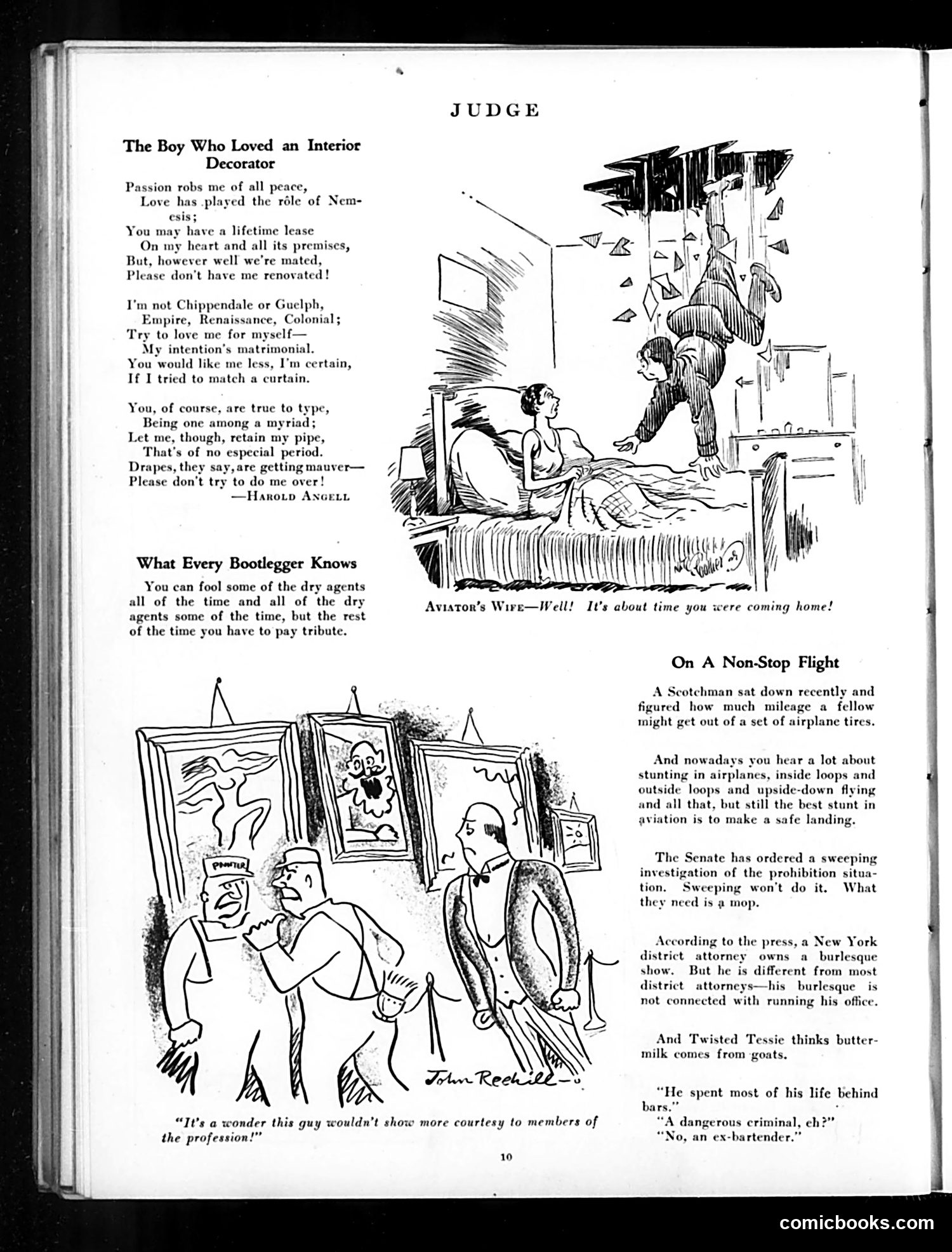
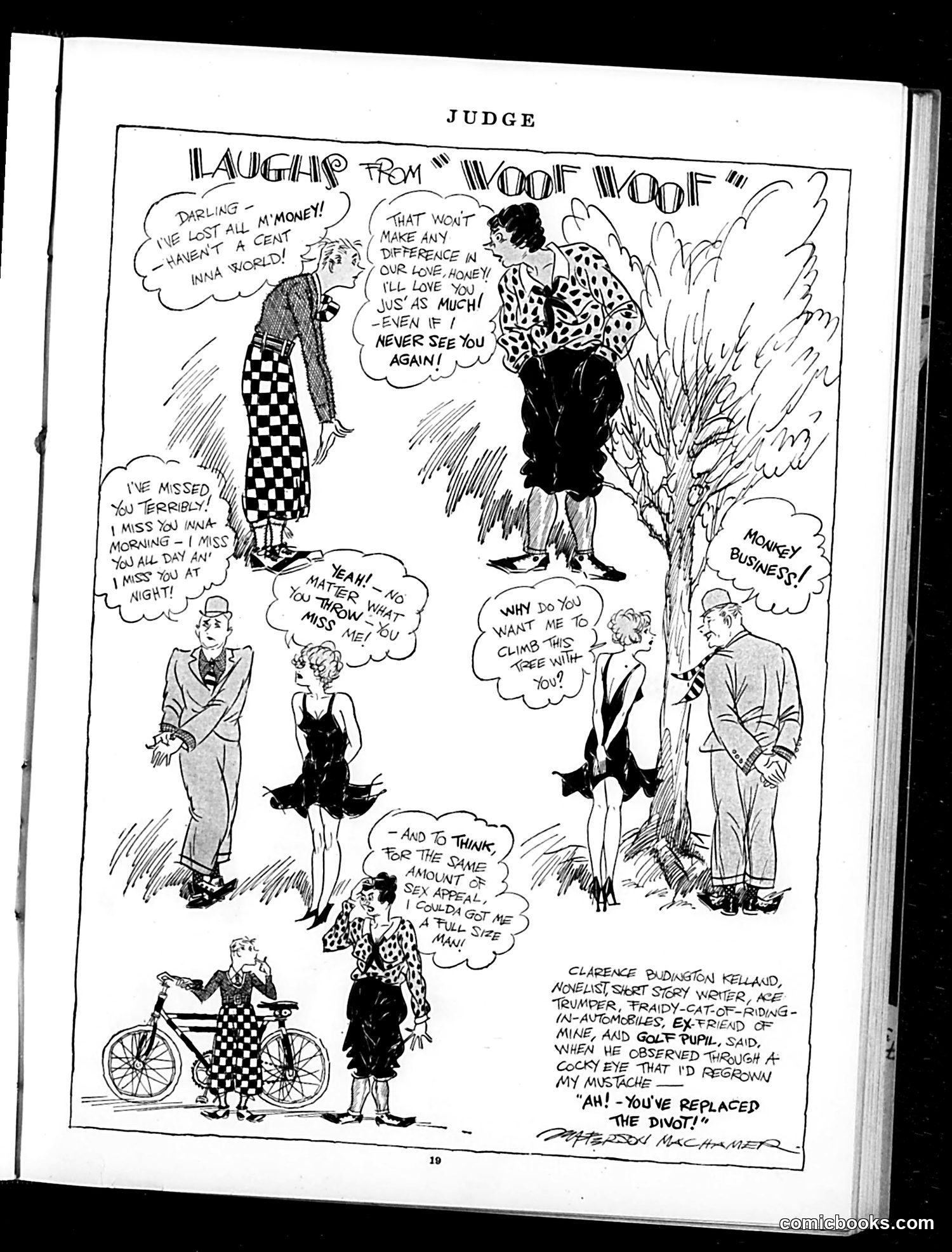
# Judge Magazine Page Analysis This page contains several satirical pieces typical of 1920s Judge magazine: **"The Boy Who Loved an Interior Decorator"** is a humorous poem by Harold Angell about a man resisting his girlfriend's desire to redecorate him—treating romantic love as interior design. The joke is the absurdist comparison of remaking a person to redecorating furniture. **"What Every Bootlegger Knows"** satirizes Prohibition enforcement, playing on Lincoln's famous quote about fooling people. It jokes that bootleggers can evade some dry agents sometimes, but ultimately must pay bribes—reflecting the widespread corruption during Prohibition. **"On A Non-Stop Flight"** contains several short jokes about aviation and contemporary politics, including mockery of Senate investigation into Prohibition as ineffectual ("needs a mop, not sweeping"). The cartoon shows men viewing nude artwork, captioned about professional courtesy—likely satirizing art world hypocrisy. These pieces reflect 1920s concerns: romantic relationships, Prohibition's failure and corruption, and early aviation. The tone is lighthearted social commentary typical of the era's satirical magazines.