
Judge, 1930-01-25 · page 13 of 36
Judge — January 25, 1930 — page 13: what you’re looking at
What you’re looking at
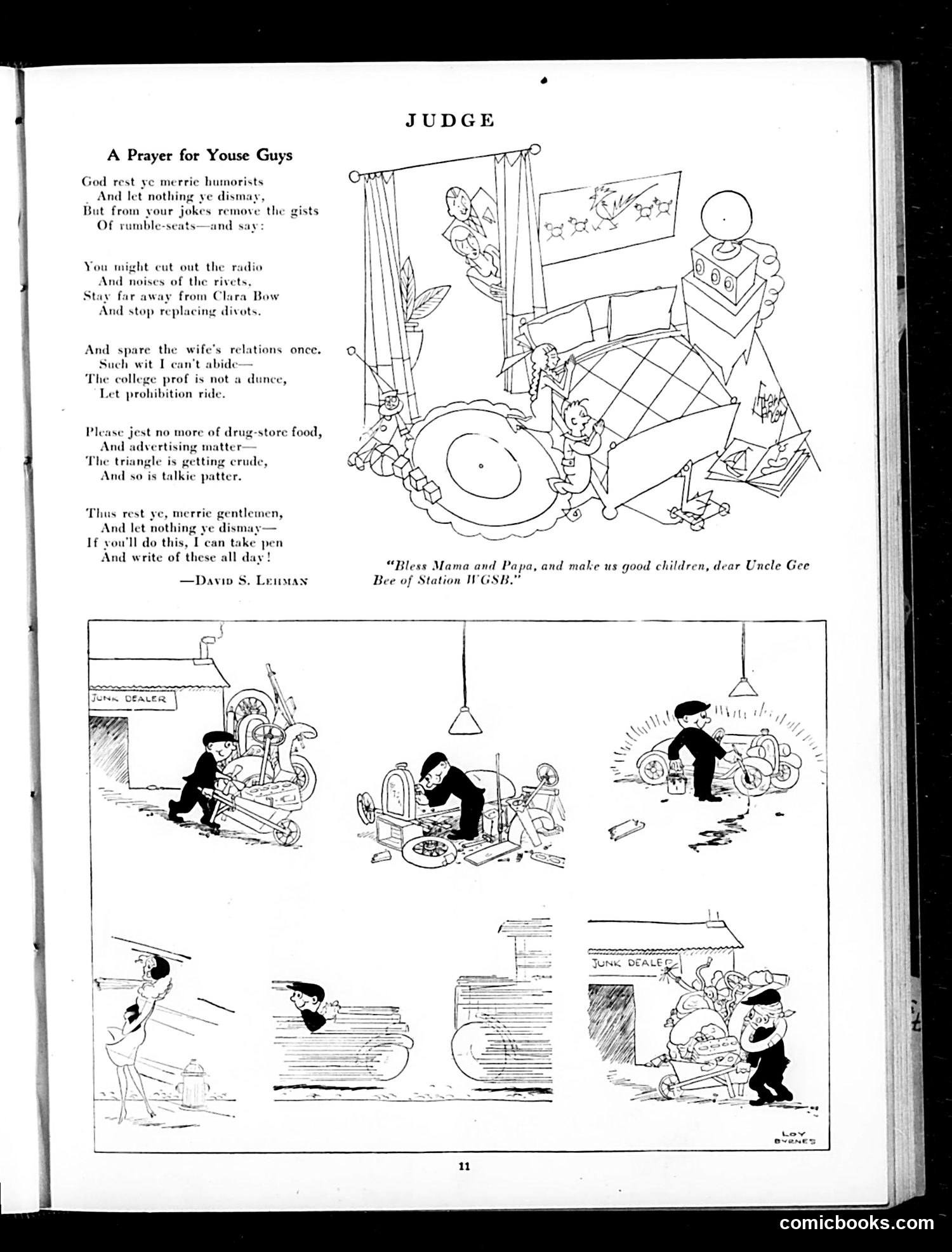
# Judge Magazine Page Analysis This page satirizes 1920s American humor and popular culture. The poem "A Prayer for Youse Guys" by David S. Lehman pleads with comedians to retire tired joke subjects: rumble seats (car features), radios, rivets, Clara Bow (silent film star), prohibition, college professors, wives' relatives, drug-store food, and "talkie patter" (early talking pictures). The accompanying comic strip shows boys engaging in mischief—building contraptions, dealing junk, and generally behaving badly—illustrating the "youse guys" audience the prayer addresses. The caption references "Uncle Gee Bee of Station WGSB," a radio personality, parodying children's radio programming prayers. The satire critiques both the exhaustion of 1920s comedy clichés and the emerging mass media (radio, talkies) reshaping entertainment and humor.
📄 Transcribed text from this page (OCR, searchable)
Machine-transcribed from the original scan — historical spelling and the odd misread are preserved.
A Prayer for Youse Guys God rest ye merrie humorists And let nothing ye dismay, But from your jokes remove the gists Of rumble-seats—and say: You might cut out the radio And noises of the rivets, Stay far away from Clara Bow And stop replacing divots. And spare the wife's relations once. Such wit I can't abide— The college prof is not a dunce, Let prohibition ride. Please jest no more of drug-store food, And advertising matter The triangle is getting crude, And so is talkie patter. Thus rest ye, merric gentlemen, And let nothing ye dismay— If you'll do this, Ican take pen And write of these all day! —Davin S. Leuman “Bless Mama and Papa, and make us good children, dear Uncle Gee Bee of Station WGSB.” comicbooks.com