A complete issue · 36 pages · 1929
Judge — December 7, 1929
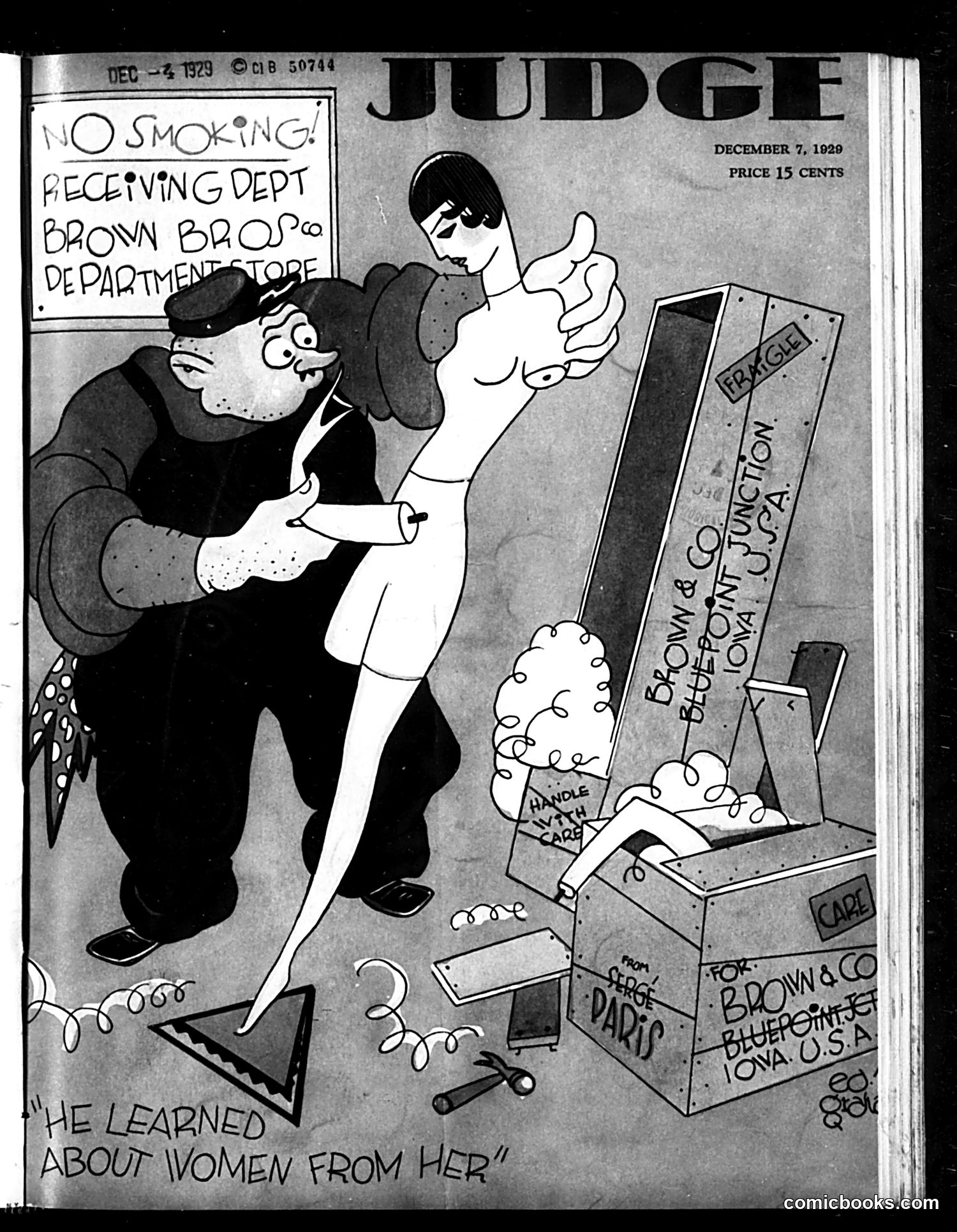
# Judge Magazine Cover, December 7, 1929 This cover depicts a domestic delivery scene with sexual innuendo. A man in formal attire receives a package from a woman dressed as a delivery person or department store employee. The "Brown Bros. Department Store" sign references a real business. Scattered boxes labeled with shipping information (including "Paris," "fragile," and "handle with care") surround them. The caption reads: "He learned about women from her," suggesting the woman's knowledge or experience. The joke appears to rely on double entendre about "packages" and physical attraction—typical of 1920s-30s Judge humor targeting male readers. The "No Smoking" sign in the receiving department is incidental detail. This represents the magazine's characteristic bawdy, flirtatious cartoon style popular during the Jazz Age.
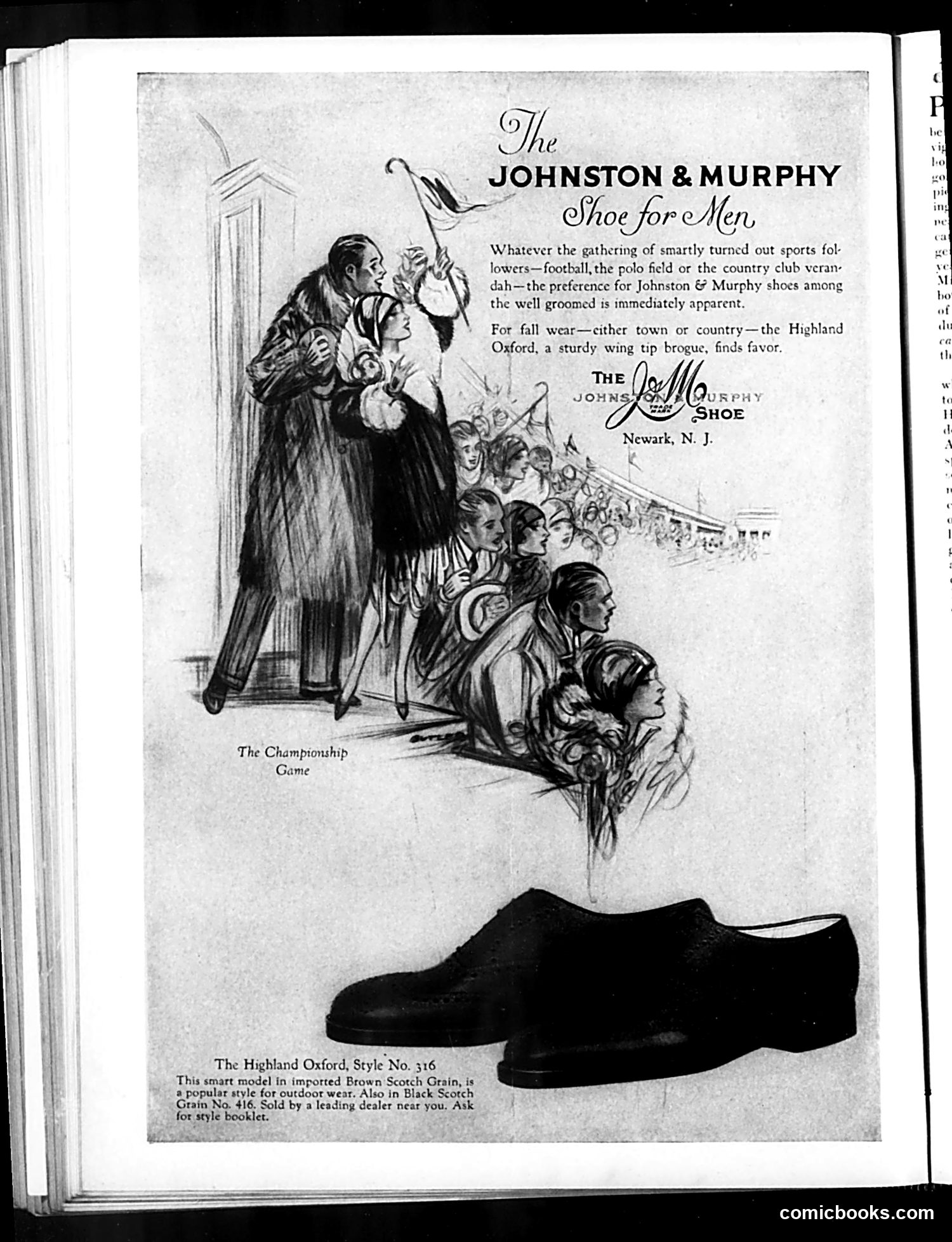
# Johnston & Murphy Shoe Advertisement This is primarily a **shoe advertisement**, not political satire. It promotes Johnston & Murphy shoes for men, marketed as the preferred footwear among "smartly turned out sports followers" at sporting events like football and polo. The illustration depicts a well-dressed man and woman at what appears to be a sporting event (labeled "The Championship Game"), with spectators in the background. The ad emphasizes the "Highland Oxford" shoe style (No. 316), described as sturdy and suitable for fall wear in town or country settings. The image uses aspirational social messaging—associating the shoes with upper-class leisure activities and refined appearance—a standard advertising approach of the era. Located in Newark, N.J., this represents typical early 20th-century product marketing in *Judge* magazine.
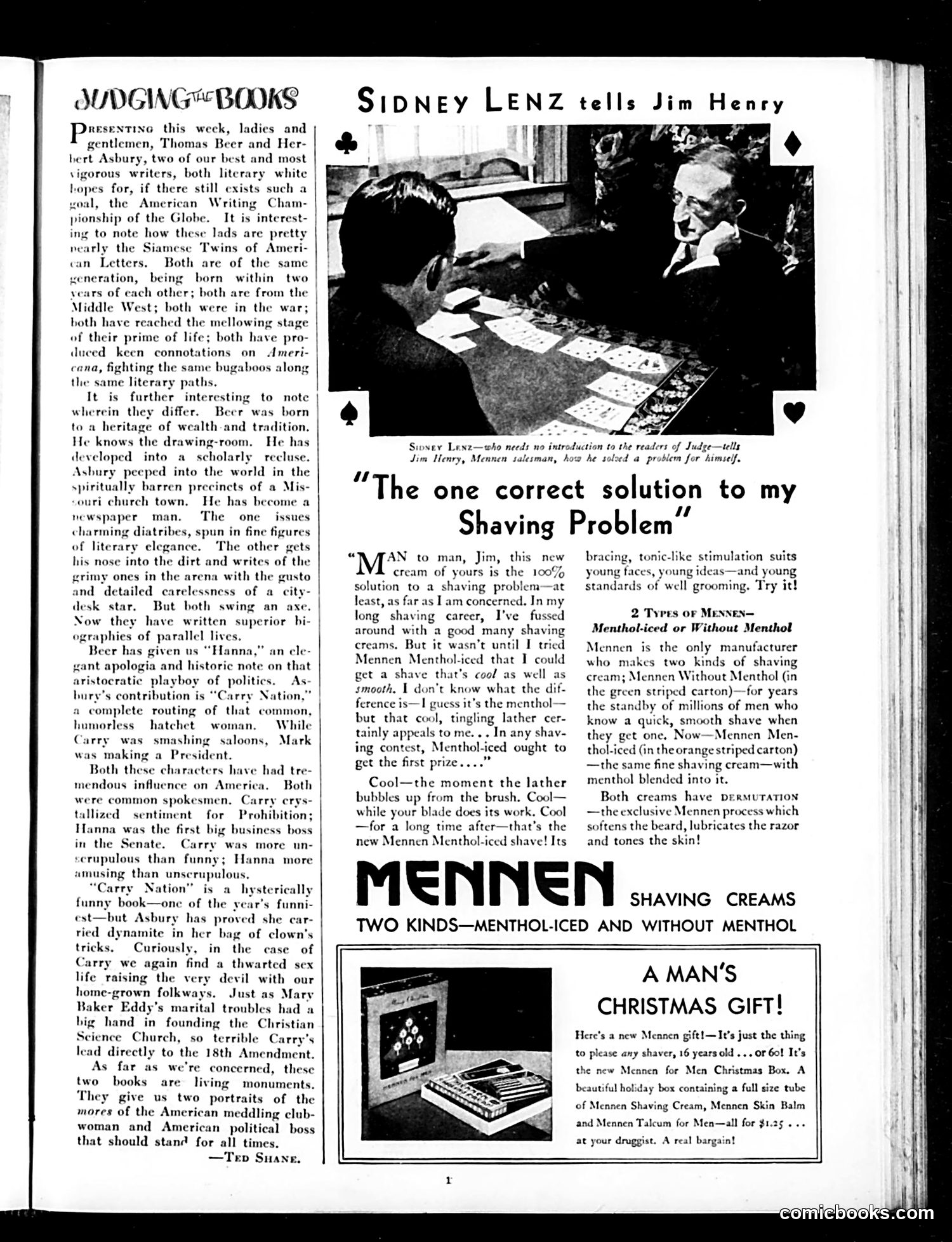
# Analysis This page is primarily **advertising with minimal editorial content**. The main feature is a Mennen shaving cream advertisement disguised as an interview, where Sidney Lenz (identified in the caption) supposedly tells Jim Henry about discovering Mennen's product as "the one correct solution to my shaving problem." The left column contains a book review by Ted Shane discussing works by Thomas Beer and Herbert Asbury—literary commentary rather than political satire. **No political cartoon appears on this page.** The only illustration is a commercial product photograph showing a Mennen gift box. This represents typical Judge magazine content from the 1920s-30s era: mixing genuine literary criticism with advertorial content presented as editorial material, blurring the line between journalism and advertising in ways modern readers would immediately recognize as problematic.
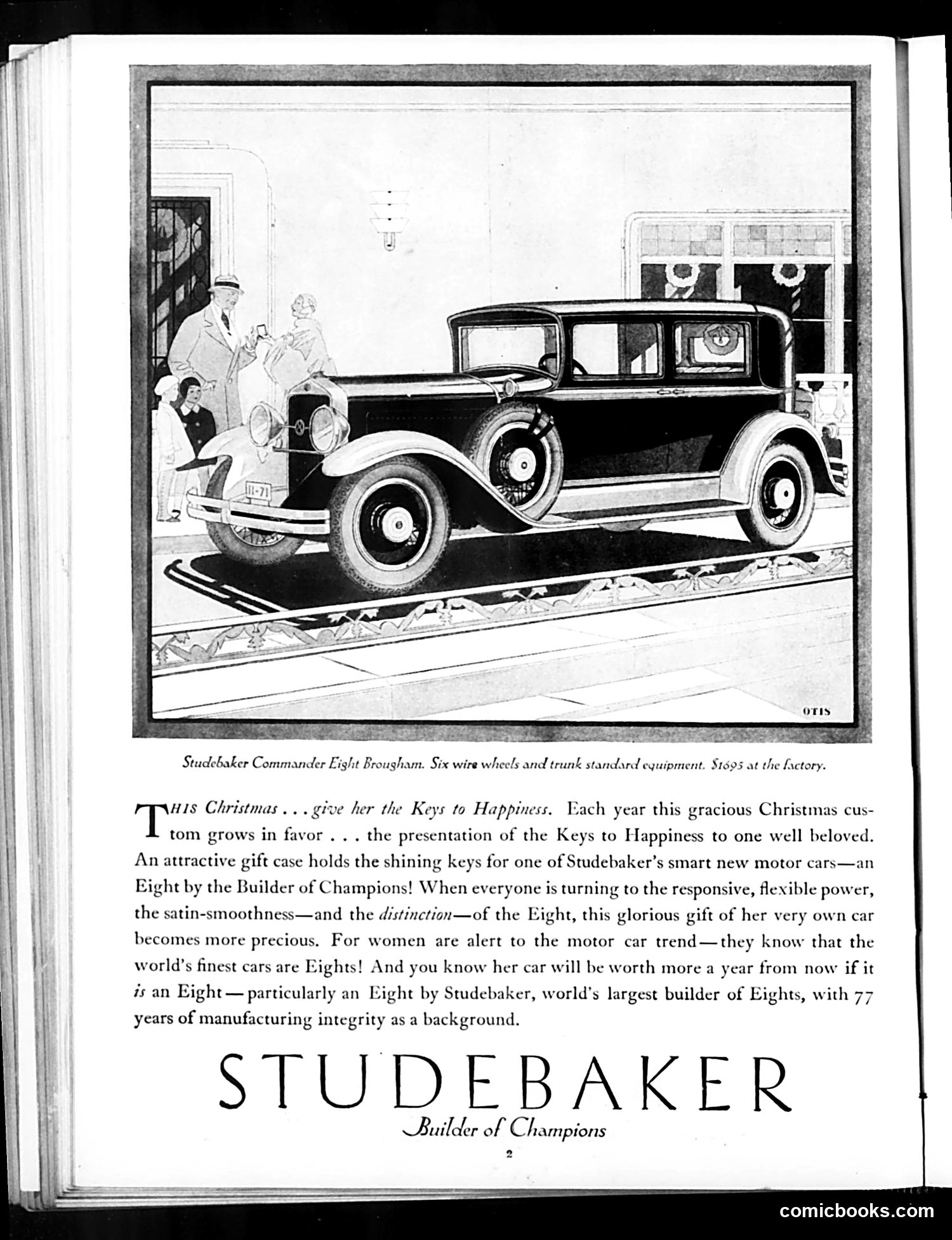
# Analysis This page is **primarily an advertisement**, not satirical content. It promotes the Studebaker Commander Eight automobile as a Christmas gift, using the marketing concept of "Keys to Happiness." The illustration shows a luxury car in what appears to be an elegant showroom or garage, with well-dressed figures examining it. The accompanying text targets women as car buyers, arguing that an Eight-cylinder vehicle represents sophistication and holds its value well. The "satire" is gentle advertising copy rather than political commentary—it's aspirational marketing dressed in gift-giving language. The page reflects 1920s-30s consumer culture and gender dynamics, where automobile ownership signified status, and advertising specifically courted women as purchasers of luxury goods.
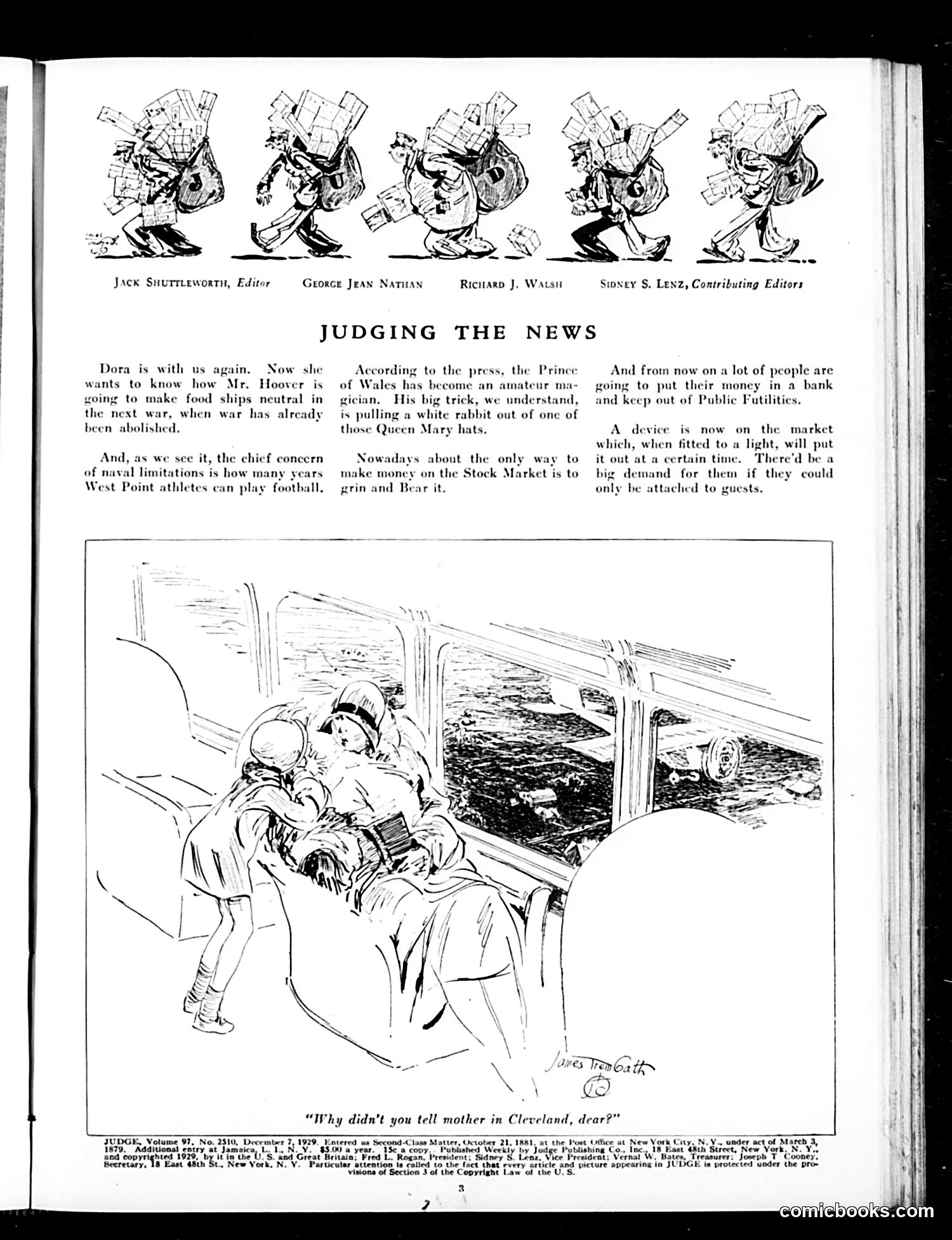
# "Judging the News" - December 2, 1929 This page satirizes current events through brief commentary and a cartoon. The top section mocks several topics: Dora (likely a public figure), the Prince of Wales being an "amateur magician" (unclear reference), and West Point athletes playing football despite wartime restrictions. The main cartoon, captioned "Why didn't you tell mother in Cleveland, dear?" depicts soldiers in what appears to be a military vehicle or bunker viewing a battlefield landscape. The satire likely criticizes either military deception about war conditions, or soldiers' failure to report truthfully to families back home about the realities of combat. The specific historical event referenced remains unclear without additional context, though the December 1929 date and military subject suggest a post-WWI commentary.
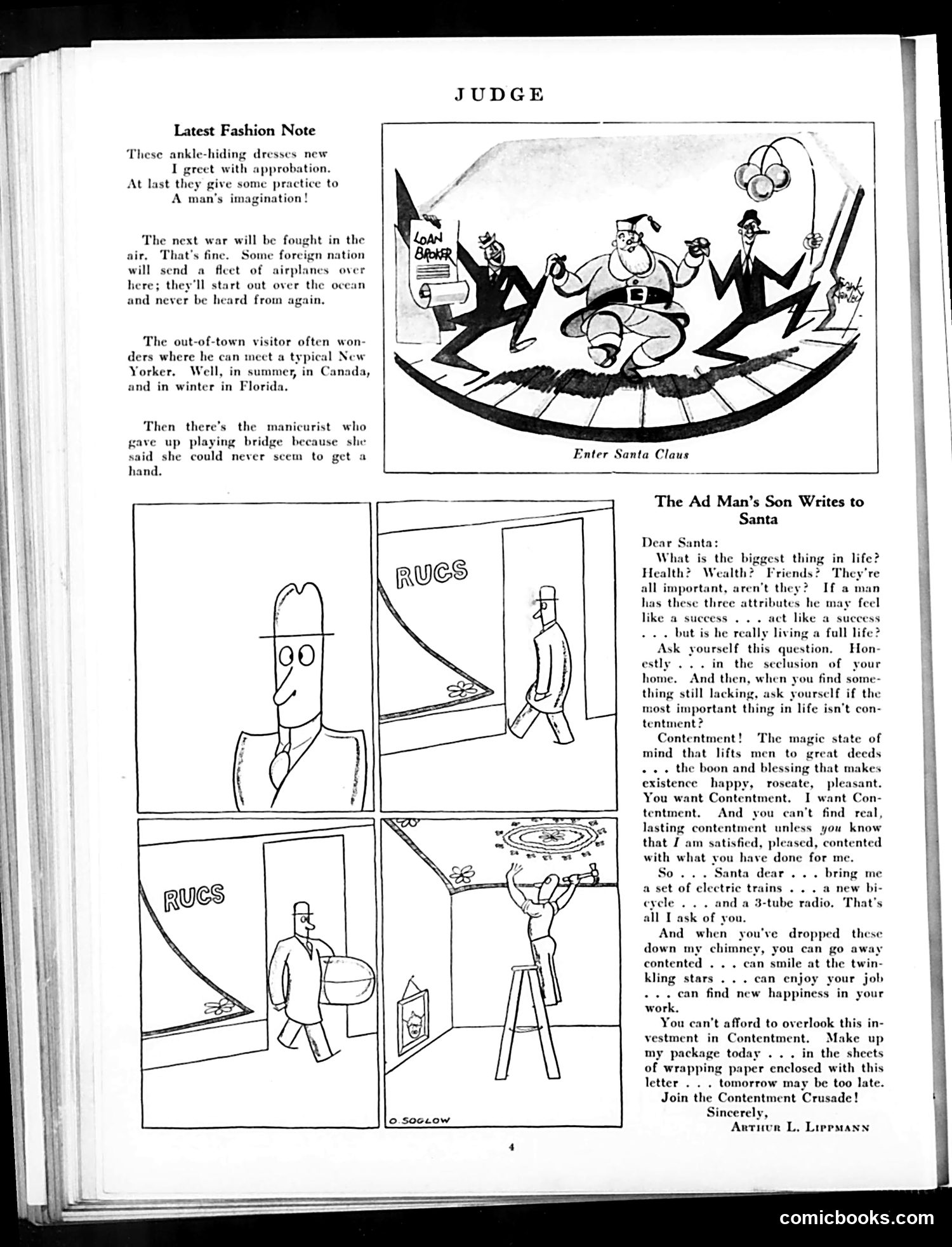
# Analysis of Judge Page **Top Cartoon ("Enter Santa Claus"):** This satirizes post-WWI economic chaos. Santa arrives in a sleigh labeled "Loan Shark," surrounded by figures juggling financial instruments and military items. The satire suggests Santa (representing hope/relief) is being exploited by loan sharks and war profiteers capitalizing on post-war instability. **Middle Comic Strip:** A husband repeatedly encounters rolled-up rugs (labeled "RUGS") in his home. The visual gag plays on the phrase "beating a dead horse"—literally showing him struggling with oversized rugs, suggesting domestic frustration or marital discord through absurdist humor. **Bottom Text:** "The Ad Man's Son Writes to Santa" is a sincere (non-satirical) letter emphasizing contentment and spiritual fulfillment over material goods—a moralistic counterpoint to the page's cynicism above.
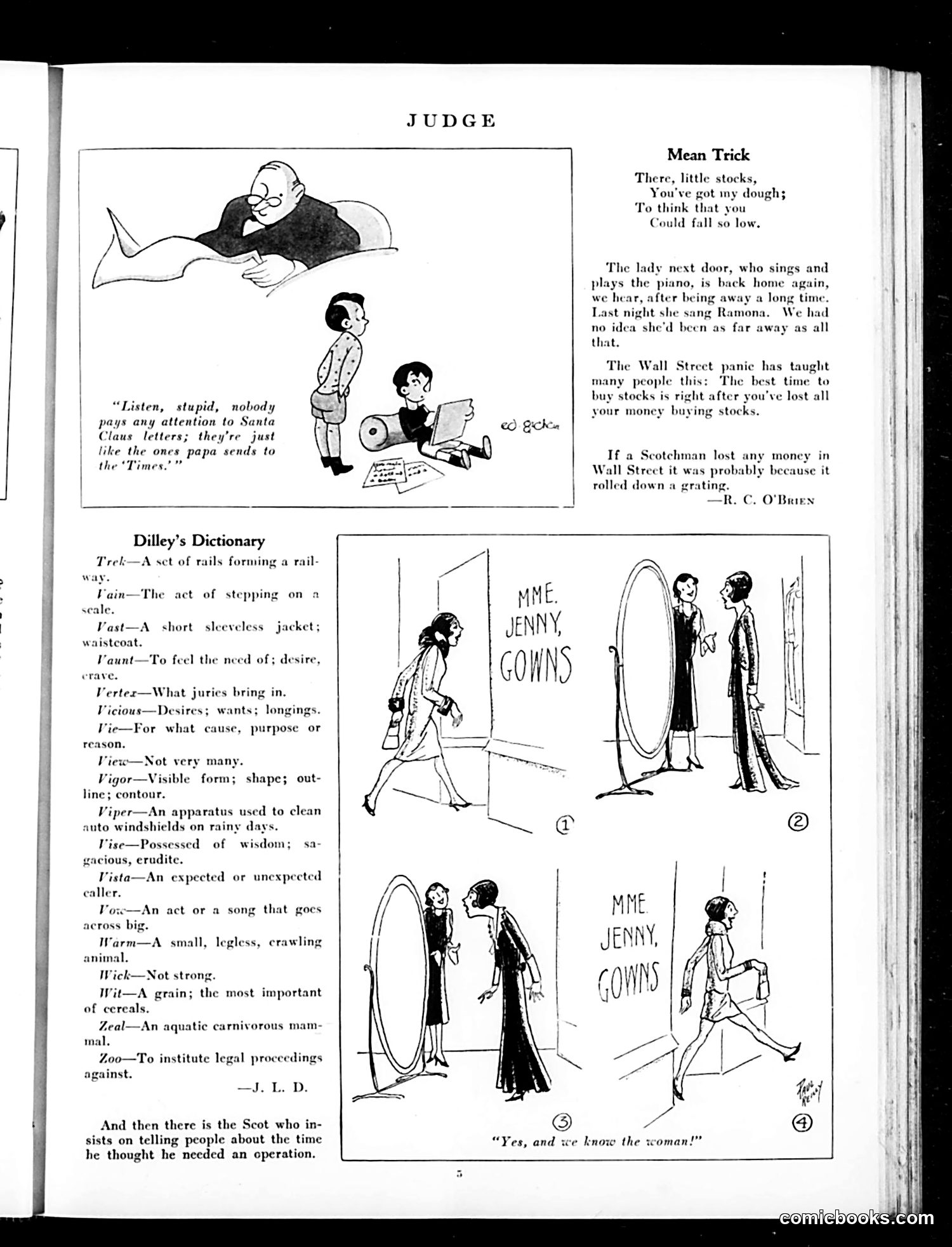
# Judge Magazine Page Analysis **"Judge" Cartoon (top):** An adult figure lounges above two children studying stocks/investment materials. The caption mocks children for believing Santa Claus letters praising stocks—comparing them to newspaper financial advice. This satirizes how investment recommendations circulate like myths, potentially misleading naive investors, especially after stock market losses. **"Mean Trick" Poem (right):** Social commentary on Wall Street panic and poor investment timing—the lesson that buying stocks after losses is risky advice. **"Mme. Jenny Gowns" Comic Strip (bottom):** A four-panel sequence showing a woman visiting what appears to be a dressmaker's shop, examining gowns in mirrors. The final caption reads "Yes, and we know the woman!"—likely satirizing female vanity or fashion obsession, a common 1920s-era Judge theme.
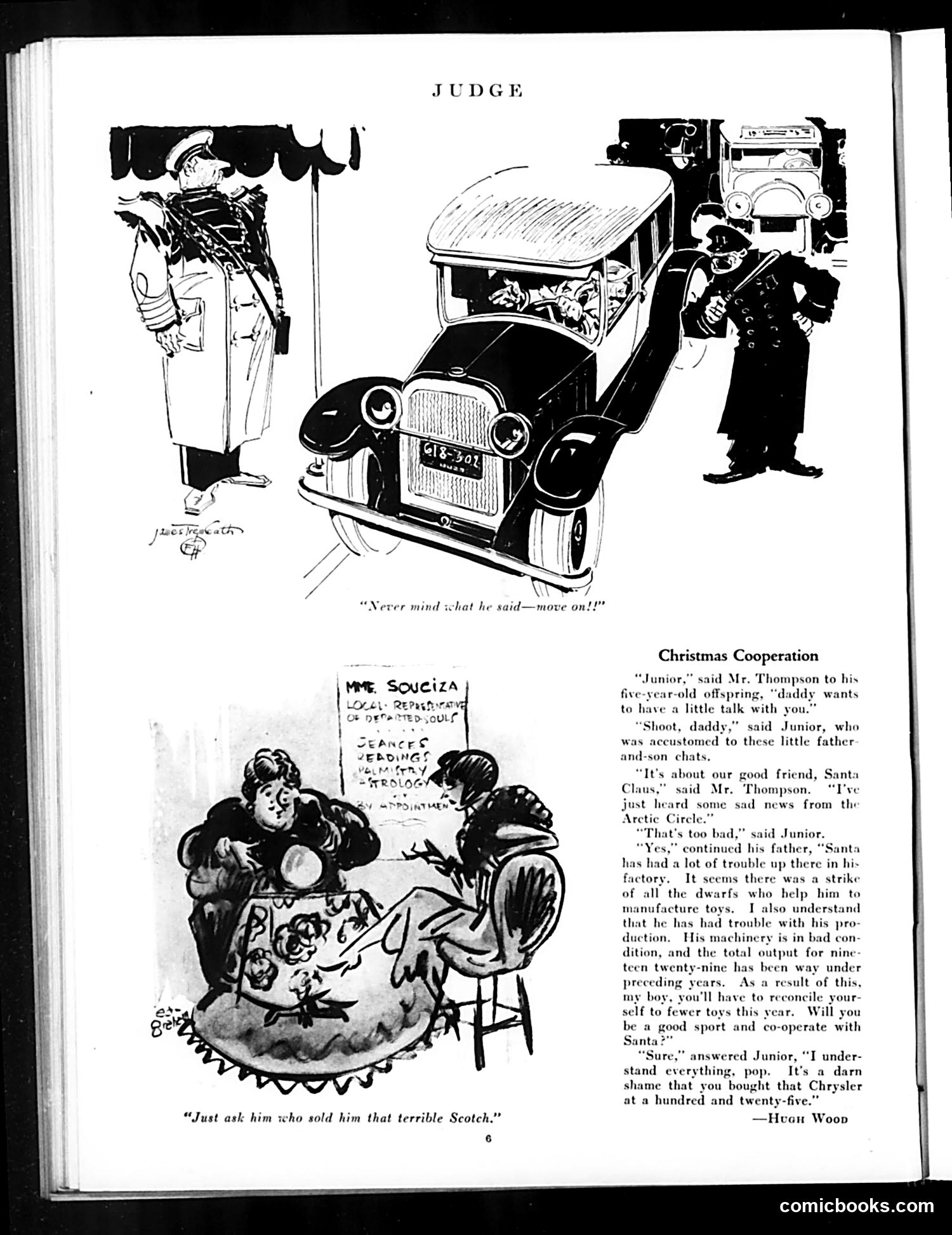
# Analysis of Judge Page **Top Cartoon ("Never mind what he said—move on!"):** A traffic judge oversees three automobiles involved in what appears to be a collision. The caption suggests the judge is dismissing the incident without investigation, humorously commenting on judicial indifference to traffic violations or accidents—a social commentary on the inconsistency and carelessness of early automobile-era law enforcement. **Bottom Story ("Christmas Cooperation"):** A father-son dialogue about Santa Claus's factory troubles. Mr. Thompson explains Santa's production crisis due to strikes among dwarfs (toy manufacturers) and machinery problems, resulting in fewer toys. Junior agrees to accept fewer presents as a "good sport." The satire critiques labor strikes and economic disruption affecting holiday commerce and consumer expectations during the Christmas season.
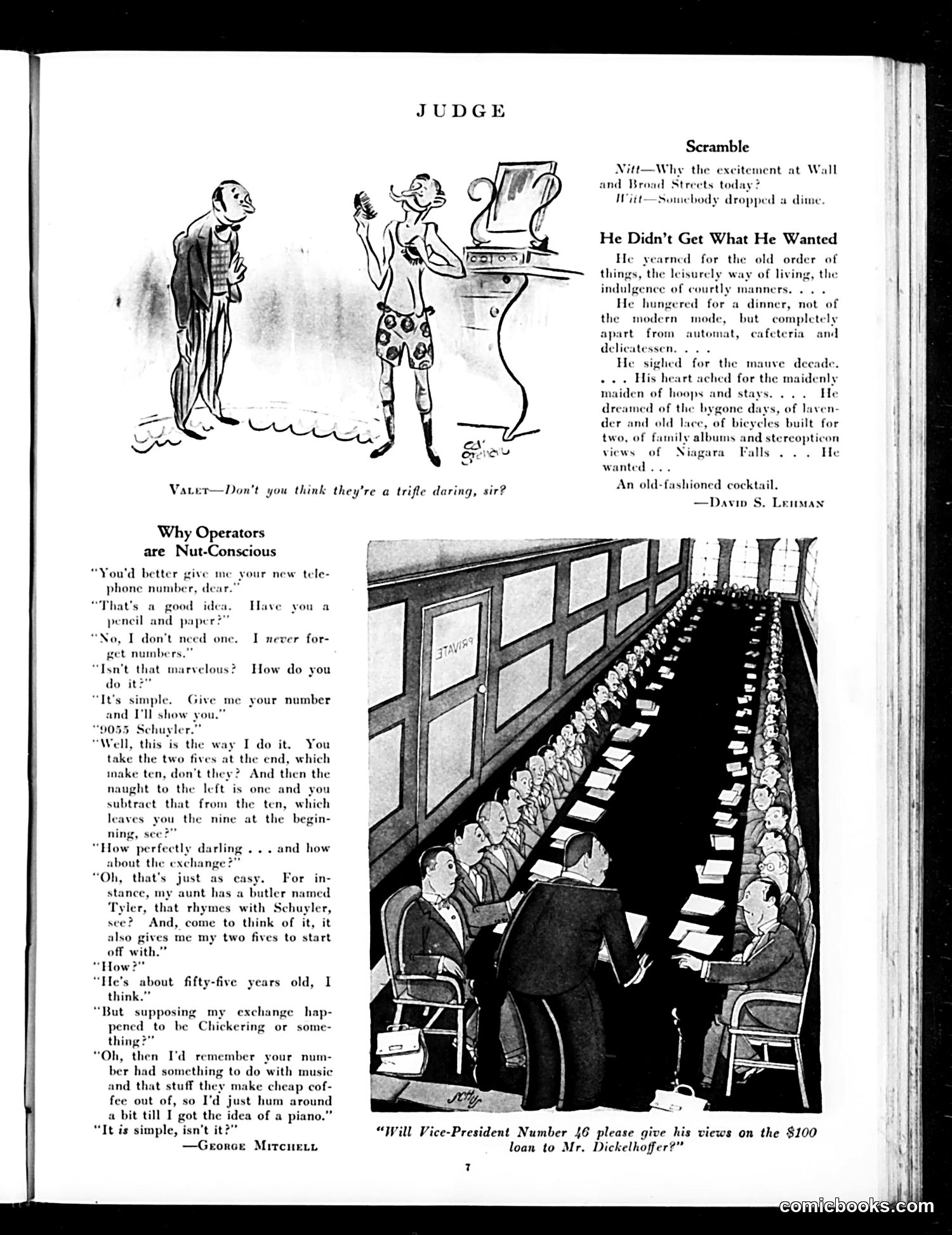
# Judge Magazine Page Analysis This page contains three satirical pieces from Judge magazine (date unclear from image): **"Scramble"** mocks Wall Street's obsession with minor financial news—someone dropping a dime causes market excitement. **"He Didn't Get What He Wanted"** satirizes nostalgia for the pre-modern era. The figure longs for Victorian gentility (courtly manners, leisurely living, "mauve decade" aesthetics, Gibson Girls in bustles, stereopticon views) but is offered only an "old-fashioned cocktail"—implying modernity has stripped away genuine tradition, leaving only superficial retro gestures. **"Why Operators are Nut-Conscious"** jokes about a man's absurdly convoluted memory system for phone numbers, using nonsensical mathematical and associative logic (rhyming, musical references). The humor critiques both pretentious memory claims and the nuisance of remembering new phone numbers in an era of rapid technological change. The bottom cartoon's caption remains unclear without context about "Vice-President Number 46" and the "$100 loan to Mr. Dickelhoffer."
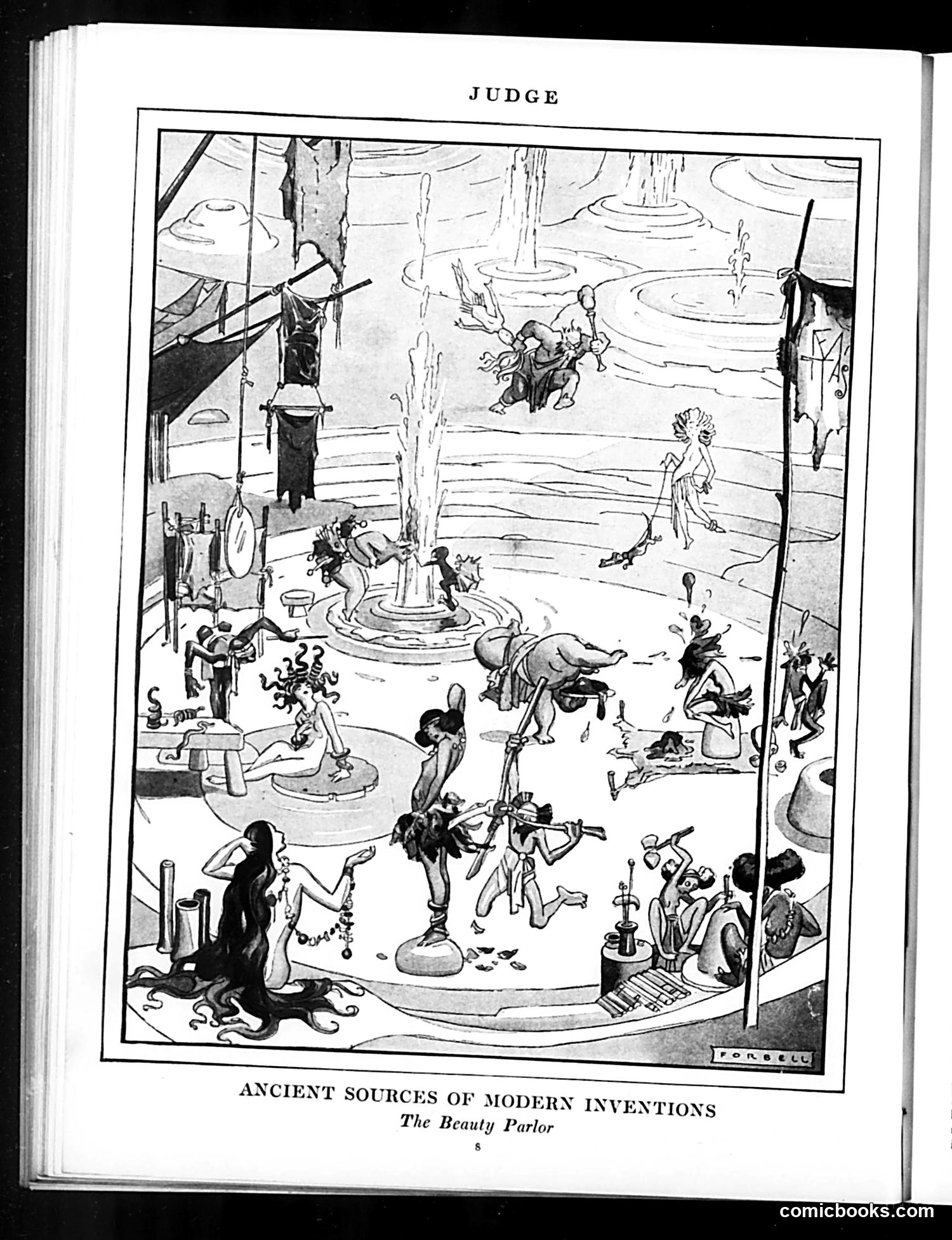
This satirical illustration from *Judge* magazine presents "The Beauty Parlor" as a mock-classical or fantastical underworld scene. The cartoon satirizes modern beauty treatments by depicting them as ancient or magical practices. Various figures engage in beauty rituals—applying cosmetics, styling hair, and undergoing treatments—rendered in an exaggerated, theatrical manner. The elaborate setting with columned structures and fountain-like features suggests a spa or salon reimagined as an otherworldly or classical temple. The satire likely mocks the extravagance and pseudoscientific claims of 1920s-30s beauty culture, presenting cosmetic and beauty procedures as absurdly elaborate rituals. By framing modern beauty practices as "ancient sources," the cartoon suggests these treatments aren't actually new innovations but rather reinventions of age-old vanity practices, poking fun at both women's beauty routines and the marketing claims surrounding them.
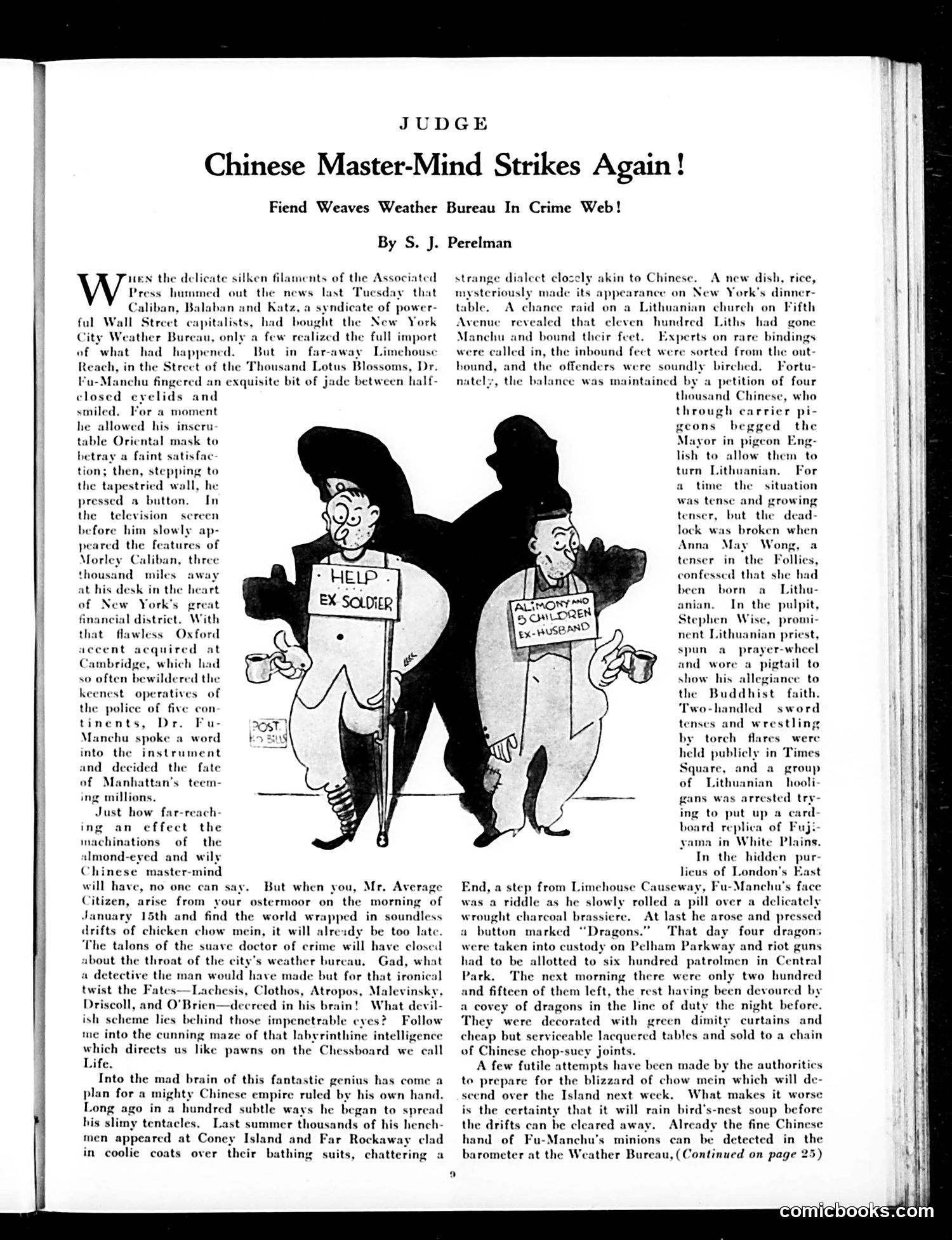
# "Chinese Master-Mind Strikes Again!" This 1920s-era Judge satire targets **Dr. Fu Manchu**, the popular fictional "yellow peril" villain from contemporary pulp fiction and cinema. The cartoon mocks both the sensationalist Fu Manchu stories and contemporary anxieties about Chinese immigration and influence in America. The silhouette cartoon shows two caricatured figures (likely representing Fu Manchu manipulating American capitalists) engaged in some scheme. The accompanying article satirizes the melodramatic tropes of Fu Manchu narratives—a Chinese criminal mastermind supposedly infiltrating American institutions, here through control of the Weather Bureau. The humor relies on absurdist escalation: mysterious rice dishes, Lithuanian foot-binding incidents, Anna May Wong's involvement, and prayer wheels becoming fashionable. It's mock-sensationalist writing parodying both the overwrought Fu Manchu genre and period xenophobic fears about Chinese organized crime controlling American life. The satire ultimately lampoons American paranoia more than celebrating it, though modern readers should note the deeply offensive racial caricatures embedded throughout.
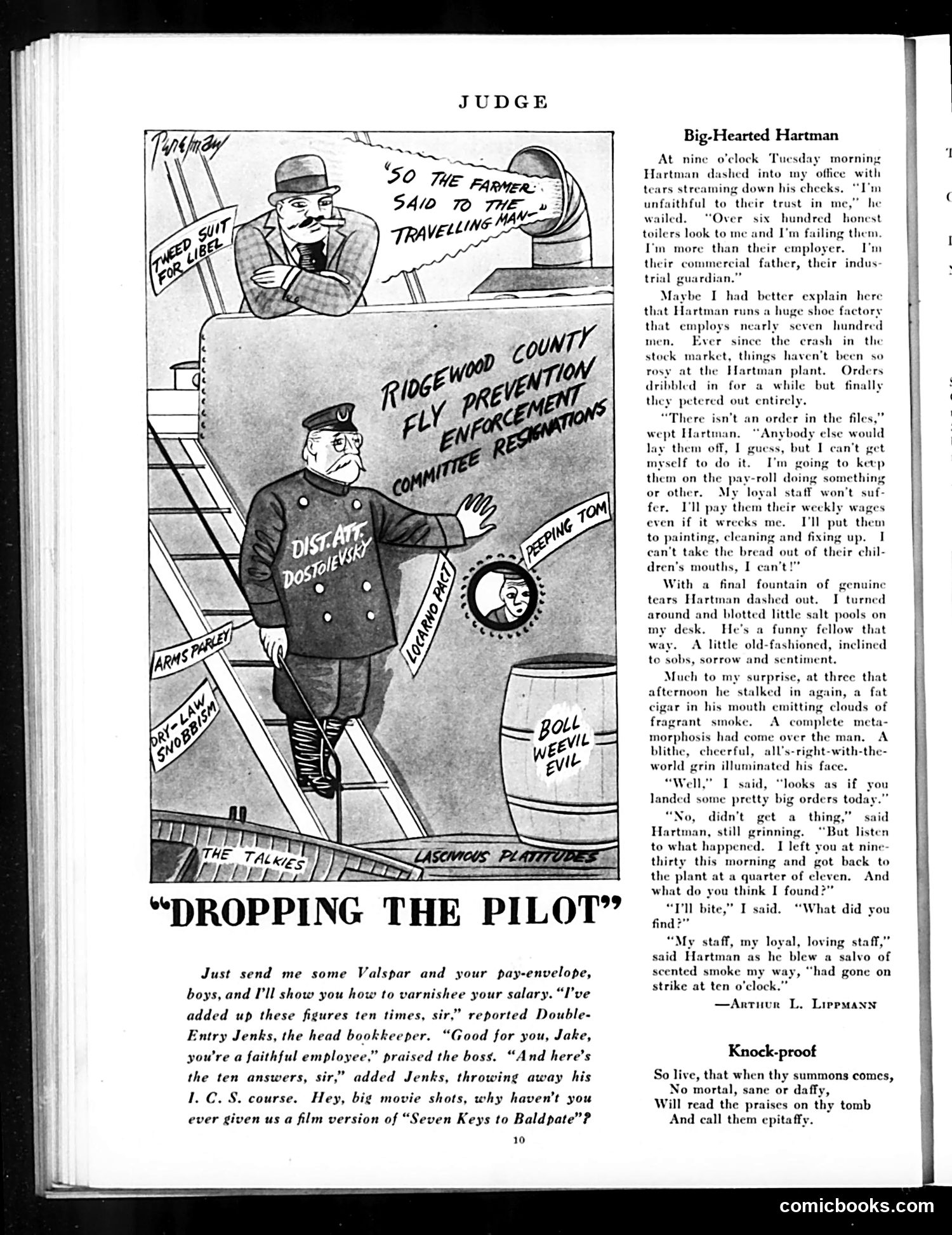
# Analysis: "Dropping the Pilot" This cartoon satirizes bureaucratic incompetence and mismanagement during economic crisis. The central figure appears to be a government or corporate official labeled with various failed policies ("Ridgewood County Fly Prevention," "Arms Parcel," "Dry Law Snobbery," "Roll Weevil Evil," "Lascivious Platitudes"). A businessman at the bottom tries to push him aside, captioned "The Talkies." The title "Dropping the Pilot" references the famous Tenniel cartoon of Bismarck's dismissal, suggesting removal of a failed leader. The joke, per the caption, involves a bookkeeper who manipulates figures—the cartoon critiques how officials cook numbers while real workers suffer. The accompanying story about "Big-Hearted Hartman," a factory owner who keeps unemployed workers on payroll only to have them strike, appears to mock sentimental paternalism as equally impractical as government bungling. The satire targets early 1930s Depression-era responses: both bloated, ineffective bureaucracy and well-intentioned but economically naive management.