
A complete issue · 36 pages · 1928
Judge — September 8, 1928
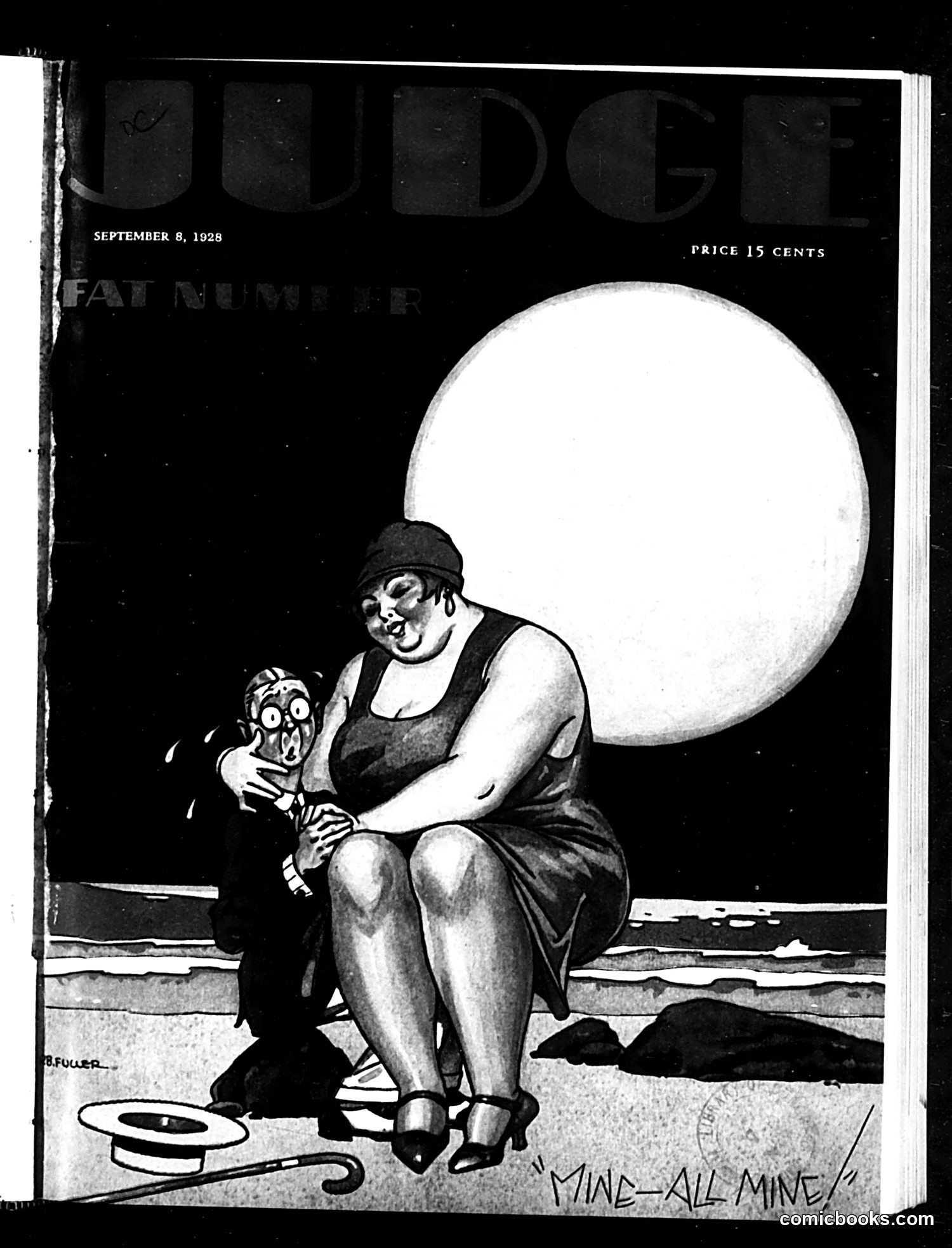
This satirical cover depicts a woman at a beach holding a small child, with an enormous moon looming behind her. The caption reads "MIND—ALL MIME!" (likely "MIND—ALL MINE!"), suggesting possessiveness or maternal claim. The cartoon appears to comment on 1920s beach culture and contemporary attitudes toward motherhood or family. The exaggerated moon and the woman's prominent, assertive posture suggest the satire targets attitudes about women's roles—possibly mocking either possessive parenting or women's independence during the Jazz Age. The specific social commentary remains somewhat unclear without additional context, though it likely reflects period anxieties about changing gender roles during the liberated 1920s.
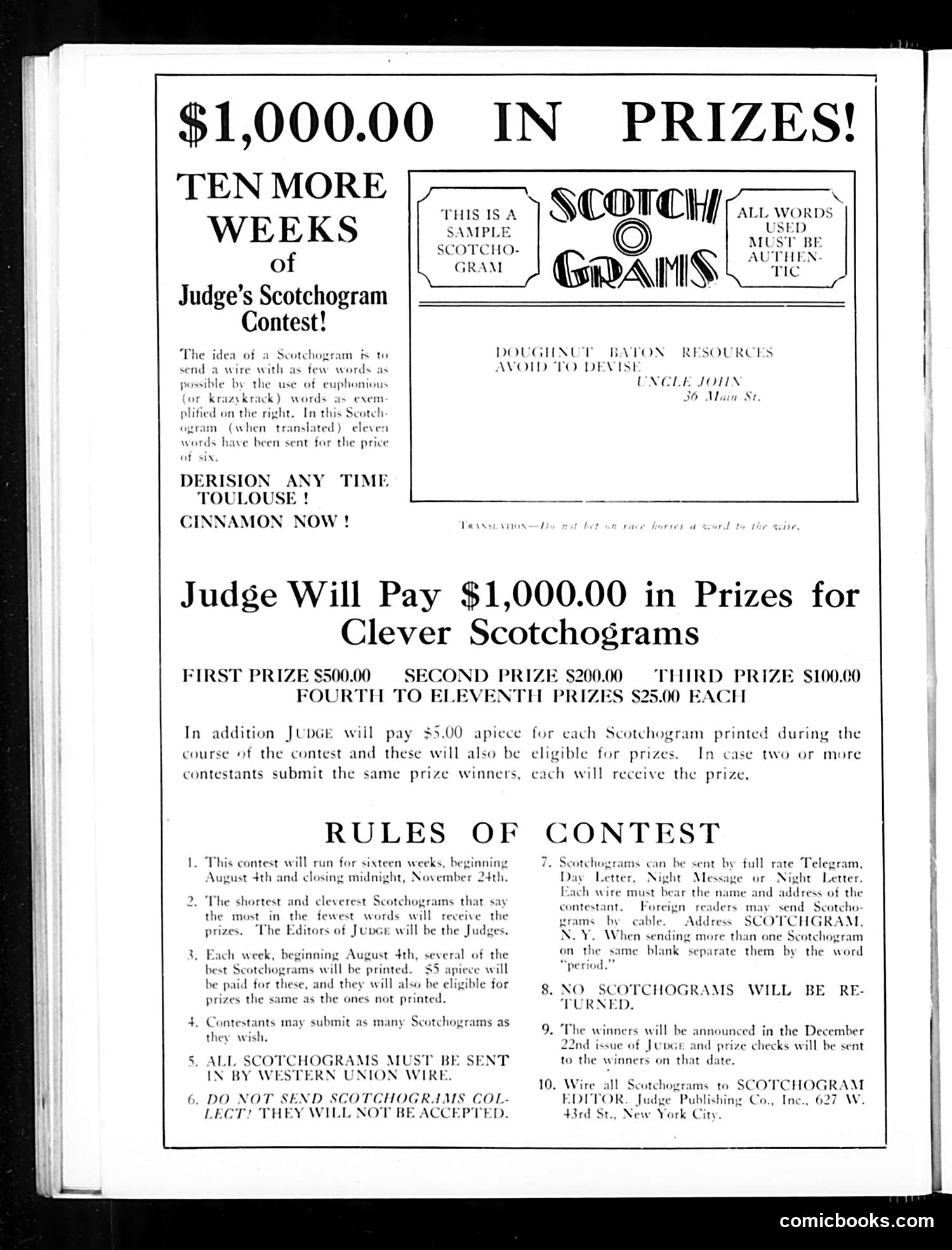
This page is primarily **advertising, not political satire**. It announces Judge magazine's "Scotchogram Contest"—a word puzzle competition offering $1,000 in prizes. A scotchogram is explained as a telegram using the fewest words possible, employing euphonious or "crazy" words. The sample shows "DOUGHNUT BATON RESOURCES AVOID TO DEVISED UNCLE JOHN"—cryptic language that, when decoded, conveys a message. The contest ran sixteen weeks (August 4–November 24), with Judge paying $500 for first prize, descending to $25 for eighth–eleventh places. Additional scotchograms published during the contest earned $5 each and prize eligibility. Scotchograms were apparently a popular puzzle game of the era. This page serves purely as a contest promotion and entry instructions, containing no political commentary or satire.
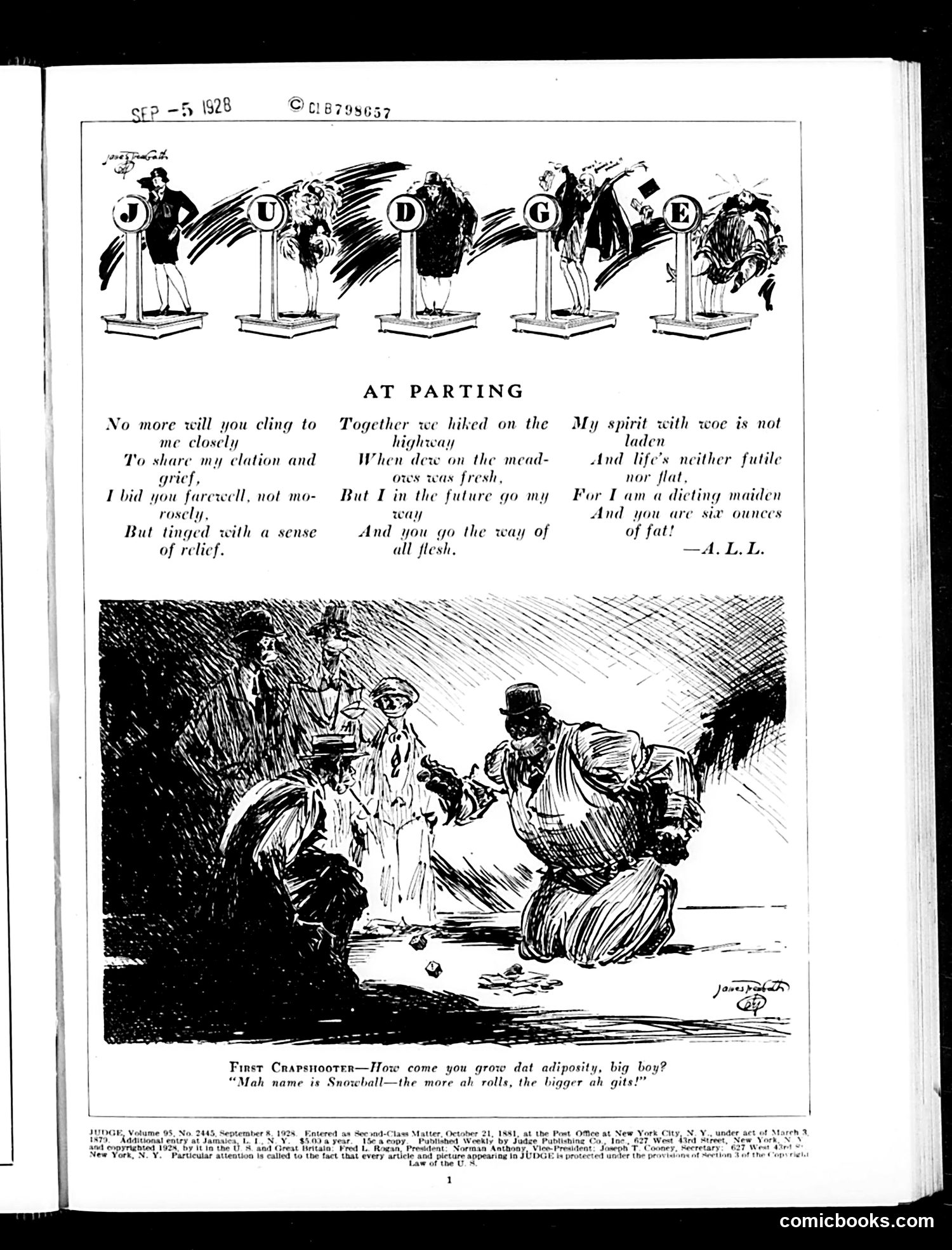
This page features satirical verses about romantic separation, attributed to "A.L.L." The top illustration shows five figures labeled J-U-D-G-E standing on pedestals—a visual pun spelling the magazine's own name while depicting different female stereotypes bidding farewell to romantic partners. The three poems express cynical attitudes toward ending relationships: one speaker claims relief at parting despite pretended sorrow; another suggests both parties move on; the third dismissively characterizes women as superficial ("six ounces of fat"). The bottom illustration depicts what appears to be homeless men or vagrants in an alleyway, with a caption about "adiposity" and "Snowball," likely mocking both poverty and African American stereotypes common to 1920s humor. The overall tone reflects the era's casual misogyny and racial insensitivity.
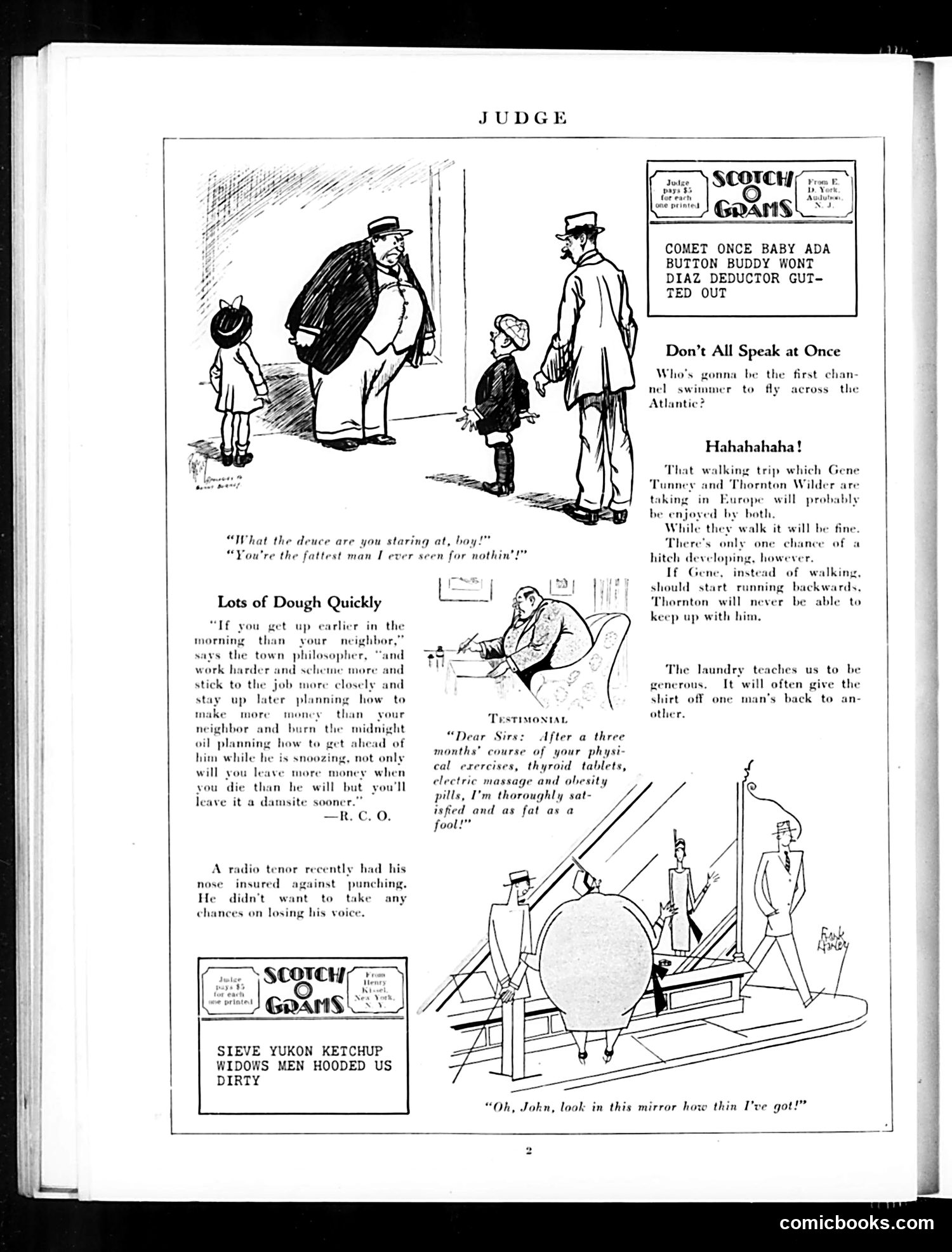
This page contains humor and satire typical of early 20th-century Judge magazine. The main cartoon "Don't All Speak at Once" jokes about Gene Tunney and Thornton Wilder taking a walk—likely referencing these public figures' contemporaneous prominence. "Lots of Dough Quickly" satirizes get-rich-quick schemes popular during the era, mocking both the schemes themselves and people's eagerness to believe them. The "Testimonial" section parodies fitness ads by featuring someone claiming dramatic physical improvements from exercise—a common advertising trope then as now. A radio tenor's joke about insuring his nose against punching reflects entertainment industry humor. The "Scotch Grams" sections appear to be regular satirical feature ads or jokes (reference unclear without more context).
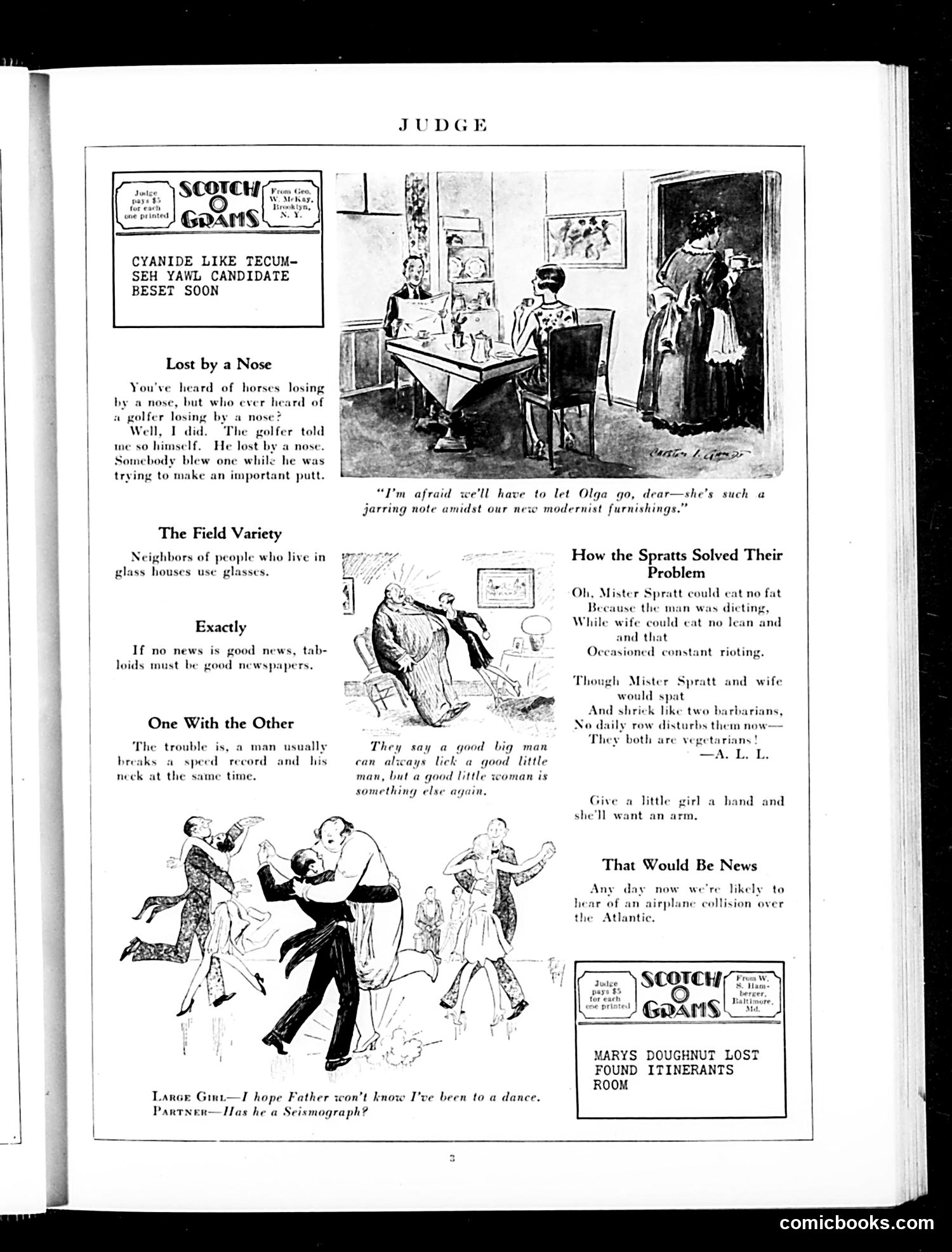
This page contains several short humorous items rather than a single political cartoon. **"Lost by a Nose"**: A golfer lost a match because he missed a putt—a play on the phrase "lost by a nose" (narrowly losing). **"The Field Variety"**: A joke about glass-house residents wearing glasses. **"One With the Other"**: A cartoon showing a man breaking a speed record while simultaneously breaking his neck—commentary on reckless behavior. **"How the Spraits Solved Their Problem"**: A satirical poem about a married couple with opposite dietary needs (one couldn't eat fat, one couldn't eat lean), suggesting both became "vegetarians." The page also includes "Scotch Grams" (brief witticisms) and advertisements. The humor is generally mild social satire typical of early 20th-century Judge magazine.
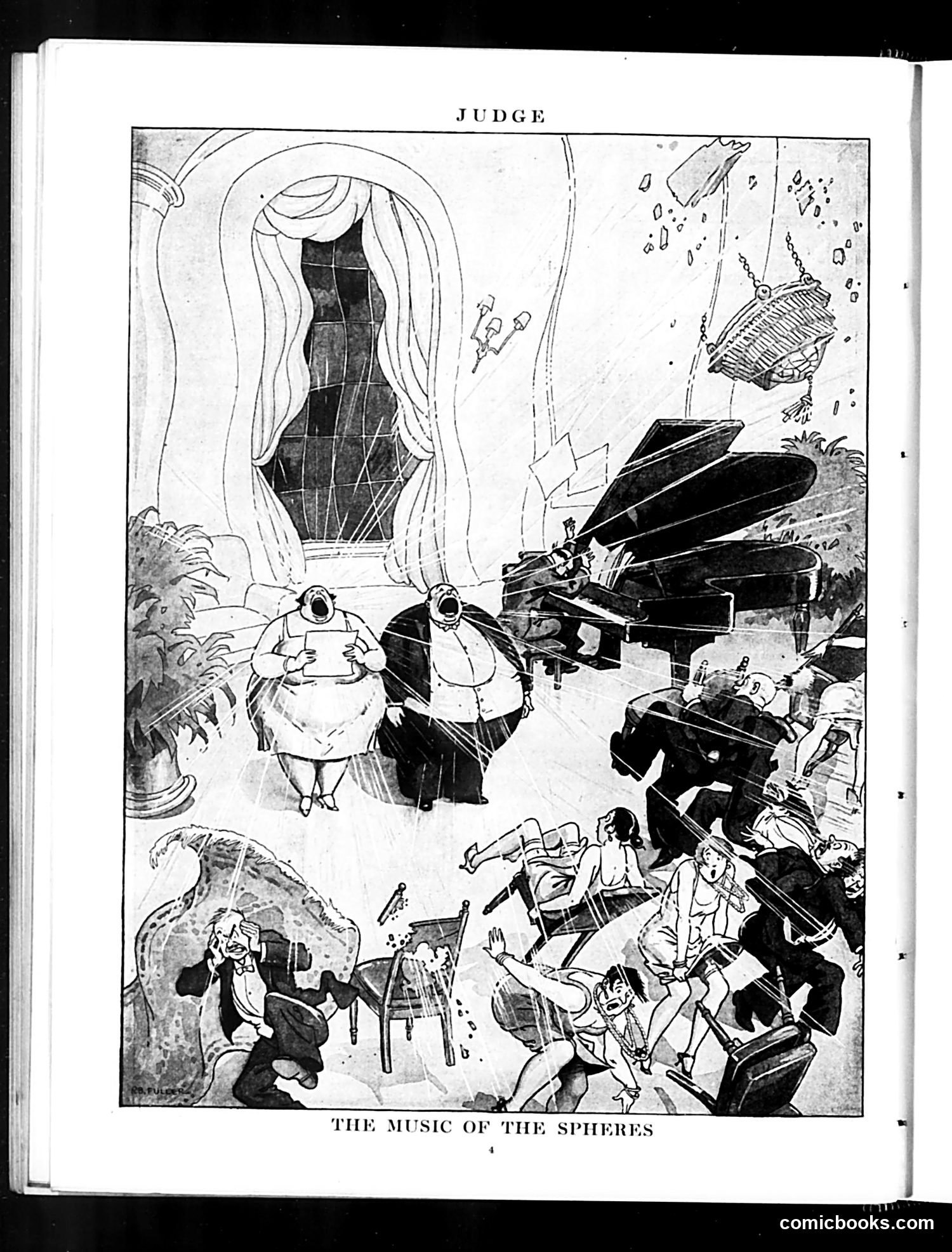
This satirical cartoon depicts a chaotic courtroom or legal proceeding, with the title "The Music of the Spheres" creating ironic contrast between heavenly harmony and earthly discord. Two rotund figures in the center appear to be judges or authority figures presiding over pandemonium below. Multiple people are shown in disarray—some fallen, others gesturing wildly—suggesting legal chaos or courtroom confusion. The scene satirizes judicial proceedings as anything but orderly or just. The "music of the spheres" reference (ancient philosophy's concept of celestial perfection) mocks the notion that the legal system operates harmoniously. Instead, Judge magazine depicts it as cacophonous disorder—a common Progressive Era critique of American courts as corrupt, inefficient, or controlled by powerful interests rather than serving justice fairly.
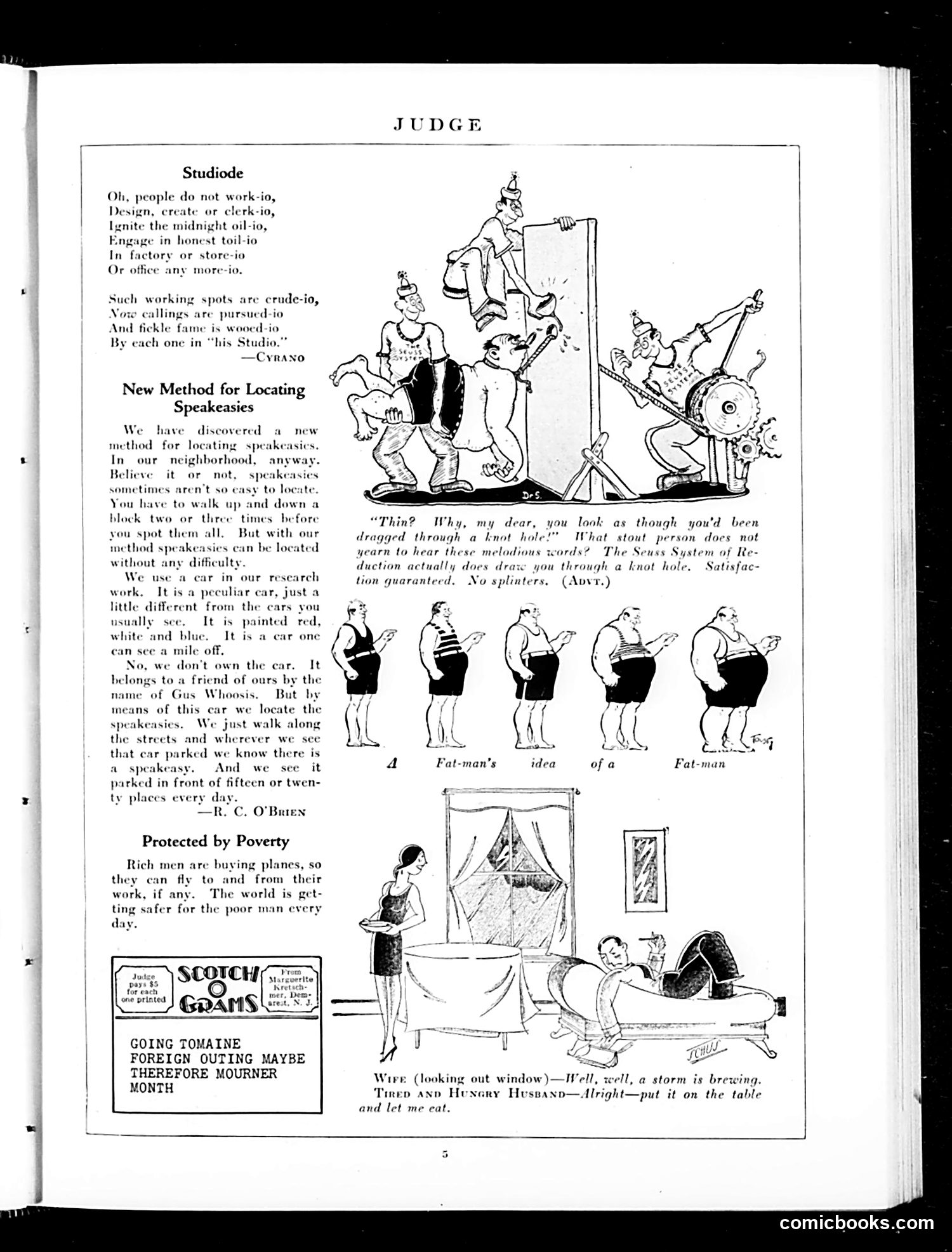
This page contains three distinct humor pieces: 1. **"Studiode"**: A poem mocking artists and designers who claim to work in prestigious "studios" rather than ordinary factories or shops—satirizing pretension in creative professions. 2. **"New Method for Locating Speakeasies"**: A humorous article (by R.C. O'Brien) describing using a red-and-blue car parked on streets to locate illegal bars. During Prohibition, speakeasies were underground alcohol establishments. The joke is that frequented locations would have the car parked there repeatedly, serving as an inadvertent marker. 3. **"Protected by Poverty"**: A brief social commentary suggesting poor people face less theft risk because they have nothing worth stealing. The cartoons are largely satirical takes on contemporary urban life and social attitudes of the Prohibition era.
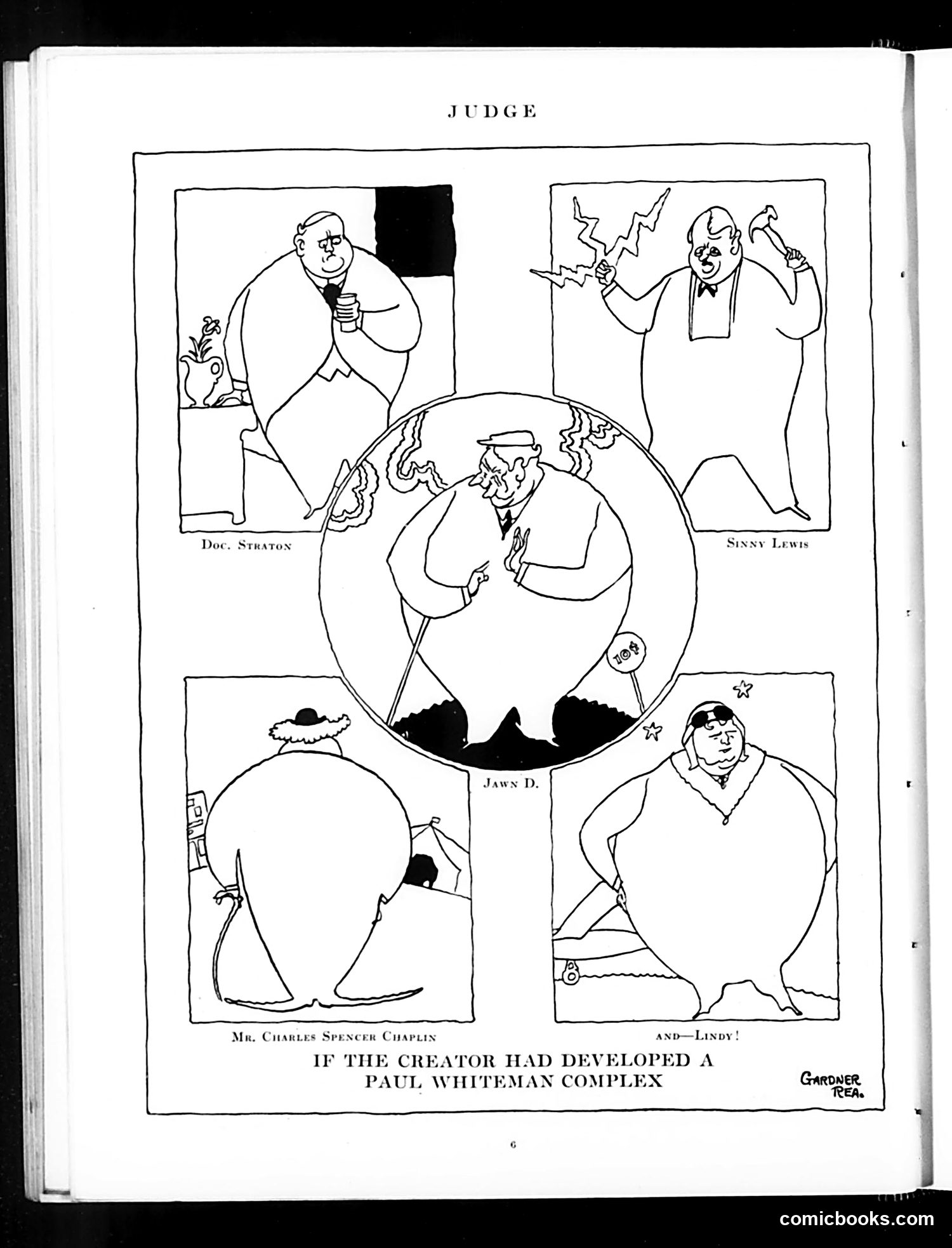
This satirical cartoon from *Judge* magazine uses caricature to mock what the title calls a "Paul Whiteman Complex"—likely referencing Paul Whiteman, the famous 1920s bandleader known as the "King of Jazz." The page shows four panels with exaggerated, rotund figures labeled "Doc. Straton," "Sinny Lewis," "Jaws D.," and "Mr. Charles Spencer Chaplin and—Lindy!" The central globe figure labeled "Jaws D." appears to be the focal point. The satire seems to suggest these public figures (entertainers, judges, or celebrities of the era) have adopted pretensions or complexes beyond their actual stature or abilities. The cartoon ridicules what it presents as inflated self-importance among entertainment or public figures of the period, using the "Whiteman Complex" as shorthand for unwarranted artistic or social elevation.
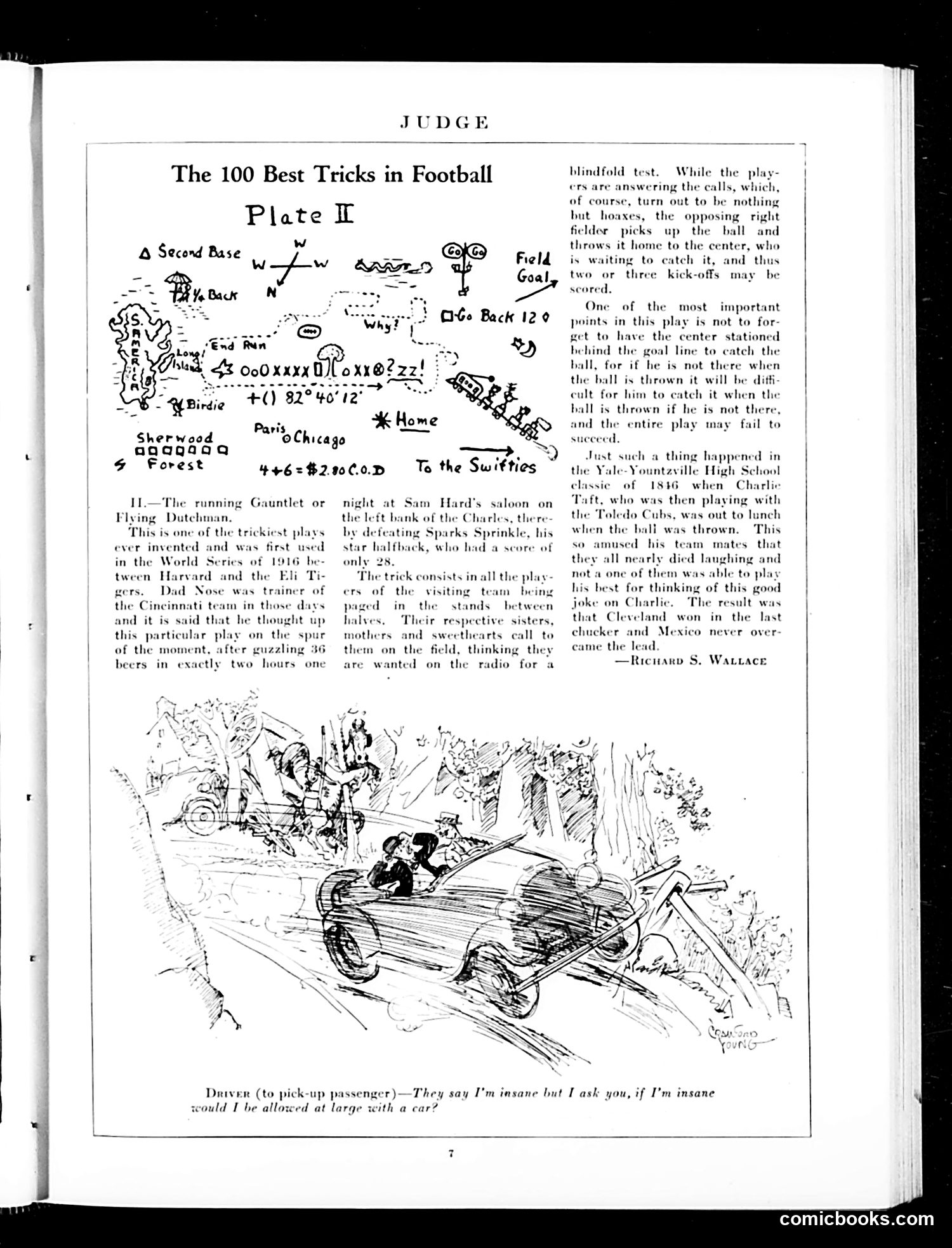
This page contains satirical football content mixed with unrelated humor. The main feature, "The 100 Best Tricks in Football, Plate II," presents absurdist diagrams of fictional plays with deliberately nonsensical explanations—mixing baseball positions ("Second Base"), random coordinates, and contradictory instructions. The humor targets the era's tendency to overcomplicate sports strategy through pseudo-technical jargon. The text describes actual (if obscure) pranks like "The Running Gauntlet," allegedly used in Harvard-Yale games, involving players' female relatives calling from the stands to distract opponents. The bottom cartoon features a driver offering passengers a ride, joking that his freedom to drive despite being "insane" proves he's sane—satire of loose mental-health standards or automobile safety regulations of that era. Overall, this represents Judge's characteristic style: absurdist sports parody combined with topical social commentary, targeting both athletic pretension and contemporary concerns about public safety.
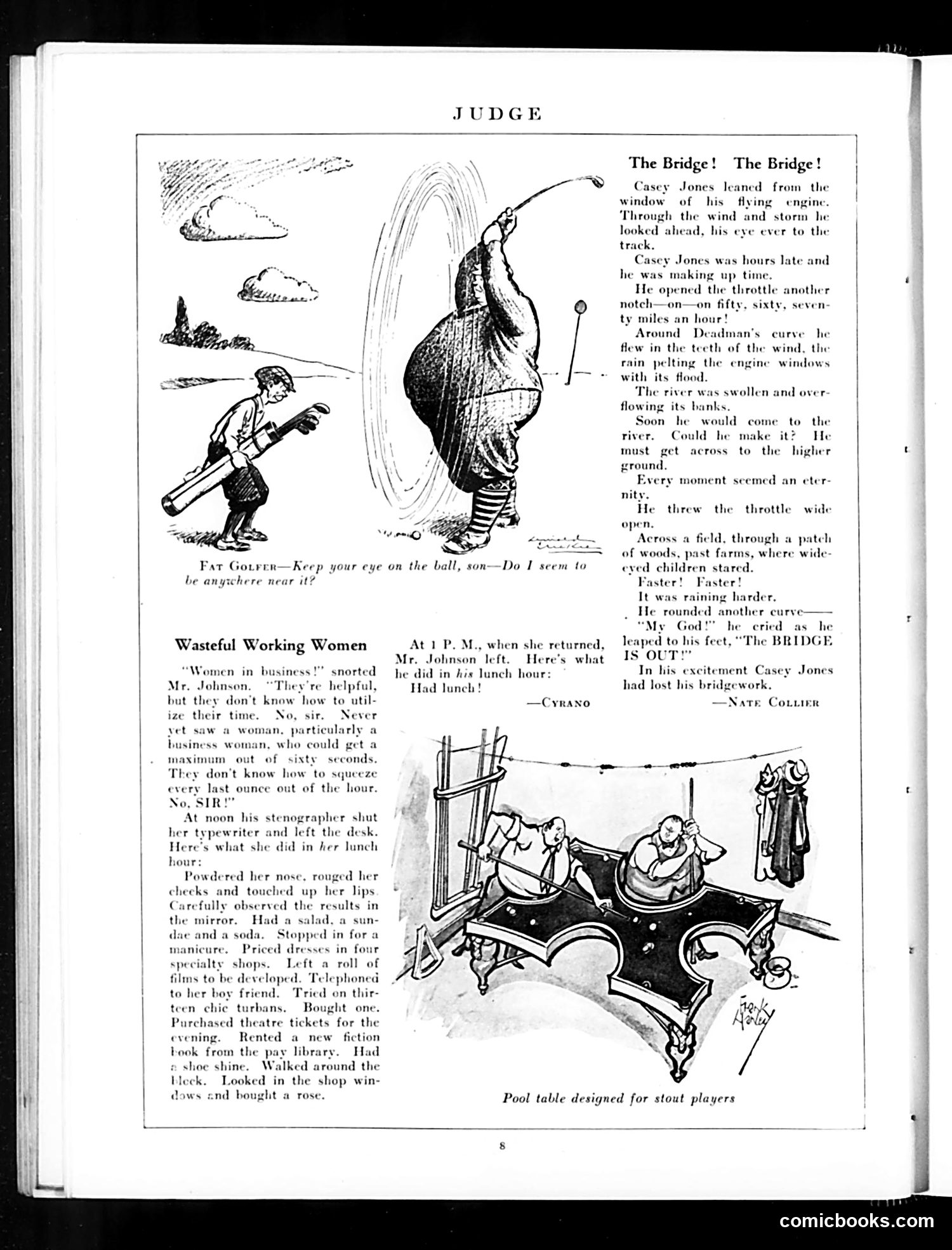
This page contains two distinct pieces of satire: **"The Bridge! The Bridge!"** is a parody of the famous Casey Jones ballad/legend about the railroad engineer. Here, Casey Jones races his flying engine to beat a swollen river and reach a bridge—but the punchline subverts the heroic narrative: in his excitement, he loses his dentures (bridgework), not his life. The satire mocks melodramatic adventure stories by reducing their dramatic stakes to a trivial personal mishap. **"Wasteful Working Women"** satirizes a businessman's complaint that working women waste time during lunch. The accompanying illustration of her activities—nose-powdering, manicures, shopping, theater tickets—mocks the executive's narrow expectations. The satire cuts both ways: it ridicules his unrealistic demand for constant productivity while also gently poking fun at stereotypical "feminine" leisure pursuits. The subheading note that she at least "had lunch" suggests even basic self-care counts as accomplishment. The "Pool table designed for stout players" appears to be a separate comic illustration.
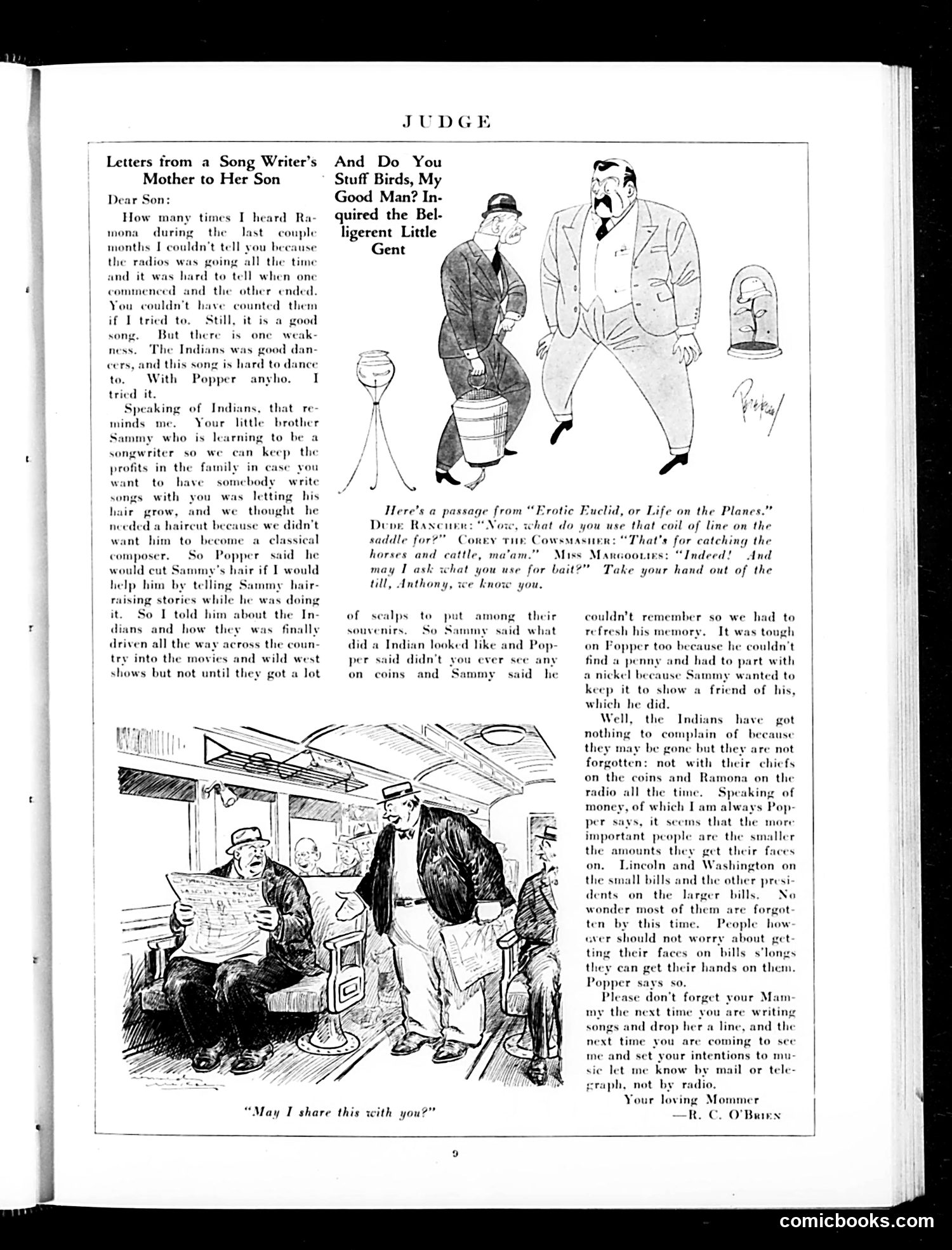
This page contains two distinct pieces of satire from Judge magazine: **"Letters from a Song Writer's Mother to Her Son"** is a humorous letter mocking the era's obsession with radio and popular songs. The mother complains that the hit song "Ramona" plays constantly on radios, making it impossible to count how many times she's heard it. She digresses into a story about her younger son Sammy learning songwriting, mentioning how Indians are referenced via coins (Lincoln/Washington on bills, chiefs on coins) and the song "Ramona" on the radio—suggesting Native Americans are only remembered through commercial culture. **The cartoon below** satirizes pretentious behavior. A man in formal wear questions another's use of "that coil of line on the saddle," and when asked about bait, the response mocks wealthy people's ignorance of practical matters. The joke targets upper-class affectation and disconnect from reality. Both pieces use gentle ridicule of American consumer culture, mass media saturation, and class pretension—themes typical of Judge's satirical approach.
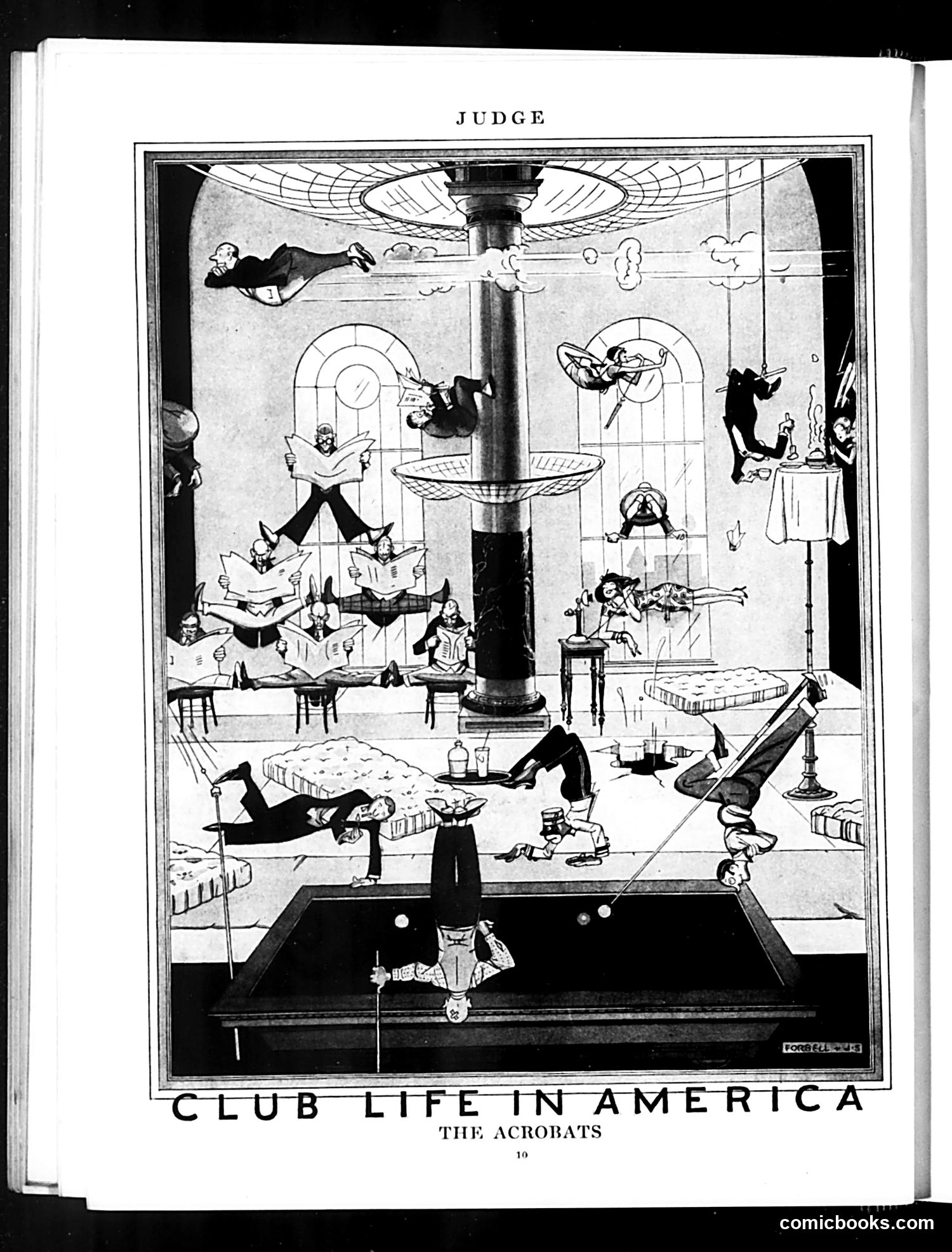
This is a satirical illustration titled "Club Life in America: The Acrobats." The cartoon depicts a chaotic nightclub or entertainment venue where acrobats and performers are literally flying and contorting through the air in impossible positions around a central support column. The satire appears to mock the frenetic, undignified entertainment culture of American clubs—depicting respectable-looking patrons and performers in absurd, gravity-defying poses. The "acrobats" metaphor likely critiques the desperation and indignity performers endured for entertainment value, or mocks wealthy patrons' appetite for ever-more outrageous spectacles. The central pillar grounds the chaotic scene, emphasizing how removed from normalcy this "club life" has become. The overall effect satirizes what Judge's editors saw as the excess and vulgarity of contemporary American leisure culture.
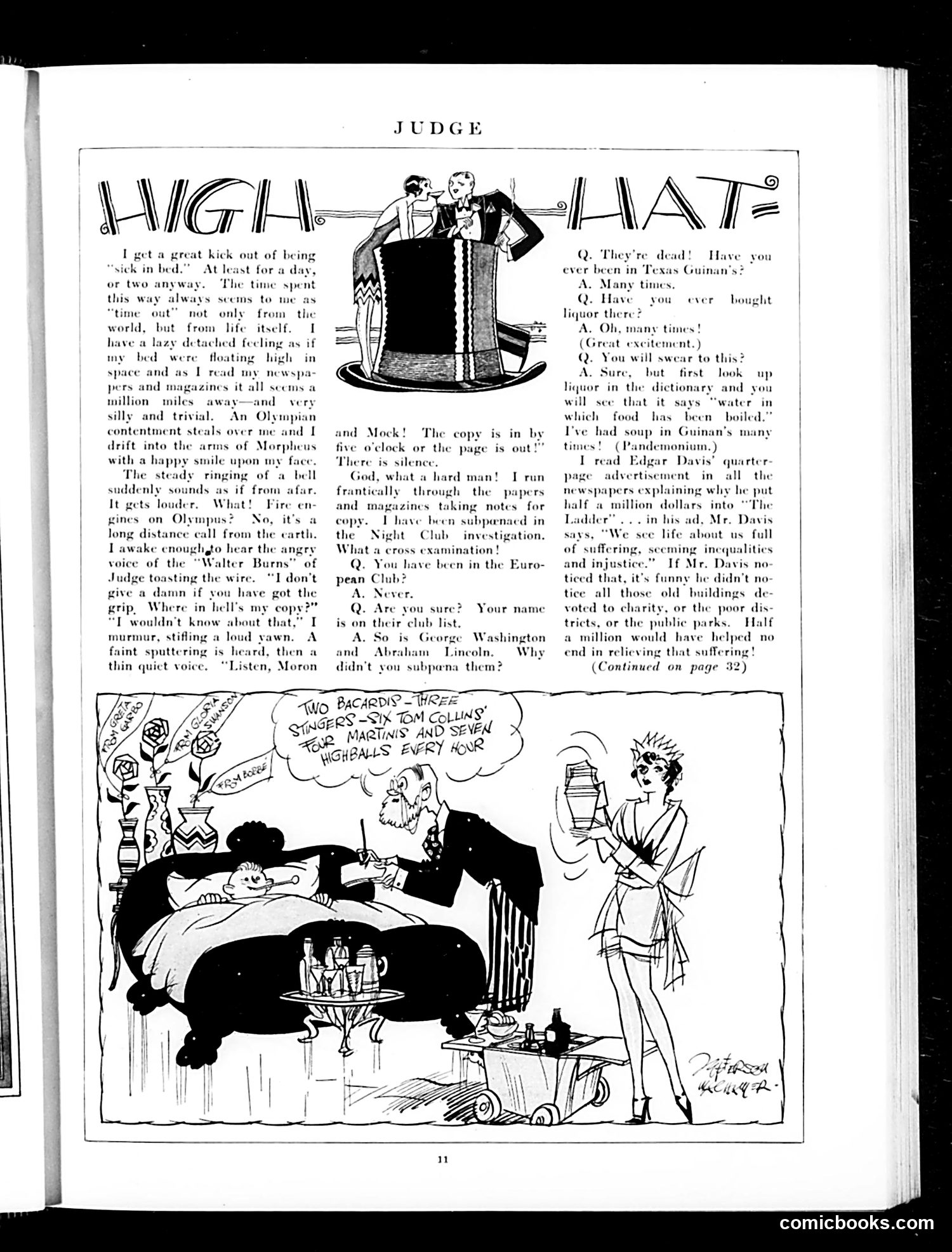
This page satirizes early 1920s American society through two pieces: **Top Section ("High Hat"):** A humorous first-person essay about enjoying bed rest, interrupted by an aggressive newspaper editor ("Walter Burns"—likely referencing a demanding journalistic type) demanding copy. The narrator is then called as a witness in the "Night Club investigation," apparently related to Texas Guinan's speakeasy. The Q&A mocks Prohibition-era hypocrisy: witnesses deny visiting clubs while admitting they drank there constantly. The joke hinges on the absurd contradiction between law and actual behavior during illegal alcohol sales. **Bottom Cartoon:** Shows a man in bed surrounded by liquor bottles, reciting a ridiculous definition of liquor as "water in which food has been boiled"—another Prohibition joke. A woman holds what appears to be a ledger, likely documenting his consumption. The speech bubble references "two bacardis, three stingers, six tom collins, martinis and seven highballs every hour." Both pieces mock Prohibition enforcement's futility and widespread public defiance through drinking.
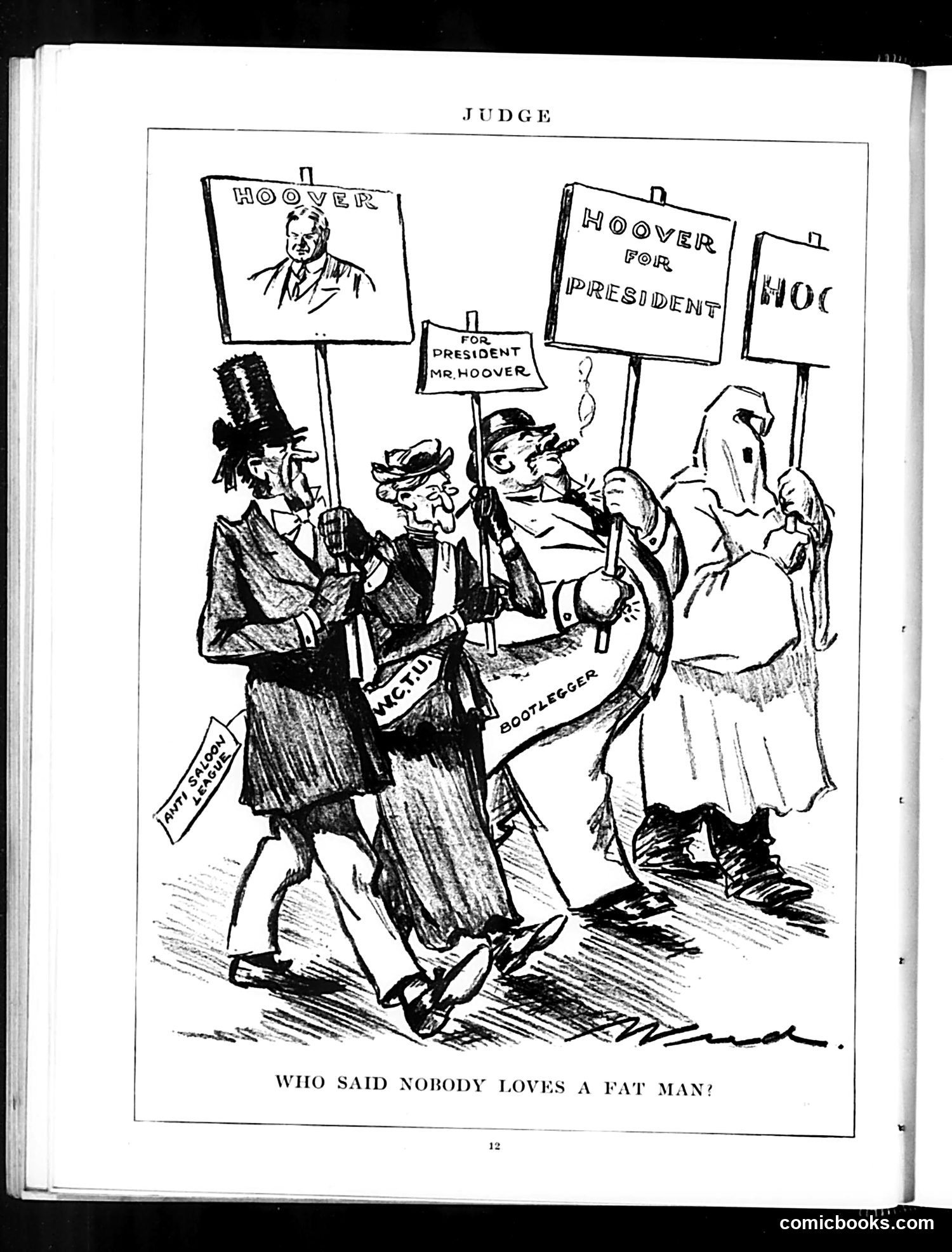
This Judge magazine cartoon satirizes support for Herbert Hoover's presidential campaign. The image depicts a rotund, jovial figure (the "fat man" of the caption) surrounded by supporters holding "Hoover for President" signs. The caricature uses exaggerated physical features—particularly corpulence—as a visual metaphor for Hoover's perceived qualities or public persona. The caption "Who said nobody loves a fat man?" is ironic commentary, suggesting that despite potential criticism of Hoover's appearance or character, he maintains enthusiastic political backing. The diverse crowd of supporters (including figures labeled "bootlegger" and others) implies broad, perhaps questionable coalition support. The satire appears to mock either Hoover's political appeal or the nature of his supporters during his campaign.
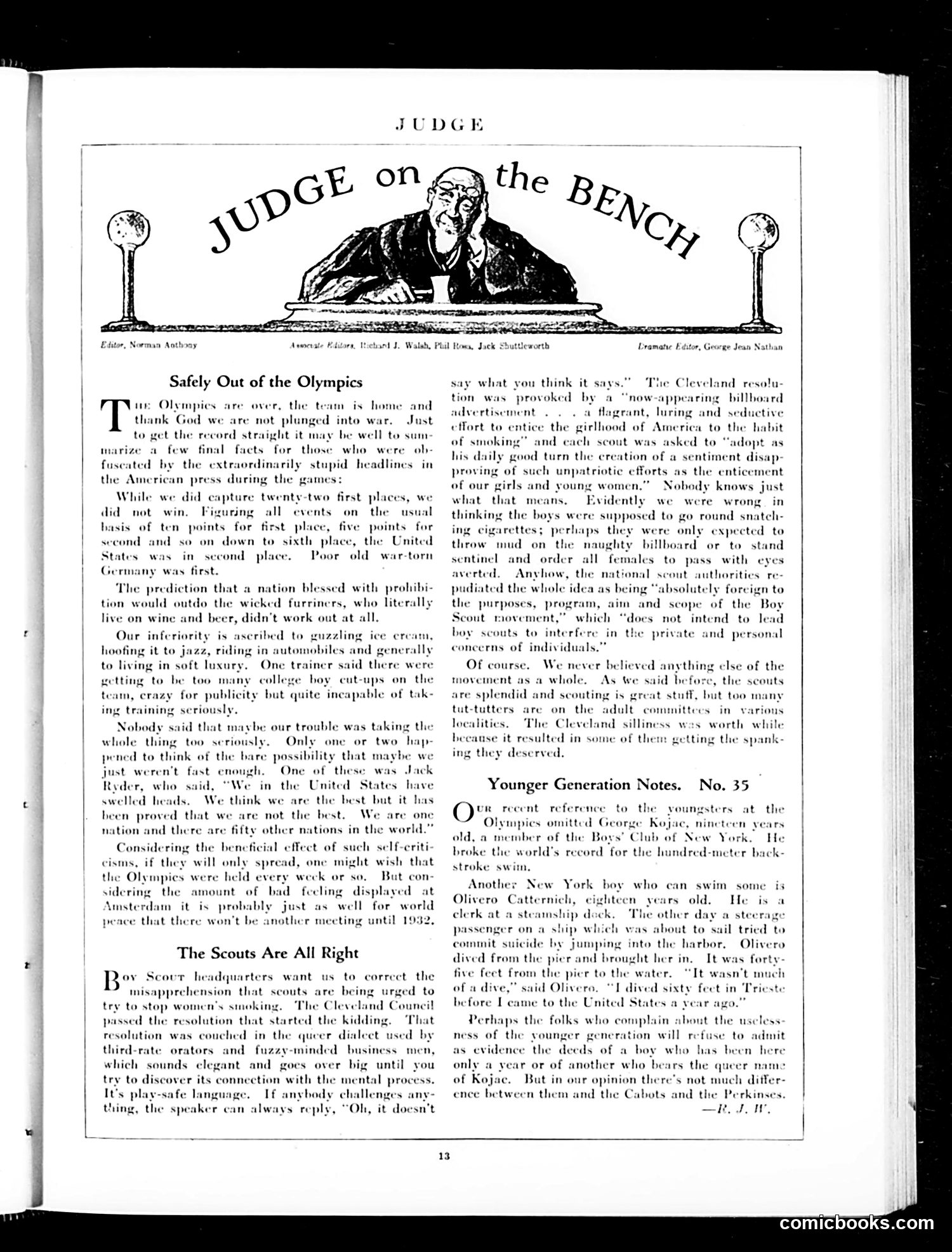
This page from Judge satirizes American attitudes following the 1928 Olympics (likely Amsterdam, mentioned in text). The main article, "Safely Out of the Olympics," mocks American overconfidence and poor sportsmanship. Despite capturing twenty-two first places, the U.S. placed second overall—Germany ranked first. The satire targets American arrogance: the belief that a "prohibition nation" should naturally dominate "wicked foreigners" who drink wine and beer. Instead, the author suggests Americans lost because they took competition too seriously and weren't actually fast enough, puncturing nationalist pride. A secondary piece, "The Scouts Are All Right," defends Boy Scouts against misrepresentation. A Cleveland Scout council's awkwardly-worded resolution against women's smoking was mocked as heavy-handed. The author clarifies scouts aren't actually enforcing morality on females, praising scouts as "splendid" while criticizing overzealous "adult committees" who interpret their mission too broadly. The cartoon header shows a judge contemplating these social issues—representing satirical judgment on contemporary American values.
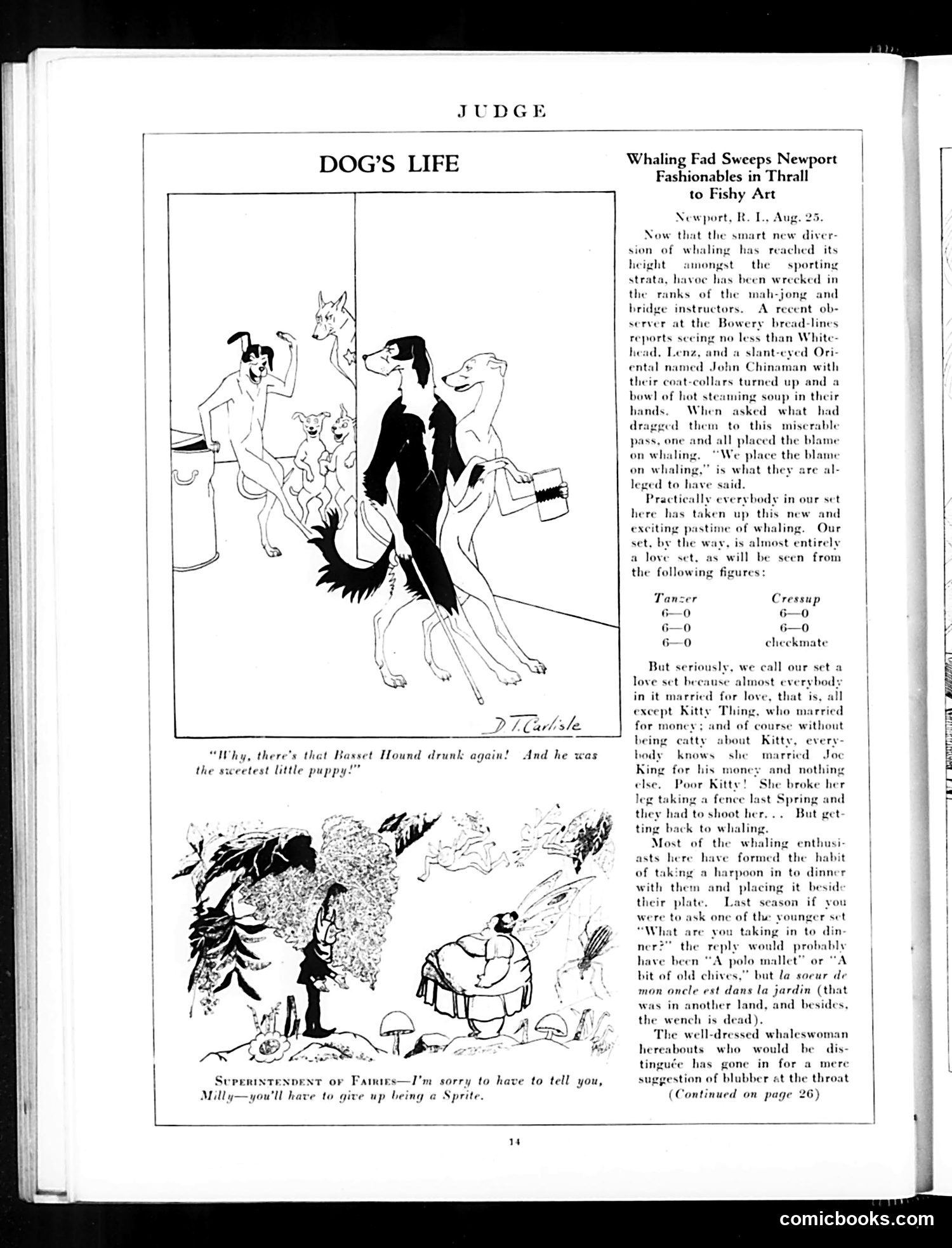
This page contains two satirical pieces mocking fashionable society: **"Dog's Life"** (top cartoons): Humorous commentary on pet behavior—one panel jokes about a basset hound's drunkenness, another depicts a fairy or sprite character being told she must abandon her magical role. The humor relies on treating animals/fantastical beings with human social expectations. **"Whaling Fad Sweeps Newport"** (right column): Satirizes the ultra-wealthy Newport, Rhode Island social set's obsession with whaling as a fashionable pastime. The piece mocks how the wealthy abandon previous fads (mah-jong, bridge) for whaling, and jokes about fashionable ladies adopting "blubber" as a beauty accessory. References to "Whitehead, Lenz" appear to be recognizable society figures. The tennis scores (6-0, checkmate) sarcastically summarize romantic entanglements. The overall satire targets wealthy elites' shallow trend-chasing and their disconnection from reality—they trivialize serious fishing while their instructors starve.
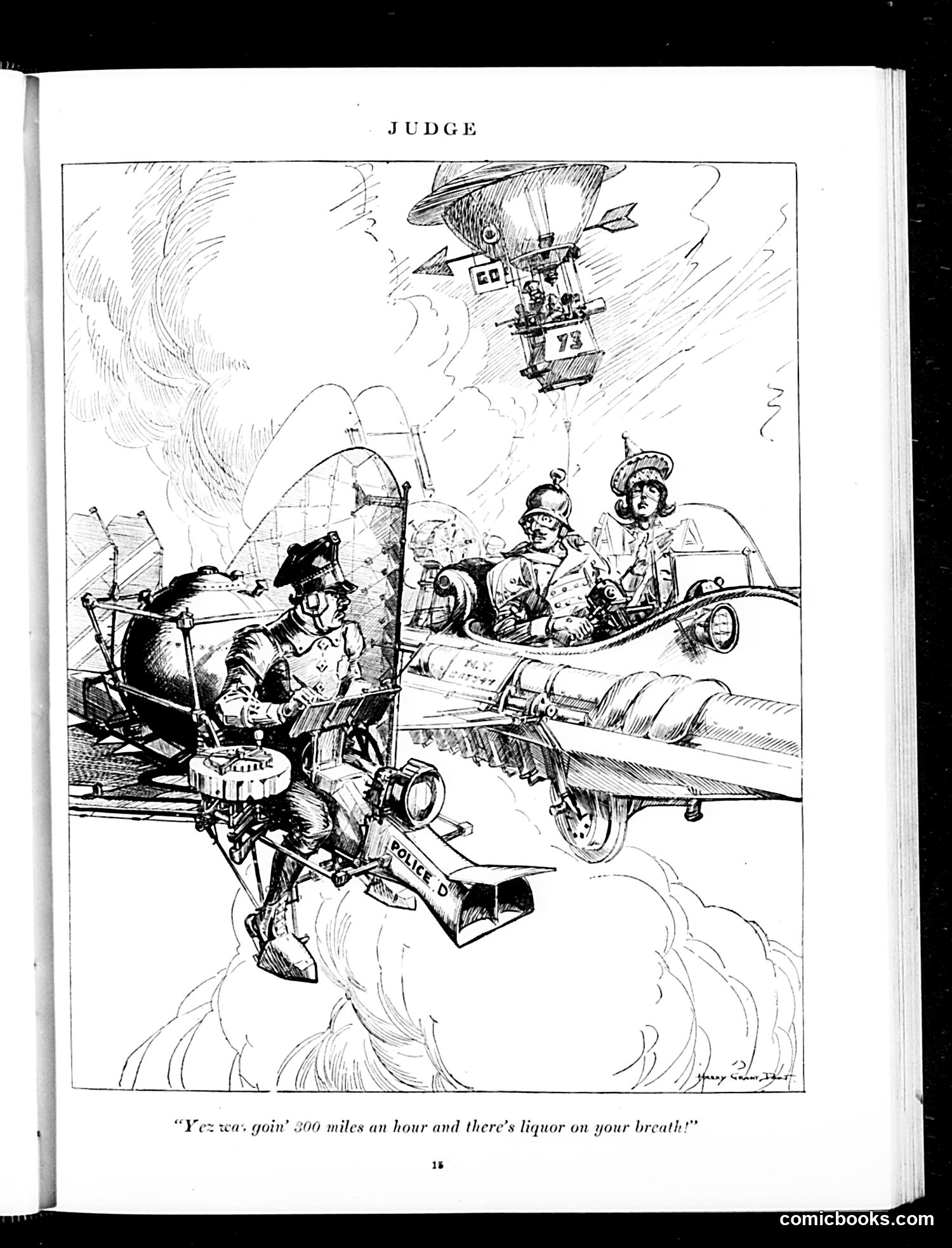
This single-panel cartoon satirizes reckless driving and drunk driving enforcement. A police officer on the ground stops a speeding vehicle traveling at an impossibly high speed (300 mph), citing both the extreme velocity and alcohol on the driver's breath as violations. The humor derives from the absurdity: the cartoon depicts a chaotic, fantastical scene with vehicles flying through the air and explosive activity, suggesting the driver's reckless behavior has caused mayhem. The officer's matter-of-fact citation—beginning with "Yex"—uses colloquial speech, emphasizing the mundane bureaucracy of traffic law enforcement amid this surreal destruction. The cartoon likely critiques how authorities focus on technical violations while ignoring the broader dangerous consequences of reckless driving. The title "JUDGE" suggests this appeared in the satirical magazine's section offering commentary on law enforcement or judicial matters.
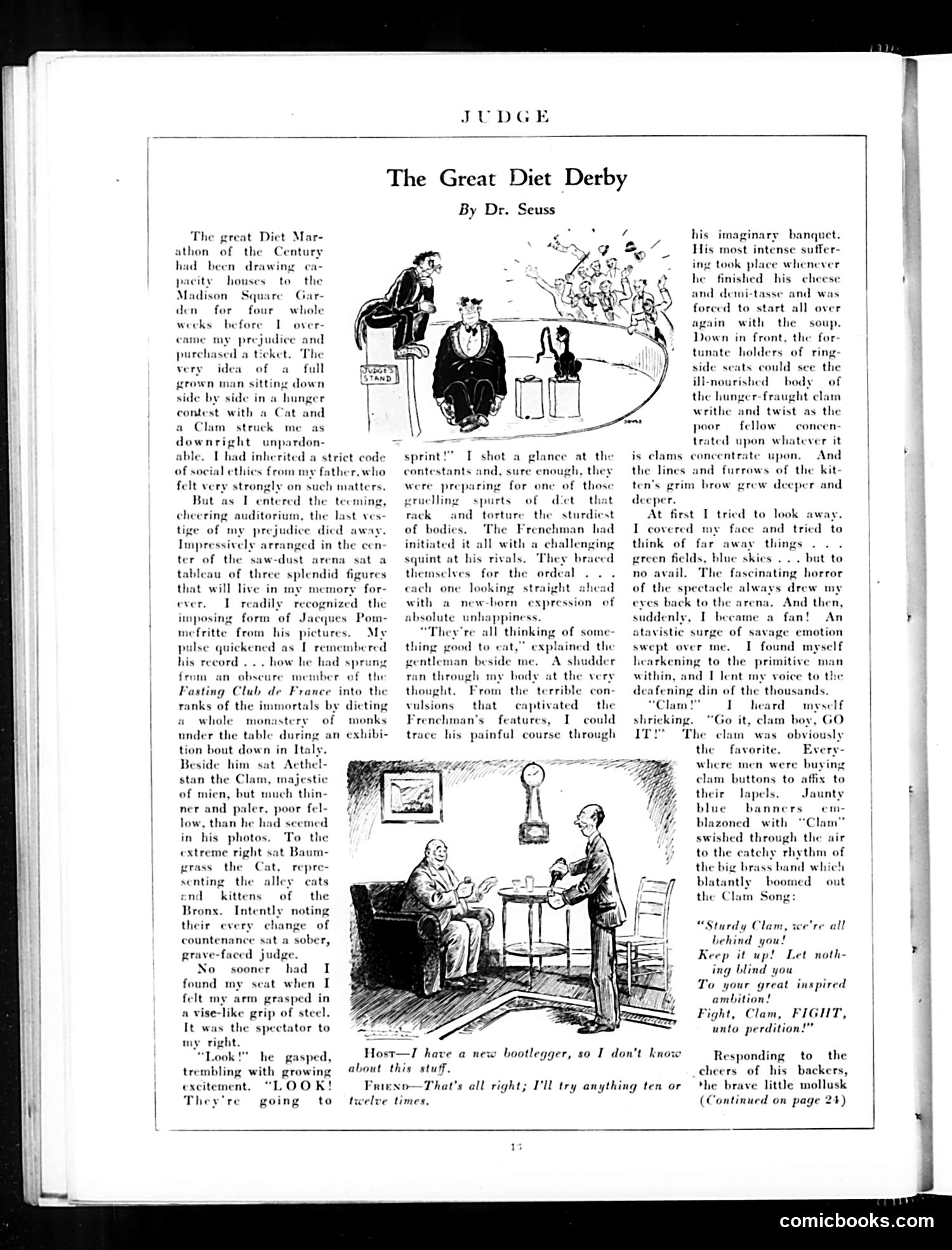
This is a satirical short story illustrated with two cartoons, mocking the era's fad of competitive eating marathons and the public spectacle surrounding them. The narrative describes a three-way "diet contest" at Madison Square Garden between Jacques Pommefritte (a famous French competitive eater), "Aethelstan the Clam" (representing a mollusk competitor—clearly absurdist), and "Baumgrass the Cat" (representing Bronx alley cats). The satire targets the intense emotionalism and crowd hysteria surrounding these events, with spectators buying "clam buttons" and singing fight songs. The story's humor derives from the increasingly ridiculous premise: respectable adults gambling on and emotionally invested in animals/shellfish in a "eating competition." The dialogue and setup mock both the pretentiousness of competitive eating culture and the tribal fervor it generates among fans. This likely comments on 1920s American excess and crowd mentality during Prohibition-era entertainment.
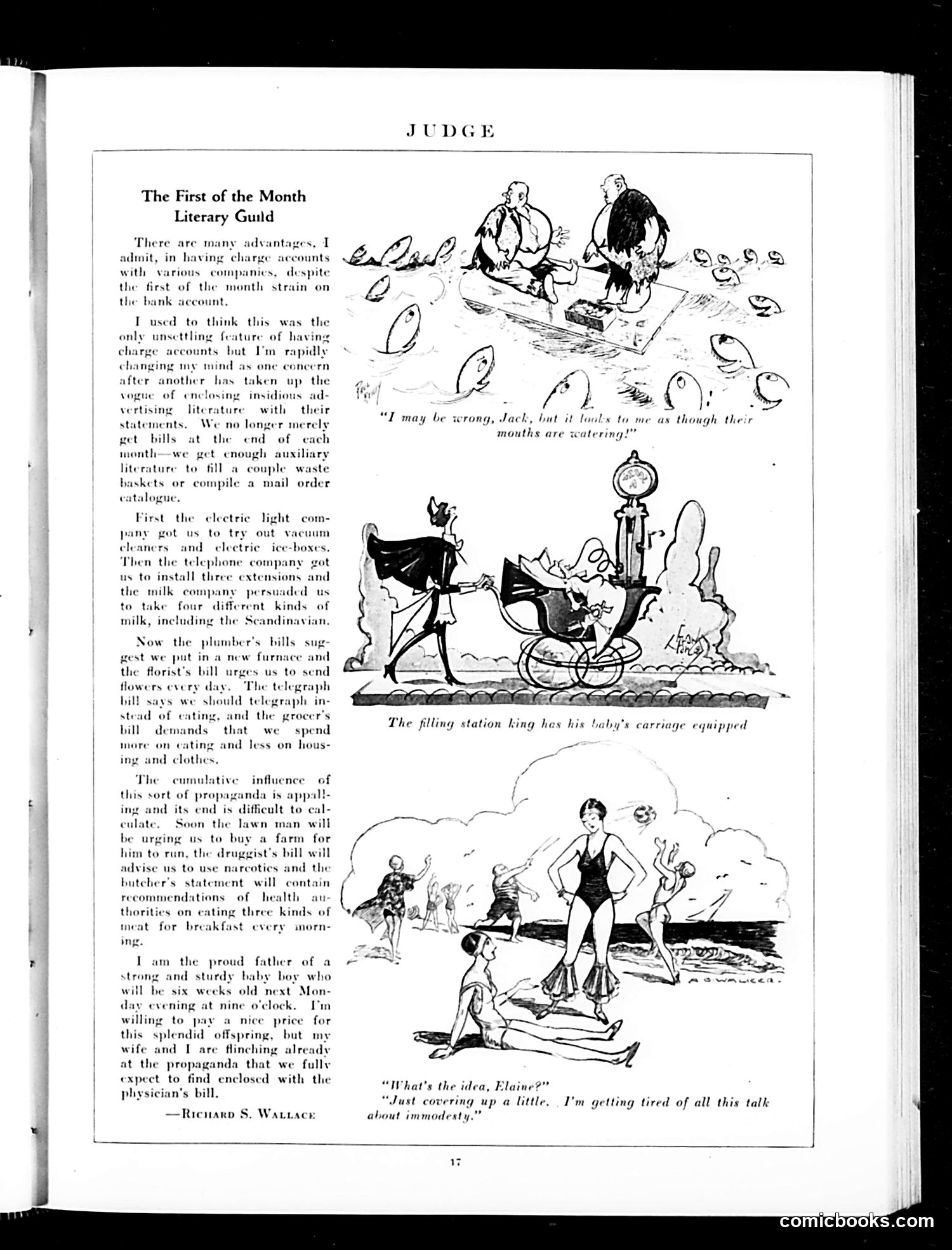
This article satirizes the proliferation of advertising enclosed with monthly bills—a practice the author calls "insidious propaganda." The main complaint: companies like electric utilities, telephone, plumber, florist, and others exploit the monthly statement to insert unsolicited sales pitches alongside bills, creating literal waste baskets of junk mail. The humor lies in the cumulative absurdity: each service provider tries to upsell customers on unrelated products (vacuum cleaners, furnaces, farm equipment, narcotics). The author even jokes that a future baby's physician bill will include advertising. The cartoons illustrate this overreach. The bottom cartoon shows a woman at a beach covered by what appears to be advertising material, claiming she's "covering up" due to "all this talk about immodesty"—implying advertising clogs are more invasive than swimwear concerns. This critiques early-20th-century marketing's aggressive expansion into private correspondence.
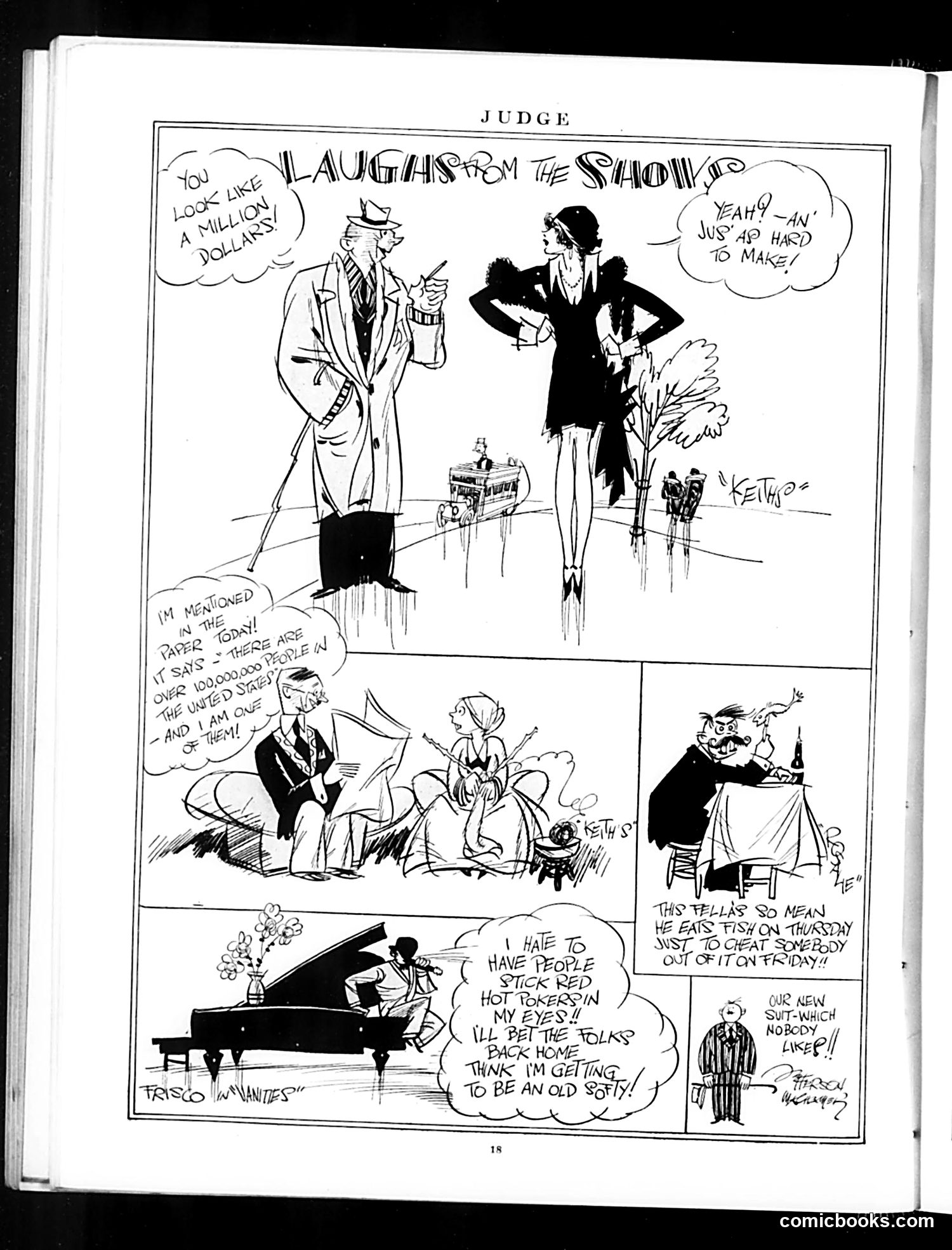
This Judge magazine page contains multiple cartoons satirizing social pretension and hypocrisy. The top panel shows a wealthy man boasting about a million-dollar business deal to a fashionably-dressed woman, mocking nouveau riche bragging. The lower panels depict various characters revealing contradictions between their public personas and private behavior. One figure discusses appearing in the newspaper while claiming humility. Another character's meanness is exposed—he cheats people Friday while eating fish Thursday (suggesting religious observance). The final panel shows someone in a new suit "nobody liked," satirizing conformity and superficiality. The overall theme critiques the gap between how people present themselves socially versus their actual character and values—a common Judge magazine theme mocking 1920s-30s American society's materialism and pretension.
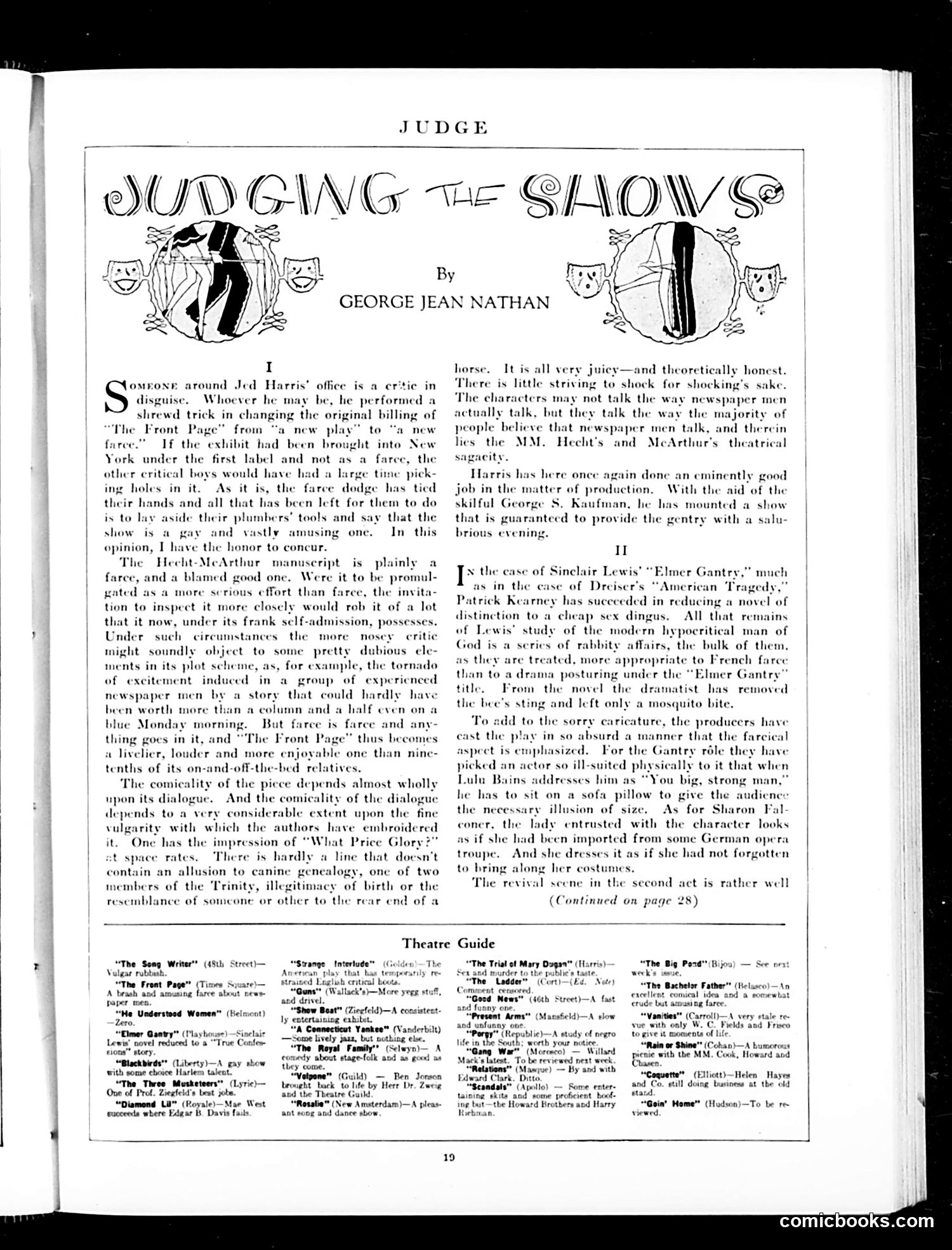
This page reviews theatrical productions, primarily discussing **"The Front Page,"** a play by Hecht and MacArthur produced by Jed Harris. The critic praises Harris's strategic marketing decision: labeling the work a "farce" rather than a serious drama allowed it to bypass harsh critical scrutiny of its plot implausibilities (like an unrealistic tornado of newspaper men converging on a scene). The vulgar, colloquial dialogue works because audiences *believe* newspaper men talk this way, even if they don't. The second section critiques **"Elmer Gantry,"** adapted from Sinclair Lewis's novel. The adaptation allegedly reduces Lewis's satirical examination of religious hypocrisy to mere sexual scandal. The critic mocks the casting—particularly an actor physically unsuited to the role, requiring a sofa pillow to appear large enough, and a leading actress who looks like she belongs in a German opera company. The piece exemplifies Judge's theatrical criticism: witty, irreverent commentary on Broadway productions and their producers' commercial decisions.
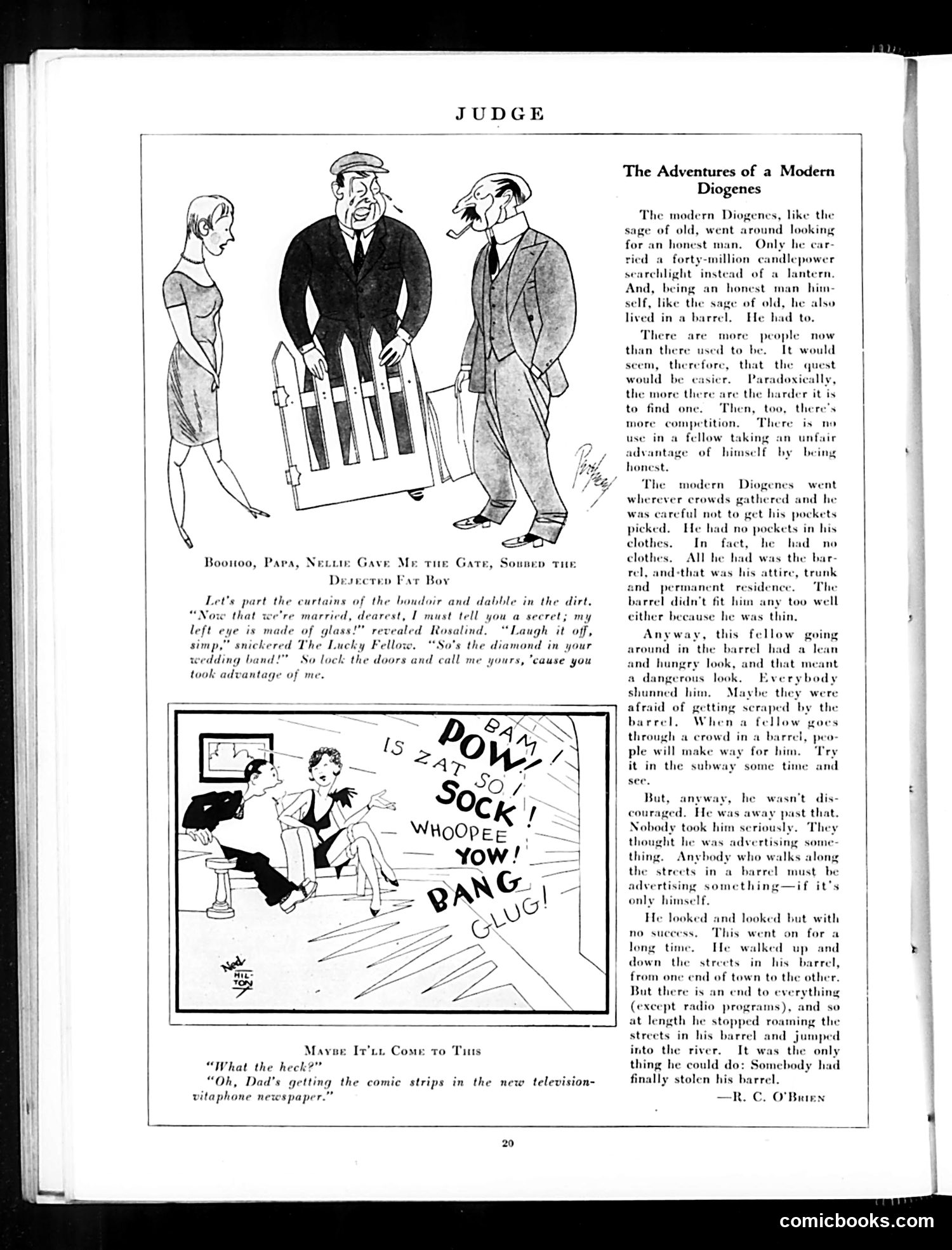
This page contains two distinct satirical pieces: **Upper cartoon**: A marital joke about deception. A newlywed couple exchanges confessions—the wife admits her eye is glass, the husband that his wedding ring's diamond is fake. The satire mocks the pretense in marriages, suggesting both partners deceive each other about their value and authenticity. **Lower story, "Adventures of a Modern Diogenes"**: A reference to the ancient Greek philosopher Diogenes, who famously lived in a barrel to reject materialism. This modern version updates the classical story: a contemporary honest man living in a barrel searches for virtue in a crowded, dishonest society. The joke is darkly cynical—he eventually commits suicide when someone steals his barrel, suggesting that in modern times, even ascetic rejection of society offers no refuge. The accompanying cartoon shows slapstick chaos, contrasting the story's bleak conclusion. Both pieces satirize 1920s-30s American society's dishonesty and moral corruption.
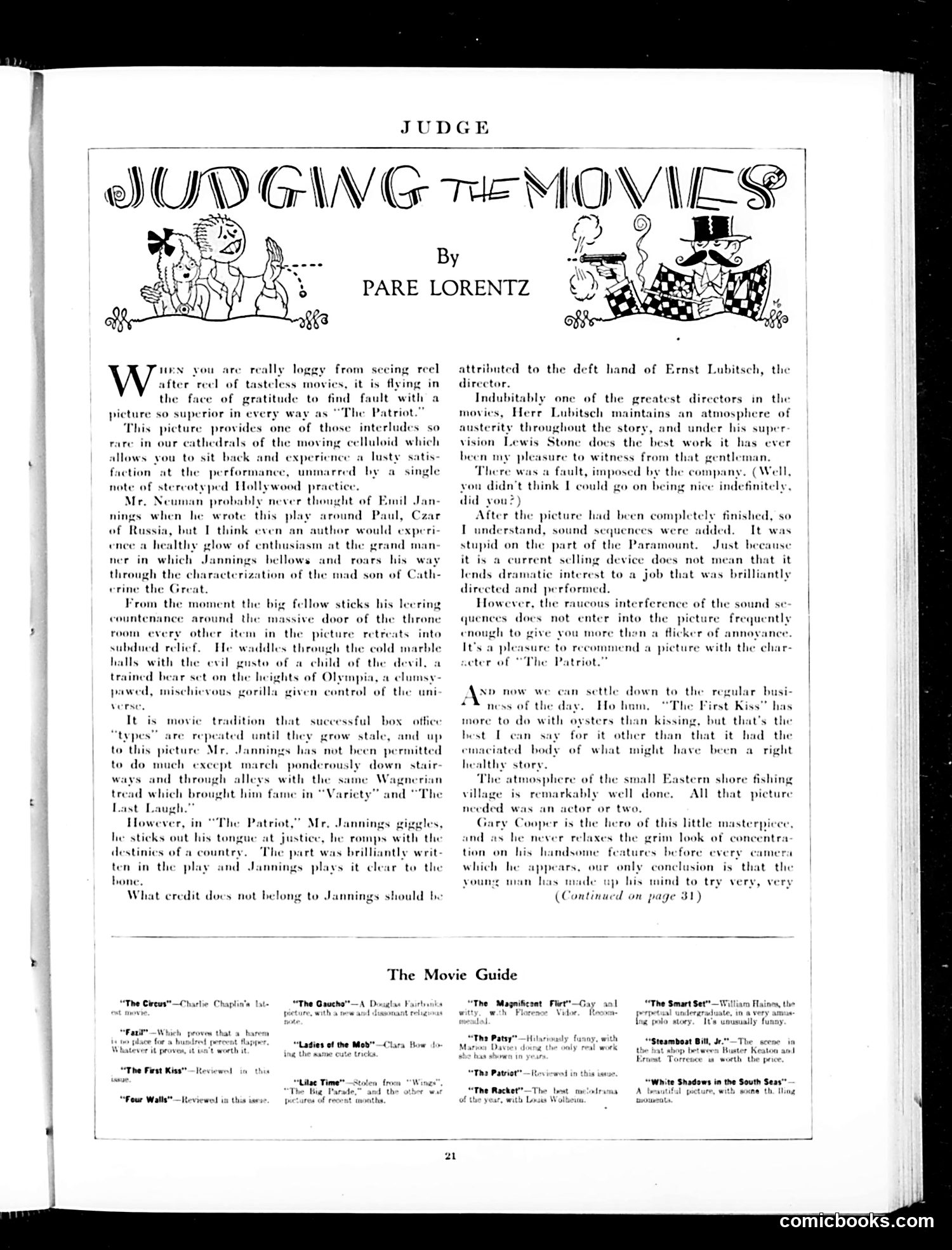
This is a film review column, not a political cartoon. Lorentz praises **"The Patriot,"** a silent film starring Emil Jannings (a famous German-American actor) and directed by Ernst Lubitsch. The review celebrates Jannings' comedic performance as a mad Russian czar—describing him as a "clumsy-pawed, mischievous gorilla" who brings energy to the screen after being typecast in ponderous dramatic roles. The satire targets **Hollywood studio practice**: Lorentz criticizes Paramount for adding sound sequences *after* filming completed, calling it "stupid," though he acknowledges it helps box-office appeal. He also takes comedic jabs at Gary Cooper's overly serious demeanor in "The First Kiss." The page includes **"The Movie Guide,"** a brief listing of current films with one-line reviews. This represents typical 1920s film criticism for general audiences.
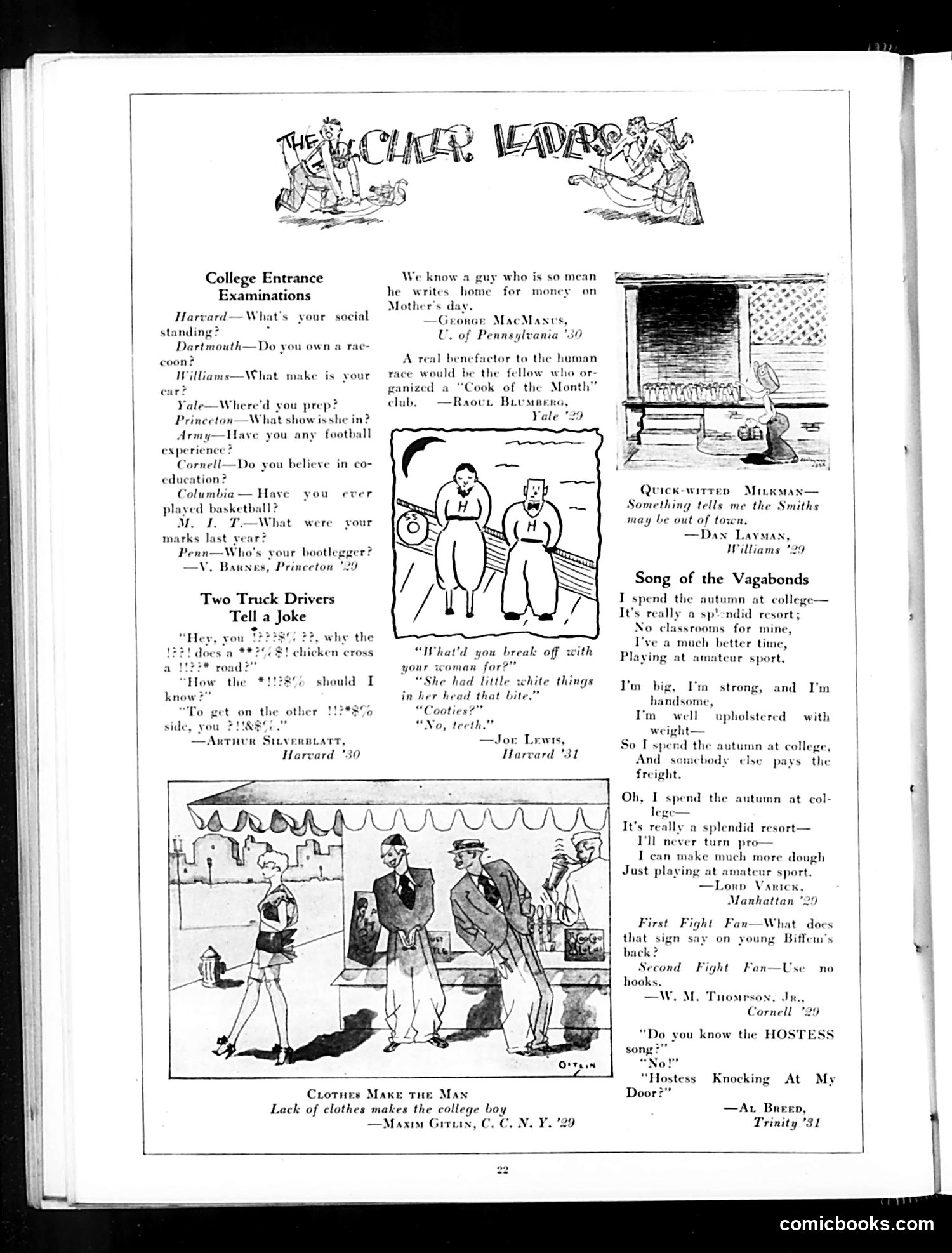
This page satirizes college entrance exams and student life in the late 1920s. The "College Entrance Examinations" section mocks how different universities allegedly prioritize trivial matters over academics: Harvard asks about social standing, Yale about prep school, Princeton about dating ("What show is she in?"), and Penn asks "Who's your bootlegger?"—a reference to Prohibition-era illegal alcohol suppliers, suggesting even elite universities were full of students flouting the law. The cartoons and jokes focus on college stereotypes: students' materialism (obsession with cars), lack of academic interest, and general frivolousness. The "Song of the Vagabonds" mocks privileged students who treat college as a resort while "somebody else pays the freight"—critiquing wealth and entitlement. Overall, the page satirizes how American colleges had become less serious intellectual institutions and more social clubs for the affluent.
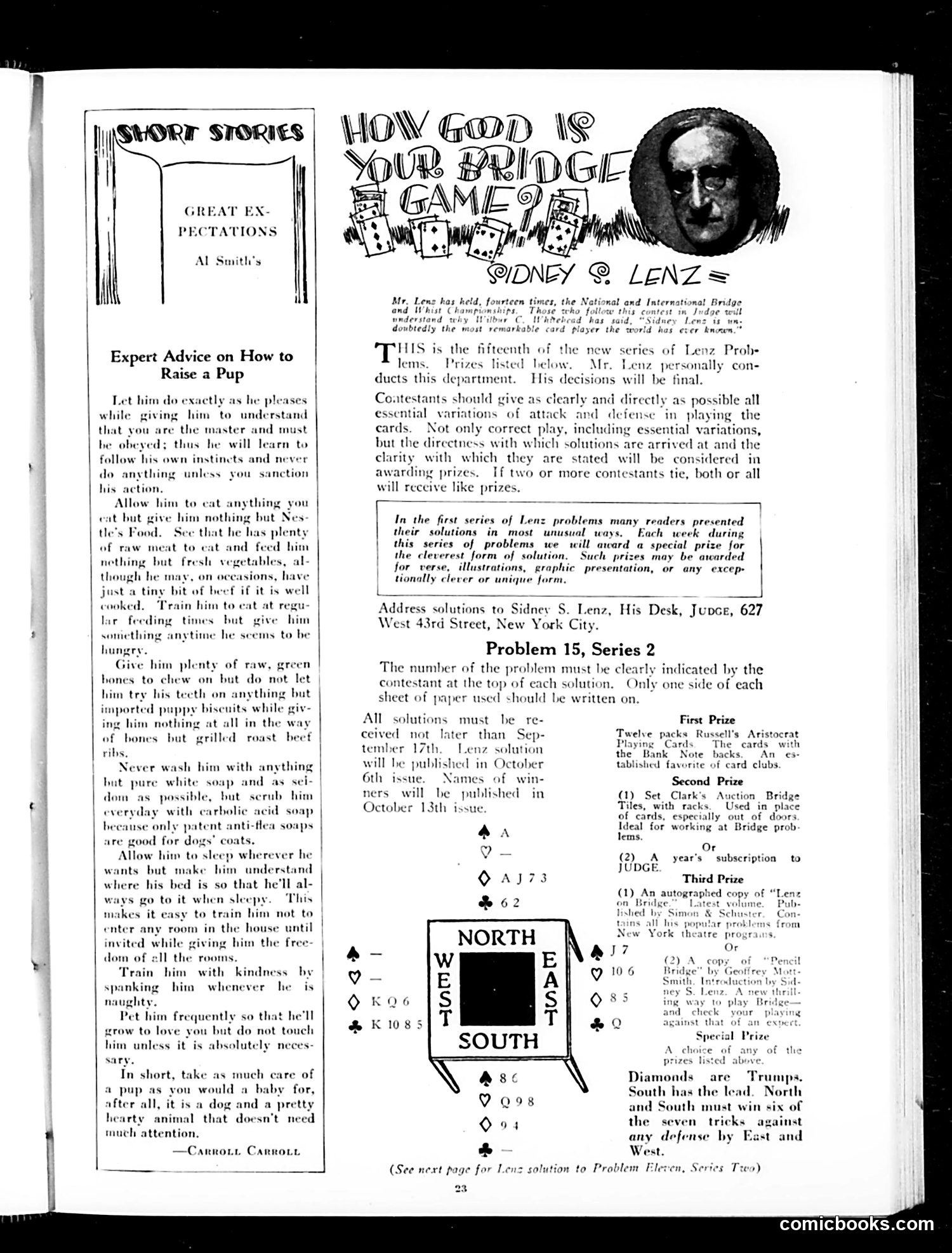
This page combines a satirical advice column with a bridge puzzle contest, both poking fun at prominent figures of the era. **The "Al Smith" Puppy Advice Column** (left) is a parody of presidential candidate Al Smith's supposedly contradictory political positions. The absurd advice—"let him do exactly as he pleases" while simultaneously asserting you're the master; feed him nothing but fresh vegetables AND roast beef—mirrors accusations that Smith held mutually exclusive policy views. It's satirizing his perceived flip-flopping and unclear governance philosophy. **The Bridge Contest** (right) is hosted by Sidney Lenz, identified as a renowned bridge champion. The cartoon shows his portrait alongside bridge cards. The contest invites readers to submit bridge problem solutions for prizes, legitimately showcasing Judge's engagement with popular pastimes of the 1920s-30s era, when contract bridge was a cultural phenomenon among educated audiences. The page reflects Judge's dual purpose: political satire targeting contemporary politicians mixed with leisure-culture content appealing to its upscale readership.
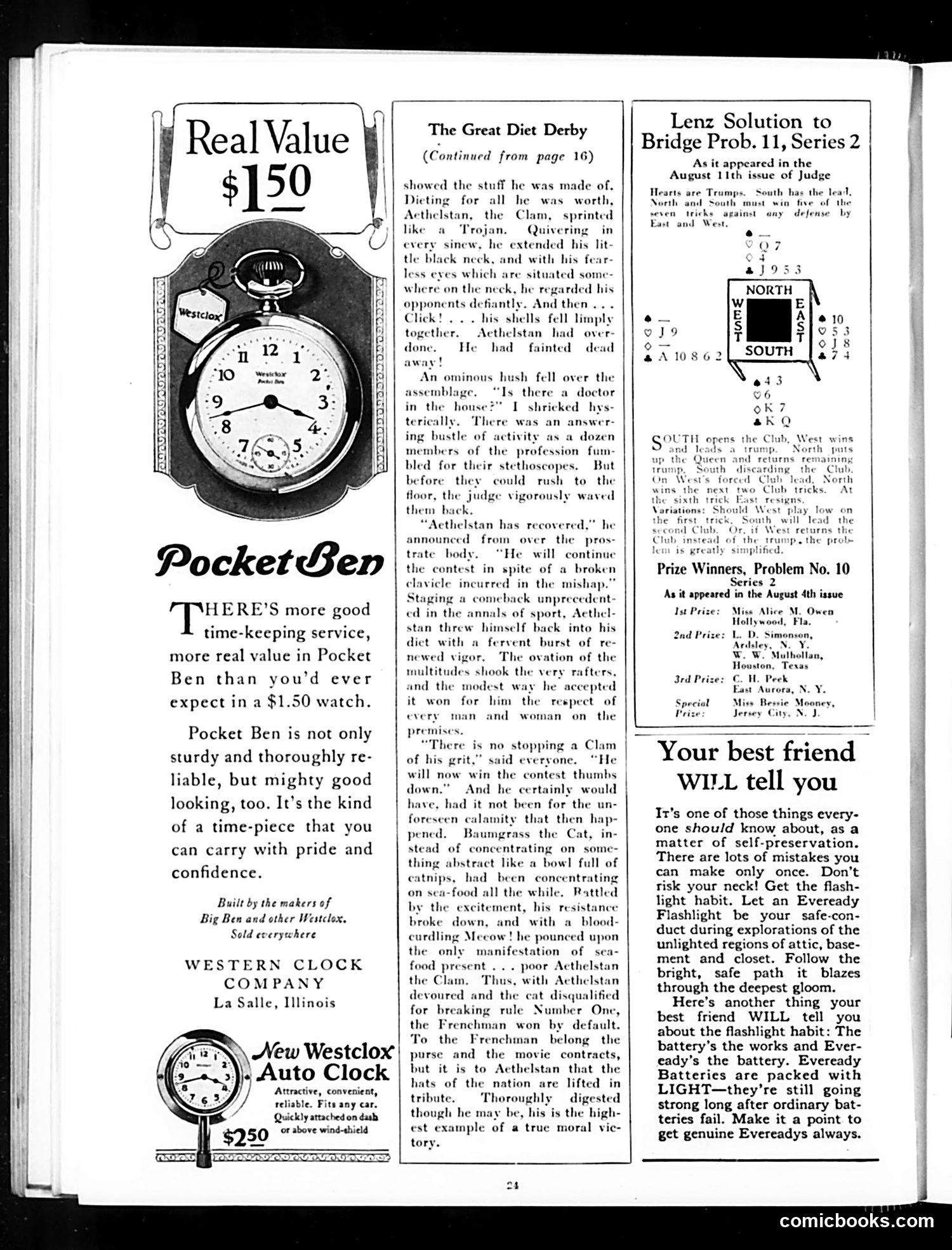
This page is primarily **advertising**, not political satire. It contains: 1. **Pocket Ben watch ad** (left): A $1.50 pocket watch by Western Clock Company, emphasizing reliability and value. 2. **"The Great Diet Derby"** (center): A humorous fictional story about animals competing in a dieting contest. A clam named Aethelstan faints from over-dieting but recovers, only to be eaten by Baumgrass the Cat (who was also competing). The Cat is disqualified for breaking rules; the Frenchman wins by default. It's absurdist humor with no apparent political meaning—simply entertainment fiction typical of Judge magazine. 3. **Bridge problem and flashlight ad** (right): A bridge card game puzzle and an Eveready Flashlight advertisement emphasizing safety. The page reflects 1920s-30s consumer advertising and entertainment content rather than political commentary.
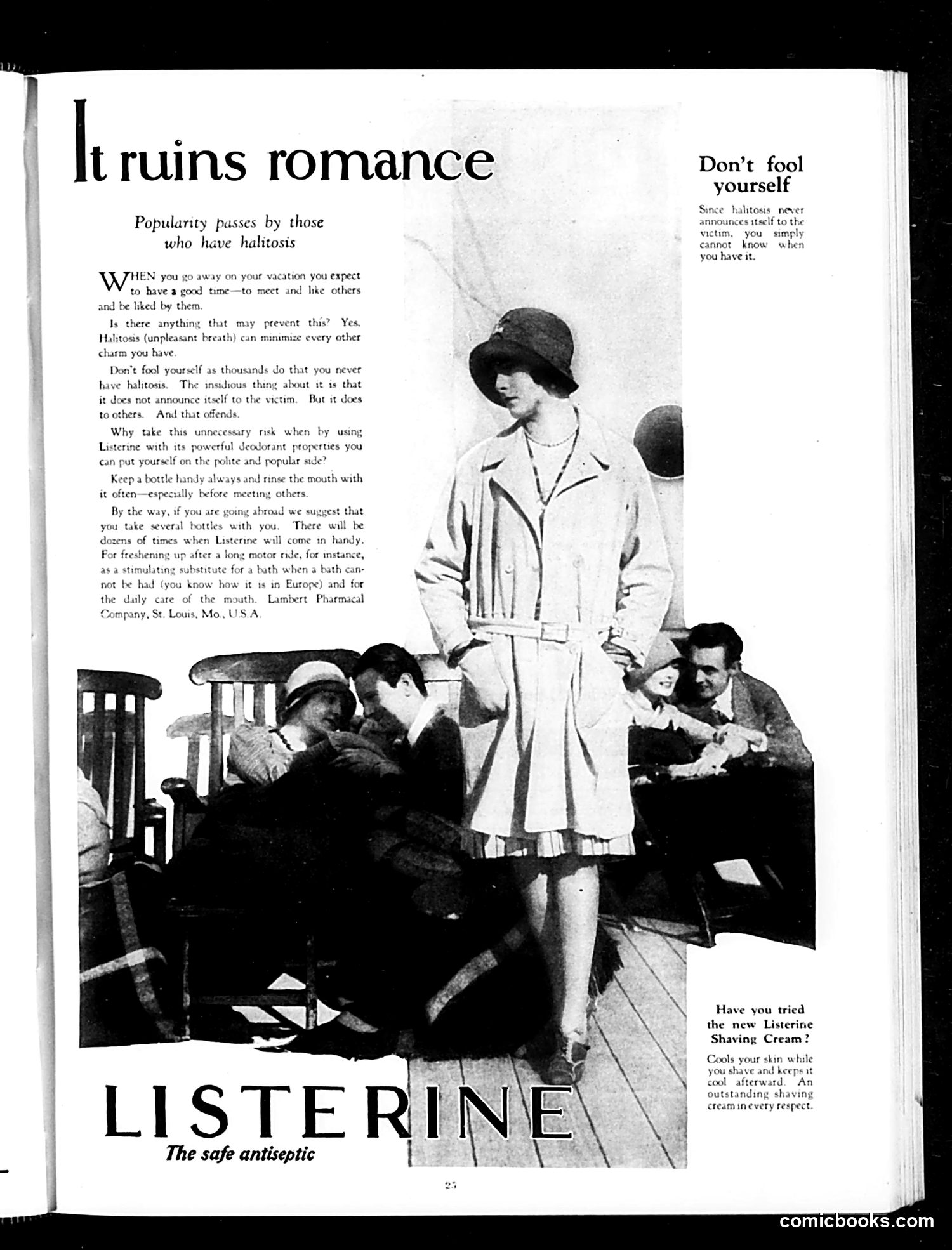
This is **not a political cartoon but a commercial advertisement** for Listerine mouthwash, presented as satirical social commentary—a common advertising strategy of the era. The "joke" targets halitosis (bad breath) as a social liability that ruins romantic prospects. The illustrated scene shows a woman standing while men around her recoil or appear uncomfortable, suggesting her undetected bad breath has repelled potential suitors. The satire mocks social anxiety: halitosis is presented as an invisible affliction the victim cannot perceive, making it uniquely humiliating. The ad warns readers not to be foolish enough to assume they're safe from this condition. This reflects 1920s-30s advertising's psychological approach—creating anxiety about hygiene problems to sell products. The text promotes Listerine as "the safe antiseptic" solution, plus a new shaving cream line. The page demonstrates how Judge magazine carried paid advertisements disguised as editorial content or satirical commentary.
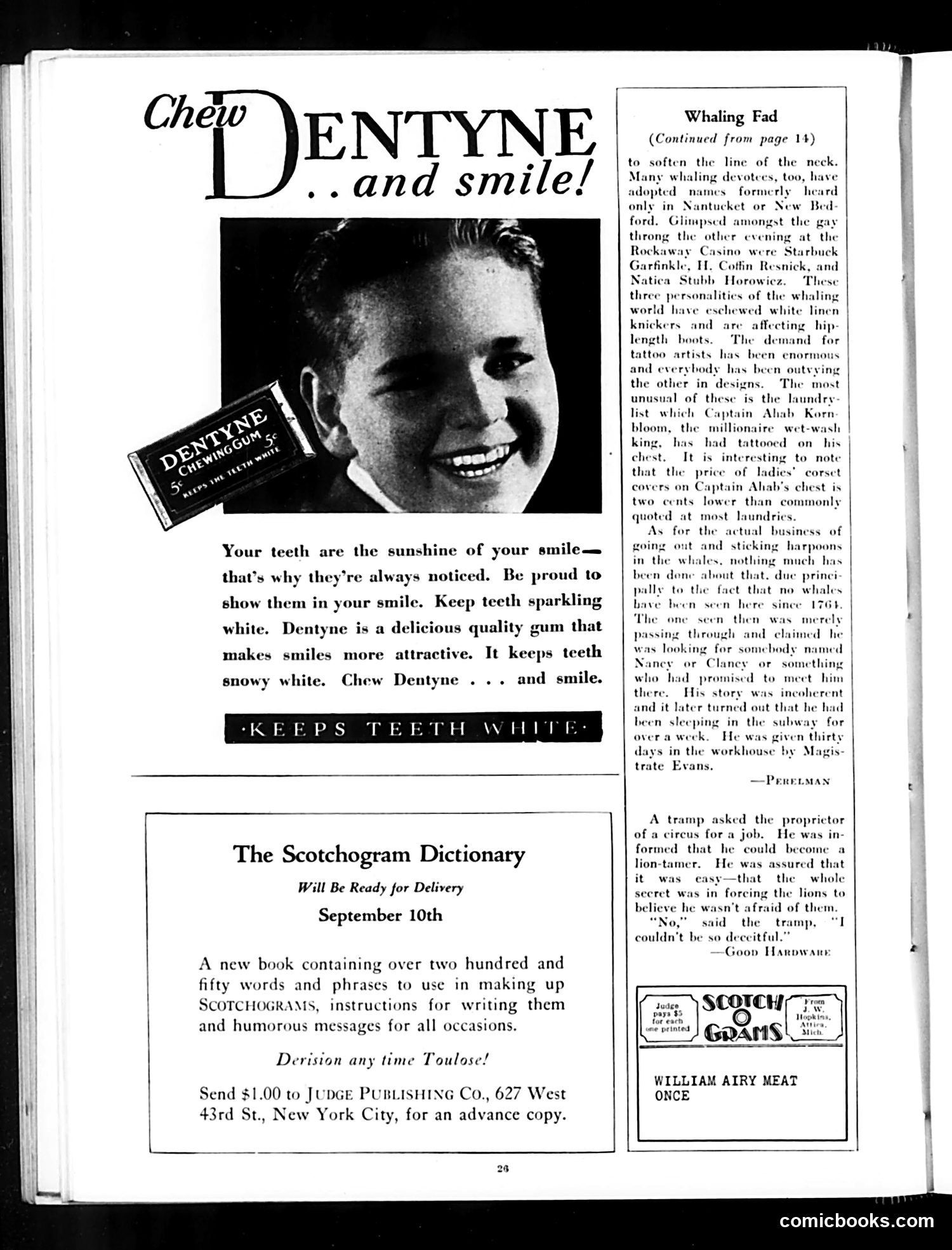
This page is primarily **advertising and filler content**, not political satire. The top third features a **Dentyne chewing gum advertisement** with a smiling man and product box, using the slogan "Chew Dentyne...and smile!" Below that is an announcement for **"The Scotchogram Dictionary,"** a humor book of Scottish dialect jokes and phrases, available September 10th for $1.00. The right column continues a piece titled **"Whaling Fad,"** which appears to be a satirical social commentary about wealthy New Yorkers adopting whaling as a fashionable hobby. It references fictional characters with whaling-themed names (Starbuck, Coffin, Stubb—borrowing from *Moby Dick*) and describes absurd trends like tattoos and laundry-list designs on wealthy enthusiasts' chests. The humor mocks how the fad is purely social posturing—actual whaling hasn't occurred since 1764. The page also includes brief humor pieces about circus performers and includes a **"Scotch Grams" advertisement** and "William Airy Meat Once" ad at bottom.
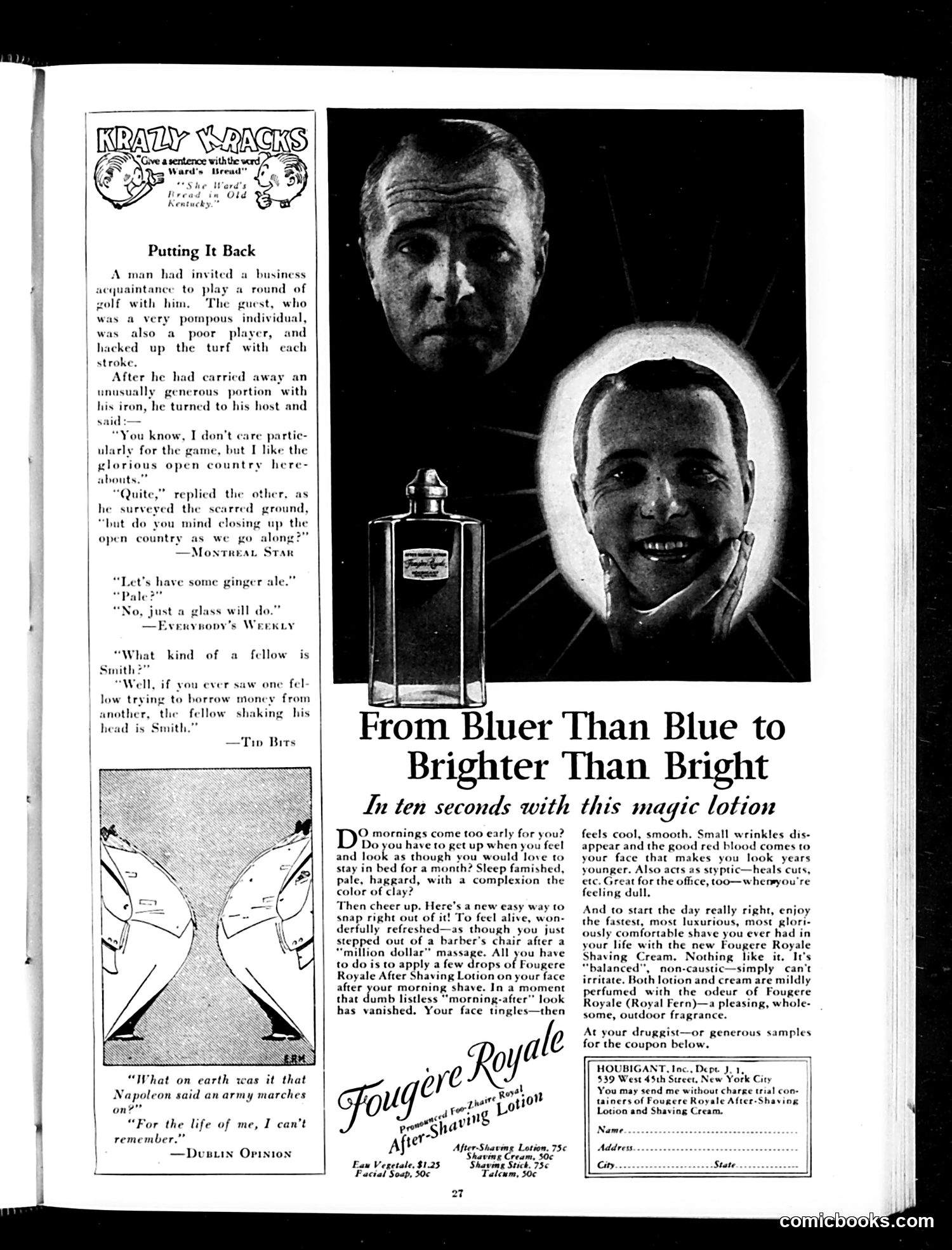
This page mixes humor with advertising. The left side contains three brief jokes from *Judge*'s "Krazy Kracks" section—light satirical humor typical of the era. The first jokes about a pompous, poor golfer who tears up the fairway; another mocks a man perpetually broke and borrowing money; a third plays on the phrase "an army marches on its stomach." The dominant content is a **full-page advertisement** for Fougere Royale After-Shaving Lotion, featuring two men's faces in a dramatic before-and-after photograph. The ad copy promises the product will eliminate the tired, haggard "morning-after" look and provide a luxurious shave. It emphasizes masculine vigor and quick transformation—appealing to early 20th-century male grooming standards. The juxtaposition suggests *Judge* used such ads to subsidize satirical content. The page reflects period attitudes about appearance, masculinity, and consumer products as solutions to fatigue or social inadequacy.
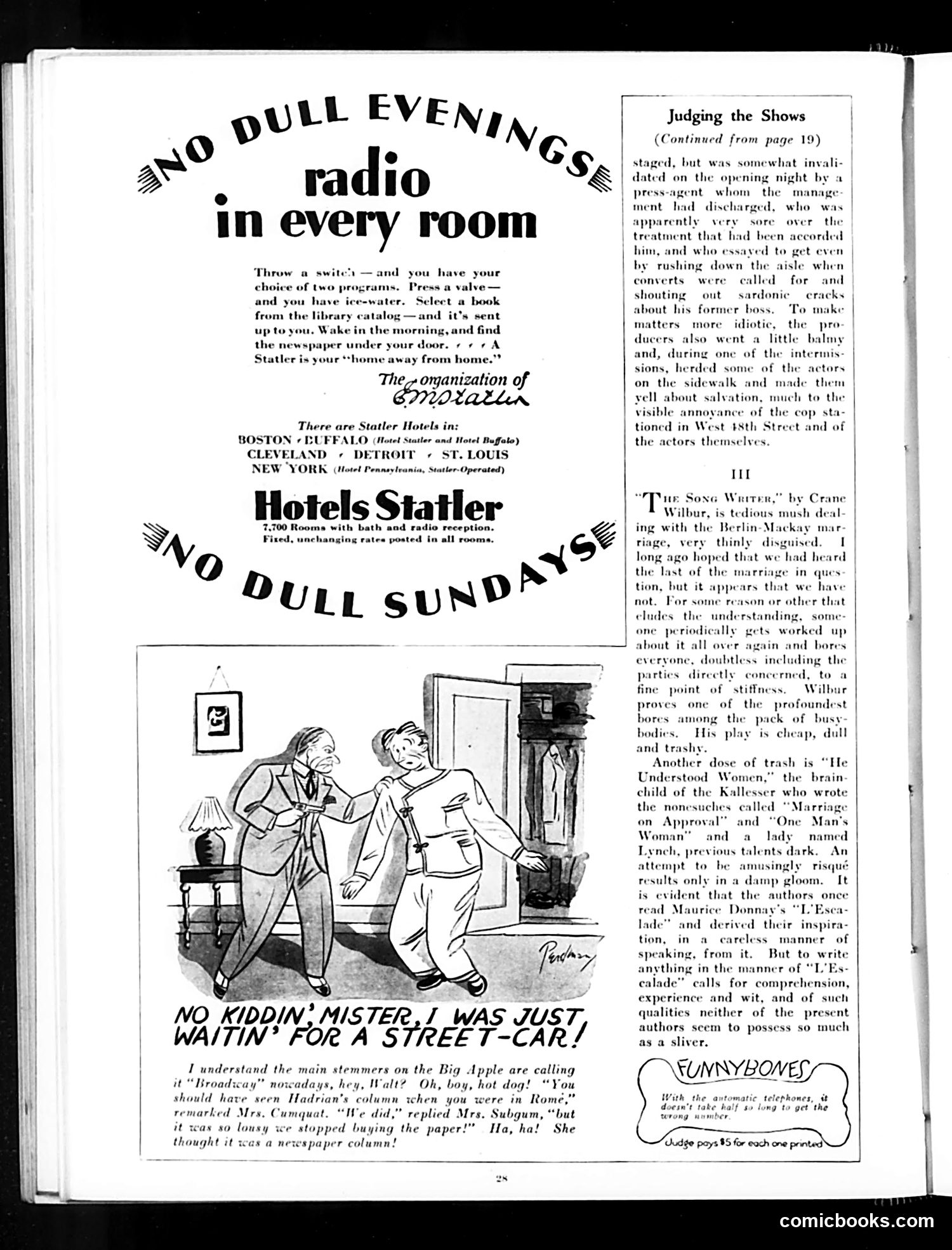
This page consists primarily of **advertisements** (Hotels Statler, radio services) interspersed with editorial content about theater reviews. The main cartoon depicts a couple where the woman explains to a man that she was "just waitin' for a street-car"—a mild domestic humor joke about misunderstanding. The caption references "Broadway" slang and includes banter about Rome, suggesting lighthearted urban sophistication typical of 1920s-era humor. The "Judging the Shows" column (right side) contains theatrical criticism of three Broadway plays, describing them harshly as "trash," "tedious," and "cheap." The reviewer critiques "The Song Writer" and "Understood Women" for recycled romantic plots and poor writing. The overall tone reflects Judge magazine's satirical voice—mocking both consumerism (the hotel ads promoting modern convenience) and contemporary theater's perceived mediocrity. The humor assumes readers' familiarity with New York theater scene gossip and Broadway terminology.
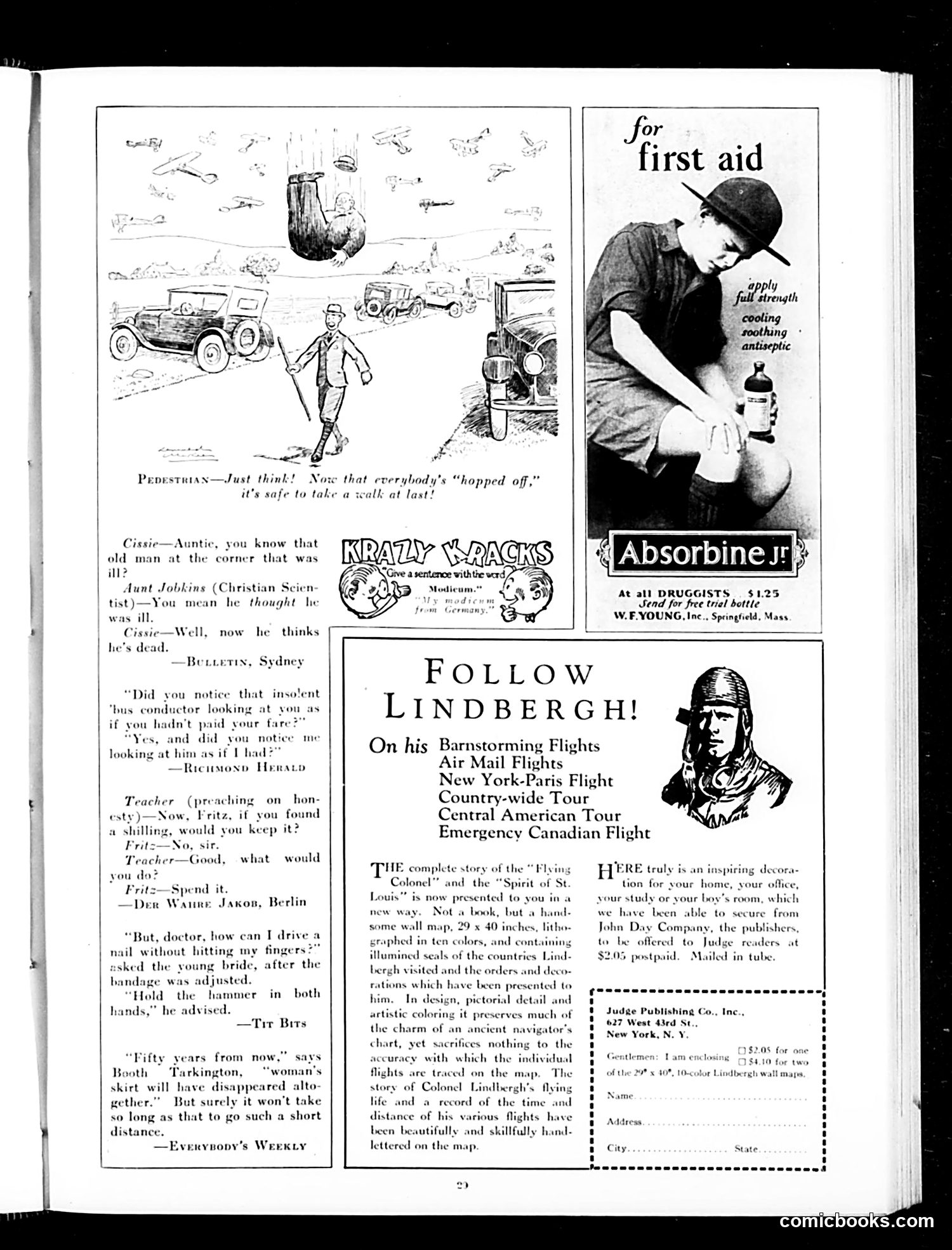
This page contains several brief humorous anecdotes and advertisements from Judge magazine. The top-left cartoon satirizes **Christian Science**—a woman jokes that her elderly aunt, a Christian Scientist, insisted the man's illness was merely "thought" rather than real; now he's dead, proving thought alone couldn't cure him. The satire targets the movement's rejection of medical treatment in favor of mental/spiritual approaches. The **"Krazy Whacks"** section collects short jokes about everyday absurdities (a conductor's rudeness, a bride's naiveté about hammers, etc.). The right side advertises **Absorbine Jr.**, a medicinal antiseptic product, and a **Lindbergh wall map** celebrating Charles Lindbergh's 1927 transatlantic flight and subsequent tours—then a major cultural phenomenon. The decorative map capitalized on Lindbergh's celebrity status among American consumers.
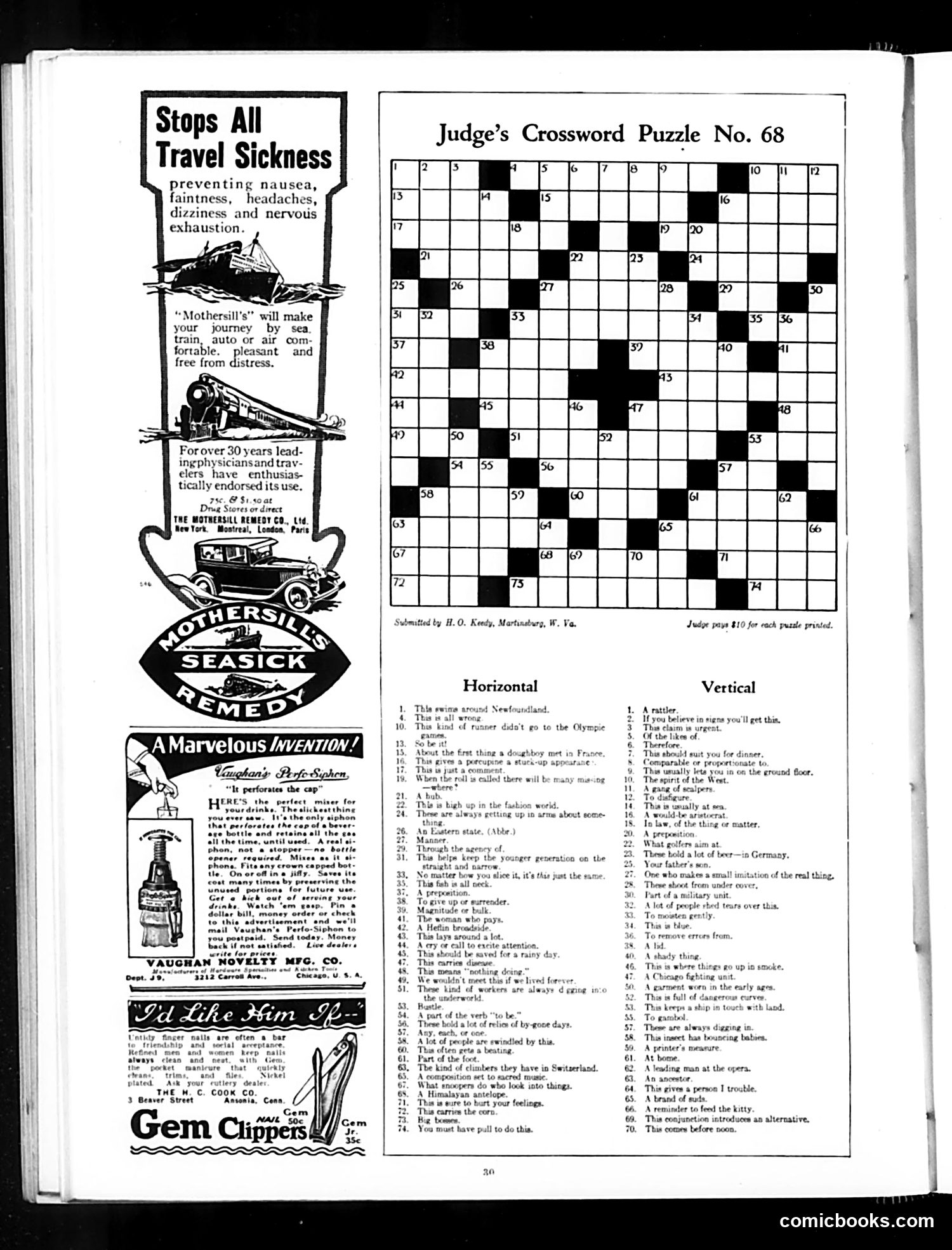
This page is primarily **advertising and a crossword puzzle**, not political satire. The left side features three product advertisements typical of early 20th-century magazines: 1. **Mothersill's Remedy** — a patent medicine claiming to prevent travel sickness (nausea, headaches, dizziness) for sea, train, and auto travel. The ad notes it's been endorsed for "over 30 years," suggesting this is a long-established product. 2. **Vaughan Novelty siphon bottle cap** — a "marvelous invention" that allegedly preserves unused portions of bottled beverages. 3. **Gem Clippers** — a grooming tool. The right side is **Judge's Crossword Puzzle No. 68**, a standard word puzzle with clues in horizontal and vertical categories. The puzzle itself contains no political commentary or satire—it's entertainment filler typical of magazines from this era. This page demonstrates how early 20th-century magazines like Judge mixed editorial content with advertising revenue and consumer-friendly puzzles.
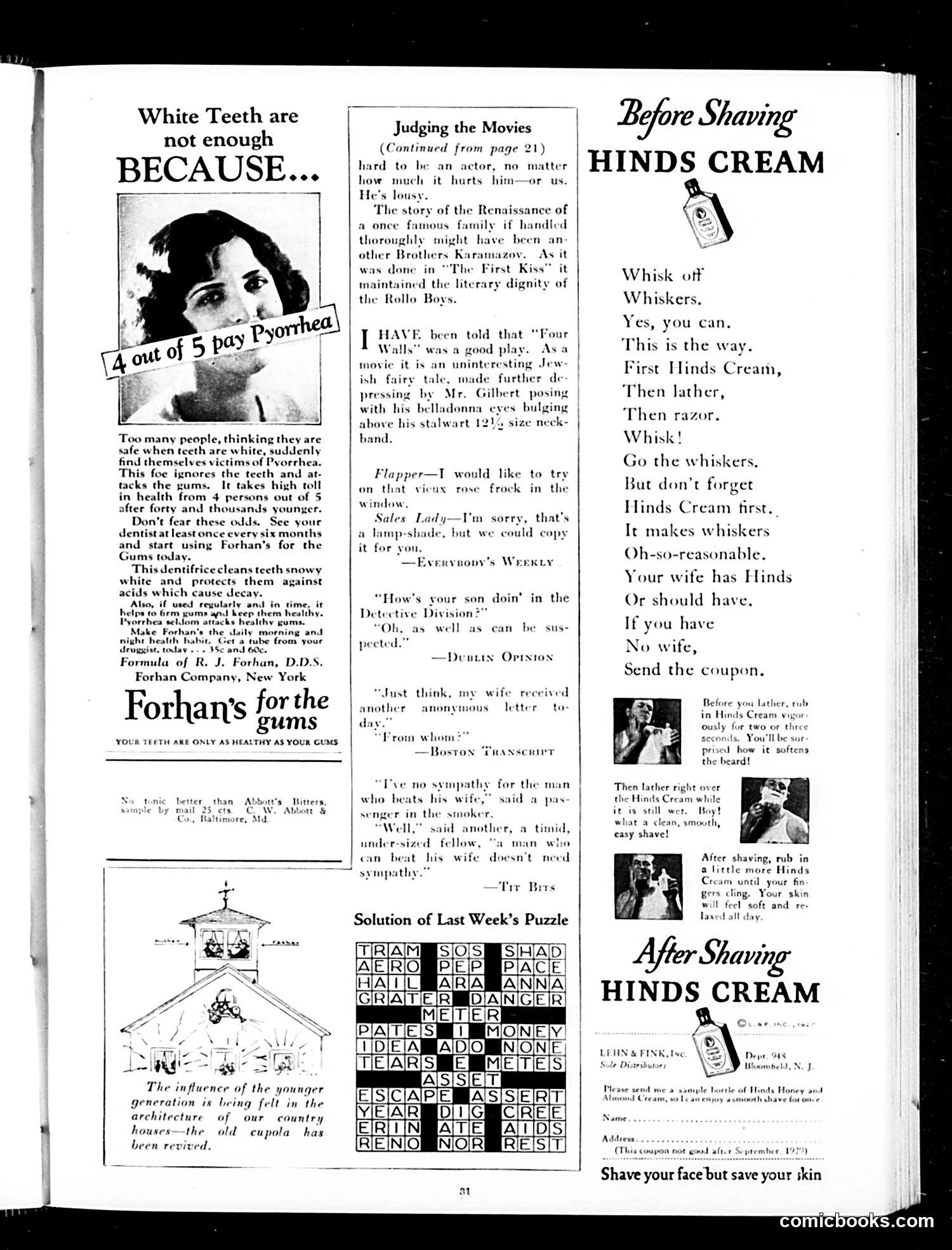
This page combines advertisements with satirical content typical of Judge magazine's format. **Main Content:** The "Judging the Movies" column offers brief, caustic reviews of recent films. The critic dismisses "Four Walls" as "an uninteresting Jewish fairy tale," revealing the casual ethnic stereotyping common in 1920s media criticism. Other quips mock actors and plots with the sardonic brevity Judge's readers expected. **Satirical Elements:** Scattered jokes target contemporary social types—flappers obsessed with fashion, detectives, nagging wives. A recurring gag about a timid man and domestic violence plays on period anxieties about gender roles and masculinity (presented as comedic). **Advertising:** Two competing products dominate: Forhan's toothpaste (emphasizing gum health) and Hinds Cream (a shaving product). Both use pseudo-scientific health claims typical of early 20th-century advertising. The Hinds ads feature instructional photographs showing application methods. **Context for Modern Readers:** This reflects an era when ethnic humor was mainstream, health products made unregulated claims, and domestic violence appeared in "humor" columns.
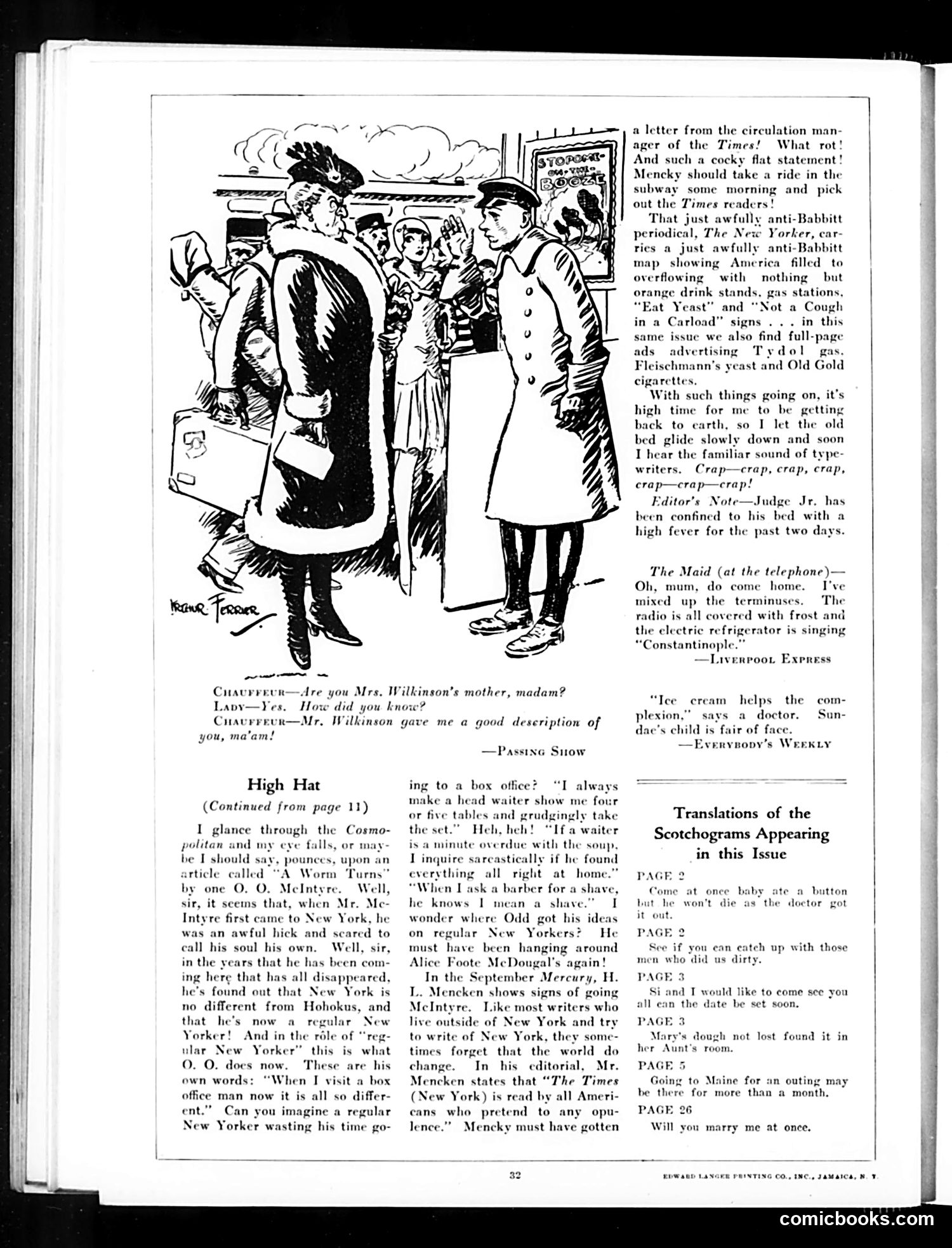
This page from *Judge* satirizes pretentious New York society figures and publications, circa 1920s-30s. **The main cartoon** (top) depicts a chauffeur confronting a woman, with the caption revealing satire about social pretense: he's been given a "good description" that lets him identify her as Mrs. Wilkinson—the joke being that New Yorkers are so standardized or typical they're indistinguishable. **The "High Hat" article** mocks O. O. McIntyre, a newspaper columnist who claimed to have shed his small-town (Hohokus) manners to become a sophisticated New Yorker. The author ridicules this as false—McIntyre's affected behaviors (demanding waiters show him multiple tables, insulting slow service) are just performative snobbery, not genuine sophistication. The author sarcastically suggests McIntyre got these ideas from hanging around fashionable spots like Alice Foote McDougal's restaurants. The piece also critiques H.L. Mencken's *Mercury* magazine and the *New York Times* for perpetuating myths about refined urban living, while ads ironically undermine these claims. The overall message: New York "sophistication" is hollow posturing.
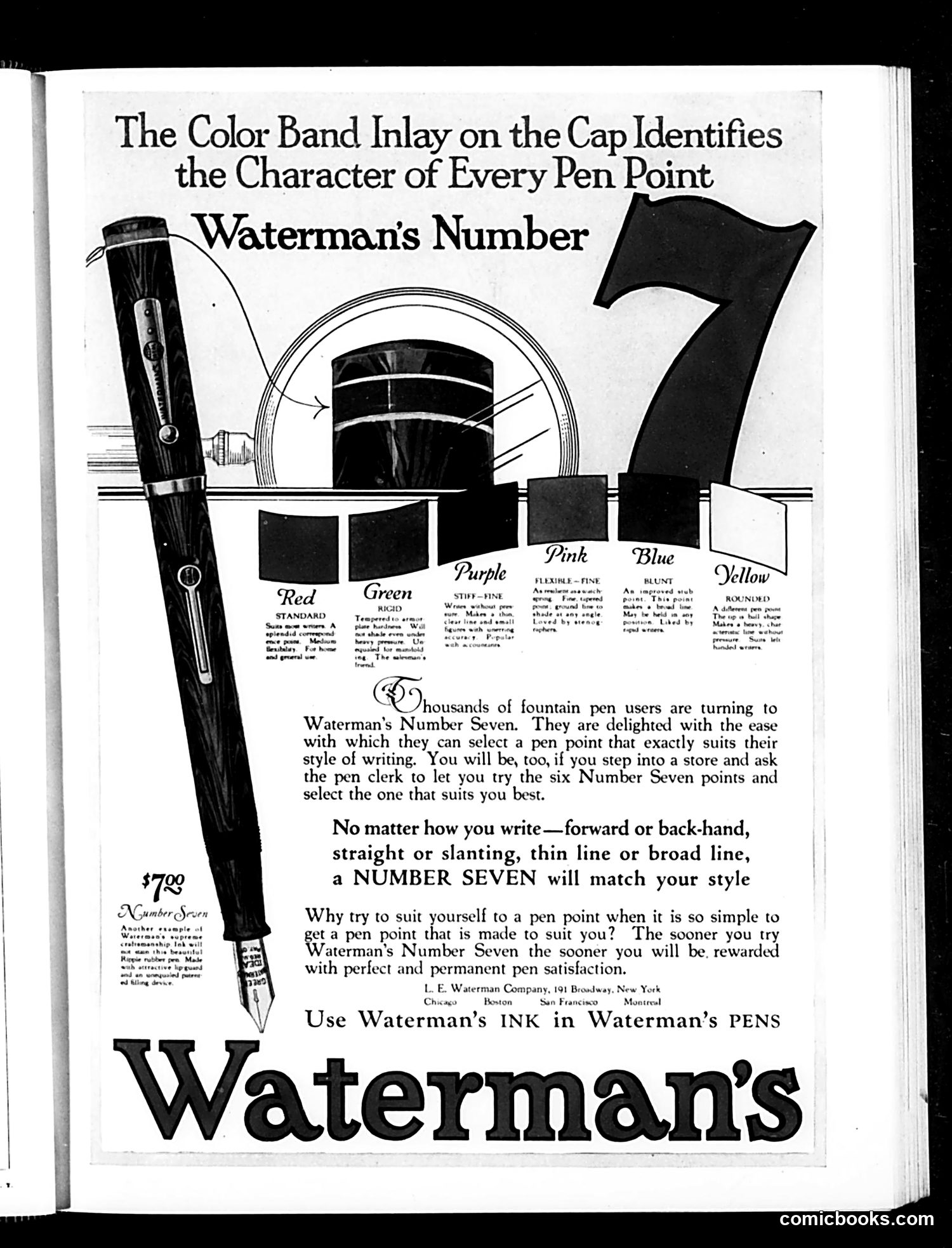
This is a **product advertisement**, not a political cartoon. It promotes Waterman's fountain pens, specifically the "Number Seven" model. The page emphasizes that Waterman pens come with **six interchangeable pen points** (identified by colored bands on the cap: Red, Green, Purple, Pink, Blue, and Yellow), each suited to different writing styles—forward or back-hand, straight or slanted, thin or broad lines. The marketing pitch is consumer-focused: rather than forcing users to adapt their natural writing style to a pen, Waterman allows customers to **select the point that matches their individual handwriting**. This was a selling point emphasizing customization and user convenience. The pen is priced at $7.00 for the Number Seven model. The advertisement ran in *Judge* magazine and includes the company's addresses (New York, Chicago, Boston, San Francisco, Montreal).
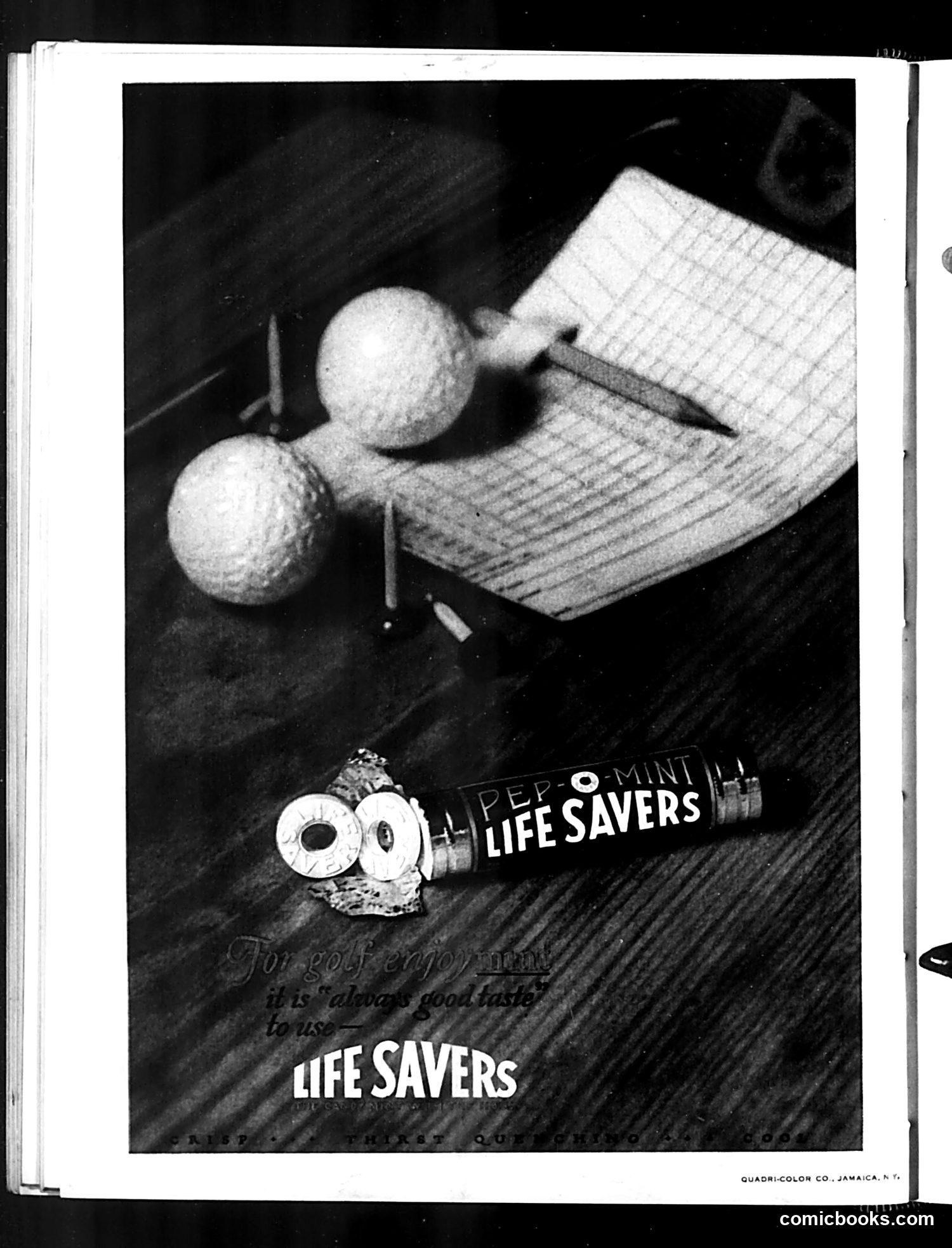
This is a vintage advertisement for Life Savers candy, likely from the early-to-mid 20th century. The image shows two Life Savers mints positioned next to a notepad and pencil, staged as a still-life composition. The product's distinctive ring shape and the "Pep-O-Mint" flavor variant are clearly visible. The tagline reads "For golf enjoy it—it's always good taste to us," suggesting Life Savers were marketed as a refreshment for golfers and active people. The advertisement plays on the product name itself—positioning the candies as "life savers" that provide enjoyment and good taste during recreational activities. This appears to be a professional product photograph rather than a political cartoon, representing Judge magazine's advertising content from this era.