
A complete issue · 36 pages · 1924
Judge — November 8, 1924
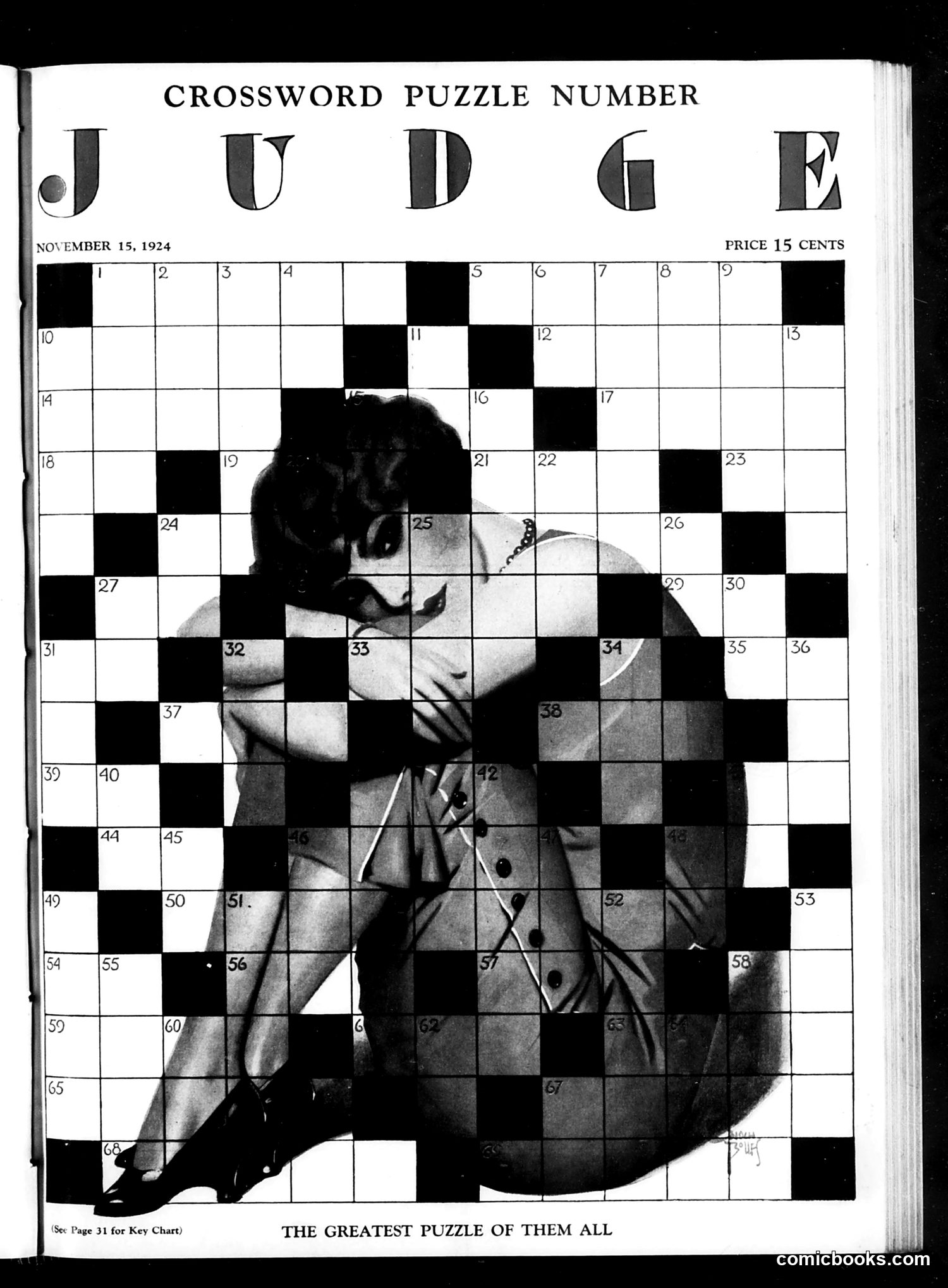
This is a crossword puzzle page from Judge magazine dated November 15, 1924. The page features "The Greatest Puzzle of Them All" — a visual/photographic crossword puzzle rather than a traditional word puzzle. A photograph of a woman is integrated into the grid, with her body positioned across the numbered squares. This was an innovative visual gag combining two popular 1920s entertainments: crossword puzzles (which were a craze at the time) and pin-up style photography. The satire appears to target the era's obsession with crossword puzzles as a fad, playfully suggesting that solving puzzles involving attractive women represented "the greatest puzzle" — likely a commentary on the period's fascination with both intellectual diversions and popular entertainment. The humor relies on visual wit rather than political commentary.
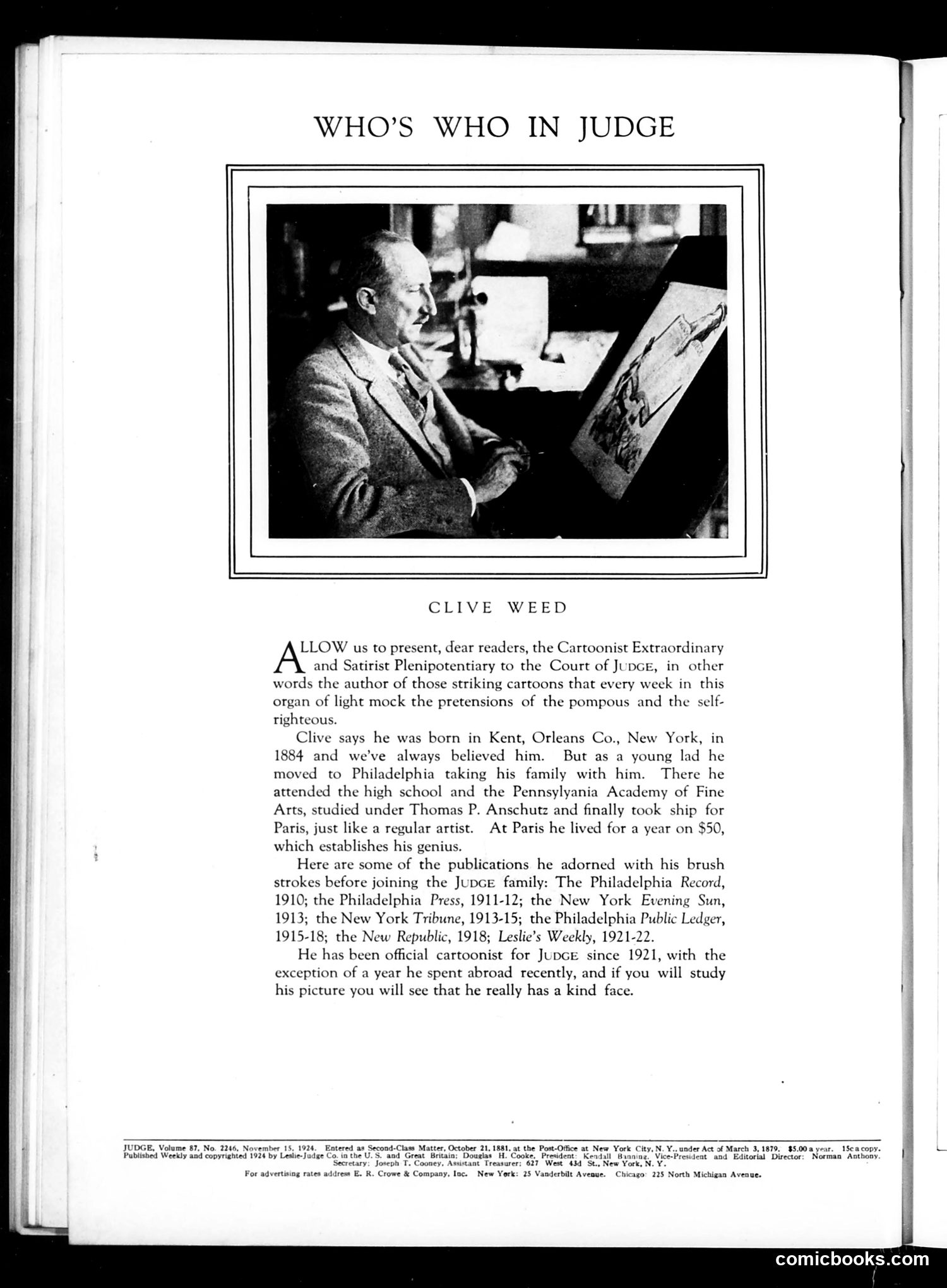
This page introduces **Clive Weed**, Judge magazine's official cartoonist since 1921. The photograph shows him examining artwork at his desk, illustrating his professional practice. The text establishes Weed's credentials: born in Kent, Orleans County, New York (1884), he studied under Thomas P. Anschutz and lived briefly in Paris. His cartooning work appeared in major publications including the Philadelphia Record, New York Evening Sun, New York Tribune, and Leslie's Weekly before joining Judge. The piece celebrates Weed as "Cartoonist Extraordinary," crediting him with weekly satirical cartoons mocking "the pretensions of the pompous and the self-righteous"—Judge's editorial mission. The profile reinforces Weed's legitimacy as the magazine's primary visual satirist.
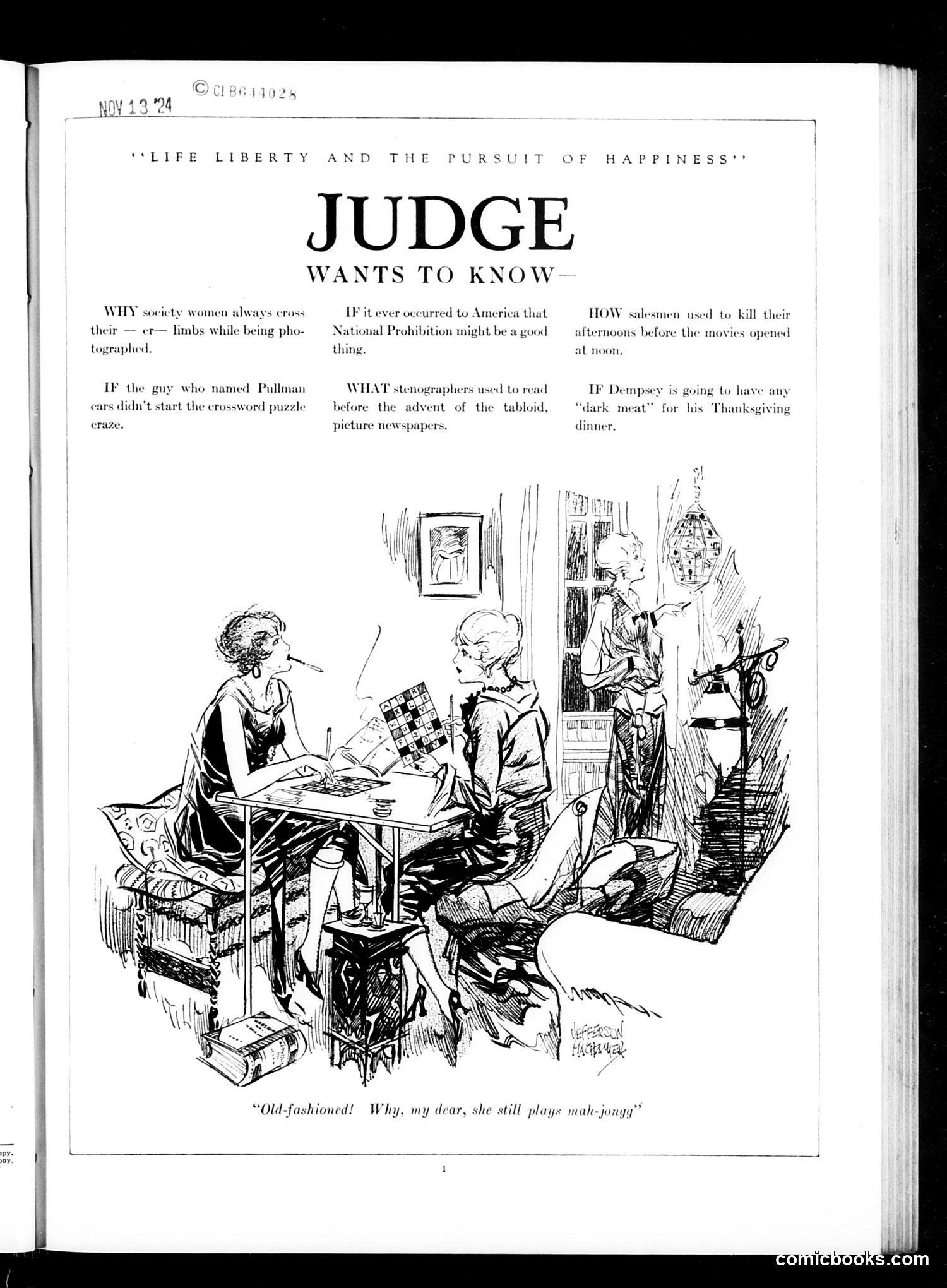
This page from *Judge* magazine presents satirical observations framed as "What the Judge Wants to Know"—rhetorical questions poking fun at contemporary society and current events. The main illustration depicts women playing mahjong, with the caption "Old-fashioned! Why, my dear, she still plays mah-jongg." This mocks outdated leisure habits among society women. The accompanying text references: - **Society women being photographed** while crossing streets - **National Prohibition** as a potential "good thing" - **Pullman cars and crossword puzzles** (early 1920s crazes) - **Stenographers and tabloid newspapers** (emerging media) - **Dempsey's Thanksgiving dinner** (likely Jack Dempsey, famous boxer) - **Salesmen and movie theaters** (changing business/entertainment patterns) The overall satirical point mocks the rapid social changes and frivolous concerns of modern leisure culture during the Jazz Age.
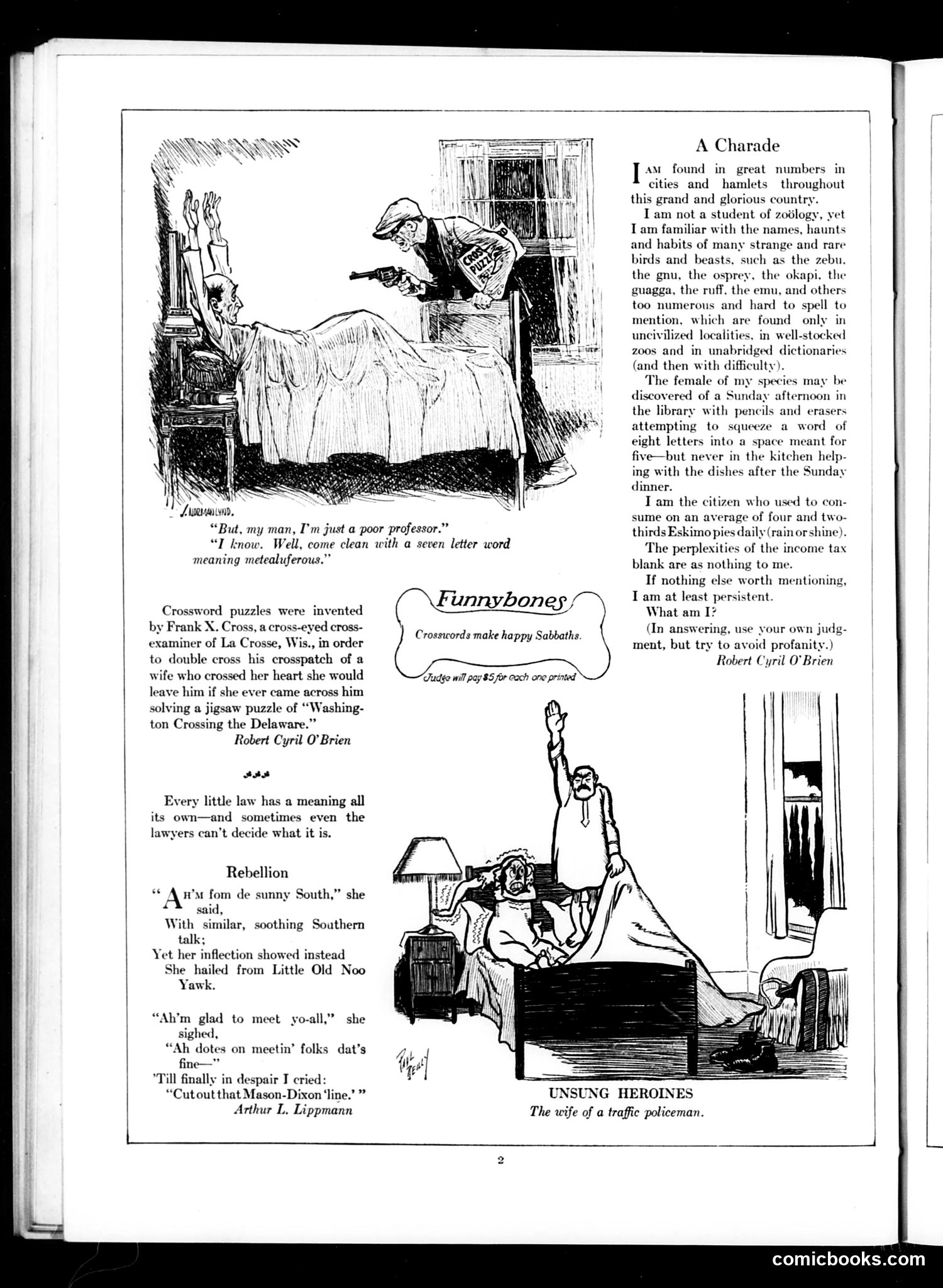
This page contains literary humor and social commentary rather than political cartoons. **"A Charade"** is a character sketch describing an eccentric person familiar with exotic animals (zebu, gnu, okapi, guagga) found only in zoos and unabridged dictionaries. The humor lies in depicting someone so obsessively learned yet socially awkward they'd attempt crossword puzzles in a library rather than help with dishes after Sunday dinner. **"Funnybones"** credits Frank X. Cross for inventing crossword puzzles to resolve a marital dispute. **"Rebellion"** is a poem about a Southern woman whose affected dialect ("Ah'm fom de sunny South") masks her true origins from "Little Old Noo Yawk," satirizing false regional affectations. **"Unsung Heroines"** shows a traffic policeman's wife—likely commenting on overlooked support roles of public servants' spouses. The illustrations are generic domestic scenes supporting these literary pieces.
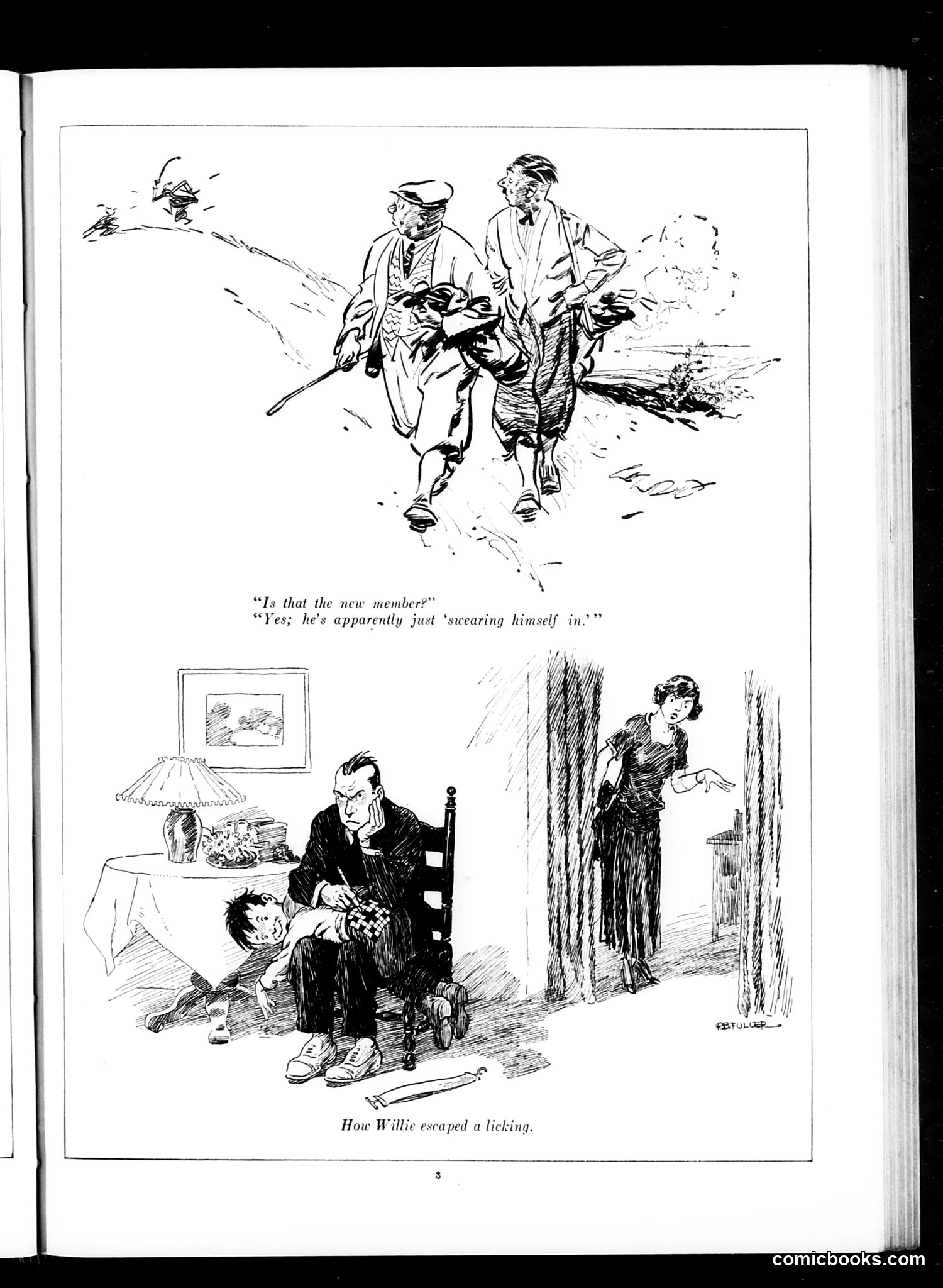
This page contains two cartoon panels from *Judge* magazine satirizing club membership and child discipline. **Top panel:** Two men walk together discussing a "new member" who is "apparently just swearing himself in." The humor lies in the double meaning—the newcomer is literally taking an oath of membership while also visibly cursing (indicated by his animated gestures), suggesting he's an ill-mannered or unsuitable addition to the club. **Bottom panel:** Titled "How Willie escaped a licking," it shows a man about to discipline a young boy, interrupted by a woman entering. The satire mocks parental discipline avoidance—the child averts punishment through the convenient timing of a visitor's arrival, a common domestic scenario the cartoonist finds humorous and perhaps critiques as poor parenting.
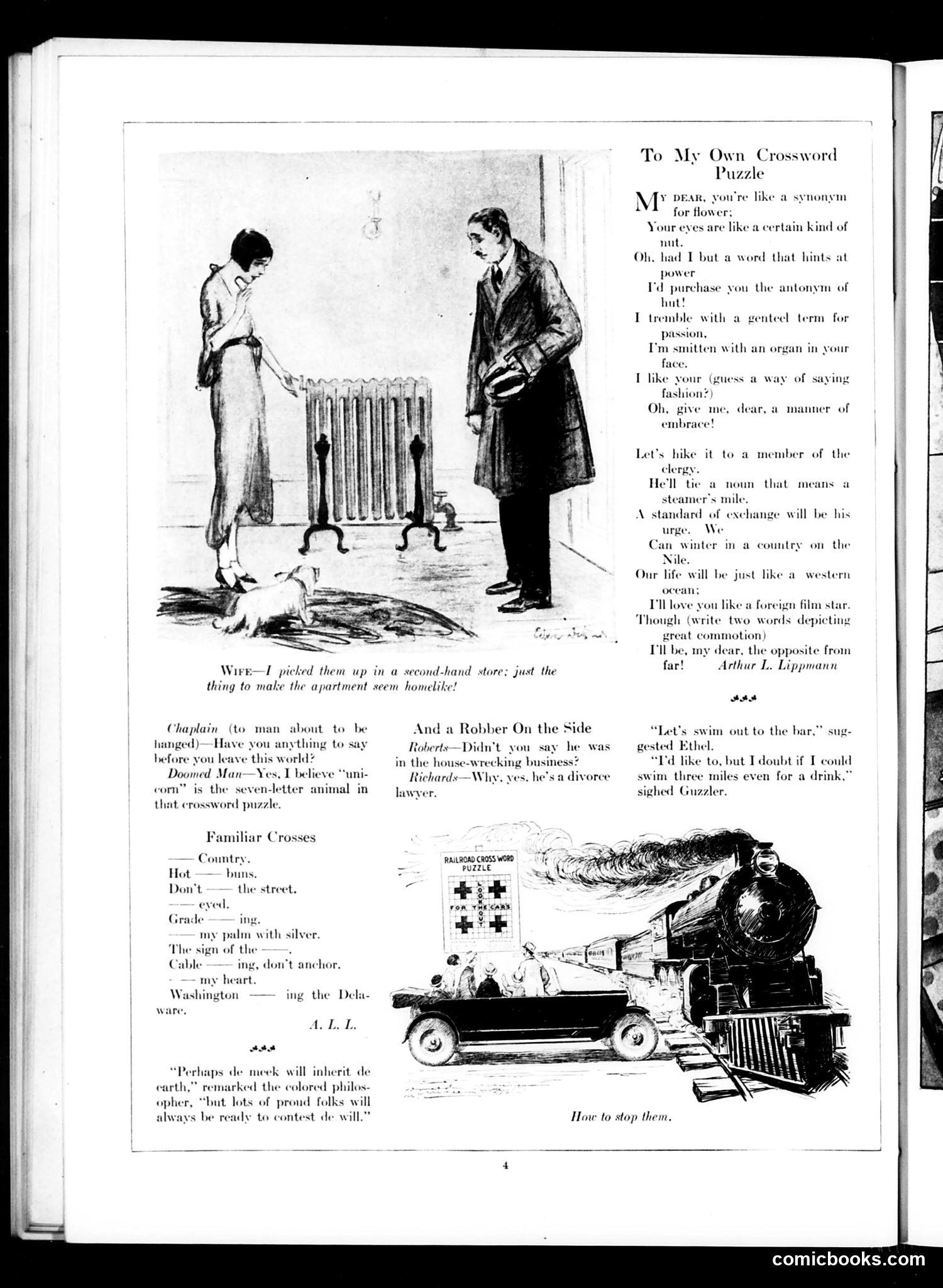
This page contains humor and light satirical content rather than political commentary: **Top cartoon**: Shows a couple examining a radiator they've purchased secondhand. The wife jokes it will help their apartment "seem homelic" (cozy)—a gentle satire on newlyweds furnishing modest homes on tight budgets during what appears to be the early 20th century. **"To My Own Crossword Puzzle"**: A humorous poem using crossword clue format to flirt with someone, playing on the 1920s crossword puzzle craze. **Bottom cartoon**: Titled "How to stop them," depicts a car and train in collision—likely commentary on dangerous railroad crossings, a genuine public safety concern of the era. The page reflects genteel domestic humor and leisure activities (crosswords) typical of Judge's middle-class audience.
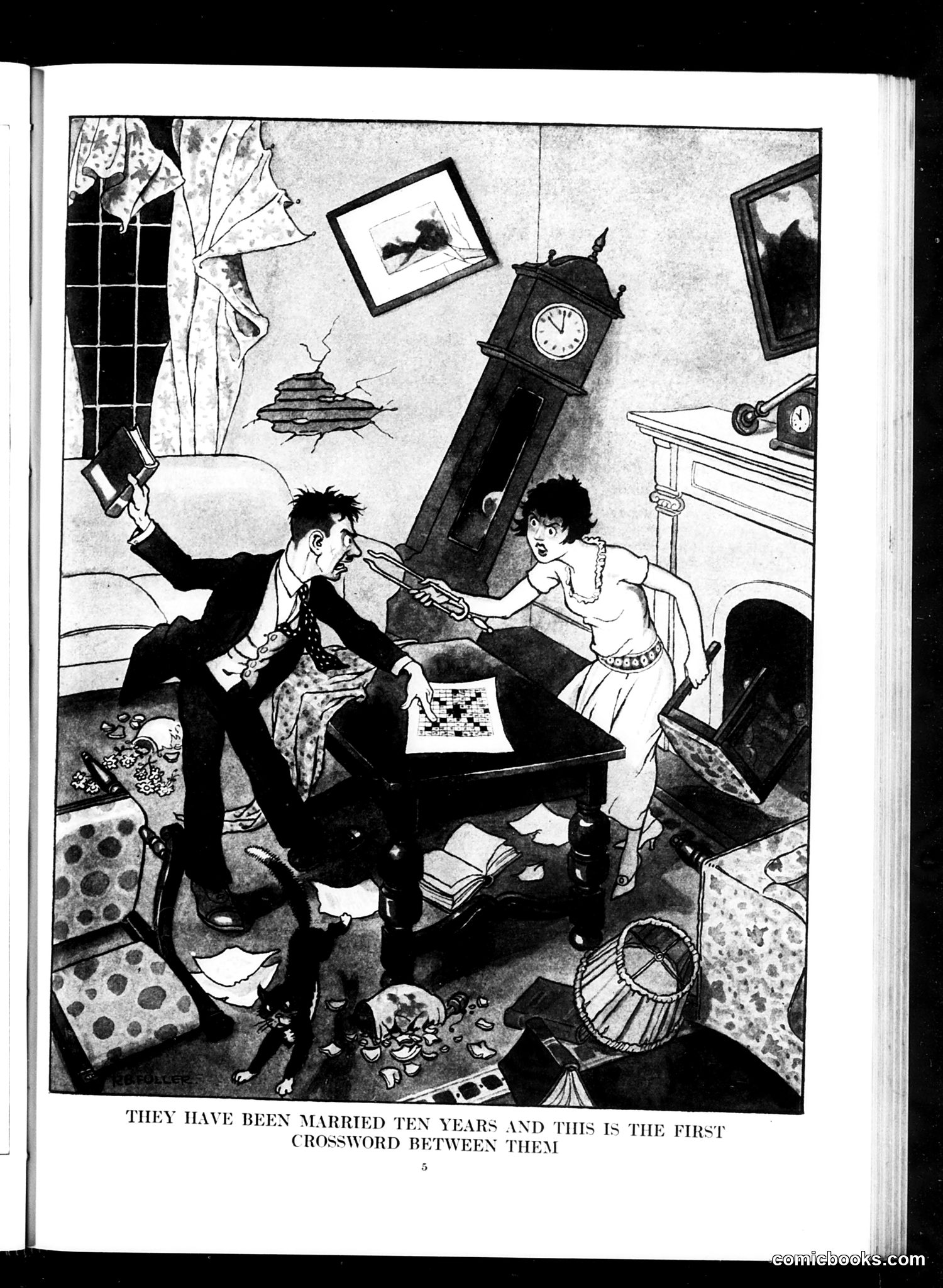
This cartoon illustrates a domestic humor joke from Judge magazine. The caption reads: "They have been married ten years and this is the first crossword between them." The image shows a married couple in their living room engaged in a crossword puzzle together. The satire concerns marital communication and shared activities—after a decade of marriage, they've finally done something collaborative. The humor is bittersweet: it suggests that long-married couples often lack common interests or intellectual engagement with each other, making this puzzle activity noteworthy enough to caption. The chaotic room (scattered items, clock, plants, furniture) emphasizes domestic disorder, possibly implying the couple's disconnection extends to household management. This is gentle social satire about marriage's tendency toward isolation between spouses, using the then-popular crossword puzzle as the focal point.
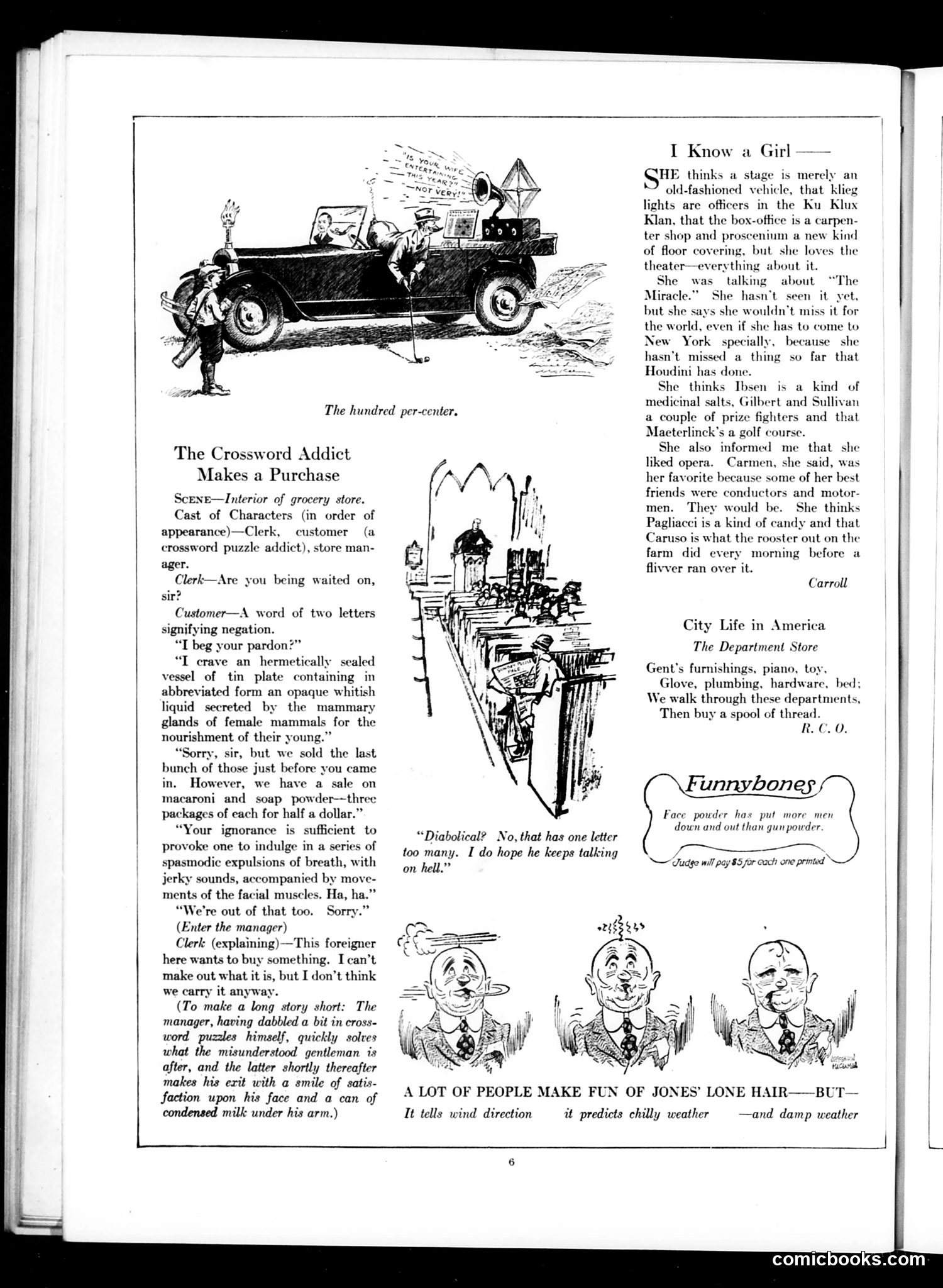
This page satirizes early 20th-century American culture through several pieces: **"The Crossword Addict Makes a Purchase"** mocks the crossword puzzle craze by showing an obsessed customer who speaks entirely in elaborate crossword-style definitions ("A word of two letters signifying negation" = "no"). The joke is that his pedantic, roundabout language—meant to sound intellectual—actually prevents basic communication in a grocery store. The clerk can't understand he wants condensed milk. Only the manager, having "dabbled" in crosswords himself, decodes his speech. The satire targets how the puzzle fad encouraged pretentious, unnecessarily complex language among otherwise ordinary people. **"I Know a Girl"** ridicules a young woman's profound ignorance of culture and theater despite her enthusiasm. She confuses theatrical terms, mistakes famous composers and playwrights for unrelated things (Ibsen = medicinal salts; Maeterlinck = golf course), yet claims to love theater and opera. The humor derives from her pretense of cultural sophistication masking complete incomprehension—a commentary on aspiration without actual knowledge. Both pieces share a theme: Americans adopting intellectual or cultured personas while remaining fundamentally clueless.
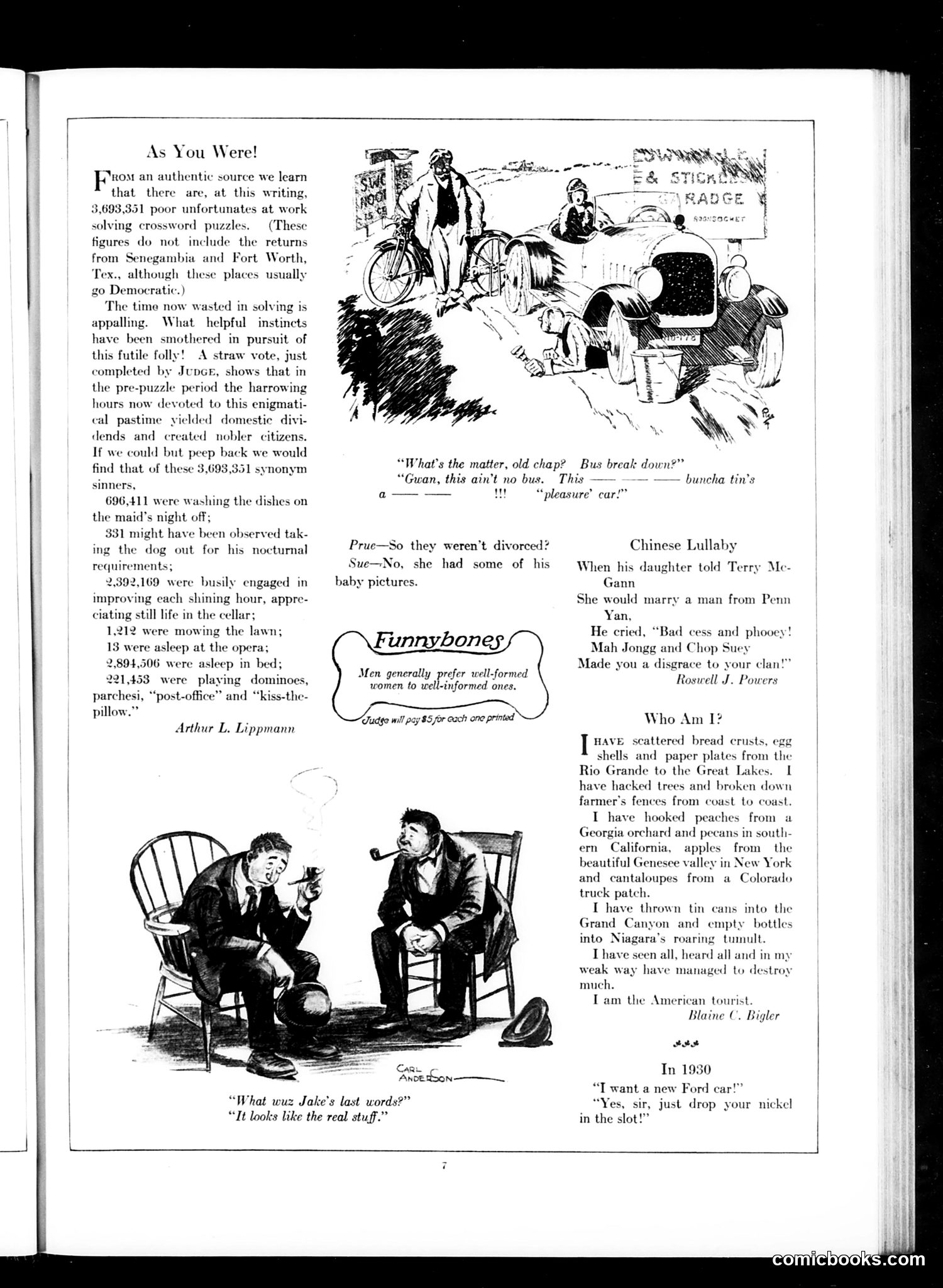
This satirical page mocks the American obsession with crossword puzzles, a craze of the 1920s-30s. The lead article by Arthur L. Lippmann claims 3.6 million people waste time solving puzzles instead of productive activities—washing dishes, walking dogs, or mowing lawns. The satire suggests this fad has replaced genuine civic engagement and family responsibility. The cartoons support this theme: one shows people abandoning vehicles for puzzle-solving; another depicts two men discussing someone's "last words" being "real stuff"—likely cocaine or alcohol, implying crossword addiction rivals substance abuse. The "Funnybones" section, various jokes, and pieces like "Who Am I?" (the American tourist) and the Ford car joke provide lighter humor about contemporary life—divorce, dating, and consumer culture. The overall message: modern Americans prioritize trivial amusements over genuine living and citizenship. A pointed critique of 1920s-30s leisure culture and its social costs.
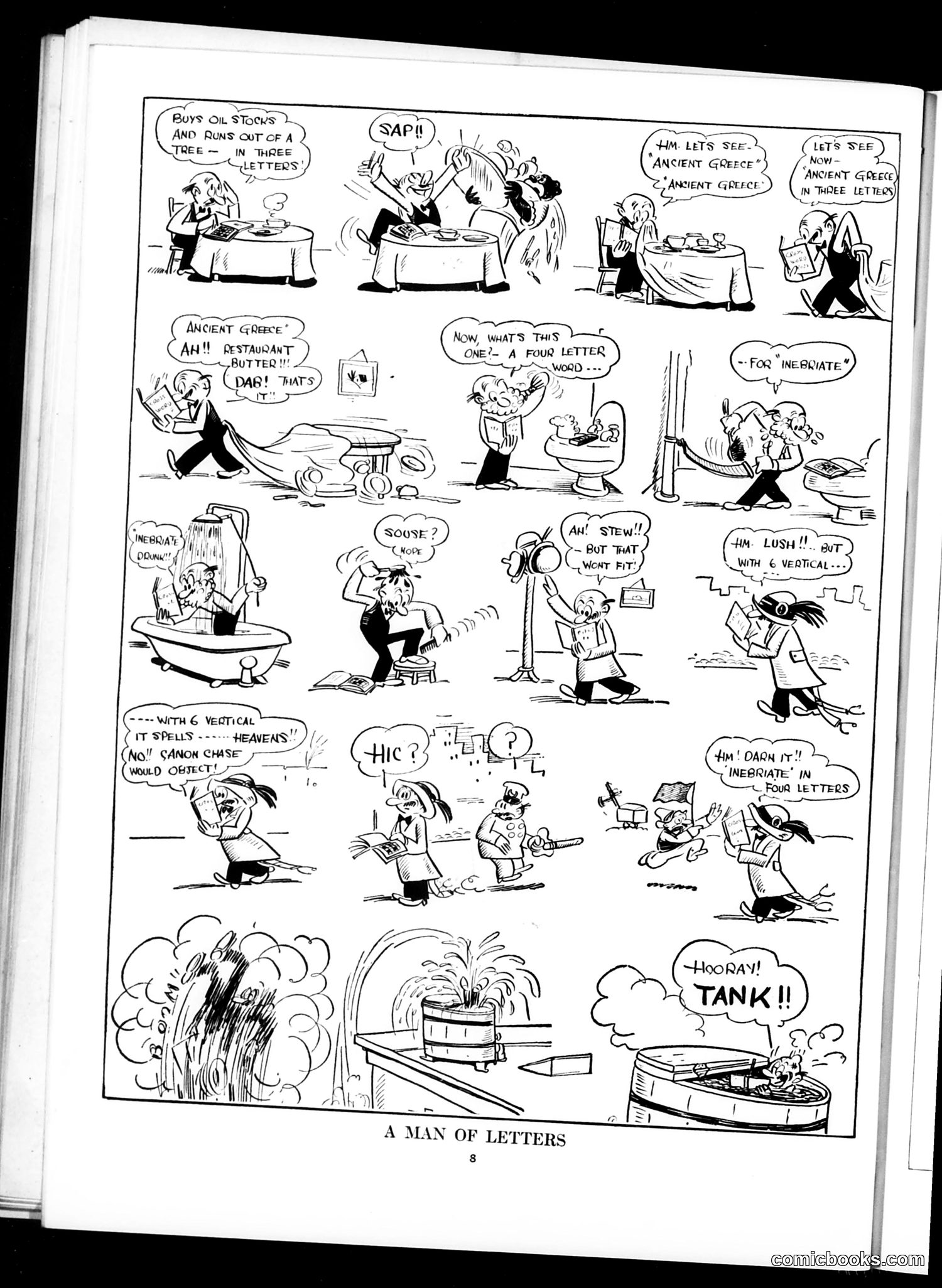
This comic satirizes someone (identity unclear from the image alone) who uses stock-market investment advice involving acronyms and abbreviations. The joke revolves around misunderstandings of four-letter word abbreviations: - "OIL STOCKS AND FRUIT TREE" becomes "SAP" - "ANCIENT GREECE" is abbreviated as requested - "WOOD" is misread as an inappropriate word - "INEBRIATE" (drunk) spelled vertically creates "HEAVENS" - Final acronym appears to be "DARN IT" The punchline culminates in someone literally becoming a "TANK" — apparently following this confusing investment advice leads to financial ruin. The humor targets both the "advisor" and investors gullible enough to follow such nonsensical guidance.
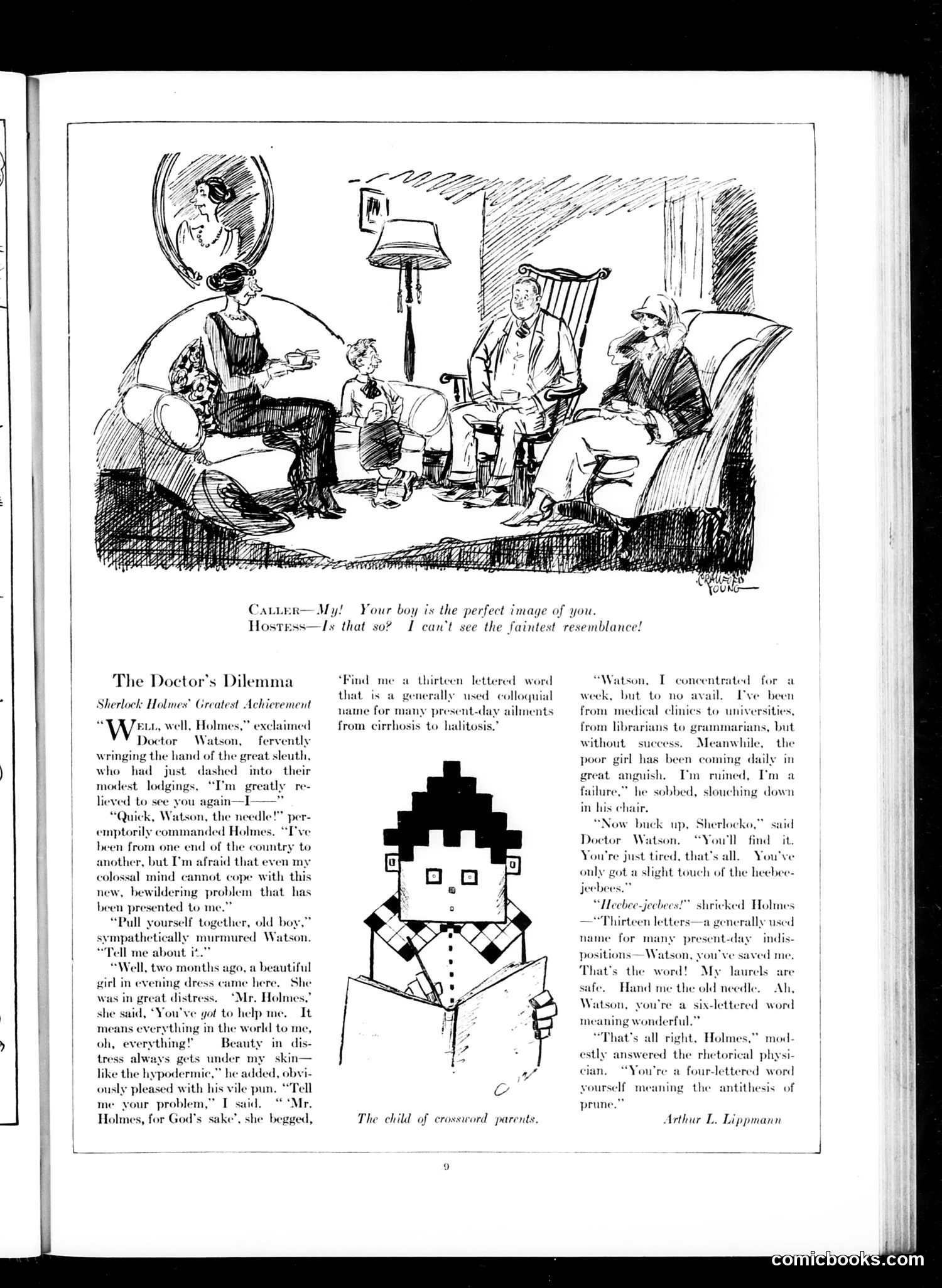
This is a Sherlock Holmes parody by Arthur L. Lippmann mocking the 1920s crossword puzzle craze. Holmes, depicted as unable to solve an actual mystery, is reduced to begging Watson's help with a crossword clue: a thirteen-letter colloquial word for various ailments. The joke satirizes how crossword puzzles had become so culturally dominant that even the world's greatest fictional detective is stumped by one—inverting his legendary deductive powers. The "child of crossword parents" illustration reinforces the cultural obsession with the new puzzle form. The cartoon's top panel shows a social gathering where a caller compliments a hostess's son, only to be told she sees no resemblance—a separate, unrelated domestic humor gag typical of Judge's format. Together, these pieces gently mock both the crossword puzzle fad's grip on popular culture and the gap between fictional heroics and everyday modern puzzles.
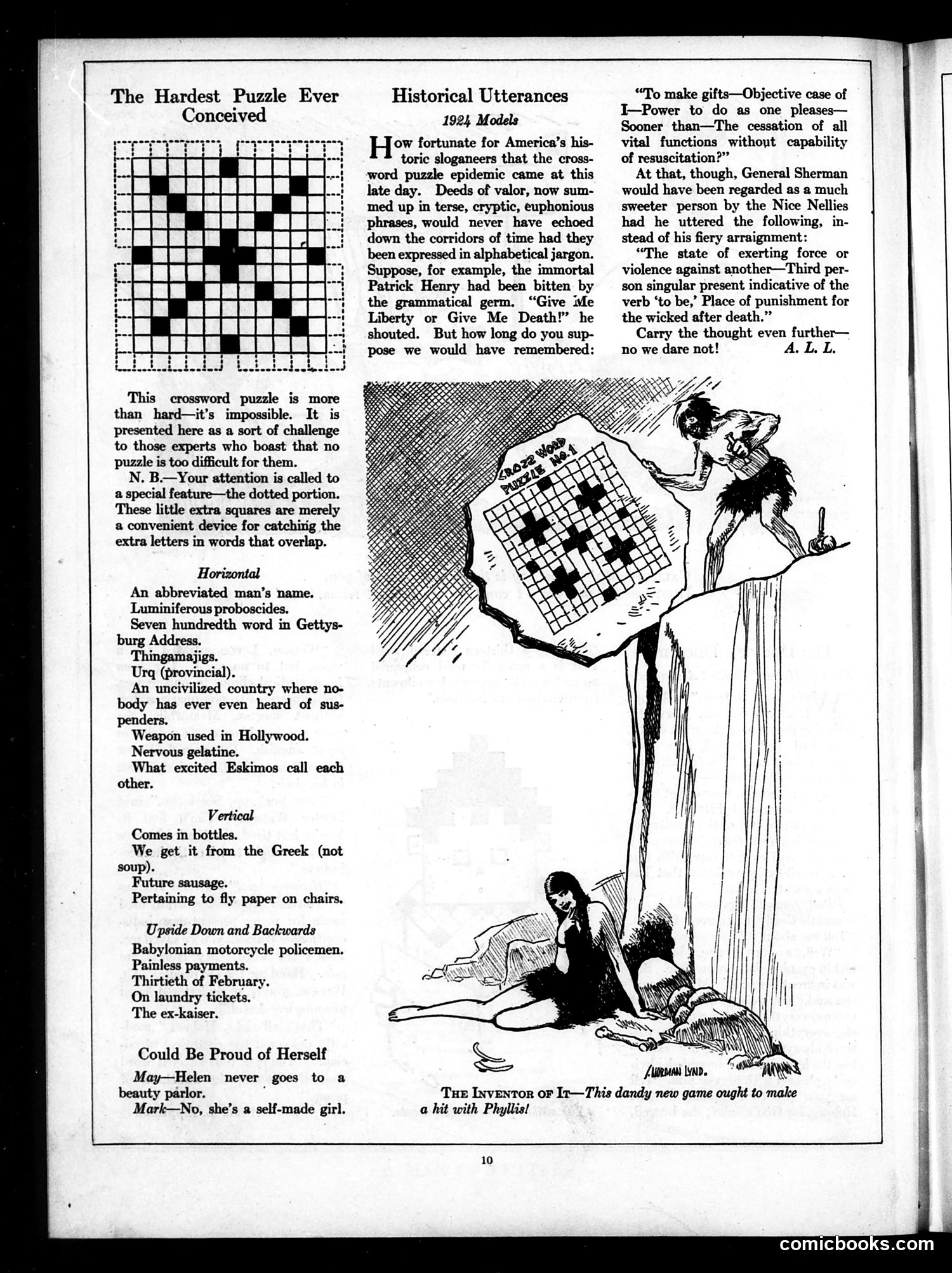
This 1924 Judge magazine page satirizes the crossword puzzle craze sweeping America at the time. The top section presents an intentionally unsolvable puzzle as a humorous challenge to puzzle enthusiasts who claim no puzzle defeats them. The main satire appears in "Historical Utterances," which imagines how famous American historical quotes would sound if expressed as crossword puzzle clues instead of eloquent speeches. Patrick Henry's "Give me liberty or give me death!" becomes absurdly convoluted puzzle language. Similarly, General Sherman's fierce Civil War statement is reimagined as clinical, grammatical definitions—the satire being that expressing these stirring historical moments through crossword puzzle mechanics drains them entirely of their power and emotion. The bottom cartoon depicts a woman showing the puzzle game to "Phyllis," suggesting crosswords were marketed as entertainment for women specifically. The satire mocks both the obsessive nature of the puzzle craze and how over-intellectualizing language destroys meaning and passion.
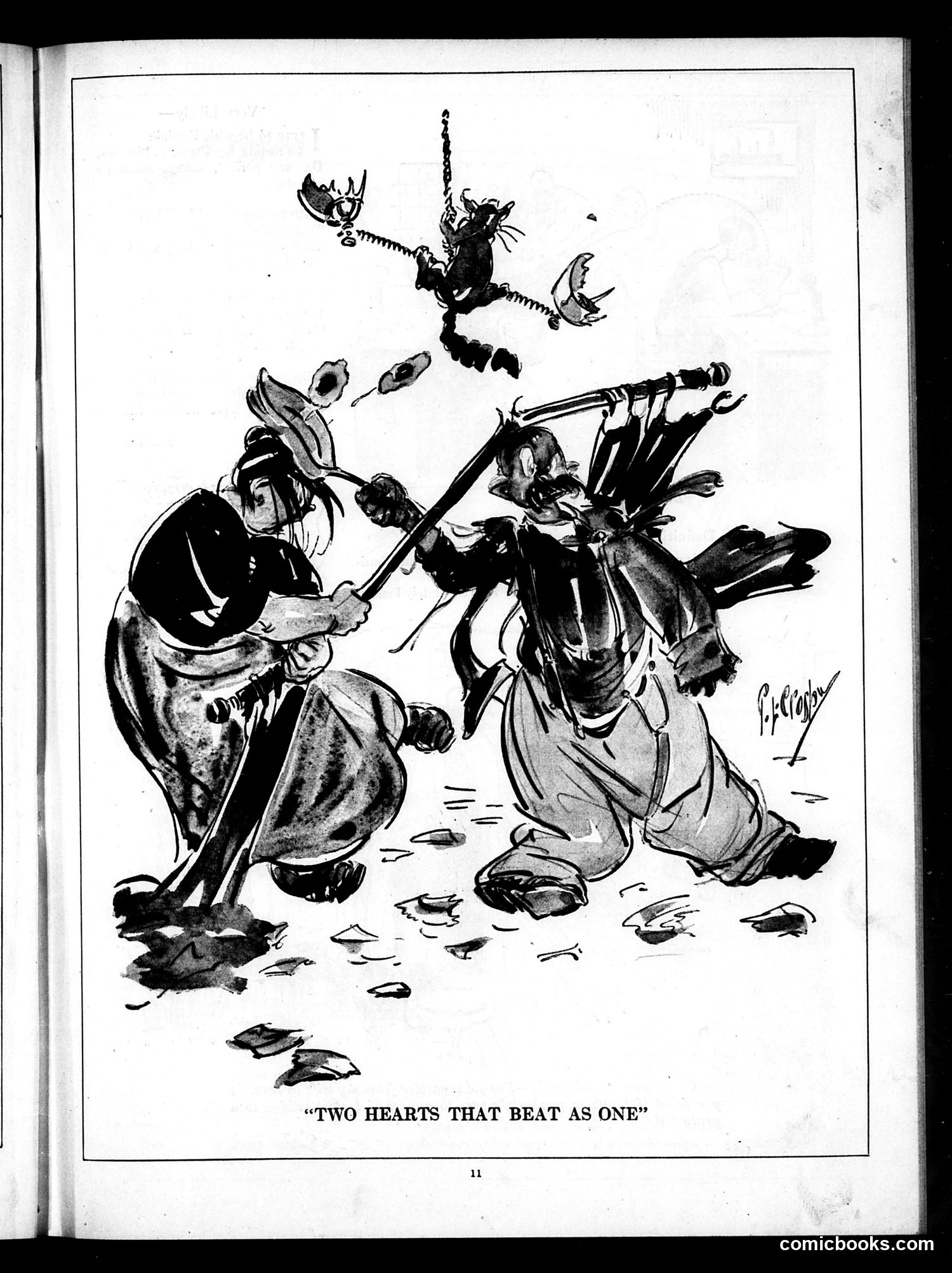
This cartoon depicts two figures in what appears to be a romantic or intimate moment, with the caption "Two Hearts That Beat as One"—a sentimental phrase typically associated with love or marriage. However, the satirical point lies in the visual details: the figures are wielding weapons (a sword/staff and what appears to be a telescope or gun), surrounded by scattered debris or ammunition. This suggests the cartoon is satirizing romantic relationships as inherently combative or destructive, presenting a cynical view of love and partnership as conflict masked by sentimental language. The style and context suggest this is likely social satire from Judge magazine, though without additional context or visible dates, the specific historical or political reference remains unclear. The humor derives from the ironic contrast between romantic idealization and the reality of domestic or relationship conflict.
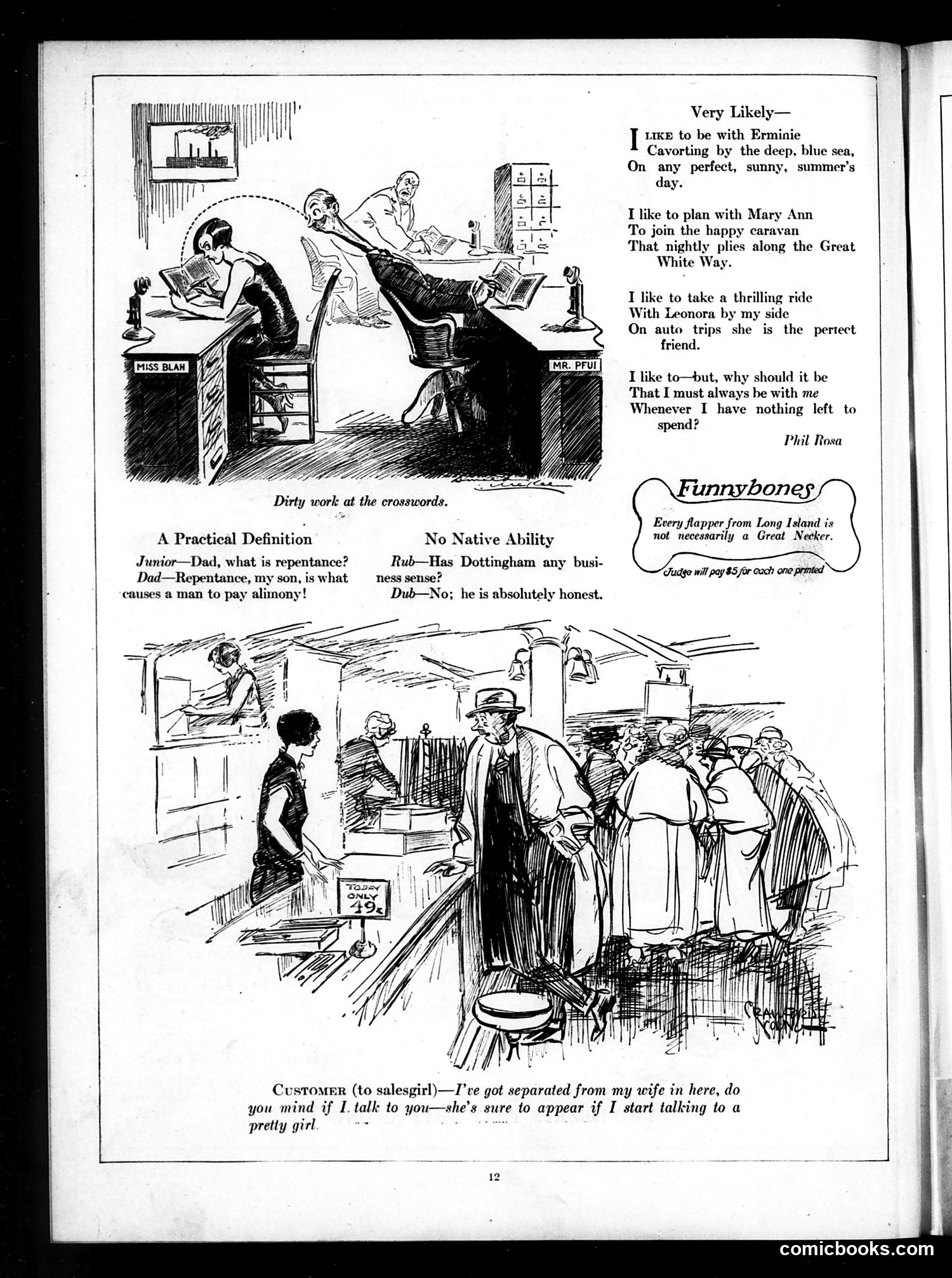
This Judge magazine page contains three separate humor pieces satirizing early 20th-century American life: **"Dirty work at the crosswords"** shows office workers struggling with a crossword puzzle—satirizing the newly popular puzzle craze. **"A Practical Definition"** and **"No Native Ability"** are brief jokes about alimony (husbands' divorce payments to ex-wives) and conflating honesty with business incompetence—reflecting contemporary anxieties about marriage, divorce, and capitalism. **"Very Likely"** by Phil Rosa mocks a wealthy bachelor who enjoys socializing with various women but realizes he can only afford companions when he has money to spend—satirizing the commercialization of romance and dating. **The market scene cartoon** depicts a jealous husband warning a salesgirl not to talk to him lest his wife appear—joking about marital suspicion and control. The **"Funnybones"** item mocks Long Island flappers (young women) as poor kissers, reflecting Jazz Age stereotypes and anxieties about modern women's behavior.
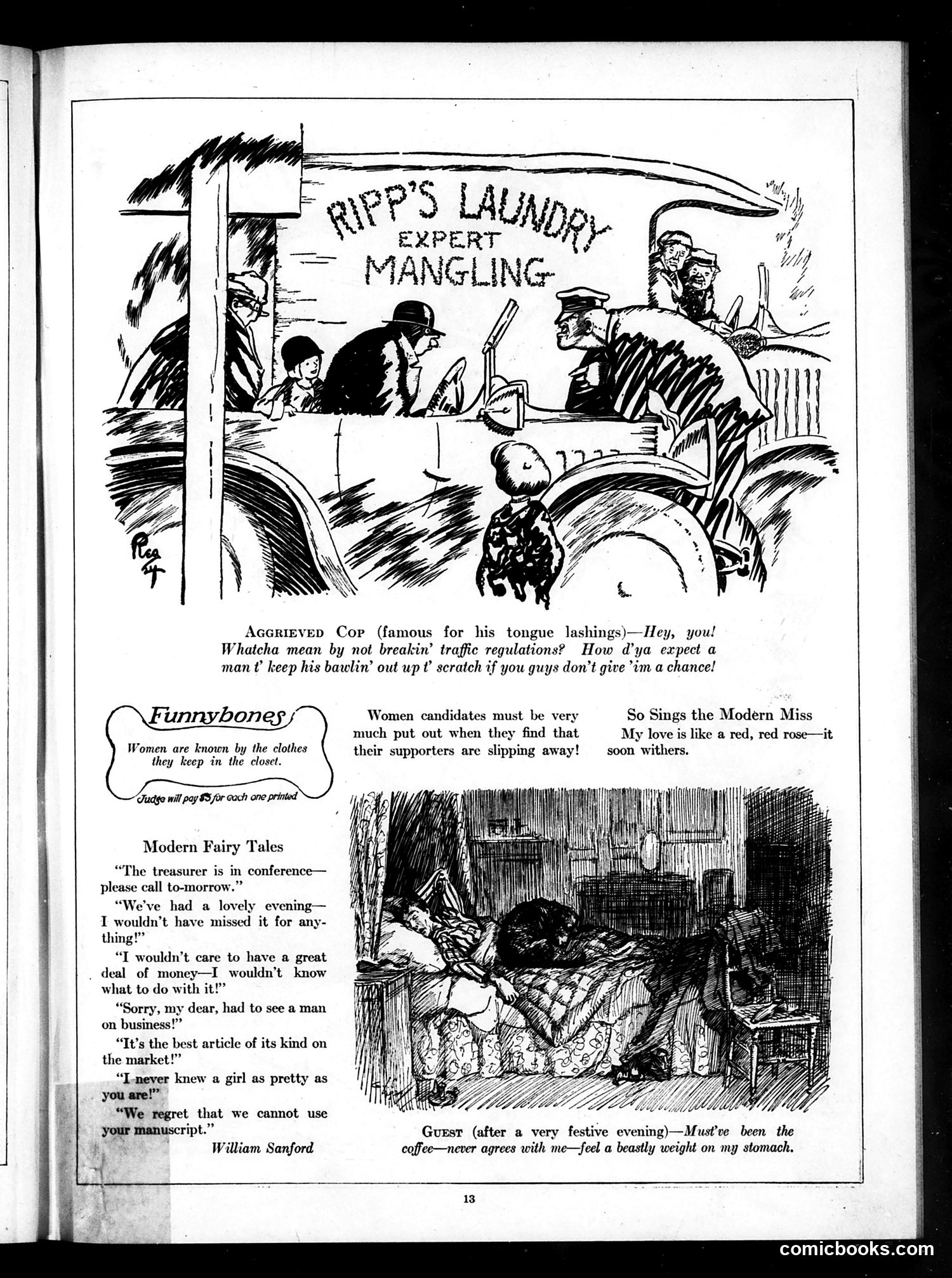
This page combines three distinct satirical pieces: **Top cartoon**: A cop complains that traffic violators aren't breaking regulations, so he can't practice his famous verbal tirades. The satire targets corrupt police who abuse their authority—here, the cop's real job is yelling at citizens rather than enforcing laws. **"Funnybones" quip**: A light joke about judging women by their wardrobes. **"Modern Fairy Tales"**: A series of absurd statements presented as common lies—executives unavailable, guests insisting they enjoyed boring events, people claiming indifference to money, men prioritizing business meetings. These mock social pretense and dishonesty in everyday interactions. **"So Sings the Modern Miss"**: A brief poem mocking romantic sentimentality—love compared to a withering rose. **Bottom cartoon**: A guest blames coffee for his indigestion after overindulging at a party, humorously deflecting responsibility for his own excess. The page's overall theme: modern hypocrisy and the gap between what people say and what they mean.
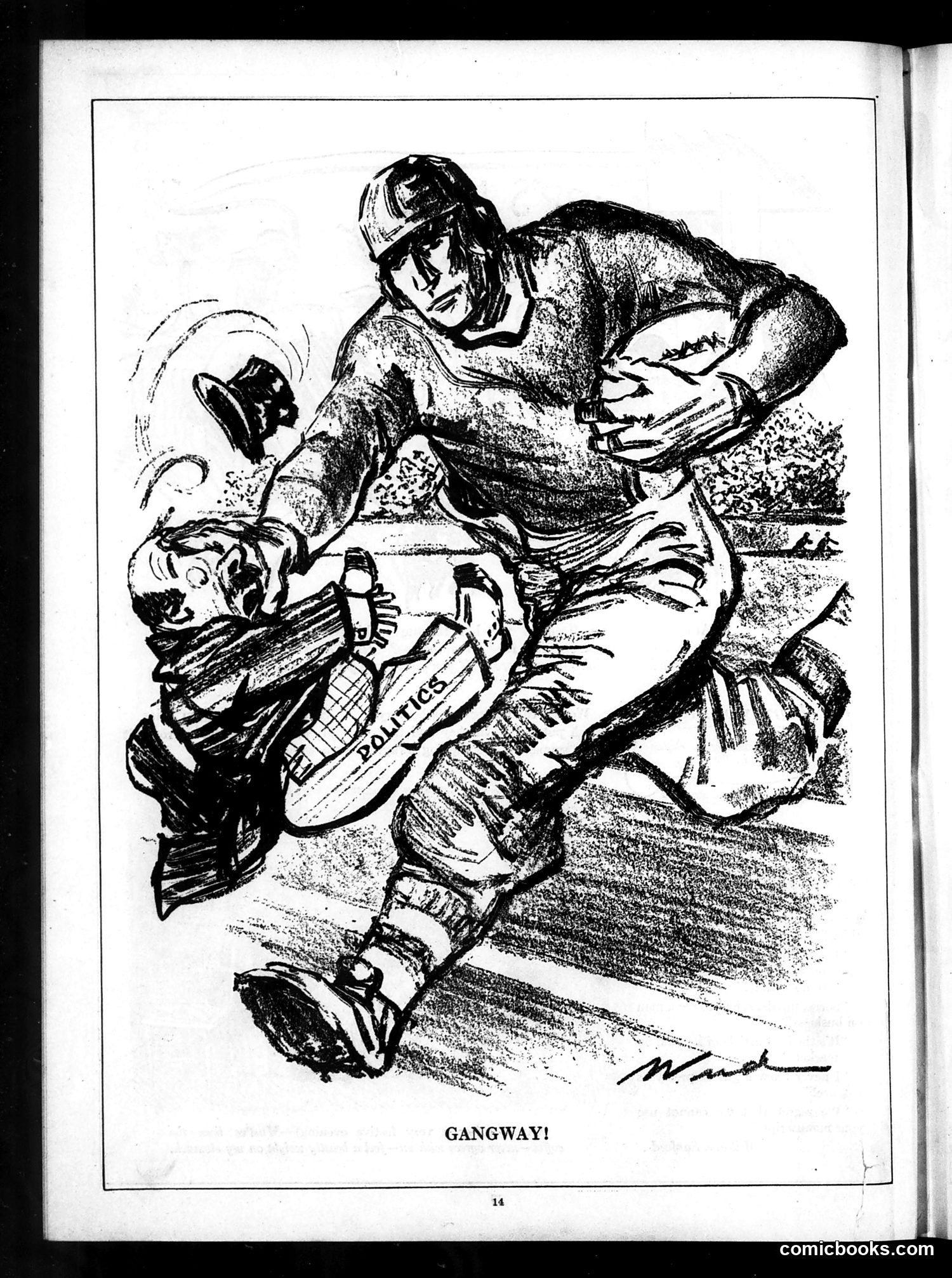
This political cartoon depicts a figure in football gear aggressively charging forward, labeled "POLITICS" on his uniform. He's barreling through obstacles, seemingly trampling or pushing aside smaller figures in his path. The satire critiques how politics operates as a brutal, aggressive force that steamrolls over individuals or opposition. The football metaphor suggests political maneuvering is a contact sport where brute force dominates strategy. The "gangway" demand reinforces the idea that political power demands people clear a path, regardless of consequences. The artist's signature appears to read "Mack" (visible lower right). Without a specific date or publication context, the exact political event referenced remains unclear, though the cartoon generalizes political aggression as a recurring phenomenon.
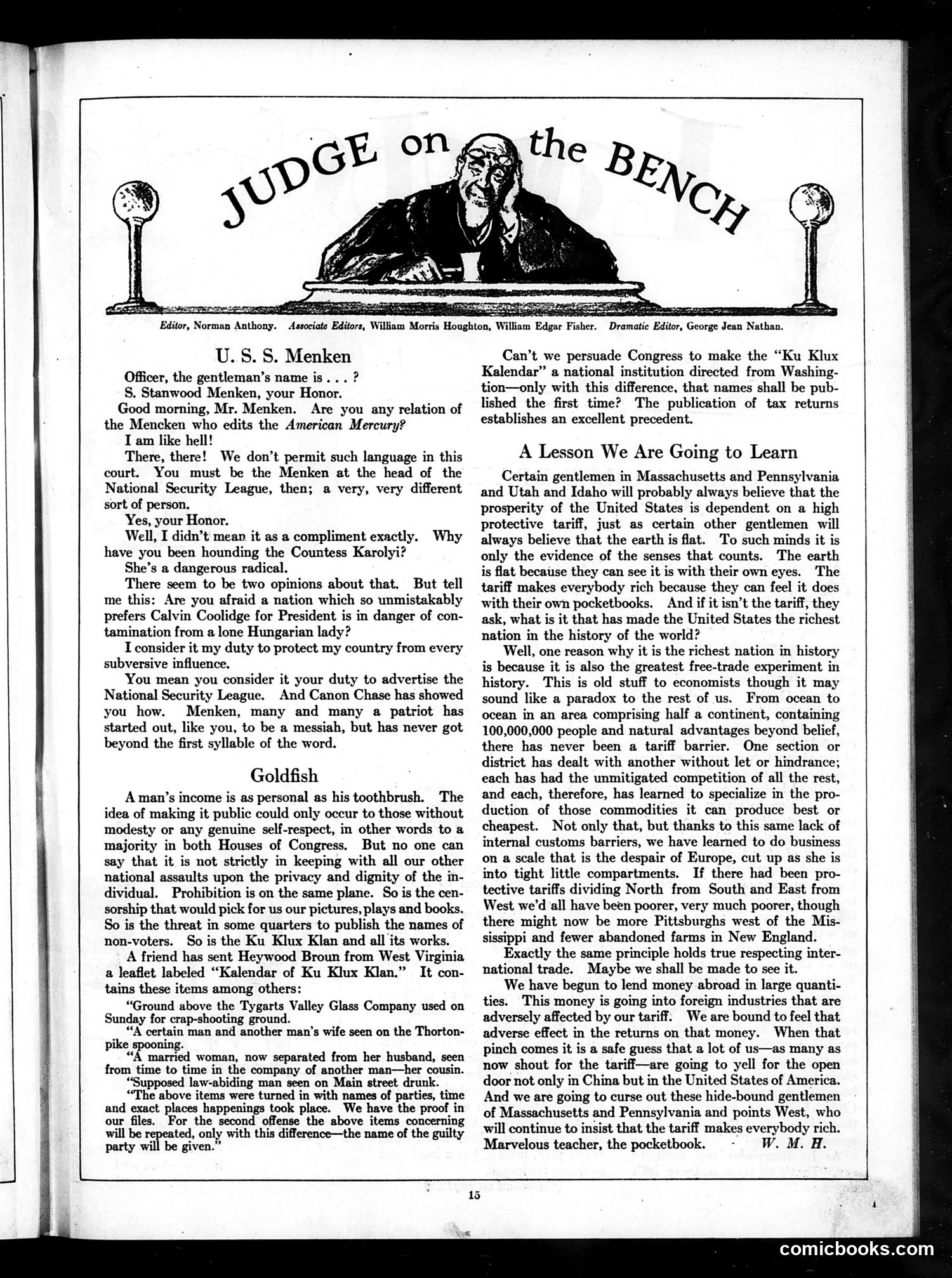
This satirical page features two distinct pieces mocking American institutions and politics circa the 1920s. **"U.S.S. Menken"** depicts a courtroom scene where a judge questions S. Stanwood Menken (likely a real activist) about his role in the National Security League and his harassment of Countess Karolyi, described as "a dangerous radical." The joke targets zealous patriotic organizations using anti-radicalism as cover for self-promotion and privacy violations—the judge sardonically notes that Americans who prefer Calvin Coolidge shouldn't fear "contamination" from one Hungarian woman. **"Goldfish"** and **"A Lesson We Are Going to Learn"** critique government surveillance, the Ku Klux Klan's vigilante moral policing (mocking their detailed "Kalendar" of citizens' alleged misdeeds), prohibitionist intrusions, and tariff protectionists. The satire equates these threats to privacy and individual liberty, suggesting America's greatest prosperity stems from *free trade*, not protective tariffs—undermining protectionists' circular reasoning.
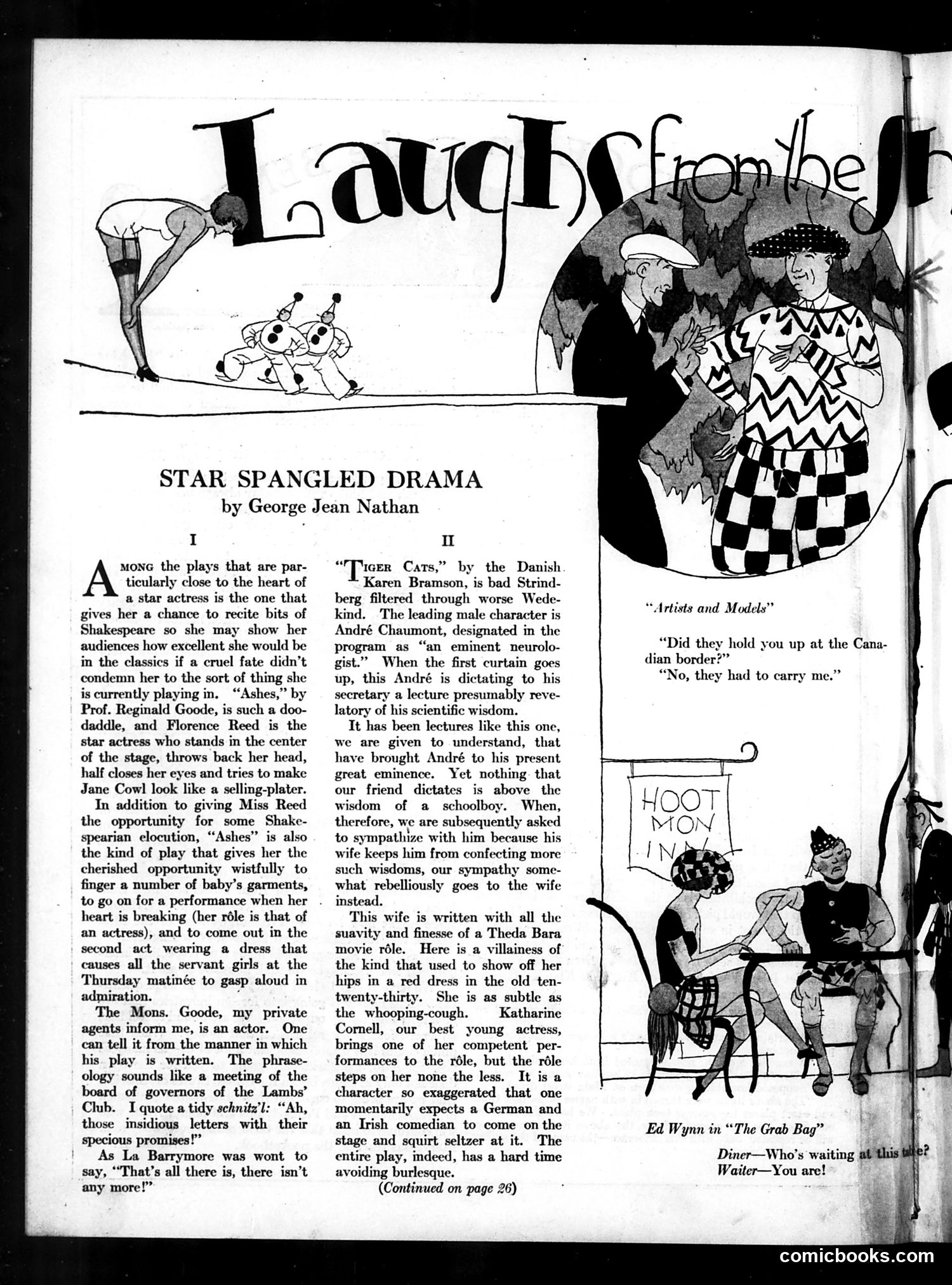
This is a theater review by George Jean Nathan, a prominent drama critic. He's satirizing contemporary Broadway plays and their stars. **"Ashes"**: Nathan mocks the play as pretentious melodrama that allows star Florence Reed to recite Shakespeare snippets and emote unconvincingly, merely to prove she *could* do classical work if circumstances allowed. He dismisses both the play and Reed's performance as self-indulgent vanity. **"Tiger Cats"**: He criticizes this Danish play as derivative bad theater (poor Strindberg/Wedekind imitation). The male lead is a self-important neurologist whose "wisdom" is actually trivial. The female character, played by acclaimed actress Katharine Cornell, is written as a cartoonish villain so exaggerated she belongs in burlesque—not serious drama. **The satire's point**: Nathan skewers both mediocre contemporary playwrights and ambitious actors for using flimsy vehicles to showcase themselves rather than serve good dramatic material. The "Star Spangled Drama" title is ironic—these aren't exemplary American theater. The illustrations appear unrelated to the review content.
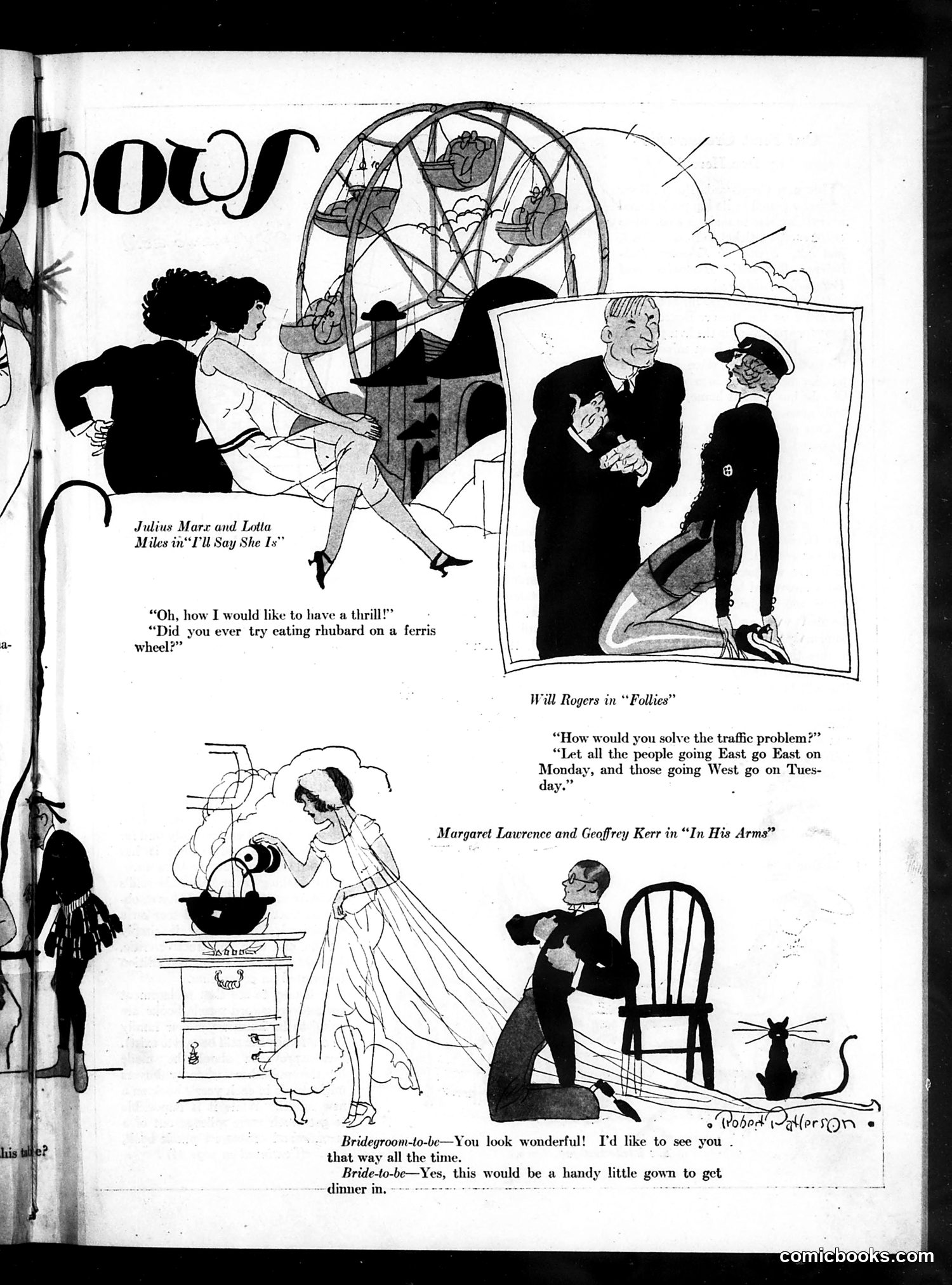
This page collects humorous scenes from contemporary Broadway shows and a comic situation, typical of Judge's entertainment coverage. **Top left:** Julius Marx (likely Groucho Marx, though the text spells it differently) and Lotta Miles appear in "I'll Say She Is," with a joke about eating rhubarb on a ferris wheel—absurdist humor about combining unpleasant experiences. **Top right:** Will Rogers, the famous humorist and actor, offers a satirical "solution" to traffic congestion by segregating directional traffic by day—poking fun at oversimplified policy proposals. **Bottom:** Margaret Lawrence and Geoffrey Kerr in "In His Arms" feature a newlywed couple's exchange. The bride jokes that her formal wedding dress would be "handy" for everyday dinner wear—satirizing impractical bridal fashion and newlywed domestic life. These vignettes represent Judge's approach: mixing theatrical promotion with gentle social satire about modern life, fashion, and public figures' witticisms.
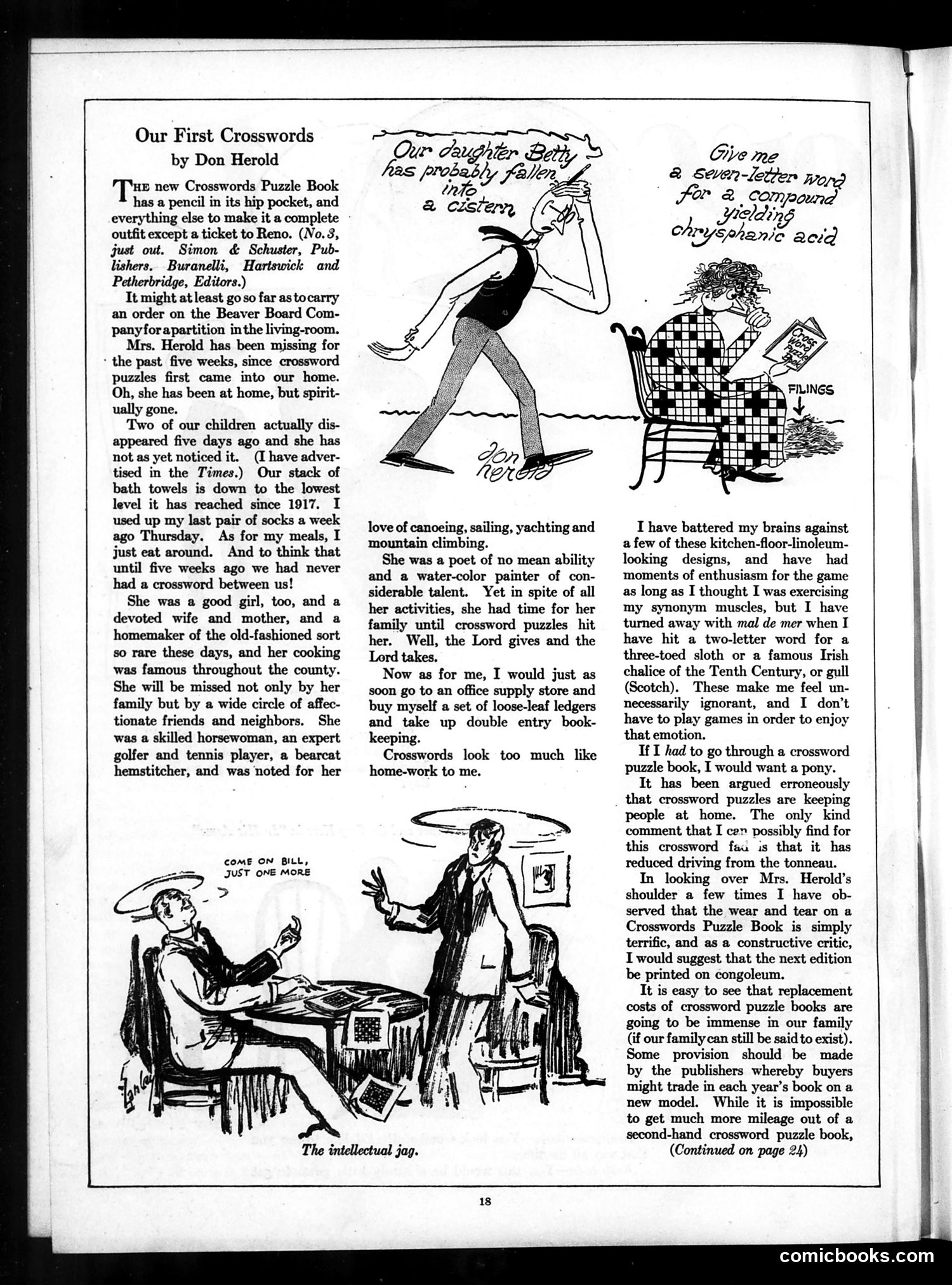
This humorous essay satirizes the sudden craze for crossword puzzles (a new fad in the 1920s) by portraying them as dangerously addictive. The author describes his wife becoming so obsessed with crossword puzzles that she's emotionally "missing" despite physical presence—neglecting housework, cooking, and family while remaining mentally absorbed. The satire targets the puzzle craze's social impact: children go unnoticed missing, laundry piles up, meals disappear. Herold comically suggests the puzzle book should come with "a ticket to Reno" (then famous for quick divorces), implying marriages are being threatened. The accompanying cartoons show a woman contorted while solving puzzles and a couple arguing over them, visualizing domestic disruption. Herold's ironic tone—praising his formerly accomplished wife before her downfall—exaggerates the puzzle's perceived danger to family life and traditional domestic roles, mocking both the craze's intensity and society's alarm about it.
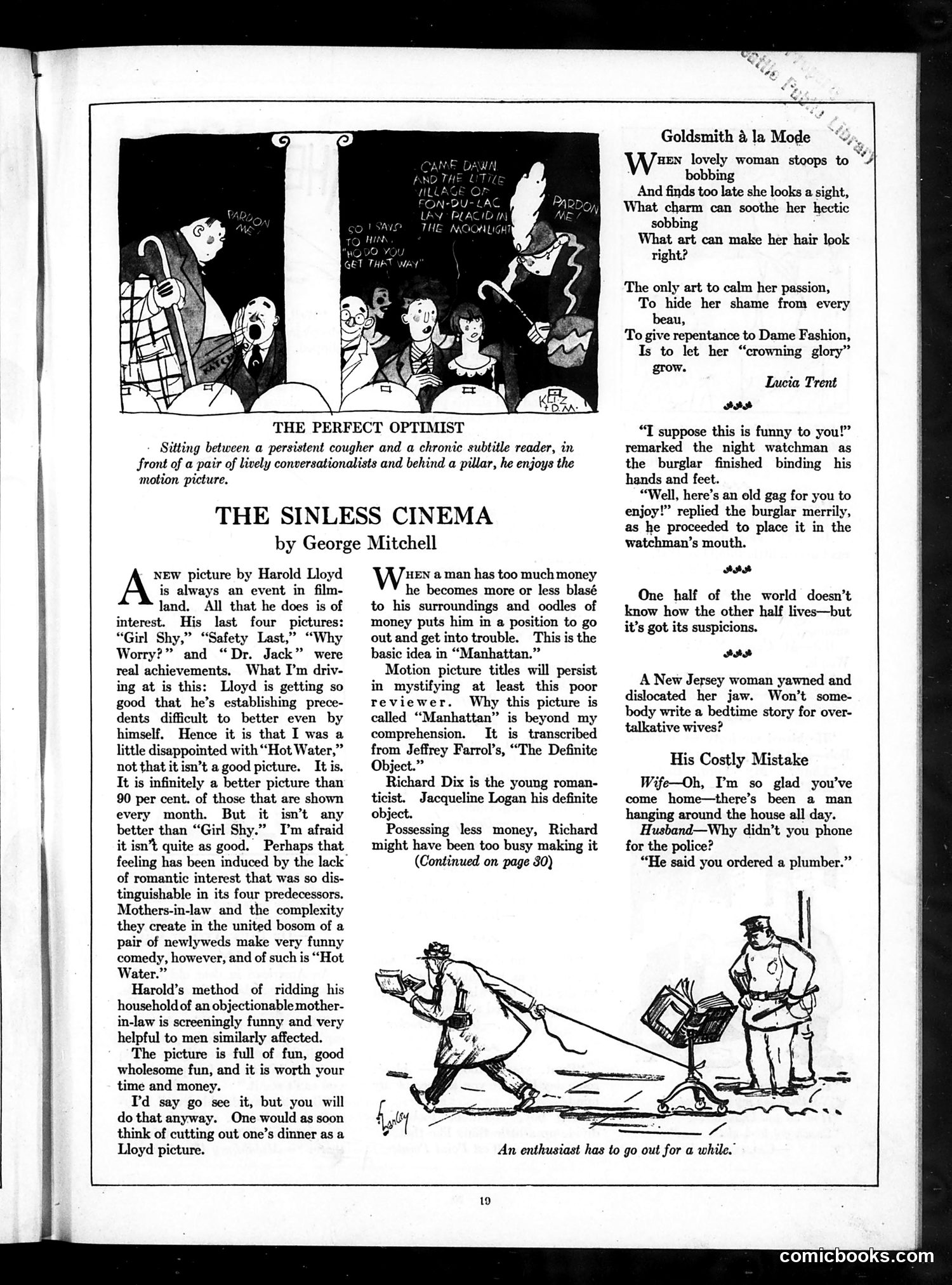
This page contains movie reviews and social humor typical of early 1920s Judge magazine. **"The Sinless Cinema"** reviews Harold Lloyd's film "Hot Water," praising Lloyd's comedic talents while noting this picture, though good, doesn't quite match his previous successes like "Girl Shy" and "Safety Last." The review humorously suggests audiences will see Lloyd pictures regardless of critical opinion. **"The Perfect Optimist"** cartoon satirizes cinema-going annoyances: a man trapped between a persistent cougher, a chronic subtitle reader, lively conversationalists, and a pillar—yet somehow enjoys the movie anyway. **"Goldsmith à la Mode"** poem by Lucia Trent mocks the 1920s "bobbing" (short haircut) trend, suggesting women regret the fashion and should let their "crowning glory" (long hair) grow back. The page also includes brief humor items about a burglar's "old gag" and relationship jokes. The bottom cartoon depicts a golf enthusiast who must leave his game—typical leisure-class satire of the period.
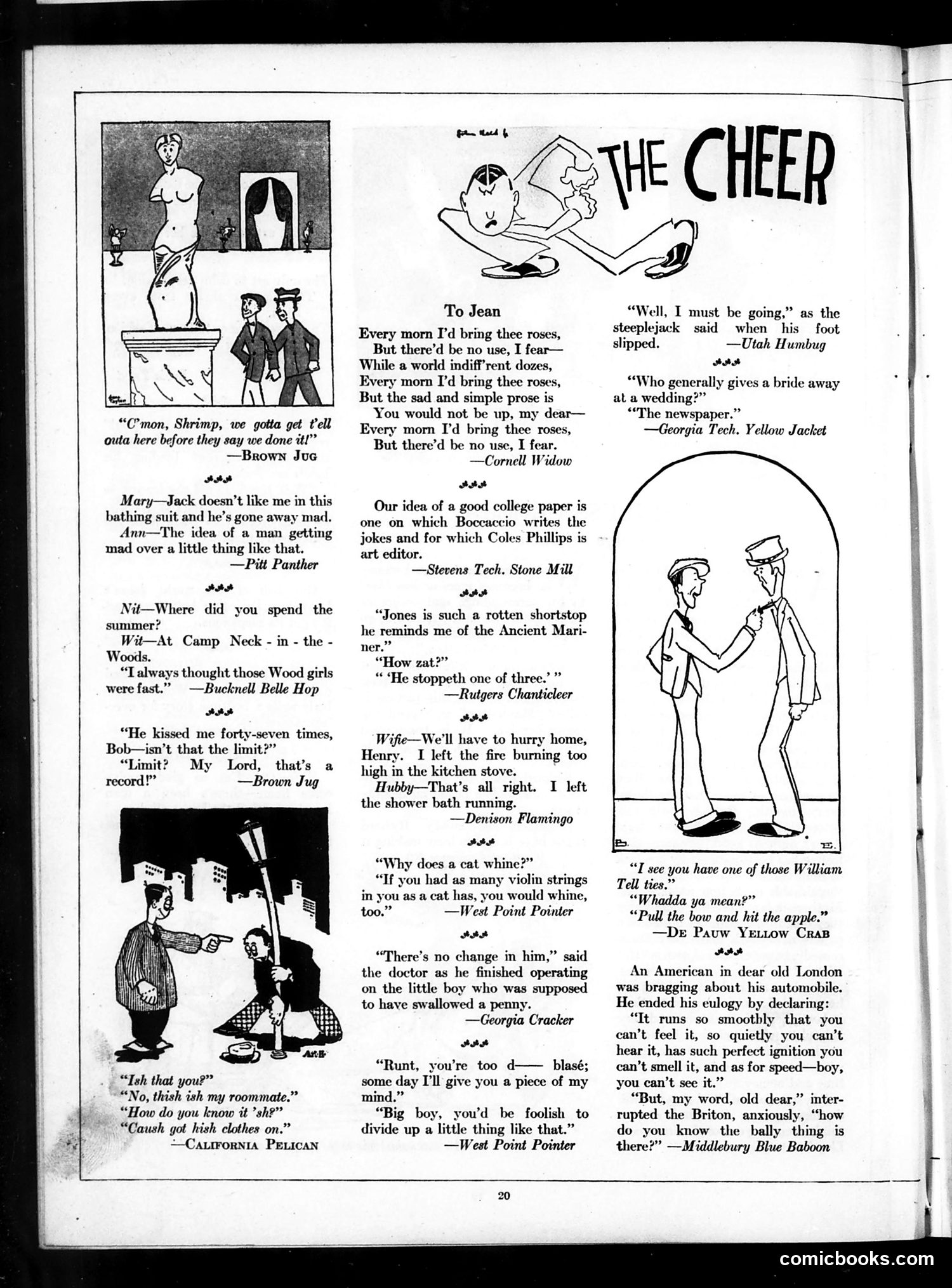
This is a humor compilation page from Judge magazine, centered on college comedy and witticisms. The content consists entirely of jokes and quips submitted by various college newspapers (Cornell Widow, Pitt Panther, Rutgers Chanticleer, etc.). The cartoons illustrate typical college social scenarios: young men apparently fleeing a scene of trouble; courtship misunderstandings; and flirtation. The jokes themselves target familiar themes—romantic pursuit, marital mishaps, physical intimacy, and clever wordplay. Notable is the international angle: the final cartoon mocks an American tourist bragging about his automobile to a skeptical Briton, playing on 1920s American boastfulness about industrial superiority versus British reserve. The page reflects Jazz Age college culture: casual attitudes toward romance, physical humor, and the perceived sophistication of collegiate wit. Most jokes rely on innuendo or simple puns rather than complex satire.
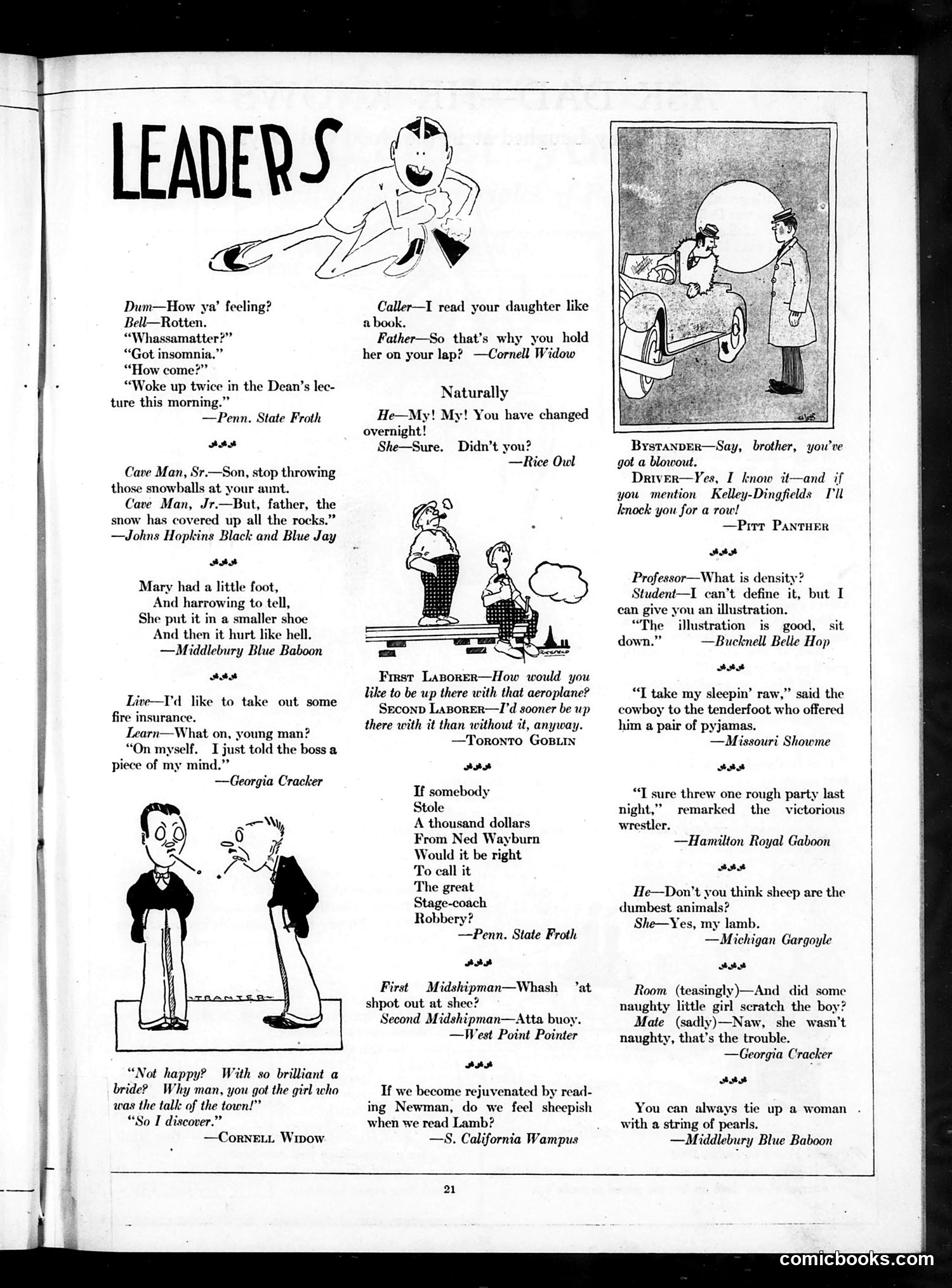
This is a humor compilation page from college and regional satirical magazines, featuring short jokes and quips rather than political cartoons. The content reflects early 20th-century college humor conventions. The jokes target familiar campus and social situations: a student sleeping through lectures, romantic mishaps, workplace complaints, and gender stereotypes. References like "Kelley-Dingfield" (likely a tire brand) and mentions of aeroplanes date this to the early 1910s. The humor relies on puns ("if we read Lamb [the author], do we feel sheepish?"), wordplay, and mild innuendo typical of the era. The cartoons depict domestic and workplace scenarios—a couple discussing marital issues, two men in formal wear arguing. These support the accompanying jokes rather than making independent satirical points. This page represents general social satire rather than political commentary, mocking human foibles, marriage, student life, and workplace dynamics through a lens of period-appropriate humor conventions.
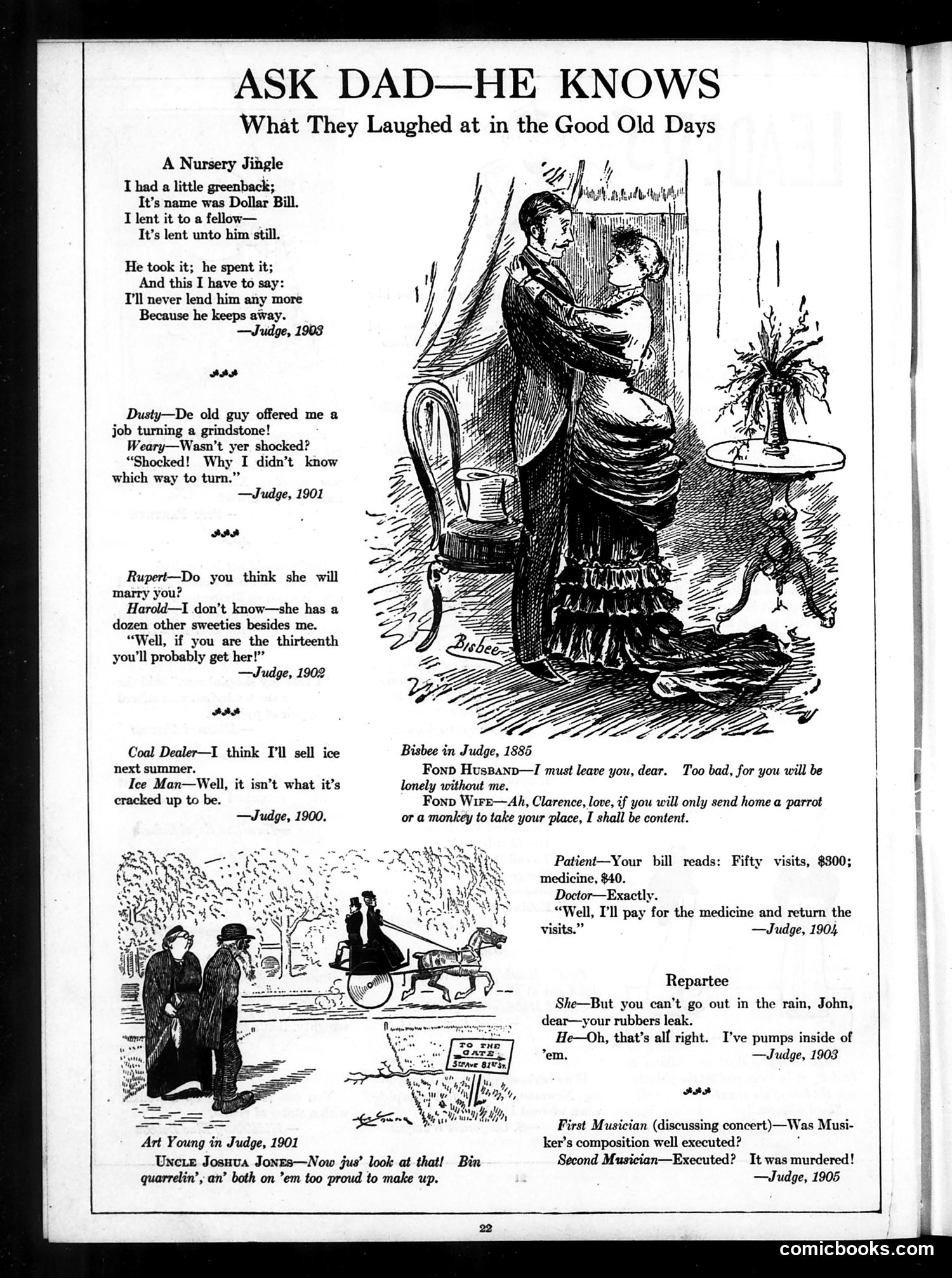
This page collects vintage jokes from Judge magazine (1900-1905), presenting them as nostalgic humor for readers to share. The jokes target universal situations: a borrowed dollar never repaid, confusion about which way to turn a grindstone, romantic rivalry, a coal dealer selling ice (an absurd seasonal business pivot), a husband replaced by a parrot, a doctor charging for visits the patient won't pay for, and leaky rubber boots. The humor relies on wordplay ("which way to turn"), obvious punchlines, and mild social observation about human nature—lending, courtship, professional dishonesty. Two illustrations show period scenes: a man with a woman (possibly the "Bisbee" romance), and two men quarreling. This reflects early 20th-century American magazine humor: straightforward, accessible, without sharp political edge—designed for broad family readership.
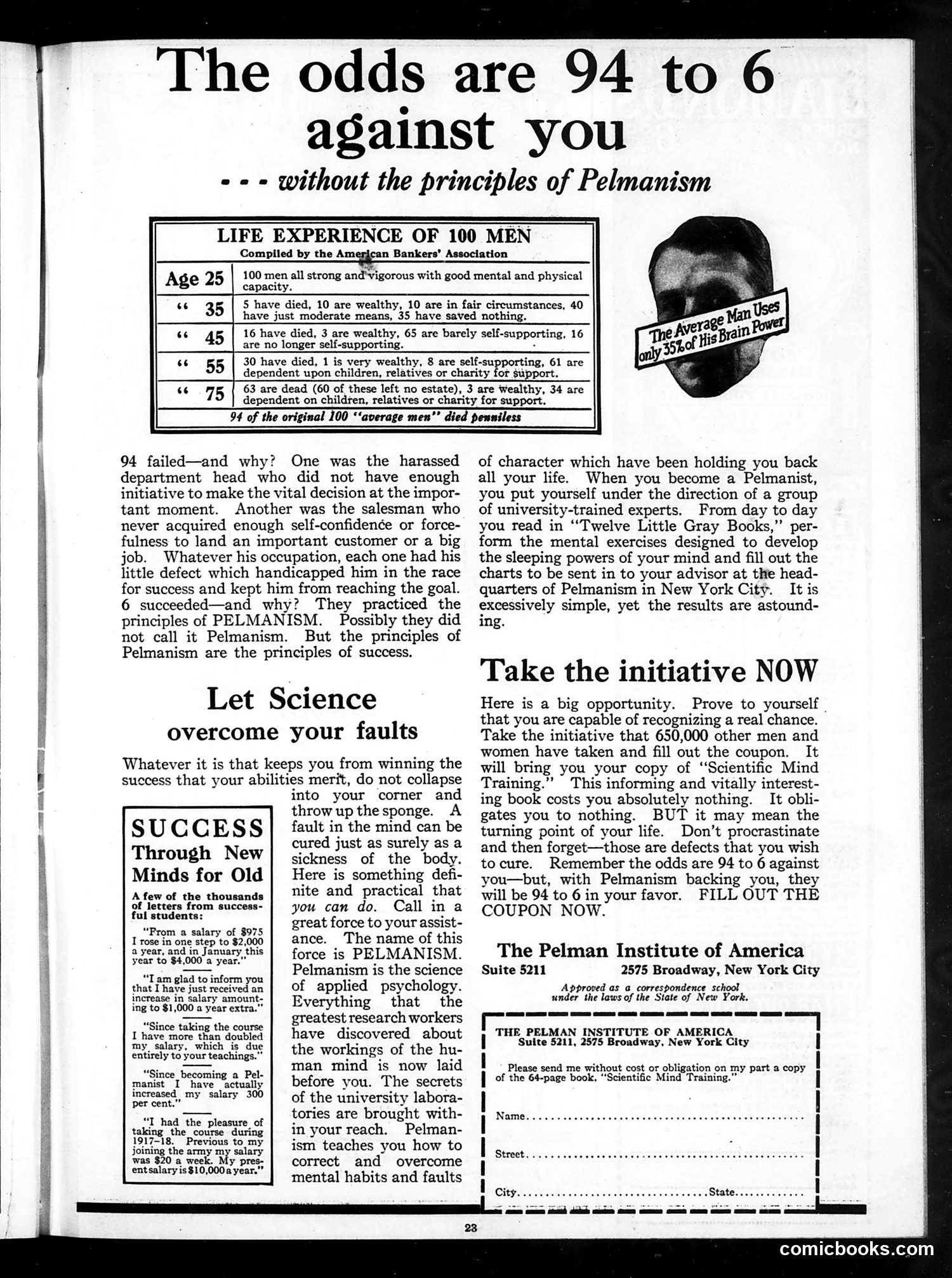
This page is primarily **advertising for Pelmanism**, a popular early-20th-century self-improvement program claiming to teach "applied psychology" and mental training. The satire/critique is *implicit* rather than explicit. The "94 to 6" statistic (compiled by the American Bankers' Association) presents a bleak life trajectory: of 100 healthy men, only 6 succeed; 94 fail due to minor character flaws like lack of initiative or self-confidence. **The satire's target**: The advertisement exploits this fear, implying that Pelmanism—through mental exercises and "Twelve Little Gray Books"—can fix these defects and reverse your odds. Testimonials claim dramatic salary increases ($20/week to $10,000/year). **What modern readers miss**: Pelmanism was a genuine, heavily-marketed correspondence course that promised to unlock hidden mental powers through mail-order training. The page ridicules both the pseudo-scientific claims and the desperation of working men seeking advancement during economic uncertainty. The head illustration (labeled "The Average Man Uses Only 20% of His Brain Power") reinforces the pseudoscientific pitch.
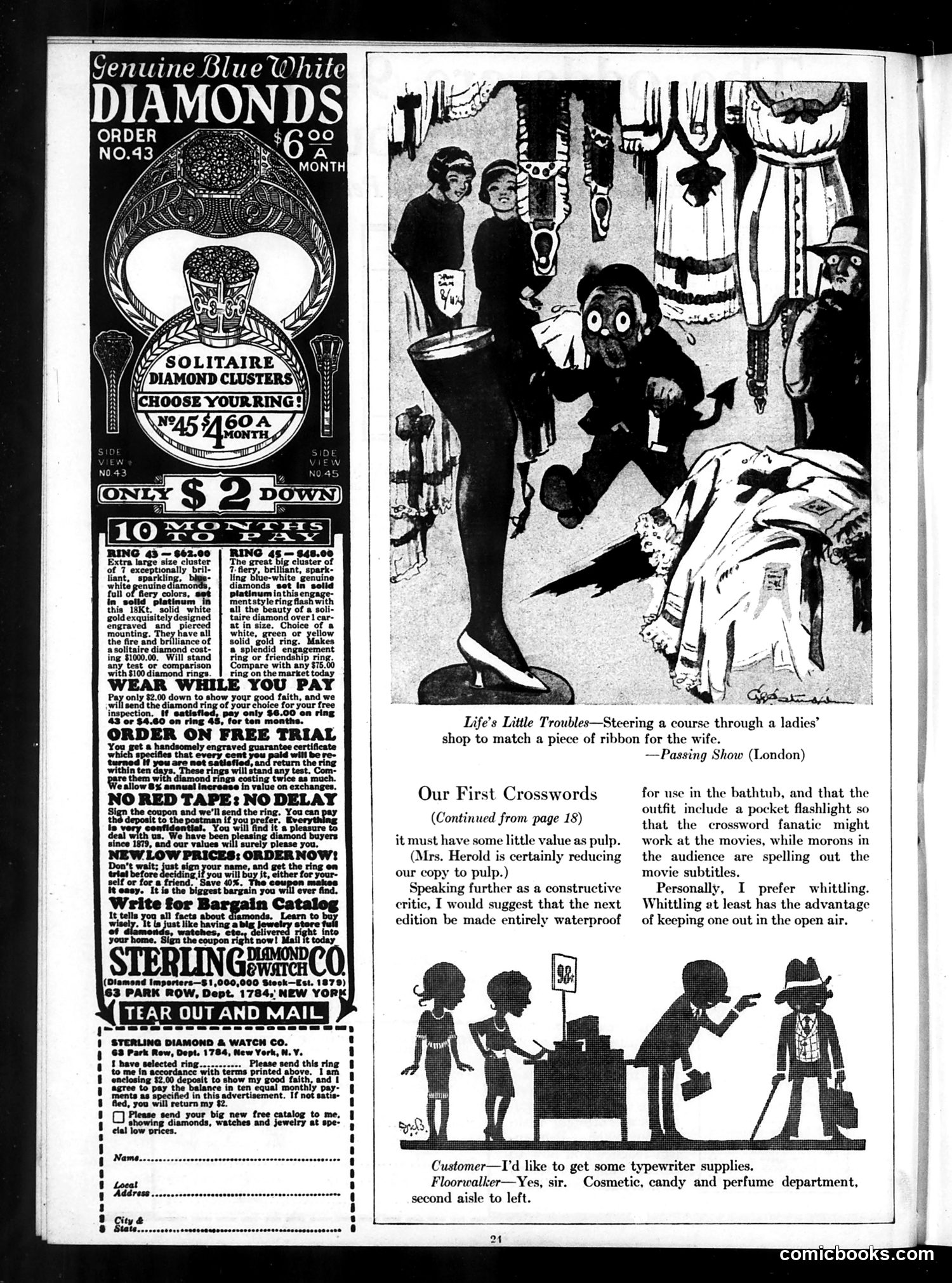
This page combines advertising with humor cartoons typical of Judge's satirical content. The **left side features a diamond ring advertisement** from Sterling Diamond & Watch Co., promoting "genuine blue white diamonds" at $2 down and $6 monthly payments—targeting working-class readers aspiring to luxury goods during an era when such installment purchasing was novel. The **right side contains two cartoon gags**: 1. **"Life's Little Troubles"** depicts a bewildered man in a ladies' shop surrounded by female shoppers and hanging ribbons/garments, humorously illustrating the stereotype of husbands confused and overwhelmed while shopping with their wives—a common domestic comedy theme of the era. 2. **"Customer" cartoon** shows a floorwalker misdirecting a customer asking for typewriter supplies to the "cosmetic, candy and perfume department"—satirizing either incompetent retail service or the absurdity of department store organization, reflecting retail humor of the period. Both cartoons rely on conventional gender roles and domestic situations for humor.
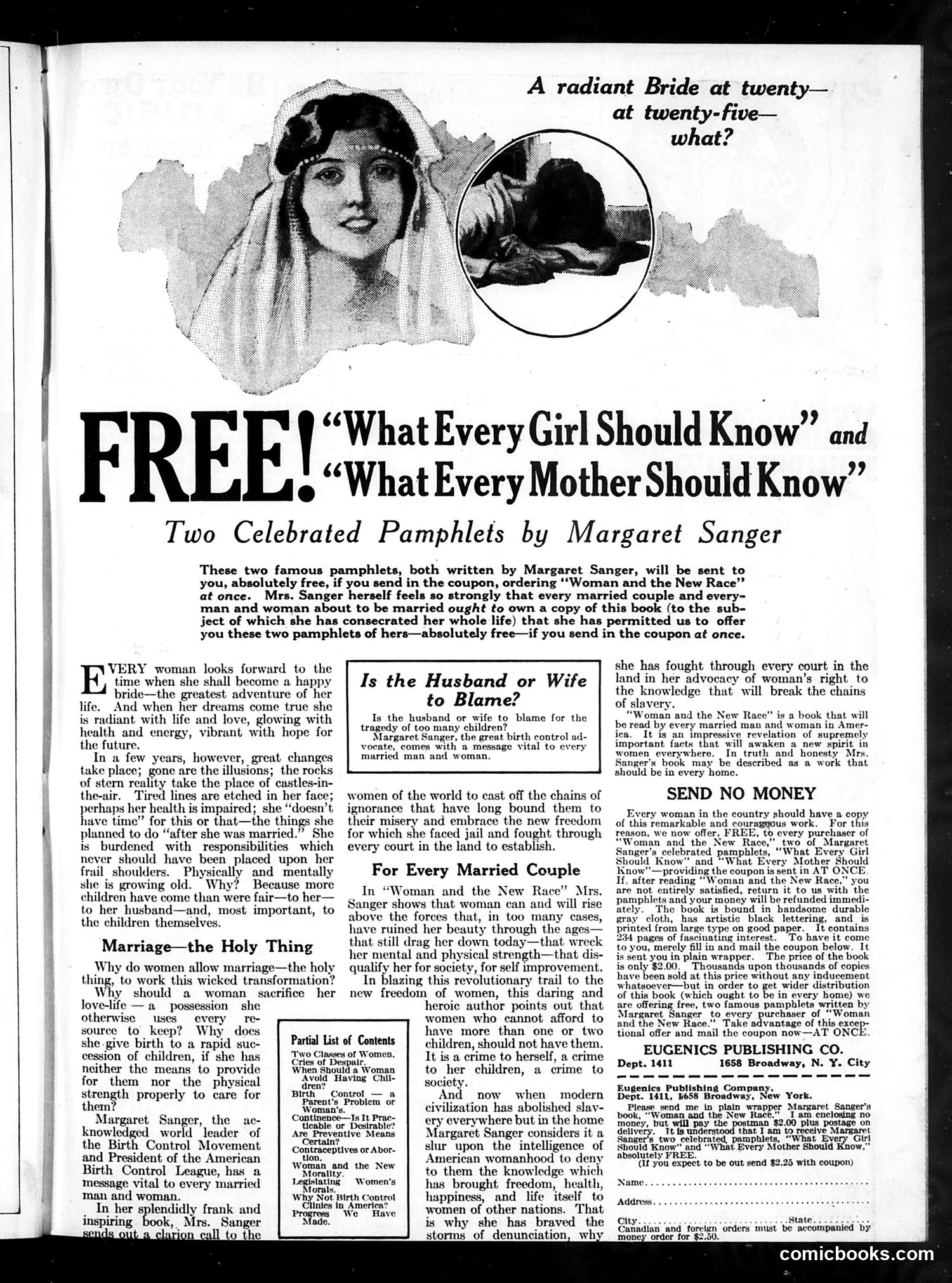
This is primarily **advertisement**, not satire. It promotes Margaret Sanger's birth control pamphlets through the Eugenics Publishing Company. The ad uses a visual narrative: a radiant bride at twenty contrasts with an implied worn-down woman at twenty-five, suggesting motherhood causes premature aging. The accompanying text argues that women burdened with too many children lose health, beauty, and agency—framing birth control as liberation. **Key context**: Sanger (1879-1966) pioneered contraceptive access for women. The ad emphasizes that birth control benefits married couples and society by preventing poverty-stricken families from having more children than they can support. **Important caveat**: While Sanger advocated women's reproductive autonomy, the Eugenics Publishing Company name reflects the era's troubling eugenics movement. Modern readers should know this advertisement exists within that problematic historical moment, though Sanger's actual positions on eugenics remain historically debated.
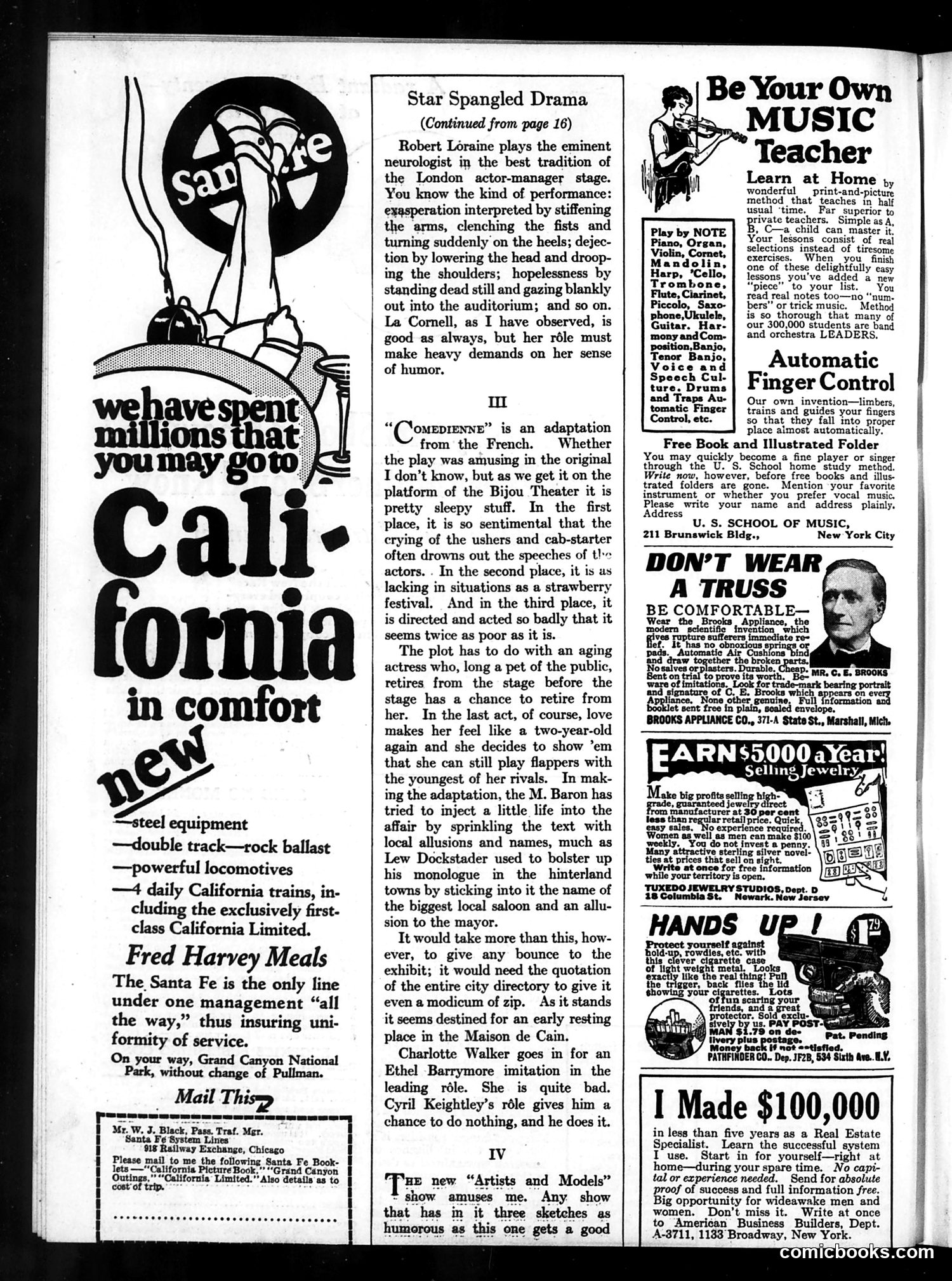
This page is primarily **advertising and entertainment criticism**, not political satire. The left side features a large **Santa Fe Railroad advertisement** promoting comfortable California train travel with dining service and Grand Canyon excursions—typical early 20th-century luxury travel marketing. The center contains a **theater review** (continued from page 16) critiquing the play "Comédienne" at the Bijou Theater. The critic harshly dismisses it as sentimental, poorly directed, and lacking situations. He mocks the adaptation's attempt to inject local humor (saloon names, mayor references) as insufficient to save the production. He specifically criticizes actress Charlotte Walker's performance as derivative "Ethel Barrymore imitation" and notes actor Cyril Keightley essentially does nothing. The right side displays typical period **mail-order advertisements**: music lessons, a truss (medical support garment), jewelry sales, real estate schemes, and a "Hands Up" self-defense product. The satirical element is minimal—just the theater critic's witty dismissals. This is a straightforward magazine page mixing ads with entertainment commentary.
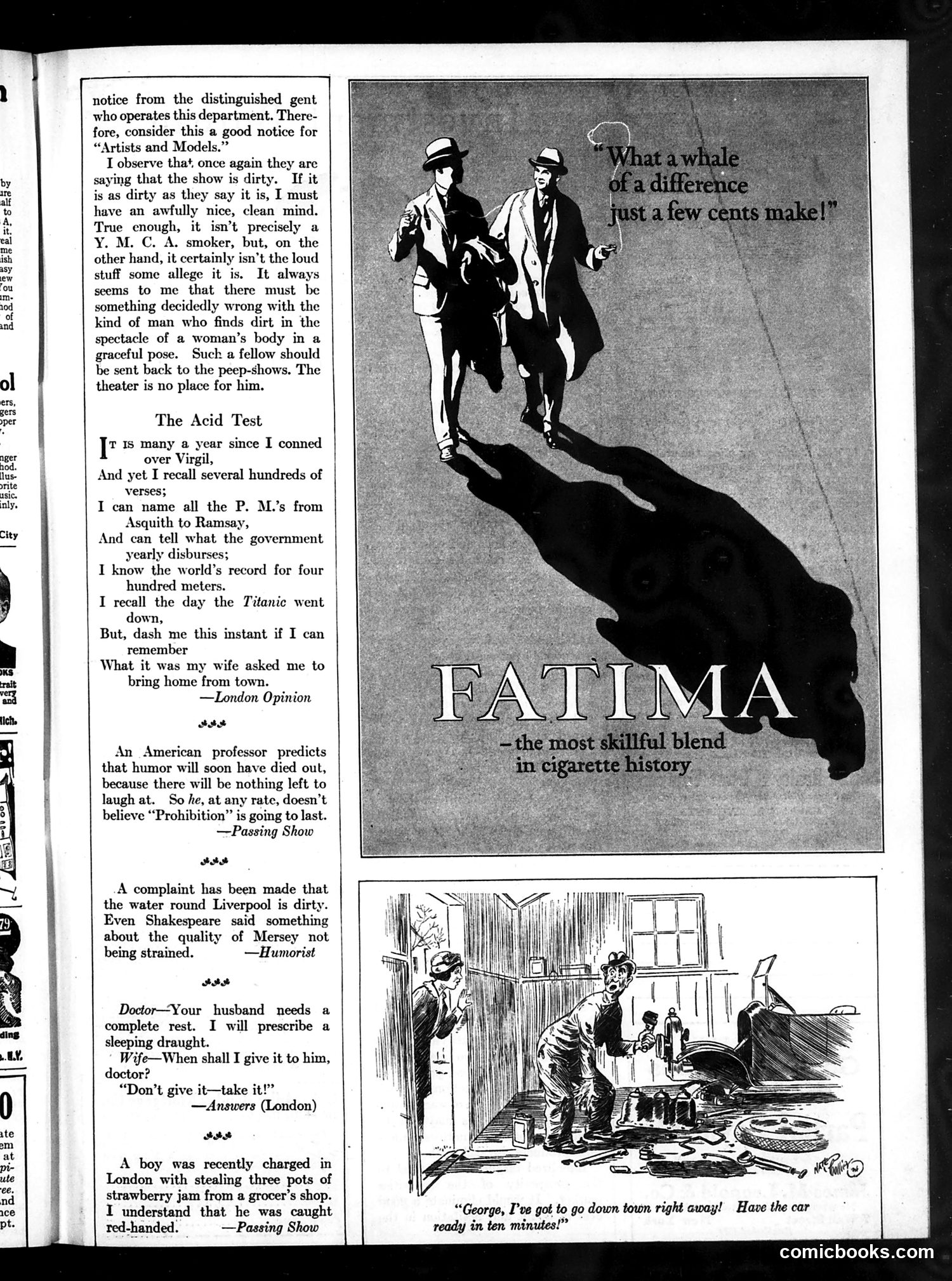
This page from the satirical magazine *Judge* contains multiple humor pieces and one cigarette advertisement. **The Main Advertisement** is for Fatima cigarettes, featuring two well-dressed men in fedoras with an elephant's shadow. The tagline "What a whale of a difference just a few cents make!" promotes Fatima as a superior, affordable cigarette blend. **The Text Content** consists of several joke columns: - A defense of the "Artists and Models" theatrical show against morality complaints - "The Acid Test," a poem satirizing selective memory (the author recalls classical literature and political leaders but forgets his wife's shopping request) - Brief jokes about Prohibition, Liverpool's water quality, and a doctor's prescription **The Bottom Cartoon** shows a domestic scene where a man urgently tells his wife to prepare the car in ten minutes—likely satirizing the era's automobile culture and hurried modern life. The page reflects 1920s concerns: Prohibition debates, theater censorship, and emerging consumer culture around automobiles and cigarettes.
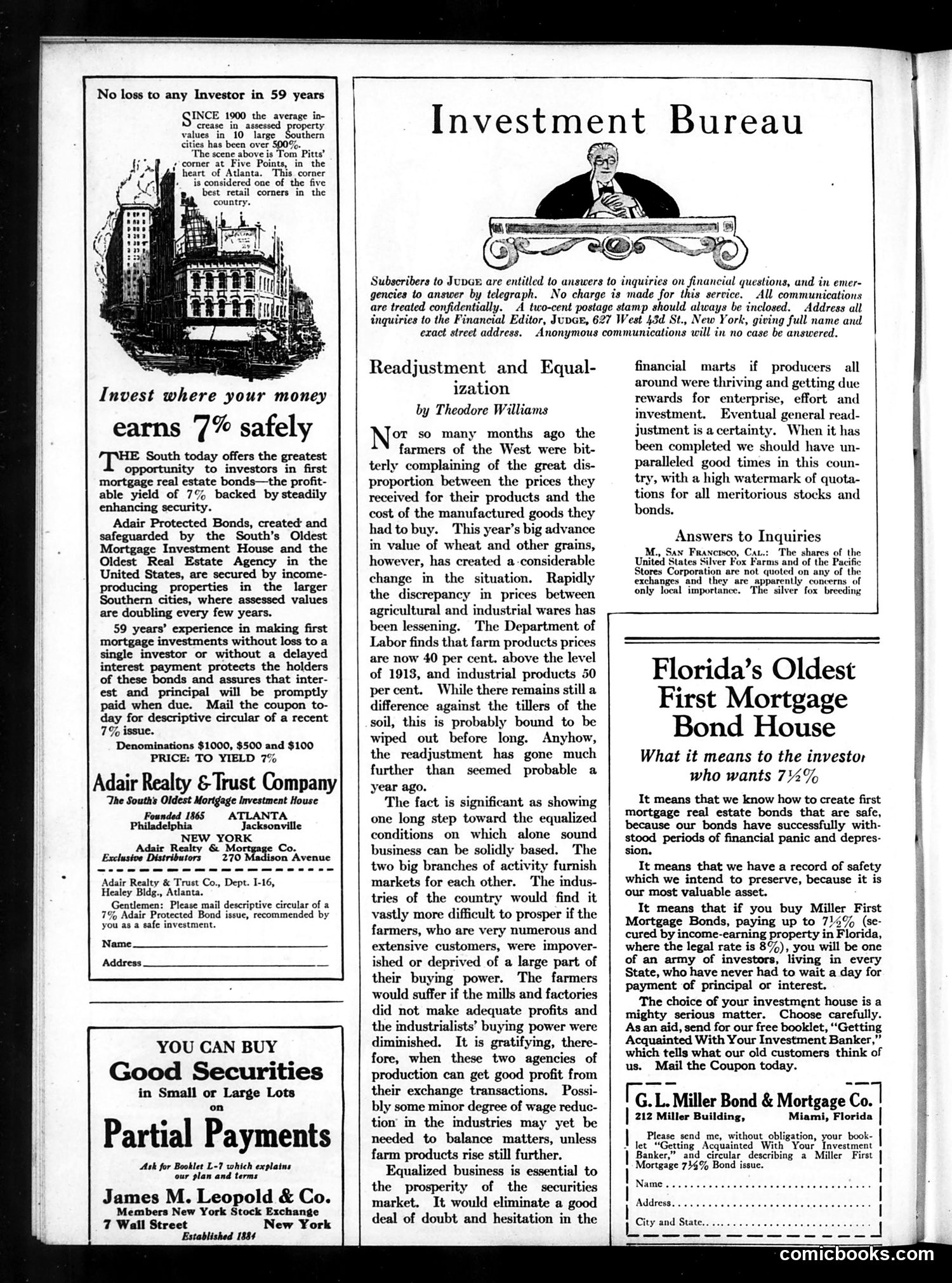
This page from *Judge* magazine consists primarily of **financial advertisements**, not satire or political cartoons. The main content includes ads for Southern real estate bonds (Adair Realty) and brokerage services (James M. Leopold & Co.), promising safe 7% returns. An illustration shows Atlanta's Five Points district to demonstrate Southern property value growth. The substantive article, "Readjustment and Equalization" by Theodore Williams, discusses post-WWI economic imbalances. It notes that farmers had complained about price disparities between agricultural and manufactured goods, but recent wheat price increases have narrowed this gap. The piece argues that balanced prosperity between farming and industrial sectors is essential for overall economic health. **Historical context**: This appears to be from the early 1920s, addressing post-war economic readjustment and agricultural distress—major concerns of that era. There is no identifiable satire or caricature on this page; it's primarily earnest financial promotion and economic commentary.
This page is primarily **financial advice**, not satire or political cartooning. It consists of a question-and-answer column addressing investor inquiries about various stocks and bonds—including Pacific Stores, Silver Fox shares, American Engineering Company, Sinclair Consolidated Oil, and Cuban-American Sugar Co. The visible advertisement on the right promotes the **F. H. Smith Company's investment plan**, offering "$22,000 from $4,800" through monthly payments on "Smith Safeguarded First Mortgage Bonds." **Context for modern readers**: This reflects the 1920s investment boom preceding the 1929 crash. The cautious tone ("speculative," "risky," "doubtless in course of time") reflects pre-Depression skepticism toward certain ventures, while simultaneously promoting bond investments—then considered safe. The page demonstrates how investment promotion saturated even satirical magazines during the prosperous 1920s. There are **no visible political cartoons or caricatures** on this page.
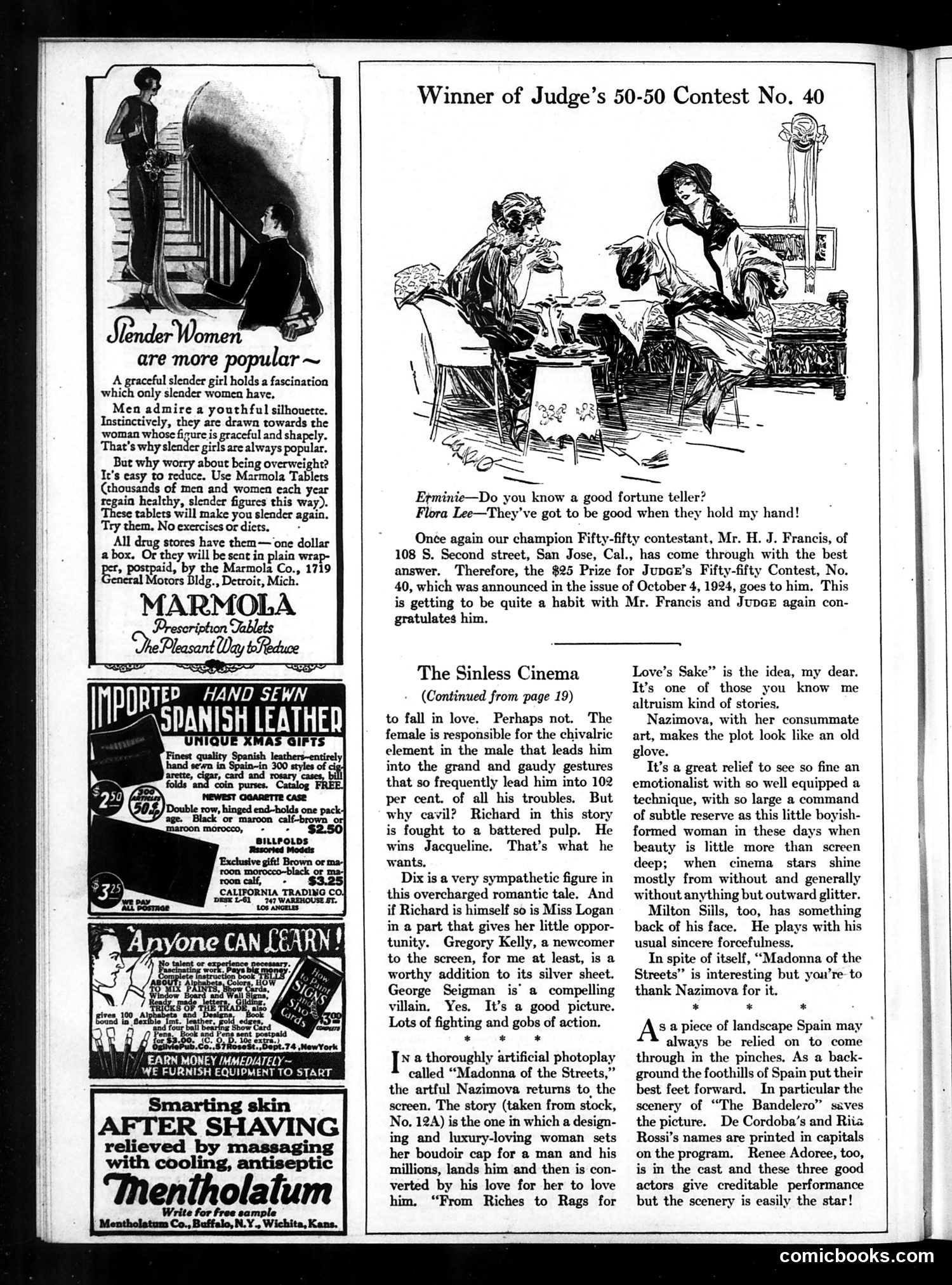
This page mixes advertising with entertainment content typical of 1920s Judge magazine. **The Main Cartoon** (top right, labeled "Winner of Judge's 50-50 Contest No. 40") shows two women at a table with the caption about fortune tellers. The joke relies on a double entendre: one woman's hand is being held by another person (implied to be a man), suggesting physical intimacy rather than fortune-telling—hence the fortune teller "has to be good" when holding her hand. **The Advertisements** dominate the left side, promoting weight-loss tablets (Marmola) and other products. The Marmola ad explicitly states "Slender Women are more popular," reflecting 1920s beauty standards emphasizing thinness and "graceful" feminine figures as essential to female desirability and social success. **The Film Reviews** ("The Sinless Cinema") critique contemporary movies featuring actors like Richard Dix, Nazimova, and Milton Sills, discussing romantic plots and acting quality in a cynical, sophisticated tone typical of Judge's satirical approach to popular culture.
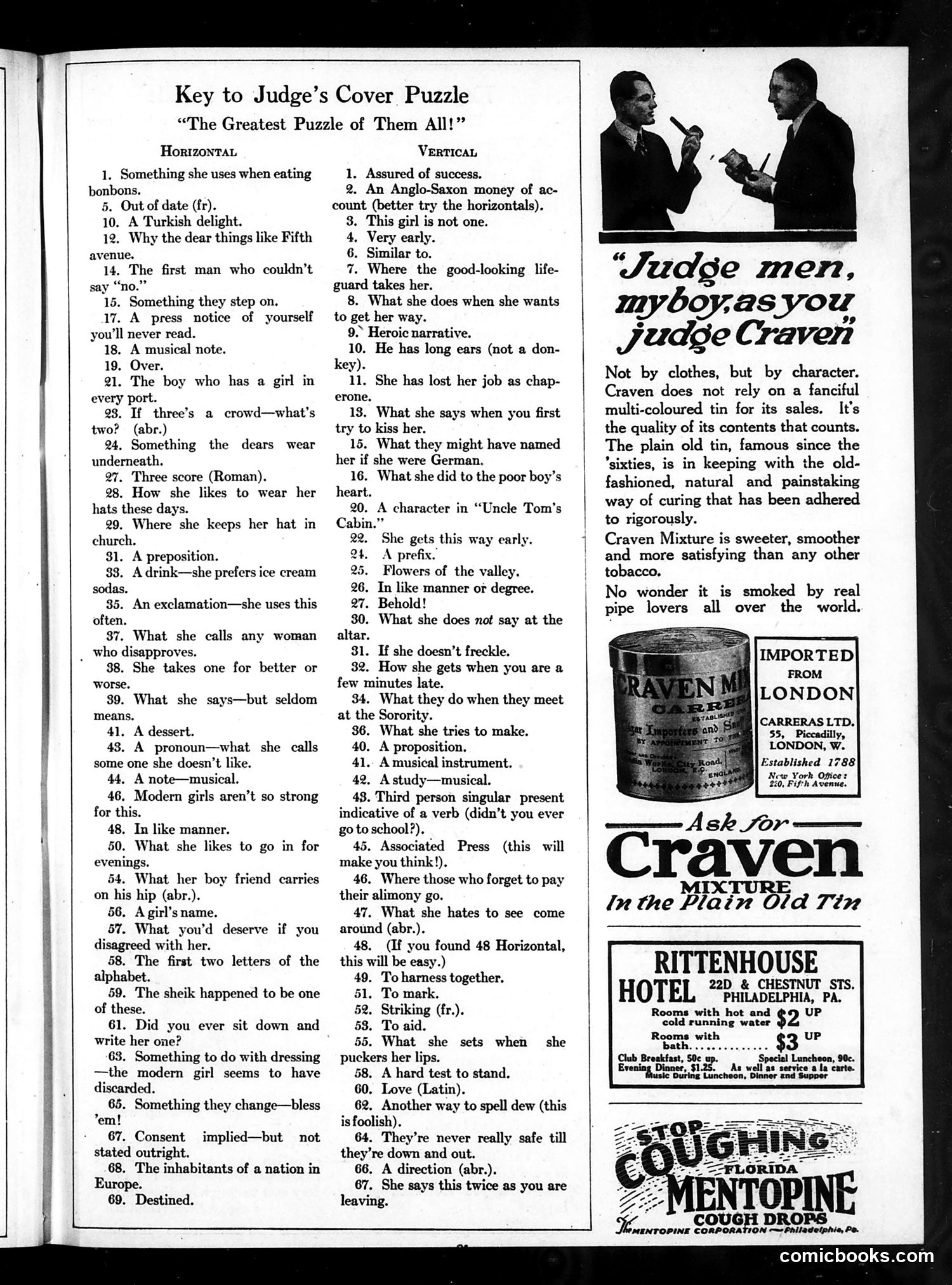
This page is primarily a **crossword puzzle answer key** titled "The Greatest Puzzle of Them All!" Rather than political satire, it's entertainment content typical of Judge magazine's humor section. The puzzle itself, judging by the clues, is a **social commentary on 1920s women**—specifically satirizing modern young women's behavior and dating customs. References include: - "The boy who has a girl in every port" (suggesting promiscuity) - "Modern girls aren't so strong for this" (implying they've abandoned traditional values) - Multiple clues about kissing, "sheiks" (a 1920s slang term for male seducers), and romantic manipulation - Jokes about women's materialism ("Fifth avenue," shopping) The page is otherwise filled with **period advertisements**—a tobacco product ("Craven Mixture"), a Philadelphia hotel, and cough drops—typical of Judge's revenue model. The cartoon at top-right shows two men in conversation, promoting the Craven brand with a character-focused appeal rather than product appearance.
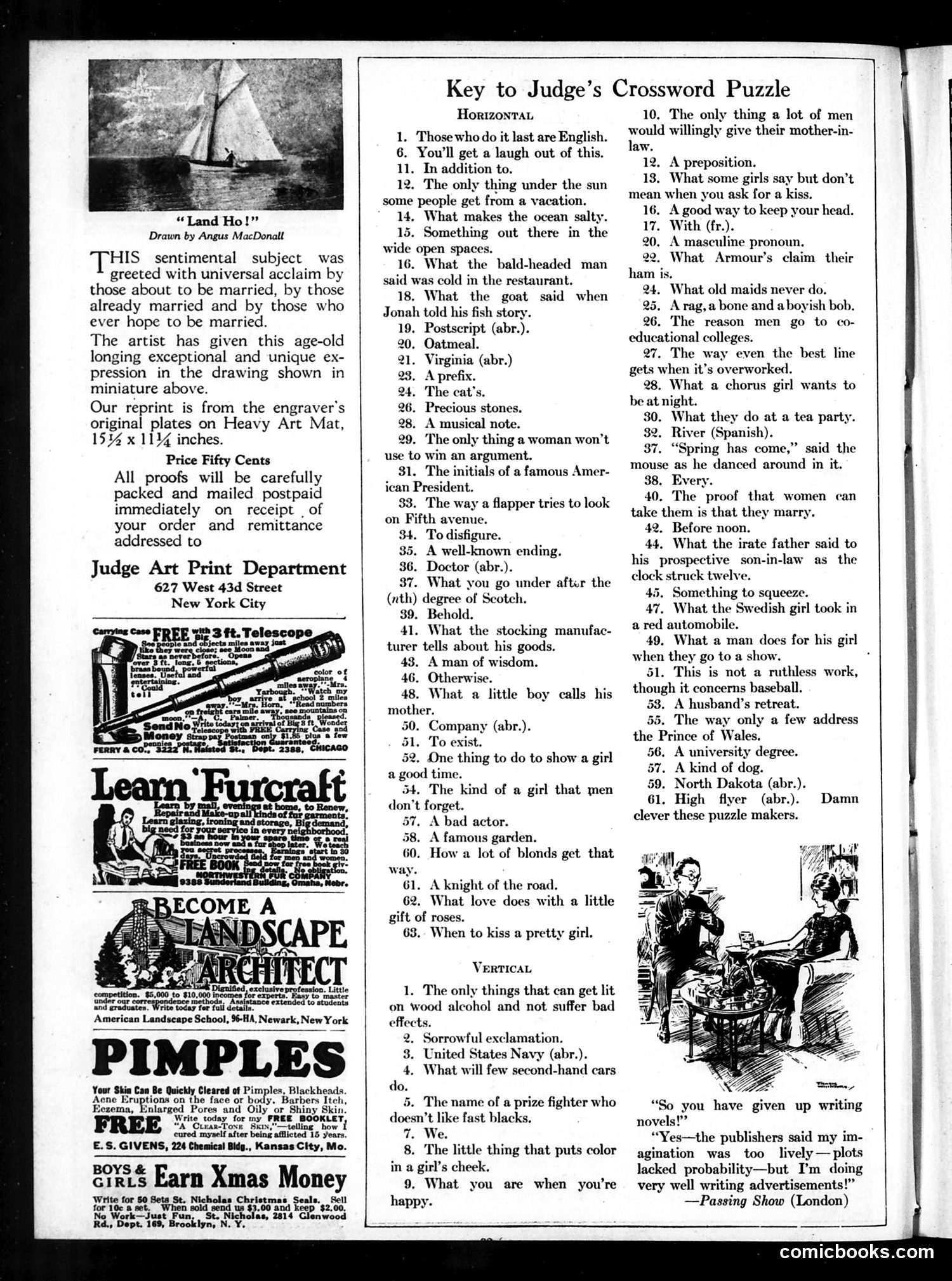
This sentimental drawing depicts a sailing ship at sea, titled "Land Ho!" The image appeals to universal romantic sentiment—resonating with those about to marry, already married, and those hoping to marry eventually. The cartoon appears to be a straightforward romantic illustration rather than sharp satire. "Land Ho!" is a sailor's cry announcing sight of land after a sea voyage, used here metaphorically for the arrival of hoped-for romantic fulfillment or marriage. The drawing's appeal lies in its nostalgic, universally relatable theme of longing and arrival—the emotional "journey" toward matrimonial happiness. The page is primarily filled with Judge's crossword puzzle and period advertisements (landscape architecture school, skin treatments, boys' magazine sales). The cartoon occupies minimal space but received enough acclaim to warrant reprinting from the original engraver's plates.
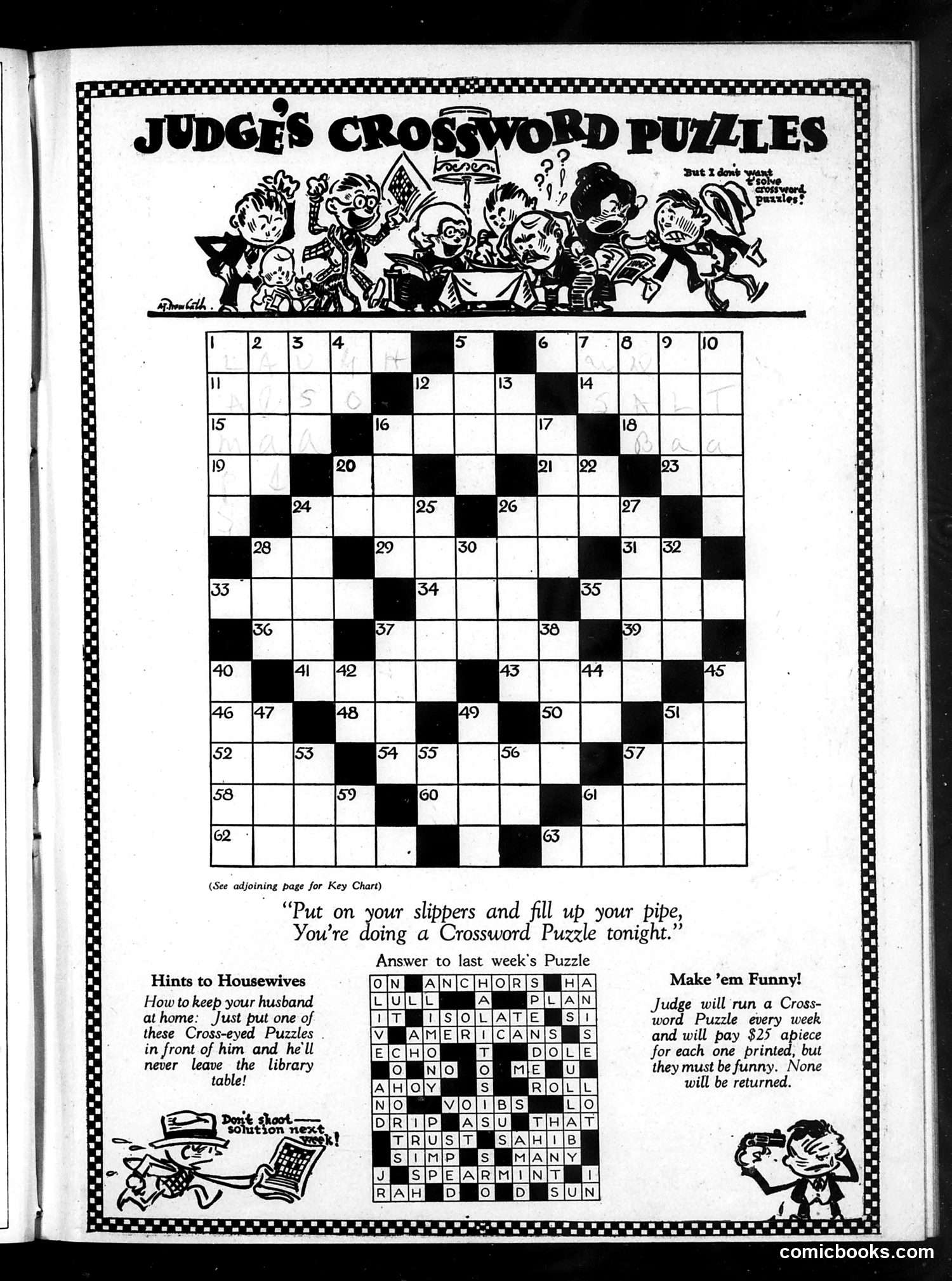
This is primarily a **crossword puzzle page** rather than political satire. The main content is a numbered crossword grid with an accompanying answer key from the previous week's puzzle. The page includes practical elements: - **"Hints to Housewives"**: A tongue-in-cheek suggestion that wives can keep husbands occupied at home by placing crossword puzzles before them—implying men will become so absorbed they won't leave (presumably for bars or other leisure activities). This reflects early 20th-century domestic humor about keeping spouses engaged. - **"Make 'em Funny!" section**: Judge magazine is soliciting reader-submitted crossword puzzles, offering $25 payment per published puzzle, with the requirement that they be humorous. The cartoon header shows characters in period dress, establishing the lighthearted tone. The page reflects crossword puzzles' popularity during this era as home entertainment, and Judge's business model of crowdsourcing content from readers.
This is a cigarette advertisement, not satire or political commentary. The page promotes Lucky Strike cigarettes with their signature marketing slogan "It's Toasted." The image shows a hand holding a cigarette over what appears to be a toasting device or flame, visually demonstrating the brand's claimed toasting process. The advertisement claims this toasting method brings out superior flavor in tobacco. This reflects early 20th-century cigarette marketing, when such ads appeared regularly in magazines like *Judge*. The "toasted" process was Lucky Strike's distinctive advertising claim—whether scientifically meaningful or not—designed to differentiate the product from competitors.