
A complete issue · 16 pages · 1907
Judge — May 11, 1907
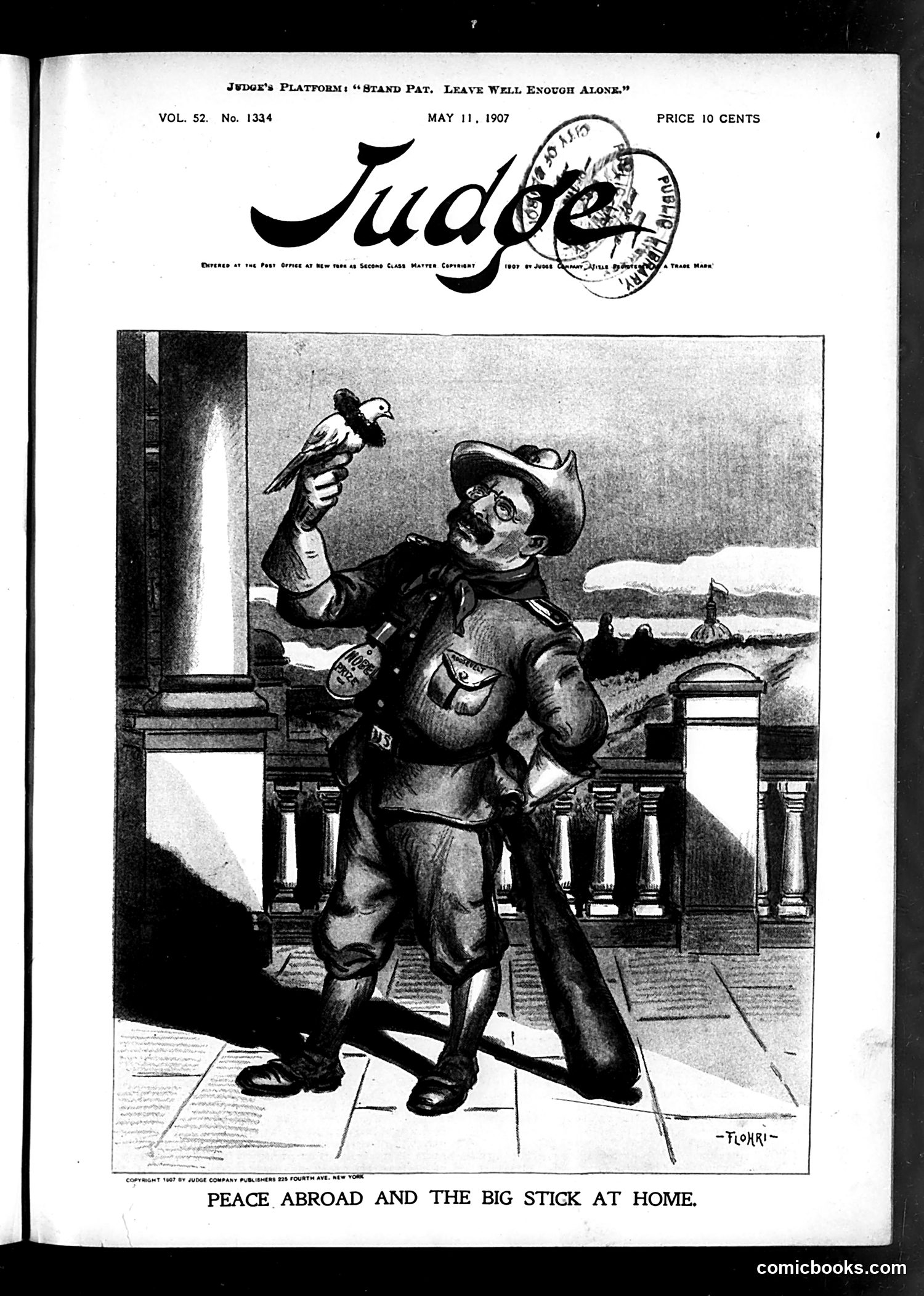
This 1907 Judge cartoon satirizes President Theodore Roosevelt's foreign policy approach. The caricatured figure—identifiable by the cowboy hat and distinctive mustache—represents Roosevelt wielding his famous "big stick" diplomacy (his policy of speaking softly while carrying a big stick). The cartoon depicts him holding a peace dove while simultaneously brandishing a large club, suggesting hypocrisy: Roosevelt promoted international peace negotiations while using aggressive domestic tactics. The naval vessels visible in the background reference American naval power projection abroad. The satire critiques the contradiction between Roosevelt's peaceful rhetoric on the world stage and his more forceful, interventionist approach to American matters at home—a commentary on the tension between his stated moderate goals and his actual methods.
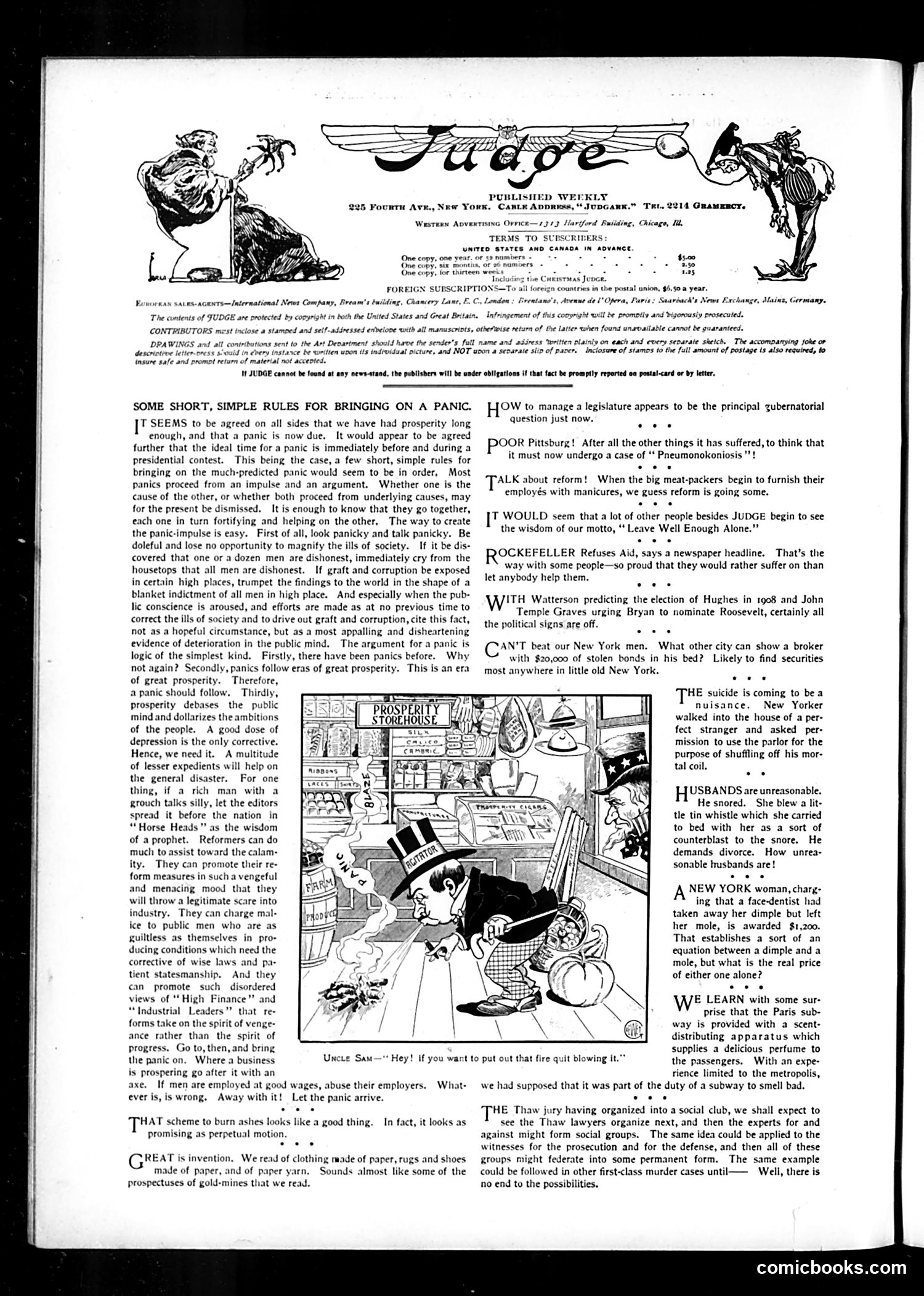
This page contains editorial commentary rather than a political cartoon. The text discusses contemporary anxieties about financial panic, reform movements, and social disorder. A notable illustration shows "Uncle Sam" in a "Prosperity Lodging House," apparently satirizing false promises of economic well-being. The accompanying text references concerns about wealth inequality, legislative reform, and the behavior of the wealthy toward workers. The editorial mentions specific figures: "Watterson predicting the election of Hughes in 1908" and references to "Rockefeller" and financial reform debates. The overall tone suggests anxiety about labor unrest, economic inequality, and whether reforms can adequately address systemic corruption and class tensions in American society at this historical moment.
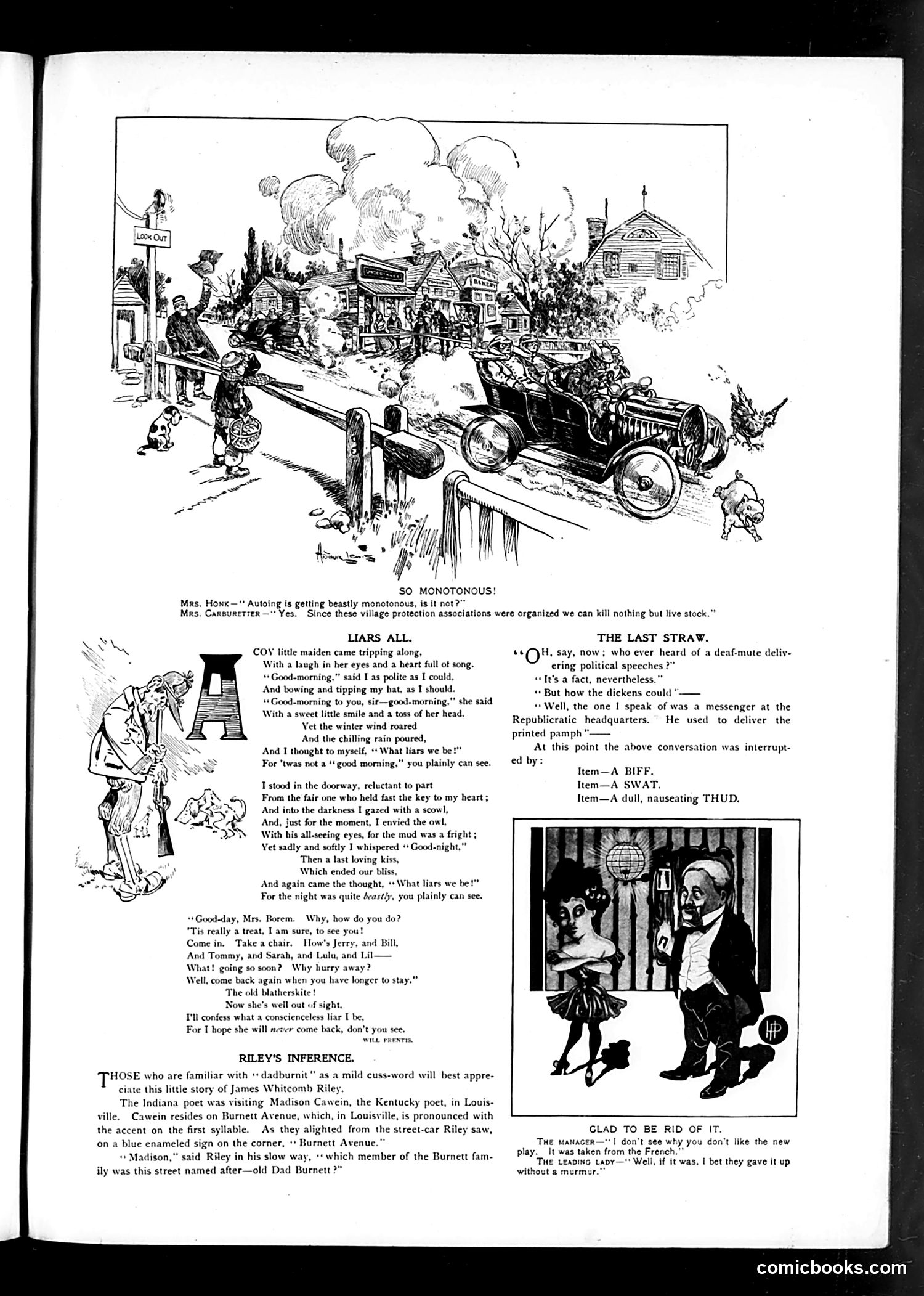
The top cartoon, "SO MONOTONOUS!" depicts a speeding automobile rushing through a village, with the caption suggesting village residents have organized "protection associations" to combat reckless drivers. The joke satirizes the ineffectiveness of these early auto-safety groups—they can't stop dangerous driving, only "like stock" (complain). Below are literary pieces: "Liars All" (a poem about a cow maiden), and "Riley's Inference," discussing James Whitcomb Riley's visit to Madison, Wisconsin. The text notes the poet observed "Burnett Avenue" on a street sign and humorously inferred the street must be named after writer James Burnett. The lower right shows what appears to be a theatrical or social scene titled "Glad to Be Rid of It," referencing a French play. This reflects early 1900s concerns about automobile safety and contemporary literary culture.
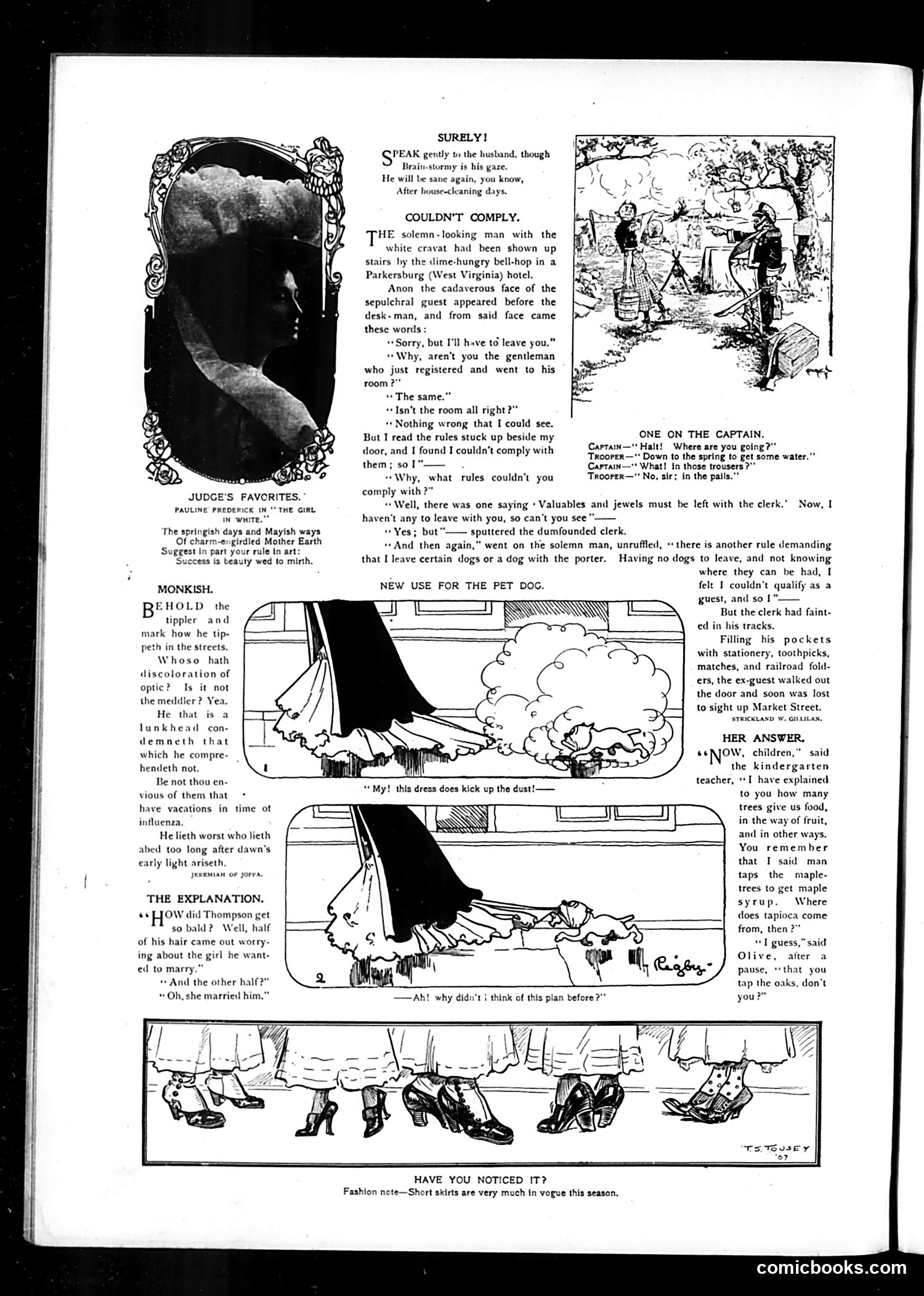
This page contains several unrelated humor pieces rather than a cohesive political cartoon. **"Surely!"** (top) appears to be a domestic joke about a husband's housekeeping excuses. **"Couldn't Comply"** tells of a hotel guest who must leave because he cannot follow a rule requiring guests to deposit valuables and pets with the clerk—he has neither to leave. **"One on the Captain"** depicts military personnel discussing water retrieval. **"New Use for the Pet Dog"** shows a woman using her dress hem to kick up dust, with a child's explanation about trees providing fruit and maple syrup. The bottom illustration labeled "Have You Noticed It?" is a fashion note about short skirts being in vogue that season, showing women's feet and footwear. These are light, domestic humor pieces typical of Judge's satirical magazine format—no major political references are evident.
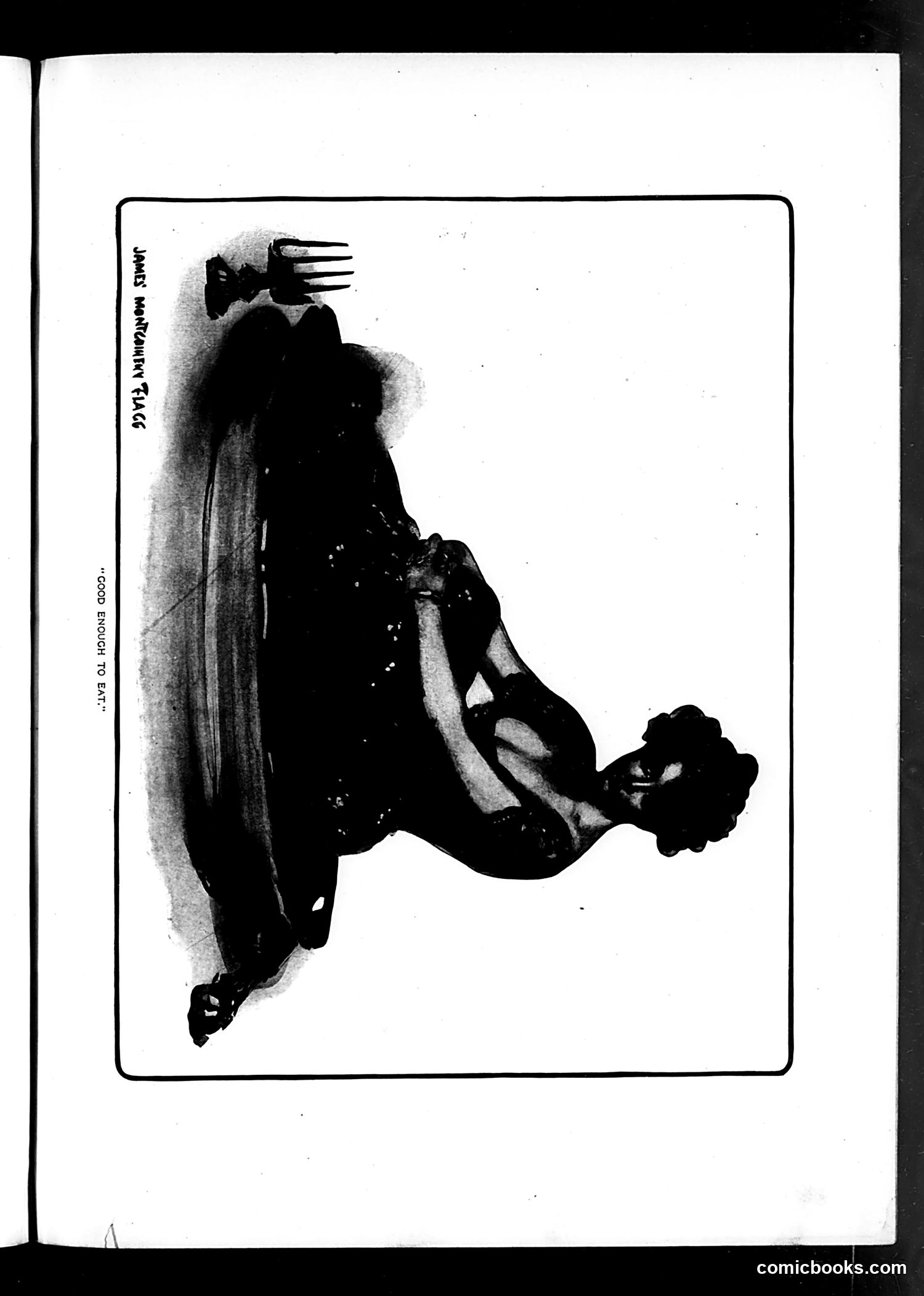
This page from *Judge* magazine shows a silhouetted figure in dramatic pose, appearing to be rotated 90 degrees on the page. The figure holds what looks like a garden rake or farming tool raised upward. The text on the left margin reads "JAMES MONTGOMERY FLAG" (the renowned American illustrator and propagandist). Without clearer OCR text identifying the specific cartoon's subject or caption, I cannot definitively state what political or social event this satirizes. The dramatic silhouette style and raised agricultural tool suggest commentary on labor, rural issues, or possibly agrarian politics—common *Judge* topics in the early 20th century—but I cannot specify the exact reference or point of satire with confidence based solely on the image provided.
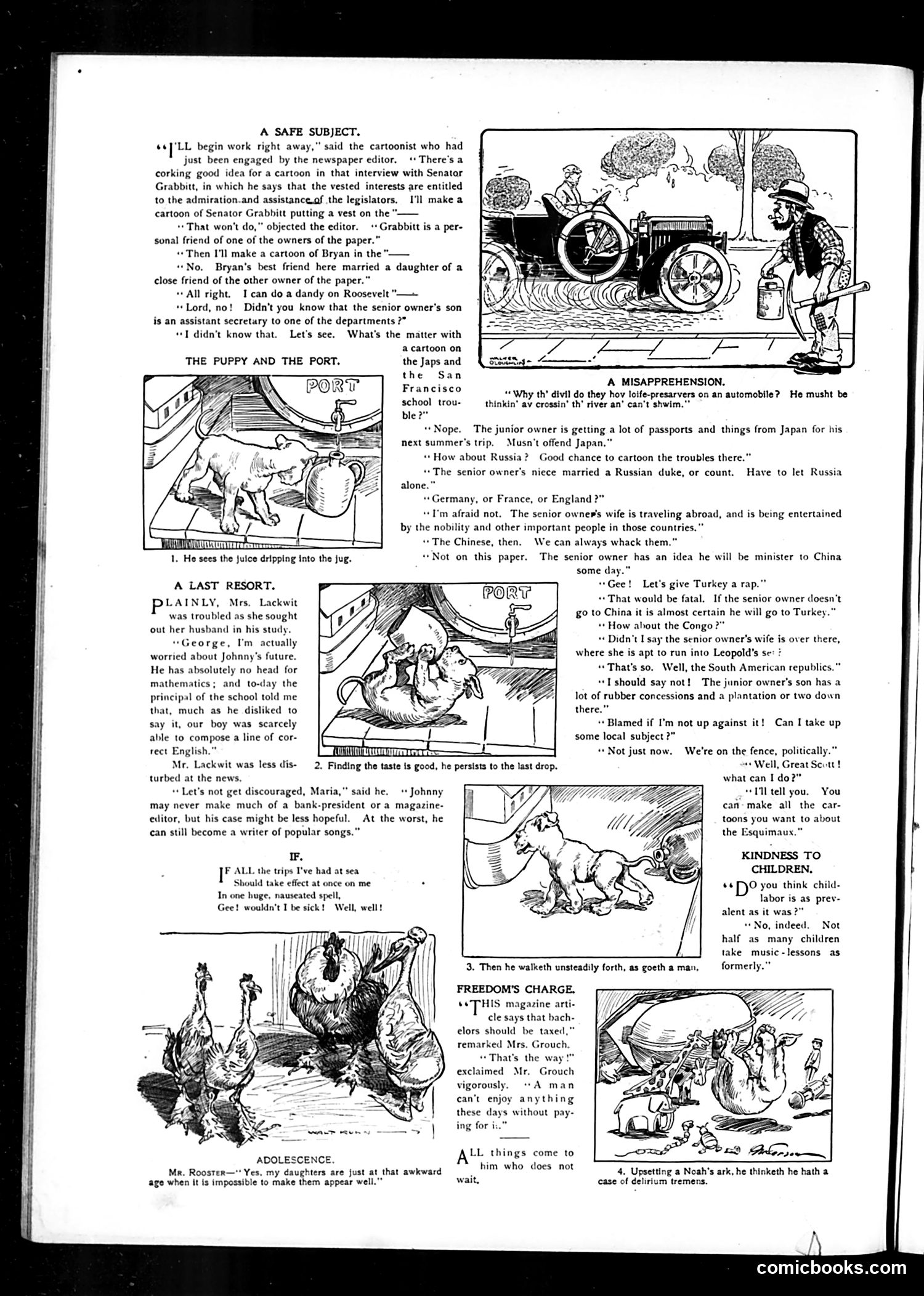
This page satirizes **editorial censorship through advertiser/ownership pressure**. The main cartoon "A Safe Subject" depicts a cartoonist unable to draw anything—every potential target (Senator Grabbit, Bryan, Roosevelt, Russia, Germany, Japan, China, Turkey, Congo) is blocked because the newspaper's owners have personal or business connections to those subjects. The joke is that there's literally nothing "safe" to cartoon about, highlighting how wealthy newspaper owners suppress criticism to protect their social and financial interests. This reflects early 20th-century concerns about media independence and corporate influence. The secondary cartoons mock unrelated topics: "The Puppy and the Port" shows a dog discovering fermented juice; "A Last Resort" suggests failed students might become popular songwriters; "A Misapprehension" plays on Irish dialect; and others offer light humor. The page illustrates **Progressive Era anxieties** about whether a free press could exist when owners prioritized profit and social standing over journalism.
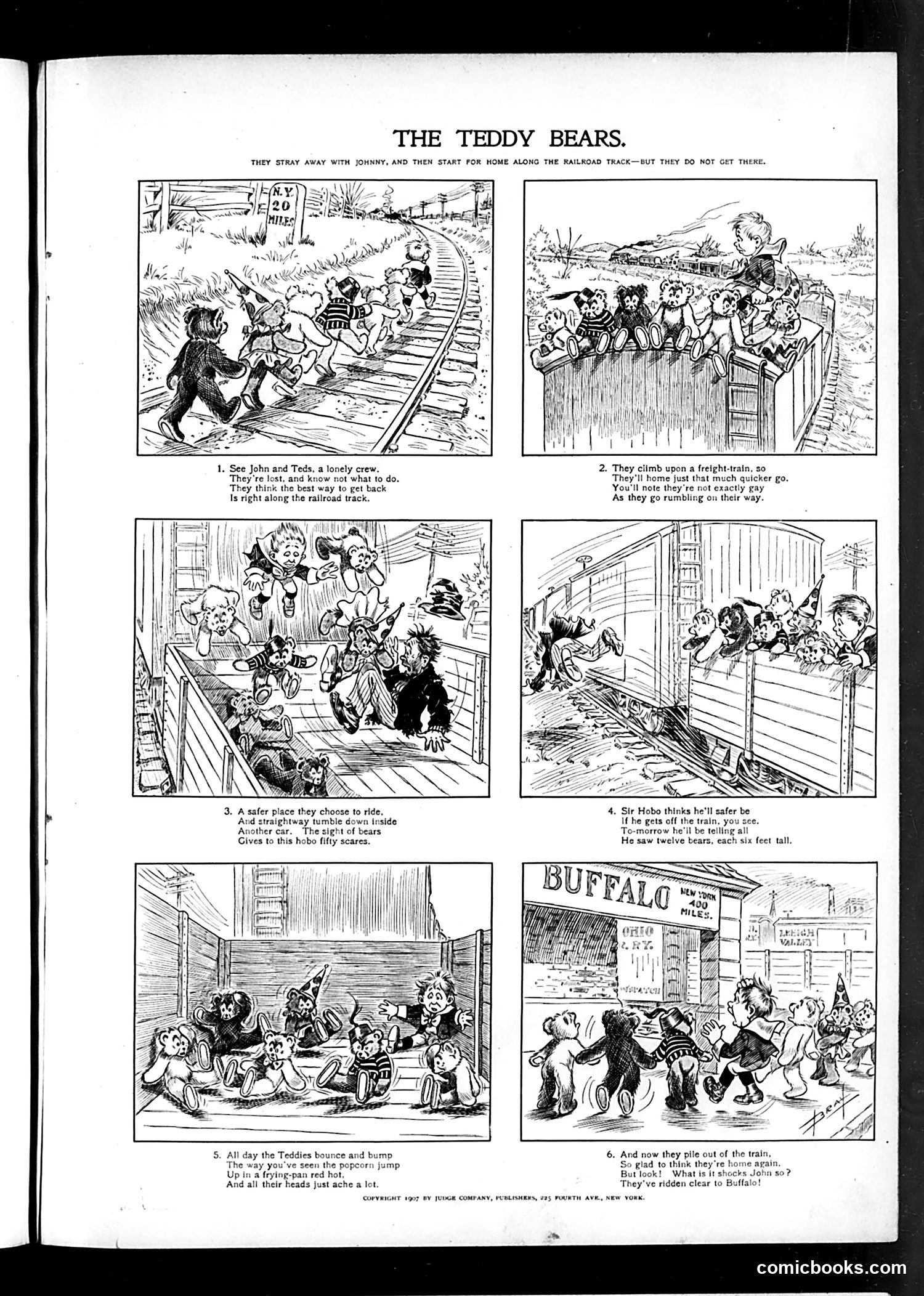
This is a lighthearted children's adventure comic, not political satire. It depicts toy teddy bears (likely referencing the "Teddy Bear" craze that followed President Theodore Roosevelt's 1902 bear-hunting incident) who escape with a boy named Johnny and attempt to reach home via railroad. The humor derives from slapstick mishaps: the bears stow away on a freight train, tumble chaotically between cars, frighten a hobo who later tells an exaggerated tale of seeing twelve six-foot-tall bears, and bounce around like popcorn. The final panels suggest they eventually reach Buffalo. The joke plays on the bears' misadventures and the hobo's tall tale—a common early-1900s comedic trope. This appears to be pure entertainment rather than commentary, typical of Judge's lighter fare alongside its political content.
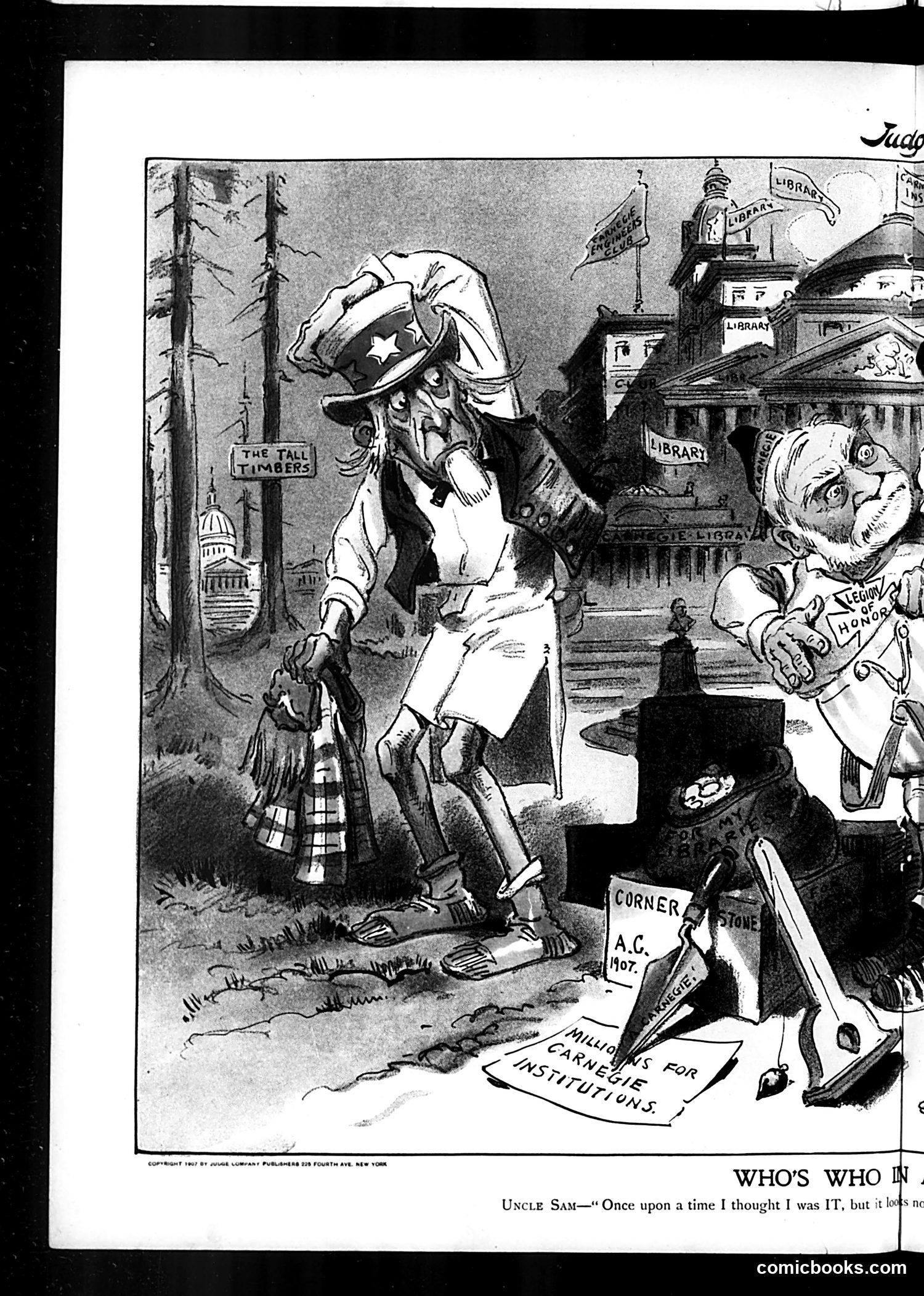
This Judge magazine cartoon depicts **Uncle Sam** (the personified United States) as a tall figure in his characteristic star-topped hat, appearing diminished or doubtful. The caption suggests Uncle Sam once believed he was important ("IT"), but "it looks nic[e]" (text appears cut off). The background shows **institutional buildings labeled "Library,"** and visible text references **"Corner Stone" and "Milling for Institutions,"** suggesting the cartoon critiques America's public institutions or infrastructure. The caricatured faces on the right appear to represent political or social figures mocking Uncle Sam's diminished status. Without the complete caption and visible date, the specific political event remains unclear, but the satire appears to mock American institutional or political decline during this period.
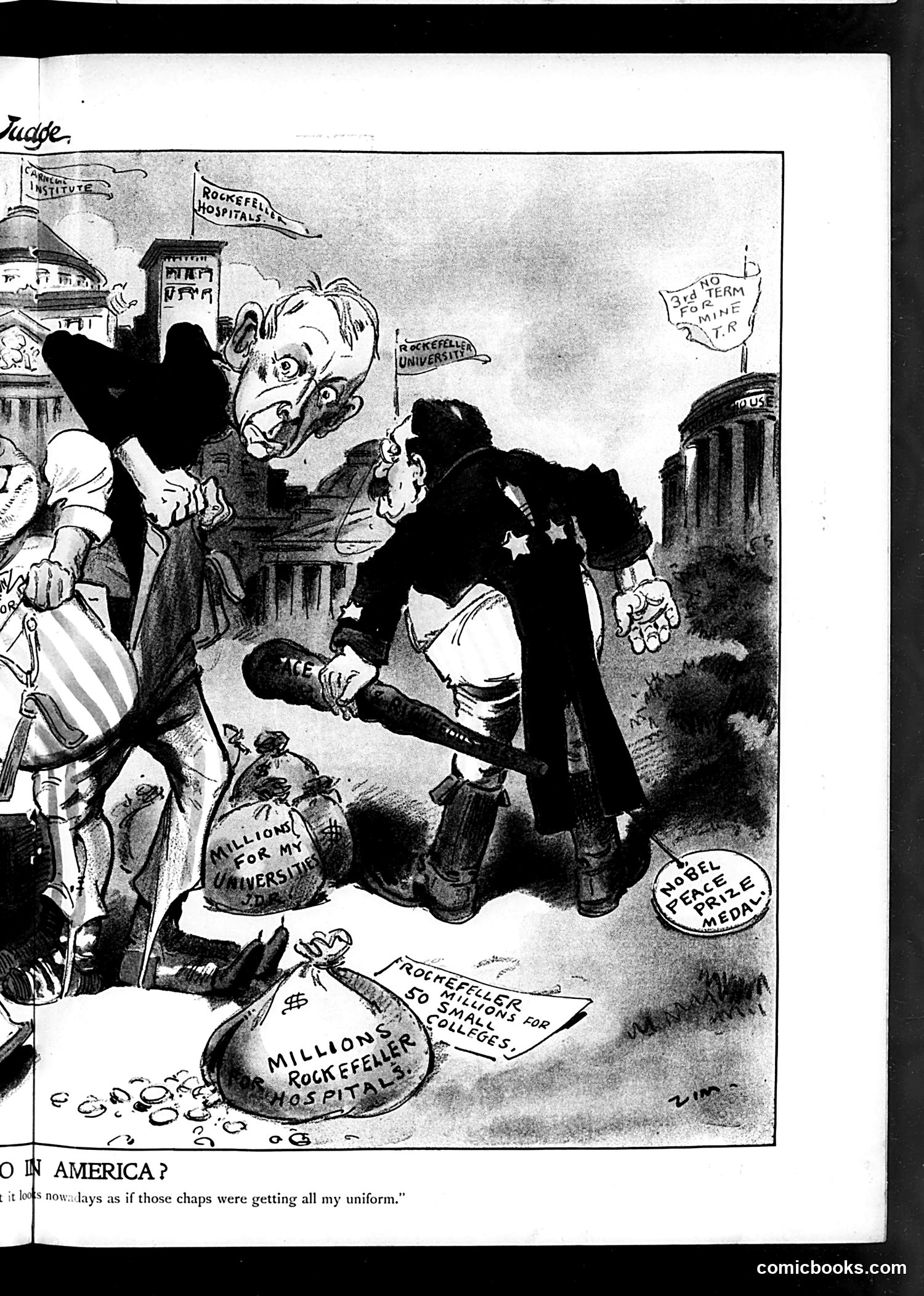
This Judge magazine cartoon satirizes wealthy American philanthropists, particularly the Rockefeller family. The central caricatured figure appears to be a wealthy industrialist confronted by Uncle Sam (the tall figure in black). The visible labels reference "Rockefeller Hospital," "Rockefeller University," and "Millions for My University"—highlighting how Rockefeller's massive charitable donations were reshaping American institutions. A sign mentions "Profiteer Donates for Damage to Colleges," suggesting satire about how wealth gained through business practices was being laundered through philanthropy. Uncle Sam's complaint—"those chaps were getting all my uniform"—implies the wealthy were appropriating patriotic authority and public trust through their institutional dominance. The cartoon critiques how industrial fortunes were consolidating control over American educational and medical institutions.
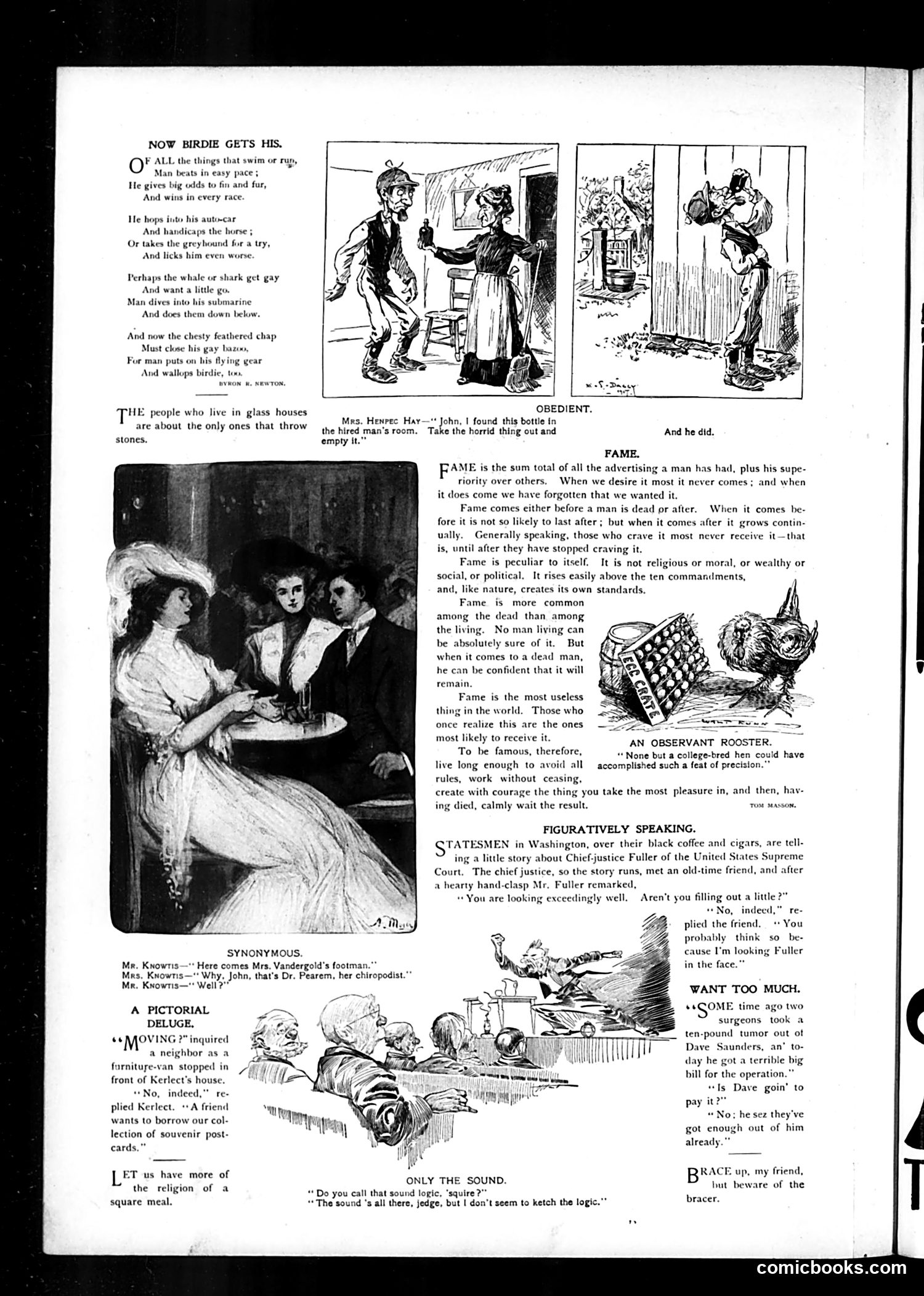
This page contains several humorous vignettes typical of early 20th-century American satirical humor: **"Now Birdie Gets His"** (top): A poem celebrating human dominance over animals—man outpaces all creatures, from whales to birds. The accompanying cartoons show a man triumphantly confronting nature, reflecting era-specific pride in industrial/technological progress. **"Obedient"**: A domestic scene where a hired man removes a bottle from his room—likely alcohol—depicting servant compliance and middle-class anxiety about lower-class moral behavior. **"Fame"**: A philosophical essay noting fame is useless, more common among the dead, and unpredictable—ironic commentary on society's obsession with reputation. **Other sketches** mock class pretensions ("Synonymous"—confusing a doctor with a footman), marital dynamics, and working-class humor about medical bills and surgical procedures. The page reflects Gilded Age preoccupations: technological superiority, class distinctions, servant management, and aspirational social climbing—all delivered through the magazine's trademark blend of text and satirical illustrations.
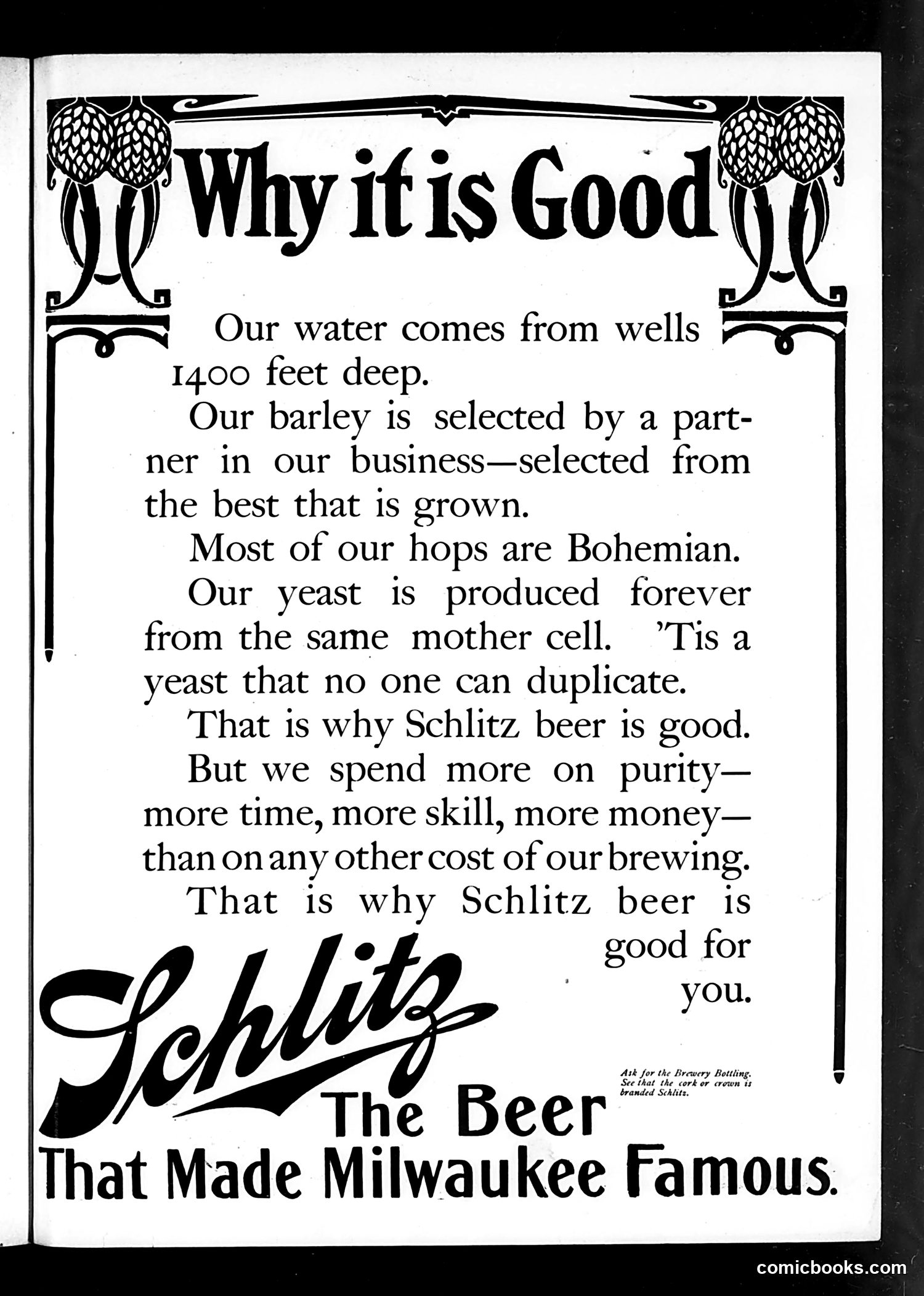
This is **advertising copy, not satire or cartoon content**. It's a Schlitz beer advertisement emphasizing the brewery's quality standards to modern consumers. The ad lists specific ingredients and processes: deep-well water (1400 feet), carefully selected barley, Bohemian hops, and—most notably—a unique yeast strain propagated from a single "mother cell" that competitors "cannot duplicate." The repeated emphasis on purity, time, skill, and money spent on quality aims to justify the product's premium positioning. The phrase "The Beer That Made Milwaukee Famous" references Milwaukee's historical dominance in American beer production during the late 19th/early 20th century, when the city became synonymous with brewing due to German immigration and established breweries like Schlitz. No political satire is present. This is straightforward product marketing leveraging quality claims and regional prestige.
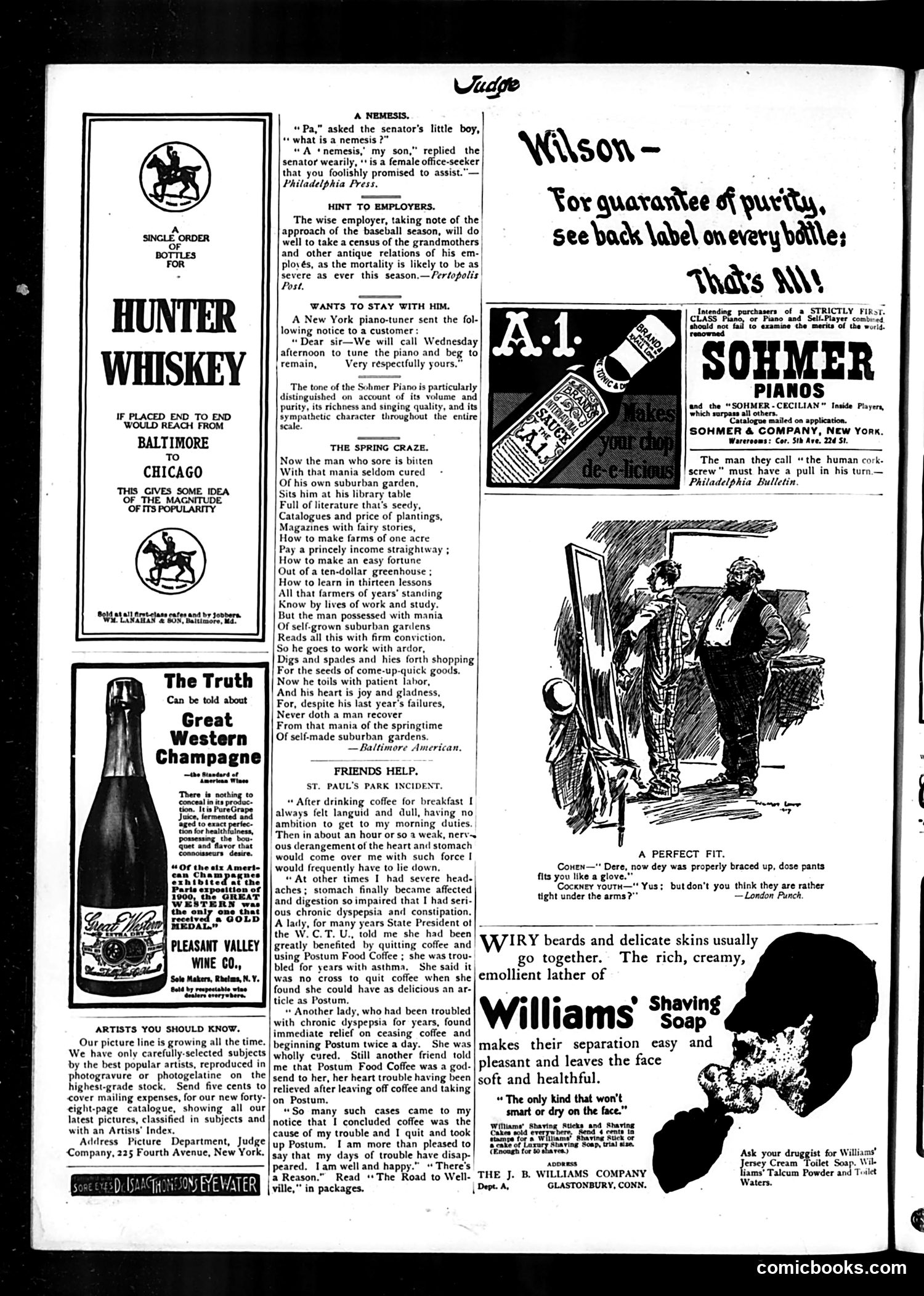
This page from *Judge* magazine (undated, but appears early 20th century) contains mostly **advertisements and short humor pieces** rather than political cartoons. **Key content:** - **"A Nemesis"** joke: satirizes female office-seekers pestering senators for positions—a swipe at women's political ambitions in the Progressive Era - **"Hint to Employers"**: dark humor about employees using baseball season as excuse for absences due to relatives' deaths - **"The Spring Craze"** poem: mocks amateur suburban gardeners who read how-to books, believing they can quickly succeed at farming despite past failures—gentle satire of optimistic self-improvement culture - **"Friends Help"**: testimonial advertisements for Postum (caffeine-free coffee substitute) and Williams Shaving Soap, using anecdotal "cures" for ailments The **large illustration** depicts what appears to be a physical altercation or arrest scene, captioned "A Perfect Fit," but the context remains unclear from visible text. The page is primarily **commercial**, using humor and endorsements typical of early 20th-century magazine advertising.
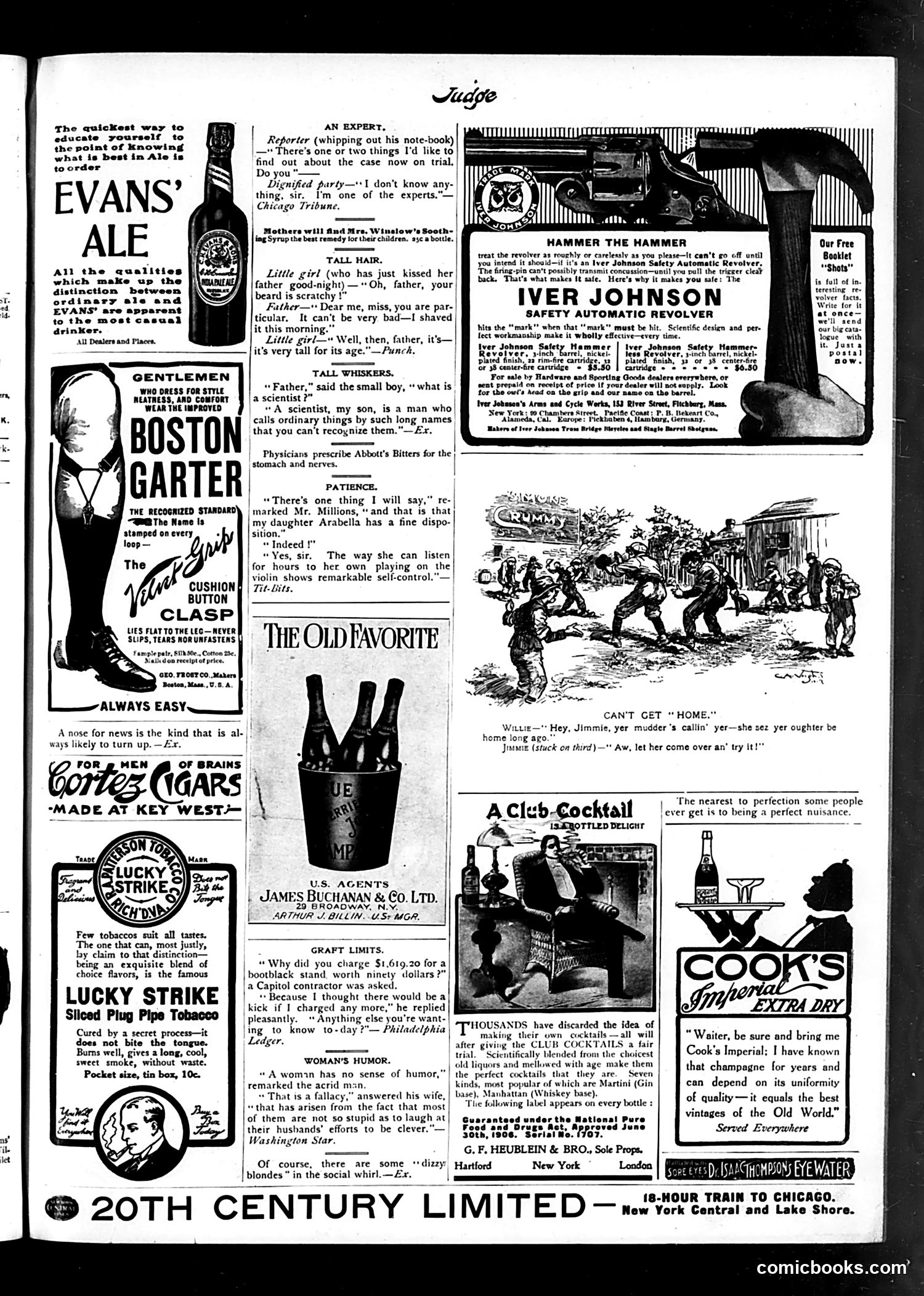
This page consists primarily of **advertisements and humorous filler content** rather than political cartoons. The jokes present are light social humor: a child commenting on her father's beard growth, a boy asking what a scientist is (punchline: they use unnecessarily complex names), and remarks about women's humor. These reflect early 20th-century domestic comedy conventions. The advertisements dominate—Evans' Ale, Boston Garter suspenders, Lucky Strike tobacco, and notably the **Iver Johnson Safety Automatic Revolver**, which emphasizes its safety features ("can't go off until you intend it should"). This firearm ad is historically significant as an example of casual weapons marketing that would be unthinkable today. There's also a graft joke about a Capitol contractor overcharging for a bootblack stand, reflecting Progressive Era concerns about government corruption. The page represents Judge magazine's mixed format of satirical commentary, domestic humor, and commercial advertising typical of early-1900s American magazines.
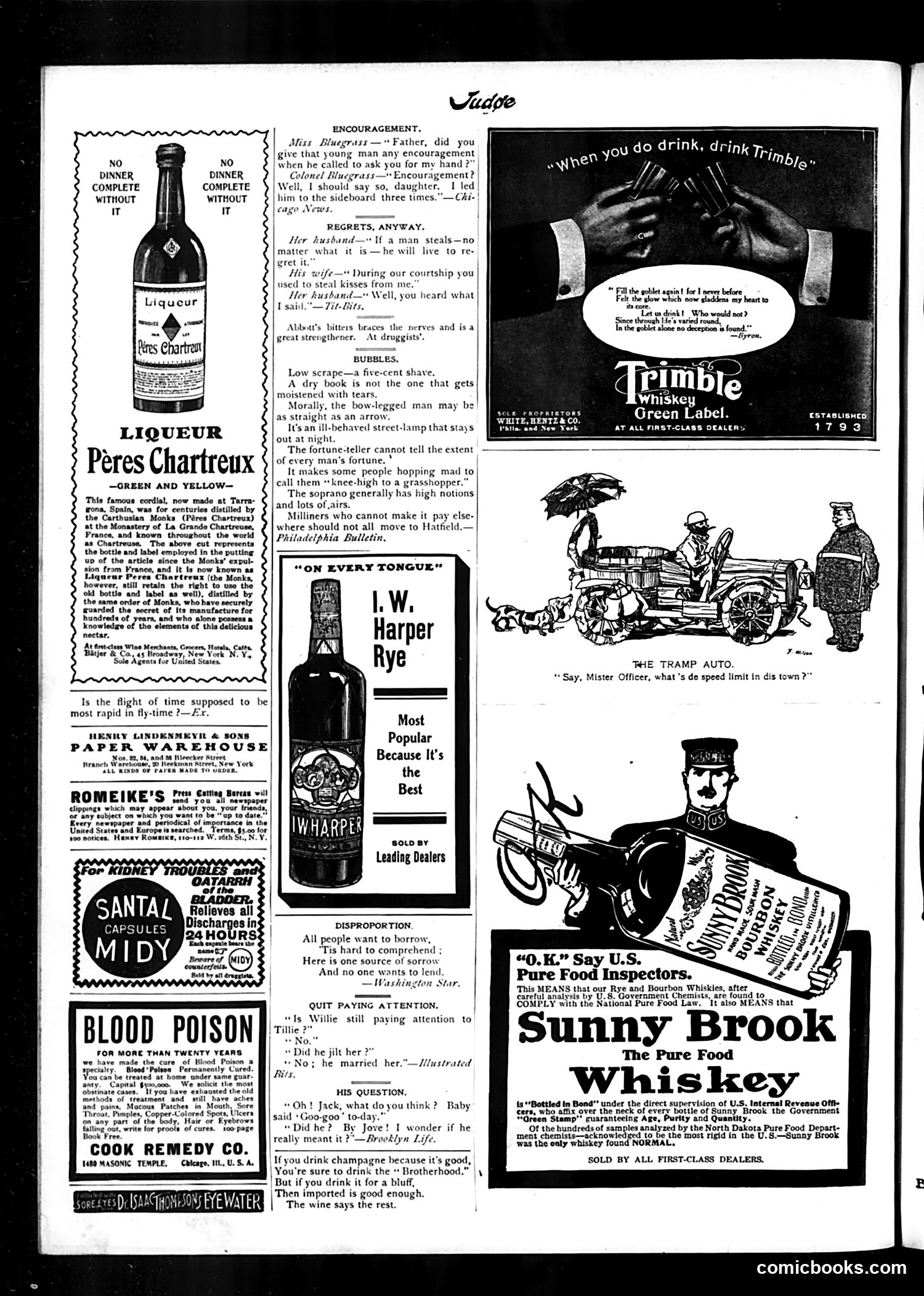
This page is primarily **advertising**, typical of Judge magazine's commercial content. The ads showcase various products with period humor and claims. Key elements include: **Liqueur & Spirits Ads**: Multiple whiskey and liqueur advertisements dominate, featuring brands like Pérès Chartreux, I.W. Harper Rye, Trimble Whiskey, and Sunny Brook. These ads emphasize quality and Pure Food Inspector approval—likely referencing the 1906 Pure Food and Drug Act's implementation, when such certifications became marketing tools. **Patent Medicine Ads**: "Blood Poison" remedies and "Santal Capsules" for kidney troubles represent the era's widespread dubious medical claims, later cracked down upon by the Pure Food Act. **Humorous Short Jokes**: Scattered jokes mock social pretension (the tramp asking about speed limits), marital dynamics, and fortune-tellers—typical Judge satire targeting middle-class behavior. **"The Tramp Auto" cartoon**: Depicts a working-class vagrant questioning authority about speed limits, satirizing the novelty and class implications of automobiles. The page reflects early 1900s American consumer culture and regulatory transition.
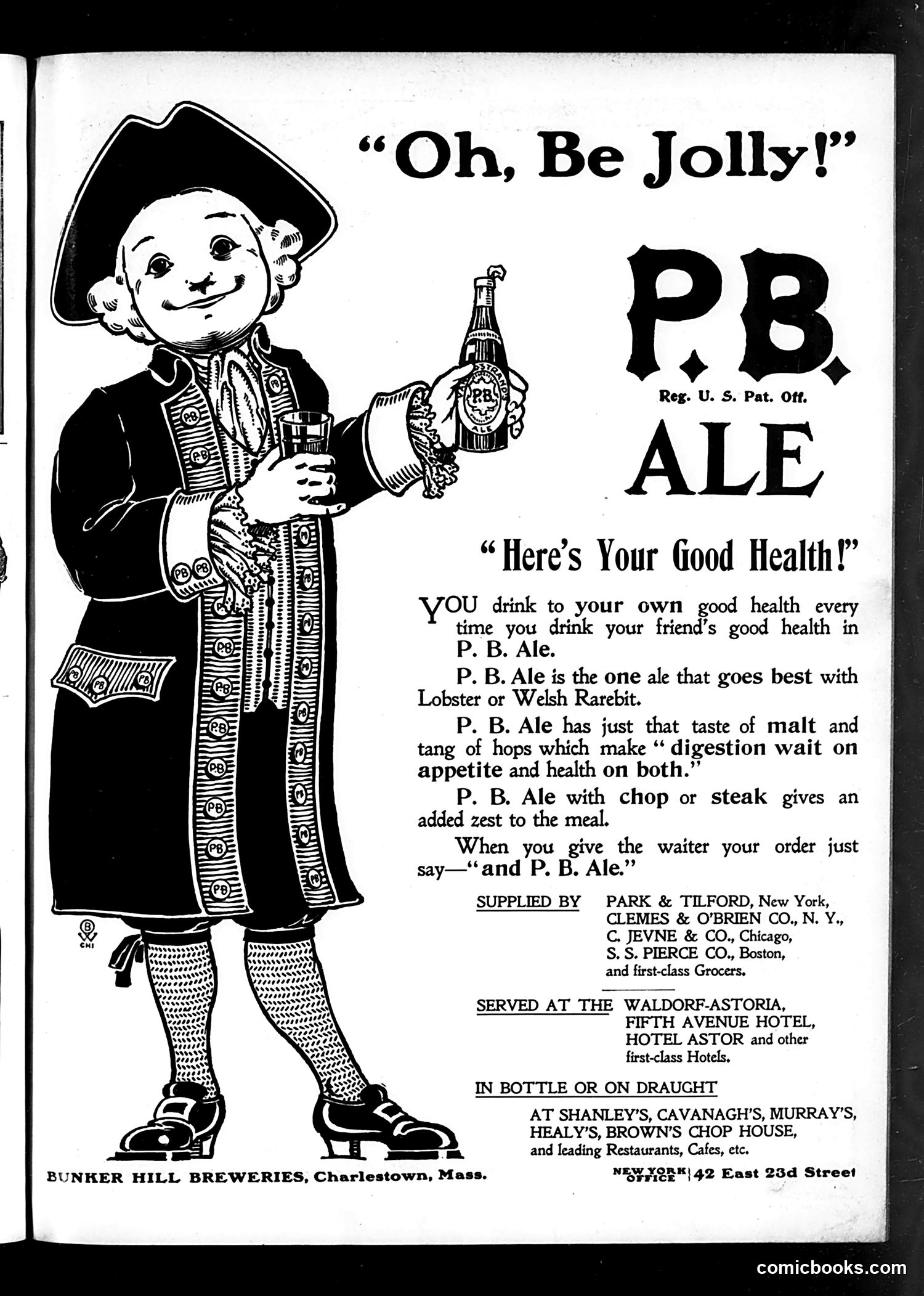
This is a full-page **advertisement**, not political satire. It promotes P.B. Ale from Bunker Hill Breweries (Charlestown, Massachusetts) using a jolly, rotund figure in old-fashioned Dutch or colonial clothing as a mascot. The ad claims health benefits typical of early 20th-century beer marketing—that ale aids digestion and complements meals. It emphasizes the product's availability at upscale venues (Waldorf-Astoria, Fifth Avenue Hotel) and fine restaurants, positioning it as a premium beverage. The phrase "Here's Your Good Health!" reflects period advertising that associated alcohol consumption with wellness—a common claim before modern health science and before Prohibition regulations restricted such messaging. The mascot's cheerful demeanor and period costume suggest Continental sophistication and tradition, marketing tools designed to appeal to affluent urban consumers.
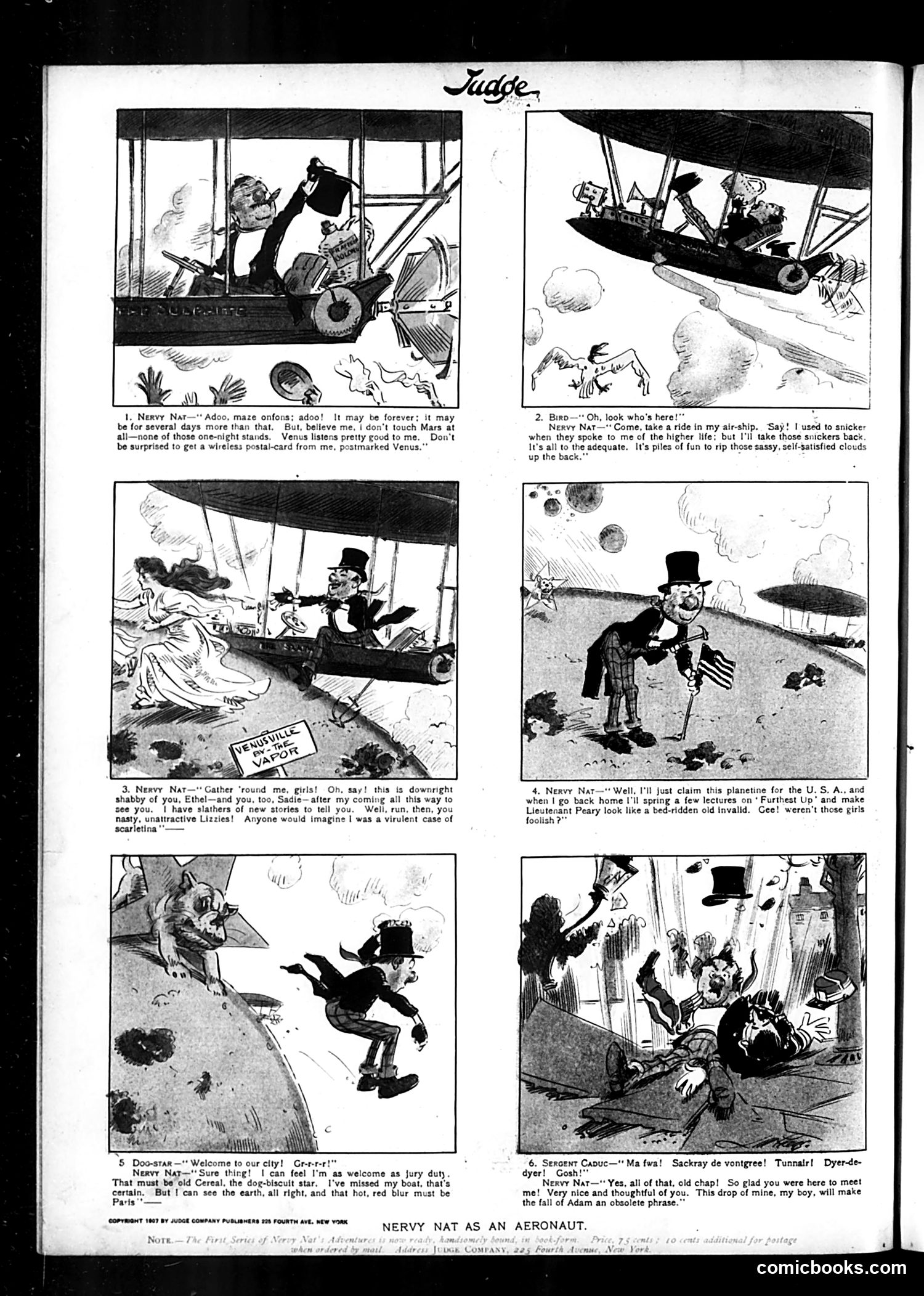
This is a comedic strip about "Nervy Nat," a brash character who takes an airship journey. The satire targets early aviation enthusiasm and male braggadocio around 1910s space-age fantasies. **Key references:** - Panel 1: Nat dramatically claims he'll visit Venus via wireless postcard—mocking exaggerated claims about new technology - Panel 2-3: He boasts to women about his adventure and "higher life" experiences - Panel 4: References Lieutenant Peary (Arctic explorer), suggesting Nat will become famous by claiming planetary discoveries for the U.S. - Panels 5-6: He encounters an alien civilization and condescendingly claims their territory **The joke:** Nervy Nat embodies the arrogant American adventurer, making grandiose claims about space travel while displaying typical period prejudices and self-importance. The comic mocks both the wild optimism about aviation technology and masculine posturing of the era.