
A complete issue · 16 pages · 1885
Judge — March 14, 1885
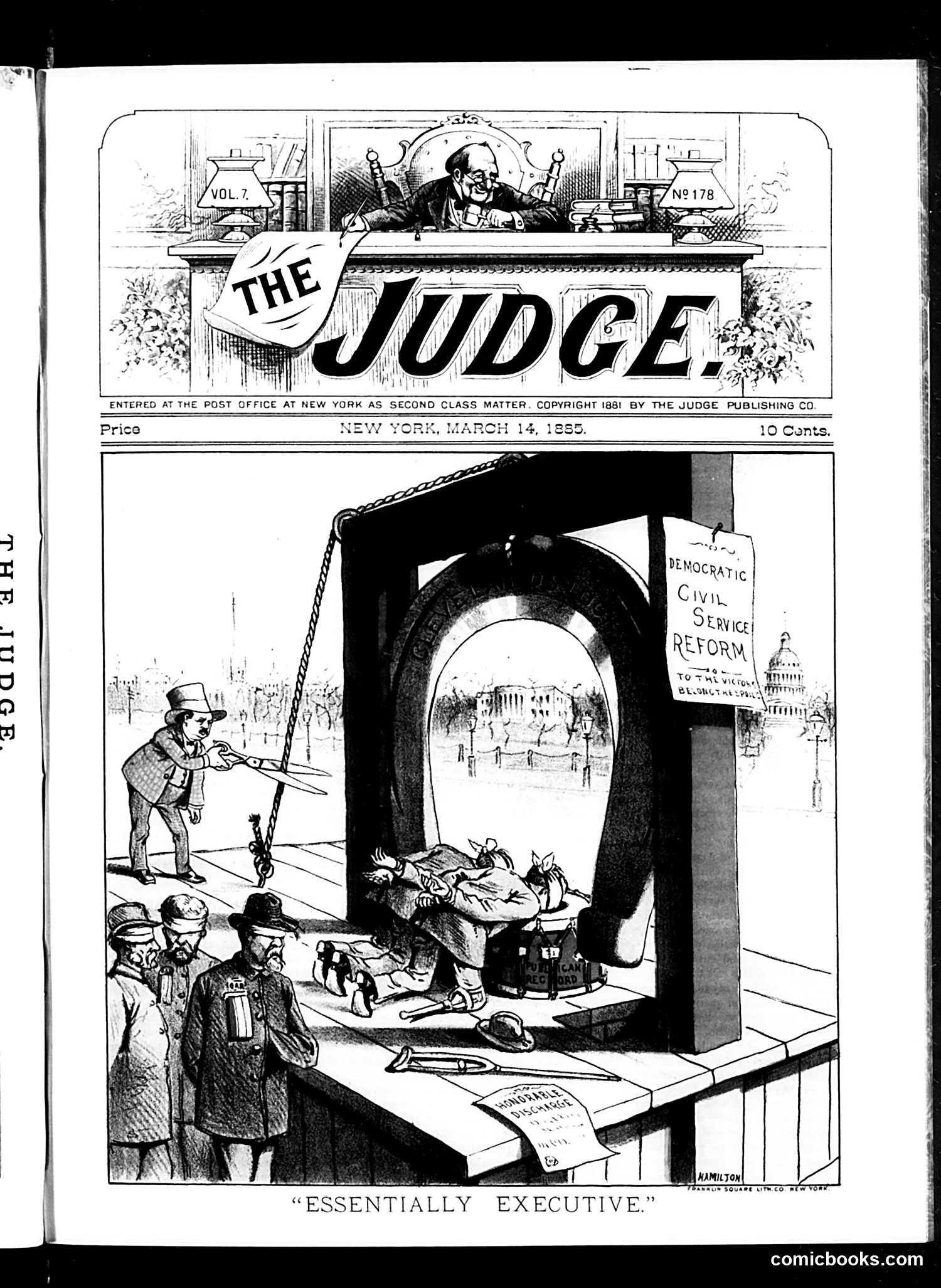
This 1885 *Judge* magazine cover satirizes civil service reform efforts during the Gilded Age. The cartoon depicts a large boot crushing various figures and documents labeled "Democratic Civil Service Reform" and "To the Victors Belong the Spoils." A man on the left (likely representing an executive or political figure) operates a lever controlling the boot—suggesting that despite reformers' efforts to eliminate patronage and corruption, executive power still crushes civil service reform initiatives. The trampled figures and scattered debris represent reform advocates being literally ground under an enormous executive authority. The satire critiques how governmental executives—regardless of rhetoric about reform—maintained control over the spoils system that awarded government jobs based on political loyalty rather than merit.
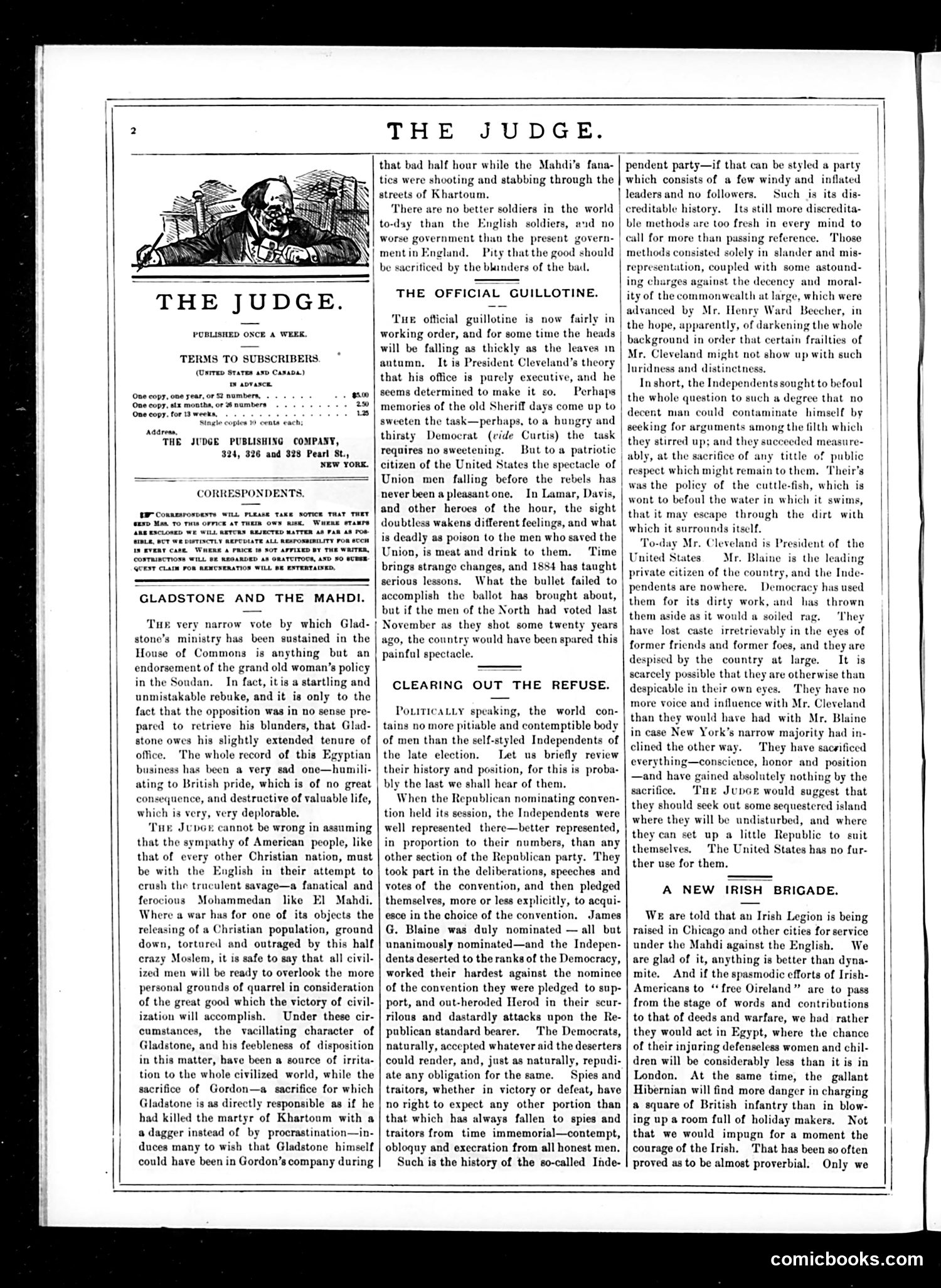
**"Gladstone and the Mahdi"**: This article criticizes British Prime Minister William Gladstone's weak handling of the Sudan conflict against the Mahdi (a religious leader). Judge defends the military campaign as justified—freeing Christians from an oppressive "fanatical" Islamic ruler—but blames Gladstone's hesitation for the death of General Gordon at Khartoum. The piece expresses frustration that capable English soldiers suffer from poor political leadership. **"The Official Guillotine"**: This section attacks President Cleveland's mass removal of Republican appointees, replacing them with Democrats. Judge frames this as betrayal: Union soldiers who saved the nation are being purged in favor of former Confederates like Lamar and Davis. The "guillotine" metaphor equates the dismissals with violent execution, condemning Cleveland's partisan revenge against Republicans who won the Civil War. Both pieces reflect Judge's conservative, Republican perspective opposing Democratic policies.
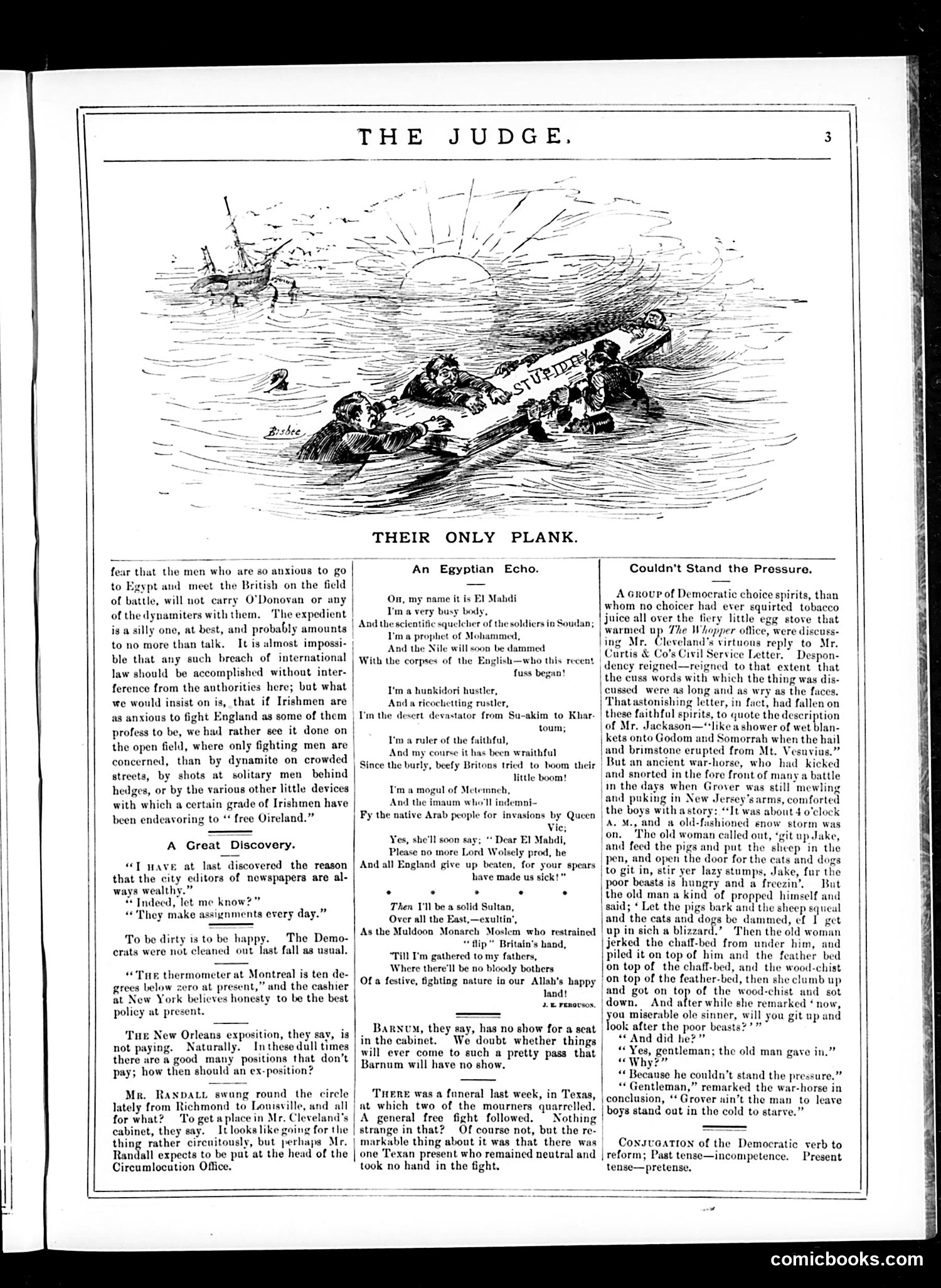
This page from *Judge* magazine contains several political satires from the 1880s: **"Their Only Plank"** (main cartoon): Depicts a sinking ship labeled "Democracy" with figures clinging to a plank. It mocks the Democratic Party's weak political position after electoral losses. **"An Egyptian Echo"**: A song-poem mocking El Mahdi, the Sudanese Islamic military leader who fought British forces (under Lord Wolseley) in the 1880s. The satire ridicules both the Mahdi's claims and Democratic opposition to British interventionism. **Miscellaneous jokes**: Mock Democratic Party failures, praising Republican victories; joke about Mr. Randall (likely Samuel J. Randall, a Democratic politician) seeking a cabinet position; and various other brief political jabs. The overall tone reflects *Judge's* Republican editorial stance, celebrating Democratic setbacks and mocking their leadership during this period.
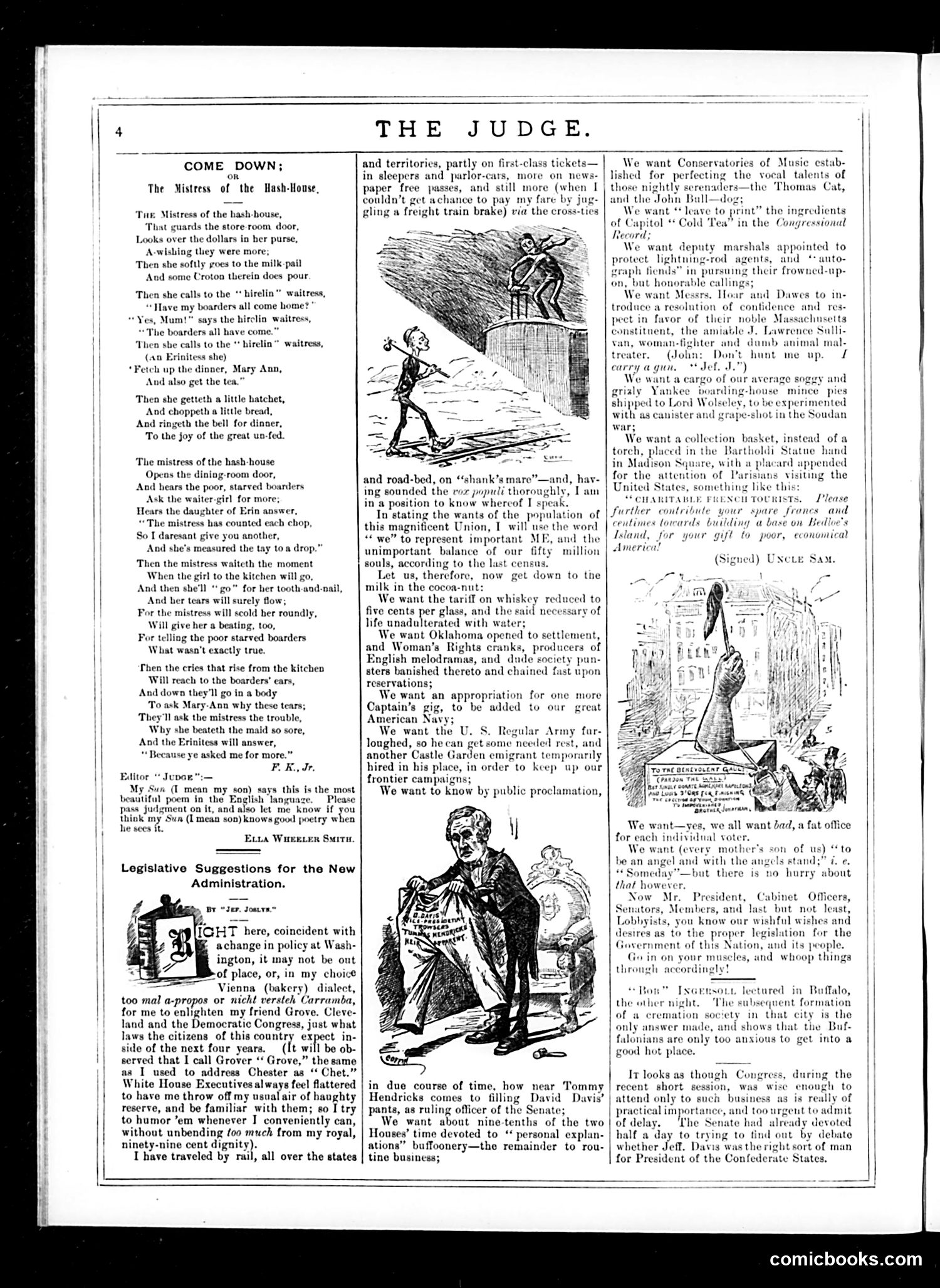
This page contains two distinct pieces of social satire: **"The Mistress of the Hash-House"** (left): A poem mocking cheap boarding-house operations. It depicts a miserly proprietor who waters down milk, portions food stingily, then beats her Irish maid employee to cover her own cruelty—blaming the servant when boarders complain about meager portions. The satire targets exploitative labor practices and dishonest business operators. **"Legislative Suggestions for the New Administration"** (right): The author, claiming to represent "the vox populi" from traveling extensively, offers mock legislative wishes to the incoming Cleveland administration. These range from reasonable (tariff reform) to absurd (exiling women's-rights advocates to Oklahoma reservations, adding a naval captain's gig). The satire mocks both the presumption of self-appointed spokesmen and potentially the incoming Democratic administration's actual priorities. Both pieces use exaggeration and ironic proposals to critique social problems and political attitudes of their era.
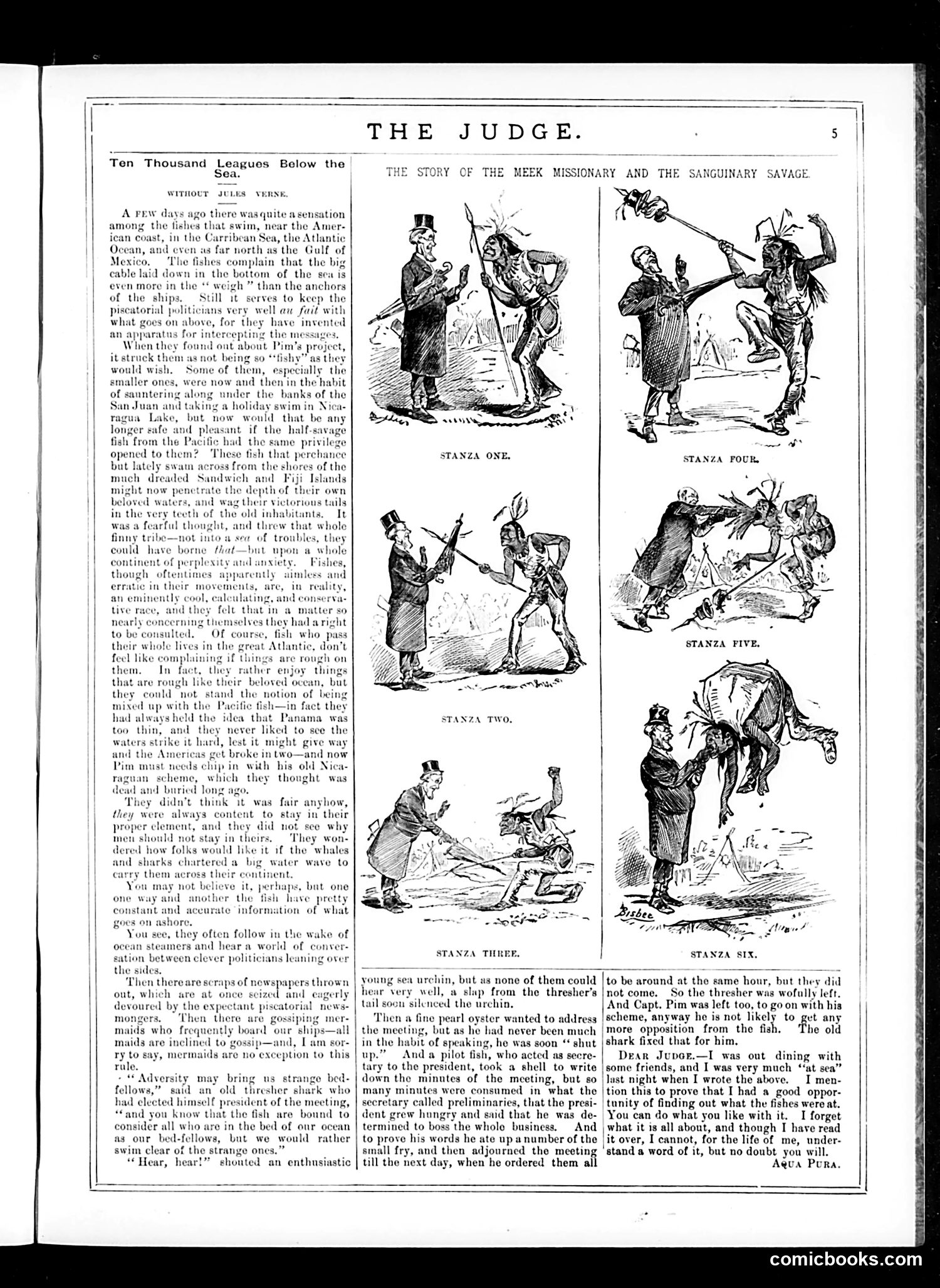
This is a Jules Verne–inspired satirical piece mocking opposition to the Panama Canal project. The fish represent Atlantic Ocean inhabitants who fear the canal will breach the barrier between Atlantic and Pacific waters, mixing their ecosystems. The satire targets American politicians' concerns about the canal, presented as self-interested and ridiculous. A "thresher shark" presides over a fish meeting to oppose the scheme, but the gathering devolves into chaos—the oyster can't speak, the pilot fish gets distracted, and ultimately the shark eats the smaller fish and abandons the cause. The joke: opposition to Captain Pim's (likely an inventor or engineer) canal project is portrayed as absurd posturing by petty, incompetent creatures. The "sanguinary savage" stanzas (right margin illustrations) appear unrelated—possibly a separate satirical narrative about missionary work. The piece ridicules both canal opponents and fish-meeting incompetence simultaneously.
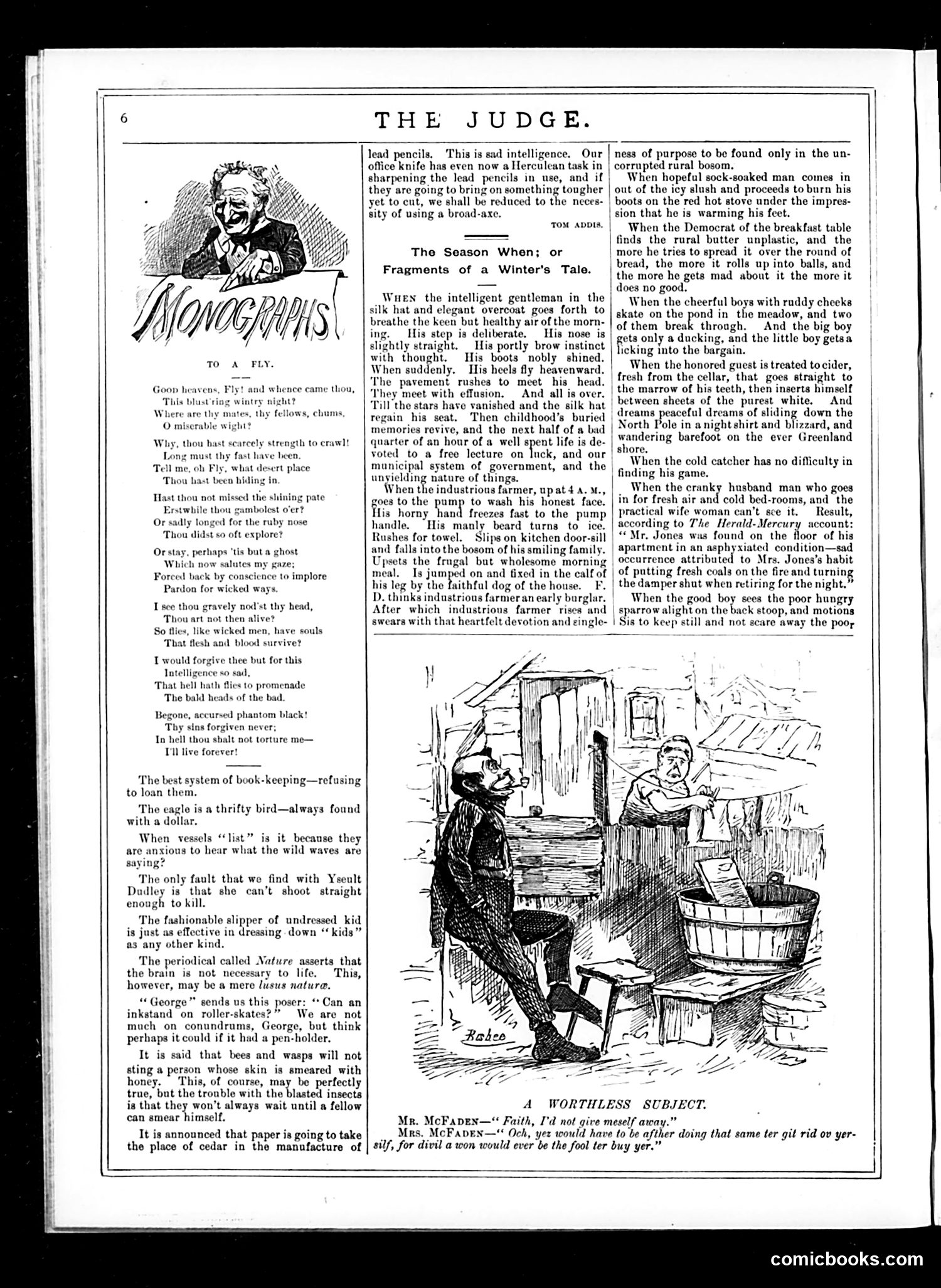
This page from the 19th-century satirical magazine **Judge** contains humorous social commentary on winter inconveniences rather than political satire. The main content includes: **"Monographs to a Fly"** — A mocking poem addressing a dying winter fly, treating it as a soul seeking redemption while poking fun at human pretension and philosophy. **"The Season When; or Fragments of a Winter's Tale"** — A series of vignettes satirizing predictable winter mishaps: a gentleman's silk hat gets knocked into snow; a farmer's hand freezes to a pump; a child causes domestic chaos. These mock the ritualistic miseries of winter and rural life, portraying both city sophistication and rural simplicity as equally ridiculous. **The cartoon "A Worthless Subject"** shows a domestic dispute where a husband dismisses his wife's complaint about a disagreement, implying marital tensions. The humor targets universal human folly, class pretension, and seasonal hardships rather than specific political figures or events. The tone is light satire aimed at middle-class readers.
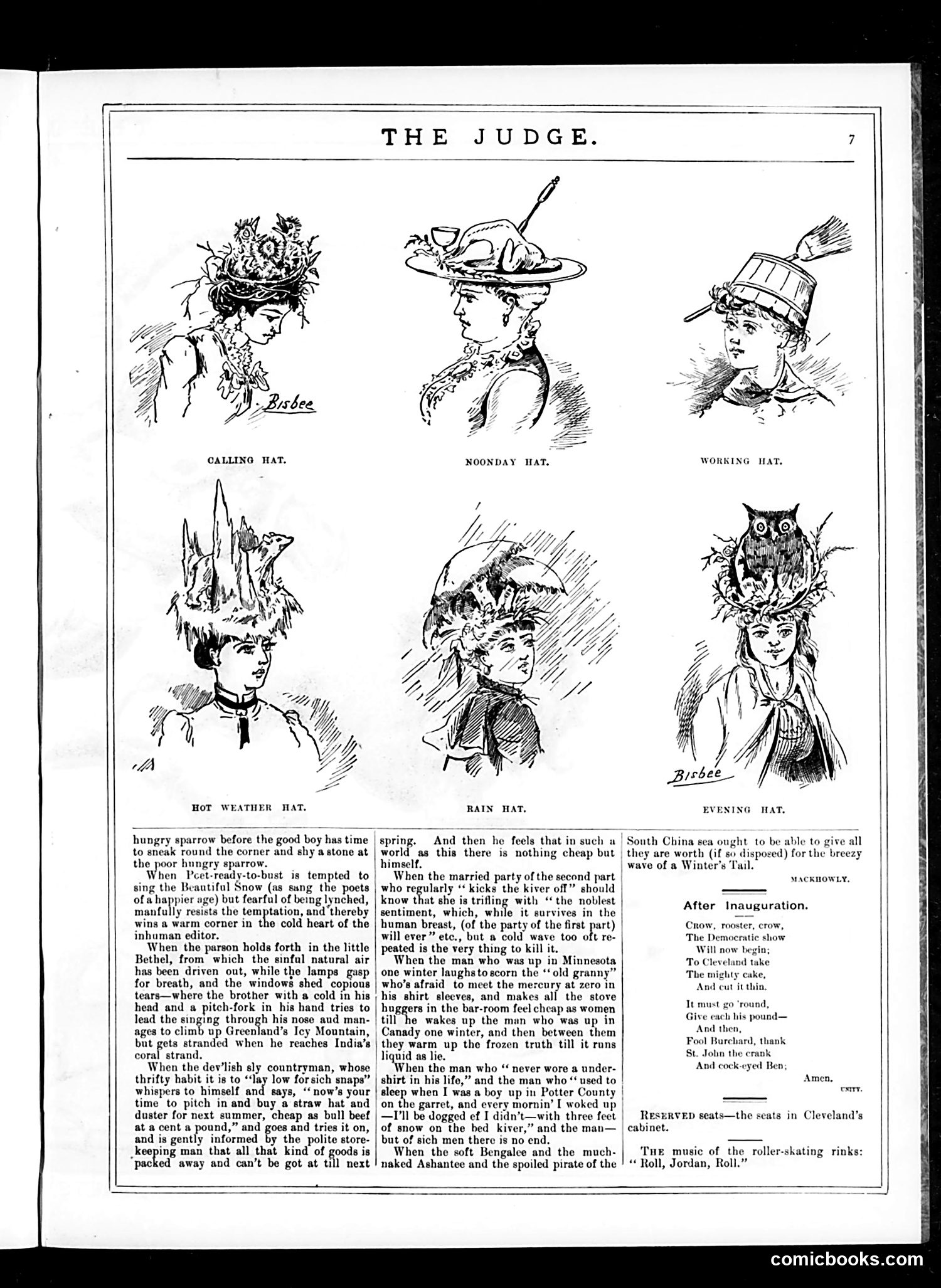
This page features six humorous hat illustrations labeled by social occasion (Calling Hat, Noonday Hat, Working Hat, Hot Weather Hat, Rain Hat, Evening Hat)—satirizing Victorian-era fashion conventions and women's elaborate headwear. The accompanying text consists of satirical vignettes mocking American society: hypocritical religiosity, class pretension, boastful braggadocio about weather endurance, and colonial attitudes toward non-Western peoples. The humor targets self-deception and social hypocrisy across different character types. A separate section titled "After Inauguration" appears to reference President Cleveland's cabinet appointments, mocking the political patronage system through religious language ("Reserved seats"). The mention of "Fool Burchard" likely references a political controversy, though specifics are unclear without additional context. The overall satire reflects *Judge* magazine's typical late-19th-century commentary on American social pretension and political corruption.
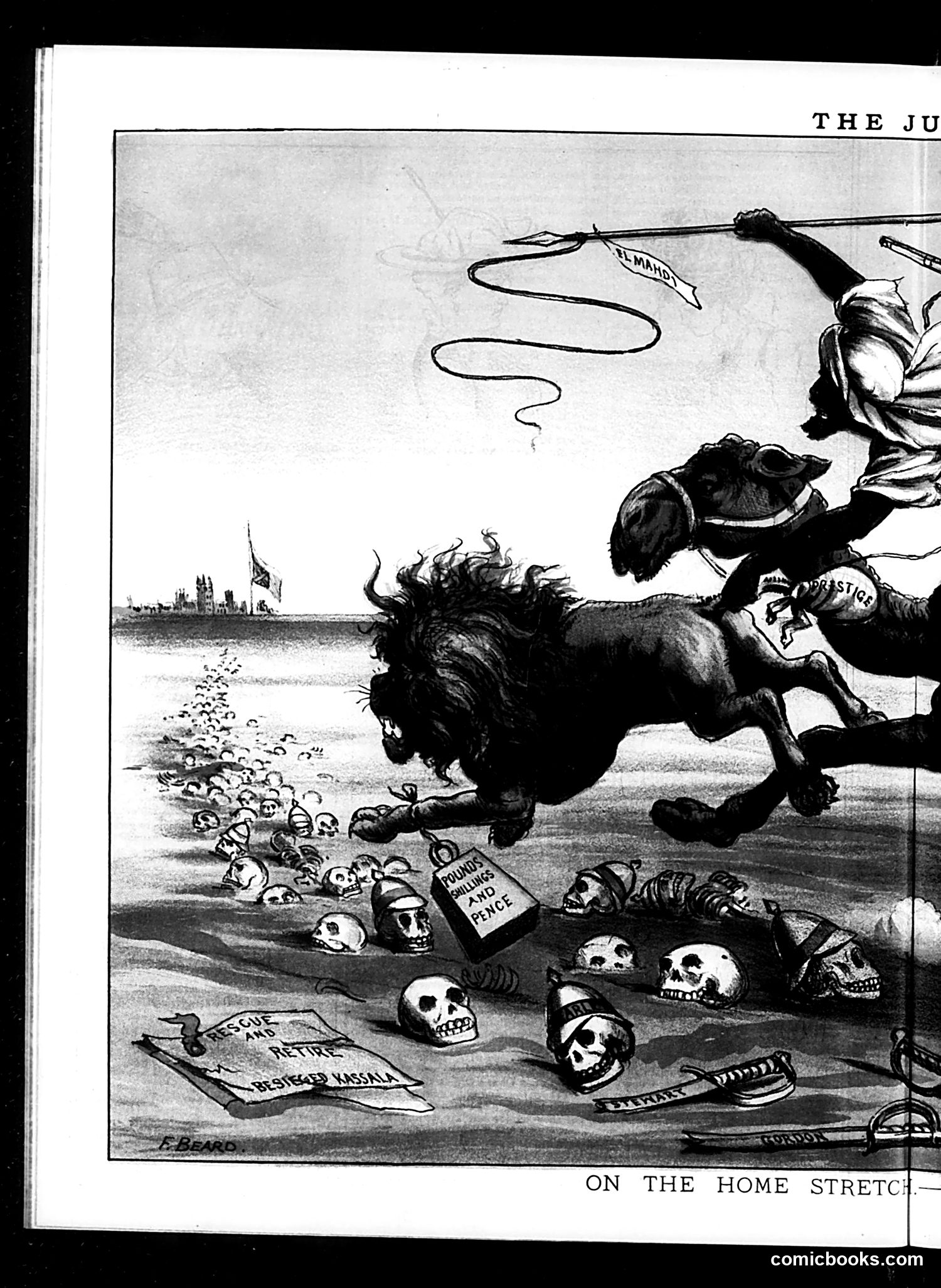
This political cartoon depicts a dark allegorical scene. A demonic or bestial figure (likely representing a malevolent force or enemy) is being driven toward the shore, scattering skulls and bones in its wake. The skeletal imagery and labels appear to reference casualties or destruction from war. In the background, a cityscape with flags suggests a nation or homeland under threat. The phrase "home stretch" indicates the final phase of conflict. The cartoon's visceral horror—the scattered death, the grotesque figure being expelled—suggests commentary on either WWI's conclusion or a particular wartime crisis. The composition implies victory or expulsion of this evil force back toward the sea, away from civilization. Without clearer text labels on the bones and signs, the specific enemy or conflict remains uncertain, though the imagery powerfully conveys war's devastating human cost.
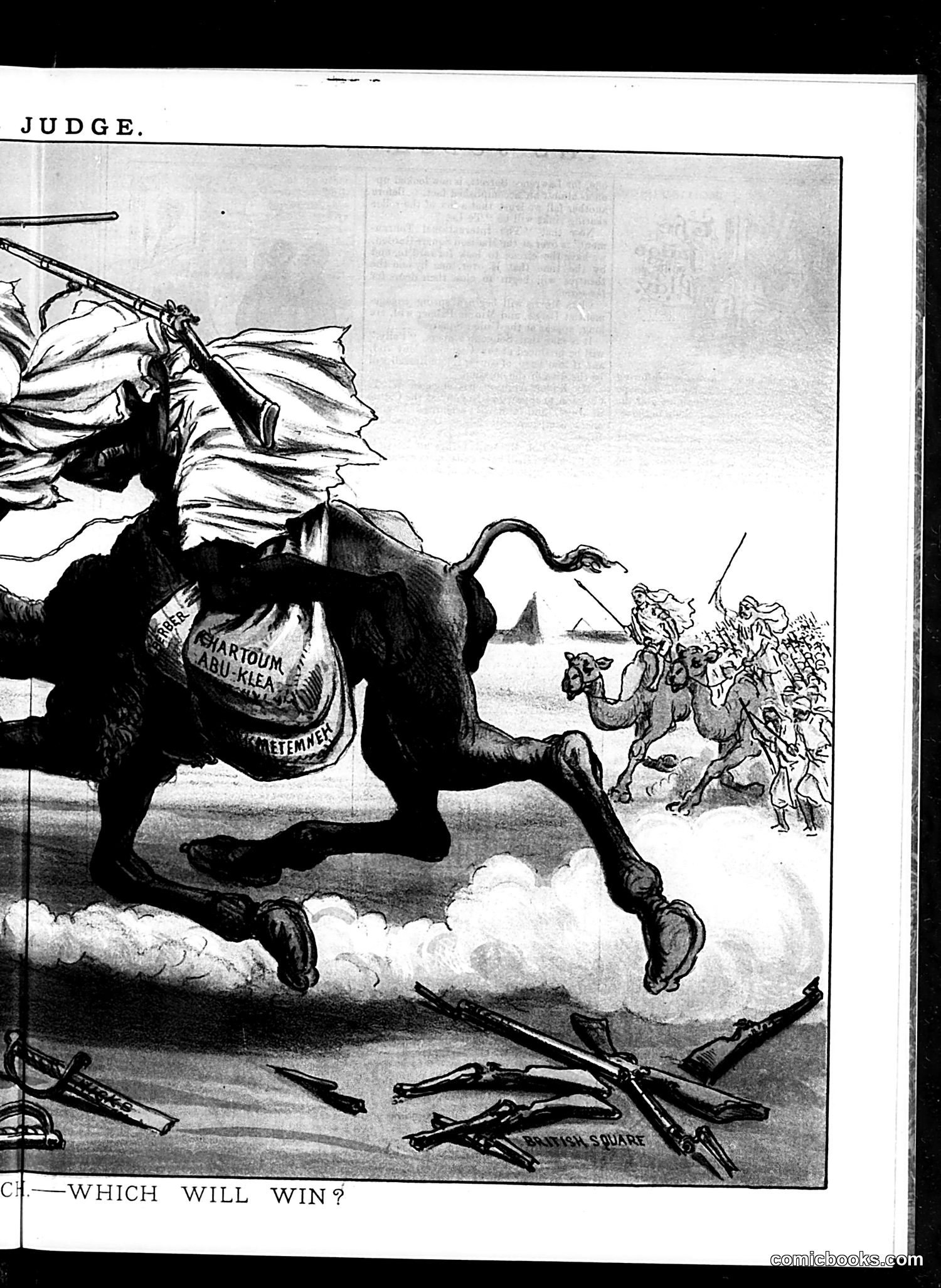
This cartoon titled "Which Will Win?" depicts a confrontation between two forces. A large, menacing figure (appearing to be an elephant or similar beast) carries bags labeled with text that appears to reference "Chartoulm" and other partially legible terms—likely representing political or economic interests. The creature faces a group of smaller human figures on the right. The composition suggests a David-versus-Goliath scenario, asking which side will prevail in an implied struggle. Without clearer text on the labels or additional context about Judge magazine's publication date, the specific political conflict remains unclear. However, the scale disparity emphasizes the unequal power dynamics between the two sides. The "Judge" masthead indicates this is satirical commentary on contemporary American politics or social issues, likely from the late 19th or early 20th century.
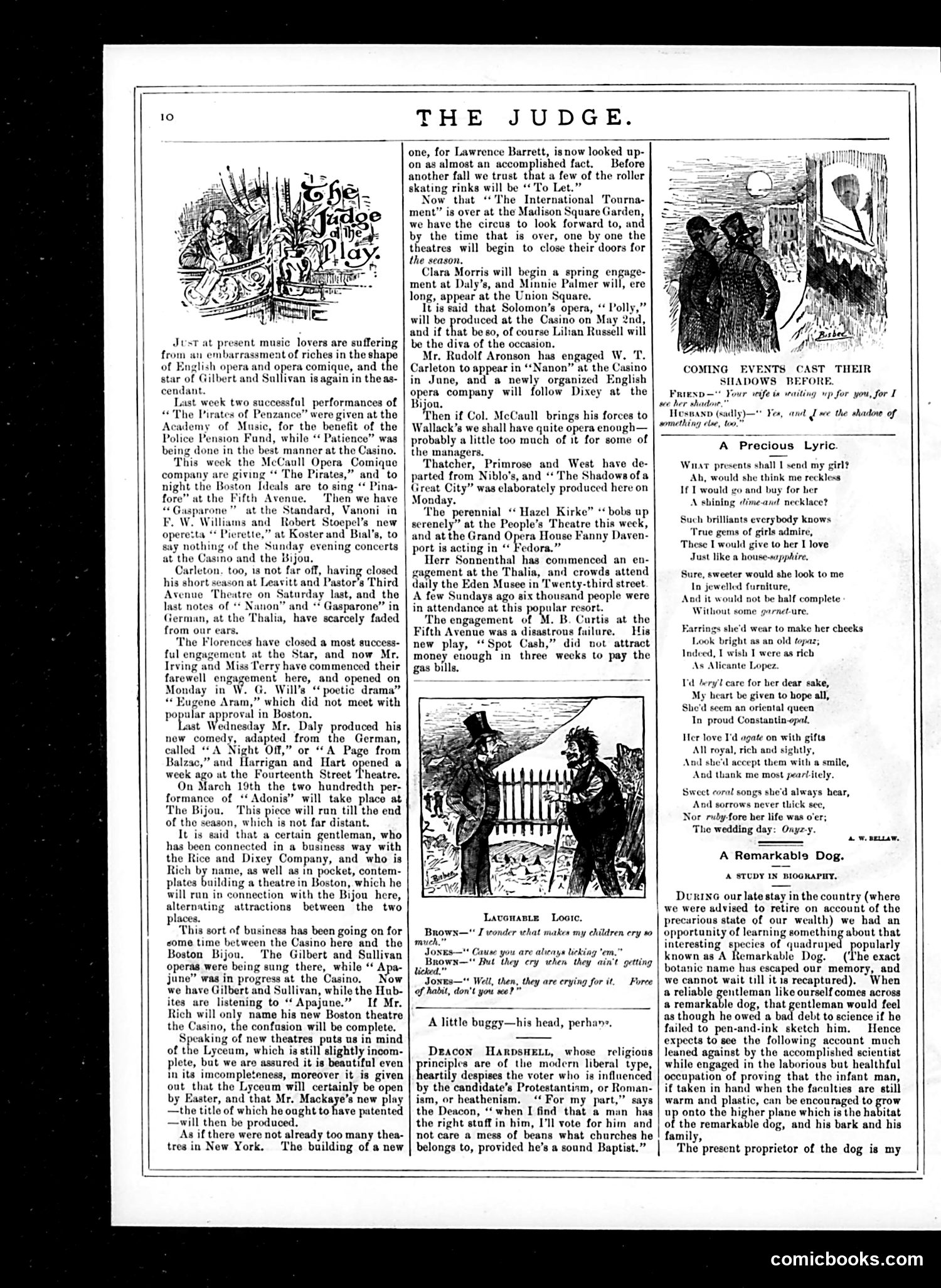
This page from *Judge* magazine is primarily theatrical gossip and criticism, not political satire. The author catalogs current and upcoming Broadway productions—Gilbert and Sullivan operas, comic operas, and dramatic works—discussing their success and cast changes. The satirical content is light and industry-focused rather than political. The author jokes about theater oversaturation in New York (sarcastically suggesting roller skating rinks will soon be vacant), and gently mocks the confusion caused by the Casino and Boston Bijou alternating the same productions. The page includes two illustrated vignettes: "Laughable Logic" (a domestic dispute) and "A Remarkable Dog" (a biographical sketch about an unusual canine). These are humorous anecdotes unrelated to the theatrical commentary. Overall, this represents *Judge*'s entertainment coverage—specialized criticism for urban readers interested in theater, rather than political commentary.
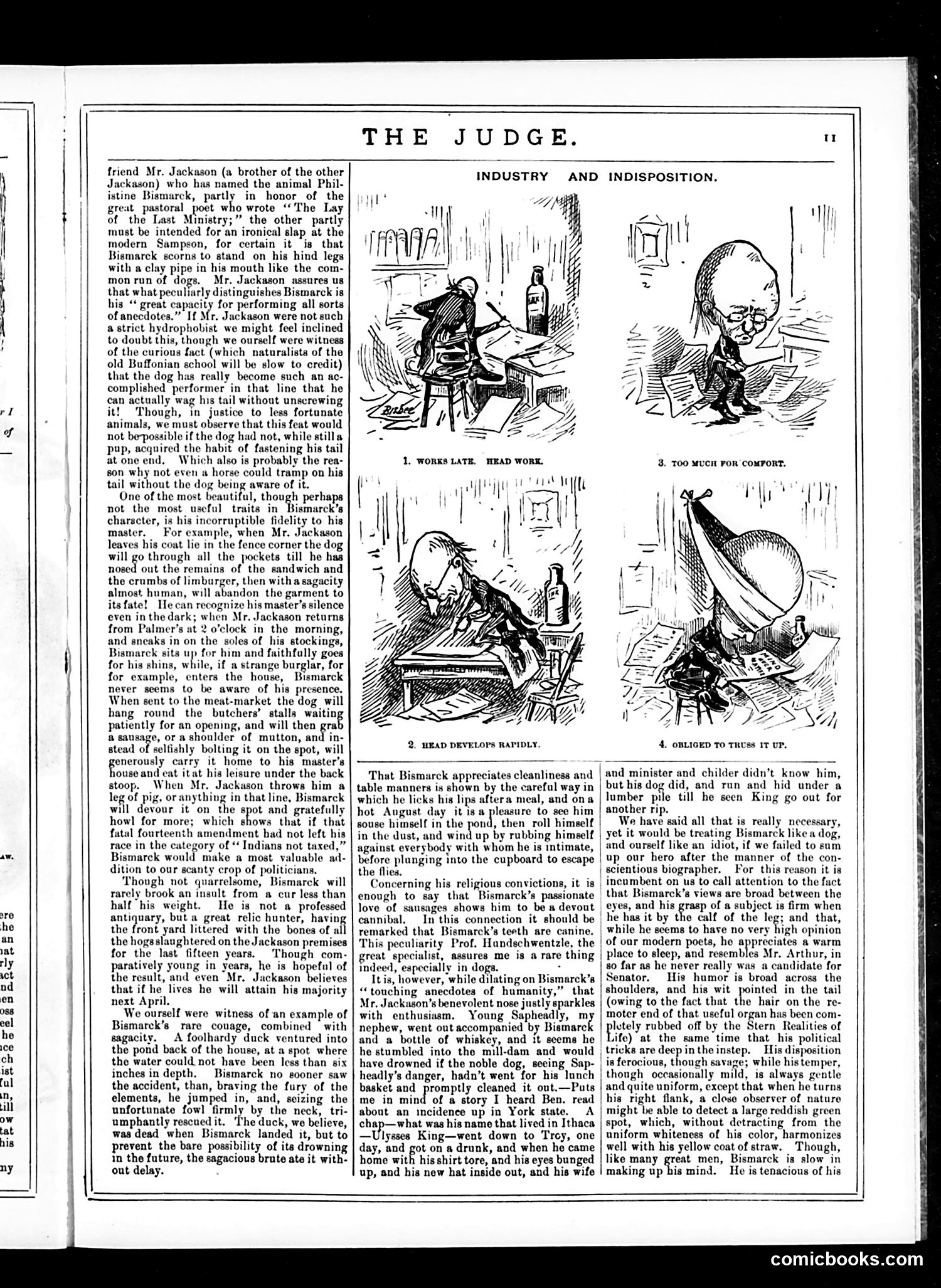
This page satirizes a dog named "Philistine Bismarck" owned by Mr. Jackson. The satire works through ironic praise of the dog's supposed virtues—loyalty, industry, and moral character—which are actually vices or absurdities. The four cartoon panels illustrate the joke: the dog works late, develops habits rapidly, seeks excessive comfort, and is obliged to "truck it up" (presumably engage in undignified behavior). The lengthy text mock-seriously catalogs Bismarck's "qualities": he steals food from butchers but generously carries it home; he recognizes his drunk master by silence; he's a "great relic hunter" (bone collector). The humor hinges on treating a scavenging dog as if he were a respectable citizen—even comparing him favorably to politicians. The reference to the "Fourteenth Amendment" and "Indians not taxed" suggests this is post-Civil War satire, using the dog as a vehicle to mock both Reconstruction-era politics and contemporary hypocrisy about character and industry.
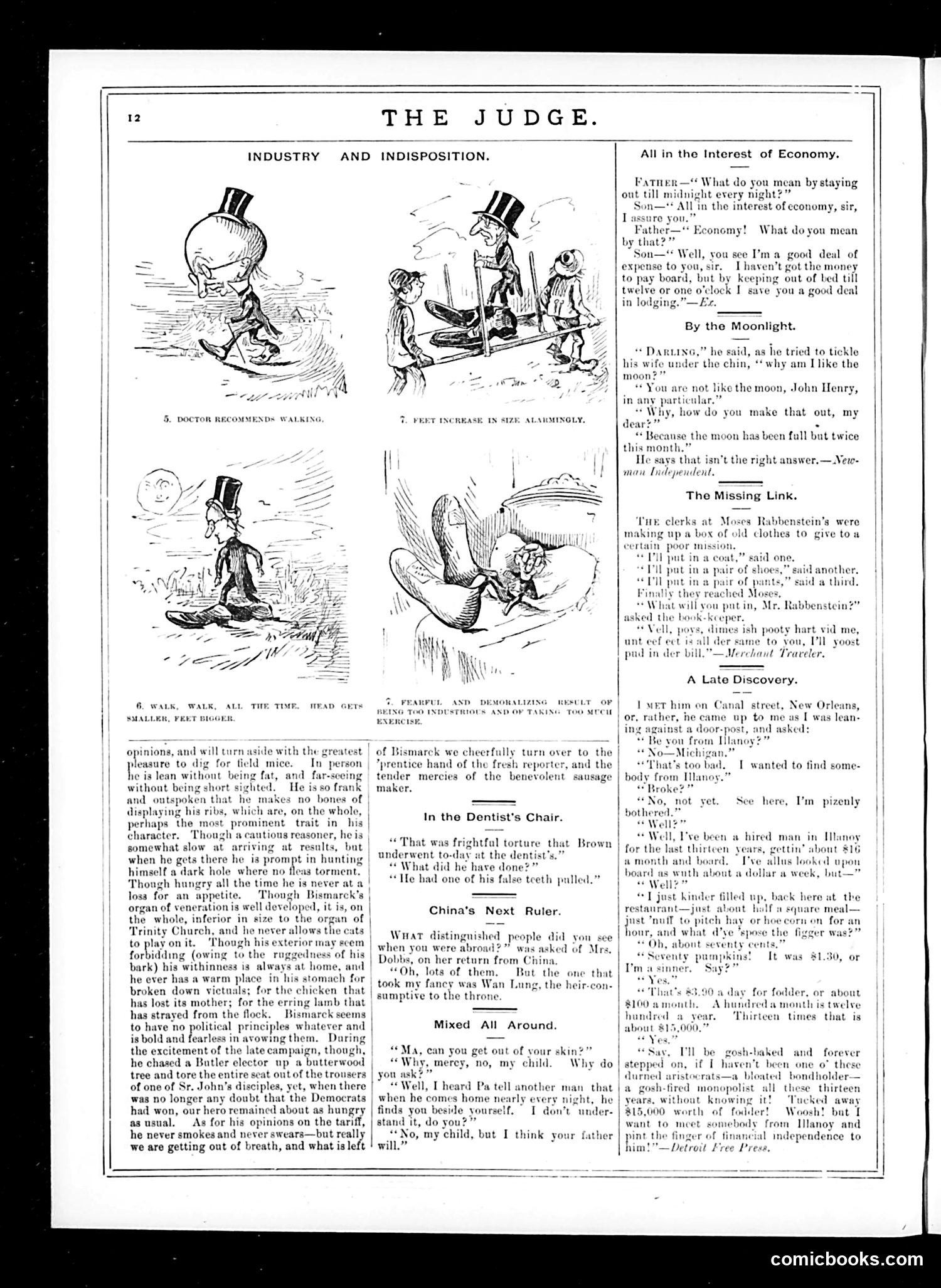
This page from *Judge* magazine contains several brief satirical pieces typical of late-19th-century American humor: **"Industry and Indisposition"** (cartoons 3-8): A mock-serious phrenological analysis of "Bismarck" (a dog), parodying pseudo-scientific character assessment popular then. The joke is the absurd application of human analysis to an animal. **"In the Dentist's Chair"**: A simple pun about tooth extraction. **"China's Next Ruler"**: References Wan Lung as "heir-consumptive to the throne"—a dated joke playing on "consumptive" (tuberculosis-stricken) versus "heir-presumptive." **"Mixed All Around"** and other brief pieces: Domestic humor exploiting then-common marital stereotypes and double meanings (woman being "beside herself" with emotion). **"The Missing Link"**: Jewish charitable workers debate donations, with dialect humor reflecting period ethnic stereotyping. The page exemplifies *Judge*'s mix of puns, pseudo-scientific satire, and social observation aimed at middle-class readers.
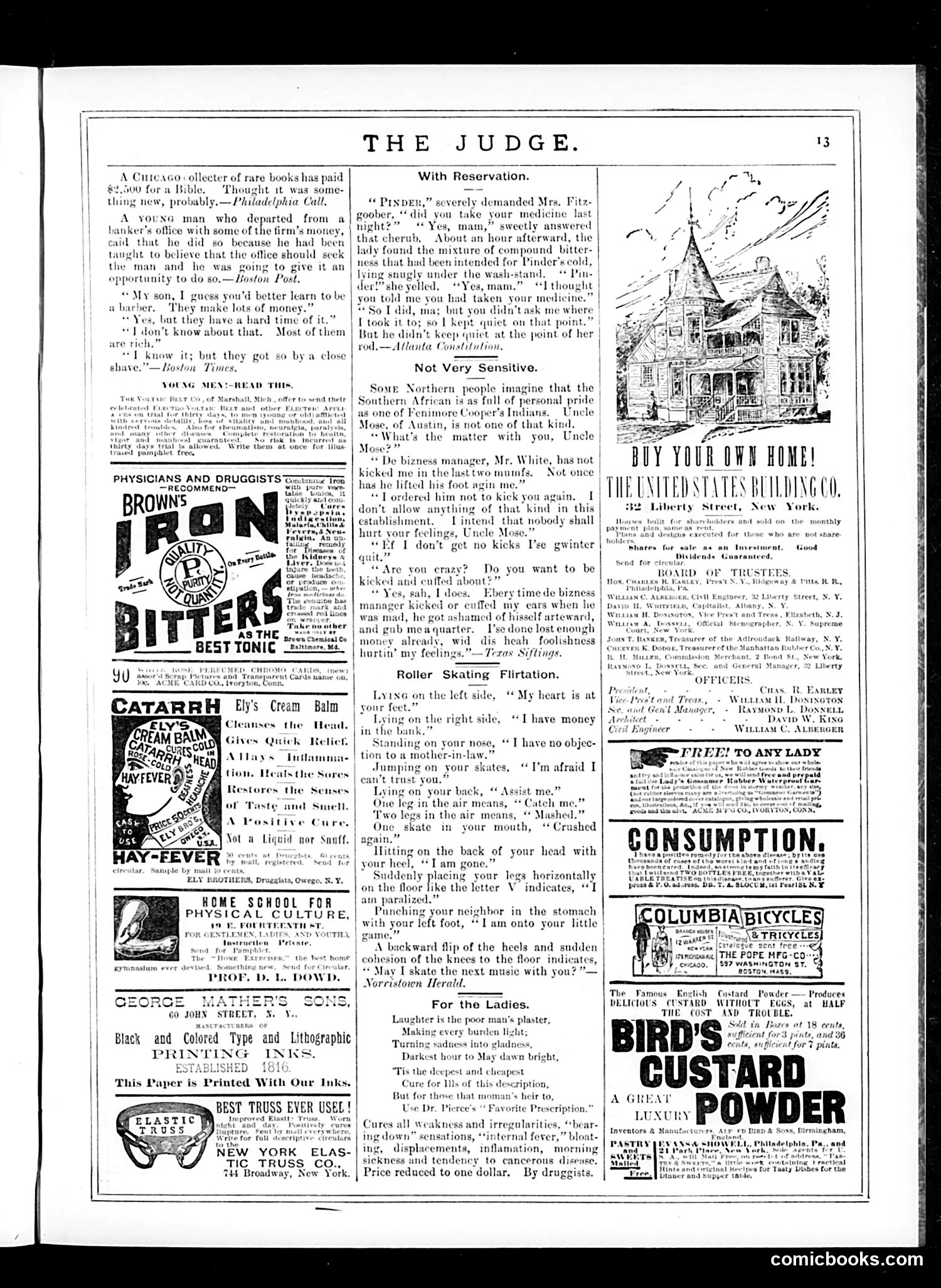
This page contains mostly **brief humorous anecdotal items** and advertisements rather than political cartoons. The main humor pieces are: **"With Reservation"** and **"Not Very Sensitive"**: These are racist dialect jokes about African Americans ("Mose" character), reflecting the period's widespread stereotyping. One plays on a child evading medicine; the other portrays a Black man as insensitive to beatings from his boss—the "joke" being he cares only about lost wages, not injury. **"Roller Skating Flirtation"**: A nonsense poem humorously listing what skating positions supposedly indicate about romantic intentions (leg in air = "Catch me," etc.). The rest consists of period advertisements for patent medicines (trusses, custard powder, various "cures"), printing services, and building/investment companies. The page reflects Judge's typical mixed format: satirical commentary mixed with product ads. The racist content was standard for mainstream American humor of this era, though offensive today.
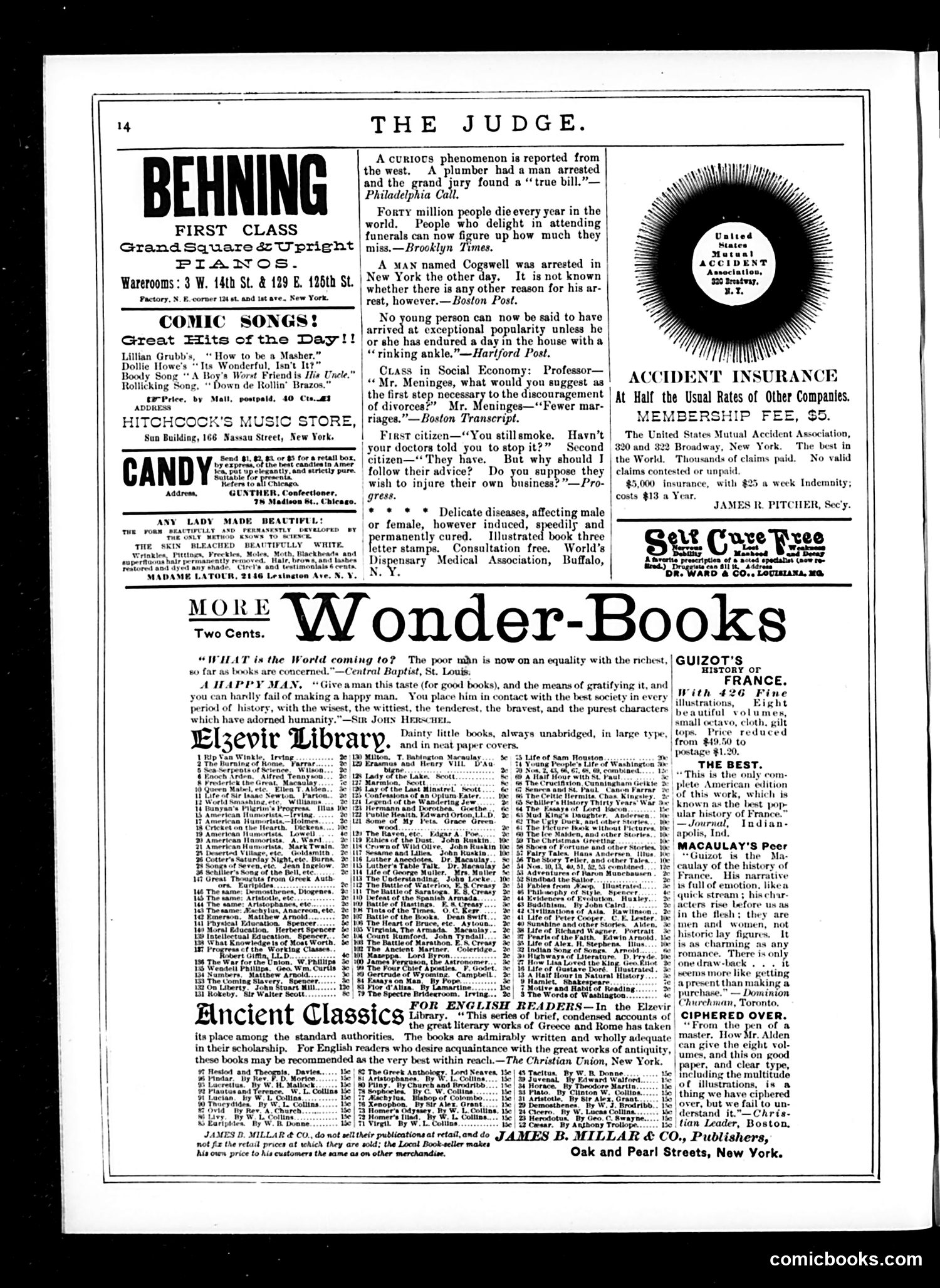
This page is primarily **advertising**, not satirical content. It features commercial ads for pianos, music stores, books, and patent medicines typical of late 19th-century publications. The small section titled "THE JUDGE" contains brief satirical **news items and jokes** rather than illustrated cartoons: - A joke about a plumber arresting a man (punning on "true bill") - Mortality statistics humor - Social commentary on divorce (fewer marriages = fewer divorces) - A smoking doctor joke (don't follow medical advice that hurts their business) The page's main focus is the "**Wonder-Books**" and "**Elzevir Library**" advertisements—collections of classic literature marketed as affordable alternatives for common readers. These ads emphasize democratizing access to "great works of antiquity" for those who couldn't otherwise afford them. **For modern readers:** This reflects Victorian-era middle-class aspirations to self-improvement through "serious" reading, and the emerging mass-market book industry making classics accessible beyond the wealthy elite.
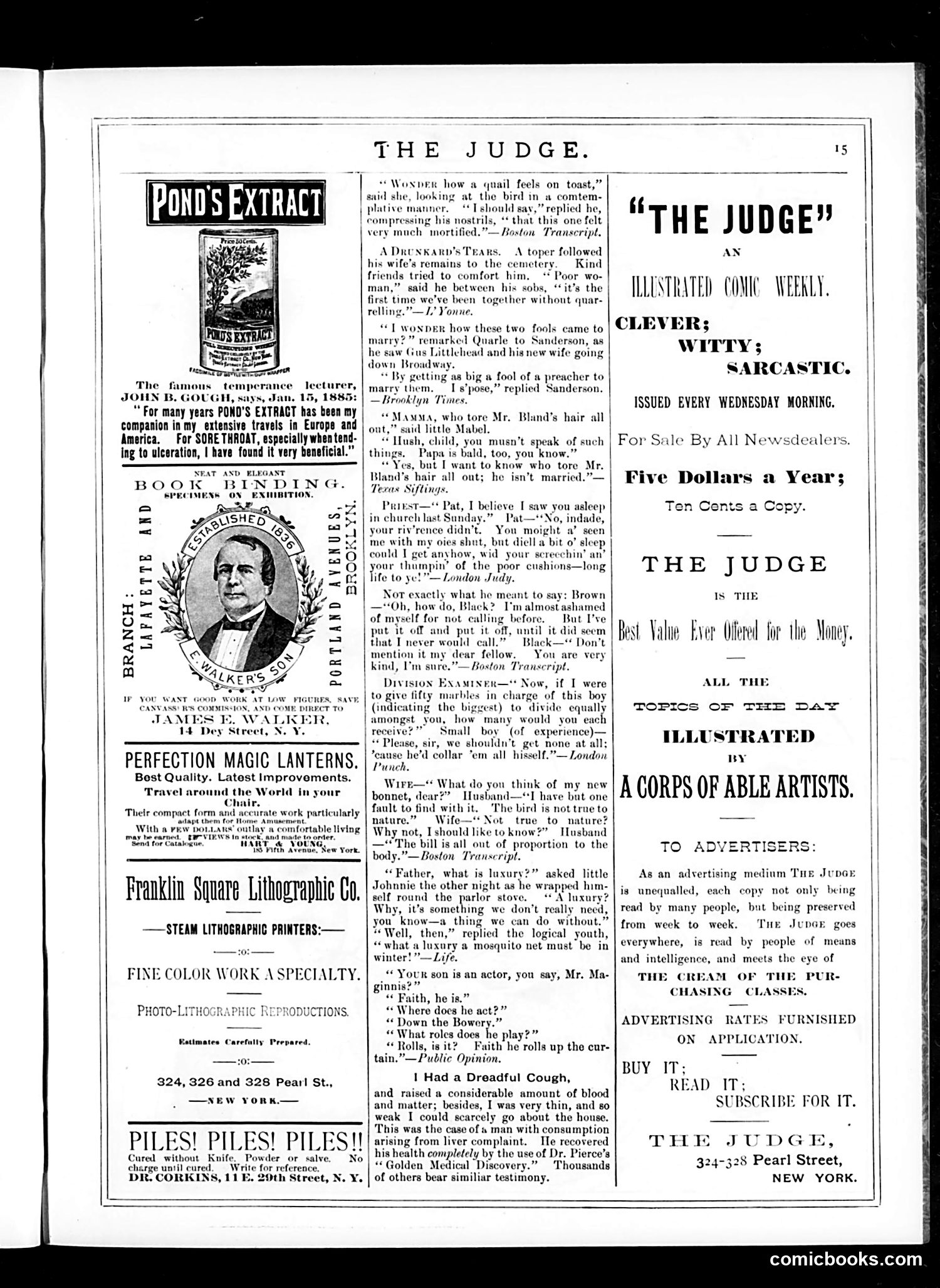
This page is primarily **advertising**, not political cartoons. It shows various commercial ads (Pond's Extract, book binding, magic lanterns, etc.) alongside snippets of **humorous anecdotes** rather than satirical political commentary. The brief jokes scattered throughout employ typical 1880s humor: mispronounced words by Irish characters ("indade," "diell"), spousal banter, children's innocent remarks about parents' physical flaws, and observational humor about clergy and lower-class life. One anecdote involves a priest's loud preaching preventing sleep; another mocks an actor who "rolls up the curtain" rather than performing actual roles. These are general-interest jokes reflecting period social attitudes—no specific contemporary political figures or events appear identifiable. The humor relies on class-based stereotypes and family dynamics typical of genteel Victorian-era periodicals. The page functions as *Judge's* content filler between paid advertising.
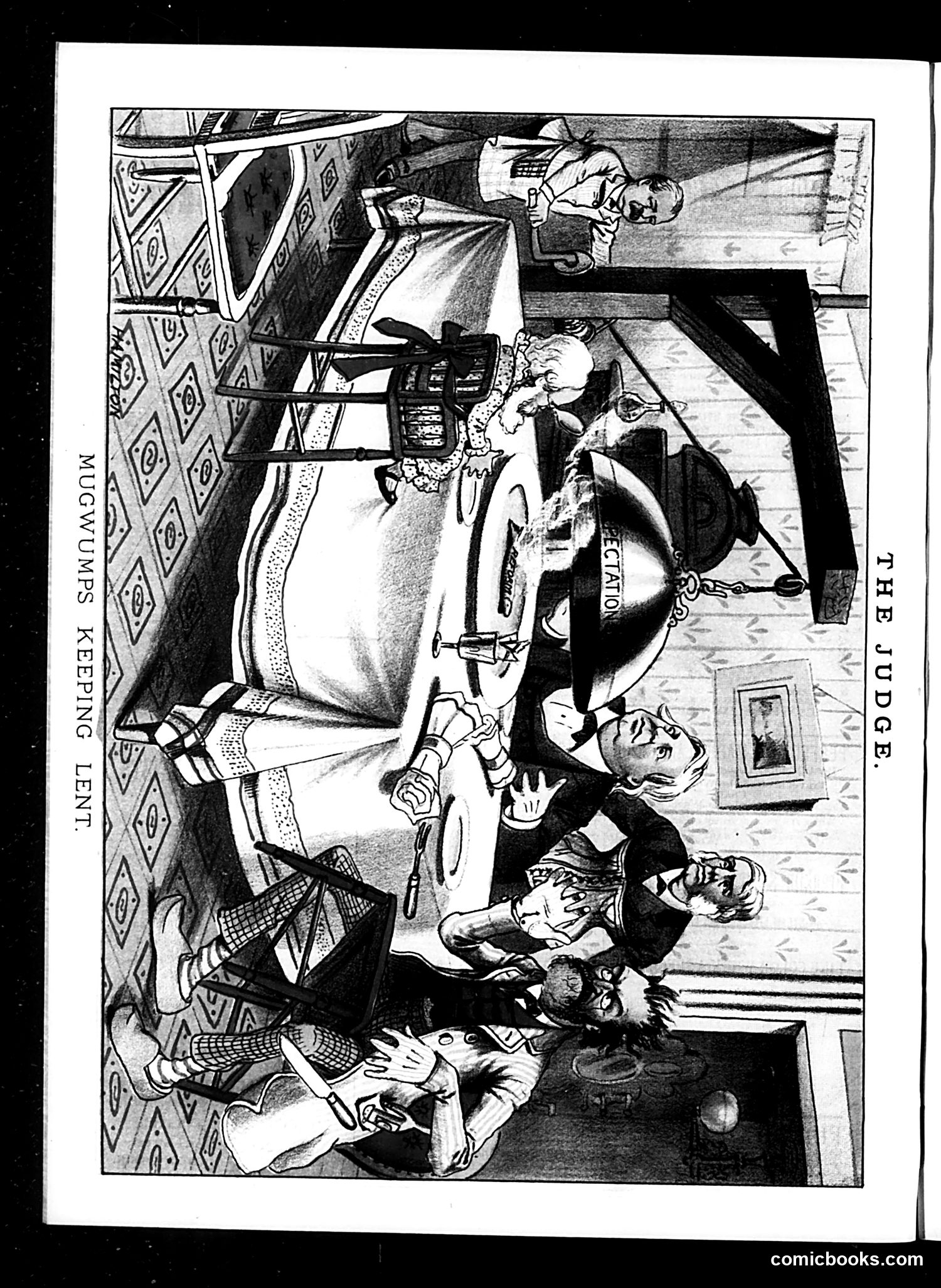
The OCR text is too corrupted to read clearly. However, the image shows a black and white cartoon titled "THE JUDGE" (visible on right margin) with "MUCKRUMBS KEEPING LENT" on the left margin. The scene depicts what appears to be a formal interior with several figures in period dress (likely early 1900s). A portly gentleman in formal attire dominates the center, while other figures around him appear to be in submissive or deferential poses. The architectural details and furnishings suggest wealth or official status. Without legible text, I cannot definitively identify the specific figures or political references intended. The satire likely critiques either wealth disparity, hypocrisy regarding religious observance ("Lent"), or elite behavior during economic hardship—common Judge magazine themes—but I cannot confirm the exact target without readable captions.