
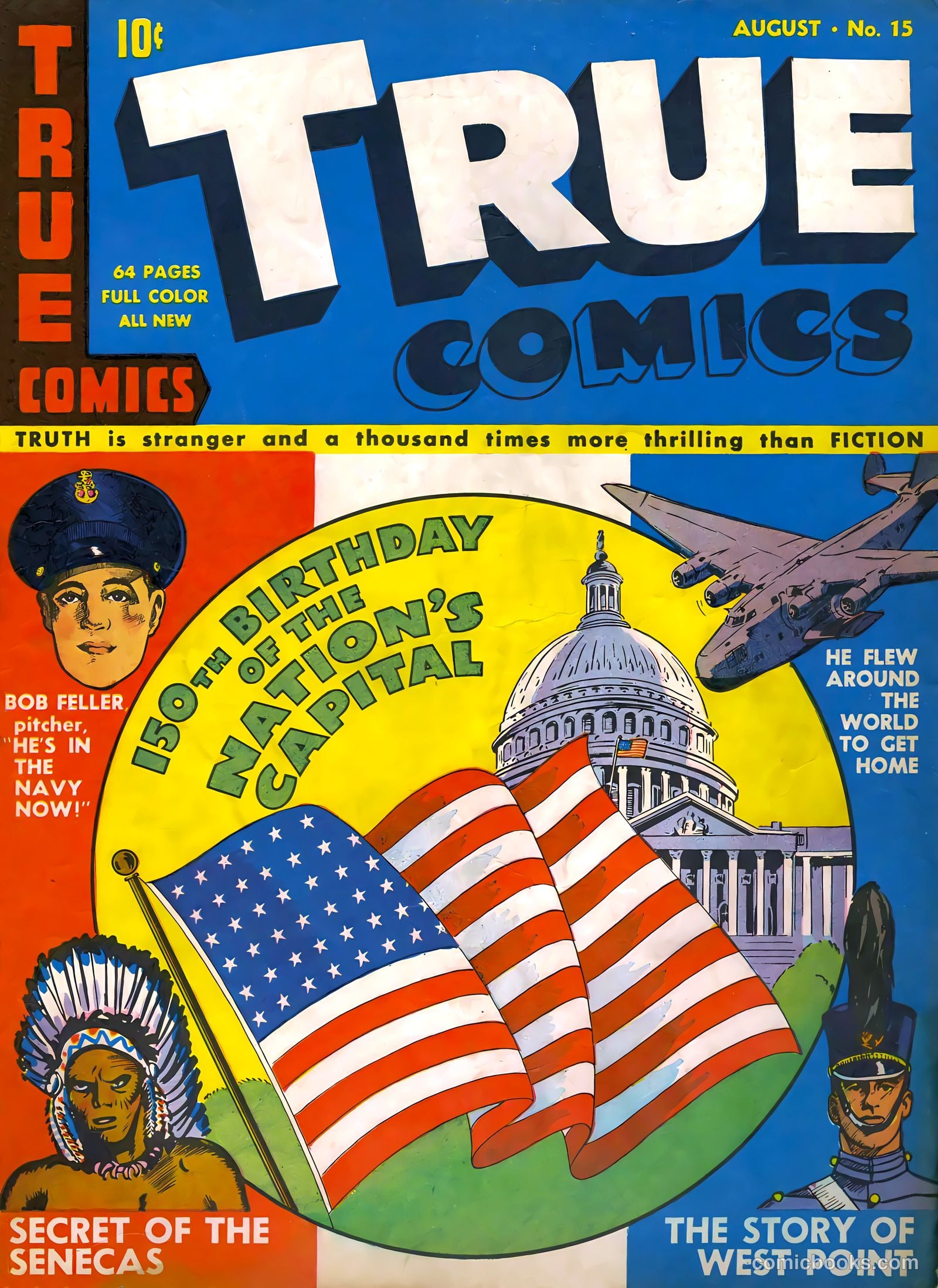
True Comics #15
☆ Be the first to review + Add to your collection — Join freeTrue Comics #15 is an anthology of factual stories featuring "Bob Feller: Pitcher—He's in the Navy Now," which follows the baseball star's entry into military service at Norfolk Naval Training Station, where he undergoes rigorous Navy training; "Secret of the Senecas," depicting how a heroic Seneca warrior escaped captivity by floating down a river and rallying his tribe to deceive approaching enemy canoes; and "The Discoverer of 'Hidden Hunger': Dr. Christian Eijkman," chronicling how the Dutch scientist in late 1800s Java investigated the disease beri-beri affecting natives and worked to determine its cause.
Pierre L'Enfant, a French engineer and artist who arrived in America during the Revolutionary War, returns after the conflict to design the nation's new capital on the banks of the Potomac—laying out Washington, D.C. on a grand scale meant to accommodate a century of growth. This non-fiction account traces the city's transformation from L'Enfant's ambitious vision through its early struggles, the War of 1812, and into the modern era, showing how his foresight shaped one of the world's great cities.
When Captain Ford and the crew of the giant Pacific Clipper learned that Pearl Harbor had been attacked on December 7, 1941, they were already en route across the Pacific—and suddenly faced an impossible choice: how to get home safely in a world at war. With commercial air routes cut off and enemy forces closing in, Captain Ford charted an extraordinary path that would take the flying boat nearly around the globe, dodging danger and making history along the way.
When a Cherokee raiding party prepares to ambush a Seneca camp along the Ohio River, a Cherokee scout devises a daring underwater plan to cut off their enemies' escape—but the Senecas turn the tables with a clever deception of their own. Generations later, during the Civil War, a Seneca warrior fighting for the Union draws on that same ingenious trick to slip past Confederate forces and deliver a vital message. This tale reveals how an ancient Indian stratagem passed down through generations proved its worth on the battlefield, then again in America's greatest conflict.
During the Revolutionary War, a French frigate prowling the Caribbean darkness mistakes Sail Rock—a jagged formation jutting between Puerto Rico and St. Thomas—for an escaping British vessel and opens fire. As cannon shots ricochet off the stone through the night, the determined French commander keeps up the assault, convinced he's battling a stubborn enemy ship. By dawn, the truth emerges in a moment of humbling realization that makes this real West Indies landmark one of history's most unusual combatants.
Carl C. Hinkle, the highest-ranking cadet officer, exemplifies the spirit that defines West Point—the United States Military Academy's 140-year-old tradition of molding the finest officers in the world. This feature traces the academy's founding from Alexander Hamilton's vision during the Revolutionary War through its establishment by President Jefferson in 1802, and then follows a new cadet's first day and the rigorous academic, tactical, and athletic training that transforms civilians into army leaders. From mathematics and ordnance to cavalry charges and flight training at Stewart Field, West Point's curriculum prepares graduates to uphold the academy's foundational ideals of Duty, Honor, and Country.
In 1942, Dr. Christian Eijkman arrives in Java to investigate a devastating disease ravaging the local population, only to notice a puzzling pattern: prisoners in the cleanest, best-supplied prison die from the illness while those in a poor, overcrowded facility stay healthy. His detective work—comparing their diets through careful observation and daring experiments—leads him to suspect the answer lies not in what people eat, but in what they're missing from refined foods. Through decades of dedicated research, he uncovers a revolutionary truth about nutrition that will reshape how the world understands health and disease.
Paul Revere's life unfolds from his childhood as the son of a Boston silversmith through his pivotal role in the American Revolution—not just as a messenger, but as a resourceful patriot who helped forge a new nation. This biography traces his journey from a young artist determined to follow his father's craft, through his involvement with the Sons of Liberty and his famous midnight ride to warn of the British advance, to his later contributions as a founder of American industry through his foundry, engraving work, and copper mill. A portrait of a man whose talents extended far beyond the legend, shaping both the fight for independence and the industrial backbone of early America.
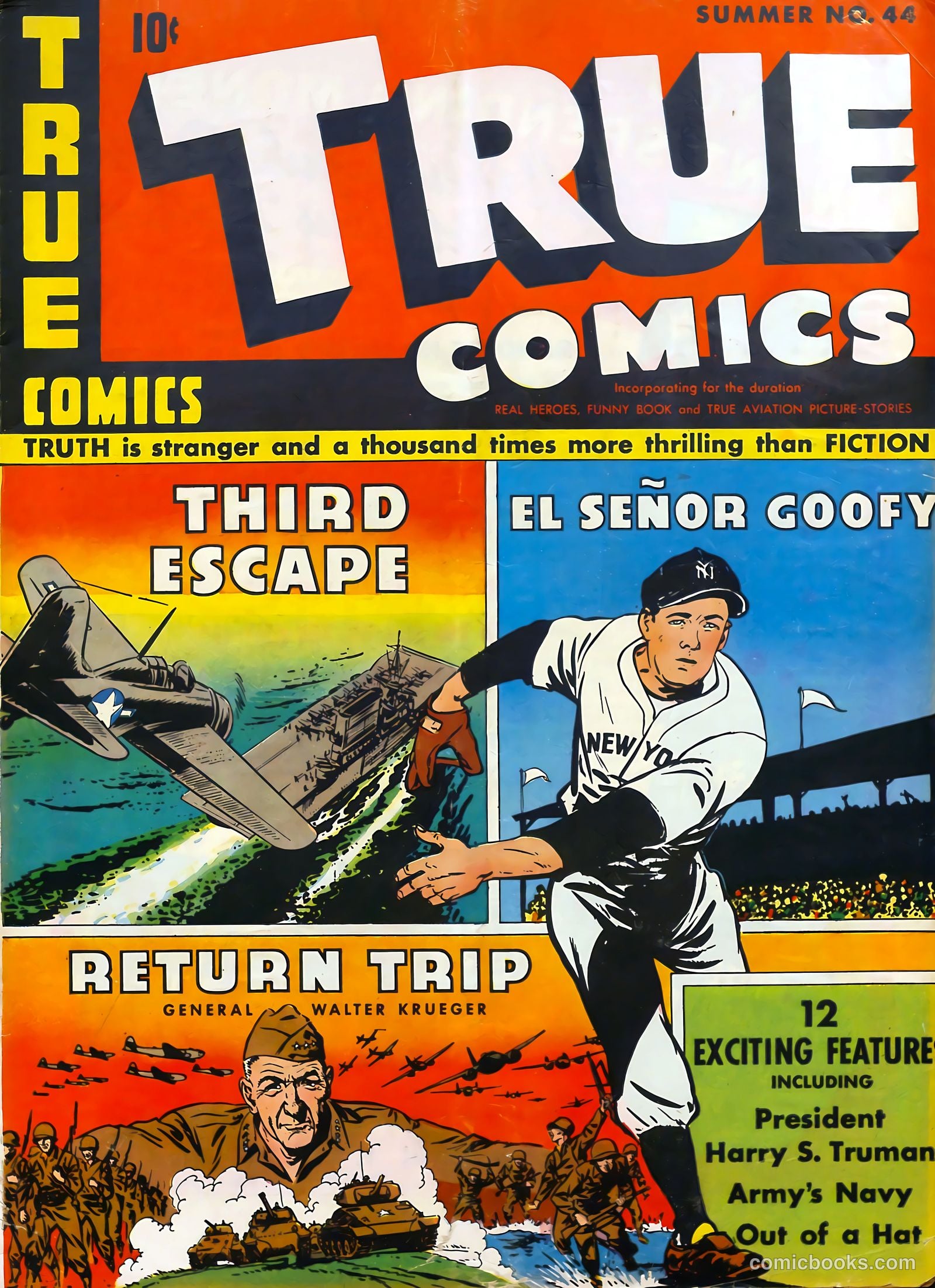
Bob Feller trades his Cleveland Indians uniform for Navy blue in this inspiring biography of baseball's fastest pitcher. From his humble Iowa farm beginnings through his record-breaking rise to stardom—including a legendary no-hitter and the highest salary in baseball history—Feller proves his fastball is matched only by his sense of duty when he enlists in 1941. Watch as the young phenom exchanges the diamond for military training, ready to serve his country in a new uniform.
When an ambitious American engineer named William C. Van Horne accepts Canada's challenge to build a coast-to-coast railway, he faces seemingly impossible obstacles—treacherous mountains, hidden water hazards, labor strikes, and armed rebellion in the northwest. Through relentless determination and bold decisions, Van Horne drives his crews westward, proving that what the world said couldn't be done might just be within reach. This is the true story of how the Canadian Pacific Railway was conquered, one dangerous mile at a time.
ComicBooks.com Value
Find on ebay
Read it digitally
Sell my copy
Have this issue — or a whole collection? Get a fair offer from us, skip the marketplace fees and the hassle.
We Buy Collections ▸Reprints
Reprinted in True Aviation Comics Digest #1 (1942)
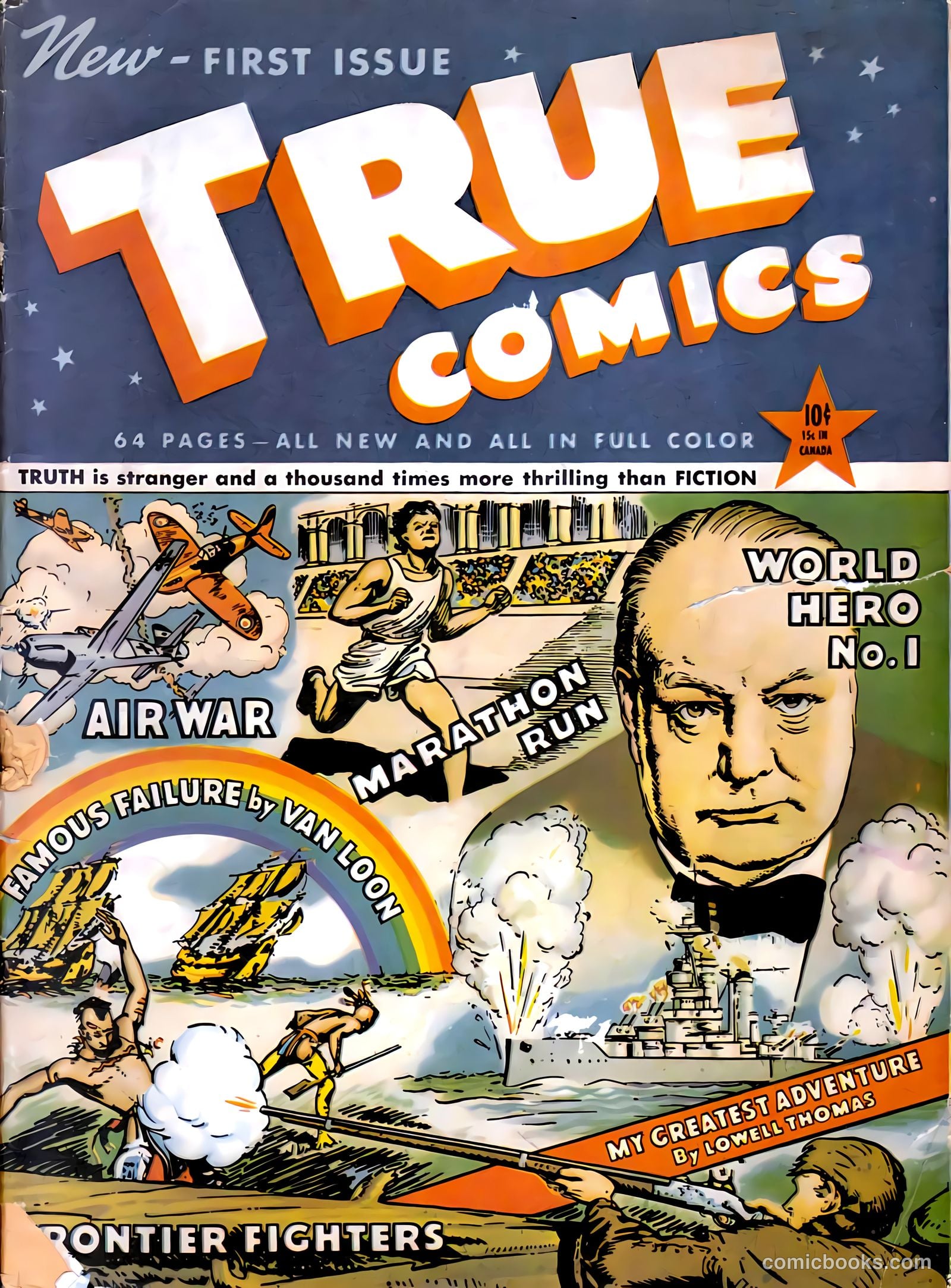
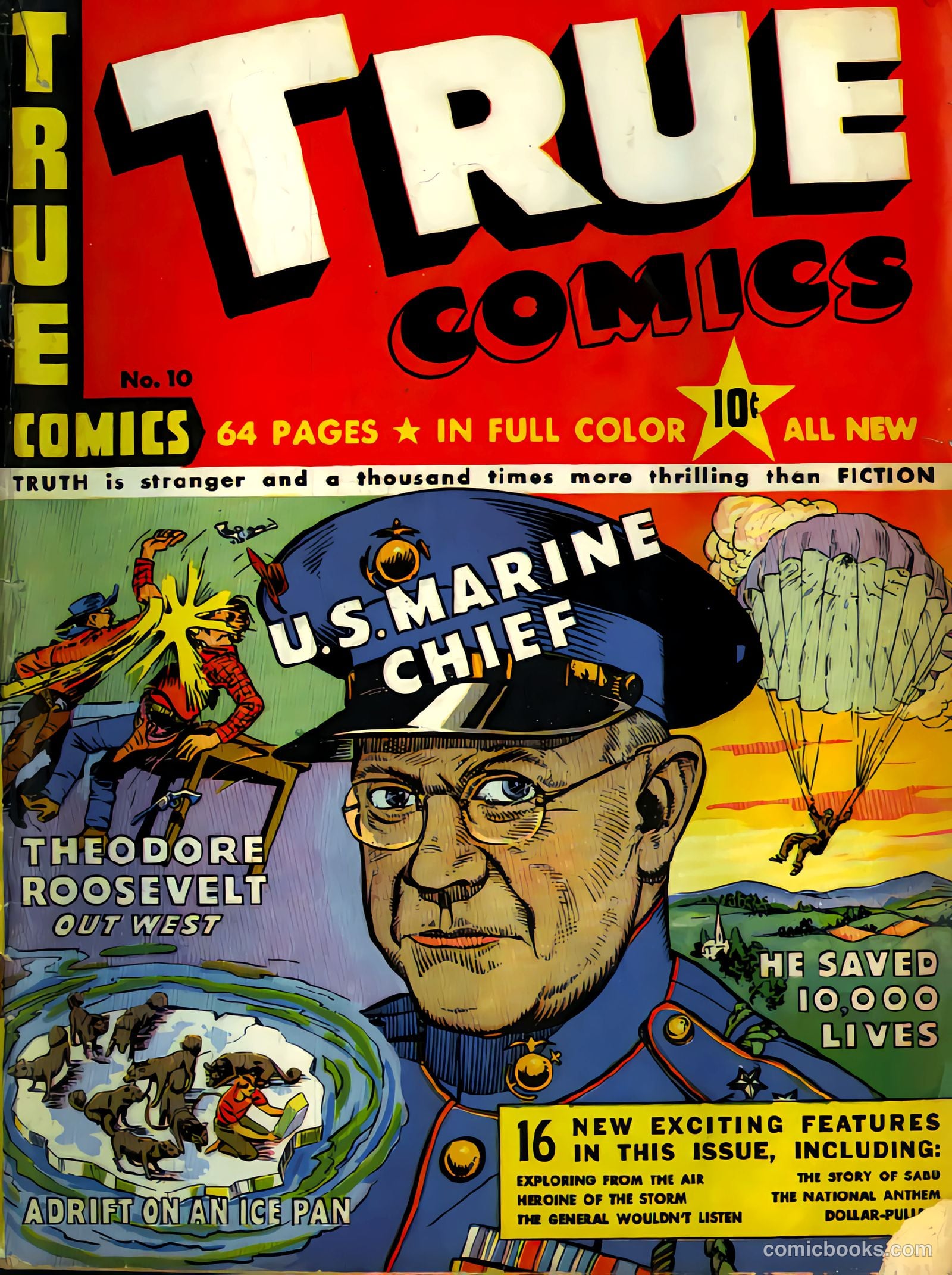
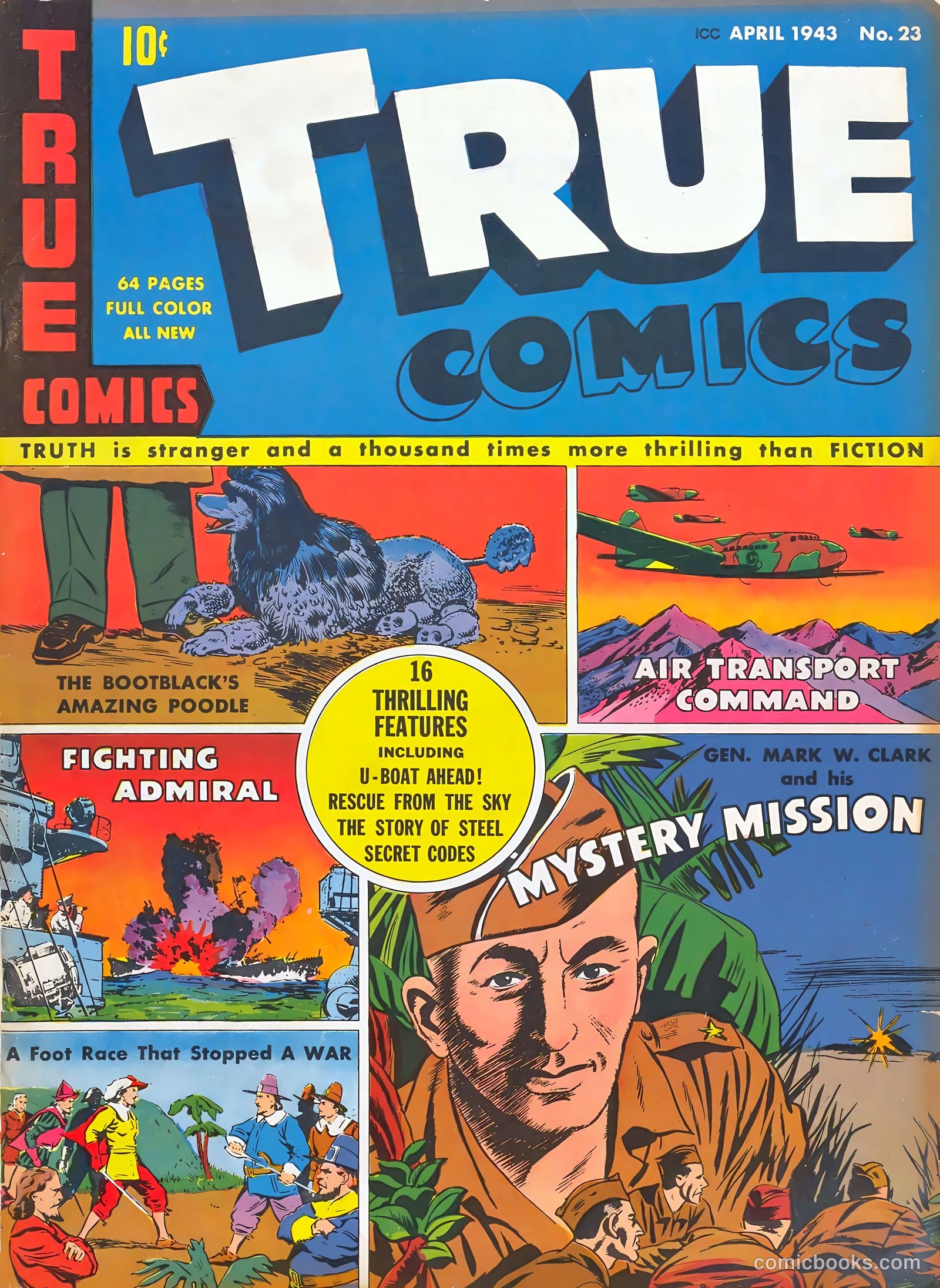
Key issues in True Comics
Reviews
Reader reviews
No reader reviews yet.