
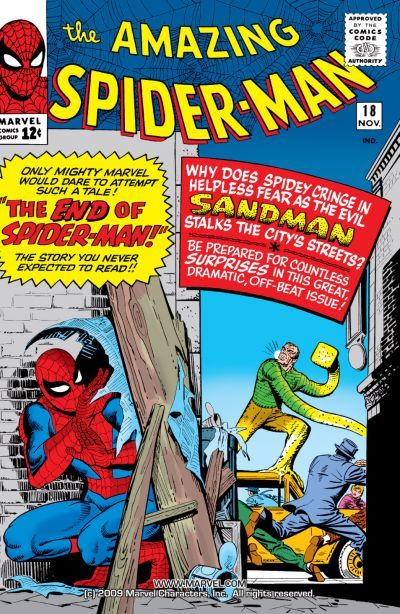
The Amazing Spider-Man #18
Amazing Spider-Man #18 is the first chapter of the original 'End of Spider-Man' storyline — a radically character-driven departure that ditched the standard superhero-punches-villain formula in favor of pure personal crisis. Peter Parker, publicly branded a coward after fleeing the Green Goblin in the previous issue, spends most of the story too consumed with Aunt May's illness to fight crime, and the issue becomes one of the earliest extended examinations in superhero comics of the tension between a hero's private obligations and his costumed identity. The premise — hero contemplates quitting, is brought back by a sense of duty — was so resonant that it was revisited across decades of Spider-Man stories and provided the emotional spine for the film Spider-Man 2. The issue also introduces Daily Bugle reporter Ned Leeds, a character whose decades-long journey from supporting cast member to brainwashed Hobgoblin stand-in became one of the most elaborately plotted supporting-character arcs of the Bronze Age.
In "The End of Spider-Man!", Peter Parker faces his lowest moment yet—haunted by the city's belief that he's a coward, he flees from the Sandman, his confidence shattered. With his personal life in ruins, he grapples with the idea of abandoning the mantle of Spider-Man altogether. Written by Stan Lee and Steve Ditko, with art and inks by Ditko and colors by Stan Goldberg, this pivotal 1964 issue captures a defining crisis in the web-slinger’s journey—cover by Steve Ditko.
ComicBooks.com Value
Show all 22 grades ▾
This exact issue on ebay
CGC 4 ▾ $280–$280 2 listings
CGC 2 ▾ $162–$227 2 listings
Raw — VG ▾ $260–$300 2 listings
Raw — GD ▾ $134–$240 5 listings
Raw / ungraded ▾ $2.49–$633 23 listings
More listings for this title
Read it digitally
Sell my copy
Have this issue — or a whole collection? Get a fair offer from us, skip the marketplace fees and the hassle.
We Buy Collections ▸History
The plot originated entirely with Steve Ditko, whose sole credit as plotter is confirmed in the letters column of issue #17, where Stan Lee's office acknowledged that 'Sunny Steve' conceived the whole unusual premise. Sean Howe's Marvel Comics: The Untold Story (page 53) corroborates Ditko's plot credit, making this one of the few Silver Age Spider-Man issues where the division of creative labor is explicitly documented. Stan Lee then scripted over Ditko's layouts, the standard Marvel Method arrangement the pair used throughout their legendary run. The issue went on sale August 11, 1964, carrying a November 1964 cover date.
Trivia · 8 facts
- First appearance of Ned Leeds, Daily Bugle reporter who would eventually be revealed as a brainwashed Hobgoblin stand-in (Amazing Spider-Man #289, 1987) and later retroactively cleared as Roderick Kingsley's scapegoat (Spider-Man: Hobgoblin Lives, 1997).
- Third appearance of the Sandman (Flint Marko), whom Spider-Man actually flees rather than fights — an almost unprecedented depiction of a superhero avoiding a villain out of personal distraction rather than tactical retreat.
- Full creative credits: plot by Steve Ditko, script by Stan Lee, pencils and inks by Steve Ditko, colors by Stan Goldberg, letters by Sam Rosen. Ditko's plot credit is documented in the ASM #17 letters page and confirmed by Sean Howe in Marvel Comics: The Untold Story (p. 53).
- The Fantastic Four (Reed Richards, Sue Storm, Johnny Storm, Ben Grimm), the Avengers (Iron Man, Thor, Giant-Man, Captain America, Wasp), and Daredevil all appear in cameo, reacting to Spider-Man's supposed cowardice — an early example of the shared Marvel Universe as a social ecosystem responding to a single character's reputation.
- Flash Thompson — Spider-Man's most vocal in-universe fan — dresses as Spider-Man and attempts to fight criminals to defend Spidey's honor, only to be beaten up, in a comedic subplot that underscores the story's theme of public perception versus private truth.
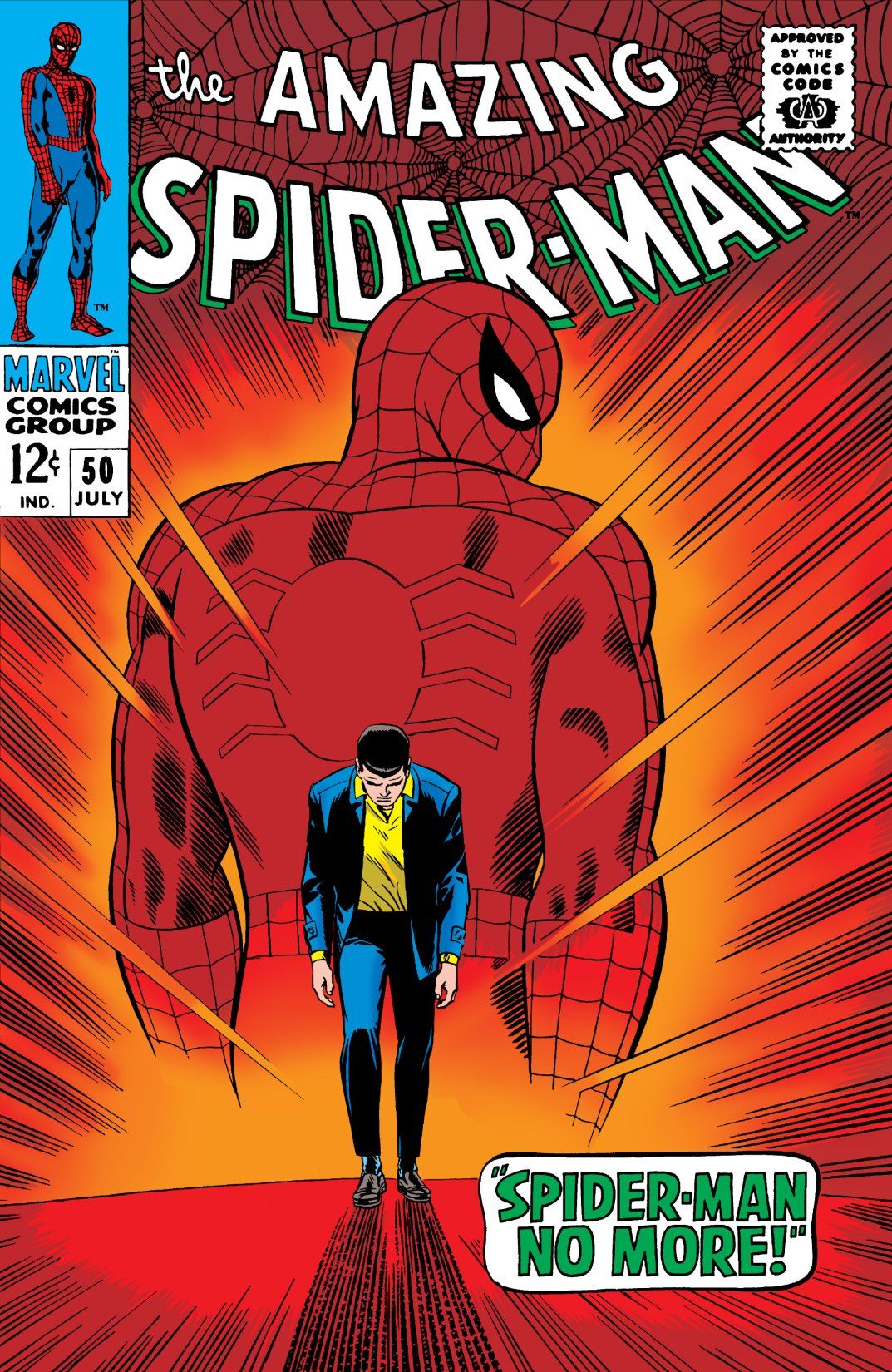
- The issue contains what is essentially the first 'Spider-Man No More' story: Peter physically discards his costume and resolves to quit, a beat structurally identical to the famous John Romita Sr.-era 'Spider-Man No More' arc in issue #50 and later adapted for the film Spider-Man 2 (2004).
- Reprinted in Marvel Tales #13 (March 1968) and Marvel Tales #156 (October 1983), and subsequently collected in Marvel Masterworks: The Amazing Spider-Man Vol. 2, The Essential Spider-Man Vol. 1, the Amazing Spider-Man Omnibus Vol. 1, Mighty Marvel Masterworks Vol. 2, and the Taschen Marvel Comics Library Spider-Man Vol. 1.
- The letters page includes a contribution from a young Frank Brunner, who would later become a professional comics artist, making this a minor footnote in Marvel's letter-column history.
Cast · 22 characters
Full credits
Reprints
Reprinted in Pow! #42 (1967), Marvel Tales #13 (1968), O Homem-Aranha #12 (1970), Marvel #13 (1971), Hit Comics Die Spinne #246 (1972), Spider-Man Comics Weekly #12 (1973), Die Spinne #20 (1974), The Amazing Spider-Man #196-197 (1979), The Amazing Spider-Man #3 (82579-8) (1979), Une Aventure de l'Araignée #7 (1979), Edderkoppen #8/1980 (1980), El Hombre Araña / El Asombroso Hombre Araña #17 (1980), Spindelmannen #8/1980 (1980), Marvel Tales #156 (1983), Marvel Masterworks #5 (1988), Spider-Man Classic #11 (1994), Spider-Man Megazine #3 (1994), The Essential Spider-Man #1 (1996), Spider-Man Komplett #18 (1999), Marvel Masterworks: The Amazing Spider-Man #2 (2002), Spiderman: Stan Lee y Steve Ditko #2 (2003), Biblioteca Marvel: Spiderman #4 (2003), The Essential Spider-Man #1 [Second Edition] (2006), The Amazing Spider-Man Omnibus #1 (2007) + 14 more
Key issues in The Amazing Spider-Man
 ★
★ ★
★ ★
★ ★
★ ★
★ ★
★ ★
★ ★
★Reviews
Reader reviews
No reader reviews yet.