
The Amazing Spider-Man #3
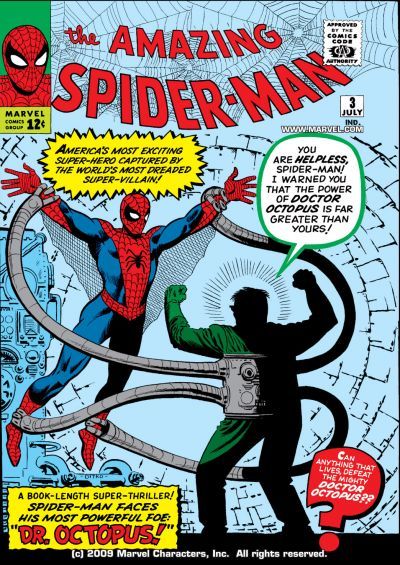
The Amazing Spider-Man #3 delivers one of the most consequential villain introductions of the Silver Age: the origin and first appearance of Doctor Otto Octavius, the mechanically-armed scientist who would become one of Spider-Man's three defining archenemies and the founding architect of the Sinister Six. Beyond the debut, the issue is a milestone in superhero storytelling because it is the first time Spider-Man suffers a clean, unambiguous defeat — a narrative choice that forced a teenage Peter Parker to reckon with failure and self-doubt in a way virtually no superhero comic had done before. The story's resolution, in which an uninspiring school assembly speech by the Human Torch inadvertently restores Peter's will to fight, demonstrates the interconnected, grounded humanity that made the Lee-Ditko Spider-Man series uniquely resonant in its era. It also marks the first use of Spider-Man's Spider-Signal, adding a small but durable piece of gadget lore to the character's toolkit.
In "Spider-Man Versus Doctor Octopus," a failed experiment transforms Otto Octavius into a menace with four powerful robotic arms, setting his sights on an atomic facility. With his signature wit and web-slinging agility, Spider-Man steps in to stop the mad scientist before his plans go too far. Written by Stan Lee and brought to life by Steve Ditko’s iconic art and inks, with colors by Stan Goldberg and letters by John Duffy, this issue features a cover by Steve Ditko that captures the intensity of the showdown.
ComicBooks.com Value
Show all 22 grades ▾
This exact issue on ebay
CGC 6 ▾ $2,600–$6,550 2 listings
CGC 5 ▾ $1,035–$1,100 2 listings
CGC 4.5 ▾ $1,800–$3,960 2 listings
CGC 3.5 ▾ $1,495–$3,500 3 listings
CGC 3 ▾ $3,500–$3,630 3 listings
Raw — VG ▾ $1,600–$2,500 3 listings
Raw / ungraded ▾ $2–$4,996 11 listings
More listings for this title
- A AND A Comics · Buffalo, NY1 on eBay ↗
- Arcane Comics · Shoreline, WA1 on eBay ↗
- The 616 Comics LLC · Mantua Township, NJ1 on eBay ↗
Read it digitally
Sell my copy
Have this issue — or a whole collection? Get a fair offer from us, skip the marketplace fees and the hassle.
We Buy Collections ▸History
The issue was produced under the Marvel Method: Stan Lee supplied the plot concept — reportedly starting, as Lee himself recounted, with the name 'Doctor Octopus' and working backward to a character with mechanical tentacles — while Steve Ditko both drew and co-plotted the story before Lee scripted the dialogue. The credits inside the issue read 'story' by Lee and 'art' by Ditko, a credit formulation that was itself in flux across Marvel's line in 1963, illustrating the collaborative but contested creative dynamic that would eventually lead to Ditko's departure from the title after issue #38. Colors were by Stan Goldberg, with lettering by John Duffy on the story pages and Artie Simek on the cover; this was also the first issue to feature a reader letters column, 'Spider's Web,' whose logo was designed by Ditko himself.
Trivia · 8 facts
- First appearance and origin of Doctor Otto Octavius / Doctor Octopus (Earth-616), created by Stan Lee and Steve Ditko; cover-dated July 1963, on-sale April 1963.
- Doctor Octopus would go on to become one of Spider-Man's three principal archenemies and the founder of the Sinister Six, the first supervillain team assembled against Spider-Man.
- This is the first time Spider-Man suffers a decisive defeat in battle — a landmark character moment that nearly causes Peter Parker to quit being Spider-Man entirely.
- First appearance of Spider-Man's Spider-Signal, the spider-shaped light Spider-Man uses to summon police.
- Guest appearance by the Human Torch (Johnny Storm) of the Fantastic Four; the Fantastic Four (including Ben Grimm / The Thing, mentioned only) are asked by the government to stop Doctor Octopus but decline due to other commitments.
- First letters column in the series, titled 'Spider's Web,' with the logo designed and drawn by Steve Ditko; the issue also includes a Ditko Spider-Man pin-up page.
- Two notable production errors appear in the original printing: Doctor Octopus mistakenly calls Spider-Man 'Super-Man' on page 8 (corrected in later reprints), and Octavius's surname is misspelled 'Octavious' throughout.
- The story was reprinted in Marvel Collectors' Item Classics #1 (1965), Marvel Tales #140 (1982), a Wizard Ace Edition (2004), the Amazing Spider-Man Omnibus Vol. 1 (2007), and numerous international editions; its plot also served as a key source for the film Spider-Man 2 (2004).
Cast · 11 characters
Full credits
Reprints
Reprinted in El Sorprendente Hombre Araña #3 (1963), Marvel Collectors' Item Classics #1 (1965), Pow! #6 (1967), Edderkoppen #3/1968 (1968), Hit Comics #84 (1969), Marvelserien #25 (1969), Marvelserien #28 (1969), O Homem-Aranha #3 (1969), Fantask #7 (1969), L'Uomo Ragno [Collana Super-Eroi] #3 (1970), The Mighty World of Marvel #7 (1972), The Mighty World of Marvel #8 (1972), Strange #47 (1973), Die Spinne #5 (1974), The Amazing Spider-Man #81433 [1] (1977), El Hombre Araña / El Asombroso Hombre Araña #2 (1980), Une Aventure de l'Araignée #9 (1980), Marvel Tales #140 (1982), Eks almanah #345 (1982), Spider-Man Annual #[1986] (1985), The Official Marvel Index to the Amazing Spider-Man #3 (1985), The Marvel Saga the Official History of the Marvel Universe #9 (1986), The Marvel Saga the Official History of the Marvel Universe #10 (1986), Marvel Masterworks #1 (1987) + 36 more
Key issues in The Amazing Spider-Man
 ★
★ ★
★ ★
★ ★
★ ★
★ ★
★ ★
★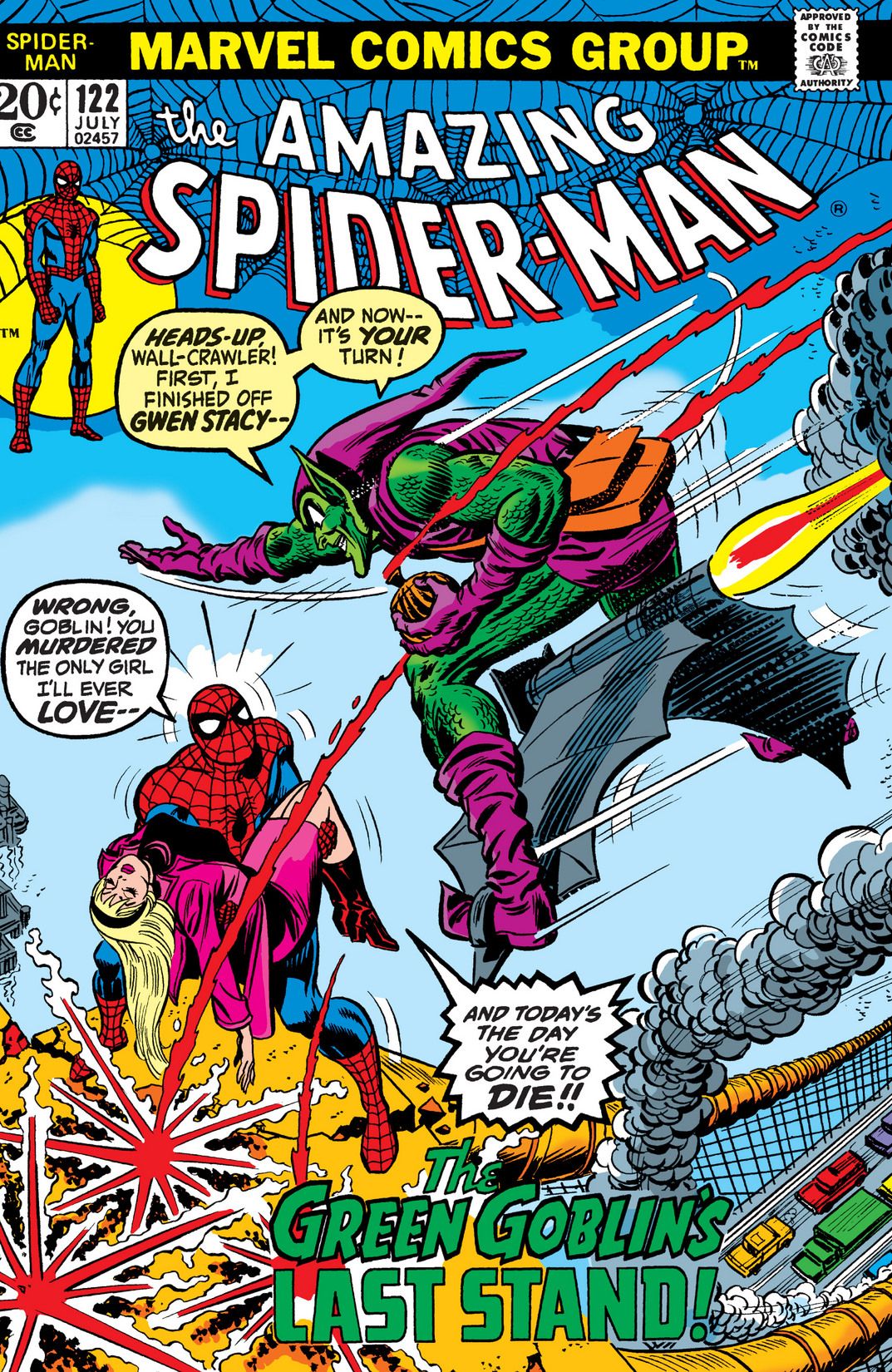 ★
★Variants (1)
Reviews
Reader reviews
No reader reviews yet.