
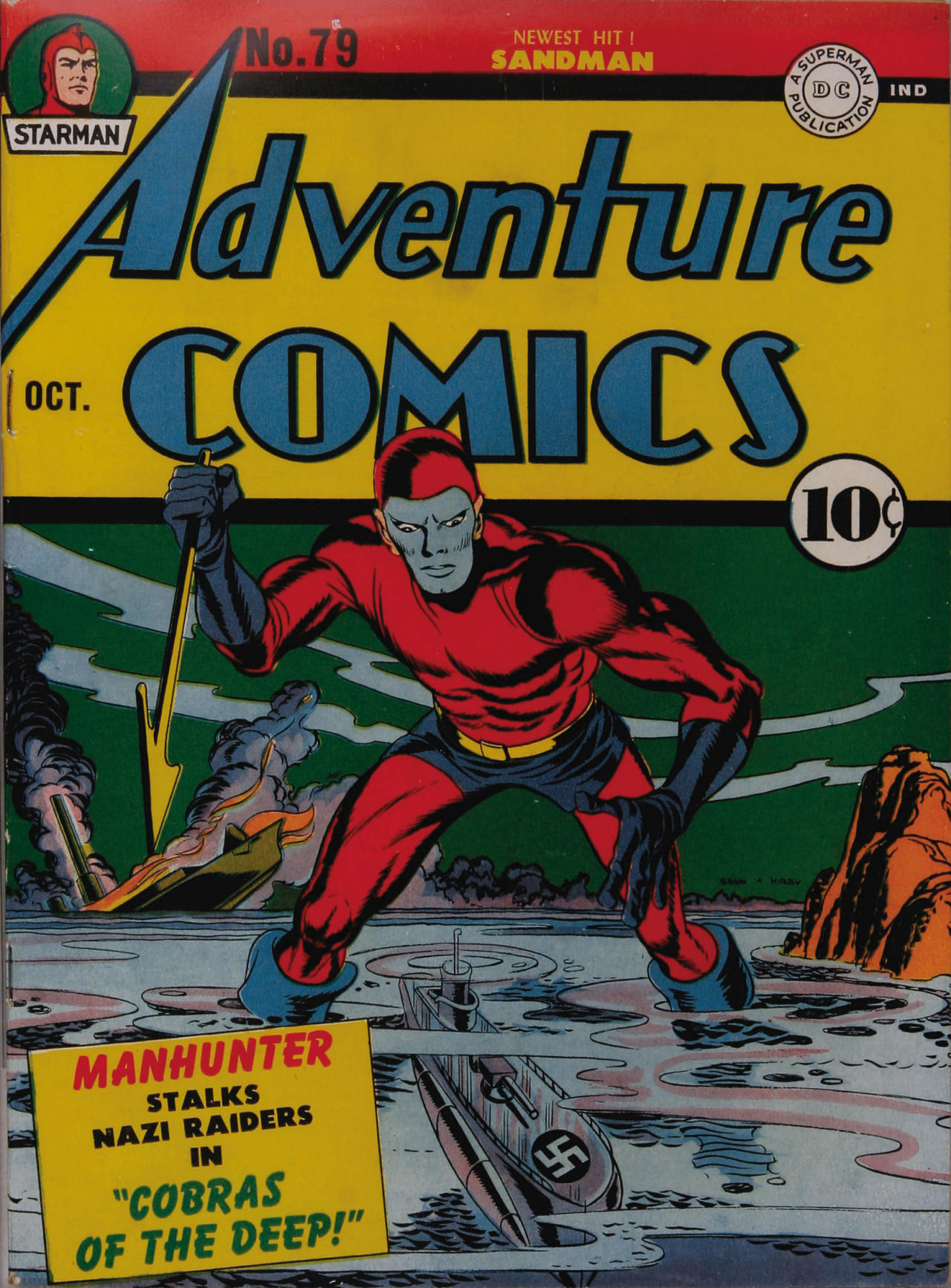
Adventure Comics #79
☆ Be the first to review + Add to your collection — Join freeAdventure Comics #79 (October 1942) is a textbook example of what DC's flagship anthology looked like at peak Golden Age density: six concurrent superhero and pulp-hero features sharing a single issue, all of them actively in mid-run. It captures a precise transitional moment in the book's history — Starman, created by Gardner Fox and Jack Burnley, had recently ceded cover-feature status to Joe Simon and Jack Kirby's reinvented Sandman, and the two creative visions coexist here in the same pages. The issue also carries an in-house advertisement for Wonder Woman #1, making it a small documentary artifact of one of the most consequential months in DC's wartime publishing calendar. While it introduces no major new characters, its lineup represents the full breadth of DC's Golden Age superhero stable before the 1946 reorganization swept most of these features out of existence.
In "The Tune of Terrific Toby," Hourman faces a chilling threat from a criminal syndicate wielding a massive bell whose deadly vibrations can kill, shatter, and drive people mad across miles—while the criminals stay safe behind vibro-mitters. This 1942 adventure, drawn with precision by Bernard Baily in pencils, inks, and lettering, features a striking cover by Jack Kirby and Joe Simon, capturing the eerie power of the bell’s ominous toll.
In "The Tune of Terrific Toby," Jo, a timid office worker with a flair for theatrics, fakes a dramatic rescue to impress his coworkers—and accidentally becomes a local legend. When his stunt draws the attention of a real hero, Starman, Toby seeks guidance to become a true champion, but his journey into heroism may be more about self-discovery than saving the day.
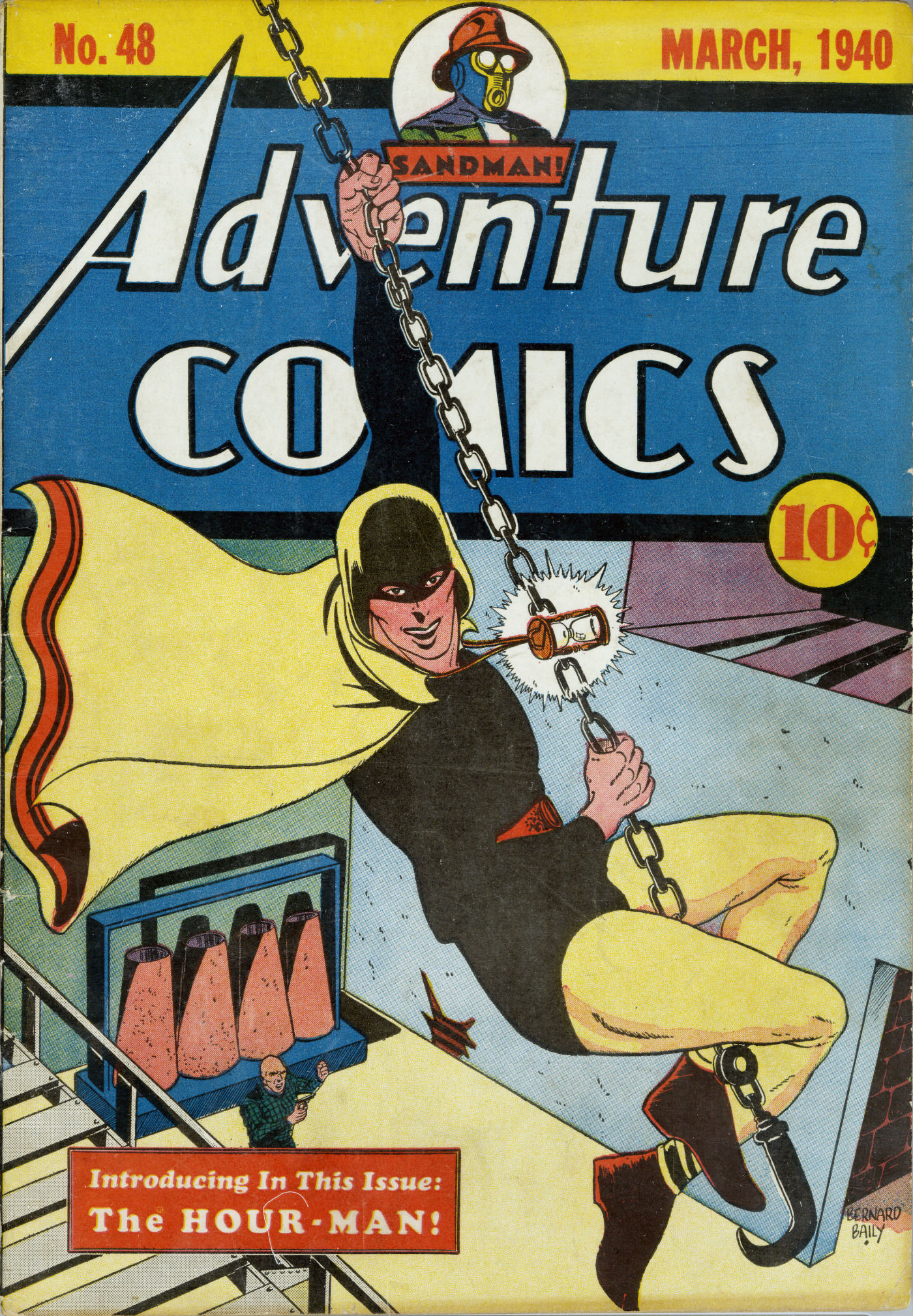
In "The Stroke of Doom!", Hourman faces a chilling threat as a criminal syndicate unleashes a deadly bell capable of shattering minds and bodies with its sonic waves—while shielding themselves with vibro-mitters. The city trembles as sound becomes a weapon, and Hourman must find a way to stop the slaughter before the bell's final toll.
In "Footprints in the Sands of Time," Sandman and his dream-embodied companion Sandy follow a mysterious trail leading to an ancient hourglass forged in the time of the Greek Emperor Michael Commenus, its surface etched with the long-lost formula that could make water burn.
ComicBooks.com Value
Show all 20 grades ▾
Find on ebay
Read it digitally
Sell my copy
Have this issue — or a whole collection? Get a fair offer from us, skip the marketplace fees and the hassle.
We Buy Collections ▸History
By fall 1942, Adventure Comics was edited under the watch of Murray Boltinoff (who stepped down shortly after, with Jack Schiff taking over with issue #82), and the book was being fed by a small rotating pool of wartime writers. Gardner Fox, who co-created Starman with Jack Burnley in issue #61, was carrying an unusually heavy scripting load because several of his DC colleagues had been drafted into military service. Simon and Kirby, who had joined DC from Timely earlier that year, were supplying the Sandman and Manhunter stories that now dominated the book's visual identity, while the science-fiction writer Alfred Bester — better known today for his prose novels — was still in the early months of scripting the comedic Genius Jones feature he had launched just two issues prior.
Trivia · 8 facts
- Cover-dated October 1942, published by National/DC Comics (Detective Comics, Inc.).
- Six features appear in the issue: Starman ('The Tune of Terrific Toby'), Hourman ('The Stroke of Doom'), Genius Jones ('The Case of the Love-Sick Submarine'), Shining Knight ('The Mystery of the Shining Knight's Rival'), Manhunter ('Battles the Cobras of the Deep'), and Sandman ('Footprints in the Sands of Time').
- The Sandman story — part of Joe Simon and Jack Kirby's celebrated run on the character (#72–102) — features a nightmare sequence in which a criminal is haunted by visions of the Sandman, an early use of dream imagery as a storytelling device within their run.
- Genius Jones, created by science-fiction writer Alfred Bester and artist Stan Kaye, appears here in one of his earliest outings (debuting in #77, just two issues earlier); the story includes a satirical future-set scene in which Adolf Hitler appears as a street beggar in 1992.
- The issue carries an in-house advertisement for Wonder Woman #1, placing it exactly contemporaneously with one of DC's most significant single launches of the era.
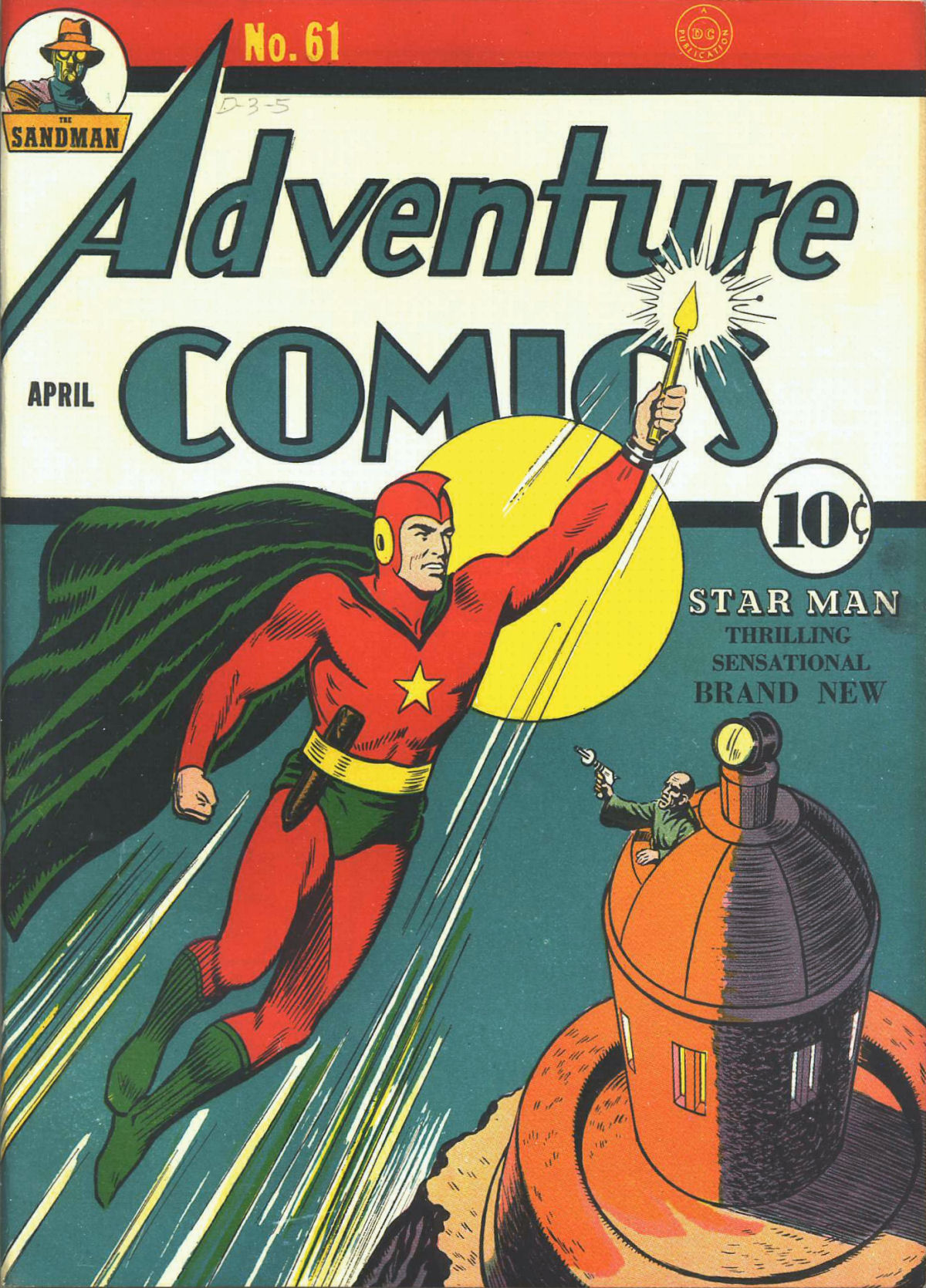
- Starman — created by Gardner Fox and artist Jack Burnley in Adventure Comics #61 (April 1941) — continues as a secondary feature here, having already surrendered cover-lead status to the Simon-and-Kirby-powered Sandman and Manhunter stories.
- Joe Simon and Jack Kirby's Manhunter feature, which launched in issue #73, is also present, placing two of the era's most dynamic visual storytellers inside a single issue.
- The Sandman stories from this run, including the #79 story, were collected in DC's 'Sandman by Joe Simon and Jack Kirby' hardcover (2009), and the Starman stories from this period appear in 'Golden Age Starman Archives Volume 2' (collects #77–102), making the issue accessible to modern readers via both collections.
Full credits
Reprints
Reprinted in Detective Comics #440 (1974), Superman Presents Wonder Comic Monthly #116 (1974), Golden Age Starman Archives #2 (2009), The Sandman by Joe Simon & Jack Kirby #[nn] (2009)
Key issues in Adventure Comics
Reviews
Reader reviews
No reader reviews yet.