
A complete issue · 20 pages · 1896
Life — January 16, 1896
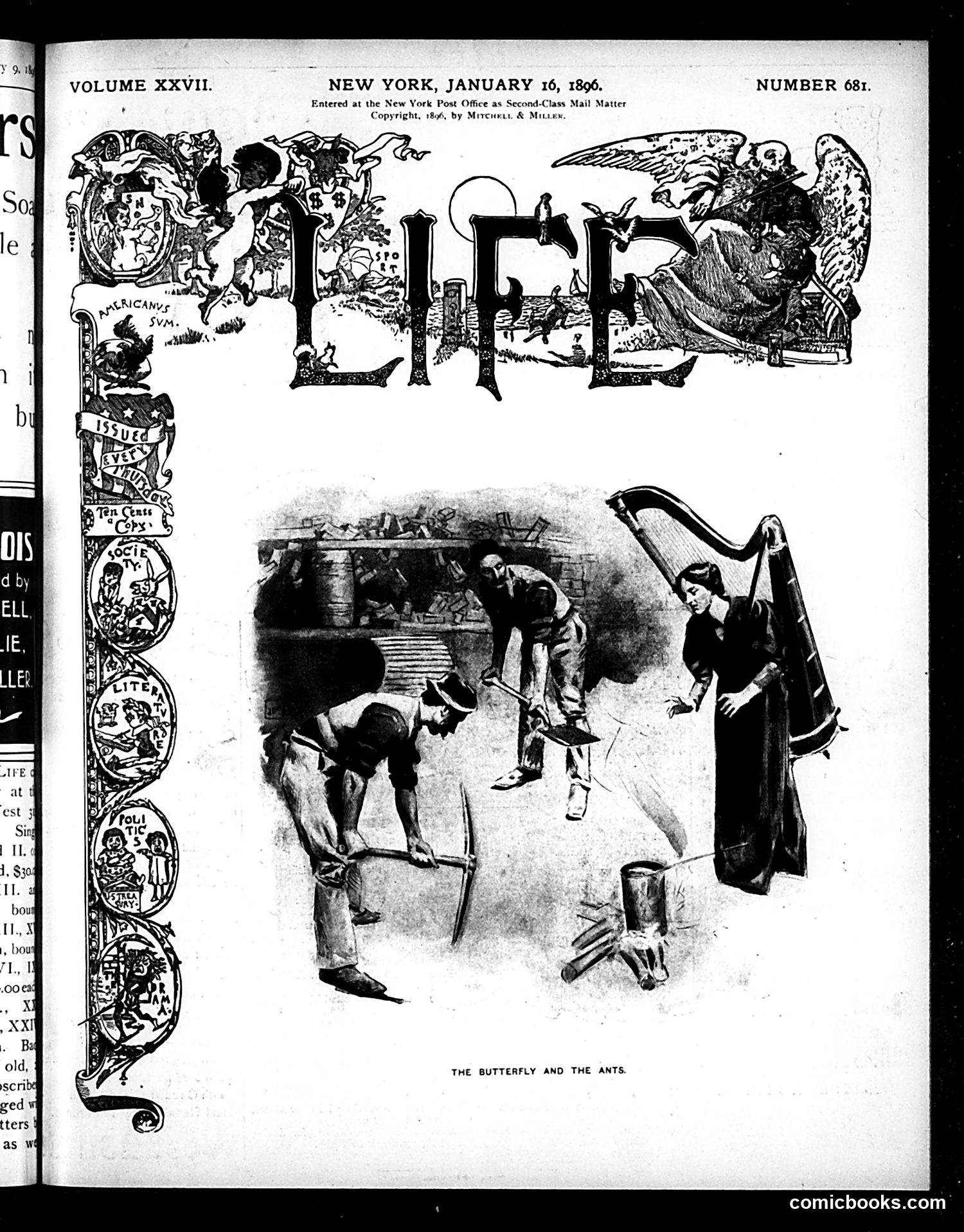
This is the title and likely caption for the illustration below the Life masthead. The image depicts workers (appearing to be men) engaged in manual labor—digging or construction work—while a figure in dark clothing on the right holds what appears to be a flag or banner. The illustration likely uses Aesop's fable "The Ant and the Grasshopper" as satirical commentary on labor and leisure, or industriousness versus idleness. The "butterfly" (idle, pleasure-seeking) contrasts with the "ants" (hardworking laborers). Without additional context from the surrounding text, the specific 1896 political or social target remains unclear, though it may address contemporary labor disputes, class conflict, or immigrant workers prominent in American discourse of that era.
This page consists primarily of **advertisements** rather than satirical content. The top half features two books by "Chip" (F.P.W. Bellew), a cartoonist known for work in *Life* magazine—collections of humorous dog drawings and woodcut sketches, each priced at $1.00. The lower half contains commercial advertisements for winter clothing, linens, and fabric imports from department stores and retailers in New York City, typical of late 19th-century publication advertising. There is **no political cartoon or satirical content** visible on this page. It represents standard magazine advertising and book promotion from the 1895 era, showcasing consumer goods and services of the period.
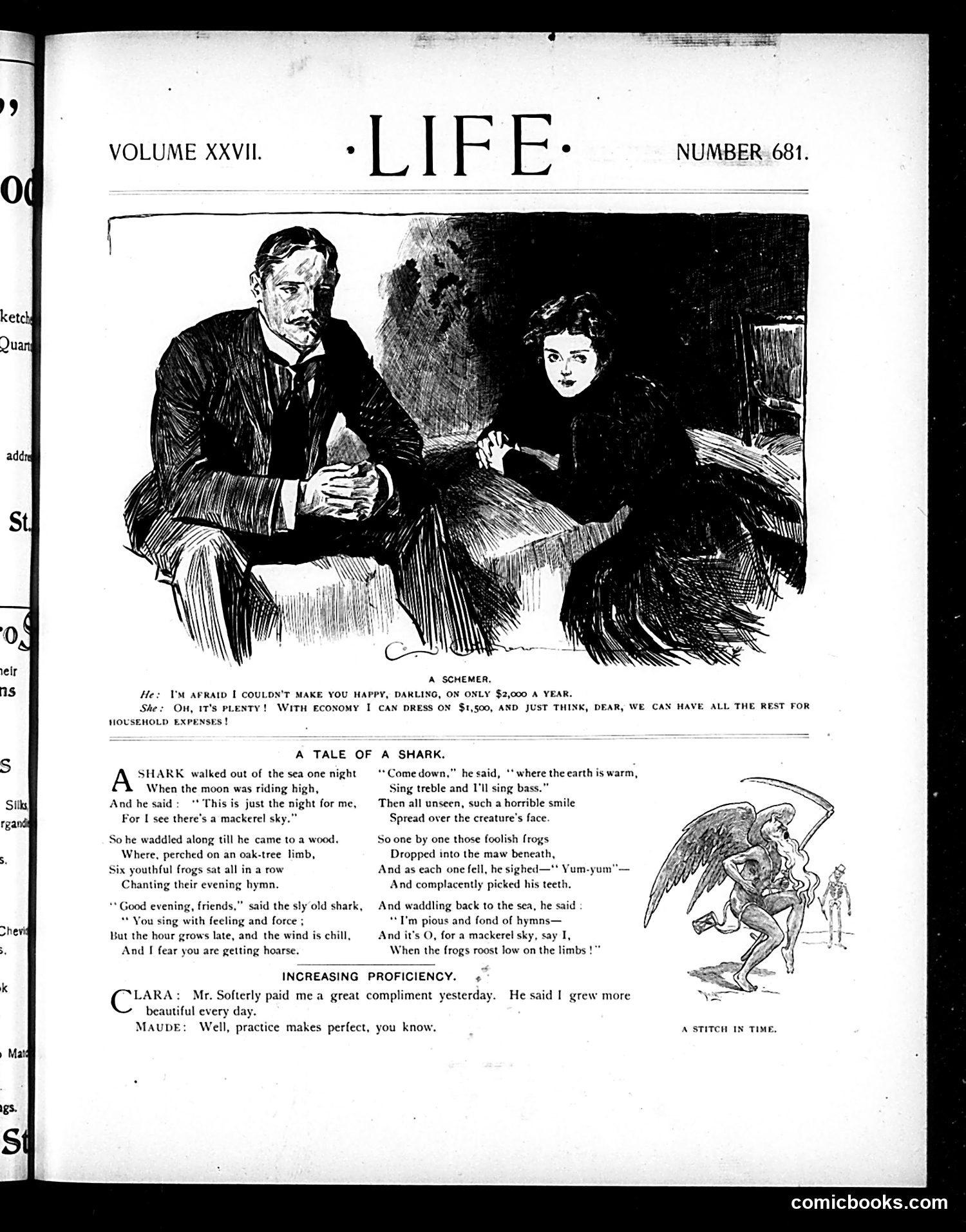
**"A Schemer" Cartoon:** The top sketch depicts a financial negotiation between a man and woman. He claims he can only afford $5,000 yearly income, yet she responds that with "economy" she can dress on $1,500 and cover household expenses with the remainder. The satire targets the common marital dynamic where wives manage household budgets while husbands claim financial constraints—a commentary on gender roles and domestic economics of the era. **"A Tale of a Shark" & "A Stitch in Time":** These are humorous illustrated poems/stories unrelated to political satire. "The Shark" is whimsical verse about a shark and frogs; "A Stitch in Time" appears to be a moral tale, shown in the right illustration. **"Increasing Proficiency":** A brief joke about Clara receiving compliments on her growing beauty, with Maude's response that "practice makes perfect"—light social humor.
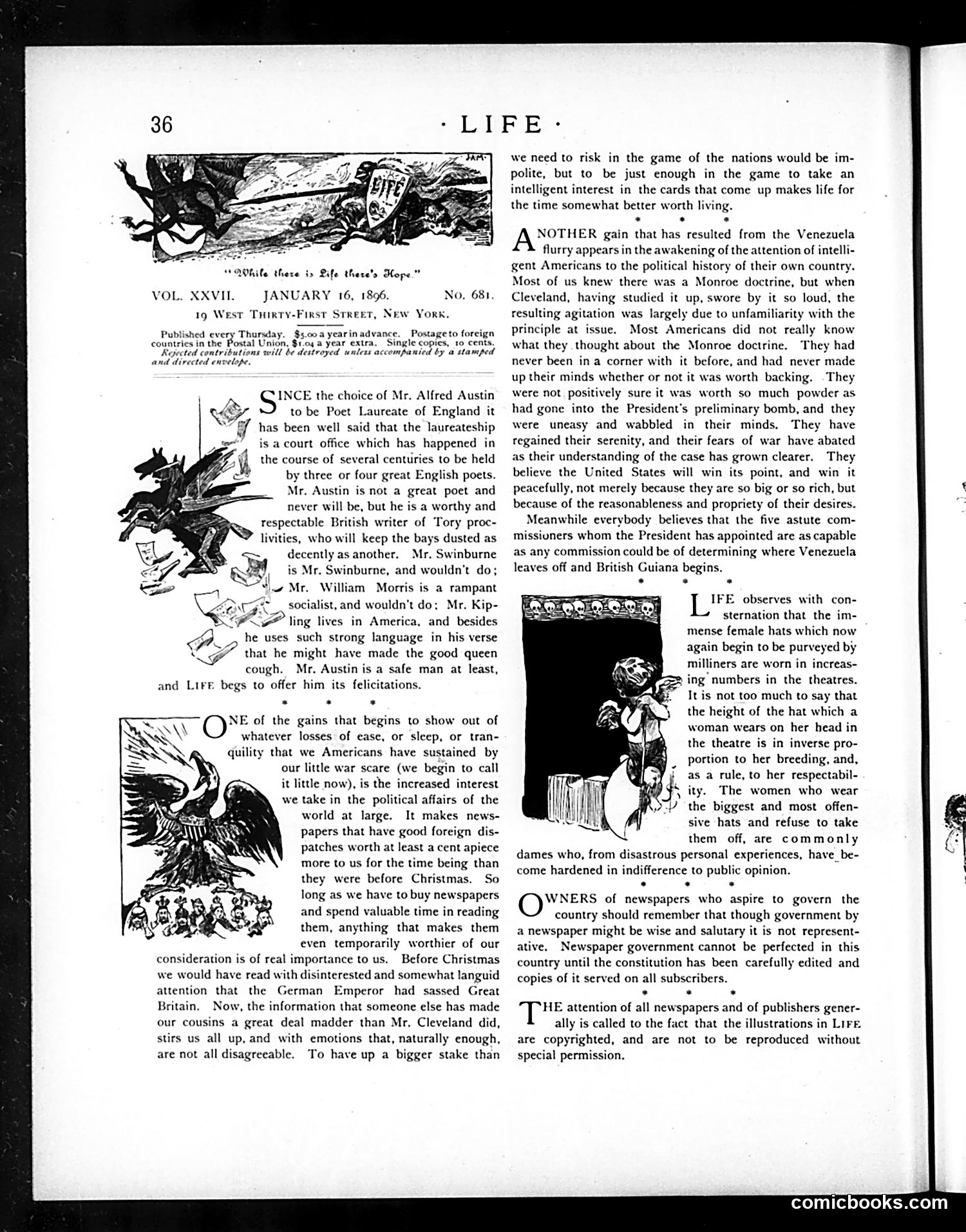
The page discusses the **Venezuela crisis** and its impact on American political attention. The text praises President Cleveland's handling of the situation, noting that Americans previously unfamiliar with the Monroe Doctrine have now become engaged with it. **The cartoon at top left** (captioned "While there is Life there's Hope") appears to show a figure in distress, likely representing Venezuela or a nation threatened by foreign powers—a visual commentary on the Monroe Doctrine's protective role. **The lower cartoon** depicts an eagle with spread wings surrounded by papers or documents, symbolizing American power and authority over Western Hemisphere affairs. The page celebrates increased American interest in foreign policy and the reasonableness of the nation's strategic interests, framing intervention as justified and proper.
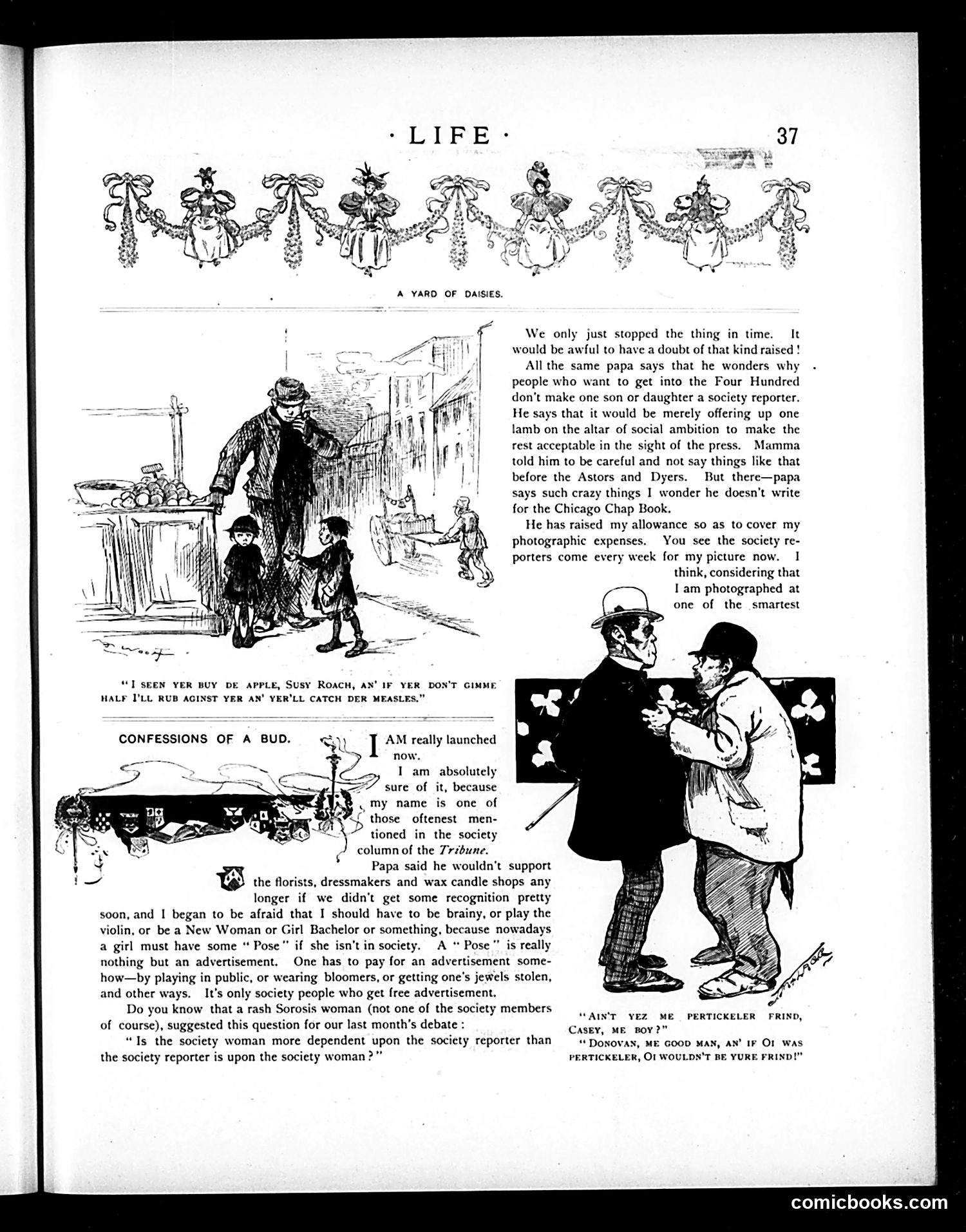
**"A Yard of Daisies"** (top): A decorative header showing figures in classical dress. **Main cartoon**: A street vendor sells apples to children, with dialect suggesting an immigrant or working-class character. The joke references measles—a common childhood disease—implying the vendor's apples might transmit illness. **"Confessions of a Bud"**: A satirical piece about social climbing and publicity. The narrator (a society aspirant) describes how one gains social recognition through public spectacles—wearing flowers, getting jewelry stolen, or being photographed at exclusive venues. The text mocks how society reporters and "poses" (publicity stunts) drive social status, questioning whether society depends more on reporters than on the woman themselves. **Bottom cartoon**: Two men exchange coded insults about friendship and borrowing money.
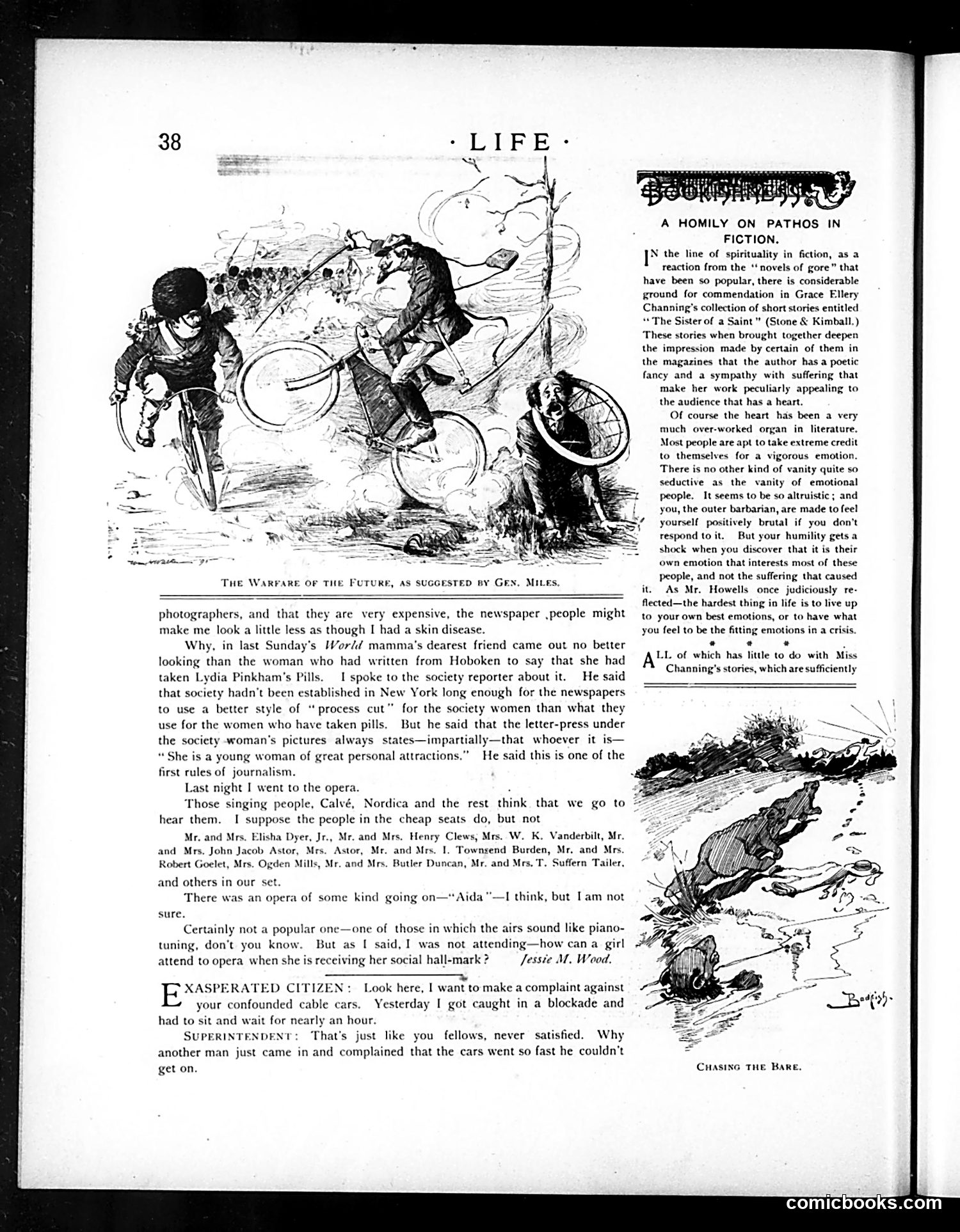
**Top Cartoon: "The Warfare of the Future, as Suggested by Gen. Miles"** This satirical cartoon depicts General Miles's prediction of future warfare using bicycles as military transport. Soldiers ride bicycles while carrying weapons and supplies, suggesting Miles anticipated bicycles would revolutionize combat. The exaggerated, chaotic illustration mocks this notion—showing cyclists tumbling and struggling—implying the concept was impractical or absurd. This appears to reference actual contemporary debate about military modernization in the late 19th century. **Lower Section: "Chasing the Hare"** A detailed sketch illustration accompanies literary commentary about Grace Ellery Channing's short story collection "The Sister of a Saint." The text discusses emotional authenticity in fiction, praising Channing's work for genuine pathos rather than sentimentality.
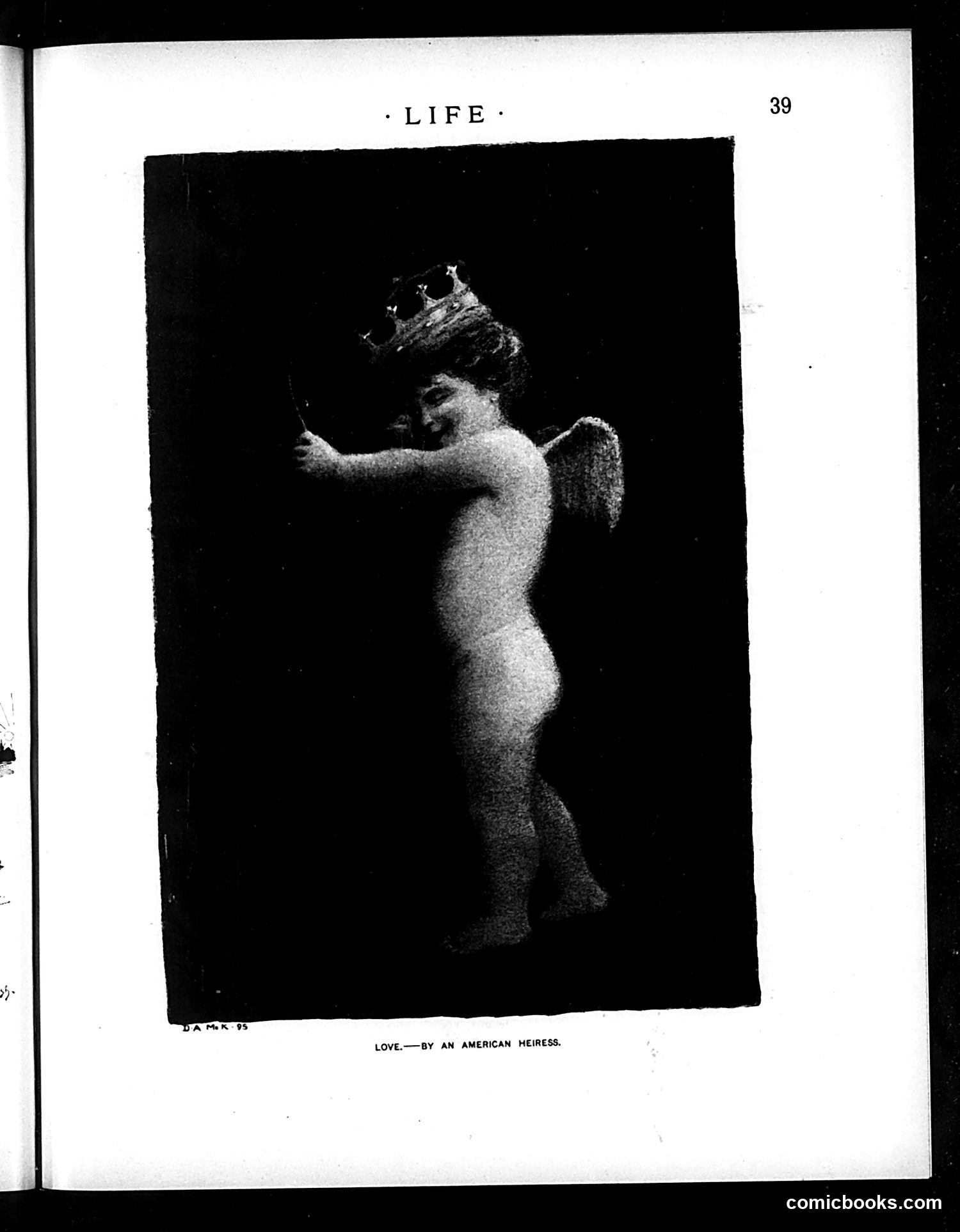
This artwork depicts a winged cupid figure wearing a crown, shown in profile against a dark background. The caption identifies it as "Love—By an American Heiress," suggesting satirical commentary on how wealthy American women of the era portrayed or understood romantic love. The image likely mocks the romantic ideals held by wealthy heiresses of early 20th-century America—portraying love as something precious, adorned, and perhaps artificially constructed rather than genuine. The crowned cupid may suggest these women viewed love through a lens of wealth and status rather than authentic emotion. This reflects Life magazine's frequent satirization of America's wealthy elite and their social pretensions during this period.
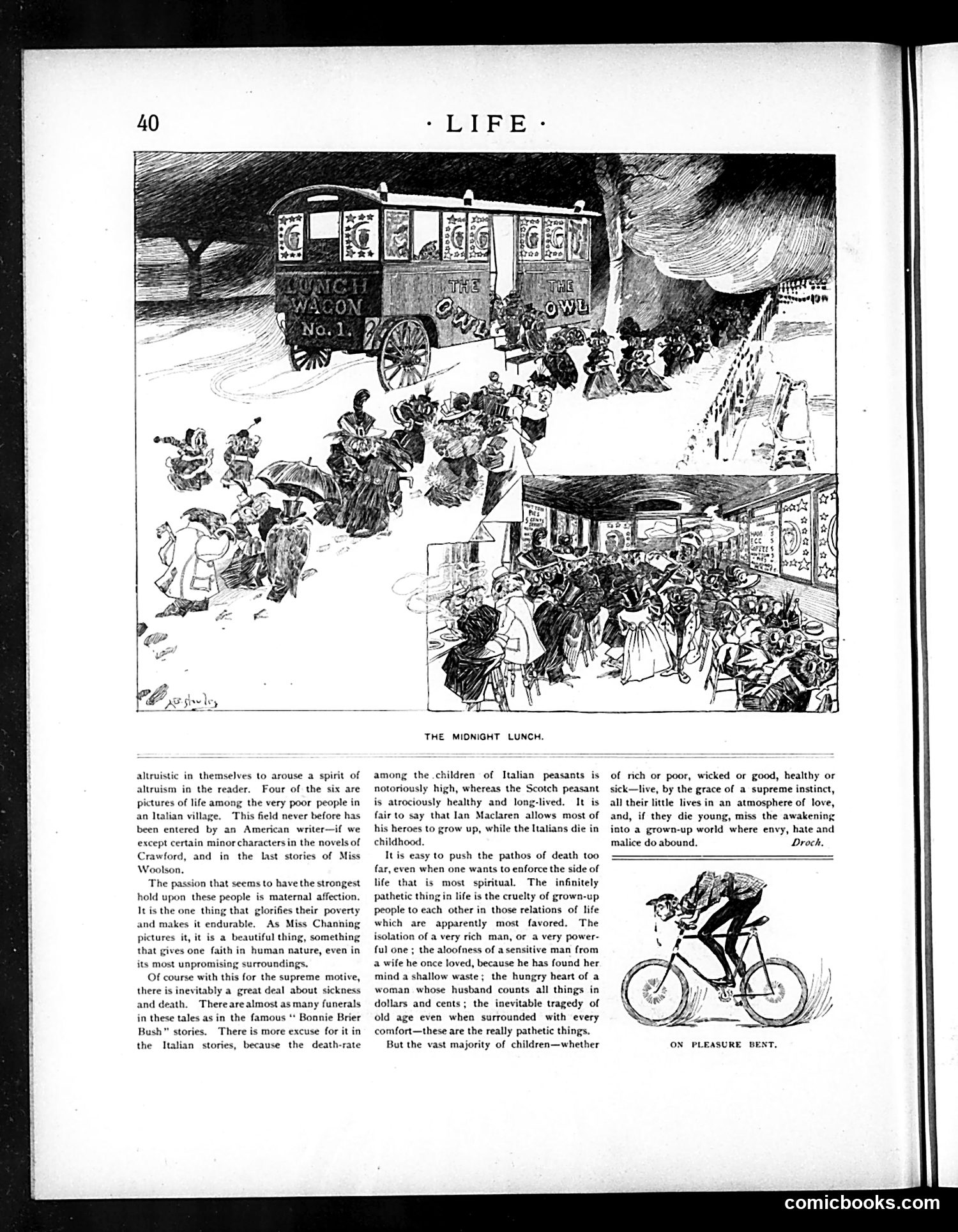
This page satirizes the romanticization of peasant poverty in literature. The top illustration shows "The Lunch Wagon" and "The Owl" - mobile food vendors attracting crowds, likely referencing how writers (particularly those writing about Italian peasant life) exploit sympathy for the poor. The accompanying text criticizes how literature falsely glamorizes hardship and death among peasants and poor children. It specifically mentions author Ian Maclaren and references the sentimental "Bonnie Brier Bush" stories, arguing that real poverty involves cruel neglect and isolation—not the picturesque, emotionally manipulative versions found in popular fiction. The bottom illustration "On Pleasure Bent" shows leisure contrast to this critique. The satire targets literary sentimentalism about poverty as dishonest and exploitative.
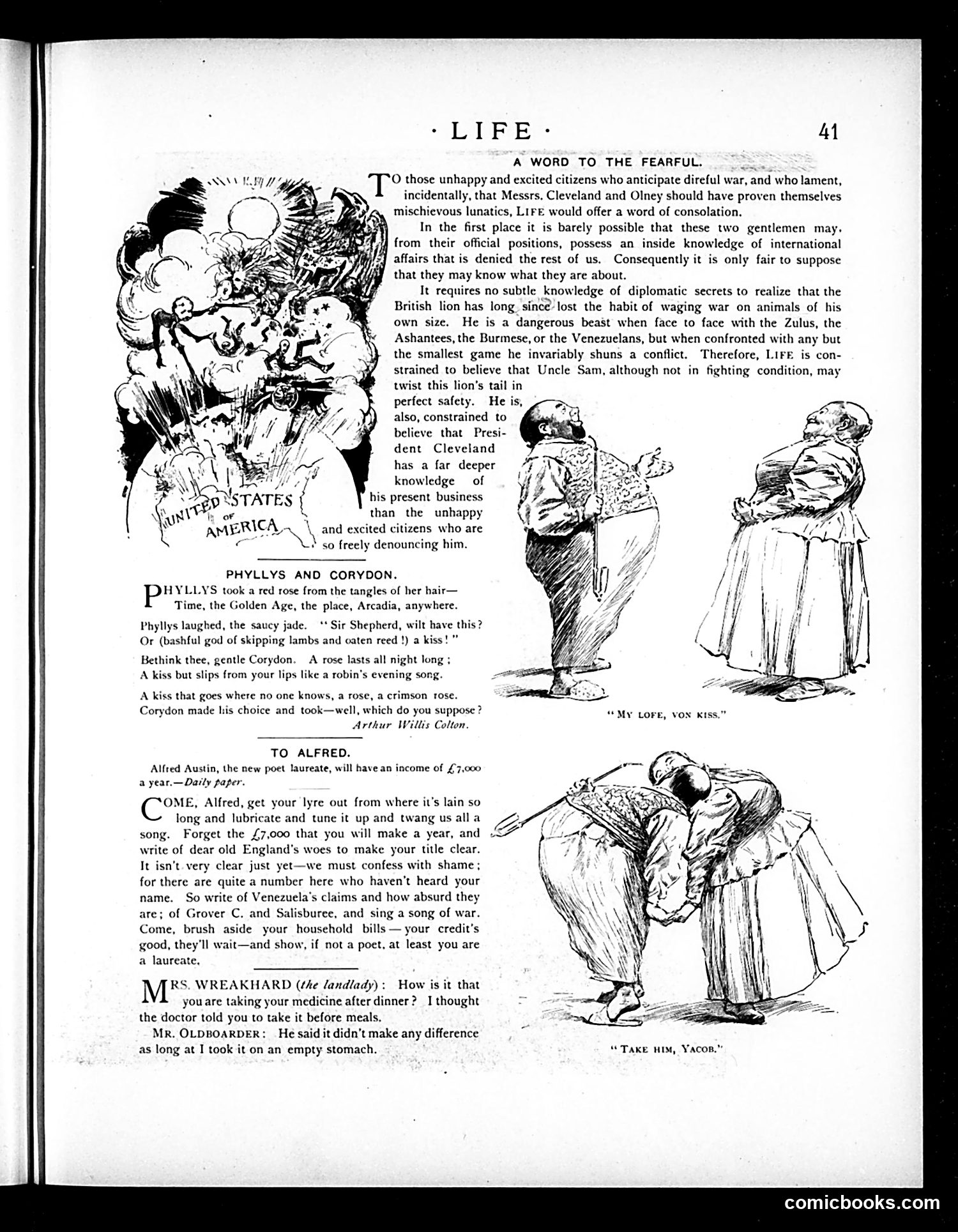
This page from *Life* magazine contains political commentary and light humor pieces. The main article, "A Word to the Fearful," addresses citizens anxious about potential war, likely referencing the Cleveland and Olney administrations' diplomatic tensions (the text mentions them by name). The satirist reassures readers that President Cleveland understands international affairs better than the anxious public, and that Uncle Sam won't recklessly provoke conflict with stronger nations like Britain. The page also includes unrelated humorous pieces: "Phyllys and Corydon" (romantic verse with accompanying sketches), "To Alfred" (mocking the new poet laureate's £7,000 salary), and a brief comic dialogue between Mrs. Wreakhard and Mr. Oldboarder about taking medicine. The cartoons illustrate the literary pieces rather than advancing political argument.
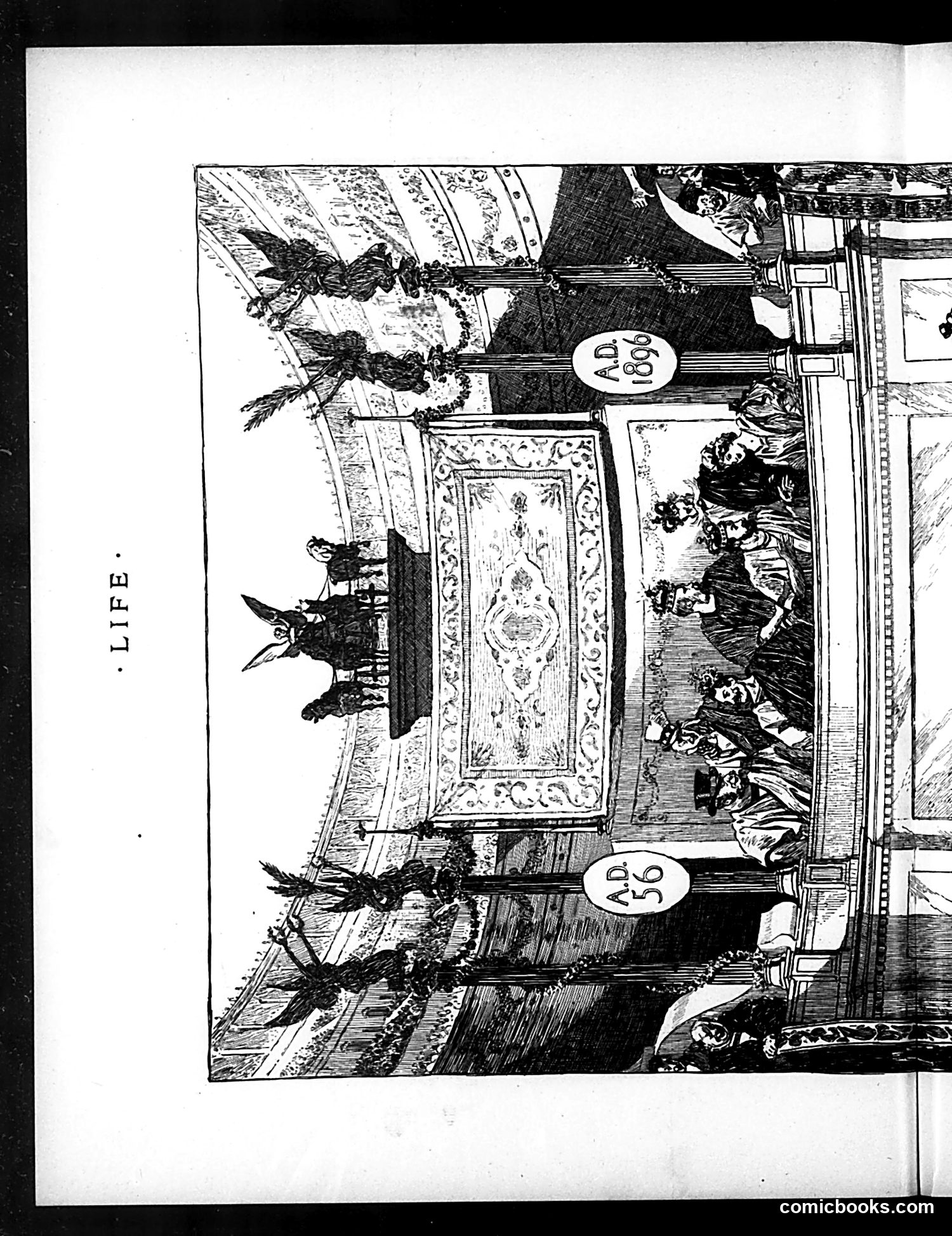
This page appears to be from Life magazine and is titled "LIFE" on the left margin. The image shows an interior domestic scene, rotated 90 degrees, depicting what appears to be an elegant Victorian or Edwardian-era room with ornate furnishings, decorative wall panels, and multiple figures in period dress. However, without clearer visibility of specific details, caricature features, or accompanying caption text, I cannot confidently identify the particular political figures, social commentary, or satirical point being made. The scene appears to depict upper-class domestic life or a social gathering, but the specific satire—whether social commentary on wealth, gender roles, manners, or contemporary political figures—remains unclear from this reproduction quality. To accurately explain the joke or reference, I would need either sharper image resolution or visible caption text.
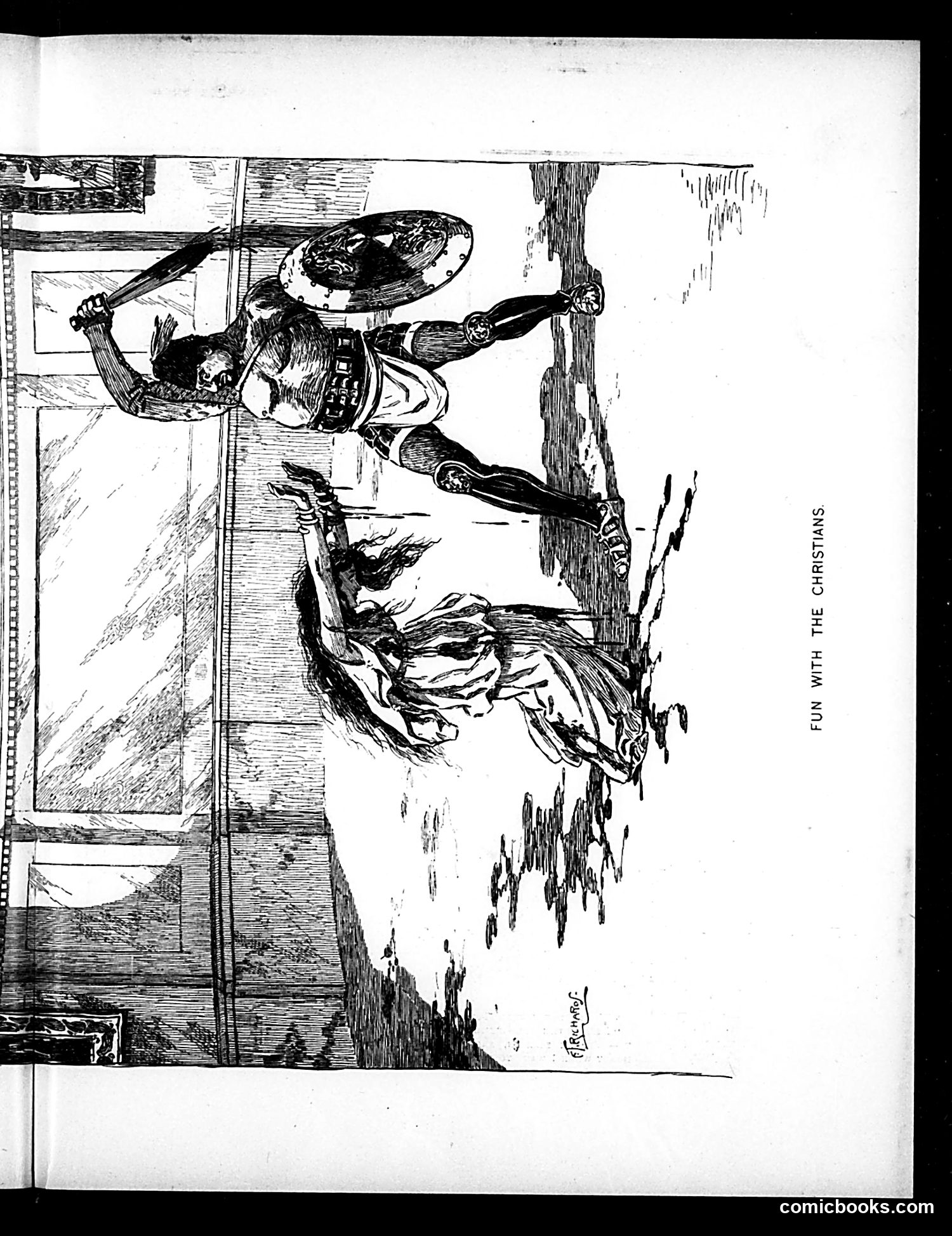
This illustration shows a figure in military or formal dress engaged in acrobatic play with what appears to be a large plate or disc. The caption reads "FUN WITH THE CHRISTMAS," suggesting holiday-themed entertainment or amusement. The sketch style is characteristic of early 20th-century Life magazine satirical cartoons. The dynamic pose and exaggerated movements indicate this depicts some form of recreational activity or game. The figure's clothing and the formal interior setting suggest this may be satirizing holiday entertainment among a particular social class. Without additional context from surrounding articles or advertisements on this page, the specific political or social commentary remains unclear, though it appears to be gentle holiday-themed humor rather than sharp political satire.
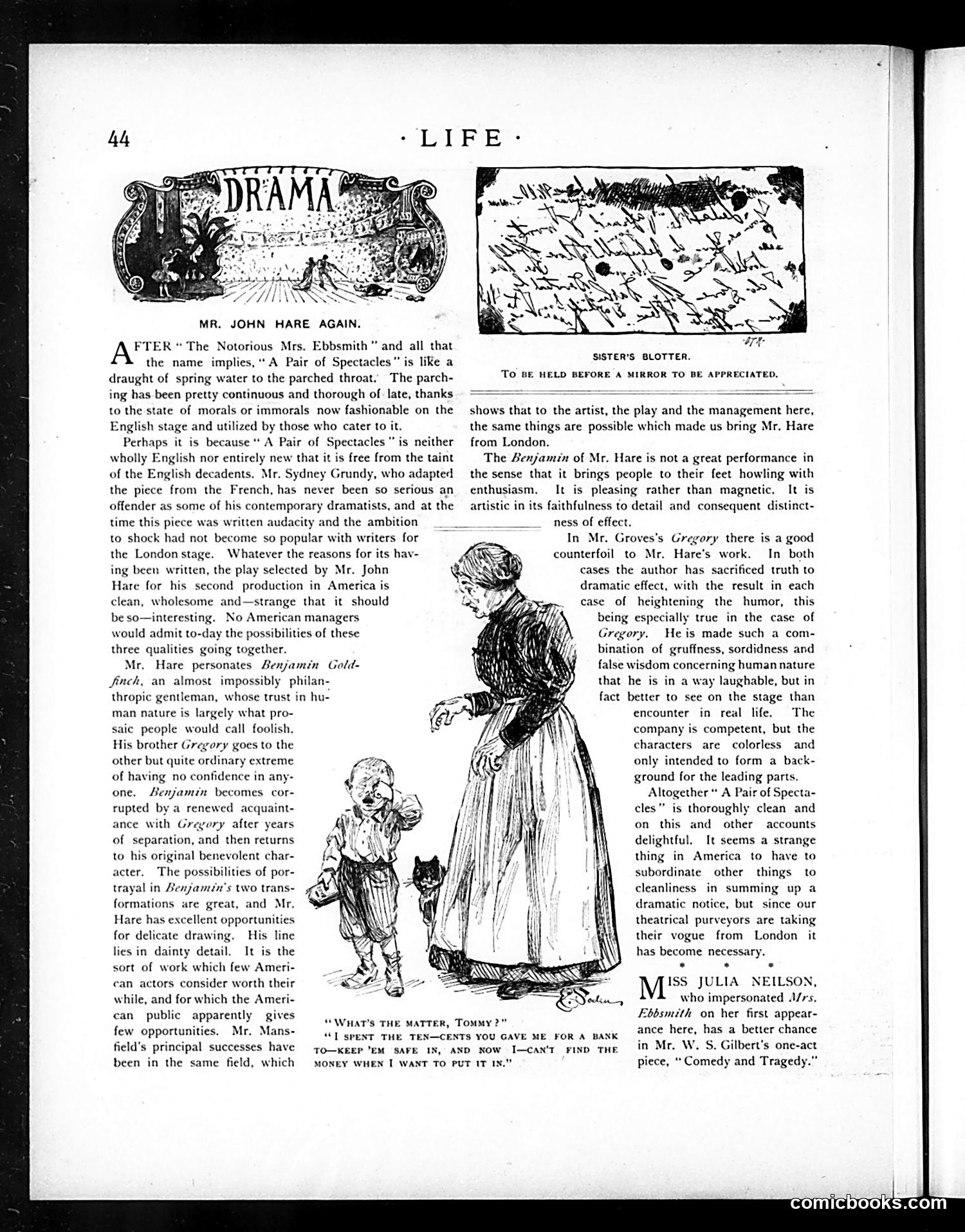
This *Life* magazine drama section reviews John Hare's American production of "A Pair of Spectacles," a French-adapted play by Sydney Grundy. The critic praises it as refreshingly "clean, wholesome and interesting"—a stark contrast to contemporary English theatre, which the piece criticizes as morally decadent (referencing "The Notorious Mrs. Ebbsmith" as an example of risqué material). The review focuses on Hare's performance as Benjamin Goldfinch, a naïve philanthropist corrupted then redeemed. The critic admires the delicate character work but notes American audiences and managers undervalue such subtle performances. The small cartoon shows a child who spent his ten cents on a savings bank rather than candy—satirizing American parental values around thrift. "Sister's Blotter" is a mirror-image cartoon (read by reflecting it), a playful visual puzzle typical of *Life*'s humor.
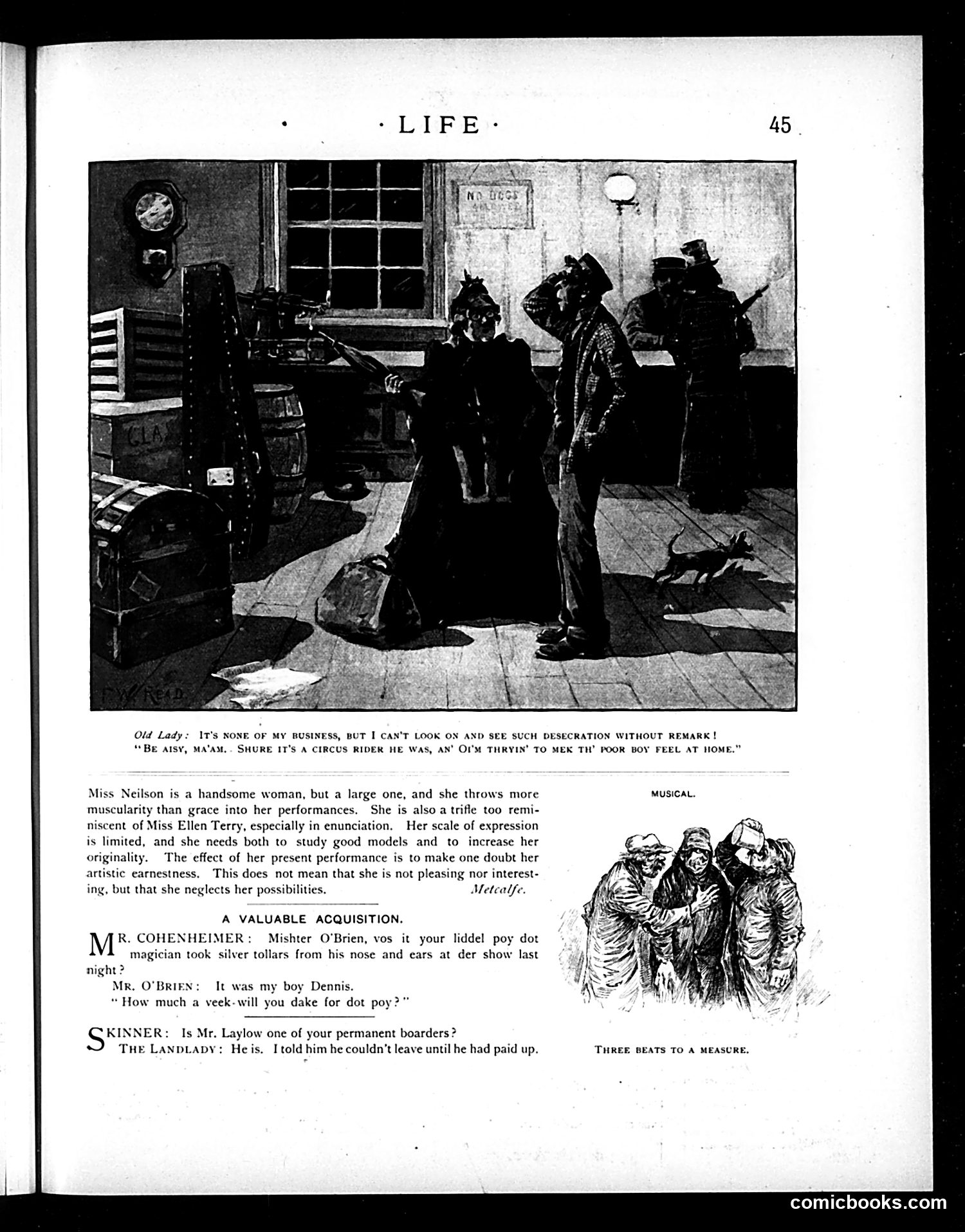
This page contains three separate satirical pieces typical of early Life magazine: **Top Image & Caption:** A sketch mocking Irish immigrant domesticity. An old woman protests a circus rider being housed in what appears to be a tenement, while an Irish man (indicated by dialect) defends keeping the performer comfortable "at home." The humor targets both Irish working-class living conditions and their characteristic hospitality. **"A Valuable Acquisition":** A ethnic humor dialogue between a Jewish character (Cohenheimer, indicated by Yiddish-inflected English) and an Irish one (O'Brien). Cohenheimer jokes about buying O'Brien's son after a magician's trick, implying the child is expendable labor—crude comedy relying on immigrant stereotypes and class anxieties about poor families. **"Three Beats to a Measure":** A small musical illustration (unclear in meaning without fuller context). **Theater Criticism:** A review of actress Miss Neilson criticizing her physical bulk and limited expressiveness compared to the celebrated Ellen Terry—typical period commentary linking women performers' bodies to artistic merit.
This page presents several brief humorous anecdotes typical of *Life* magazine's satirical style: **Main cartoons/jokes:** 1. **"At Nelly's"** - A suitor asks a father about family insanity; the father replies there "must be" insanity since the daughter agreed to marry him. The joke satirizes marriage as an irrational decision. 2. **The Lecture Anecdote** - A newspaper boy fills a gap in a lecture transcript with "[Great applause]" where the actual words were missing. The satire mocks how audiences assume speeches were successful, and how reports can be fabricated. 3. **General Johnston anecdote** - A Confederate soldier casually asks his general for a day off during battle. The humor derives from the absurd contrast between military hierarchy and casual insubordination. 4. **Smith's drinking story** - A hungover man tells a clergyman he has "the same kind of head," implying shared drunkenness. The joke targets both excessive drinking and religious hypocrisy. The page is primarily **humor/satire content** rather than political commentary, with advertisements interspersed.
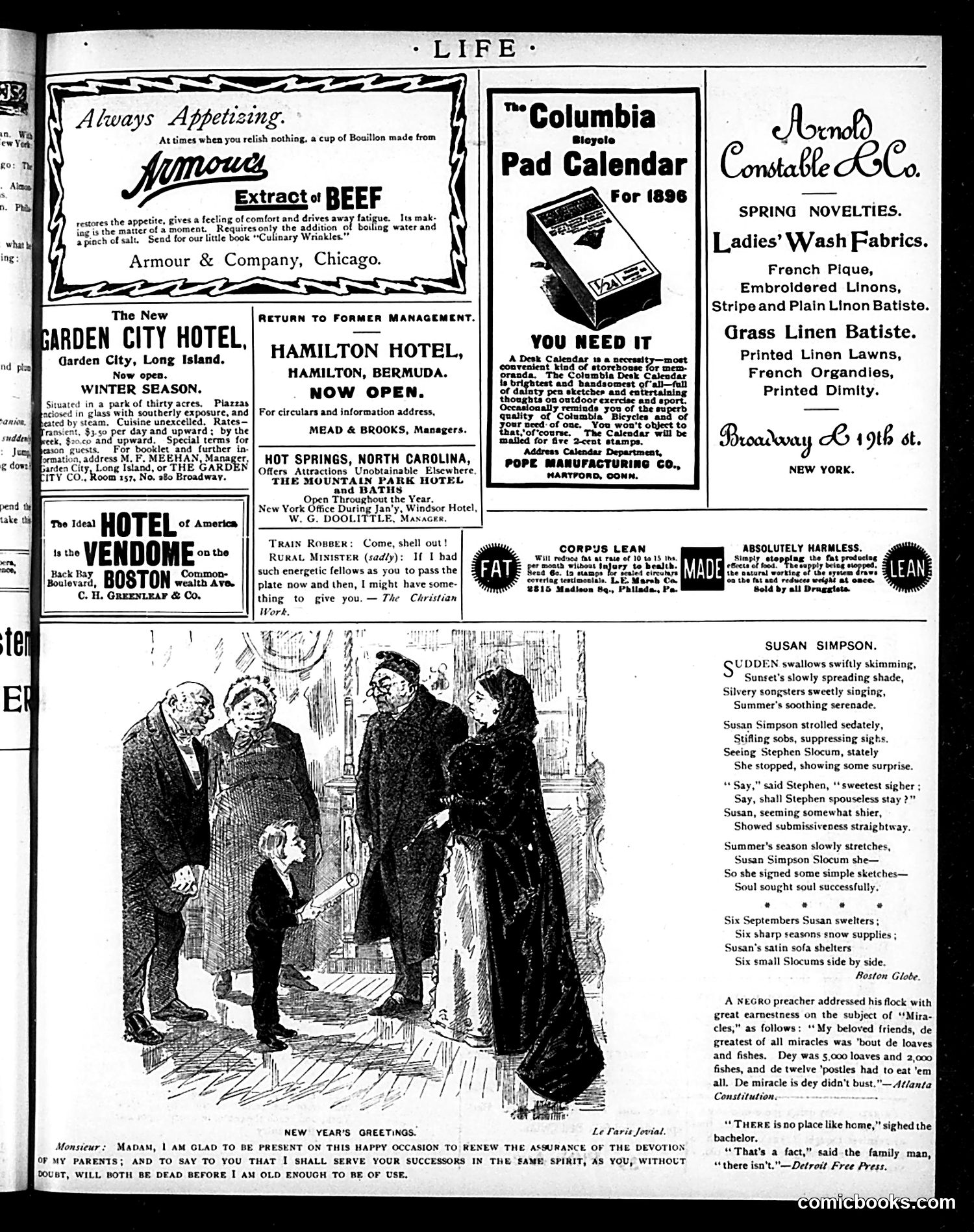
This page is primarily **advertising and light entertainment**, typical of 1890s Life magazine. The main illustrated cartoon shows a **New Year's greeting scene**: a servant or employee addresses his employer(s) with formal deference, essentially saying he's honored to serve their successors—implying the current generation will eventually die. It's genteel Victorian humor about class hierarchy and generational succession, presented as an exchange between servant and master at year's end. Below this is **"Susan Simpson,"** a tongue-twister poem using alliteration (all words starting with 'S') to tell a romance story—a popular parlor entertainment of the era. The final humor piece involves a **Black preacher's malapropism**: he recounts the Biblical miracle of loaves and fishes but gets the numbers absurdly wrong, treating it as a logical impossibility rather than divine miracle. The humor relies on dialect stereotyping common in 1890s publications. The page is otherwise filled with **hotel advertisements, patent medicines, bicycle calendars, and fabric promotions**—standard commercial content of the period.
This page contains two distinct pieces. The main cartoon story satirizes the then-controversial fashion of women wearing **bloomers** (baggy trousers). An athletic club member collides with another cyclist. Upon recovering, he's horrified to discover the other rider is a young woman wearing trousers—not a man. His shock and subsequent awkward apology ("I thought your—er—garments were trousers of a man you know") mocks contemporary attitudes: bloomers were scandalous and unfeminine to many Victorian observers, challenging traditional dress codes. The secondary anecdote about New Caledonian warfare—where natives only wage war when yams ripen because "baked yams go so very well with the captives"—is dark colonial satire, playing on racist stereotypes of cannibalism to comment on the absurdity of war justifications. The remainder is period advertising (hosiery, bicycles, perfume), typical of Life magazine's commercial content.
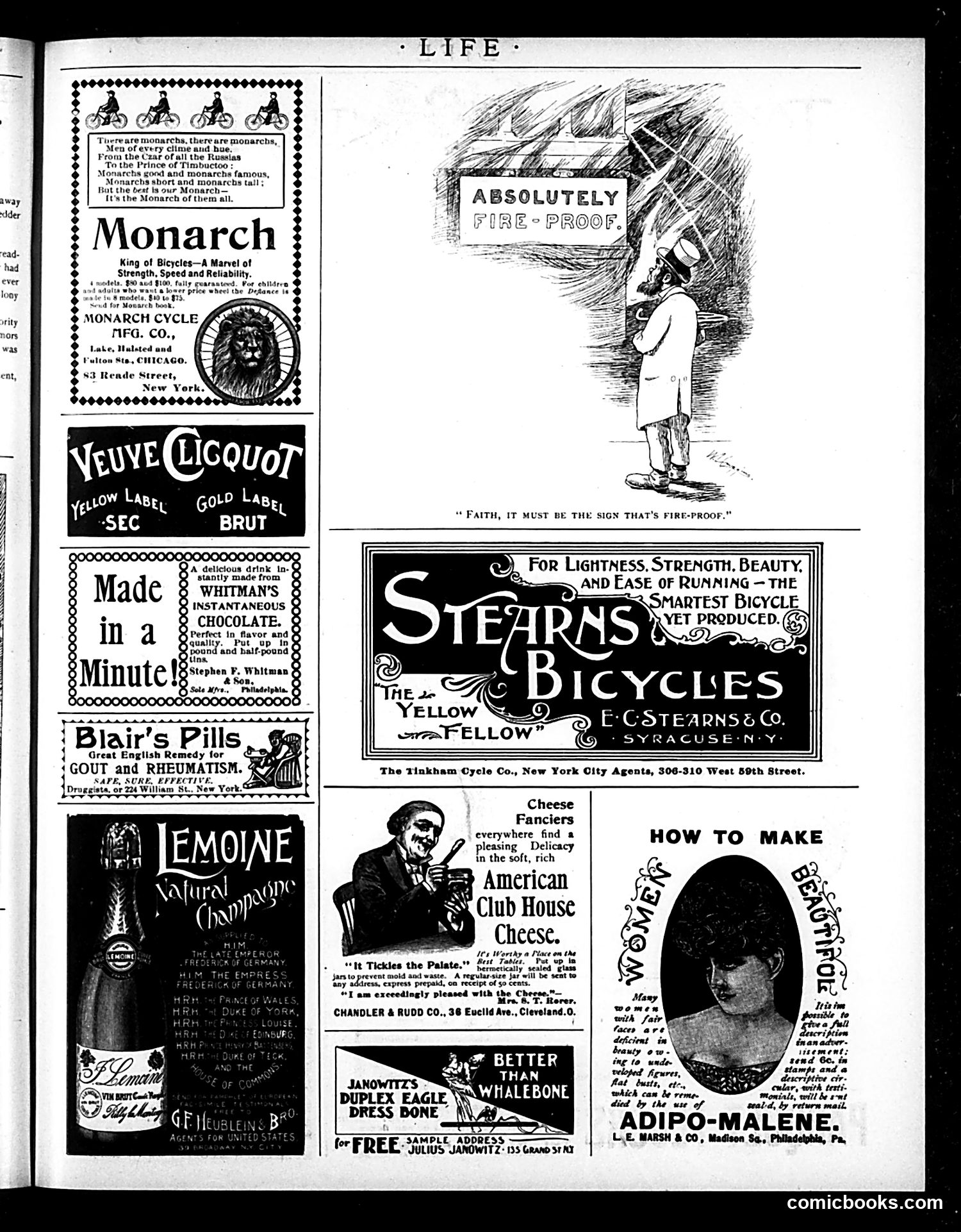
This page is primarily **advertising**, not political satire. The main cartoon—showing a man with an "Absolutely Fire-Proof" sign above him—is a humorous advertisement for Stearns Bicycles, playing on the phrase "faith" as the only proof against fire. The joke suggests bicycles are so reliable they're practically fireproof. The page features vintage product advertisements typical of early 20th-century magazines: Monarch bicycles (with patriotic verse), Stearns bicycles, Whitman's chocolate, Blair's Pills (for gout/rheumatism), American Club House cheese, Lemoine liqueur, Janowitz dress bones, and Adipo-Malene (an apparent weight-loss product). The opening verse about "monarchs" is simply product copy celebrating the Monarch bicycle brand—no political reference intended. These ads reflect consumer goods and patent medicines of the era, many of dubious efficacy by modern standards.
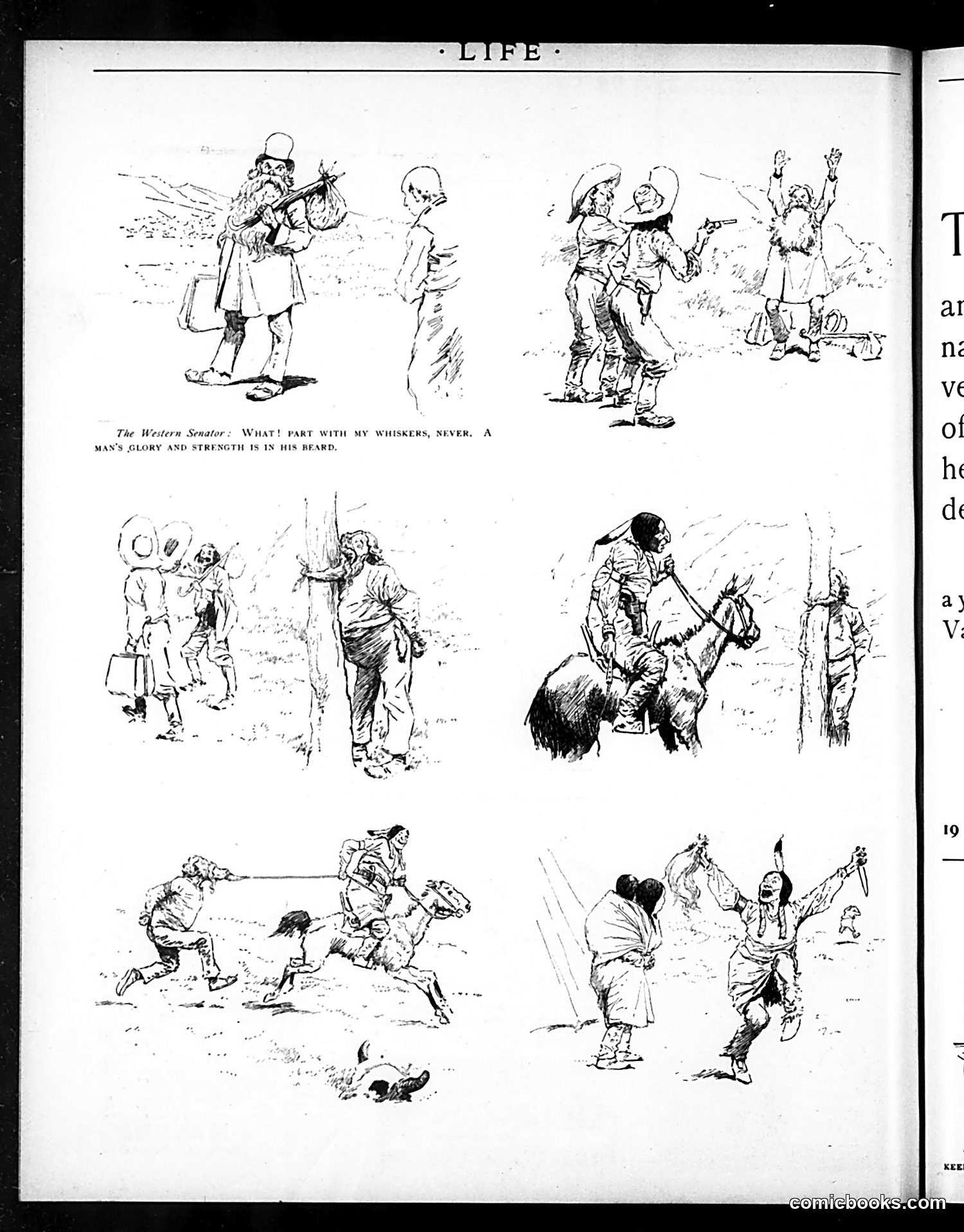
This page satirizes a "Western Senator" who stubbornly refuses to shave his beard, claiming that "a man's glory and strength is in his beard." The series of sketches depicts various scenarios where his facial hair causes practical problems—he appears to get it caught, tangled, or in the way during everyday activities and interactions. The satire likely targets late 19th-century Western politicians known for their distinctive facial hair and old-fashioned stubbornness about maintaining traditional masculine appearance, even when impractical. The joke mocks the notion that virility depends on whiskers, showing how this vanity creates comic complications. The exaggerated, rustic character type represents frontier politicians resistant to modernization.
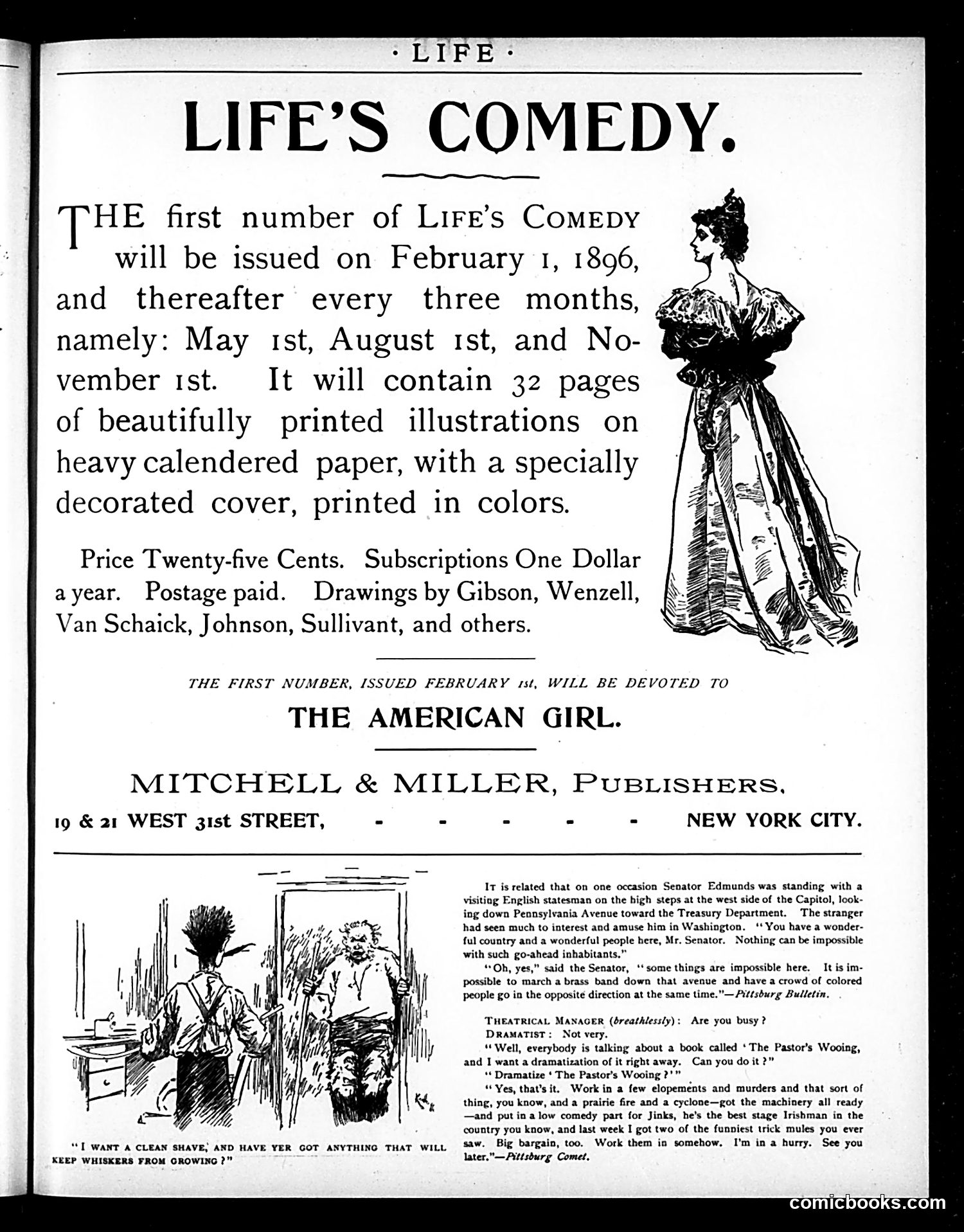
This is primarily an **advertisement and title page** for Life's new "Comedy" section, launching February 1, 1896. The magazine promises quarterly issues with 32 pages of illustrations by prominent artists (Gibson, Wenzel, Sullivan, etc.), devoted first to "The American Girl." The page includes two satirical items: 1. **The barber cartoon**: A simple visual gag about a customer requesting a shave while asking if the barber has anything to prevent whisker growth—an absurd contradiction played for humor. 2. **The Senator Edmunds anecdote**: A racist joke claiming it's "impossible" to march a brass band down Pennsylvania Avenue without Black people dispersing in the opposite direction. This reflects the casual racial prejudice of 1890s Life magazine. 3. **The dramatist dialogue**: Mocks theatrical producers' formulaic approach to adaptations, adding melodramatic elements (elopements, murders, prairie fires, comic Irish characters) to serious source material for commercial appeal. The page reflects Life's satirical voice targeting both everyday absurdities and cultural pretensions of the era.
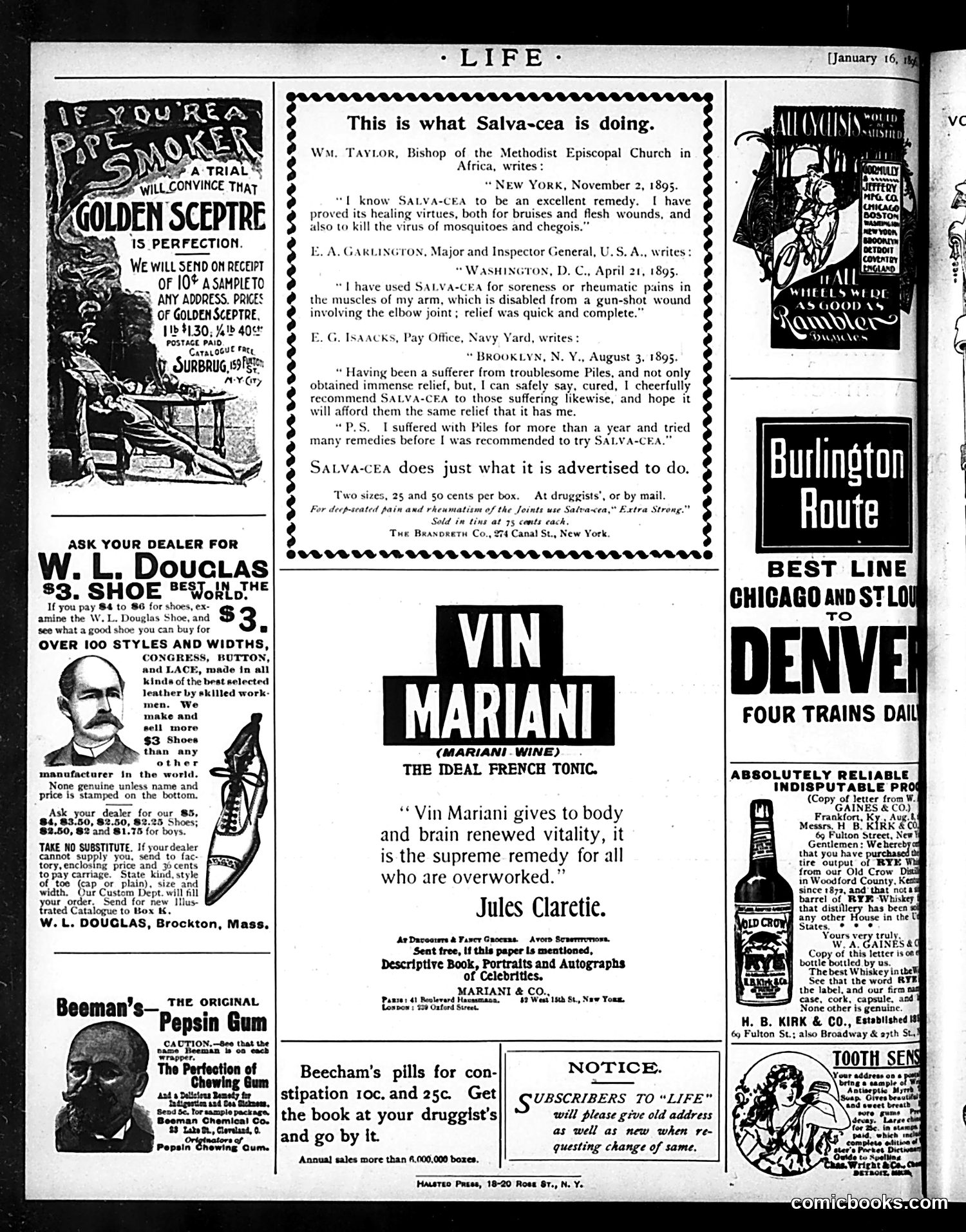
This page is primarily **advertising**, not satire or political commentary. It features testimonial-style ads for patent medicines and consumer products popular in the 1890s. The main content includes: - **Salva-cea**: A healing salve advertised with endorsements from a Methodist Bishop, U.S. Army officer, and Navy worker, claiming it treats wounds, rheumatism, piles, and even mosquito-borne illness. - **Vin Mariani**: A French "tonic" wine featuring a quote from Jules Claretie (a real French writer) promoting it as a cure for overwork. - **W.L. Douglas Shoes**: A shoe brand advertisement emphasizing affordability and quality. - **Beecham's Pills**: A laxative advertised as "perfection." These ads reflect late-19th-century medical marketing before modern FDA regulation—when unproven remedies could make sweeping health claims using testimonials from apparent authority figures. The page reveals contemporary attitudes toward patent medicines and consumer trust in celebrity/professional endorsements, now recognized as dubious practices.