
A complete issue · 16 pages · 1883
Life — August 30, 1883
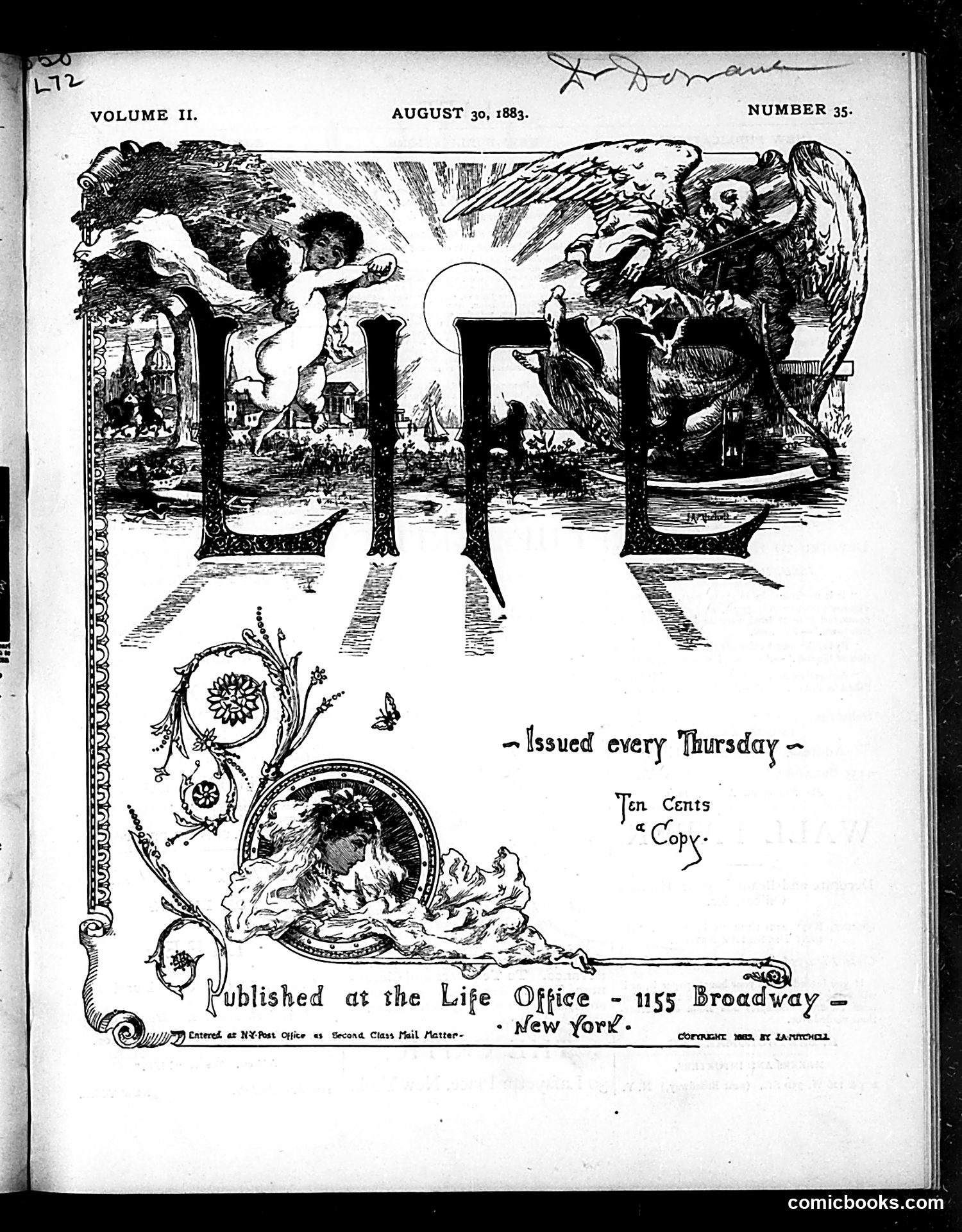
This is the cover of Life magazine, a satirical weekly published in New York. The large decorative letters "LIFE" dominate the composition, framed by an elaborate allegorical illustration featuring classical cherubs and celestial imagery—likely representing the magazine's aspirations toward wit and enlightenment. The ornate border decoration and cherub figures suggest themes of beauty, inspiration, or divine favor for the publication itself. The cover emphasizes Life's status as a Thursday publication costing ten cents per copy, making it accessible to middle-class readers. Without additional context from the magazine's interior pages, the specific satirical content or targets remain unclear, though the artistic style indicates Victorian-era sensibilities and classical allegorical references typical of 1880s American humor publications.
This page contains **no cartoons or satirical illustrations**—it is entirely **advertising and publication notices**. The content advertises books (including translations of German works), subscriptions to *Life* magazine itself and *The Critic* literary journal, hotel and resort accommodations in upstate New York (Cooperstown, Otsego Lake area), wallpaper, and a patent binder for filing documents. The only text with satirical tone is *Life* magazine's self-promotion, which quotes praise calling it "the neatest, brightest, and cleverest paper" and "the best humorous and satirical publication." However, no actual cartoon content appears on this page to analyze for political or social meaning.
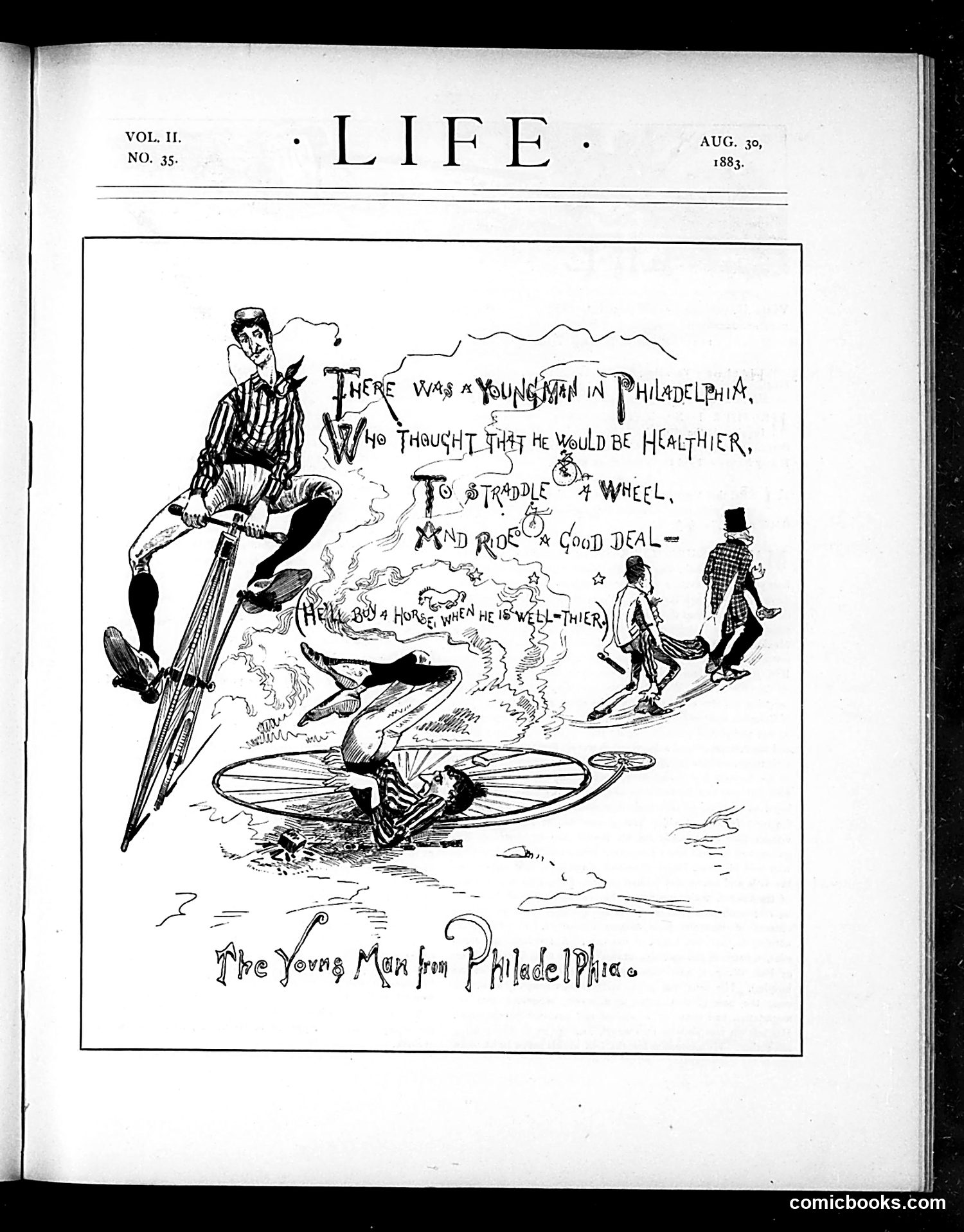
This cartoon mocks a Philadelphia youth who believed exercising on a tricycle would improve his health. The illustration shows the disastrous result: he's crashed spectacularly, lying upside-down beneath his overturned tricycle while other riders observe his mishap. The satire targets the Victorian-era enthusiasm for "health crazes" and exercise fads. The young man's optimistic assumption that tricycling would make him "healthier" and provide "a good deal" of fun ironically backfires, as he discovers when he "is well-thier" (sicker). The joke relies on the contrast between the promise of these fashionable health remedies and their actual consequences—poking fun at both the gullibility of young people and the dubious medical claims surrounding new recreational activities.
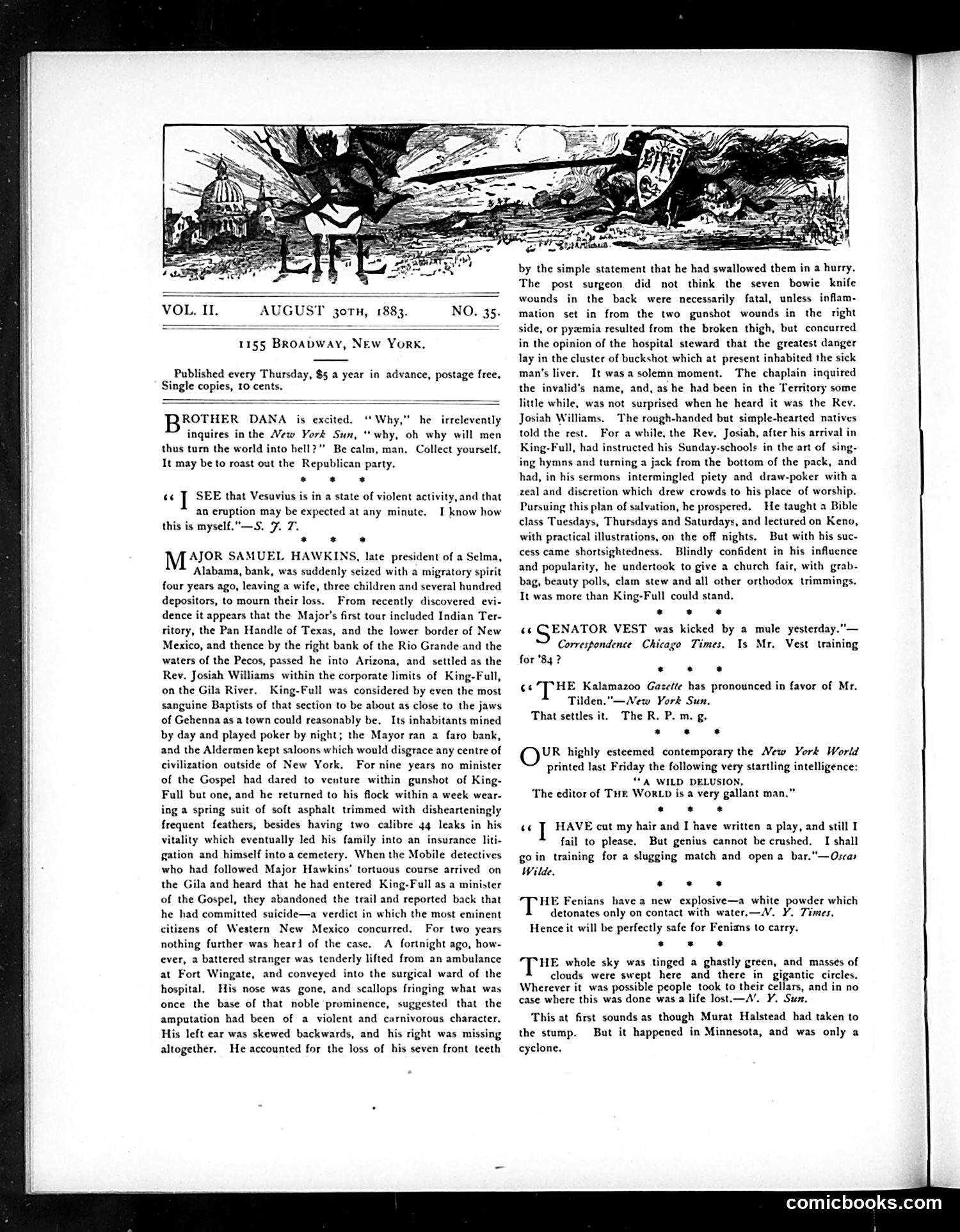
The illustration at the top appears to be a decorative header rather than a political cartoon. It shows an allegorical or fantastical scene with classical elements (a domed building, dramatic gestures) but lacks clear satirical figures or contemporary references. The page's content consists primarily of satirical news items and commentary rather than visual cartoons. These include brief jabs at various subjects: Brother Dana (likely newspaper editor John Cotton Dana), Major Samuel Hawkins (a controversial religious figure in New Mexico), Senator Vest (kicked by a mule), and critiques of other publications and social figures. The humor relies on witty written commentary about current events and personalities rather than visual caricature.
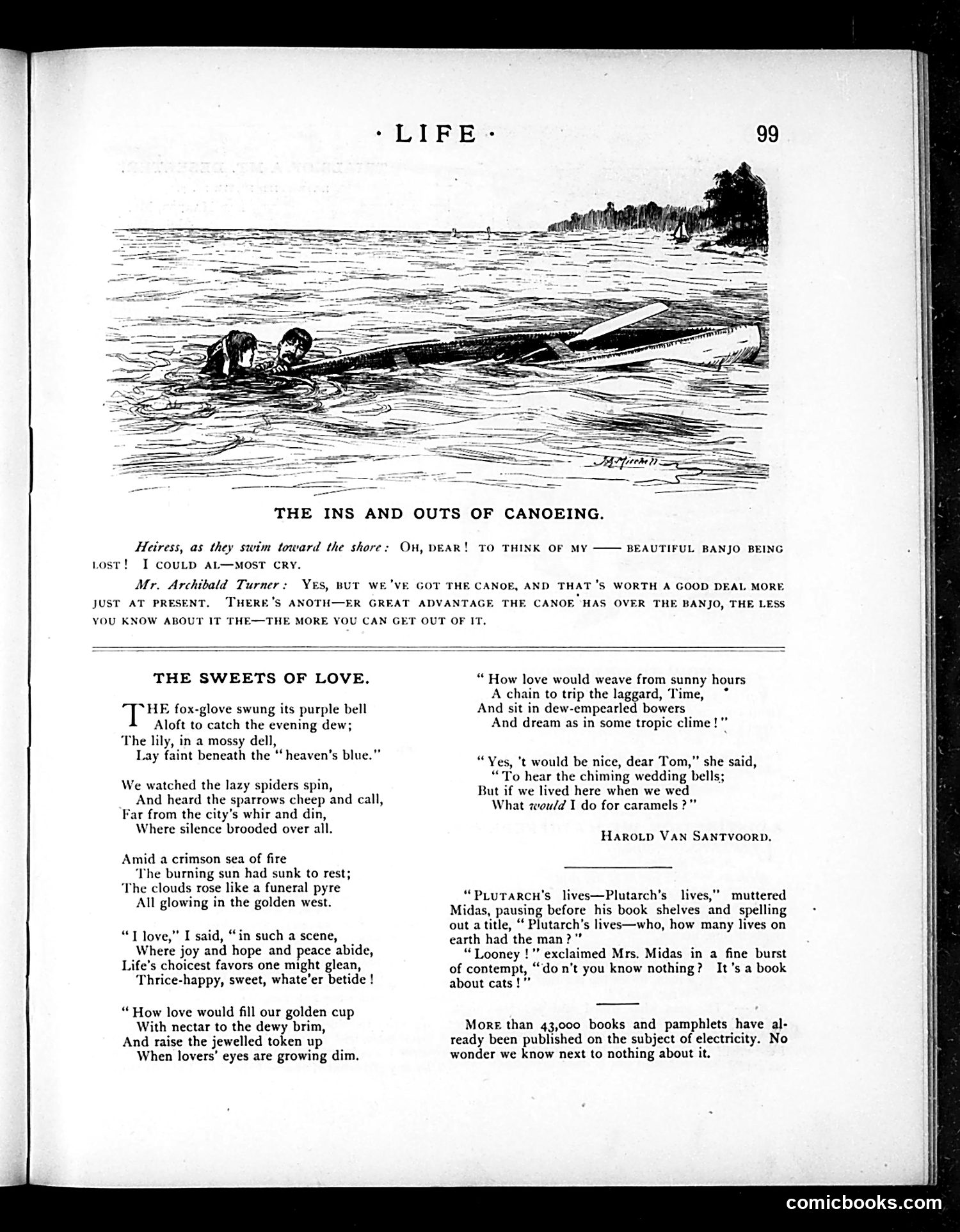
The illustration titled "The Ins and Outs of Canoeing" depicts two swimmers in water beside an overturned canoe. The dialogue shows a woman (Heiress) lamenting the loss of her banjo, while a man (Mr. Archibald Turner) pragmatically notes they've at least salvaged the canoe itself—which he claims is more valuable than the banjo. The satire targets wealthy leisure culture and class attitudes: the "heiress" prioritizes a luxury musical instrument, while Turner emphasizes practical property value. The joke illustrates the disconnect between upper-class sentimentality (mourning recreational possessions) and practical concerns during an accident. The page also includes romantic poetry titled "The Sweets of Love" and unrelated literary commentary, typical of Life magazine's mixed content format.
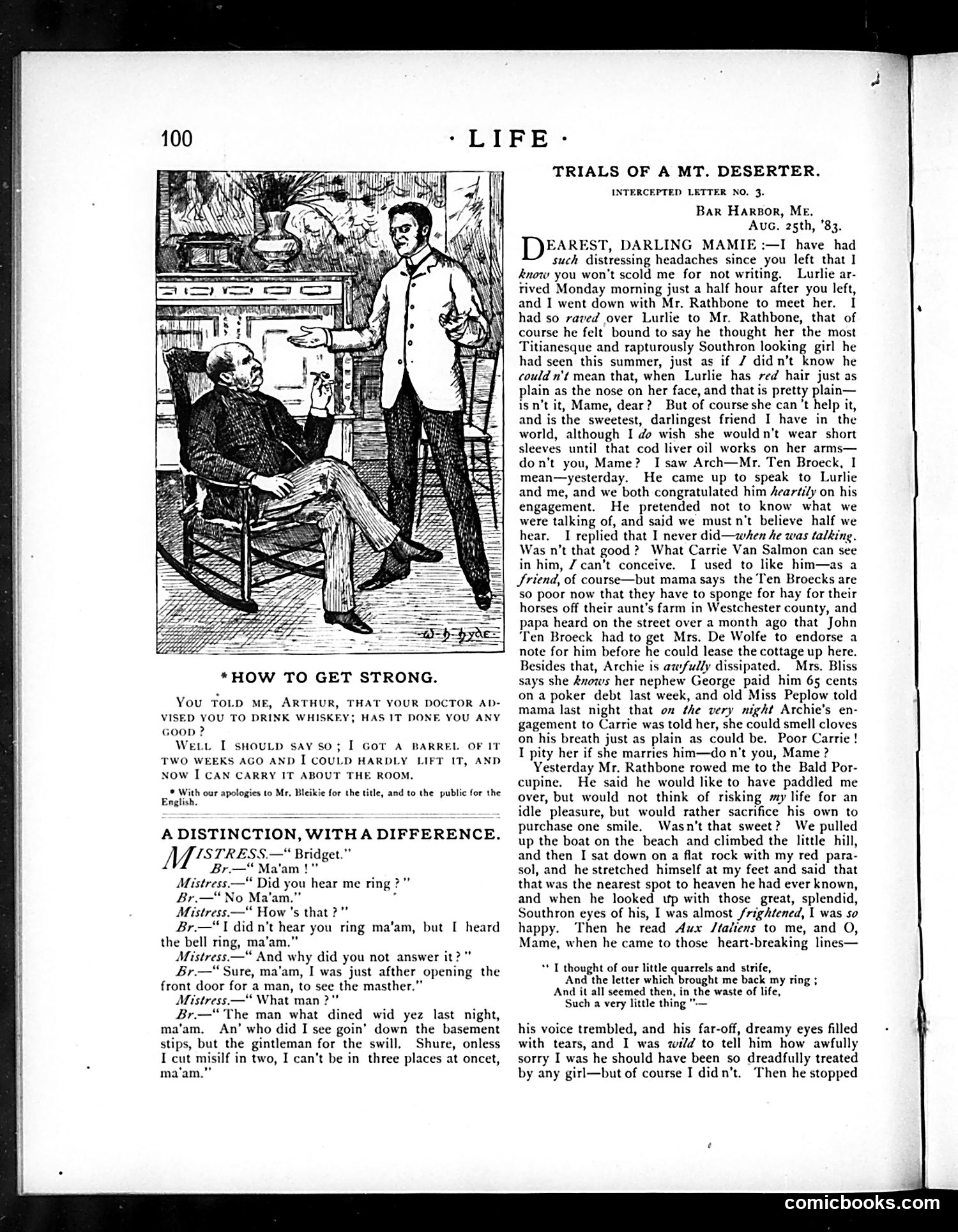
This page contains two distinct items: **"How to Get Strong"** is a brief humorous dialogue where someone claims their doctor advised drinking whiskey for strength. They report obtaining a barrel two weeks ago and can now lift it—implying they've consumed it rather than built muscle. The joke satirizes dubious medical advice and alcohol consumption. **"A Distinction, With a Difference"** presents a comic exchange between a mistress ("Bridget") and her employer about a rung bell. The humor plays on class distinctions and servant misunderstandings—the mistress assumes the bell wasn't heard, but the servant heard the bell itself rather than responding to its summons. It's genteel domestic comedy typical of Victorian-era satirical magazines. The main illustration shows a man in a kitchen, likely related to the whiskey anecdote.
This page contains personal correspondence and a poem titled "Un Voyageur Moderne" by Curtis Guild, Jr., rather than political cartoons. The letter exchanges (marked "P.S.") appear to be humorous social gossip about acquaintances—references to people named Mame, Gregory Jones, Lurlie, and various social incidents at places like Great Head and the Rocks. The tone is satirical, mocking pretentious social behavior and romantic entanglements among the leisure class. The poem mocks a modern traveler (likely an American abroad in Paris) who constantly complains about French food, culture, and accommodations while nostalgically reminiscing about home. It's gentle satire of American tourists' cultural inflexibility and homesickness while traveling in Europe. Both sections represent typical *Life* magazine humor: satirizing upper-class social pretension and American cultural attitudes.
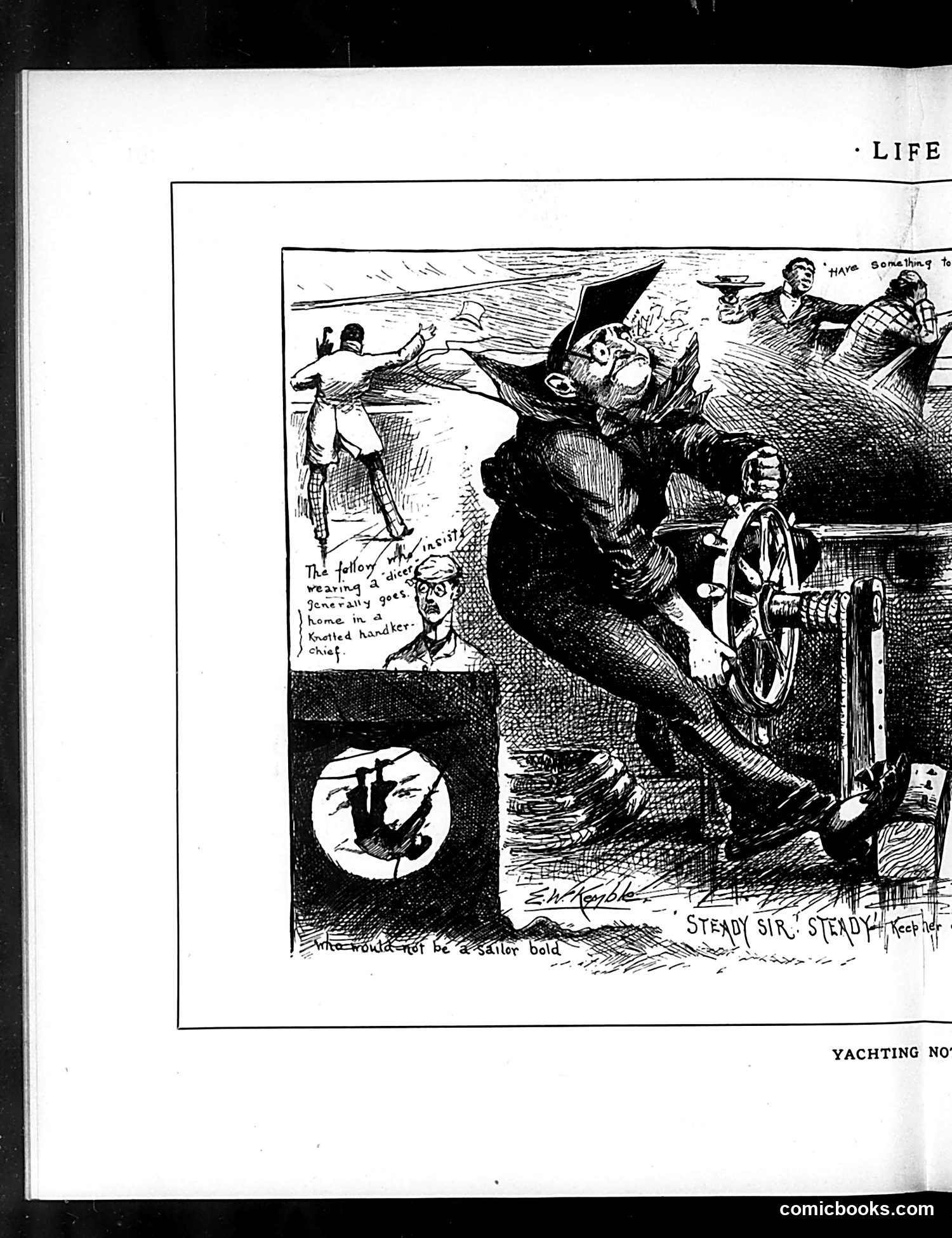
This appears to be a satirical cartoon about maritime/nautical mishaps. The central figure is a large, rotund man in a top hat riding a bicycle on what looks like a ship or dock, with the caption "STEADY SIR! STEADY!" suggesting he's losing balance. In the upper left, there's a smaller inset showing a sailor in traditional dress. Another inset at lower left appears to show someone falling or in distress, captioned "Will you be a sailor bold." The cartoon satirizes either: - An incompetent or clumsy authority figure attempting nautical activities - The contrast between maritime tradition and modern urban foolishness The overall humor seems to mock someone's lack of seafaring capability or dignity, though without clearer identification of the specific figure or historical moment, the exact political target remains unclear.
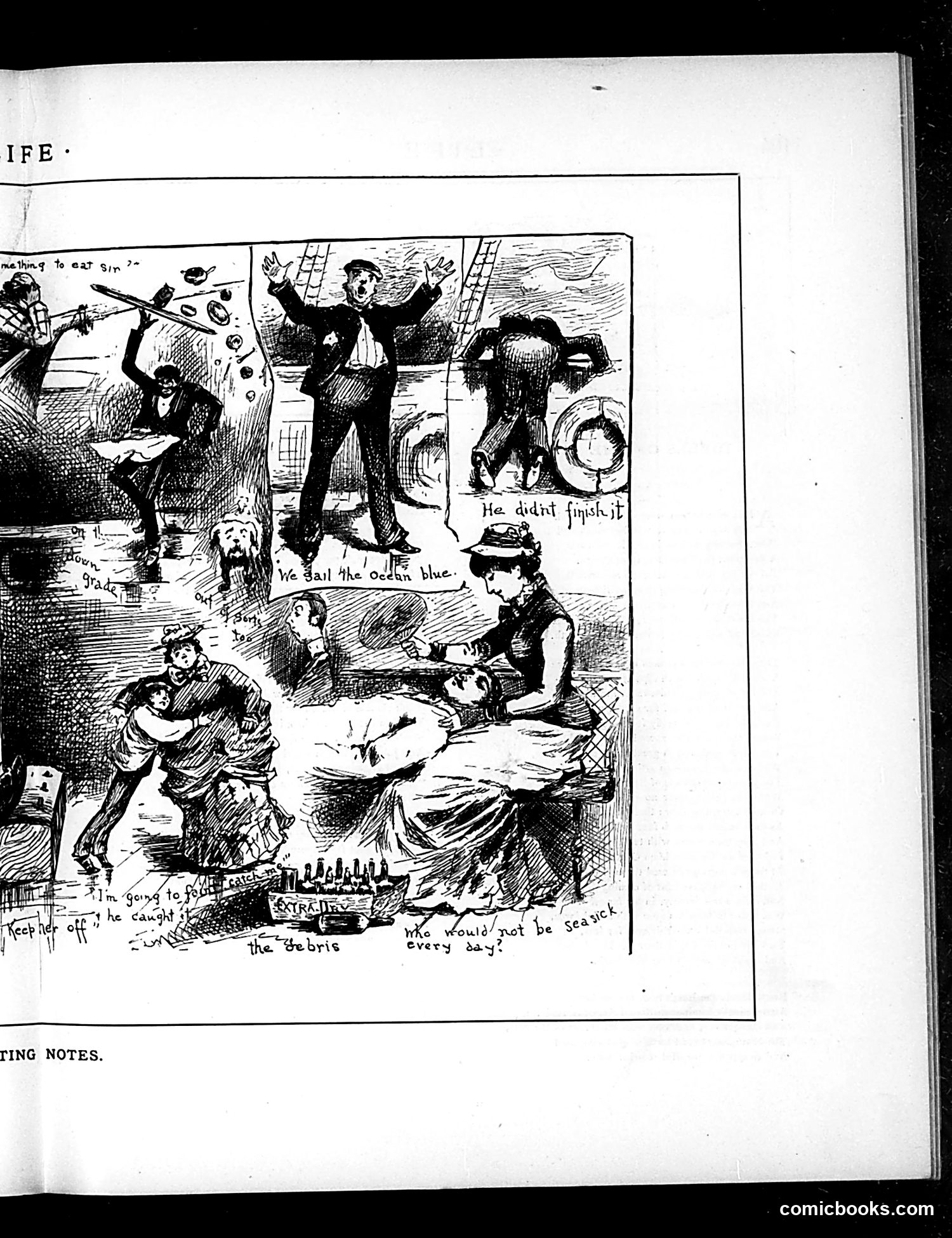
This appears to be a multi-panel comic about sailing and seasickness. The visible dialogue includes "We sail the ocean blue," "He didn't finish it," "I'm going to be sick," "Keep her off," "the debris," and "He would not be seasick every day." The comic depicts sailors on a ship experiencing rough conditions. The humor centers on a character's persistent seasickness despite being at sea—the ironic contradiction between the romantic notion of sailing ("we sail the ocean blue") and the unglamorous physical reality of becoming ill regularly. The satirical point appears to mock the gap between maritime romanticization in popular culture and actual seafaring experience. The detailed cross-hatching and period clothing suggest this is from early-to-mid 20th century Life magazine.
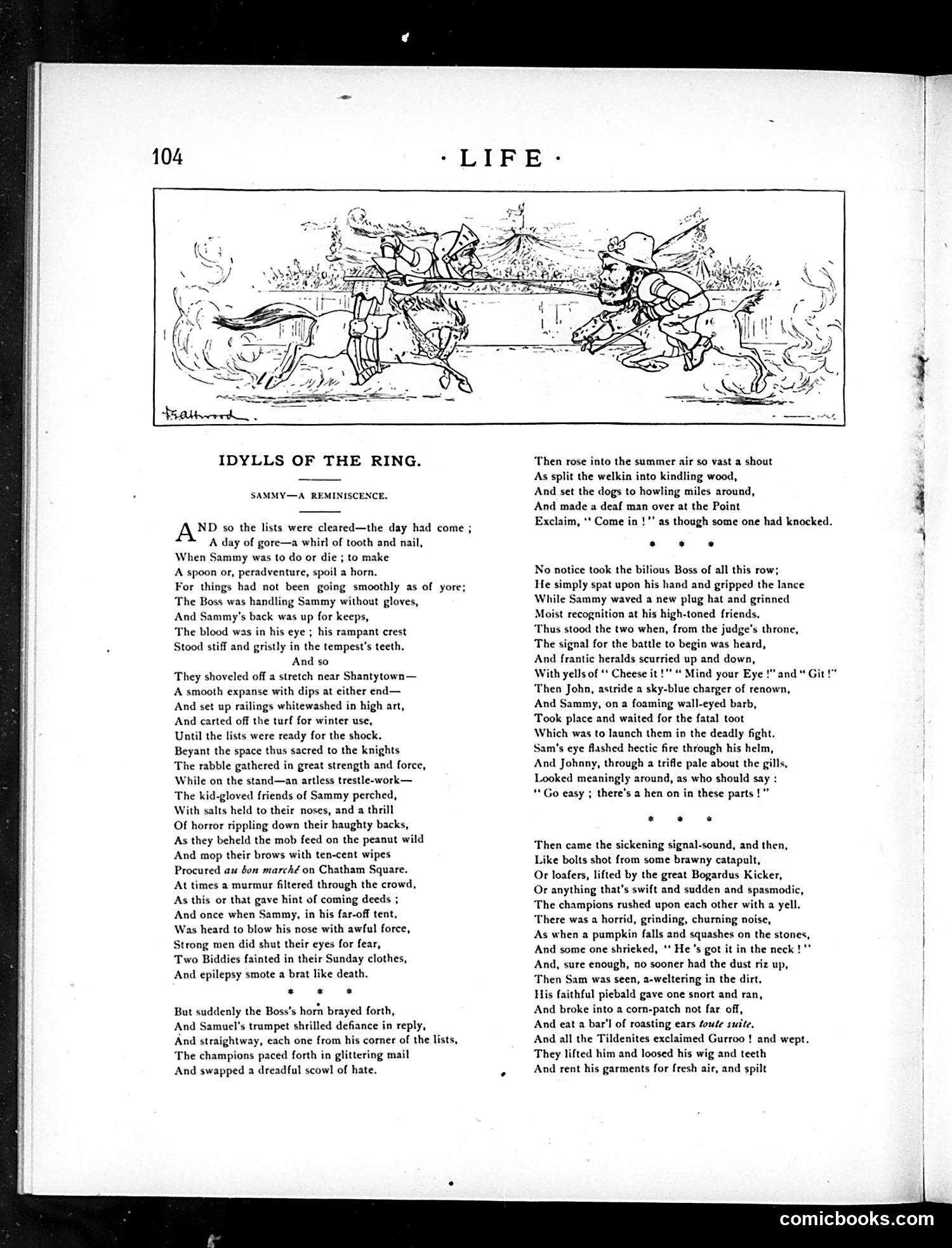
This satirical poem mocks a prizefight between "Sammy" and "the Boss" (likely referring to a specific boxing match, though the specific fighters remain unclear from this page alone). The cartoon illustration shows a jousting scene, comically comparing the brutal sport to medieval combat. The satire targets multiple subjects: the spectacle and excitement surrounding boxing matches, the class divisions (upper-class "kid-gloved friends" versus working-class "rabble"), and the absurdity of the violence itself. The poem uses mock-heroic language, treating a brutal fight as if it were noble knighthood. References like "Bogardus Kicker" and "Tildenites" suggest specific political or sporting context from the original publication period. The humor derives from exaggerated descriptions of the chaos, spectators' overwrought reactions, and Sammy's humiliating defeat—his horse escaping to eat corn while supporters weep.
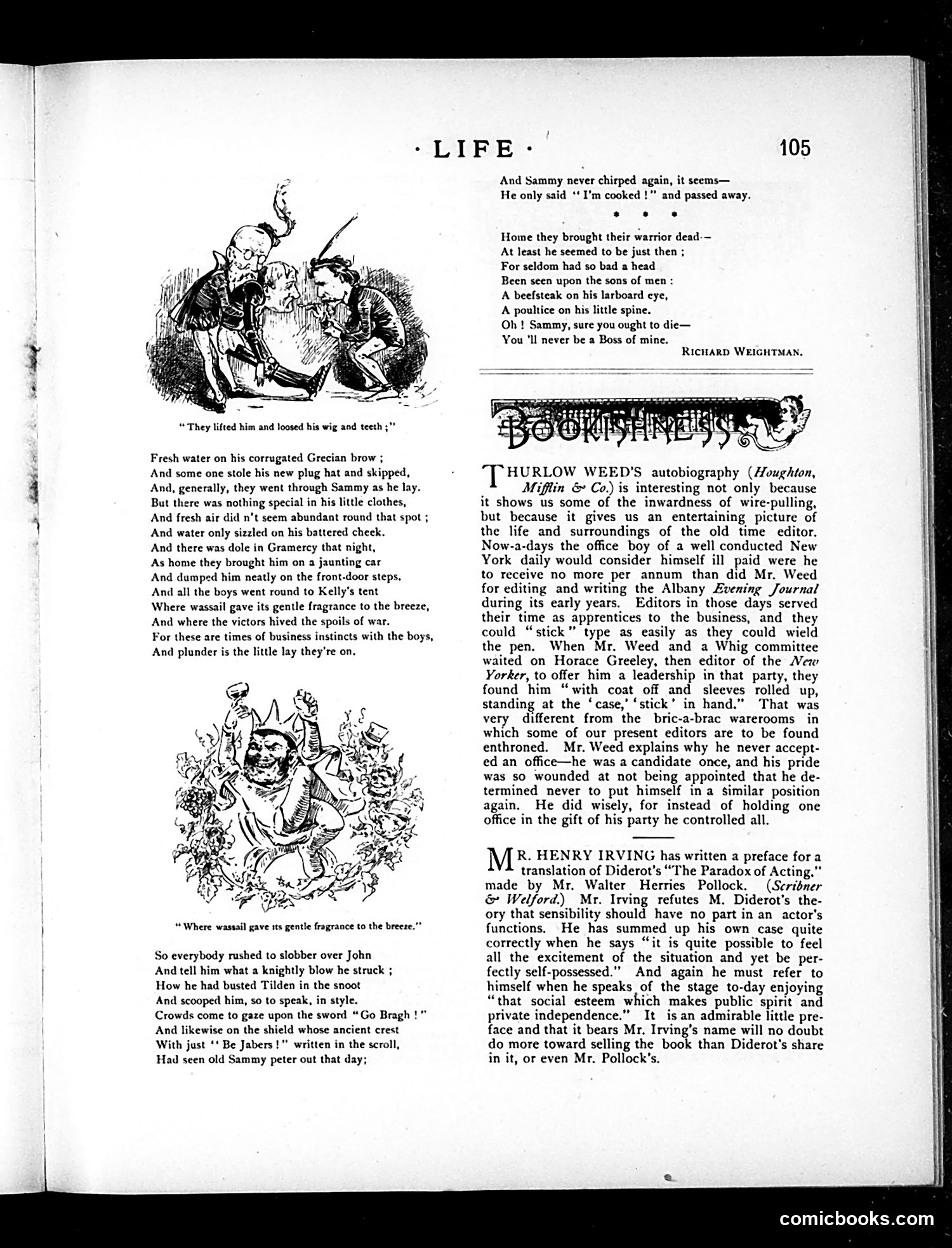
This page contains a satirical poem by Richard Weightman about a street fight in what appears to be 19th-century New York (references to "Gramercy," "Kelly's tent," and Irish characters suggest an immigrant neighborhood). The narrative describes a brawl where a character named "John" defeats "Sammy" (or "Tilden"), leaving him severely beaten—"a beefsteak on his larboard eye, / A poultice on his little spine." The poem mocks both the violence and the celebratory aftermath, where the victor's friends plunder Sammy's belongings and celebrate at a tavern. The satirical point appears to target working-class street violence as performative spectacle and petty criminality ("plunder is the little lay they're on"). The exaggerated poetic language treating a brutal mugging as heroic adventure undercuts the actual brutality. The accompanying prose discusses historical editors (Thurlow Weed, Horace Greeley), seemingly unrelated to the cartoon.
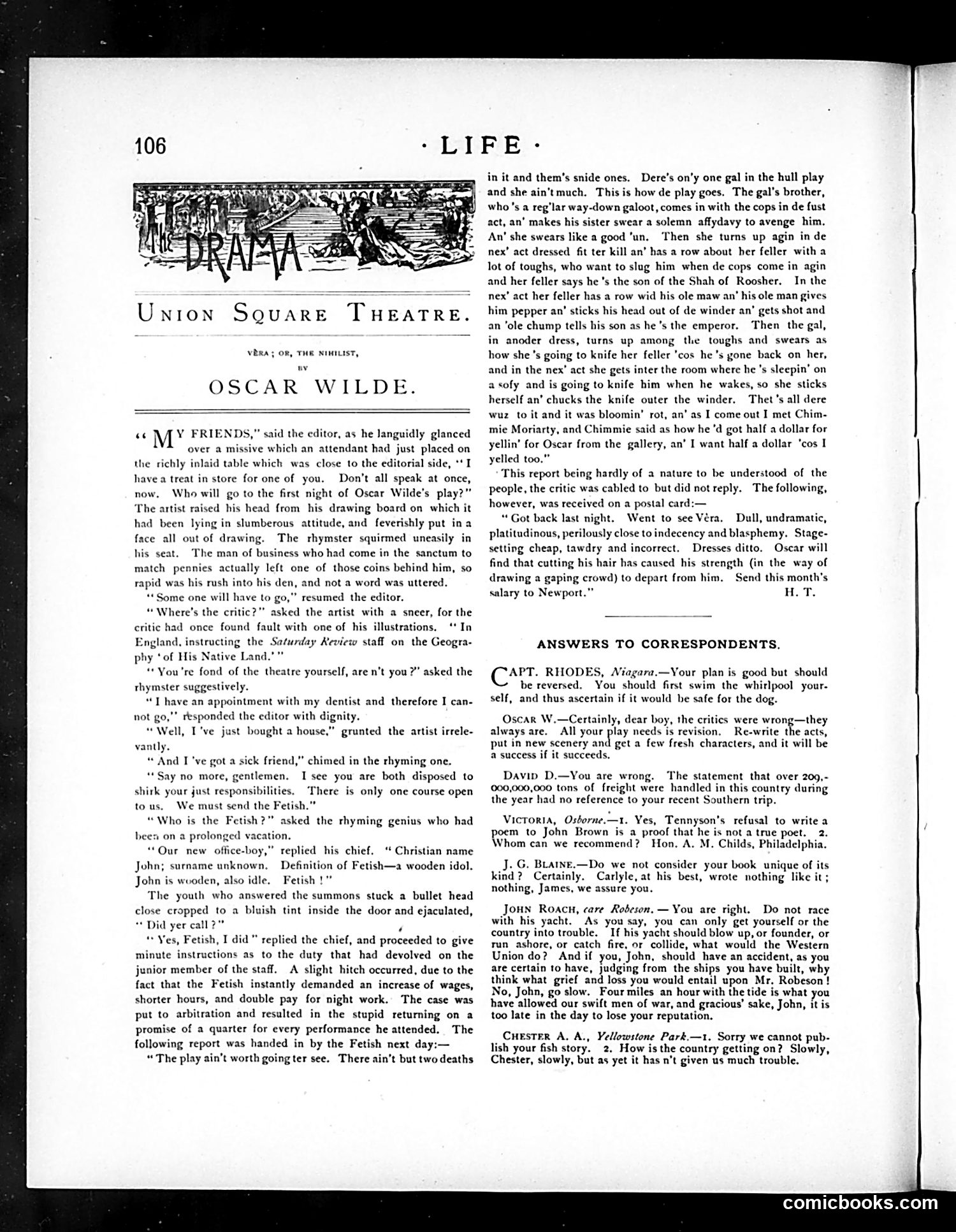
This page satirizes Oscar Wilde's play *Vera; or, the Nihilist* through a humorous editorial meeting. The joke centers on an office "Fetish"—a dim-witted office boy sent to review the production because all the staff find excuses to avoid attending. The satire operates on multiple levels: it mocks Wilde's play as overly melodramatic and poorly constructed (evident in the boy's garbled synopsis involving nihilists, the Shah of Russia, and various murders), while also ridiculing the pretentious literary establishment's reluctance to engage with serious theater. The boy's crude dialect and incomprehensible review—presented as authentic criticism from an unqualified observer—lampoons both popular theater-going and the critical establishment that might take such work seriously. The irony is that this "wooden idol" of an office boy may offer more honest assessment than the cultivated critics who sent him. This reflects broader 1880s skepticism toward Wilde's theatrical ambitions among American satirists.
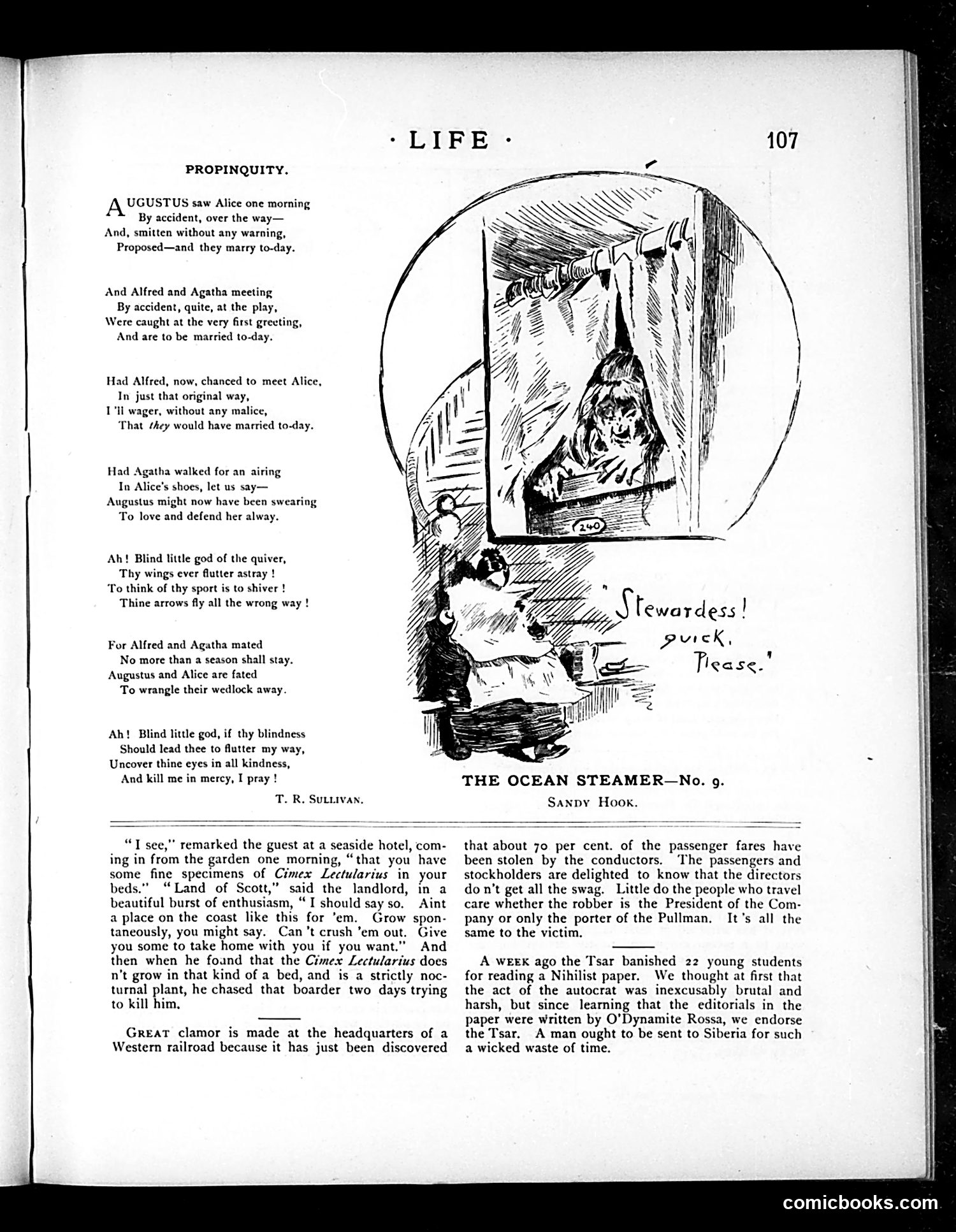
The poem, by T.R. Sullivan, satirizes how **random chance (propinquity—proximity) governs marriage decisions** rather than compatibility. The speaker describes four people—Augustus, Alice, Alfred, and Agatha—who pair off by accident and marry hastily. The satire's point: had they encountered *different* people by chance, they'd have married those instead. The poem mocks **Cupid** (the "blind little god of the quiver") for his indiscriminate arrows, suggesting marriages based on circumstantial meetings are destined to fail. The speaker imagines Alfred and Alice marrying instead (if they'd met), or Augustus and Agatha never meeting—implying these random pairings are fundamentally flawed. The crude illustration labeled "**The Ocean Steamer—No. 9**" appears to be a separate cartoon, likely satirizing something about ship travel or seasickness, though its specific meaning is unclear from the image alone. The remaining prose items mock bed bugs, railroad conductor theft, and Russian autocratic censorship—typical satirical targets of the era.
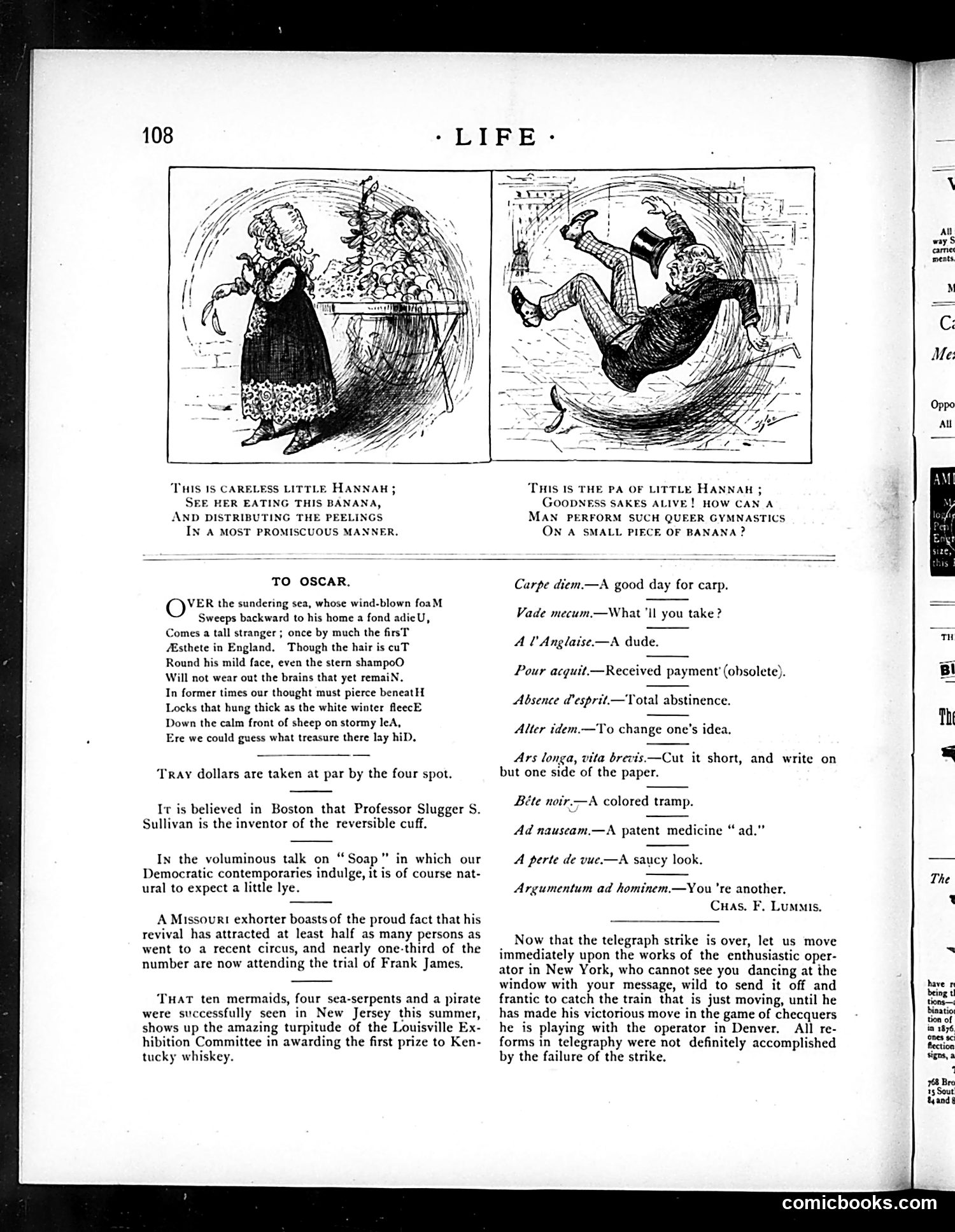
This page contains two separate satirical cartoons mocking parenting and clumsiness. The first pair shows "careless little Hannah" dropping banana peels everywhere, while her father performs acrobatic gymnastics trying to avoid them—satirizing both negligent childcare and slapstick physical comedy. The remaining content is miscellaneous humor typical of Life magazine's style: brief jokes about contemporary figures (Professor Sullivan's "reversible cuff," Frank James trial attendance), mock-learned definitions twisting foreign phrases into American slang insults (notably "Béte noir" redefined as "a colored tramp"), and jabs at Democratic politicians and telegraph operators. The "To Oscar" poem appears to reference Oscar Wilde, the English aesthete, suggesting his arrival in America. The overall tone reflects 1880s-90s genteel satirical magazine humor mixing physical comedy, social commentary, and wordplay.
This page is predominantly **advertisements and short humorous notes**, not political cartoons. The "NOTES AND EXTRACTS" section contains brief satirical observations typical of 19th-century American humor magazines: - **Religious mockery**: A fake biblical quote about "Scissors" (parodying scripture) - **Local humor**: Jokes about insurance, French cities (punning on Marseilles/Toulon), and everyday absurdities - **Social commentary**: References to Ben Butler (a controversial post-Civil War figure), class anxiety (the "Parvenue" jokes about wealthy social climbers trying to avoid catching lower-class "pedigree"), and courtship rituals - **Miscellaneous observations**: Practical wisdom (honey catches flies), domestic life, and romantic sentimentality The humor relies on wordplay, irony, and observations of contemporary life rather than targeting specific political figures. The page functions primarily as a classified advertising section with sprinkled editorial filler—common for 1870s-era magazines before distinct separation of ads and content.
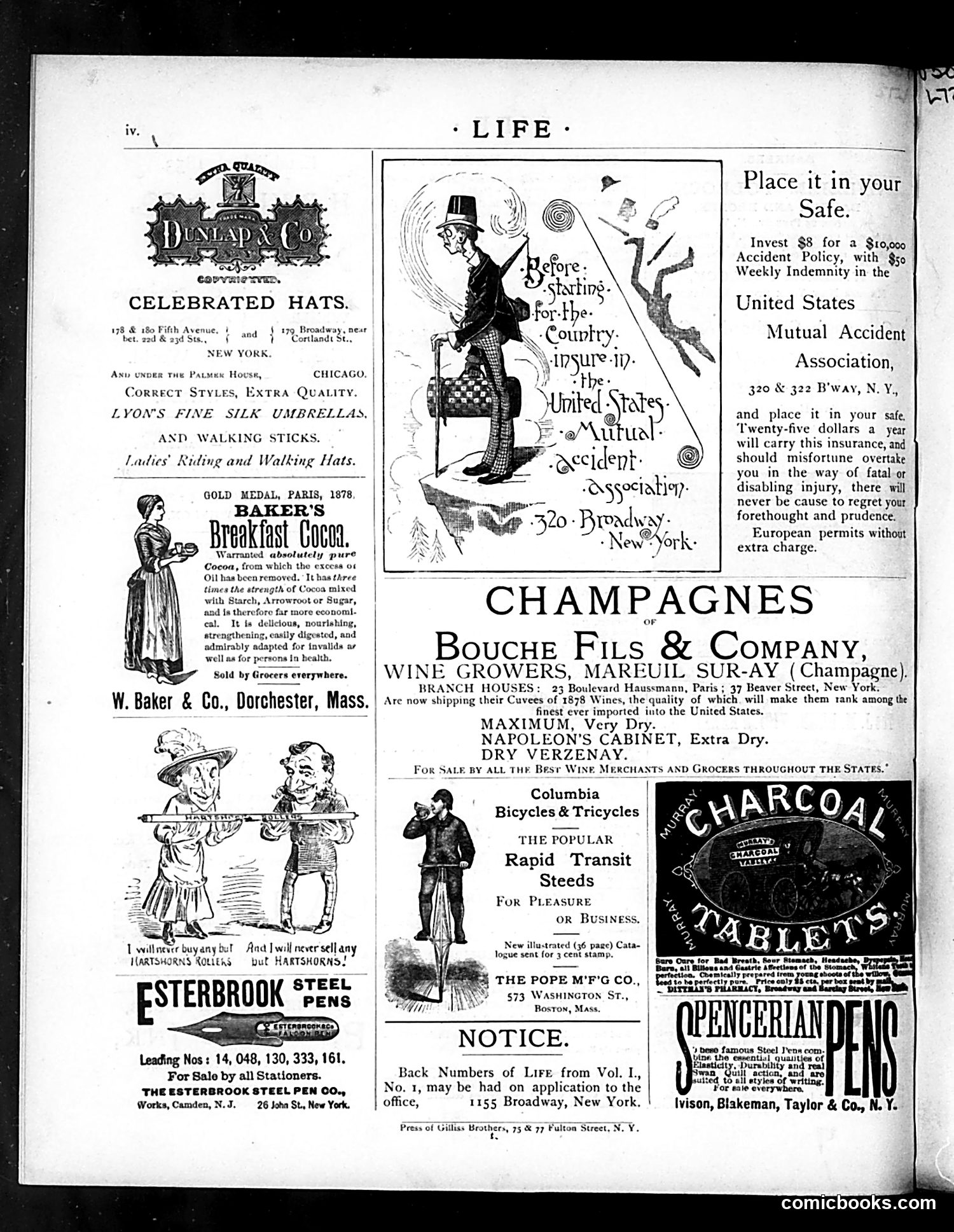
This is primarily an **advertising page** from Life magazine, circa 1878-1880s, with one central satirical cartoon. ## The Main Cartoon The illustrated cartoon depicts a man in formal attire (top hat, checkered pants) being launched into the air like a human cannonball, with various objects scattering around him. The caption reads "Before Starting for the Country, Insure in the United States Mutual Accident Association." **The satire:** This is dark humor about travel dangers in the late 19th century. The joke mocks the perils of country travel—the man is literally exploding upward, suggesting accidents were so common and catastrophic that accident insurance was essential before leaving the city. It's a darkly comic pitch for the insurance product advertised alongside it. ## Advertisements The page features typical Victorian-era products: hats, cocoa, steel pens, champagne, bicycles, and charcoal tablets—with period claims about purity and strength (Baker's cocoa is "three times the strength"). **Modern context needed:** Travel and transportation were genuinely hazardous then; accident insurance was a practical, growing industry, making this exaggerated visual humor particularly apt.