A complete issue · 41 pages · 1938
Judge — December 1938
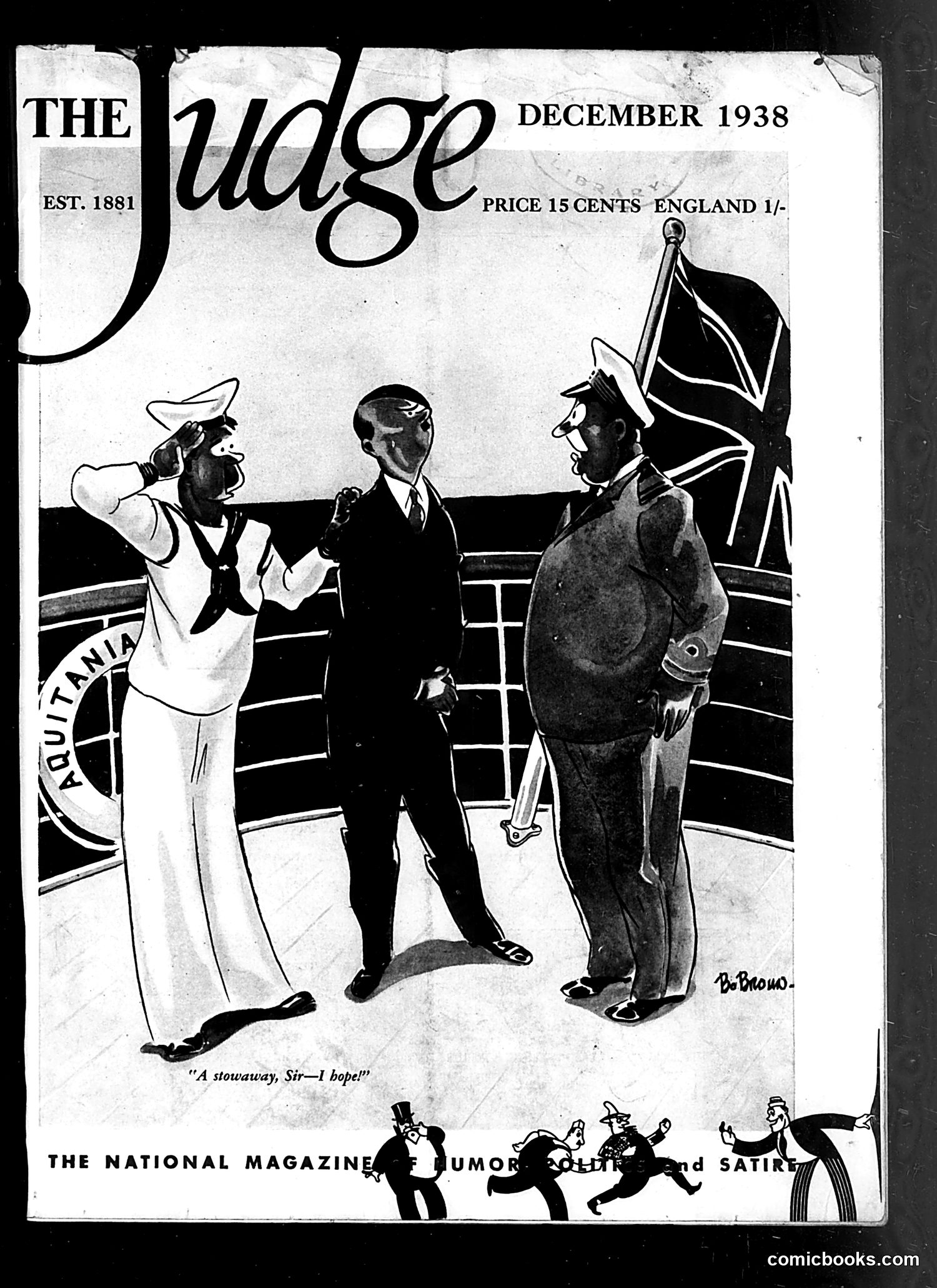
# Judge Magazine, December 1938 The main cartoon shows three figures on what appears to be a ship deck (marked "Aquitania"). A sailor in white uniform on the left says "A stowaway, Sir—I hope!" to a dignified man in the center, while a third figure on the right holds a British flag. This likely satirizes diplomatic tensions of late 1938, possibly referencing the Munich Crisis or British-German relations. The "stowaway" phrase suggests an unwanted presence or hidden threat. The British flag and formal setting indicate this concerns international diplomacy. Without clearer identification of the specific figures, the precise political event remains unclear, though the context suggests commentary on British foreign policy anxieties during this period of rising fascist tensions in Europe.
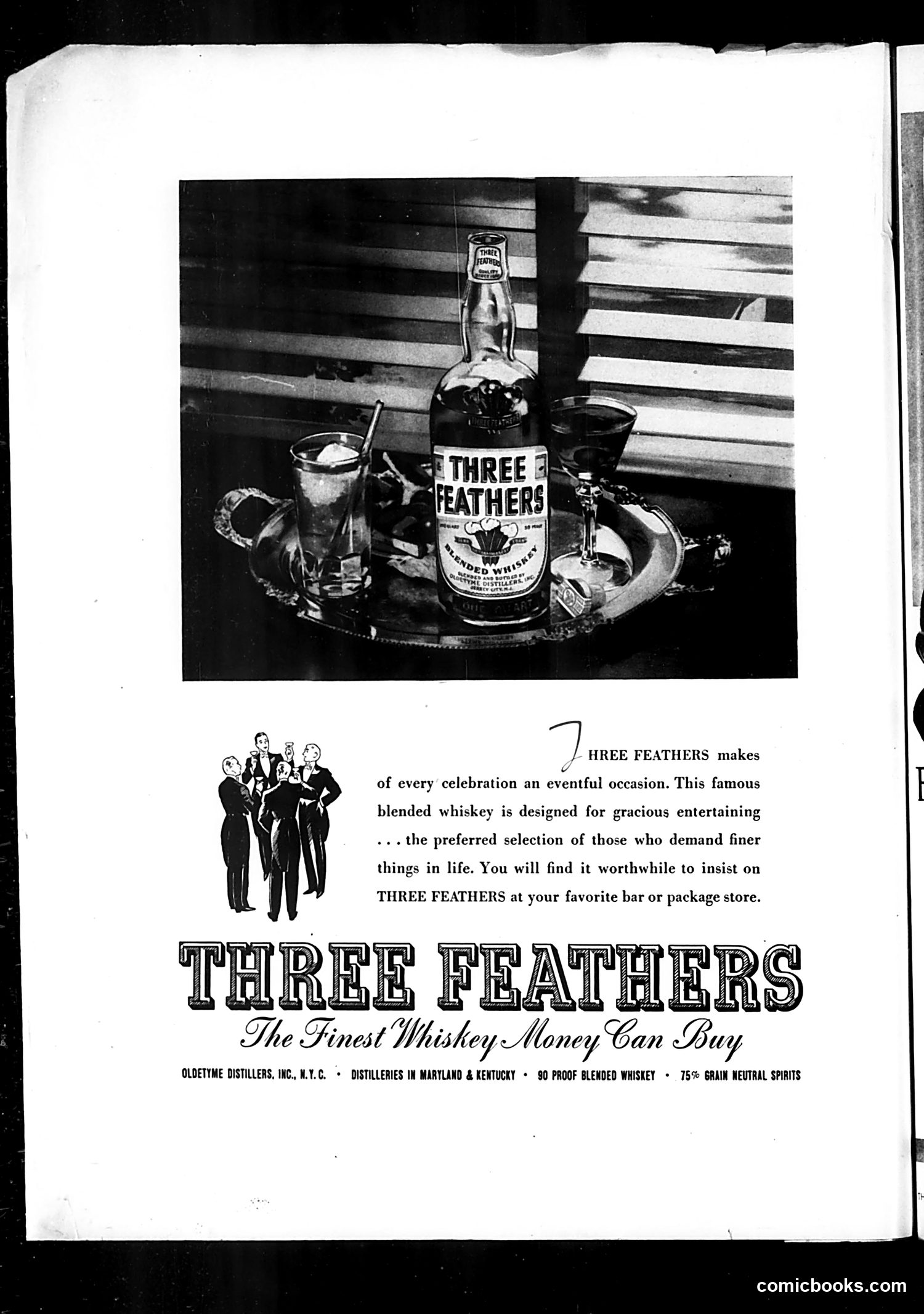
# Analysis This page is **primarily an advertisement**, not a political cartoon. It promotes Three Feathers blended whiskey from Oldetime Distillers in Maryland and Kentucky. The ad uses social aspiration as its marketing appeal: the whiskey is positioned as "the preferred selection of those who demand finer things in life" and "the finest whiskey money can buy." The photograph shows the bottle with cocktail glasses and decorative serving items on an ornate tray, emphasizing elegance and upscale entertaining. The small illustration of well-dressed men in formal attire reinforces the product's association with sophisticated social gatherings. The ad targets affluent consumers during what appears to be the post-Prohibition era (given the explicit mention of "90 proof blended whiskey"). This reflects no political satire—it's straightforward commercial messaging in Judge magazine's advertising section.
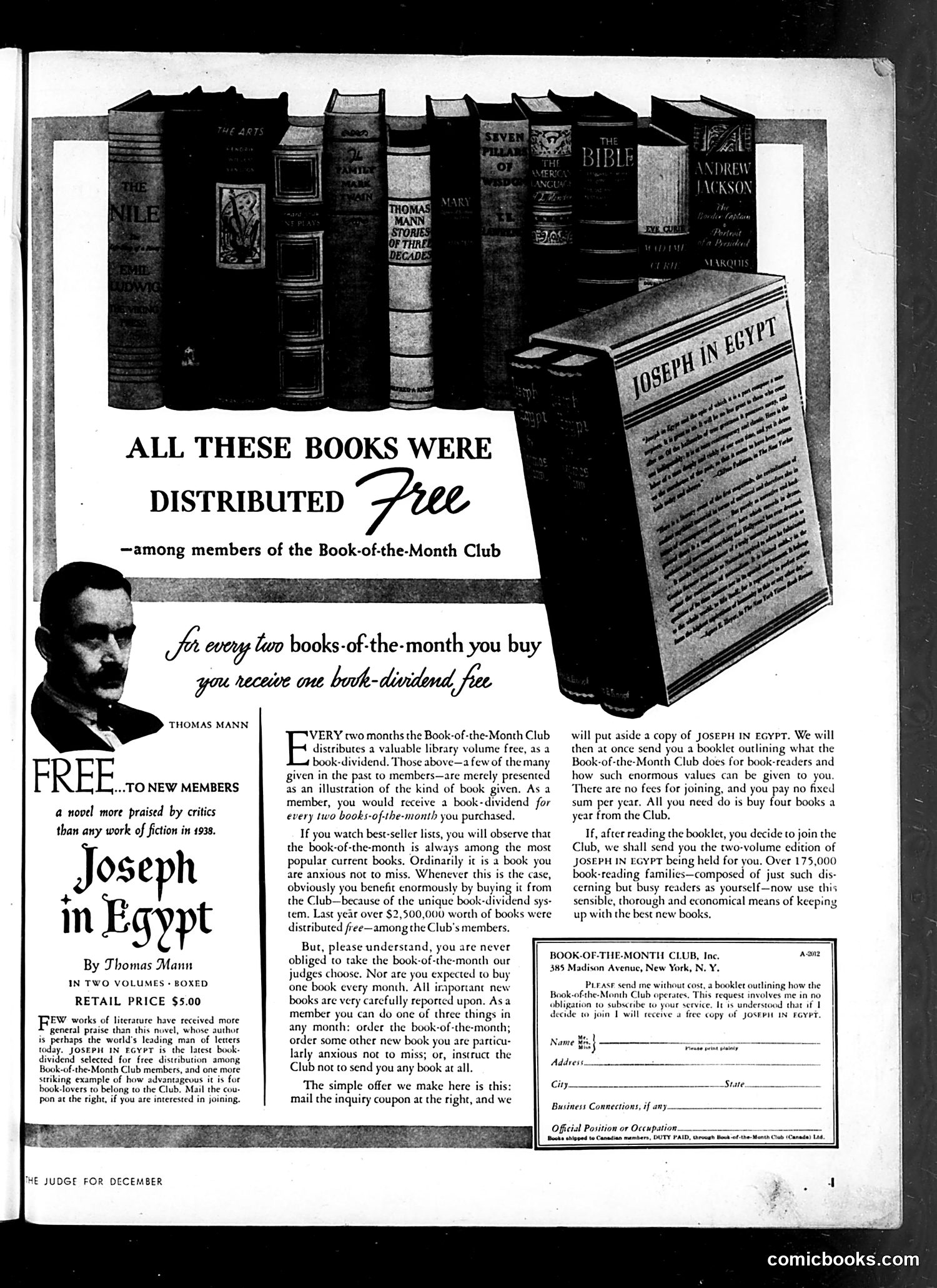
# Analysis This page is primarily **advertising, not satire or political commentary**. It promotes the Book-of-the-Month Club's membership offer. The advertisement features **Thomas Mann**, the renowned German-American novelist (identified by portrait and name), whose novel *Joseph in Egypt* is being offered as a free "book-dividend" to new club members. The pitch emphasizes that for every two books purchased monthly, members receive one book free. The visual shows an array of bound volumes to suggest the club's literary offerings. The appeal targets educated, middle-class readers interested in serious literature—Mann was a prestigious, Nobel Prize-winning author whose work conveyed cultural sophistication. This represents **1920s-30s consumer marketing**: using celebrity endorsement and subscription incentives to build membership in a cultural institution.
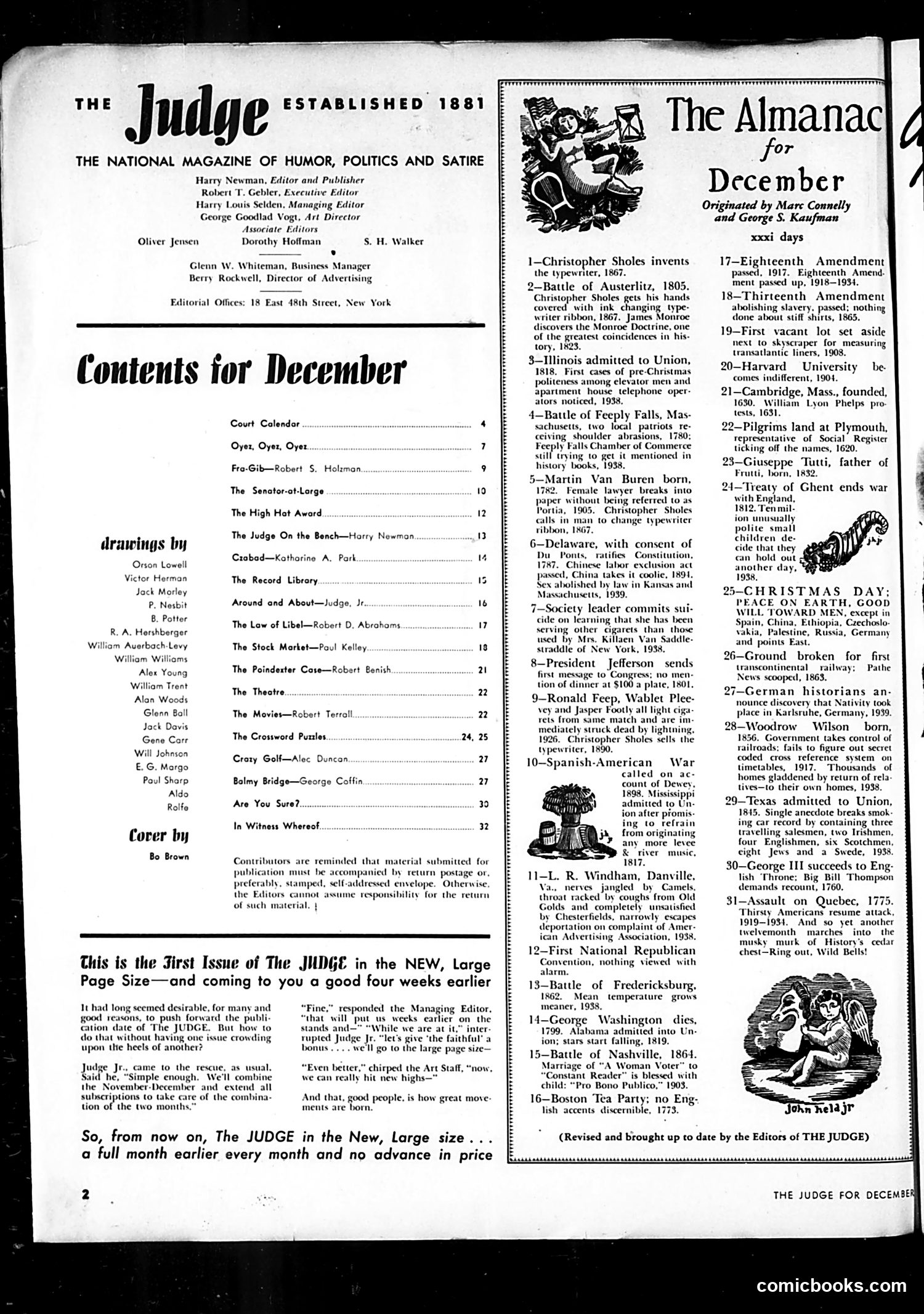
# Analysis of Judge Magazine Page (December) This page is primarily the table of contents and masthead for Judge magazine's December issue, established 1881. The left side lists editorial staff and article titles for the coming month's content. The right side features "The Almanac for December," a calendar of historical events by Marc Connelly and George S. Kaufman. Rather than satire, this section offers factual historical dates—from Christopher Sholes inventing the typewriter (entry 1) through various battles, treaties, and notable deaths throughout American history. The cartoons visible appear decorative rather than political commentary, accompanying the almanac entries. This page functions as an index and historical reference rather than satirical content. The actual satirical articles and political cartoons would appear elsewhere in the magazine.
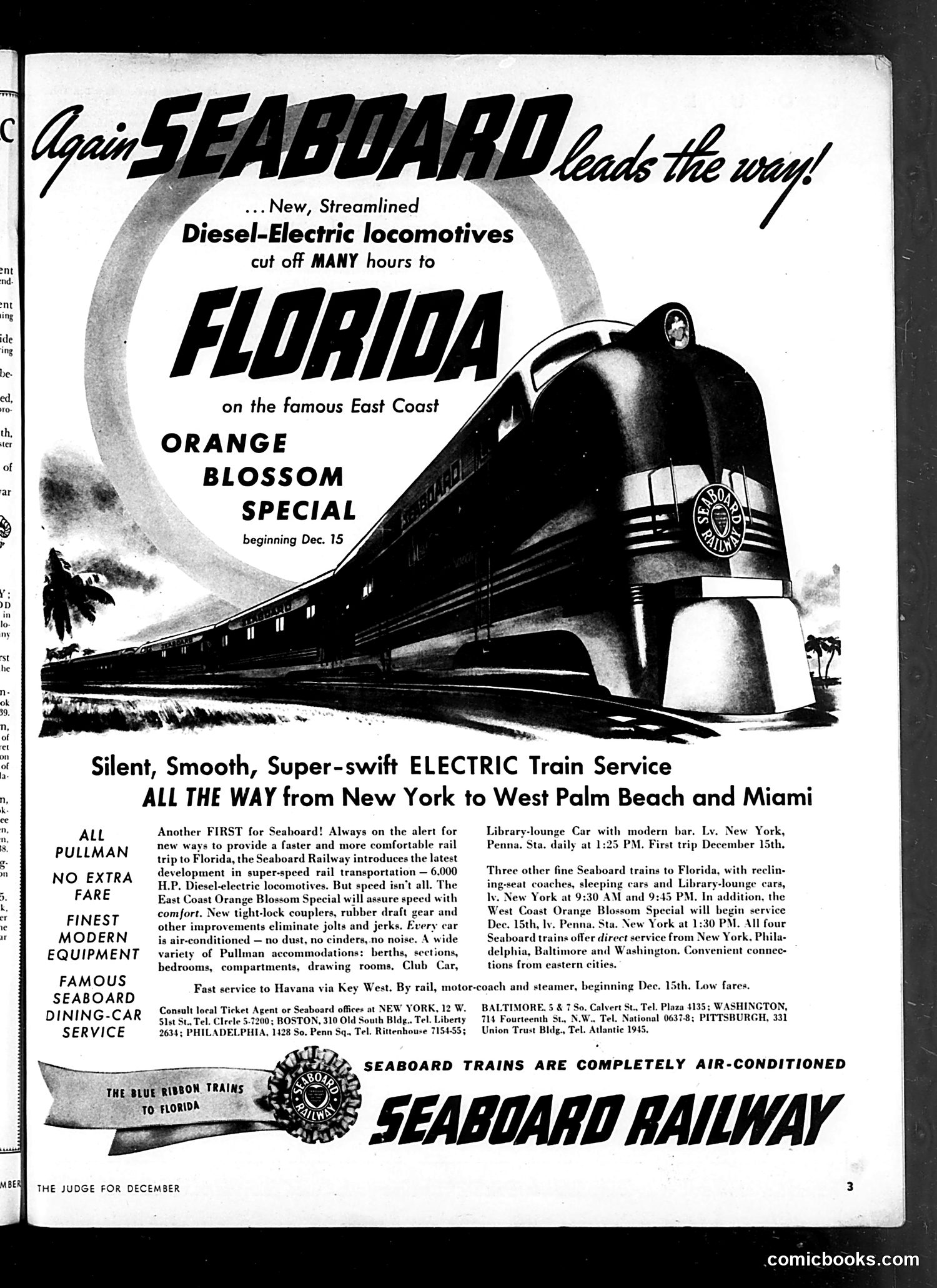
# Analysis This is **not a political cartoon or satirical content** — it's a full-page **advertisement** for Seaboard Railway's new streamlined passenger train service. The ad promotes the "Orange Blossom Special," a diesel-electric locomotive service running from New York to Miami and West Palm Beach, beginning December 15th. The streamlined train illustration exemplifies 1930s-40s Art Deco design aesthetics. Key selling points emphasized include: - Modern diesel-electric technology (faster, quieter than steam) - All-Pullman cars with no extra fare - Air conditioning throughout - Improved dining car service - Convenient connections to Havana via Key West The advertisement positions Seaboard Railway as innovative and forward-thinking, using the streamlined locomotive as a symbol of modern progress and speed — typical marketing strategy for the era's competitive passenger rail industry.
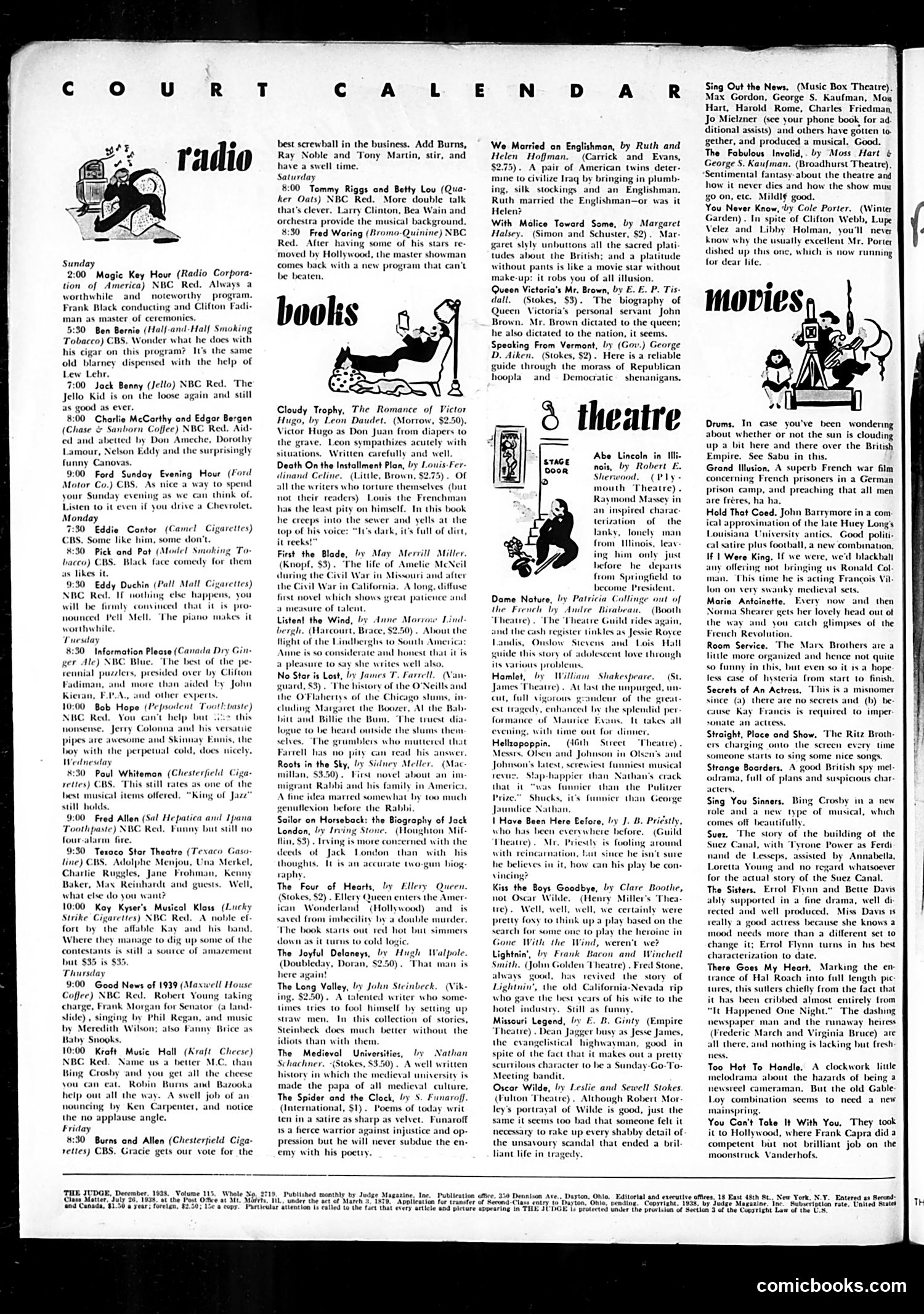
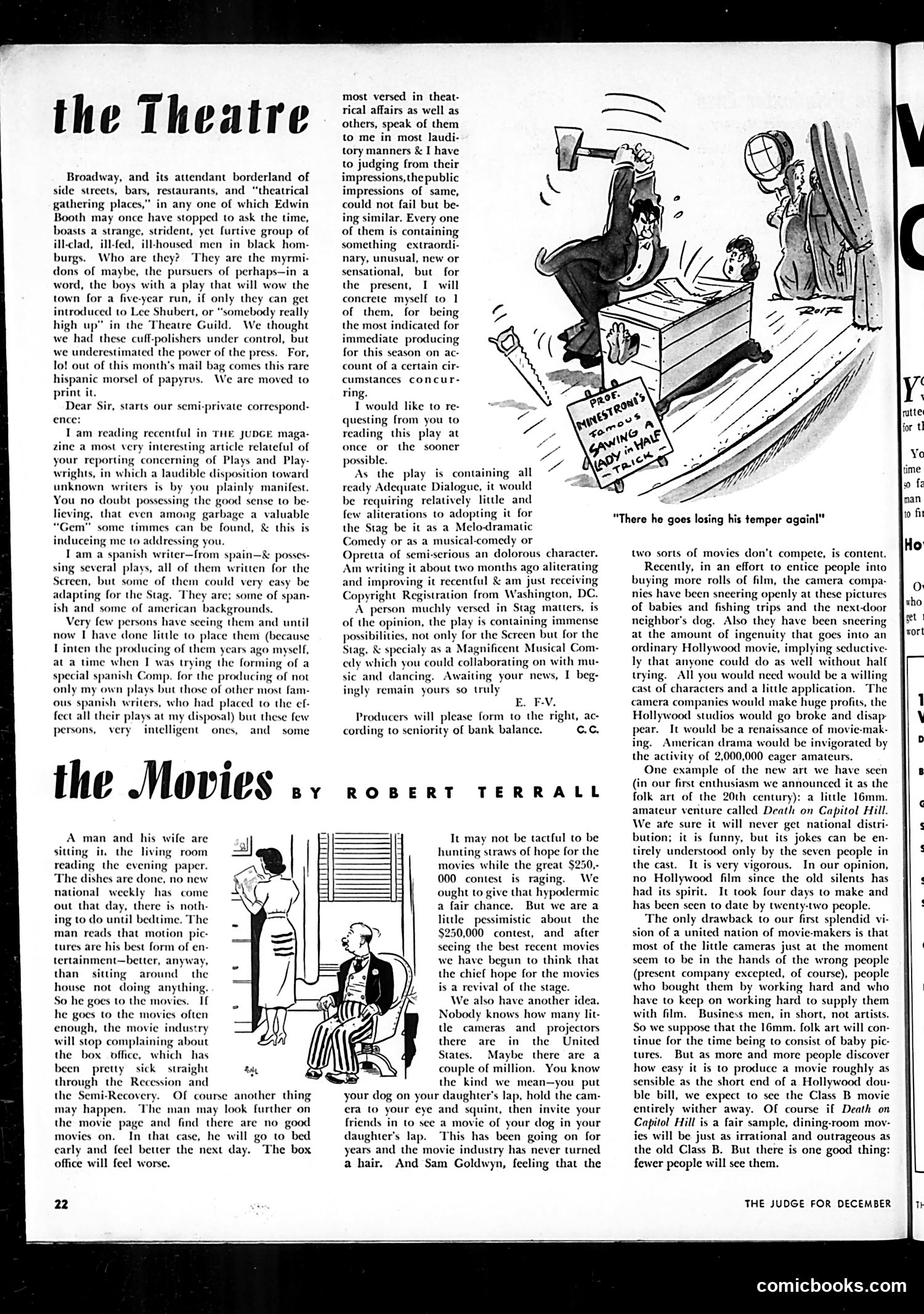
# Court Calendar Page Content Analysis This appears to be primarily an **entertainment guide page** from Judge magazine (dated December 1934, based on the footer), rather than a satirical cartoon page. The layout is divided into three sections: - **Radio** programming listings - **Books** reviews and recommendations - **Movies** and **Theatre** sections with show descriptions The small illustrations are functional decorative elements typical of entertainment guides—a radio set, reading figure, and film camera—not satirical political cartoons. The content focuses on entertainment recommendations for the week, including radio programs, book reviews, and theatrical productions. This is essentially a **what's-on guide** for leisure consumption, not a vehicle for political or social satire. No identifiable political figures or satirical commentary are evident on this particular page.
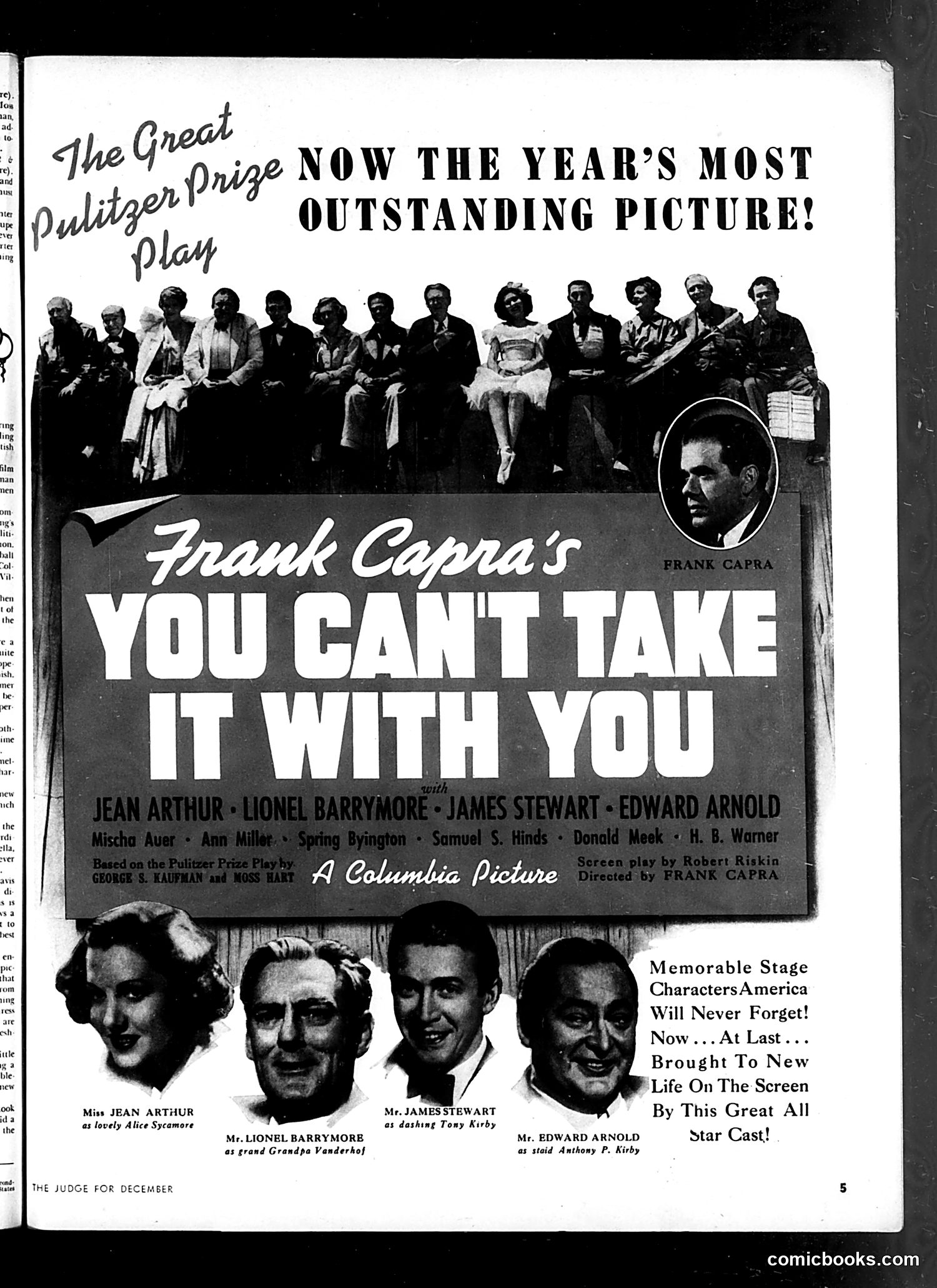
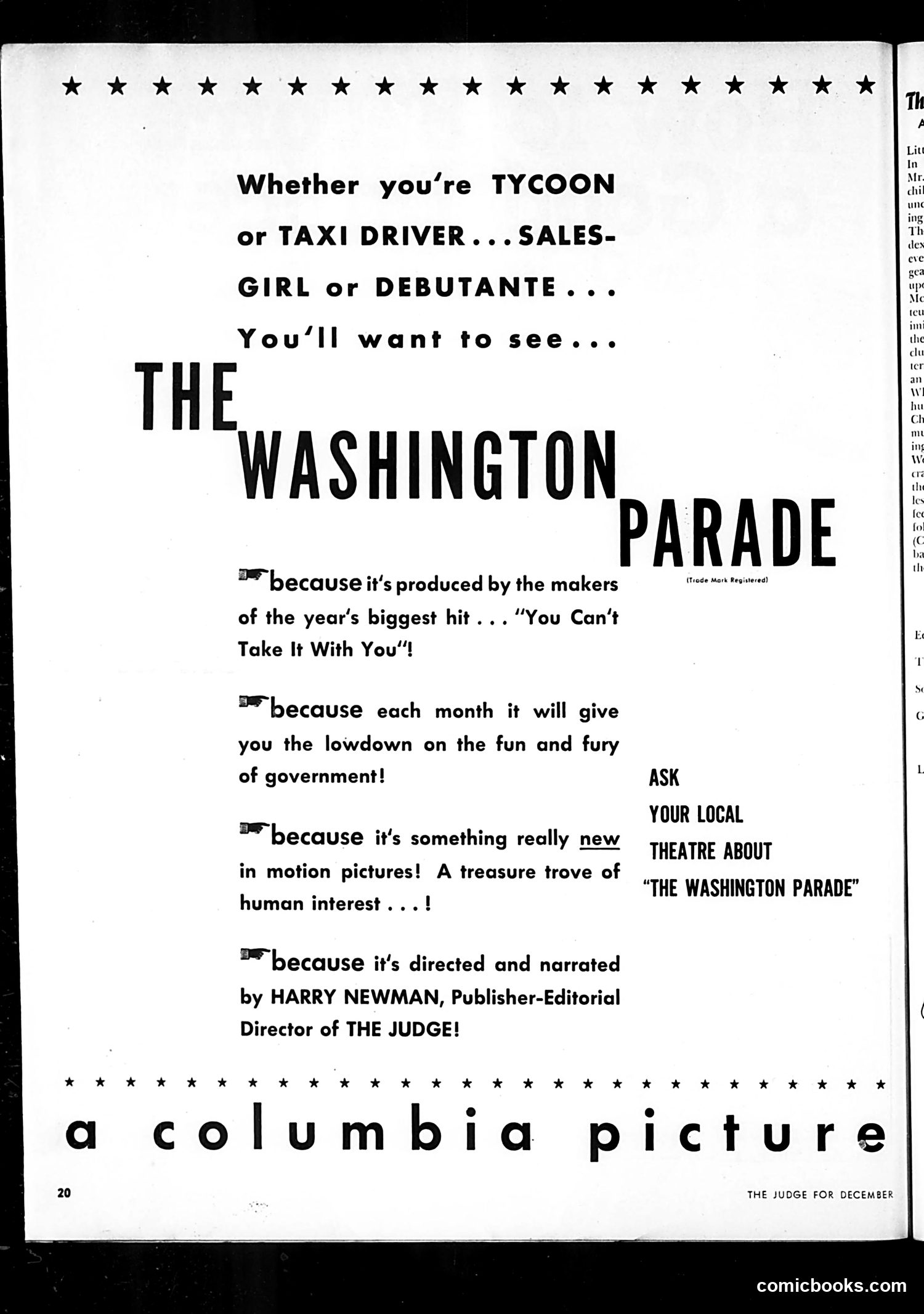
This page is primarily a **movie advertisement**, not political satire. It promotes Frank Capra's film "You Can't Take It with You," described as "The Great Pulitzer Prize Play" and "Now the Year's Most Outstanding Picture!" The ad features the cast including Jean Arthur, Lionel Barrymore, James Stewart, and Edward Arnold, with their character names listed below their photographs. The large group photo at top shows the ensemble cast. The text emphasizes this is a Columbia Pictures production based on a Pulitzer Prize-winning stage play, now adapted for film. The advertisement highlights it as a prestigious, acclaimed work bringing "memorable stage characters America will never forget" to cinema. There is no evident political cartoon or satire on this page—it's straightforward entertainment industry marketing from what appears to be a 1938-1939 publication.
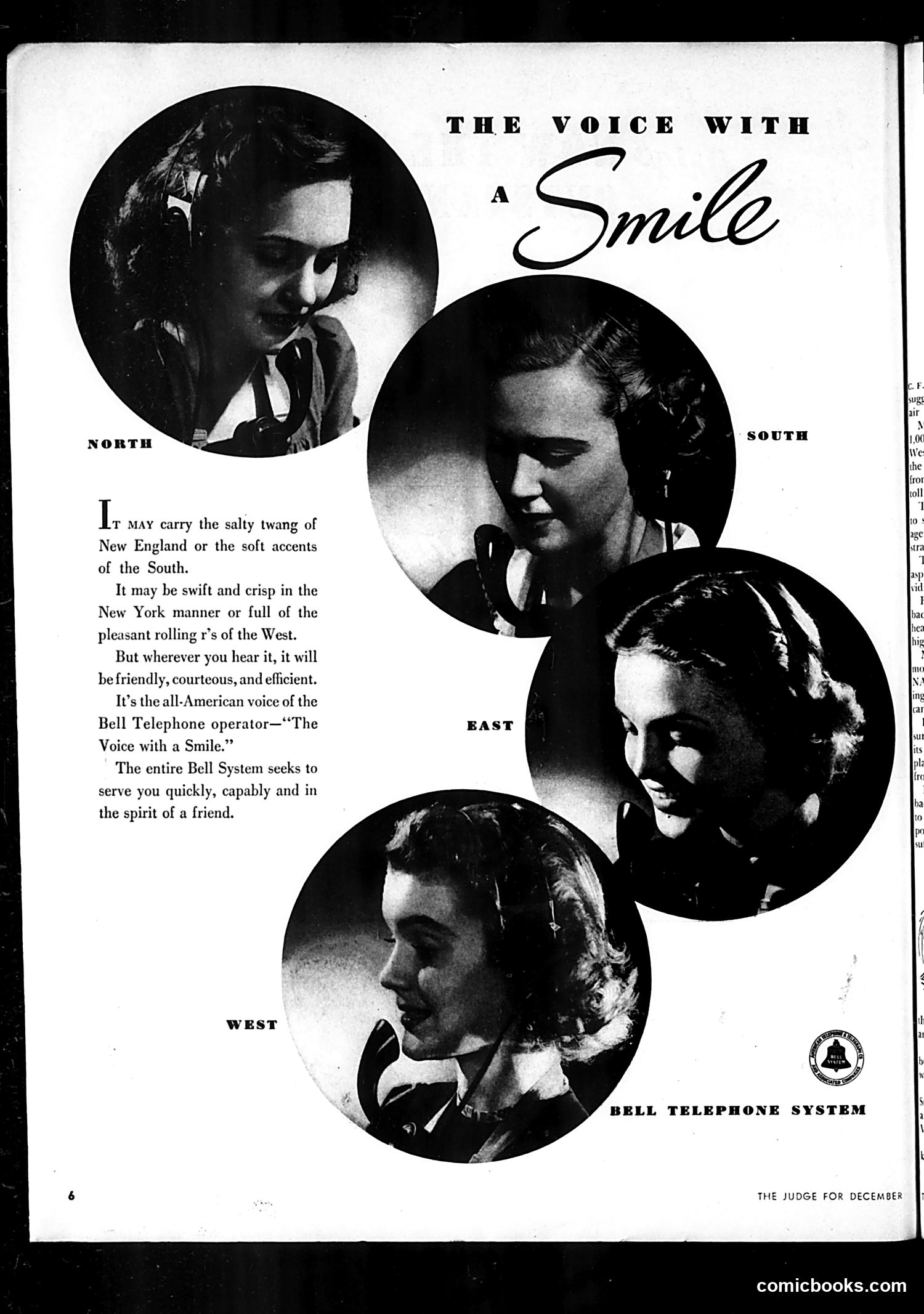
# Advertisement Analysis This is a **Bell Telephone System advertisement**, not political satire. The page promotes the Bell Telephone Operator as "The Voice with a Smile." The ad uses four circular portraits of women operators representing different American regions (North, South, East, West), emphasizing that regardless of regional accent—whether "salty" New England, Southern, New York, or Western tones—Bell operators maintain friendly, courteous, efficient service. The text frames this as the "all-American voice" representing unified national service. This reflects mid-20th-century corporate messaging emphasizing standardized professionalism and regionalism as charming variation within a cohesive system. The smiling female operators suggest the company's marketing strategy of associating telephone service with feminine warmth and accessibility.
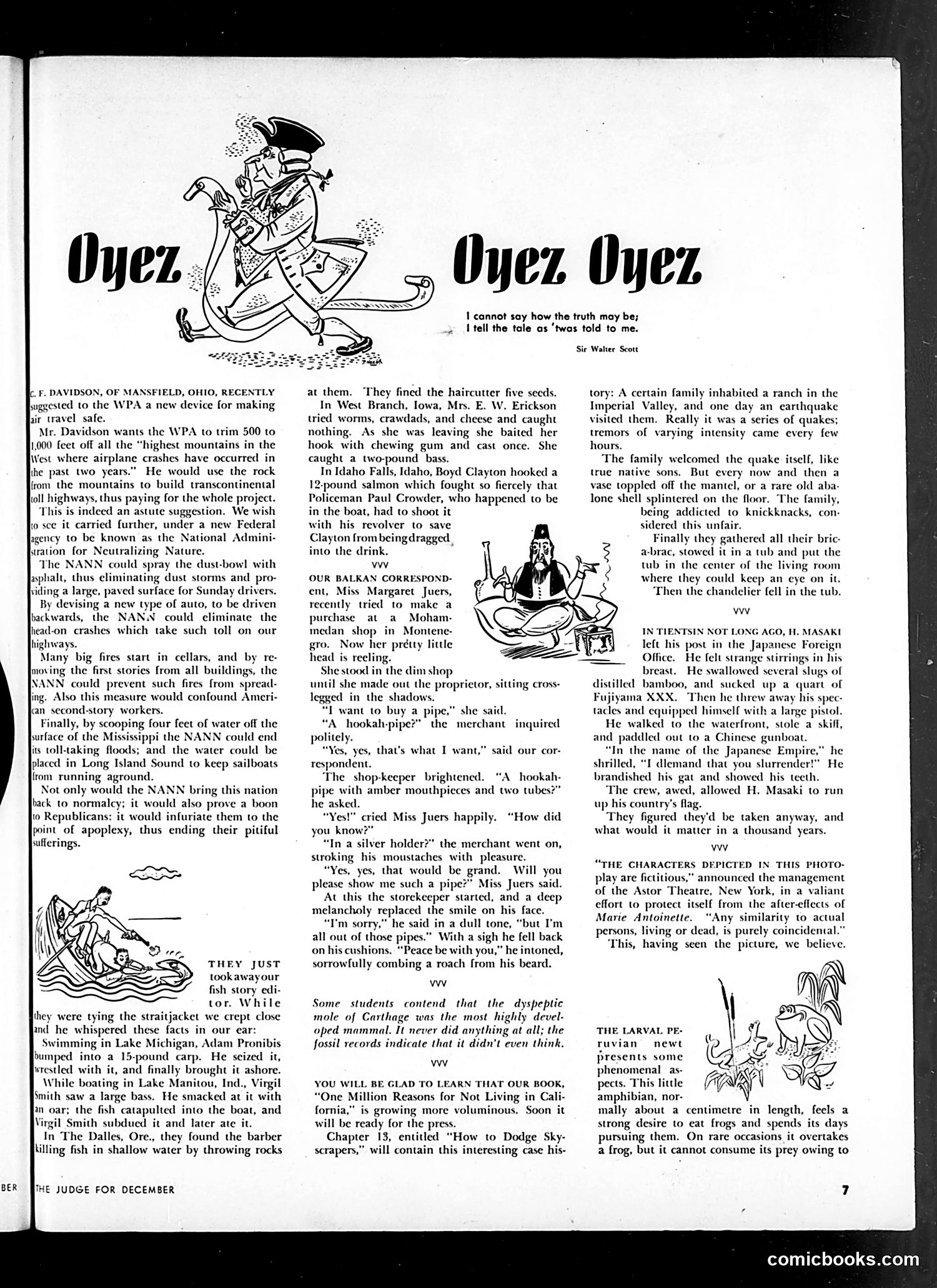
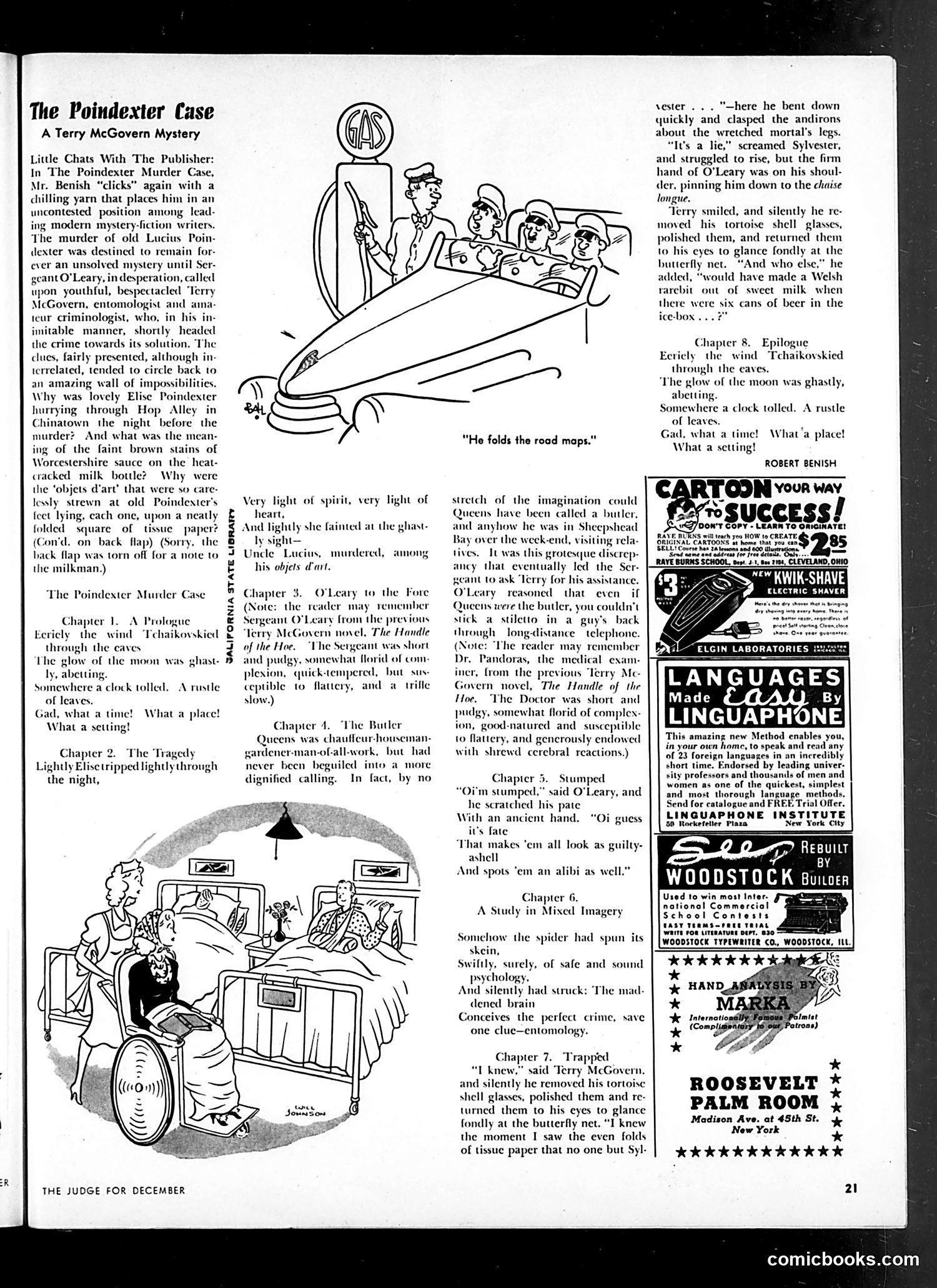
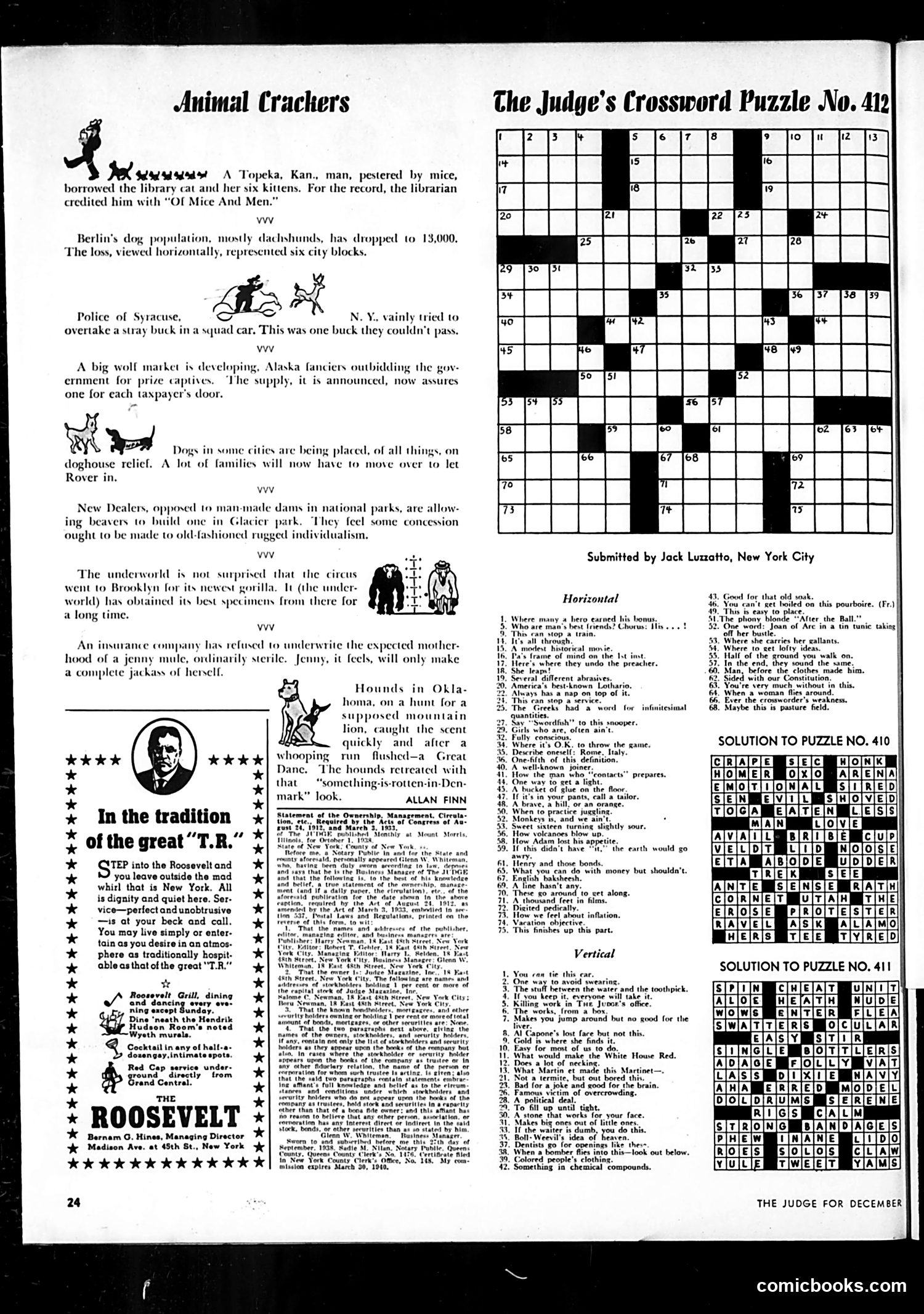
# "Oyez Oyez" Page Analysis This appears to be a miscellaneous content page from *Judge* magazine featuring multiple unrelated short stories and anecdotes rather than political satire. The main illustrated stories include: 1. **Top left**: A cartoon of someone in old-fashioned dress, possibly colonial-era, associated with a story about WPA workers and airplane crashes. 2. **Center**: An illustration showing what appears to be a merchant transaction involving a hookah pipe—part of a narrative about Miss Juers purchasing an unusual item. 3. **Right column**: References to Japanese and Chinese characters in a theatrical or fictional context. 4. **Bottom**: An illustration of a larval peruvian newt, presented as a humorous nature note. The page functions primarily as humor/entertainment content mixing fictional tales, anecdotes, and nature observations rather than political commentary.
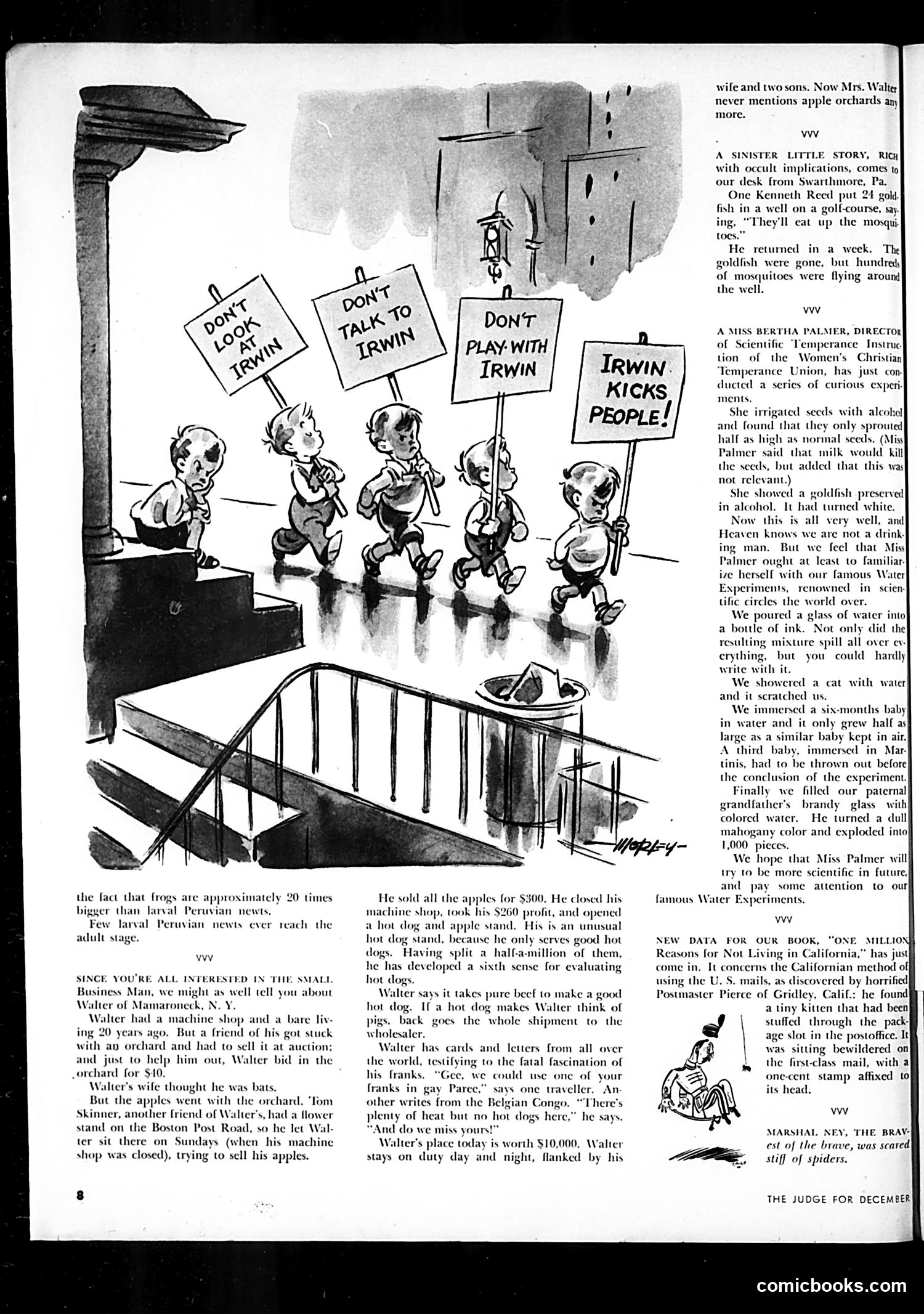
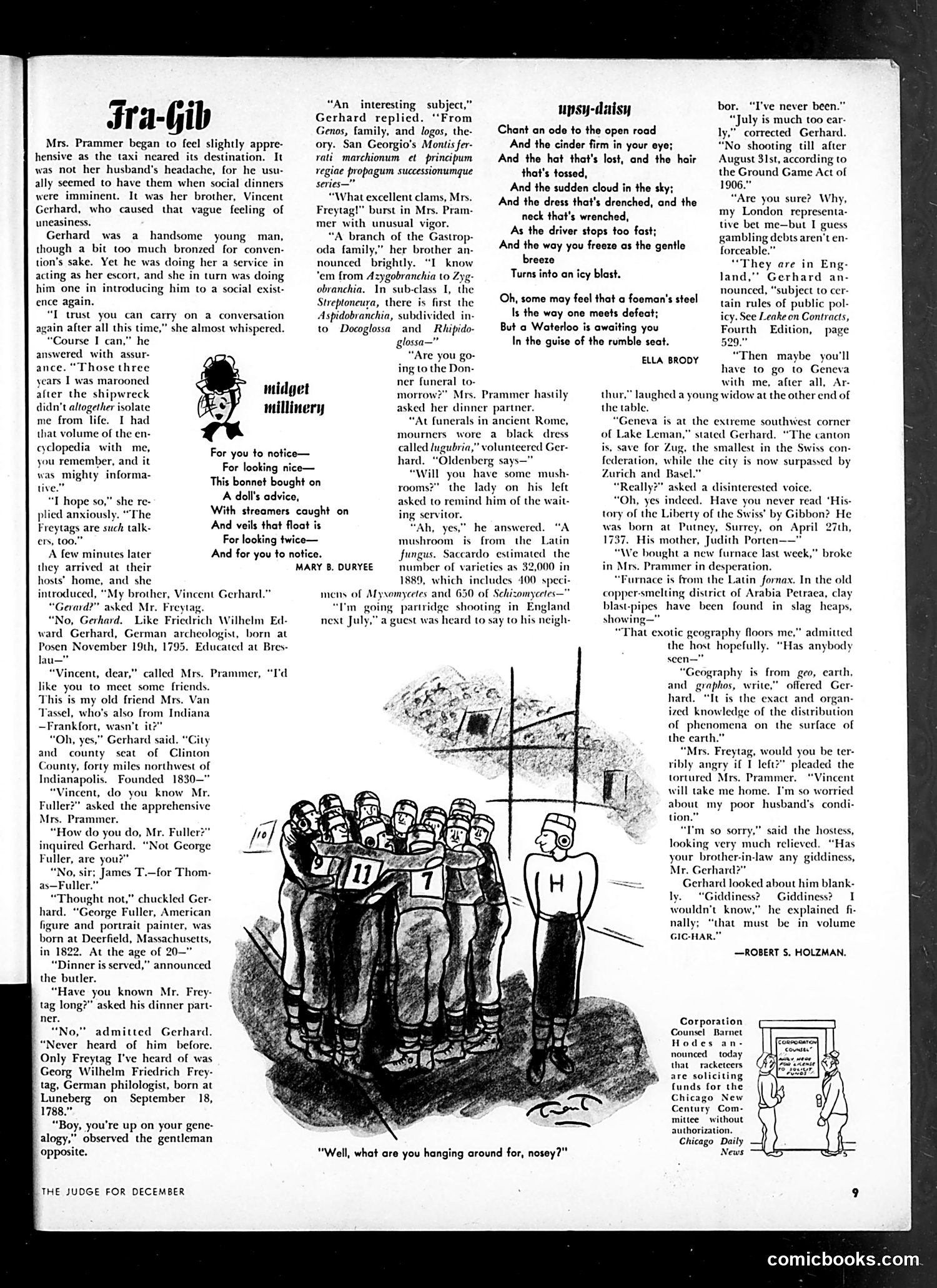
# Explanation for Modern Readers This page from *Judge* magazine contains several satirical pieces mocking pseudoscientific claims and social trends of the era. The main cartoon depicts children carrying protest signs about "Irwin" — likely referring to a then-famous person or trend the modern reader would need additional context to identify. The satire appears to target whatever fad or public figure "Irwin" represents. The text stories ridicule: 1. **Walter's hot dog stand** — a rags-to-riches small business tale presented as noteworthy, satirizing American entrepreneurialism. 2. **The goldfish/mosquito story** — mocking magical thinking and folk remedies. 3. **Miss Palmer's temperance "experiments"** — attacking the Women's Christian Temperance Union's anti-alcohol propaganda by sarcastically describing absurd "water experiments" that "prove" water is equally harmful. This is *Judge's* defense of drinking against temperance crusaders. The humor relies on readers recognizing these public figures and movements as worthy targets of ridicule.
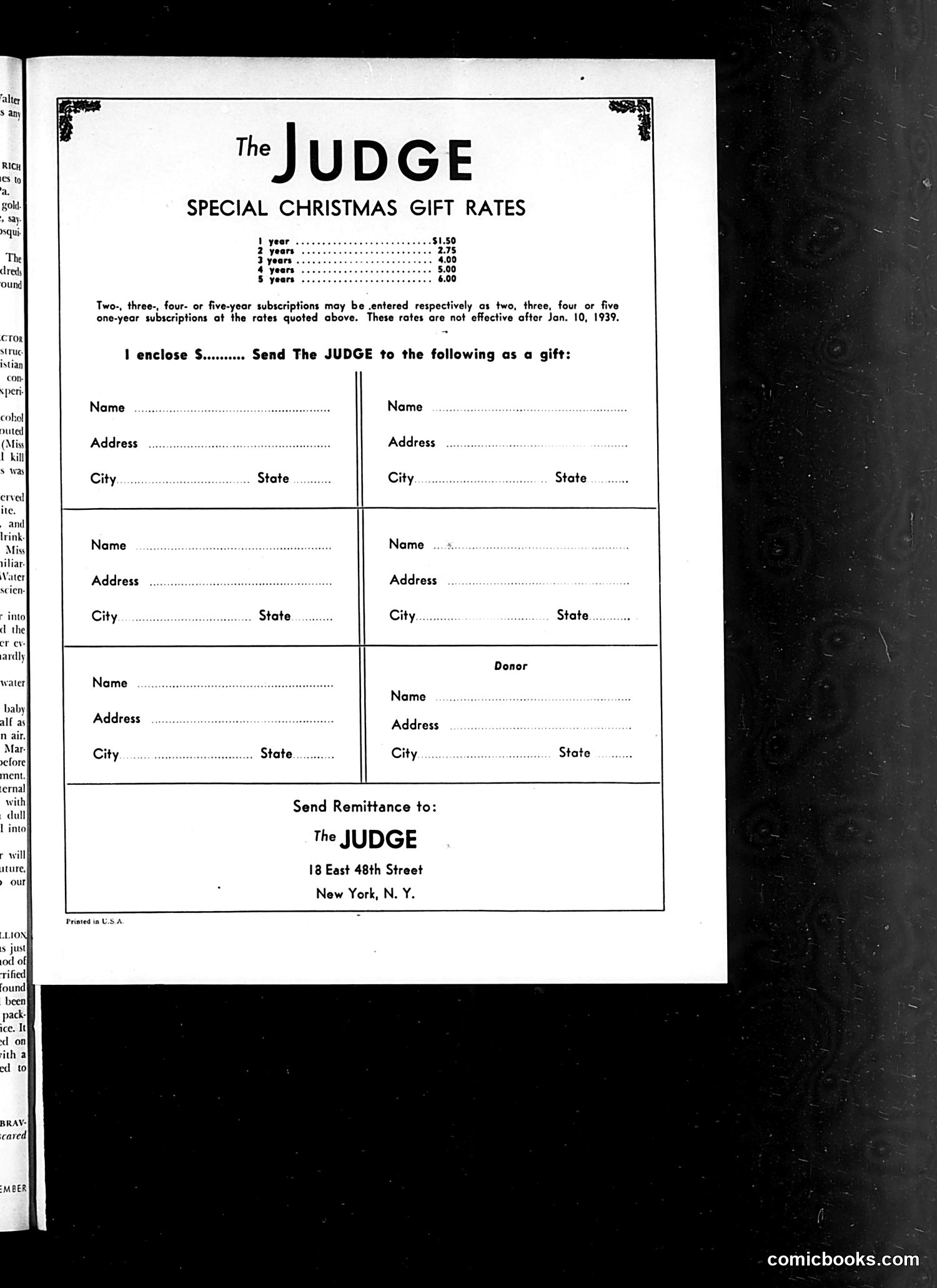
This is a **subscription advertisement**, not a cartoon or satirical content. It's a Christmas gift promotion page from *Judge* magazine, likely from late 1938 (given the Jan. 10, 1939 deadline mentioned). The page offers special discounted subscription rates ranging from $1.50 for one year to $6.00 for five years. It allows customers to purchase multiple subscriptions as gifts by filling in recipient information on the form. There is no satire, political commentary, or caricature present. This is straightforward promotional material designed to encourage readers to give *Judge* magazine subscriptions as Christmas gifts—a common marketing strategy for publications during this era. The page functions purely as an order form with mailing instructions to the magazine's New York headquarters.

I'm unable to provide a meaningful analysis of this page. The image shows what appears to be a largely blank or heavily degraded page from Judge magazine, with minimal visible text or discernible cartoon content. The OCR text returned only fragments and a website attribution, offering no substantive content to interpret. To properly analyze a Judge magazine page as a political cartoon historian would, I would need a clearer image where the illustrations and accompanying text are legible enough to identify figures, read captions, and understand the satirical references. If you have a clearer version of this page, I'd be happy to provide historical context and explanation of the satire.