A complete issue · 36 pages · 1938
Judge — August 1938
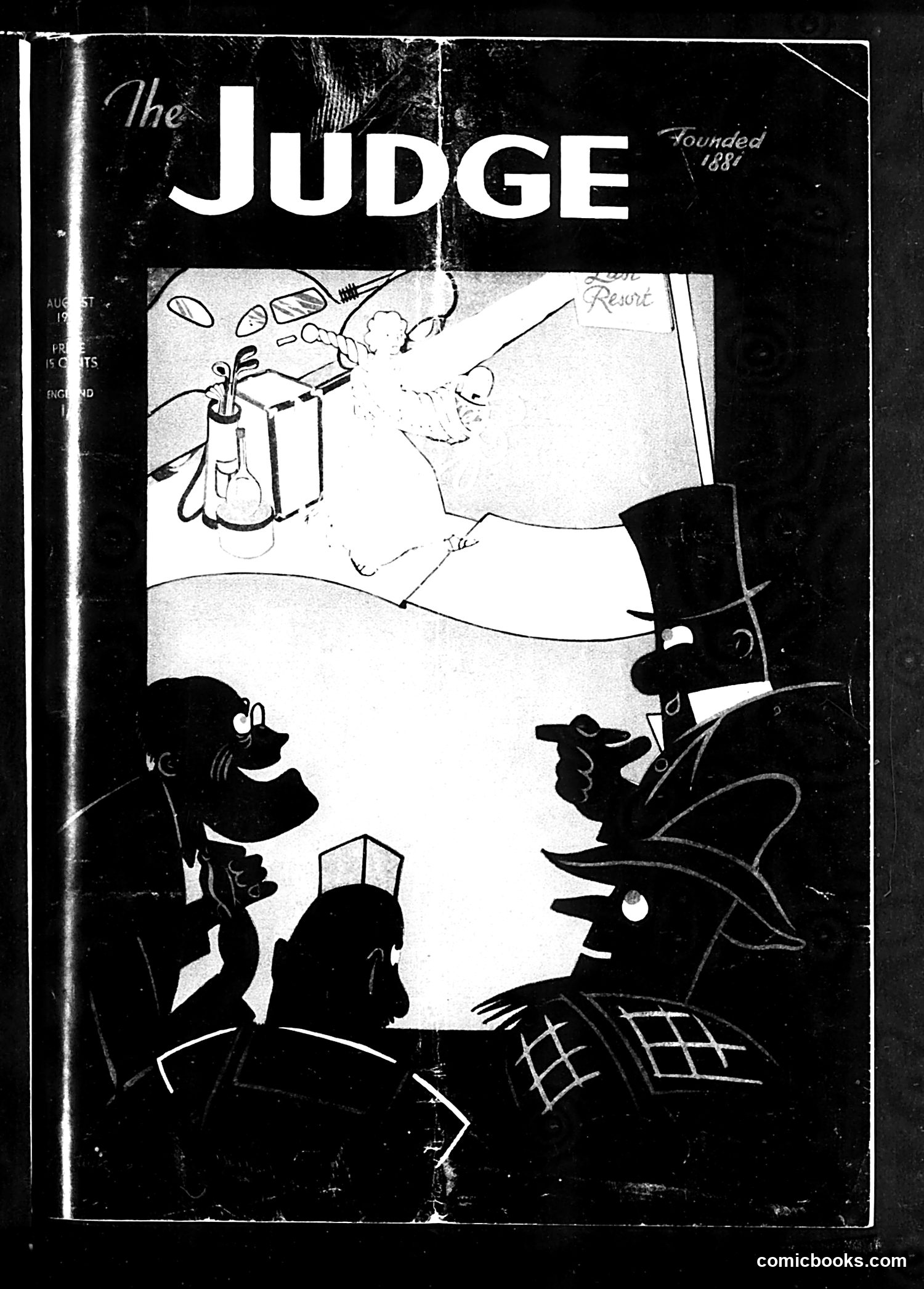
# The Judge Magazine Cover - Analysis This appears to be a **Judge magazine cover from August 1921** (visible on spine). The central illustration shows a woman's face/head being scrutinized or examined by three caricatured male figures wearing formal attire (top hats), positioned below and around her like judges or critics evaluating her. The satire likely addresses **gender dynamics and social judgment of women** during the early 1920s—a period of significant social change (women's suffrage had recently passed in 1920). The "judges" examining the woman suggests commentary on how society critically evaluated women's appearance, behavior, or role in society. The title "The Judge" reinforces this theme of judgment itself. The aesthetic employs the magazine's characteristic art deco/modernist illustration style typical of early 1920s satirical publications.
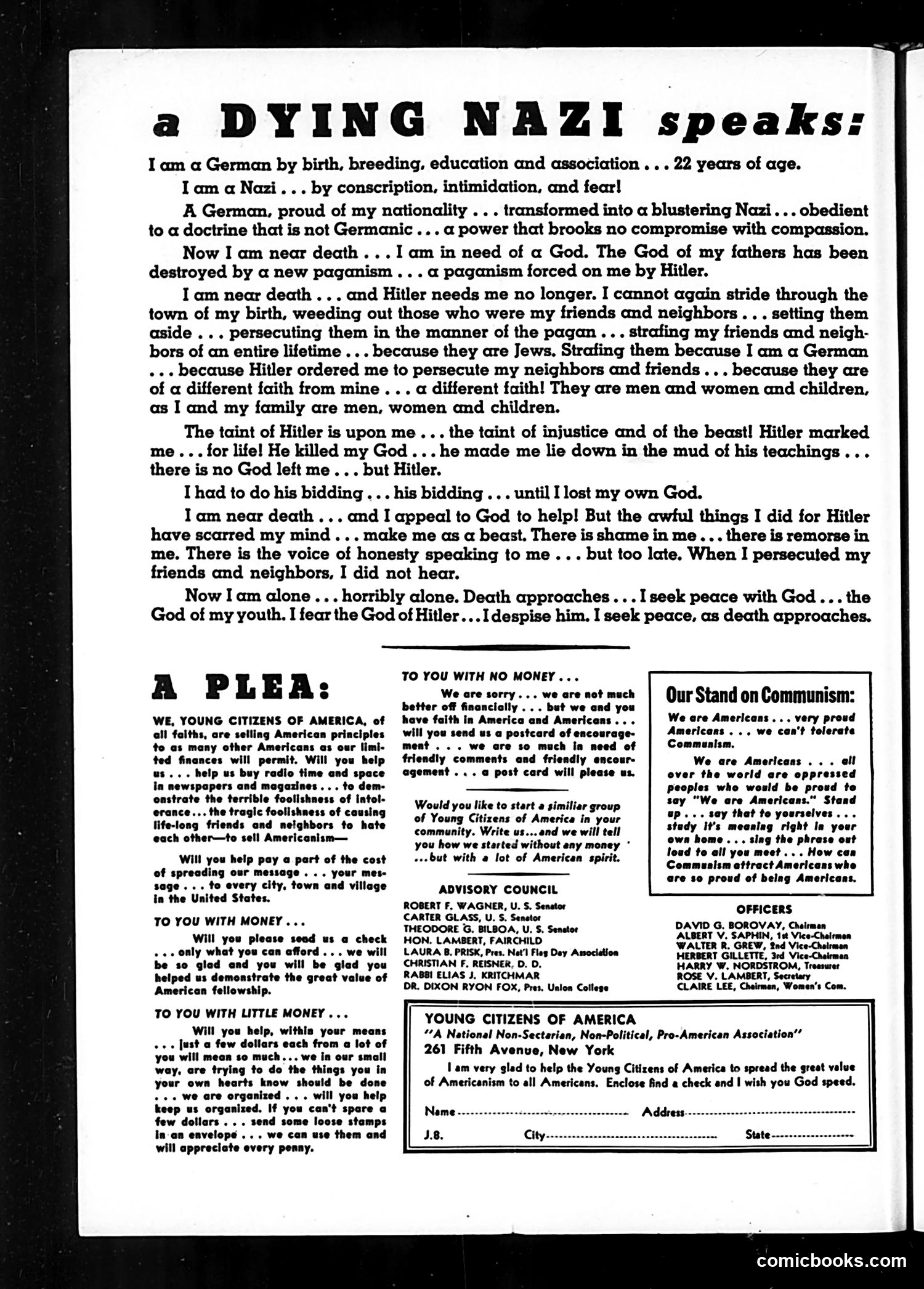
# Analysis This page appears to be from a WWII-era American publication containing anti-Nazi propaganda rather than traditional satire. The main content is a monologue titled "A DYING NAZI SPEAKS" — presented as a confessional deathbed statement from a 22-year-old German Nazi expressing remorse for persecuting friends and neighbors, particularly Jewish people, under Hitler's orders. The Nazi speaker describes spiritual corruption and seeks God's forgiveness while despising Hitler. Below this is "A PLEA" from the "Young Citizens of America," a fundraising appeal for an anti-Communist organization seeking small donations to spread American values. Rather than satirizing specific figures through caricature, this page uses emotional rhetoric and moral argument to promote American ideological positions against both Nazism and Communism during the Cold War period.
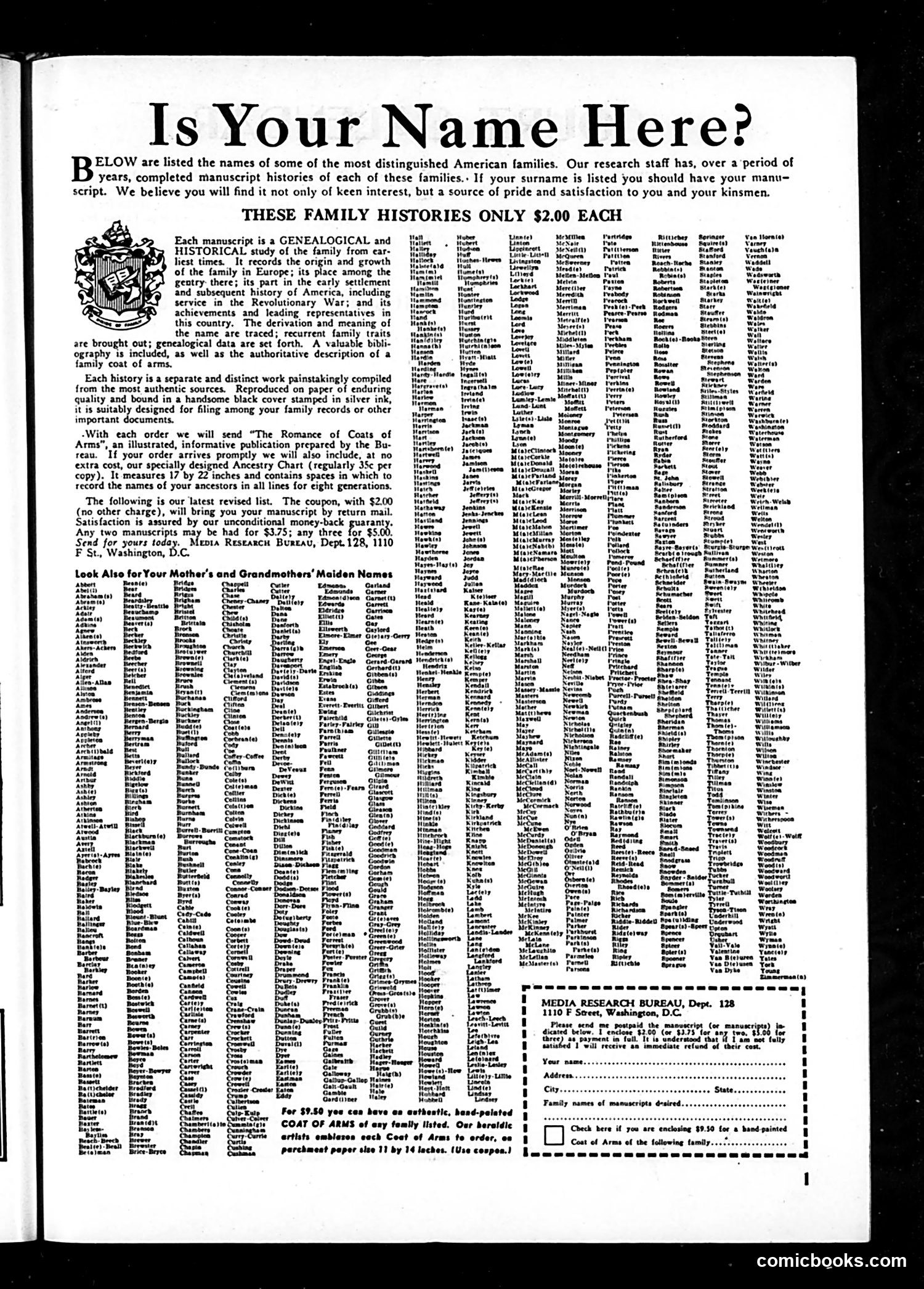
# Page Analysis This page is primarily **advertising, not satire or political commentary**. It advertises family history manuscripts available for $2.00 each from what appears to be a genealogy service located at 1110 F Street, Washington, D.C. The page lists hundreds of surnames in dense columns, offering genealogical and historical records for distinguished American families. Each manuscript reportedly documents "origin and growth of the family in Europe" and their "part in the early settlement and subsequent history of America." The ornamental coat-of-arms image is decorative branding. A small order form appears at bottom right. This is a commercial genealogy service advertisement, not editorial content, though it ran in *Judge* magazine.
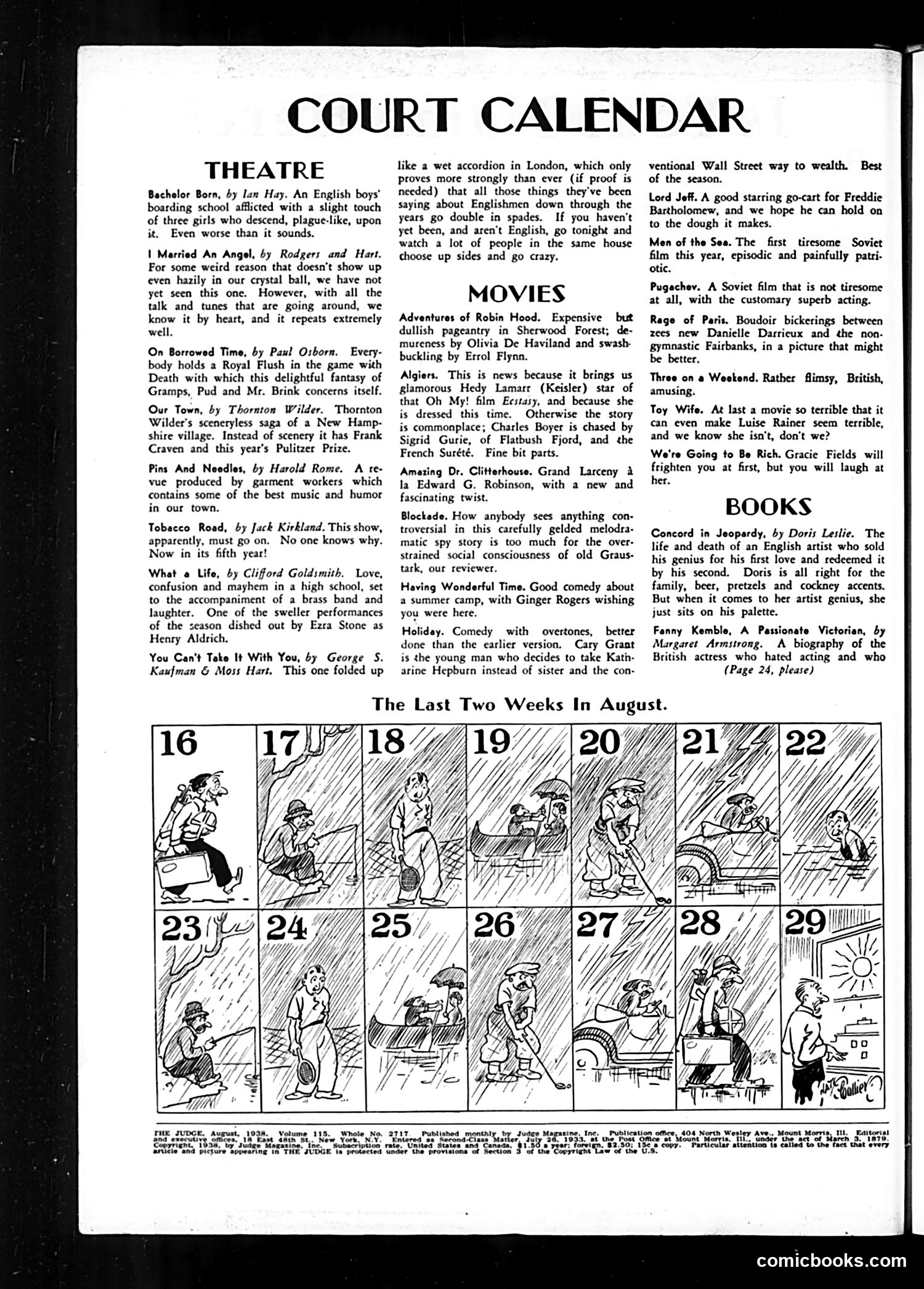
# Court Calendar Page from Judge Magazine This page combines entertainment reviews with a weather-themed comic strip calendar for August 16-29. The upper section reviews current Broadway plays and films, including *Adventures of Robin Hood*, *Algiers*, and *You Can't Take It with You*. The calendar strip below depicts a recurring character—apparently an everyman or working-class figure—dealing with rainy weather throughout the two-week period. On August 29, the final panel shows sunshine breaking through, suggesting relief after prolonged storms. The humor appears gentle and observational rather than overtly satirical, focusing on the universal frustration of summer rain and the simple joy of clear skies returning. The strip functions as both calendar and light social commentary on weather's impact on daily life.
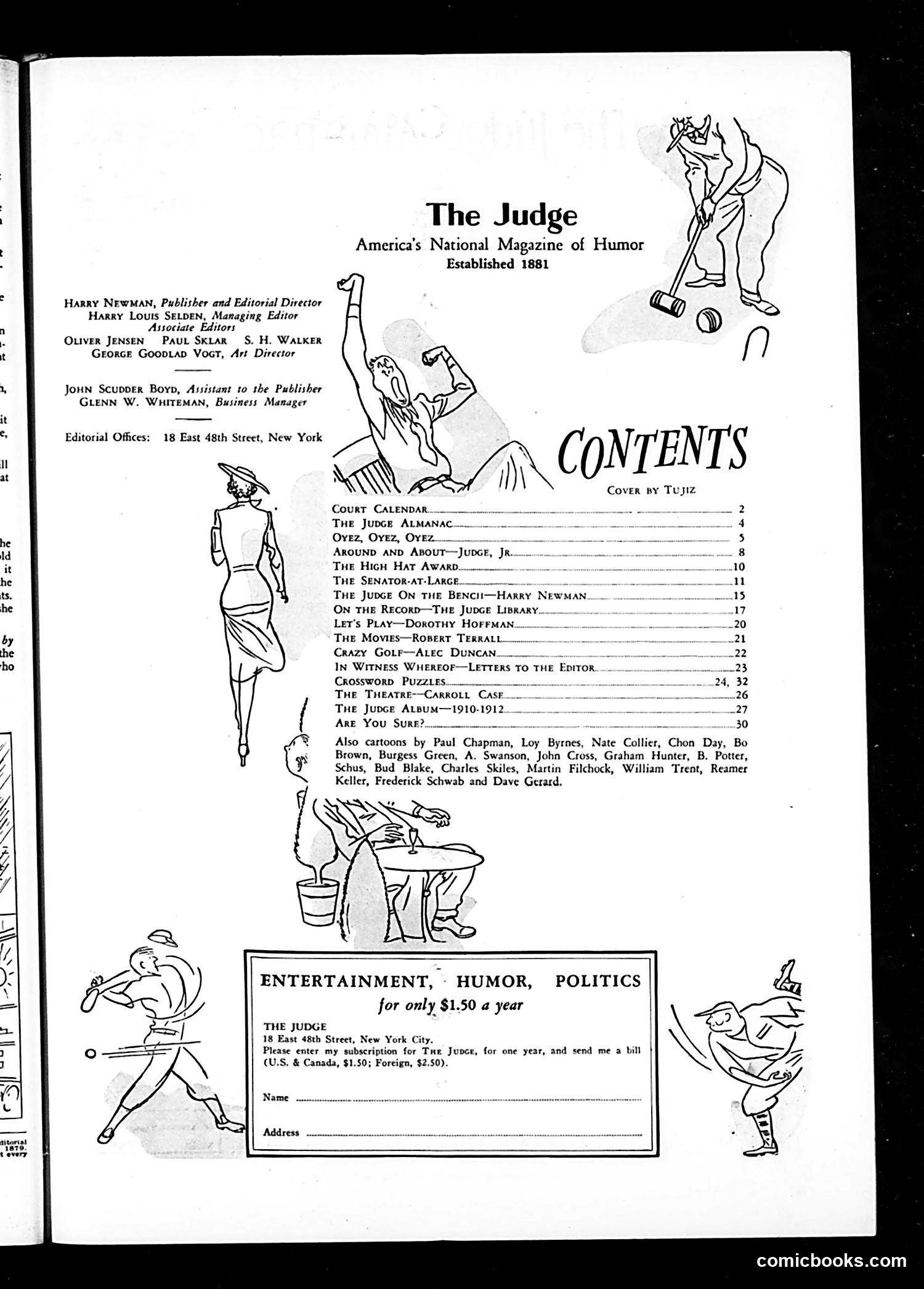
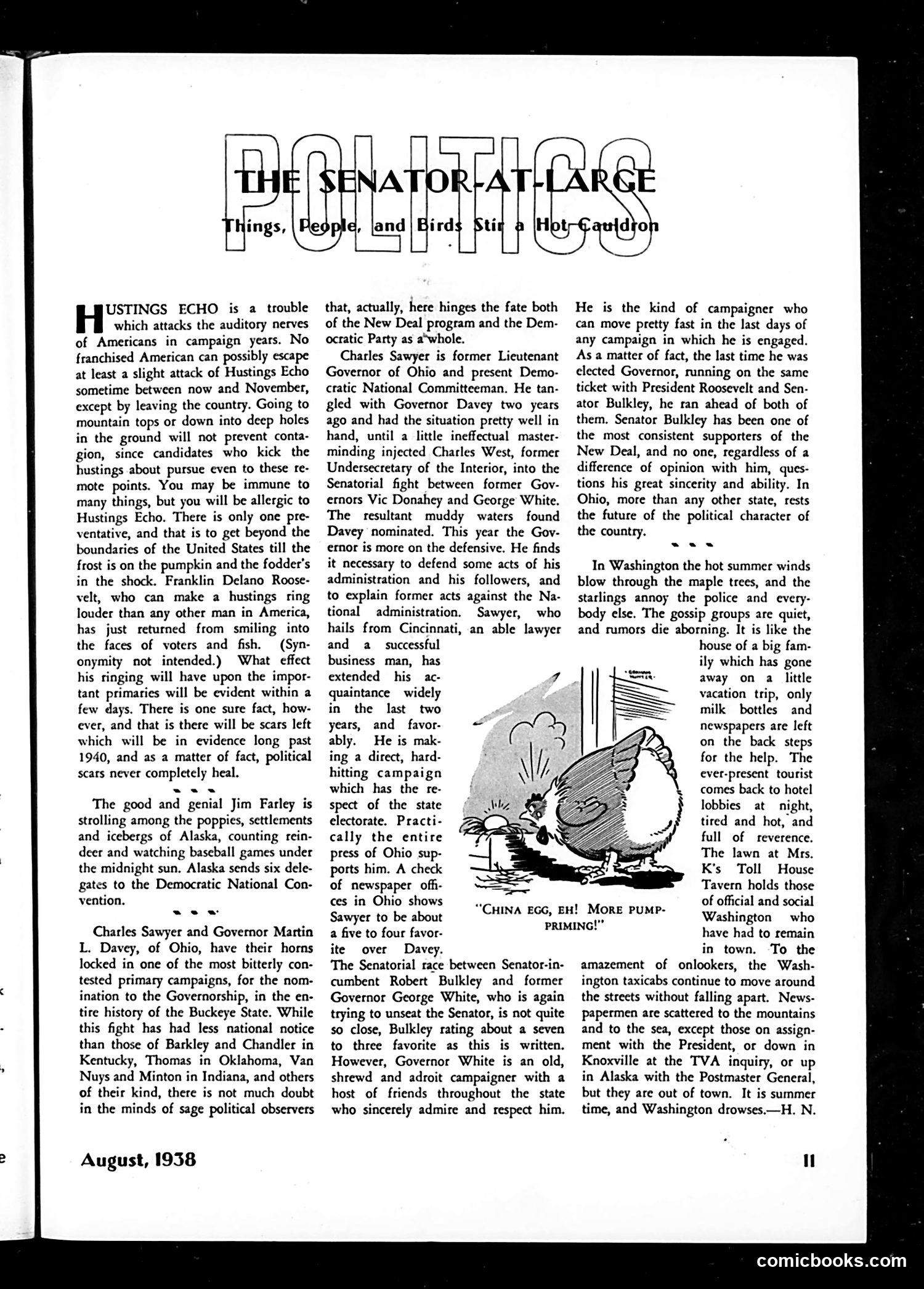
# The Judge Contents Page (circa 1910-1912) This is a **table of contents page** for *The Judge*, a humor magazine established in 1881. The page features decorative line drawings of figures engaged in various activities—golfing, croquet, and casual poses—typical of early 20th-century leisure. The contents list articles on topics including politics ("The Senator-at-Large"), sports ("Crazy Golf"), theater, and social commentary. A subscription advertisement at the bottom offers a year's subscription for $1.50, promoting "Entertainment, Humor, Politics." The cartoons themselves don't appear to reference specific political figures or events—they're generic illustrations celebrating upper-class recreation and leisure activities, reflecting the magazine's target audience of educated, affluent readers. This page primarily serves an organizational function rather than satirical purpose.
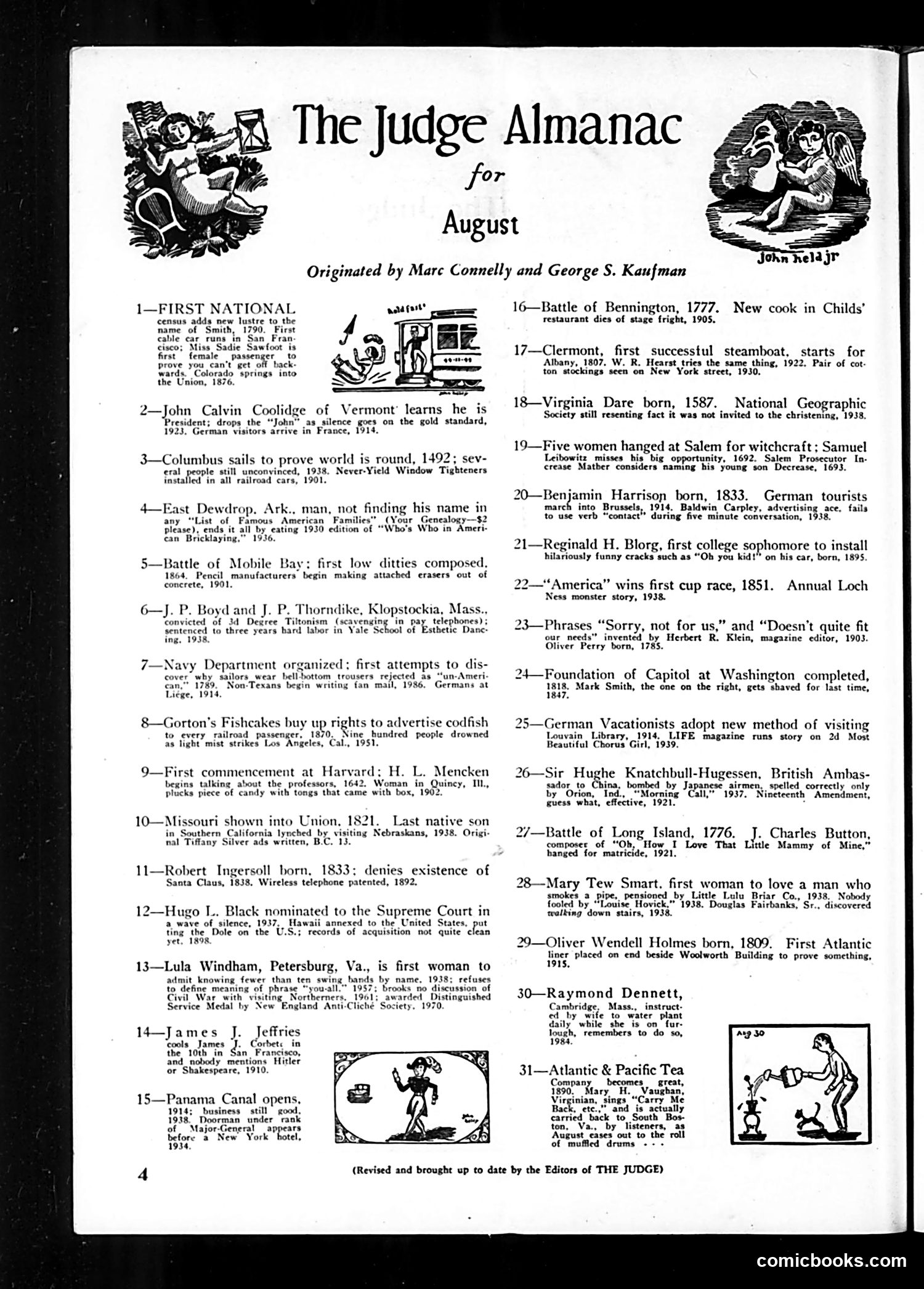
# The Judge Almanac for August This page is primarily an **almanac of historical events and trivia** rather than political satire. It lists 31 dated entries mixing genuine history (Panama Canal opening, 1914; Battle of Bennington, 1777) with humorous anecdotes and obscure facts. The small decorative woodcuts scattered throughout are generic period illustrations—cherubs, workers, and figures—not specific political cartoons targeting identifiable individuals. The humor is **light and miscellaneous**: absurd inventions (a college sophomore installing "hilariously funny ranch which says 'Oh you kid'" on his car), wordplay ("Sorry, not for us"), and quirky biographical details rather than pointed social critique. This appears to be **filler content** typical of early 20th-century magazines, blending genuine almanac information with whimsical entertainment for readers.
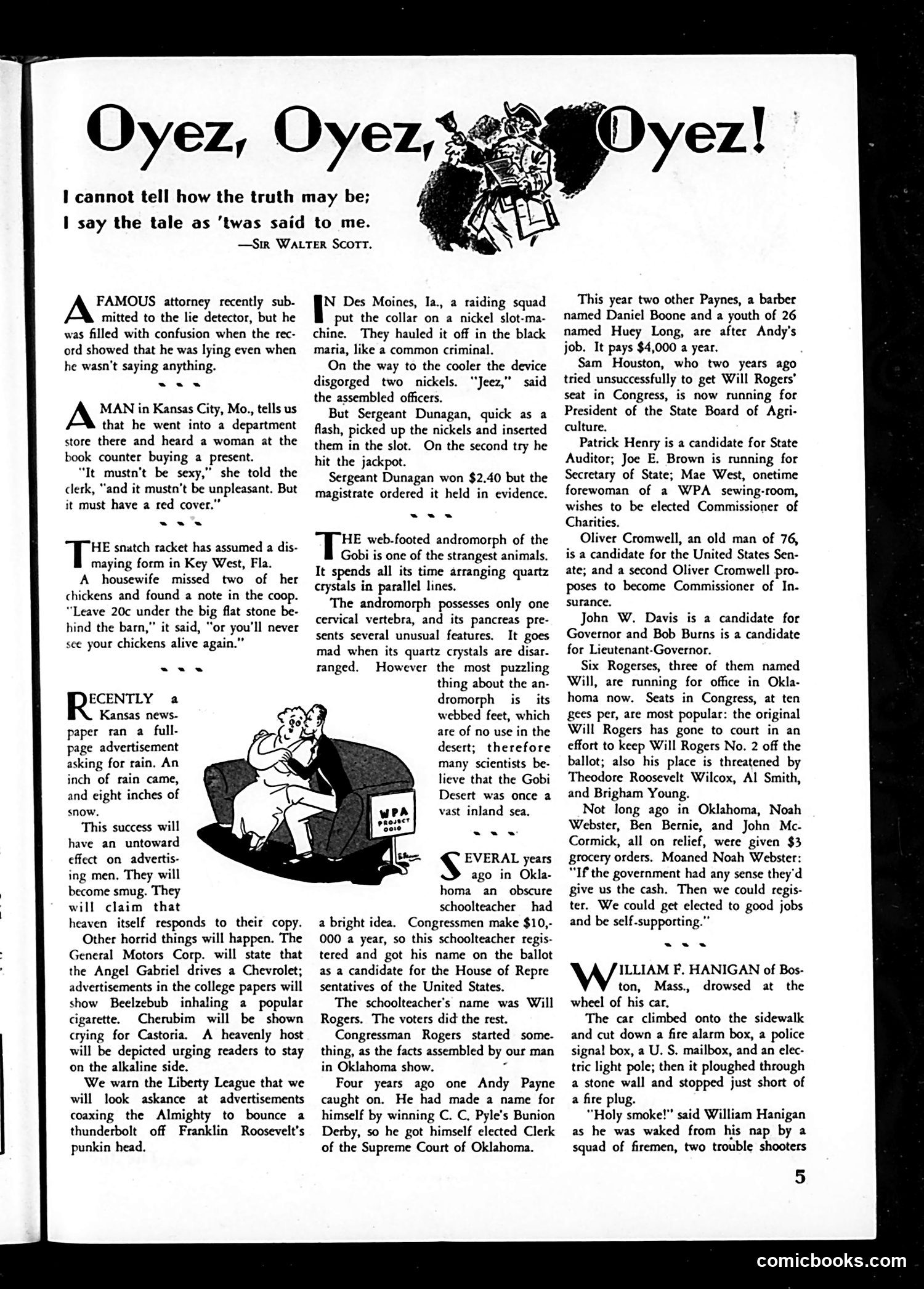
# Page Analysis: Judge Magazine Satirical Stories This page contains humorous anecdotes rather than political cartoons. The stories mock various American institutions and figures through exaggerated tales: 1. **The lie detector story** satirizes legal expertise and modern technology's limitations. 2. **The slot machine caper** depicts police incompetence in Des Moines, Iowa. 3. **Oklahoma political references** appear throughout—the text mentions Will Rogers (the famous entertainer-turned-politician), C.C. Pyle's Bunion Derby, and various Oklahoma candidates for office. The schoolteacher-turned-congressman story likely references actual Depression-era political developments in Oklahoma. 4. **The Golsi Desert creature** is a fictional animal used for absurdist humor about scientific confusion. The satire targets government corruption, law enforcement bungling, and the era's political opportunism, typical of Judge magazine's social commentary.
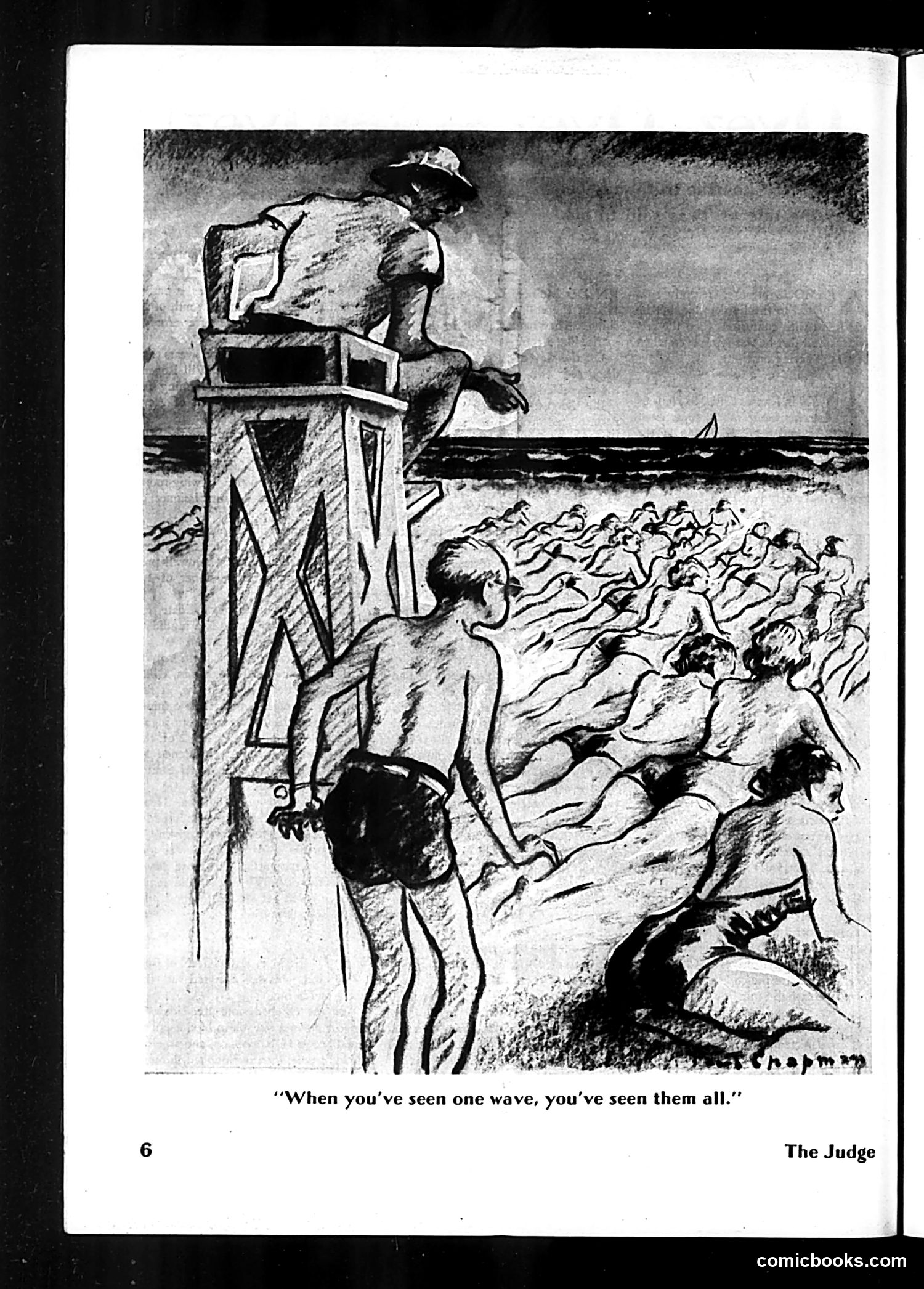
# Cartoon Analysis This cartoon depicts a lifeguard perched on a tall observation stand overlooking a crowded beach. A bather below asks about the repetitive nature of watching waves, to which the lifeguard responds: "When you've seen one wave, you've seen them all." The satire targets the monotony and tedium of certain jobs—particularly seasonal work like lifeguarding. The joke suggests that after observing the ocean's repetitive patterns, the work becomes mindless and interchangeable. The guard's elevated position and detached stance reinforce his apathy toward his duties. This commentary on workplace boredom and the soul-crushing nature of routine labor would have resonated with Judge's early 20th-century readers experiencing industrial monotony and standardized work conditions.
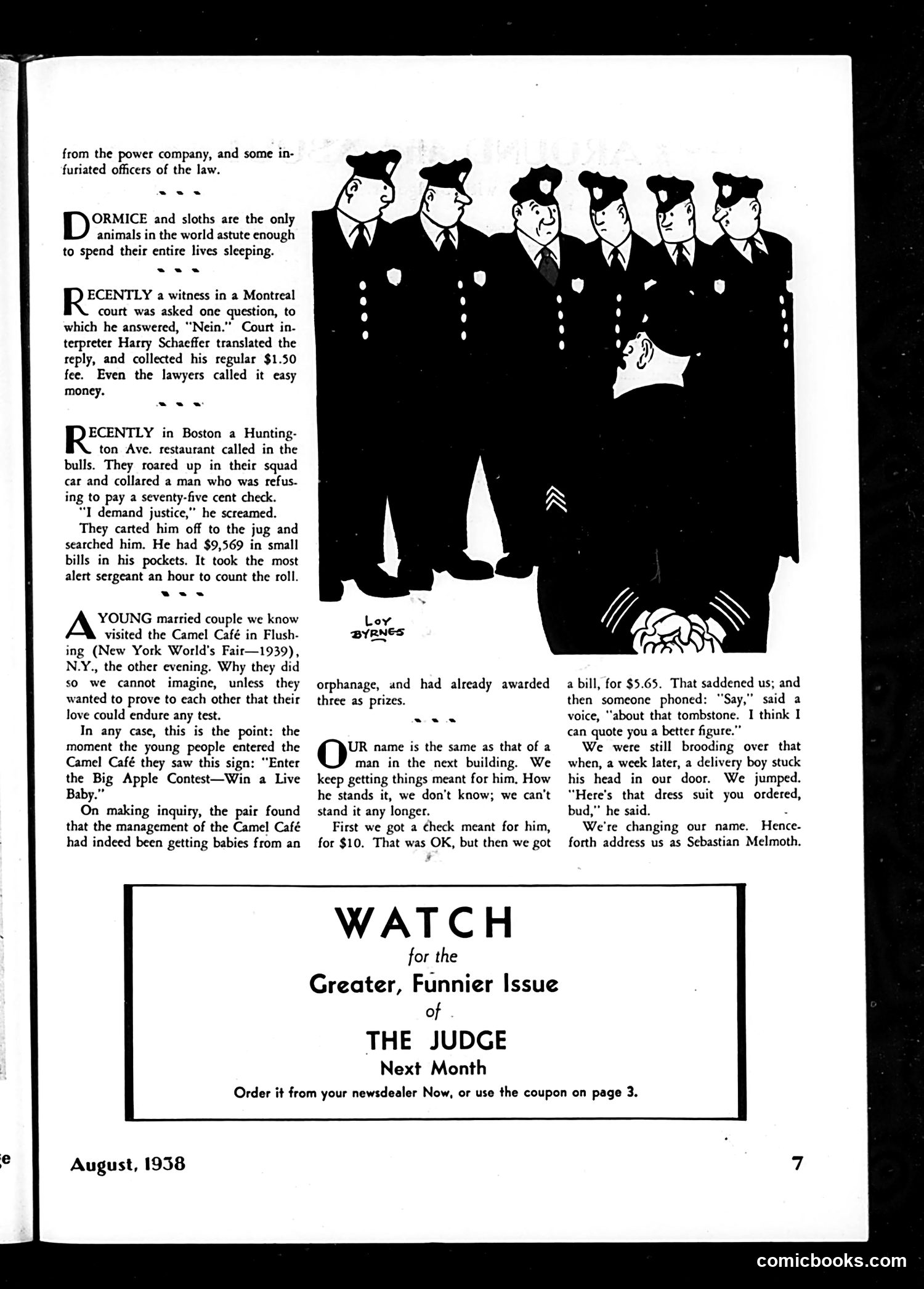
# Judge Magazine, August 1938 — Page Analysis This page contains humorous anecdotes rather than political cartoons. The illustration shows six uniformed police officers (identifiable by their distinctive hats and uniforms with chevrons) with a small figure below them. The stories mock institutional absurdity: dormice sleeping constantly, a Montreal court interpreter charging $1.50 to translate a simple "Nein" (German for "no"), and Boston police officers spending an hour counting $9,569 in small bills from a man refusing to pay a 75-cent restaurant check. The final anecdote describes confusion over names and addresses—people changing their identity to "Sebastian Melmoth" after receiving an unsolicited dress delivery for "$5.65." These are lighthearted satires of bureaucratic inefficiency, legal expense, and everyday confusion—not overtly political commentary. The police illustration likely accompanies one of these stories.
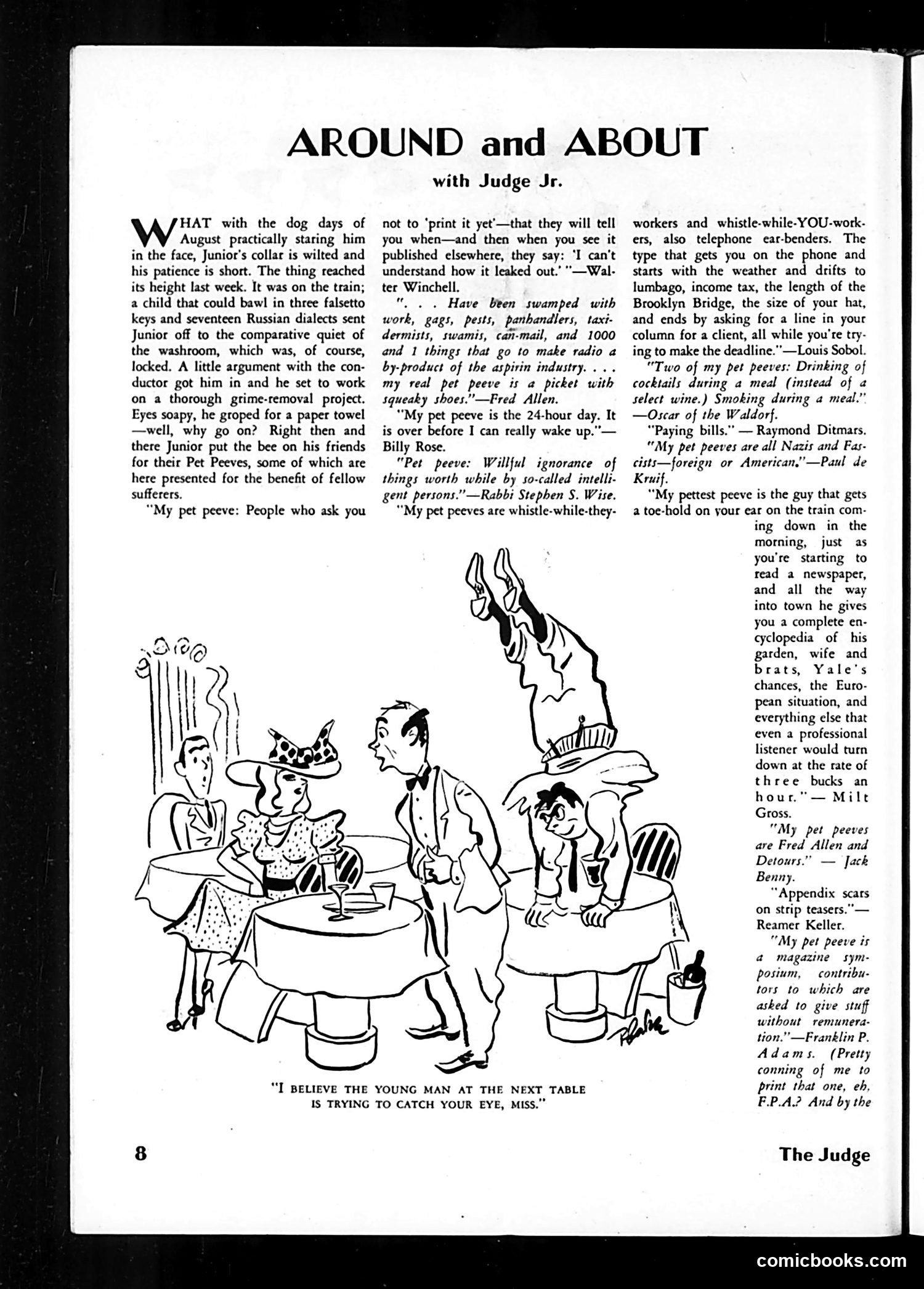
# "Around and About with Judge Jr." - Pet Peeves Column This page features a humorous column collecting "pet peeves"—minor annoyances—from famous entertainers and writers of the era (likely 1930s-40s based on references). The cartoon depicts a social scene where a woman is warned that a man at another table is trying to get her attention, playing on the awkwardness of being noticed. The celebrity quotes mock everyday irritations: Walter Winchell complains about sources who demand secrecy then claim leaks; Fred Allen gripes about radio industry chaos and squeaky shoes; Billy Rose resents the 24-hour day; Rabbi Stephen Wise criticizes willful ignorance. Later contributors mention telephone bores, bill-paying, Nazis, train conversationalists, and magazine contributors working without pay. The final quote from Franklin P. Adams is self-aware humor—he jokes about complaining that magazines ask for unpaid contributions while *himself* contributing to this magazine unpaid, creating a witty recursive joke about the very medium publishing his complaint.
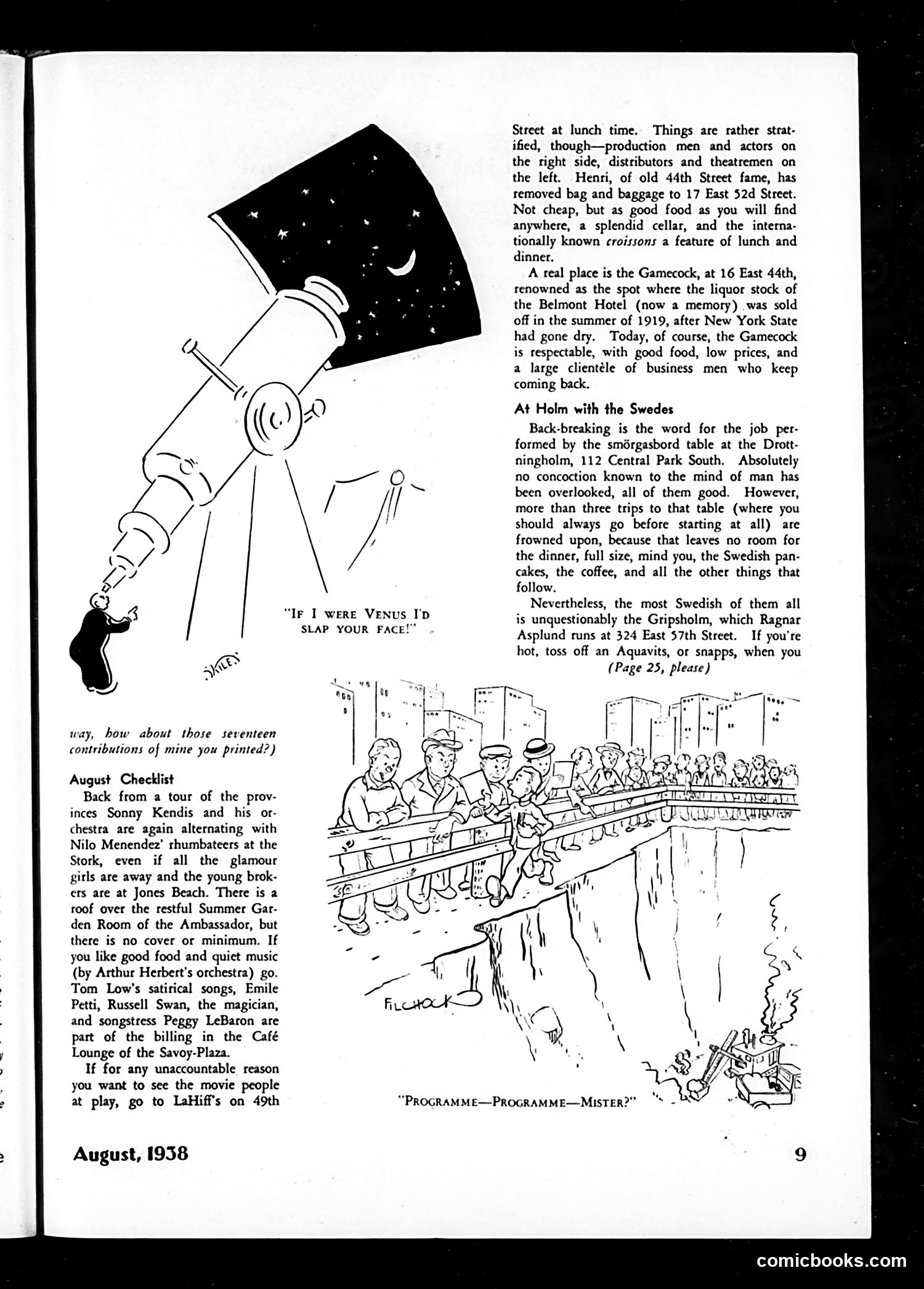
# Judge Magazine, August 1938 - Page Content Analysis This page is primarily a **restaurant and nightlife guide** for New York City's entertainment district, not political satire. It recommends various establishments (Henri's, the Gamecock, Swedish restaurants) with details about their food, atmosphere, and clientele. The **single cartoon** shows a figure with an umbrella and stars, captioned "If I were Venus I'd slap your face!" — a playful, nonsensical joke with no clear satirical target. The **"August Checklist"** section reviews entertainment venues and performers: Sonny Kendis's orchestra, various singers and musicians performing at clubs like the Stork, Ambassador, and Savoy-Plaza. It mentions summer entertainment options for New York's leisure class. The bottom cartoon depicts people fishing near what appears to be industrial infrastructure, captioned "Programme—Programme—Mister?" — its meaning is unclear without additional context. Overall, this is **lifestyle/entertainment content** rather than political or social satire.
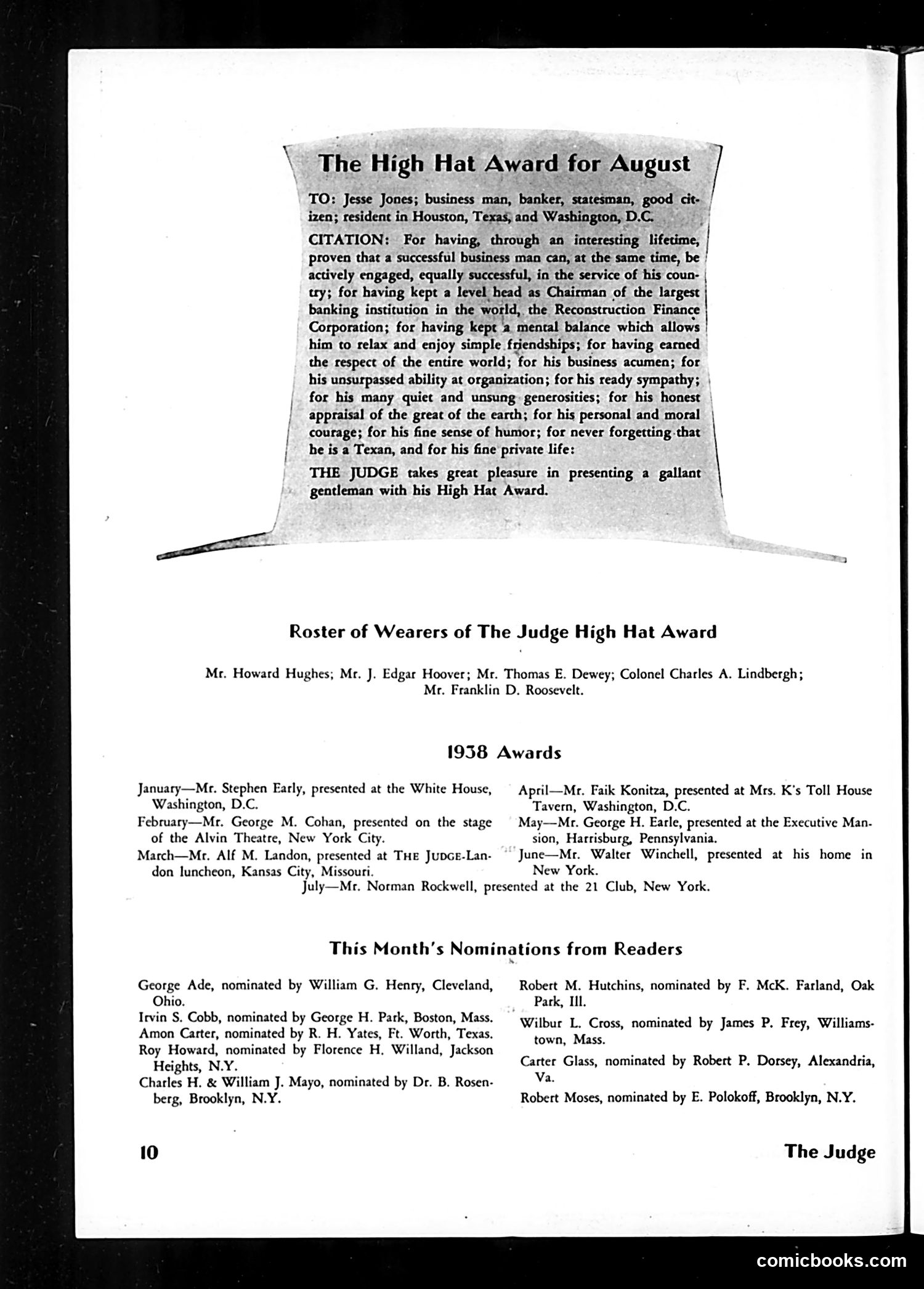
# The High Hat Award for August This page presents *Judge* magazine's prestigious monthly "High Hat Award," honoring distinguished Americans. The August 1938 recipient is Jesse Jones, a prominent Houston banker and chairman of the Reconstruction Finance Corporation—a New Deal agency. The citation praises his balance of business success with public service, leadership, generosity, and integrity. The page also lists previous award recipients (including FDR, Lindbergh, and J. Edgar Hoover) and current 1938 honorees, plus reader nominations for future consideration. This isn't satire but rather *Judge*'s genuine tribute to accomplished figures. The "High Hat" metaphor suggests elite status and respectability. The award reflects the magazine's editorial values: celebrating successful, patriotic Americans who combine business acumen with civic responsibility and personal character—particularly those serving the national interest during Depression-era recovery efforts.