A complete issue · 41 pages · 1935
Judge — December 1935
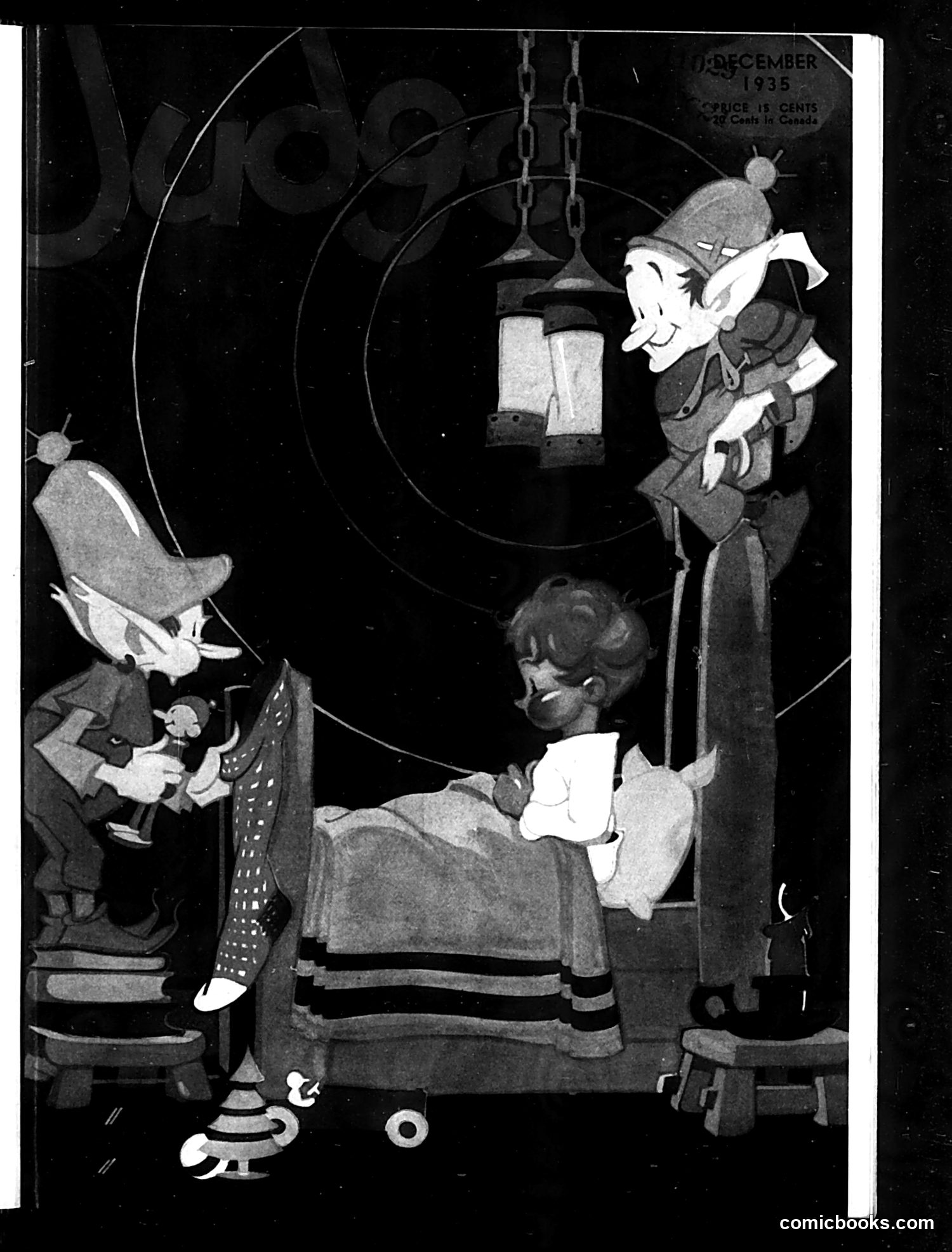
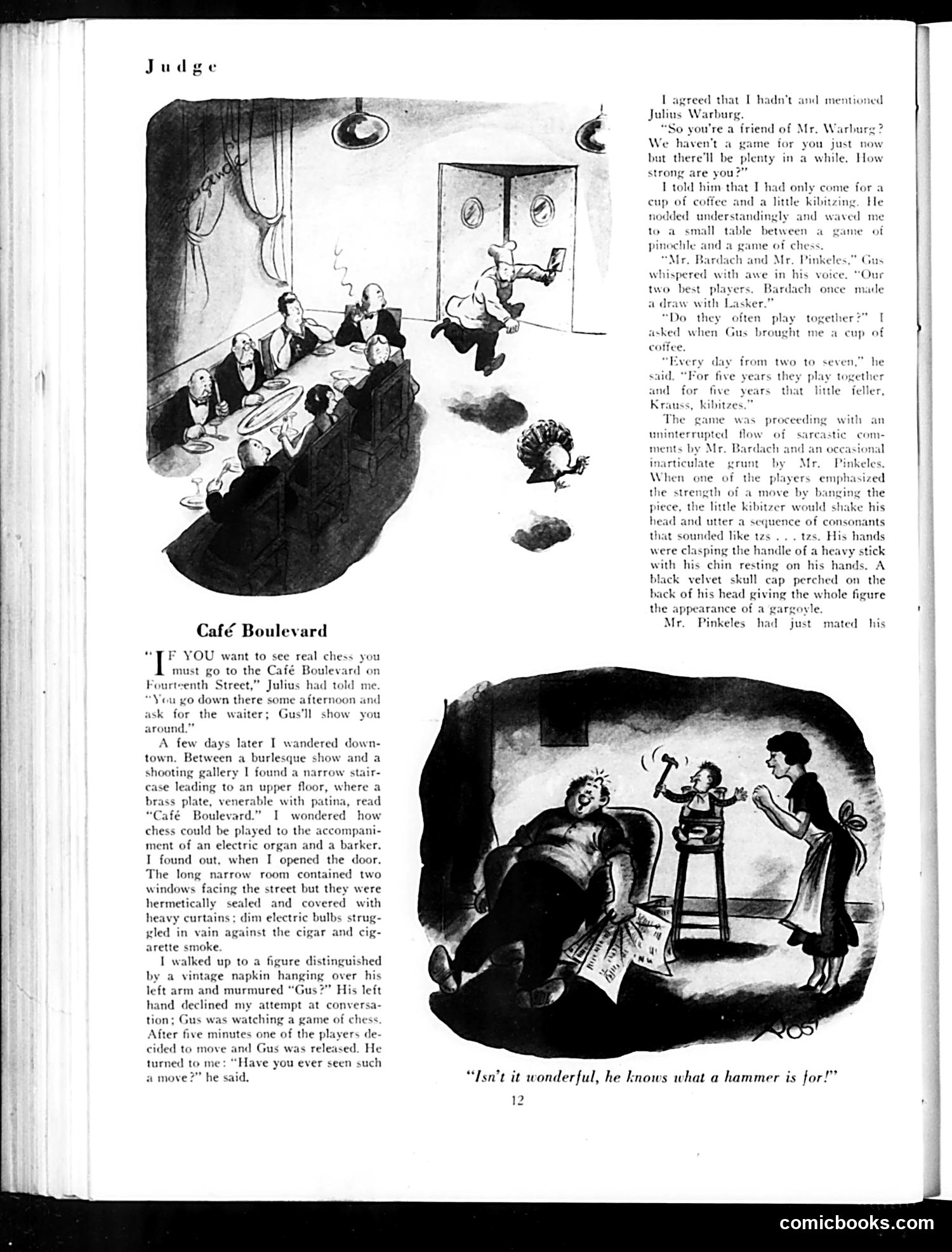
# Analysis This December 1935 *Judge* page appears to show an animated cartoon scene rather than a political cartoon. The image depicts stylized characters in what looks like an interior setting with hanging lamps and exaggerated period clothing. Without clearer OCR text or visible captions identifying specific figures or the narrative, I cannot confidently determine the satirical point or social reference intended. The art style suggests early-to-mid 1930s commercial illustration or animation advertising, but the specific subject matter—whether political satire, social commentary, or entertainment advertisement—remains unclear from the image alone. To properly explain this page's meaning to a modern reader would require legible captions or text identifying the characters and situation being satirized.
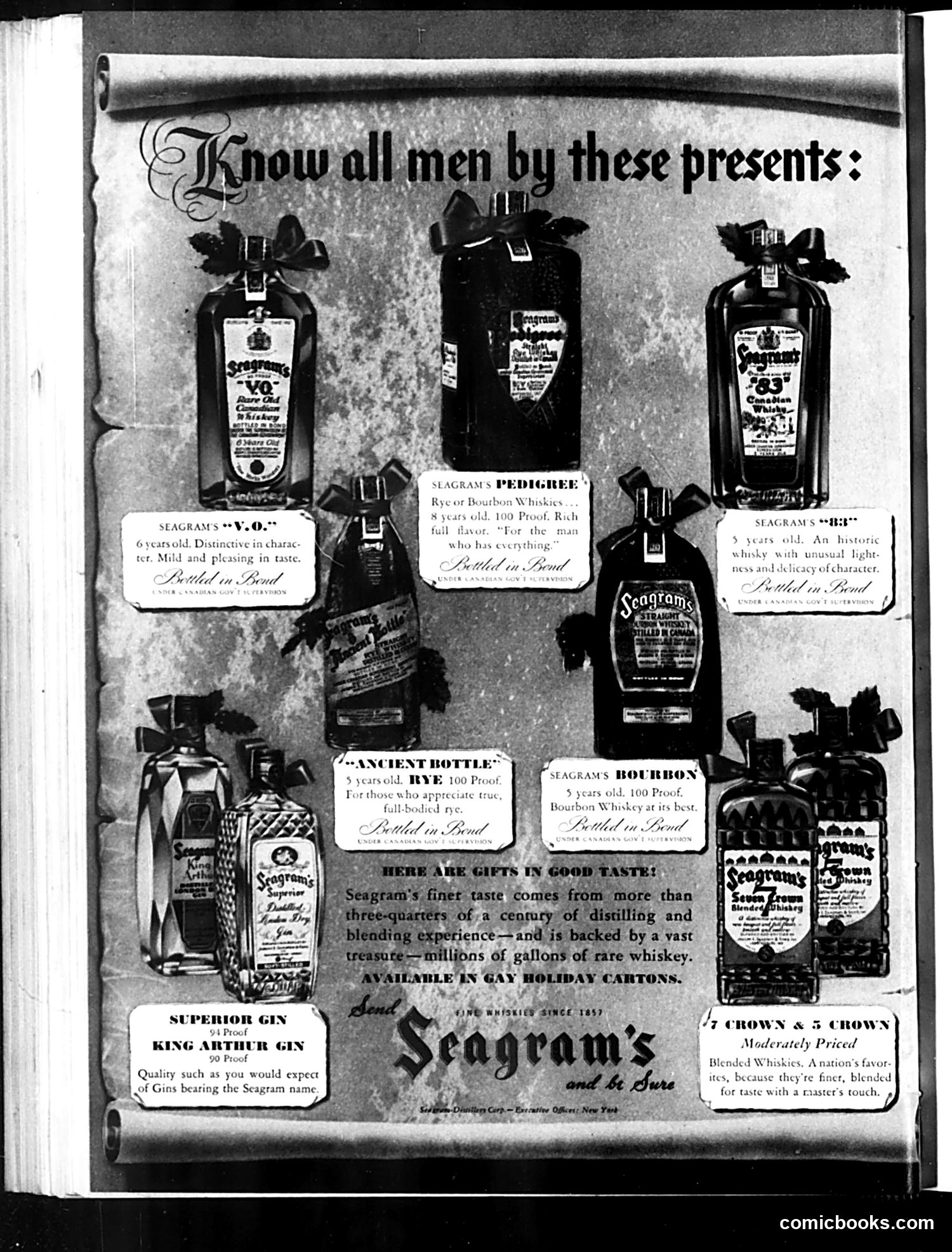
# Seagram's Whiskey Advertisement This is primarily a **commercial advertisement**, not political satire. It showcases Seagram's distilled spirits—various whiskeys and gins—presented as gift options for men, with the opening line "Know all men by these presents" mimicking legal/formal language for humorous effect. The ad features five products: V.O., Pedigree, B, Ancient Bottle, Bourbon, plus Superior Gin and King Arthur Gin. Each includes brief descriptions emphasizing quality and taste. The phrase "Here are gifts in good taste" plays on the double meaning of "taste"—both flavor and refinement. The layout and styling reflect 1920s-30s advertising aesthetics, though the specific publication date is unclear from this image alone. This represents typical Judge magazine advertising rather than editorial satire.
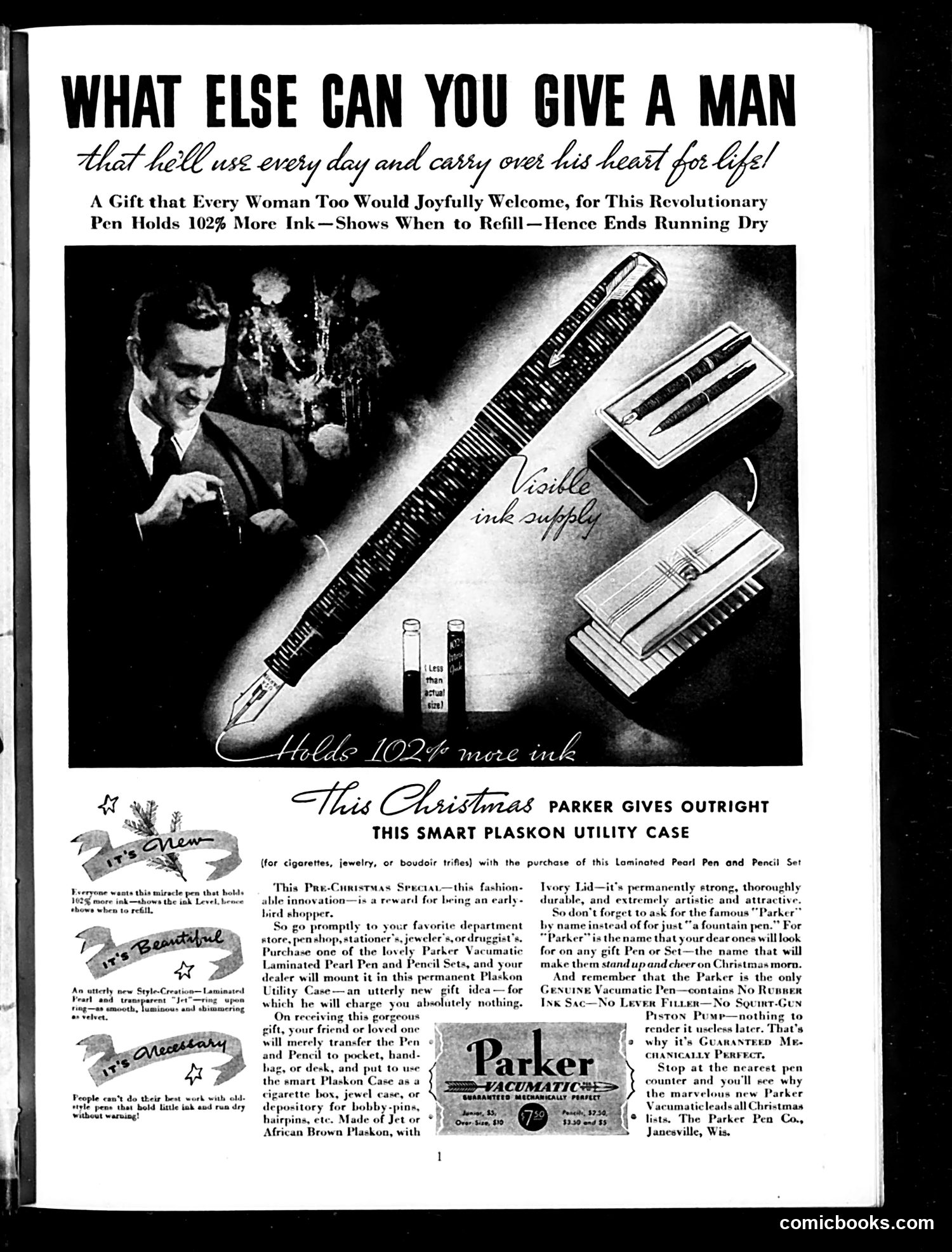
# Analysis This page is primarily **advertising, not satire or political commentary**. It promotes Parker fountain pens and pen sets as Christmas gifts. The content consists of: 1. **Main advertisement**: A Parker pen with "visible ink supply" that "holds 102% more ink," marketed as a practical gift for men 2. **Gift packaging options**: Three decorative "utility cases" with ribbons labeled "New," "Beautiful," and "Necessary" 3. **Product details**: Emphasis on the pen's reliability and the smart Plaskon utility case for storing pens, cigarettes, or jewelry The only figurative element is a photograph of a man writing—used generically to show the product in use. There is no political cartoon, caricature, or social satire on this page. It's a straightforward mid-century commercial advertisement typical of Judge magazine's revenue model.
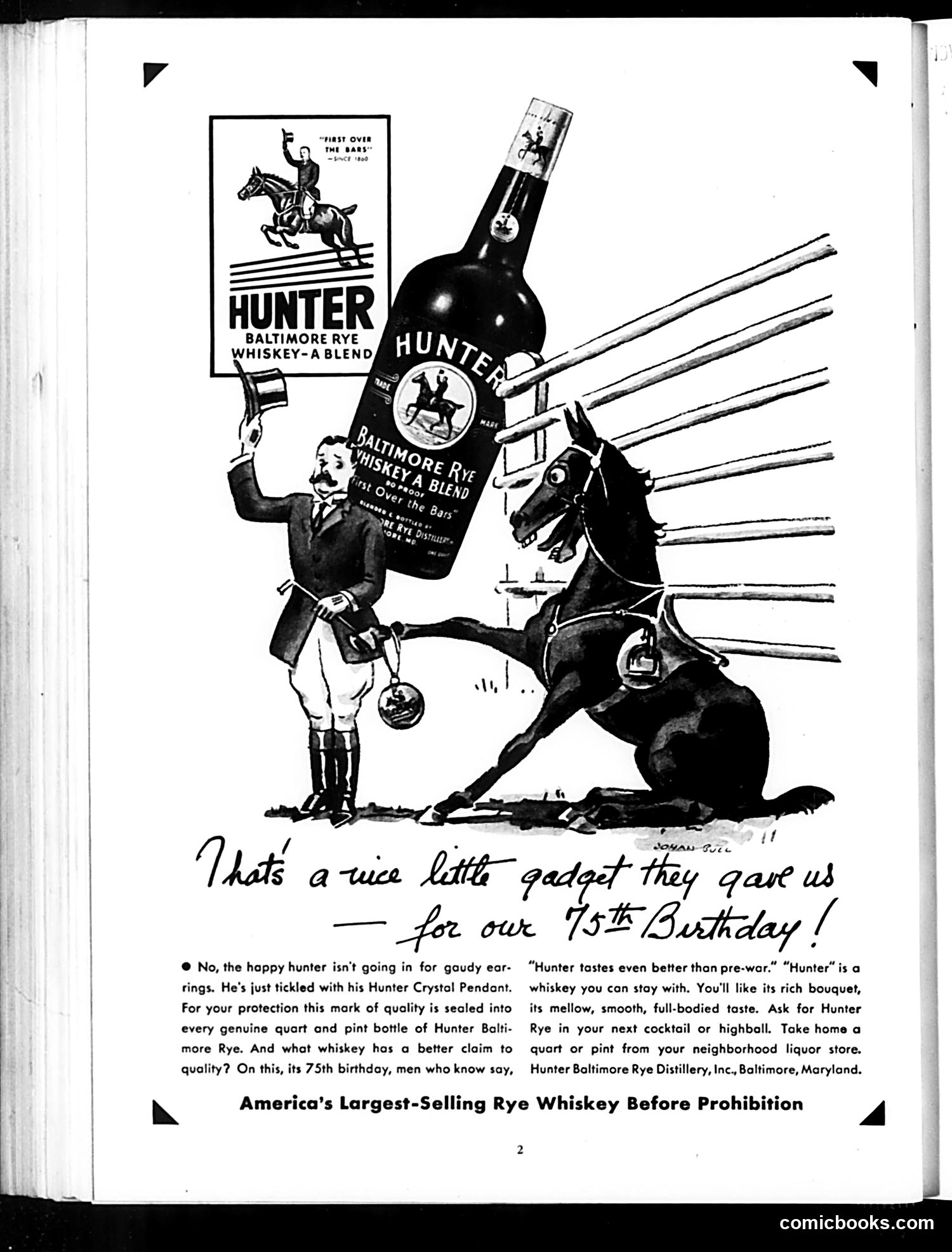
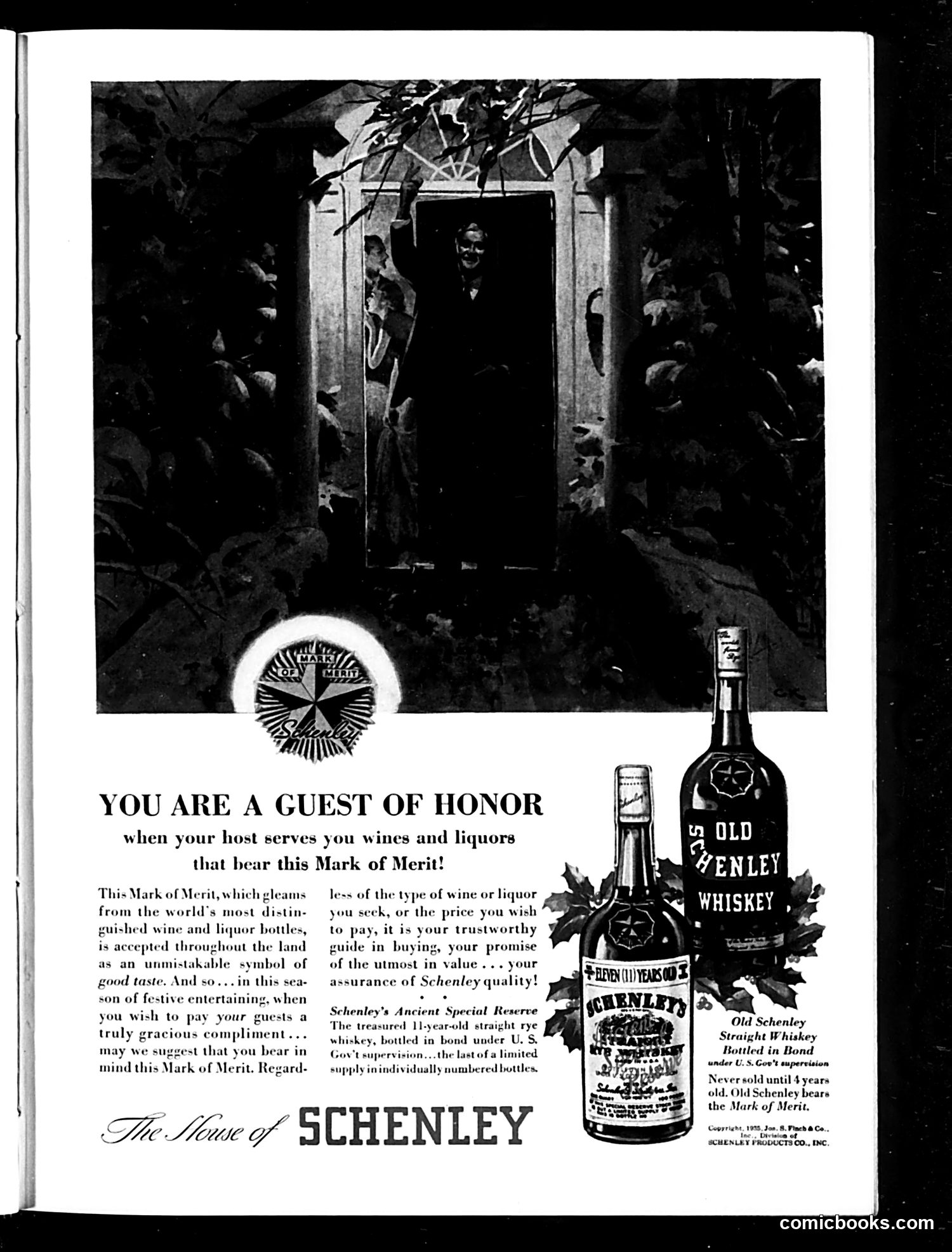
# Hunter Rye Whiskey Advertisement This is primarily a **whiskey advertisement** rather than political satire. It celebrates Hunter Baltimore Rye Whiskey's 75th birthday, depicting a well-dressed hunter on horseback holding an enormous bottle as a "gadget" or prize. The humor is straightforward product advertising: the exaggerated bottle size and the hunter's delighted reaction make the whiskey seem desirable and celebratory. The accompanying text emphasizes that Hunter is "America's Largest-Selling Rye Whiskey Before Prohibition"—a significant historical detail, as this appears from the Prohibition era when such advertising was becoming restricted or nostalgic. The "Crystal Pendant" mentioned is a quality mark sealed into bottles. This is essentially vintage marketing hyperbole rather than social commentary.
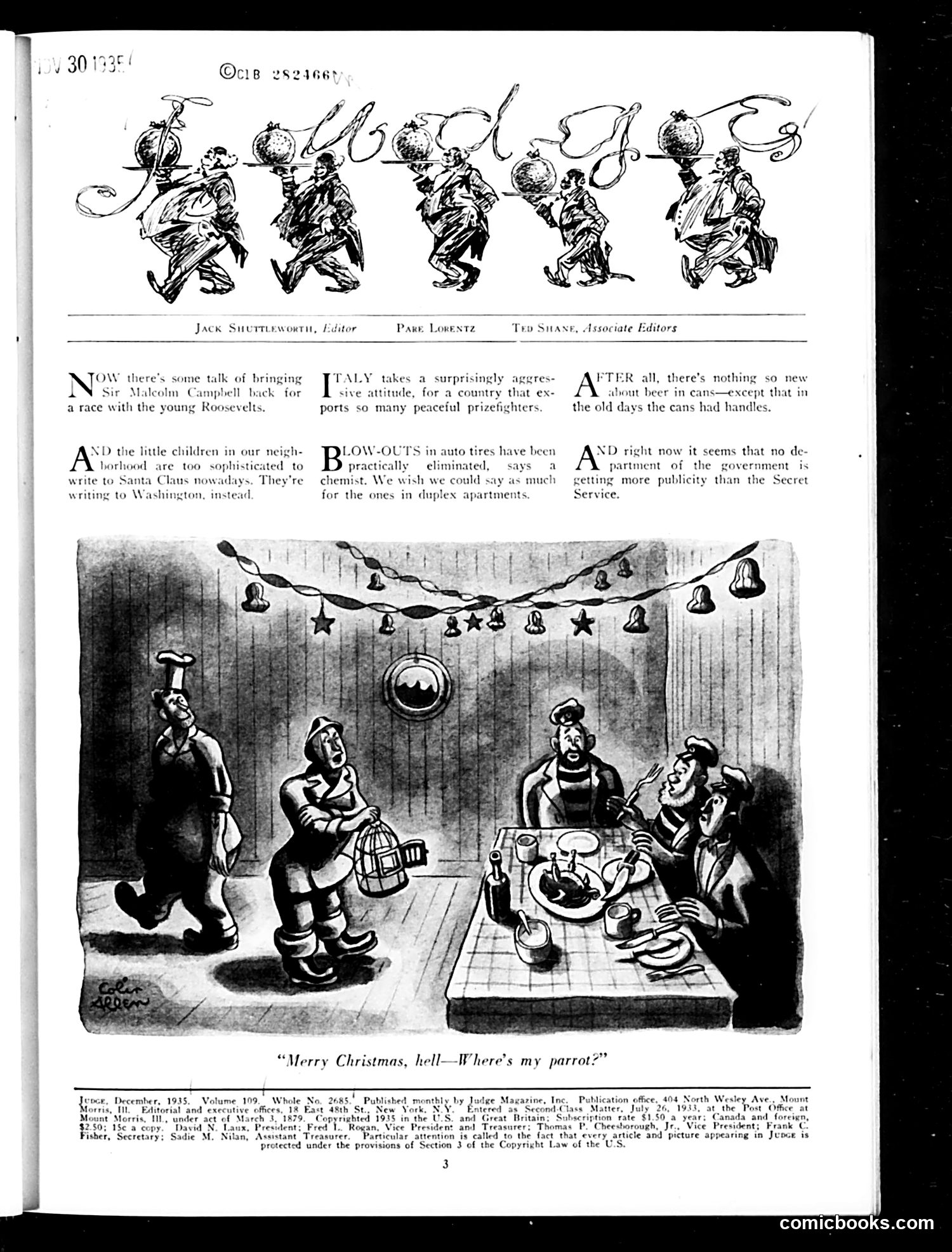
# Explanation of This Judge Magazine Page (December 1915) **Top Section:** Decorative header with five dancing figures juggling globes, illustrating the magazine's satirical tone. **Text Snippets:** Brief commentary on contemporary issues: Malcolm Campbell racing "young Roosevelts," children writing to Washington instead of Santa Claus, auto tire blow-outs in apartments, and government departments receiving more publicity than the Secret Service. **Main Cartoon:** Titled "Merry Christmas, hell—Where's my parrot?" depicts a working-class Christmas dinner scene. A man arriving home appears frustrated or angry, while others (wife, children) are seated at a modest table. The domestic discord suggests economic hardship during wartime—the man's complaint about a missing parrot implies unmet expectations or broken promises, likely satirizing class struggles or unfulfilled holiday hopes during WWI (the issue date is December 1915).
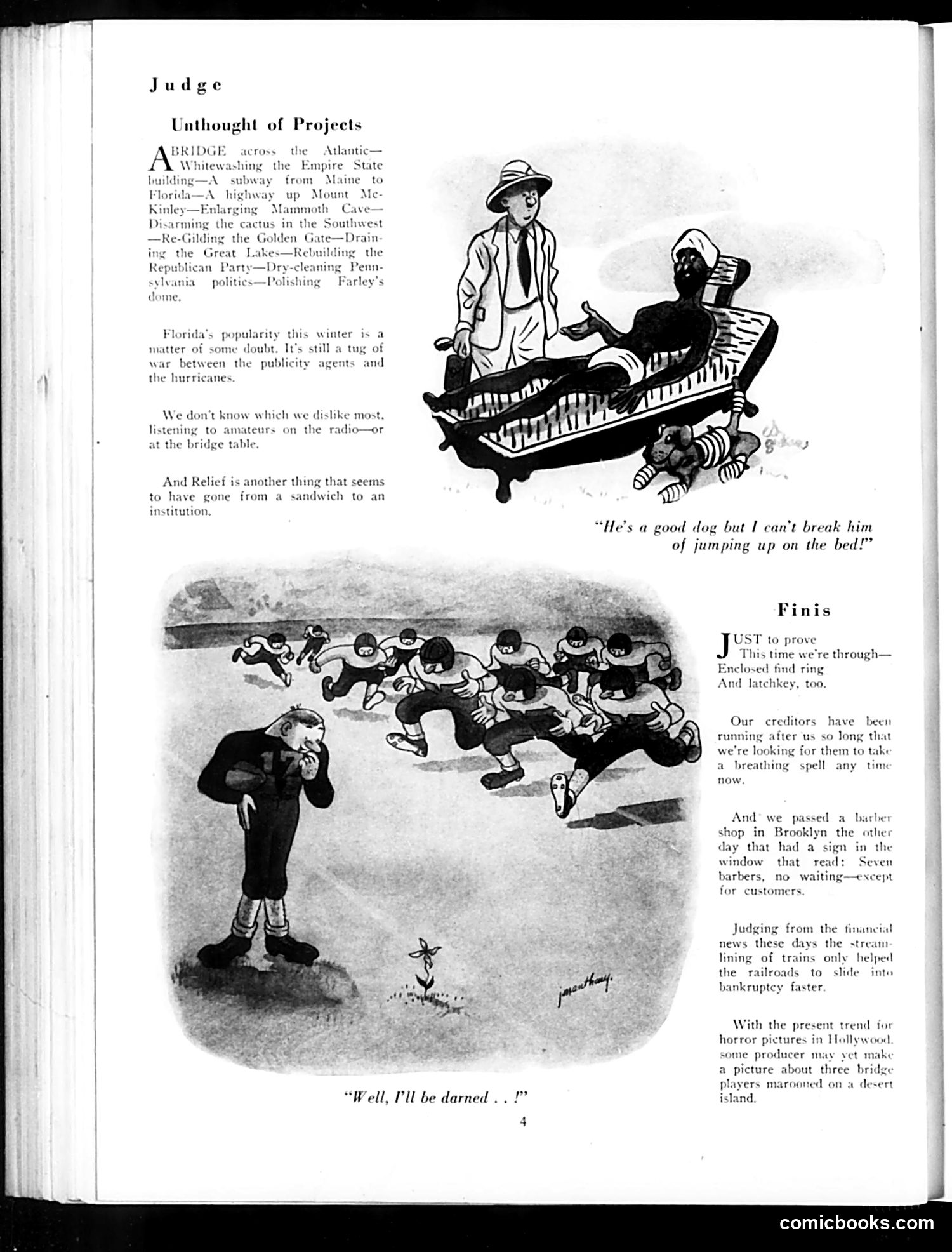
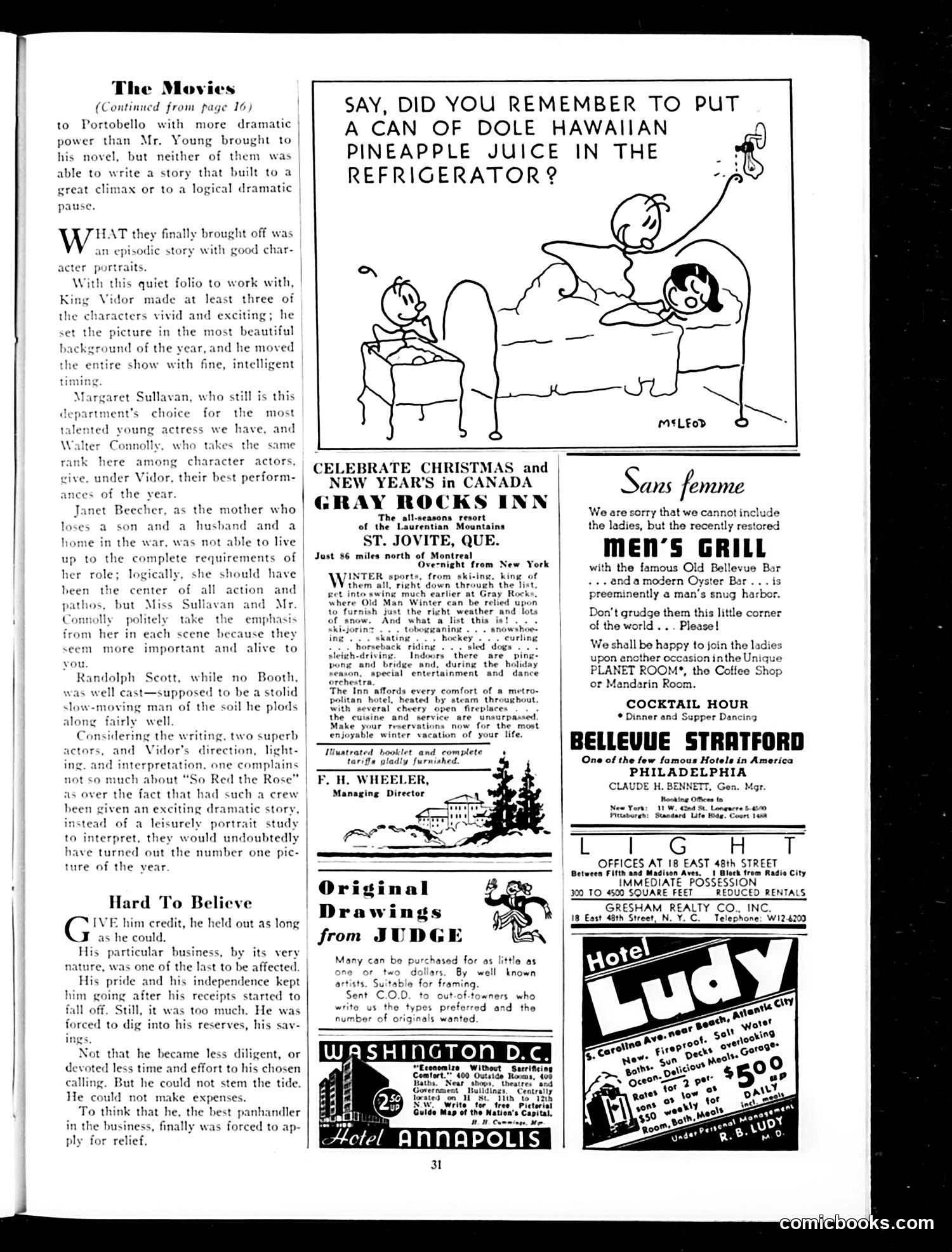
# Analysis of Judge Page This page contains two distinct sections: **"Unthought of Projects"** (top) lists absurd infrastructure proposals—transcontinental subways, bridges, cave enlargements—satirizing grandiose public works schemes. The accompanying cartoon shows a man in a suit gesturing at a recumbent figure on a bed, with the caption "He's a good dog but I can't break him of jumping up on the bed!" This appears to critique frivolous spending or impractical projects. **"Finis"** (bottom) presents a cartoon of a man shouting at fleeing figures, captioned "Well, I'll be darned...!" The accompanying text humorously references creditors, bankruptcy, and economic hardship—suggesting this satirizes financial desperation or debt collection, likely referencing Depression-era economic struggles. Both sections use humor to comment on practical problems: wasteful spending and financial crisis.
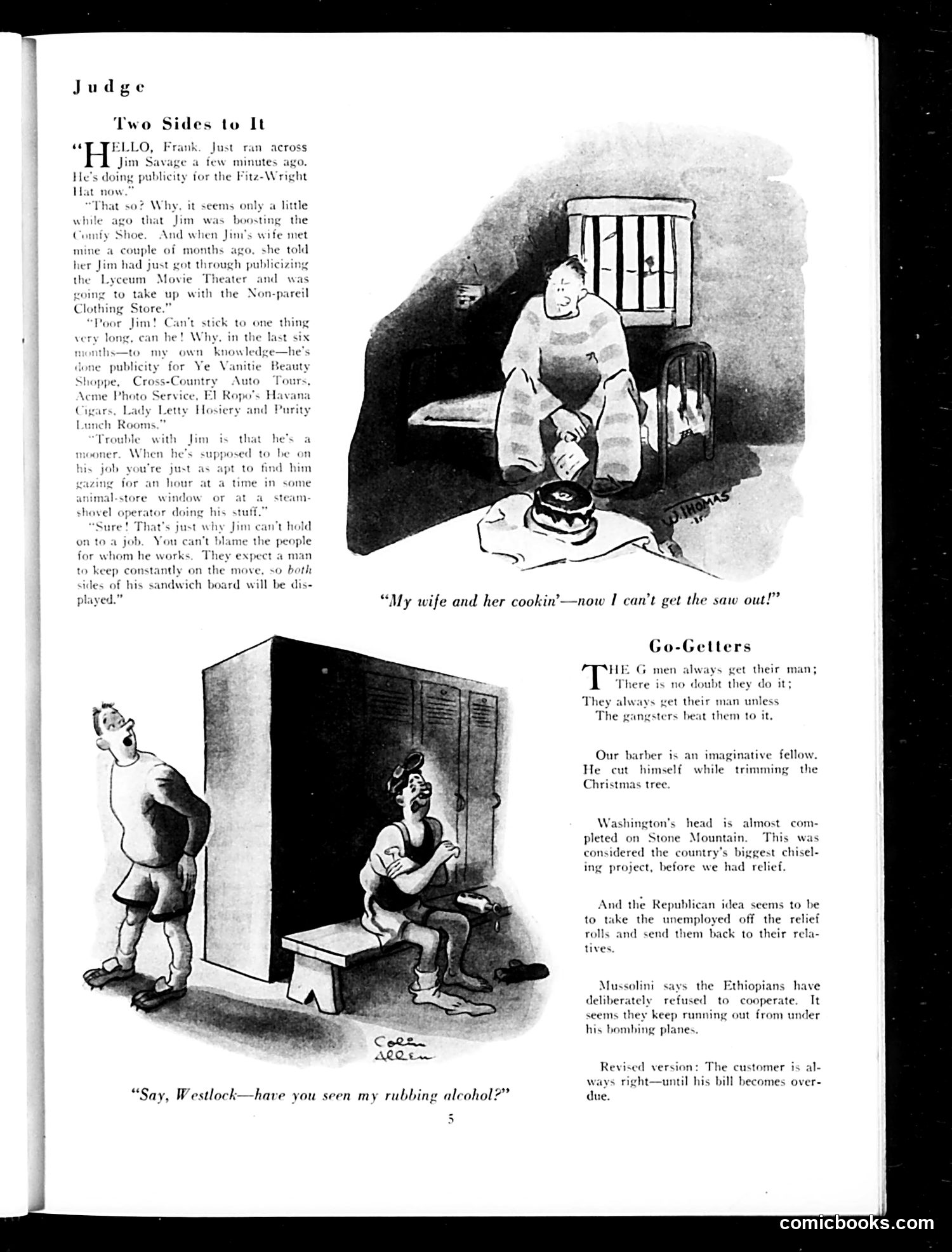
# Explanation for Modern Readers This Judge magazine page contains two satirical sections: **"Two Sides to It"** depicts a man imprisoned for looking at store windows during his job—commentary on employers demanding constant productivity. The joke: both sides (employer and employee) claim the other is unreasonable, but the man loses. **"Go-Getters"** is a series of brief satirical quips mocking ambitious business tactics and political figures. References include: - A barber's imaginative boasting - Washington's Stone Mountain monument project - Republican criticism of Depression-era relief programs - Mussolini's bombing of Ethiopia The cartoon below shows someone asking about "rubbing alcohol"—likely a Prohibition-era joke about concealing alcohol consumption. The satire targets corporate exploitation, political absurdity, and Depression-era economic policies through dark humor typical of 1930s Judge magazine.
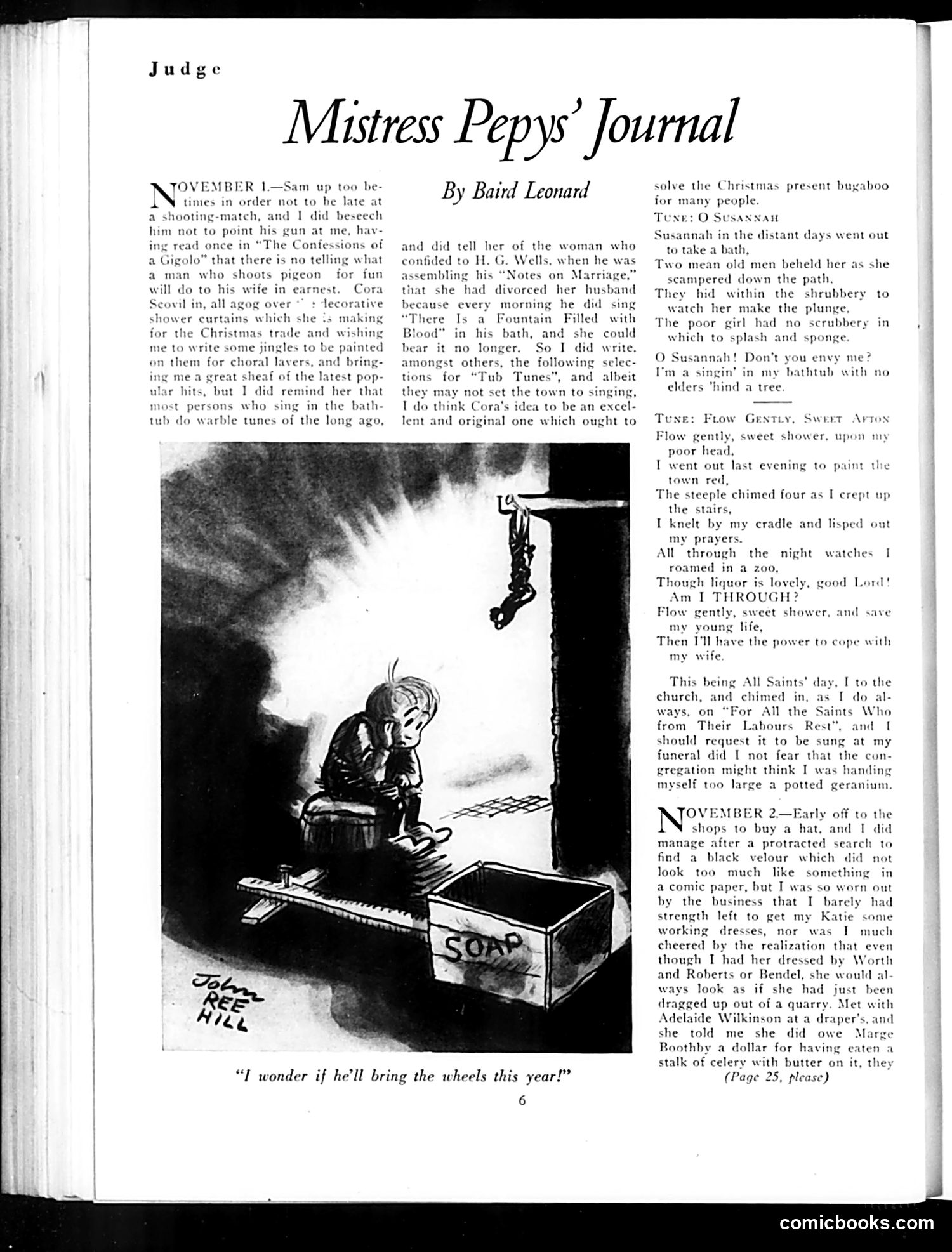
# Mistress Pepys' Journal - Analysis This page presents a humorous column by Baird Leonard titled "Mistress Pepys' Journal," styled after the famous diary of Samuel Pepys. The accompanying illustration by John Held Hill depicts a woman at a washboard with a soap box, captioned "I wonder if he'll bring the wheels this year?" The satire targets domestic life and marital dynamics. The cartoon jokes about a wife doing laundry—arduous manual work—while wondering if her husband will provide "wheels" (likely referring to a washing machine or labor-saving device) as a Christmas gift. This reflects early 20th-century anxieties about household drudgery and the gap between wives' domestic expectations and husbands' gift-giving priorities, mocking both the woman's hopeful resignation and the husband's presumed stinginess.
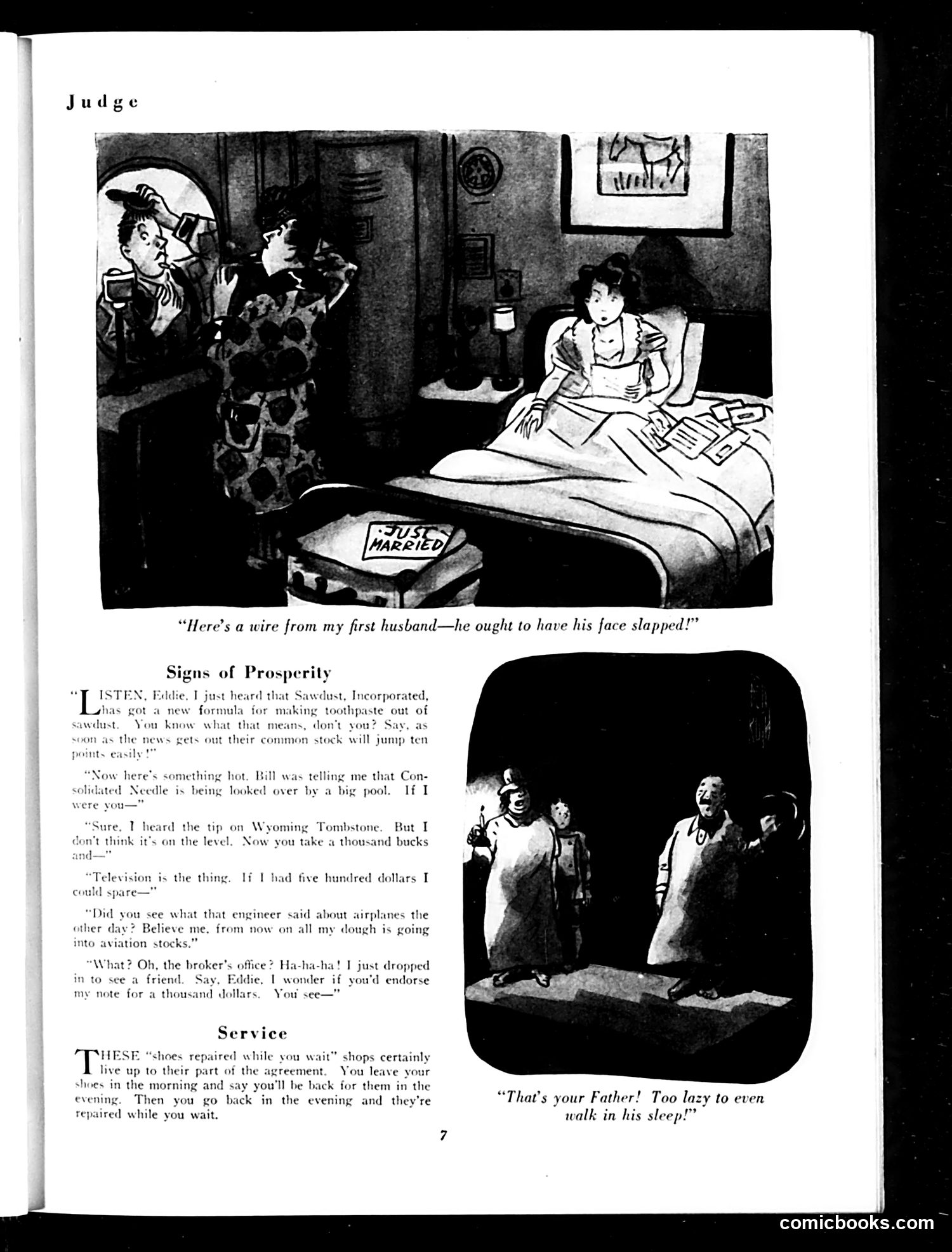
# Analysis of Judge Page 7 This page contains two unrelated satirical sketches typical of Judge magazine's humor format. The top cartoon, titled "Judge," depicts a domestic dispute where a woman in bed receives a wire from her first husband demanding his face be slapped. The satire likely targets messy divorce situations and remarriage complications of the era. The bottom section, "Signs of Prosperity" and "Service," features conversational snippets about stock tips, toothpaste formulas, and airplane investments—satirizing the speculative fever and get-rich-quick schemes of the 1920s economic boom. The final sketch about shoe repair shops mocks overpromising service businesses. The humor relies on everyday domestic and commercial frustrations recognizable to contemporary readers, rather than specific political figures or events.
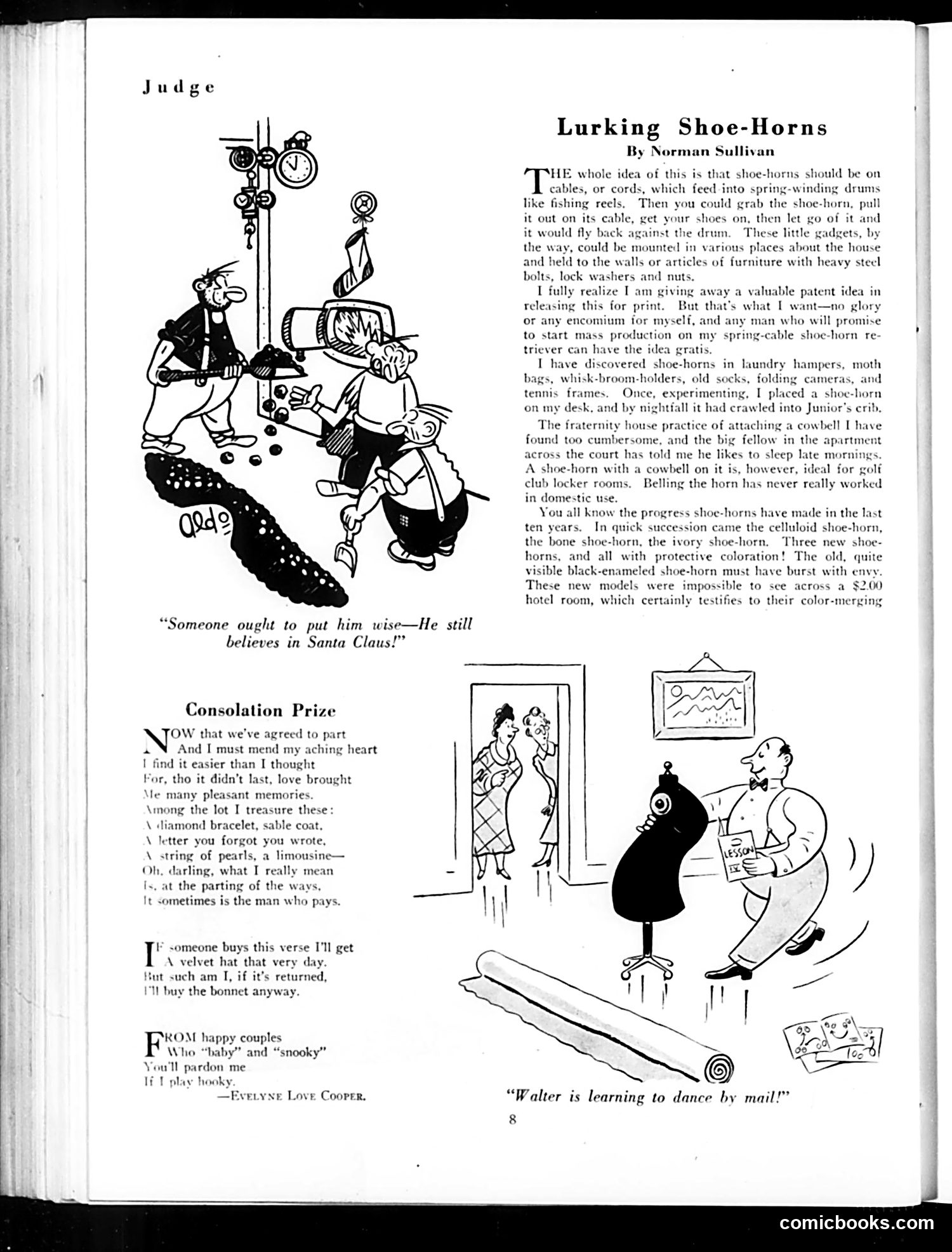
# Judge Magazine Page Analysis **Top Cartoon:** A man surrounded by scattered items (appearing to be gifts or valuables) is criticized for naively believing in Santa Claus—likely satirizing a gullible or foolish person, possibly a public figure or type. The caption suggests someone needs to "wise him up." **"Consolation Prize" Poem:** Satirizes mercenary attitudes in romance. A woman catalogs material gains from a failed relationship—diamond bracelets, sable coats, pearls, limousines—before revealing the real point: "at the parting of the ways, it sometimes is the man who pays." The satire mocks both gold-digging and the transactional nature of relationships. **"Lurking Shoe-Horns" Article:** A humorous invention pitch by Norman Sullivan proposing spring-loaded, cable-retracted shoe-horns mounted throughout homes like fishing reels. Sullivan describes discovering shoe-horns everywhere (laundry hampers, fraternity houses) and proposes an elaborate mechanical solution to a minor inconvenience—satirizing over-engineered "solutions" to everyday problems. **Bottom Cartoon:** Shows a man excitedly receiving dancing lessons by mail, captioned "Walter is learning to dance by mail!"—mocking mail-order instruction schemes.
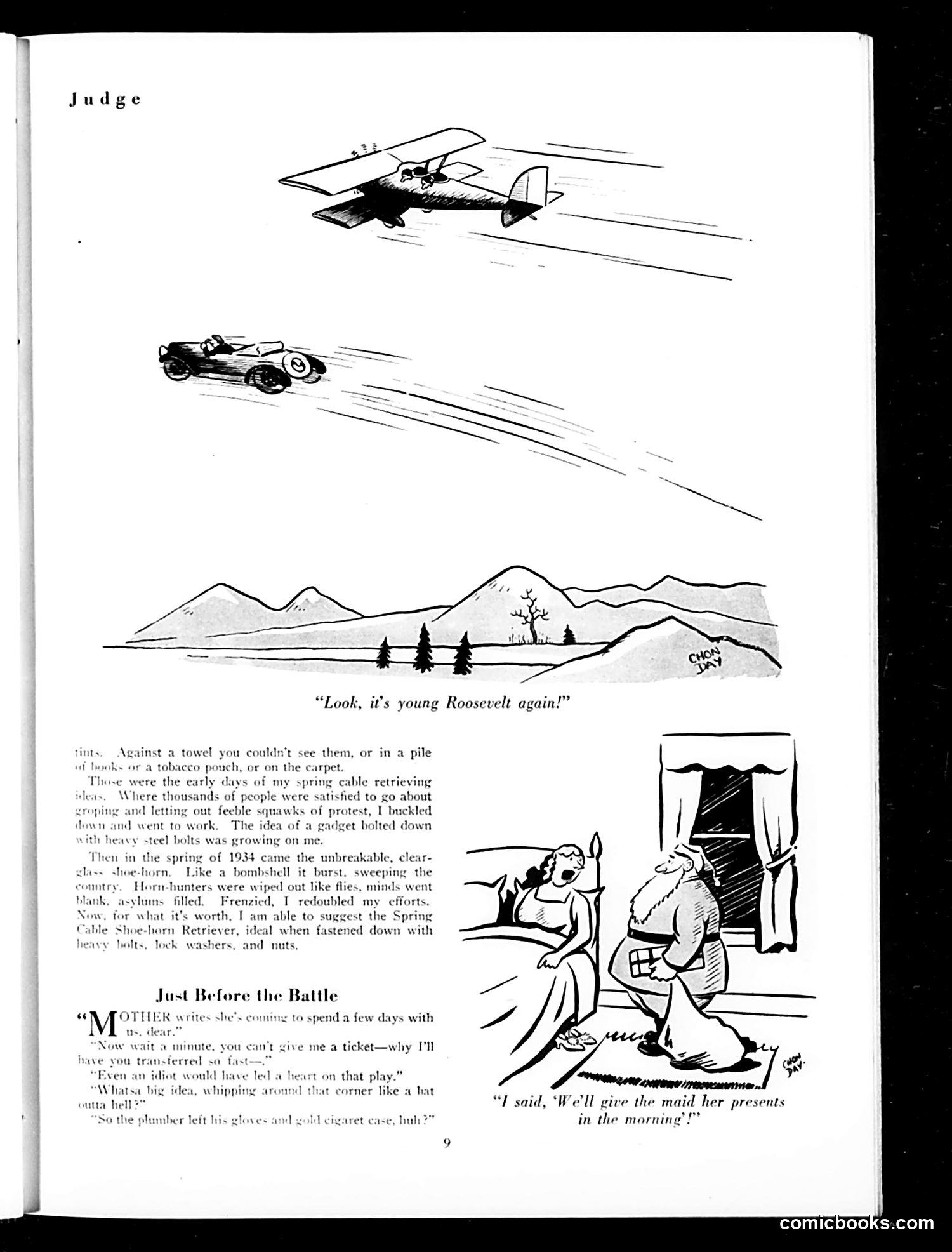
# Analysis of This Judge Magazine Page The top cartoon shows an airplane and racing car with the caption "Look, it's young Roosevelt again!"—a satirical reference to Franklin D. Roosevelt's energetic, action-oriented presidency. The joke compares FDR's aggressive "New Deal" policies to rapid modes of transportation, suggesting he's constantly moving forward with new initiatives. The lower section, titled "Just Before the Battle," is a domestic humor comic about a husband trying to avoid giving his mother-in-law a ticket to a show. When she arrives for a visit, he attempts excuses ("you can't give me a ticket"), leading to a humorous exchange with the punchline about giving "the maid her presents in the morning"—implying he's bribing staff to appease the unwanted guest. The page mixes political commentary (Roosevelt satire) with traditional domestic comedy, typical of Judge's blend of topical and timeless humor.
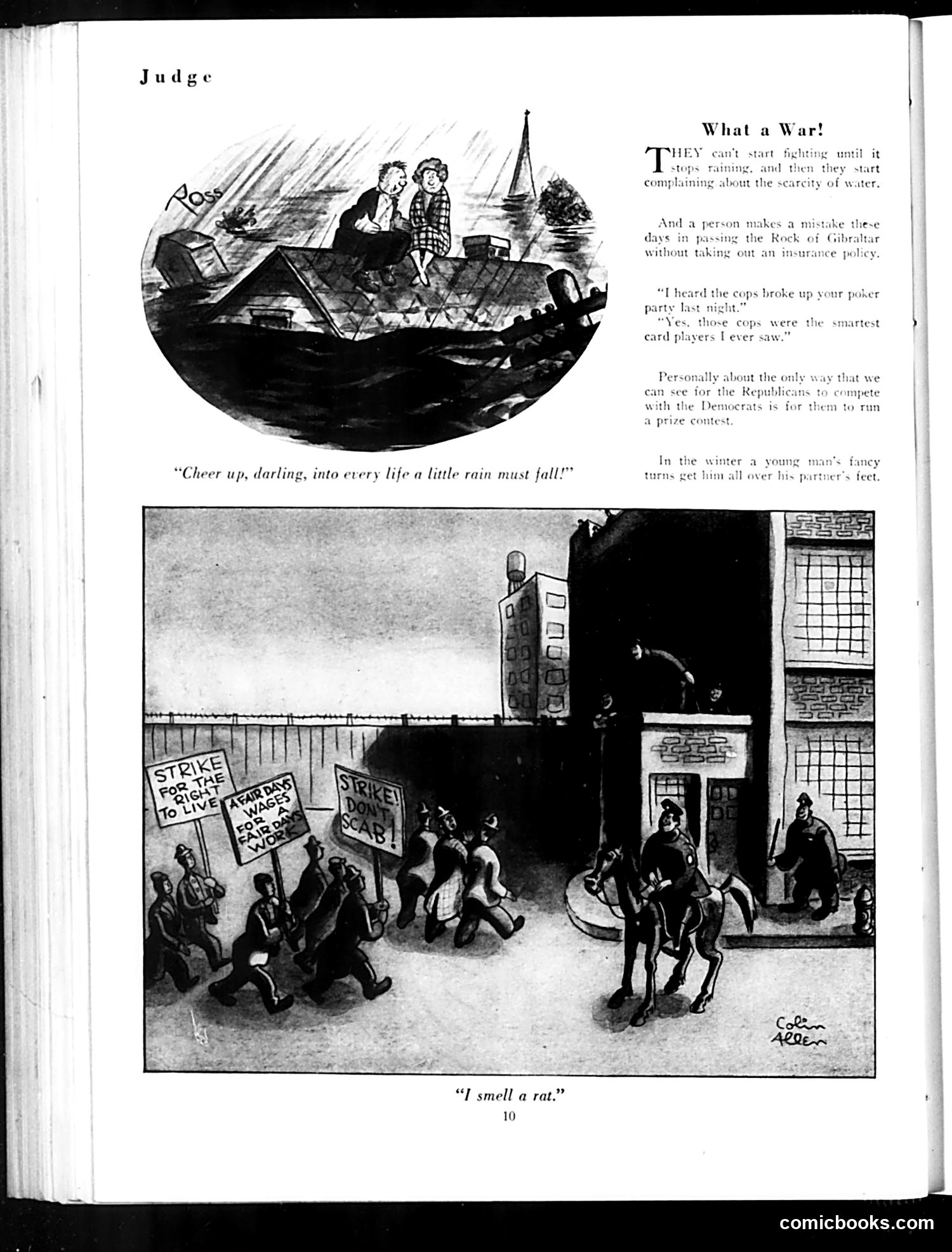
# Analysis This Judge magazine page contains two cartoons satirizing early 20th-century American politics and labor unrest. The top cartoon depicts a couple in a boat during rain, with the caption "Cheer up, darling, into every life a little rain must fall!" — likely commenting on economic hardship or political turbulence of the era. The bottom cartoon shows a labor strike scene with picketers holding signs reading "STRIKE FOR HIGHER WAGES" confronting what appears to be police or authorities at a building. The caption "I smell a rat" suggests suspicion of government collusion or betrayal — possibly implying authorities siding with employers against strikers. The text discusses Republicans and Democrats competing, card-playing cops, and romantic entanglements, using these as metaphors for political deception and social disorder during this period of labor conflict.