A complete issue · 36 pages · 1935
Judge — July 1935
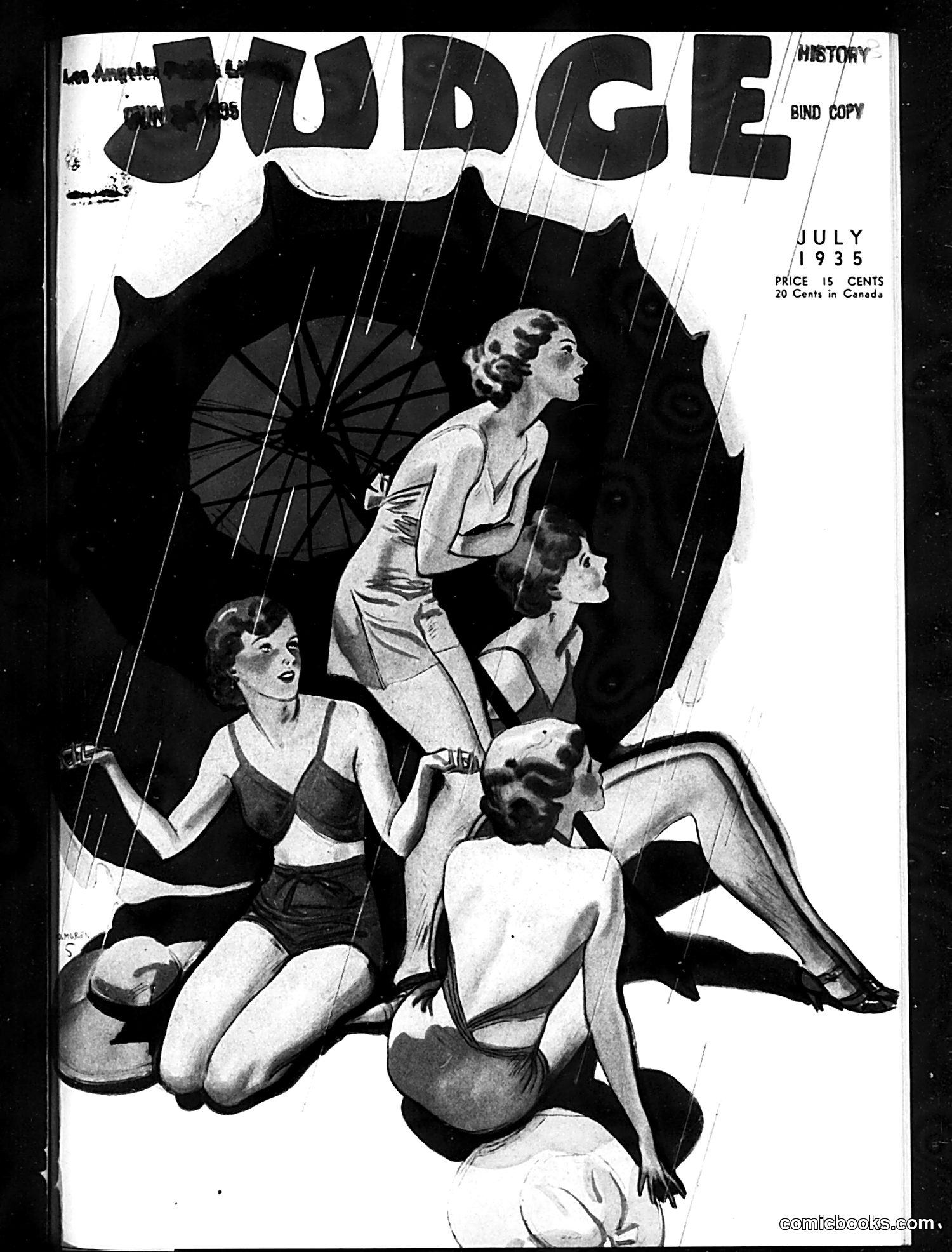
# Judge Magazine Cover, July 1935 This cover depicts four women in swimwear huddled beneath an umbrella during a rainstorm—a straightforward seasonal joke rather than political satire. The "Judge" masthead and "Bind Copy" marking indicate this is a library archive copy. The illustration plays on a common 1930s theme: women seeking shelter together, their swimwear ironically unsuitable for rain. The humor is gentle and domestic rather than satirical—typical of Judge's lighter summer content. The price notation (15 cents, 20 cents in Canada) and July 1935 date place this squarely in the Depression era, when such magazines offered affordable leisure reading. No specific political figures or events appear referenced on this cover.
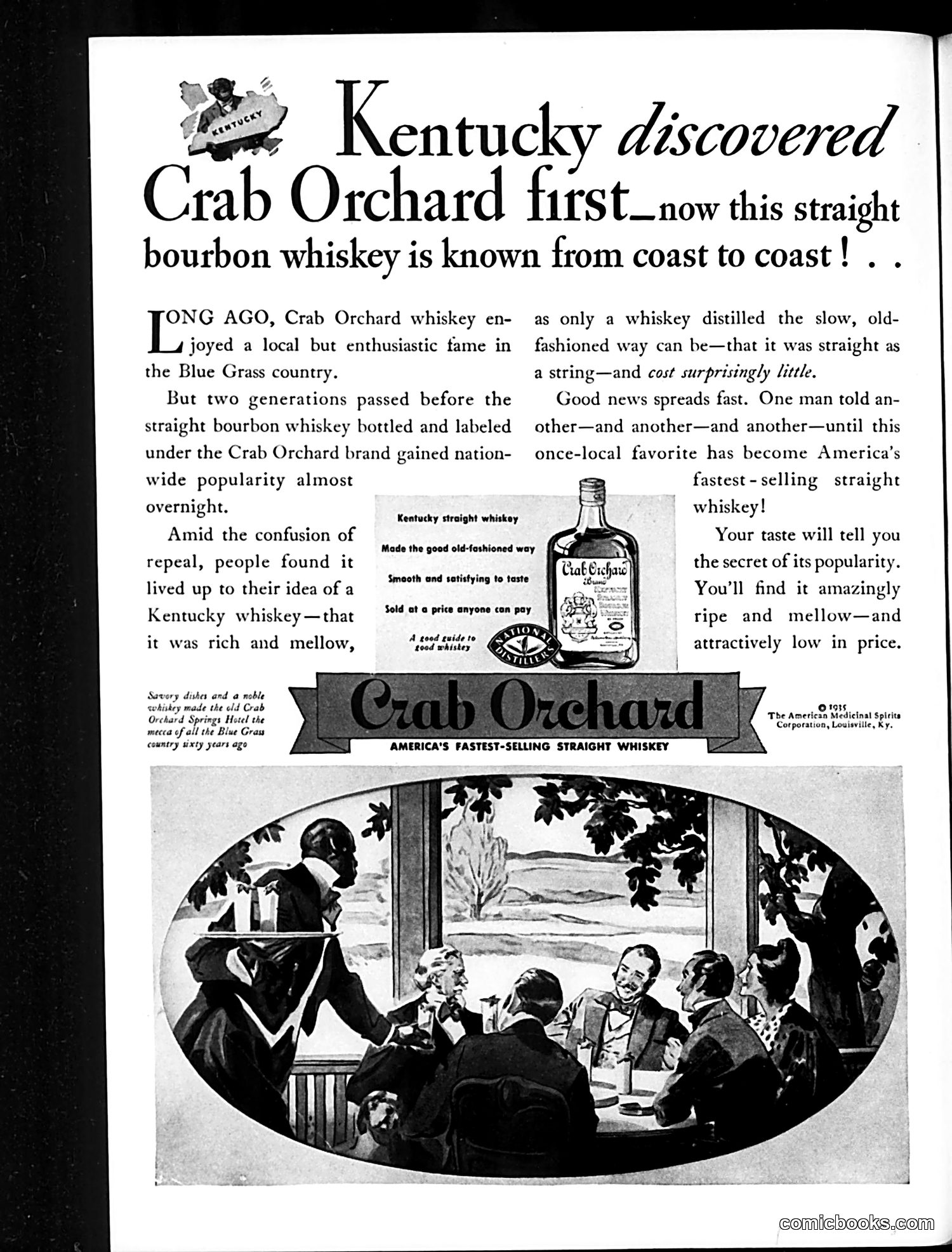
# Crab Orchard Whiskey Advertisement This is a **straightforward product advertisement**, not satire or political commentary. The page promotes Crab Orchard bourbon whiskey, claiming it was "Kentucky discovered" and has become "America's fastest-selling straight whiskey." The ad narrative describes how the whiskey gained local popularity in Kentucky's Blue Grass region, then gradually achieved national distribution. It emphasizes the product's qualities: "rich and mellow," distilled the "old-fashioned way," "straight as a string," and notably affordable. The accompanying illustration shows well-dressed men in what appears to be a social setting, suggesting the whiskey's appeal to respectable society. The overall message is aspirational marketing—positioning Crab Orchard as a quality product accessible to ordinary consumers during a period when bourbon whiskey was regaining commercial viability.
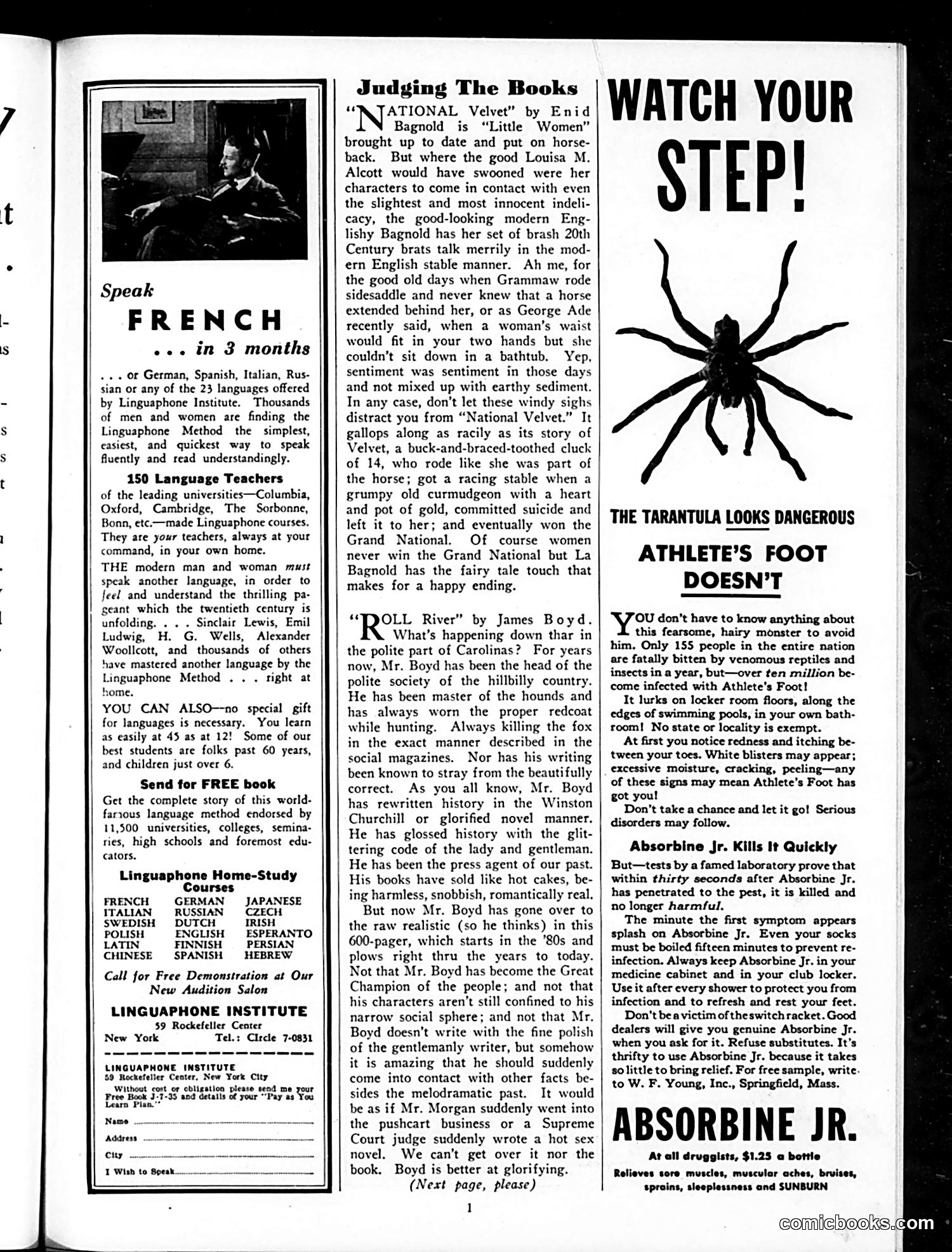
# Analysis of Judge Magazine Page This page is primarily **advertising and book reviews** rather than political satire. The main content includes: 1. **"Speak French in 3 Months"** - A Linguaphone Institute language course advertisement promoting their home-study method, endorsed by universities and prominent figures. 2. **"Judging the Books"** - A literary review column critiquing novels including "National Velvet" by Enid Bagnold and "Roll River" by James Boyd. The reviewer dismisses these works as sentimentally written, preferring Boyd's earlier realistic style. 3. **"Watch Your Step!" and "Athlete's Foot Doesn't"** - Health/medical advertisements warning about tarantulas and promoting Absorbine Jr., a patent medicine claiming to treat athlete's foot. The page contains no discernible political cartoons or social satire—it's a typical magazine layout mixing advertisements with consumer product recommendations.
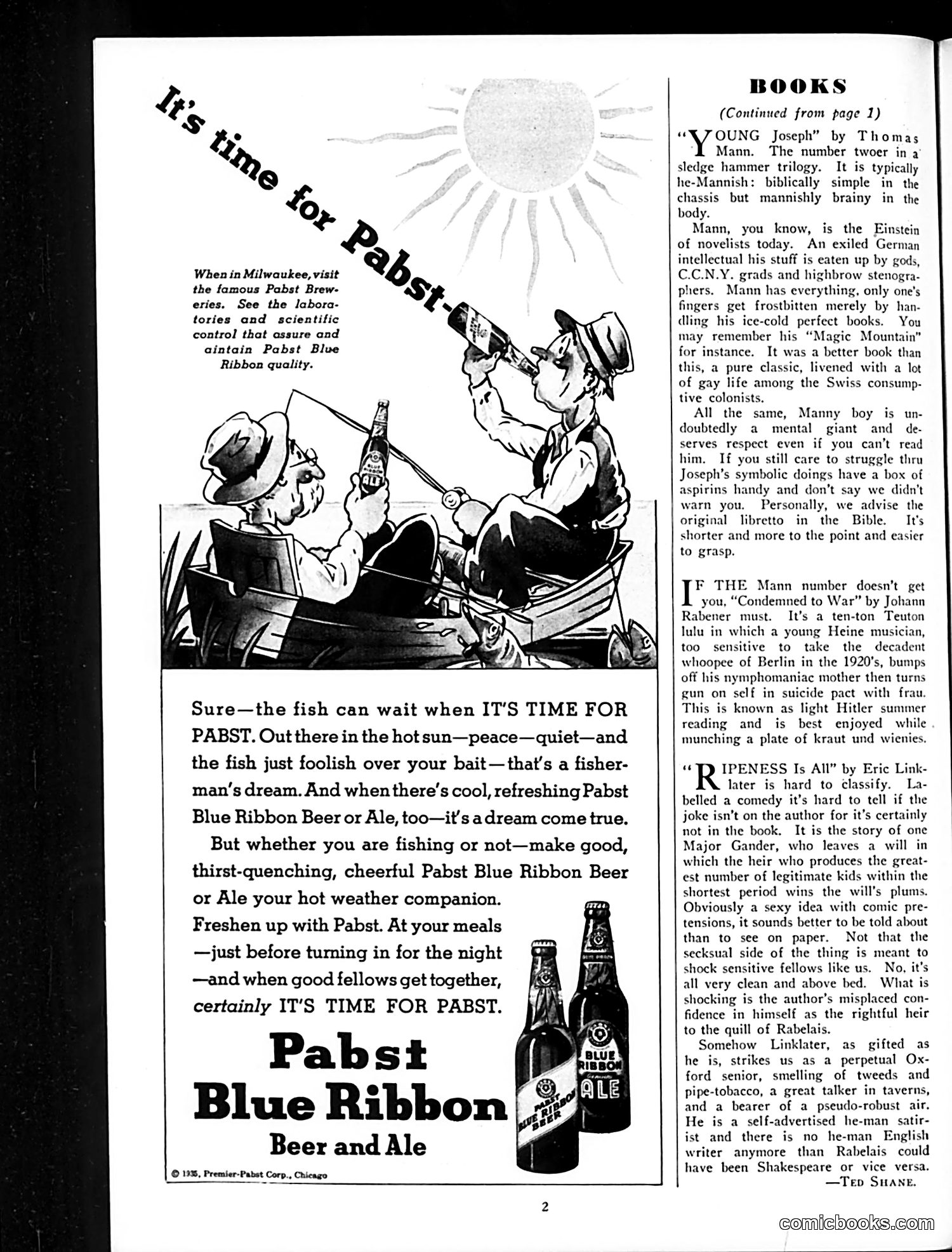
# Page Analysis This page is primarily a **Pabst Blue Ribbon Beer advertisement** rather than political satire. The left side features an illustration of two men fishing, with copy promoting Pabst beer as an ideal companion for outdoor recreation and hot weather. The right side contains **book reviews** by Ted Shane, discussing works including "Young Joseph" by Thomas Mann and "Ripeness Is All" by Eric Linklater. Shane's commentary is witty and gossipy rather than serious literary criticism—he characterizes Mann as a genius but notes his writing can be difficult, and mocks Linklater's novel as a somewhat salacious comedy about inheritance disputes. The page represents Judge magazine's mix of advertising and entertainment content rather than political commentary.
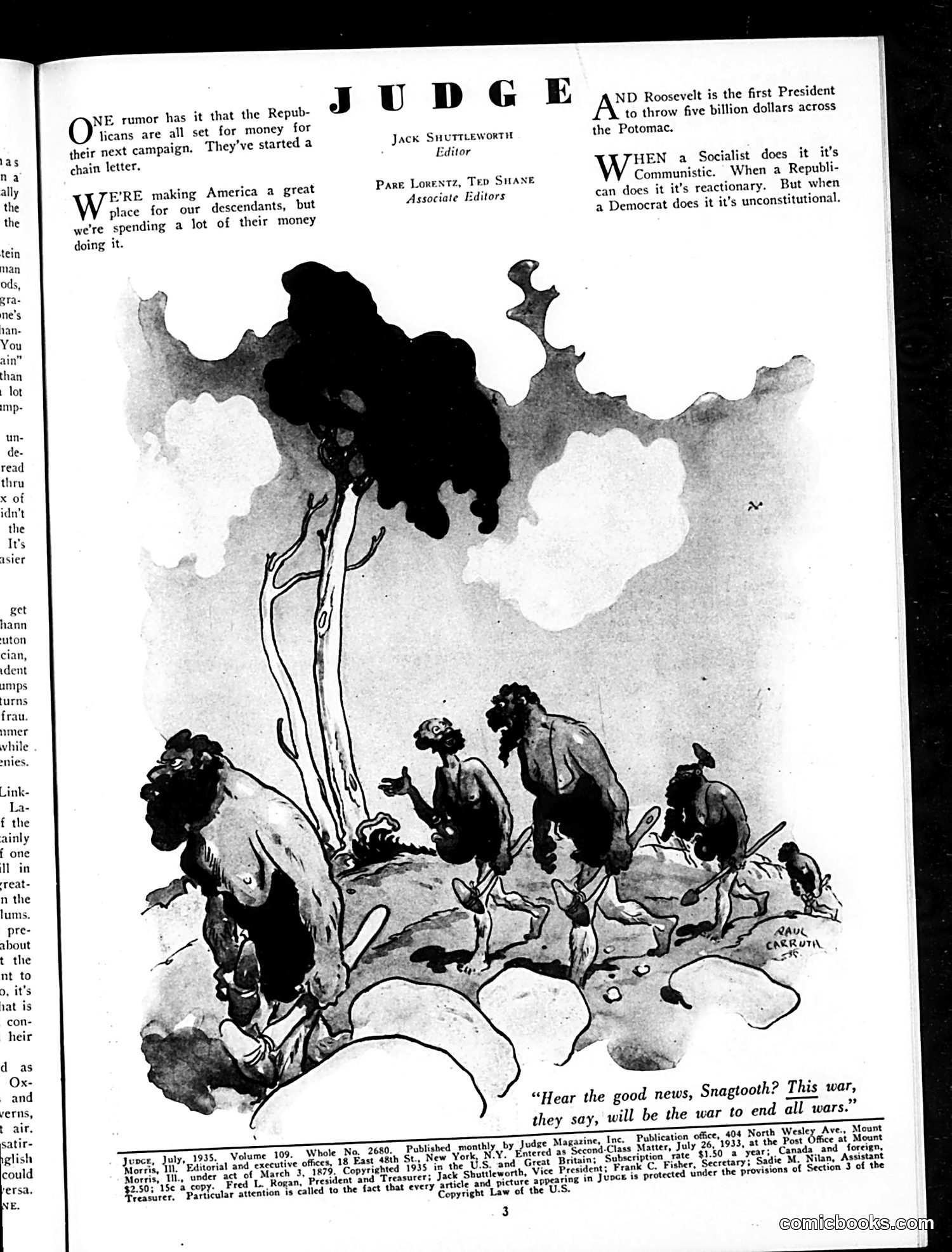
# Explanation for Modern Readers This July 1935 *Judge* magazine page satirizes Republican campaign strategy. The left column's "chain letter" joke mocks Republicans planning their next campaign while supposedly building America for descendants—yet "spending a lot of their money doing it." The main cartoon depicts figures (likely Republican politicians or campaign operatives) gathered around a dead or dying tree labeled "Snagtooth," discussing war. The caption reads: "Hear the good news, Snagtooth? This war, they say, will be the war to end all wars"—a bitter reference to World War I's false promise of being "the war to end all wars." The satire suggests Republicans profit from or exploit war rhetoric while claiming patriotic motives. The barren landscape reinforces the cartoon's pessimistic message about political opportunism.
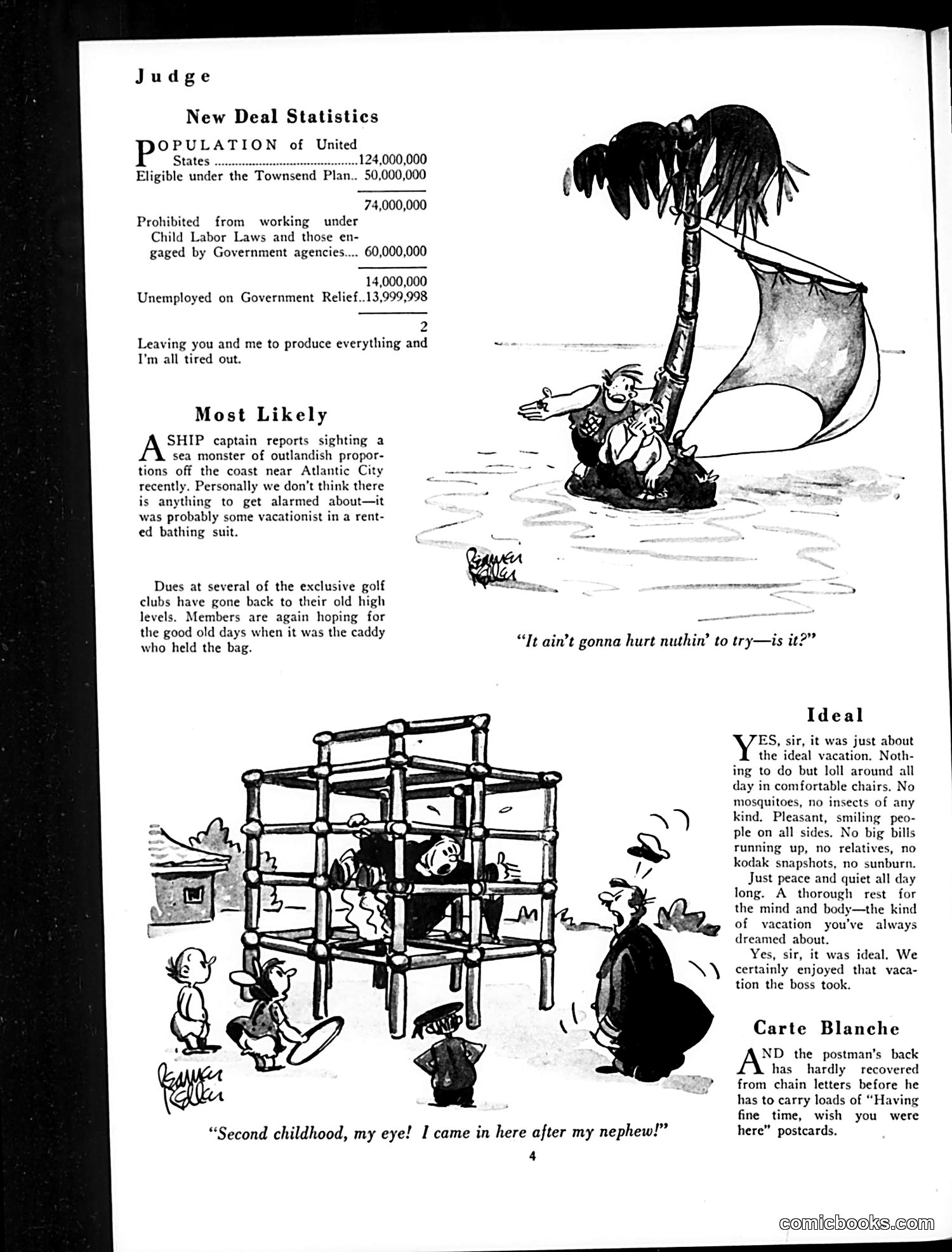
# Analysis of Judge Magazine Page This page satirizes New Deal policies through statistics and cartoons. The top section mocks the Townsend Plan (a 1930s pension proposal) by listing those excluded from benefits, ending with "Leaving you and me to produce everything and I'm all tired out"—criticizing the tax burden on workers. The upper cartoon shows a man under a dead palm tree (symbolizing economic collapse) saying "It ain't gonna hurt nuthin' to try," likely mocking optimistic rhetoric about untested government programs. The lower cartoon depicts a playpen labeled "Second childhood," satirizing New Deal agencies as childlike or regressive. The "Ideal" and "Carte Blanche" sections offer additional satirical commentary on vacation expectations and postcard correspondence, reflecting broader conservative skepticism toward Depression-era government intervention.
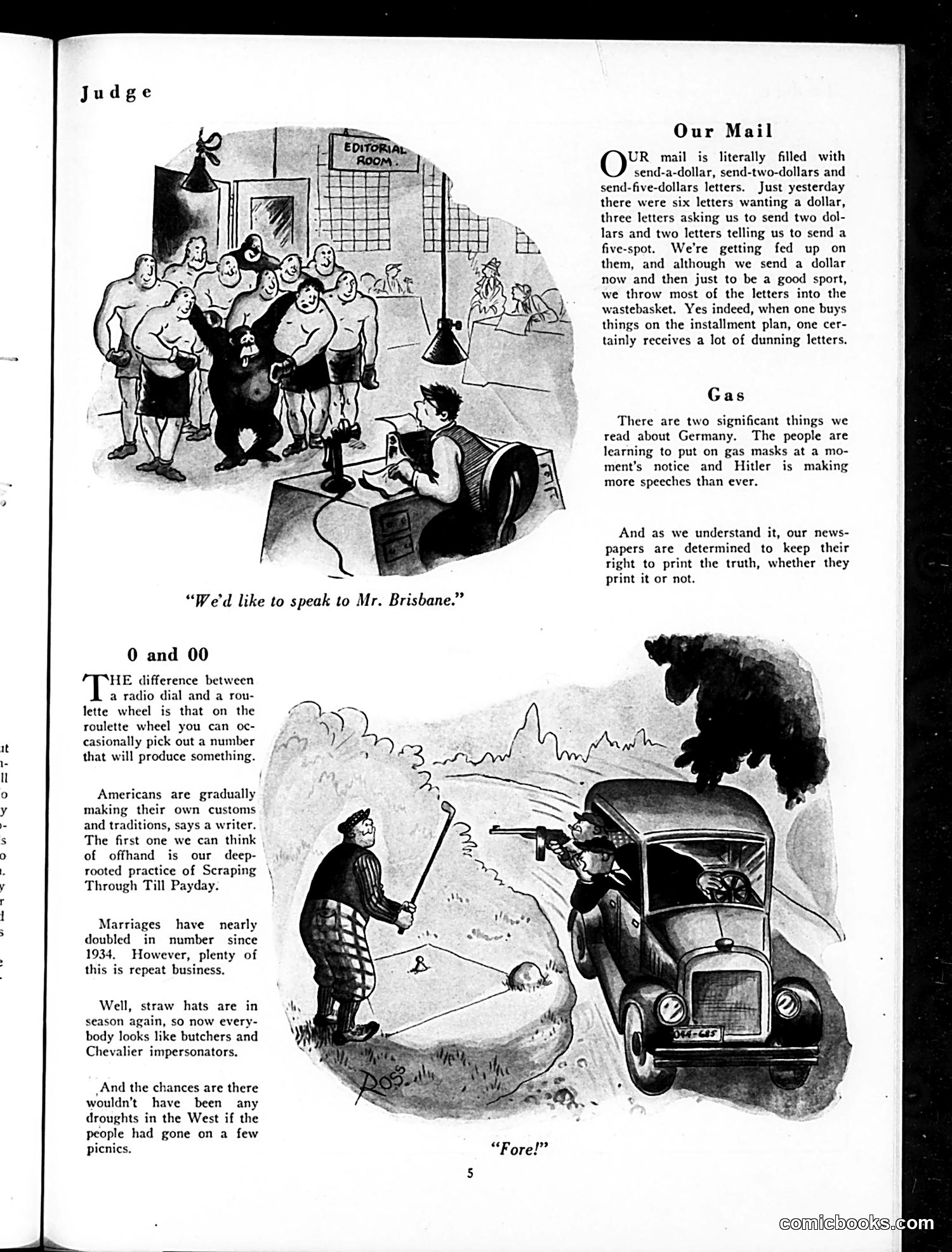
# Analysis of Judge Magazine Page This page contains three separate satirical pieces: 1. **"We'd like to speak to Mr. Brisbane"** – The cartoon shows people crowding an editorial room, apparently wanting to contact a specific editor (likely Arthur Brisbane, a famous newspaper editor of the era). The satire likely comments on public demand for editorial access or influence. 2. **"O and OO"** – A brief piece joking about roulette wheels versus radio dials, then discusses Americans creating new customs like "Scraping Through Till Payday" and mentions increased marriages and straw hats being in season. 3. **"Fore!"** – A cartoon showing a golfer hitting toward a car on a road, with a bear emerging from the vehicle. This appears to satirize the collision of recreational activities (golf) with modern transportation and wildlife encounters. The overall tone is light, observational humor about American life and customs.
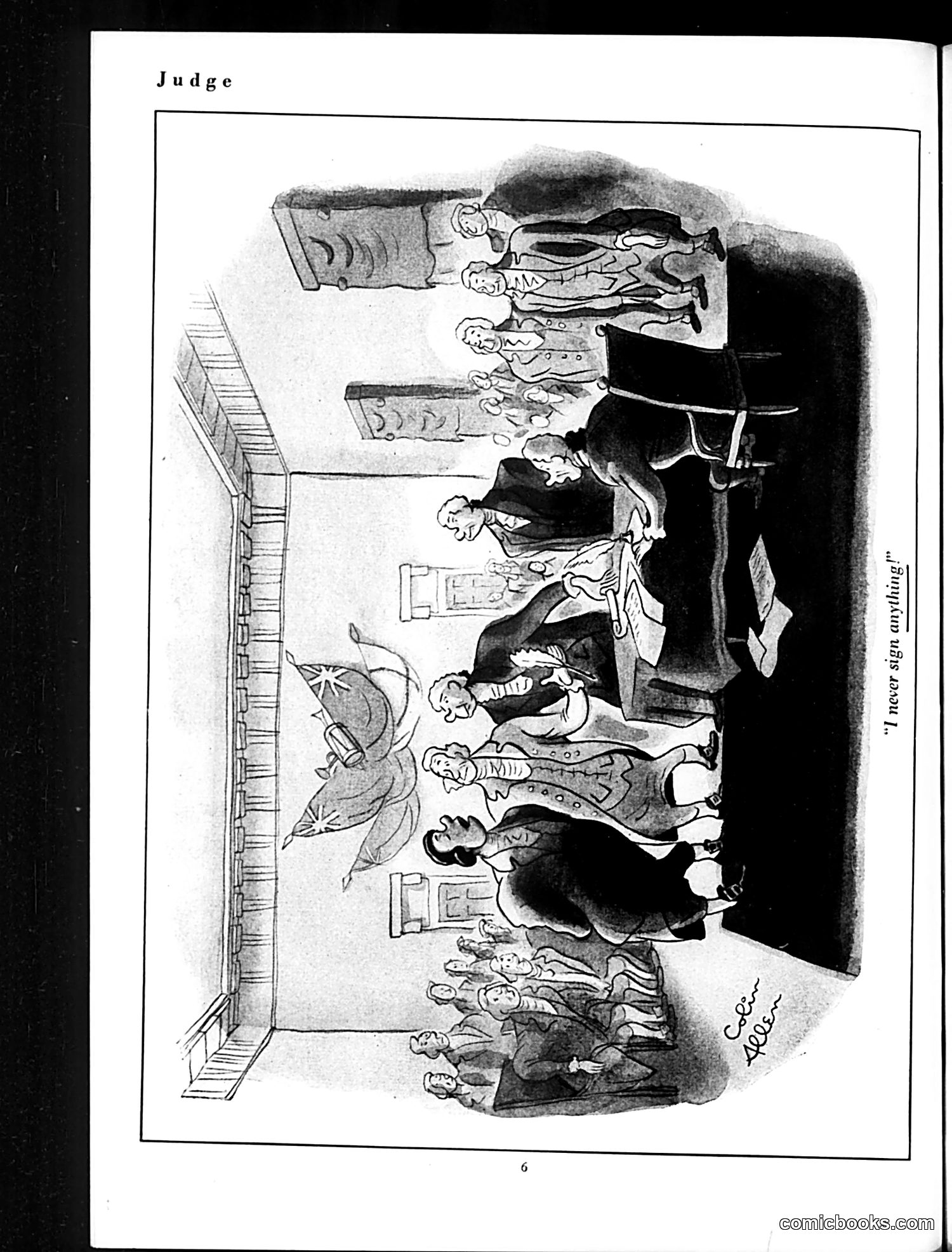
# "Judge" Cartoon Analysis: "I never sign anything" This political cartoon depicts a courtroom scene where a tall figure in a top hat and dark coat stands before a judge's bench, surrounded by numerous smaller figures (likely petitioners or plaintiffs). The caption "'I never sign anything'" suggests the central figure refuses to execute documents or take responsibility for decisions. The cartoon likely satirizes a political or public figure known for avoiding accountability or signing agreements. The crowded courtroom full of people waiting before this obstinate character emphasizes the consequences of such refusal—many are left unserved or waiting for action. Without the publication date visible, the specific target remains unclear, but the satire critiques governmental or institutional negligence through deliberate non-cooperation.
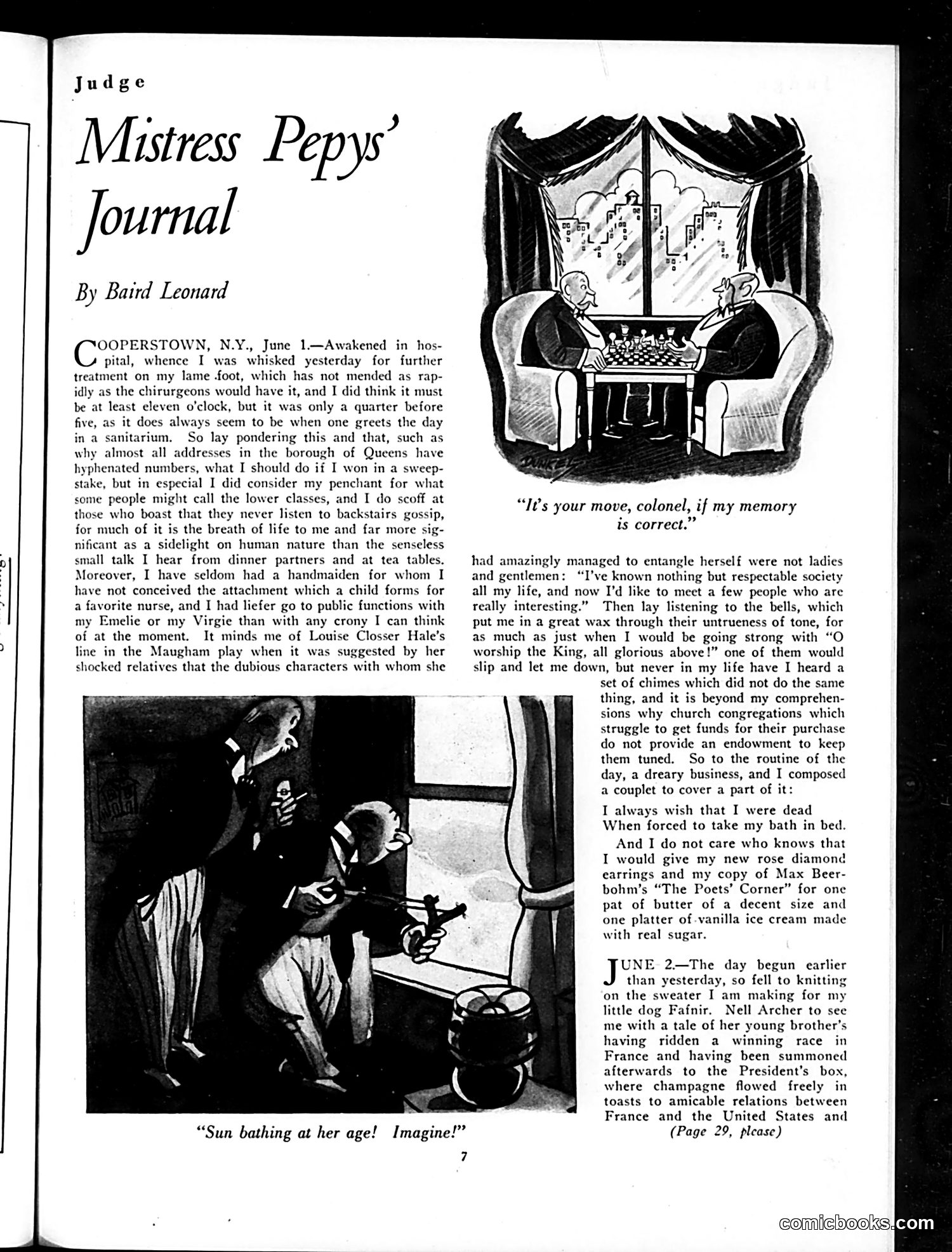
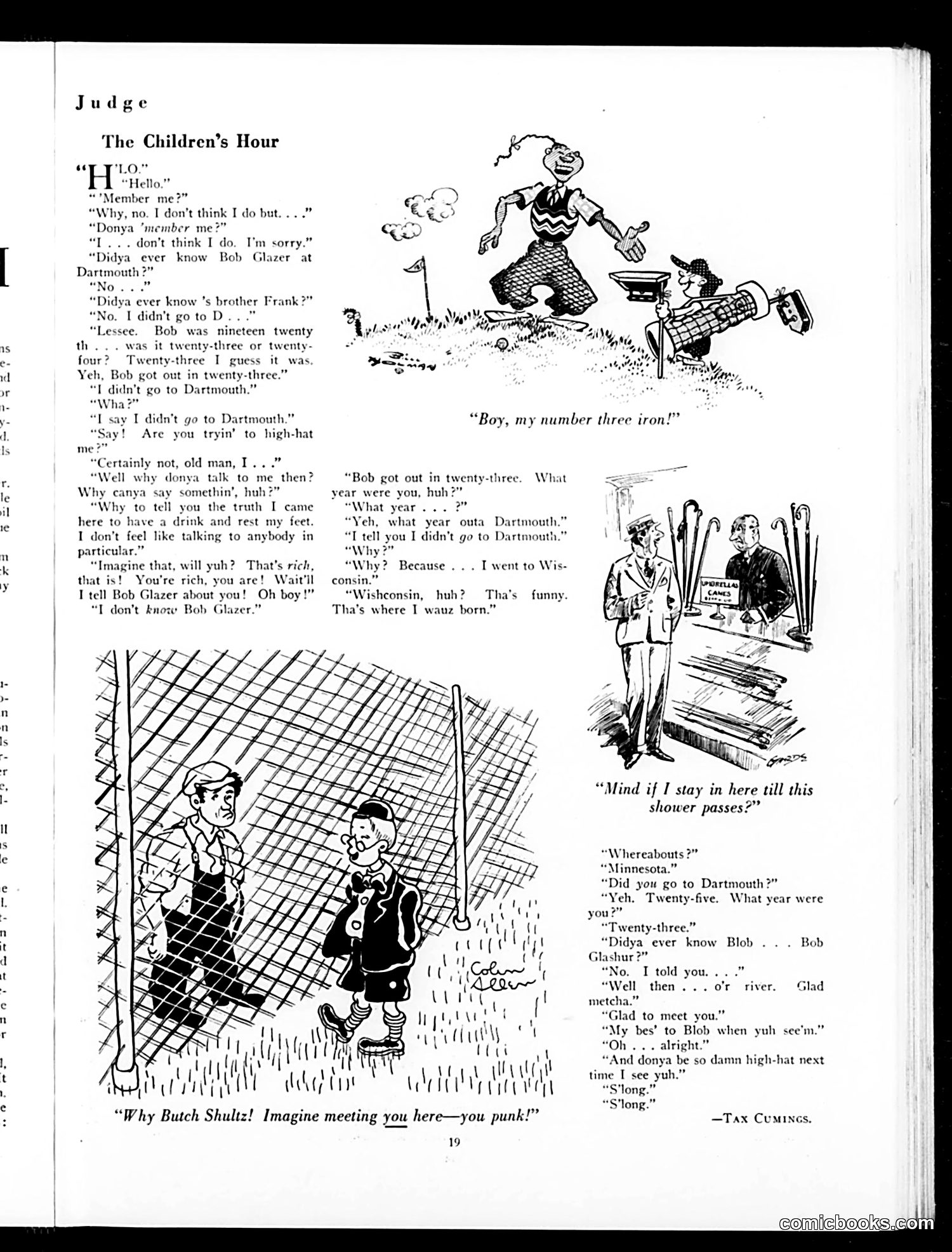
# Analysis of "Mistress Pepys' Journal" Page from Judge Magazine This is a satirical column by Baird Leonard mimicking Samuel Pepys' famous 17th-century diary format, but written from a woman's perspective about contemporary 1920s life. The two illustrations show genteel domestic scenes—one depicting two figures playing chess, another showing a woman in a bathtub (captioned "Sun bathing at her age! Imagine!"). The satire targets upper-class women's leisure activities and social pretensions. The column complains about church bells, gossip, servants, and minor domestic annoyances in elaborate, self-important language. The humor lies in applying Pepys' grandiose historical diary style to trivial modern female concerns—satirizing both the affectation of educated women and their narrow domestic worlds.
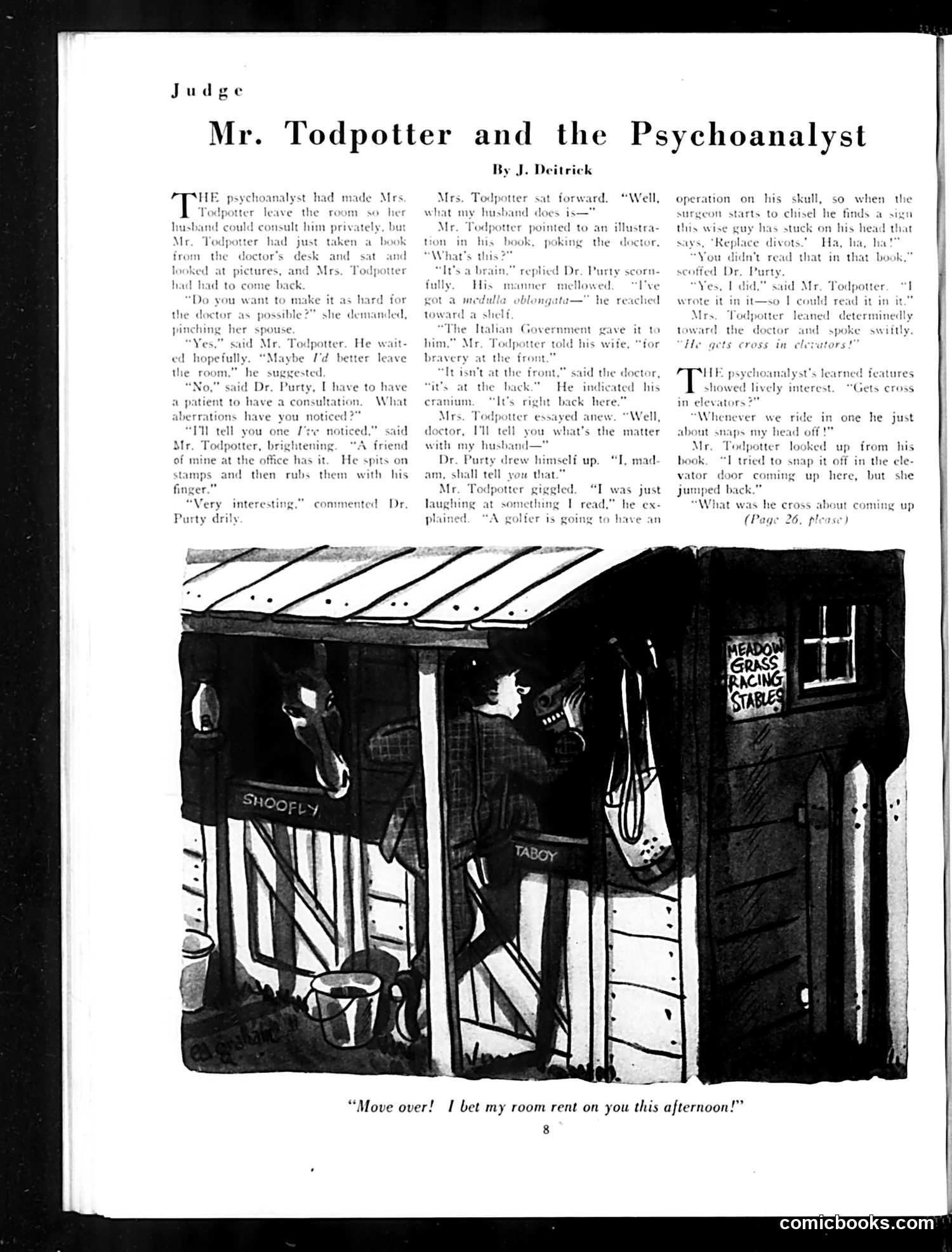
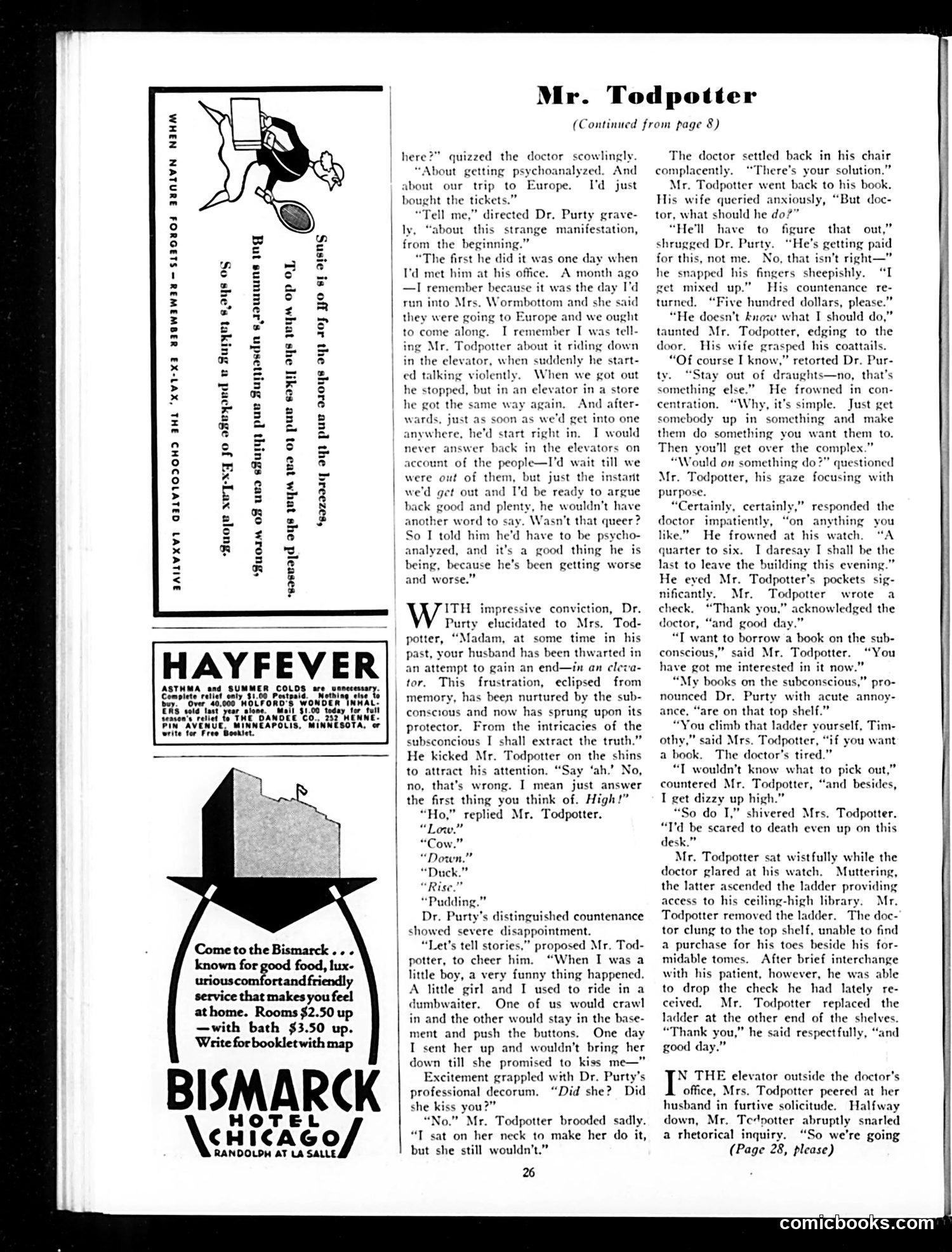
# Mr. Todpotter and the Psychoanalyst This is a humorous short story with accompanying illustration satirizing early psychoanalysis trends. Mr. Todpotter consults Dr. Purty, a psychoanalyst, about his wife's complaints—particularly that he's stubborn and won't listen to her. The joke plays on psychoanalytic pretension: Dr. Purty makes absurd observations (claiming Todpotter has a "golf divot" stuck in his skull) while Todpotter misunderstands or deflates the analysis with literal-minded comments. The illustration shows Todpotter in a stable with horses labeled "Shoofly" and "Taboy," captioned with him threatening to rent out the psychoanalyst's room—suggesting the analysis is worthless and he'd rather make money. The satire mocks both psychoanalysis as a pseudo-scientific fad and Todpotter as an uncooperative, obtuse patient resistant to self-examination.
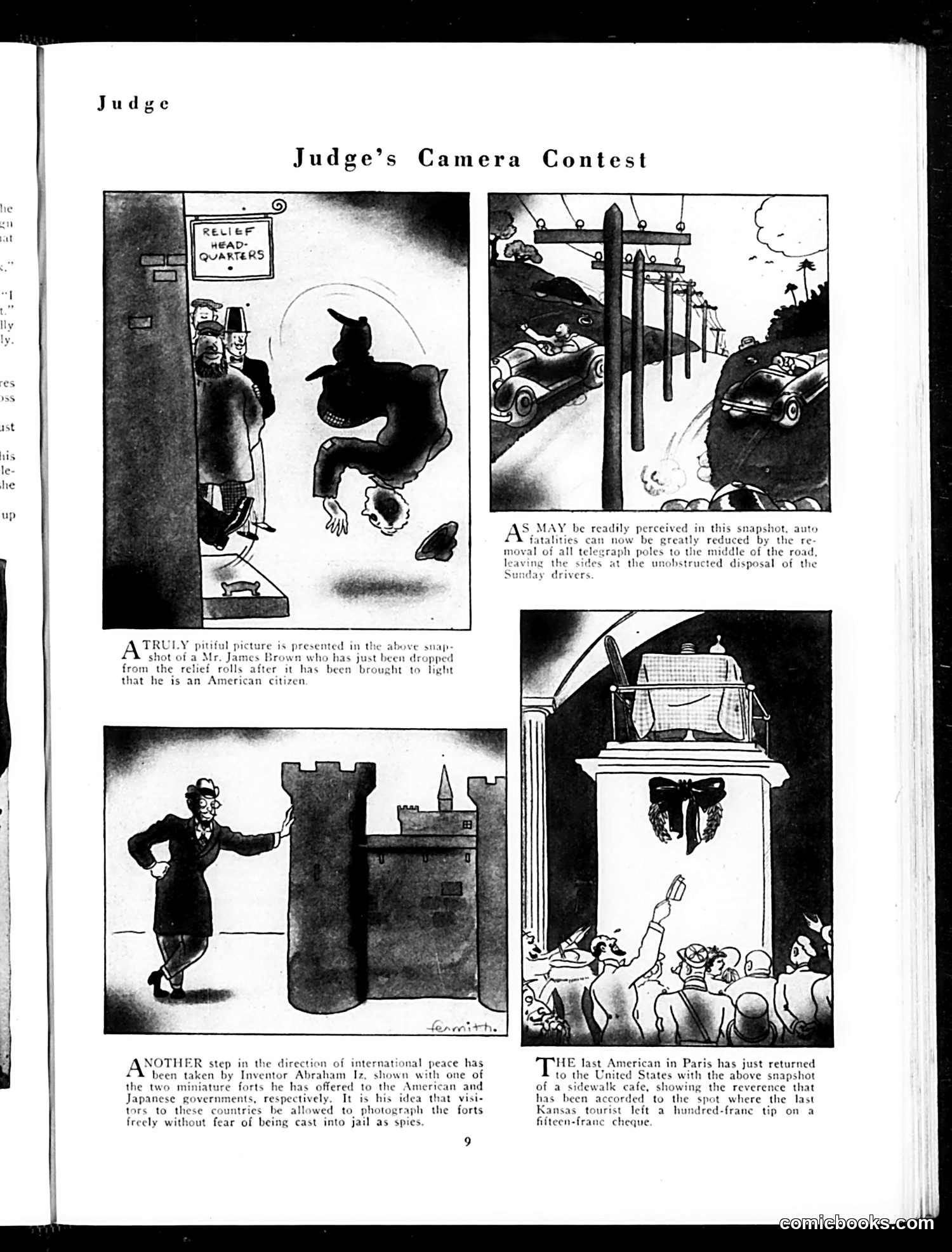
# Judge's Camera Contest This page presents four cartoon submissions satirizing contemporary social and political issues: 1. **Top left**: A man ("Mr. James Brown") is shown being dropped from relief rolls after authorities discovered he's an American citizen—satirizing the irony that relief assistance was sometimes denied to citizens while potentially extended to non-citizens. 2. **Top right**: A cartoon about removing telegraph poles from roadsides to reduce automobile fatalities among "Sunday drivers," suggesting reckless motorists were a growing public hazard. 3. **Bottom left**: "Inventor Abraham Iz" proposes allowing tourists to photograph foreign military fortifications freely—a satirical jab at international paranoia about espionage and the absurdity of treating photographers as potential spies. 4. **Bottom right**: Appears to reference a Kansas tourist's generous tip left at a sidewalk café, possibly mocking American tourists abroad or cultural misunderstandings. These are entries in Judge's photographic/cartoon contest, presenting visual satire on citizenship policy, road safety, international relations, and tourism.
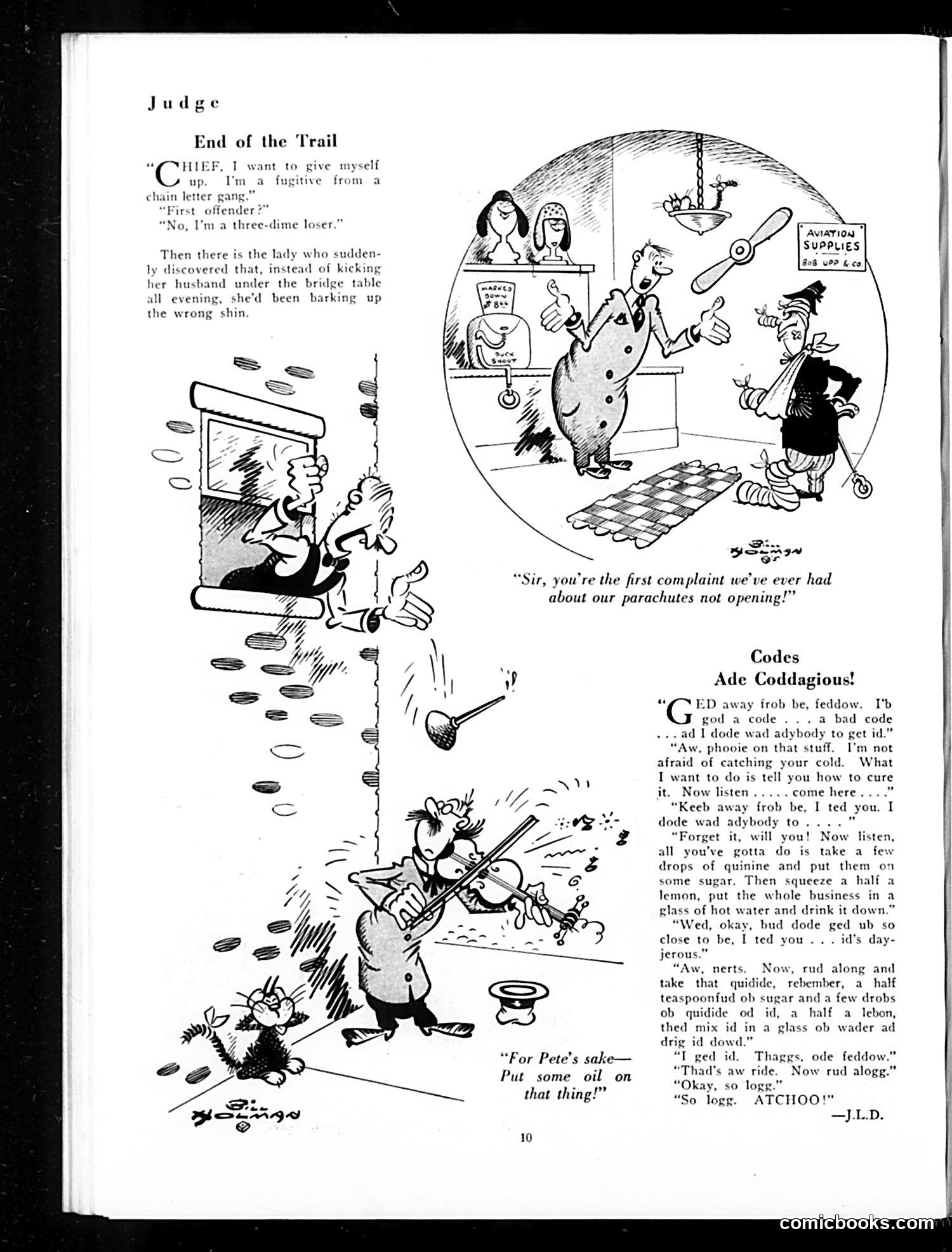
# Explanation for Modern Readers This Judge magazine page contains three separate humor pieces: **"End of the Trail"** (top left): A criminal surrenders to police, claiming to be "a three-dime loser"—a cheap criminal. The joke relies on dated slang about petty crime. **The Bridge Table Joke** (middle left): A woman discovers she's been kicking the wrong person under the table all evening at cards—a domestic humor gag about marital distraction. **"Codes Ade Coddagious!"** (right): Two men with heavy colds communicate through nasal-congested dialect ("frob be" for "from me"). One insists on giving cold remedies while the other desperately wants distance. The humor comes from the exaggerated phonetic spelling representing congested speech, and the irony that unwanted medical advice persists despite contagion concerns. **"Aviation Supplies" cartoon** (top right): A customer complains about defective parachutes—dark humor about early aviation safety failures. The page reflects early 20th-century American humor styles emphasizing wordplay, physical comedy, and domestic situations.