
Judge, 1935-07 · page 19 of 36
Judge — July 1935 — page 19: what you’re looking at
A restored page from Judge, 1935-07. Page through the whole issue in the reader above.
📄 Transcribed text from this page (OCR, searchable)
Machine-transcribed from the original scan — historical spelling and the odd misread are preserved.
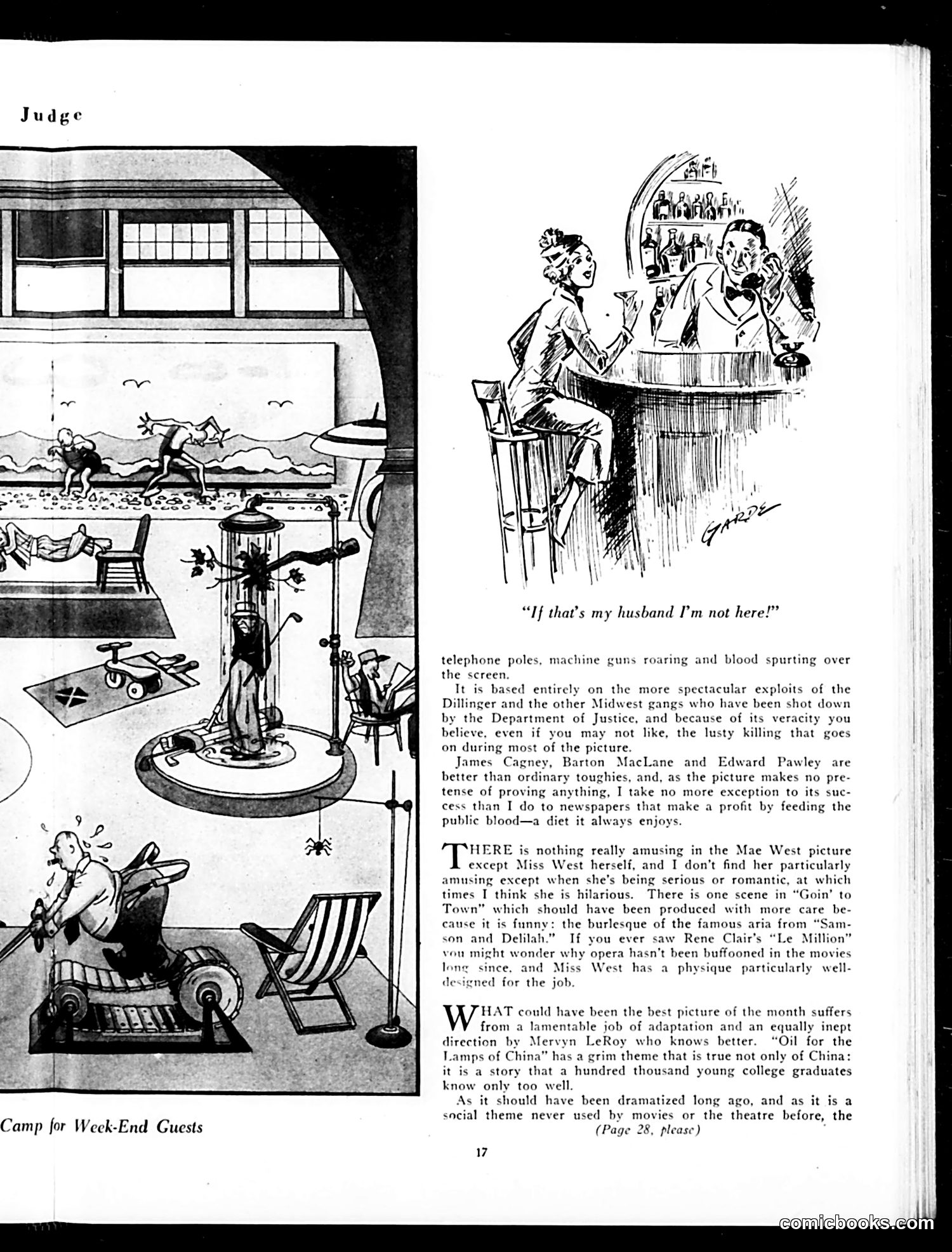
“Tf that’s my husband I’m not here!” telephone poles, machine guns roaring and blood spurting over the screen. It is based entirely on the more spectacular exploits of the Dillinger and the other Midwest gangs who have been shot down by the Department of Justice, and because of its veracity you | believe, even if you may not like, the lusty killing that goes on during most of the picture. James Cagney, Barton MacLane and Edward Pawley are better than ordinary toughies, and, as the picture makes no pre- tense of proving anything, I take no more exception to its suc- cess than I do to newspapers that make a profit by feeding the public blood—a diet it always enjoys. HERE is nothing really amusing in the Mae West picture except Miss West herself, and I don’t find her particularly amusing except when she’s being serious or romantic, at which times I think she is hilarious. There is one scene in “Goin’ to Town” which should have been produced with more care be- cause it is funny: the burlesque of the famous aria from “Sam- son and Delila If you ever saw Rene Clair’s “Le Million” vou might wonder why opera hasn't been buffooned in the movies | since, and Miss West has a physique particularly well- ed for the job. HAT could have been the best picture of the month suffers from a lamentable job of adaptation and an equally inept direction by Mervyn LeRoy who knows better. “Oil for the Lamps of China” has a grim theme that is true not only of China: it is a story that a hundred thousand young college graduates know only too well. As it should have been dramatized long ago, and as it is a social theme never used by movies or the theatre before, the Camp for Week-End Guests (Page 28, please) 17