A complete issue · 36 pages · 1935
Judge — February 1935
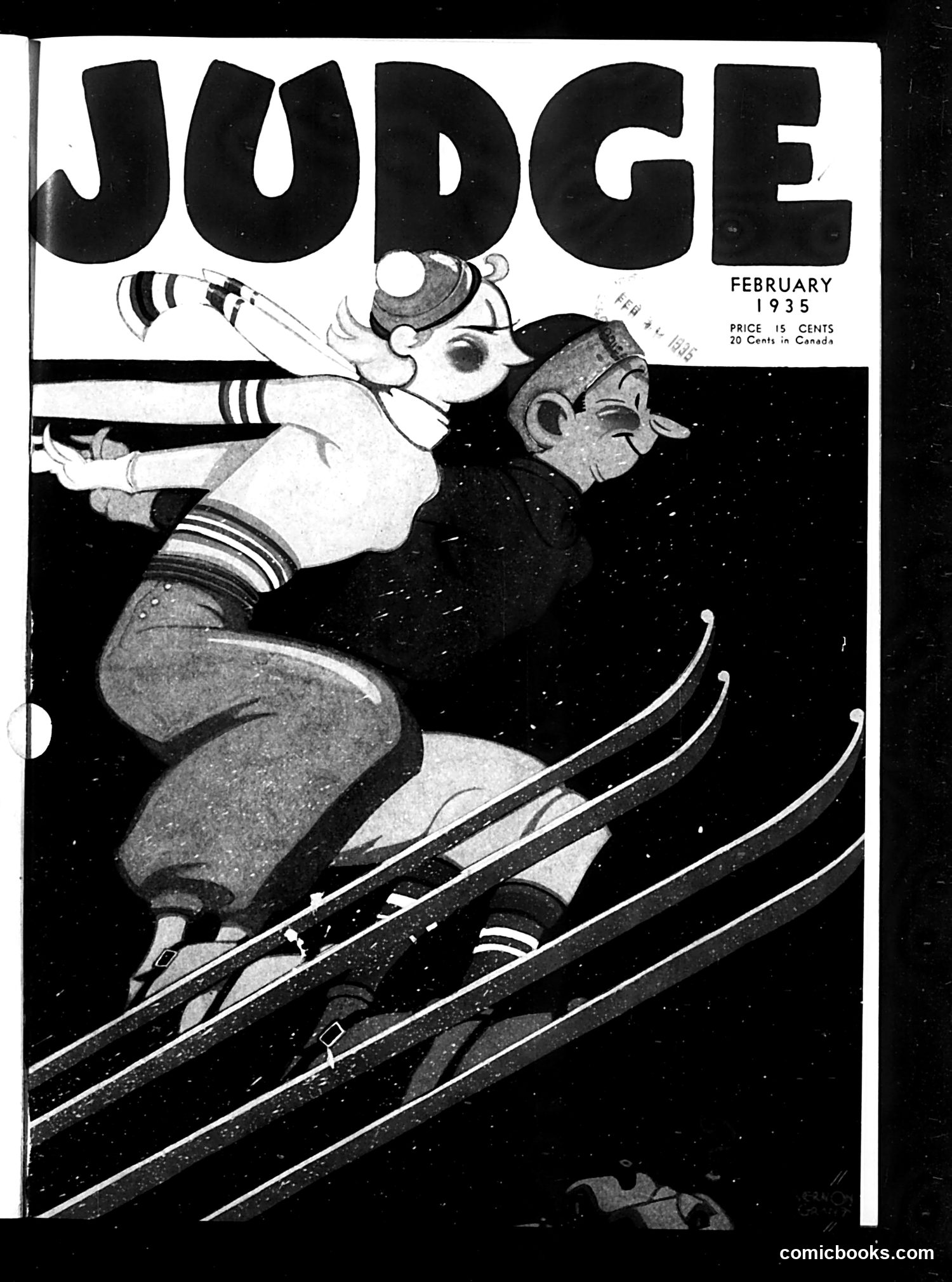
# Analysis This is the **February 1935 cover of Judge magazine**. The illustration depicts a cartoonish couple skiing downhill, with the woman in front (appearing voluptuous and carefree) and a man behind her (rendered with exaggerated facial features). Without additional OCR text from the interior or clearer context, the specific satire is difficult to identify with certainty. However, the cover likely comments on **1930s social attitudes** — possibly mocking contemporary leisure activities, gender relations, or fashion during the Depression era. The woman's stylized appearance and the man's pursuit suggest commentary on courtship, leisure culture, or perhaps economic behavior during this period. The exaggerated caricature style was typical of Judge's satirical approach to American social commentary.
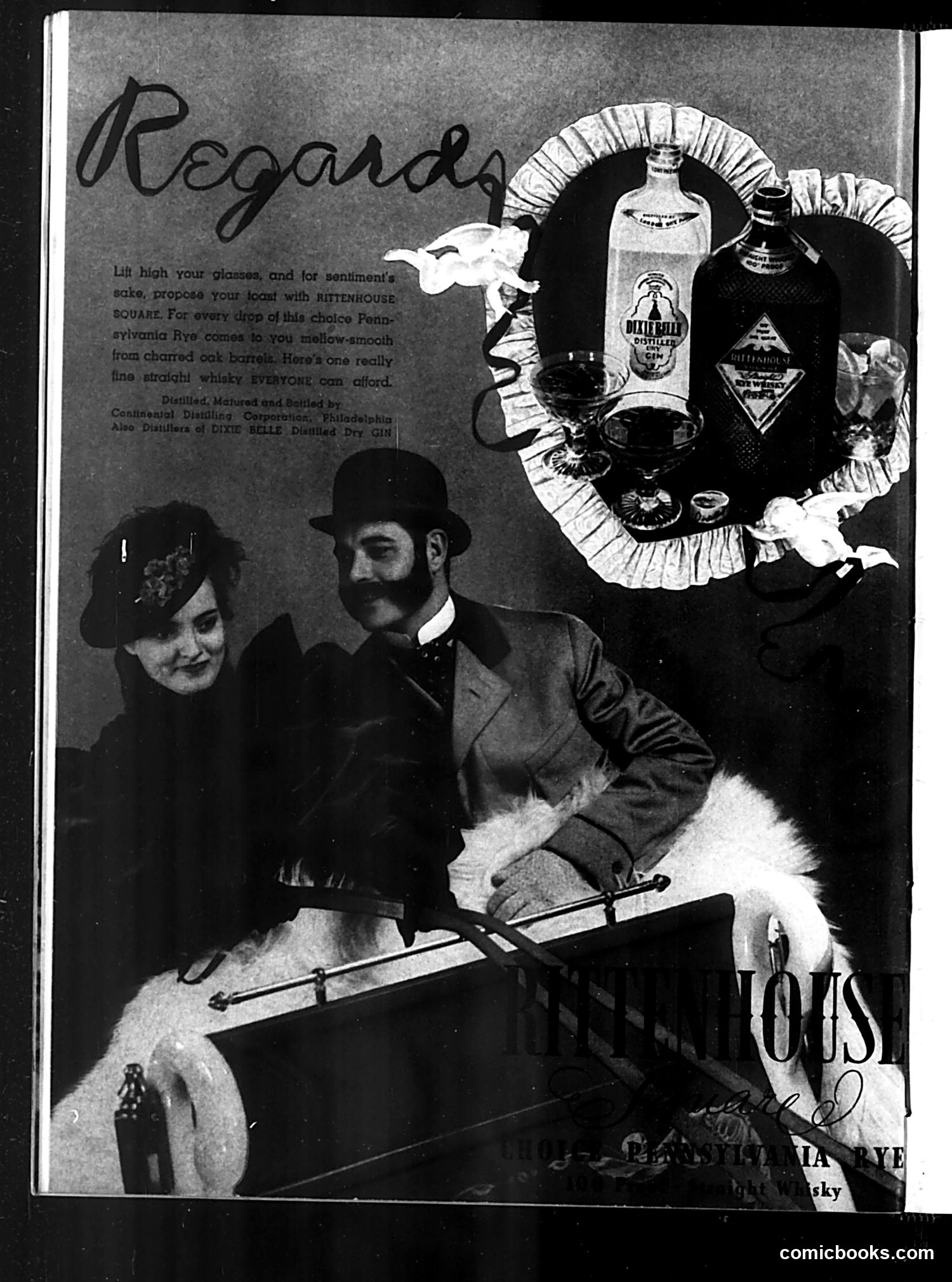
# Regord Advertisement Analysis This appears to be a liquor advertisement for "Regord" Pennsylvania Rye whiskey from Judge magazine. The ad uses humor typical of the Prohibition era (though the specific date is unclear from this image alone). The text invites readers to "lift high your glasses" and "propose your local with Rittenhouse Square"—likely referencing a Philadelphia location. It emphasizes the whiskey's smooth quality and that "EVERY one can afford" it. The image shows three elegantly dressed figures in formal attire examining bottles displayed in an ornate presentation. The satire appears to target the contradiction between Prohibition laws and continued alcohol consumption among the wealthy—presenting premium whiskey as an aspirational product despite legal restrictions.
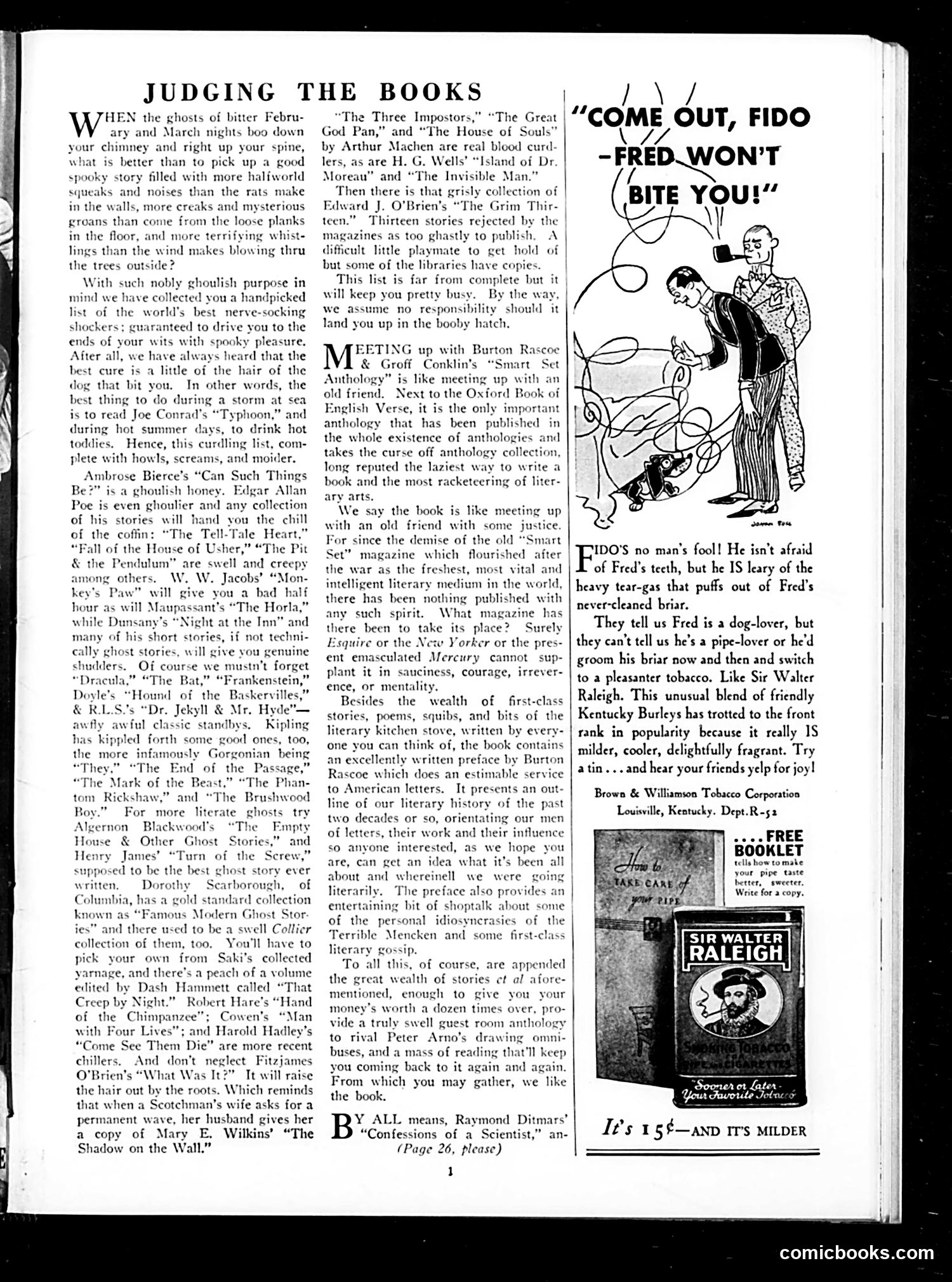
# "Come Out, Fido—Fred Won't Bite You!" This cartoon satirizes **Fred**, likely a public figure of the era, as someone so untrustworthy or menacing that even a dog fears him. The joke plays on social anxiety: the man must coax his own dog outdoors by reassuring it that "Fred" won't harm it, suggesting Fred has such a notorious reputation for aggression, deception, or untrustworthiness that he's become proverbial shorthand for danger. The accompanying text promotes **Sir Walter Raleigh tobacco**, emphasizing its reliability and popularity as a counterpoint—a product readers *can* trust, unlike the mysterious "Fred." Without additional context about who Fred specifically was in 1920s public discourse, the exact reference remains unclear, but the satire clearly mocks someone whose reputation was so poor it became a cultural byword for danger.
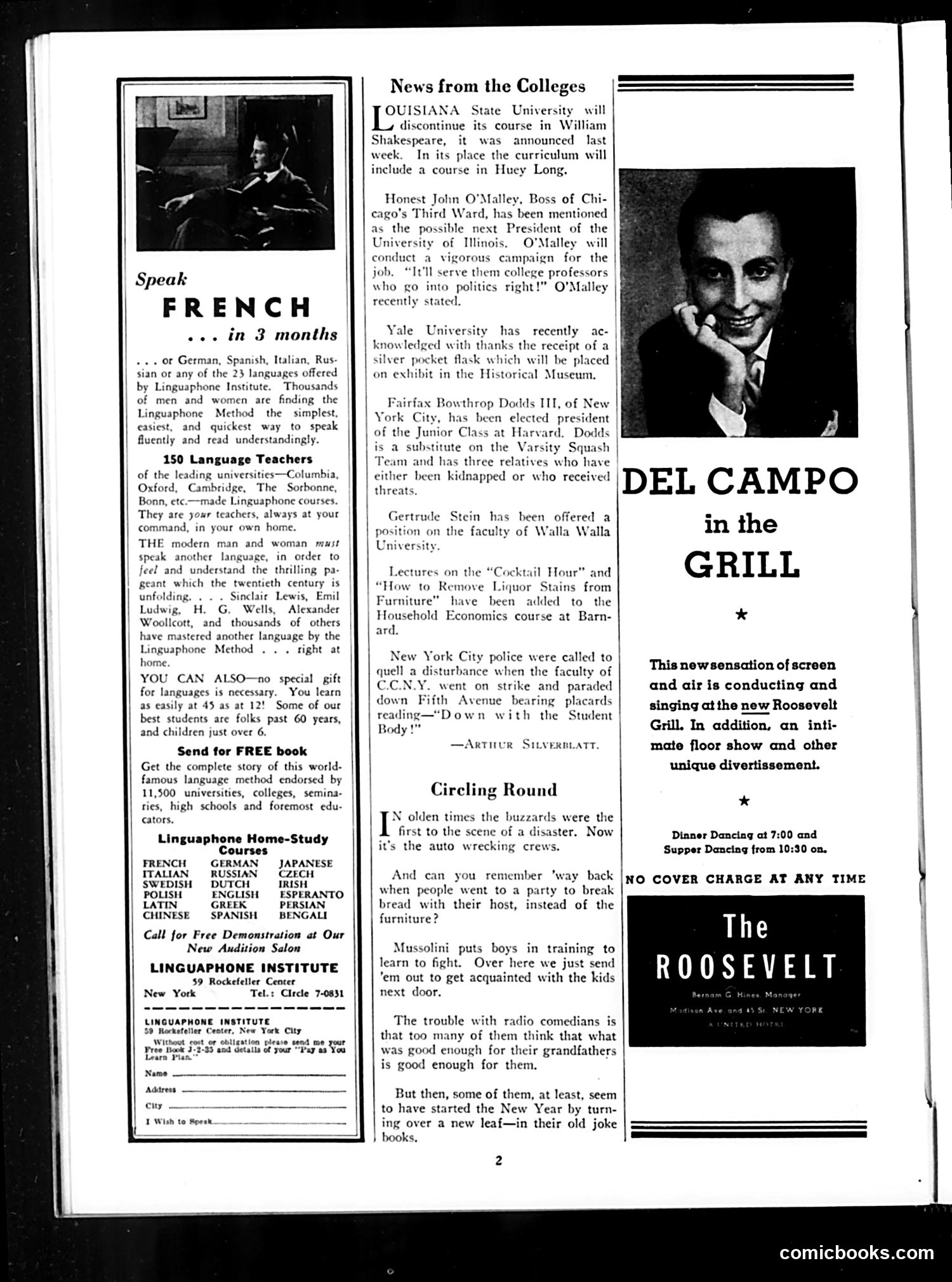
# Analysis of Judge Magazine Page 2 This page is primarily **advertising and college news** rather than political satire. The left side features a Linguaphone Institute advertisement promising to teach French "in 3 months" through their language method, with a photograph of an instructor. The ad emphasizes accessibility for home study. The right side contains "News from the Colleges" reporting campus developments: Louisiana State discontinuing Shakespeare courses, John O'Malley's potential presidency at University of Illinois, and Yale receiving a silver flask donation. Below is "Circling Round," a humor column with gentle jokes about auto wrecking crews, radio comedians, and New Year's resolutions—mild social commentary rather than sharp political satire. The Roosevelt Grill advertisement occupies the bottom right, promoting dining and dancing with no cover charge.
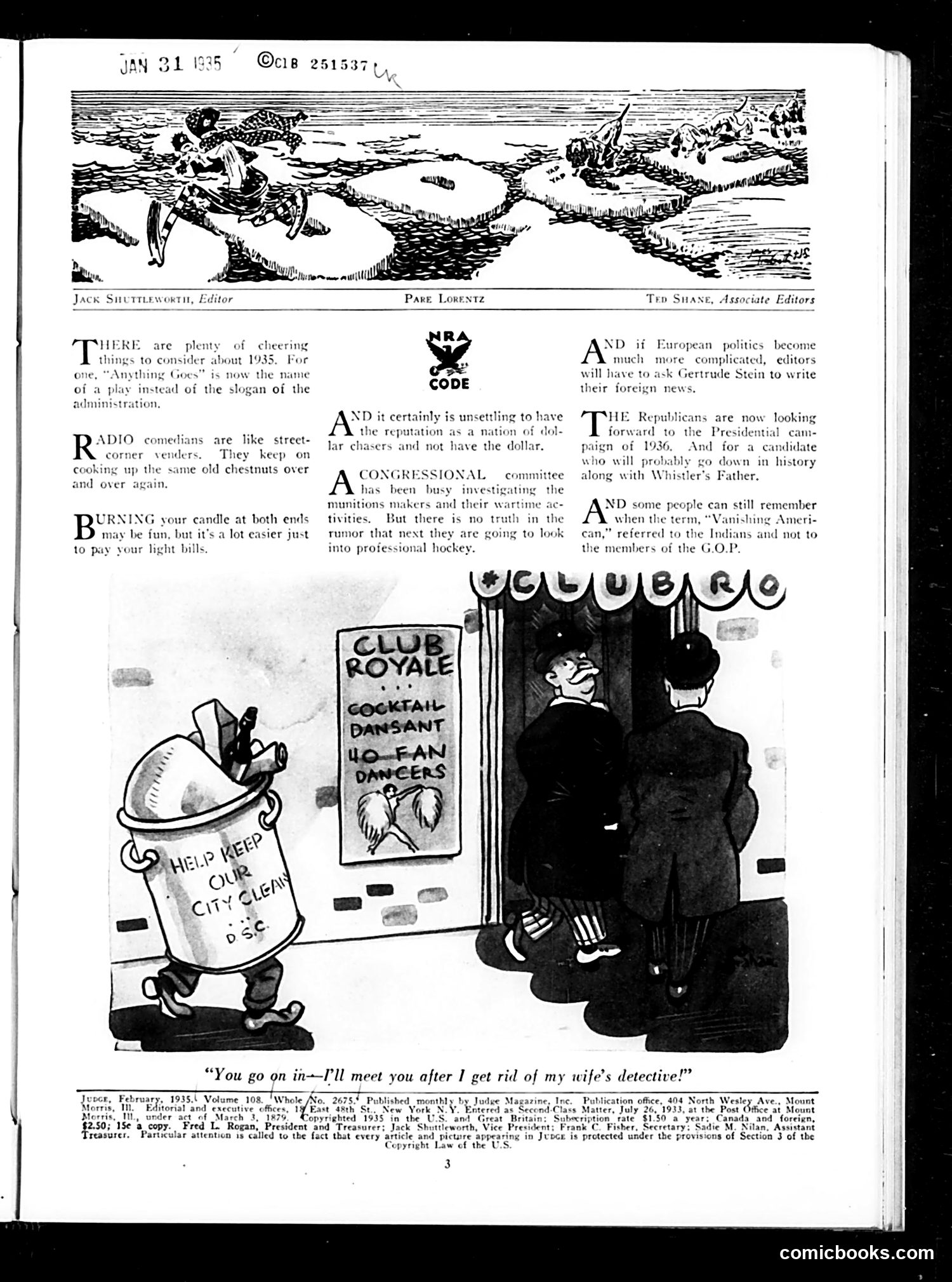
# Analysis of Judge Magazine Page (January 31, 1935) The main cartoon depicts a man at a nightclub entrance (Club Royale) telling his companion: "You go in—I'll meet you after I get rid of my wife's detective!" This satirizes 1930s marital infidelity anxieties, where wealthy men frequented speakeasies and nightclubs despite Prohibition. The "wife's detective" references the common practice of hiring private investigators to catch unfaithful spouses—a significant issue during Depression-era social upheaval. The accompanying editorial snippets reference 1935 politics: NRA (National Recovery Administration) debates, European political instability, and the upcoming 1936 Presidential campaign. The trash can labeled "Help Keep Our City Clean, D.S.C." appears to mock municipal or political corruption, a recurring Judge theme.
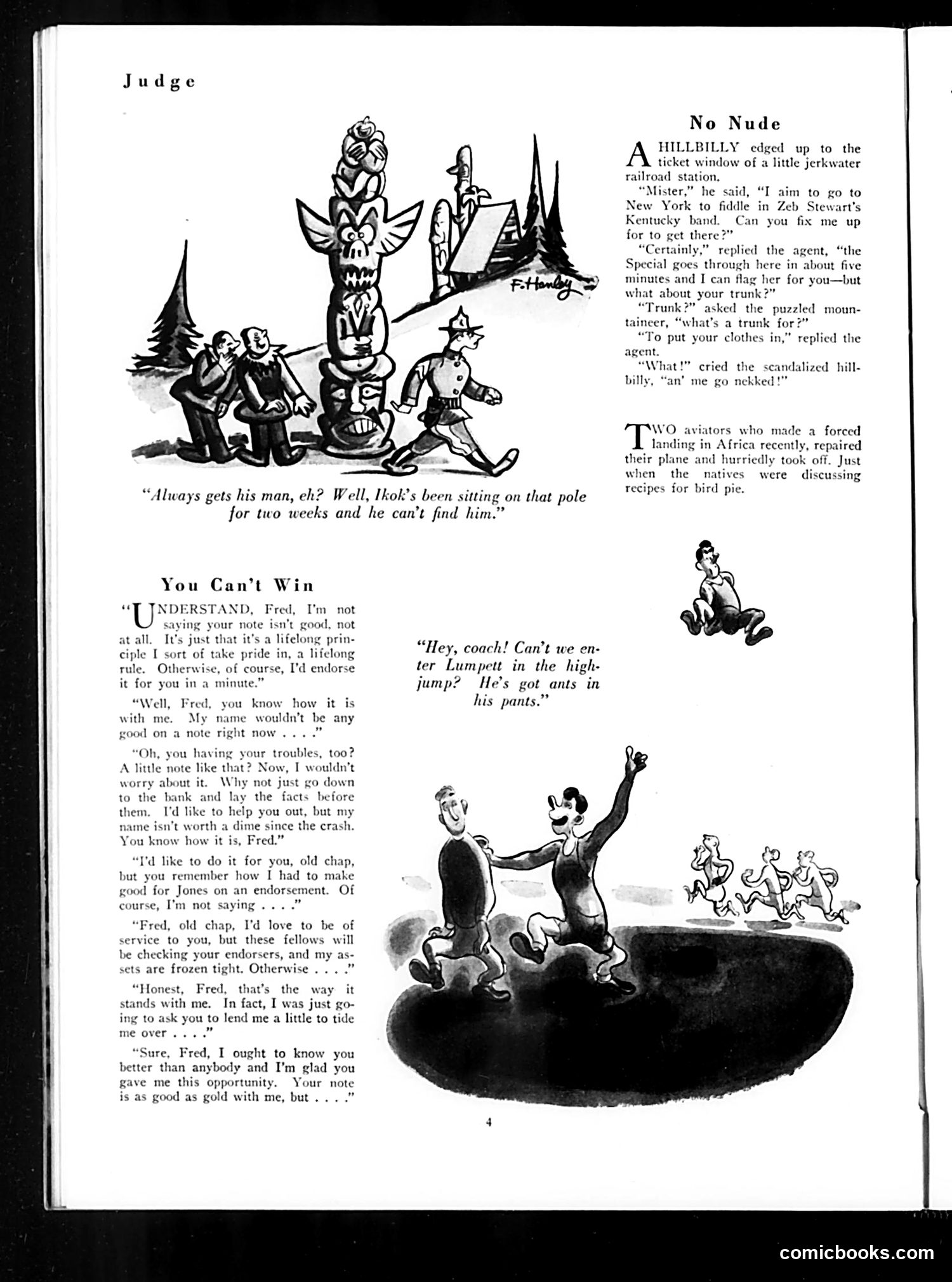
# Analysis of Judge Magazine Page This page contains three separate humorous pieces: 1. **"Always gets his man"** (top): A totem pole of stacked figures illustrates the caption about someone sitting on a pole for two weeks. The joke appears to reference a classic detective or authority figure unable to locate someone despite their reputation for success. 2. **"No Nude"** (right): A hillbilly character negotiates train travel, asking about a "trunk." The agent's misunderstanding of rural dialect for comic effect was a common stereotype humor trope of this era. 3. **"You Can't Win"** (left): Two men discuss a financial note and endorsement. The satire concerns financial obligations and reputation—suggesting one's name carries no value in securing loans during economic hardship. All three pieces use wordplay and character misunderstandings typical of early 20th-century American comic magazines.
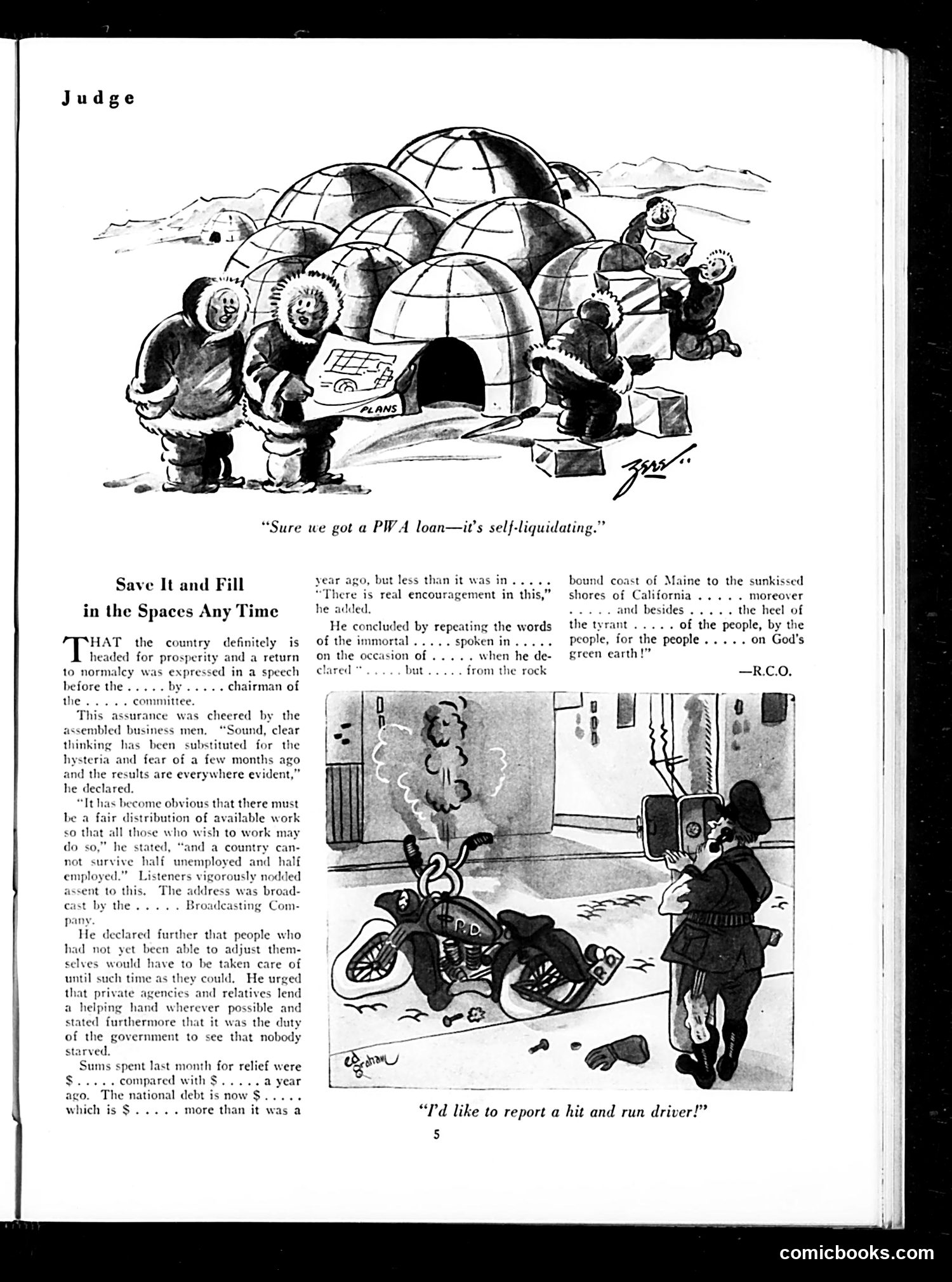
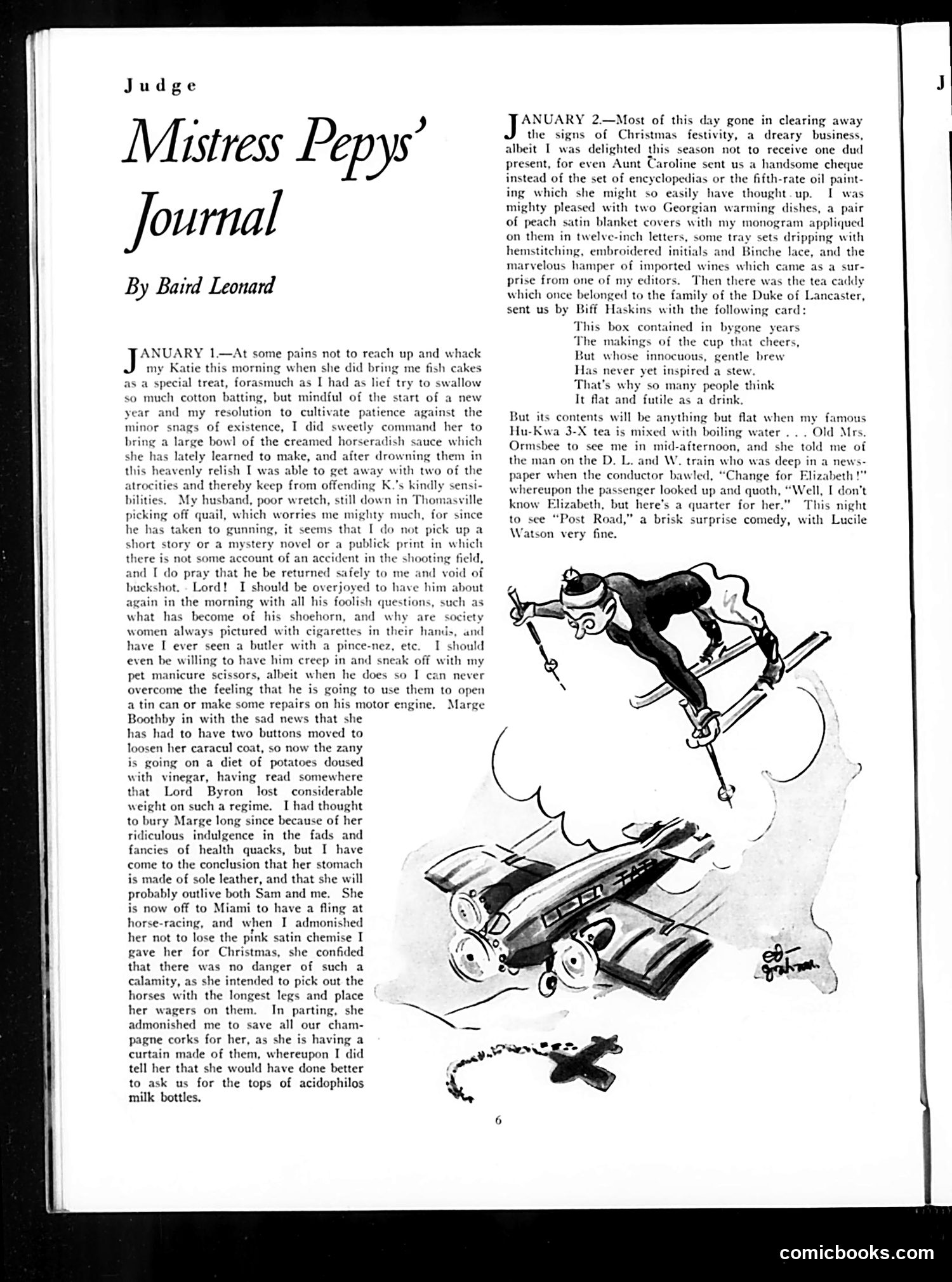
# Analysis of "Mistress Pepys' Journal" This is a humorous column by Baird Leonard purporting to be the diary of a society woman ("Mistress Pepys"), written as satire of Samuel Pepys's famous historical diary. The January 1-2 entries mock upper-class concerns: complaints about a husband's hunting mishaps, servants' dietary issues (a diet of vinegared potatoes, apparently causing weight loss), and trivial social matters. The illustration shows a figure engaged in winter sports—likely skiing or sledding—humorously depicting the leisure activities of the wealthy. The satire targets the pretensions and self-absorbed preoccupations of the social elite, suggesting their "important" concerns (fashion, servants, horses, champagne corks) are fundamentally frivolous. The column's framing as a "diary" allows commentary on contemporary high-society life through humorous domestic anecdotes.
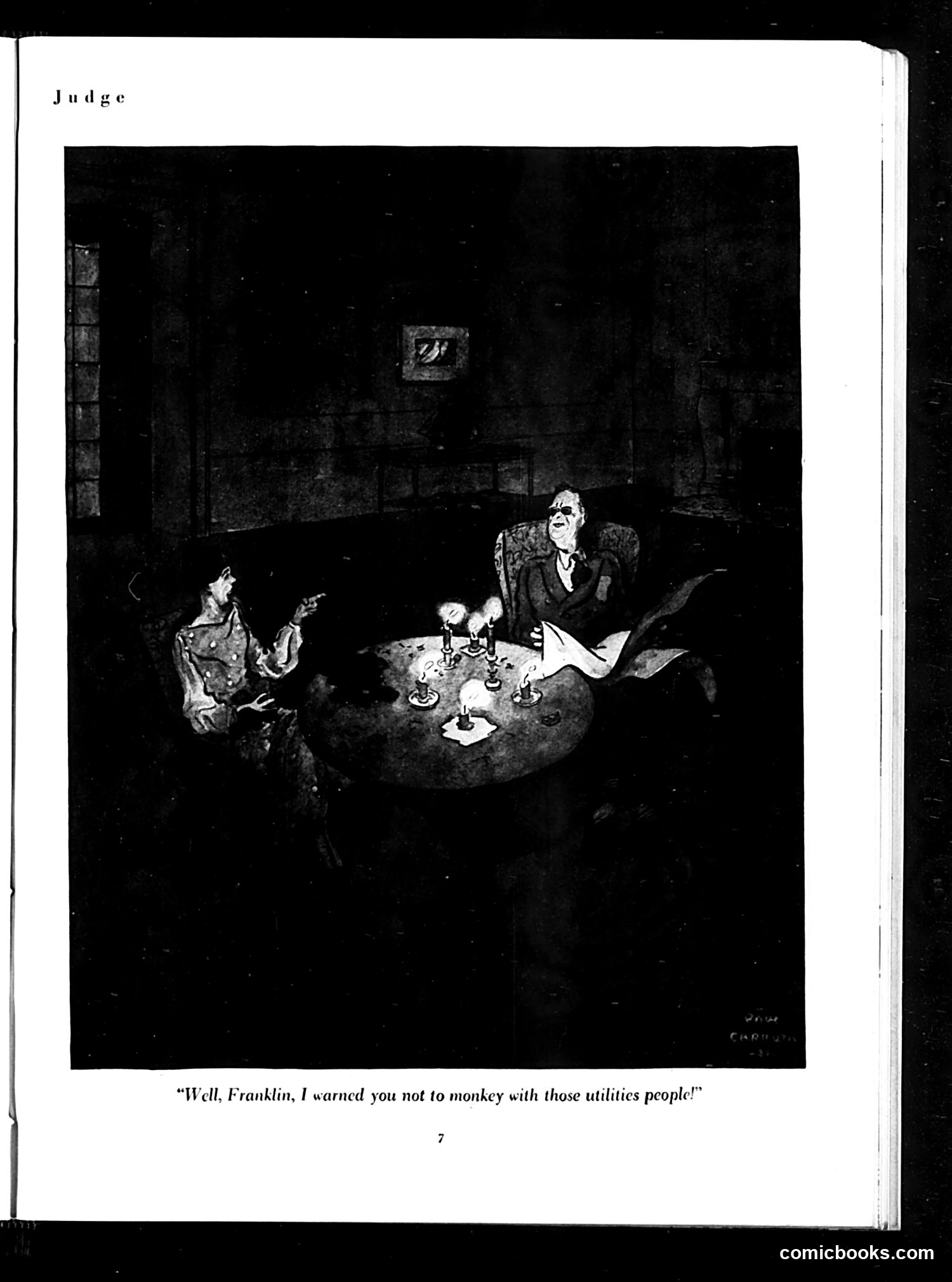
# Judge Magazine Cartoon Analysis This cartoon depicts two men at a dining table in what appears to be a formal interior setting. The older man on the right, wearing glasses and holding papers, addresses a younger man on the left with the caption: "Well, Franklin, I warned you not to monkey with those utilities people!" The satire targets Franklin (likely a character name rather than a specific historical figure, though the context suggests early-to-mid 20th century), who has apparently interfered with utility company operations despite warnings. The "utilities people" reference suggests conflict between a businessman or politician and powerful utility monopolies—a common Progressive Era concern about corporate power and regulation. The cartoon mocks Franklin's naiveté or recklessness in challenging entrenched corporate interests, suggesting such defiance carries serious consequences.
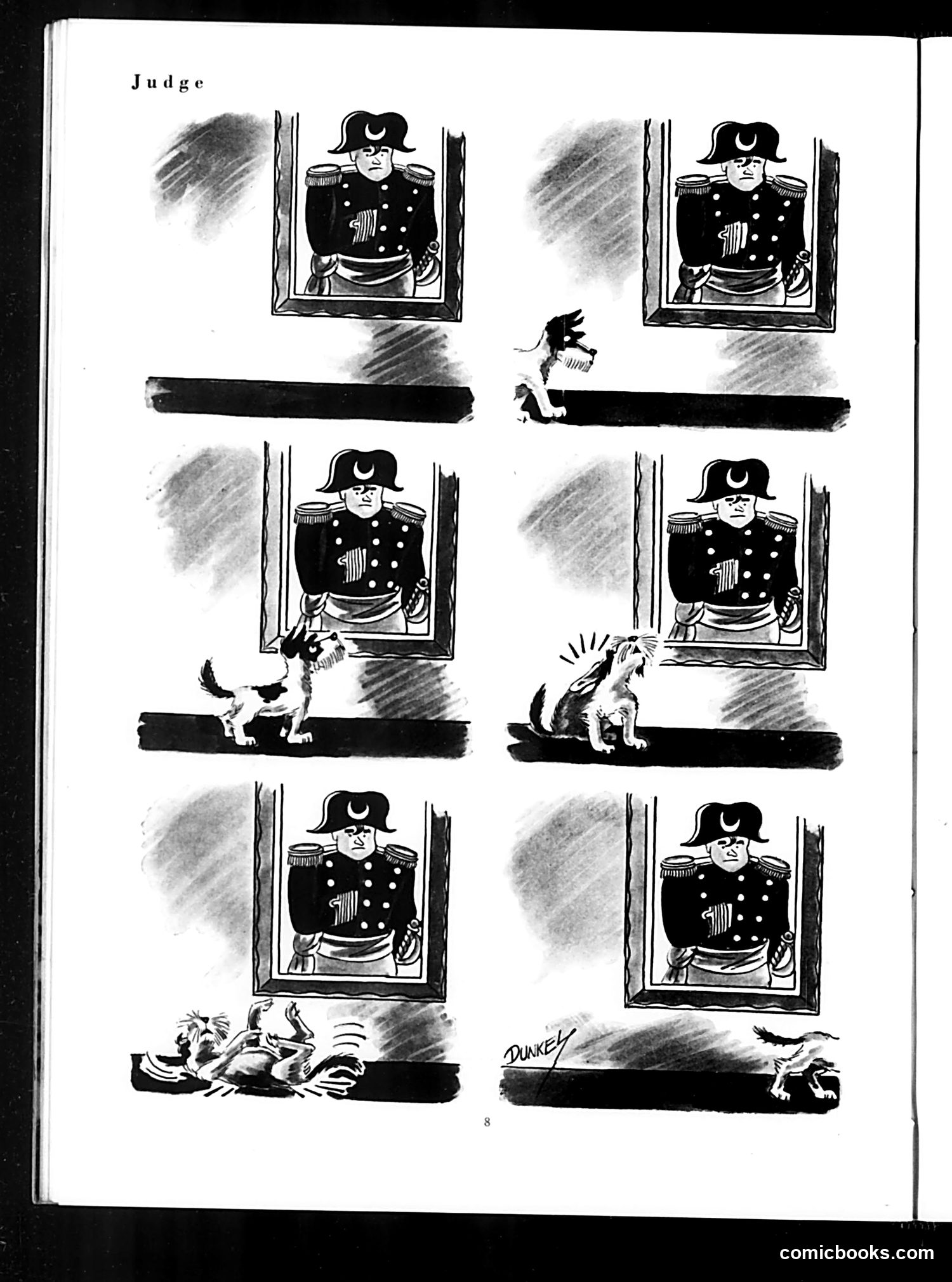
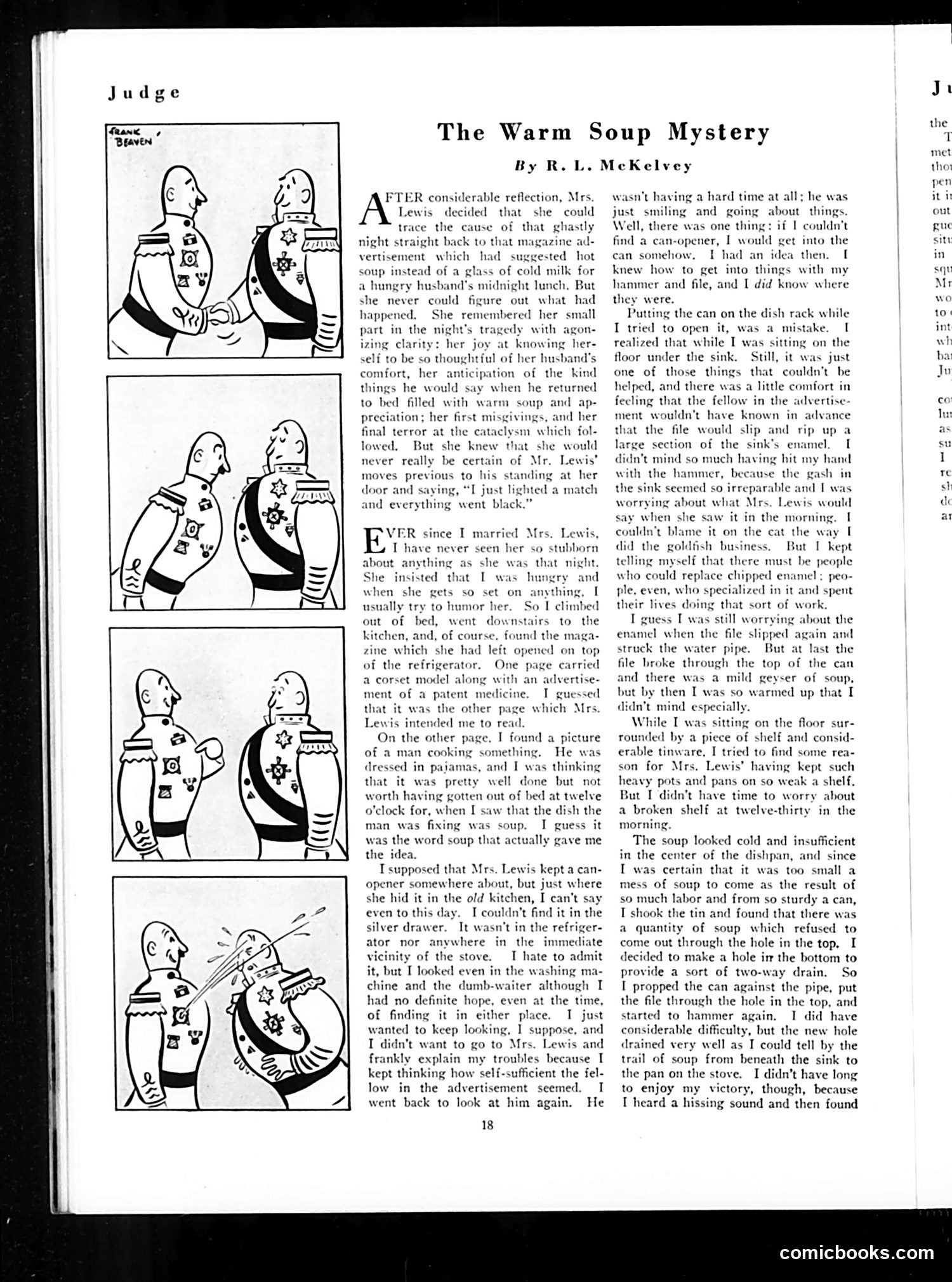
# "Judge" Cartoon Analysis: "Judge" This six-panel satirical cartoon depicts a stern military officer (wearing a Napoleon-style bicorne hat and ornate uniform) observing various animals' behavior from a window. The sequence shows: a small figure, a dog, a cat, multiple animals, and finally what appears to be a donkey. The animals' escalating misbehavior—jumping, fighting, or acting out—contrasts with the officer's stern, unchanging expression throughout. The satire appears to target military authority and discipline: the "Judge" figure represents inflexible, rigid command that observes chaos without intervention or visible response. The cartoon likely mocks either a specific military figure's passive leadership style or broader critiques of authoritarian command structures during an era when Judge magazine frequently satirized politics and power. Without clearer text or date context, the specific political reference remains unclear.
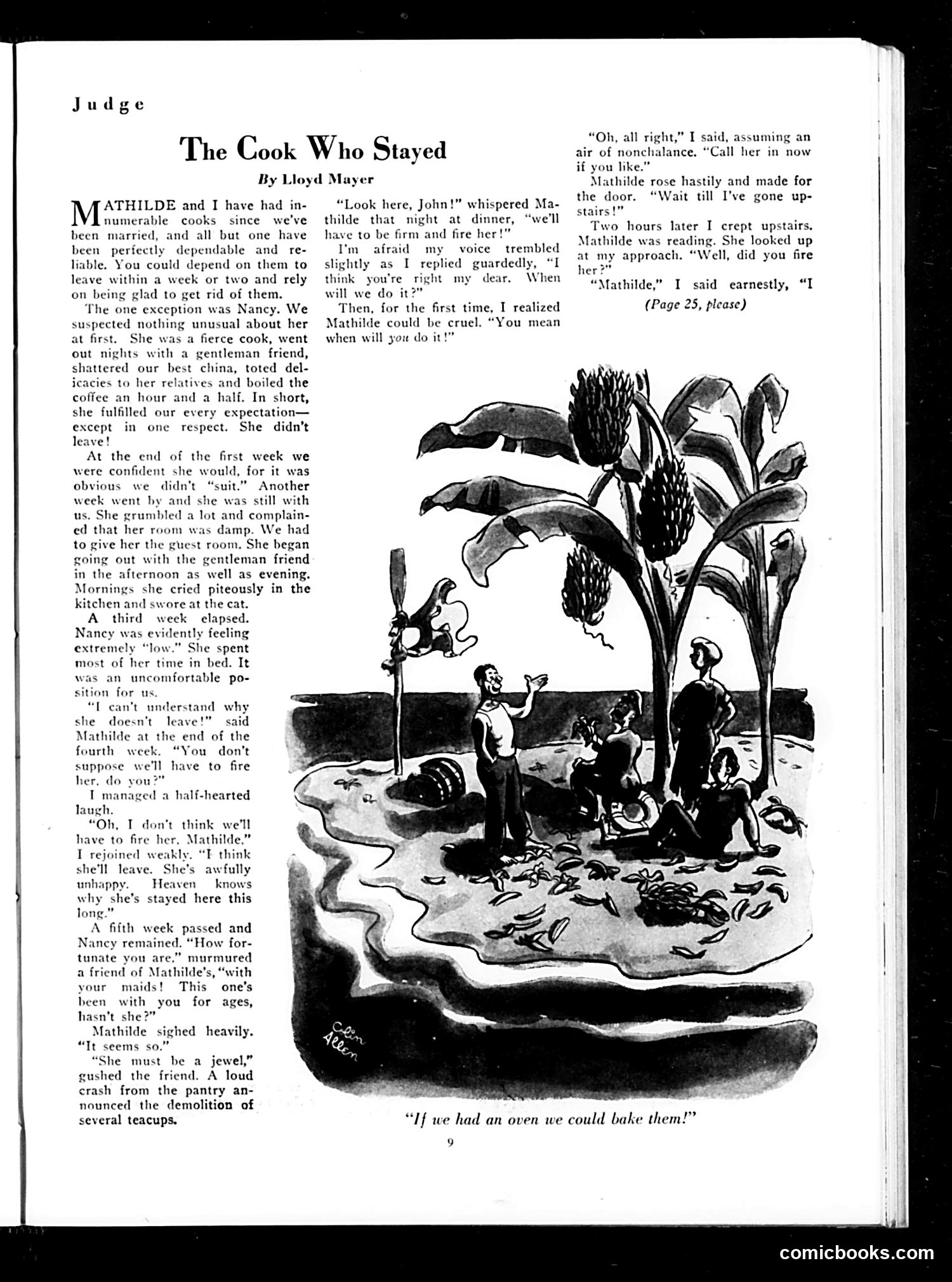
# "The Cook Who Stayed" - Explained for Modern Readers This is a humorous short story (not a political cartoon) satirizing the employment relationship between middle-class households and domestic workers in early 20th-century America. The joke centers on a reversal of expectations: employers could routinely dismiss unsatisfactory household staff, yet Nancy—who exhibits all the problematic behaviors they expect (breaks dishes, cries, neglects duties, takes excessive time off)—inexplicably *refuses to leave*. The narrator and his wife Mathilde expect her departure but find themselves unable to fire her, becoming increasingly uncomfortable as weeks pass. The satire mocks both employer squeamishness about confrontation and the power dynamics of domestic service. By the story's end (indicated by "Page 25, please"), the narrative suggests the employer has failed even to attempt firing her. The accompanying illustration shows people beneath a large cornstalk with the caption "If we had an oven we could bake them!"—likely relating to a subplot about food scarcity or agricultural hardship mentioned in the text.
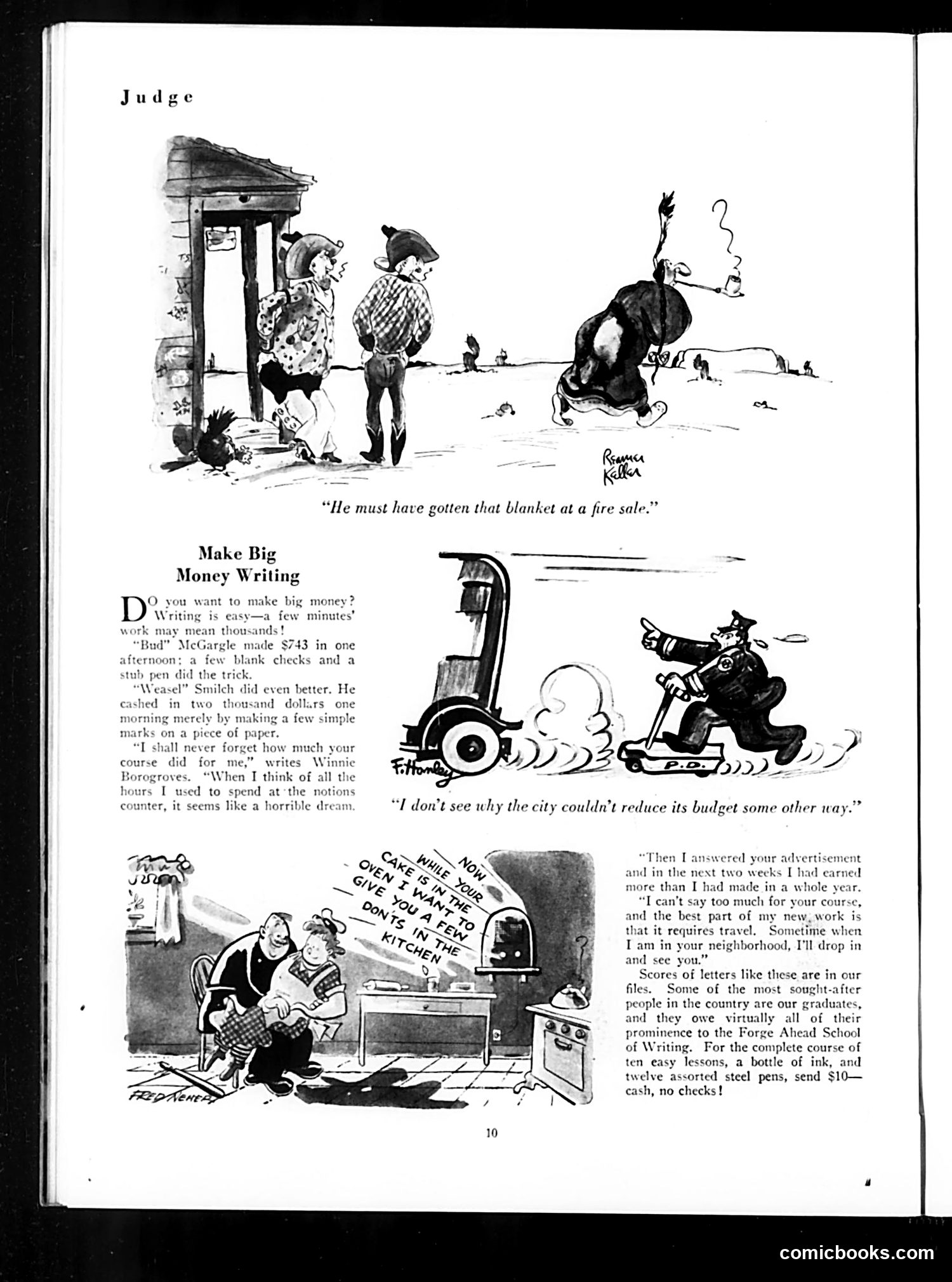
# Judge Magazine Satire: "Make Big Money Writing" This page satirizes mail-order writing courses—a common scam of the early 20th century. The advertisements promise quick riches through simple writing work, featuring testimonials from supposed graduates ("Bud" McGargle, "Weasel" Smilch, Winnie Brogroves) who claim extraordinary earnings from minimal effort. The satire is evident in the absurd specifics: McGargle made $743 "one afternoon" from blank checks; Smilch earned thousands by "making a few simple marks." The course itself costs only $10 and includes "a bottle of ink, and twelve assorted steel pens." The accompanying cartoons mock both the scheme's implausibility and those desperate enough to pursue it. The bottom cartoon shows a couple in poverty, the wife pointing to a stove with a sign about writing—darkly suggesting they're starving while awaiting promised riches. The target is twofold: predatory correspondence schools exploiting economic anxiety, and gullible people seeking easy wealth without real work.
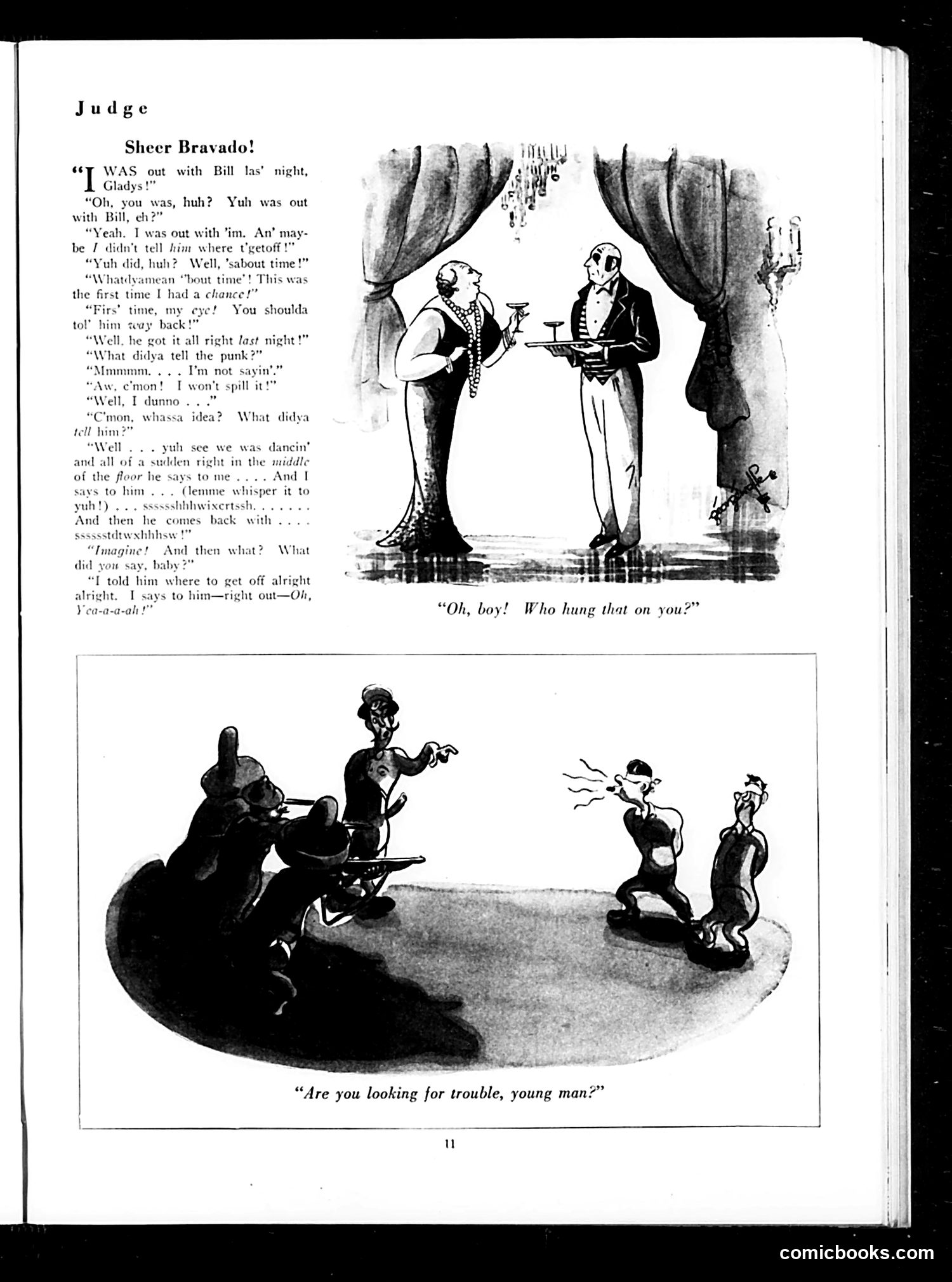
# Judge Magazine Cartoon Analysis This page contains two satirical cartoons about romantic and social confrontations. The **top cartoon** depicts a flapper-era couple at an elegant party. The woman boasts to her friend "Gladys" about telling off her date "Bill" after he made an unwanted advance on the dance floor. The dialogue mimics working-class speech patterns of the 1920s. The satire targets both the woman's exaggerated bravado about rejecting male advances and the man's presumptuous behavior—she claims to have told him off forcefully, yet her vague, giggling account suggests she may be embellishing. The **bottom cartoon** shows what appears to be a confrontation between men, with the caption "Are you looking for trouble, young man?" This likely depicts the consequence of the woman's story—perhaps the rejected suitor or an angry friend/relative challenging the protagonist, suggesting the woman's "brave" rebuff has escalated into actual conflict. Both cartoons mock period attitudes about dating, masculine pride, and female independence through exaggerated dialogue and situation.