A complete issue · 40 pages · 1935
Judge — January 1935
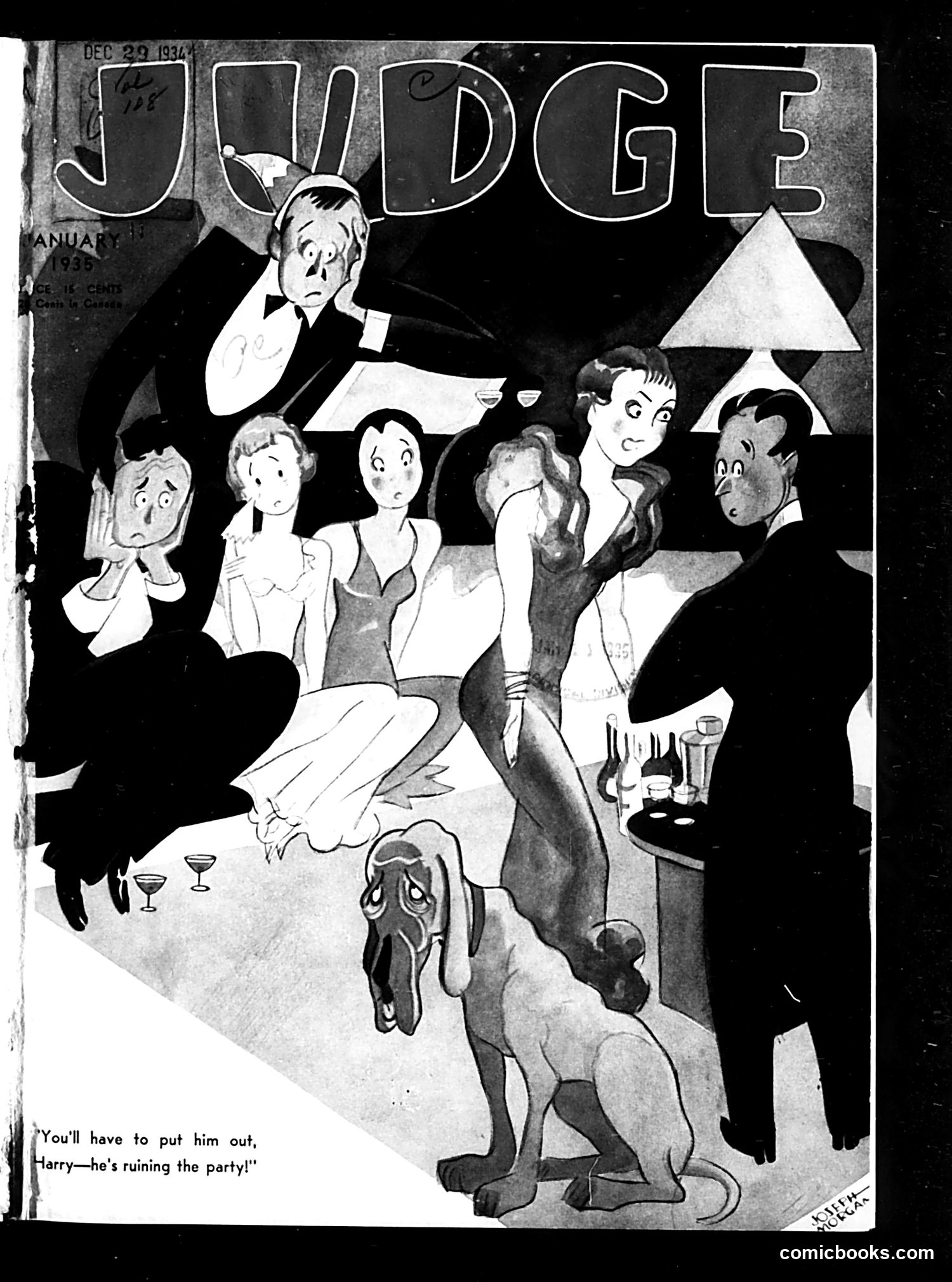
# Analysis This is a *Judge* magazine cover from January 1935 depicting a sophisticated party scene disrupted by a misbehaving dog. The caption reads: "You'll have to put him out, Harry—he's ruining the party!" The satire appears to be social commentary on an unwanted guest or disruptive element at an upper-class gathering. The well-dressed partygoers and formal setting suggest the target is likely a political or social figure of 1935 whose presence was considered undesirable or embarrassing to polite society. Without additional context identifying who "Harry" or the dog represent specifically, the precise political reference remains unclear. However, the joke's structure—an uncouth interloper destroying decorum—was common satirical fodder in 1930s American magazines.
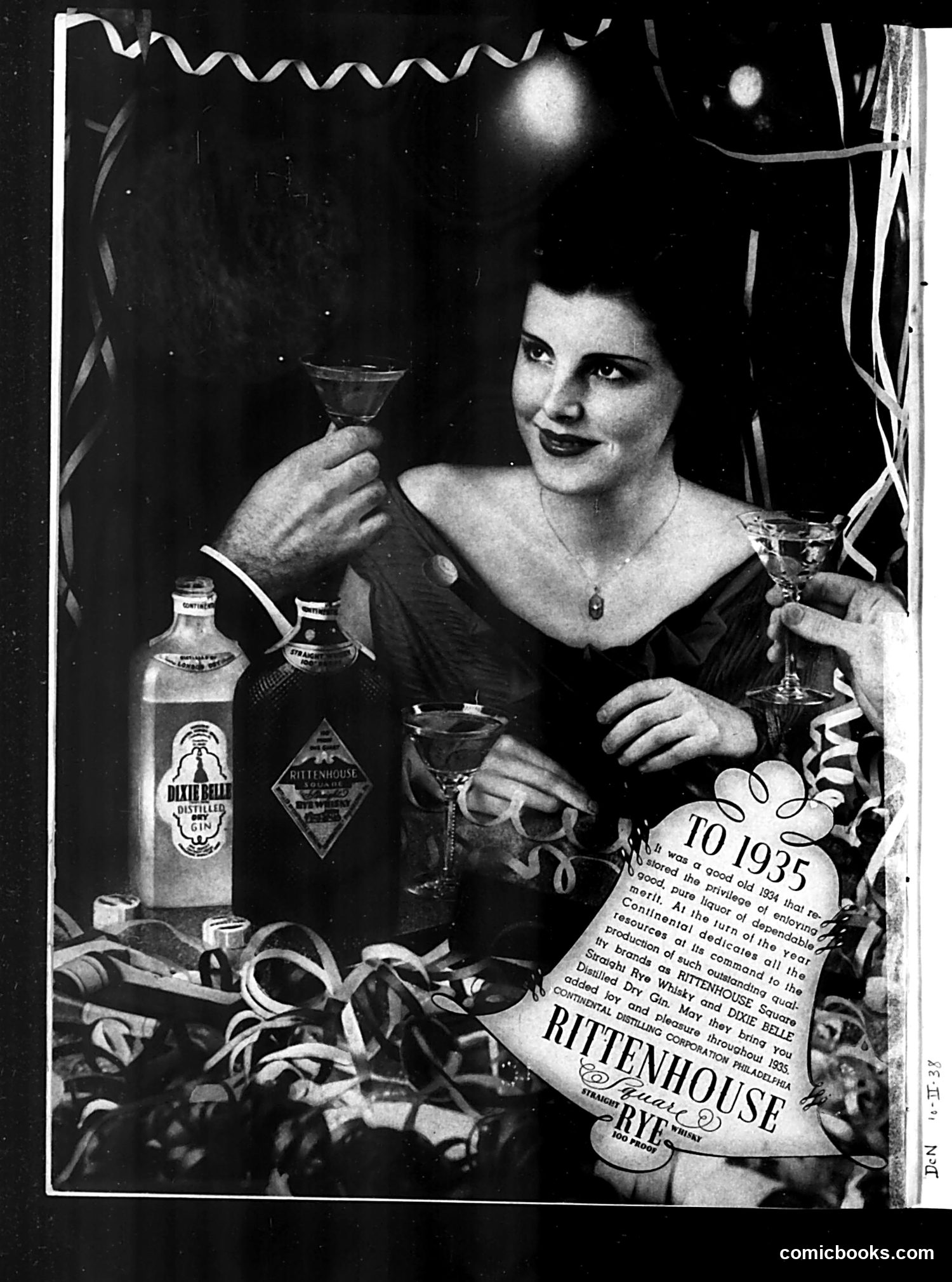
# Analysis This appears to be a **liquor advertisement**, not political satire. The page promotes **Rittenhouse Rye whiskey**, dated "TO 1935," featuring an elegantly dressed woman holding cocktail glasses surrounded by bottles of spirits (Dixie Hill and Rittenhouse brands visible). The text references Rittenhouse's history since 1824 and describes the whiskey's qualities. The decorative elements—ribbons, cocktail glasses, and festive styling—suggest this ran during the **Prohibition repeal era** (alcohol became legal again in 1933). The advertisement targets affluent consumers, portraying sophisticated social drinking as aspirational. Rather than satire, this reflects post-Prohibition marketing normalizing alcohol consumption in upscale social settings.
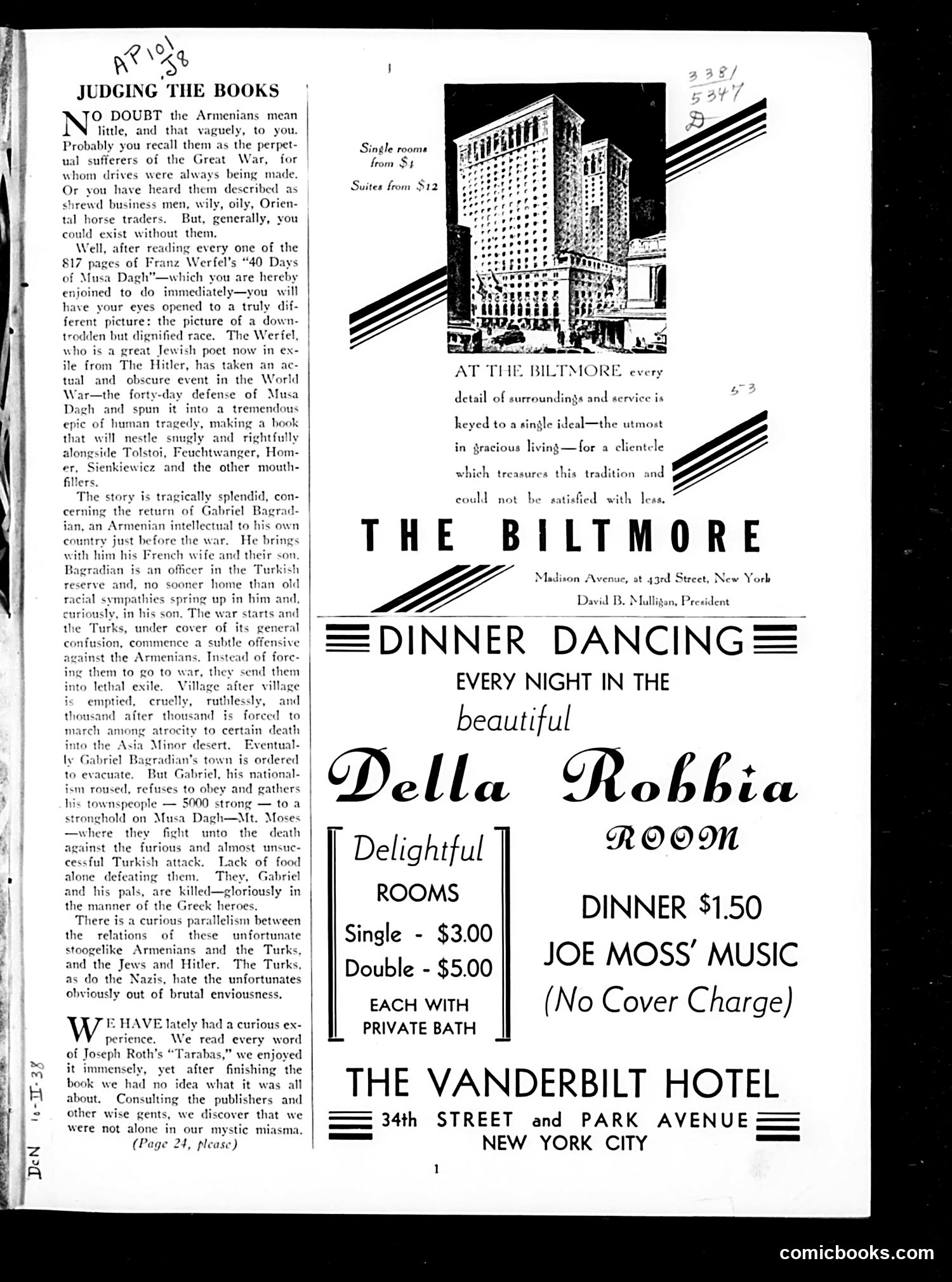
# Analysis This page is primarily **advertising**, not satire or political commentary. The left column contains a book review titled "JUDGING THE BOOKS" discussing Franz Werfel's "40 Days of Musa Dagh," a novel about Armenian suffering during WWI and conflict with Turks. The right side features hotel and restaurant advertisements for The Biltmore and The Vanderbilt Hotel in New York City, promoting amenities like dining, dancing in the "Della Robbia Room," and room rates ($3-$5 for single/double rooms). There is **no political cartoon** visible on this page. The only illustration is an architectural drawing of The Biltmore building. The content mixes literary criticism with period hospitality advertising typical of Judge magazine's revenue model.
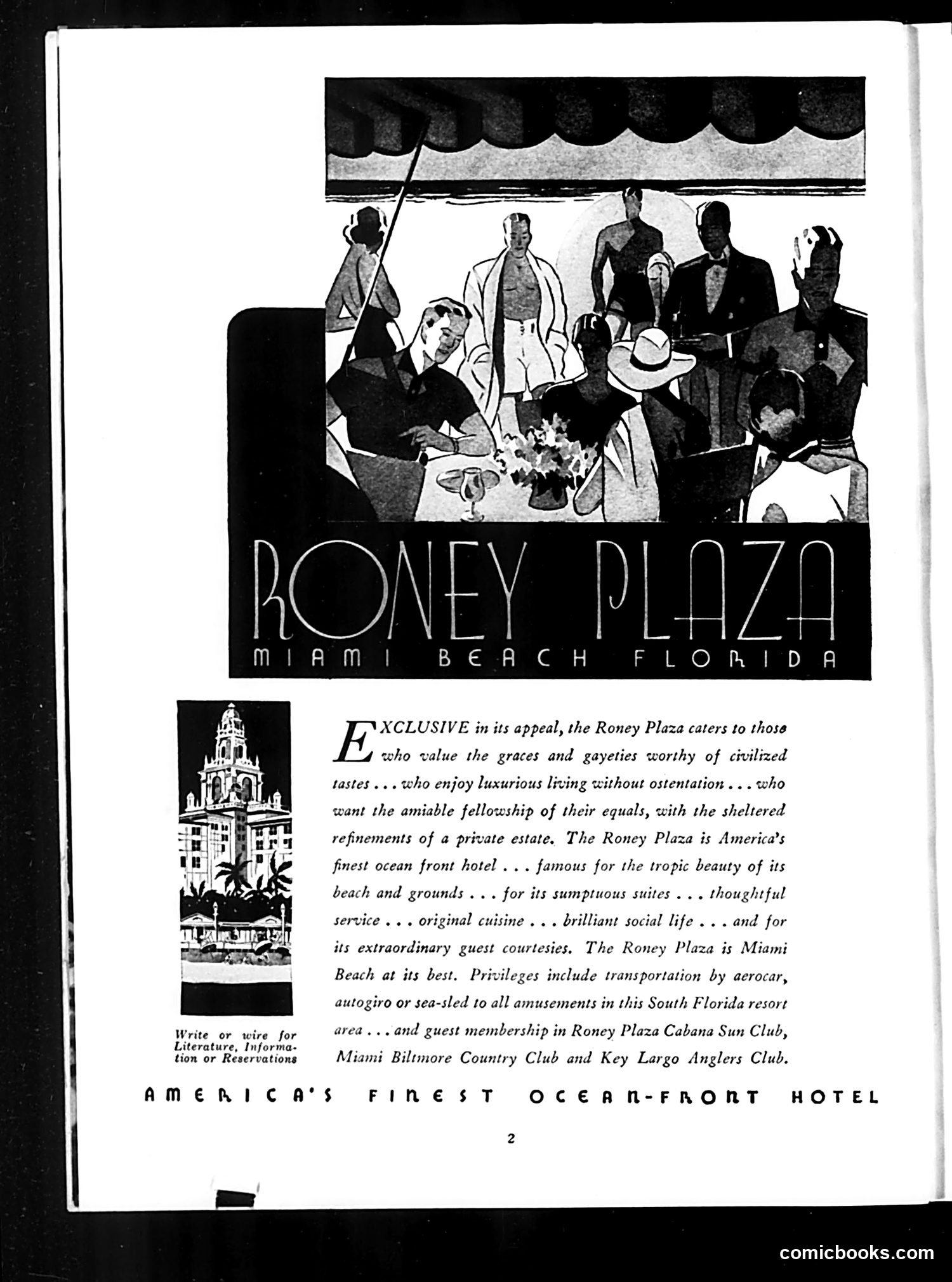
# Analysis This page is primarily **advertising, not satire or editorial content**. It's a full-page advertisement for the Roney Plaza Hotel in Miami Beach, Florida, presented as an upscale resort destination. The illustration depicts well-dressed people socializing under a striped awning—representing the hotel's exclusive clientele and leisure atmosphere. The accompanying text emphasizes luxury amenities: ocean views, suites, fine dining, social activities, and guest privileges at country clubs. The ad positions the Roney Plaza as "America's finest ocean-front hotel," appealing to wealthy patrons seeking refined vacation experiences. This reflects the 1920s-1930s Florida real estate boom and Miami Beach's emergence as a prestigious destination for the affluent. **No political satire or caricature is present**—this is straightforward luxury marketing.
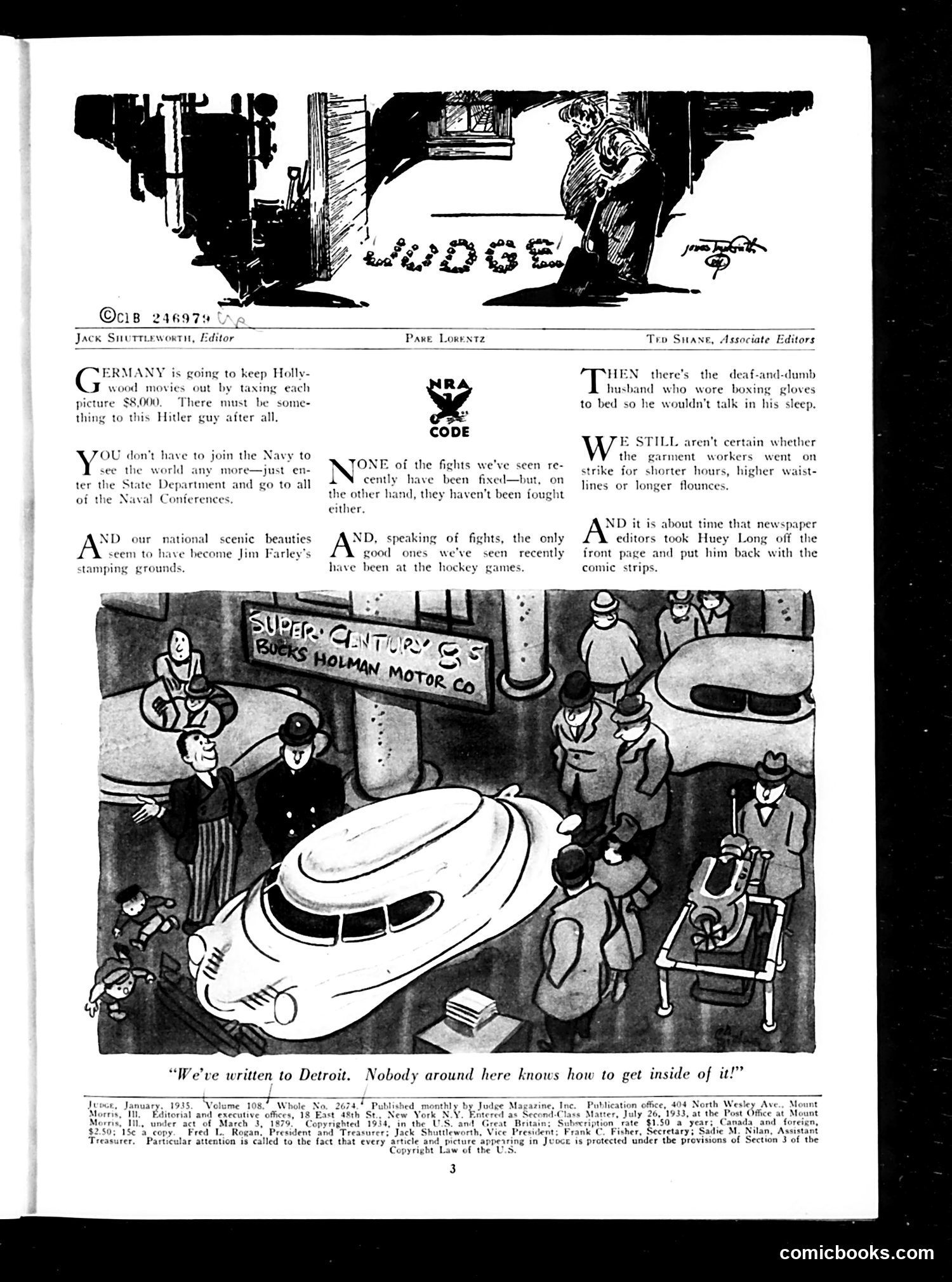
# Judge Magazine Political Satire Page Analysis This 1935 Judge page contains editorial commentary on contemporary issues. The opening paragraph references Germany keeping Hollywood pictures under $8,000 budgets—likely commenting on Nazi economic controls on film. The main cartoon depicts a futuristic, UFO-like vehicle on a Detroit street, captioned "We've written to Detroit. Nobody around here knows how to get inside of it!" This satirizes advanced automotive design becoming so complex that ordinary mechanics cannot repair vehicles. The Bucks-Holman Motor Co. sign visible in the scene appears to reference actual automotive companies, making this a jab at Detroit's automotive industry for over-engineering consumer vehicles. Other brief editorial items discuss naval conferences, hockey fights, and newspaper comic strips, typical of Judge's humorous social commentary.
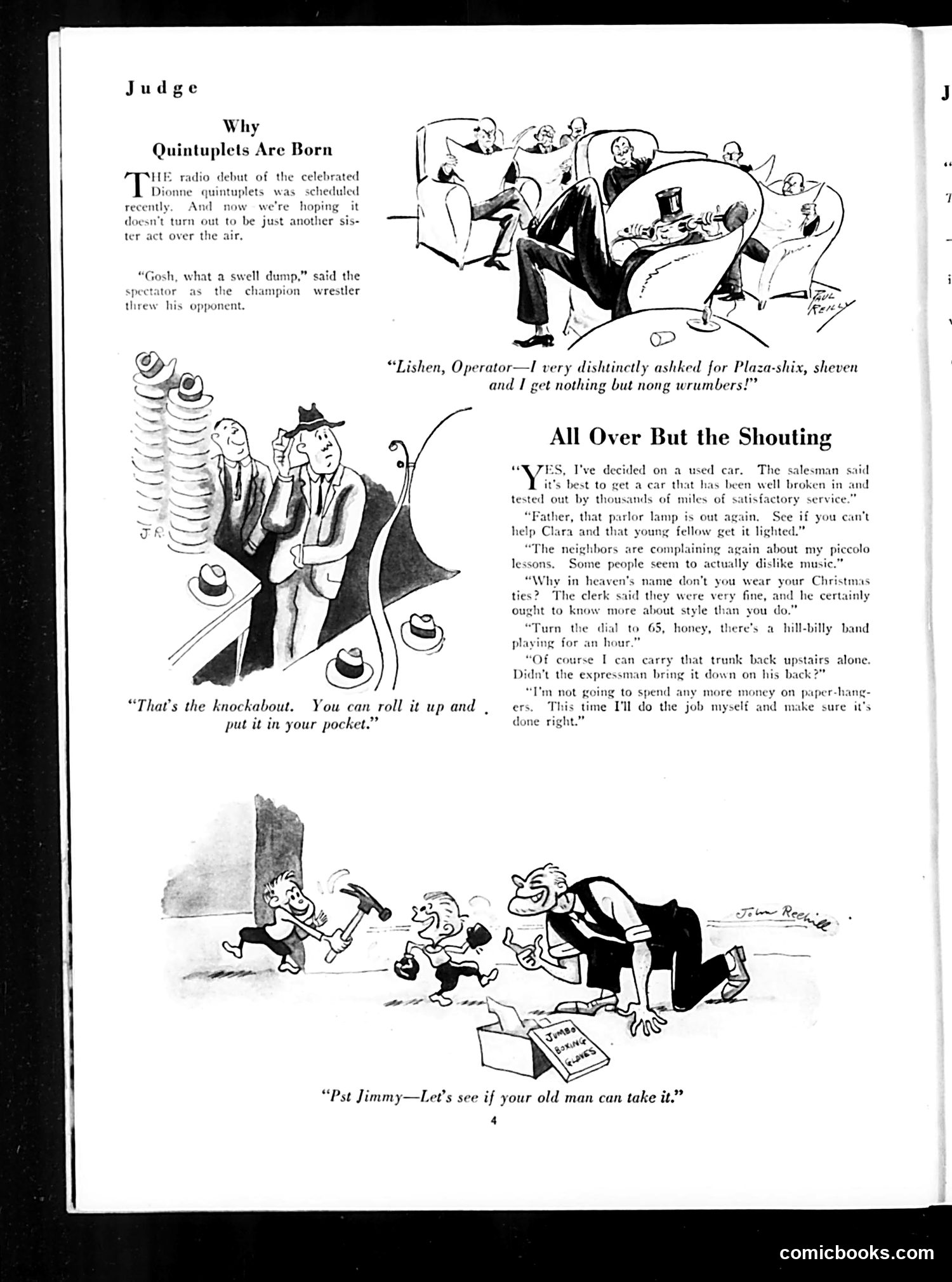
# Analysis of Judge Page 4 This page contains three separate humorous sketches satirizing domestic life and consumer culture, likely from the 1920s-30s based on the style. **"Why Quintuplets Are Born"** mocks radio entertainment's overwhelming presence in homes—a judge/authority figure literally drowns in radio broadcasts while overwhelmed citizens listen helplessly. **"All Over But the Shouting"** satirizes married life: a husband complains about constant domestic problems (broken furniture, neighbor complaints, piano lessons, car maintenance) while claiming he'll "do the job myself" to save money—a common empty promise. **"Pst Jimmy"** shows children convincing their friend to hit their father with a hammer, apparently testing parental toughness. It's crude slapstick humor typical of the era's comic sensibility. All three target anxieties about modern domesticity, advertising saturation, and family dysfunction.
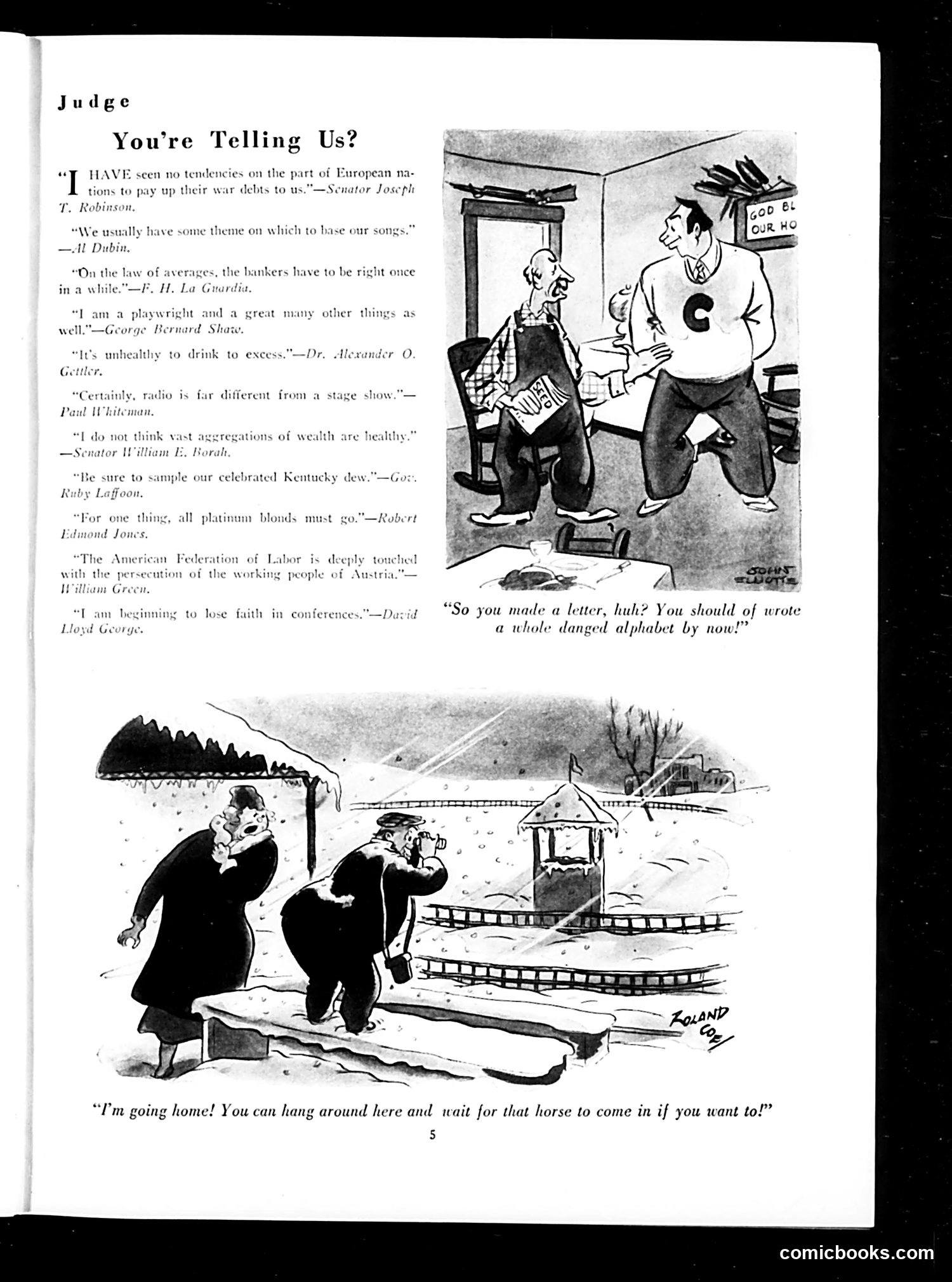
# Analysis of Judge Page This page contains two cartoons satirizing contemporary figures and situations. **Top cartoon**: Shows a man wearing a "C" (likely representing a sports team or organization) confronted by someone holding what appears to be a letter. The caption jokes that writing one letter should have led to writing "a whole danged alphabet by now"—likely satirizing prolific correspondence or complaints from a public figure. **Bottom cartoon**: Two men in winter clothing discuss a horse. One says he's leaving and the other can "wait for that horse to come in if you want to"—a common idiom meaning waiting for something unlikely or impossible to happen. This appears to be general satirical humor about futile waiting rather than specific political commentary. The page also includes various unrelated quotes from political figures and celebrities at the top.
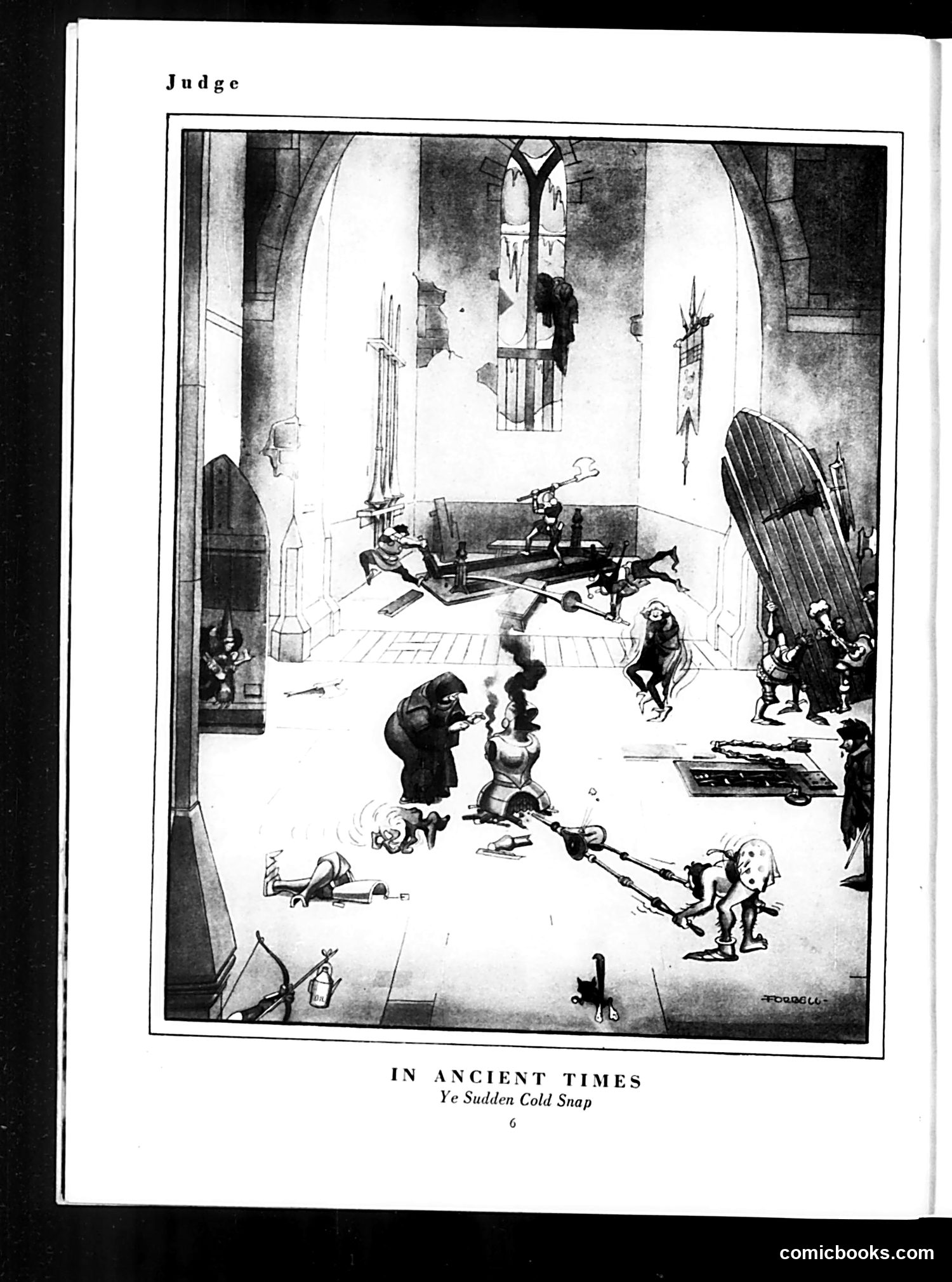
# "In Ancient Times: Ye Sudden Cold Snap" This Judge cartoon satirizes judicial proceedings as chaotic circus. The title suggests a humorous comparison between ancient courtroom justice and modern disorder. The scene depicts a cathedral-like courtroom where a judge presides over bedlam: figures are sprawled on the floor, children appear to be playing or fighting, various people gesture wildly, and the proceedings seem completely uncontrolled. The satire targets the incompetence or circus-like nature of contemporary courts—suggesting that American judicial systems, despite claims of orderly tradition, have devolved into undignified chaos. The "sudden cold snap" subtitle may reference an excuse offered for this disorder, mocking how external factors are blamed for systemic failures. The overall message critiques the dignity and functionality of the legal system.
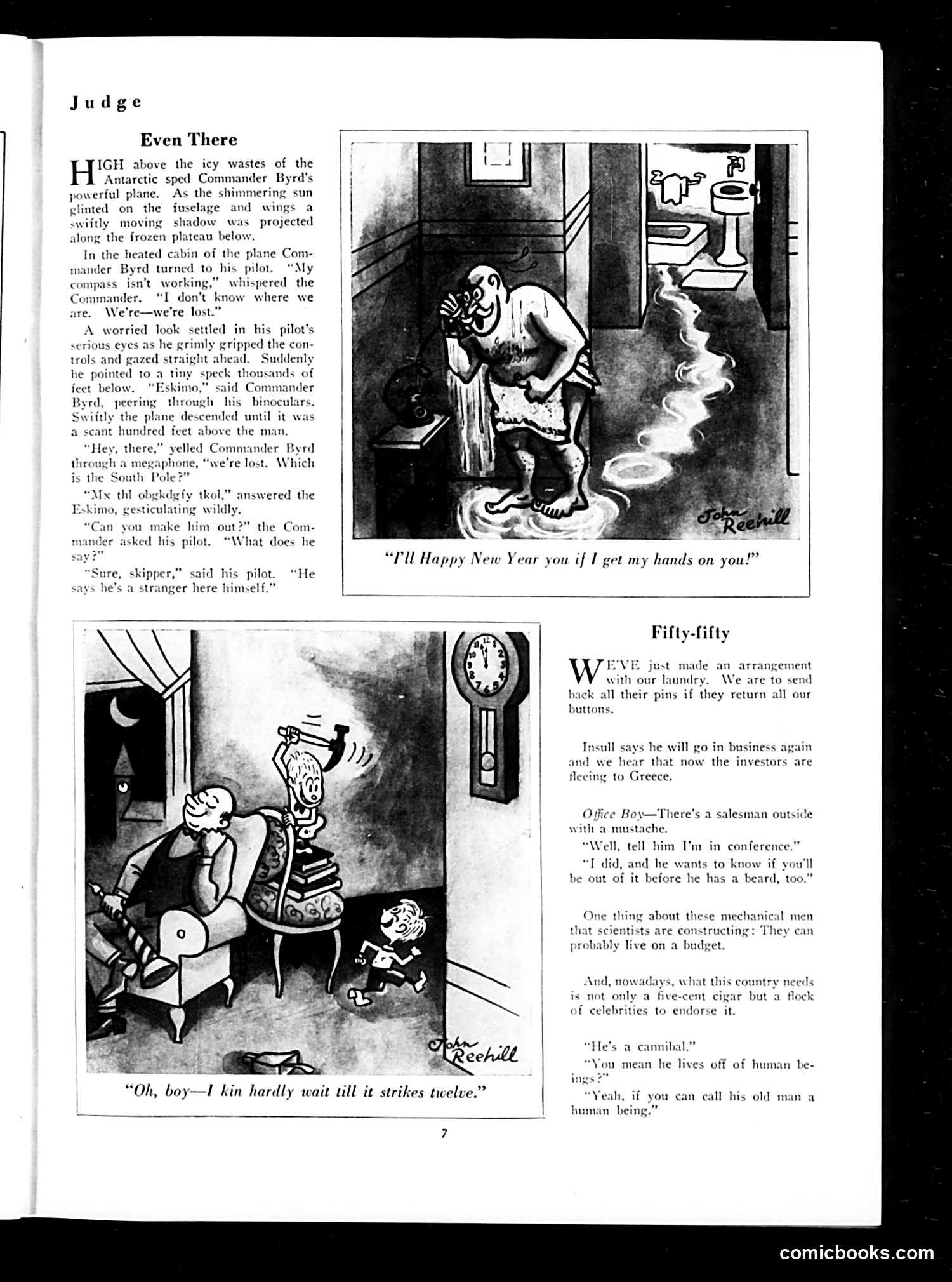
# Explanation for Modern Readers **"Even There"** satirizes Commander Byrd's famous Antarctic expedition (circa 1928-1929). The joke: Byrd's plane is lost despite advanced navigation, so they spot a man on the frozen wasteland below. When asked to identify him, the pilot says he's "a stranger here himself"—absurd humor playing on the idea that *anyone* lost in Antarctica would be equally useless for directions. The satire mocks either Byrd's expedition competence or the era's faith in technology to solve practical problems. **"Fifty-Fifty"** is a humor column with unrelated brief jokes about laundry exchanges, investor Samuel Insull's business troubles, office encounters, and social commentary. One quip mocks mechanical men scientists are supposedly building, suggesting they'd be cheap to maintain. Another implies celebrities endorsing products is what the country actually needs—satirizing 1920s celebrity endorsement culture. The cartoons use exaggerated expressions and slapstick drawing styles typical of Judge's comedic approach.
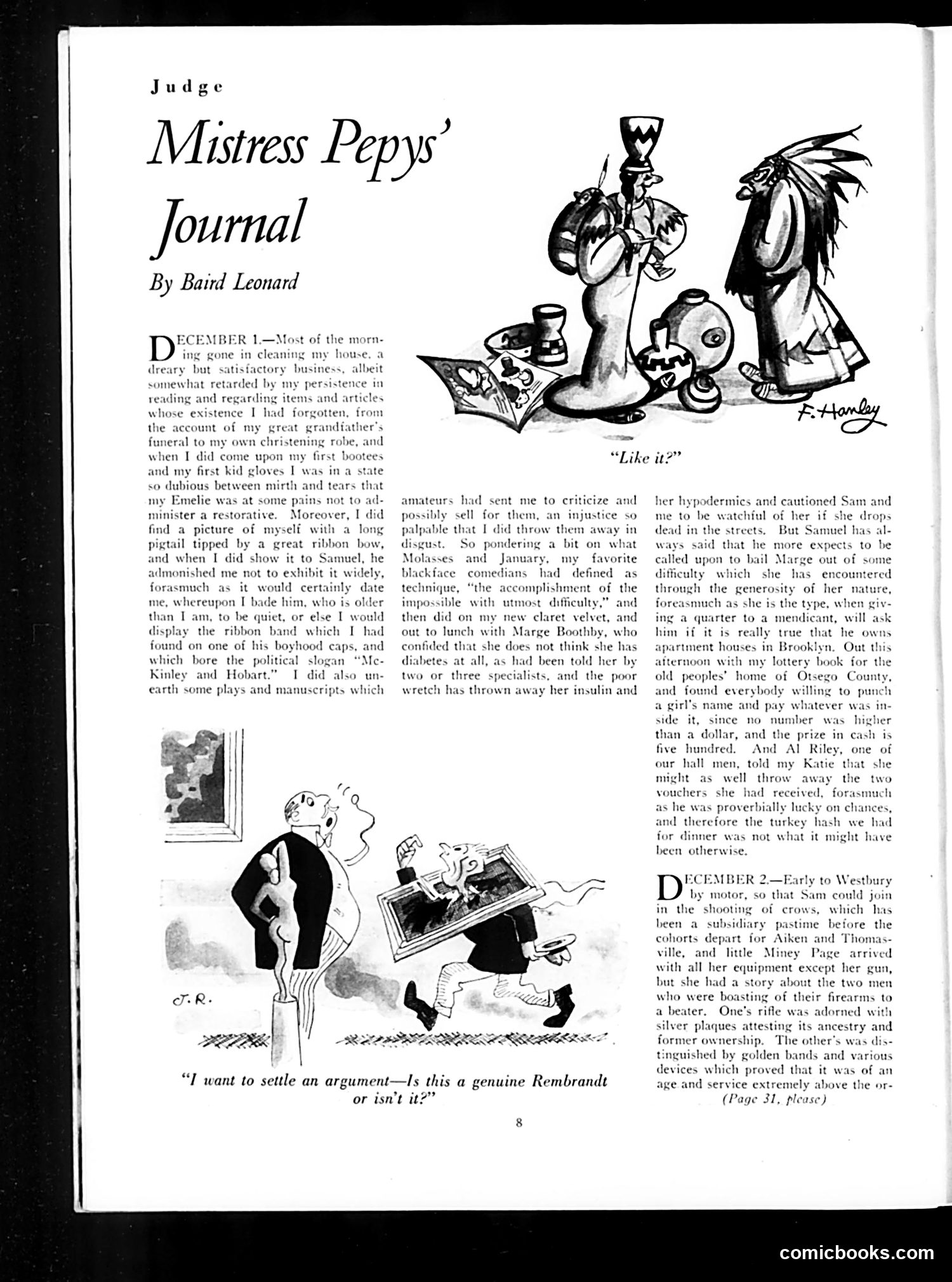
# "Mistress Pepys' Journal" — Judge Magazine Satire This is a humorous parody of Samuel Pepys' famous 17th-century diary, reimagined as written by his wife in the early 20th century. The joke rests on anachronism: Pepys' "Mistress" documents mundane modern life (December 1920s-era) using the ornate, detailed diary style of the historical original. The cartoons illustrate absurd domestic scenarios: the lower cartoon shows a man asking about authenticating a "Rembrandt" painting—likely satirizing 1920s wealthy Americans' pretentious collecting habits and gullibility regarding art forgeries. The text mentions period-specific details: lotteries, Brooklyn apartment houses, shooting crows, and references to contemporary figures like McKinley and Hobart (1890s political slogan). The satire targets upper-class women's gossipy preoccupations, servants' antics, and nouveau-riche pretensions. The overarching humor mocks both historical pomposity and modern snobbery through the deliberate clash of old literary form with contemporary trivia.
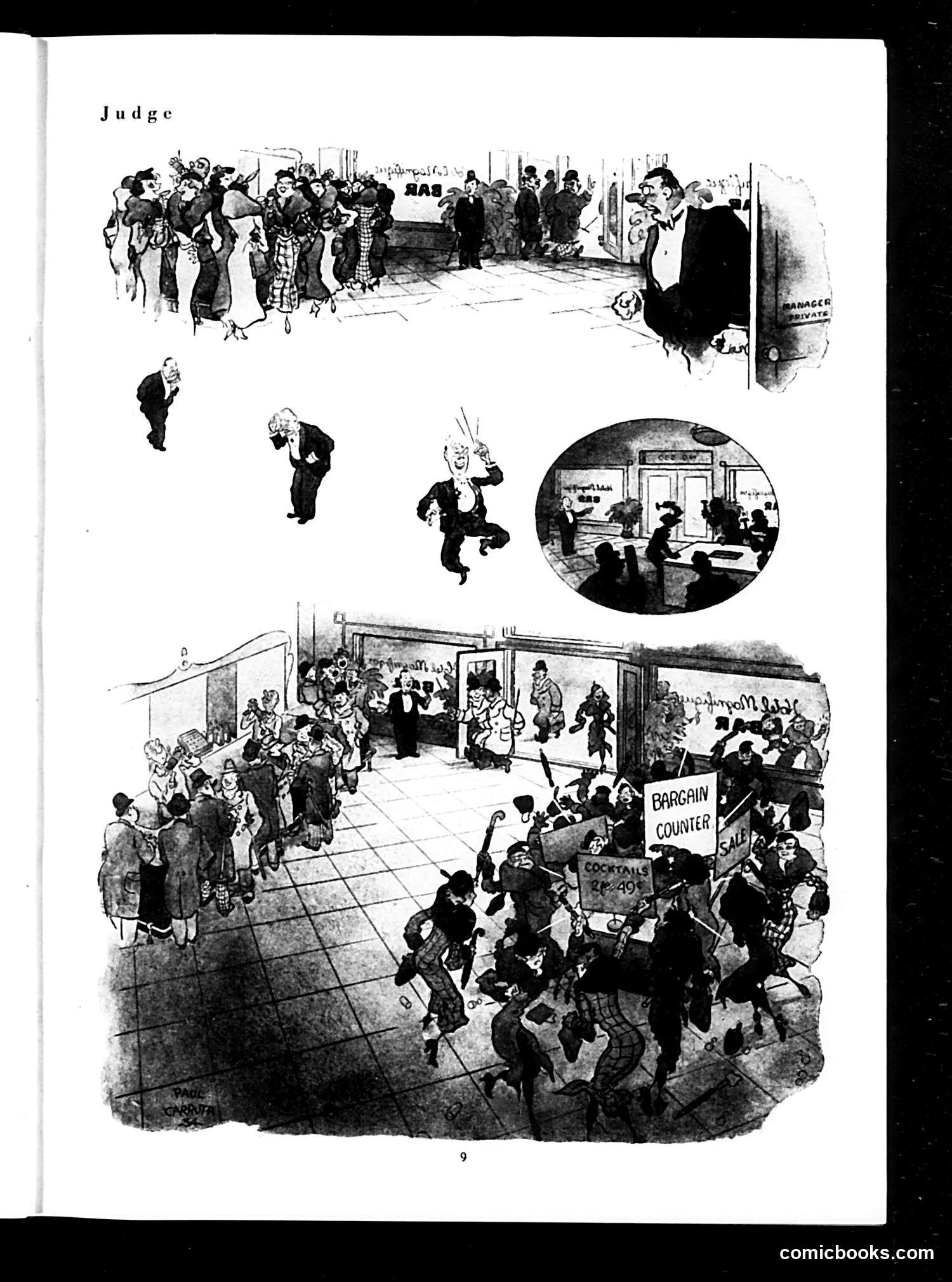
# Analysis of "Judge" Page This page contains multiple cartoon panels satirizing the American legal system and courtroom procedures. The title "Judge" suggests the central theme. The top panel depicts a crowded courthouse scene with numerous figures, while middle panels show individual judges in various animated poses—appearing flustered, gesturing wildly—suggesting judicial incompetence or theater. The bottom panel shows what appears to be a busy department store or public venue with a "Bargain Counter" sign visible, with crowds of people and signage for "Sales" and "Cocktails." This juxtaposes commercial chaos with the legal system above. The overall satire appears to mock the dignity and seriousness of courts by depicting judges as theatrical performers and legal proceedings as disorderly spectacles comparable to commercial retail chaos.
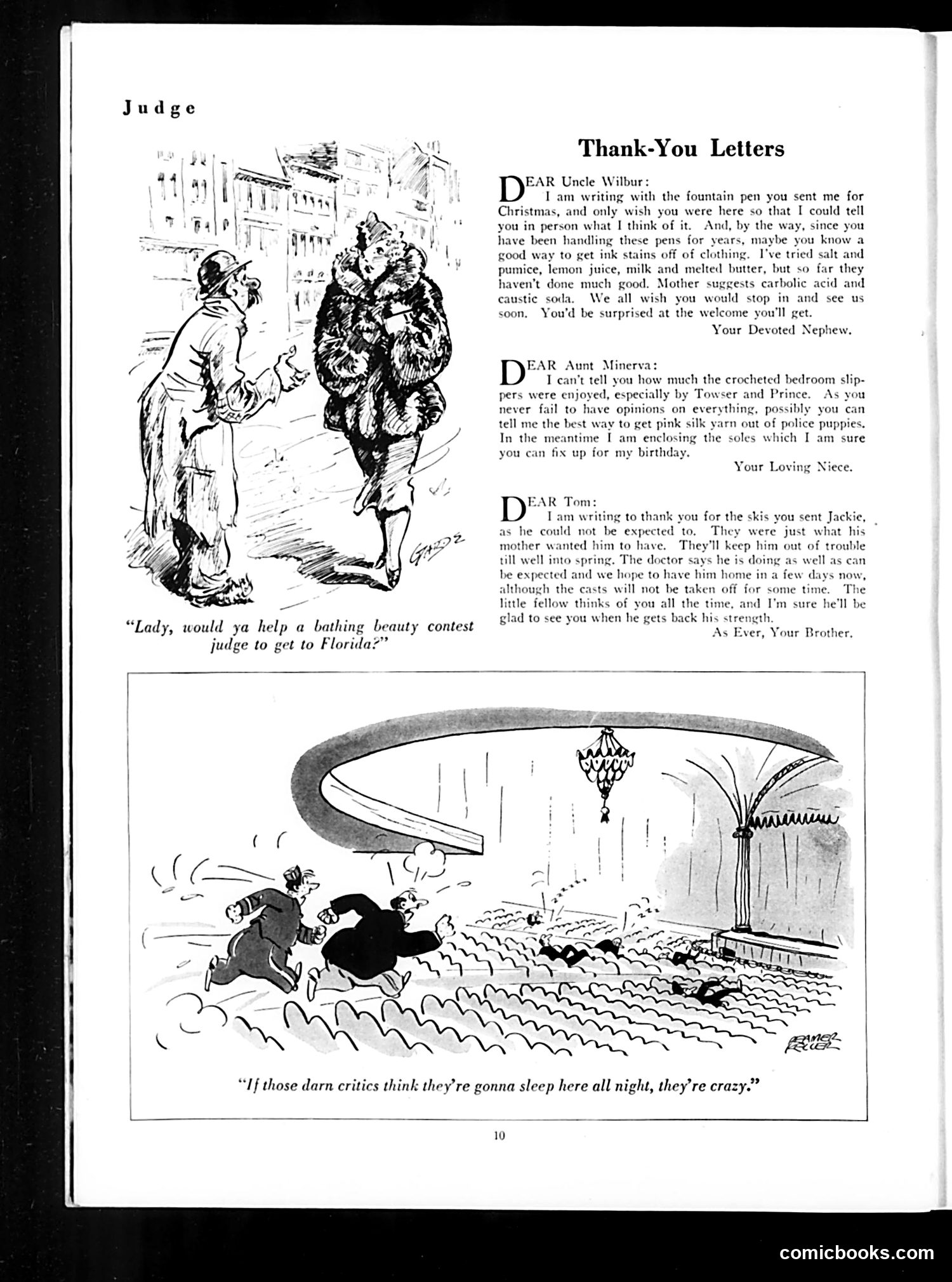
# Judge Magazine Page Analysis This page combines humor with satirical social commentary typical of early 20th-century Judge magazine. **Top Cartoon:** A man asks a woman to help a "bathing beauty contest judge" reach Florida. The joke satirizes the absurdity of using beauty pageants as a pretext for leisure travel—the man essentially wants free transportation by invoking the glamorous but frivolous world of bathing beauty contests (popular entertainment of the era). **"Thank-You Letters" Section:** These are humorous parody thank-you notes where recipients comically complain about the gifts received. Each letter subverts gratitude conventions—a fountain pen causes ink stains; bedroom slippers are eaten by dogs; skis result in a broken leg. The satire mocks both insincere thank-you letter etiquette and poor gift-giving judgment, suggesting that many people give impractical or problematic presents while pretending generosity. **Bottom Cartoon:** Critics sleeping in theater balconies—satirizing theater critics' practice of viewing shows while lying down, suggesting laziness or poor judgment in their reviewing.