A complete issue · 36 pages · 1933
Judge — July 1933
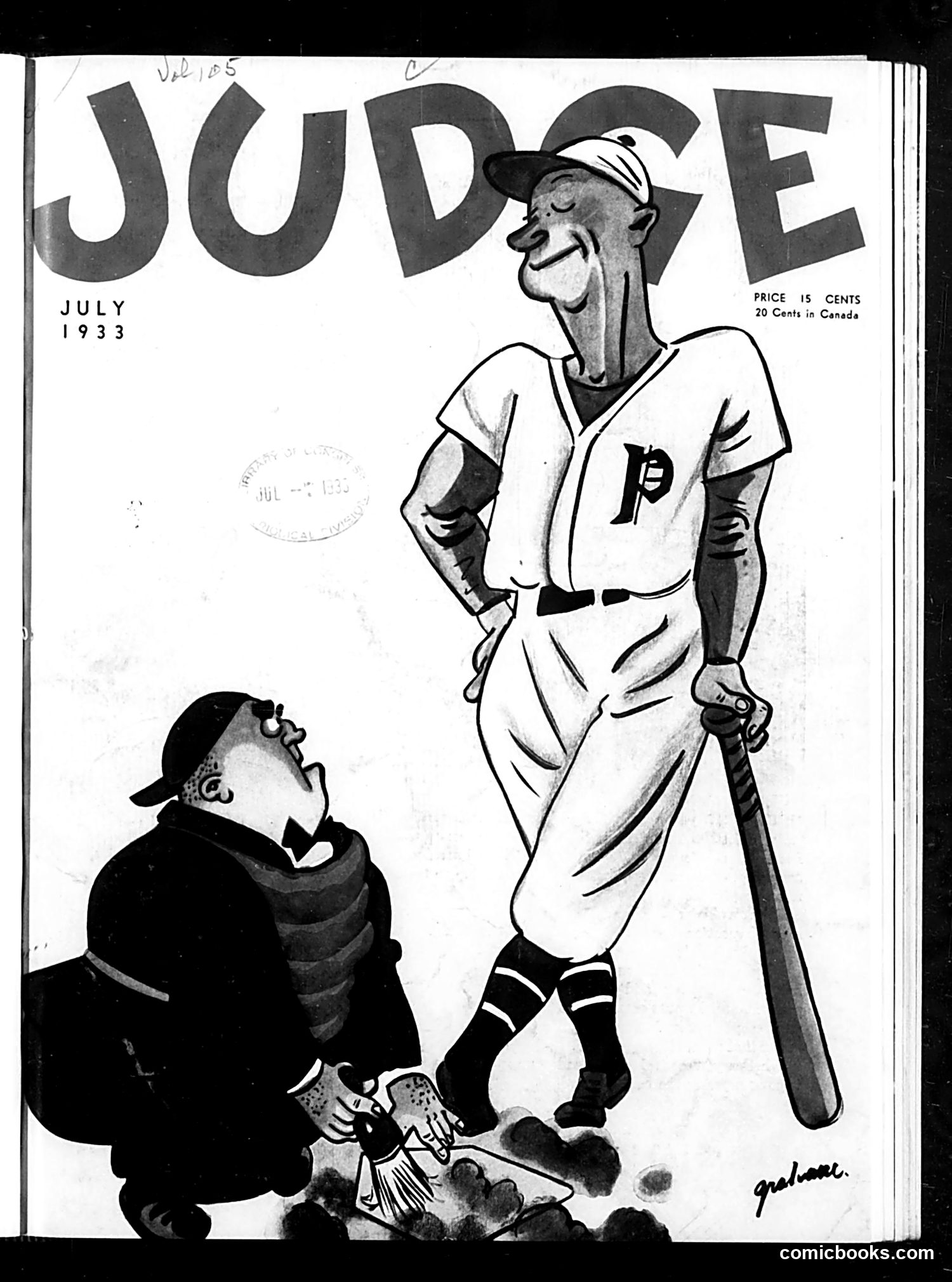
# Judge Magazine Cover Analysis - July 1933 This cover depicts a baseball player wearing a "P" uniform (likely Pittsburgh Pirates) towering over a smaller, hunched figure in dark clothing. The tall player appears confident and robust, while the smaller figure looks dejected or defeated below him. The satire likely references the Great Depression era (1933), contrasting prosperity in professional sports with economic hardship affecting ordinary Americans. The exaggerated size difference suggests the disparity between wealthy athletes and struggling citizens during this period. The "JUDGE" masthead and 15-cent price point confirm this as the satirical magazine's commentary on American social conditions. The artist's signature appears to be "Gulbranson" (lower right).

# Analysis This is primarily an **advertisement for Ethyl Gasoline**, not satire or political commentary. The "cartoon" shows two smiling men in an airplane with a "To Chicago" sign, representing vacation travel to the 1933 World's Fair. The "tip" being offered is that drivers should use Ethyl Gasoline for their vacation trips. The advertisement claims Ethyl eliminates engine knock, restores performance to older cars, and ultimately saves money on repairs—making it ideal fuel for the long-distance travel people undertake for leisure. The World's Fair reference and airplane imagery emphasize modernity and progress. This is straightforward commercial messaging dressed in Judge magazine's humorous style, promoting a specific fuel brand to readers planning vacations.

# Analysis This page is primarily **advertising**, not satire or editorial content. It promotes the Book-of-the-Month Club's offer of a free two-volume "Complete Sherlock Holmes" Sir Arthur Conan Doyle Memorial Edition to new members. The left side features portraits of five literary figures—likely editors or board members of the Book-of-the-Month Club—identified by names including Heywood Broun, Dorothy Canfield, and Henry Seidel Canby. The main text is a sales pitch emphasizing membership benefits: readers receive 100,000+ members' recommendations, pay nothing to join, and aren't obligated to purchase monthly selections. The ad highlights that members typically spend only $2-4 annually on books while receiving substantial value. A coupon at bottom-right invites readers to request club information. There are no political cartoons or satirical commentary on this page.
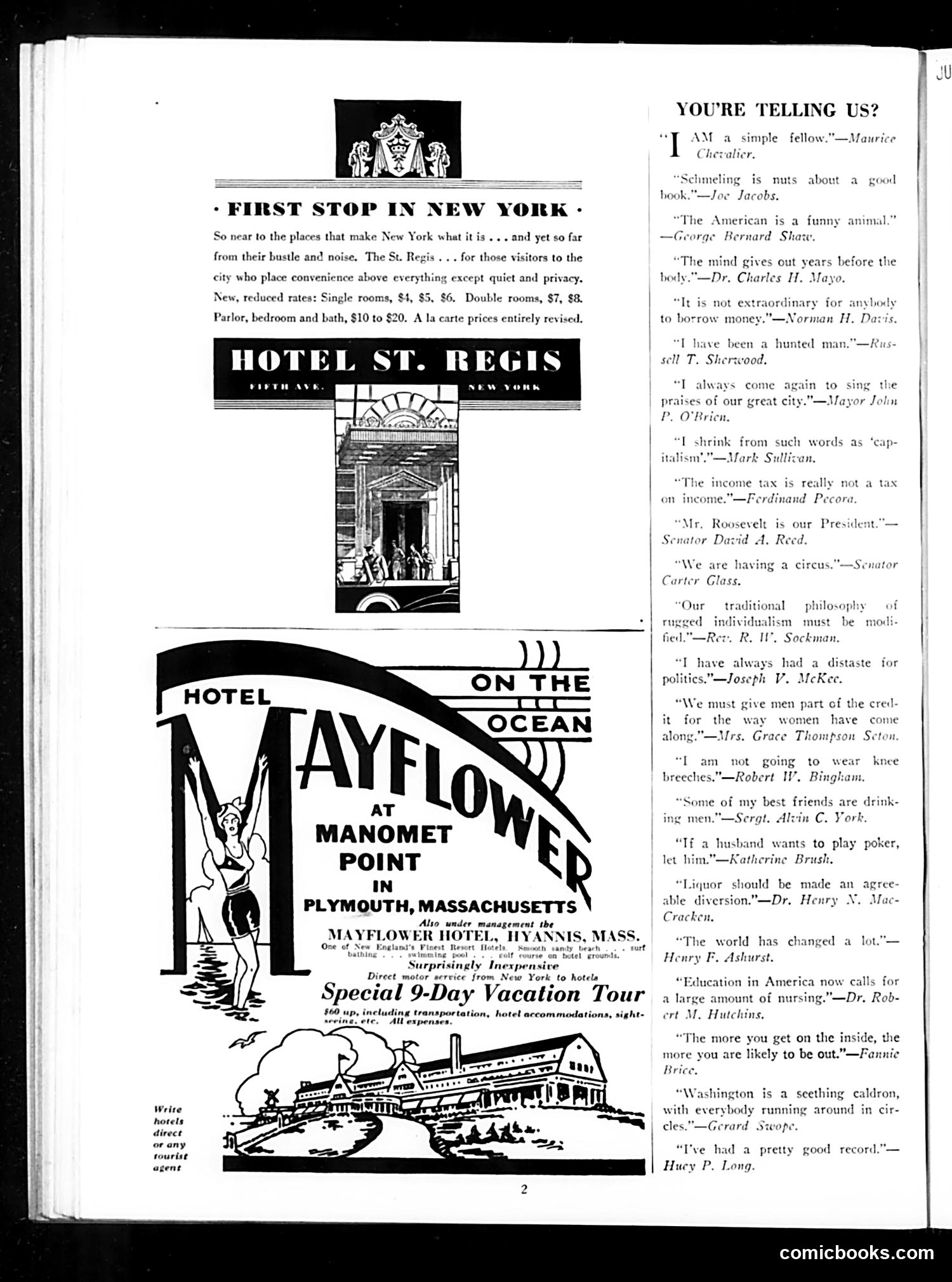
# Judge Magazine Page Analysis This page is primarily **advertising**, not political satire. It features two hotel advertisements: 1. **Hotel St. Regis** (Fifth Avenue, New York) — positioned as a convenient, quiet alternative to noisier Manhattan locations, offering reduced rates ($4-$20). 2. **Hotel Mayflower** (Plymouth, Massachusetts) — the dominant advertisement, promoting a "Special 9-Day Vacation Tour" including transportation and accommodations, with an illustration of the coastal hotel. The right column contains celebrity quotations on various topics (taxes, Roosevelt, politics, drinking, etc.), likely meant as entertainment filler or endorsements. The page reflects 1920s-30s leisure culture and tourism marketing, with no apparent political commentary. The celebrity quotes are generic observations rather than satire.
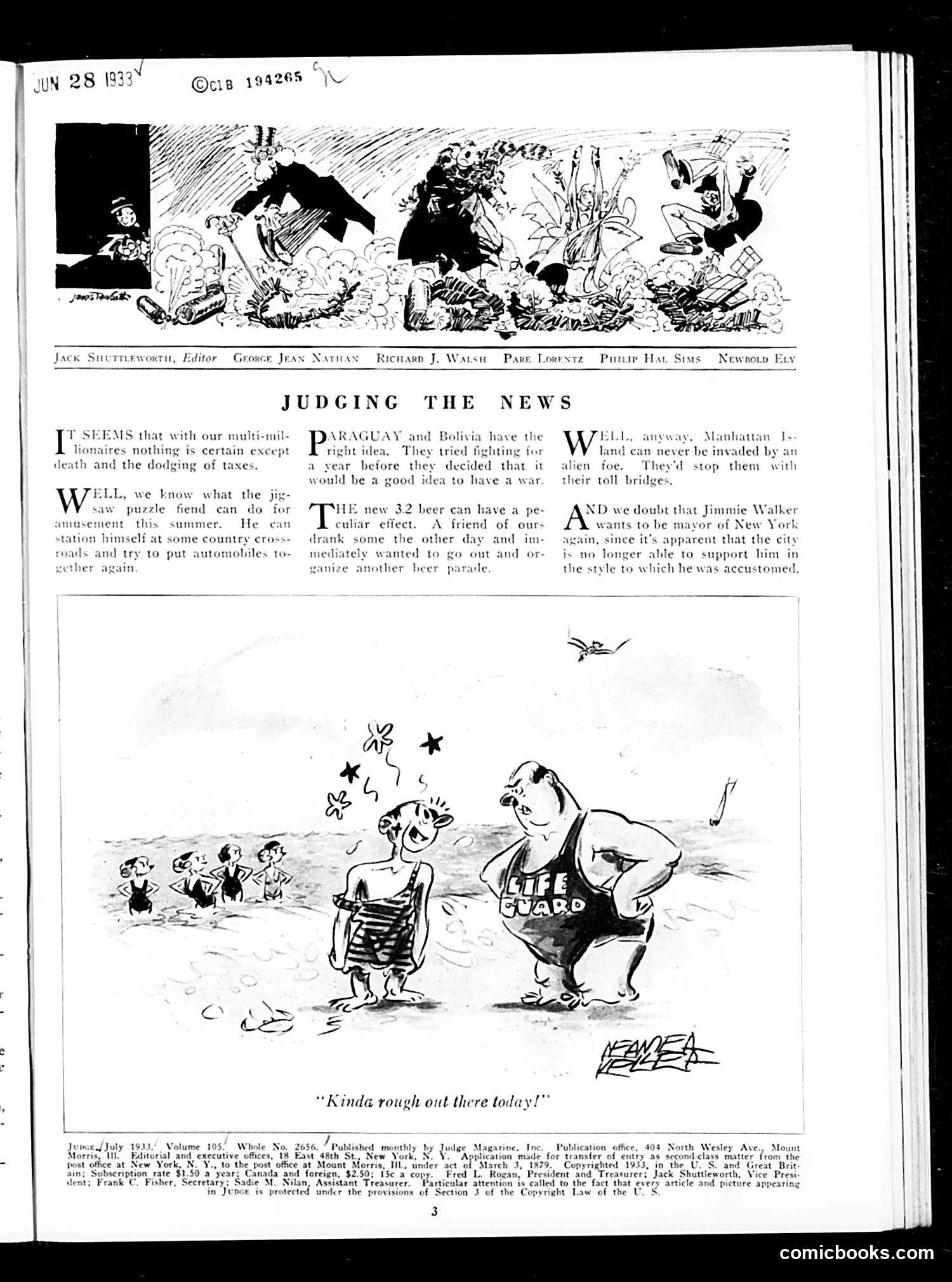
# "Judging the News" - June 28, 1933 This satirical page comments on contemporary issues through brief editorial quips and a cartoon. The main cartoon depicts a lifeguard confronting a thin, disheveled bather at the beach, with the caption "Kinda rough out there today!" The likely reference is to economic hardship during the Great Depression (1933). The bather's skeletal appearance suggests poverty or malnutrition, while the lifeguard's comment ironically understates obvious danger—reflecting how authorities minimized serious social problems. The text above discusses Paraguay and Bolivia (military conflict), 3.2% beer (recently legalized after Prohibition), and Jimmie Walker (former NYC mayor facing corruption allegations). These snippets exemplify *Judge's* satirical approach: reducing complex news into pointed, darkly comic observations about politics and social conditions.
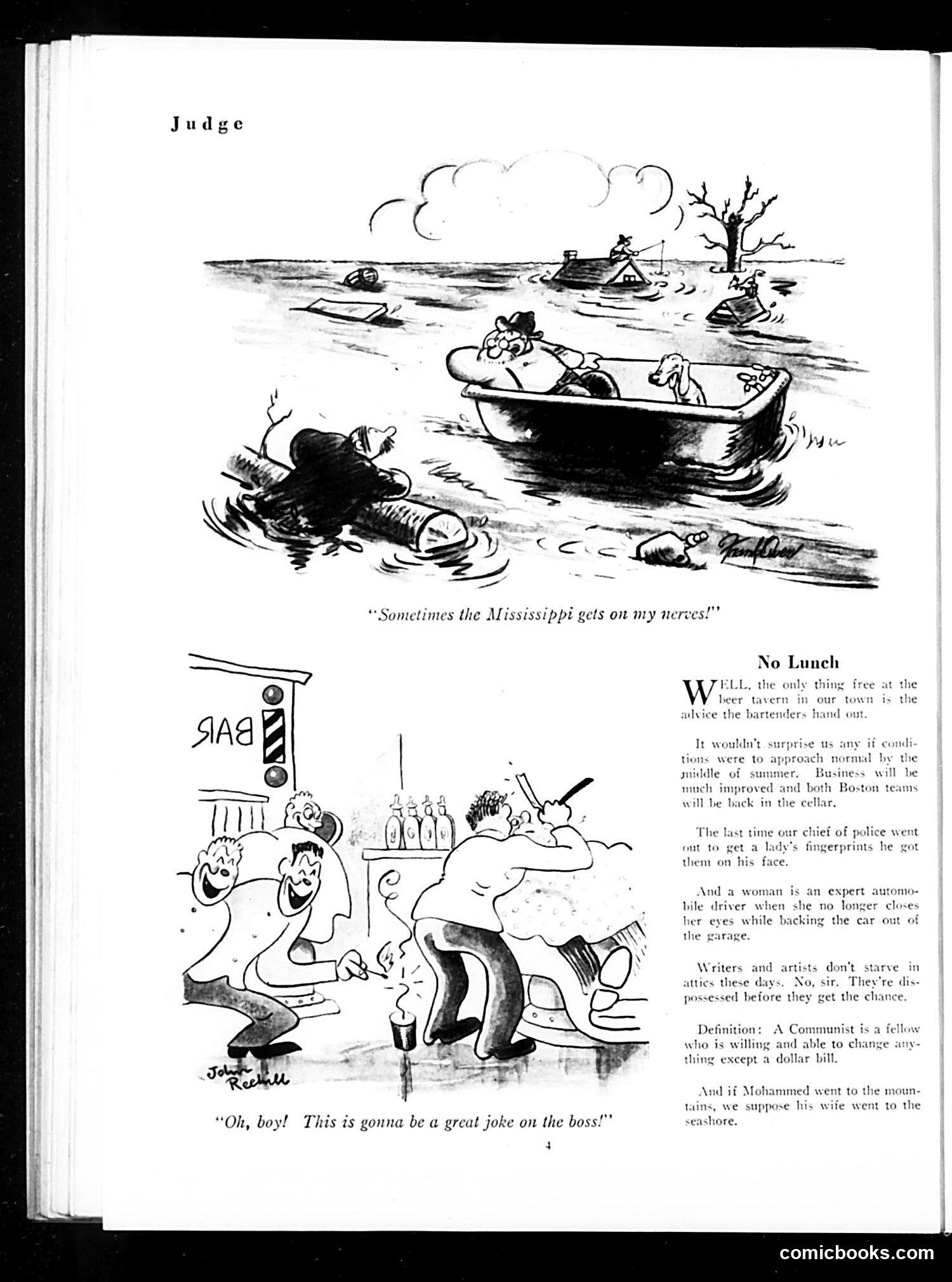
# Page Analysis: Judge Magazine The top cartoon depicts a man in a boat on the Mississippi River, apparently stressed by flooding conditions ("Sometimes the Mississippi gets on my nerves!"). This reflects actual Mississippi River flooding—a recurring natural disaster causing public anxiety. The bottom cartoon shows men at a bar labeled "BAR" with bottles visible, captioned "Oh, boy! This is gonna be a great joke on the boss!" This appears to satirize workplace drinking culture and prohibition-era speakeasy behavior. The "No Lunch" article discusses post-summer economic conditions, police inefficiency, and includes a communist definition joke ("willing to change anything except a dollar bill")—typical 1920s-30s satirical commentary on politics and social conditions. The overall page reflects Depression-era American concerns: natural disasters, economic hardship, and labor/political anxieties.
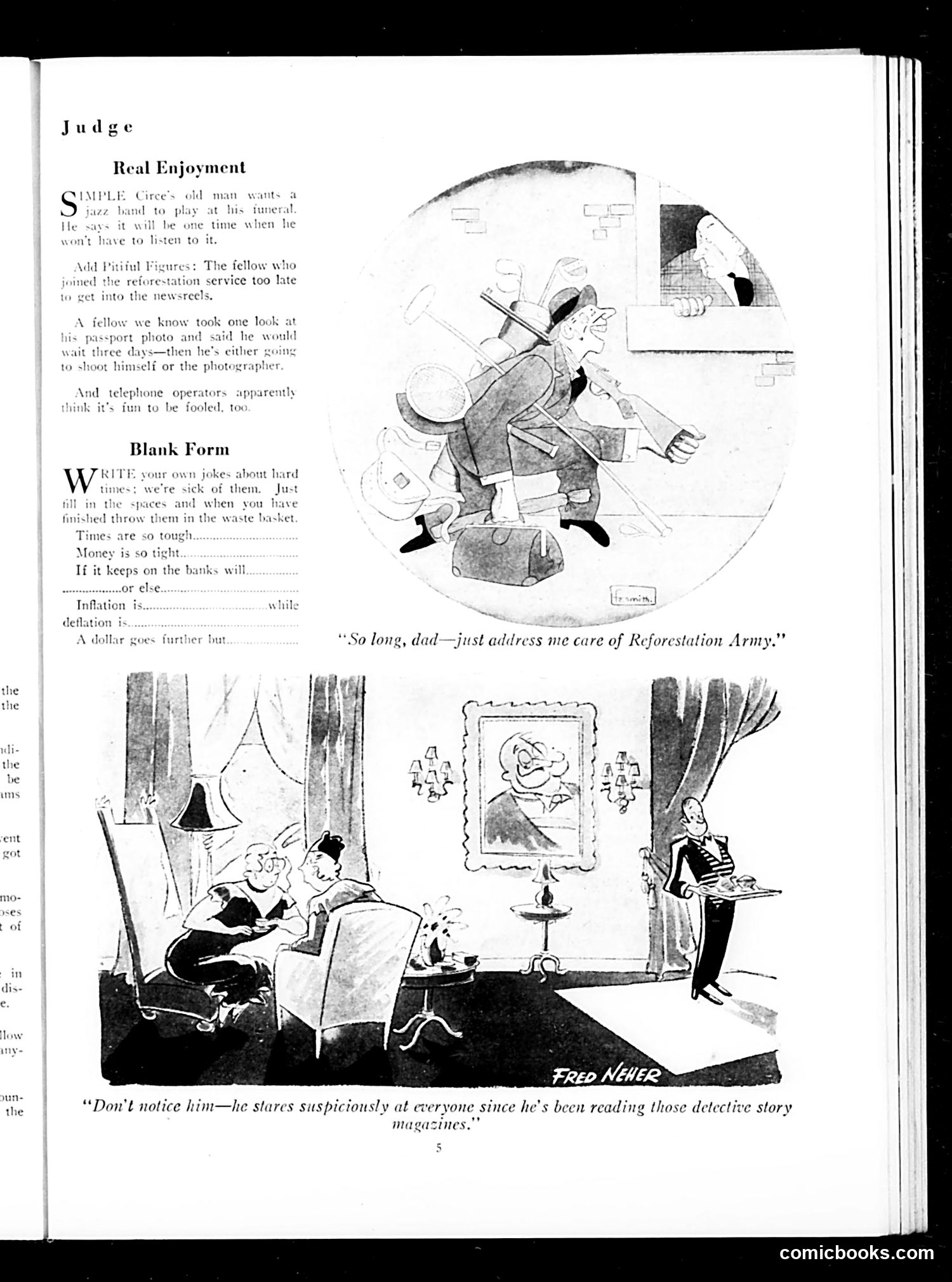
# Analysis of Judge Magazine Page This page contains three distinct humor pieces: **"Real Enjoyment"** mocks people seeking entertainment during hard times—an old man wanting jazz at his funeral, a reforestation service worker too late for employment, and someone threatening a photographer over a bad passport photo. **"Blank Form"** invites readers to complete jokes about economic hardship (tight money, inflation, deflation, bank failures)—suggesting Judge's audience found dark humor in Depression-era financial struggles. **Bottom cartoon** (by Fred Naher) shows a man reading "detective story magazines" who now suspiciously eyes everyone—satire on pulp detective fiction's influence on readers' paranoia. The page reflects 1930s economic anxiety and contemporaneous debates about mass media's effects on behavior and mental health.
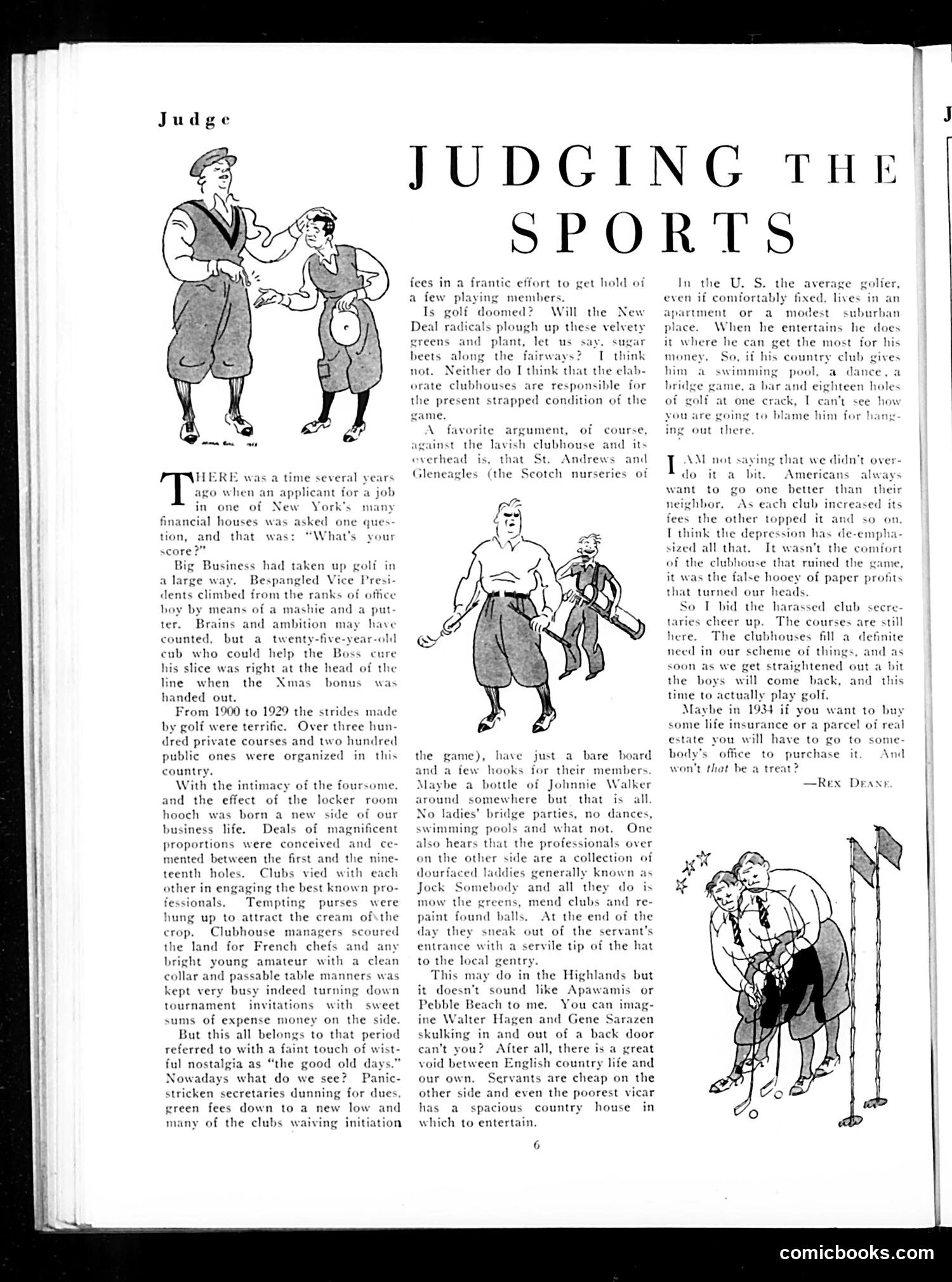
# "Judging the Sports": Golf's 1920s Decline This satirical piece critiques the dramatic collapse of American golf's popularity between 1900-1929. The text explains that golf clubs—which had proliferated with "magnificent proportions" and clubhouse extravagance—suddenly faced crisis as the sport fell from fashion. The cartoons illustrate the problem: overeager club managers had chased memberships and revenue so aggressively that the sport lost its appeal. Wealthy amateurs abandoned golf for other entertainments. The author (Rex Deane) argues the crisis stems not from course conditions but from excessive commercialization—the "false hooey of paper profits" that corrupted the game. The illustrations show a judge-like authority figure explaining this collapse to a younger golfer, suggesting satirical commentary on how poor management destroyed what was once an elite pastime.
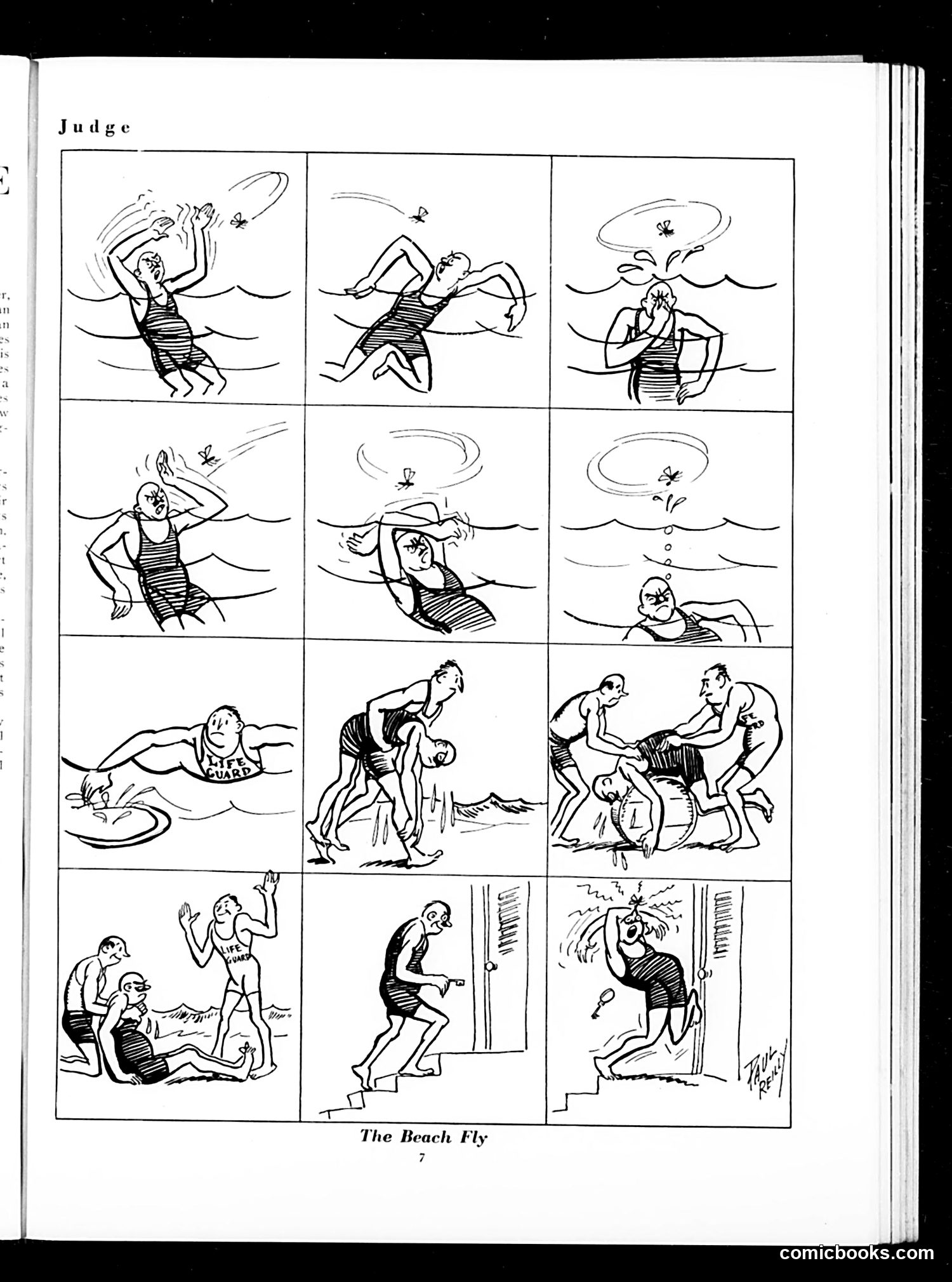
# "The Beach Fly" - Judge Magazine This is a humorous comic strip titled "The Beach Fly" depicting various mishaps involving a persistent insect at the beach. The sequential panels show beachgoers attempting to swat or escape from a fly using a frisbee (or similar disc), with escalating chaos: the fly evades their efforts, they collide with each other, interfere with other swimmers and sunbathers, and finally chase the fly indoors where it causes further disruption. The satire is straightforward slapstick comedy—the joke centers on how a tiny annoyance (the beach fly) triggers disproportionate, comical overreactions among adults, resulting in complete pandemonium. It's gentle social humor about the irritations of summer beach culture and human absurdity, requiring no specific political or historical context beyond understanding shared beach experiences.
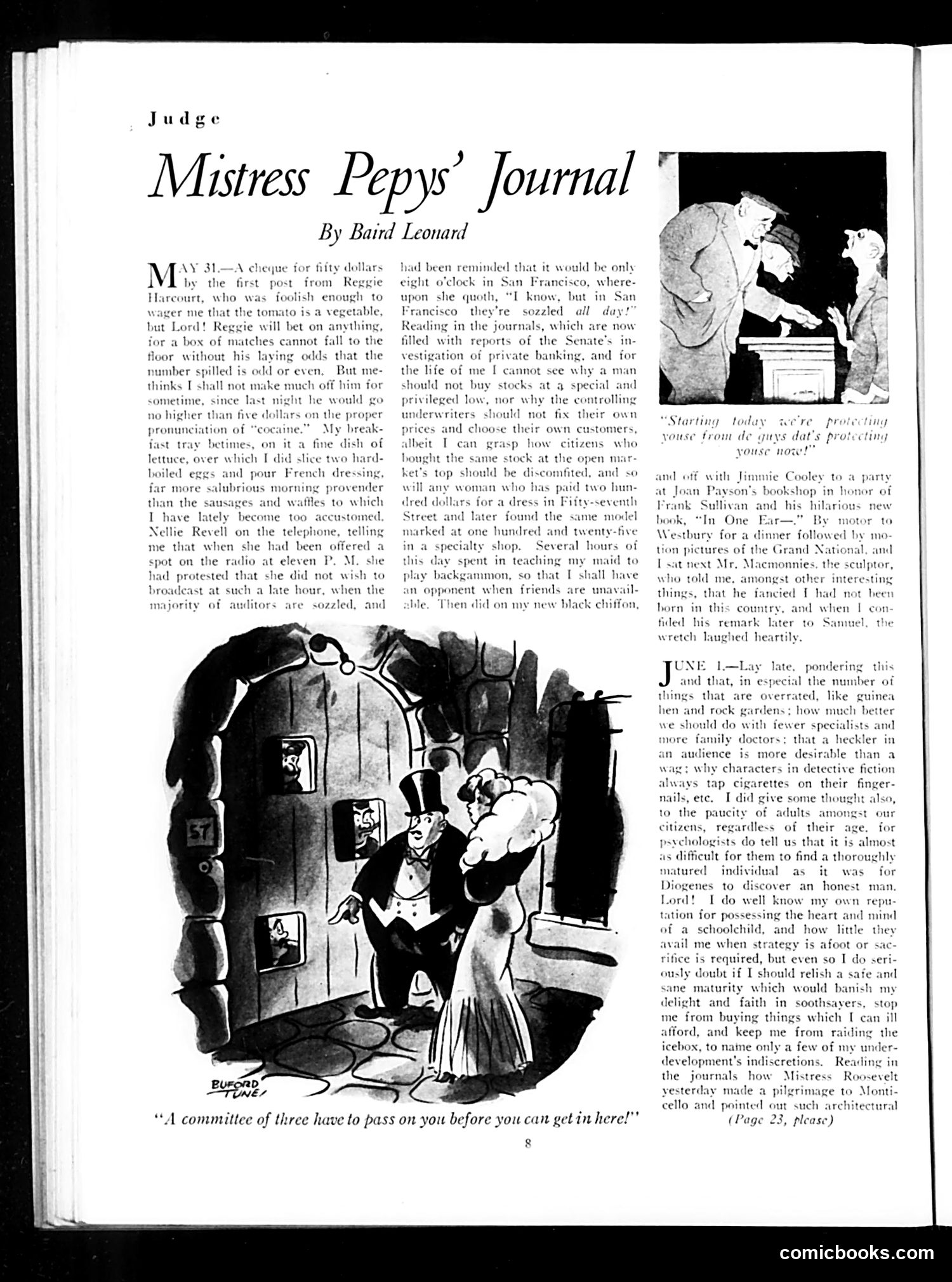
# "Mistress Pepys' Journal" — Judge Magazine Satire This is a society gossip column mimicking Samuel Pepys's famous 17th-century diary, written by "Mistress Pepys" (a female diarist). The satire targets wealthy New York socialites and their frivolous concerns during what appears to be the 1920s-30s. The main cartoon depicts a woman entering an exclusive venue where a doorman announces "A committee of three have to pass on you before you can get in here!"—satirizing the exclusivity and gatekeeping of high society. The column mocks the upper class for: obsessing over trivial matters (tomatoes as vegetables, dress prices), attending endless parties and dinners, and complaining about servants and household staff. The diarist also references Senate investigations into private banking, suggesting the piece may target wealthy elites' indifference to serious political matters while absorbed in their own pleasures. The overall joke: despite their pretensions to sophistication, these socialites are shallow, petty, and absurdly self-absorbed—their "journals" recording nothing of substance.
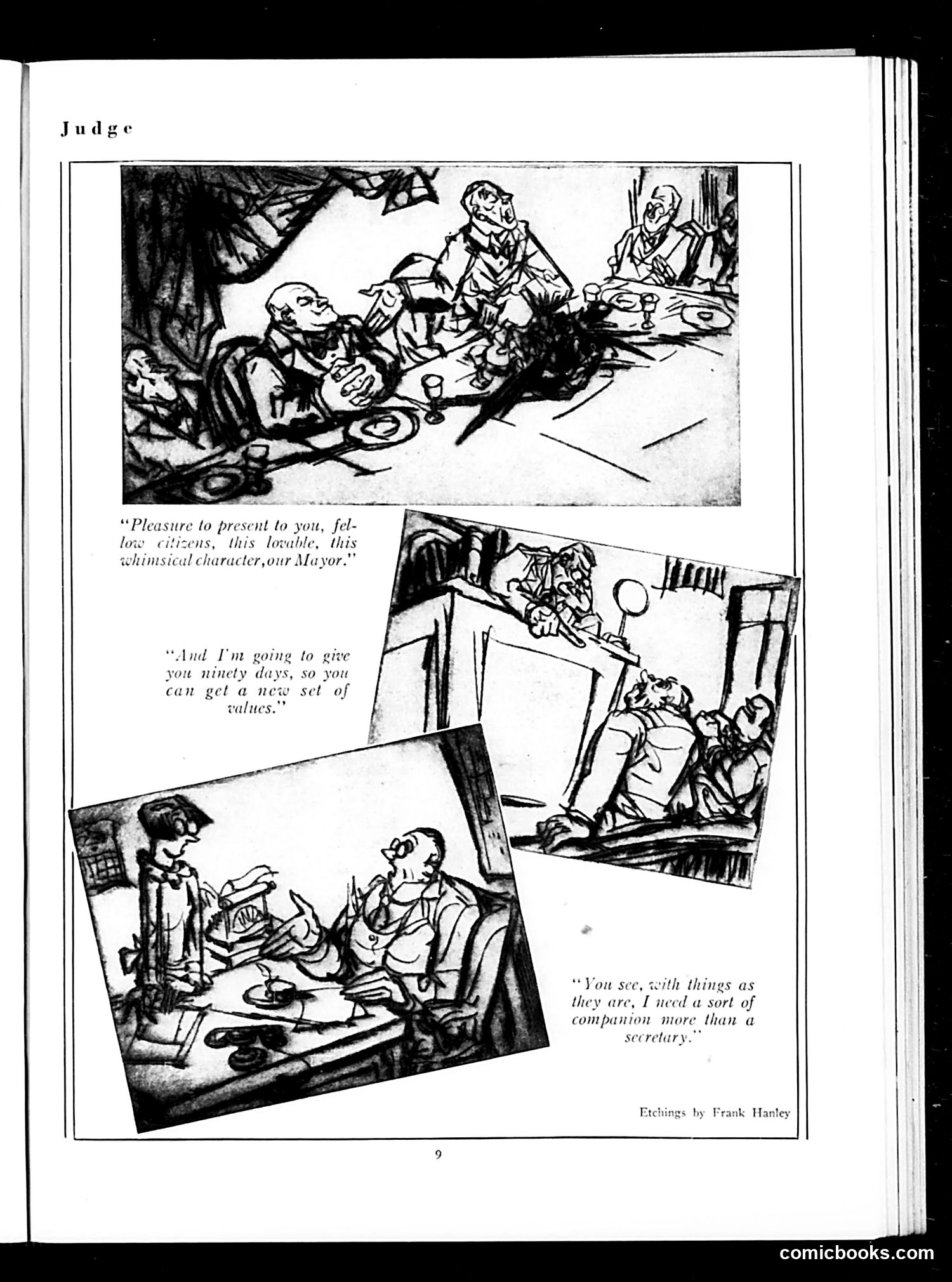
This page from *Judge* satirizes municipal corruption and mayoral incompetence. The cartoons depict a mayor being introduced to citizens as a charming character, then sentencing someone to 90 days in jail supposedly to reform their "values"—suggesting the mayor himself lacks ethical standards while posturing as moral authority. The final panel's joke about needing "a companion more than a secretary" implies the mayor surrounds himself with loyalists rather than competent staff, prioritizing personal support over administrative function. The satire targets the hypocrisy of corrupt local officials who punish ordinary citizens while embodying the very moral failings they condemn. Frank Hanley's etchings emphasize the mayor's whimsical, unserious demeanor despite wielding judicial power.
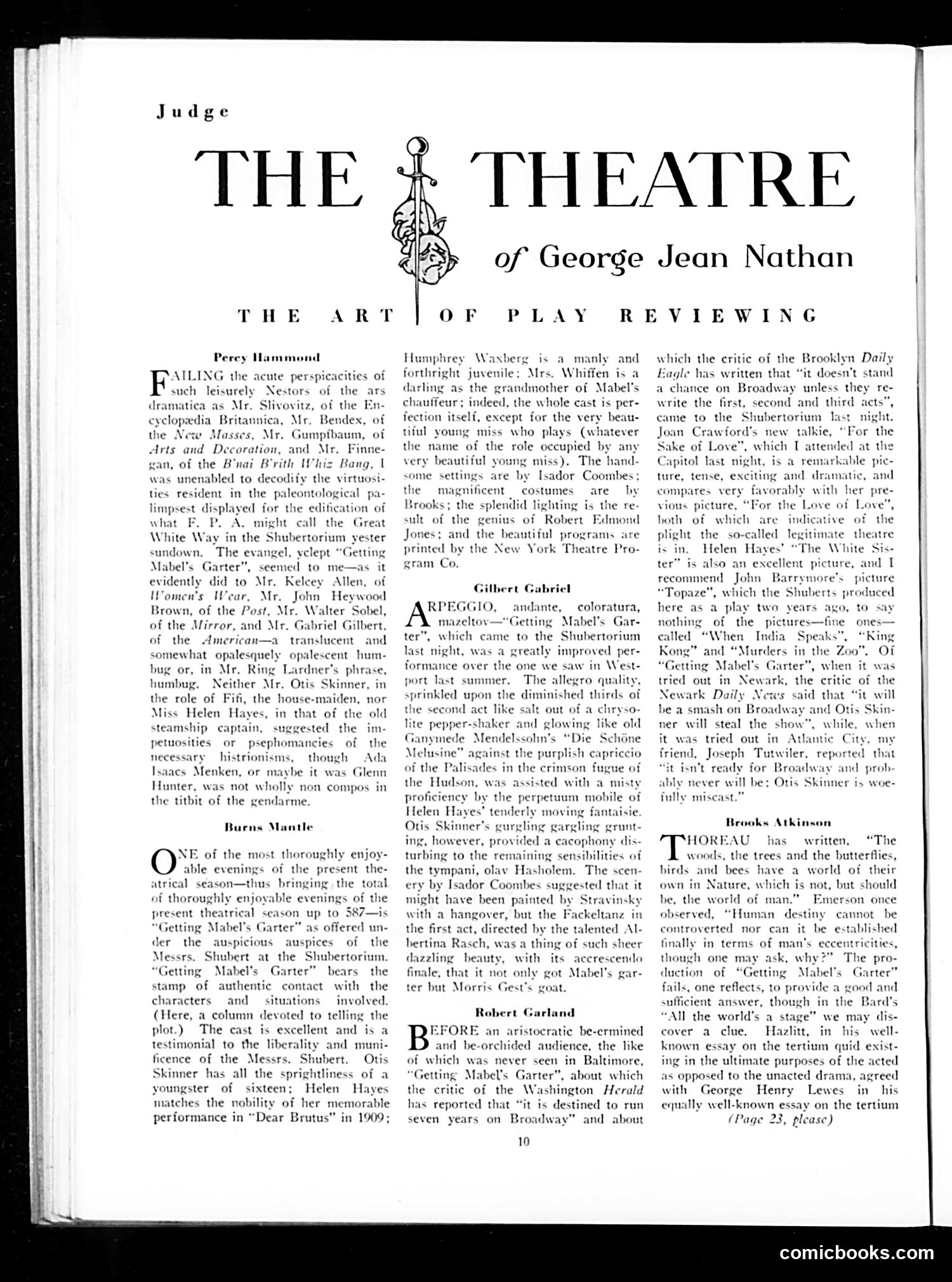
# Judge Magazine Theater Review Page This page is primarily a theater criticism column by George Jean Nathan reviewing Broadway plays, particularly "Getting Mabel's Garter" at the Shubertorium. The satire targets pretentious theater critics. Nathan opens by mocking other critics' "acute perspicacities"—listing absurdly named publications like the "Encyclopedia Britannica" and "B'nai B'rith Whiz Bang." He uses deliberately overblown language ("paleontological palimpsest," "opalesquely opalescent") to parody critical pomposity. The reviews themselves are snippets from various critics (Humphrey Wasberg, Gilbert Gabriel, Robert Garland, Burns Mantle, Brooks Atkinson) offering contradictory assessments of the same production and its star, with wildly varying predictions about its success. This demonstrates how subjective and unreliable theater criticism could be. The joke: serious theatrical criticism is often inflated nonsense masking uncertain judgment.