A complete issue · 36 pages · 1932
Judge — May 7, 1932
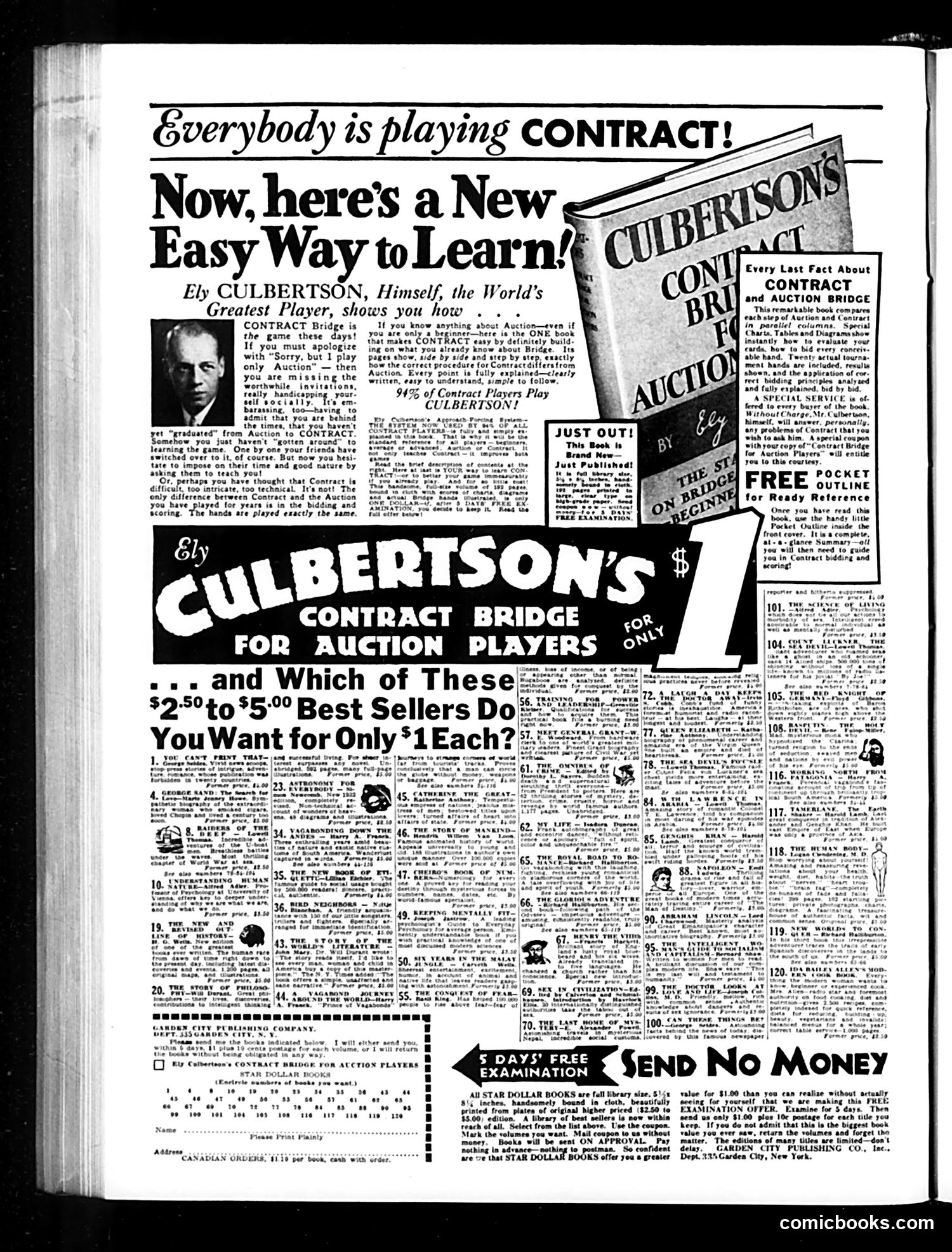
# Analysis This page is primarily **advertising, not editorial content or satire**. It's a full-page advertisement for Culbertson's Contract Bridge instruction books, featuring Ely Culbertson, who was apparently a famous bridge player of the era. The advertisement promotes learning contract bridge through Culbertson's methods, claiming "94% of Contract Players Play Culbertson!" It offers his book for $1 and lists various related bridge instruction titles selling for $2.50-$5.00. The right side contains small-print book descriptions and a "Send No Money" coupon offer with free examination. There is no political satire here—it's a straightforward commercial advertisement typical of vintage magazine advertising, using a celebrity endorsement strategy to market bridge instruction materials.
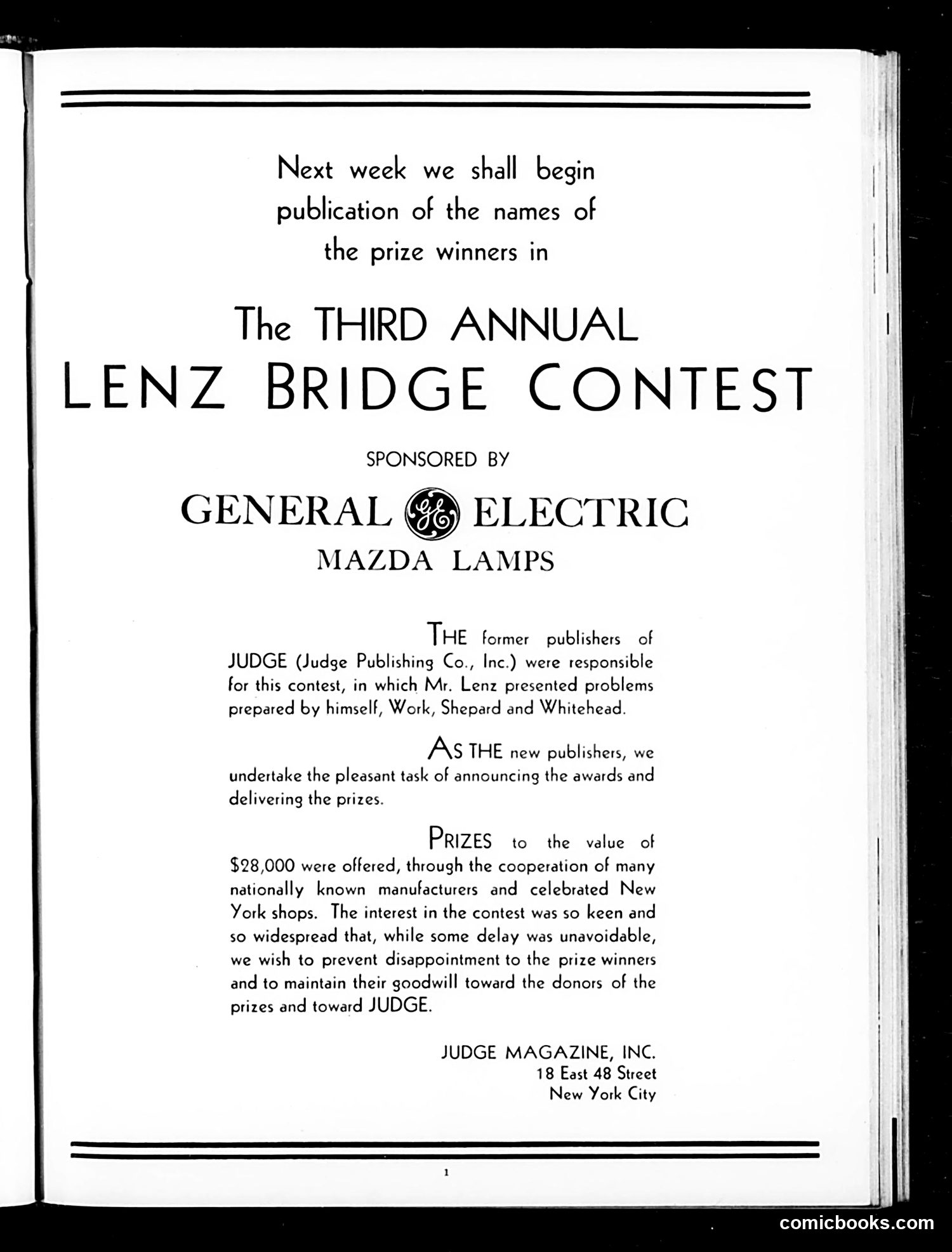
# Analysis This page is **not a cartoon or satirical content**—it's an **announcement and advertisement** from Judge Magazine's publishers. The text announces the upcoming publication of winners from the Third Annual Lenz Bridge Contest, sponsored by General Electric's Mazda Lamps division. Judge Magazine (the new publishers) is taking over from the previous publisher, Judge Publishing Co., Inc., to announce awards and deliver prizes worth $28,000. The announcement emphasizes the contest's popularity and widespread interest, explaining that while some delay in announcing winners was unavoidable, they're committed to maintaining goodwill with prize winners and donors. This is primarily **business correspondence and contest administration**, not satire or editorial commentary.
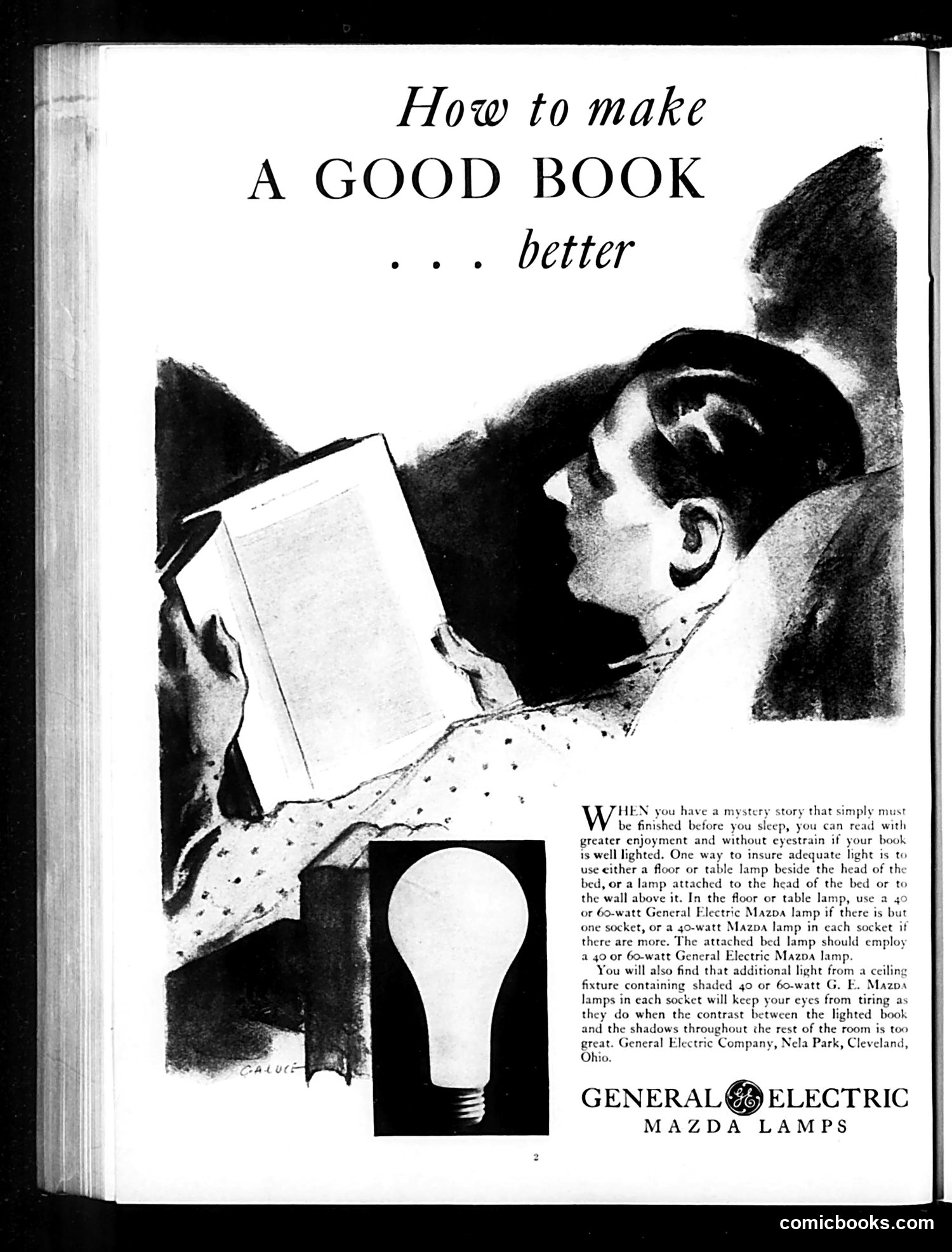
# Analysis This is primarily **advertising content, not satire or political commentary**. The page promotes General Electric Mazda lamps by addressing a practical consumer concern: reading comfort. The headline "How to make A GOOD BOOK... better" uses a clever double meaning—improving both the reading experience and the book itself through proper lighting. The illustration shows a person reading in bed under inadequate lighting. The accompanying text and lamp diagram explain technical specifications for home lighting setups to reduce eyestrain while reading. The copy recommends specific wattages and lamp placements for bedside and ceiling fixtures. This reflects early-20th-century consumer marketing that framed electrical products as solutions to everyday problems, positioning electric lighting as a modern convenience that enhanced quality of life.
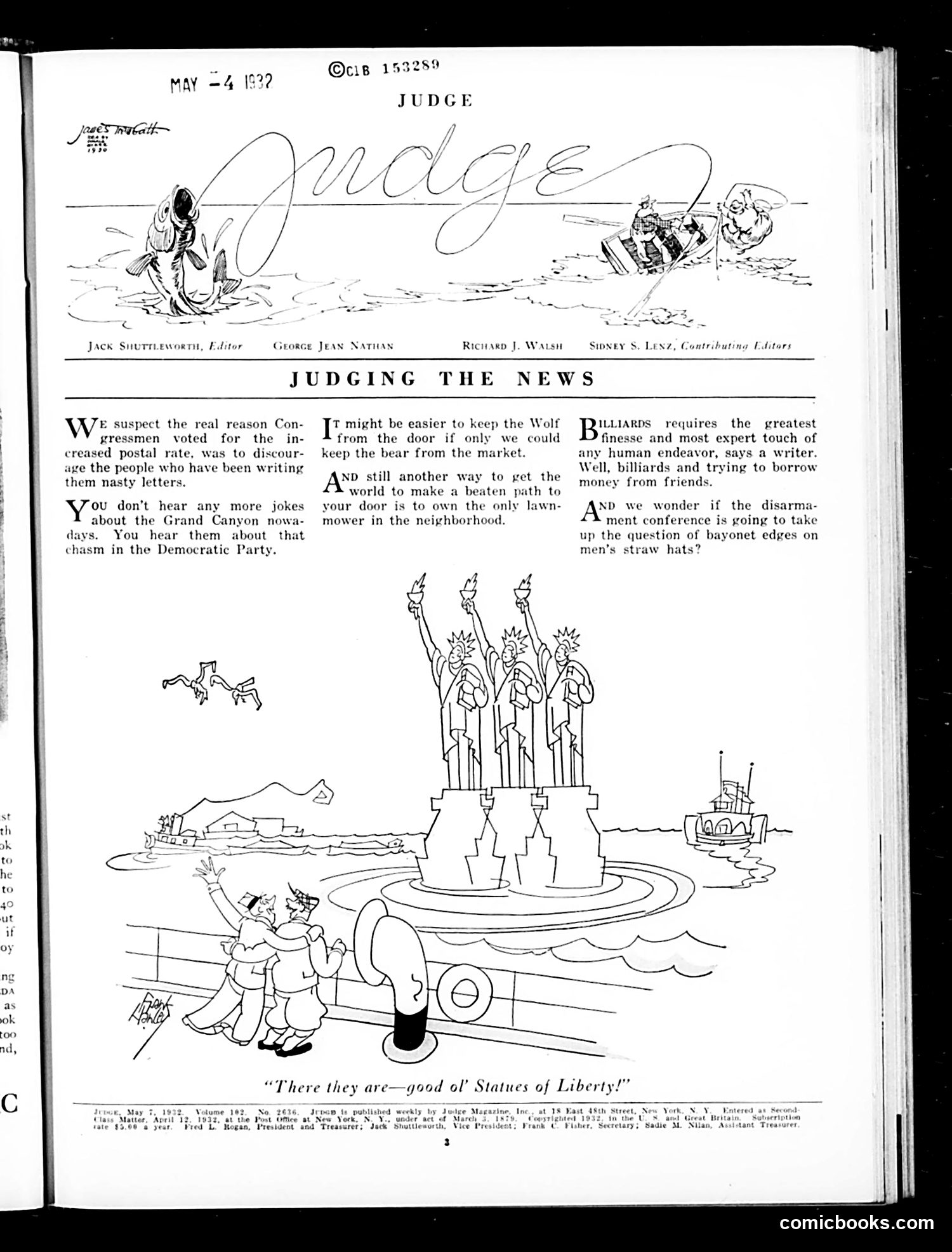
# Judging the News - May 24, 1932 This satirical page critiques contemporary issues through short commentaries and illustrations: **Top commentary** mocks Congressional mail volume, suggesting politicians received increased letters about postal rates—implying constituent complaints were trivial compared to serious economic problems. **Middle section** jokes that Democrats were blamed for economic "chasm" rather than discussing substantive policy. **Bottom illustration**, captioned "There they are—good ol' Statues of Liberty!," depicts three torch-bearing figures on a pedestal viewed by tourists near a ship. This likely satirizes either excessive patriotic symbolism or America's self-image during the Great Depression (1932), when rhetoric about liberty contrasted sharply with economic hardship and unemployment. The overall tone suggests frustration with political distraction from real crises.
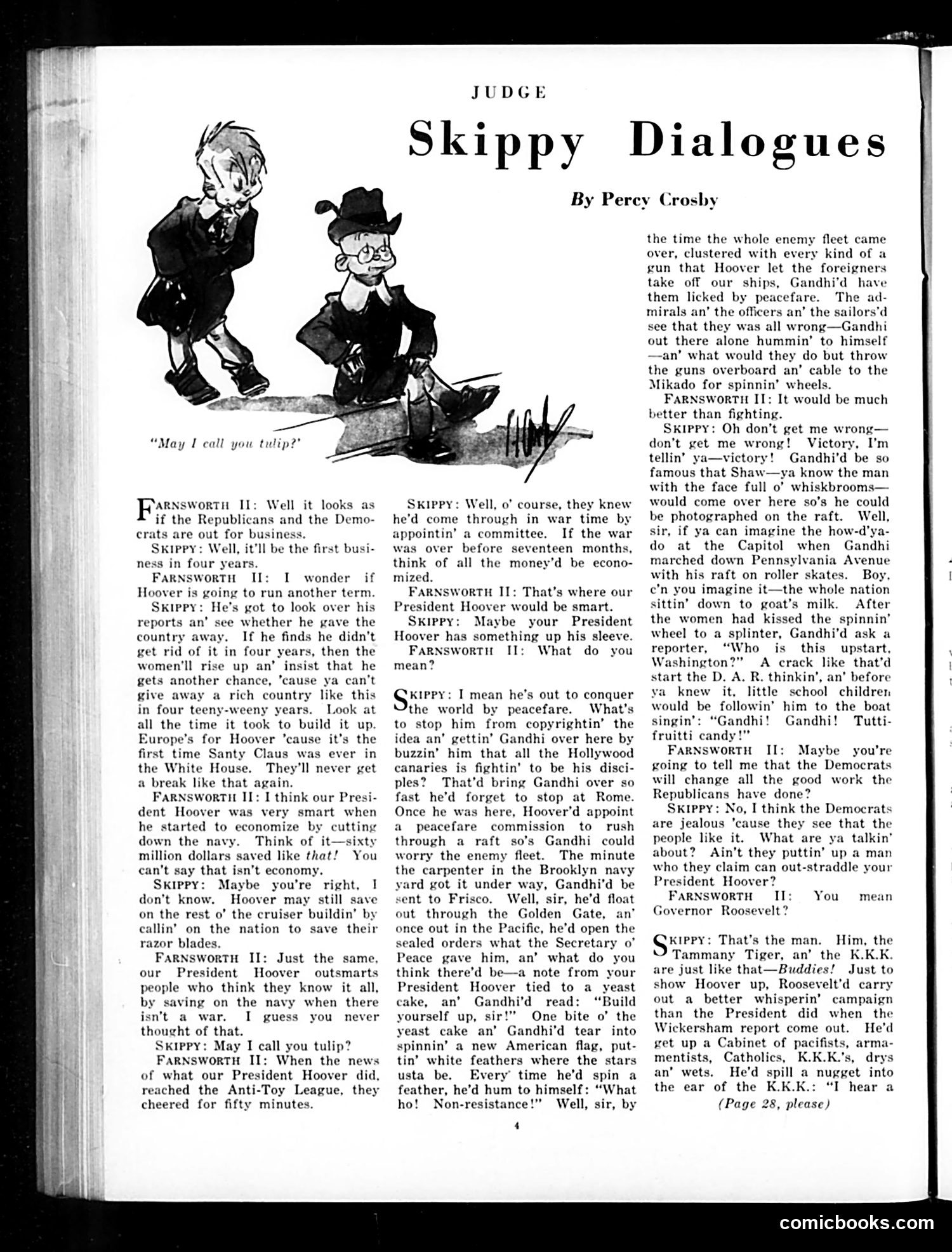
# Judge Magazine: "Skippy Dialogues" Analysis This satirical dialogue features two characters—one appears to be a judge or authority figure, the other labeled "Skippy"—discussing President Hoover's foreign policy, particularly regarding Gandhi and India. The satire mocks Hoover's diplomatic approach: Skippy suggests Hoover might invite Gandhi to America to photograph him for propaganda purposes, implying the administration uses pacifist symbols for political gain. References to "peaceable" conquest and spinning "a new American flag" mock the administration's attempts to present military/imperial actions as peaceful diplomacy. The cartoon critiques how the Hoover administration exploited popular figures like Gandhi for domestic political advantage while pursuing expansionist policies. The humor targets the disconnect between peaceful rhetoric and actual foreign intervention—a common Judge critique of 1930s Republican administrations.
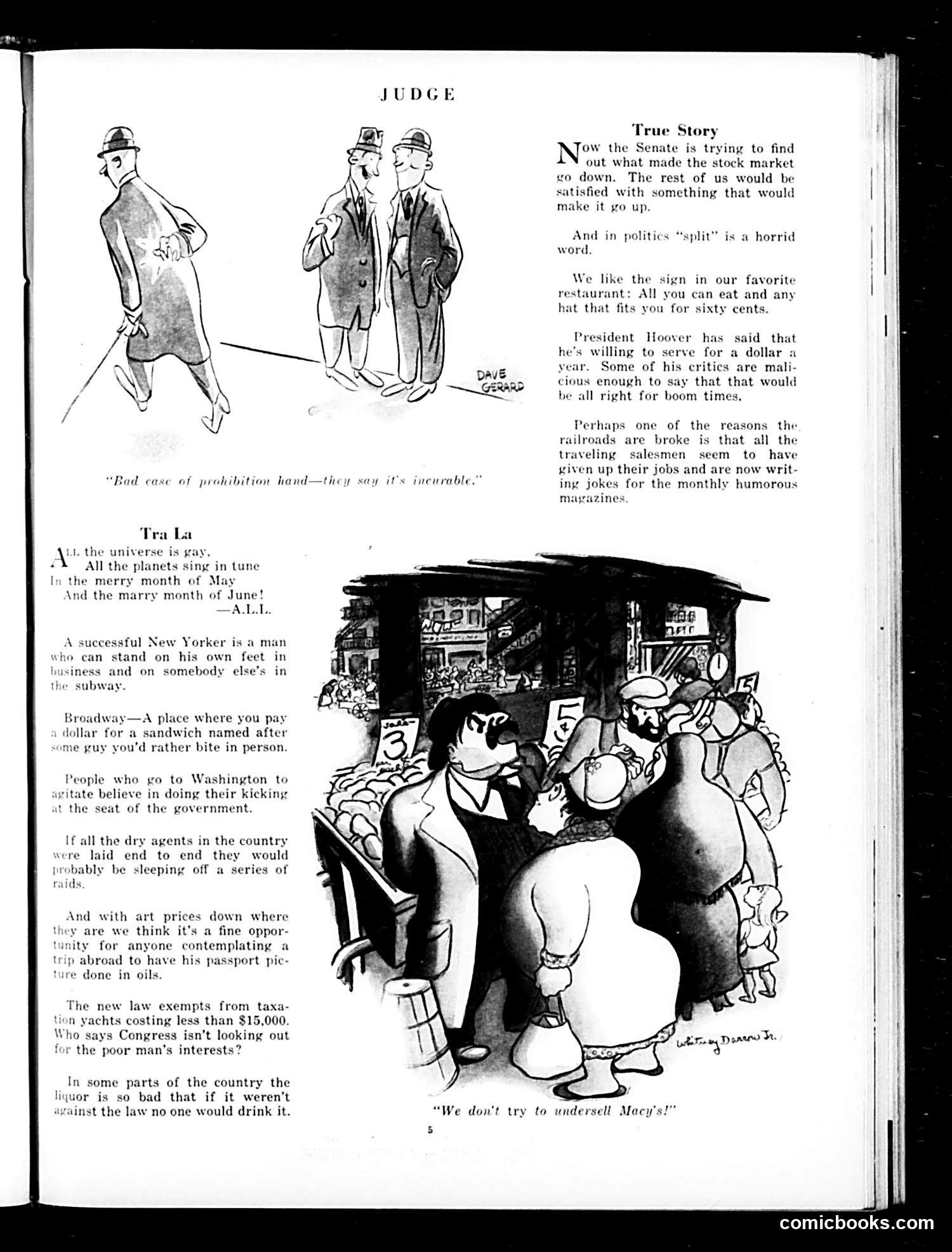
# Judge Magazine Page Analysis **Top Cartoon:** Shows three men in suits discussing prohibition enforcement ("Bad case of prohibition hand—they say it's incurable"). The gesture and posture suggest the difficulty authorities faced enforcing the alcohol ban. **Bottom Cartoon:** A crowded scene at what appears to be Macy's department store ("We don't try to undersell Macy's!"). This likely satirizes competitive retail pricing during the Depression era. **Text Content:** The "True Story" column contains period commentary on stock market concerns, political "splits," restaurant pricing (60-cent meals), President Hoover's dollar-a-year service offer, and railroad industry troubles. References to dry agents writing jokes suggest public frustration with prohibition enforcement. The page reflects 1930s economic anxiety and prohibition-era social tensions.
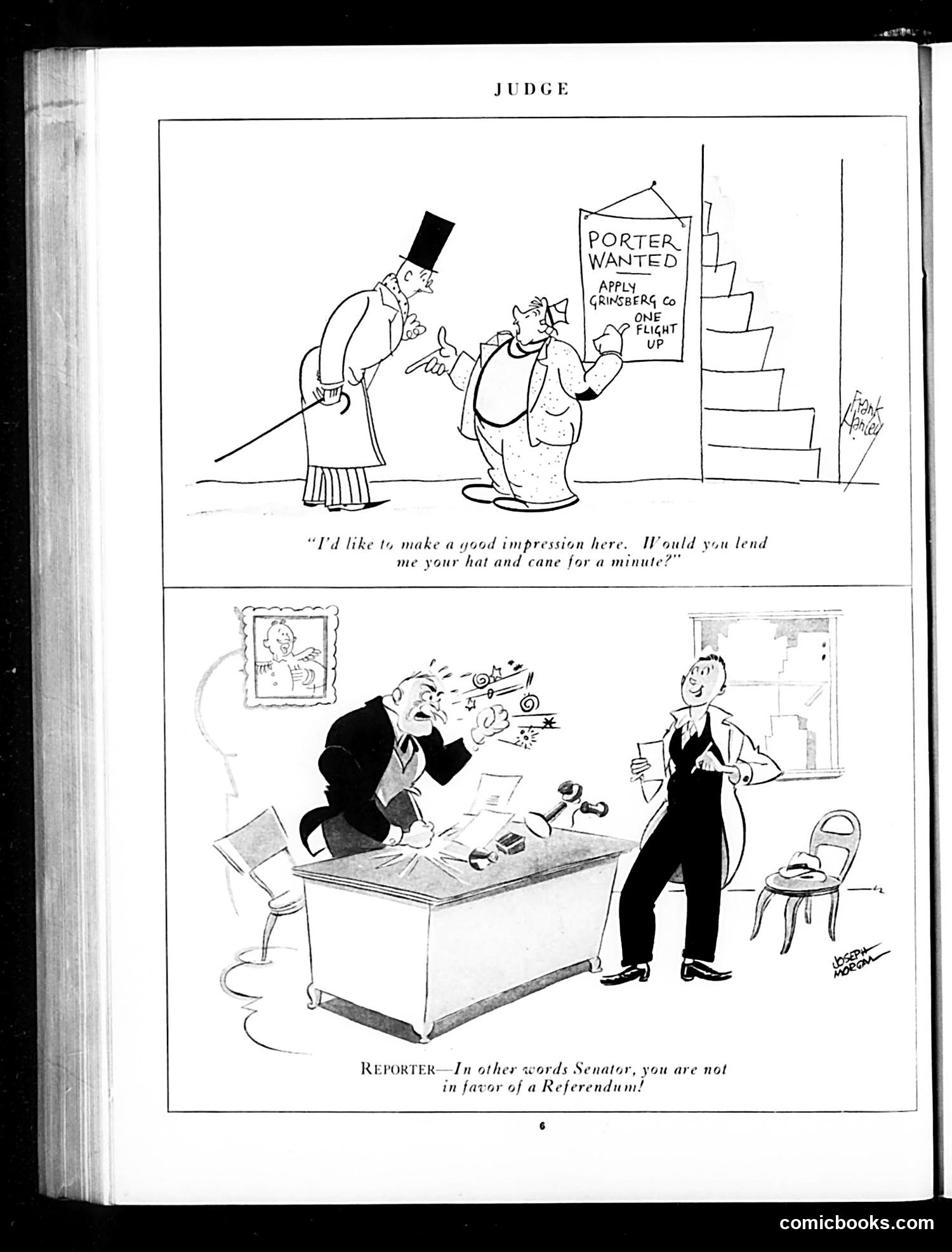
# Judge Magazine Cartoon Analysis This page contains two satirical cartoons labeled "JUDGE": **Top cartoon:** A well-dressed man with a top hat asks another man to borrow his hat and cane to "make a good impression" while applying for a porter job at the Ginsberg Company. The joke mocks social pretension—using borrowed finery to falsely present oneself as more respectable than one actually is. **Bottom cartoon:** A senator appears agitated at his desk while a reporter states: "In other words Senator, you are not in favor of a Referendum!" The satire targets politicians who oppose direct democracy (referendums), suggesting the senator's evasive responses reveal his actual anti-democratic position despite his rhetoric. Both cartoons critique social hypocrisy and political dishonesty through visual humor.
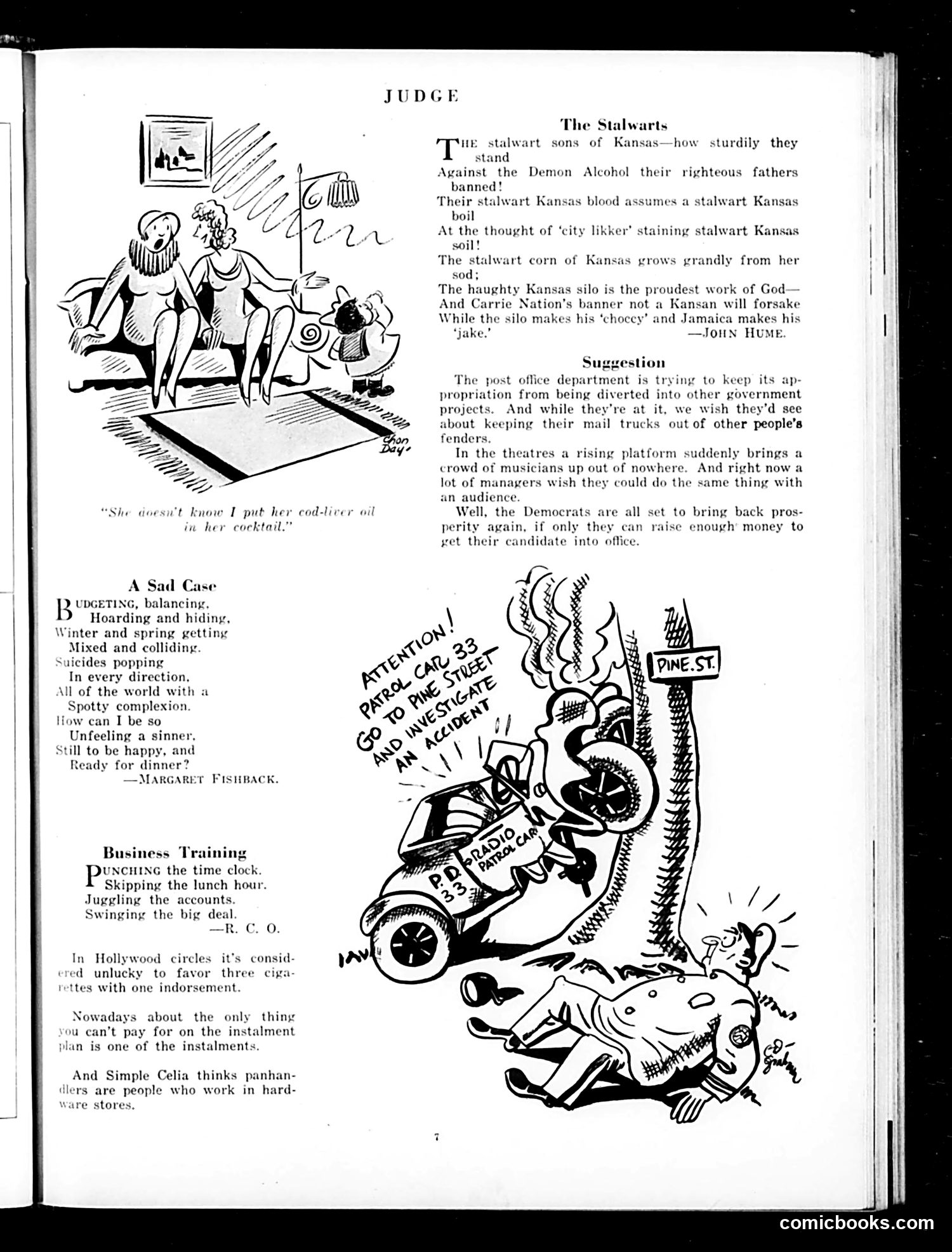
# Judge Magazine Page Analysis This page contains satirical poetry and social commentary typical of Judge magazine's humor: **"The Stalwarts"** mocks Kansas's prohibition stance and Carrie Nation (the temperance activist famous for smashing saloons). The poem ironically praises Kansas's "stalwart" resistance to alcohol while noting Kansans secretly make illegal "choccy" (chocolate liquor) and "jake" (Jamaica ginger extract used to evade prohibition laws). The humor lies in the hypocrisy: publicly righteous, privately drinking. **The large cartoon** (right side) depicts a car crash on Pine Street involving what appears to be a "Patrol Car" and a "Bread Wagon," with text referencing "Attention! Patrol Car 33 to Precinct and Investigate Accident!" This satirizes either police incompetence or the absurdity of bureaucratic accident procedures. **Additional sections** include brief humorous observations on post offices, theaters, Hollywood, and business culture—standard Judge fare offering light social satire on contemporary American institutions and behaviors. The overall tone is lighthearted mockery of hypocrisy, inefficiency, and modern absurdities.
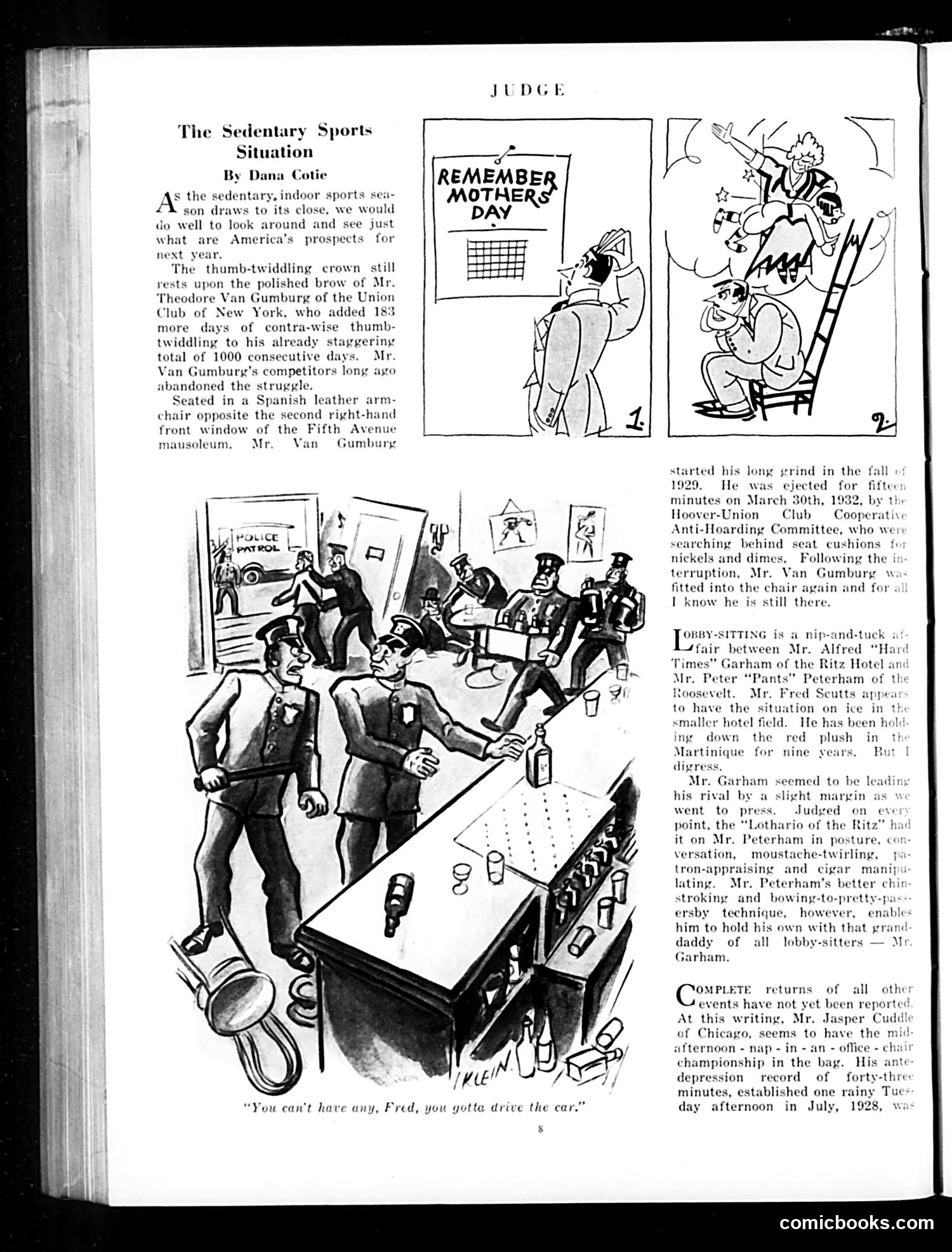
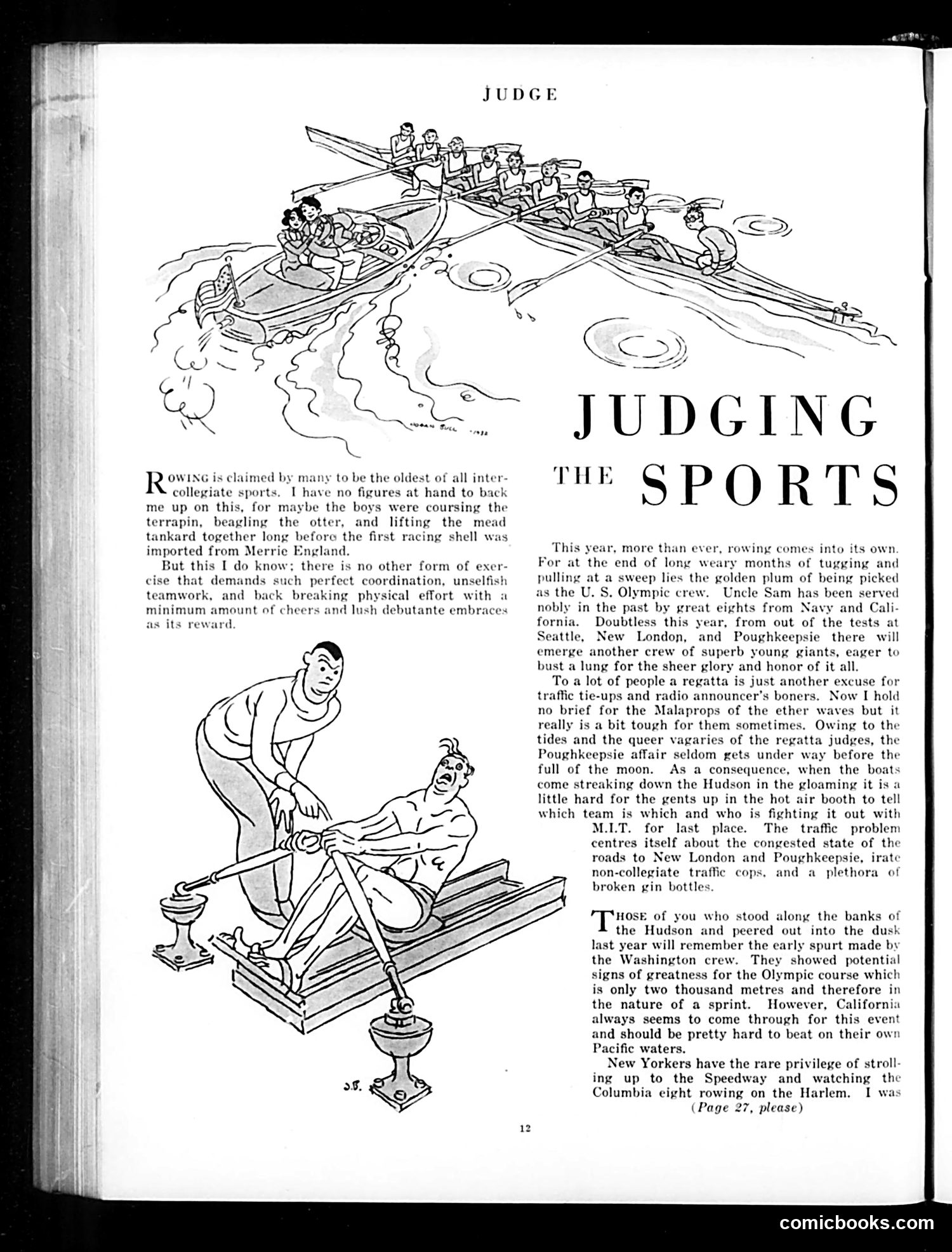
# "The Sedentary Sports Situation" — Judge Magazine Satire This is satirical commentary on wealthy leisure-class idleness during the Great Depression era (late 1920s-early 1930s). The article humorously treats trivial "sedentary sports" as if they were serious competitions: **Main figures:** Theodore Van Gumburg (Union Club member) holds the "thumb-twiddling crown" with 1,000+ consecutive days. The text notes he was briefly ejected in 1932 when the club's Anti-Hoarding Committee searched furniture for hidden coins and dimes. **The joke:** While ordinary Americans faced economic hardship, wealthy clubmen competed in pointless indoor activities like professional napping and "lobby-sitting" (sitting in hotel lobbies). **The cartoon below** depicts a domestic scene where a man tells another "You can't have any, Fred, you gotta drive the car"—likely mocking car-dependent leisure or frivolous automobile culture among the affluent. The satire targets the disconnect between Depression-era poverty and the absurd pastimes of the privileged elite.
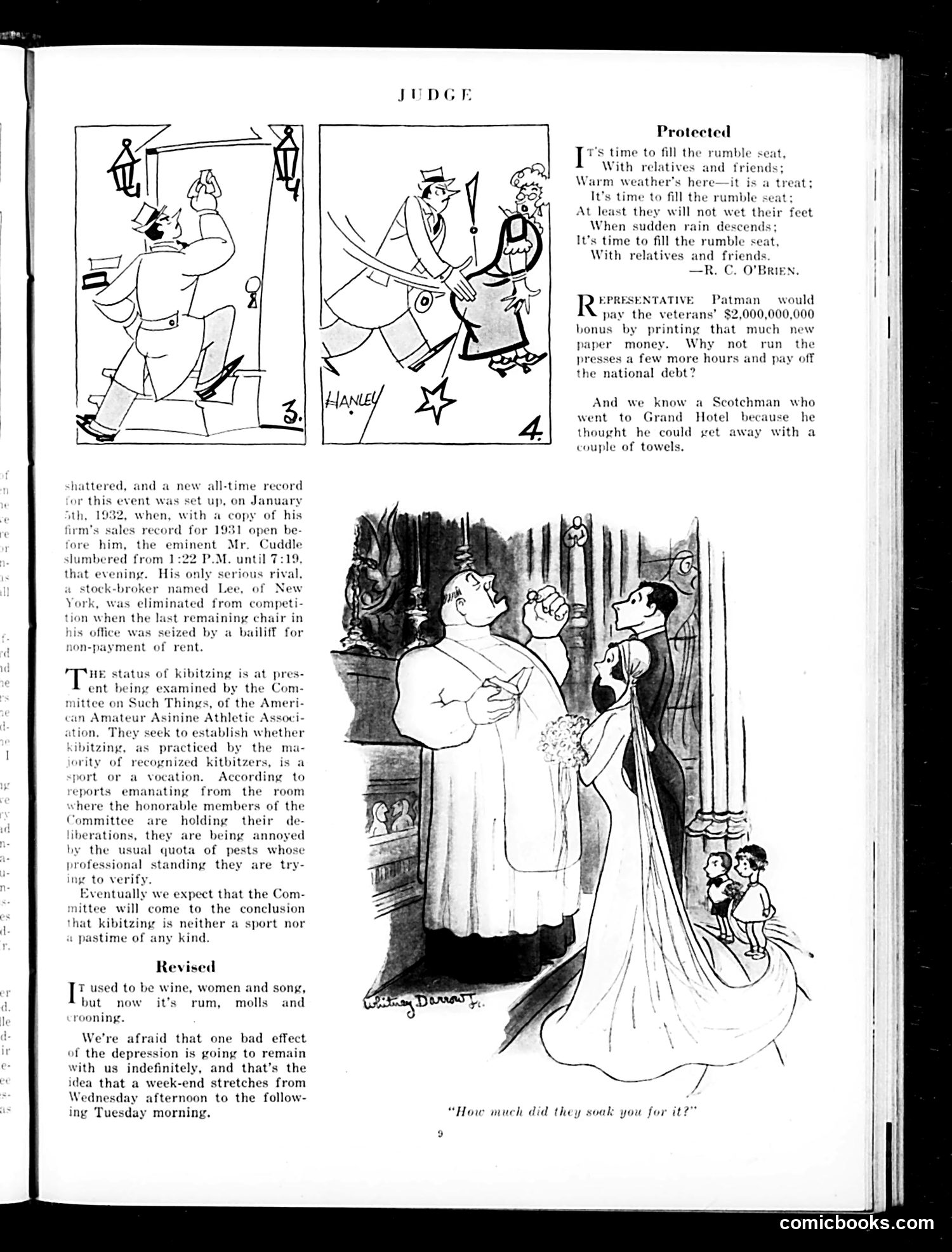
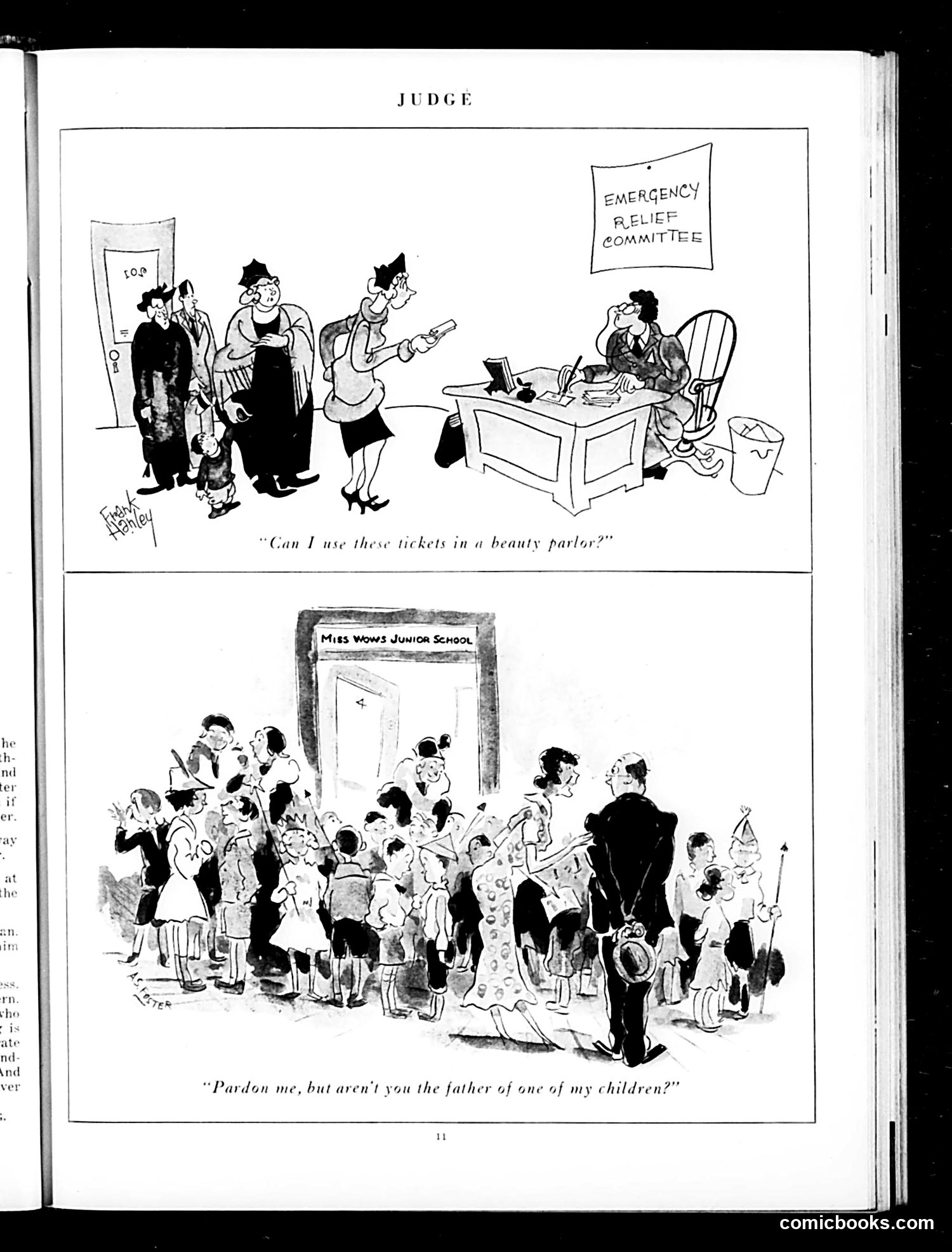
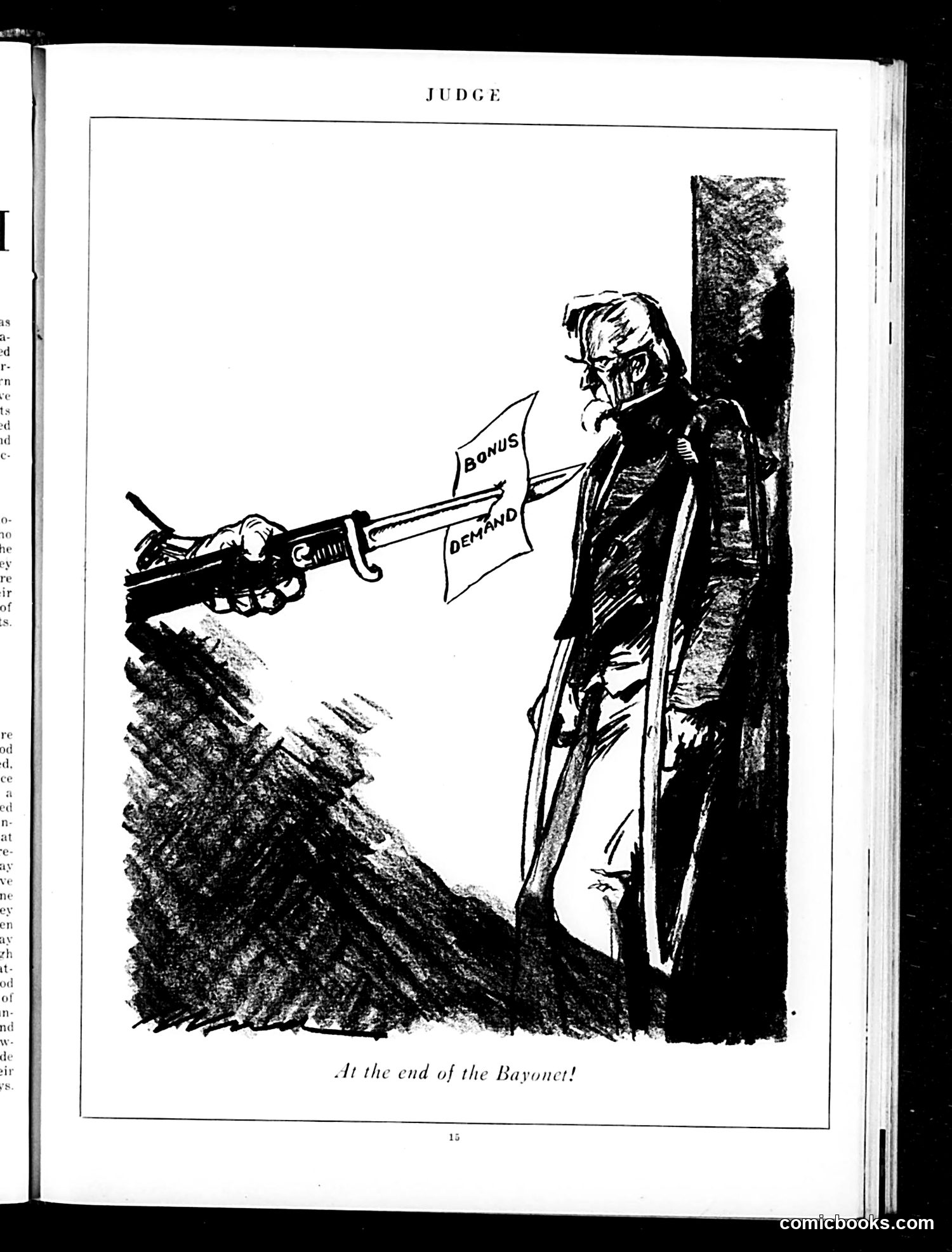
# Judge Magazine Page Analysis This page contains political satire and social commentary from the Great Depression era (likely early 1930s, based on references to "the depression"). **Top cartoons (numbered 3-4):** Labeled "JUDGE," these appear to be unrelated vignettes about everyday life—possibly about crowded transportation or social situations. **Political satire:** A representative named Patman is mocked for proposing to pay a $2 billion veterans' bonus by printing new money, with the sarcastic suggestion of just printing more to pay off the national debt. **Social humor:** Various brief jokes target Depression-era behavior—a Scotsman trying to steal hotel towels, office chairs seized by bailiffs for unpaid rent, and the concept of "kibitzing" (backseat commentary) being examined as a "sport or vocation." **Main cartoon:** Shows a large woman in a hotel room asking guests "How much did they soak you for it?"—likely satirizing inflated hotel prices or poor service during economic hardship. The overall tone mocks both economic hardship and human nature's response to it.
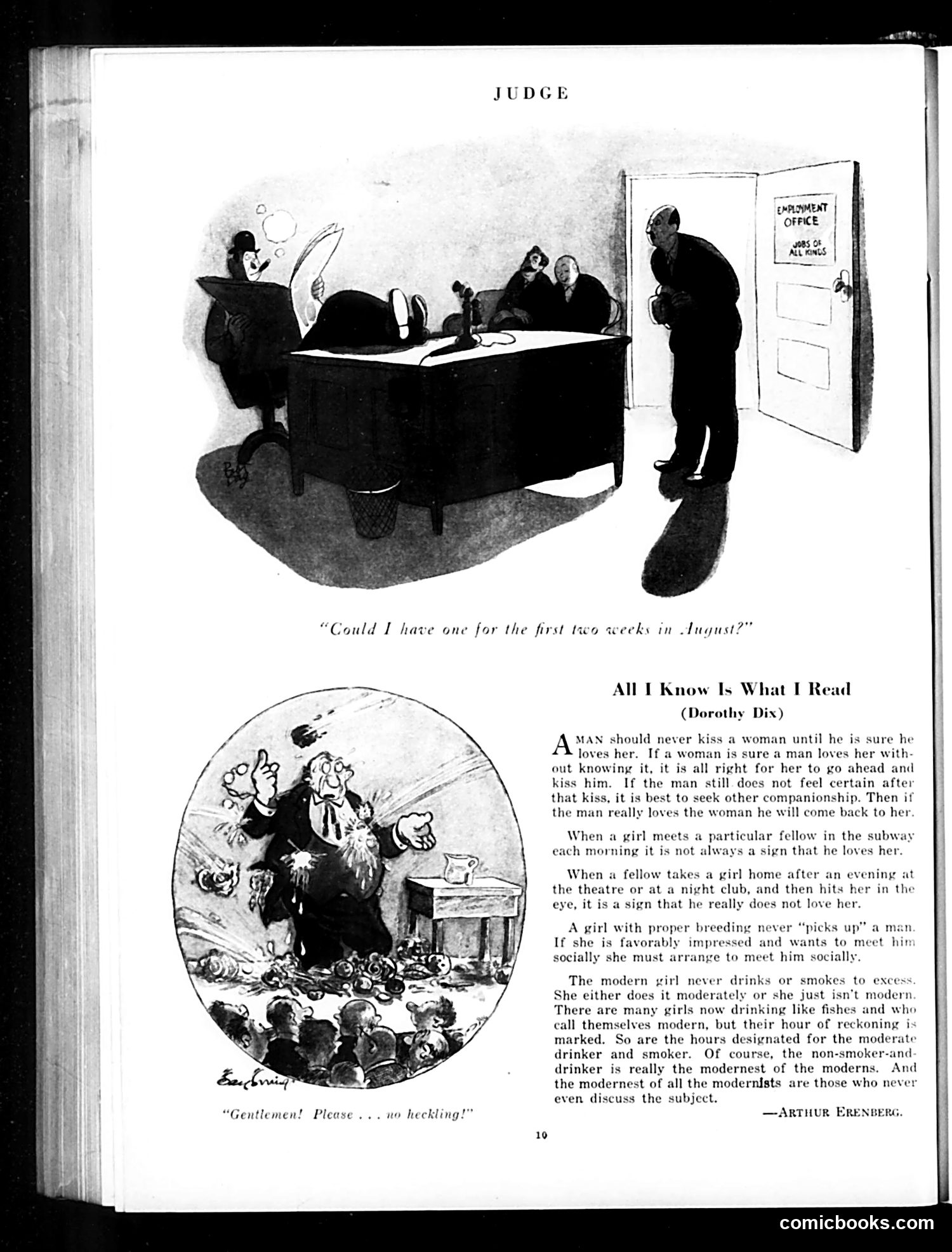
# Analysis of Judge Magazine Page **Top Cartoon ("Could I have one for the first two weeks in August?"):** A man sits at a judge's bench while a couple stands before him seeking an "Employment Office" sign visible on the wall. The joke appears to satirize judicial authority being misused or absurdly applied—the man is requesting a two-week vacation "from the judge," suggesting the judge controls his employment or freedom. This likely mocks either corrupt judicial overreach or the absurdity of seeking judicial approval for routine matters. **Bottom Cartoon ("Gentlemen! Please... no heckling!"):** Chaotic scene with figures arguing, captioned by an exasperated woman demanding order. The humor appears to come from unruly behavior or heckling in what may be a social gathering. **Column ("All I Know Is What I Read" by Dorothy Dix):** A satirical advice column mocking modern dating and social conventions of the era—particularly critiquing "modern" women who drink and smoke, using paradoxical logic to mock claims of modernity. The wit lies in the absurd circular reasoning about what actually constitutes modern behavior.