A complete issue · 36 pages · 1931
Judge — July 4, 1931
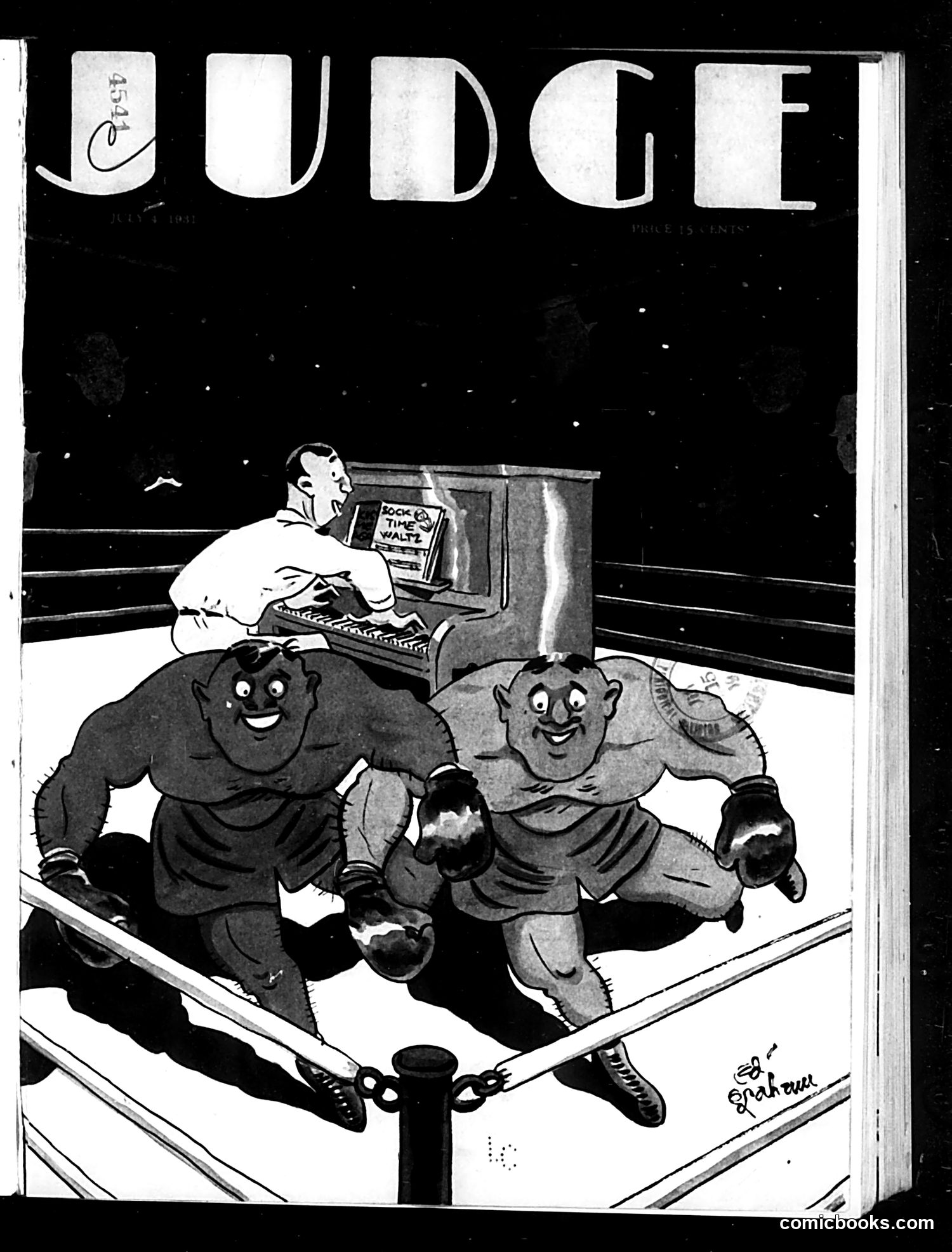
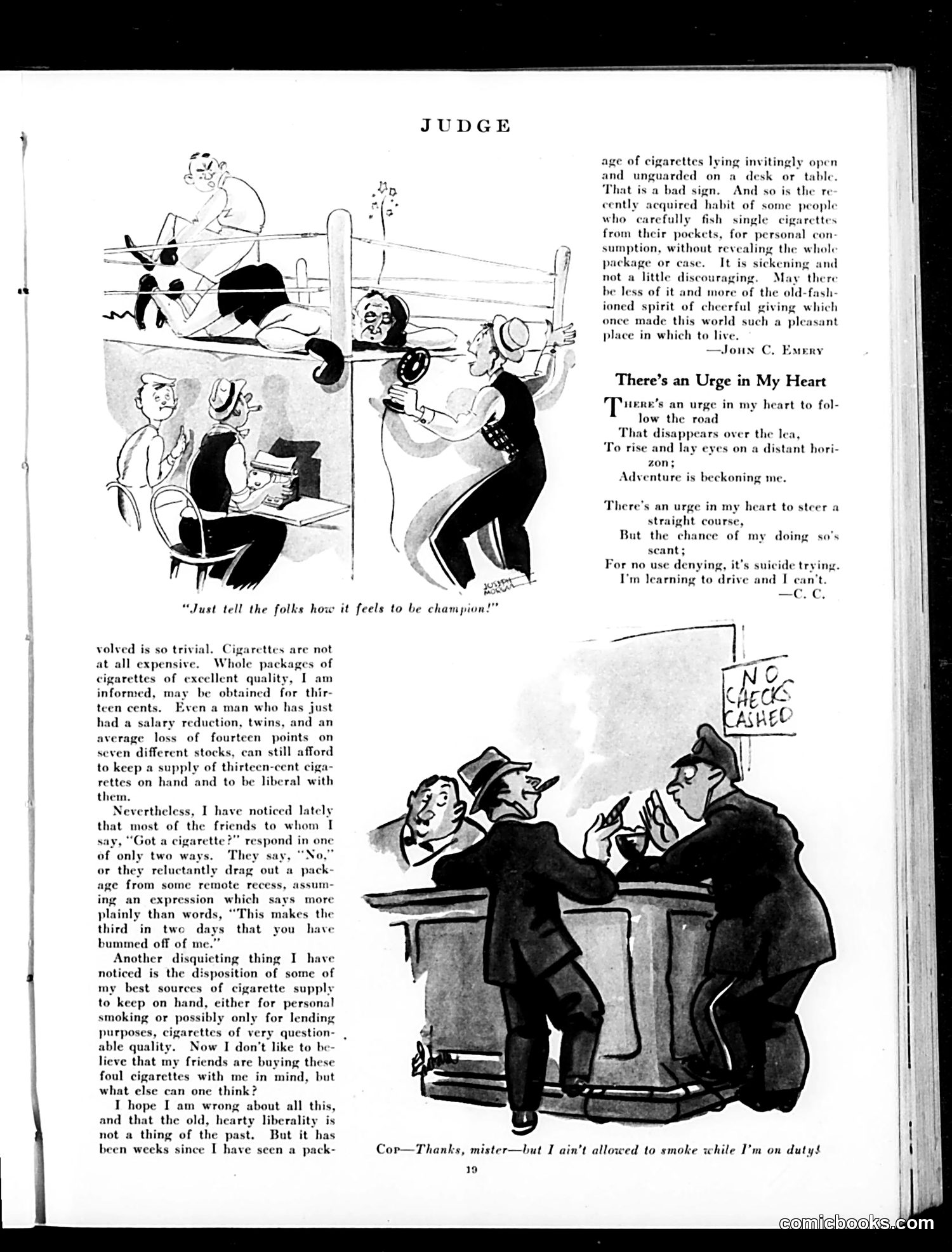
# Judge Magazine Cartoon Analysis This cartoon depicts a boxing ring scene with two caricatured Black boxers in the foreground, grinning widely while holding boxing gloves. A white pianist sits at an upright piano labeled "ROCK & TIME WALTZ" in the background. The satire appears to comment on the novelty and spectacle of Black participation in professional boxing during the early-to-mid 20th century. The exaggerated facial features and the incongruous piano player suggest Judge magazine's satirical treatment of race and entertainment. The "rock and time waltz" likely references popular music trends of the era. The cartoon reflects period attitudes treating Black athletes as objects of entertainment and caricature rather than serious competitors—typical of Judge's satirical but often racially insensitive content.
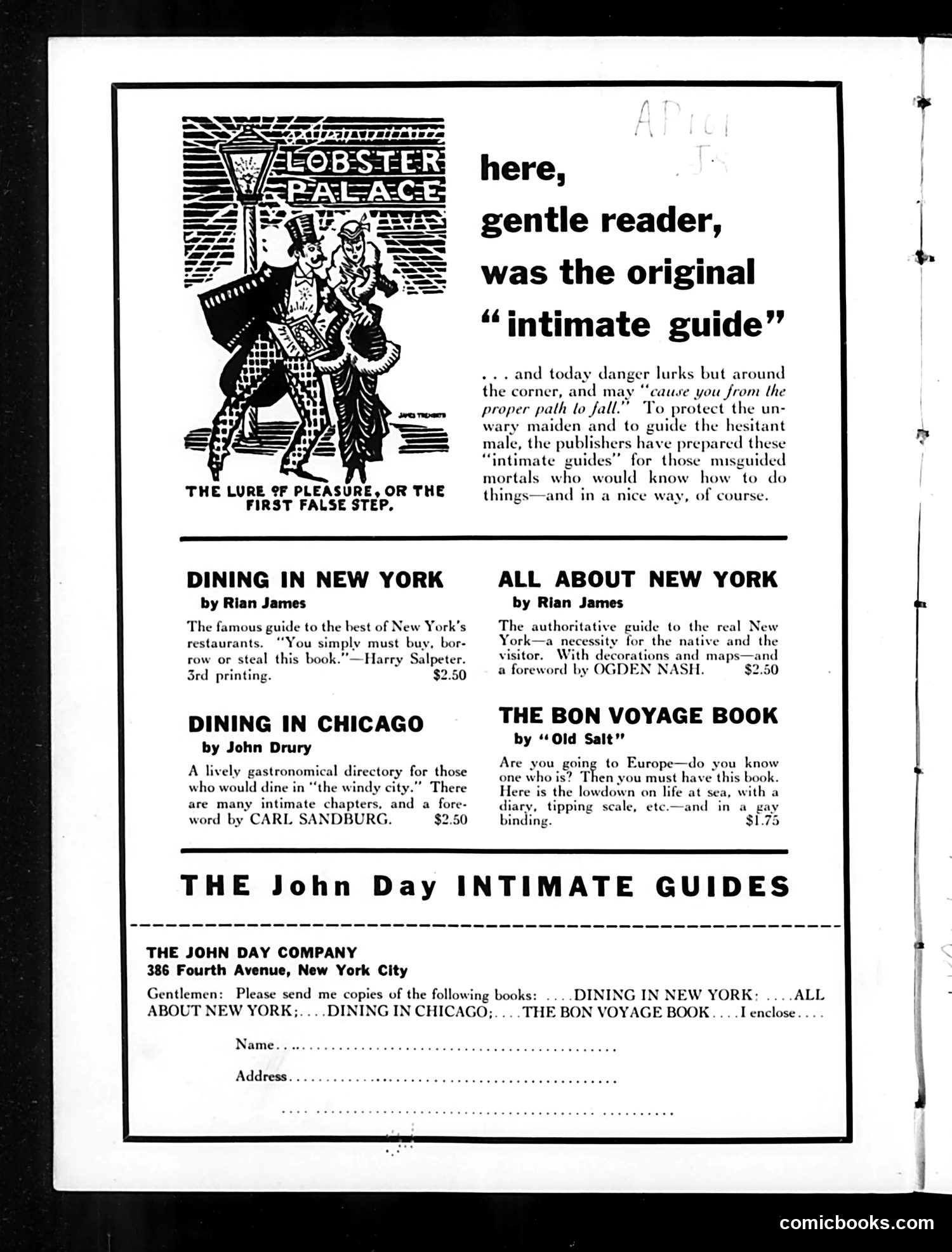
# Analysis of Judge Magazine Page This page is primarily **advertising** for John Day Company's "Intimate Guides" book series, with minimal satirical content. The header illustration titled "The Lure of Pleasure, or The First False Step" depicts a moralistic scene of seduction—a well-dressed man and woman, likely representing vice and temptation. The accompanying text uses ironic language ("gentle reader," "wary maiden") to mock the prudish conventions of "intimate guides"—advice books marketed to warn young people about moral dangers. The ads below promote dining guides and travel books, suggesting these were practical reference works. The satire is subtle: Judge appears to be gently mocking the earnest, moralizing tone of these self-help publications that claimed to protect readers from "improper paths." The page reflects early-20th-century anxieties about urban vice and the market for cautionary literature.
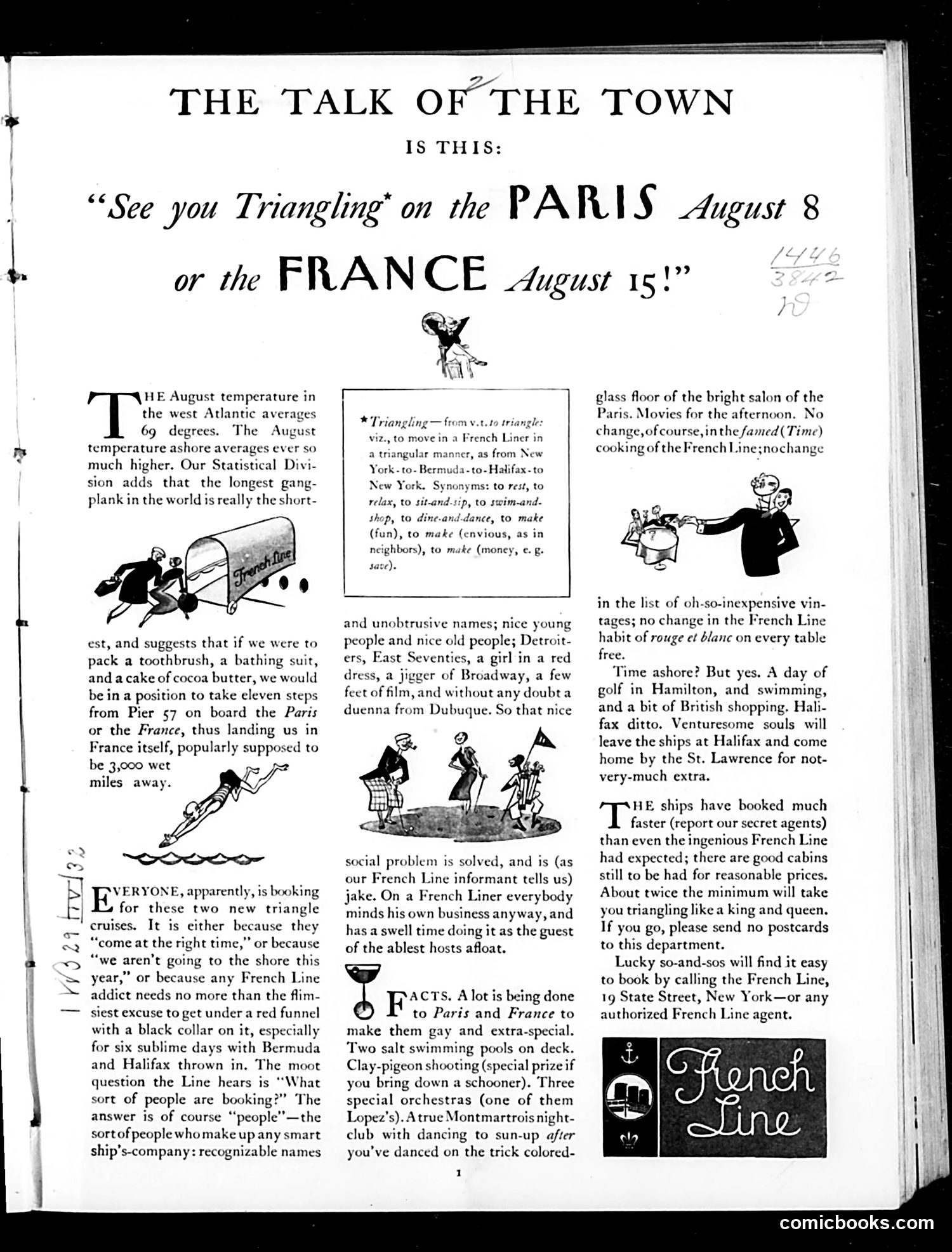
# Analysis This page is primarily **advertising for French Line cruise ships**, not political satire. The headline promotes two new transatlantic cruises: the *Paris* (August 8) and *France* (August 15). The humor is light and promotional rather than satirical. The cartoons show: 1. A man being launched from a ship's cannon labeled "French Line"—joking that booking saves money versus other travel methods 2. Various passengers (tourists, businesspeople, a "jigger of Broadway") representing the diverse clientele 3. A couple dancing, illustrating onboard entertainment The "talk of the town" frames these cruises as fashionable and desirable social activities. The satire gently mocks people's eagerness to book passage and pokes fun at the ship's democratic mixing of social classes. This reflects 1920s-30s advertising that presented luxury travel as accessible leisure.
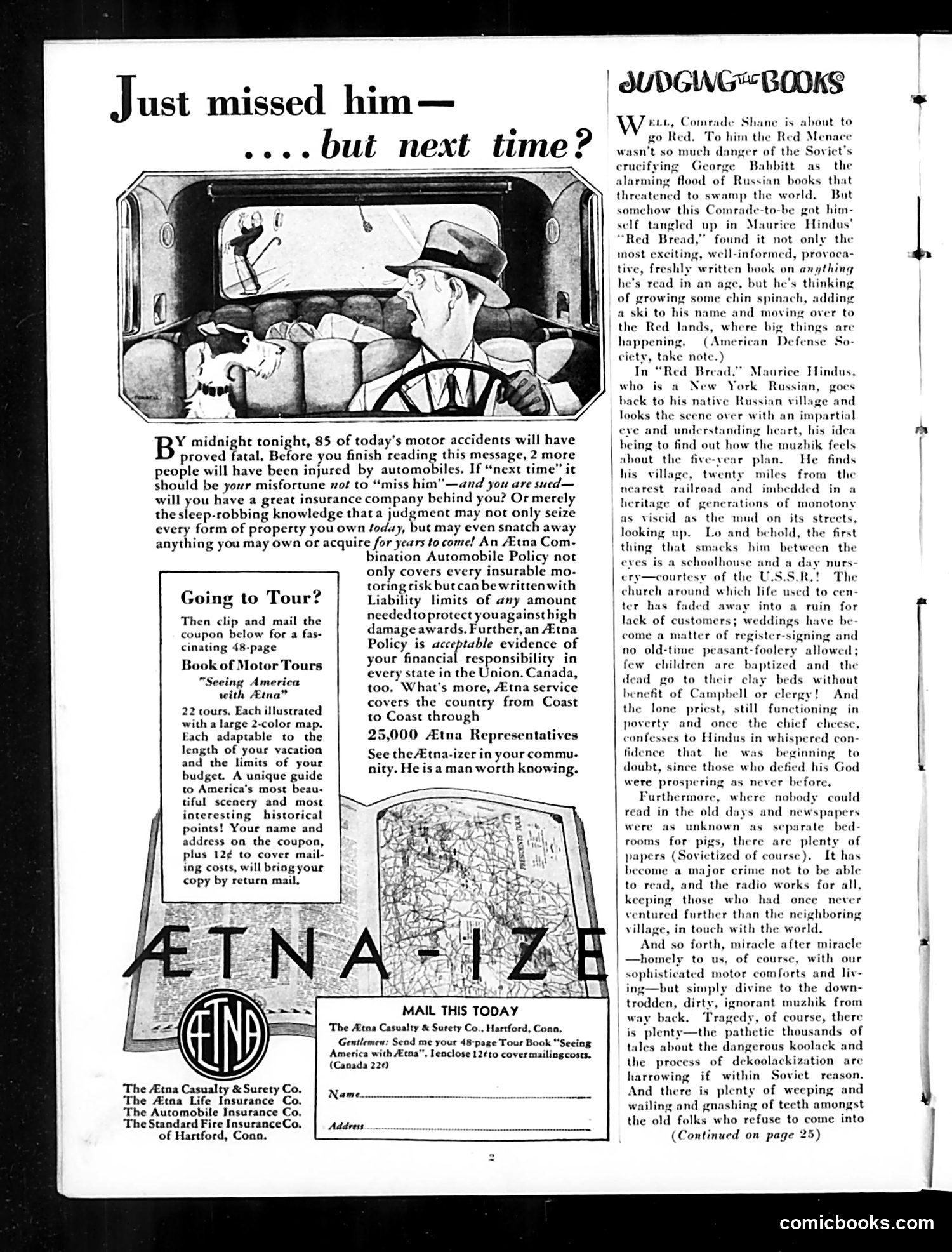
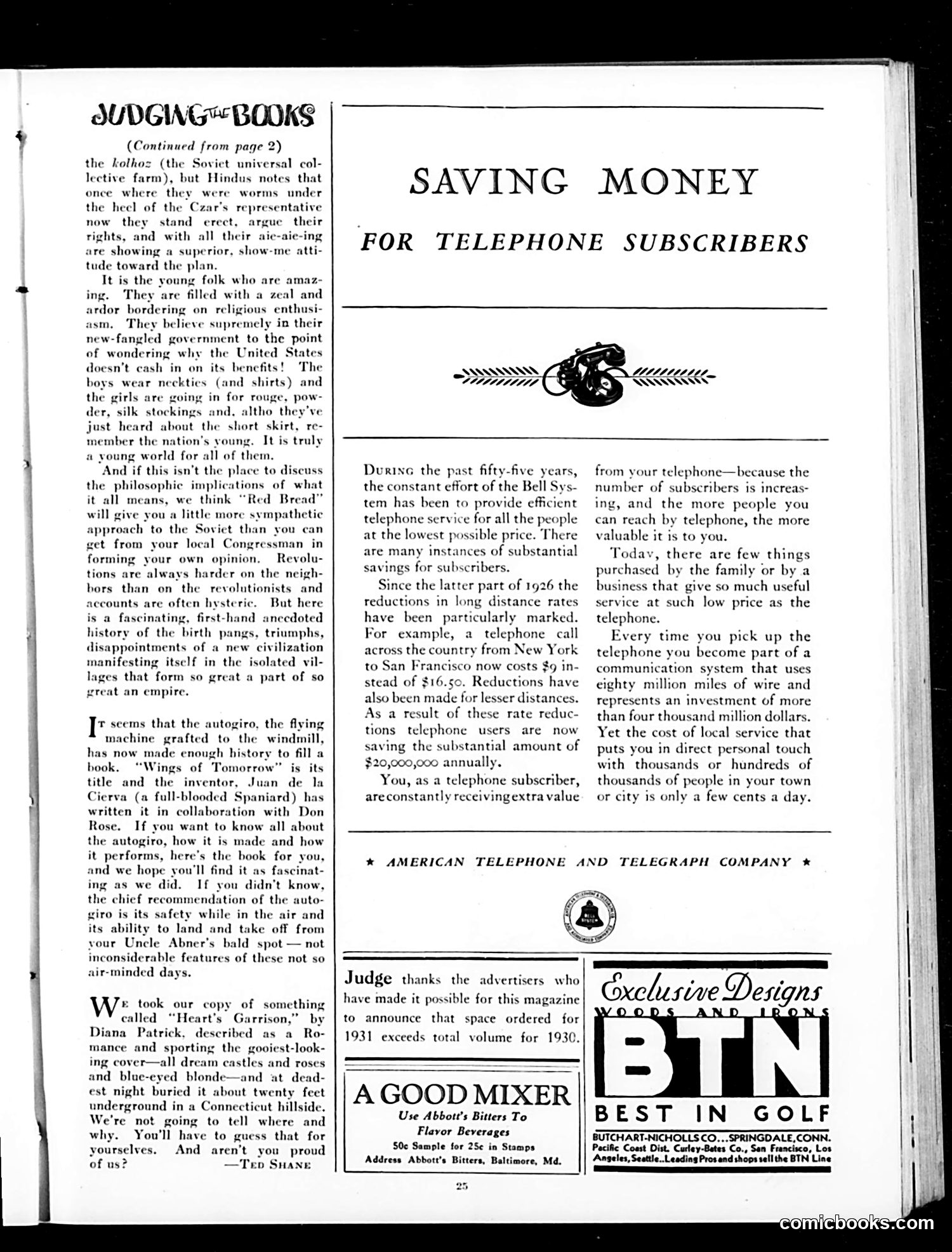
# "Just Missed Him" - Judging the Books This page combines a **traffic safety advertisement** with a book review. The cartoon shows a car driver narrowly avoiding a pedestrian, illustrating the magazine's opening warning: "85 of today's motor accidents will have proved fatal" by the time readers finish the page. The "next time" you might not be so lucky—hence the pitch for Ætna automobile insurance. The book review critiques Maurice Hindus's *Red Bread*, praising it as an exciting, well-informed account of Soviet Russian life. The reviewer notes Hindus, a New York Russian, returns to his native village and discovers miraculous changes: schools, churches functioning, and radios connecting isolated communities to the wider world. The tone is cautiously optimistic about Soviet modernization, unusual for American anti-communist sentiment of the era.
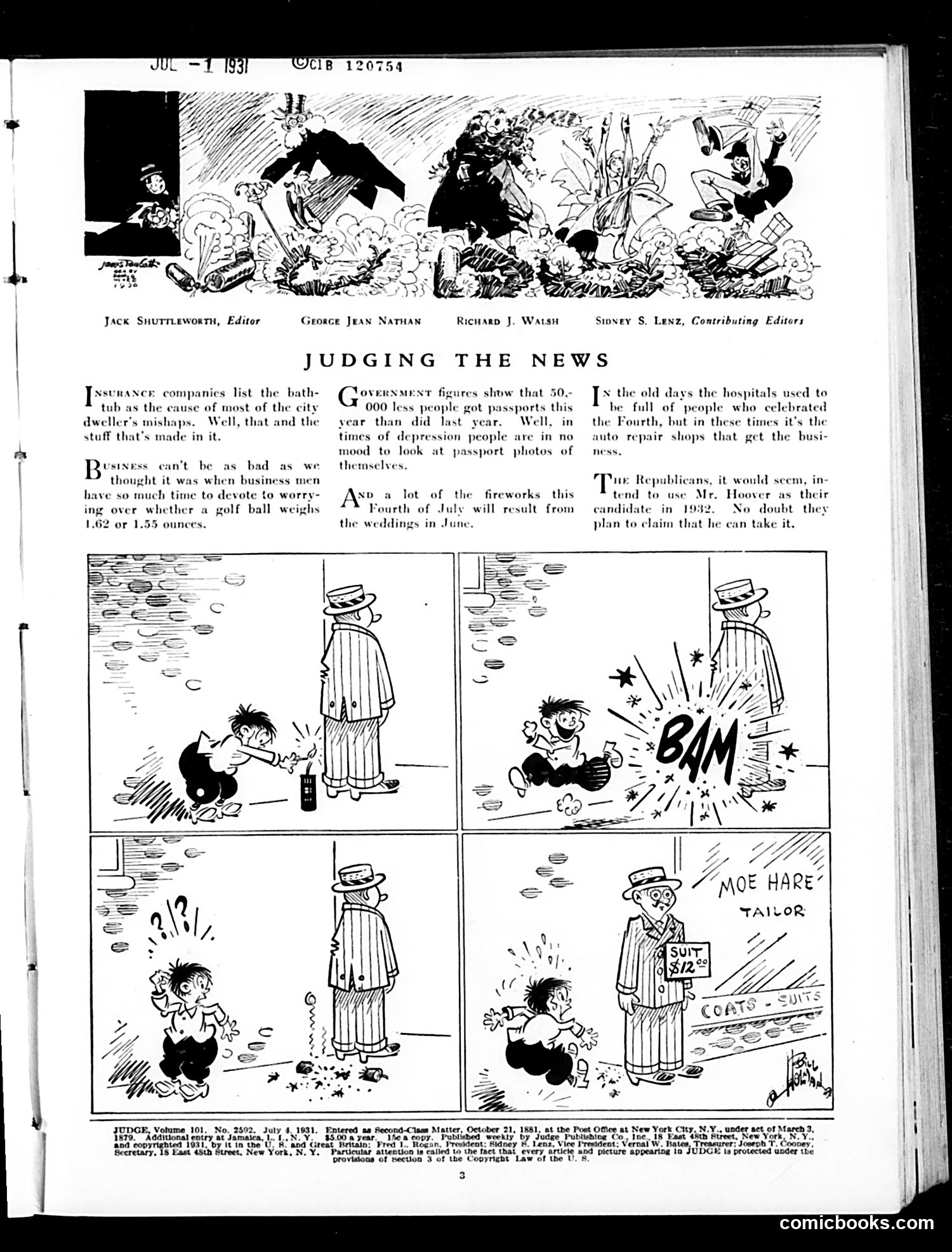
# "Judging the News" - July 1, 1931 This page contains editorial commentary and a four-panel comic strip satirizing fireworks safety during Fourth of July celebrations. The comic depicts a small boy repeatedly igniting firecrackers near an unsuspecting tall man in a straw hat and striped suit. The sequence shows escalating explosions ("BAM") and the man's increasingly frantic reactions to being startled. The final panel shows the boy fleeing to "Moe Hare, Tailor" with the man pursuing, suggesting the explosions have damaged the man's clothing. The satire targets the dangerous practice of setting off fireworks indiscriminately near others—a recurring public safety hazard during holiday celebrations. The humor derives from slapstick physical comedy and the innocent-seeming boy's mischievous disregard for the man's wellbeing, highlighting a perennial social problem.
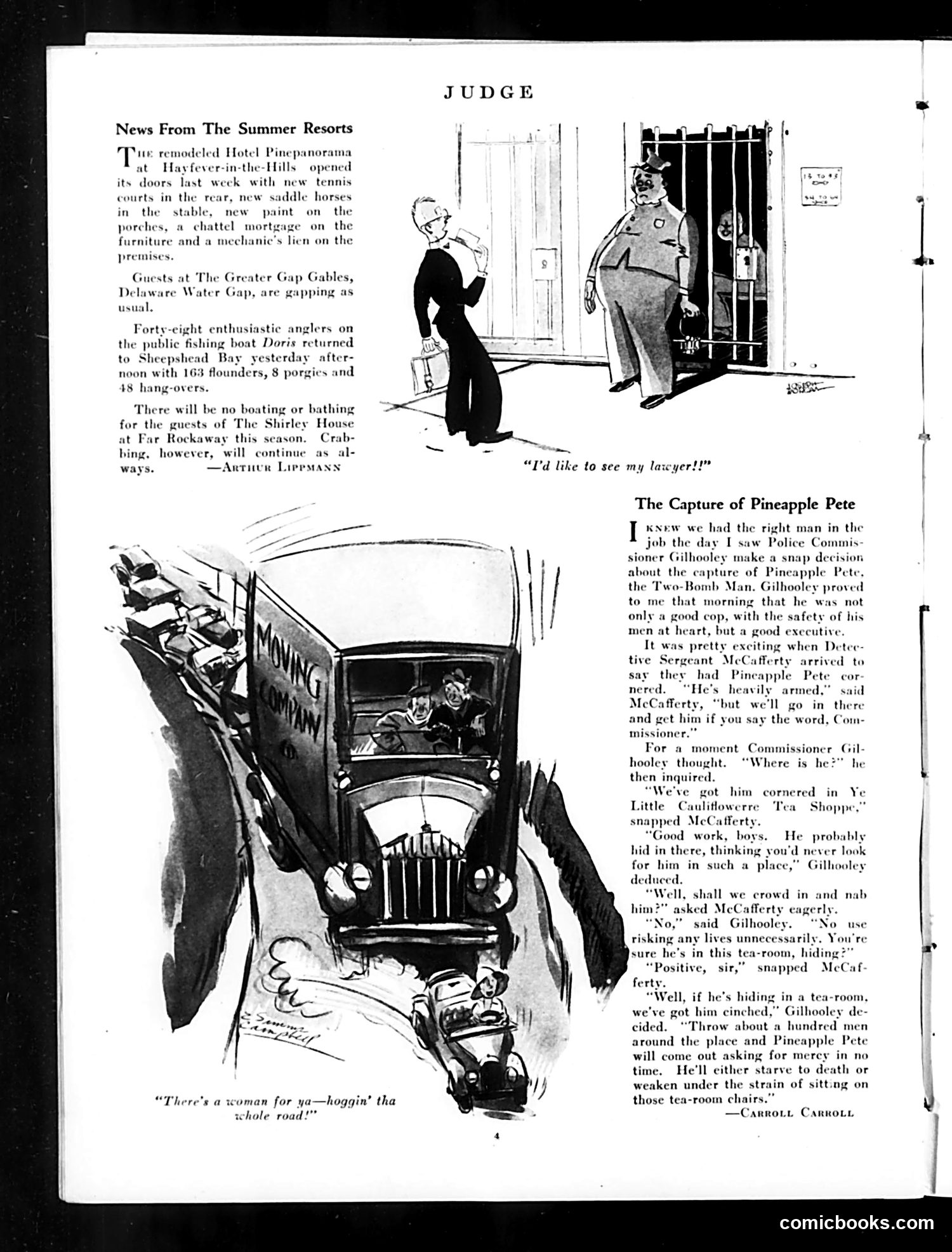
# Analysis of Judge Magazine Page **Top Cartoon:** Shows a man with a fishing rod confronting a woman at a doorway, captioned "I'd like to see my lascert!" (likely "lascivious" or similar). The joke appears to satirize domestic conflict—a husband returning from fishing trips to face an angry spouse, commenting on marital tension. **Lower Cartoon & Story:** "The Capture of Pineapple Pete" depicts police pursuing a criminal in a moving van. The narrative describes Commissioner Gilhooley's strategy to capture "Pineapple Pete" (a criminal, apparently armed) by surrounding a tea room where he's supposedly hiding. The satire mocks police procedure—using overwhelming force against one hidden suspect in a public establishment—suggesting absurd over-policing tactics. Both pieces use domestic and crime scenarios for humorous social commentary.
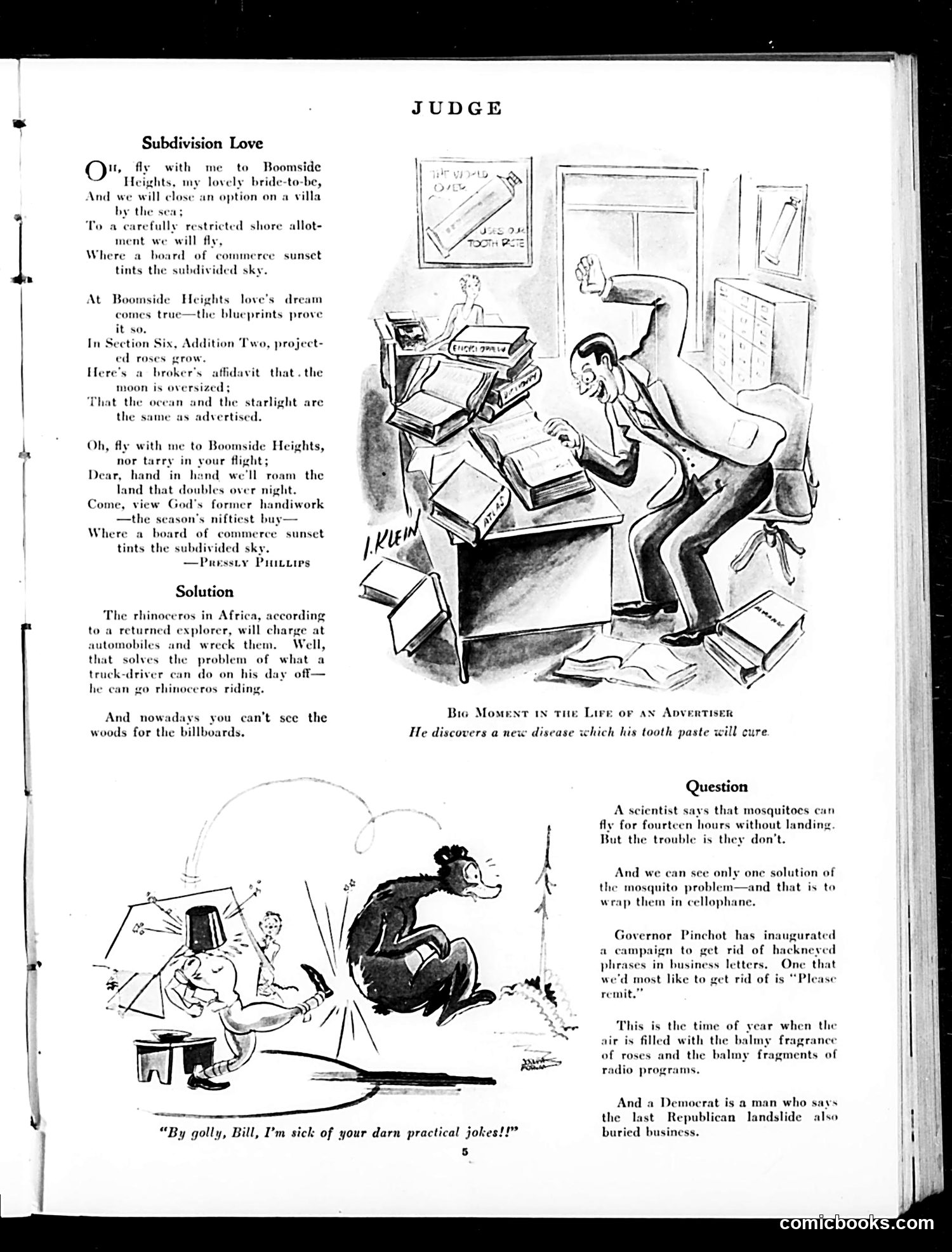
# Analysis of Judge Magazine Page This page contains three distinct satirical pieces: 1. **"Subdivision Love"** (poem by Pressly Phillips): Mocks suburban real estate marketing, satirizing how developers oversell modest properties with grandiose language about "boards of commerce" and ocean views. 2. **"Solution"** (text joke): Makes fun of truck drivers by suggesting they solve the rhinoceros problem in Africa—a absurdist non-sequitur joke relying on the randomness of the punchline. 3. **"Big Moment in the Life of an Advertiser"** (cartoon): Shows an advertising professional surrounded by blueprints, apparently discovering his toothpaste can cure some ailment—mocking how advertisers exaggerate product claims. 4. **"Question"** (miscellaneous jokes): Various one-liners about mosquitoes, Governor Pinchot's campaign against hackneyed phrases, and Democrats—typical period political/social commentary. The overall tone satirizes American commercialism, advertising excess, and political rhetoric.
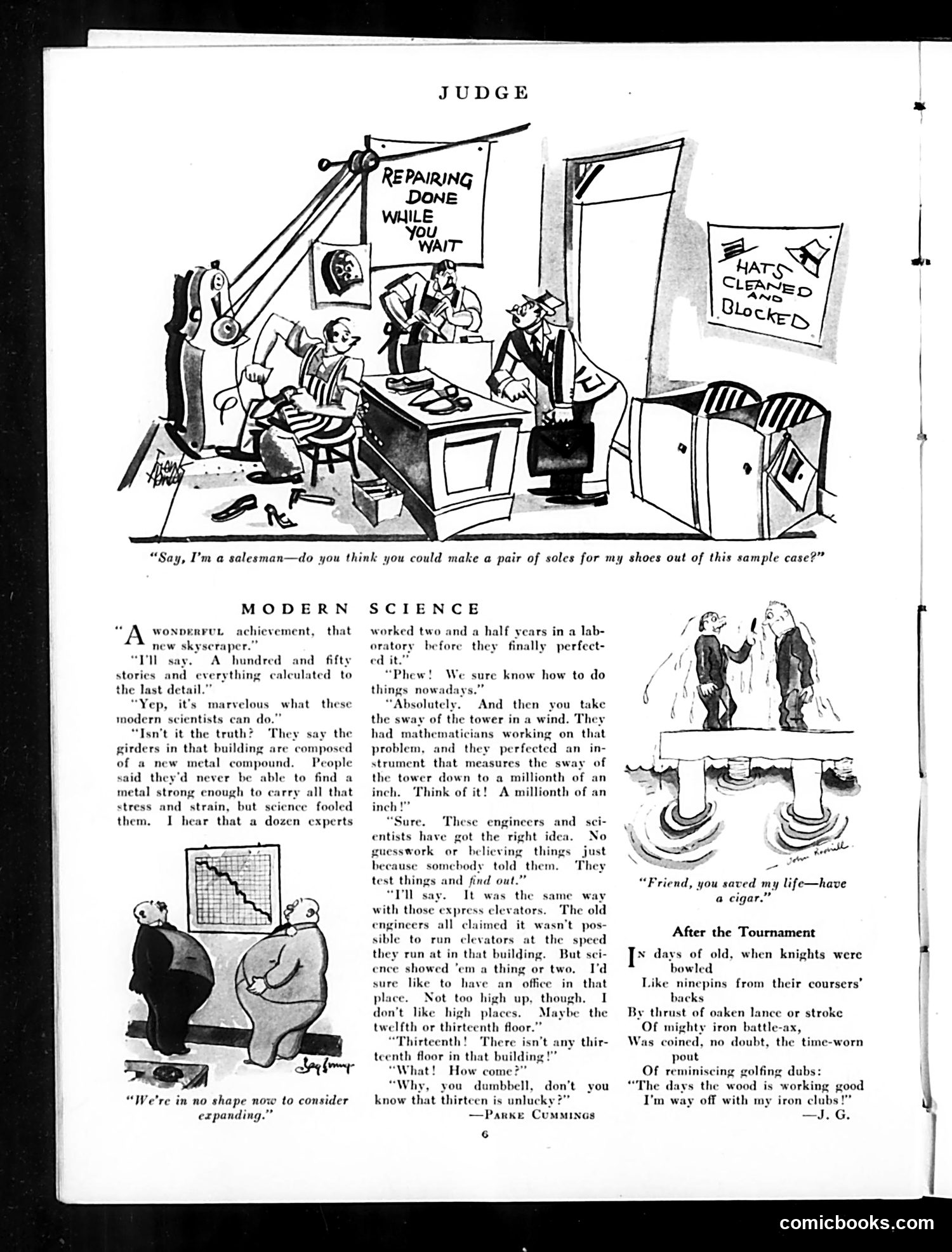
# Judge Magazine Page Analysis **"Judge" Cartoon (Top):** A salesman pitches to a judge in his chambers, asking him to make "a pair of soles for my shoes out of this sample case." The cartoon satirizes legal inefficiency—the judge's office displays signs reading "Repairing Done While You Wait" and "Hats Cleaned and Blocked," mocking courts for their glacial pace. The joke is that a shoemaker could complete work faster than the judicial system resolves cases. **"Modern Science" Section (Lower Left):** Satirizes engineers' blind faith in scientific authority. The dialogue mocks how experts claim mathematical precision justifies impractical designs (like running fast elevators in tall buildings), yet fail to question whether the underlying premises actually work. It's a critique of technocratic overconfidence disconnected from practical reality.
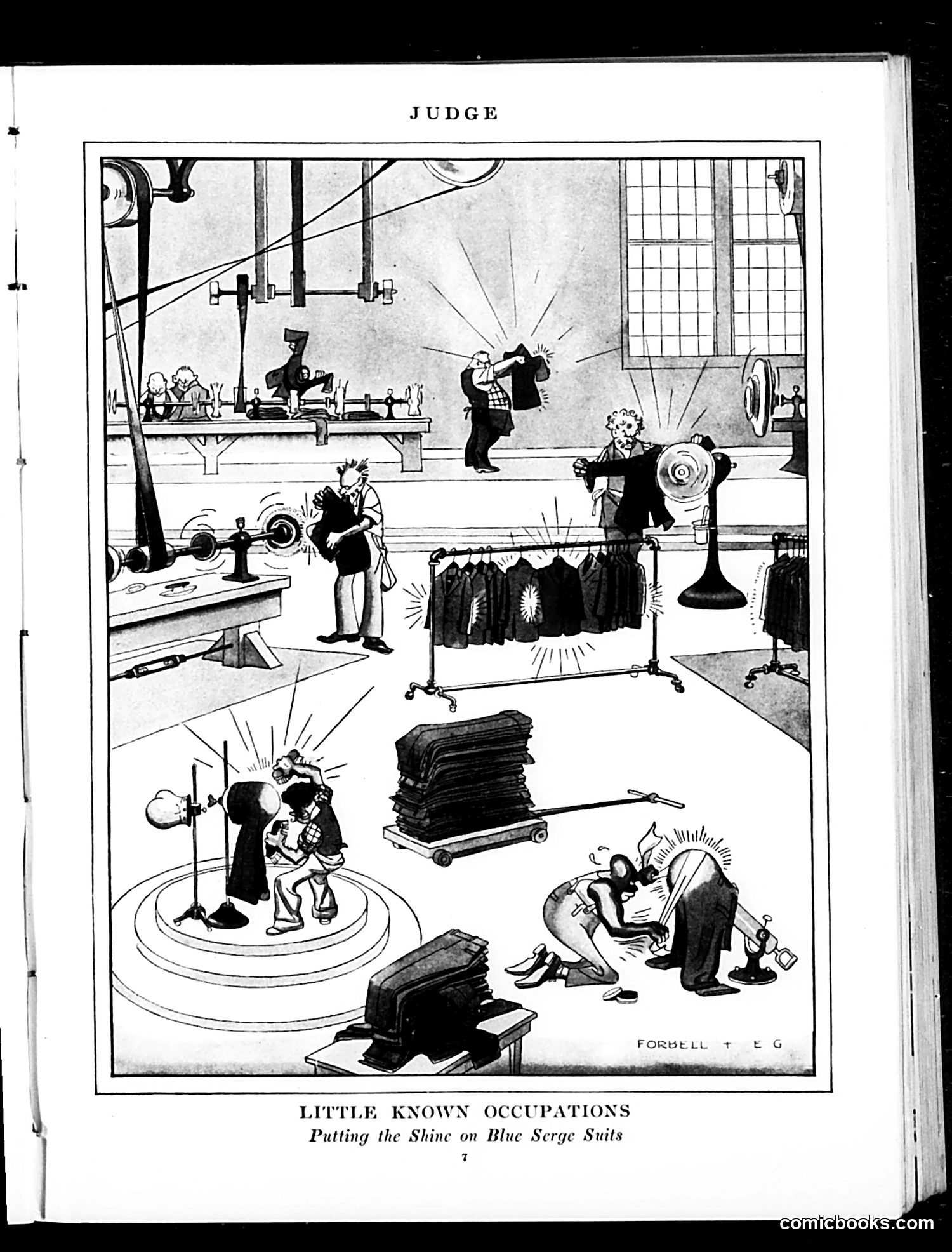
# Analysis of "Putting the Shine on Blue Serge Suits" This cartoon satirizes an obscure but real occupational niche: professional suit shiners. The image depicts a factory-like workshop where workers use industrial equipment—overhead pulleys, spotlight mechanisms, and other machinery—to apply shine to blue serge suits (a common, affordable wool fabric of the era). The humor lies in depicting an mundane garment-care task as an elaborate industrial operation, complete with multiple workers, specialized tools, and factory infrastructure. The exaggerated machinery and theatrical lighting suggest the absurdity of commercializing a simple grooming service. This reflects early-20th-century American life when mass-produced blue serge suits were working-class standard wear, and various service industries emerged to maintain them. The satire gently mocks both the industrialization of everyday tasks and the entrepreneurial spirit of finding profit in humble niches.
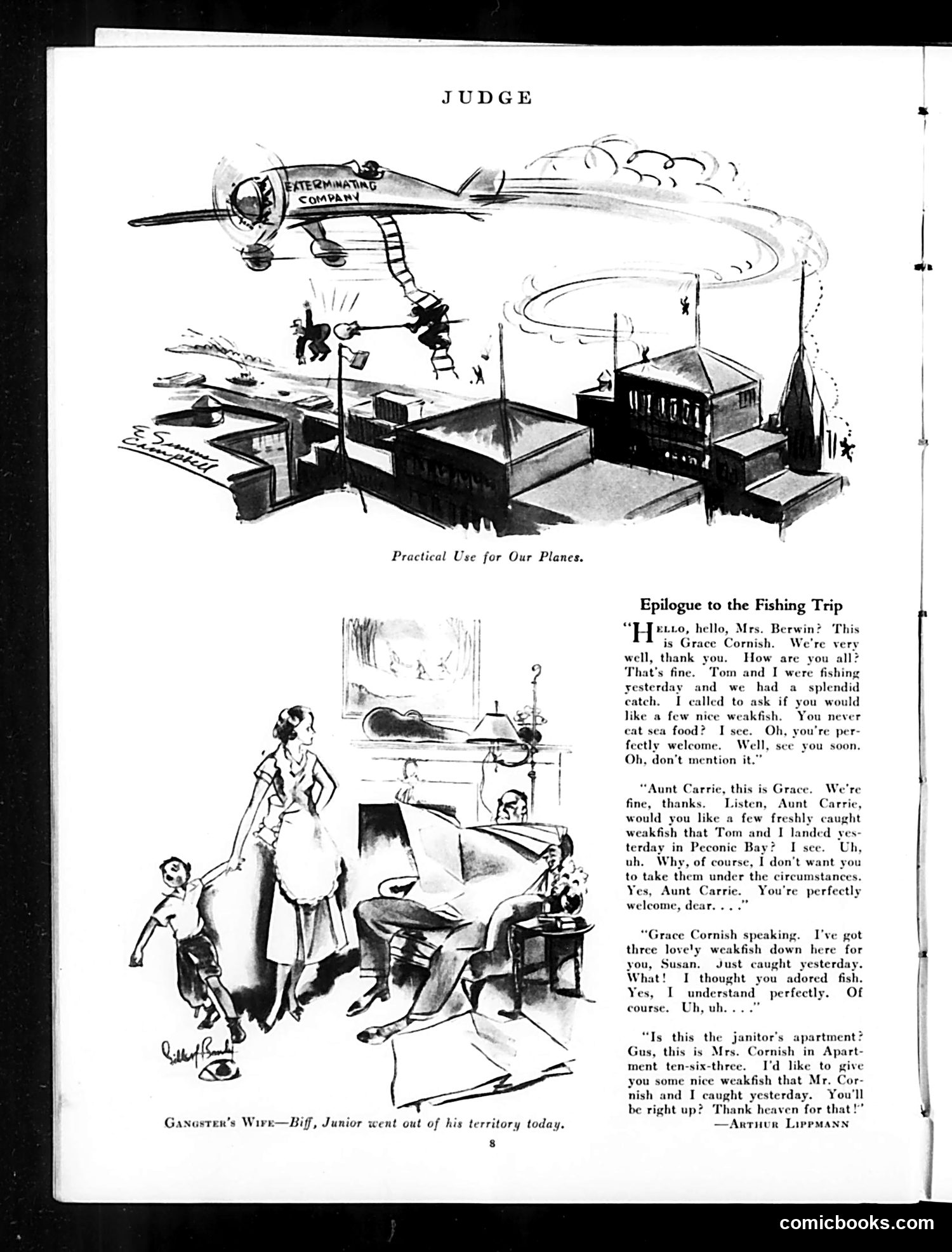
# Analysis **Top Cartoon ("Practical Use for Our Planes"):** An airplane labeled "Exterminating Company" sprays what appears to be insecticide over buildings below. This is satirical commentary on a contemporary practical application for aircraft technology—using planes for pest control or crop dusting rather than purely military or passenger purposes. It reflects early-20th-century optimism about aviation's civilian uses. **Bottom Cartoon & Text ("Epilogue to the Fishing Trip"):** The joke concerns a woman (Grace Cornish) who caught weakfish and attempts to give them away by calling various acquaintances—Mrs. Berwin, Aunt Carrie, Susan, and finally a janitor. Each person politely declines or offers excuses. The satire mocks the social awkwardness of unwanted gift-giving and the difficulty of disposing of a successful fishing catch when nobody wants fish. The cartoon's caption about "Biff, Junior" leaving his territory suggests territorial humor, while the main story satirizes domestic social etiquette and persistence in forcing generosity on reluctant recipients.
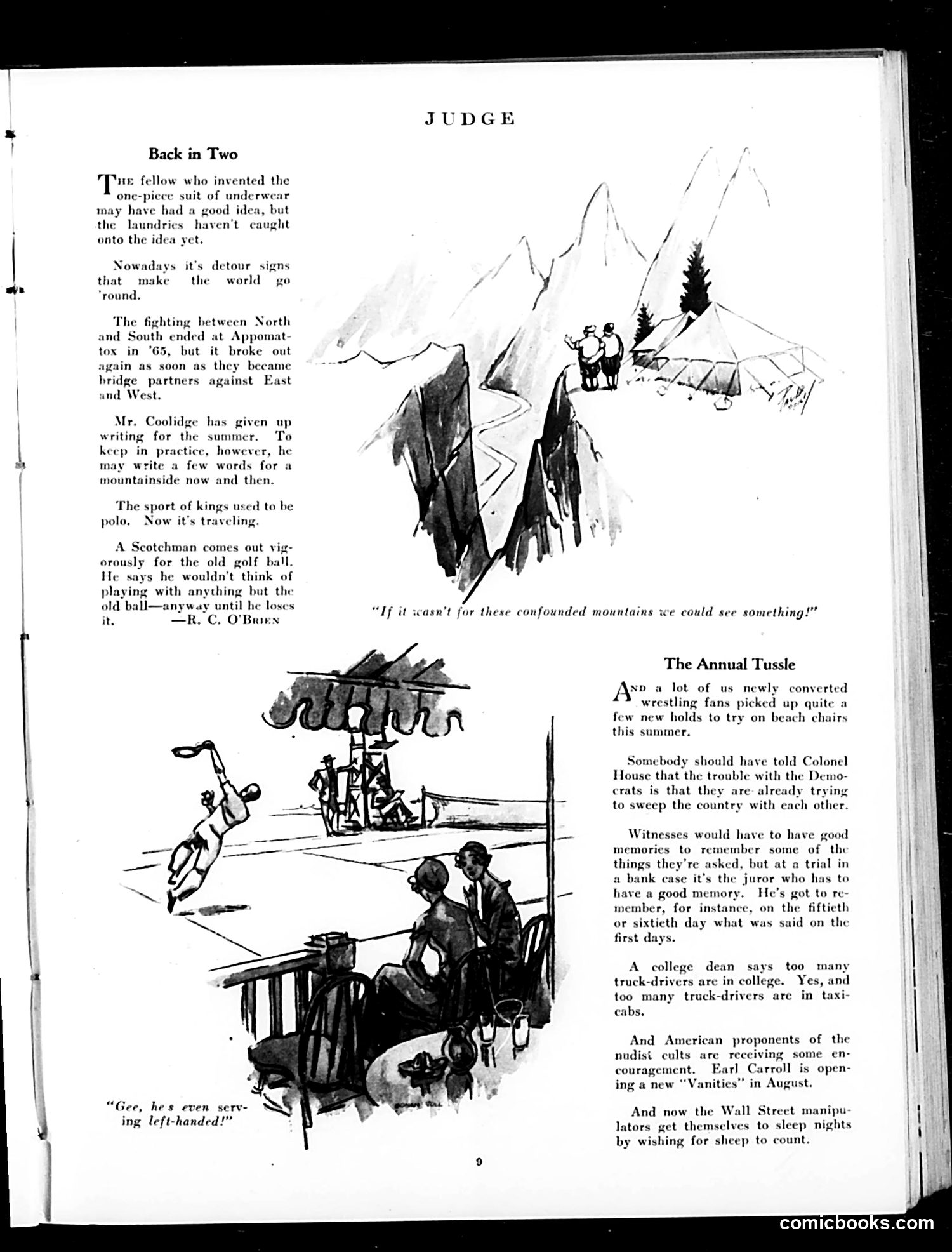
# Judge Magazine Page Analysis This page from **Judge** (a satirical weekly) contains brief social commentary and cartoons mocking early 1920s American life. **Top cartoon**: Shows two figures in a mountain pass lamenting they can't see anything—likely satirizing tourist disappointment or the limits of travel advertising. **Bottom cartoon**: Depicts what appears to be a beach or recreational scene with people and a dog, captioned "Gee, he's even serving left-handed!"—a joke about unusual service or behavior at leisure activities. **Text commentary** targets: one-piece underwear (laundries slow to adapt), detour signs as modern inconvenience, bridge-playing rivalry replacing Civil War conflict, President Coolidge's writing habits, wrestling's newfound popularity, Colonel House and Democratic infighting, witness testimony challenges, college enrollments of truck drivers, nudist cults' growth, and Wall Street financiers' insomnia. The humor is light, topical observation rather than sharp political satire—reflecting post-WWI American consumer culture and social trends.
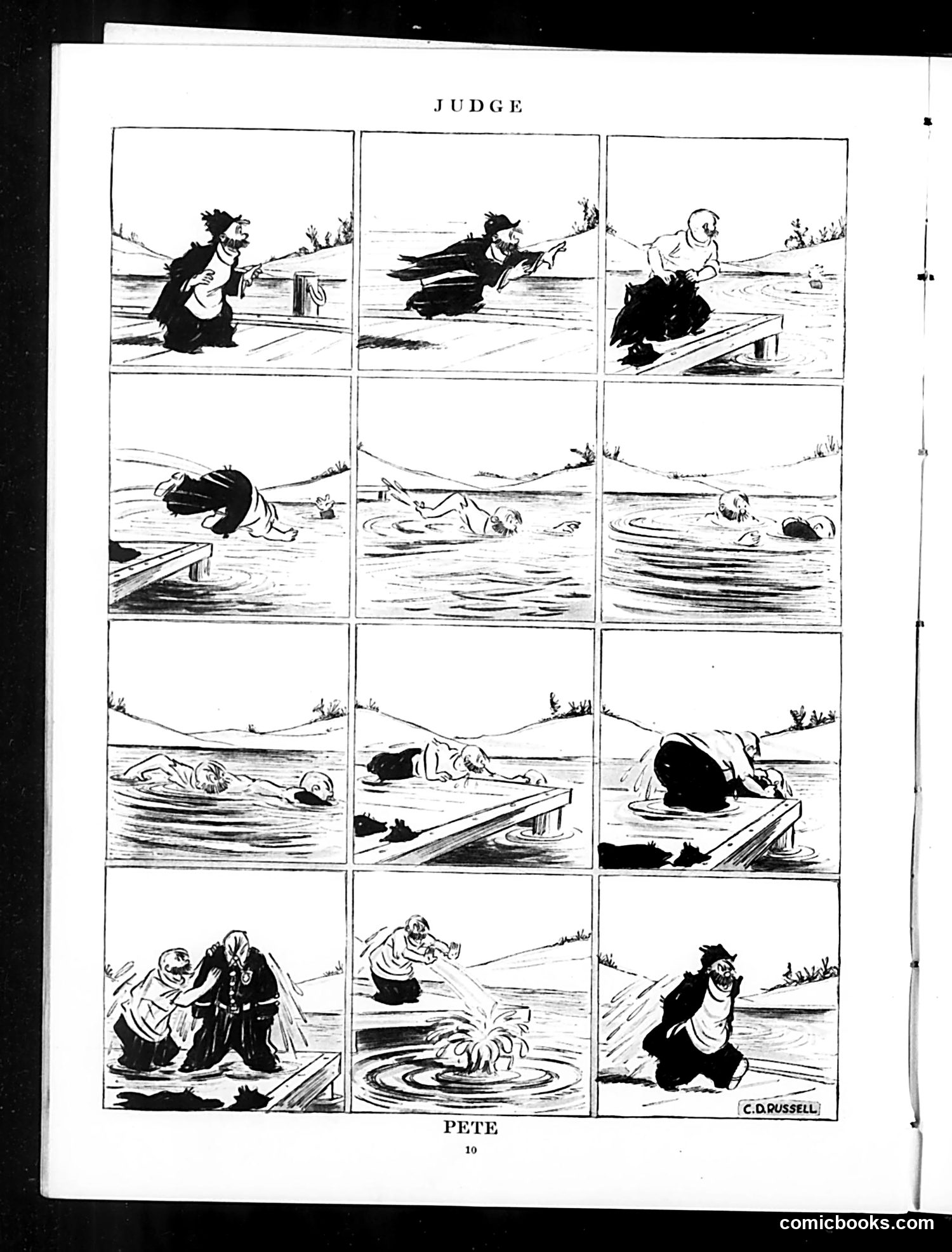
# "Judge" Page Analysis: "Judge" and "Pete" This page contains two sequential comic strips by C.D. Russell. The top strip titled "JUDGE" depicts a man in formal attire repeatedly falling into water—progressing from attempting to fish, to stumbling, to drowning. The narrative suggests physical incompetence or bad luck at a waterside location. The bottom strip, "PETE," shows similar aquatic mishaps befalling what appears to be a different character, with rescue attempts and further water-related disasters. Both strips employ slapstick humor common to early Judge magazine content. Without additional context or visible date information, the specific satirical targets—whether political figures, social types, or contemporary personalities named "Judge" and "Pete"—remain unclear. The humor relies on physical comedy and repetitive pratfalls typical of early 20th-century comic strips.