A complete issue · 36 pages · 1931
Judge — January 24, 1931
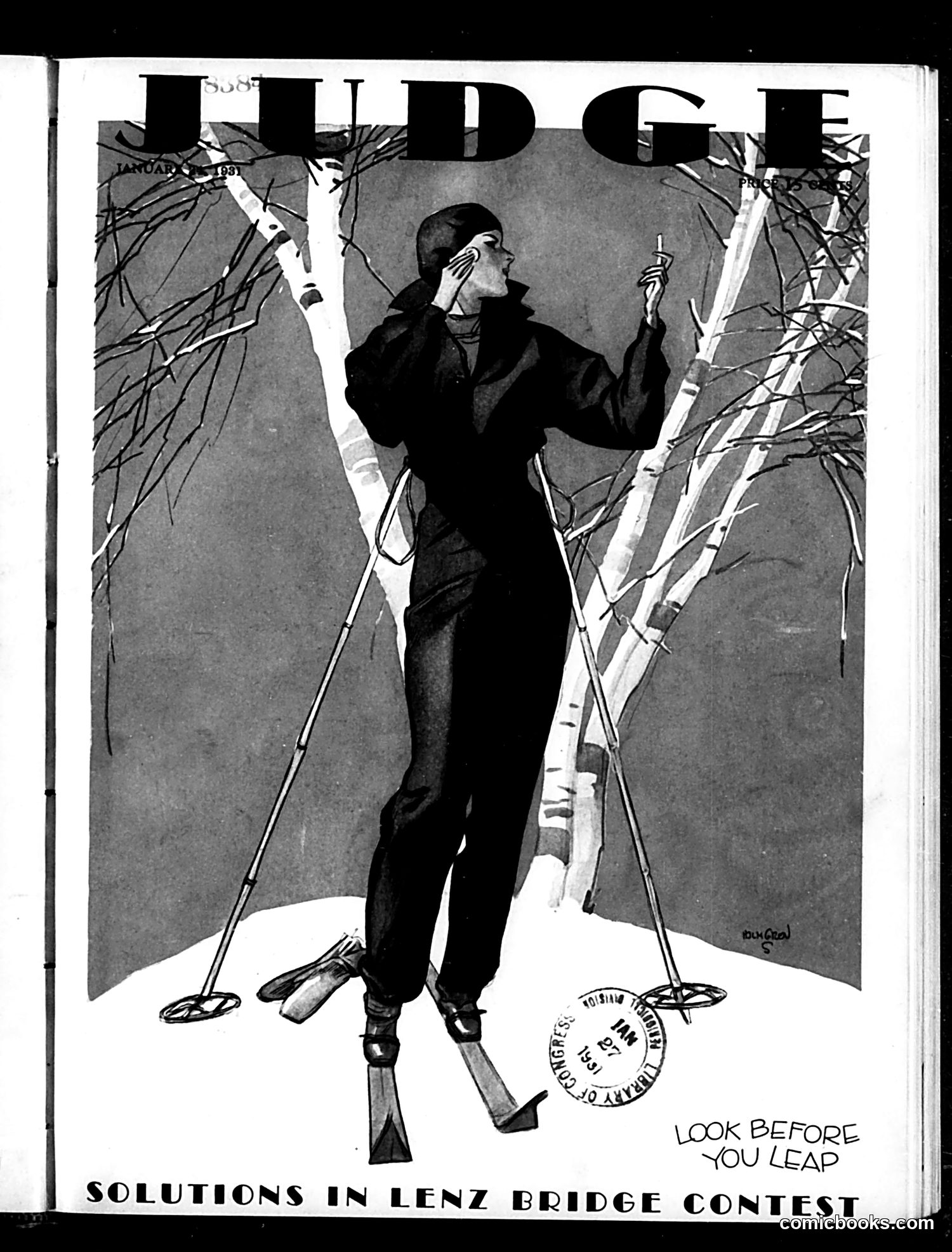
# "Look Before You Leap" - Judge Magazine Cover This cover depicts a stylized skier poised at a cliff edge between birch trees, holding ski poles and gazing downward uncertainly. The phrase "Look Before You Leap" serves as both title and moral warning. The accompanying text references a "Lenz Bridge Contest," suggesting this satirizes a specific contemporary skiing competition or stunt. The image likely warns against reckless winter sports participation—a timely concern in early 1900s America when skiing was becoming a fashionable but dangerous recreational activity. The artistic style is characteristic of Judge's sophisticated satirical approach: using elegant illustration to mock human folly and impulsive behavior. Without additional context about the specific "Lenz Bridge Contest," the exact target remains unclear, though the message about prudence versus recklessness is unmistakable.
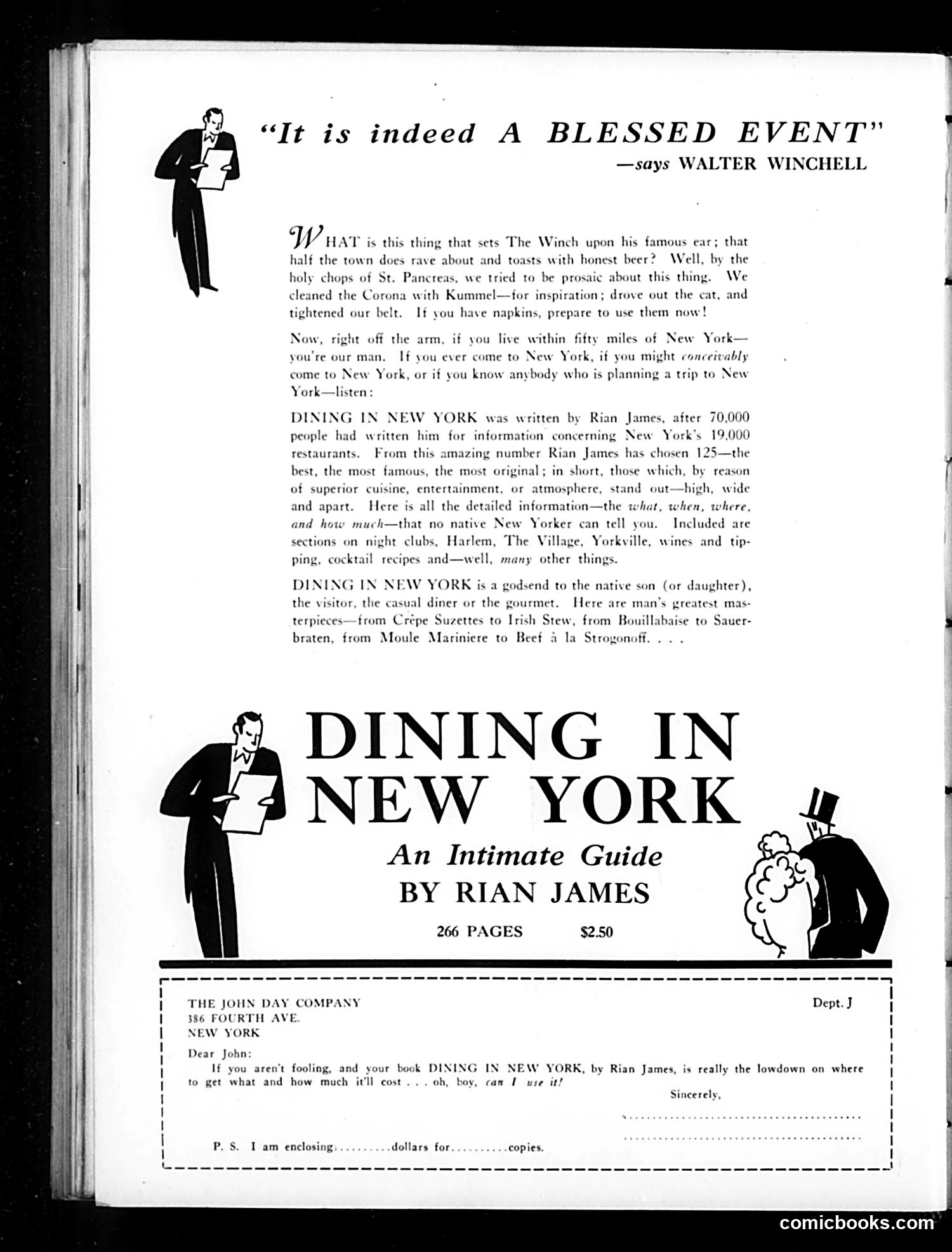
# Analysis This page is primarily **advertising rather than editorial content**. It promotes "Dining in New York: An Intimate Guide" by Rian James—a 266-page restaurant guidebook priced at $2.50, published by The John Day Company. The advertisement opens with a testimonial attributed to "Walter Winchell," the famous gossip columnist, calling it "A BLESSED EVENT." The ad uses humorous language ("holy chops of St. Pancreas," references to cleaning the Corona with Kummel) to position the guidebook as essential for New York visitors and locals. The illustrations show men in formal attire holding documents—typical period imagery suggesting sophistication and insider knowledge. This is a straightforward commercial advertisement rather than political satire.
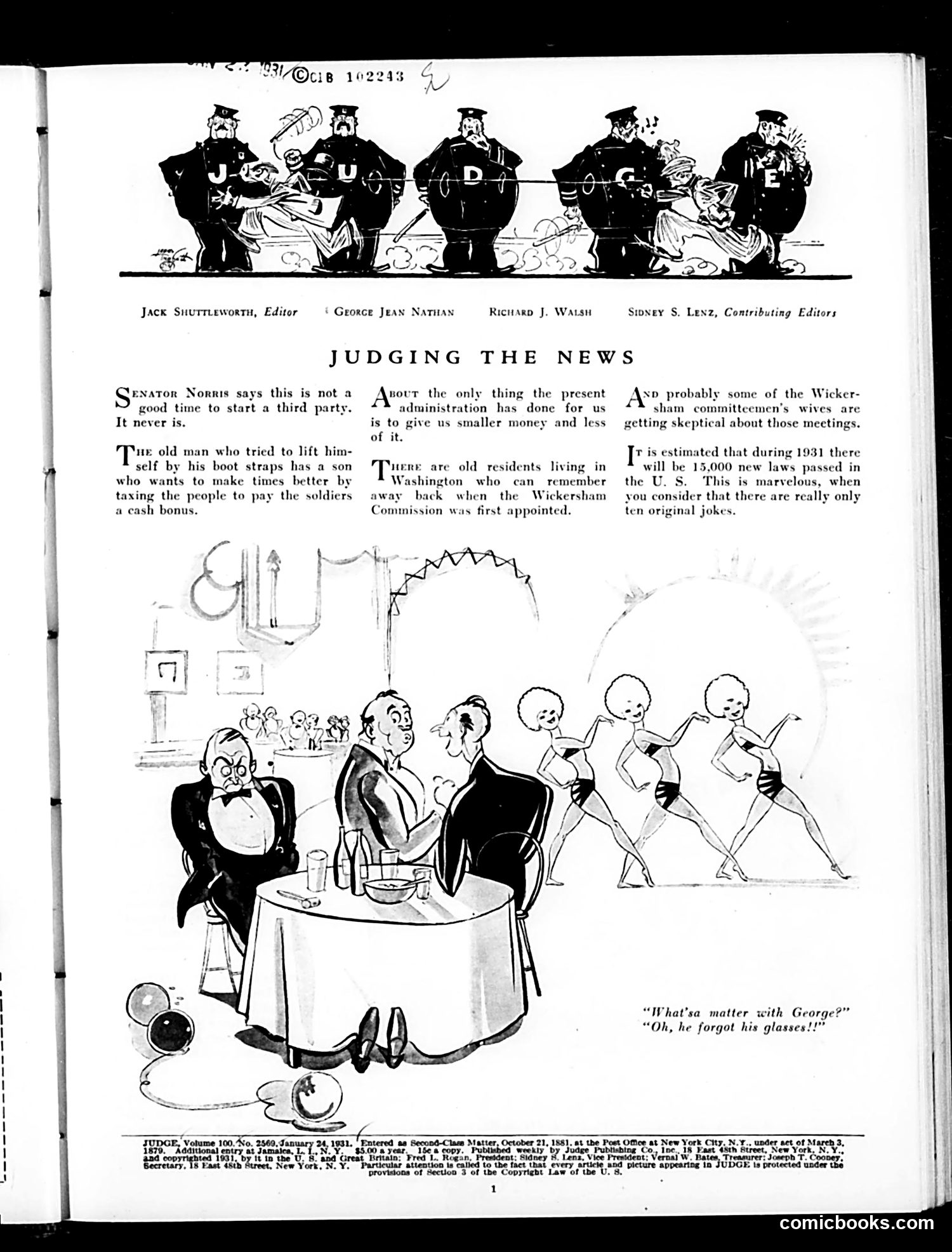
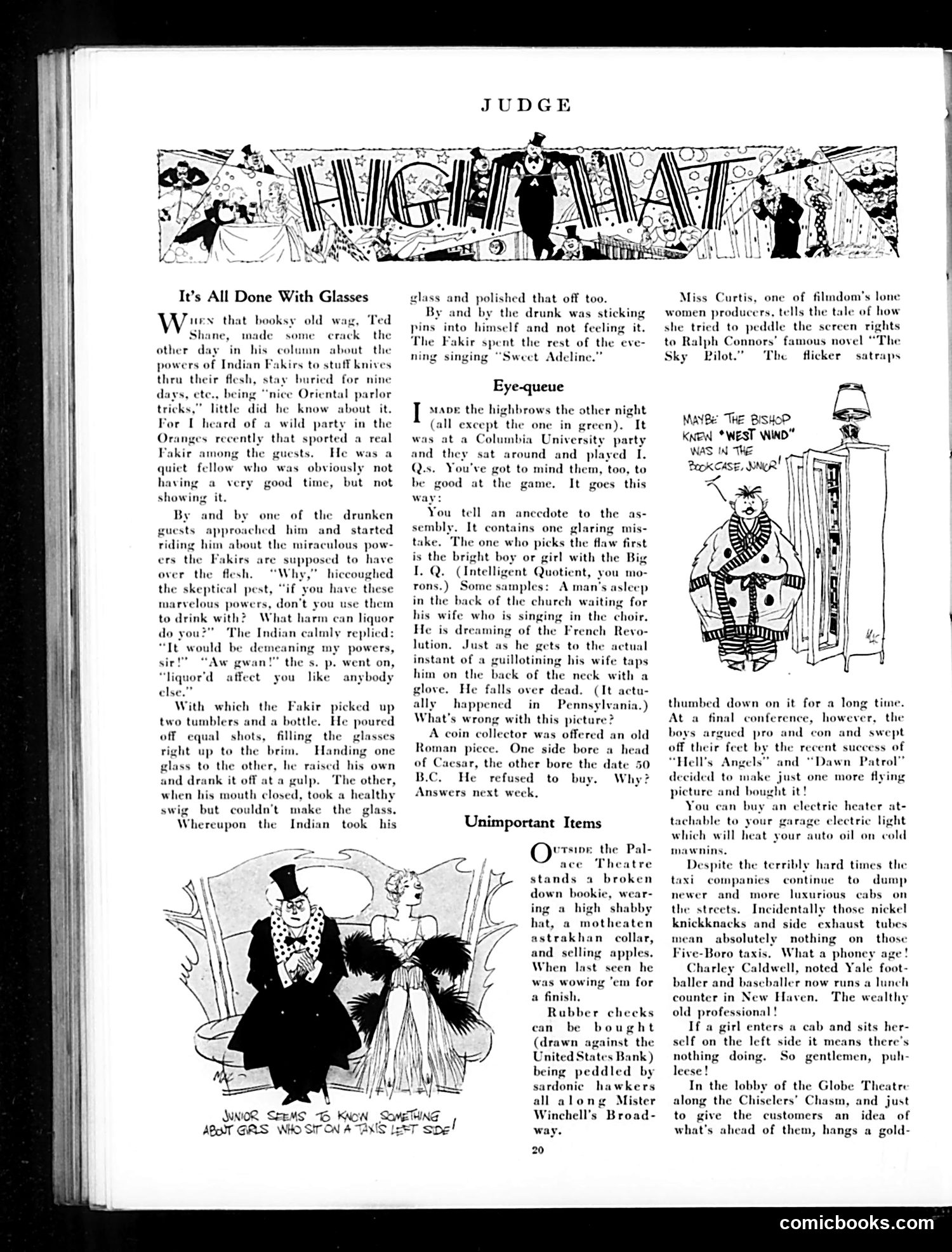
# Analysis of Judge Magazine Page This page satirizes 1931 American politics and social conditions. The header cartoon shows five judges labeled with letters spelling "JUDGE," representing the magazine's editorial board. The main cartoon depicts a nightclub scene where two men in formal wear sit at a table while scantily-clad women dance in the background. One man says to the other, "What's a matter with George? Oh, he forgot his glasses!" The satire appears to target wealthy men's behavior during Prohibition-era nightlife, suggesting moral blindness or deliberate ignorance about dancing girls. The text sections mock Senator Norris's political third-party suggestion, reference the aging Wickersham Commission, and joke about the estimated 15,000 new laws expected in 1931—suggesting legislative excess and absurdity.
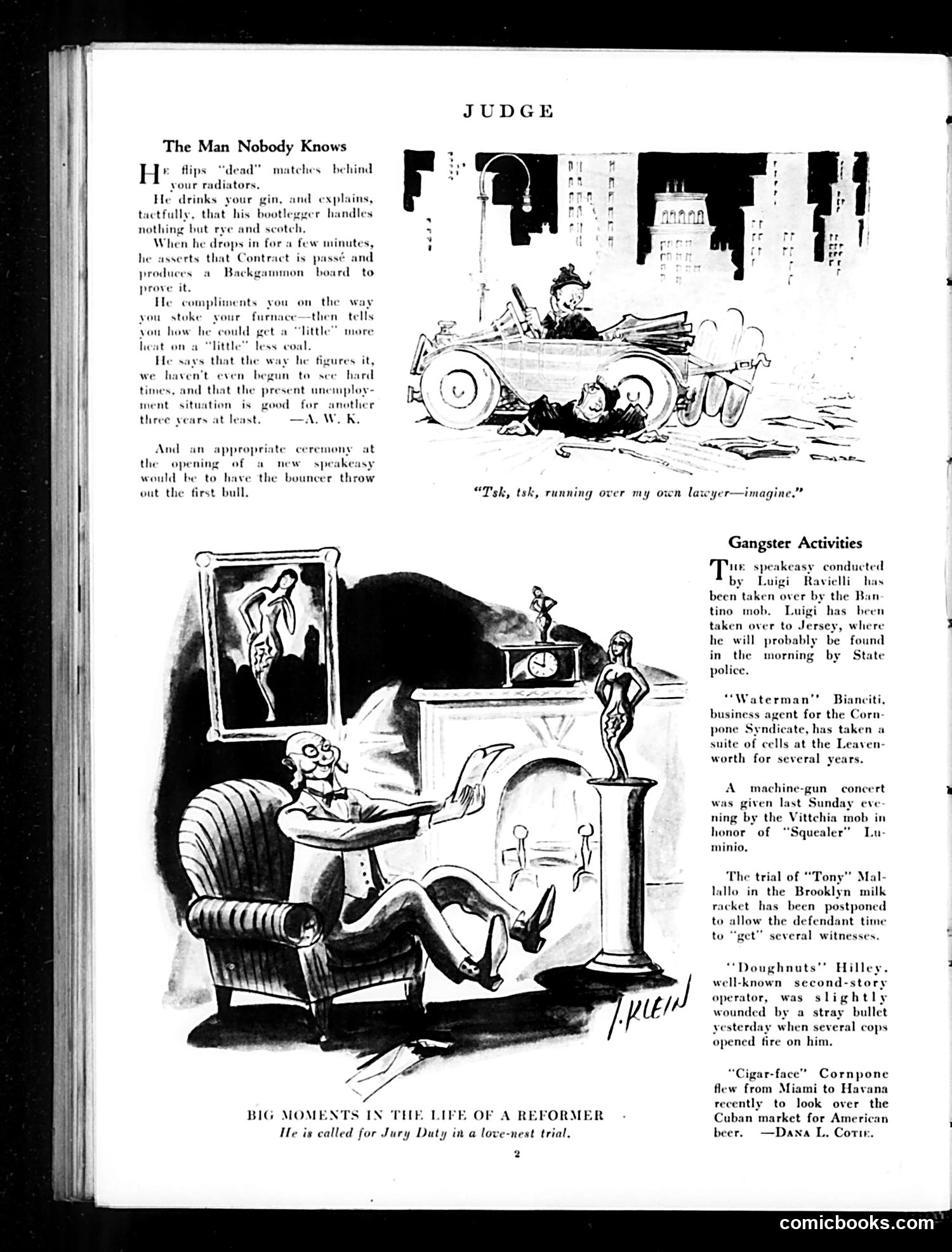
# Judge Magazine Page Analysis This page satirizes Prohibition-era crime and reform in 1920s America. **"The Man Nobody Knows"** (top) mocks a man who frequents speakeasies, drinks bootleg gin, and uses Contract Law arguments to justify illegal activities—suggesting the hypocrisy of educated criminals who rationalize lawbreaking. **"Big Moments in the Life of a Reformer"** (bottom cartoon) shows a self-righteous reformer luxuriating amid naked entertainers in what appears to be an illegal speakeasy—the core satirical point being that vocal Prohibition reformers were themselves patrons of the very illegal establishments they publicly condemned. The "Gangster Activities" section (right) reports on actual mob violence and bootlegging operations, grounding the satire in real 1920s criminal activity that made such hypocrisy widespread and obvious to readers.
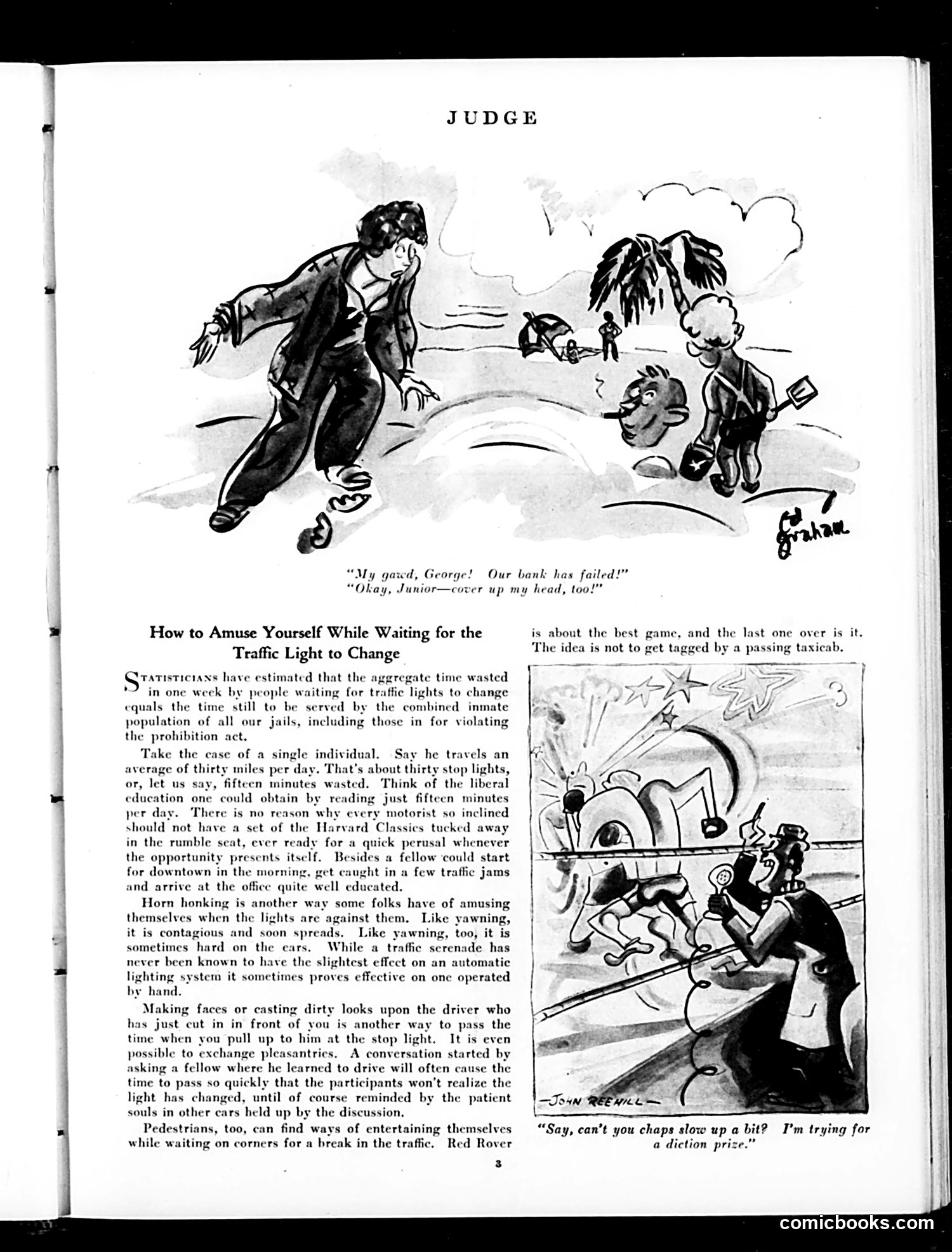
# Analysis This page satirizes waiting at traffic lights through humorous suggestions for passing time. The top cartoon shows a judge figure and small character (likely representing a banker and junior employee) during a financial crisis—the judge says "My gawd, George! Our bank has failed!" with the junior responding "Okay, Junior—cover up my head, too!"—a dark joke about the economic collapse being so total that death seems preferable. The main article offers comedic advice: horn-honking, making faces at other drivers, yawning contagiously, and chatting with pedestrians. The bottom cartoon depicts someone attempting an acrobatic stunt for "a diction prize" while stopped in traffic. The satire critiques both traffic tedium and the economic despair of the era (likely Depression-era Judge magazine), using humor to address widespread frustration.
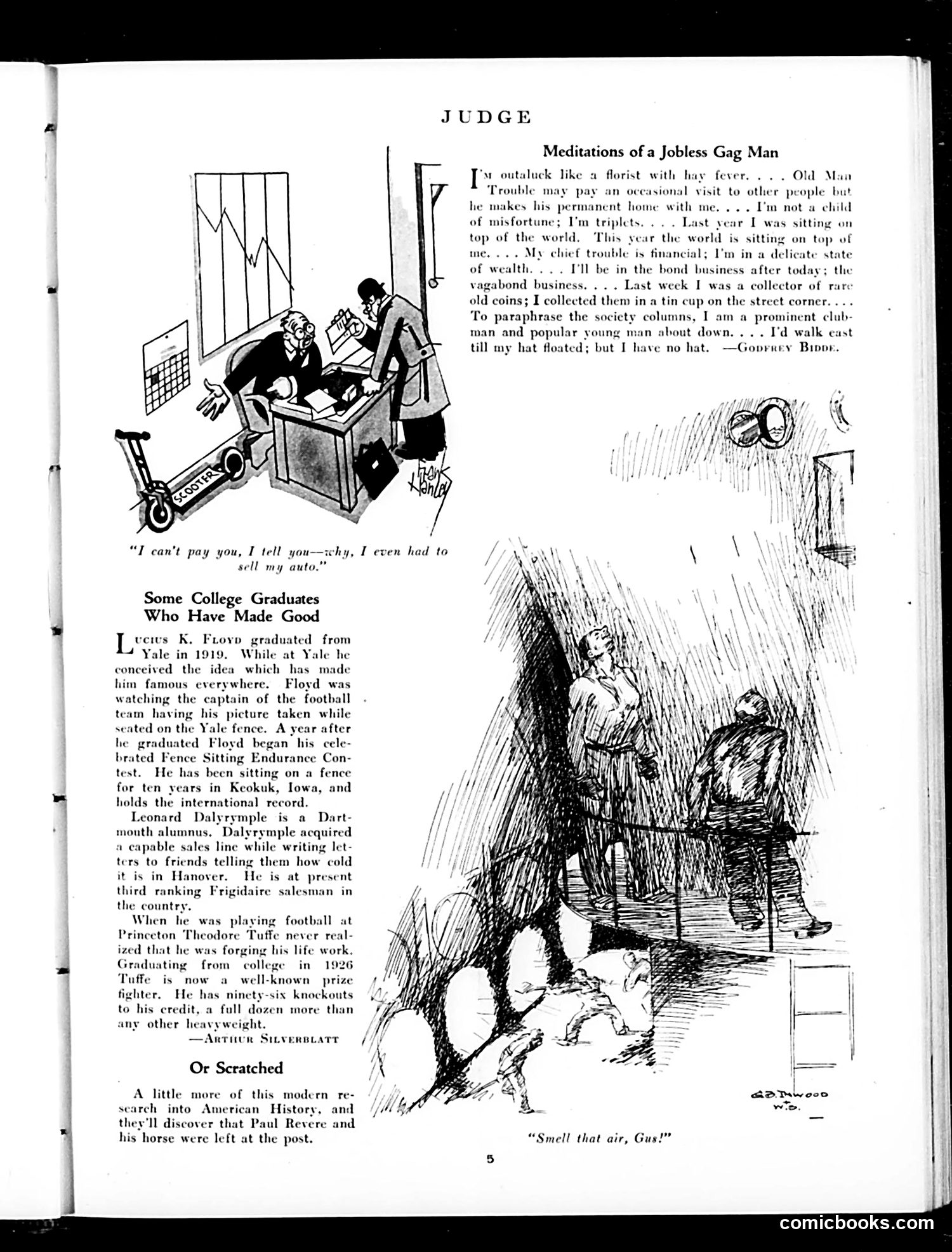
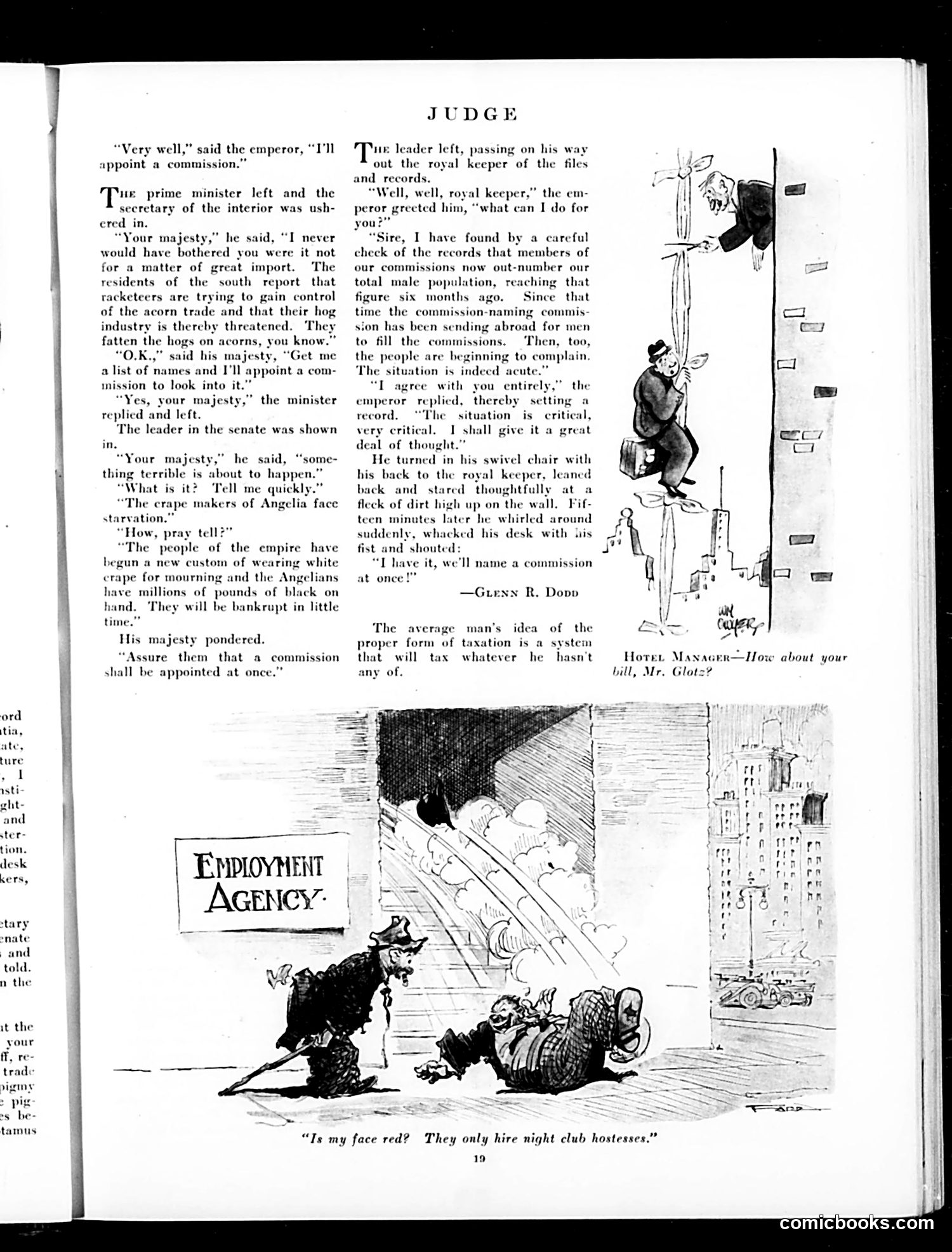
# Analysis of Judge Magazine Page **Top Section - "Meditations of a Jobless Gag Man":** This satirizes a struggling comedy writer during what appears to be the Great Depression era. The monologue lists cascading personal failures—financial ruin, homelessness, collecting coins for survival—while maintaining darkly humorous dignity. The illustration shows a poorly dressed man pitching jokes to an editor, the caption reading "I can't pay you, I tell you—why, I even had to sell my auto." This targets the plight of creative professionals during economic collapse. **Lower Section - "Some College Graduates Who Have Made Good":** This profiles successful Yale and Princeton alumni (Lewis K. Floyd, Leonard Dalrymple, Theodore Tuffe), highlighting unexpected career paths. The satire suggests college education's uncertain connection to success, contrasting formal credentials with unconventional achievements like "fence-sitting endurance contests." The page generally satirizes Depression-era economic anxiety and career instability.
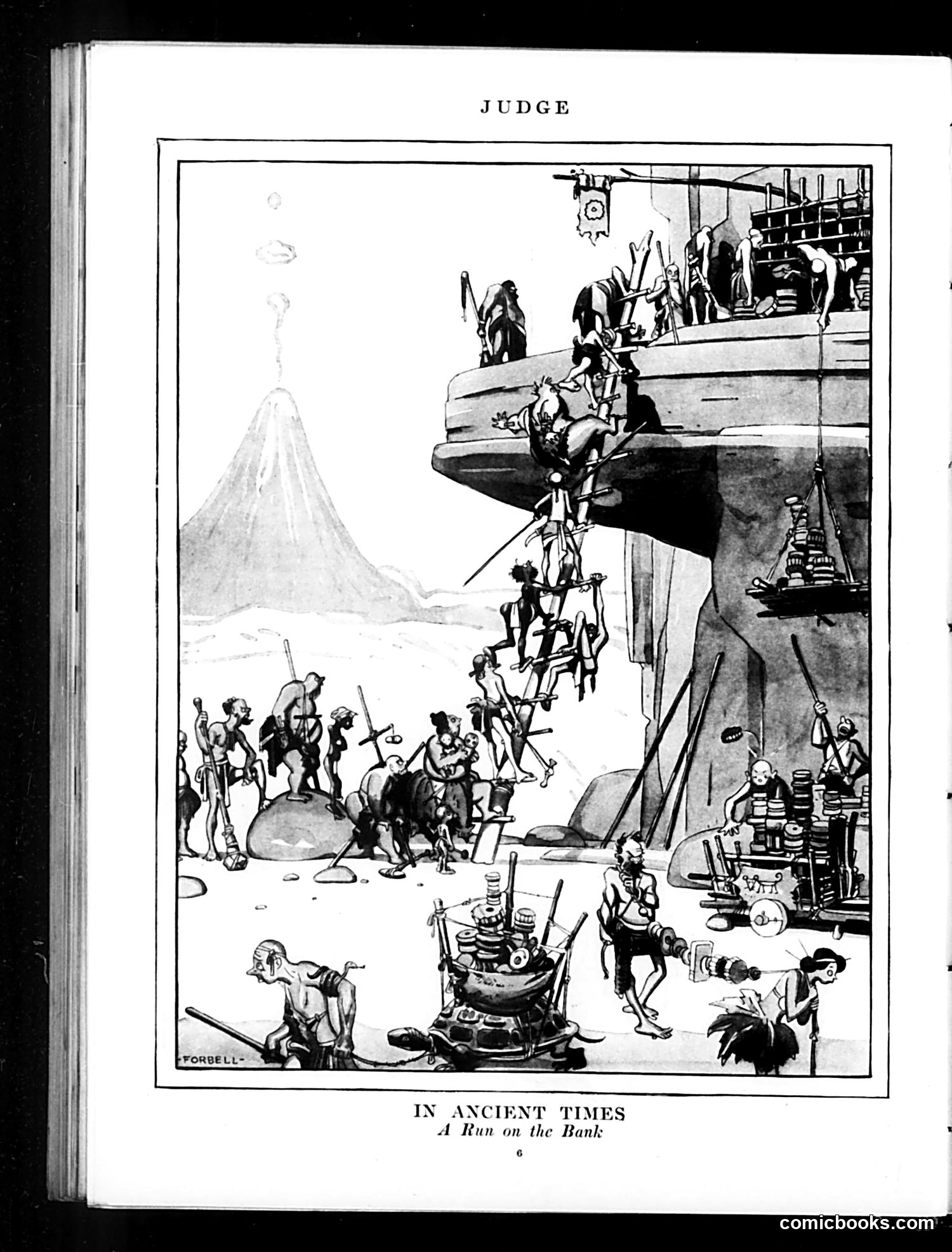
# "A Run on the Bank" — In Ancient Times This satirical cartoon depicts a bank run in a prehistoric or mythological setting. Tiny, primitive figures swarm around massive stone structures and vessels, attempting to withdraw their deposits amid chaos and panic. The juxtaposition of ancient civilization with modern banking anxiety creates the humor—suggesting that financial panics are timeless human follies, not unique to contemporary society. The "run on the bank" was a genuine economic crisis where depositors rushed to withdraw funds simultaneously, fearing bank failure. By setting this scenario in "ancient times," Judge magazine satirizes how such panics recur throughout history, implying that financial instability and human panic are eternal patterns rather than modern problems.
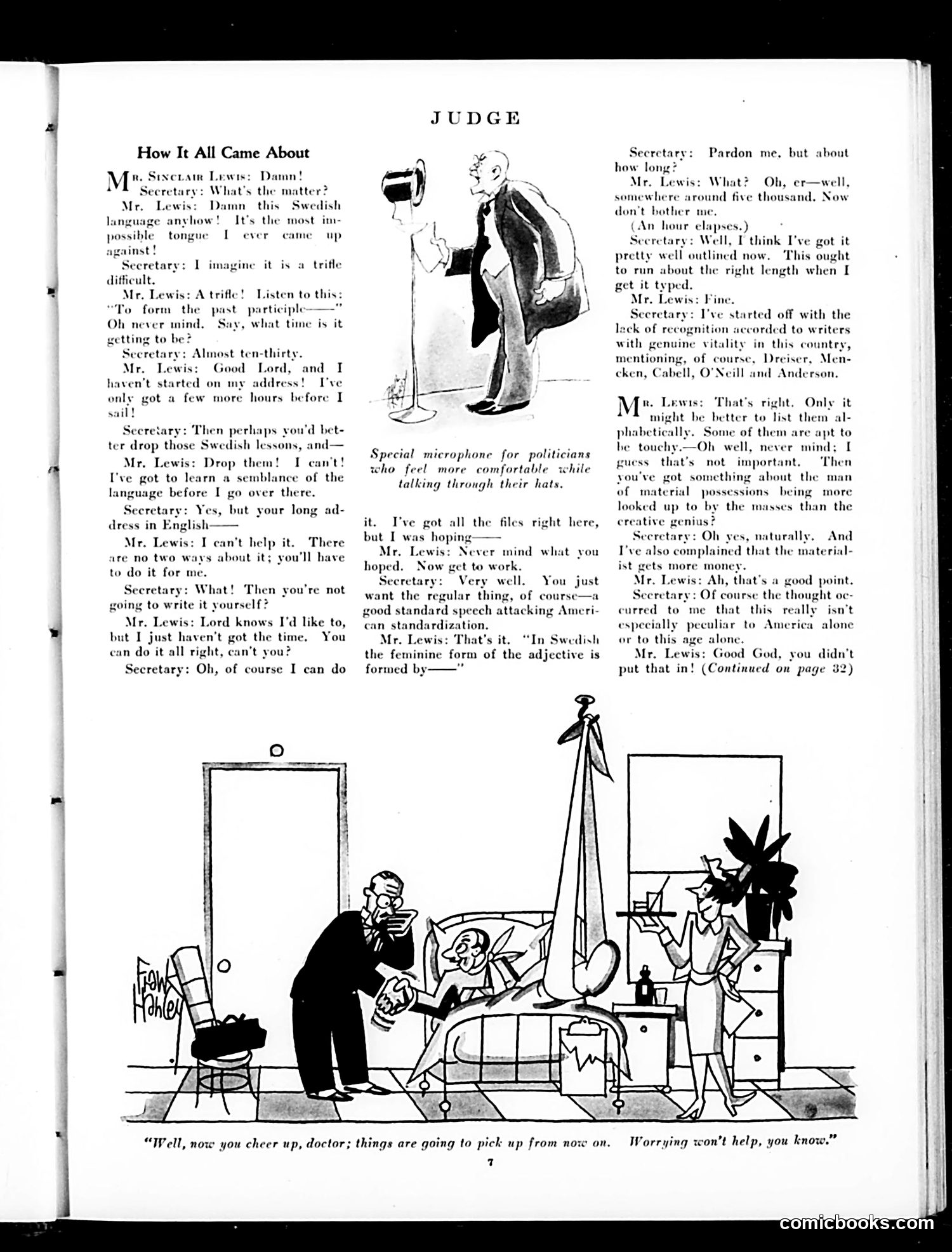
# Explanation for Modern Readers This page satirizes **Sinclair Lewis**, the prominent American novelist, preparing a speech attacking American standardization—ironically while rushing through it without writing it himself. He delegates the entire task to his secretary, insisting she use his notes and published opinions about underappreciated writers (Dreiser, Mencken, Cabell, O'Neill, Anderson). The satire's point: Lewis preaches against conformity and materialism while embodying exactly those flaws—he's too busy/lazy to write his own critique, demands "the regular thing" (formulaic speech-writing), and prioritizes material concerns (his sailing deadline) over authenticity. The bottom cartoon shows a doctor reassuring a worried patient, a visual palate-cleanser typical of Judge's format. The humor targets intellectual hypocrisy: a celebrated author crusading against standardization relies entirely on standardized speechwriting formulas and ghostwriting—the very commodification of ideas he claims to oppose.
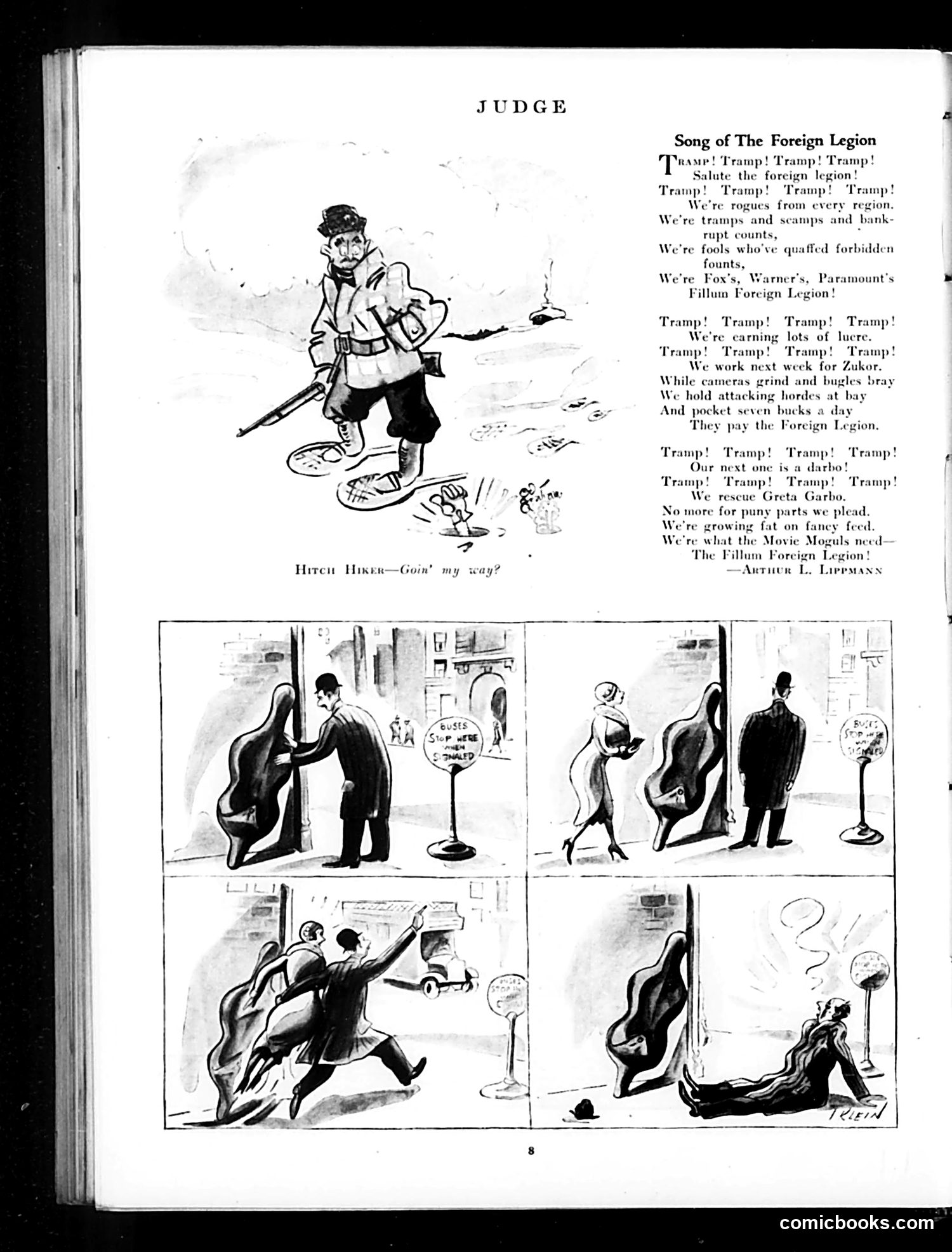
# "Song of The Foreign Legion" - Judge Magazine Satire This page satirizes Hollywood's "Foreign Legion" films, a popular 1920s-30s genre. The song mocks B-movie actors who played mercenaries, describing them as "rogues from every region"—washed-up performers hired by studios (Fox, Warner's, Paramount) for cheap adventure films. The humor targets: - **Studio exploitation**: Actors earn minimal pay ("seven bucks a day") while studios profit - **Career desperation**: Unemployed actors accept any role ("No more for puny parts we plead") - **Genre absurdity**: Formulaic plots recycled endlessly (rescuing "Greta Garbo") - **Hollywood hierarchy**: "Movie Moguls" control struggling performers The comic strip below shows a woman in a clinging gown repeatedly appearing before/with a man in formal dress, apparently satirizing the melodramatic, repetitive nature of these films and their reliance on physical comedy or titillation. The satire reflects Judge's cynical view of mass-market entertainment and studio-system labor practices.
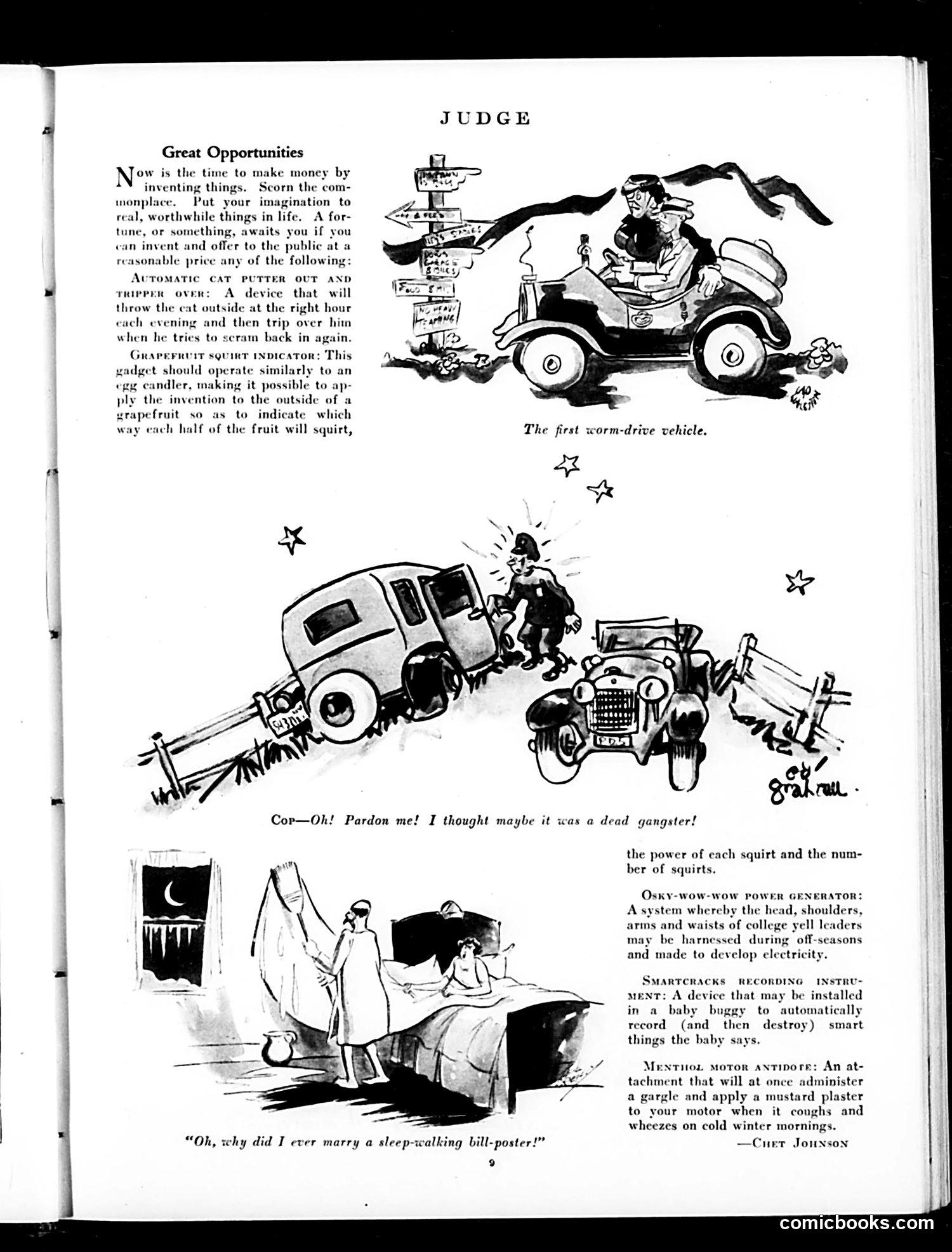
# Judge Magazine Satire Analysis This page satirizes the American obsession with consumer inventions and patents during the early 20th century. The "Great Opportunities" section mocks absurd, impractical invention ideas, many targeting domestic annoyances: **Key satirical inventions:** - An automatic cat ejector (poking fun at pet owners) - A grapefruit squirt predictor (absurdly specific) - A college yell-leader power generator (mocking student culture) - A baby buggy recording device that destroys "smart remarks" (satirizing modern technology applied to parenting) - A menthol motor antidote for cars (treating vehicles like people) **The cartoons** ridicule motorcar culture: a "worm-drive vehicle" and a mistaken-identity gag about gangsters, reflecting 1920s anxieties about organized crime and rapid automobile proliferation. The overall message: Americans will patent *anything*, no matter how useless or bizarre, reflecting contemporary consumer capitalism and technological mania.
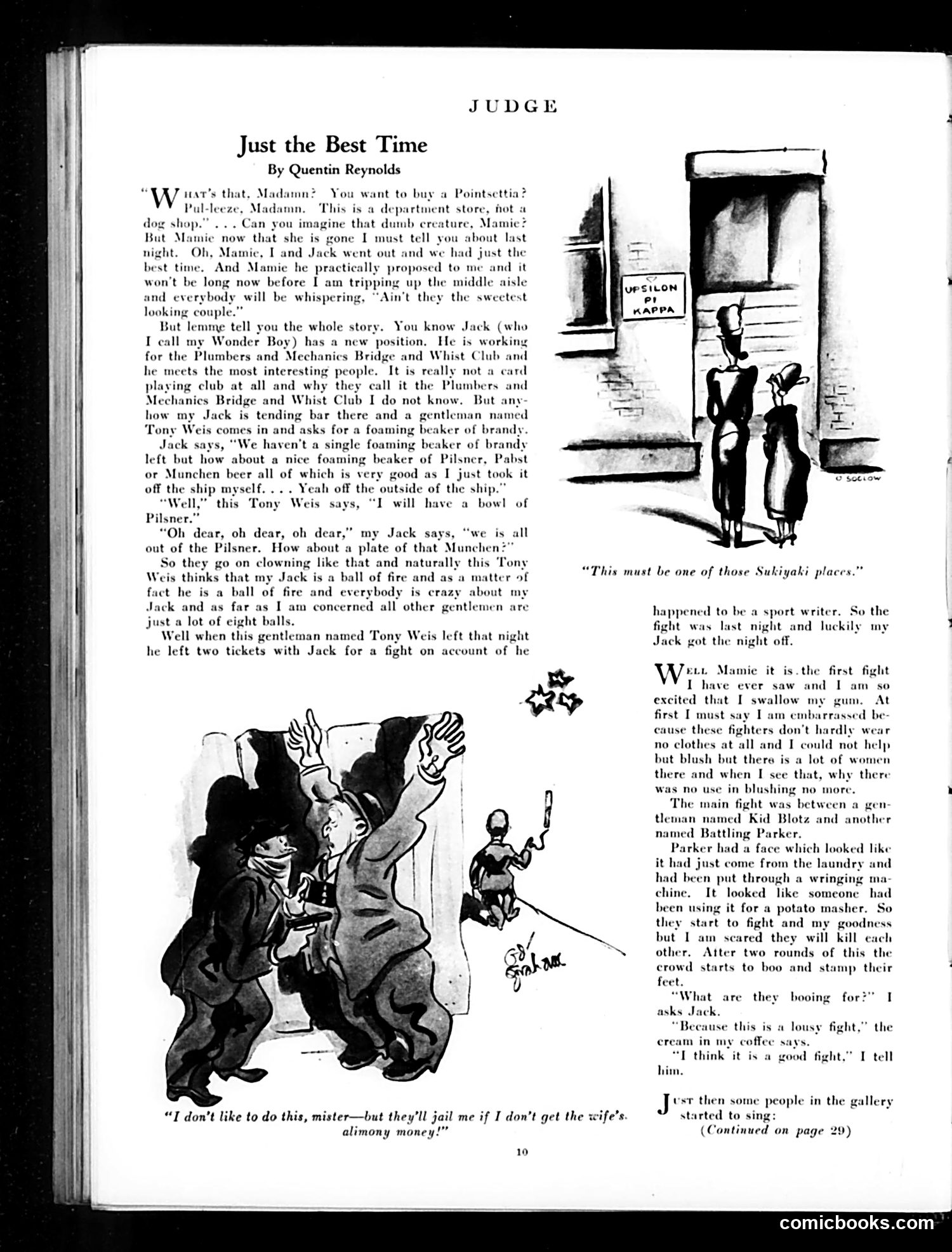
# "Just the Best Time" - Judge Magazine Satire This page contains a humorous short story by Quentin Reynolds satirizing working-class social life and courtship in what appears to be the Prohibition era (references to beer, brandy, Pilsner). **Main narrative satire:** A woman tells her friend "Mamie" about her boyfriend "Jack" (called "Wonder Boy"), who works tending bar at a gentlemen's club. Jack charms a customer named Tony Weis with witty banter about unavailable drinks, impressing him enough to receive fight tickets. **The cartoons** illustrate comic situations: one shows two men fighting violently over money ("alimony"), the other depicts people outside a "Sukiyaki place" (mocking exotic restaurants). **The satire targets:** Working-class pretension, dating culture, boxing matches as entertainment, and the slightly disreputable world of speakeasies and "clubs" that weren't really card-playing establishments. The narrator's breathless, gossipy tone and malapropisms ("Pointsettia," "foaming beaker") parody lower-class speech patterns that 1920s-30s readers found amusing.