A complete issue · 36 pages · 1930
Judge — November 29, 1930
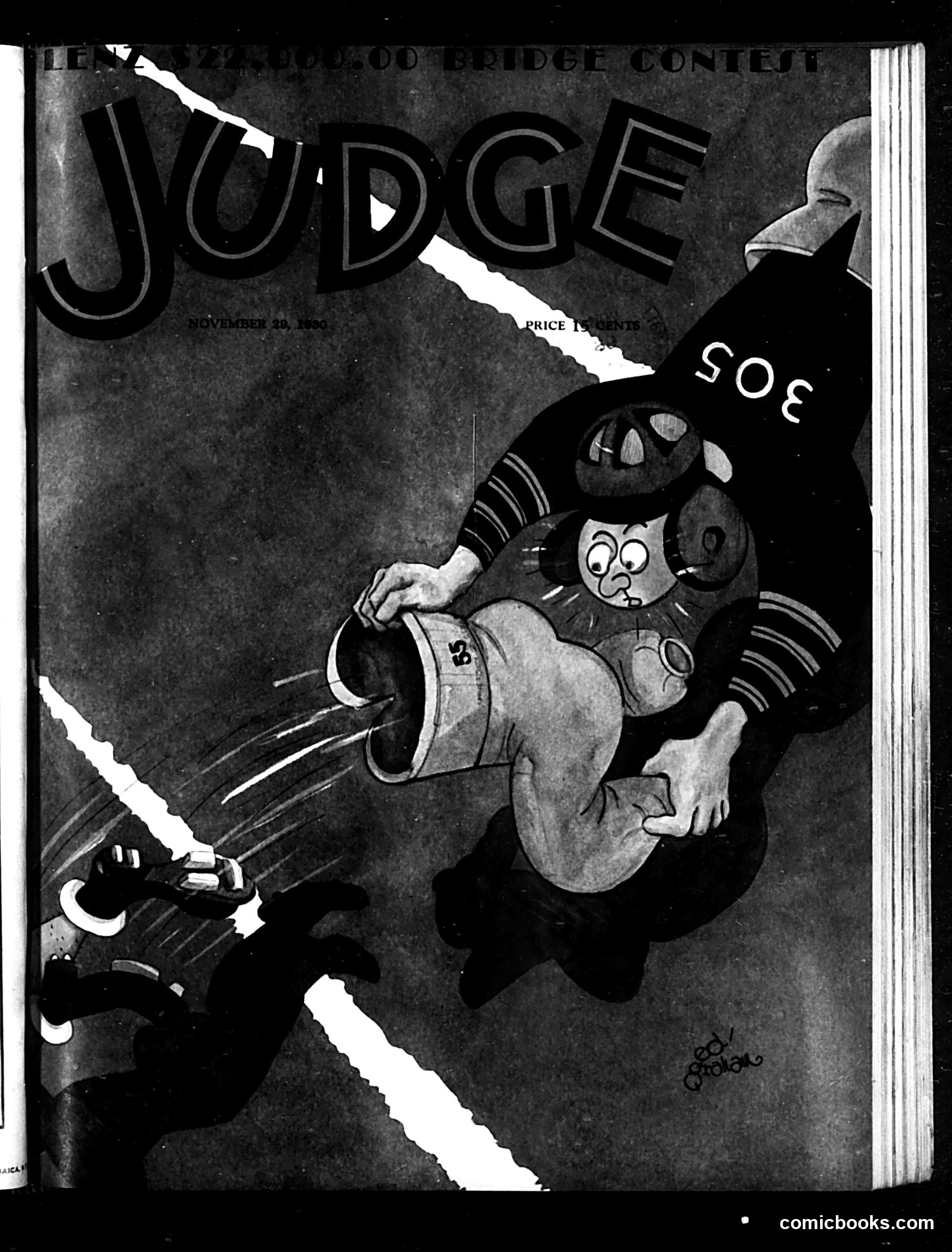
# Judge Magazine Cover Analysis This appears to be a Judge magazine cover from November 29, 1922 (based on visible date), priced at 15 cents. The cartoon depicts a figure labeled "SOS" (distress signal) holding a crying baby. The figure appears to represent California or a California official in distress, given the state map outline integrated into the cover design. The baby likely symbolizes California's troubled condition or a specific crisis facing the state during this period. The satirical point suggests California was in serious trouble requiring emergency intervention—though without additional historical context, the specific crisis (economic, political, or social) isn't entirely clear from the image alone. The exaggerated distress and the SOS signal emphasize the urgency of the situation being mocked.
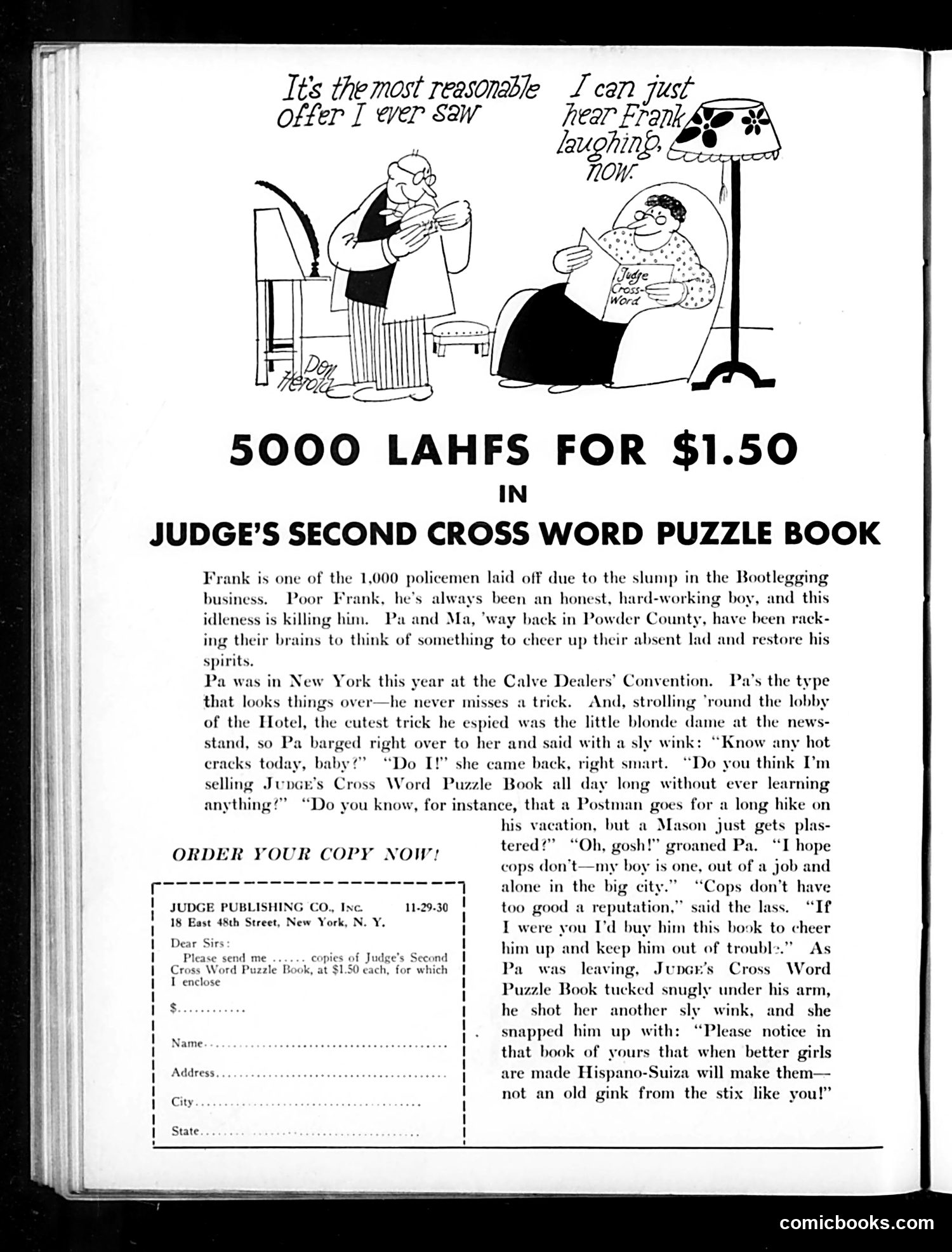
# Analysis This page is primarily an **advertisement** for Judge's Second Cross Word Puzzle Book, priced at $1.50, offering "5000 laughs." The cartoon depicts a domestic scene where a man (Pa) presents the puzzle book to a woman (Ma), saying it's "the most reasonable offer I ever saw." The woman responds that she can hear "Frank laughing now." The setup appears to reference **Frank**, a laid-off policeman mentioned in the accompanying story, whose parents hope the puzzle book will cheer him during unemployment caused by "the slump in the Bootlegging business." The satire targets **Prohibition-era bootlegging** as an economic sector, treating organized crime casually as legitimate employment. The humor relies on the incongruity of using a puzzle book as consolation for joblessness and crime-industry collapse—a darkly comic Depression-era reference to illegal alcohol distribution.
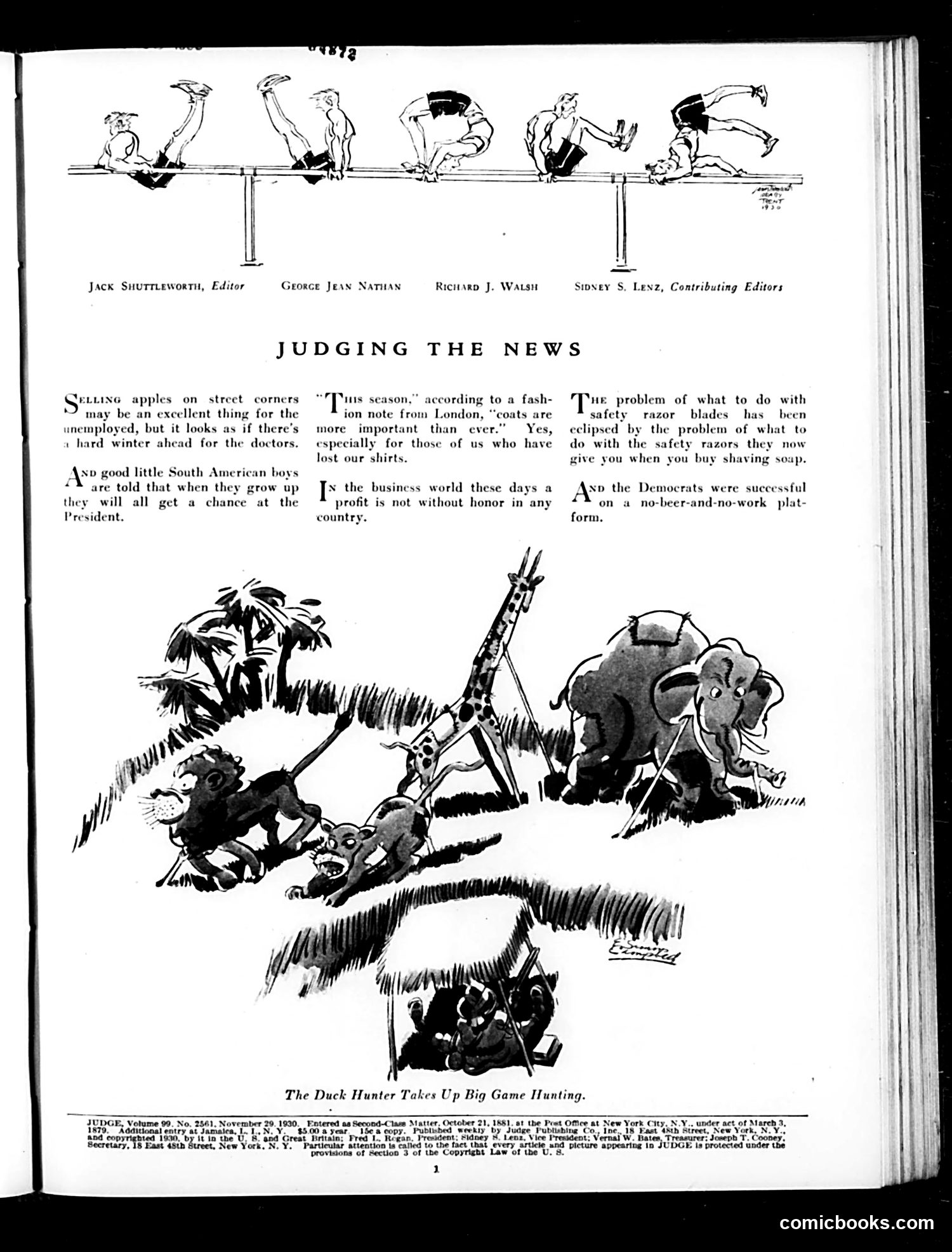
# "Judging the News" - November 29, 1930 This page satirizes current events through brief commentary and a cartoon titled "The Duck Hunter Takes Up Big Game Hunting." The main cartoon depicts anthropomorphic animals in a hunting scene. The elephant appears to represent big business or Republican interests, while smaller animals likely represent Democrats or labor. The "duck hunter" (unclear which political figure) is portrayed as overreaching by attempting to hunt larger game—suggesting someone has shifted from minor pursuits to more ambitious, dangerous quarry. The accompanying text jokes about street apple sellers, Southern children's prospects, business profits, safety razors, and Democrats' failed "no-beer-and-no-work platform." The overall tone mocks political overreach and economic conditions during the early Depression era.
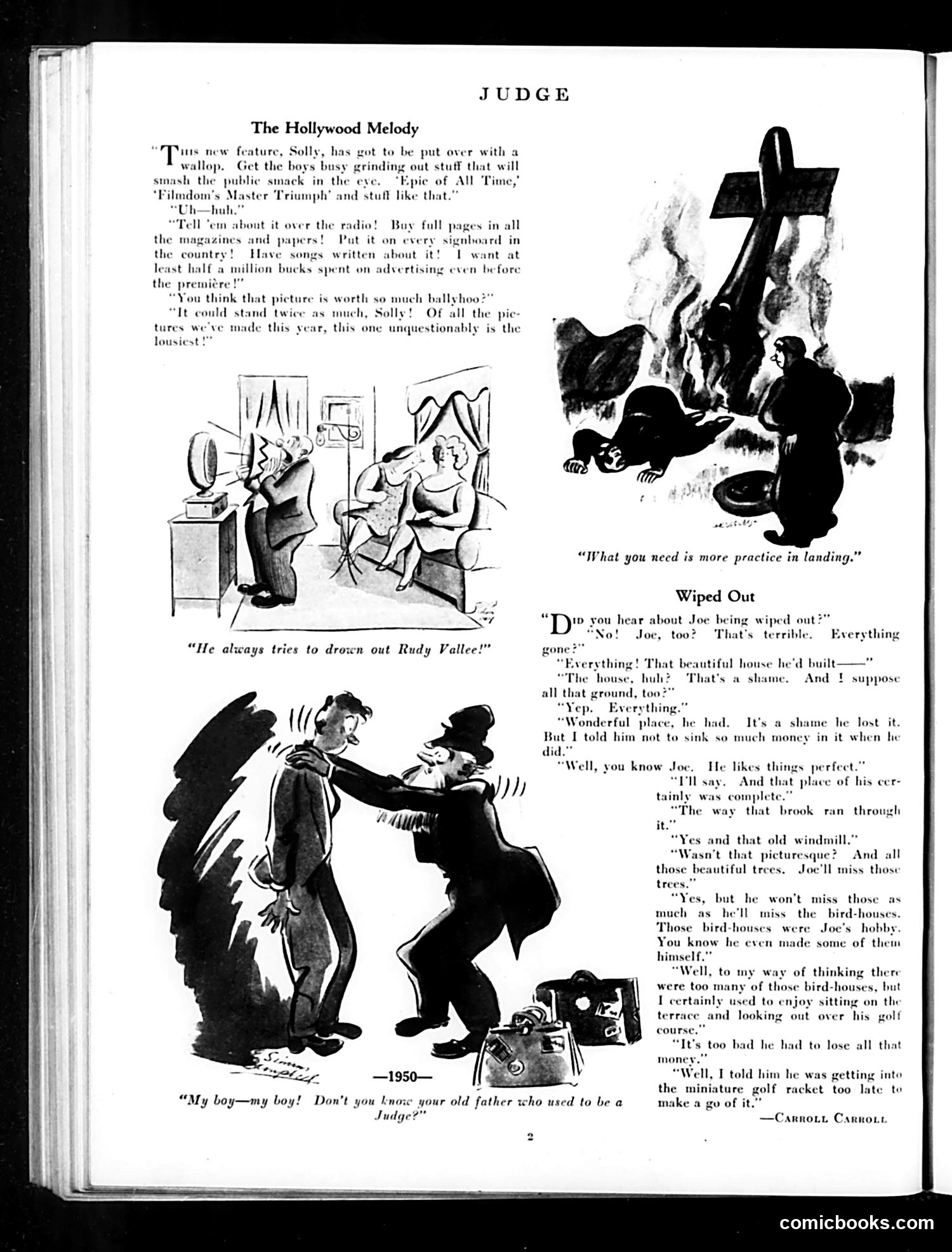
# Analysis of Judge Magazine Page This page contains three separate cartoons satirizing Hollywood and entertainment industry practices circa 1950. **"The Hollywood Melody"** mocks studio executives' aggressive marketing tactics—grinding out mediocre films, flooding radio with promotion, plastering billboards nationwide, and spending lavishly on advertising before premieres. The satire suggests studios prioritize hype over quality. **"He always tries to drown out Rudy Vallée!"** appears to ridicule the singer Rudy Vallée, though the specific context is unclear. **"Wiped Out"** depicts a conversation about a man named Joe who lost his entire fortune—house, property, and possessions—due to poor financial decisions. The tone suggests dark humor about wealth destruction, possibly referencing Depression-era cautionary tales or specific Hollywood bankruptcies. All three reflect mid-century anxieties about excess and financial ruin.
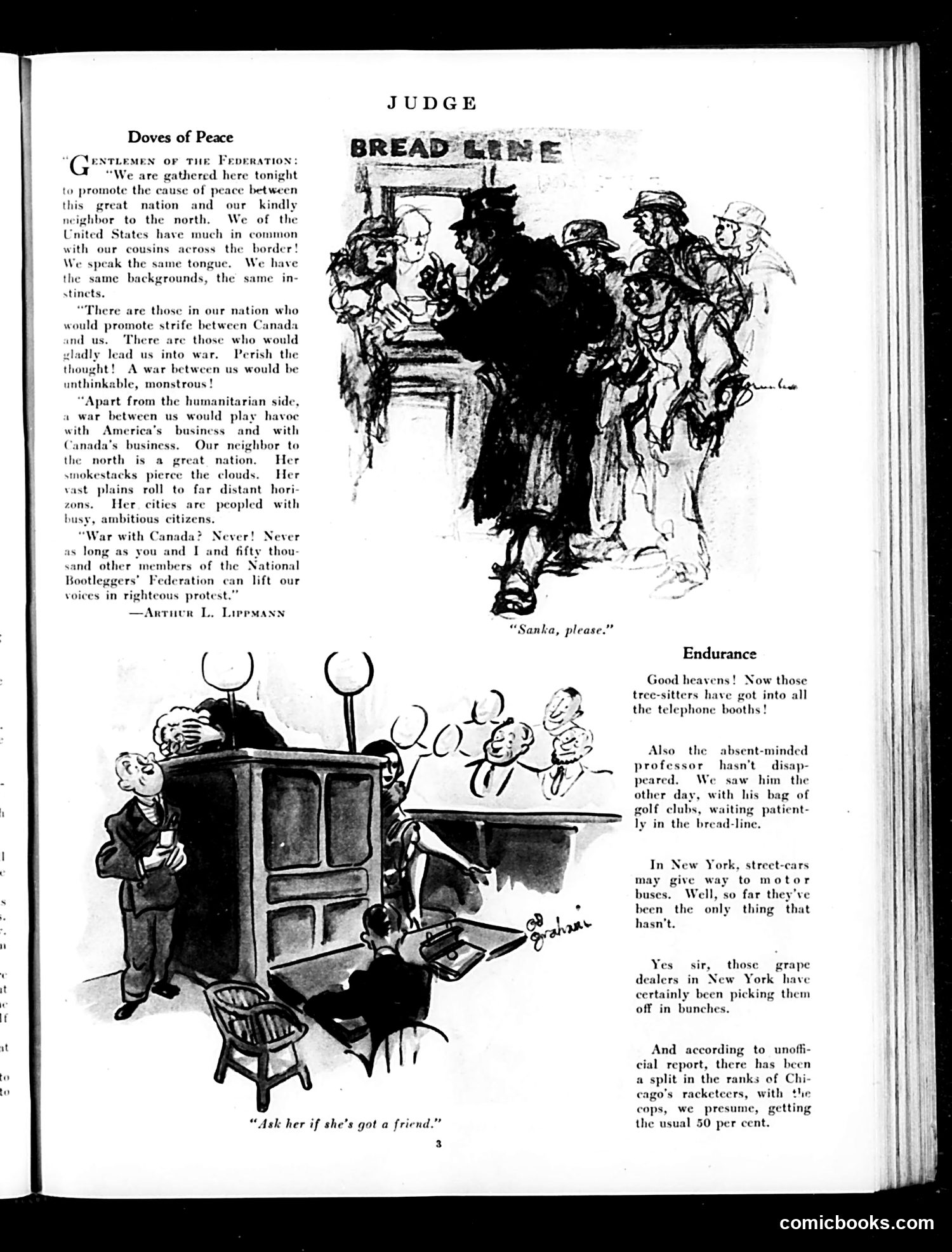
# Judge Magazine Page Analysis This page contains two satirical cartoons addressing early 20th-century American concerns: **"Bread Line" (top):** Depicts Santa Claus confronted by impoverished people in a bread line, illustrating economic hardship during what appears to be a recession or Depression-era period. The contrast between holiday cheer and widespread poverty is the satirical point. **"Ask her if she's got a friend" (bottom):** Shows a telephone switchboard operator overwhelmed by multiple callers, satirizing the novelty and rapid adoption of telephone technology. The joke suggests telephones became so popular that operators couldn't manage demand. The page's text section titled "Endurance" offers brief humorous observations about current social quirks—crowded phone booths, absent-minded professors, motor buses replacing streetcars, and grape dealers in New York.
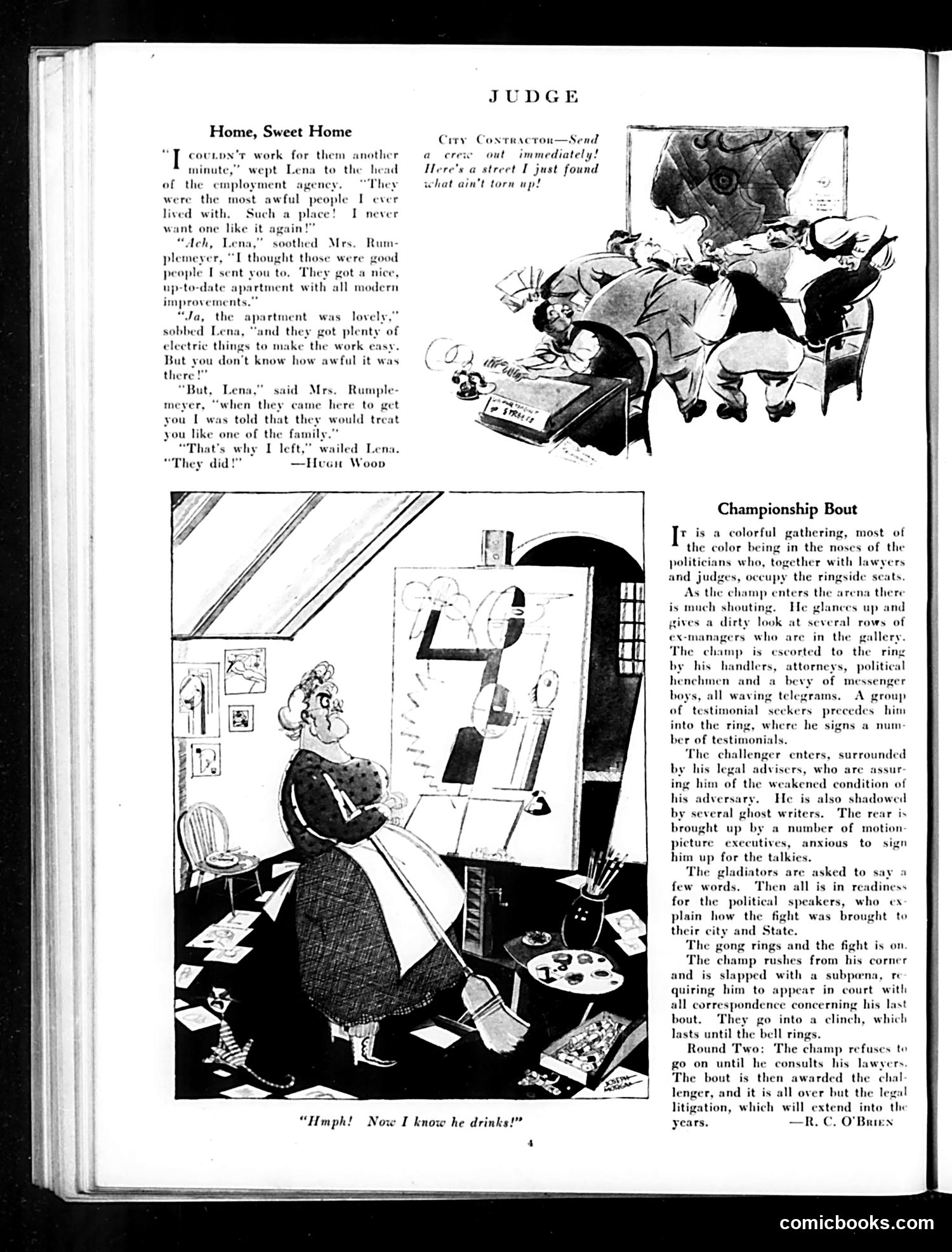
# Analysis of Judge Magazine Page **"Home, Sweet Home"** (top): A satirical dialogue about employment agency practices. Lena complains about being placed in an apartment with "plenty of electric things to make work easy," yet the family treated her poorly despite promises of kind family treatment. The joke critiques employment agencies' deceptive marketing—promising modern conveniences and good conditions while delivering mistreatment of domestic workers. **"Championship Bout"** (bottom): A political cartoon depicting a boxing match metaphor. Various politicians, lawyers, and judges occupy ringside seats while a "champ" (likely a specific political figure) fights a "challenger." The satire mocks how political disputes become theatrical spectacles with numerous hangers-on—"ghost writers," "messenger boys," and legal advisers—turning serious political conflict into entertainment for the gallery.
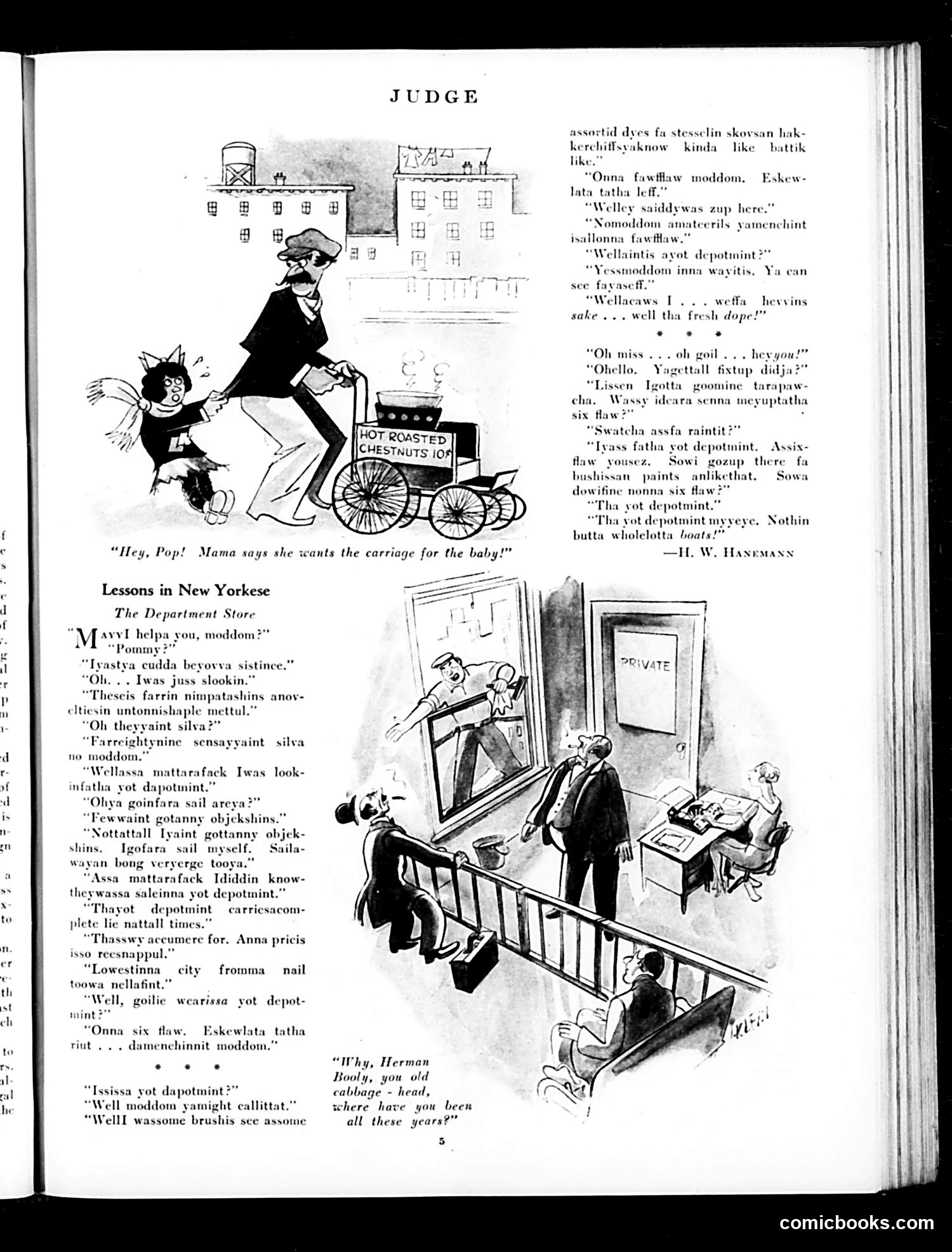
# Analysis of Judge Magazine Page This page contains two satirical cartoons about New York City life, likely from the early 20th century. The top cartoon shows a man with a pushcart of "Hot Roasted Chestnuts" being confronted by a small child demanding "Mama says she wants the carriage for the baby!" The satire mocks the absurdity of a child's entitled demands—conflating a street vendor's humble cart with an actual baby carriage, suggesting spoiled wealthy children who confuse working-class commerce with their privileged possessions. The lower cartoon, titled "Lessons in New Yorkese," depicts a Department Store scene with a customer attempting to navigate confusing directions. The accompanying text uses phonetic dialect humor—mocking how New Yorkers speak—to satirize miscommunication between working-class New Yorkers and shoppers unfamiliar with local speech patterns and store layouts.
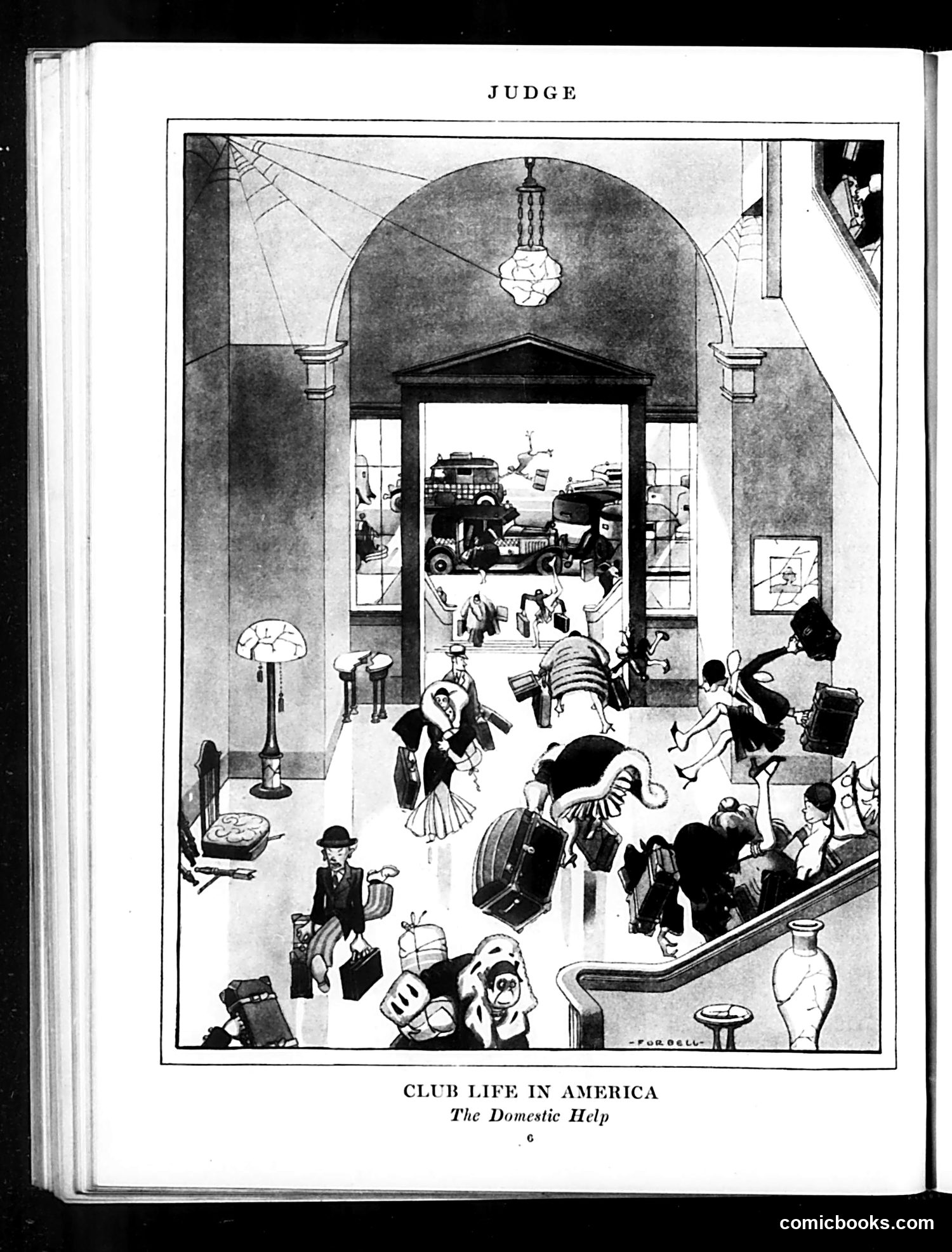
# "Club Life in America: The Domestic Help" This illustration satirizes the chaotic state of domestic service in early 20th-century America. The scene depicts a fashionable club or social establishment where wealthy members attempt to conduct business amid complete disorder caused by servants and staff. The cartoon mocks the "servant problem"—a widespread complaint among the affluent that reliable household help was increasingly difficult to find and manage. The figures are shown in various states of disarray: some carrying luggage, others engaged in seemingly pointless activity, creating a scene of inefficiency and insubordination. The satire targets both the incompetence of domestic workers and the pretensions of the wealthy who depend on them, suggesting that even elite social spaces cannot escape the era's labor difficulties.
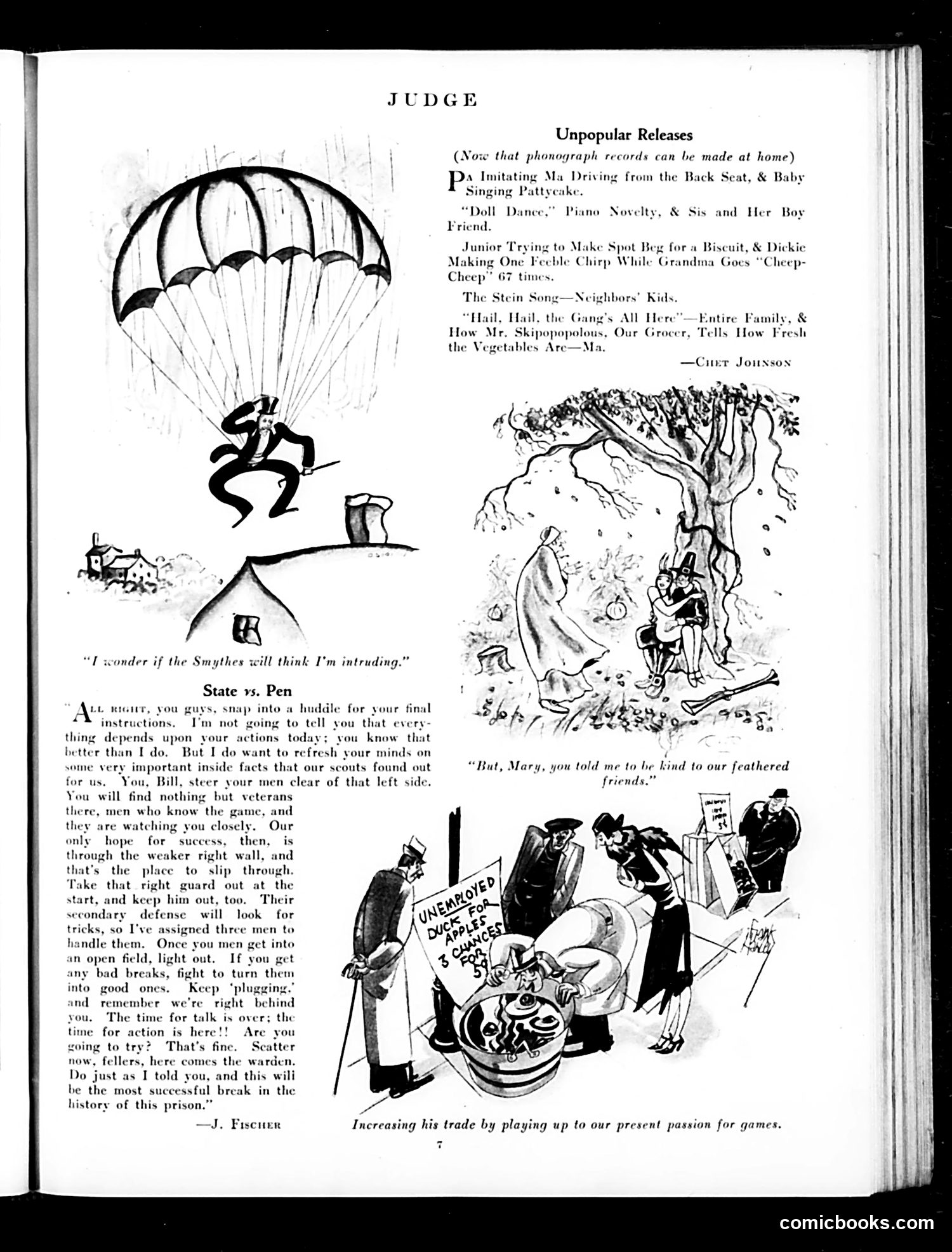
# Analysis of Judge Magazine Page This page contains satirical content from Judge magazine mocking contemporary trends and social habits. **"Unpopular Releases"** section ridicules the then-novelty of home phonograph recording by listing absurdly annoying recordings people might make: a mother backseat driving, children making noise, a grocer's monotonous voice, etc. The humor targets both the new technology and recognizable domestic irritations. **"State vs. Pen"** depicts a prison break scene where a coach (likely a warden or guard) instructs inmates in football terminology—discussing "guards," "breaks," "secondary defense"—as a thin disguise for actual escape planning. The satire suggests prison security is so lax that escape instructions can be delivered openly using sports jargon. **Bottom cartoon** shows someone presenting "Unearned Appliances" or similar items to a merchant, captioned about "increasing trade by playing up to our present passion for games"—satirizing commercialism exploiting America's growing obsession with sports and games as marketing hooks. The overall theme critiques modern consumer culture and institutional incompetence.
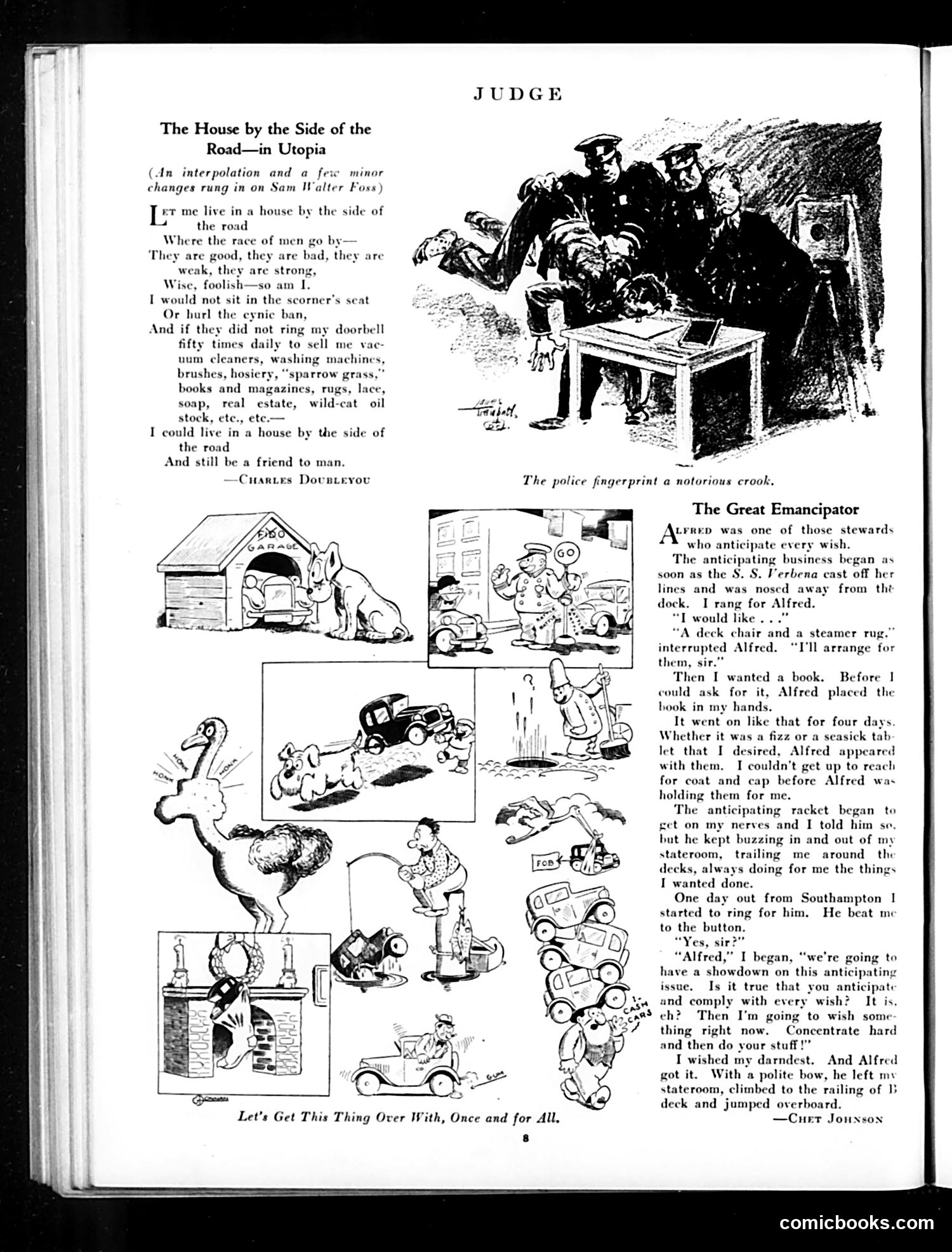
# Analysis: Judge Magazine Page This page contains two satirical pieces reflecting early 20th-century consumer anxieties. **"The House by the Side of the Road"** parodies Sam Walter Foss's sentimental poem about rural hospitality. The satire inverts the original: instead of welcoming travelers, the poet fantasizes about escaping modern **door-to-door salesmen** hawking vacuum cleaners, washing machines, and dubious investments ("wild-cat oil stock"). It mocks the aggressive commercialism and consumer culture invading American life. **"The Great Emancipator"** satirizes the opposite problem: obsessive personal service. A ship's steward named Alfred anticipates every wish so relentlessly that he becomes maddening—the passenger can't even reach for his own coat. The joke's dark punchline: the only way to escape this "anticipating racket" is suicide. The title ironically names the steward as "emancipator" only through death. Both pieces express modern anxieties about loss of autonomy—either from pushy commercialism or smothering service—reflecting concerns about industrial society's grip on personal freedom.
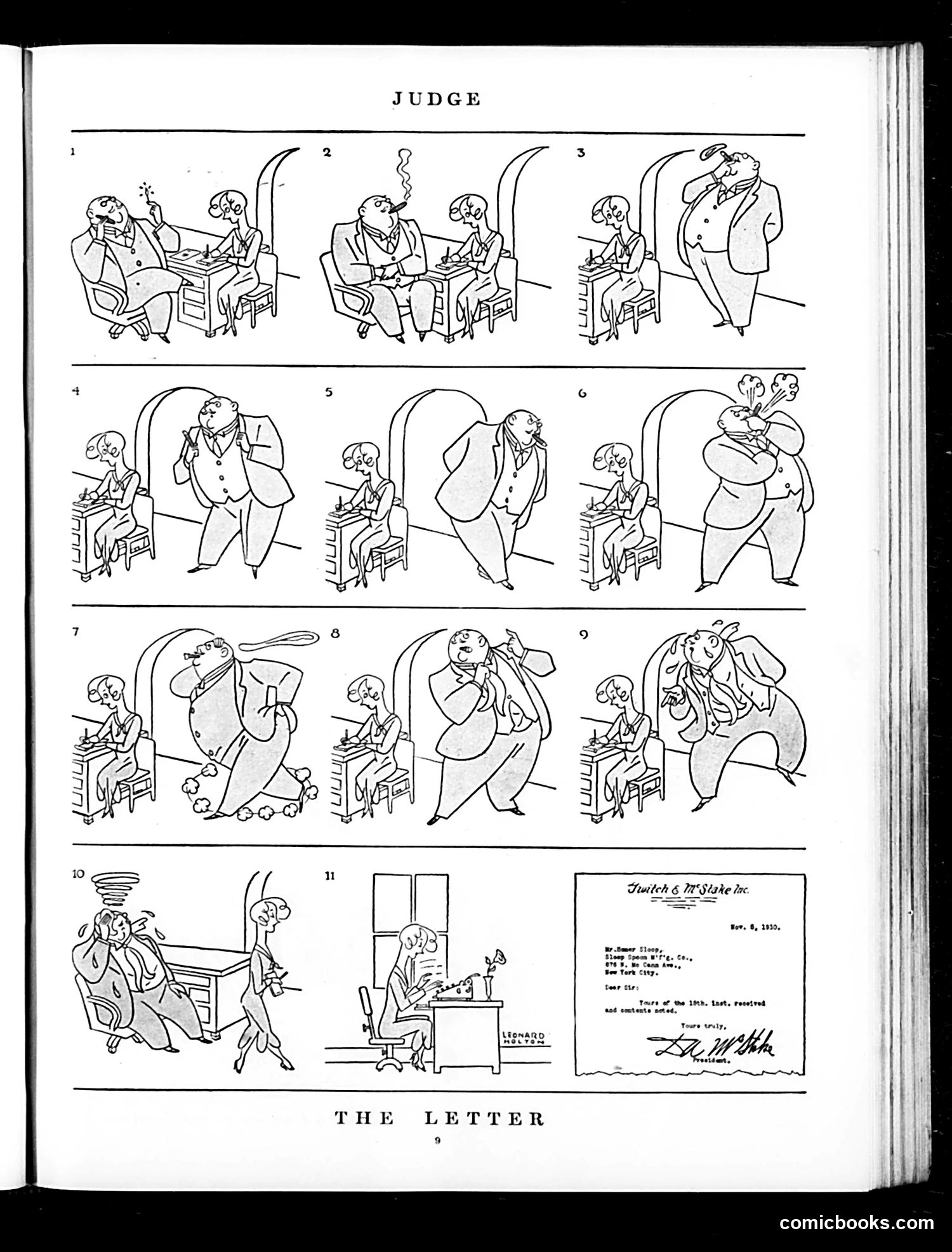
# "Judge" Page: "The Judge" - Comic Strip This is a nine-panel sequential comic titled "The Judge" depicting a portly judge character in various states of escalating chaos and mishap. The narrative appears to show the judge progressively losing control—starting composed at a bench with a small figure (likely a defendant or clerk), then increasingly disheveled through panels 4-9, culminating in complete disorder with scattered papers and objects. The satire likely targets judicial incompetence, pomposity, or corruption—a common theme in Gilded Age American humor. The judge's transformation from authoritative to chaotic suggests commentary on judicial authority being undermined by his own incompetence or moral failings. The final panel reproduces what appears to be an actual letter from "Twitch & M'Slake Inc." dated Nov. 8, 1925, though its specific reference remains unclear without additional context.
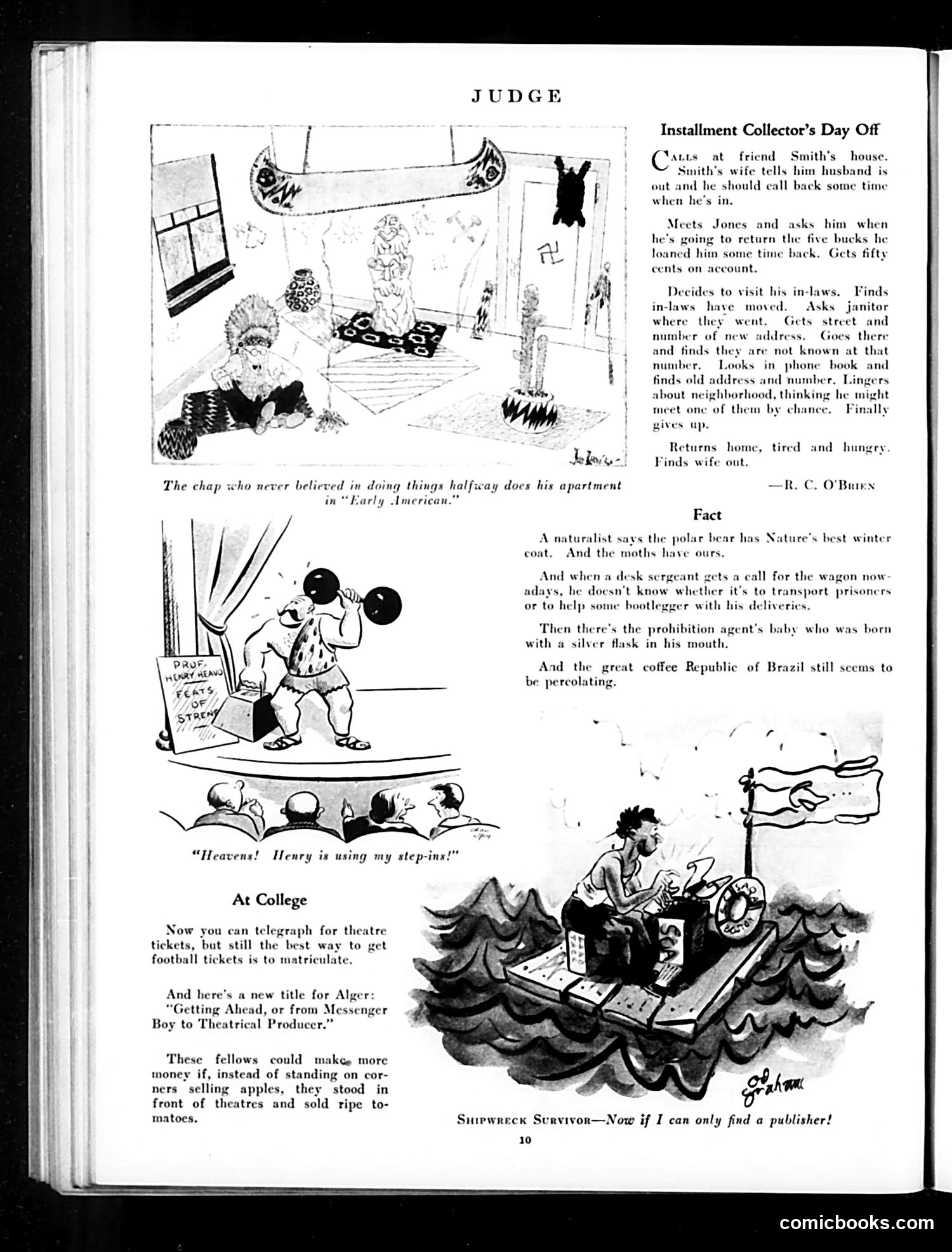
# Analysis: Judge Magazine Page ## Main Cartoon: "Installment Collector's Day Off" This satirical narrative follows an installment collector (a debt collector) on his day off—ironically, he spends it chasing down *others* who owe *him* money. The humor lies in the role reversal: he unsuccessfully pursues a friend for a $5 loan (receives only 50 cents), tracks down moved-away in-laws, and returns home exhausted and hungry to find his own wife absent. The satire targets the frustrations of small-scale creditors in early 20th-century America, when installment buying and personal loans were common but enforcement was haphazard and time-consuming. The collector experiences firsthand the evasion tactics he normally uses professionally—people being unavailable, addresses changing, dead ends. ## Supporting Content The page includes humorous "facts" mocking Prohibition enforcement and the black market, a college section on scalping theatre tickets, and a shipwreck survivor cartoon. These are typical Judge magazine filler material satirizing contemporary social conditions and absurdities.